Showing posts with label TeessideUniversity. Show all posts

Friday, 20 March 2026

Moving from blame to support: rethinking food insecurity in diabetes

Posted by Ruth Boocock, Associate Professor and Dietitian, Teesside University, in Nutrition and Hydration Week.

This work started with a deceptively simple question: ‘How do clinicians identify food insecurity in people living with type 2 diabetes, and what actually helps once they do?’

By clinicians, I mean the people working directly with patients, for example GPs, nurses, dietitians, and others working in busy, often stretched diabetes services.

To explore this, I reviewed published research from across the world. Over many coffees, I read and debated papers, regularly asking other colleagues: ‘Is this really a pattern, or am I reading too much into it?’

What came through very clearly were the human stories beneath the data. Clinicians wanting to help, but constrained by time and systems. People with diabetes trying to manage blood glucose, while also worrying about whether there is enough food at home.


Asking about food only works if there’s something to offer next

Many clinicians want to ask patients about access to food and some already do, but the evidence shows that screening alone is not enough.

Without time, clear processes, or obvious referral routes, screening often stalls. I repeatedly came across similar experiences: ‘I asked the question. They said yes. And then I didn’t know what to do’. That moment matters. It can leave clinicians feeling stuck and distressed, and patients feeling exposed and unsupported.

One of the key messages from the evidence is that this isn’t about individual clinicians doing more. Food insecurity needs to be part of everyday systems, with prompts, shared responsibility across teams, and links to support that actually exists. Without that organisational backing, raising the issue of food tends to fall down the priority list, especially on busy clinic days.


Trust makes disclosure possible


You can’t script disclosure about food insecurity. People tend to talk when they feel listened to and not judged.

Shifts in practice, even just small changes in language came up repeatedly. A nurse replacing ‘Why aren’t you following the diet?’ with ‘What gets in the way?’ or a GP explaining ‘We ask everyone about access to food, because it can affect diabetes management.’

These shifts matter, they help move conversations away from blame and towards problem‑solving.

There was also a consistent tension between dietary advice and financial reality. Guidance may be clinically sound but still impossible to follow when money is tight. Recommended foods and ideal meal plans don’t always match what someone can afford or access.

Across the evidence, one message stood out, ‘Starting where people are really matters’. Advice framed around better, not perfect is far more likely to support engagement than aiming for an ideal that feels unreachable.


This isn’t something clinicians can fix alone

Many clinicians described feeling unsure where to send people for help. Knowledge of local food support was often limited or quickly out of date. Some avoided the conversation altogether, worried about raising an issue they couldn’t help with.

Where things seemed to work better was in areas with strong links between health services and community organisations such as food banks, pantries, community kitchens, and social prescribers. Not just signposting, but relationships and connection.

Another common theme was confidence and skills. Here, even when people accessed food support, they didn’t always feel able to turn unfamiliar ingredients into meals that worked for diabetes. Practical, community‑based support, including cooking sessions or simple recipe swaps helped bridge that gap.


What did I learn?


One of the biggest surprises was how rarely food insecurity appeared on its own. Transport costs, prepayment meters, missed appointments, and medication routines were often part of the same picture.

Stigma also ran throughout the existing research. Many people felt blamed for their diabetes and ashamed of needing help with food. Seen in that light, it becomes easier to understand why disclosure feels risky.

Perhaps most surprising was the impact of small system changes. Adding two evidence-based questions to patient records and a clear referral route doesn’t sound transformative. In practice, it can change conversations and access to support in very real ways.


Where I’ve landed

I started with the academic literature. I ended with a clearer sense that while food insecurity shows up in clinical settings, it isn’t something clinicians can or should be expected to solve alone.

If we want better diabetes outcomes, we need systems that make it:
  • easier to ask about food
  • realistic to respond to what we hear, and
  • normal to work alongside community organisations beyond clinic walls.
My review is now published and available here.

If you’ve tried something that worked, or something that didn’t, I’d really like to hear about it. Being open about the messy space between screening and support feels like a good place to start.

Friday, 12 December 2025

Nourishing our tomorrow needs to start today

Posted by Professor Amelia Lake, Fuse Deputy Director, and Professor of Public Health Nutrition at Teesside University

How do we create a future where every child has access to healthy, affordable food?

That question took centre stage at the British Nutrition Foundation annual conference, which brought together academics, policymakers, and practitioners to tackle one of the most pressing public health challenges of our time: improving the diets of children and young people.

The event was given a special highlight with the attendance of Her Royal Highness The Princess Royal, Patron of the British Nutrition Foundation, who delivered a powerful address on the importance of food in society and education.

Professor Amelia Lake and collegues meeting Her Royal Highness The Princess Royal
Children’s health and children’s diets are hugely important. Yet, rising rates of obesity, food insecurity, and exposure to unhealthy food environments challenge the ability to have affordable and healthy food.

This conference explored both the challenges and solutions, offering evidence-based insights and practical strategies.

I spoke in the morning session alongside my Fuse colleague Professor Greta Defeyter (Northumbria University) and 
Professor Maria Bryant (University of York). A great representation of Northern University academics!

Profs Maria Bryant, Greta Defeyter, Amelia Lake (L-R) 
Our morning session had a very special guest in the audience, Patron of the British Nutrition Foundation, Her Royal Highness The Princess Royal. Earlier the speakers were invited to meet The Princess Royal and individually talk to her about our work. A good ear for accents, Her Royal Highness. quickly recognised I wasn’t a Teesside native. Those who know me will be aware that I am from Northern Ireland, and I very much sound like I am.

My talk was titled: “Unpacking the Food Environment: Implications for Children and Families” and I discussed Healthy Planning and was able to introduce the audience not just to our academic evidence but also our evidence informed free online training on the topic aimed both at public health and planning teams in local authorities.

I presented our recent ‘Dark Kitchens’ research. The rise of online meal delivery and “dark kitchens” is reshaping how families access food, increasing exposure to calorie-dense options at the click of a button and increasing the availability of accessibility of less-healthy food choices.

While planning allows us to shape our food environment there is much we can do around food retail to create healthier food environments. I discussed some findings from our Fuse Foodscape study funded by the NIHR School for Public Health Research.

We cannot describe the food environment without acknowledging that many households face significant barriers to accessing affordable, healthy food, with direct consequences for children’s health and wellbeing. Food insecurity is real and affects families across the UK. At Teesside, we have worked with communities and organisations using innovative methods to produce healthy food within local social supermarkets such as our healthy ready meal.

Amelia speaking at the event
I called for stronger planning policies and interventions to create healthier food environments, emphasising the importance of collaboration between communities, professionals within local authorities, government and industry.

Improving dietary health isn’t simply about individual choice - it’s about transforming the food environments in which those choices are made.

Her Royal Highness The Princess Royal has been patron of the British Nutrition Foundation since 1988 and delivered a powerful speech at the conference, emphasising the importance of food in society and within education. Her remarks reinforced the British Nutrition Foundation’s mission to ensure every family can access a healthy, sustainable diets.

The conference showcased many impactful speakers and left us with the key message that Nourishing our tomorrow, needs to start today.


The British Nutrition Foundation hosted its annual conference, Nourishing Tomorrow: Equipping Children and Young People for Better Dietary Health in the Future took place on Tuesday 25 November 2025.

Tuesday, 4 November 2025

Brand to ban: What young people really think about energy drinks

Posted by Professor Amelia Lake, Fuse Deputy Director; Dr Helen Moore, Fuse Associate; and Grace Stewart - Teesside University. 

Walk into any corner shop, and you’ll see them lined up in the fridge: brightly coloured cans promising energy, improved focus and even hydration. They’re everywhere online too, all over social media feeds... What are we talking about? Energy drinks. They have become a familiar part of the landscape in the UK, but particularly for young people who are consuming them in ever increasing numbers; the question is, why are they so popular, and what is being done about it?

What are energy drinks?


High-caffeine energy drinks are soft drinks that contain at least 150 milligrams (mg) of caffeine per litre of drink, which is higher than other soft drinks. Back in 2018, Jamie Oliver led a campaign that resulted in many retailers voluntarily banning sales to under-16s. Fast forward to July 2024, and the new Labour Government announced in the King’s Speech that it would restrict the sale of energy drinks to under-18s. There is currently a live Government consultation around banning the sale of high-caffeine energy drinks to children which will close on 26 November 2025. If you want to contribute, please do so.

Our research


Our mixed-method qualitative study was published in the Journal of Human Nutrition and Dietetics this week. The work was carried out in North-East England and sheds light on the reasons behind young people still consuming these drinks in large numbers, and what they, the consumers, really think could be done about it.

Our research involved:
  • Focus groups with 50 students aged 9–14 years old
  • A survey completed by 22 Year 9 students (aged 13–14 years old)
The aim was to understand how children and young people perceive energy drinks and hydration drinks, and to explore their consumption habits post the UK’s 2018 voluntary sales ban to under-16s. This follows on from our earlier work published in 2017.

What did we find?
  • 81.8% of surveyed students (13-14 year olds) consume energy drinks, with boys drinking more frequently than girls.
  • Most young people drink EDs 2-4 times a week, and many started before age 12 years.
  • Taste, branding, and peer influence were major motivators.
  • Corner/local shops were the most common purchase point, often with little enforcement of age restrictions.
  • Hydration drinks (e.g. PRIME) are seen as healthier alternatives, though their actual health impact is still unclear.

So, why are energy drinks so popular?

Through the focus groups, we learned that young people are really clued-up about energy drinks. They talked about branding, marketing, taste, peer influence, cost, and just how easy it is to get hold of them. From YouTube ads to celebrity endorsements (think F1 and YouTubers like Logan Paul and KSI), marketing was seen as a powerful force driving consumption. One young person said:

“If I made the exact same drink, in a bottle, no one would buy it.”

Bright colours, cool designs, and slogans were all cited as reasons that young people are drawn to these products. Many of the young people taking part in the research knew that they were being targeted by the manufacturers, but they didn’t mind. In fact, some saw energy drinks as part of their identity, linked to gaming, sports, or just being “cool.”


Policy gaps and opportunities


Despite the 2018 voluntary ban mainly in supermarkets, energy drinks remain easily accessible. Many children believed there was a legal age restriction but said that they could still buy energy drinks from shops or online without ID checks. This links back to the importance of the current live consultation around Energy Drinks and sales restrictions.

This raises an important point for policymakers to consider: if energy drinks are still seen as aspirational, accessible, and part of youth culture, young people will find ways to get them, or switch to similar products that exist outside of the ban. There needs to be a wider strategy to tackle this, which means tighter regulation of marketing (anywhere that young people spend their time - including online spaces), effective, up-to-date, accurate education about the health impacts of energy drinks and the tactics used by manufacturers, and importantly including young people in this conversation.

Our research shows that young people are not passive consumers of energy drinks. They’re thoughtful, aware, and influenced by a range of social and cultural factors that need to be understood if we want to reduce energy drink consumption.

Our study had several possible interventions suggested by young people:
  • Actual legislative enforcement of age restrictions.
  • Changing product placement in stores (e.g., away from essentials and in areas similar to cigarettes and alcohol).
  • Duller packaging and clearer health warnings.
  • Wider awareness around health risks.
Why this matters

Energy drinks are linked to a range of health issues; from insomnia and anxiety to obesity and poor academic performance. Yet, their appeal among young people remains strong, driven by clever, pervasive, marketing in addition to peer influence.

Our paper highlights the urgent need for strong policy action, increased awareness, and further research in this space.


Images:
2: Photo by thom masat on Unsplash (with modifications)

Friday, 26 September 2025

This time the hare might win: dark kitchens and the regulatory race

Posted by Helen Moore, Associate Professor (Research) & Fuse Associate, Teesside University 

Do you remember the fable of the tortoise and the hare? The one where the overconfident hare sprints ahead, but takes a nap, and lets the slow but steady tortoise win the race? Well, in today’s digital economy, that story’s getting a reboot, but this time, the hare isn’t napping.

In the world of food delivery and online ordering, the hare (the digital entrepreneurs) is wide awake and developing food purchasing opportunities at an incredible speed. Online delivery outlets, often functioning as dark kitchens, are agile, tech-savvy, and unburdened by the red tape of traditional business models. They’re using popular, well-known apps to reach huge numbers of people, launching new brands overnight, flooding menus with similar, but subtly different options and delivering meals faster than regulators can say “planning permission.” Low overheads, high levels of flexibility and choice have meant that rates of online food ordering are increasing, with the covid-19 pandemic accelerating this phenomenon.

Meanwhile, the tortoise (well-meaning but less agile local and national government) is still trying to understand the race in which it has been entered. Regulators are struggling to keep pace with a food industry that’s evolving in real time while the professionals working in local authorities hit ‘speed bumps’ which include outdated planning laws and limited evidence. For example, there is no clear use classification for dark kitchens, and some councils treat them as “industrial”, others as “sui generis” (unique), and there is inconsistent enforcement between local authorities. While some local authorities have implemented restrictions on takeaways opening close to schools, online food ordering apps mean that food can be delivered from places outside of the restricted areas. In addition, due to limitations with the recording of food outlet data, policymakers also find it hard to track spread or assess impact of dark kitchens which contribute significantly to this industry.

While innovation races ahead, regulation is not keeping pace, raising questions about public health, urban planning, and fairness. This isn’t just a story of speed, it’s also a story of systems, and unless the tortoise finds ways to modernise the traditional policy cycles to become proactive rather than reactive, and to reduce potential loopholes, the hare might just win this one, particularly as consumers like convenience and variety, which online ordering offers in abundance.

So, what can be done?

National and local authorities need to rethink how they engage with fast-moving digital industries - not to stifle innovation, but to ensure it serves the public good. We need clear national guidance on planning classifications, and health-focused planning laws that include digital-only food outlets. It isn’t all bad news though, there are some signs of progress with local authorities beginning to enforce planning permission requirements and with funded research projects examining various aspects of dark kitchens.

Free online training

To support local authorities and communities in using the planning system to promote healthier diets and reduce obesity, we have launched a new, free e-learning course called Planning for a Healthier Food Environment. The course was developed through a collaborative effort between Fuse (the Centre for Translational Research in Public Health), academic experts from Teesside University and Newcastle University, and the Office for Health Improvement and Disparities (OHID).

This one-hour online Fuse Research Event, held on 23 September, introduced the wider policy and planning context for the course, provided insights into its cross-disciplinary development, and outlined how the resource can be applied in practice to support healthier, more equitable environments.


Photo by Roman on Unsplash

Monday, 15 September 2025

Not just what’s on the menu - the hidden forces behind food choice

Posted by Helen Moore, Associate Professor (Research) & Fuse Associate, Teesside University 

On Saturday, I had one of those incredibly energising moments that remind you why you do the work you do. I was invited to present at the Right To Food UK Conference at the University of Westminster. It was a powerful event led by Ian Byrne, Labour MP for Liverpool West Derby. The event represented a crucial moment for shaping policy and driving action to realise the right to food in the UK. The room was full of policymakers, researchers, and advocates, all engaged and working together talking about the issues.

Fuse Associate Helen Moore pictured third from the left

The invitation to speak followed my attendance at the launch of the Hungry for Change report by the Child of the North All Party Parliamentary Group (APPG) earlier in July. It’s been a privilege to be part of this journey, co-authoring the Environments chapter with Andrea Burrows, Amelia Lake and Claire O'Malley from Teesside University and Fuse (the Centre for Translational Research in Public Health), and Mark Green and Emma Boyland from the University of Liverpool.

Our chapter of the report looks at how the places and systems around us shape what we eat, often without us even realising it. We looked at everything from fast food outlets to social supermarkets, to advertising, to digital delivery platforms and planning policy. The big takeaway message? Food environments matter. And crucially they’re not the same for everyone.

So, what’s a food environment?

It’s not just about what’s in your fridge. It’s about what’s available in your local shop, what’s advertised to you on billboards and on your phone or computer screen, what your school or work canteen serves, how far you live from a supermarket, and even what your friends and family eat. It’s shaped by everything from planning and transport networks to cultural norms, pricing strategies, and national policies. Have you ever wondered why your local shops have two pizza places but no greengrocer? That’s a food environment in action. It is shaped by planning decisions, business models, and economic pressures, not just personal choice.

And here’s the kicker: these environments aren’t the same for everyone... If you live in a more deprived area, you’re more likely to be surrounded by cheap, high-calorie options, adverts for these types of foods and are less likely to have access to fresh, affordable food. That’s not a personal failing; it’s structural inequality.

What did our chapter of the report say?

Advertising
We explored how advertising aimed at children overwhelmingly promotes unhealthy foods. Even short exposure to adverts for fast food or sugary drinks can increase kids’ energy intake and influence their choices. And children in more deprived households tend to watch more commercial screen media, making them more vulnerable to this kind of marketing.

Community Food Organisations

We also discussed community food organisations, which are an innovative and alternative food relief model to food banks. They exist to try and tackle both food insecurity and food waste simultaneously. They utilise surplus from mainstream food retailers and sell via the usual supermarket format (adding items to a basket and paying at a checkout) but at greatly reduced prices. With lower costs than a traditional supermarket, and less stigmatising than using free emergency food aid, this model shows promise. Some of these organisations operate beyond a supermarket model, and offer additional social support, such as employment training, guidance with benefit claims, or community-building activities, but this differs across organisations. While these differences demonstrate the adaptability of the model, it also makes it difficult to establish a universal definition of community food organisations.

Fast food, screens, and the rise of dark kitchens
One of the most striking findings of our chapter was the increase in fast food outlet accessibility in the North, with an 84% rise in people living within 1km of a fast-food outlet between 2016 and 2025. However, we now must consider that access to food, including fast food, has moved to the digital space. We’re seeing a shift from people going to their local fast-food outlet to order, to using technology on a variety of screens to order food. In a recent piece of work, we found that one business (a delivery only kitchen, also known as a dark kitchen) could appear as eight different restaurant options on a food delivery app. What looks like more options for consumers, means more visibility for businesses, but all the food will be coming from the same place. It’s clever marketing, but it also widens the gap between consumers and the food they’re eating.

So, is this a problem?

I think it is something that needs looking at, particularly as another aspect of this is that planning regulations as they currently stand, (like preventing takeaways from opening near schools) don’t really apply to these virtual kitchens. They can deliver further, run more cheaply, and bypass traditional oversight. It’s a whole new frontier (this digital food environment), and one we urgently need to understand better.

Why does this matter?

At the conference on Saturday, I had the chance to present some of our report findings and speak directly with people who were interested in making changes in this area and improving food access for all. Seeing their genuine interest, being able to answer questions and provide context, was incredibly rewarding. These are the moments that remind me why this work matters, not just in theory, but in practice.

We need to stop thinking of food environments as neutral. They’re shaped by policy, economics, advertising, culture, marketing and technology. Food environments have been shaped and moulded to encourage us to eat less healthy food. The good news is that they can be reshaped. That means investing in healthier options, regulating advertising and marketing, supporting community food initiatives, and making sure digital platforms don’t become the new food deserts and swamps.

Food is more than just fuel. It’s about dignity, culture, and care. And we all deserve a food environment that supports our health and potential no matter where we’re born. To borrow a line from the report’s foreword: “Food insecurity is not about poor choices – it is about a lack of choices.”

Everyone deserves access to good food. Whether you're a policymaker, a researcher, or someone who just wants better options in your community, there’s a role for you in reshaping the food environment.


🔗 Read the full report here - Hungry for Change: Tackling Obesity and Food Insecurity in the North of England

Tuesday, 8 July 2025

This isn’t just about food. It’s about fairness, dignity, and giving communities the tools they need to support themselves

Why Community Food Organisations deserve a place in the Child of the North APPG report


Posted by Andrea Burrows, Dr Claire O’Malley, Dr Helen Moore and Professor Amelia Lake, Fuse researchers from Teesside University

Andrea Burrows, Helen Moore with other contributors at the launch of the report in parliament

Across the North of England, families are facing a dual crisis: rising food insecurity and growing food waste. In response, Community Food Organisations (CFOs) - like social supermarkets and pantries - are stepping up in powerful, community led ways. These aren’t just places to get food. They’re places of dignity, connection, and hope.

But despite their growing role, CFOs are still flying under the radar. They’re under-researched, inconsistently defined, and often left out of the bigger policy picture. That’s why they were included in the Child of the North APPG report.

What is the Child of the North APPG?

The Child of the North All-Party Parliamentary Group (APPG) is a cross-party group of MPs, peers, researchers, and practitioners working together to tackle the deep-rooted inequalities affecting children in the North of England. From poverty and poor health to educational disadvantage, the APPG is committed to finding evidence-based solutions that give every child a fair start in life.

Backed by research from the Northern Health Science Alliance (NHSA), Health Equity North and the N8 Research Partnership, the APPG has already produced influential reports on the cost of living, education, and health. Now, it’s time to shine a light on food, and the role CFOs can play in transforming communities and the lives of children.

A different kind of food support

Unlike traditional food banks, CFOs operate more like supermarkets, offering surplus food at low prices. Often delivered in a familiar, retail-style setting, this model not only reduces food waste but also gives people choice and dignity in how they access food. It’s a far cry from the stigma that can come with emergency food aid.

Research shows that this approach better meets the needs of people experiencing food insecurity. It empowers them, rather than making them feel like recipients of charity.

One model, many faces


CFOs are incredibly diverse. Some are membership-based and serve specific groups; others are open to all. Some offer wraparound support like job training or help with household income; others focus purely on food. This flexibility is a strength, it not only allows CFOs to adapt to local needs, but it also makes it hard to evaluate their impact or share what works best.

"Community Food Organisations... aren’t just places to get food. They're places of dignity, connection, and hope."

A recent review led by by colleague Claire O'Malley (currently under review) found that there’s no single definition of a social supermarket. And many operate informally, relying on local relationships and community goodwill to source food. This makes them agile, but also vulnerable.

Why now?

Since the pandemic, food insecurity has increased, especially in the North. But so too has the rise of CFOs. In the North East and North Cumbria, there are now 67 social supermarkets. In the North East town of Middlesbrough alone, the number of Eco Shops, the dominant social supermarket model, has jumped from nine in 2021 to 28 in 2025.

This growth shows just how much communities value these spaces. But it also raises urgent questions:
  • How can we make these models sustainable?
  • What support do they need to thrive?
  • How do they fit into the bigger picture of public health and food policy?
Why the Child of the North report matters

Including CFOs in the report will:
  • Raise national awareness of their role and potential.
  • Create shared definitions and standards to help evaluate impact.
  • Highlight best practices and support scaling of successful models.
  • Ensure CFOs are recognised as part of the wider food and health system - not just a stopgap.
This isn’t just about food. It’s about fairness, dignity, and giving communities the tools they need to support themselves. CFOs are already making a difference. With the right recognition and support, they could transform community support with accessible, socially accessible methods of community aid.


About the authors:

Andrea Burrows is a Research Associate at Teesside University and a Fuse Associate member

Dr Claire O'Malley is a Research Associate at Teesside University and a Fuse Associate member

Helen Moore is an Associate Professor at Teesside University and a Fuse Associate member

Amelia Lake is Professor of Public Health Nutrition at Teesside University, Deputy Director of Fuse, the Centre for Translational Research in Public Health, a dietitian and public health nutritionist.

Wednesday, 7 May 2025

Understanding the ‘zoppie buzz’ in Teesside

Posted by Hannah Poulter, Teesside University, Visiting Research Associate, University of Bristol

Hannah's post coincides with International Harm Reduction Day, which is observed each year on 7 May and is dedicated to harm reduction approach to drug addiction.


At the conclusion of our research into Heroin Assisted Treatment (HAT) in the North East of England, so many questions remained for me, one of which was: What’s with the zoppie (zopiclone) ‘buzz’ in Teesside?

Teesside gets quite a bad reputation when it comes to drug and alcohol use, which perhaps isn’t surprising when you consider in Middlesbrough you’re more likely to die from a drug related death than a car crash. What we don’t often hear about is the ongoing innovative and groundbreaking work to create solutions to complex problems such as those spanning multiple public budgets - health, justice and social care.

Through our research on HAT we got an insight into the havoc caused by street tablets (such as zopiclone) in Middlesbrough, a story also found in other places within Teesside and further afield. Street tablets are defined as illicitly manufactured prescription-like tablets (that look similar to prescription medication in packaging) bought from illicit sources (street dealers) and used without medical advice.

The prevalence and availability of street tablets here, such as zopiclone, combined with their adverse health consequences and impact on treatment engagement makes a rather toxic combination of risk factors for people who are already vulnerable. I feel empathy for both the marginalised people struggling with their addiction to street tablets (amongst other substances), who felt that there was no feasible offer of treatment for them and the healthcare practitioners tasked to support them, with little advice to draw upon beyond ‘don’t take them’.

While we found there were pockets of great work being undertaken, we also saw that the work wasn’t particularly joined up and that there were lots of gaps in knowledge:
  • What was the appeal of zopiclone in Teesside, a seemingly unique feature of the local drug market here?
  • What do people who use street tablets think could be done to help improve treatment?
  • How could we increase knowledge, collaboration and capacity between local practitioners, academics, people with lived experience and the police to address this public health issue together?
As an Early Career Researcher with a ‘non-standard’ research career (I had a career in business development, research and policy in the housing sector prior to re-entering higher education), I was both confident and daunted by the prospect of leading a project in this area.

Confident because I was sure I could achieve this as I had led on, and been part of many projects focused on collaboration, capacity development and research in the past. Daunted because this was one of the first projects I had led in my own research area as an academic, and I wanted to prove that I was able to do so alongside delivering academic outputs and impact.

I feel proud and relieved now this project is over and am incredibly delighted that we delivered extra value for the funders alongside some solid impactful work in this important area. Here’s a summary of our work:

Engaging people who are often less well represented in research and involving them in the process and co-production of solutions to addressing street tablet use.

One workstream of this project used Community Based Participatory Research with a lived experience researcher, Peter DaSilva from Recovery Connections. With Peter’s knowledge of the local drug market, operating context, and behavioural factors we were able to engage some of the most marginalised people at risk of a drug related death into the research process.

I am so passionate about lived experience recovery organisations and their crucial work using lived experience to engage and retain people in treatment. We have a publication on this currently under review with the Harm Reduction Journal.

Understanding the harms associated with zopiclone use and unique features of the zopiclone market in Teesside.

Several smaller spin off projects have been developed as a result of this grant. We delivered two student projects which involved speaking to healthcare practitioners (HCPs) in Teesside about their perceptions of street tablet usage. I’m currently working with Dr Jenny Scott at the University of Bristol to combine our data with a larger multi-site project on HCP insights, funded by the Economic and Social Research Council. To support the completion of my Stage 2 Doctorate in Health Psychology I’m conducting a rapid review of the existing evidence base on zopiclone. Another paper we have nearly completed is one analysing prescription rates to understand how changes to safe prescription of zopiclone may be associated with the illicit market. Through this portfolio of work we will have a much better understanding of the unique features of the zopiclone market in Teesside.

Developing ways to share information and access better technology within Teesside for real-time testing to help reduce harms and overdose risk for people who use drugs.

Key relationships and mechanisms of information sharing have been built, improved and solidified through this project. Dr Gillian Taylor (Teesside University) has been testing locally seized samples such as zopiclone and pregabalin to improve local knowledge sharing. Gillian and I have worked with Joanne Russell from Public Health South Tees supporting their establishment of the Local Drug Information System in Middlesbrough such as the standard operating procedure. Dr Taylor is now sharing testing information of locally seized samples to supplement local overdose alerts and has a formal relationship with Cleveland Police which she has developed as a result of engaging on this project.

Better knowledge exchange between academics, practitioners, and policy makers locally, regionally and nationally.

Local regional and national connections were key ingredients to this project and have led to knowledge exchange beyond the remits of this funding stream. The connection which has personally stood out for me, has been with the team at University of Bristol, led by Professor Graeme Henderson, Professor Matt Hickman and Dr Jo Kesten. Through engaging with them on this project, I was appointed as Senior Qualitative Researcher within the School of Clinical Epidemiology and Public Health at Bristol between September 2022 and March 2024 on their project: Opioid overdose deaths: Understanding the lethal interactions between benzodiazepines and opioids to develop new harm reduction strategies funded by the Medical Research Council. I have learned so much from working on this project, and from my colleagues, which I hope will lead to other projects in the future. We are currently writing up the outputs from our qualitative work, have presented our findings at the Society for the Study of Addiction conference in 2023 and our team presented our work at the European Conference on Addictive Behaviours and Dependencies in Lisbon in October 2024.

Where next?

Now this project is over, (and following me being on maternity leave for a year), we are working on writing up the key outputs from our work. Our ultimate goal is to improve the offer of care for people who use drugs in Teesside and beyond.

What I’ve learned from this project is that we can only do work of this nature, with the right funding, and right support from senior members of Teesside University and local decision makers. Having the funding to support me to completely dedicate one day a week to capacity building enabled by the Targeting Health Needs grant from NIHR Clinical Research Network, gave me brain space from my busy role within the Evaluation and Impact Team, was transformational. It takes time to create good quality dedicated multidisciplinary and translational research, and often the intangible but important factors in this process such as ‘connection building’ can take the most time.


The Heroin Assisted Treatment (HAT) study was funded by the National Institute of Health and Care Research (NIHR) Applied Research Collaboration (ARC) North East and North Cumbria (NENC)

Targeting Health Needs project funded by National Institute of Health and Care Research [NIHR] 2022/23 Clinical Research Network (ref: 17969707). 

Friday, 7 March 2025

Bringing dietetics into Public Health

Posted by Alex O'Connor-Sherlock, MSc Dietetic student, Teesside University.
Introduction by Steph Sloan, Senior Lecturer in Dietetics and Course Leader MSc Dietetics at Teesside University.

Practice-based learning (PBL) is a key part of dietetic training, with students required to complete 1,000 hours of hands-on experience in a practice setting. Traditionally, this has mostly taken place in NHS settings, with students working one-on-one with supervisors. However, as healthcare demands grow, diversifying placement opportunities is becoming increasingly important - not just to support student learning, but also to strengthen public health initiatives.

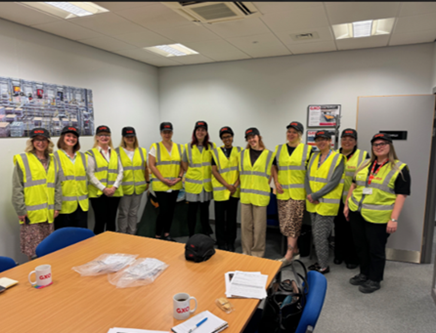
Suited and booted to present to a factory workforce
The Allied Health Professions (AHP) Strategy for England highlights the role of AHPs in disease prevention and health promotion, helping to reduce the burden on already stretched health and social care services. Diet-related diseases remain a major public health challenge, yet dietetic care is still largely focused on treatment rather than prevention. If the profession is to play a greater role in supporting population health, then equipping students with strong public health knowledge and skills is crucial.

To support this, Teesside University’s MSc Dietetics programme now includes public health placements alongside traditional NHS clinical placements. Here, Alex shares her experience of working in a Public Health practice-based learning setting. A must read in National Careers Week for anyone considering a future career as a dietitian!

------------------------------------------------------------------------------------------------------------------------------------------------------------------------------------------------------

What I worked on

During my placement, I was involved in three projects focused on health improvement and disease prevention. My work involved meeting with stakeholders, conducting research, presenting findings, and engaging with the public. The projects covered a wide range of population groups, including expectant mothers, school-age children, local workforces, and food bank users.

1. Supporting parents with child nutrition

A key part of my placement involved reviewing the nutrition education available to parents of children aged six months to four years.

What I did:
  • Conducted a literature and policy review
  • Spoke to parents, NHS staff, and school representatives
  • Attended a breastfeeding class to hear directly from parents
  • Presented my findings to several teams, including the Director of Public Health
Why it matters:
The insights from this work will help shape future research and improve nutrition support for families in the local area.

2. Linking oral health and nutrition


There is a strong connection between what we eat and oral health, but not everyone has access to clear, easy-to-understand information about this link.

What I created:
  • Infographics and presentations to educate local workforces
  • Materials designed in an easy-read format, avoiding jargon
Why it matters: 
My presentation was really well received, and I was even asked to record it for wider distribution, so it could be shared with professionals working with children and people with additional needs.

 
Infographics to educate local workforces

3. Reducing food waste in a local food pantry


Many food pantry users rely on short-dated products, and without clear guidance, a lot of good food can go to waste.

What I did:
  • Designed simple, visual signs with food storage and cooking tips (e.g. "Chop me then freeze me")
  • Introduced a ‘Freeze me’ sign for bread and monitored its impact
What happened?
Twice as much bread was sold the day after the sign was put up compared to the previous two weeks combined!


Signs made to reduce food waste

What I learned
  • Public health plays a key role in patient care - I saw first-hand how wider social factors impact people’s ability to manage their health and access services.
  • Being proactive is crucial - I reached out to stakeholders independently, which helped me build confidence and leadership skills.
  • Flexibility is a great learning experience - managing my own projects and working in a less structured environment improved my time management and adaptability.
  • Self-care matters - the flexibility of this placement meant I could work in different settings, including from the park on sunny days!
Final thoughts

Introducing dietetic placements into public health settings is a win-win. It helps students gain a broader skillset, supports NHS capacity, and brings dietetic expertise into community settings.

Of course, doing things differently comes with challenges. Expanding placements into public health settings has required commitment from everyone involved - academics, placement providers, and students. But we’re constantly learning and improving, and we’re proud to be making a real impact on the health of our local communities.

Friday, 13 September 2024

How can Local Authorities help shape healthier food environments?

Posted by Amelia Lake, Claire O'Malley and Helen Moore, Fuse researchers from Teesside University

This week I joined other health professionals across the country in signing an open letter from the Obesity Health Alliance (OHA) to the Prime Minister, giving our support for new policy reforms, allowing the planning system to better support the creation of healthy, active local communities and reduce health inequalities. The letter was issued alongside the OHA's Local Government Position Statement: “Empowering Communities to Create Healthier Local Food Environments”, which contains a list of recommendations and a supporting package of evidence.

In support of the OHA statement paper and on the back of the news that the government plans to ban junk food TV adverts before 9pm next year, here we highlight the need to make it easier for local authorities to control their local food environments.


Why we need to act now

It’s essential to create healthier environments that make it easier for people to access nutritious food and engage in physical activity. With the cost of living rising, more people are facing food insecurity, and obesity remains a major health issue. Local authorities have a crucial role in shaping healthier communities, but they face challenges due to funding cuts. Despite these difficulties, professionals across the country are working hard, but they need clearer national policies to support their efforts.

The role of National Planning Guidance

Planning guidance should clearly prioritise public health. While policies often focus on individual responsibility, local governments can work with their communities to promote healthier lifestyles. Our research has shown how local authorities can shape healthier environments by collaborating with various stakeholders, from community members to policy makers.

Everyone’s responsibility


Creating healthy food environments requires collaboration among many professionals within local governments. When it comes to handling appeals for fast-food outlets, our research found that good communication between teams is key to defending decisions. It’s also important to understand how fast-food outlets affect communities and health over the long term. To improve the process, professionals should be trained in accessing relevant data and records.

Using regulations to improve the food landscape

Local authorities can use planning regulations to limit the number of fast-food outlets and promote healthier options. For example, in North East town Gateshead, limiting new fast-food outlets near schools, in areas with too many, or in places with high childhood obesity rates has reduced fast-food outlet numbers by 17.5% in just four years. This shows how strategic planning can make a real difference in promoting healthier food choices.

Working with the planning inspectorate

The National Planning Policy Framework supports the idea of “healthy communities,” and local governments can reject fast-food applications if they threaten local health goals. However, these decisions are often appealed, and the Planning Inspectorate makes the final decision. Our Fuse research shows that having a Local Plan in place helps local authorities reject such applications, but even with additional planning documents, success isn’t guaranteed. It's important for new planning guidelines to support public health and ensure that the Planning Inspectorate works with local authorities to meet health priorities.

Regulating outdoor food advertising

We support extending regulations on unhealthy food and drink ads beyond TV and online to outdoor spaces like bus stops. After London banned junk food ads on public transport, local governments began reviewing their advertising policies with the help of Sustain: the alliance for better food and farming. Our research in the North East found that almost half of bus shelter ads were for food, and 35% of those were for unhealthy options. Many of these ads appeal to children, which is concerning. Although local governments face challenges due to complex contracts with advertisers - and research has explored the advertising of unhealthy commodities (e.g. tobacco, alcohol, less healthy foods and gambling) - more work is needed to reduce the impact of unhealthy advertising.

The changing food landscape

A recent study in North East England showed that after a new fast-food outlet opened, visits by 11- to 16-year-olds increased significantly within the first nine months. The young people said they were attracted by the taste, low prices, socialising and free Wi-Fi. While this isn’t covered by current fast-food restrictions, it shows the need to look at the entire food system and where outlets are located. Policies that prevent students from leaving school during lunch could also help reduce fast-food consumption.

Another growing trend is "dark kitchens," which only prepare food for delivery services like Deliveroo and Uber Eats. While these kitchens bring economic benefits, they raise public health concerns, especially in low-income areas. Local authorities need to stay informed about this trend and address the challenges it presents, such as the increase in unhealthy food options. Some professionals worry that current regulations for fast-food outlets don’t work well for dark kitchens, so there’s a need to adapt the system to ensure public health is protected.

Monitoring and evaluation

It's important for local authorities to regularly review the food environment and assess how well their policies are working. By collecting and analysing data, they can identify areas for improvement and make sure their strategies are effective and responsive to community needs.

Focusing on these areas will help local governments create environments that support healthy choices and improve the overall wellbeing of their communities. With thoughtful planning and strong community involvement, they can significantly impact public health. To do this effectively, local authorities need clear understanding of planning policies, support from senior management, adequate staff, and the right resources to handle cases efficiently.


Amelia Lake is Professor of Public Health Nutrition at Teesside University, Associate Director of Fuse, the Centre for Translational Research in Public Health, a dietitian and public health nutritionist.

Dr Claire O'Malley is a Research Associate at Teesside University and a Fuse Associate member

Helen Moore is an Associate Professor at Teesside University and a Fuse Associate member


Photo by Erik Mclean on Unsplash

Thursday, 14 March 2024

Supporting people with Severe Mental Illness who face food insecurity to access a nourishing meal

Sally Smith, Peer Lead for Research, Tees, Esk and Wear Valleys NHS Foundation Trust (TEWV)

I have met many wonderful and interesting people on the inside of a psychiatric ward. The immediacy and depth of connection between peers in there was an unexpected comfort in the most challenging of environments.

Illustration by Sally Smith


I remember lots of the stories shared in the smoking corners of gardens. We often reflected on how misunderstood we felt in the ward and in the world.

One young woman was desperate to stay on the ward as she knew that was the only way she was certain of ongoing access to food. Her cupboards empty, her benefits paused, she was terrified about discharge. I was unsure how much Dialectical Behavioural Therapy or anti-depressants would help: wouldn’t anyone feel miserable with no food or money?

I remember physical health checks on the ward being introduced. Being weighed and measured, compared to the graphs…. and yet being given medication that makes you want to eat sugar out of the bag, being locked on a ward with no way to exercise, offered beige food four times a day and feeling so damn lousy and desperate that motivation to even clean your teeth was a challenge.

It felt cruel and shaming. It certainly never helped me to change anything.

In my mind it is no surprise that the mortality gap for people with severe mental illness (SMI) continues to rise, the challenges and barriers around nutrition that people living with SMI face continue to go unseen. No amount of lessons on what makes a healthy plate will make avocado cost less than crisps, and no knowledge of a healthy Body Mass Index (BMI) will reduce the intense effects of psychiatric medication.

And perhaps this is more of an issue than ever with austerity and the cost-of-living crisis exacerbating people’s struggles.


Increasing accessibility of affordable healthy food to adults living with SMI in Middlesbrough

With this perspective in mind, I was delighted to join the team working on this National Institute for Health and Care Research (NIHR) Communities study as a peer researcher. With co-production and the voice of lived experience running throughout the project, we are seeking to develop practical solutions for people living with SMI who face food insecurity in Middlesbrough.

The project is a collaboration, bringing together lived experience with the best bits of Tees, Esk and Wear Valleys NHS Foundation Trust (TEWV), Teesside University and Middlesbrough Environmental City, a charity dedicated to promoting healthy and sustainable living.

Over a period of 16 weeks, we plan to co-design and co-develop a nutritious meal with surplus fresh ingredients from local Eco shops (social supermarkets) that would otherwise go to waste.

With the support of the food scientists at Teesside University, this will then be turned into a healthy ready meal and distributed back to Eco shops in Middlesbrough. Aiming to be an appetising, nourishing and accessible meal for local people battling severe mental illness, who for whatever reason may struggle to cook the fresh ingredients themselves.

Through the design and delivery group we are hopeful that there may be additional benefits for all participants and the collaborating organisations, for example:
  • The opportunity to learn some cooking skills and explore recipes that are good to cook on a budget.
  • The opportunity to develop peer relationships amongst the delivery group that support connection and foster hope for change.
  • The opportunity for organisations to learn from one another’s strengths and take a fully bio-psycho-social lens on mental health difficulties.
We are currently in the recruitment phase for participants and a collaboration of this type has not been without substantial challenge. It is has not been easy to marry NHS language and expectations and academic protocols with how a community organisation runs. It has not always been easy to find middle ground between the clinical expertise and lived experience expertise. However, I look forward to sharing the progress we make as the delivery team becomes established.
 

Research published by the project team

This study published today explores food insecurity prevalence and the experiences of adults with Severe Mental Illness (SMI) living in Northern England.

This systematic review paper found that people with SMI are more likely to experience food insecurity.

Another recently published paper identified strategies to tackle food insecurity centred on making food banks more accessible and improving the quality of available food available.

Friday, 19 January 2024

Energy drinks may be commercially lucrative but what is more valuable than the health of our children?

Posted by Amelia A Lake, Professor of Public Health Nutrition at Teesside University, and Shelina Visram, Senior Lecturer in Public Health at Newcastle University

As we prepared our new review on the health effects of the consumption of energy drinks by children and young people, we have been dwelling more and more on the Commercial Determinants of Health.
The Commercial Determinants of Health are defined by the World Health Organisation (WHO) as: 

“...the private sector activities that affect people’s health, directly or indirectly, positively or negatively.”

The WHO definition goes on to expand on how these activities might include the private sector influencing:
“...the social, physical and cultural environments through business actions and societal engagements; for example, supply chains, labour conditions, product design and packaging, research funding, lobbying, preference shaping and others.”
Now cast your mind back to pre-Covid… a Government consultation on the banning of energy drinks had a 93% backing to restrict the sale of these drinks to under 16s. There was even a Green Paper proposing this. Yet, there has been inaction (helpfully summarised here by Sustain: the alliance for better food and farming).

What is causing this inaction? Is it a turnaround in evidence that suggests these drinks are not as harmful as previously thought, or is there something else going on...? Perhaps, instead there are some pretty significant commercial interests at stake; but what could be more valuable than the health and wellbeing of our children and young people?

Energy Drinks are VERY commercially viable. They have been the fastest growing sector of the soft drink market for some time. In 2020 the global market was worth $45.80 billion and this is projected to grow at an annual rate of 8.2%. In an article in December 2023, The Grocer described the hydration drink and energy drink market as “buoyant”.

Research has found that around one in three young people (under 18) say that they regularly consume energy drinks, typically containing high levels of caffeine and sugar in combination with other ingredients known to have stimulant properties. On average, young people in the UK consume more energy drinks than those in other European countries.

You may be familiar with the labelling on energy drinks:

Image courtesy of www.parliament.uk (by URL)
High caffeine content. Not recommended for children or pregnant or breast-feeding women

Under current labelling rules, any drink, other than tea or coffee, that contains over 150mg of caffeine per litre requires this label and should state the amount of caffeine in milligrams per 100ml of the drink.

Yet why do we see these drinks unrestricted and available to children and young people, not just in the UK but globally? Some countries have attempted to regulate energy drinks (see our research for more on this).

Our new review of the global evidence around energy drinks and the health impacts on children and young people shows a worrying increase in the types of health outcomes associated with their consumption. This includes mental as well as physical health behaviours. Not only health impacts but wider impacts around sleep and educational attainment.

This new review is the latest of many which have highlighted the impacts of these products to our younger population.

We accept the evidence is from mostly cross-sectional studies, exploring association rather than causation. Experimental studies to establish causation have both ethical and feasibility issues. We have argued before that the precautionary principle should be applied. This country bans the sale of a number of items to young people (fireworks, crossbows, knives) presumably these don’t have the large commercial interests or lobbying groups that the energy drink industry has?

Why are we applying a higher standard of evidence to energy drinks, if it isn’t around their commercial value?

The evidence is here, the labels clearly say these drinks are not suitable for children. How many more studies are needed before policy action is enacted?

------------------------------------------------------------------------------------------------------------------------------------------------------------------------------------------------------

Fuse Podcast about this Energy Drinks research
Listen to the latest episode of the Fuse podcast ‘Public Health Research and Me’, in which host and Fuse Public Partner Cheryl Blake chats with Amelia and Shelina about their research, to cut through the confusion and ask some the questions that you want to know about Energy Drinks.
Listen now

Find out more


Images:
2. Courtesy of www.parliament.uk (by URL) > Parliamentary business > Publications & records > Energy drinks and children > 4 Labelling and advertising: 

The views and opinions expressed by the authors are those of the authors and do not necessarily reflect those of Teesside University, Newcastle University, or Fuse, the Centre for Translational Research in Public Health.