Showing posts with label long covid. Show all posts

Friday, 30 July 2021

The Sound of Sirens

Posted by John Mooney FFPH, Consultant in Public Health, NHS Grampian @StandupforPHlth

Easily my most notable memory from the first Covid-induced lockdown was the unmistakable and disconcerting shriek of ambulance siren calls, regularly piercing the ‘lockdown’ silence of largely empty streets. Prompted by the memory of the mythical origins of the word ‘siren’, in which enchanting songstresses lured sailors and their ships to a rocky destruction, it struck me that the lure and temptation of ‘freedom day’ on which all Covid-19 constraints on social and other gatherings are no longer mandatory might yet similarly have an unfortunate aftermath. While I expect that risks placing me firmly in the ‘doomster’ camp, it seems I am in good company after the letter in last week’s Observer from some of our most eminent public health leaders who were at pains to point out that “living with Covid is not the same thing as letting it rip”.

   
Watch 'Sound of Sirens' by John Mooney and Dr Clare Pettinger (AKA the Singing Dietitian) inspired by this blog post

This is now my third Fuse blog about Covid, in what is sadly proving to be a rather prescient series of posts about the pandemic. I set out in the first (published in February 2020), that as a newly emergent single stranded RNA virus, Covid-19 would be genetically unstable and undergo mutations which could influence its epidemiological characteristics including virulence and transmissibility. To say therefore that the present situation was not foreseeable (given my rudimentary grasp of evolutionary genetics), is clearly not that convincing. It’s probably even more self-evident that the more transmissible variants will be the same variants that are most transmitted, because this is the essence of viral survival strategy. Even with that knowledge however, the speed with which the Delta variant became the dominant strain (from under 10% to over 90% in a matter of weeks and now accounting for 99% of identified cases), was fairly breath-taking even by viral standards. 

A particular concern just now of course must be that the UK’s success in achieving a high vaccination uptake creates a new ‘selection pressure’ of its own, in that any newly emergent strain with the capacity to evade vaccine induced immunity will have an enormous selection ‘advantage’ in a population which has the combined characteristics of a high vaccination rate plus a high level of circulating virus. It’s easy to appreciate then how such a new variant could assume a ‘delta-style’ trajectory towards dominance, leaving even the fully vaccinated vulnerable once more. This is of course not a reason for reducing vaccination efforts which have been critical in protecting vaccinated age groups, thereby reducing the proportion of the population susceptible to new infections. If I could squeeze in one final take-home vaccine basics key message: the more infectious a particular variant, the higher proportion of a population needs to be vaccinated to mitigate transmission. This has prompted some commentators to expect that the holy grail of ‘herd immunity’ will always prove elusive for Covid.

The very real challenge for those of us in practice settings (having recently returned to NHS public health myself), is how best to advise local populations and relevant agencies in order to keep reducing the levels of circulating virus. The mechanisms that work here are very much those that are already in place combined with ongoing vaccination and access to local testing. The extent to which people might be willing to submit to testing that could sacrifice a long-coveted holiday, versus their readiness to isolate away from work, might begin to explain a divergence in the surveillance data in some health-board areas between declining numbers of cases and relatively stable hospital admissions (even allowing for the two week lag). The latter of which has already led to cancelled elective procedures in ours and other regions. We also know that infections in younger age groups are more likely to be mild / asymptomatic taking away the ‘illness prompting’ rationale for seeking a test.

Receiving supplemental oxygen in A&E
 6 months after initial Covid symptoms
 (mask displaced to drink)

At this point it would be useful to highlight the relevance of the second blog in this series as then it all looks impressively planned! (Spoiler alert: it wasn’t!). In that article, I described my experience with Long-covid which I was unfortunate enough to develop very early in the first wave and which included an unscheduled hospital stay and fast track angiogram (think X-ray to check heart blood vessels) thanks to a “dangerous ECG”. Thankfully 18 months on I am much recovered, but remain very conscious that there was more than one false dawn over the course of the illness, although later episodes were milder. The inescapable parallel from a population standpoint is that Covid-19 can prove a truly mercurial adversary, lulling you into a sense of comfort and security, just like the mythological Sirens, before dashing you against the rocks of reality once again. The attached illustration above: ‘Ulysses and the Sirens’ is an 1891 painting by Pre-Raphaelite artist John William Waterhouse. In the words of the Wikipedia description:

"The work depicts a scene from the ancient Greek epic the Odyssey, in which the Sirens attempt to use their enchanting song to lure the titular hero Odysseus and his crew towards deadly waters. As per the Odyssey, Odysseus' crew had already blocked their ears to protect themselves from the Sirens' singing, but Odysseus, wanting to hear the Sirens, had ordered his crew to tie him to the mast so that he may have the pleasure of listening without risking himself or his ship."

In other words, the measures clearly employed were distancing and personal protective equipment! [Note the bound ears of the crew]. Perhaps the fact that the new variants are being ascribed Greek lettering might help persuade us to take a leaf from these mythological mariners and maintain some of our protective measures just a little longer while vaccine roll-out continues. In keeping with worrying reports from our clinical colleagues and as anecdotal as this could certainly be described, I have increasingly of late been hearing much more of the sound of sirens… 


John is currently employed as a consultant in public health with NHS Grampian and has a background in respiratory infectious disease epidemiology. 


Image:
1. John William Waterhouse, Public domain, via Wikimedia Commons


The views expressed in posts are those of the authors and do not necessarily reflect those of Fuse (the Centre for Translational Research in Public Health) or the author's employer or organisation.

Friday, 4 December 2020

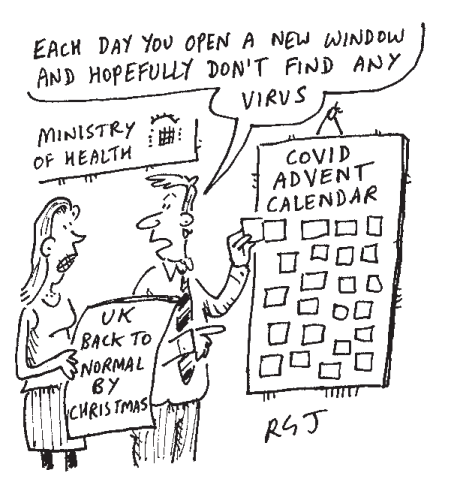
Long Covid’s Advent Calendar of Symptoms

Posted by John Mooney FFPH, Locum Consultant in Public Health, NHS Highland @StandupforPHlth

I should really start this piece with both a declaration of personal interest and a confession. Firstly, I can unfortunately count myself among the many thousands of people affected by what is being referred to as ‘long covid’. Secondly, I have shamelessly borrowed my title analogy from a fellow sufferer and infectious disease academic, Professor Paul Garner whose highly engaging and informative BMJ blogs(1,2) on the subject have helped many to realise that they are not alone or imagining things. With another prominent ‘patient-advocate’ for the disease being the University of Southampton’s Dr Nisreen Alwan, (associate professor and consultant in public health), you might be forgiven for thinking that this is a virus with a special affinity for public health professionals! Now that would be clever but regrettably it is clearly far less discerning.

Image credit: The Spectator magazine and the illustrator Richard Jolley

In keeping with the spirit of the season, my own advent calendar of symptoms has popped open several new windows this week, most notably ‘pins and needles’ and joint pains. Both have arrived on top of the commonly experienced and more worrying long-term chest pains (eight months in my case) and irregular erratic heart rate (managing over 200bpm at rest on one occasion (the normal range for healthy adults is between 60 and 100 bpm). This combined with a rogue ECG readout (Electrocardiograms test the heart's rhythm and electrical activity) in a local A&E department earned me an unscheduled two-night stay in hospital six weeks ago. Seemingly intractable tinnitus has become another constant ‘companion’.

Resting heart rate over 200 bpm &
 oxygen saturation below optimal 

Thanks to my local NHS Hospital, my symptoms were comprehensively investigated and I continue on the ‘recovery’ journey - if recovery is not too optimistic a label. Recent findings from several studies on the longer term complications of the disease have however made for uncomfortable reading, all the more so for being carried out in people whose symptoms had generally not been particularly severe.

In the first of these, a Frankfurt based cardiac MRI study(3) recruited 100 cases of non-hospitalised patients in whom 78% were found to have disruption to heart muscle function and 60% ongoing heart tissue inflammation. Given that the number of ‘milder’ cases will always inevitably far outweigh the numbers hospitalised or who tragically do not survive, the sheer scale of the potential public health disease and premature death burden (if heart health is undermined), begins to look very concerning(4).

Receiving supplemental oxygen in A&E 6 months after
 initial symptoms (mask displaced to drink)


Perhaps more worrying still, ‘long covid’ does not seem to restrict its attentions to the heart and lungs, with another study finding evidence of multiple organ damage in 201 people with a largely mild course of disease, 70% of whom had damage in one or more organs, including kidneys (12%), liver (10%), pancreas (17%) and spleen (6%), as well as heart (32%) and lungs (33%) four months after initial symptoms(5)

Adding further to this complex picture was a news release about a study this week of ten patients at Oxford University in which a novel scanning technique was used to successfully identify damage not picked up by conventional scans(6). Eight of the ten patients still experiencing shortness of breath three months after infection (none severe enough to be hospitalised), had evidence of hidden lung damage. The new technique will now be repeated with a much larger sample.

These worrying findings about potential long-term damage are already prompting some big-picture questions: What proportion of people who only had very mild disease will go on to develop organ damage? Proportions like 60% and 70% could potentially translate into a staggering public health disease burden with very substantial implications for health services. Devastating though the considerable loss of life has been, the eventual population impact clearly has the potential to be far greater(4)

As always with such matters however, it is never especially helpful or productive to dwell too long on ‘worst case scenarios’. For my own part, I am fortunate to be in a non-physically demanding job with an understanding employer. The prospect of accommodating such an unwelcome guest as long covid in a physically strenuous job or on a zero hours contract (or both) does not bear thinking about. Long covid clearly has the potential to further exacerbate the substantial inequalities in health and social outcomes that have so clearly characterised the current pandemic.

Significant unanswered questions also remain around which population groups are most likely to be affected by long covid: do they correspond for instance to those most at risk of not surviving? Early indications are that this might not be the case, at least as far as age or gender is concerned: while there has been no systematic population prevalence study, long covid seems to disproportionately affect younger and middle-aged adults, and females over males. For some this latter observation lends credence to long covid being ‘auto-immune’ in origin since women tend to be at higher risk of such diseases (lupus and rheumatoid arthritis being two prominent examples).

Would vaccination be helpful for those affected? Or might it be dangerous given the likely involvement of a misdirected immune response as the basis for the condition? In these respects it’s extremely encouraging that long covid is receiving high level research attention that seems to be already helping to unravel its impact, causes and effects. Such efforts may ultimately be at least as valuable as the impressive progress with vaccine development.

Returning to the advent calendar of the title, the wonderful thing about advent is that there is a season of joy and festivity at the end of a dark midwinter month. Here’s hoping that there is an end in sight also for the many afflicted by long covid.


References:
  1. Paul Garner on long haul covid-19—Don’t try to dominate this virus, accommodate it - The BMJ September 4, 2020. https://blogs.bmj.com/bmj/2020/09/04/paul-garner-on-long-haul-covid-19-dont-try-and-dominate-this-virus-accommodate-it/
  2. Paul Garner: Covid-19 and fatigue—a game of snakes and ladders - The BMJ May 19 2020. https://blogs.bmj.com/bmj/2020/05/19/paul-garner-covid-19-and-fatigue-a-game-of-snakes-and-ladders/
  3. Puntmann VO, Carerj ML, Wieters I, et al. Outcomes of cardiovascular magnetic resonance imaging in patients recently recovered from coronavirus disease 2019 (COVID-19). JAMA Cardiol. Published online July 27, 2020. doi:10.1001/jamacardio.2020.3557
  4. Mooney, JD, Ling J. Long covid: a potential longer term morbidity time bomb?: Rapid response to: BMJ 2020; 371. doi.org/10.1136/bmj.m4470
  5. Dennis A, Wamil M, Kapur S, Alberts J, Badley AD. Multi-organ impairment in low-risk individuals with long COVID. https://www.medrxiv.org/content/10.1101/2020.10.14.20212555v1.full.pdf
  6. BBC News: Covid-19: Lung damage 'identified' in study: 1st Dec 2020 https://www.bbc.co.uk/news/health-55017301

Acknowledgement to high profile fellow awareness raisers of #LongCovid:

Professor Paul Garner: Liverpool School of Tropical Medicine: @PaulGarnerWoof

Dr Nisreen Alwan: University of Southampton @Dr2NisreenAlwan