Showing posts with label communication. Show all posts

Friday, 9 February 2024

How can we fail more intelligently?

Posted by Peter van der Graaf, Northumbria University; Amanda Purington Drake, Cornell University; and Ien van de Goor, Tilburg University

We don’t like talking about failures, as it signals loss of time, resources and reputation, but failures present opportunities for learning in knowledge exchange. 

However, this requires a ‘failure culture’ in academia and policy, in which failures are no longer avoided but actively encouraged. To learn how to turn failures into successes, we need to share and publish our failures, have early engagement with all stakeholders in the knowledge exchange process, and make more use of boundary spanners.

There are plenty of academic papers celebrating successes in knowledge exchange, but not many researchers and policy makers talk openly about their failures. But learning from failures is just as important, if not more crucial, than celebrating successes. Allowing partners to reflect in a safe space on knowledge exchange practices and research projects gone wrong, in which communication broke down, partners did not engage or dropped out, and evidence was not taken up or ignored, will provide important lessons on how knowledge exchange practices and research can be improved.

Paul Iske. Chief Failure Officer, speaking at the Fuse conference in 2022  
At the 5th Fuse Conference on Knowledge Exchange in Public Health in 2022, we created such a space in Newcastle by bringing together over 100 academic researchers, policy makers, practitioners, and community members to share and reflect on their failures and how to turn them into success. Don't miss the 6th conference in the US ! 

Our Special Issue: Learning from failures in knowledge exchange published this month in journal Evidence & Policy brings together selected papers from the conference and papers that were submitted in response to an open call afterwards. From 23 original submissions from 14 different countries (including the UK, USA, Canada, Norway, Switzerland, Kenya, Chile, South Korea, and Portugal) and from a range of disciplines and areas of focus (Public Health, Primary Care, Oral Health, Sociology, Anthropology, Public Management, Policy-Making, and Community and Voluntary Sector), we invited four research papers and three practice papers for full submissions.
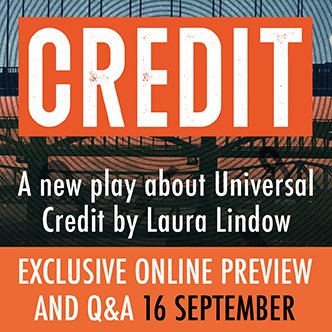
This includes a paper from Fuse Associate Mandy Cheetham and her practice colleagues on the challenges of co-production. They reflect on the failed performance of a theatre play to mobilise the research findings of a qualitative study into the health and wellbeing effect of major social security reforms (Universal Credit) in the North East of England. They argue that academics fail to appreciate emotional engagement of stakeholders in knowledge exchange.

The point about emotional labour in knowledge exchange and research is further developed (and flipped) by Louise Warwick-Booth, Ruth Cross and James Woodall. They reflect on data generated from three evaluation studies across different Voluntary, Community and Social Enterprise (VCSE) interventions in the North of England. In their paper, they expose the conflict between the research teams and evaluation partners, structured around five key features of co-production to highlight the emotional costs and labour involved for researchers.

The seven papers highlight different ways of defining and conceptualising failures in knowledge exchange, ranging from mis-implementations, to setbacks, pitfalls, unproductive interactions between stakeholders, conflicts in co-production, and deviations from expected and desired results. Using different theories and frameworks, the papers in this special issue demonstrate that failures are complex problems, involving many actors at different levels across various organisations and networks. These organisations and networks are in turn influenced by a range of determinants, from workforce instability, leadership challenges, and lack of adequate funding to practical, everyday issues, such as logistical, technical, and buy-in considerations.

Each paper offers a different perspective on relational barriers and structural stressors contributing to failures, but all authors agree that failures offer opportunities for learning, particularly small failures. We tend to focus on large catastrophic failures, but small failures are often the early warning signs, which can help to avoid larger failure in the future. To support this learning, we need to talk more openly about failures and create a culture where talking about and sharing of failures is more accepted and, even better, actively encouraged. Therefore, we argue for more deliberate experimentation in organisations and partnerships to allow for failures that provide rich insight and learning. How can we fail more intelligently? And how do we create spaces and time for reflection on failures between evidence producers, brokers and users to share this learning and support them in turning failures into successes?


This blog post is based on the article, ‘Learning from failures in knowledge exchange and turning them into successes’, which introduces the Special Issue: ‘Learning from Failures in Knowledge Exchange’. Adapted with thanks to Evidence & Policy.


Authors

Peter van der Graaf is an Associate Professor in Public Health at Northumbria University and Research Manager of AskFuse - the responsive research and evaluation service run by Fuse. Peter is interested in the interface between research, practice and policy making and how this interface facilitates (or hinders) social improvement processes at local, regional, national and international levels. He conducts research on knowledge mobilisation in public health, with a focus on the wider determinants of health (e.g. housing, health landscapes, urban regeneration) and how they affect people’s health and wellbeing.

Amanda Purington Drake, PhD, is the Director of the ACT for Youth Center for Community Action at the Bronfenbrenner Center for Translational Research and a research collaborator with the Social Media Lab, both at Cornell University, USA. Amanda has a passion for using research and evaluation to help communities to promote and support the health and wellbeing of youth. Her work in the Bronfenbrenner Center has focused on promoting positive youth development, investigating non-suicidal self-injury in general populations of adolescents and young adults, and evaluating the effectiveness of large-scale adolescent sexual health initiatives. She has co-developed and evaluated interventions to develop youth social media literacy and to promote parent-teen communication about sexual health. Amanda works to bridge research and evaluation with practice and policymaking to prevent youth risk-behavior and promote healthy development.

Ien van de Goor (MSc, PhD) works as endowed professor and program leader in Public Health and Prevention at Tranzo, Faculty of Social and Behavioral sciences, Tilburg University, in the Netherlands. She has a background in health sciences with many years of research experience in evidence-informed public health. Central areas of interest are healthy behaviour in relation to the environment, poverty and vulnerable groups, and monitoring and public health policy.


The views and opinions expressed by the authors are those of the authors and do not necessarily reflect those of Fuse, the Centre for Translational Research in Public Health.

Friday, 22 July 2022

Going hybrid: The best of both worlds?

Posted by Helen Moore, Associate Professor (Research), Teesside University

Since 2012 my ability to attend in-person and participate in seminars, conferences and workshops has been significantly reduced. This was partially due to a change in my mobility while I was pregnant with twins twice (!) (2012, 2015), and then after my pregnancies, due to the challenges of arranging childcare for four small children. It has become easier as they have got older, but after my second maternity leave, I returned to work but remained the primary carer for four children under the age of four as their father (my husband), was (and still is) a Merchant Navy captain, which involves working away for half of every year.

Make an enquiry about getting professional technical help as soon as you conceive the idea
 – don’t assume it will be prohibitively expensive
During this time, I had always felt very grateful to any event organiser who took the time to release the slides after their events or, as time progressed and technology moved on, to run an additional online version as this enabled me to participate, albeit in a less than perfect fashion, but I viewed it as certainly being better than nothing. I hadn’t really appreciated how many other people were also often unable to attend events in-person, due to other factors in their lives, but this was brought into sharper focus for me with the Covid-19 pandemic when I started reading, and joining in with, conversations on social media around event accessibility that had never been on my radar.

I’m sure everyone remembers that when lockdowns were imposed, initially events were completely cancelled but as time progressed and it became clear this was not going to be a ‘flash in the pan’, the planning stages of events began to include considerations of how best to run them entirely online, with many people having to rapidly learn and develop skills around using technology to engage with the maximum number of participants possible.

Between January-April 2021, I was part of a team that worked on a project commissioned by the Office for Health Improvement and Disparities (OHID) which looked at the impact of Covid-19 on the hot food takeaway planning regulatory environment in North East England. As the project drew to a close the team thought that this, alongside other work we had been involved in, or were aware of, would make an excellent Fuse Research Event, and my colleague Professor Amelia Lake and I decided we would work together to make it happen.

I was keen to explore the possibilities of having a, in my view, truly hybrid event, where participants could choose to attend in person or via a real time remote video stream, and where presenters could choose to be in the room or present via a MS Teams link. I had previously worked with the team from Teesside University’s Aurora House on other projects, and Amelia had worked with them to create the live stream of her inaugural professorial lecture, so we were confident that they possessed the skills, the technology and the will to ensure this could happen.

It took a lot of organisation to get this to work, and having organised many events pre-Covid, it was definitely more work than if we had decided to run a traditional event with in-person attendance only. I spent significant amounts of time thinking about how we could include the remote audience and presenters in the discussion in the most effective way. The entire event was live streamed on the Fuse YouTube channel, with a technician ensuring that the virtual audience saw a mix of angles and information during the session. We used sli.do to allow the remote audience to submit questions during each presentation, and then one of the organising team asked the questions using the same microphone that was used for questions from the room so everyone could hear.


We only had one minor hiccup, in that we used my personal Teams account to allow the external speakers to present, and I forgot to decline meetings that were scheduled to run at the same time – and, of course, the other meeting used the chat function, which meant everyone could read their messages! We managed to get a message to the other meeting and they quickly stopped using the chat function!

As usual, we asked for feedback on the event, and the comments were extremely positive, including the fact it was hybrid, with “Ability to attend online”, mentioned in more than one response.

I would absolutely encourage people to think about making the effort to run hybrid events. it widens your audience and opens up different avenues for discussion – posing a question via an online function is, for most people, less scary than standing up and speaking into a microphone! 

My top tips for running a hybrid event

While I was writing this blog, I thought about what my top five tips would be for anyone considering running a hybrid event in the future:
  1. Make an enquiry about getting professional technical help as soon as you conceive the idea – don’t assume it will be prohibitively expensive;
  2. Ensure you communicate with the presenters and attendees, before and during the event, about how they can interact and engage during the event;
  3. Use interactive apps such as sli.do.
  4. Avoid using personal accounts for external events, such as Teams or Zoom (or make sure to decline any other meetings scheduled at the same time!)
  5. Always ask for feedback to improve future events.

Friday, 11 February 2022

Dressing as a tomato and meeting the CMO - all in a day's science

Elsie Widdowson, British nutritionist
Posted by Amelia Lake, Professor of Public Health Nutrition at Teesside University and Associate Director of Fuse

In this blog on International Women's Day, Amelia tells us about the pioneering female scientist who inspired her career in nutrition science.

When I was at University studying for my degree in Human Nutrition and Dietetics in the mid 1990s our ‘food tables’ were in books – actual books that you held.

We worked out nutritional content of food using books and calculators. Now-a-days this is all done by software without the need for the hard copy of the books. The book we all had was a copy of the ‘McCance and Widdowson’ Food Tables. I still have my well thumbed copy and the book is the the basis of the modern software systems that nutritionists and food scientists use.

Although as an undergraduate I didn’t really give the names McCance and Widdowson much thought it was later on in my career, thanks to the British Nutrition Foundation and my colleagues, that I really learned about Elsie Widdowson. She was born in 1906 and died in 2000 having spent a long and productive life as a pioneering female scientist. Along with her colleague Robert McCance, Elsie Widdowson was at the forefront of the Nutrition effort after World War II.

Elsie studied Chemistry at Imperial Collage London and in 1931 completed a PhD in Chemistry also at Imperial. Elsie met Robert McCance in the kitchens at Kings College Hospital in 1933, when she was studying to become a dietitian and he a junior doctor. Here, in the hospital kitchens, began a partnership that would last for 60 years!

It was at Cambridge, where they both worked, that the book I mentioned earlier was developed: a publication pivotal to nutritional science. But it wasn’t just for the development of this book that she has my respect - it was for the pioneering work around vitamin and mineral fortification, the rehabilitation of severely starved individuals and malnourishment around the world and important work on infant diets. This was an incredible female scientist who paved the way for nutrition scientists like me.

 
                           My inaugural Professorial lecture - challenging the food environment

I recently spoke about today’s nutrition challenges in my inaugural Professorial lecture. Preparing for this lecture I had to reflect on the work I have been doing in the field of nutrition research starting from 1998, looking at ‘the influence of Western Food on a Traditional Diet’ in Western Sumatra Indonesia for my first degree, through to my PhD studies on longitudinal dietary change and then finding my field around Obesogenic Environments and Food Environments. Similar to the ever changing Food Environment, which I study, the field of nutrition science is ever changing - in line with our changing diets and behaviours. There remain many challenges not least around food insecurity which, according to a new report by the Food Foundation, continues to increase. The current cost of living crisis puts food and eating into the spotlight. 

One of the challenges of Nutrition Research is around communicating. Doing this clearly around the noise of misinformation about food or food products is a challenging job! Throughout the twenty-three years that I have worked in nutrition, I have spent a significant amount of time communicating. Sometimes, that involves dressing as a tomato for a public lecture to children (see picture) and sometimes that involves meeting the chair of The House of Commons Science and Technology Committee (Sir Norman Lamb) or even the Chief Medical Officer (Professor Chris Whitty). But most of the time it is about exchanging knowledge between professionals and communicating to the public about the ‘latest’ nutrition fad or ‘superfood’ (spoiler - there is no such thing as a superfood).

Dialogue is important, food is important and nutrition science has much to do. I think I am going to be kept busy in my line of work for a few more years!

The other issue I reflected on during my inaugural lecture was my career breaks (3 in total) and the fact that I have worked part time (3-days per week) since having my second son Auden in 2012. My eldest son David died from a rare disease called Alveolar Capillary Dysplasia in 2011 and, along with my husband we run a charity called The David Ashwell Foundation raising money for research into this usually fatal lung condition affecting newborns. In 2020 I was recognised by TimeWise as a Power Part-Timer. Since doing my lecture, I have received a number of emails thanking me for talking about working part-time and for acknowledging the army of helpers it requires to be a working parent.

If you want to help make a difference in people’s lives I can recommend a career in nutrition science….

#InternationalWomensDay #IWD2022 #BreakTheBias


Friday, 10 December 2021

Once upon a time in research... the power of storytelling for scientific communication

Posted by Peter van der Graaf, Associate Professor, AskFuse Research Manager & NIHR Knowledge Mobilisation Research (KMR) Fellow, Teesside University

A Christmas story about gifting knowledge (featuring Evidence Man)


It was the week before Christmas. After a long day in the office at her university, Ana Lyst rushed out to do some last-minute Christmas shopping. She had been too busy writing grant applications and journal papers to even think about presents for family and friends. It was already dark, with a stiff, cold breeze and snow started falling around her.

As she approached the high street, Ana noticed a bookshop she hadn’t seen before. It looked rather grand, a bit like an ivory tower, but with more doors. Through large windows at the front, she could spot frantic people in white lab coats running between the shelves, carrying big loads of paper and folders. ‘Bingo!’, she thought: books make great Christmas presents and I can sort out all my gifts in this one shop. She merrily stepped inside and was greeted by a large, vaulted ceiling underneath which stood endless rows of books in all shapes and sizes, reaching all the way to the ceiling. On first impression, the books looked rather dull and colourless, many of them gathering dust, with long, incomprehensible titles edged on their spines in gold.


Undaunted by the ambush of knowledge and people, Ana walked over to the applied research section (which sported a large swirly sign, fusing five different colours) and spotted several books that looked like decent presents for friends. Taking them to the till, she was met by a stern looking clerk, named Pierre View, who inspected the books carefully and with an authoritative tone explained that many of the selected books were not yet ready to leave the bookshop, as they needed more work and review. Could she please come back in 17 years to collect them? The 14% of books that were ready to leave, were neatly packaged in shiny, glossy covers with pictures and key phrases all over them that Ana Lyst was sure would really impress her friends.

However, when she tried to leave, Ana noticed that there were many doors to exit the shop (the entrance was no longer visible) and when she tried the first door in front of her, it wouldn’t open. She went to the next five doors with the same result: all of them were firmly locked, or the ones that did open led to a dead-end. Ana started to panic and her earlier optimism
 quickly melt away, replaced with visions of being stuck in the bookshop over Christmas with not a mince pie in sight.

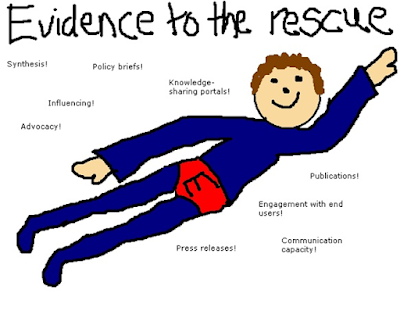
At that moment, a small backstage door hidden in a corner of the shop opened and a bold bespeckled man stepped out, fully dressed in a superhero outfit with bright blue tights and top (that looked a bit too tight), over which she wore red underpants featuring a large letter ‘E’. Ana Lyst didn’t know what to make of this man, but he looked friendly enough and was walking over to her to offer his services. As the man came closer, he produced a large set of antique brass keys from beneath his cape and began opening several doors. “Are you a bit lost?”, asked Evidence Man (for that is who he was) in an accent with a Dutch lilt. “Stuck between here and the outside world? Not to worry! I know the way out to some safe spaces with a friendly audience who would love to hear all about the books you just bought. They would even be interested in the ones that are not ready yet, and they might have a few books of their own to share with you. Shall we go?”

True to his word, when Ana stepped through the first door unlocked by Evidence Man, she emerged back in the now snow-covered high street, where a group of her friends were waiting and, even better, one of them was carrying a large plate of mince pies! Ana Lyst’s spirits lifted immediately, and she vowed to tell her friends all about the helpful Evidence Man in the bookshop. But when she turned around, the nice man had disappeared and through the windows of the bookshop could be seen flying to assist another confused customer.

The End.


The power of storytelling for scientific communication


I was inspired to write this Christmas tale (and blog) after attending a storytelling workshop at the Fuse end-of- year social event on 3 December, which was led by Duncan Yellowlees. Duncan is a Communications Trainer who works with researchers to improve their communications, confidence, and impact. Take a look at his online COMMunity website (Research Comms … but better) to find out more. 

In an engaging and entertaining way, he took us through the key elements of storytelling: from key principles (putting pictures in people’s heads; construct a narrative of causes and effects), to different types of stories (metaphorical, motivational or monster stories, stories as hooks, and point-of-view stories), their structures (problem, solution and results) and what to include in stories (the point, examples, people, heroes & villains, magical helpers, and tensions & conflicts). Did you spot any of these elements in my story? Scroll down to the bottom of this post for spoilers.

Overall, Duncan provided plenty of tips and tricks on how we can use storytelling as academic researchers to communicate our research findings to wider audiences. And this relates directly to the first point (and story) that he made during the workshop: researchers spend too much time throwing the ball (their research findings) but not nearly enough time on making sure there is someone there to catch it (knowledge users). Find your audience first and make them pay attention before you start talking about your research.

His second point was that all this might seem daunting: so many different techniques, plot lines and structures to think about, how can we ever get any good at this? But when comparing it to learning to drive a car, the same principles apply: keep practicing and it gradually (and sometimes quite quickly) becomes second nature. This is because storytelling is already embedded in everything we do in our daily lives: from telling our family and friends about our everyday experiences, to reading books or ‘binging’ on Netflix series.

Finally, Duncan suggested some simple techniques for storytelling in science communication: making stories relatable and relevant (e.g. stress before Christmas) by including named people and adding details (e.g. dark, snowy high streets and describing the interior of the bookshop), which start to paint a picture in people’s heads. Most importantly, start with a hook: a story to draw in your audience, so they want to hear more, or use a question or bold statement as bait (e.g. only 14 percent of research makes it into practice and policy after 17 years).

My story might not have been all you hoped for this Christmas, but the Fuse social event brought some useful gifts for the Fuse Communications toolkit and much needed festive cheer at the end of another challenging academic year. 

Merry Christmas everyone and happy storytelling!


Spoiler alert:
  • The point: knowledge mobilisation between academia and practice is facilitated by a knowledge exchange broker. Plus some points about the time it takes and difficulties faced by researchers when trying to get research into practice and policy.
  • Heroes: academics producing research and papers, while running between bookshelves.
  • Villain: Bookshop clerk (Reviewer 2).
  • Magic helper: Evidence Man (Knowledge Exchange Broker)
  • Tensions & conflicts: research dusting away on bookshelves or not being ready to leave the building, while access to knowledge users is restricted or confusing.
  • Type of story: metaphorical story, overlapping with stories as hooks (to introduce this blog and talk about the storytelling workshop).

Friday, 22 October 2021

Misinformation, data uncertainty and the cat scale of wellbeing - global lessons on knowledge exchange during a pandemic

Posted by Peter van der Graaf, Associate Professor, AskFuse Research Manager & NIHR Knowledge Mobilisation Research (KMR) Fellow, Teesside University and Roland Bal, Professor of Healthcare Governance at Erasmus University Rotterdam

While the evidence base on successful practices in knowledge exchange is growing rapidly, the COVID-19 pandemic presents unprecedented global challenges. During an online taster event for the upcoming Fuse international conference on knowledge exchange in public health, international experts shared their learning from the pandemic.

Perhaps the biggest challenge during the pandemic has been communication. Governments demanding quick access to the latest scientific evidence to inform their decision making in the fight against COVID-19; researchers dealing with a lack of data and uncertainty in interpreting emerging data on spread of the virus and risks to health; and both struggling with the spread of misinformation on social media and in other places of power

In spite of these challenges, awareness of public health and research evidence has increased significantly during the pandemic. Some public health figures, such as England's chief medical officer Chris Whitty, have become household names ("next slide please") and ‘R numbers’ are now common knowledge. We learned to be more flexible in funding, designing and conducting collaborative research, with gold-standards being replaced by ‘good enough’. 

Maureen Dobbins from the National Collaborating Centre for Methods and Tools within McMaster University in Canada, demonstrated how they were able to develop new synthesis methods and dissemination plans with local government to mobilise evidence for decision making within less than a month. For example, they conducted a rapid review on household food insecurity for the Public Health Agency of Canada with support from Public Health Advisor Leanne Idzerda. They dealt with uncertainty in these rapid reviews by grading the evidence by asking: ‘How likely are the findings to change with more evidence?’

As professionals, we learned to deal with the uncertainty of data by making better use of our personal connections. Roland Bal from the School of Health Policy and Management at Erasmus University in Rotterdam showed how Dutch clinicians mobilised their informal network of colleagues at the local, regional and national level to coordinate beds for COVID-19 patients across hospitals in the Netherlands and reduce uncertainty about available intensive care unit capacity. This resulted in a dedicated bus service for transporting patients between hospitals.

Existing monitoring and coordinating structures between hospitals no longer worked in the pandemic and were replaced with new informal ones, in which emotions and politics played a much larger part. Roland dubbed this the importance of ‘relational epistemology’ and also drew attention to the ‘dark side’ of these new coping strategies, where people outside these relational structures were seldom heard and the patient voice and experience not included. 

However, researchers also developed new ways of engaging with their partners in research. For example, Jane Powers and Mandy Purington from the Bronfenbrenner Center for Translational Research at Cornell University, USA engaged with youth workers and health care providers in their ACT for Youth project by transitioning to innovative remote and virtual formats, including game and role play, using avatars. Part of these formats is an acknowledgment of the emotional impact that the pandemic has on partners and therefore the need to create a space in these activities to check in on partner wellbeing. Perhaps their greatest innovation is the ‘cat scale’ which Heather Wynkoop Beach from the Bronfenbrenner Center introduced during the event - which cats represent you today?

Finally, policy makers, professionals and researchers have had to learn to deal with misinformation about COVID-19. Peter Lurie, President of the Center for Science in the Public Interest, in Washington, D.C., USA showed that the actual amount of primary misinformation about COVID-19 is very small but can do plenty of damage, due to many people simply referring to it online. Of the 479,225 articles he found in his review on COVID-19 vaccines in a wide range of media outlets, only 3.7% contained misinformation, and of those only 3% contained what he called ‘primary misinformation’, with the vast majority of articles simply referring to a very small number of primary sources of misinformation. However, some of these articles were sent to more than 400 million subscribers, indicating that the reach of misinformation can be vast!

C-WorKS: COVID-19 Consequences – Want it? or Know it? Share it!
To counteract misinformation and lack of knowledge, Mia Moilanen, who works as an Analytical Programme Manager at Public Health England* in the UK, demonstrated an online knowledge sharing platform called C-WorKS, which was developed during the pandemic. On this platform, health professionals, service commissioners and academic researchers across North East England and Yorkshire share knowledge, expertise and resources on the non-COVID consequences of COVID-19 (e.g. delayed representation of other health conditions, mental health and increasing health inequalities). So far, over 700 members have shared more than 300 resources through C-WorKS.

What the pandemic has taught us more than anything, is the importance of collaboration: to work together to find solutions and that, during public health crises, we need to find new ways of connecting knowledge users, producers and brokers. This requires flexibility in roles, structures, research methods and funding arrangements, which will have a lasting impact on the future of knowledge exchange in public health. We hope to address the complex challenges faced during the pandemic, what we have learned about knowledge exchange, and how we can use this knowledge to improve research and practices in the future at the Fuse conference next year in June in Newcastle, UK. We can’t wait to see you there!

*Public Health England has been replaced by UK Health Security Agency and Office for Health Improvement and Disparities

Watch a recording of the online taster event below


Images:
  1. Capture from the BBC News website, 19 December 2020. Covid at Christmas: 'Chris Whitty is more popular than Britney Spears'. Source: TWISTED PICKLE. https://www.bbc.co.uk/news/uk-55333205

Friday, 1 October 2021

“Next slide, please!” Newcastle children’s reflections on the pandemic

 Posted by Laura Basterfield, Research Associate, Newcastle University

Often in research, once we’ve collected the data, analysed and published it, we don’t have the opportunity to go back to the participants to discuss what we found. When children are involved, we may give a feedback presentation at a school assembly, but let’s be honest it can be difficult to make Powerpoint fun!


I’ve worked closely with Walkergate Community School over the last few years on my research into children’s physical fitness and mental wellbeing and I wanted to deliver my feedback in an assembly that the children would enjoy. I thought the best way to do that might be to let them do it themselves, as who knows what children like better than other children? And I am so pleased I did; it was a fascinating process. 

The ‘Young Science Communicators’ project was due to have taken place in June/July 2020, but had been delayed due to the COVID-19 school closures. Whilst I was initially disappointed last year, the realities of the past 12 months brought an added dimension, intensity and poignancy that would not have been there otherwise.  

There weren’t many rules, but the assembly should include some of the results of the study, including both the physical and mental benefits of physical fitness and activity. Other than that I was happy for the children to take the assembly wherever they saw fit. To start, thirteen Year 6 pupils (aged 10-11 years) discussed with me the project specifically, fitness in general, and about the impact the COVID-19 lockdowns and school closures had on them and their families. Then I taught the children some of the key skills they would need to do my research. I wanted them to really understand why I do what I do, and what better way than to then practice on your friends?! There were some wonderful comments from the children about how they liked the experience: “I enjoyed it because I want to do your job when I’m older” and “I liked being in control!” (which must be quite unfamiliar at 11 years old), and they quickly learned both the techniques and how to talk politely to their class-mates! 

The following week it was over to the children and their ideas. The goal was for them to create an assembly, film their performance, and share it with the rest of the school – all within three days. Scott and Claire are practitioners with local theatre company Mortal Fools and they led the children on a games-based journey to increase their confidence, public speaking and team-working skills. The children were all totally engaged and willing to share their thoughts, feelings and experiences to create a collegiate and supportive atmosphere. For me as an observer at this point, I was struck by the children’s recreations of the school closure periods and how they articulated their feelings: “I had no motivation to do anything”, “I was lonely”, “frustrated”, “isolated”. This was especially the case for those without their own mobile phone – some were unable to speak to friends for weeks. They also showed a mature insight into how the adults in their life had been affected, acting out money worries, family health issues, the stress of getting children to do schoolwork and go to bed on time, when there was nothing to get up for the next day…

As the group moved on to the awkwardness of meeting up with people after such a long time “Errr… so have you been up to much?!”, to their joy and excitement of seeing family, friends and teachers again, the whole process felt reflective and cathartic. Claire and Scott’s skill was evident as the children’s confidence grew before my eyes. Along the way the children had us in stitches with impressions of Boris Johnson, ‘next slide please’, and Joe Wicks.

Finally, they got to film their creation with the help of a proper film-maker. Most scenes only took a couple of takes, and the children showed incredible focus and concentration throughout. The final co-produced 9-minute film is informative, funny and affecting, and the children should be incredibly proud of their efforts. We still weren’t able to completely escape COVID, as three children missed the filming day due to a positive case in their class, but their input on the previous days made it a true team effort. 

The process showed me how important it is that we involve children not just in our research but in everything that affects them – simply asking children how they are, what they are feeling, and what they would like to be involved in gives us a hugely important insight into their world. 

I hope you enjoy their film.


Thanks go to all the children and staff at Walkergate Community School; Scott Wilson, Clare Rimington and Helen Ferguson at Mortal Fools, and Matt Jamie the film-maker. Permission to share this film has been granted by the parents and school of the children involved. 

Funding from EngageFMS at Newcastle University supported this project. 

Originally written for VOICE.

Friday, 4 June 2021

Things I wish I’d known when I started my PhD… (part 1)

Posted by members of the Population Health Interventions Programme at the MRC Epidemiology Unit
“By three methods we might learn wisdom: first by reflection, which is noblest; second by imitation, which is easiest; third by experience, which is the bitterest.” 
Confucius
Like most research groups, ours comprises an ever-changing cast of early, mid and senior career researchers. Our training is in a variety of academic disciplines and we all have different short, medium and long term life and career aspirations. While our experiences of public health research are naturally individual, we have noticed some commonalities. We share these here to provide reassurance to those new to the game that whatever they’re feeling is almost certainly ‘normal’. Challenging experiences are often interpreted negatively, particularly when they are first met. We propose that they can often be reassessed and reframed in ways that make them positive parts of a continuous learning and career development journey. Other people might have different experiences, this is ours…

1. Research is challenging but you’ve got this

"Piled Higher and Deeper" by Jorge Cham www.phdcomics.com
Research is certainly challenging. One of the first hurdles of the PhD will be trying to figure out how your research will contribute new knowledge to the area - this is one of the toughest challenges! Stick with it, because thankfully it does get a bit easier over time as you immerse yourself in the research and build your specialist knowledge. But even the most accomplished still find research hard. All the papers you read are from months (often years) of thinking, hard work, and negotiating multiple barriers - it doesn’t happen overnight. As a PhD student, you have the additional challenge of trying to do this in a short time frame, and it doesn’t always go to plan (which is usually out of your control). But, if good research was easy, anyone could do it.

An obvious interpretation of experiencing something as being difficult is to think that we, as individuals, are not up to it. The cycle of creativity suggests, rather glibly, that all projects are associated with a thought cycle that goes something like: this is awesome, this is difficult, this is terrible, I am terrible, this might be okay, this is awesome. We are not sure that we routinely experience the second ‘this is awesome’ stage. But push through because the ‘this might be okay’ stage always comes.

If you have been selected to pursue the PhD, your supervisors think that you are capable. You wouldn’t be on this journey if there were any real doubts about your ability. Encountering difficulties and making mistakes is normal and expected. Even those researchers you admire the most have moments of self-doubt, numerous journal and grant rejections and bad days when nothing goes right.

2. Comparison can be the thief of joy

Academic research is often experienced as highly competitive. In many ways it is. There is competition for limited research, studentship and fellowship funding; limited space in ‘prestigious’ journals; and limited podium time at conferences. This leads to the tendency to continuously compare your own work, and yourself, to others - and to experience a feeling of falling short.

It’s worth pointing out the selection bias present in the successes others share, and how most of the time we’re not seeing the full picture. Despite knowing this, we understand it is sometimes hard to see everyone else seemingly thriving, while you feel you’re just about surviving! Keep in mind that everyone’s PhD is different, and our successes will run to different timelines. And remember, you bring to your PhD your own unique skills and experiences. We’re confident that others are comparing themselves to you, too…

However, rather than continuously comparing yourself to others, we recommend trying to learn from them. If others appear to be succeeding where we are not, what, if anything, can we learn from their approach? Sometimes this will lead to the conclusion that there are better ways of doing things. Other times it might lead to the conclusion that the sacrifices required to achieve a particular outcome are not something we as individuals are willing to make. Or, indeed, that the outcome is not something we want.

We suggest being clear about what our own success criteria are and trying to stick to judging ourselves by those alone. These criteria can be set alone or with others in the context of formal or informal regular appraisals and personal review. At the risk of getting too SMART*-arsed, they should, at a minimum, be realistic.

Rather than interpreting others’ achievements as indicators of our own lack of success, we propose embracing and celebrating them. Informal and formal research group meetings achieve many things, but we see the sense of community that they build amongst ourselves as one of the most important. By embracing each other’s achievements we can support and build each other up, rather than letting comparison get us down.
 
Channel your inner Arsène - "Le Professeur"
3. Research is a team sport and you’re the boss


Completing a PhD might be seen as a lonely, individual pursuit. But while the end result is your own, you aren’t alone on the journey. In fact, research is a team sport.

Your home team is the one you share with your supervisor(s), and you’ll revel in the highs (and lows) of your PhD experience together. In this team you’re the captain. Lead from the front and manage your supervisors by communicating clearly with them, arranging supervision meetings and keeping them up to speed with your progress. As the captain, you make the final decisions related to your research and you are responsible for defending them. If you don’t agree with your supervisor then you should say so, and explain why. Your supervisor doesn’t want you to nod along, as the idea is to learn from each other and make better research (i.e. win) as a team. This can often feel really hard, especially early on while they’re still the experts, but they expect you to take the lead.

In other teams to which you’ll belong, you might play a different role but still make an impact. For example, you might run a writing group, attend group meetings or present in a seminar series; these are all important aspects of teamwork and becoming a valued member of the research community. You are also a member of teams that are less obvious. You probably aren’t sure now how the Facilities or IT department are going to help you achieve your PhD, but when you need a new chair or an obscure software package installed, be glad that you have them as teammates.

In part 2 next week: learning how not to take things personally, life isn't all about the PhD, bad things may happen that are not okay, and enjoying every step of the journey.


Authors: Catrin Penn-Jones, David Ogilvie, David Pell, Dolly Theis, Emma Lawlor, Hannah Forde, Jean Adams, Jenna Panter, John Rahilly, Kate Ellis, Martin White, Matt Keeble, Nina Rogers, Rich Patterson, Roxanne Armstrong-Moore, Tom Burgoine, Yuru Huang


*SMART Goals: Specific, Measurable, Assignable, Realistic, and Time-related

Images:
1. "Piled Higher and Deeper" by Jorge Cham www.phdcomics.com
2. Mr. Alexander Ottesen, CC BY-SA 2.5 <https://creativecommons.org/licenses/by-sa/2.5>, via Wikimedia Commons

Friday, 30 April 2021

Can putting distinct services under one roof prevent mental illness? We (cold) called in the experts to find out

In today's Fuse blog post, Fiona Duncan, Postdoctoral Research Associate from Durham University, writes about co-locating services to improve mental health and the perils of pulling together an expert panel during a pandemic. 

'Cold Calling' by Darren Tennant
This past year has been tough for many of us.  Financial worries, feeling socially isolated and lonely, facing unemployment, and missing opportunities for physical activity are just some of the things that have impacted on mental health and wellbeing during the pandemic.  This means that finding ways to improve mental health and prevent mental illness in our communities is more important than ever.

Over the past few months, I have been working on a NIHR School for Public Health Research (SPHR) project which aims to investigate how “co-located” services based in the community can be used to promote wellbeing.  A co-located service is where two or more distinct services are in the same physical space and the staff of each service interact with each other, either formally or informally.  Co-located services are often found within traditional health services like GP practices when welfare, legal and/or mental health services are delivered in the same building.  The project will investigate the benefits and disadvantages of co-locating in community spaces, rather than within traditional health services.  For example, a debt service within a faith institution, a welfare service in a library, a mental health support service in a sports centre, or a money advice service within a foodbank.  We are interested in finding out exactly how co-location helps to improve mental health and whether they work for all people in all circumstances, or just some people in certain circumstances. For instance, does co-location increase access, reduce stigma, or encourage a higher quality of service by allowing professionals to work together better?

To start this research, I was given the task of setting up and facilitating an expert panel workshop. The idea being that if we want to gain a deep understanding of how co-located services may or may not work then we should ask the people who actually design, fund or deliver these services in the real world.  We hoped that this workshop would consist of service practitioners, policy-makers, and commissioners at local authorities and people who work for organisations that provide funding for community projects. 

My first challenge in setting up the workshop was getting people to take part.  Where was I going to find these experts and would they be able to give up two hours of their time in the middle of a pandemic?  I was planning on the workshop being small (5-8 people) but, in the circumstances, I realised that I was probably going to have to ask a lot of experts to even hit this target!

I used a variety of approaches to find my experts.  I asked members of the wider research team to email any suitable contacts, we approached the other NIHR Schools and we advertised the study on twitter.  I also personally contacted some people that had participated in a previous research project and my colleague, Dr Emily Oliver from Durham University, mentioned the workshop during a webinar at which she was presenting. Through these methods, three experts signed up.  To get a few more people, I then started to ‘cold call’ potentially suitable people and organisations, including almost 40 local authority Directors of Public Health in England.  Despite the pressures that this group of people are currently under due to COVID, this ‘cold calling’ led to three more people agreeing to attend.

Having six people confirmed still felt like a very precarious position to be in, and it turned out that I was right to be nervous, as one person unfortunately had to pull out on the morning of the workshop. However, luck was on my side as at the last minute another expert who had found out about the workshop from a colleague at one of the organisations I had contacted, asked if they could come along.  Panic over!

Selfridges
The nerves kicked in again at the start of the event, as I had never facilitated a Zoom workshop before and it was clear that some of our experts were feeling nervous too.  This could have been a problem as we wanted them to freely and openly talk about the benefits and disadvantages of co-located services.  Luckily, Gillian Samuel, a member of our research team from the McPin Foundation, was able to facilitate a brilliant icebreaker exercise.  She asked everyone to talk about something that we all had in common, specifically, what we are looking forward to most when lockdown ends?  Everyone had some great answers to this question (the re-opening of Selfridges was my personal favourite answer) and this made for a more relaxed atmosphere.

This almost certainly helped the workshop discussions flow as our experts provided rich and detailed information about co-located services.  However, in some ways the workshop did not go as I had expected.  I thought the experts would talk about the benefits of their co-located services and the mechanisms involved in how these services work. I had prepared a long list of questions to prompt such a conversation, but it soon became clear that the panel had a lot to say about how co-located services quite often don’t work.  They were all clearly very passionate about what they do but expressed frustrations surrounding service delivery.  One theme to emerge was that co-located services are dependent on different types of professional working together, but the reality is that they often don’t communicate well with each other at all.

Although I wasn’t expecting the panel to say these things, I’m glad they did.  It helps us to understand how co-located services are working, or not, and is very important if we want to improve services and therefore improve mental health and prevent mental illness in our communities. This information will also be very helpful in the next part of our study where we will be interviewing people who work at and use selected co-located services.


Fiona works on the NIHR School for Public Health Research (SPHR) Public mental health programme through Fuse's membership of the School.


Images:

1. 'Cold Calling' by Darren Tennant via Flickr.com, copyright © 2014 (Attribution-NonCommercial-NoDerivs 2.0 Generic (CC BY-NC-ND 2.0)): https://www.flickr.com/photos/10678076@N03/16001016758

Friday, 2 April 2021

Working together to tackle inequalities and inactivity

Posted by Sophie Phillips, Fuse & NIHR School for Public health Research (SPHR) funded PhD Researcher, Department of Sport and Exercise Sciences, Durham University, and Dr Rachel Mowbray, Insight Coordinator, County Durham Sport, Active Partnership.

In today's Fuse blog post, Sophie and Rachel tell us about collaborating during Sophie's secondment at County Durham Sport between January and March 2021.

It seems obvious that we would work together, right?

I conduct research in an academic institution and Rachel promotes evidence-based working in an Active Partnership which collaborates closely with Durham County Council. Our day-to-day roles are quite different. But, we have a shared goal: to tackle inequalities that stand in the way of physical activity engagement and support children and adults to be more active. By working together, combining knowledge, skills, and connections, we think we can make even greater progress towards improving people’s health and wellbeing.

How is academic research positioned within the physical activity landscape?

Physical activity policy and practice is a large and complex system made up of many different organisations, approaches, and settings. Academia is often positioned as external to the system, trying to create impact from the outside through activities referred to as ‘pathways to impact’. But in reality, academic research could be a crucially important element of the system in its own right (but often doesn’t have that position). Can positioning academic research as part of the system (as opposed to outside the system) make creating impact less of a hurdle and more of an opportunity?

Through my secondment to County Durham Sport, academic research has been embedded into the local Active Partnership. This gave me a huge opportunity to make an impact (on a daily basis!) by simply talking to others in different parts of the system. By sharing my knowledge and passion through conversations, I felt like I could make a real difference. Sharing information and ideas can challenge and influence thinking. This can (and does) influence the way things are done.

What are the benefits of an embedded researcher in policy or practice?

Rachel:
Non-academic audiences often cannot access academic publications in meaningful ways because of financial barriers and/or because of the academic format. Having Sophie embedded in our organisation brought academic research to life and into the conversations happening between practitioners, policy makers, and non-academic researchers. These conversations allowed us to access the most up-to-date and robust information about physical activity. In the same way, County Durham Sport were able to offer extensive knowledge of the local physical activity system and inequalities. Working together, we created a stronger evidence-base on which to tackle the challenge of inactivity.
Sophie: I was able to communicate knowledge from academic research papers on physical activity into meaningful insight for County Durham Sport. One of the pieces of work I conducted during the secondment was a report on early years physical activity and movement. This included translating evidence from academic research papers into meaningful and accessible outputs (including reports, overviews in tables, and presentations). I was also able to engage with different stakeholders and physical activity providers across multiple settings, who are involved with local early years provision. This helped to bring together both the research evidence and the current local landscape, to make evidence-based and actionable recommendations about future early years provision.

Take-home messages from our collaborative experience…

Our day-to-day roles are very different, as are the expectations and outcomes of our work. Although this presents some challenges (such as differing timescales and required outputs), ultimately, we share a goal - to tackle inequalities that stand in the way of physical activity engagement, support everyone to be more active, and help to improve people’s health and wellbeing. Finding this common ground can foster true collaborative thinking and drive connections between academic and non-academic players in the physical activity system. Integrating our different perspectives and approaches is beneficial and necessary to create meaningful system change.

Rachel: Tackling big issues (like inequalities in physical activity) requires a collaborative and evidence-based approach. I would encourage other third sector organisations to engage directly with academic researchers - both to learn from their expertise, and to share your own experience of practice or policy. We can achieve more working together than we can alone!

Sophie: My experience of collaboration with County Durham Sport has been invaluable. It has influenced the way I think about conducting and communicating research. I would encourage other public health research PhD students to explore the opportunities of engaging in a short time with policy and practice partners in their field, to help view their work from different angles.


Sophie’s academic research is about measuring the physical activity and movement behaviours of pre-school aged children. Her secondment at County Durham Sport was funded by UK Research and Innovation (UKRI) QR Strategic Priorities Fund awarded through Durham University.

Rachel promotes evidence-based partnership working to tackle inequalities in physical activity through her role with County Durham Sport, Active Partnership funded by Sport England.


Images:

2 & 3. Photo of Rachel (https://www.countydurhamsport.com/about-us/meet-the-team) and Sophie (https://www.countydurhamsport.com/homepage/news/) with thanks to County Durham Sport.

Friday, 5 March 2021

Patient and Public involvement with Parents during a Pandemic: the four ‘P’ challenge

Posted by Hannah Batten, Food and Human Nutrition undergraduate student, Newcastle University.  Hannah is on a placement year with the Population Health Sciences Institute, as part of the MapMe intervention team.

If you have a primary school age child, then you’ve probably heard of the National Child Measurement Programme (NCMP). For 13 years, it has collected data on the height and weight of children aged 4-5 and 10-11 years old in England. This information is used to calculate what is called the ‘weight status’ of a child and the results reported to parents via letter. Unfortunately, these letters often receive a mixed response, with many parents mistrusting the results.

Research has also shown that parents often struggle to recognise if their child is overweight, preventing them from taking action to address this.
Body image scales on the MapMe website are currently being updated for MapMe2


This issue sparked the development of the MapMe intervention, led by Fuse Director Prof Ashley Adamson and Angela Jones, which aims to help parents assess child overweight / obesity. The MapMe tool includes:
  • sex and age specific body images of children ranging from underweight to very overweight
  • information on the consequences of being overweight in childhood
  • advice on healthy eating, physical activity and links to further support.
Funded for large scale testing by the National Institute for Health Research, the MapMe tool will be delivered as part of the National Child Measurement Programme across nine areas, aiming to improve how parents respond to the letters and the NCMP process, supporting parents to take action.

The project originally had a 3-year time frame, with the intervention scheduled to be delivered in 2020/21. But, as with many other things, COVID-19 got in the way and with schools closed this prevented the delivery of the NCMP, which delayed the project by a year. Although this was disappointing, it has allowed extra time for us to focus on preparing for the next part of the study focusing on Patient and Public Involvement (PPI).

Doing PPI during a pandemic

PPI involves gaining insight during the research process from members of the public, improving research by providing additional expertise from a non-researcher perspective. One key task for the MapMe2 study was to figure out how we could recruit and run an online Parent Involvement Panel (PIP) to help review documents and study materials, when parents are already dealing with a global pandemic.

Recruitment and communication

To accommodate people being stuck at home during COVID-19, parents were recruited through social media and network sites such as the Newcastle University staff pages. Once the Panel was created, we asked parents how they wanted us to communicate with them and kept in frequent contact via email and newsletter to keep them informed and engaged in the project. As this was unknown territory for everyone, good communication with the Parent Involvement Panel was essential.

Moving online

Pre COVID-19, we had planned to hold face-to-face meetings with the parents in easily accessible venues such as the Great North Museum in Newcastle upon Tyne. However, as has become the norm with lockdown and social distancing measures, in person gatherings have been replaced with Zoom meetings. On the plus side, this allowed the meetings to go ahead and parents to attend from any location, but did result in frequent technical issues! When preparing for remote meetings, we sent out documents to parents in advance and scheduled breaks to avoid ‘Zoom fatigue’. We also used ice breakers at the beginning of sessions to make parents feel at ease.

Making information accessible to all

COVID-19 has intensified the digital divide in the UK, with a large number of people having limited access to, or understanding of, devices. Reading information and training documents on the small screen of a smartphone or tablet is not a practical or enjoyable experience. In an attempt to address this, we send hard copies of the Parent Involvement Panel manual through the post.

We have also created videos that will be posted on YouTube (example below), making them easily accessible to parents whenever they wish. The videos include members of the study team welcoming and informing parents about the project and their role, as well as short animations providing training tips. Although these are perhaps not Oscar-winning performances, they provide the information in an alternative and accessible format for volunteers.


Learning from our experience in carrying out remote Patient and Public Involvement during COVID-19, information needs to be provided in an accessible way like videos, and volunteers need to be aware and comfortable with the options available to feedback their opinions.

Saying thank you

Finally, and most importantly, is to say to our participants that we are extremely grateful for their time and input, particularly during these uncertain times.

As long as we are mindful of these new challenges, online Patient and Public involvement can still be a valuable and effective way to work.


Part of our Fuse blog Student Series
The Fuse blog Student Series showcases posts by students who have been challenged to write a blog as part of their studies at one of the universities in the Fuse collaboration, the NIHR School for Public Health Research, or perhaps further afield. The authors may be new to blogging and we hope to provide a 'safe space' for the students to explore their subject and find their voice in the world of public health research.

Friday, 29 May 2020

COVID-19 has brought the “digital divide” to the fore

Posted by Gemma Wilson, Health Psychologist & Research Fellow in Applied Health, Northumbria University

With the onset of COVID-19 it seems that we are relying on technology even more than usual. Many of us are using technology as our main source of communication, such as for work meetings via Zoom, family chats on FaceTime, WhatsApp messaging, or sending photos. Online food shopping, ordered and delivered to your door, has become the norm. Internet banking and health services have become more important than ever, and online communication platforms are even allowing us to continue our hobbies and exercise. But not everyone has access to these tools to support their daily living and wellbeing at home. Even people with access to the technology may not have the skills to use platforms, such as Facebook, Skype or Zoom, which still leads to exclusion.

There is an ever-growing number of older adults using the internet and social media, with notable increased use across the UK, USA, and Europe over the last decade. However, older adults still remain less likely than younger people to use the internet and social media. That’s why we decided to do a piece of research that aimed to explore older adults’ experiences of using technology, including social media, to connect with others. Part of this study involved interviewing 20 people who were over 65 years old from across the UK, to understand how they used technology to communicate with others, and to consider what helps and hinders their use of technology. 

All participants in the study regularly used digital devices and social media, however, despite their regular use of technology, they still experienced five barriers to using it as a tool to connect with others:

1. Confidence
Some had low confidence, seeing themselves as novices and not “technology minded”, and some lacked patience with technology.

2. Fear
Some were fearful that they would break the devices, do something “wrong” that they couldn’t fix, or they were worried about privacy and misinformation.

3. Practical issues
Some experienced physical barriers, such as the size of text, or the buttons being too small.

4. Culture and communication
Cultural differences around communication impacted the way some of the participants used social media and their online connections. They worried about how they would come across or didn’t like the way others communicated using social media.

5. Social network
Finally, we also found that existing social groups and relationships were key in the older adults choosing to use technology and in helping to provide ongoing support. Often without this existing social network, they would not have even received a digital device, let alone started using it, or understanding how to maintain it.

The overall message that we took away from this research is that technology - even for those who use it on a regular basis - is still only a tool for social connection, a welcome tool, but only a tool, and it certainly isn’t a replacement for face-to-face communication. However, during COVID-19, technology must be a replacement for face-to-face communication, and is the best available way for us to remain connected with friends and family.

The reliance on technology since the onset of COVID-19 has brought the “digital divide” to the fore in the context of these barriers. Many will continue to rely heavily on technology during this uncertain period, and for as long as we are social distancing. During these measures, it is important that we consider people who do not have access to technology and are unable to rely on it in a way that others can, as well as those that do have access but continue to experience difficulties in its use. Specifically, due to no longer being able to rely on social groups and wider support networks for guidance in using technology. This lack of access significantly heightens inequalities for so many people in all of the ways discussed above.

To find out more about this study, the podcast “Ageing in a Digital World” is available to listen/download on the following platforms:

Dr Gemma Wilson is a Health Psychologist, and a Research Fellow in Applied Health at Northumbria University, Newcastle. Her research interests are in ageing, psychosocial wellbeing, digital inclusion, social participation, digital health. Contact Gemma at gemma.wilson@northumbria.ac.uk, or on Twitter via @drgemmawilson.


Research team: Dr Gemma Wilson, Mrs Jessica Gates, Dr Santosh Vijaykumar, Dr Deborah Morgan.

The research was funded by the British Academy/Leverhulme Trust.

Friday, 20 March 2020

Food shaming is not a game

Posted by Sarah Dempster, Registered Nutritionist (Public Health)

“Our current learning focus is food. We are exploring what makes a food healthy / unhealthy” says the notice board in the entrance to my daughter’s nursery. I sigh. Is this a battle I want to pick? I already had some difficult words with the Head Teacher last year about food-based rewards, and I don’t really want to become known as that mum who complains about every food-related activity that happens in the school. Especially when people don’t seem to get what it is that I’m actually complaining about.

I’ve worked in and around public health nutrition for ten years. Over the past few years - probably since having children of my own - I’ve become increasingly concerned about the way we communicate to children about food. Take this “teacher tested” educational game for four to eight year olds as an example:


I wonder if, in our worthy quest to do everything we can to improve children’s eating patterns, some of the things we say and do are having unintended consequences. What might be the impact of teaching nursery-age children to polarise foods into “unhealthy” versus “healthy” categories? What are we saying when we imply that people who eat so-called “junk” foods like burgers or pizza are “greedy”? What happens in children’s minds when they’re presented with those same “unhealthy” or “junk” foods as a reward for good behaviour? Or when their parent’s food choices are so constrained that a hotdog is the only option for dinner?

Mixed messages

My biggest concern relates to the disconnect between nutrition education and children’s day-to-day experiences of food. One UK study involving 9-10-year olds showed that children have difficulty interpreting healthy eating messages. An example quote was:
“it’s not true that chocolate’s bad for you because I eat chocolate, and I’m not completely fat, am I?” (Fairbrother, Curtis, & Goyder, 2016, p. 481)
Overall, it is thought that what children believe and know from their own experiences about food has a greater influence on their eating behaviours than what they are taught (Schultz & Danford, 2016). This makes me wonder why we’re teaching children about “healthy eating” at a young age at all - shouldn’t we just be showing them through the experiences we facilitate and/or provide for them and their families? 

What do children understand from nutrition education?

Health is an abstract concept and we know that young children are concrete thinkers. While they may be able to categorise foods as “healthy” or “unhealthy” by rote in pre-school, they are unlikely to make sense of why each food is in each category. They can understand that food provides energy but it isn’t until they are much older that they can accurately explain physiological reasons for eating (Inagaki & Hatano, 2006; Nguyen, Gordon, & McCullough, 2011; Slaughter & Ting, 2010). They find the concept of “prevention” particularly difficult (Legare & Gelman, 2014).

There’s little research on the impact this may have. However, Pinhas et al. (2013) found some evidence that healthy eating lessons could trigger eating disorder development in susceptible children, who may become preoccupied with food after learning about nutrition. We know that children are under pressure to conform to the “thin ideal” body type from a young age. One Australian study found that 34% of 5-year old girls were already restricting food (Damiano et al., 2015). Meanwhile, children demonstrate anti-fat attitudes from as early as two years old (Di Pasquale & Celsi, 2017). Oversimplifying the relationship between food and size in a game like Greedy Gorilla will at best be ineffective and at worst, fuel the well-known negative consequences of weight stigma (World Health Organization, 2017).

What does the curriculum actually say?

Food and nutrition is a focus area in UK curriculum frameworks, with defined knowledge and skills outcomes at specific ages or stages. Food literacy is covered in a much broader way than just teaching kids what to eat for health. This provides the opportunity for rich, multi-sensory learning experiences… how food is grown, how people from different countries and cultures eat, what different foods look, smell and taste like, how to prepare foods… and as children get older, bringing in critical appraisal around what influences our food choices (e.g. social, health-related or financial factors, the food industry, diet culture). There are lots of examples of good practice around this and it can be done in very positive and inclusive ways.

Until recently, there was little evidence of moralistic language such as “junk food” or reference to “unhealthy eating” within the curriculum. However, the Department for Education (2019) now states that by the end of primary school, children should know: “the characteristics of a poor diet and risks associated with unhealthy eating (including, for example, obesity)”. This worries me, especially for young children who are dependent on adults for all the food they consume, and because we know that weight bias is prevalent in education settings (Nutter et al., 2019).

Food education is really important for young children, but I think we need to look at how public health and education professionals collaborate to get it right for all children. This means improving our understanding of the impact of the language we use, to ensure that we are not fuelling fear, shame or stigma around food or body size.


References:
  1. Fairbrother, H., Curtis, P., & Goyder, E. (2016). Making health information meaningful: Children’s health literacy practices. SSM - Population Health, 2, 476–484. https://doi.org/10.1016/j.ssmph.2016.06.005 
  2. Schultz, C. M., & Danford, C. M. (2016). Children’s knowledge of eating: An integrative review of the literature. Appetite. https://doi.org/10.1016/j.appet.2016.08.120 
  3. Inagaki, K., & Hatano, G. (2006). Young Children’ s Conception of the Biological World. Current Directions in Psychological Science, 15(4), 177–181. https://doi.org/10.1111/j.1467-8721.2006.00431.x
  4. Nguyen, S. P., Gordon, C. L., & McCullough, M. B. (2011). Not as easy as pie. Disentangling the theoretical and applied components of children’s health knowledge. Appetite, 56(2), 265–268. https://doi.org/10.1016/j.appet.2011.01.008 
  5. Slaughter, V., & Ting, C. (2010). Development of ideas about food and nutrition from preschool to university. Appetite, 55(3), 556–564. https://doi.org/10.1016/j.appet.2010.09.004 
  6. Legare, C. H., & Gelman, S. A. (2014). Examining Explanatory Biases in Young Children’s Biological Reasoning. Journal of Cognition & Development, 15(2), 287–303. https://doi.org/10.1080/15248372.2012.749480 
  7. Pinhas, L., McVey, G., Walker, K. S., Norris, M., Katzman, D., & Collier, S. (2013). Trading Health for a Healthy Weight: The Uncharted Side of Healthy Weight Initiatives. Eating Disorders, 21(2), 109–116. https://doi.org/10.1080/10640266.2013.761082 
  8. Damiano, S.R., Paxton, S.J., Wertheim, E.H., McLean, S.A. & Gregg, K.J. (2015) Dietary restraing of 5-year old girls: Associations with internalization of the thin ideal and maternal, media and peer influences. International Journal of Eating Disorders, 48: 1166-1169. https://doi.org/10.1002/eat.22432
  9. Di Pasquale, R. & Celsi, L. (2017) Stigmatization of Overweight and Obese Peers among Children. Frontiers in Psychology. https://doi.org/10.3389/fpsyg.2017.00524 
  10. World Health Organization (2017). Weight bias and obesity stigma: considerations for the WHO European Region. WHO: Geneva. http://www.euro.who.int/en/health-topics/noncommunicable-diseases/obesity/publications/2017/weight-bias-and-obesity-stigma-considerations-for-the-who-european-region-2017)
  11. Department for Education (2019) Relationships Education, Relationships and Sex Education (RSE) and Health Education: Statutory guidance for governing bodies, proprietors, head teachers, principals, senior leadership teams, teachers. Department for Education: London. https://assets.publishing.service.gov.uk/government/uploads/system/uploads/attachment_data/file/805781/Relationships_Education__Relationships_and_Sex_Education__RSE__and_Health_Education.pdf
  12. Nutter, S., Ireland, A., Alberga, A.S., et al. (2019). Weight Bias in Educational Settings:a Systematic Review.Current Obesity Reports, 8, 185-200. https://link.springer.com/content/pdf/10.1007/s13679-019-00330-8.pdf#page32