Showing posts with label pandemic. Show all posts

Friday, 14 October 2022

Media representations of disabled people

Posted by Laura Navin, Health and Social Care student, Northumbria University

Picture by Laura Navin
Negative media representations of disabled people still exist in society and this needs to be addressed. I have dyspraxia which is a learning difficulty, and I sometimes struggle with my co-ordination, communication, processing and speed but it has not stopped me from achieving my goals!

In the media, disability tends to be portrayed through a medical or deficit model, with disabled people often treated as pathetic.1,2,3 TV charity shows such as Children in Need encourage pity for disabled people2 and people with disabilities are still seen as “the heavy burden of care”; “the helpless victim”.3 Yet even when well-meaning, encouraging pity is discriminatory as it creates stereotypical and negative assumptions about disabled people2. These negative representations can decrease a disabled person’s self-esteem and make them feel like they are not part of society.1,4

The issue is heightened by the absence of disabled people and their voices within mainstream media which might help to reclaim the narrative and counter negative stereotypes. As Caroline Casey, founder of The Valuable 500, a global movement putting disability on the business leadership agenda, has suggested “from daytime TV to adverts on social media, to the articles which publications run, representation and visibility of persons with disabilities simply does not reflect our society”. This was brought to light recently for example, when Sia’s decision to cast a neurotypical actress in the role of an autistic female protagonist in her upcoming film was widely criticised.

There are more positive portrayals of disability in the media however. Harry Potter star, Daniel Radcliffe has dyspraxia and acted as an inspiration to many when saying, “do not let it stop you. It has never held me back.”. In 2018, Lee Ridley from the North East won Britain’s Got Talent and in 2021, EastEnders star Rose Ayling-Ellis became the first deaf contestant on Strictly Come Dancing. Even these more positive representations are emblematic of the failure to represent disabled people as everyday, ordinary citizens however. As Lee Ridley claims, “Our government has a very weird relationship with disabled people. We are either seen as superhuman or as some sort of burden”.

Portrayals of disabled people as a burden on society have been shown throughout both austerity and the Coronavirus pandemic. Disabled people have been mocked as ‘scroungers’ in television shows and newspapers, with arguments that incapacity benefit had become a ‘lifestyle choice’ for the lazy, and that a disability benefit crisis was responsible for the UK economic crash resulting in the disproportionate targeting of disabled people within austerity measures.5,6 Covid has been argued to be one of the biggest media outbreaks medicalising disabled people.1,7 During the pandemic, disabled people were seen as ‘vulnerable’ and had to isolate from society.5,8 ‘Vulnerable’ is a label that is often rejected by people with disabilities and its adoption does not portray the importance of disabled people’s rights and viewpoints.9 Labels such as ‘vulnerable’ or ‘immunocompromised’ when used to explain differential susceptibility to illness have also been argued to result in an unreasonable, unpleasant message about the value of disabled people’s lives. The sunflower lanyard which could be worn by disabled people to show they were exempt from wearing face masks helped in some ways to increase disability awareness and create more understanding, support and respect towards disabled people. However, this is another form of labelling, and not all disabled people want to identify their disability to the world. Greater understanding and training on disability ethics is urgently needed to avoid this sort of discrimination and support disabled rights more systemically.9,10


It is also important that disabled voices are heard in society and that the media represents disabled people in a more positive light. Sometimes when I tell people about my dyspraxia they feel pity for me, but this is not what I want. I am telling my story to inspire others, not create sympathy, so please do not feel sad for me, feel happy for me! I have succeeded in my academic studies and graduated from university with second-class honours as a student with dyspraxia. I have been involved in podcasts and dissertation writing to raise my voice as a disabled person and in doing so I hope to give others the confidence to do the same. I am now studying for a postgraduate certificate in education (PGCE) to teach health and social care. I hope to continue to raise my voice and to inspire others.


Part of our Fuse blog Student Series
The Fuse blog Student Series showcases posts by students who have been challenged to write a blog as part of their studies at one of the universities in the Fuse collaboration, the NIHR School for Public Health Research, or perhaps further afield. The authors may be new to blogging and we hope to provide a 'safe space' for the students to explore their subject and find their voice in the world of public health research.

The views and opinions expressed by the author are those of the author and do not necessarily reflect those of Northumbria University or Fuse, the Centre for Translational Research in Public Health.


References

1) Cameron, C. (2014) Disability Studies: A student’s guide. London: SAGE Publications Ltd.

2) Barnes, C. (1992) Disabling imagery and the media: an exploration of the principles for media representations of disabled people. Halifax, England: The British Council of Organisations and Disabled People and Ryburn Publishing Limited.

3) Goethals, T. et al. (2020) ‘I am not your metaphor: frames and counter-frames in the representation of disability’, Disability & Society, 12 (1), pp.1-19. DOI: https://doi.org/10.1080/09687599.2020.1836478.

4) Casey, C. (2020) ‘Where all the disabled people on screen? We must increase representation or risk reinforcing damaging stereotypes’, Independent, 1 December. Available at: Where are all the disabled people on screen? We must increase representation or risk reinforcing damaging stereotypes | The Independent (Accessed: 22 March 2022).

5) Ryan, F. (2019) Crippled: austerity and the demonization of disabled people. London: Verso.

6) Briant, E. et al. (2013) ‘Reporting disability in the age of austerity: the changing face of media representation of disability and disabled people in the United Kingdom and the creation of new ‘folk devils’, Disability & Society, 28 (6), pp.874-889. DOI: 10.1080/09687599.2013.813837.

7) Shakespeare, T. et al. (2021) ‘Triple jeopardy: disabled people and the COVID-19 pandemic’, The Lancet, 397(10282), pp.1331-1333. DOI: https://doi.org/10.1016/S0140-6736(21)00625-5.

8) Courtenay, K. and Perera, B. (2020) ‘COVID-19 and people with intellectual disability: impacts of a pandemic’, Irish Journal of Psychological Medicine, 37, pp.231-236. DOI: 10.1017/ipm.2020.45.

9) Singh, S. (2020) ‘Disability ethics in the coronavirus crisis’, Journal of Family Medicine and Primary Care, 9 (5), pp.2167-2171. DOI: 10.4103/jfmpc.jfmpc_588_20.

10) McLean, S. and Williamson, L. (2007) Impairment and disability: Law and ethics at the beginning and end of life. Oxon: Routledge-Cavendish.

Tuesday, 9 August 2022

How Covid-19 changed the takeaway landscape

Posted by Callum Bradford, Research Associate, Teesside University

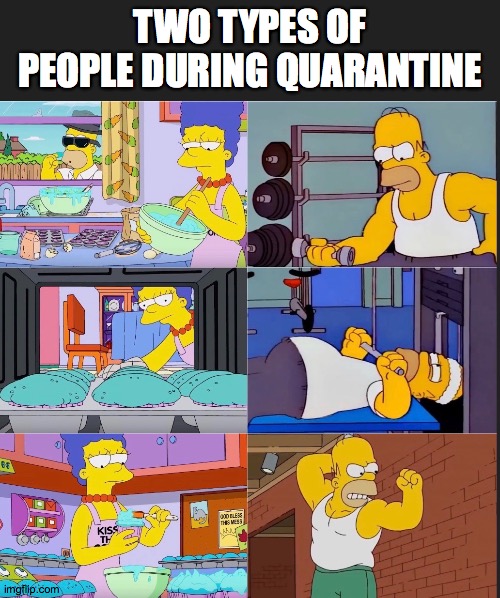
During the Covid pandemic, you may have seen the memes for how there are two types of people during lockdown. First there were those who used lockdown as an excuse to exercise more, eat well, and generally take care of themselves in a manner of which they had never had the time for previously. Then there were those who out of sheer boredom, decided to drink and order takeaway on more days than not as it was ‘something to do’.

As you can probably guess, I very much fell into the second category.

To my detriment, takeaways typically sell food which is relatively cheap, high in calories, low in nutritional value, and (annoyingly) very appetising; all delivered to your front door in a matter of minutes. Now I don’t want to come across as anti-takeaway, or anti-business, there is a place in our society for unhealthy food, nor do I blame anyone else for my questionable dietary choices. However, I’m sure most of us agree that we can have too much of a good thing at the impairment of not only our own health, but also the health of the high-street.

Apparently I’m not the only one who is too easily tempted by takeaways, with local governments implementing planning regulations to further prevent this takeover-of-takeaways, in the knowledge that our willpower is often lacking. You’re likely familiar with some of the rules already in place, such as no takeaways within 200m of a school, or that most restaurants and pubs can only provide takeaway food on an ‘ancillary’ basis.

However, with the Covid-19 lockdowns pubs and restaurants lost their ability to trade. In an attempt to combat the potential loss of business, the government introduced new temporary measures allowing these businesses to trade as takeaways, without needing to apply for planning permission. In other words, my options for takeaway just increased threefold, and by ordering-in I was ‘doing my bit’ to keep businesses open.

As we were now stuck indoors, every occasion was now an excuse for a takeaway; Birthday? Takeaway. Passed Uni? Takeaway. Anniversary? Slightly fancier takeaway with cocktails (highly recommend).

With these temporary regulations in mind, we consulted with various planners, public health leads, and environmental health officers from across the North East, to better understand how these regulations were impacting their roles, alongside any public health trepidations they may have (if my diet alone wasn’t enough cause for concern).

The main theme throughout our conversations was an overwhelming sense of uncertainty. Covid had an unprecedented impact on the priorities of local authorities. Because of this, they could not organise the infrastructure needed to identify how many businesses were choosing to trade as takeaways. Even today as we slowly return to a sense of normality, the role of collecting this data appears to be unassigned as authorities play catch-up on work lost to Covid. Therefore, as you can imagine, gauging the impact of these regulations became very challenging and speculative. There was also uncertainty around how and when these regulations would end, or what elected members planned to do (if anything) about the potential long-term consequences to health.

Surprisingly, the main finding from our research had little to do with the regulations themselves, but rather how Covid has accelerated change in the takeaway landscape. During Covid, we all developed new habits (for better or worse); one of which was the use of online delivery services such as Deliveroo and Uber Eats.

Despite the temp Covid regulations now ending, with these delivery services, many businesses that could not originally offer takeaway now can, and local authorities have limited ability to prevent them from doing so since they aren’t technically providing the deliveries themselves. A quick search on Deliveroo in Middlesbrough for example offers me delivery for Burger King, Starbucks, and Creams Cafe. None of these options are well-known as takeaways, but all now provide the delivery of unhealthy food. And although these services were technically available pre-Covid, the pandemic has led to a huge increase in their popularity, allowing for more unhealthy-food options and the changing of shopping habits. There are also traffic implications. Have you ever tried to walk through Liverpool city centre during lunch hour? Attempting to dodge Deliveroo riders on their bikes as you stroll through town is quite the experience.

To summarise, the Covid pandemic had an unparalleled impact on public health professionals, to the extent that the government implementing new regulations regarding takeaways was considered low priority. Ambiguity surrounding the impact of these regulations remains, with the ending of the regulations becoming somewhat nullified given the rise of online delivery.

In conclusion I offer some advice. if you’re trying to eat healthier, writing a blog post on takeaways whilst doing ‘research’ on Deliveroo, might not be the wisest of ideas – speaking from experience.

Friday, 29 July 2022

Part-time work can be a game changer for families and a smart strategy for organisations

Posted by Belinda Morgan, flexible work expert & author; Amelia Lake and Helen Moore, researchers from Fuse at Teesside University

Part-time work has the potential to change lives. Done well, it can drive hugely positive outcomes for individuals, families and society. But its potential isn’t widely understood, so part-time work still sits largely on the sidelines of organisational strategy – under-rated and under-utilised.

And even organisations who are leading the way with the accessibility and implementation of part-time work, are rarely doing it well at all levels. It’s still very uncommon to see senior leaders working part-time.

Amelia Lake, Fuse Associate Director, and Helen Moore, Fuse Associate, at Teesside University are bucking this trend. Both work in senior level roles in public health research, leading teams and both work part-time.

Amelia and Helen were two of the senior leaders I interviewed when writing my book Solving the Part-Time Puzzle: How to decrease your hours, increase your impact, and thrive in your part-time role. They shared their stories about how they make their part-time arrangements work, and the benefits they experience from working in this way.

Helen Moore (left) and Amelia Lake (right) both work part-time in public health research
Amelia said, “When I first started working at Teesside University, I would frequently get asked what was my ‘side hustle’ when I wasn’t at work and people were surprised to hear that I was doing family activities with my (then) young children. While I appreciate working part-time is a privilege, it allows me a better work-life balance and time with my children.

“During the pandemic, and post-pandemic, childcare has been difficult to access, and being part-time means some days of the week can be less stressful in terms of childcare. Working part-time means I work even more collaboratively with colleagues as their support when I am not at work is important. It can be hard to switch off emails and alerts on non-working days, and I don’t always do it, but I know it is important.”

Helen said, “It was, and is, important for me, as the primary carer of young children (I have two sets of twins) with a husband who works away in the Merchant Navy, to be able to have some flexibility around when and how I work. This supports me in being able to take them to, and pick them up from, school several days of the week, and to not have to rely all of the time on either family help (which can feel like an imposition) or paid childcare (which is both expensive and difficult to find when you have four children).”

So why is it so rare to see senior leaders working part-time? Largely because there’s an embedded belief that senior leadership roles are the most challenging to do part-time. Many people will tell you it’s impossible – and that it’s not even worth attempting.

Stories of leaders like Amelia and Helen are hugely important, because we badly need more senior leaders leading the way and working part-time. When senior leaders do so it demonstrates to others that part-time work is acceptable and encouraged, and that it’s possible to keep growing a career while working part-time.

The individual and family wellbeing benefits are quite clear, and should be reason enough for organisations to start creating more part-time work opportunities. But the reality is that more encouragement may be required.

The good news is that there are some other big reasons for organisations to get on board with this.

A clear and highly relevant advantage for employers is talent attraction and retention. In the context of the ‘great resignation’ of 2022 this is a critical consideration for organisations looking to find creative ways to solve the talent shortage.

Firstly, it allows employers to retain their talented people who reach a point where they want or need to work part-time.

In Amelia’s words, “We need to see more people in leadership roles working part-time. I was promoted to Professor in my part-time working pattern which illustrates that it is possible to do high quality impactful work building capacity and also doing research, while working part-time. Teesside University has both promoted me and supported me in my part-time role.”

It also enables employers to tap into a hidden talent pool of highly qualified people who either can’t or choose not to work full-time. They include people with caring responsibilities, people with health issues, and people at retirement age who would stay in the workforce longer if given the opportunity to work part-time.

Helen said, “I strongly believe that working part-time doesn’t equate to a reduction in performance, and that it is demonstrated by my promotion to Associate Professor and being one of two Teesside University Star Award Research Excellence finalists in 2021.

“Being supported by Teesside University to work part-time in a senior role enables me to both lead the work of the University’s successful Evaluation and Impact Team, and to be able to be present and care for my four children.

“Having managers who were willing to try something new, even take a risk, and recruit a person to work part-time hours to establish and lead a new team has paid off and worked well – it has enabled me to grow significantly as both a researcher and a research leader.

“Roles similar to mine which I have previously considered, have been strictly full-time hours only, and did not feel open to someone with other commitments like me. There are a lot of talented people who for various reasons would like to work less than full-time hours, and I’m hopeful that my experience shows it is possible.”

This is also, of course, about inclusion. The consulting firm Timewise warns that if a company’s diversity, equity and inclusion (DEI) programmes aren’t underpinned by a commitment to flexible working that includes part-time, they will struggle to be fully inclusive. 'This will not only have a negative impact on their gender pay gap, but is also likely to impact their employer brand'

As well as the talent related benefits, there are also productivity benefits to be reaped by organisations who are willing to introduce more part-time roles. Organisation for Economic Co-operation and Development (OECD) data confirms that productivity (defined as output per working hour) improves with shorter hours. Across the world’s richest countries, higher productivity correlates with lower working hours.

The power and potential of part-time work really is huge. It can be a game changer for families and a smart people strategy for organisations.


Friday, 22 July 2022

Going hybrid: The best of both worlds?

Posted by Helen Moore, Associate Professor (Research), Teesside University

Since 2012 my ability to attend in-person and participate in seminars, conferences and workshops has been significantly reduced. This was partially due to a change in my mobility while I was pregnant with twins twice (!) (2012, 2015), and then after my pregnancies, due to the challenges of arranging childcare for four small children. It has become easier as they have got older, but after my second maternity leave, I returned to work but remained the primary carer for four children under the age of four as their father (my husband), was (and still is) a Merchant Navy captain, which involves working away for half of every year.

Make an enquiry about getting professional technical help as soon as you conceive the idea
 – don’t assume it will be prohibitively expensive
During this time, I had always felt very grateful to any event organiser who took the time to release the slides after their events or, as time progressed and technology moved on, to run an additional online version as this enabled me to participate, albeit in a less than perfect fashion, but I viewed it as certainly being better than nothing. I hadn’t really appreciated how many other people were also often unable to attend events in-person, due to other factors in their lives, but this was brought into sharper focus for me with the Covid-19 pandemic when I started reading, and joining in with, conversations on social media around event accessibility that had never been on my radar.

I’m sure everyone remembers that when lockdowns were imposed, initially events were completely cancelled but as time progressed and it became clear this was not going to be a ‘flash in the pan’, the planning stages of events began to include considerations of how best to run them entirely online, with many people having to rapidly learn and develop skills around using technology to engage with the maximum number of participants possible.

Between January-April 2021, I was part of a team that worked on a project commissioned by the Office for Health Improvement and Disparities (OHID) which looked at the impact of Covid-19 on the hot food takeaway planning regulatory environment in North East England. As the project drew to a close the team thought that this, alongside other work we had been involved in, or were aware of, would make an excellent Fuse Research Event, and my colleague Professor Amelia Lake and I decided we would work together to make it happen.

I was keen to explore the possibilities of having a, in my view, truly hybrid event, where participants could choose to attend in person or via a real time remote video stream, and where presenters could choose to be in the room or present via a MS Teams link. I had previously worked with the team from Teesside University’s Aurora House on other projects, and Amelia had worked with them to create the live stream of her inaugural professorial lecture, so we were confident that they possessed the skills, the technology and the will to ensure this could happen.

It took a lot of organisation to get this to work, and having organised many events pre-Covid, it was definitely more work than if we had decided to run a traditional event with in-person attendance only. I spent significant amounts of time thinking about how we could include the remote audience and presenters in the discussion in the most effective way. The entire event was live streamed on the Fuse YouTube channel, with a technician ensuring that the virtual audience saw a mix of angles and information during the session. We used sli.do to allow the remote audience to submit questions during each presentation, and then one of the organising team asked the questions using the same microphone that was used for questions from the room so everyone could hear.


We only had one minor hiccup, in that we used my personal Teams account to allow the external speakers to present, and I forgot to decline meetings that were scheduled to run at the same time – and, of course, the other meeting used the chat function, which meant everyone could read their messages! We managed to get a message to the other meeting and they quickly stopped using the chat function!

As usual, we asked for feedback on the event, and the comments were extremely positive, including the fact it was hybrid, with “Ability to attend online”, mentioned in more than one response.

I would absolutely encourage people to think about making the effort to run hybrid events. it widens your audience and opens up different avenues for discussion – posing a question via an online function is, for most people, less scary than standing up and speaking into a microphone! 

My top tips for running a hybrid event

While I was writing this blog, I thought about what my top five tips would be for anyone considering running a hybrid event in the future:
  1. Make an enquiry about getting professional technical help as soon as you conceive the idea – don’t assume it will be prohibitively expensive;
  2. Ensure you communicate with the presenters and attendees, before and during the event, about how they can interact and engage during the event;
  3. Use interactive apps such as sli.do.
  4. Avoid using personal accounts for external events, such as Teams or Zoom (or make sure to decline any other meetings scheduled at the same time!)
  5. Always ask for feedback to improve future events.

Friday, 28 January 2022

Science, and the art of communication

Posted by Louis Goffe, Research Associate, NIHR Policy Research Unit in Behavioural Science

Brian Deer - Copyright cleared
“He’d found no cure for Crohn’s, or remedy for autism, no vaccine, no nothing in medicine. But now he was a man delivering fear, guilt, and disease to everywhere with an internet connection.”
Brian Deer, The Doctor Who Fooled the World


It wasn’t a scientist, not a medical doctor, nor an esteemed health institution, but Brian Deer, an investigative journalist, who researched, compiled, and detailed to the world ‘The fraud behind the MMR scare’. While the adjective to his profession alludes an expectation to the discovery of truth, it’s his journalistic craft that effectively communicates with passion and clarity how the now struck off doc and his associates formulated the non-existent relationship between MMR and autism.

Health promotion takes more than good science, there is
 an art to the delivery.  Photo by Jon Tyson on Unsplash

Deer lays out the complete narrative in his book The Doctor Who Fooled the World. It’s as gripping as your favourite thriller, though with the added heart-sinking poignancy that it is not a work of fiction. While I was keen to write a book review, others do this better, I considered what’s the take-home for those of us in translational research in public health.

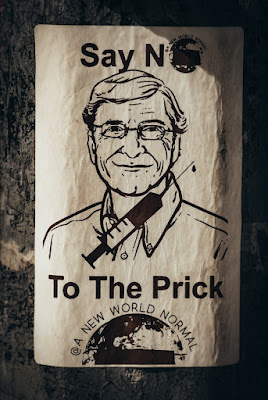
I’m a researcher for the NIHR funded Policy Research Unit in Behavioural Science, where we ‘use behavioural science evidence, theory and methods to support decision-making’. Our approach is rigorous and grounded in scientific theory. However, the pandemic has brought into sharp focus that health promotion takes more than good science, there is an art to the delivery. I mean, how else have the sceptics convinced so many that wearing a face covering could be detrimental to health?

Prior to the Medicines and Healthcare products Regulatory Agency approval of the first COVID-19 vaccines, research institutions, health, and Government bodies had been virtually silent on the development process. Some were also critical of how the initial results were released to the world. This reservation to engage with a non-academic audience is partially understandable, we deal in uncertainty and it’s much more than simply crossing the i's and dotting the t's. No researcher worth their h-index wants to put something out into the world that they can’t back-up empirically. The sad fact is though, if we’re not on the front foot keeping the public informed of the vaccine trial process and approval milestones, then there’s a flock of 'quacks' more than happy to work their grift.

To their credit, they work with the religious zeal of a missionary, flooding every corner of the internet knowing our vulnerability to the illusory truth effect. While promotion is focused on social media, their word is also preached in podcasts and proliferated through e-commerce. Take a look at Amazon. Their charitable programme AmazonSmile has reportedly donated thousand of dollars to a vaccine misinformation soil pipe, and high ranking books on “vaccines” include: ‘Anyone who tells you vaccines are safe and effective is lying’, ‘The COVID vaccine: and the silencing of our doctors and scientists’, and ‘Vaccine-nation: poisoning the population, one shot at a time’. There is also the subtly titled: ‘******’s review of critical vaccine studies’, that gives the allusion of a systematic review (though don’t expect it to be listed in the Cochrane Library) but shares a publisher with the essential intergalactic phrasebook ‘Ambassador between worlds’ that provides answers to: What do extraterrestrials think about our religious beliefs, sexual attitudes, and goals in life? But most depressing of all, prominence is given to the book authored by the struck off doc, the man at the centre of Deer’s investigation.

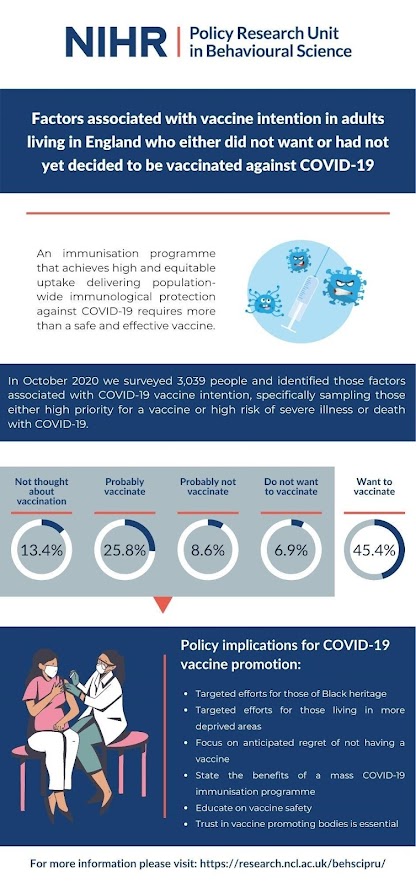
Before the first COVID-19 shots were available, to understand vaccine attitudes my Unit delivered a survey using belief-based statements in adults living in England who did not want, were yet to consider, or were not sure whether to vaccinate against COVID-19. This included their agreement to some of the more 'out-there' theories, including our own fictionalised theory that “Mass coronavirus vaccination is a ploy by environmental lobbyists to sterilise billions of people to reduce population growth”, to which 117 (7%) of respondents agreed to. While my literary intention here is to shock, I suspect that the pandemic has made you immune to such statistics. The problem is that once such views have taken root the typical counter arguments using facts are insufficient, and potentially detrimental in combating misinformation.

The vaccine rollout has been the biggest, most ambitious immunisation programme ever in the UK. It’s a historic achievement by the NHS, ably supported by the Vaccine Taskforce. But as we now reflect, it’s my view that if the Government, healthcare providers and research institutions had provided a cohesive, timely, and responsive informative service that detailed and provided a status update on vaccine development, this would have gone a long way to allay many people's rightful concerns. Sadly this reticence to comment continues as speculation increases over approval of jabs for younger children.

The public has shown an enthusiasm to learn a wealth of terminology during the course of the pandemic. My Unit’s work on the comprehension of antibody testing has shown that this isn’t easy, but it’s something that we shouldn’t shy away from. Patient and public involvement in research is vital to ensure that our lay outputs are fit for purpose and we should all consider how we can be better at science translation. Speaking on camera or on live radio is incredibly nerve-racking and not for all, but as I recently discovered following a two-hour training course, you don’t need a degree in design to produce a half decent infographic.

While I am advocating for your individual action, we also need to consider what systems, for example the new UK Health Security Agency, could put in place to fulfil the role that was missing during the pandemic. Most pressingly on our horizon is the delayed childhood vaccine strategy. The struck-off doc will be feeling emboldened. He understands and has mastered the artistic skill of communication, delivering his message with the gentle assured cadence of a BBC continuity announcer. In the absence of substantiated evidence, he expertly sows doubt and fear to the masses, and as the infodemic has shown, he is not alone. This is a huge challenge for us in public health research and the online vitriol is scary. But building the evidence-base isn’t enough, we all need to work on at least one aspect of the artistic craft of research promotion. Because if it’s not you, you can be assured that someone else most certainly is.


The views and opinions expressed by the author are those of the author and do not necessarily reflect those of the Policy Research Unit in Behavioural Science, the NIHR, the Department of Health and Social Care, Newcastle University or Fuse, the Centre for Translational Research in Public Health.

The Policy Research Unit is funded by the National Institute for Health Research (NIHR) [Policy Research Programme (Policy Research Unit in Behavioural Science PR-PRU1217-20501)]. The views expressed are those of the author(s) and not necessarily those of the NIHR or the Department of Health and Social Care.


Images: 

1) Lourenço Veado, CC BY-SA 4.0, via Wikimedia Commons
2) Photo by Jon Tyson on Unsplash

Friday, 1 October 2021

“Next slide, please!” Newcastle children’s reflections on the pandemic

 Posted by Laura Basterfield, Research Associate, Newcastle University

Often in research, once we’ve collected the data, analysed and published it, we don’t have the opportunity to go back to the participants to discuss what we found. When children are involved, we may give a feedback presentation at a school assembly, but let’s be honest it can be difficult to make Powerpoint fun!


I’ve worked closely with Walkergate Community School over the last few years on my research into children’s physical fitness and mental wellbeing and I wanted to deliver my feedback in an assembly that the children would enjoy. I thought the best way to do that might be to let them do it themselves, as who knows what children like better than other children? And I am so pleased I did; it was a fascinating process. 

The ‘Young Science Communicators’ project was due to have taken place in June/July 2020, but had been delayed due to the COVID-19 school closures. Whilst I was initially disappointed last year, the realities of the past 12 months brought an added dimension, intensity and poignancy that would not have been there otherwise.  

There weren’t many rules, but the assembly should include some of the results of the study, including both the physical and mental benefits of physical fitness and activity. Other than that I was happy for the children to take the assembly wherever they saw fit. To start, thirteen Year 6 pupils (aged 10-11 years) discussed with me the project specifically, fitness in general, and about the impact the COVID-19 lockdowns and school closures had on them and their families. Then I taught the children some of the key skills they would need to do my research. I wanted them to really understand why I do what I do, and what better way than to then practice on your friends?! There were some wonderful comments from the children about how they liked the experience: “I enjoyed it because I want to do your job when I’m older” and “I liked being in control!” (which must be quite unfamiliar at 11 years old), and they quickly learned both the techniques and how to talk politely to their class-mates! 

The following week it was over to the children and their ideas. The goal was for them to create an assembly, film their performance, and share it with the rest of the school – all within three days. Scott and Claire are practitioners with local theatre company Mortal Fools and they led the children on a games-based journey to increase their confidence, public speaking and team-working skills. The children were all totally engaged and willing to share their thoughts, feelings and experiences to create a collegiate and supportive atmosphere. For me as an observer at this point, I was struck by the children’s recreations of the school closure periods and how they articulated their feelings: “I had no motivation to do anything”, “I was lonely”, “frustrated”, “isolated”. This was especially the case for those without their own mobile phone – some were unable to speak to friends for weeks. They also showed a mature insight into how the adults in their life had been affected, acting out money worries, family health issues, the stress of getting children to do schoolwork and go to bed on time, when there was nothing to get up for the next day…

As the group moved on to the awkwardness of meeting up with people after such a long time “Errr… so have you been up to much?!”, to their joy and excitement of seeing family, friends and teachers again, the whole process felt reflective and cathartic. Claire and Scott’s skill was evident as the children’s confidence grew before my eyes. Along the way the children had us in stitches with impressions of Boris Johnson, ‘next slide please’, and Joe Wicks.

Finally, they got to film their creation with the help of a proper film-maker. Most scenes only took a couple of takes, and the children showed incredible focus and concentration throughout. The final co-produced 9-minute film is informative, funny and affecting, and the children should be incredibly proud of their efforts. We still weren’t able to completely escape COVID, as three children missed the filming day due to a positive case in their class, but their input on the previous days made it a true team effort. 

The process showed me how important it is that we involve children not just in our research but in everything that affects them – simply asking children how they are, what they are feeling, and what they would like to be involved in gives us a hugely important insight into their world. 

I hope you enjoy their film.


Thanks go to all the children and staff at Walkergate Community School; Scott Wilson, Clare Rimington and Helen Ferguson at Mortal Fools, and Matt Jamie the film-maker. Permission to share this film has been granted by the parents and school of the children involved. 

Funding from EngageFMS at Newcastle University supported this project. 

Originally written for VOICE.

Friday, 30 July 2021

The Sound of Sirens

Posted by John Mooney FFPH, Consultant in Public Health, NHS Grampian @StandupforPHlth

Easily my most notable memory from the first Covid-induced lockdown was the unmistakable and disconcerting shriek of ambulance siren calls, regularly piercing the ‘lockdown’ silence of largely empty streets. Prompted by the memory of the mythical origins of the word ‘siren’, in which enchanting songstresses lured sailors and their ships to a rocky destruction, it struck me that the lure and temptation of ‘freedom day’ on which all Covid-19 constraints on social and other gatherings are no longer mandatory might yet similarly have an unfortunate aftermath. While I expect that risks placing me firmly in the ‘doomster’ camp, it seems I am in good company after the letter in last week’s Observer from some of our most eminent public health leaders who were at pains to point out that “living with Covid is not the same thing as letting it rip”.

   
Watch 'Sound of Sirens' by John Mooney and Dr Clare Pettinger (AKA the Singing Dietitian) inspired by this blog post

This is now my third Fuse blog about Covid, in what is sadly proving to be a rather prescient series of posts about the pandemic. I set out in the first (published in February 2020), that as a newly emergent single stranded RNA virus, Covid-19 would be genetically unstable and undergo mutations which could influence its epidemiological characteristics including virulence and transmissibility. To say therefore that the present situation was not foreseeable (given my rudimentary grasp of evolutionary genetics), is clearly not that convincing. It’s probably even more self-evident that the more transmissible variants will be the same variants that are most transmitted, because this is the essence of viral survival strategy. Even with that knowledge however, the speed with which the Delta variant became the dominant strain (from under 10% to over 90% in a matter of weeks and now accounting for 99% of identified cases), was fairly breath-taking even by viral standards. 

A particular concern just now of course must be that the UK’s success in achieving a high vaccination uptake creates a new ‘selection pressure’ of its own, in that any newly emergent strain with the capacity to evade vaccine induced immunity will have an enormous selection ‘advantage’ in a population which has the combined characteristics of a high vaccination rate plus a high level of circulating virus. It’s easy to appreciate then how such a new variant could assume a ‘delta-style’ trajectory towards dominance, leaving even the fully vaccinated vulnerable once more. This is of course not a reason for reducing vaccination efforts which have been critical in protecting vaccinated age groups, thereby reducing the proportion of the population susceptible to new infections. If I could squeeze in one final take-home vaccine basics key message: the more infectious a particular variant, the higher proportion of a population needs to be vaccinated to mitigate transmission. This has prompted some commentators to expect that the holy grail of ‘herd immunity’ will always prove elusive for Covid.

The very real challenge for those of us in practice settings (having recently returned to NHS public health myself), is how best to advise local populations and relevant agencies in order to keep reducing the levels of circulating virus. The mechanisms that work here are very much those that are already in place combined with ongoing vaccination and access to local testing. The extent to which people might be willing to submit to testing that could sacrifice a long-coveted holiday, versus their readiness to isolate away from work, might begin to explain a divergence in the surveillance data in some health-board areas between declining numbers of cases and relatively stable hospital admissions (even allowing for the two week lag). The latter of which has already led to cancelled elective procedures in ours and other regions. We also know that infections in younger age groups are more likely to be mild / asymptomatic taking away the ‘illness prompting’ rationale for seeking a test.

Receiving supplemental oxygen in A&E
 6 months after initial Covid symptoms
 (mask displaced to drink)

At this point it would be useful to highlight the relevance of the second blog in this series as then it all looks impressively planned! (Spoiler alert: it wasn’t!). In that article, I described my experience with Long-covid which I was unfortunate enough to develop very early in the first wave and which included an unscheduled hospital stay and fast track angiogram (think X-ray to check heart blood vessels) thanks to a “dangerous ECG”. Thankfully 18 months on I am much recovered, but remain very conscious that there was more than one false dawn over the course of the illness, although later episodes were milder. The inescapable parallel from a population standpoint is that Covid-19 can prove a truly mercurial adversary, lulling you into a sense of comfort and security, just like the mythological Sirens, before dashing you against the rocks of reality once again. The attached illustration above: ‘Ulysses and the Sirens’ is an 1891 painting by Pre-Raphaelite artist John William Waterhouse. In the words of the Wikipedia description:

"The work depicts a scene from the ancient Greek epic the Odyssey, in which the Sirens attempt to use their enchanting song to lure the titular hero Odysseus and his crew towards deadly waters. As per the Odyssey, Odysseus' crew had already blocked their ears to protect themselves from the Sirens' singing, but Odysseus, wanting to hear the Sirens, had ordered his crew to tie him to the mast so that he may have the pleasure of listening without risking himself or his ship."

In other words, the measures clearly employed were distancing and personal protective equipment! [Note the bound ears of the crew]. Perhaps the fact that the new variants are being ascribed Greek lettering might help persuade us to take a leaf from these mythological mariners and maintain some of our protective measures just a little longer while vaccine roll-out continues. In keeping with worrying reports from our clinical colleagues and as anecdotal as this could certainly be described, I have increasingly of late been hearing much more of the sound of sirens… 


John is currently employed as a consultant in public health with NHS Grampian and has a background in respiratory infectious disease epidemiology. 


Image:
1. John William Waterhouse, Public domain, via Wikimedia Commons


The views expressed in posts are those of the authors and do not necessarily reflect those of Fuse (the Centre for Translational Research in Public Health) or the author's employer or organisation.

Friday, 16 April 2021

The other third wave: a mass epidemic of very individual pain

Posted by Jack Nicholls, Lecturer in Social Work at Northumbria University

*Content/trigger warning: mental health, depression, suicidal feelings.

This post is a contradiction. It starts with the experience of one person, extrapolates out from that to consider the potential hardships faced by others, and then argues that this extrapolation may be unsafe from a policy and practice perspective. Our topic is the long-term mental health consequences of the pandemic, of lockdown and social restrictions, and of its easing – specifically, those consequences we have not necessarily seen coming, because to those who do not know, they do not seem logical.
Katsushika Hokusai: The Great Wave off Kanagawa


I have knowingly lived alongside depression for nearly two decades. There have been long periods where it has been minimal and manageable, and others where it has nearly destroyed me. Many who experience mental ill health in any form will recognise this undulating pattern, and that the peaks and troughs can have exactly nothing to do with how well life is going objectively. I’ve felt perfectly steady in situations of very high pressure. Conversely, the lowest point of the last few years was at a prestigious conference. I was presenting my work – an opportunity I had been looking for since starting my research – while internally considering whether I wanted to remain alive. I doubt any of the audience would have suspected, because I performed the role of the good presenter. I did what was expected – by them, by me, by the world. More recently, but less severely, I had a short but acute period of utterly disabling depression after submitting my PhD thesis. Something excellent and long-awaited had happened. Celebration was expected, even in lockdown, but I wanted only drawn curtains and my duvet.

During the pandemic, we have had over a year of restriction, upheaval, loss, fear and strain. There has been some discussion of the impact on psychological wellbeing, but nowhere near enough. It has become an afterthought to vaccines and viral containment, which is understandable, and to macro-economics, which may be less so. Alongside we mental illness veterans, hundreds of thousands of people have consciously experienced moderate or severe mental ill health for the first time in their lives.

What particularly concerns me however is the psychological impact of the easing of lockdown. With all its hardship, pandemic restrictions have been our reality. The end of lockdown will represent a change to that reality. It will be accompanied by returning to workplaces, pubs, cinemas, planes, trains and shopping centres.

For some, the change back will be more jarring than they can currently anticipate, even if, like the submission of my thesis, it is on the face of it a ‘good thing’. We are facing a third wave of mental distress. There are those of us who have managed symptoms for years, and those who recognised their genesis in lockdown. There is a strong chance that after the jubilation, many will start noticing that they aren’t feeling how they think they should. They may try to rationalise it – ‘I wasn’t on the frontline, I didn’t lose anybody, I wasn’t furloughed – why the hell do I feel like this?’. If we are not careful, no-one will tell them that this is normal, if awful, and they are entitled to help.

I am unbelievably fortunate. I understand my condition well. I am by-and-large not shamed by it. I have friends, family and colleagues who understand it and me. I have a job with a degree of flexibility. For all of those wonderful protective factors and others, all that privilege of acceptance, the first stage of any episode is still denial, and the second is the instinct to run, hide and dynamite all my bridges. For anyone going through this for the first time, and particularly going through it when they think they should be celebrating like it is VE day, the loneliness, alienation and self-doubt could be pernicious and devastating. It could be fatal. In the context of public policy, planning and rebuilding, and particularly for those who do not want to go back to ‘normal’ but to create a fairer reality, we need to be prepared to offer a pro-active and public response to varied and individual suffering. At the point of both collective relief and collective exhaustion, we need to be ready to be accepting and kind. And we need to do it now.


Below are links to support organisations relating to the issues raised in the post: 
Link to an interview with Owen Paterson MP, who lost his wife to suicide last year


Image:
Katsushika Hokusai, (CC0 1.0), via Wikimedia Commons

Friday, 4 December 2020

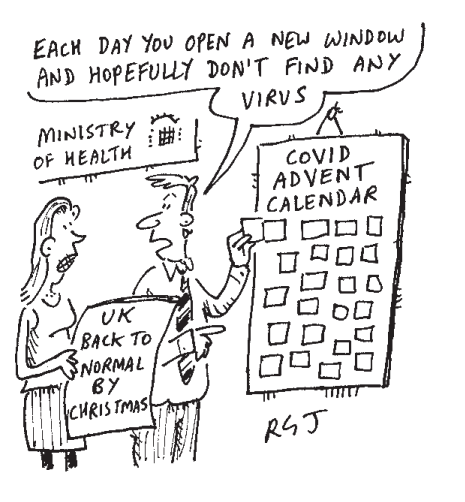
Long Covid’s Advent Calendar of Symptoms

Posted by John Mooney FFPH, Locum Consultant in Public Health, NHS Highland @StandupforPHlth

I should really start this piece with both a declaration of personal interest and a confession. Firstly, I can unfortunately count myself among the many thousands of people affected by what is being referred to as ‘long covid’. Secondly, I have shamelessly borrowed my title analogy from a fellow sufferer and infectious disease academic, Professor Paul Garner whose highly engaging and informative BMJ blogs(1,2) on the subject have helped many to realise that they are not alone or imagining things. With another prominent ‘patient-advocate’ for the disease being the University of Southampton’s Dr Nisreen Alwan, (associate professor and consultant in public health), you might be forgiven for thinking that this is a virus with a special affinity for public health professionals! Now that would be clever but regrettably it is clearly far less discerning.

Image credit: The Spectator magazine and the illustrator Richard Jolley

In keeping with the spirit of the season, my own advent calendar of symptoms has popped open several new windows this week, most notably ‘pins and needles’ and joint pains. Both have arrived on top of the commonly experienced and more worrying long-term chest pains (eight months in my case) and irregular erratic heart rate (managing over 200bpm at rest on one occasion (the normal range for healthy adults is between 60 and 100 bpm). This combined with a rogue ECG readout (Electrocardiograms test the heart's rhythm and electrical activity) in a local A&E department earned me an unscheduled two-night stay in hospital six weeks ago. Seemingly intractable tinnitus has become another constant ‘companion’.

Resting heart rate over 200 bpm &
 oxygen saturation below optimal 

Thanks to my local NHS Hospital, my symptoms were comprehensively investigated and I continue on the ‘recovery’ journey - if recovery is not too optimistic a label. Recent findings from several studies on the longer term complications of the disease have however made for uncomfortable reading, all the more so for being carried out in people whose symptoms had generally not been particularly severe.

In the first of these, a Frankfurt based cardiac MRI study(3) recruited 100 cases of non-hospitalised patients in whom 78% were found to have disruption to heart muscle function and 60% ongoing heart tissue inflammation. Given that the number of ‘milder’ cases will always inevitably far outweigh the numbers hospitalised or who tragically do not survive, the sheer scale of the potential public health disease and premature death burden (if heart health is undermined), begins to look very concerning(4).

Receiving supplemental oxygen in A&E 6 months after
 initial symptoms (mask displaced to drink)


Perhaps more worrying still, ‘long covid’ does not seem to restrict its attentions to the heart and lungs, with another study finding evidence of multiple organ damage in 201 people with a largely mild course of disease, 70% of whom had damage in one or more organs, including kidneys (12%), liver (10%), pancreas (17%) and spleen (6%), as well as heart (32%) and lungs (33%) four months after initial symptoms(5). 

Adding further to this complex picture was a news release about a study this week of ten patients at Oxford University in which a novel scanning technique was used to successfully identify damage not picked up by conventional scans(6). Eight of the ten patients still experiencing shortness of breath three months after infection (none severe enough to be hospitalised), had evidence of hidden lung damage. The new technique will now be repeated with a much larger sample.

These worrying findings about potential long-term damage are already prompting some big-picture questions: What proportion of people who only had very mild disease will go on to develop organ damage? Proportions like 60% and 70% could potentially translate into a staggering public health disease burden with very substantial implications for health services. Devastating though the considerable loss of life has been, the eventual population impact clearly has the potential to be far greater(4). 

As always with such matters however, it is never especially helpful or productive to dwell too long on ‘worst case scenarios’. For my own part, I am fortunate to be in a non-physically demanding job with an understanding employer. The prospect of accommodating such an unwelcome guest as long covid in a physically strenuous job or on a zero hours contract (or both) does not bear thinking about. Long covid clearly has the potential to further exacerbate the substantial inequalities in health and social outcomes that have so clearly characterised the current pandemic.

Significant unanswered questions also remain around which population groups are most likely to be affected by long covid: do they correspond for instance to those most at risk of not surviving? Early indications are that this might not be the case, at least as far as age or gender is concerned: while there has been no systematic population prevalence study, long covid seems to disproportionately affect younger and middle-aged adults, and females over males. For some this latter observation lends credence to long covid being ‘auto-immune’ in origin since women tend to be at higher risk of such diseases (lupus and rheumatoid arthritis being two prominent examples).

Would vaccination be helpful for those affected? Or might it be dangerous given the likely involvement of a misdirected immune response as the basis for the condition? In these respects it’s extremely encouraging that long covid is receiving high level research attention that seems to be already helping to unravel its impact, causes and effects. Such efforts may ultimately be at least as valuable as the impressive progress with vaccine development.

Returning to the advent calendar of the title, the wonderful thing about advent is that there is a season of joy and festivity at the end of a dark midwinter month. Here’s hoping that there is an end in sight also for the many afflicted by long covid.


References:
  1. Paul Garner on long haul covid-19—Don’t try to dominate this virus, accommodate it - The BMJ September 4, 2020. https://blogs.bmj.com/bmj/2020/09/04/paul-garner-on-long-haul-covid-19-dont-try-and-dominate-this-virus-accommodate-it/
  2. Paul Garner: Covid-19 and fatigue—a game of snakes and ladders - The BMJ May 19 2020. https://blogs.bmj.com/bmj/2020/05/19/paul-garner-covid-19-and-fatigue-a-game-of-snakes-and-ladders/
  3. Puntmann VO, Carerj ML, Wieters I, et al. Outcomes of cardiovascular magnetic resonance imaging in patients recently recovered from coronavirus disease 2019 (COVID-19). JAMA Cardiol. Published online July 27, 2020. doi:10.1001/jamacardio.2020.3557
  4. Mooney, JD, Ling J. Long covid: a potential longer term morbidity time bomb?: Rapid response to: BMJ 2020; 371. doi.org/10.1136/bmj.m4470
  5. Dennis A, Wamil M, Kapur S, Alberts J, Badley AD. Multi-organ impairment in low-risk individuals with long COVID. https://www.medrxiv.org/content/10.1101/2020.10.14.20212555v1.full.pdf
  6. BBC News: Covid-19: Lung damage 'identified' in study: 1st Dec 2020 https://www.bbc.co.uk/news/health-55017301

Acknowledgement to high profile fellow awareness raisers of #LongCovid:

Professor Paul Garner: Liverpool School of Tropical Medicine: @PaulGarnerWoof

Dr Nisreen Alwan: University of Southampton @Dr2NisreenAlwan

Friday, 10 July 2020

Not an equal opportunity disease: Covid-19 and health inequalities

Posted by Clare Bambra, Professor of Public Health, Newcastle University and Ryan Riordan, 5th Year Medical Student, University of Cambridge

Spanish Flu of 1918 was experienced unequally, with higher rates
  of infection and mortality among the most disadvantaged
As Covid-19 began to spread rapidly across the UK in early March, politicians and the media were keen to tell us that we were ‘all in it together’ and that the virus ‘does not discriminate’. As time passed, it became apparent that this wasn’t the case.

We now know that Covid-19 is far from a socially neutral disease, with clear clusters of more severe impact amongst our most deprived and marginalised communities.

We now know that people living in more socio-economically disadvantaged neighbourhoods and minority ethnic groups have suffered more with higher infections and death rates.

Historically, this has also been the case - evidence has shown that previous pandemics including the Spanish Flu of 1918 and the H1N1 pandemic of 2009 have also been experienced unequally, with higher rates of infection and mortality among the most disadvantaged parts of the country – both in the UK and internationally. 

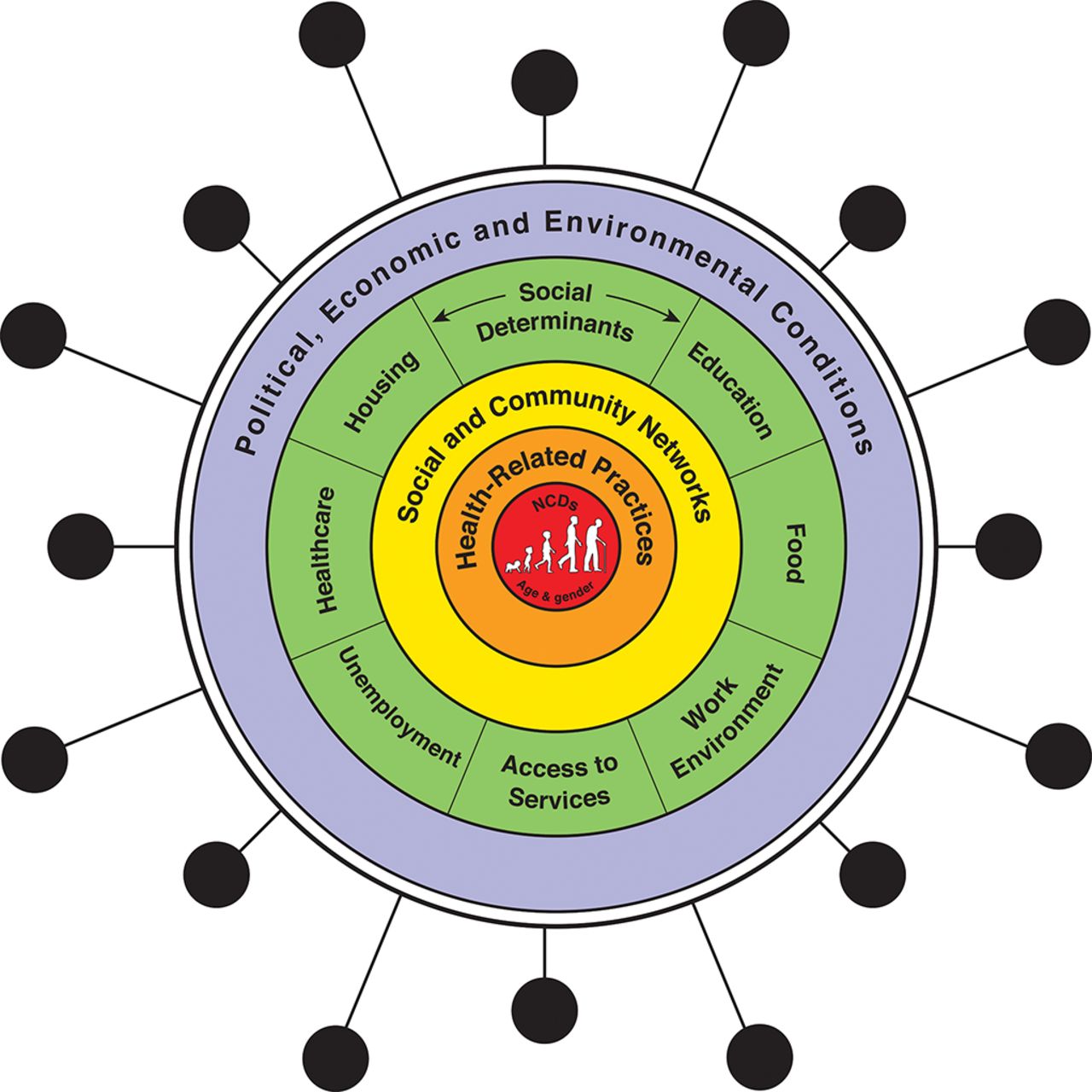
Emerging evidence from a variety of countries suggests that these inequalities are being mirrored today in the Covid-19 pandemic. Both then and now, these inequalities have emerged through the syndemic nature of Covid-19, as it interacts with and exacerbates existing social inequalities in chronic disease and the social determinants of health.

The syndemic of COVID-19, non-communicable diseases (NCDs)
 and the social determinants of health
This is down to a number of factors – not least unequal exposures to the social determinants of health (the conditions in which we are born, grow, live, work and age) leading to higher rates of almost all of the known underlying clinical risk factors that increase the severity and mortality of Covid-19 (e.g. high blood pressure, diabetes, cardiovascular disease).

We may have been living under the same regulations, but across the country, our experiences of ‘lockdown’ were widely different. We knew this. We weren’t ‘all in the same boat’ - we were in the same ocean in the middle of the same storm - but some were on luxury liners and others on rapidly-deflating dinghies.

We saw lower-paid care workers, shop workers, transport workers, factory workers continuing to work face-to-face with the public, while others worked from home on full pay or were furloughed with some semblance of job security.

There were families trying to stay sane in small flats without outdoor space and with empty cupboards, whilst others in more fortunate circumstances trebled their flower delivery order to ensure their homes looked good during Zoom meetings.

The divide in our society is stark on many levels, and as we go forward, who will pay the price of the multi-billion pound interventions that the government has put in place to see us through this period, and bear the brunt of the post-Covid-19 global economic slump? 

Covid-19 has laid bare our longstanding social, economic and political inequalities. Even before the pandemic, life expectancy amongst the poorest groups was already declining in the UK and the USA and health inequalities in some European countries have been increasing over the last decade.

I know that this all makes for grim reading for researchers, practitioners and policymakers concerned with health inequalities. So what can we do?

It is vital that this time, the right public policy responses, such as expanding social protection and public services and pursuing green inclusive growth strategies, are undertaken so that the Covid-19 pandemic does not increase health inequalities for future generations. Public health must ‘win the peace’ as well as the ‘war’. It is our job to make that case.

As we start to shape our ‘new normal’ and as the government unveils its post-Covid-19 recovery plans for the UK, public health policy must be a priority.

We need to act now if we want to avoid deepening the health inequality divide even further for generations to come.

Read the full essay: The Covid-19 pandemic and health inequalities


With thanks to the NIHR Applied Research Collaboration North East & North Cumbria 


Image attribution:
  1. Otis Historical Archives, National Museum of Health and Medicine / Public domain. https://commons.wikimedia.org/wiki/File:Emergency_hospital_during_Influenza_epidemic,_Camp_Funston,_Kansas_-_NCP_1603.jpg
  2. The syndemic of COVID-19, non-communicable diseases (NCDs) and the social determinants of health (adapted from Singer and Dahlgren and Whitehead). With acknowledgement to Chris Orton from the Cartographic Unit, Department of Geography, Durham University, for his assistance with the graphics. https://jech.bmj.com/content/early/2020/06/13/jech-2020-214401.full?ijkey=haFkUOyJurtabHz&keytype=ref#F1
  3. Screenshot taken from the Financial Times website: https://www.ft.com/content/8ea1c992-89f8-11ea-a109-483c62d17528 09/07/2020

Friday, 22 May 2020

Covid-19 and the legacy of Edward Jenner: a tale of two pathogens

Posted by Lesley Haley, AskFuse Research Associate, Teesside University 

2020 is going to be a momentous year in world history as the year that the Covid-19 pandemic changed all our lives.

Edward Jenner, English physician who discovered the smallpox vaccine
Coincidentally, this year also marks the 40th anniversary of a significant historic milestone for another deadly disease, but in this case, one which maimed, killed and shaped global history for the past three thousand years (Flight 2011). That disease was smallpox.

On the surface, there is nothing in common between a dead disease and a newly emerging one. But there are some aspects of the history of smallpox that resonate with the unfolding story of the Covid-19 pandemic.

Smallpox was still a killer when I was vaccinated against it in 1967 as part of a routine public health intervention, although it was no longer endemic in the UK. For my mother’s generation, the reality of smallpox was very stark. She experienced the panic of an outbreak in her home town of Glasgow during the war when she was only 10, and again when she was 16, when smallpox killed front-line staff treating infected patients at the local hospital.

Although in 1967 outbreaks in the UK of smallpox were getting rarer, the worldwide picture was very different. Smallpox was still endemic in many countries, maiming and killing an estimated 10-15 million people a year (Baxby 1999). This was despite the fact that Edward Jenner had first introduced a prototype inoculation against smallpox in 1798, had translated his theories and ideas into practice, and had a huge impact during his lifetime (the academic dream!).

One aspect of Jenner’s life and work bears closer scrutiny in light of the current Covid-19 pandemic, and particularly on the emerging debate surrounding the development of a new vaccine. During his lifetime, Jenner made his research, his ideas and his smallpox inoculations freely available to everyone, irrespective of who they were (Baxby 1999). Jenner and his contemporaries appreciated the commercial opportunities of his discovery, but he continued to give free inoculations to everyone who approached him at his surgery, despite the detrimental financial impact this had on his personal and professional life (Britannica 2020). He understood exactly what the implications of his discovery meant for the common good.

So if Jenner’s work was freely available, (and although certainly not perfect), why was smallpox still endemic in some countries in the world in 1967? Millward (2019) proposed that one of the main issues had been the lack of global “joined up thinking” in the approach towards smallpox eradication. It took until 1967 for countries where smallpox was not endemic to realise that they would always be at risk of continual and increasing numbers of smallpox outbreaks, if the disease was still endemic in other parts of the world. Wherever in the world there was smallpox outbreaks, it caused mass panic, strained public health systems to the limit, maimed and killed, and even had economic impacts on national and international trade and travel (Millward 2019). It therefore became in every countries' interest to support a systematic, unified and global approach to smallpox eradication. Under the auspices of the World Health Organisation (WHO), the global strategy of surveillance, containment and vaccination free at the point of delivery and irrespective of ability to pay, worked. In 1980, the WHO declared the world free from smallpox (Baxby 1999) and it became the “first disease to be controlled by immunisation, the first to be eradicated” (Baxby 1999).

So what will historians say about the story of Covid-19? What will be the role of the global community in tackling the Covid-19 pandemic? Will Jenner’s altruistic example of free and accessible vaccinations be consigned to the history books in the 2020 global race to develop a lifesaving Covid-19 vaccine?

On the global front, 4 May 2020 saw world leaders, the UN, research institutions and philanthropic organisations pledge resources to find a vaccine for Covid-19 (albeit with the ominous absence of two major world powers) (BBC 2020). And the race for a vaccine has sparked debates on who, where, and how people would access a Covid-19 vaccine, with speculation for example, that pharmaceutical companies may have to change their business practices (Chu 2020). In the history of smallpox in the UK, vaccine stockpiles were held by private businesses, highlighting “that public health resources were not always in public hands” (Millward 2019, p. 64).

Global businesses have also contributed to an “Open Covid Pledge, “to make intellectual property available free of charge for use in ending Covid-19 pandemic and minimising the impact of the disease” (Open Covid Pledge 2020).

When global powers pulled together for the common good, it took just 13 years to rid the world of a disease that had killed millions across the continents of Africa, America, Australia, Asia and Europe in its 3000 year reign of terror. Prior to that, without global unity and treatment free at the point of delivery, it took 169 years. I wonder what Edward Jenner would have thought?

So as our Covid-19 story unfolds in 2020 and beyond, I wonder how future generations will judge the actions and decisions of our current global leaders and businesses?


References:
  1. Flight, C (2011) Smallpox : Eradicating the scourge. BBC History. Last updated 17 Feb 2011. Available: https://www.bbc.co.uk/history/british/empire_seapower/smallpox_01.shtml Accessed: 05 May 2020.
  2. Baxby, D (1999) The End of Smallpox. History Today Vol 49 Issue 3. Available: https://www.historytoday.com/archive/end-smallpox
  3. Britannica (2020) Edward Jenner. Available: https://www.britannica.com/biography/Edward-Jenner Accessed: 6 May 2020. 
  4. Millward G (2019) “Smallpox” Vaccinating Britain: Mass vaccination and the public since the Second World War, Chapter 2. [Internet]. Manchester (UK): Manchester University Press; 2019. Chapter 2. Available: https://www.ncbi.nlm.nih.gov/books/NBK545998/#!po=98.8688 Accessed: 5 May 2020. 
  5. BBC News (2020) Coronavirus: World Leaders pledge billions for vaccine fight. Available: https://www.bbc.co.uk/news/world-europe-52525387 Accessed: 5 May 2020. 
  6. Chu, B(2020) “To find a vaccine for coronavirus, pharmaceutical companies will have to Adamson the race for profit”. The Independent. Available at: https://www.independent.co.uk/voices/coronavirus-vaccine-uk-pharmaceutical-companies-patent-monopoly-a9467381.html Accessed: 16 April 2020. 
  7. The Open Covid Pledge (2020) Available: https://opencovidpledge.org. Accessed: 5 May 2020. 

Acknowledgements:
  • Mrs Patricia Hoyland (pers comm)
  • BBC Today programme. Thought for the day. David Wilkinson 4 May 2020.

Image: 
  1. “Edwar Jenner” by Pan American Health Organization PAHO via Flickr.com, copyright © 2010: https://www.flickr.com/photos/pahowho/9525240640. Attribution-NoDerivs 2.0 Generic (CC BY-ND 2.0)
  2. The logo of Open COVID Pledge project, 27 August 2020. Creative Commons, CC BY-SA 4.0 <https://creativecommons.org/licenses/by-sa/4.0>, via Wikimedia Commons (https://commons.wikimedia.org/wiki/File:Open_Covid_Pledge_Logo.jpg).