Showing posts with label advocacy. Show all posts

Friday, 28 January 2022

Science, and the art of communication

Posted by Louis Goffe, Research Associate, NIHR Policy Research Unit in Behavioural Science

Brian Deer - Copyright cleared
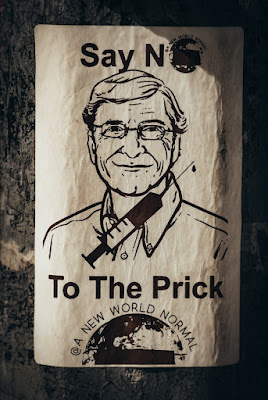
“He’d found no cure for Crohn’s, or remedy for autism, no vaccine, no nothing in medicine. But now he was a man delivering fear, guilt, and disease to everywhere with an internet connection.”
Brian Deer, The Doctor Who Fooled the World


It wasn’t a scientist, not a medical doctor, nor an esteemed health institution, but Brian Deer, an investigative journalist, who researched, compiled, and detailed to the world ‘The fraud behind the MMR scare’. While the adjective to his profession alludes an expectation to the discovery of truth, it’s his journalistic craft that effectively communicates with passion and clarity how the now struck off doc and his associates formulated the non-existent relationship between MMR and autism.
Health promotion takes more than good science, there is
 an art to the delivery.  Photo by Jon Tyson on Unsplash

Deer lays out the complete narrative in his book The Doctor Who Fooled the World. It’s as gripping as your favourite thriller, though with the added heart-sinking poignancy that it is not a work of fiction. While I was keen to write a book review, others do this better, I considered what’s the take-home for those of us in translational research in public health.

I’m a researcher for the NIHR funded Policy Research Unit in Behavioural Science, where we ‘use behavioural science evidence, theory and methods to support decision-making’. Our approach is rigorous and grounded in scientific theory. However, the pandemic has brought into sharp focus that health promotion takes more than good science, there is an art to the delivery. I mean, how else have the sceptics convinced so many that wearing a face covering could be detrimental to health?

Prior to the Medicines and Healthcare products Regulatory Agency approval of the first COVID-19 vaccines, research institutions, health, and Government bodies had been virtually silent on the development process. Some were also critical of how the initial results were released to the world. This reservation to engage with a non-academic audience is partially understandable, we deal in uncertainty and it’s much more than simply crossing the i's and dotting the t's. No researcher worth their h-index wants to put something out into the world that they can’t back-up empirically. The sad fact is though, if we’re not on the front foot keeping the public informed of the vaccine trial process and approval milestones, then there’s a flock of 'quacks' more than happy to work their grift.

To their credit, they work with the religious zeal of a missionary, flooding every corner of the internet knowing our vulnerability to the illusory truth effect. While promotion is focused on social media, their word is also preached in podcasts and proliferated through e-commerce. Take a look at Amazon. Their charitable programme AmazonSmile has reportedly donated thousand of dollars to a vaccine misinformation soil pipe, and high ranking books on “vaccines” include: ‘Anyone who tells you vaccines are safe and effective is lying’, ‘The COVID vaccine: and the silencing of our doctors and scientists’, and ‘Vaccine-nation: poisoning the population, one shot at a time’. There is also the subtly titled: ‘******’s review of critical vaccine studies’, that gives the allusion of a systematic review (though don’t expect it to be listed in the Cochrane Library) but shares a publisher with the essential intergalactic phrasebook ‘Ambassador between worlds’ that provides answers to: What do extraterrestrials think about our religious beliefs, sexual attitudes, and goals in life? But most depressing of all, prominence is given to the book authored by the struck off doc, the man at the centre of Deer’s investigation.

Before the first COVID-19 shots were available, to understand vaccine attitudes my Unit delivered a survey using belief-based statements in adults living in England who did not want, were yet to consider, or were not sure whether to vaccinate against COVID-19. This included their agreement to some of the more 'out-there' theories, including our own fictionalised theory that “Mass coronavirus vaccination is a ploy by environmental lobbyists to sterilise billions of people to reduce population growth”, to which 117 (7%) of respondents agreed to. While my literary intention here is to shock, I suspect that the pandemic has made you immune to such statistics. The problem is that once such views have taken root the typical counter arguments using facts are insufficient, and potentially detrimental in combating misinformation.

The vaccine rollout has been the biggest, most ambitious immunisation programme ever in the UK. It’s a historic achievement by the NHS, ably supported by the Vaccine Taskforce. But as we now reflect, it’s my view that if the Government, healthcare providers and research institutions had provided a cohesive, timely, and responsive informative service that detailed and provided a status update on vaccine development, this would have gone a long way to allay many people's rightful concerns. Sadly this reticence to comment continues as speculation increases over approval of jabs for younger children.
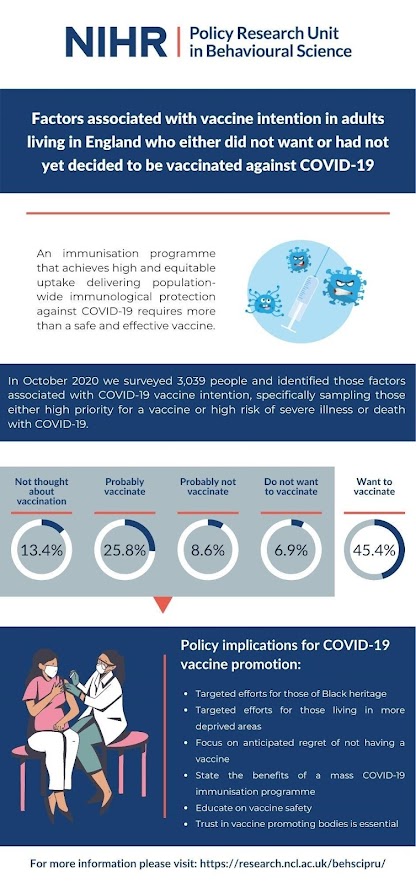
The public has shown an enthusiasm to learn a wealth of terminology during the course of the pandemic. My Unit’s work on the comprehension of antibody testing has shown that this isn’t easy, but it’s something that we shouldn’t shy away from. Patient and public involvement in research is vital to ensure that our lay outputs are fit for purpose and we should all consider how we can be better at science translation. Speaking on camera or on live radio is incredibly nerve-racking and not for all, but as I recently discovered following a two-hour training course, you don’t need a degree in design to produce a half decent infographic.

While I am advocating for your individual action, we also need to consider what systems, for example the new UK Health Security Agency, could put in place to fulfil the role that was missing during the pandemic. Most pressingly on our horizon is the delayed childhood vaccine strategy. The struck-off doc will be feeling emboldened. He understands and has mastered the artistic skill of communication, delivering his message with the gentle assured cadence of a BBC continuity announcer. In the absence of substantiated evidence, he expertly sows doubt and fear to the masses, and as the infodemic has shown, he is not alone. This is a huge challenge for us in public health research and the online vitriol is scary. But building the evidence-base isn’t enough, we all need to work on at least one aspect of the artistic craft of research promotion. Because if it’s not you, you can be assured that someone else most certainly is.


The views and opinions expressed by the author are those of the author and do not necessarily reflect those of the Policy Research Unit in Behavioural Science, the NIHR, the Department of Health and Social Care, Newcastle University or Fuse, the Centre for Translational Research in Public Health.

The Policy Research Unit is funded by the National Institute for Health Research (NIHR) [Policy Research Programme (Policy Research Unit in Behavioural Science PR-PRU1217-20501)]. The views expressed are those of the author(s) and not necessarily those of the NIHR or the Department of Health and Social Care.


Images: 

1) Lourenço Veado, CC BY-SA 4.0, via Wikimedia Commons
2) Photo by Jon Tyson on Unsplash

Thursday, 17 December 2020

Let’s kick Coca-Cola out of Christmas for good

Posted by Robin Ireland, Director of Research, Food Active, PhD Candidate, University of Glasgow @robinHEG

You may have thought Coca-Cola invented Christmas. In a sort of way, they did of course. Arguably, modern Santa was designed by an advertising campaign for Coca-Cola in 1933 (Forsyth 2016). And, Santa, whether in the twentieth or twenty-first century, is all about encouraging us to consume. In Coca-Cola’s case, a sweet brown liquid that should logically have absolutely nothing to do with a winter celebration in, originally at least, the Northern Hemisphere.


Coca-Cola has been creative at making up traditions as part of their marketing campaigns since the soft drink was invented in Atlanta, USA, in the late nineteenth century. They have been muscling in on our favourite cultural practices pretty much ever since, in their growth to become a hugely successful and profitable transnational corporation. They have been involved with the Olympics since 1928 when vendors set up branded kiosks in Amsterdam (Keys 2004). A similar relationship with the FIFA World Cup from 1975 was seen as critical at expanding Coca-Cola’s influence into China and the Arab countries (Sugden and Tomlinson 1998).

Coca-Cola expert at manipulating our deepest wishes and our emotions whether they are talking Christmas or football. The pandemic may have prevented their Christmas Truck tour in the UK, but, never fear, their international marketing department is on the case. A two and a half minute commercial on YouTube featuring a little girl and her Dad’s attempts to deliver her letter to Santa at the North Pole had already received over 37 million views at the time of writing, whilst pulling at our heart strings.

Professor Dame Sally Davies, the previous Chief Medical Officer in England, wrote, “Commercial companies use a range of strategies and other approaches to promote products and choices that affect human and environmental health, defined as the commercial determinants of health” (Davies 2019 Annex D, p.4). And Coca-Cola are the masters. Luke Allen (Allen 2020) described the corporation as “virtually a cartoon villain in many public health circles” (p.29). Commercial determinants of health can be divided into four channels in which transnational corporations influence health (Kickbusch et al. 2016). Let’s consider how Coca-Cola use these channels.

The marketing is the most obvious. The red and white Coca-Cola brand is ubiquitous. This year the Christmas Truck Tour will not be visiting Liverpool or Glasgow and other major British cities. But the corporation’s partnership with the Premier League enabled it to tour those city centres in 2019.

This year the Christmas Truck Tour will not be visiting major British cities but the corporation’s 
partnership with the Premier League enabled it to tour those city centres in 2019

How about lobbying then? Marion Nestle (2015) has done a great job in describing how the ‘soda industry’ has learned from the tactics of the tobacco industry in funding dubious research. In funding campaigns and legal challenges to taxes on sugary drinks for example.

As many transnational corporations are criticised for the damage that consumption of their products can cause to human health, so, many try to position themselves as good corporate citizens. Coca-Cola adopt the same tactics and support a number of charities such as FareShare, Street Games, the World Wildlife Fund and Special Olympics GB. It’s sad that in a tough world, it’s often left to corporations to fund good causes rather than government. I thought that had been left in the Victorian age rather than reappearing in the twenty-first century. Coca-Cola also support the Department of Transport’s THINK road safety campaign. In this a volunteer is encouraged to be a Designated Driver to bring intoxicated friends home safely from their Christmas parties. The language of a “responsible drinking culture” is all part of the transnational corporations’ tactics of blaming all of us for believing their marketing and over-consuming their products. That’s right, the soaring levels of overweight and obesity and distressing images of tooth decay amongst youngsters in the UK, are all down to us, the irresponsible parents.

Finally, transnational corporations are experts at developing extensive supply chains to amplify their global ambitions. According to Nestle (2015), Coca-Cola claims to sell its products in two hundred countries with only Cuba and North Korea escaping its clutches. And that’s down to US trade embargoes not to Coca-Cola’s marketing executives.

It’s very hard to argue against Coca-Cola’s Christmas truck tour. Food Active and public health advocates have done so for many years being called the fun police along the way and advocates of the nanny state. We can only speculate the reasons why the tour has been scaled back in the North West in recent years (where Food Active largely operates), but we would take some comfort in the idea that our lobbying played a role in steering the truck off course.

Allen (2020), referenced Coca-Cola’s 2018 annual report, to show the corporation spends approximately US$4 billion per year on advertising. And they wouldn’t be spending that kind of money if the advertising didn’t work. The marketing has persuaded some that Christmas isn’t Christmas without the Coca-Cola Truck Tour. Well, you know the Holidays ARE Coming this year. Because this dreadful pandemic has at least kept some of Coca-Cola’s marketing out of our towns. Let’s just hope that the growing link between obesity and Covid-19 (Alberca et al. 2020) may encourage more to consider how we can limit the advertising of Coca-Cola and other transnational corporations that promote their high in fat, sugar and/or salt products to children. And let’s start to kick Coca-Cola out of Christmas.


References:

Alberca, R.W., Oliveira, L.d.M., Branco, A.C.C.C., Pereira, N.Z. and Sato, M.N. (2020) 'Obesity as a risk factor for COVID-19: an overview', Critical Reviews in Food Science and Nutrition, 1-15, available: http://dx.doi.org/10.1080/10408398.2020.1775546.

Allen, L.N. (2020) 'Commercial Determinants of Global Health' in Kickbusch, I., Ganten, D. and Moeti, M., eds., Handbook of Global Health, Geneva: Springer International.

Davies, S.C. (2019) Time to Solve Childhood Obesity, London, available: https://assets.publishing.service.gov.uk/government/uploads/system/uploads/attachment_data/file/837907/cmo-special-report-childhood-obesity-october-2019.pdf [accessed 27 November 2020].

Forsyth, M. (2016) 'Coca-Cola didn’t invent Santa ... the 10 biggest Christmas myths debunked', The Guardian, 21 December 2016, available: https://www.theguardian.com/lifeandstyle/2016/dec/21/coca-cola-didnt-invent-santa-the-10-biggest-christmas-myths-debunked [accessed 27 November 2020].

Keys, B. (2004) 'Spreading Peace, Democracy , and Coca-Cola®: Sport and American Cultural Expansion in the 1930s', Diplomatic History, 28(2), 165-196.

Kickbusch, I., Allen, L. and Franz, C. (2016) 'The commercial determinants of health', The Lancet, 4, 895-896.

Nestle, M. (2015) Soda Politics. Taking On Big Soda (And Winning). Oxford: Oxford University Press.

Sugden, J. and Tomlinson, A. (1998) FIFA and the Contest for World Football. Who rules the peoples' game? , Cambridge: Polity Press.


Image 2: Coca-Cola Tour Bus. Liverpool, March 2019. Photo courtesy of E.Boyland.


The views expressed in posts are those of the authors and do not necessarily reflect those of Fuse (the Centre for Translational Research in Public Health) or the author's employer or organisation.

Friday, 17 July 2020

The long and winding (and emotional) road to impact

Posted by Mandy Cheetham, Research Associate, Teesside University

Having submitted written evidence to the Work and Pensions Select Committee inquiry on the impact of the 5 week wait for Universal Credit (details here), I had not anticipated being invited to give evidence by Zoom to a panel of MPs in the midst of lockdown. The evidence submitted (available here) drew on qualitative research into the experiences of claimants in North East England (Cheetham et al 2019) and quantitative research showing the mental health impact of Universal Credit, undertaken by colleagues from Liverpool University (Wickham et al 2019). Dr Sophie Wickham and I were both invited to be part of a panel for the second evidence session. I had watched the first evidence session to see the lines of inquiry pursued, realising (with dismay) it was available live on parliament tv.


As witnesses, we had been given a broad indication of the areas on which MPs would focus their questions. These included the effects of the 5 week wait, its impact on mental health, and our thoughts on what could be done to mitigate the adverse effects. I had read and re-read our research paper, digested more recent reports and published literature and carefully prepared my responses to the anticipated questions. I had emailed colleagues in local advice organisations to see if the issues identified in the research were still relevant. I had a chat with a university colleague who had given evidence to a different committee drawing on our research on energy drinks 2 years previously. A final check that the technology worked in a test call the afternoon before and all was set.

Following advice from the friendly and efficient clerk of the committee, I had moved my laptop away from the background distractions of grandchildren’s Batman costumes and toys. I woke up early on the morning of 17 June feeling nervous with anticipation. ‘Trust you know enough’ were the calm words of advice offered by one committee official.’ ‘Stick to the evidence; be focused and don your cloak of authority’ came texted advice from a senior academic colleague with a good luck message. I have a tendency to talk too much when I’m nervous, and knew I needed to avoid waffling, so this was a helpful reminder. But I wasn’t sure I had a suitable cloak of authority handy.

In the event, the preparation paid off. I stuck to my bullet points and weaved in quotes from participants when I could. It wasn’t perfect and there’s always more to say. I’m not sure it’s possible to do justice to the harrowing experiences which had been shared by research participants, but I tried. There is a big focus in academia on impact, and I sometimes feel limited recognition of the time and multi-layered approaches needed to achieve it. Immediately after the evidence session, which lasted an hour, I was contacted by a journalist from the Independent asking about a paper I had mentioned in my evidence. Within an hour the Sun online quoted our evidence in an article supporting their campaign to make Universal Credit work.

Evidence is clearly not the only, or the most important deciding factor in the messy world of policy making. I believe we need to use a combination of political levers of influence at our disposal to affect changes when opportunities present themselves. This felt like a huge moment. The priorities and timeframes of academia and policy making do not always align. The study I was reporting grew out of embedded research with community members in Gateshead who talked about their fears about Universal Credit being rolled out in 2017, fieldwork was undertaken April – October 2018, written up and paper submitted in November 2018 and published in 2019. Following the select committee, a colleague posted links to the evidence session on the Facebook pages of organisations who had supported the research for community members to see. It felt right to let participants know what had happened.

Since 2018, we have shared the research findings at numerous conferences and with Department for Work and Pensions staff, but with limited effect. COVID-19 has prompted temporary changes to be made to Universal Credit, which will help. My experience in the shielding hub demonstrates how many families claiming Universal Credit, particularly those with children, continue to struggle with the additional costs of lockdown. Last month, Therese Coffey announced the re-instatement of conditionality requirements and sanctions, which will add to Universal Credit claimants’ stress at a time of economic insecurity, rising unemployment, unprecedented job losses, and anxiety about the future. Even a global pandemic can’t halt political will it seems.

In my view, public health is political. Lobbying and advocacy are a core part of our role, particularly when government policy has such a crucial role to play in addressing inequalities. We need to continue to highlight the harmful impacts of policy on particular groups and be part of the process of informing solutions. Researchers need to seek out these opportunities for ‘academic activism’ (Askins 2009) to help shape policy. We need to provide training and support to academics at all levels, and accept the emotional investment these efforts require. After all, the drive to impact is fuelled by emotional as well as scientific engagement with our subject matter.

Reference:
Images:
  1. Screenshot taken from parliamentlive.tv: https://parliamentlive.tv/event/index/5d5e46b8-c323-4a64-8bca-53e2ed17cb4f 16/07/2020
  2. Screenshot taken from The Sun website: https://www.thesun.co.uk/news/11883566/universal-credit-wait-12-weeks-severe-hardship 16/07/2020

Friday, 26 July 2019

By invitation-only, at a secret location, with no agenda - this is Sci Foo ‘unconferencing’

Amelia Lake, Associate Director of Fuse and Reader in Public Health Nutrition at Teesside University

I’ve been back home from Sci Foo for more than a week. I’m not missing the Californian sunshine as the North East weather has actually been rather seasonal, but I am missing two things; the incredible Google micro-kitchens and the people I had the good fortune to meet.

Before the email arrived - which incidentally, I almost deleted thinking it was another spam invitation to a fictional conference in some far flung location - I hadn’t heard of Sci Foo. Thankfully, I forwarded it to our University Director of Corporate Communications and Public Relations, who was suitably excited.

That was April.  Fast forward to July and I’m on a 10-hour flight to San Francisco (feeling very relieved that I don’t have to entertain the kids on such a long haul). At this point I’m still not that clear what an ‘unconference’ conference is.

When I arrive, I have to download Uber to my phone (not a necessity when living in rural north Yorkshire) and I find my destination with only jet lag to contend with - a theme common throughout my three days at Sci Foo. To be fair, I had jet lag before getting here courtesy of a three-year-old.

On Friday evening, we are bused to the top secret Google X complex and it starts – as all good things should – with food. I can’t remember the last time I went to an event where I didn’t know anyone at all other than some vaguely recognisable faces from the twittersphere.
But with food came conversation. 
Participant-driven 'rugby scrum' 

At around 8pm the conference started (bearing in mind that I had been awake since 3am) and the message was clear. Be inclusive, be kind, be curious and talk to people from as many diverse fields as possible. That was very easy, as I soon discovered, most people were doing or studying things I hadn’t heard of, or had zero comprehension. It was awe inspiring.

I soon discovered that an ‘unconference’ is completely participant-driven and from a distance this looked a bit like a rugby scrum.                                 

       But with encouragement from my new found food friends I joined the pack and put down a session on ‘silencing science’ - discussing whether our role as scientists is to be neutral or advocates. I met Prof Shaun Hendy and Dr Siouxsie Wiles both phenomenal science communicators from the University of Auckland, New Zealand and we devised a session for Saturday morning based on the range of experiences Shaun had collated in his book ‘Silencing Science’.

The rest of the day was incredible – from sessions on trust in science, to the future of scientific publishing – and did I say that the food was great?! Sleep deprivation is nothing when you have access to kettles with higher and lower temperatures depending on the type of tea you select.

On Sunday morning it was my turn to give a ‘lightening talk’ on our Fuse energy drink research, alongside a handful of other presenters. Speakers one and two were incredible with amazing graphics, audio and visuals. My more low-tech approach highlighted the powerful words of our young respondents, illustrating what the consumption of energy drinks means to them.

Sci Foo was only three days but it felt longer, in a good way. There were many highlights, including holding a Woolly Mammoth’s actual tooth during breakfast [add photo], discussing galaxy formations with cosmologist and Prof of Physics Risa Wechsler and attending a session on ‘fully automated luxury feminism’!

There can’t be many conferences – no make that occasions in life - where you can share the same room with the most influential skateboarder in history, Rodney Mullen and a Nobel Laureate.

I hit a conference high attending Sci Foo. It was incredible and lots of people worked very hard to make it such a brilliant event. Particularly Cat Allman, the team from O’Reilly Media, Digital Science, Nature Publishing Group and Google Inc.

My take home message is: if you ever get invited to one of these ‘Foo’ events, say yes - you won’t regret it.


Images:
2: Courtesy of Alex Cagan: https://twitter.com/ATJCagan/status/1149897137640988672
3: Amelia Lake with Prof Shaun Hendy
4: Quotes from the young people involved in Fuse energy drinks research
5: Amelia Lake with a Woolly Mammoth tooth 

Friday, 25 January 2019

Universally discredited?

Posted by Mandy Cheetham, Research Associate, Teesside University and colleagues.

I listened to the budget in October 2018 in anticipation of an announcement about Universal Credit. We had just completed a study commissioned by Gateshead Council about the impact of the roll out of Universal Credit. I had been profoundly moved by the accounts of Universal Credit claimants with health conditions and disabilities who participated in the research. In a budget for “strivers, grafters and carers”, Philip Hammond announced that the “period of austerity was coming to an end”. He promised an additional £1 billion over five years to ‘smooth the transition’ to Universal Credit. Despite acknowledging “genuine concerns” about implementation of the programme, “Universal Credit is here to stay” Hammond asserted.


Two weeks after the budget announcement, I had the pleasure of meeting Philip Alston, the UN Special Rapporteur for Extreme Poverty and Human Rights, who was visiting the North East as part of his UK tour. We presented the findings of the Universal Credit research and he asked probing questions about the implications. We were not alone in drawing attention to concerns about the adverse effects of Universal Credit on people with disabilities. A statement of Alston’s conclusions can be found here.

Our research report was published on 15 November and the findings covered by the Guardian and Independent newspapers, local radio and television news.  Doctors’ concerns about Universal Credit were also highlighted in a British Medical Journal feature which cites our research.

The research team and Gateshead's Director of Public Health have received emails from people sharing their experiences and thanking us for raising this important subject. It has been highlighted by the Association of Directors of Public Health. I have met with local MPs, elected members, and senior managers in the Council and voluntary sector in Gateshead where I work as an embedded researcher. The findings have been shared with Department for Work and Pensions staff and we have been invited to the House of Lords. This kind of (inter)national interest is rare and a bit overwhelming! The research was made possible, because Gateshead Council commissioned it. Independent academic research of this kind is essential if we are to understand the impact of government policy on North East communities.

The findings raise questions (again) about public health advocacy and research. What is our role if not to work with communities whose voices are often unheard or ignored in policy to enable their views and experiences to contribute to debates (Smith and Stewart 2017[1]). This research demonstrates the power those voices can have when assembled using robust qualitative research methods and in the absence of any other data. The policy changes taking place under the guise of welfare ‘reform’ present huge challenges to public health and wider efforts to address health inequalities. If Universal Credit continues to be rolled out, vulnerable claimants will continue to endure hardship and destitution. Suicide rates will rise and the human and financial costs to the health and social care system will increase. As public health researchers, we have a duty to raise awareness of the effects of a policy which is undermining the health and wellbeing, employment prospects, food, financial and housing security of the most vulnerable people in society. It remains to be seen whether the government is listening to a growing body of evidence (Arie 2018[2], Cheetham et al 2018[3], Walton 2018[4]) about the impact of Universal Credit or whether, as Philip Alston (2018: 1) observed, ministers will continue to dismiss concerns and doggedly resist change in response to the many problems highlighted.

Mandy will present her research at the Fuse Quarterly Research Meeting: The impact of Universal Credit on health & wellbeing in Gateshead.  Find out more on the Fuse website.


About the authors:
Dr Mandy Cheetham Research Associate, Teesside University
Dr Suzanne Moffatt Reader in Social Gerontology, Newcastle University 
Dr Michelle Addison Research Associate, Newcastle University 
Alice Wiseman, FFPH, Director of Public Health Gateshead Council

The views expressed here are those of the authors and do not necessarily reflect those of the author's employer or organisation.


References:
  1. Smith and Stewart (2017) Academic advocacy in public health: Disciplinary 'duty' or political 'propaganda'? Social Science and Medicine Sep;189:35-43. doi: 10.1016/j.socscimed.2017.07.014. Epub 2017 Jul 21.
  2. Arie, S. (2018) Doctors concerns over universal credit are mounting BMJ 363: doi: 10.1136/bmj.k5131 5th December 
  3. Cheetham, M. Moffatt, S. Addison M. (2018) “It’s hitting the people that can least afford it the hardest” The impact of the roll out of Universal Credit in two North East localities: a qualitative study. Gateshead Council, Teesside university and Newcastle university and Fuse, the Centre for Translational research in Public Health https://www.gateshead.gov.uk/media/10665/The-impact-of-the-roll-out-of-Universal-Credit-in-two-North-East-England-localities-a-qualitative-study-November-2018/pdf/Universal_Credit_Report_2018pdf.pdf
  4. Walton, E. (2018) Life and Times A truth universally acknowledged: moving to Universal Credit leads to large debt and poor mental health British Journal of General Practice 68 (677): 577. doi: https://doi.org/10.3399/bjgp18X699977. 

Saturday, 8 April 2017

Passionate Advocacy versus Dry Evidence

Posted by Peter van der Graaf, AskFuse Research Manager, Teesside University

Should public health researchers be passionate advocates of their work when engaging with policy makers or should they present their findings in the most neutral way possible, sticking to the facts only (and preferably economic figures) to encourage take up of their research? This question was the focus of a heated debate at the recent national School for Public Health Research Annual Scientific Meeting, bringing together researchers from eight different centres of excellence across the UK and a selection of senior health practitioners at the Royal Society in London.

Chris Whitty: academics should present their findings neutrally
to politicians without making any advocacy statements
The tone for the debate was set by Professor Chris Whitty, Chief Scientific Adviser for the Department of Health, who challenged the audience to be more ambitious in their public health goals. At the same time, he warned academics to play to their strengths: if they wanted to ensure impact of their work, academics should present their findings neutrally to politicians without making any advocacy statements, as this would deter politicians. Advocacy should be reserved for politicians, who in turn are supported by economic advisors. Therefore, academics would do well to present their data in terms of opportunity costs and trade-offs; without solid economic back-up, any evidence claim would be quickly dismissed by politicians, according to Whitty.

This provoked strong reactions from audience members and particularly on Twitter, where a lively discussion ensued throughout the rest of the day. People questioned whether it is possible or even desirable to leave advocacy at the door when dealing with politicians. Some argued that, from a social science perspective, there is no such thing as neutral evidence and that it is our duty as public health scientists to take a stand and advocate against increasing health inequalities. Others disputed the need from politicians for dry evidence, stating that purely evidence based approaches can leave politicians cold without a persuasive narrative. Instead, emotionally informed and narrative research was important to persuade local government. Researchers needed to align themselves with local government concerns and cultures and acknowledge the importance of context to have any impact.

Duncan Selbie: academics should be more ruthless, coordinated and angry
in the interactions with policy makers to get them to act on the evidence
Duncan Selbie, Chief Executive at Public Health England, poured oil on the fire in the afternoon by appealing for the exact opposite to Chris Whitty’s call for more neutrality: academics should be more ruthless, coordinated and angry in the interactions with policy makers to get them to act on the evidence that academics have generated. He encouraged public health researchers to make more use of behavioural science to help policy makers take notice and implement their findings. This provoked several reactions, with some participants highlighting the role that advocacy played in the public health fight against the tobacco industry, while others made passionate pleas on soapboxes for the re-politicising of public health science, arguing that it was unhelpful to divide science and politics into two separate worlds.

The storm seemed to settle towards the end of the day, when Twitter users and audience members started suggesting solutions for the debate, which was dubbed “Passionate Advocacy vs. Dry Evidence”. One suggestion was that public health researchers should develop a ‘horses for courses’ approach: at certain times some people needed to be passionate advocates, while others at different times needed be neutral scientists to get the listening ear of politicians. The different approaches were related to different levels at which politicians operate: local politicians were more persuaded by narratives emerging from research and advocacy, while national politicians valued neutrally presented evidence and data.

Others suggested the use of intermediates to make the advocacy case for public health, such as voluntary community organisations that represent the will of the people, and by focusing research on the key questions that front line workers are struggling with. Or even better, persuade policy makers to become advocates of research evidence!

Overall, participants agreed that science needed to be pushed more up the policy agenda, as research is currently losing out to politics and economics. Therefore, in some circumstance researchers need to consider accept that submitting good enough evidence quickly is better than waiting too long for perfect peer reviewed publications. Furthermore, we need to be aware that different kinds of evidence are used in decision making processes.

My favourite solution was proposed by Professor John Frank, Director of the Scottish Collaboration for Public Health Research & Policy: if you want good policy influencers, you need to change the academic model to produce them. The biggest barriers to knowledge mobilisation are structural and often in academia. As long as we don’t train public health students in engaging with policy and practice partners, fail to teach and reward them in how to use different types of evidence and do not involve them in collaborative research, we will keep returning to this debate for many Annual Scientific Meetings to come.