Showing posts with label impact factor. Show all posts

Thursday, 22 January 2015

ESRC vision includes plans to promote bold new approaches to knowledge exchange

Posted by Mandy Cheetham
An ESRC grant writing workshop last week organised by Durham University gave us some insight into the ESRC's vision and priorities for 2015 / 2016.


In a helpful overview, Sally Johnson at Durham Research Office, summarised the plans, which include a continued focus on excellent research, quality, timeliness, value for money and potential impact, both in and outside academia. ESRC’s vision is to support ‘transformative’ research, pioneer methodological and theoretical innovation, extend partnerships in priority areas and deliver new, more effective approaches to knowledge exchange. And you don’t have to be a senior academic to submit, as fresh ideas from Early Career Researchers are encouraged. Proposals which include international collaboration are particularly welcomed. There’s more guidance available on the ESRC website.

We heard about a range of current ESRC funding opportunities, including the Transformative Research call which encourages novel developments of social science enquiry, and supports research activity that entails an element of risk (closing date 19th Feb 2015).

Information about all the ESRC funding streams is available here on the ESRC website.  If you’re not sure whether and how your plans fit, you can email remit queries to: esrcremit@esrc.ac.uk
Drawing on their experiences of ESRC grant writing Emma Flynn and Peter Tymms from Durham University shared some of their reflections on lessons learned. Thanks for their permission to share these top tips;
  • Take your time, plan ahead and identify the appropriate funding stream for your proposal. 
  • Identify stakeholders and possible co-applicants with interest and expertise. Engage them early on in the development of the research.
  • Look at other people’s successful grant applications, if available.
  • Turn up at public meetings and events organised by the funding board.
  • Start small and build up towards larger grants over time. Be realistic.
  • Apply for seed corn funding from your University to start to build a track record. Make step changes into new and different areas.
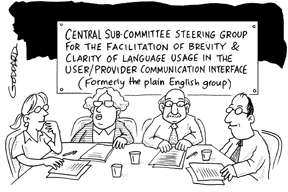
  • Write clearly, avoid jargon. Think about content, structure, headings and format. Put yourself in the position of the reviewer.
  • State clearly why you, why this research, why now, why this university?
  • Seek comments from those with a track record from the relevant funder. 
  • Read, re-read, revise, revise and revise again.
  • Think about who to suggest as reviewers. Build in time to approach them and seek permission before you submit the application. Send them a draft outline copy of the proposal for comment.
  • Learn from reviewers comments, even when (perhaps especially when) they are critical. Rejections are common and everyone gets them. Treat them as a learning experiences. Don’t take them personally, reviewers are not perfect, and keep trying.
  • Accept constructive feedback in a positive spirit. Work from it. Be persistent.

There’s helpful guidance on the ESRC website too about how to write a good research grant proposal.

Good luck!

Thursday, 5 September 2013

Aim high, or just get it out there and move on?

Posted by Jean Adams

So shall we talk impact factors?

Every peer-reviewed journal that has been around for a few years has an impact factor. It’s a number (calculated to three decimal places!) that reflects the average number of times papers published in the journal are cited by other papers in peer-reviewed journals.

In an unthinking world, there is an assumption that the higher the impact factor of a particular journal, the ‘better’ the journal is. From there, it’s easy to start to think that the papers published in journals with higher impact factors describe ‘better’ research and that the people who write papers published in journals with higher impact factors are ‘better’ researchers.

It's just much easier to judge who's 'best' in some areas than others
Of course you can see that such a simple metric is never going to be a particularly accurate reflection of the quality of either the research or the people writing the research. Lots of people have written lots of things about how bad a job impact factors do of assessing quality. They’re even pretty poor at predicting the number of citations any particular paper will get. And who said that citations are a good marker of how good a paper (or the research it describes) is anyway?

I know all of this. I understand it. Yet I still care about impact factors. I still want to submit my papers to journals with high impact factors and it frustrates me when my papers get rejected by the ‘best’ journals and I have to do the long, boring job of trying the next ‘best’ journal, then the next ‘best’, and then the next ‘best’. Which is not to say that every paper I’ve ever published has been rejected by The Lancet (certainly none have been published there). But that I do want the best possible for each of my little paperlings.

Lately I’ve been doing quite a lot thinking about this, wondering why I am so obsessed by playing the impact factor game that I know to be such a highly suspect marker of skill – as much ludo as chess. I guess some of it is vanity – if that’s what people are going to think makes me ‘good’, then I’ll do it because I definitely want them to think I’m ‘good’ (although, why do I care what those people who place such value in such a suspect number care?). Some of it is pure competitiveness – if it’s hard to do that, then I’m going to do it.

But I guess right at the very bottom of it all is the REF. The big ol’, not quite sure that we think that’s a particularly good marker of quality either, REF. I have to have four papers that are ‘good enough’ for the REF or to be submitted as an individual; I definitely want to be submitted (see above re vanity and competitiveness, but let’s also add in it’s sort of my job); and in the absence of other markers of quality, we seem to be relying pretty heavily on impact factors to decide what papers are ‘good enough’. Not entirely. But quite a bit.

Whilst many of the people I work with are similarly fairly obsessed by the impact factor game. Not all of them are. Some people, who I have lots of respect for, reckon it’s a bit fat waste of time (and morale) to try your paper in a high impact factor journal, get it bounced, reformat it for the next one, get it bounced blah blah blah. They laugh and say ‘oh just get it out and move on’. Maybe it isn’t a coincidence that these tend to be the sort of people who have loads of ‘good enough for the REF’ papers anyway. But I am starting to wonder if what I need to be doing is not constantly ‘aiming high’, but developing a better sense of what papers are worth ‘aiming high’ for.