Showing posts with label children. Show all posts

Friday, 24 July 2026

Sparking curiosity with Twinkle, Twinkle Arti

Posted by Nicola Aldridge, Research Associate, and Cassey Muir, Research Associate / Co-lead of the Fuse Early Life and Adolescence Research Cluster, both from Newcastle University

We were recently given the exciting opportunity to showcase the Twinkle, Twinkle Arti project at Discover Festival, a free, one-day festival organised by Newcastle University that brings together families, communities, and researchers through interactive activities and inspiring ideas.

Nicola and Cassey
Discover Festival is designed to spark curiosity, build connections, and encourage people of all ages to explore new ideas. Each year, the university creates a packed programme of family-friendly events, and this year, we were delighted to be part of it as members of the Twinkle, Twinkle Arti research team.


Bringing Arti's story to life

Throughout the day, we invited families to step into Arti’s world through the Twinkle, Twinkle Arti storybook. Developed by Fuse researchers at Newcastle University, with funding from the NIHR School for Public Health Research, the book was created and co-produced with families to support the wellbeing of children experiencing challenging family circumstances, such as drug and alcohol use. While these experiences inspired the story, its themes of feelings, belonging, resilience, and hope resonate with all children.

Visitors to our stall in the Great North Museum had the chance to watch a CBeebies Bedtime Stories style video of it being read aloud by the author. They could also explore puppets and original illustrations from the book, and view artwork created by primary school-aged children who had participated in a pilot study of classroom lessons based on the story.

Families were also able to take home a free copy of the storybook, along with a link to the online read-aloud video and a set of simple conversation prompts designed to encourage creativity, emotional expression, and meaningful family time at home. We handed out nearly 80 copies on the day!


Conversations that matter


Beyond engaging with families, it was equally exciting to see the conversations that the project sparked among professionals attending the festival. We spoke with people from a range of sectors, including teaching, school governance, clinical psychology, and general practice with social prescribing links. Their curiosity about the project and enthusiasm for its potential applications highlighted the broad relevance of Twinkle, Twinkle Arti and the importance of creating accessible resources that support children's emotional and social wellbeing.

One particularly rewarding conversation was with a family who shared their personal experience of the impact of alcohol on family life and how they might be able to use the book. Hearing their reflections was both moving and affirming. It served as a powerful reminder of why the project began in the first place and reinforced the continued need for resources that help children navigate difficult experiences. Moments like these bring the research to life, reminding us that behind every study, storybook, and activity are real families whose experiences matter and whose voices continue to shape our work.

Creating a community star mural

Another highlight of the day was our evolving community star mural. We invited children to create their own star by drawing, colouring, or writing ideas about what they or Arti could do when they felt sad or worried, with 114 stars being created on the day. It was wonderful to see children enthusiastically embracing the activity, and even more special to watch parents, carers and grandparents join in too, talking to their children about the messages in the book. The excitement on their faces as they added their stars to the mural was a lovely reminder of the power of creativity to bring people together.


A colourful celebration of hope and resilience

By the end of the day, the mural had grown into a colourful display of hope, kindness, and imagination. It was a privilege to share the Twinkle, Twinkle Arti project with so many families and to see first-hand how children connected with Arti’s story and messages of hope, resilience and belonging. Events like Discover Festival provide a fantastic opportunity to bring research into the community, and we were grateful to be part of such an inspiring day.


Find out more about Twinkle, Twinkle Arti

Friday, 12 December 2025

Nourishing our tomorrow needs to start today

Posted by Professor Amelia Lake, Fuse Deputy Director, and Professor of Public Health Nutrition at Teesside University

How do we create a future where every child has access to healthy, affordable food?

That question took centre stage at the British Nutrition Foundation annual conference, which brought together academics, policymakers, and practitioners to tackle one of the most pressing public health challenges of our time: improving the diets of children and young people.

The event was given a special highlight with the attendance of Her Royal Highness The Princess Royal, Patron of the British Nutrition Foundation, who delivered a powerful address on the importance of food in society and education.

Professor Amelia Lake and collegues meeting Her Royal Highness The Princess Royal
Children’s health and children’s diets are hugely important. Yet, rising rates of obesity, food insecurity, and exposure to unhealthy food environments challenge the ability to have affordable and healthy food.

This conference explored both the challenges and solutions, offering evidence-based insights and practical strategies.

I spoke in the morning session alongside my Fuse colleague Professor Greta Defeyter (Northumbria University) and 
Professor Maria Bryant (University of York). A great representation of Northern University academics!

Profs Maria Bryant, Greta Defeyter, Amelia Lake (L-R) 
Our morning session had a very special guest in the audience, Patron of the British Nutrition Foundation, Her Royal Highness The Princess Royal. Earlier the speakers were invited to meet The Princess Royal and individually talk to her about our work. A good ear for accents, Her Royal Highness. quickly recognised I wasn’t a Teesside native. Those who know me will be aware that I am from Northern Ireland, and I very much sound like I am.

My talk was titled: “Unpacking the Food Environment: Implications for Children and Families” and I discussed Healthy Planning and was able to introduce the audience not just to our academic evidence but also our evidence informed free online training on the topic aimed both at public health and planning teams in local authorities.

I presented our recent ‘Dark Kitchens’ research. The rise of online meal delivery and “dark kitchens” is reshaping how families access food, increasing exposure to calorie-dense options at the click of a button and increasing the availability of accessibility of less-healthy food choices.

While planning allows us to shape our food environment there is much we can do around food retail to create healthier food environments. I discussed some findings from our Fuse Foodscape study funded by the NIHR School for Public Health Research.

We cannot describe the food environment without acknowledging that many households face significant barriers to accessing affordable, healthy food, with direct consequences for children’s health and wellbeing. Food insecurity is real and affects families across the UK. At Teesside, we have worked with communities and organisations using innovative methods to produce healthy food within local social supermarkets such as our healthy ready meal.

Amelia speaking at the event
I called for stronger planning policies and interventions to create healthier food environments, emphasising the importance of collaboration between communities, professionals within local authorities, government and industry.

Improving dietary health isn’t simply about individual choice - it’s about transforming the food environments in which those choices are made.

Her Royal Highness The Princess Royal has been patron of the British Nutrition Foundation since 1988 and delivered a powerful speech at the conference, emphasising the importance of food in society and within education. Her remarks reinforced the British Nutrition Foundation’s mission to ensure every family can access a healthy, sustainable diets.

The conference showcased many impactful speakers and left us with the key message that Nourishing our tomorrow, needs to start today.


The British Nutrition Foundation hosted its annual conference, Nourishing Tomorrow: Equipping Children and Young People for Better Dietary Health in the Future took place on Tuesday 25 November 2025.

Tuesday, 4 November 2025

Brand to ban: What young people really think about energy drinks

Posted by Professor Amelia Lake, Fuse Deputy Director; Dr Helen Moore, Fuse Associate; and Grace Stewart - Teesside University. 

Walk into any corner shop, and you’ll see them lined up in the fridge: brightly coloured cans promising energy, improved focus and even hydration. They’re everywhere online too, all over social media feeds... What are we talking about? Energy drinks. They have become a familiar part of the landscape in the UK, but particularly for young people who are consuming them in ever increasing numbers; the question is, why are they so popular, and what is being done about it?

What are energy drinks?


High-caffeine energy drinks are soft drinks that contain at least 150 milligrams (mg) of caffeine per litre of drink, which is higher than other soft drinks. Back in 2018, Jamie Oliver led a campaign that resulted in many retailers voluntarily banning sales to under-16s. Fast forward to July 2024, and the new Labour Government announced in the King’s Speech that it would restrict the sale of energy drinks to under-18s. There is currently a live Government consultation around banning the sale of high-caffeine energy drinks to children which will close on 26 November 2025. If you want to contribute, please do so.

Our research


Our mixed-method qualitative study was published in the Journal of Human Nutrition and Dietetics this week. The work was carried out in North-East England and sheds light on the reasons behind young people still consuming these drinks in large numbers, and what they, the consumers, really think could be done about it.

Our research involved:
  • Focus groups with 50 students aged 9–14 years old
  • A survey completed by 22 Year 9 students (aged 13–14 years old)
The aim was to understand how children and young people perceive energy drinks and hydration drinks, and to explore their consumption habits post the UK’s 2018 voluntary sales ban to under-16s. This follows on from our earlier work published in 2017.

What did we find?
  • 81.8% of surveyed students (13-14 year olds) consume energy drinks, with boys drinking more frequently than girls.
  • Most young people drink EDs 2-4 times a week, and many started before age 12 years.
  • Taste, branding, and peer influence were major motivators.
  • Corner/local shops were the most common purchase point, often with little enforcement of age restrictions.
  • Hydration drinks (e.g. PRIME) are seen as healthier alternatives, though their actual health impact is still unclear.

So, why are energy drinks so popular?

Through the focus groups, we learned that young people are really clued-up about energy drinks. They talked about branding, marketing, taste, peer influence, cost, and just how easy it is to get hold of them. From YouTube ads to celebrity endorsements (think F1 and YouTubers like Logan Paul and KSI), marketing was seen as a powerful force driving consumption. One young person said:

“If I made the exact same drink, in a bottle, no one would buy it.”

Bright colours, cool designs, and slogans were all cited as reasons that young people are drawn to these products. Many of the young people taking part in the research knew that they were being targeted by the manufacturers, but they didn’t mind. In fact, some saw energy drinks as part of their identity, linked to gaming, sports, or just being “cool.”


Policy gaps and opportunities


Despite the 2018 voluntary ban mainly in supermarkets, energy drinks remain easily accessible. Many children believed there was a legal age restriction but said that they could still buy energy drinks from shops or online without ID checks. This links back to the importance of the current live consultation around Energy Drinks and sales restrictions.

This raises an important point for policymakers to consider: if energy drinks are still seen as aspirational, accessible, and part of youth culture, young people will find ways to get them, or switch to similar products that exist outside of the ban. There needs to be a wider strategy to tackle this, which means tighter regulation of marketing (anywhere that young people spend their time - including online spaces), effective, up-to-date, accurate education about the health impacts of energy drinks and the tactics used by manufacturers, and importantly including young people in this conversation.

Our research shows that young people are not passive consumers of energy drinks. They’re thoughtful, aware, and influenced by a range of social and cultural factors that need to be understood if we want to reduce energy drink consumption.

Our study had several possible interventions suggested by young people:
  • Actual legislative enforcement of age restrictions.
  • Changing product placement in stores (e.g., away from essentials and in areas similar to cigarettes and alcohol).
  • Duller packaging and clearer health warnings.
  • Wider awareness around health risks.
Why this matters

Energy drinks are linked to a range of health issues; from insomnia and anxiety to obesity and poor academic performance. Yet, their appeal among young people remains strong, driven by clever, pervasive, marketing in addition to peer influence.

Our paper highlights the urgent need for strong policy action, increased awareness, and further research in this space.


Images:
2: Photo by thom masat on Unsplash (with modifications)

Friday, 7 March 2025

Bringing dietetics into Public Health

Posted by Alex O'Connor-Sherlock, MSc Dietetic student, Teesside University.
Introduction by Steph Sloan, Senior Lecturer in Dietetics and Course Leader MSc Dietetics at Teesside University.

Practice-based learning (PBL) is a key part of dietetic training, with students required to complete 1,000 hours of hands-on experience in a practice setting. Traditionally, this has mostly taken place in NHS settings, with students working one-on-one with supervisors. However, as healthcare demands grow, diversifying placement opportunities is becoming increasingly important - not just to support student learning, but also to strengthen public health initiatives.

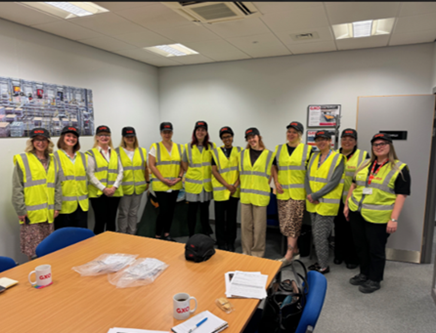
Suited and booted to present to a factory workforce
The Allied Health Professions (AHP) Strategy for England highlights the role of AHPs in disease prevention and health promotion, helping to reduce the burden on already stretched health and social care services. Diet-related diseases remain a major public health challenge, yet dietetic care is still largely focused on treatment rather than prevention. If the profession is to play a greater role in supporting population health, then equipping students with strong public health knowledge and skills is crucial.

To support this, Teesside University’s MSc Dietetics programme now includes public health placements alongside traditional NHS clinical placements. Here, Alex shares her experience of working in a Public Health practice-based learning setting. A must read in National Careers Week for anyone considering a future career as a dietitian!

------------------------------------------------------------------------------------------------------------------------------------------------------------------------------------------------------

What I worked on

During my placement, I was involved in three projects focused on health improvement and disease prevention. My work involved meeting with stakeholders, conducting research, presenting findings, and engaging with the public. The projects covered a wide range of population groups, including expectant mothers, school-age children, local workforces, and food bank users.

1. Supporting parents with child nutrition

A key part of my placement involved reviewing the nutrition education available to parents of children aged six months to four years.

What I did:
  • Conducted a literature and policy review
  • Spoke to parents, NHS staff, and school representatives
  • Attended a breastfeeding class to hear directly from parents
  • Presented my findings to several teams, including the Director of Public Health
Why it matters:
The insights from this work will help shape future research and improve nutrition support for families in the local area.

2. Linking oral health and nutrition


There is a strong connection between what we eat and oral health, but not everyone has access to clear, easy-to-understand information about this link.

What I created:
  • Infographics and presentations to educate local workforces
  • Materials designed in an easy-read format, avoiding jargon
Why it matters: 
My presentation was really well received, and I was even asked to record it for wider distribution, so it could be shared with professionals working with children and people with additional needs.

 
Infographics to educate local workforces

3. Reducing food waste in a local food pantry


Many food pantry users rely on short-dated products, and without clear guidance, a lot of good food can go to waste.

What I did:
  • Designed simple, visual signs with food storage and cooking tips (e.g. "Chop me then freeze me")
  • Introduced a ‘Freeze me’ sign for bread and monitored its impact
What happened?
Twice as much bread was sold the day after the sign was put up compared to the previous two weeks combined!


Signs made to reduce food waste

What I learned
  • Public health plays a key role in patient care - I saw first-hand how wider social factors impact people’s ability to manage their health and access services.
  • Being proactive is crucial - I reached out to stakeholders independently, which helped me build confidence and leadership skills.
  • Flexibility is a great learning experience - managing my own projects and working in a less structured environment improved my time management and adaptability.
  • Self-care matters - the flexibility of this placement meant I could work in different settings, including from the park on sunny days!
Final thoughts

Introducing dietetic placements into public health settings is a win-win. It helps students gain a broader skillset, supports NHS capacity, and brings dietetic expertise into community settings.

Of course, doing things differently comes with challenges. Expanding placements into public health settings has required commitment from everyone involved - academics, placement providers, and students. But we’re constantly learning and improving, and we’re proud to be making a real impact on the health of our local communities.

Friday, 3 May 2024

How volunteering at 'biscuit club' helped me build bridges between parents and researchers

Posted by Ella Anderson, Fuse Public Involvement and Engagement Manager, Newcastle University


“volunteering feels like the morally right thing to do – we can’t just ‘take’ from groups and not offer something in return”


MumSpace volunteers together
Supported by the Newcastle University’s staff volunteering scheme and Fuse colleagues, I had the opportunity to volunteer with MumSpace. As Fuse’s Public Engagement and Involvement Manager, this meant that I could spend some time away from my desk learning more about the voluntary sector within a grass roots organisation, build sustainable community relationships, collaborate with volunteers who have valuable connections to local communities and, above all, help out in a way that was specific and useful to the needs of the community group.

What is MumSpace?

MumSpace is a warm, welcoming and inclusive community group for parents, carers and their little ones. Here, the focus is on building supportive networks and providing children with a safe space to play. MumSpace is part of Parents and Communities Together (PACT), set up by Citizens UK. PACT was first set up in London as a community-led social support project and has since been successfully piloted in North Tyneside too. The project aims to empower parents and improve the health and development of young children.

The community group meets twice a week in North Tyneside during term-time. There is no cost to attend, although it’s possible to leave a small optional donation that goes towards drinks and snacks.

Toy time at MumSpace
Why did I choose to volunteer with MumSpace?

There are both personal and professional reasons why MumSpace was an obvious choice as a place for me to volunteer. On a personal level, I was lucky enough to attend MumSpace myself with my two children, in particular with my little boy. I always found this to be a welcoming space, no matter how I was feeling or what kind of day I was having. It was a place where you could chat with other parents and carers or just have a quiet cuppa whilst your little one whizzed about and played. I have made some brilliant friends at this group and I witnessed first-hand the value groups like this have on people’s wellbeing. It felt like the natural thing to do to give something back.

When I joined Fuse in 2021, I was already a regular at MumSpace with my son. Every week, there would be new faces and new people to speak with. It was evident that everyone’s experiences and backgrounds were unique - the one constant was that we were all caring for a little person. Each parent or carer has their own story, and it shows beautifully how one person alone cannot represent all thoughts, feelings and experiences of an entire parenting community. It was this diversity of experience that I could see would be a valuable addition to the Fuse Public Partner Network, as we seek to celebrate and share a wide range of voices and experiences in public health research.

In some ways, it felt like a natural next step to see if the group organiser, Wendy McConnell, might like to talk about involvement in public health research. Nevertheless, I admit that I felt a little nervous speaking with Wendy about a possible collaboration with Fuse, not least because I didn’t want to change the general feel of this space that felt miles away from my ‘work life’. But I needn’t have worried. Wendy and I chatted easily about our respective roles, about Fuse more generally, and about how there might be opportunities for working together. It felt a bit strange to be talking about work whilst at the same time chasing after my 4 year-old and trying to encourage him to play with the toys rather than steadily work his way through all of the biscuits on offer. After all, this was the group he fondly called “biscuit club”...

Looking back, I suspect that it was this informal and gentle approach - building on an existing foundation of trust and knowing one another - that in turn has made the relationship between Fuse and PACT more meaningful and fruitful.

MumSpace disco
How has MumSpace been involved with Fuse?

Wendy, PACT and the MumSpace parents and carers have played a significant role across a number of public health research projects. Wendy, for example, originally joined as a Fuse Public Partner in a personal capacity. But her role as a Parent and Community Organiser also lends itself well to building bridges between members of community groups and researchers. For example, parents and carers from MumSpace are collaborating on a project around poverty-proofing maternity services, have contributed to research around barriers to returning to work and childcare costs, and a researcher will be visiting the group in May 2024 to discuss a new project relating to food insecurity during pregnancy. Wendy has also spoken at a Fuse Public Involvement and Engagement Group meeting to share what it was like to belong to a community group involved in health research and to reflect on the associated benefits.

Mam’s time
What have the benefits of involvement in research been for the group?

Wendy explained that benefits of involvement have included the feeling of empowerment for parents and carers, feeling ‘heard’ and making positive changes, for example to services. There have also been benefits from collaboration with researchers, for instance, the development of a formal evaluation of MumSpace. This evaluation played a key role in securing new funding* to continue running the group. This demonstrates that research relationships can be positive for all involved. It also shows how reward and recognition for involvement can extend beyond remuneration – there can be other ways for university-based researchers to usefully and meaningfully ‘give back’. Volunteering can fall into this category too.
Arts and crafts

Has volunteering been useful for building relationships within community groups?

There have been notable benefits to Fuse and wider health research as a result of the volunteering and community engagement activities with MumSpace. It has helped to build trust; shows a commitment to truly listening to people and their stories; acts as a gentle stepping-stone towards the inclusion of diverse voices and perspectives within the Fuse Public Partner Network; and offers a greater sense of transparency about what involvement in health research is and what it can look like. It aligns with many of the core principles of the NIHR Community Engagement Toolkit. Newcastle University have also added PACT as an organisation who university staff and students can volunteer with in the future, so even after I have left there will be opportunities for continuity. In short, volunteering feels like the morally right thing to do – we can’t just ‘take’ from groups and not offer something in return.

What has it been like to volunteer?

Volunteering has been an incredibly positive and rewarding experience. To be on the ‘other side’ of the group and helping to set up, offering people what would often be their first teas and coffees of the day, and welcoming new people to the group and then seeing them return the following week has been brilliant. I can still only remember a maximum of two drink orders at a time (!!) but I hope people have felt as welcome and included as I did when I first joined.

Want to find out more? Get in touch!

For more information, please email Ella Anderson, Fuse Public Involvement and Engagement Manager on eleanor.anderson@ncl.ac.uk.

For more information about MumSpace, PACT and Citizens UK in particular, email Parent and Community Organiser Wendy McConnell: wendy.mcconnell@citizensuk.org

New faces are always welcome at the group:

Tuesdays – 12.30pm to 2pm at St. Luke’s Church, 10 Frank Street, Wallsend NE28 6RN
Thursdays – 9.15am to 11.15am at St. Cuthbert’s Church, Albion Road West, North Shields NE29 0JB


*From March 2020 to August 2023, MumSpace was funded by Comic Relief and, following a successful funding bid, it is now funded by Public Health North Tyneside.

Thursday, 7 March 2024

Creating an out of this world children’s book to help families affected by substance use

Cassey Muir, Research Associate from Newcastle University


To celebrate #WorldBookDay, Cassey tells us about going beyond the research to co-produce a children's story book to help families affected by substance use which is now freely available.

“To take the findings from our lived experience and create something real for families and people beyond the world of research has been brilliant” 
Young person involved in the project


Creating something real: How we produced a children’s story book

When I had the opportunity to create a children’s story book based on some of my PhD research that could help families affected by substance use, I was really excited to get started with the project. Ever since I was little, I wanted to write a children’s storybook and I had even mentioned this at my PhD interview panel, so being part of this project was a dream come true in many ways. 

To be able to create a book that has such meaning for the children and families involved has been incredibly rewarding, if not emotionally challenging at times. To help shape the plot and character development based on the stories of the young people that I had talked to during my PhD, felt like an enormous privilege but also a weight to get right. I wanted to make sure the story reflected the different experiences of children, while other members of the team were making sure the story reflected parents and caregivers’ experiences. Working with the talented Danielle Slade (author) and Josie Brookes (illustrator) helped make this process go as smoothly as possible. They were empathetic to the stories of families and wanted to keep to the integrity of family’s experiences and impacts, while making a story that was engaging.

With the creative minds of Danielle and Josie, we worked with 15 family members who were affected by parental alcohol or drug use, three teachers, Coram Life Education, and Coram Beanstalk to co-produce this storybook. Using techniques like free writing to music, drawing different characters, and storyboarding ideas, we involved children and parents in the creative process from the start. Families were also able to see early mock-ups of the book and feedback their ideas on improvements to the story and share their preferences on illustrations. Josie and Danielle were really receptive to the ideas from children and parents and valued their input.


We met with teachers from local primary schools and practitioners from Coram to think about who the target age range of the book would be, how the book could be used within schools and practice, and how to help adults have conversations with children. Through these discussions we developed conversation prompts for adults that are at the back of the book. These prompts (for example, what do you think of the Yozzle?) can help with discussing the characters and themes within the book with children in one to ones, in groups, or within a whole class setting. Anyone can follow along with this story of Arti, a wishing star. We have received positive feedback from practitioners where this book has been used with younger children (5-8 years), older children as a discussion point for reflecting on childhood (14-16 years) as well as with children who have special educational needs and disabilities.

We have also recently collaborated with Newcastle Film Club to produce a ‘story time’ video of the book being read by the author. This video allows the book to be accessed more widely and can be used alongside the book. Being able to produce this video, with Amy Mains (Director and Editor) and Scott Anderson (Director of Photography), who are also both teachers, was a fun and unique experience. We set up the equipment and reshuffled the backdrop in Fenham Library and managed to shoot the film in under two hours, just in time for the library opening to the public. I think this video adds an extra bit of magic to the story, with soft music and twinkling sounds!


Beyond the world of research: Creatively disseminating research findings

For context on the book, Twinkle, Twinkle Arti is a free story book co-produced with and for children who experience parental alcohol and drug use. This book helps start conversations between trusted adults and affected children. The messages within the book are based on two linked studies around the needs of affected families, led by Fuse Researchers.

The Safe Space project, led by Ruth McGovern, found that many parents and caregivers find it difficult to talk to their child about substance use and the impact upon the child and family. Parents and caregivers spoke about wanting resources to help with these conversations. Alongside this, research led by me, explored the experiences and support needs of children and young people. Children and young people told me that they valued the importance of confiding in a trusted adult such as a teacher, social worker, or family support worker but often did not know who they could trust or talk to, and prioritised approaches within schools which promoted conversations about parental substance use.

The story book captures the emotional and social impacts of living in a difficult family situation, from the perspective of the child and the parent or caregiver, and highlights helpful strategies to support the child’s wellbeing, for example talking about your feelings.

Using out of this world storytelling and fictional characters, the findings from these two studies are told in a way that makes them accessible to families and practitioners and offers positive messages and validation not only to children but to parents/caregivers and practitioners who find it challenging to know how to broach this sensitive topic.


We are freely sharing this book with families, schools, and practitioners across the country. To help understand the usability and impact of the storybook, we are gathering feedback from practitioners with a short online survey. This feedback will contribute to informing further development of the book and additional resources that are needed. I hope the book can be used across many different settings (schools, social care, and voluntary organisations) and can be shared with families who want to have those conversations. Within schools, we hope it is used in whole class situations, to reduce the stigma and show children they are not alone. It’s a fun story with fictional characters, and I hope families feel the book is engaging and non-stigmatising.

Here is some of the feedback that we have received so far about the book.

A practitioner told us: “It is so meaningful for children to know about the Yozzle [fictional character depicting alcohol or drugs in the book] and how it makes them feel. What a very complex idea to get across to children and yet it has been achieved with such skill!”

A child who reviewed the book shared: “It [the story] shows you’re not on your own and that there are other stars [fictional character depicting trusted adults] to support you.”

A primary school teacher shared the following: “There were no problems at all using Twinkle, Twinkle Arti in a whole class situation. In fact, I think it worked well as an introduction because it wasn't only alcohol use that the children discussed it was mental health, feelings, and how to overcome problems.”

A parent who helped co-produce the book reflected: “I am proud of the book because other children won't have to go through what my children have."

I think it is really important for researchers to work collaboratively with public, practice, and policy partners and to engage in creative processes that open their research to wider audiences. Through this process, you might learn something new and have fun doing it. But don’t just take my word for it, here are the perspectives of the illustrator and young person involved in the project:

Josie, the story’s illustrator, says: “This has been a really inspirational project, and a joy to work with Danielle, the research team, and all the families involved. We collectively believed in the power of storytelling to get these important issues across, and the resulting book is something I am so proud to have been a part of making. I think children will connect with Arti, her colourful world, and her story. I am excited for it to be used as a positive resource with children and families, in opening up those very crucial conversations, whilst simultaneously being so enjoyable to read!”

A young person reflected: “This book is something I would have loved to have been able to give to ‘little’ me, having something that related to my home situation when I was a child. I feel rewarded to be able to do this for ‘me’ now, for little me going through all those hard times and for all the children who will read this book, who are going through something, have a hard home life, have parents who are struggling, anything.

I hope through the book, we are able to show them that they are not alone and that there are people around them who are there to give them love and support. Hopefully, the book can help reach them earlier than I was reached out to. To create a book that would educate and support whomever read it, no matter their age or background, to be more than a storybook and to be able to help them, even in a small subtle way. It is a chance to reach the children that need it through a storybook that they come across all the time in life. It is incredibly rewarding to have a book that exists, that will last and be passed on to different children who are in a variety of situations for years to come. I am very proud of it.

I sincerely hope the book not only entertains children at bedtime, but that it can in some ways soothe a child's worries. It was an honour to hear the brave accounts from families and even more so, that they have trusted us to put their feelings and stories into this book.”

Fuse researchers and lived experience expert at book launch event. From left to right: Ruth McGovern, Kira Terry, Cassey Muir and Debbie Smart 

If you would like to learn more about this research, then please go to the links at the bottom of this page. And if you would like to join Arti on her journey of bravery, self-discovery, and learning about the important of talking about your feelings then take a look at the story book or watch the video.

Find out more
  • Download the book free.
  • Listen to this Fuse podcast to hear Cassey discussing her research on social and emotional resilience in children and young people affected by parental substance use.
  • Read this Fuse news article about Twinkle, Twinkle Arti.
  • Read this Alcohol Action Ireland blog and listen to the podcast.


All illustrations by Josie Brookes

Friday, 23 February 2024

School's out for stigma: Understanding the mental health needs of LGBTQ+ youth

Posted by Liam Spencer, Fuse Associate and Research Assistant at Newcastle University


February is LGBTQ+ History Month, an annual month-long observance of lesbian, gay, bisexual and transgender history, and the history of the gay rights and related civil rights movements. The 2024 theme celebrates LGBT+ peoples’ contribution to science and medicine both historically and today. 


In this blog, Liam reflects on his research of LGBTQ+ young people’s mental health.


As LGBTQ+ History Month unfolds, it offers us an opportunity to reflect on the strides we’ve made, the challenges we still face, and the incredible diversity within our communities. This month holds particular significance for me – a chance to not only honour the struggles of those who came before us, but also to celebrate the progress we’ve achieved and recommit to the work that lies ahead.

With a background in youth and community work practice, my research interests are primarily focused on children and young people’s mental health, particularly early and preventative interventions, and school-based interventions. My journey as a member of the LGBTQ+ community and as a researcher has been intertwined with a deep sense of purpose – to shed light on the unique mental health challenges faced by LGBTQ+ individuals. This is a mission born out of personal experience, and a desire to contribute meaningfully to the wellbeing of this community. 

I have recently been involved in several Fuse projects funded by the NIHR School for Public Health Research (SPHR) Public Mental Health programme, and I’ve had the privilege of being able to delve into the complex dynamics of LGBTQ+ mental health, particularly in school environments. One of these projects, led by Professor Liz McDermott, aimed to investigate the impact of school-based interventions on LGBTQ+ young people’s mental health.

In the first phase of our study, we did a realist review (a type of evidence review that assesses the specific contexts in which a certain intervention may or may not work) of published evidence and identified positive interventions that supported LGBTQ+ mental health in school environments. However, the focus tended to be upon outcomes and studies rarely detailed underlying processes. The second phase of our study aimed to develop a theory that explained how, why, for who, and in what context school-based interventions prevent or reduce mental health problems in LGBTQ+ young people, through participation with key stakeholders.

We interviewed LGBTQ+ young people aged between 13 to 18 years attending secondary schools; intervention practitioners; and school staff in the UK. We then analysed this data to identify relationships across different interventions that improved mental health outcomes. The theory we produced explains how school-based interventions that directly tackle dominant cisgender and heterosexual norms can improve LGBTQ+ pupils’ mental health. Specifically, our theory proposes three interventions that may improve these outcomes:
  1. Interventions that promote LGBTQ+ visibility and facilitate usualising, school belonging, and recognition.
  2. Interventions for talking and support that develop safety and coping.
  3. Interventions that address institutional school culture (staff training and inclusion polices) that foster school belonging, empowerment, recognition, and safety.
Ultimately, our research underscores the importance of providing a school environment that affirms and normalises LGBTQ+ identities, promotes school safety and belonging, and addresses systemic issues within educational institutions. By implementing evidence-based interventions informed by our theory, we can pave the way for improved mental health outcomes for LGBTQ+ pupils.

This month serves as a powerful reminder of our collective resilience, our shared struggles, and our unwavering commitment to justice and equality. Let us continue to push boundaries, challenge norms, and advocate for a world where difference is celebrated and all are embraced for who they are – within academia, our personal lives, and beyond.


Images:

Friday, 19 January 2024

Energy drinks may be commercially lucrative but what is more valuable than the health of our children?

Posted by Amelia A Lake, Professor of Public Health Nutrition at Teesside University, and Shelina Visram, Senior Lecturer in Public Health at Newcastle University

As we prepared our new review on the health effects of the consumption of energy drinks by children and young people, we have been dwelling more and more on the Commercial Determinants of Health.
The Commercial Determinants of Health are defined by the World Health Organisation (WHO) as: 

“...the private sector activities that affect people’s health, directly or indirectly, positively or negatively.”

The WHO definition goes on to expand on how these activities might include the private sector influencing:
“...the social, physical and cultural environments through business actions and societal engagements; for example, supply chains, labour conditions, product design and packaging, research funding, lobbying, preference shaping and others.”
Now cast your mind back to pre-Covid… a Government consultation on the banning of energy drinks had a 93% backing to restrict the sale of these drinks to under 16s. There was even a Green Paper proposing this. Yet, there has been inaction (helpfully summarised here by Sustain: the alliance for better food and farming).

What is causing this inaction? Is it a turnaround in evidence that suggests these drinks are not as harmful as previously thought, or is there something else going on...? Perhaps, instead there are some pretty significant commercial interests at stake; but what could be more valuable than the health and wellbeing of our children and young people?

Energy Drinks are VERY commercially viable. They have been the fastest growing sector of the soft drink market for some time. In 2020 the global market was worth $45.80 billion and this is projected to grow at an annual rate of 8.2%. In an article in December 2023, The Grocer described the hydration drink and energy drink market as “buoyant”.

Research has found that around one in three young people (under 18) say that they regularly consume energy drinks, typically containing high levels of caffeine and sugar in combination with other ingredients known to have stimulant properties. On average, young people in the UK consume more energy drinks than those in other European countries.

You may be familiar with the labelling on energy drinks:

Image courtesy of www.parliament.uk (by URL)
High caffeine content. Not recommended for children or pregnant or breast-feeding women

Under current labelling rules, any drink, other than tea or coffee, that contains over 150mg of caffeine per litre requires this label and should state the amount of caffeine in milligrams per 100ml of the drink.

Yet why do we see these drinks unrestricted and available to children and young people, not just in the UK but globally? Some countries have attempted to regulate energy drinks (see our research for more on this).

Our new review of the global evidence around energy drinks and the health impacts on children and young people shows a worrying increase in the types of health outcomes associated with their consumption. This includes mental as well as physical health behaviours. Not only health impacts but wider impacts around sleep and educational attainment.

This new review is the latest of many which have highlighted the impacts of these products to our younger population.

We accept the evidence is from mostly cross-sectional studies, exploring association rather than causation. Experimental studies to establish causation have both ethical and feasibility issues. We have argued before that the precautionary principle should be applied. This country bans the sale of a number of items to young people (fireworks, crossbows, knives) presumably these don’t have the large commercial interests or lobbying groups that the energy drink industry has?

Why are we applying a higher standard of evidence to energy drinks, if it isn’t around their commercial value?

The evidence is here, the labels clearly say these drinks are not suitable for children. How many more studies are needed before policy action is enacted?

------------------------------------------------------------------------------------------------------------------------------------------------------------------------------------------------------

Fuse Podcast about this Energy Drinks research
Listen to the latest episode of the Fuse podcast ‘Public Health Research and Me’, in which host and Fuse Public Partner Cheryl Blake chats with Amelia and Shelina about their research, to cut through the confusion and ask some the questions that you want to know about Energy Drinks.
Listen now

Find out more


Images:
2. Courtesy of www.parliament.uk (by URL) > Parliamentary business > Publications & records > Energy drinks and children > 4 Labelling and advertising: 

The views and opinions expressed by the authors are those of the authors and do not necessarily reflect those of Teesside University, Newcastle University, or Fuse, the Centre for Translational Research in Public Health.

Friday, 17 March 2023

What can be done to improve the mental health of LGBTQ+ young people in schools?

By Liam Spencer, Research Assistant and ARC NENC Mental Health Research Fellow, Fuse & NIHR School for Public Health Research, Newcastle University

Young people who identify as lesbian, gay, bisexual, transgender, or queer/questioning (LGBTQ+) experience significant mental health inequalities in comparison with their peers. School environment is a major risk factor and is consistently associated with negative mental health for LGBTQ+ young people, as shown in research herehere and here. The UN Convention for the Rights of Child Committee has also specifically emphasised the need to take effective action to protect LGBTQ+ young people from all forms of violence, discrimination or bullying, and to improve mental health.

Our research

Our Creating LGBTQ+ Affirming School Environments (CLASS) research project aimed to investigate the impact of school-based interventions (schemes or initiatives) on the mental health of LGBTQ+ young people. In the first stage of our study, we reviewed published evidence, and identified positive interventions that supported LGBTQ+ mental health in school, however the focus tended to be on the outcomes rather than detailing how they were done.

We also interviewed 10 young people aged between 13 and 18 years, nine practitioners (e.g. people working in organisations who had delivered LGBTQ+ inclusivity interventions in UK schools), and three members of school staff, and analysed the data to identify interventions that improved mental health. We used this information to develop a theory model that aimed to explain how, why, for who, and in what context school-based interventions can prevent or reduce mental health problems in LGBTQ+ young people, in collaboration with these key stakeholders.

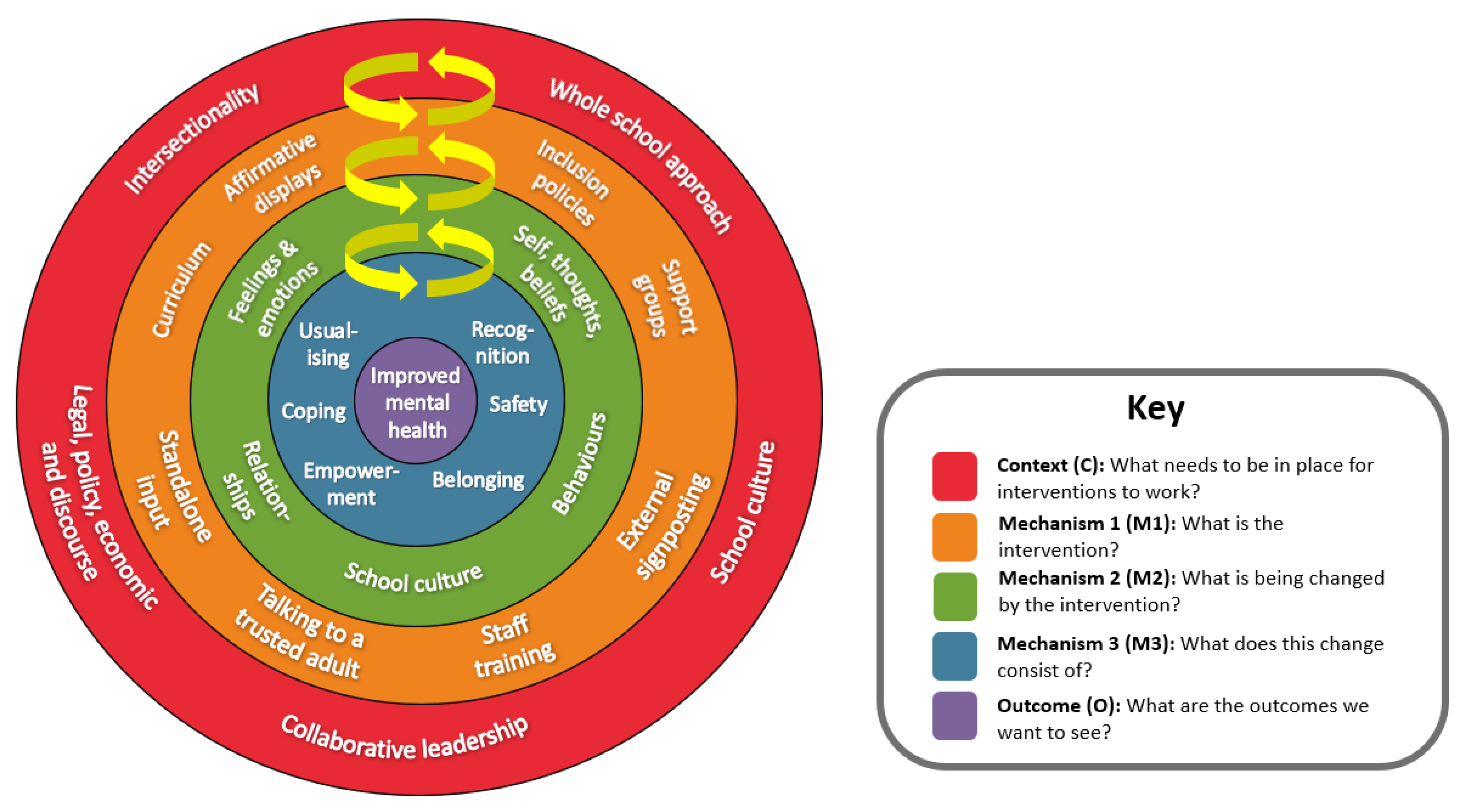
McDermott, E. et al. Understanding How School-Based Interventions Can Tackle LGBTQ+ Youth Mental Health Inequality:
A Realist Approach. Int. J. Environ. Res. Public Health 2023, 20, 4274. https://doi.org/10.3390/ijerph20054274

Our model (diagram above) has three levels at which interventions may work, on psychological, behavioural, emotional, cultural, and social levels. It explains how school-based interventions that directly tackle dominant cisgender and heterosexual norms can improve LGBTQ+ pupils’ mental health. 

Our findings

We found that contextual factors such as a ‘whole-school approach’ and ‘collaborative leadership’ were crucial to the delivery of successful interventions. Our theory suggests three ways (causal pathways) that might improve mental health:
  1. Interventions that promote LGBTQ+ visibility and ‘usualise’ the presence of LGBTQ+ identities, school belonging, and recognition.
  2. Interventions for talking and support that develop safety and coping.
  3. Interventions that address institutional school culture (staff training and inclusion polices) that foster school belonging, empowerment, recognition, and safety.
Our findings suggest that providing a school environment that affirms and ‘usualises’ LGBTQ+ identities, and that promotes school safety and belonging can improve mental health outcomes for LGBTQ+ pupils. The causal pathways we present are a starting point as theories, however more research to develop our understanding of how school interventions work to improve school climate and the mental health of LGBTQ+ young people is needed. We now need the UK, and other countries, to take seriously LGBTQ+ young people’s rights and ensure they are afforded equal respect and protection as their peers in schools. We may then find that the mental health of LGBTQ+ young people improves.

Read the full research paper here: Understanding How School-Based Interventions Can Tackle LGBTQ+ Youth Mental Health Inequality: A Realist Approach, 28/02/23

Funded as part of the NIHR School for Public Health Research (SPHR) Public Mental Health programme, the Creating LGBTQ+ Affirming School Environments (CLASS) research project, led by Professor Liz McDermott, aimed to investigate the mental health impact on LGBTQ+ young people of school-based interventions. Fuse is a founding member of the NIHR SPHR.