Showing posts with label 2021. Show all posts

Friday, 11 February 2022

Now that's what I call blogging 2021

Posted by Mark Welford, Fuse Communications Manager, Teesside University

Let’s all channel British novelist E.M. Forster and play a little game of Only Connect. What connects the things below?


“Yes of course, they can all be a type of list” (said in the friendly yet ever so slightly patronising manner of host Victoria Coren Mitchell)
I think it's fair to say that we all love a list. I mean, the premise of another very popular BBC gameshow is basically to list pointless stuff.

So here again (a little later than advertised) is our annual list of the most-viewed Fuse blog posts of 2021!

You'd be forgiven for thinking that this would be dominated by Covid and the pandemic as we saw in the 2020 list.

Obviously, we had our fair share of pandemic related posts. Blogs about misinformation, food insecurity, malnutrition, obesity and what children made of it all. How it impacted on work and engagement with public partners, parents, decisionmakers, practitioners, policy-makers and commissioners. How it affected our mental healthour liberties and even inspired a song and a cat-scale of wellbeing!

But as you can see from the list below it didn't dominate the top 5 chart-toppers of 2021. Perhaps a little escapism goes along way...

------------------------------------------------------------------------------------------------------------------------------------------------------------------------------------------------------

Katsushika Hokusai: The Great Wave off Kanagawa
5. The other third wave: a mass epidemic of very individual pain

Posted by Jack Nicholls, Lecturer in Social Work at Northumbria University

Lockdown restrictions were beginning to ease in the UK. But after the jubilation, what if you don't feel the way you think you should?

A very personal post by Jack Nicholls on the long-term mental health consequences of the pandemic, of lockdown and social restrictions, and of its easing. 

*Content/trigger warning: mental health, depression, suicidal feelings.

Page views: 938
Published: 16 April 2021.

------------------------------------------------------------------------------------------------------------------------------------------------------------------------------------------------------

4. Patient and Public involvement with Parents during a Pandemic: the four ‘P’ challenge


Posted by Hannah Batten, Food and Human Nutrition undergraduate student at Newcastle University. Hannah was on a placement year with the Population Health Sciences Institute, as part of the MapMe study aiming to help parents assess child weight.
Body image scales on the MapMe website are being updated for MapMe2
"Most importantly, is to say to our participants that we are extremely grateful for their time and input, particularly during these uncertain times."
Hannah tells us how she and the MapMe study team met the challenges involved in recruiting and running an online Parent Involvement Panel (PIP) to help review documents and study materials, when parents were already dealing with a global pandemic. 

Page views: 1,029
Published: 5 March 2021.

------------------------------------------------------------------------------------------------------------------------------------------------------------------------------------------------------

3. Should pregnancy 'be incentive enough' to quit smoking?

Posted by Susan Jones, Research Associate at Teesside University

In this blog post on #NoSmokingDay, Dr Jones explored deprivation, guilt, shame, stigma and the complex web of reasons behind smoking behaviour.

Page views: 1,155
Published: 10 March 2021.

------------------------------------------------------------------------------------------------------------------------------------------------------------------------------------------------------


2. Things I wish I’d known when I started my PhD… (part 1)

Posted by members of the Population Health Interventions Programme at the MRC Epidemiology Unit


Research doesn't happen overnight, avoid comparison and channel your inner Arsène Wenger ("Le Professeur"). In our second most popular blog post, the early, mid and senior career researchers at University of Cambridge share their tips for PhD survival.

Here is part 2 which interestingly received only half as many views despite including a High School Musical reference.


Page views: 1,347
Published: 4 June 2021.

------------------------------------------------------------------------------------------------------------------------------------------------------------------------------------------------------

1. Can Forest School inspire the next generation to be happy & healthy?

Posted by Katie Beresford, undergraduate student at Durham University

With more than 2,700 views this is our most read post of 2021 by some distance!

In it Katie explores growing up in the Lake District, embracing nature, finding school restrictive and struggling academically in her early years.

Nearly two decades later she is completing a Fuse summer internship with the NIHR School for Public Health Research and is tasked to review literature discussing the effectiveness of Forest School as a public health intervention.

Why not grab a coffee and take a walk with Katie into the woods to find out what she discovered...

Page views: 2,746
Published: 8 October 2021.

------------------------------------------------------------------------------------------------------------------------------------------------------------------------------------------------------

So there you have it, the top five Fuse blog posts of 2021. Congratulations to Katie who wins a rare and coveted Fuse paperweight!  

Fantastically both Katie and Hannah's blog posts were part of our Fuse blog Student Series which we launched last year! This showcases posts by students who have been challenged to write a blog as part of their studies. The authors may be new to blogging and we hope to provide a 'safe space' for the students to explore their subject and find their voice in the world of public health research. Hopefully this will encourage other students to take the plunge!

As always, many thanks to our loyal readers and fantastic contributors.

Can we do any better in 2022? If you fancy giving it a go, please find out what we are looking for and how to take part here. All contributors receive a much sought-after Fuse badge.


Images:
2. Image: Katsushika Hokusai, (CC0 1.0), via Wikimedia Commons
4. Mr. Alexander Ottesen, CC BY-SA 2.5, via Wikimedia Commons


Friday, 10 December 2021

Once upon a time in research... the power of storytelling for scientific communication

Posted by Peter van der Graaf, Associate Professor, AskFuse Research Manager & NIHR Knowledge Mobilisation Research (KMR) Fellow, Teesside University

A Christmas story about gifting knowledge (featuring Evidence Man)


It was the week before Christmas. After a long day in the office at her university, Ana Lyst rushed out to do some last-minute Christmas shopping. She had been too busy writing grant applications and journal papers to even think about presents for family and friends. It was already dark, with a stiff, cold breeze and snow started falling around her.

As she approached the high street, Ana noticed a bookshop she hadn’t seen before. It looked rather grand, a bit like an ivory tower, but with more doors. Through large windows at the front, she could spot frantic people in white lab coats running between the shelves, carrying big loads of paper and folders. ‘Bingo!’, she thought: books make great Christmas presents and I can sort out all my gifts in this one shop. She merrily stepped inside and was greeted by a large, vaulted ceiling underneath which stood endless rows of books in all shapes and sizes, reaching all the way to the ceiling. On first impression, the books looked rather dull and colourless, many of them gathering dust, with long, incomprehensible titles edged on their spines in gold.


Undaunted by the ambush of knowledge and people, Ana walked over to the applied research section (which sported a large swirly sign, fusing five different colours) and spotted several books that looked like decent presents for friends. Taking them to the till, she was met by a stern looking clerk, named Pierre View, who inspected the books carefully and with an authoritative tone explained that many of the selected books were not yet ready to leave the bookshop, as they needed more work and review. Could she please come back in 17 years to collect them? The 14% of books that were ready to leave, were neatly packaged in shiny, glossy covers with pictures and key phrases all over them that Ana Lyst was sure would really impress her friends.

However, when she tried to leave, Ana noticed that there were many doors to exit the shop (the entrance was no longer visible) and when she tried the first door in front of her, it wouldn’t open. She went to the next five doors with the same result: all of them were firmly locked, or the ones that did open led to a dead-end. Ana started to panic and her earlier optimism
 quickly melt away, replaced with visions of being stuck in the bookshop over Christmas with not a mince pie in sight.

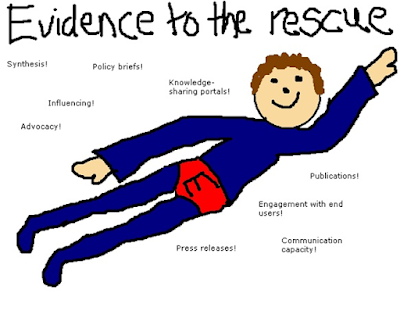
At that moment, a small backstage door hidden in a corner of the shop opened and a bold bespeckled man stepped out, fully dressed in a superhero outfit with bright blue tights and top (that looked a bit too tight), over which she wore red underpants featuring a large letter ‘E’. Ana Lyst didn’t know what to make of this man, but he looked friendly enough and was walking over to her to offer his services. As the man came closer, he produced a large set of antique brass keys from beneath his cape and began opening several doors. “Are you a bit lost?”, asked Evidence Man (for that is who he was) in an accent with a Dutch lilt. “Stuck between here and the outside world? Not to worry! I know the way out to some safe spaces with a friendly audience who would love to hear all about the books you just bought. They would even be interested in the ones that are not ready yet, and they might have a few books of their own to share with you. Shall we go?”

True to his word, when Ana stepped through the first door unlocked by Evidence Man, she emerged back in the now snow-covered high street, where a group of her friends were waiting and, even better, one of them was carrying a large plate of mince pies! Ana Lyst’s spirits lifted immediately, and she vowed to tell her friends all about the helpful Evidence Man in the bookshop. But when she turned around, the nice man had disappeared and through the windows of the bookshop could be seen flying to assist another confused customer.

The End.


The power of storytelling for scientific communication


I was inspired to write this Christmas tale (and blog) after attending a storytelling workshop at the Fuse end-of- year social event on 3 December, which was led by Duncan Yellowlees. Duncan is a Communications Trainer who works with researchers to improve their communications, confidence, and impact. Take a look at his online COMMunity website (Research Comms … but better) to find out more. 

In an engaging and entertaining way, he took us through the key elements of storytelling: from key principles (putting pictures in people’s heads; construct a narrative of causes and effects), to different types of stories (metaphorical, motivational or monster stories, stories as hooks, and point-of-view stories), their structures (problem, solution and results) and what to include in stories (the point, examples, people, heroes & villains, magical helpers, and tensions & conflicts). Did you spot any of these elements in my story? Scroll down to the bottom of this post for spoilers.

Overall, Duncan provided plenty of tips and tricks on how we can use storytelling as academic researchers to communicate our research findings to wider audiences. And this relates directly to the first point (and story) that he made during the workshop: researchers spend too much time throwing the ball (their research findings) but not nearly enough time on making sure there is someone there to catch it (knowledge users). Find your audience first and make them pay attention before you start talking about your research.

His second point was that all this might seem daunting: so many different techniques, plot lines and structures to think about, how can we ever get any good at this? But when comparing it to learning to drive a car, the same principles apply: keep practicing and it gradually (and sometimes quite quickly) becomes second nature. This is because storytelling is already embedded in everything we do in our daily lives: from telling our family and friends about our everyday experiences, to reading books or ‘binging’ on Netflix series.

Finally, Duncan suggested some simple techniques for storytelling in science communication: making stories relatable and relevant (e.g. stress before Christmas) by including named people and adding details (e.g. dark, snowy high streets and describing the interior of the bookshop), which start to paint a picture in people’s heads. Most importantly, start with a hook: a story to draw in your audience, so they want to hear more, or use a question or bold statement as bait (e.g. only 14 percent of research makes it into practice and policy after 17 years).

My story might not have been all you hoped for this Christmas, but the Fuse social event brought some useful gifts for the Fuse Communications toolkit and much needed festive cheer at the end of another challenging academic year. 

Merry Christmas everyone and happy storytelling!


Spoiler alert:
  • The point: knowledge mobilisation between academia and practice is facilitated by a knowledge exchange broker. Plus some points about the time it takes and difficulties faced by researchers when trying to get research into practice and policy.
  • Heroes: academics producing research and papers, while running between bookshelves.
  • Villain: Bookshop clerk (Reviewer 2).
  • Magic helper: Evidence Man (Knowledge Exchange Broker)
  • Tensions & conflicts: research dusting away on bookshelves or not being ready to leave the building, while access to knowledge users is restricted or confusing.
  • Type of story: metaphorical story, overlapping with stories as hooks (to introduce this blog and talk about the storytelling workshop).

Friday, 16 July 2021

(Re)taking liberties: Reclaiming positive freedom as a public health argument

Posted by Jack Nicholls, Lecturer in Social Work at Northumbria University

At the time of writing, the government intends to lift most remaining Covid restrictions still in place in England on July 19, widely touted as 'Freedom Day'. 

I recently passed my PhD viva defending a thesis that was concerned with the diverse ways a contested value concept is understood by human welfare professionals (in my case, 'social justice' and newly-qualified social workers). As a result of that undertaking, I am now habitually critical of the ways in which ethical and moral language is used and claimed for particular agendas. In the looming shadow of so-called 'Freedom Day', I have been thinking about how caring professions and health and wellbeing researchers might reclaim the word 'freedom' for ourselves.

Possibly in contrast to many of my wonderful colleagues in the caring professions and their associated research wings, I am in broad terms a libertarian rather than a collectivist*. Individual rights and freedoms - the ability to live as one chooses unfettered without just cause, to be different, to not fit or conform - are close to sacred to me. While I can be persuaded by arguments advanced by those of a more communitarian mindset, it is always despite, rather than because, they are communitarian. When, as I will here, express concern about the speed and totality of the easing of Covid restrictions, I do so from a liberty-minded philosophical position.

The 'Freedom Day' discourse draws almost entirely on the concept of negative liberty and is emblematic of a long-established idiolect that frames freedom (with personal responsibility) in a zero-sum game against statutory entitlement to and provision of help. Negative liberty refers to the absence of constraint and control. As an idea, it is of profound importance for those of us who believe rights and freedoms are inherent to personhood, and that it is for the state to uphold them, not hand them down as bounties and favours.

Sir Isaiah Berlin 
Alongside negative liberty however sits the concept of positive liberty (both liberty concepts were set out by Sir Isaiah Berlin (pictured right) in his 1958 lecture and subsequent written works). Positive liberty refers to the idea of freedom being enabled by active action and the provision of resources, facilities and support. The two work in tandem and, for the kind of libertarian I am, they are equally important and necessary for one another. Covid restrictions have impacted both our negative and positive liberties - the former by restricting our movement, travel and association, the latter, at least for many people, by restricting our incomes, our ability to access welfare, social security, safe transport, childcare and informal support networks.

The rationale for these actions, a rationale that was broadly accepted by the majority, can be understood as a trade-off with other positive freedoms, most notably seeking to keep as many people as possible, and particularly those at most risk of developing serious or fatal Covid symptoms, free from infection. It is a trade-off I would make again in a heartbeat under similar circumstances. That is part of why the present language about 'Freedom Day' is so galling, because for many, particularly those with high-risk health conditions, their families, and those who have not yet been able to be vaccinated, July 19 will not signal any kind of freedom. I can't tell you how much I'm looking forward to my first liberated Guinness, enjoyed in the hostelry and company I choose, with all the health risks confined to the pint glass. I can't do that on July 19, because the decision has been made to prioritise the negative liberty of those of us who can enjoy it over the positive liberty of those still at particularly serious risk. We aren’t choosing freedom; we are choosing some people’s freedom over that of others.

This situation behoves health and social service practitioners and researchers to consider whether we can reclaim the concept of freedom, particularly positive freedom, as a full and proper part of our value base and lexicon. I argue that we both can and should, for what are we if not participants in endeavours for more positive freedom through greater knowledge and better health and wellbeing. Freedom 'from' is fairly hollow and useless without meaningful freedom 'to', and though many who share my philosophical persuasion see an overbearing state as a legitimate risk to freedom of all kinds, no less important is freedom from preventable illness, pain, anxiety, suffering, burden, loss of control, and the wider contributors to health inequities, not least poverty and postcode.

Our professional fields, with the best of intentions, often couch our arguments in terms of the community or public good. Without besmirching the place and value of those arguments, it is my view that were we to speak also in terms of freedom, including individual freedom, we would do so with complete intellectual coherence and legitimacy. Rather than being unjustly tagged as over-cautious and dictatorial, we could put our criticism of the end of restrictions in pro-positive freedom language. Beyond that, we could reframe and bridge the unfounded but perceived gap between individual choice and public wellbeing, all while avoiding the former being reduced to callous responsibilisation, and the latter being unfairly painted as nannying control. We might even unlock a new set of tools for persuading individuals and institutions who are rarely engaged by welfarist, collectivist or even duty of care arguments about public health concerns. We've done it before; we rarely talk about the smoking ban nowadays, rather we refer to pubs and train stations being smoke-free. Likewise fat-free, alcohol-free - it's a nice word, and an effective one.

At this moment, whatever their diverse feelings about the end of restrictions (I should caveat, the end for some) freedom is high in the public consciousness. Let us who are concerned for public wellbeing liberate our arguments and reclaim the concept of freedom, particularly positive freedom, for ourselves.

*Collectivism: a social pattern in which individuals construe themselves as parts of collectives and are primarily motivated by duties to those collectives. More here: https://plato.stanford.edu/entries/culture-cogsci


Images:
2. Sir Isaiah Berlin by Rob C. Croes (ANEFO), CC0, via Wikimedia Commons


The views expressed in posts are those of the authors and do not necessarily reflect those of Fuse (the Centre for Translational Research in Public Health) or the author's employer or organisation.

Friday, 18 June 2021

When, what and how to engage and disseminate research evidence during a pandemic?

Posted by Peter van der Graaf, Teesside University, Jenni Lynch, University of Hertfordshire, and Liz Such, University of Sheffield, three NIHR Knowledge Mobilisation Research Fellows

In this blog, we share lessons from working with local authorities on the development of action learning sets (bringing people together to reflect on research evidence) when they are faced with the many challenges of COVID-19.

Why do we need action learning? 
(Best-laid plans)

We know that local authorities value research evidence to improve their decision-making about public services in times of austerity; however, making evidence fit for purpose and getting it actively used in local government remains challenging.

So, we decided to test a potential new approach to knowledge mobilisation by convening and supporting action learning sets (ALS) across three local authorities (Hertfordshire, Gateshead and Doncaster Councils). This was supported by the NIHR Centre for Engagement and Dissemination (NCED), which not only aims to share knowledge and outputs from NIHR-funded research, but to develop the evidence base about “what works” in knowledge mobilisation.

The ALS would bring together a group of approximately 15 stakeholders in each local authority, including public health and social care commissioners, front-line practitioners, third-sector representatives, service users and local academics to reflect on research related to a priority topic of their choice. Using deliberative dialogue, including structured questioning and reflection, participants explored different types of knowledge and relationships between knowledge producers, users and mobilisers. By applying this approach, the ALS aimed to help mobilise research and other forms of knowledge on wellbeing and equity in local government into collectively agreed action plans.

As we started discussions with our local authority partners in Spring 2020, the full implications of the COVID-19 pandemic hit. Despite various attempts to start the ALS we regrettably had to decide to abandon the project in its current form. In this blog, we share our lessons from working with the local authorities on the development of ALS during a pandemic and what this means for future knowledge mobilisation activities from NCED when engaging with public health and social care. Our reflections focus on the when, what and how of knowledge mobilisation with local authorities.

Research capacity during a pandemic: unethical conversations? (When)

What the pandemic taught us is that when public health and social care research is most needed (e.g. to inform the response to COVID-19), capacity for using this research is very limited. With local authority staff being spread thin and reassigned to other parts of their councils, it was not feasible and even borderline unethical to ask them to join and prepare for action learning set (ALS) meetings. In particular senior staff within local government, who are key participants for the ALS, were in some cases absent from our early conversations. A serious question was posed: 
"How could we mobilise research evidence to help local government in their response to COVID-19, when they hadn’t got the time or mind space to even look at a one-page summary brief?"
We tried to make the process more accessible by moving the ALS meetings online, involving smaller groups to optimise interaction (five instead of 15 participants) and shorter sessions, with individual activities and reflection time between sessions. This helped to some extent to engage with local authority partners, but the capacity problem remained and even short online meetings where often not feasible for senior staff. However, it illustrated the value of a blended approach to ALS with a potential combination of online and face-to-face sessions to allow stakeholders to engage differently at various times in the process. We also urged them to consider topics that were immediately relevant to their current situation, e.g. working virtually through the pandemic.

The need for relevant evidence (What)


The Hertfordshire County Council Social Work team chose to reflect on how to interpret the Mental Capacity Act and apply strengths-based approaches when discharging patients from hospitals into the care of local authorities (discharge to assess pathways). Strengths-based approaches are a collaborative process between service users and providers to determine an outcome that draws on the person’s strengths and assets. We found a small number of NIHR funded studies but also identified useful knowledge from other sources, such as a Health Services and Delivery Research (HS&DR) Evidence Synthesis Centre Topic Report, which provided a systematic review of evidence on different strengths-based approaches within adult social work, and guidance documents produced by a law firm.

Knowledge Mobilisers Assemble!
Similarly, Gateshead Council selected the topic of community-based approaches to public health, focusing on how to implement these approaches with staff within the Council across different departments by applying a whole system approach. We were able to identify relevant work through our network of NIHR-funded Knowledge Mobilisation Research Fellows. For example, researchers at the University of Hertfordshire had teamed up with Hertfordshire County Council to set up a whole systems programme team and developed a joint masterclass on the topic that summarised the latest evidence.

This illustrated a need to tap into a wide range of databases that included studies and evidence from sectors beyond health and links to a network of knowledge mobilisers to access ongoing work and publications that were not routinely published on scientific databases. We plan to support this in the development of our own website as Knowledge Mobilisation Research Fellows united in the Knowledge Mobilisation Alliance.

Localising and tailoring of evidence: the value of dialogue (How)

Thirdly, our conversations with partners about the planning of the action learning sets (ALS) demonstrated that local authority staff value conversations with academic researchers about the meaning of research and how-to tailor evidence to their local needs. Evidence is made fit for local commissioning and planning purposes by localising it (relating evidence to local context and needs) and tailoring it (presenting actionable messages). ALS provide a mechanism for this translational activity and a collaborative space for local authority staff to take time out from their busy jobs and reflect on research evidence (and other types of knowledge).

Constructive dialogue was seen as most useful in supporting decision
 making, instead of researchers parachuting in with findings   
Various staff members in local government who we talked to were already research active, engaging with research through conferences and some by undertaking PhD studies themselves. They were already mobilising local intelligence, national data and tacit knowledge in their decision making. Instead of academic researchers parachuting in with their research findings, constructive dialogue about the meaning of different types of knowledge - and where researchers and practitioners worked together as equal partners - was seen as most useful for supporting local government decision making. Facilitated conversations over a series of meetings would enable them to effectively blend different types of knowledge together to inform the commissioning of health and social care services.

Being humble and open to challenge and dialogue are key components of any knowledge mobilisation strategy for engaging with local authorities and dissemination of health research findings.


More commentary on action learning sets and engaging with local authorities in knowledge mobilisation below:
  • Van der Graaf P, Cheetham M, Redgate S, Clare H, Adamson A. Co-production in local government: process, codification and capacity building of new knowledge in collective reflection spaces. Workshops findings from a UK mixed methods study. Health Research Policy and Systems. 2021 Jan;19(12). https://rdcu.be/cesKm
  • Van der Graaf P, Blank L, Holding E, Goyder E. What makes a ‘successful’ collaborative research project between public health practitioners and academics? A mixed-methods review of funding applications submitted to a local intervention evaluation scheme. Health Research Policy and Systems. 2021 Jan;19(1):1-3. https://rdcu.be/cdWGC

Images:
  1. "… of Mice And Men …" by Kristian Bjornard via Flickr.com, copyright © 2010: https://www.flickr.com/photos/bjornmeansbear/4294131461 (CC BY-SA 2.0)
  2. Pat Loika, CC BY 2.0, via Wikimedia Commons

Friday, 4 June 2021

Things I wish I’d known when I started my PhD… (part 1)

Posted by members of the Population Health Interventions Programme at the MRC Epidemiology Unit
“By three methods we might learn wisdom: first by reflection, which is noblest; second by imitation, which is easiest; third by experience, which is the bitterest.” 
Confucius
Like most research groups, ours comprises an ever-changing cast of early, mid and senior career researchers. Our training is in a variety of academic disciplines and we all have different short, medium and long term life and career aspirations. While our experiences of public health research are naturally individual, we have noticed some commonalities. We share these here to provide reassurance to those new to the game that whatever they’re feeling is almost certainly ‘normal’. Challenging experiences are often interpreted negatively, particularly when they are first met. We propose that they can often be reassessed and reframed in ways that make them positive parts of a continuous learning and career development journey. Other people might have different experiences, this is ours…

1. Research is challenging but you’ve got this

"Piled Higher and Deeper" by Jorge Cham www.phdcomics.com
Research is certainly challenging. One of the first hurdles of the PhD will be trying to figure out how your research will contribute new knowledge to the area - this is one of the toughest challenges! Stick with it, because thankfully it does get a bit easier over time as you immerse yourself in the research and build your specialist knowledge. But even the most accomplished still find research hard. All the papers you read are from months (often years) of thinking, hard work, and negotiating multiple barriers - it doesn’t happen overnight. As a PhD student, you have the additional challenge of trying to do this in a short time frame, and it doesn’t always go to plan (which is usually out of your control). But, if good research was easy, anyone could do it.

An obvious interpretation of experiencing something as being difficult is to think that we, as individuals, are not up to it. The cycle of creativity suggests, rather glibly, that all projects are associated with a thought cycle that goes something like: this is awesome, this is difficult, this is terrible, I am terrible, this might be okay, this is awesome. We are not sure that we routinely experience the second ‘this is awesome’ stage. But push through because the ‘this might be okay’ stage always comes.

If you have been selected to pursue the PhD, your supervisors think that you are capable. You wouldn’t be on this journey if there were any real doubts about your ability. Encountering difficulties and making mistakes is normal and expected. Even those researchers you admire the most have moments of self-doubt, numerous journal and grant rejections and bad days when nothing goes right.

2. Comparison can be the thief of joy

Academic research is often experienced as highly competitive. In many ways it is. There is competition for limited research, studentship and fellowship funding; limited space in ‘prestigious’ journals; and limited podium time at conferences. This leads to the tendency to continuously compare your own work, and yourself, to others - and to experience a feeling of falling short.

It’s worth pointing out the selection bias present in the successes others share, and how most of the time we’re not seeing the full picture. Despite knowing this, we understand it is sometimes hard to see everyone else seemingly thriving, while you feel you’re just about surviving! Keep in mind that everyone’s PhD is different, and our successes will run to different timelines. And remember, you bring to your PhD your own unique skills and experiences. We’re confident that others are comparing themselves to you, too…

However, rather than continuously comparing yourself to others, we recommend trying to learn from them. If others appear to be succeeding where we are not, what, if anything, can we learn from their approach? Sometimes this will lead to the conclusion that there are better ways of doing things. Other times it might lead to the conclusion that the sacrifices required to achieve a particular outcome are not something we as individuals are willing to make. Or, indeed, that the outcome is not something we want.

We suggest being clear about what our own success criteria are and trying to stick to judging ourselves by those alone. These criteria can be set alone or with others in the context of formal or informal regular appraisals and personal review. At the risk of getting too SMART*-arsed, they should, at a minimum, be realistic.

Rather than interpreting others’ achievements as indicators of our own lack of success, we propose embracing and celebrating them. Informal and formal research group meetings achieve many things, but we see the sense of community that they build amongst ourselves as one of the most important. By embracing each other’s achievements we can support and build each other up, rather than letting comparison get us down.
 
Channel your inner Arsène - "Le Professeur"
3. Research is a team sport and you’re the boss


Completing a PhD might be seen as a lonely, individual pursuit. But while the end result is your own, you aren’t alone on the journey. In fact, research is a team sport.

Your home team is the one you share with your supervisor(s), and you’ll revel in the highs (and lows) of your PhD experience together. In this team you’re the captain. Lead from the front and manage your supervisors by communicating clearly with them, arranging supervision meetings and keeping them up to speed with your progress. As the captain, you make the final decisions related to your research and you are responsible for defending them. If you don’t agree with your supervisor then you should say so, and explain why. Your supervisor doesn’t want you to nod along, as the idea is to learn from each other and make better research (i.e. win) as a team. This can often feel really hard, especially early on while they’re still the experts, but they expect you to take the lead.

In other teams to which you’ll belong, you might play a different role but still make an impact. For example, you might run a writing group, attend group meetings or present in a seminar series; these are all important aspects of teamwork and becoming a valued member of the research community. You are also a member of teams that are less obvious. You probably aren’t sure now how the Facilities or IT department are going to help you achieve your PhD, but when you need a new chair or an obscure software package installed, be glad that you have them as teammates.

In part 2 next week: learning how not to take things personally, life isn't all about the PhD, bad things may happen that are not okay, and enjoying every step of the journey.


Authors: Catrin Penn-Jones, David Ogilvie, David Pell, Dolly Theis, Emma Lawlor, Hannah Forde, Jean Adams, Jenna Panter, John Rahilly, Kate Ellis, Martin White, Matt Keeble, Nina Rogers, Rich Patterson, Roxanne Armstrong-Moore, Tom Burgoine, Yuru Huang


*SMART Goals: Specific, Measurable, Assignable, Realistic, and Time-related

Images:
1. "Piled Higher and Deeper" by Jorge Cham www.phdcomics.com
2. Mr. Alexander Ottesen, CC BY-SA 2.5 <https://creativecommons.org/licenses/by-sa/2.5>, via Wikimedia Commons

Friday, 28 May 2021

What came first, food insecurity or severe mental illness?

Posted by Heidi Stevens, Research Associate, Teesside University, and Jo Smith, Consultant Dietitian and Clinical Academic, Tees, Esk and Wear Valleys NHS Foundation Trust 

Well before the current COVID-19 pandemic hit our shores, it was already apparent that food insecurity was an emerging issue in the UK. In 2014, the Children’s Society presented evidence to an All-Party Parliamentary Group (APPG) to raise awareness of the issue. Four years later after a visit to the UK, Special UN Rapporteur Sir Phillip Alston highlighted the increase of people depending on foodbanks across the UK. Despite these high-profile reviews of the evidence, it has taken a pandemic and the persistent efforts of a professional footballer to thrust the circumstances of food insecurity in children firmly into the spotlight. 

Marcus Rashford has led campaigns to end child food poverty over the course of the pandemic


While the issues around food insecurity and the longer-term detrimental implications of this for children are now well documented, the implications of food insecurity in other vulnerable groups have been seldom considered. Research has documented the effects of food insecurity on mental health, but less is known about the impact of food insecurity specifically on those with existing severe mental illnesses (SMI) (ie. bipolar disorder and schizoaffective disorders). For example, research has shown that people with a mental health diagnosis face an income gap as high as £8,400 per year compared to the general population. Additionally, almost 25% of food banks have reported an increase in the number of people with mental health conditions accessing them. However, this does not distinguish between mental health conditions and severe mental illness which can be complex to manage often impacting every aspect of a person’s daily life.

Public health guidelines encourage a balanced diet, for a healthy lifestyle. But when faced with financial constraints, food purchases are often restricted to poorer quality foods which are more accessible on lower budgets. Research by Jones et al. (2014) found an average price disparity of £2.50 per 1000kcal of less healthy food products versus £7.49 for more healthy food products. The study classified food products in their data set (basket of food) according to the Eatwell Guide to include carbohydrates (bread, pasta), fruit and vegetables, dairy, protein (meat, beans) and high fat/sugary foods.

Cheaper foods may often be high in salt, saturated fat and/or sugar, the effects of which on long-term health are well documented. However, for people with SMI there are also additional health risks because they may already be at risk of weight gain due to psychiatric medication. Additionally, for those taking prescribed lithium for bipolar disorder, too much salt in a diet can be very dangerous.

UN Sustainable Development Goal 2.1 ‘Zero Hunger’ challenges us to ensure access to nutritious and sufficient food for everyone but in particular poorer people and those in vulnerable positions. This certainly will not happen until we take a “Marcus Rashford approach” and use the current impetus from the COVID crisis to highlight the issue of food insecurity in other vulnerable groups of people, such as those with SMI. The syndemic nature of having severe mental illness in conjunction with food insecurity means these two factors may interact to further marginalise and disempower people with SMI and yet this remains an under-researched area worldwide. This potentially leads to food insecurity in those with severe mental illness being under-managed and under-supported in mental health practice. In order to achieve parity of esteem between physical and mental health it is essential that we understand the issues relating to food insecurity in this population group.

To this end, we are currently working on research aiming to assess the prevalence of food insecurity in adults with a diagnosis of SMI and explore their experiences for better understanding and increased exposure to the issues they face. Preliminary findings of our review of the available research on this topic (a systematic review) show a lack of targeted measurement for this group of people who are sometimes included as part of wider studies. The issue of cause and effect (or causality) is also often referred to; what came first, food insecurity or SMI? We hope our overall findings later this year will provide an overall picture of food insecurity in people with severe mental illness and potentially a basis for affirmative action.


Supporting authors: Lauren Bussey, Emma Giles and Amelia Lake from the School of Health and Life Science, Teesside University.


Image: 'Rashford Mural' by Rathfelder via Wikipedia, copyright © 2020: https://en.wikipedia.org/wiki/File:Rashford_Mural.jpg (CC0 1.0)

Saturday, 15 May 2021

Is it ethical to promote quitting smoking to patients with mental health issues?

Posted by Susan Jones, Research Associate, Teesside University

Smoking rates and levels of dependency are high in people with psychiatric problems and, it has been argued, that smoking helps people with mental health disorders to cope with the struggles in their lives (Malone et al., 2018). On the other hand, the National Institute for Health and Care Excellence (NICE, 2013) argues that introducing a smokefree culture into NHS Trusts offers an opportunity for patients and staff to benefit in terms of physical and mental health and is achievable with appropriate support. Certainly this viewpoint was supported in our research:
"I think for some of our patients because it’s actually a learning disabilities hospital but obviously a lot of them have mental health issues as well, it increased their confidence and self-esteem. A lot of our patients had poor self-esteem and they actually achieved something by stopping smoking, they achieved something that was extremely difficult and I think it made them think, if we can do that we can do other things as well." 
Frontline Staff, Trust B
Nevertheless, by taking this position, NICE have highlighted a contentious issue. In our research we found that the patients and healthcare community were still divided about introducing smokefree policies and supporting patients and staff to quit smoking (Jones et al., 2020). There was a lot of passion on both sides! In some wards (mostly those with non-acute patients, such as those with learning difficulties or associated with forensics) staff and patients took on the challenge to change their environment and behaviours and embrace a smokefree way of life. They were creative in how they prepared for quitting and even made it fun, with games and decorations.

In other areas e.g. acute services, the challenges were different and there was much more scepticism about the ethics and value of offering support to quit smoking. Although awareness raising and training in smoking cessation was available, the role of choice and a pro-smoking narrative was widespread. 

Normalisation of smokefree policies

In mental health, smoking is an established cultural norm both in the community and in healthcare settings. We found that it is seen as an acceptable, even beneficial, coping mechanism for people who suffer from mental health disorders.

Research evidence would argue the converse; that the physical and mental benefits are far greater than continuing to smoke (Harker & Cheeseman, 2016). People with psychiatric problems tend to be highly addicted and there is a definite need to push through the initial stages of withdrawal from nicotine, which can be harder due to greater dependency, and more complicated due to interactions with psychiatric medication. Nevertheless, the evidence shows that people still want to be physically healthier, free from the downsides of addiction and supported to achieve these goals (Harker & Cheeseman, 2016).

Promoting normalisation through collective action

Perseverance is required to change any norm; old habits and perspectives die hard and continual reinforcement of new patterns are needed for success (Jones et al., 2020). This applies at an individual level but also at the organisational level.

Role of context

Our environment is so important in enabling or blocking behaviour; or even ‘nudging’ it in a certain direction (Ratschen et al, 2011). If a hospital is smokefree, then patients who don’t smoke will be able to maintain their status as non-smokers more easily. Alternatively, a smoking environment legitimises and encourages continued smoking. 

Sustainability

Maintaining changed behaviours, like smoking, is known to be challenging; however there is an inherent contradiction in implementing smokefree policies on-site only. Patients and staff move between hospital and community and it is all too easy for this to be seen as abstaining while in hospital, rather than quitting for good.

What we found 

Two mental health trusts in North East England - Northumberland Tyne and Wear NHS Foundation Trust and Tees, Esk and Wear Valleys NHS Foundation Trust - went smokefree in March 2016. In our research to evaluate the implementation of smokefree policies within the trusts, we found that:
  • Inroads had been made in changing an entrenched, smoking culture into one that was smokefree on Trust sites. However, there remained variations across specialities and challenges to full implementation.
  • Once there was sufficient ‘buy-in’ to a non-smoking culture it was anticipated that the issues relating to enforcement and perceived risk would diminish.
  • Long-term perseverance is required to establish smokefree sites in participating mental health trusts, supported by robust, routine, data collection.
  • Normalisation Process Theory and logic modelling are helpful in increasing understanding of the dynamic implementation process. 
Policy relevance and implications
  • Careful use of language is needed to encourage smokefree policies to be seen positively.
  • When interpretation of the term ‘patient leave’ was left open for leave to be used for smoking, it led to inconsistent practice.
  • Consistency of enforcement is key to success.
  • There were many details that needed to be worked out following the introduction of the policies; suggesting a requirement for ongoing review and response in a timely manner.

Read more about Sue's research in this Fuse research brief: Introducing smokefree policies into hospital mental health services.


References:

Harker K, Cheeseman H. The mental health and smoking action report: the

Jones, Susan E; Billett, A; Mulrine, S; Clements, H; Hamilton S. (2020) Supporting mental health service users to stop smoking: findings from a mixed method evaluation of the implementation of nicotine management policies into two mental health trusts. BMC Public Health, 20:1619

Malone V, Harrison R, Daker-White G. Mental health service user and staff
perspectives on tobacco addiction and smoking cessation: a meta-synthesis
of published qualitative studies. J Psychiatr Ment Hlt. 2018;25(4):270–82. https://doi.org/10.1111/jpm.12458

National Institute for Health and Care Excellence. Public health guidance 48:
smoking: acute, maternity and mental health services. London: NICE; 2013. https://www.nice.org.uk/guidance/ph48

Ratschen E, Britton J, McNeill A. The smoking culture in psychiatry: time for
change. Brit J Psychiat. 2011;198(1):6–7. https://doi.org/10.1192/bjp.bp.110.081372


Images:

1. “Smoke-Free Bench” by Michael Coghlan via Flickr.com, copyright © 2011: https://www.flickr.com/photos/mikecogh/5645977385/in/photostream/ (CC BY-SA 2.0)

2. Copyright © South Tees Hospitals NHS Foundation Trust: https://www.southtees.nhs.uk/news/services/trust-to-go-completely-smokefree/ (2019)


The views expressed here are those of the authors and do not necessarily reflect those of the author's employer or organisation.

Friday, 7 May 2021

Children’s exposure to junk food advertising: can the UK hold firm in the face of industry resistance?

Posted by Chris Baker, primary school teacher and distance learning tutor at the London School of Hygiene and Tropical Medicine

Growing up in a sweet shop was, as you can imagine, an absolute dream. Who wouldn’t want an entire store of confectionery under their own roof? It was the 1990s and I didn’t realise how lucky I was - living above a newsagent run by my parents. I’d get home from school, give a cursory wave to my mum behind the counter and immediately grab a chocolate bar, or an ice cream. It was the best.

Clearly, it wasn’t a recipe for good health. I was continuously surrounded by the bold and colourful logos, the marketing strategies and the special offers - all designed to hook me into habitual consumption. I paid little attention to the nutritional contents of the things I was snaffling (this was long before front-of-package labelling came along). My physical health (particularly my teeth) paid the price.

Cut to 2020 and I find myself thinking back to that era - before the internet, before screen-time, before social media. I am now a primary school teacher (with experience in public health) committed to promoting children’s health and well-being. I see that the relationship between children and junk food today has not changed all that much. There are still products high in fat, sugar and/or salt that kids crave. And what’s helping them to connect with these products? Digital marketing.

I teach ten and eleven-year-olds in an international school, so the demographic group I am most familiar with is not representative of the UK. However, I believe there are important similarities. Many children of this age now have smartphones and use apps intended for older audiences. Through these apps, they are exposed to new and sophisticated marketing strategies, unheard of by older generations.

Fortunately, there are plans to address this. Last year the UK government proposed a total ban of online marketing for foods high in fat, salt and sugar. Not a restriction, or a tightening of rules: a total ban. The preamble to this consultation suggests that completely reducing exposure to ‘endless prompts’ to eat offers the best way forward. The government’s response to the consultation, with an accompanying plan of action, is due to be published this Spring.

The scope and scale of this proposal are noteworthy. To date, no countries have successfully implemented a complete ban (there are strong restrictions in Chile and French-speaking Canada). Implementation of the government’s proposal would place the UK firmly at the front of the pack, delivering strong policy action with the potential for significant public health benefit.

Unsurprisingly, industries affected by such a ban have been critical of the proposals. In an open letter, a consortium of food companies and advertising agencies called for a rethink. Their arguments are predictable and are representative of a cross-industry playbook, seen repeatedly in recent years across several other industries interested in unhealthy commodities. They claim the proposal is disproportionate. They claim the evidence is lacking in detail. They distance themselves from the issue and play down their role. They demand a meeting with the government to discuss ‘alternative’ (but unspecified) approaches.

A total ban would be an entirely appropriate response in the face of an industry that has altered considerably in recent years. An earlier attempt to merely limit adverts for unhealthy foods in and around children’s tv programming (as well as other non-broadcast media) was found to expose children to no less advertising. Artificial separation of children’s media and adult media is a fallacy, and doesn’t reflect the reality of tv consumption nowadays.

More importantly, this proposal addresses the issue of children’s developing ability to distinguish an advert (and its provenance). Research suggests that over a third of 12-15 year olds are not aware of the financial arrangements behind promotional posts. Astroturfing - the artificially-created “buzz” around a product, designed to look authentic and spontaneous - can be difficult to identify, especially when delivered by a relatable vlogger or influencer, who may not have disclosed endorsement arrangements.

Most schools nowadays (mine included) encourage “digital citizenship”. As a teacher, I am responsible for helping my students navigate the risks and benefits of the internet. Often, I hear children referring to spurious news stories, and am reminded of the sophisticated ways even adults can be tricked into believing something.

Age restrictions for social media platforms, often put forward as a robust mechanism to shield children from inappropriate content, are weak and inconsistently controlled. Parental control settings on popular sites are not widely understood or implemented and the rapid changes in children’s media habits is named as a key driver in the government’s desire to strengthen legislation.

I believe that young people should have the freedom to use television and the internet for enjoyment and education. Exposure to insidious marketing that promotes and profits from the development of unhealthy eating habits should not be a price to pay for this. The UK government has proposed a bold course of action. In the face of strong opposition from industry, they should stay firm with their intentions; the health of future generations stands to benefit.

Friday, 23 April 2021

How do we improve diversity in research?

Posted by Vicki McGowan, Research Associate, Newcastle University

Public involvement and engagement in research is not a new concept. Without members of the public engaging with our work as participants, we would not have advanced our knowledge and understanding of the social world over the last few hundred years. More recently the Covid-19 vaccination would not have been so rapidly produced without generous support from the public in giving up their time (and bodily fluids) to advance our understanding. What seems to be a more relatively recent idea is the involvement of the public in developing the research itself and setting the agenda based on their experiences. Newer still is the idea that there should be a diversity of voices at the table where these decisions are made. In 2014 the Due North report made a series of recommendations to address inequalities between the North and South of England.


In order to take forward these recommendations academics across the North developed the Fuse led Equal North network which aimed to build a community of academics, policy makers, and practitioners across the region to work collaboratively on addressing the North-South health divide. This community came together in workshops to identify priorities for addressing this spatial inequality, and around 250 professional participants highlighted poverty, austerity, and unemployment as key research areas to ‘level up’ the northern regions (Addison et al, 2019).

Equal England academic and practitioner priority setting workshop hosted by Fuse

But, this was only one part of the story.

It was an important side of the story, and I’m sure many members of the public would agree that poverty, austerity, and unemployment were – and indeed are – priority topics, but we needed their perspectives to ensure we were developing research that addresses these drivers of inequality and doesn’t widen them further.

But also, we’d been talking about tackling inequality at the same time as maintaining unequal access to decision-making by not including all key stakeholders in the discussion. So, when the NIHR School for Public Health Research funded the expansion of Equal North to become Equal England, we increased our practitioner membership to over 800, but we also ensured that we could take forward recommendation 3 from Due North: 
“Share power over resources and increase the influence that the public has on how resources are used to improve the determinants of health”
The Equal England Public Network was born in late 2019. Following the practitioner model developed in Equal North, we aimed to create a space for members of the public to share lived experiences and influence the work that we do and undertake some public priority setting exercises to see how these align with the Equal North work. We’d also share information about key events, new evidence, and generally keep people updated with health inequalities research as we do the practitioner network.

That was the plan, now the action. How do you develop a diverse network to engage with members of the public with lived experience of poverty, austerity, and unemployment?

One option could be to contact the numerous, and brilliant, existing Public and Patient Involvement (PPI) groups that operate across the country. Why reinvent the wheel? If that wheel only comes in one style and doesn’t fit my bike then we may have a problem. These established groups might not accurately represent the diversity we see in our communities.

Also, these can be established groups that by their tenure already have the confidence and capacity to exert influence over research agendas and I wanted to make sure we had representation from people who don’t usually have their voices heard in the communities that are affected by the priority areas identified through Equal North.

To ensure we were accessible to a diversity of voices we aimed to pilot the network in North East England to build on the Equal North findings and implement three phases:

Phase 1: Connect with local grassroots groups that are embedded in their communities, promote the network at relevant community events, generally get out into communities across the North East and get to know people, develop trust and sign people up to our mailing list.

Phase 2: Invite members to a series of local conversations, present the findings from Equal North and discuss whether people thought these were important for their communities, whether there were other priorities, and what we needed to do to address them.

Phase 3: Co-develop research proposals around these priorities and dissemination activities with academics and practitioners – making sure the public experiences were disseminated widely and incorporated into future planning.

By February 2020, Phase 1 was going well with 35 members of the public signing up to the network. And then…


We were forced to cancel all face-to-face activities due to Covid-19. The country shut down and the vast majority of people I’d engaged with over the past few months were now focused on supporting their communities through the crisis.

People are furloughed and so volunteer at food banks, people lose their jobs, they lose loved ones to the virus, the grassroots level is not interested in me trying to encourage them online to talk about inequalities that PRE-EXISTED the virus and are now being made even worse. The public network gets locked down and we pause activity thinking it won’t be long before we’re back chatting over coffee.

A year later and we’re still not able to get together in person and our coffees are stone cold! However, during this time of crisis I focused on maintaining the network rather than trying to grow it. I kept in contact with our members via the mailing list and shared opportunities for engagement and to participate in, and develop, research. It didn’t seem right to actively pursue growth during a pandemic but, as our members represent wider groups within their communities, they have shared these opportunities and this has resulted in more members of the public signing up. We now have 57 official members from across the country who have been supporting and influencing the work we do. Amazingly during a pandemic, our public partners have supported the development of several health inequalities projects, contributed to covid-related inequalities research and influenced decisions over national priority funding around inequalities and prevention from the NIHR Applied Research Collaboration (ARC).

Key messages for ensuring diversity in research 

Identify trusted partners


Engage with your existing networks but identify people who are already trusted in their community. These people are probably the most important, whether we’re in a Covid or non-Covid world. Find them and work with them. Approach grassroots organisations, church leaders, sports groups, charities, hang out in coffee shops, community centres, pubs (when permitted!).

Actively seek out diverse groups

Don’t assume members of diverse groups will respond to your advert on Twitter, you must actively engage with groups and organisations that represent marginalised communities. If you’re unsure use tools like PROGRESS+ and HIAT as a guide to check you’re providing equity of access for members of diverse communities (these consider ethnicity, LGBT+, rural/urban, age, disability, economic disadvantage etc.).

Boots on the ground

Leave the comfort of your (home) office! Opportunity does not knock at your door, you need to go out and seek it. Pre-Covid this means being present in community spaces, libraries, coffee shops, markets and schools. During Covid this means using existing networks, online sessions, and setting up WhatsApp groups.

Give something back

Always give something back, that may be reimbursing people for their time or providing opportunities for training and skills sharing – and here I don’t just mean assuming we have skills that they want, perhaps members of the community want to share their skills with us. Develop reciprocal relationships, don’t just take from communities to boost your career!

Be patient

Developing trusted, meaningful, and reciprocal relationships takes time. Be patient. Do not underestimate how long it can take – I’ve been working with some groups for 6 years!

Manage expectations

But if you don’t have 6 years, be honest with people that your work is time sensitive and clearly articulate what you need and how people will be reimbursed if they’re able to help you. Don’t promise the moon on a stick if you can’t deliver!

Finally, blogs are also a great way to connect with diverse groups so don’t forget to add some shameless promotion: if you’re a member of the public reading this and would be interested in joining our network you can sign up here.

For more information about the development of the network, and other experiences of improving diversity in research, you can view a recording below of a recent joint NIHR School for Public Health Research / School for Primary Care Research webinar.