Showing posts with label practice. Show all posts

Wednesday, 7 May 2025

Understanding the ‘zoppie buzz’ in Teesside

Posted by Hannah Poulter, Teesside University, Visiting Research Associate, University of Bristol

Hannah's post coincides with International Harm Reduction Day, which is observed each year on 7 May and is dedicated to harm reduction approach to drug addiction.


At the conclusion of our research into Heroin Assisted Treatment (HAT) in the North East of England, so many questions remained for me, one of which was: What’s with the zoppie (zopiclone) ‘buzz’ in Teesside?

Teesside gets quite a bad reputation when it comes to drug and alcohol use, which perhaps isn’t surprising when you consider in Middlesbrough you’re more likely to die from a drug related death than a car crash. What we don’t often hear about is the ongoing innovative and groundbreaking work to create solutions to complex problems such as those spanning multiple public budgets - health, justice and social care.

Through our research on HAT we got an insight into the havoc caused by street tablets (such as zopiclone) in Middlesbrough, a story also found in other places within Teesside and further afield. Street tablets are defined as illicitly manufactured prescription-like tablets (that look similar to prescription medication in packaging) bought from illicit sources (street dealers) and used without medical advice.

The prevalence and availability of street tablets here, such as zopiclone, combined with their adverse health consequences and impact on treatment engagement makes a rather toxic combination of risk factors for people who are already vulnerable. I feel empathy for both the marginalised people struggling with their addiction to street tablets (amongst other substances), who felt that there was no feasible offer of treatment for them and the healthcare practitioners tasked to support them, with little advice to draw upon beyond ‘don’t take them’.

While we found there were pockets of great work being undertaken, we also saw that the work wasn’t particularly joined up and that there were lots of gaps in knowledge:
  • What was the appeal of zopiclone in Teesside, a seemingly unique feature of the local drug market here?
  • What do people who use street tablets think could be done to help improve treatment?
  • How could we increase knowledge, collaboration and capacity between local practitioners, academics, people with lived experience and the police to address this public health issue together?
As an Early Career Researcher with a ‘non-standard’ research career (I had a career in business development, research and policy in the housing sector prior to re-entering higher education), I was both confident and daunted by the prospect of leading a project in this area.

Confident because I was sure I could achieve this as I had led on, and been part of many projects focused on collaboration, capacity development and research in the past. Daunted because this was one of the first projects I had led in my own research area as an academic, and I wanted to prove that I was able to do so alongside delivering academic outputs and impact.

I feel proud and relieved now this project is over and am incredibly delighted that we delivered extra value for the funders alongside some solid impactful work in this important area. Here’s a summary of our work:

Engaging people who are often less well represented in research and involving them in the process and co-production of solutions to addressing street tablet use.

One workstream of this project used Community Based Participatory Research with a lived experience researcher, Peter DaSilva from Recovery Connections. With Peter’s knowledge of the local drug market, operating context, and behavioural factors we were able to engage some of the most marginalised people at risk of a drug related death into the research process.

I am so passionate about lived experience recovery organisations and their crucial work using lived experience to engage and retain people in treatment. We have a publication on this currently under review with the Harm Reduction Journal.

Understanding the harms associated with zopiclone use and unique features of the zopiclone market in Teesside.

Several smaller spin off projects have been developed as a result of this grant. We delivered two student projects which involved speaking to healthcare practitioners (HCPs) in Teesside about their perceptions of street tablet usage. I’m currently working with Dr Jenny Scott at the University of Bristol to combine our data with a larger multi-site project on HCP insights, funded by the Economic and Social Research Council. To support the completion of my Stage 2 Doctorate in Health Psychology I’m conducting a rapid review of the existing evidence base on zopiclone. Another paper we have nearly completed is one analysing prescription rates to understand how changes to safe prescription of zopiclone may be associated with the illicit market. Through this portfolio of work we will have a much better understanding of the unique features of the zopiclone market in Teesside.

Developing ways to share information and access better technology within Teesside for real-time testing to help reduce harms and overdose risk for people who use drugs.

Key relationships and mechanisms of information sharing have been built, improved and solidified through this project. Dr Gillian Taylor (Teesside University) has been testing locally seized samples such as zopiclone and pregabalin to improve local knowledge sharing. Gillian and I have worked with Joanne Russell from Public Health South Tees supporting their establishment of the Local Drug Information System in Middlesbrough such as the standard operating procedure. Dr Taylor is now sharing testing information of locally seized samples to supplement local overdose alerts and has a formal relationship with Cleveland Police which she has developed as a result of engaging on this project.

Better knowledge exchange between academics, practitioners, and policy makers locally, regionally and nationally.

Local regional and national connections were key ingredients to this project and have led to knowledge exchange beyond the remits of this funding stream. The connection which has personally stood out for me, has been with the team at University of Bristol, led by Professor Graeme Henderson, Professor Matt Hickman and Dr Jo Kesten. Through engaging with them on this project, I was appointed as Senior Qualitative Researcher within the School of Clinical Epidemiology and Public Health at Bristol between September 2022 and March 2024 on their project: Opioid overdose deaths: Understanding the lethal interactions between benzodiazepines and opioids to develop new harm reduction strategies funded by the Medical Research Council. I have learned so much from working on this project, and from my colleagues, which I hope will lead to other projects in the future. We are currently writing up the outputs from our qualitative work, have presented our findings at the Society for the Study of Addiction conference in 2023 and our team presented our work at the European Conference on Addictive Behaviours and Dependencies in Lisbon in October 2024.

Where next?

Now this project is over, (and following me being on maternity leave for a year), we are working on writing up the key outputs from our work. Our ultimate goal is to improve the offer of care for people who use drugs in Teesside and beyond.

What I’ve learned from this project is that we can only do work of this nature, with the right funding, and right support from senior members of Teesside University and local decision makers. Having the funding to support me to completely dedicate one day a week to capacity building enabled by the Targeting Health Needs grant from NIHR Clinical Research Network, gave me brain space from my busy role within the Evaluation and Impact Team, was transformational. It takes time to create good quality dedicated multidisciplinary and translational research, and often the intangible but important factors in this process such as ‘connection building’ can take the most time.


The Heroin Assisted Treatment (HAT) study was funded by the National Institute of Health and Care Research (NIHR) Applied Research Collaboration (ARC) North East and North Cumbria (NENC)

Targeting Health Needs project funded by National Institute of Health and Care Research [NIHR] 2022/23 Clinical Research Network (ref: 17969707). 

Wednesday, 19 March 2025

How our ‘test & learn’ prototypes are strengthening Social Prescribing

Posted by Ang Broadbridge, Head of Implementation at Ways to Wellness, on #SocialPrescribingDay

Evaluation is often something that happens at the end of a project, but what if we built learning into the process from the very start?

At Newcastle-based charity Ways to Wellness, we believe that embedding a culture of learning from the outset helps social prescribing link workers share real-time insights, refine approaches, and ultimately improve support for the communities we serve.

One area where this model has been used is in maternal mental health


Co-designing for impact

A core part of our work is connecting with local communities to shape and refine prototypes that align with our mission:
  • Improving health and wellbeing
  • Tackling health inequalities
  • Reducing demand on NHS services
To ensure our link workers could share learning, develop key messages, and highlight gaps in services, we adopted the Learning Communities model. As described in the Learning Communities Handbook, these are:
"A group of peers who come together in a safe space to reflect and share their judgements and uncertainties about their practice and to share ideas or experiences to collectively improve."
To embed this approach into recruitment and training, we:
  • Included an expectation for link workers to actively engage in Learning Communities
  • Encouraged participation in ‘test and learn’ approaches
  • Provided ongoing support and facilitation to foster a sense of ownership and belonging.
This approach helped link workers collaborate across different host organisations, spanning locations across the North East and North Cumbria.

Extending learning into maternal mental health

One area where this model has been used is in maternal mental health. After eight months of Learning Community meetings, we expanded this approach through a series of external learning events. These events:
  • Shared early insights from our maternal mental health prototypes
  • Brought in new partners to co-develop next steps
  • Strengthened cross-sector collaboration
A key learning was that while social prescribing is well known in GP practices, it was midwives and health visitors who played a crucial role in referring parents to our prototypes - roles that hadn’t previously collaborated with link workers.

By opening up new referral pathways, we helped develop best practices for integrating link workers into maternal healthcare settings.

Turning insights into action

Our Learning Communities aren’t just discussion spaces - they drive change. Link workers use them to:
  • Identify barriers in accessing social prescribing
  • Test new ways to connect people with support
  • Share insights at external events and policy discussions
The impact has been tangible. For example, after testing different approaches, some link workers are now based in health appointment clinics - an innovation that has improved system-wide connectivity and access to services.

Why this approach matters

By embedding a culture of continuous learning, we are:
  • Strengthening partnerships across health and care sectors
  • Ensuring services are designed with communities, not just for them
  • Maximising the impact of social prescribing
At Ways to Wellness, we believe that the voluntary sector, healthcare services, and community organisations must work together to tackle health inequalities.

That’s why we’re committed to testing, learning, and adapting - so that social prescribing continues to evolve, improve, and reach the people who need it most.

Find out more at: waystowellness.org.uk


Image credits: Ways to Wellness Limited company number: 08798423

Friday, 7 March 2025

Bringing dietetics into Public Health

Posted by Alex O'Connor-Sherlock, MSc Dietetic student, Teesside University.
Introduction by Steph Sloan, Senior Lecturer in Dietetics and Course Leader MSc Dietetics at Teesside University.

Practice-based learning (PBL) is a key part of dietetic training, with students required to complete 1,000 hours of hands-on experience in a practice setting. Traditionally, this has mostly taken place in NHS settings, with students working one-on-one with supervisors. However, as healthcare demands grow, diversifying placement opportunities is becoming increasingly important - not just to support student learning, but also to strengthen public health initiatives.

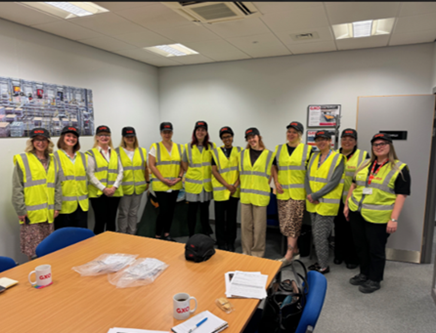
Suited and booted to present to a factory workforce
The Allied Health Professions (AHP) Strategy for England highlights the role of AHPs in disease prevention and health promotion, helping to reduce the burden on already stretched health and social care services. Diet-related diseases remain a major public health challenge, yet dietetic care is still largely focused on treatment rather than prevention. If the profession is to play a greater role in supporting population health, then equipping students with strong public health knowledge and skills is crucial.

To support this, Teesside University’s MSc Dietetics programme now includes public health placements alongside traditional NHS clinical placements. Here, Alex shares her experience of working in a Public Health practice-based learning setting. A must read in National Careers Week for anyone considering a future career as a dietitian!

------------------------------------------------------------------------------------------------------------------------------------------------------------------------------------------------------

What I worked on

During my placement, I was involved in three projects focused on health improvement and disease prevention. My work involved meeting with stakeholders, conducting research, presenting findings, and engaging with the public. The projects covered a wide range of population groups, including expectant mothers, school-age children, local workforces, and food bank users.

1. Supporting parents with child nutrition

A key part of my placement involved reviewing the nutrition education available to parents of children aged six months to four years.

What I did:
  • Conducted a literature and policy review
  • Spoke to parents, NHS staff, and school representatives
  • Attended a breastfeeding class to hear directly from parents
  • Presented my findings to several teams, including the Director of Public Health
Why it matters:
The insights from this work will help shape future research and improve nutrition support for families in the local area.

2. Linking oral health and nutrition


There is a strong connection between what we eat and oral health, but not everyone has access to clear, easy-to-understand information about this link.

What I created:
  • Infographics and presentations to educate local workforces
  • Materials designed in an easy-read format, avoiding jargon
Why it matters: 
My presentation was really well received, and I was even asked to record it for wider distribution, so it could be shared with professionals working with children and people with additional needs.

 
Infographics to educate local workforces

3. Reducing food waste in a local food pantry


Many food pantry users rely on short-dated products, and without clear guidance, a lot of good food can go to waste.

What I did:
  • Designed simple, visual signs with food storage and cooking tips (e.g. "Chop me then freeze me")
  • Introduced a ‘Freeze me’ sign for bread and monitored its impact
What happened?
Twice as much bread was sold the day after the sign was put up compared to the previous two weeks combined!


Signs made to reduce food waste

What I learned
  • Public health plays a key role in patient care - I saw first-hand how wider social factors impact people’s ability to manage their health and access services.
  • Being proactive is crucial - I reached out to stakeholders independently, which helped me build confidence and leadership skills.
  • Flexibility is a great learning experience - managing my own projects and working in a less structured environment improved my time management and adaptability.
  • Self-care matters - the flexibility of this placement meant I could work in different settings, including from the park on sunny days!
Final thoughts

Introducing dietetic placements into public health settings is a win-win. It helps students gain a broader skillset, supports NHS capacity, and brings dietetic expertise into community settings.

Of course, doing things differently comes with challenges. Expanding placements into public health settings has required commitment from everyone involved - academics, placement providers, and students. But we’re constantly learning and improving, and we’re proud to be making a real impact on the health of our local communities.

Friday, 17 May 2024

Animating practitioners to take action on stigma

Matty Starforth, Public Health Practitioner-Harm Reduction and Social Inclusion Portfolio, Newcastle City Council

“Stigma, stated simply, is a set of negative and often unfair beliefs. Stigma can be experienced on a societal, structural and personal level. It is employed largely unconsciously but at times also consciously”. 
Anti Stigma Network


Stigma is often a word that is associated with harm but it is important to recognise that stigma can have a huge impact on individuals and groups in society. From my own professional experiences, I am aware, like many of my colleagues and partner services are, that the harms of stigma can include and are associated with inequality, disadvantage, discrimination. Stigma increases stress, shame, depression, isolation, and can lead to the avoidance of healthcare and decreases treatment engagement and retention for individuals and groups.


It’s clear that there is a need to address stigma and embed an ‘anti stigma approach’ as part of the work we do to tackle inequalities, but doing so can be challenging. While people tend to be generally aware of the term stigma and how this can affect individuals, there is often less understanding of the depths that people go through to avoid and overcome the stigma they experience, such as not attending appointments or seeking the help or support they deserve. There is also less awareness of the steps that we can all take as individuals to not only avoid stigmatising people through our language and practices, but also actively speak out and promote an anti-stigma approach more widely.

What we are doing about it

To address this, we have had several areas of work in Newcastle upon Tyne looking to raise awareness and address some of the harms of stigma on others. This started with the publication of Drugs, Identity and Stigma and ongoing discussions about changing how we focus on people who use drugs or alcohol and the language we use for those facing multiple disadvantage and exploitation. Academics, policy makers, public health and key stakeholders, from working together on various research, came together to deliver a practitioner conference, improve practitioner training, development and networking and production of a practice briefing, stigma animation and a planned education package. All of this has been informed by lived experience.

In May 2023 we worked with partners to hold a conference to over 320 practitioners, service providers and community members from across the region. The Stigma, Trauma, Substance Use and Domestic Violence Conference involved a range of international, national and regional researchers and academics including a keynote talk from international anti-stigma lead, Professor Carla Treloar. The Conference was designed to promote knowledge exchange and good practice of Anti-Stigma work from across the region. A practice briefing that was developed from the event can be found here. A key theme in the discussions has been around vulnerability and exploitation, and partners have worked together, from research developed by the University, to produce animations around exploitation and home takeover. Research into practice improvement. Two artists were employed to capture the key themes and discussions of the conference as a visual (see below) which could then be shared with services.

Visual capturing the key themes and discussions of the conference

Developing the stigma animation

From this work, we explored how we can explain the ongoing theme of stigma and its impact. A recent project that I have coordinated, in collaboration with university colleagues, is the production of a stigma animation which you can see above. Aimed at practitioners and volunteers, this will help raise awareness and become a key resource to support the work and objectives we have within Newcastle Public health, and also the wider local authority. The animation has involved consultation and input from a range practitioners, service users and individuals with lived experience of stigma. At each stage of the animation production, I have attended the Newcastle Service User and Carer forum. Inclusion of those with lived experience of stigma was essential in these discussions and has been key in helping to shape the direction and design of the animation, particularly in relation to service needs and solutions.

A key challenge during this work has been ensuring we produce an animation which doesn’t unintentionally stereotype or stigmatise individuals through the imagery used. There has been a lot of thought-provoking conversations and discussions which have led to both personal and professional reflections. For example, figures in early storyboard drafts of the animation which were uniformly male and able bodied were subsequently changed to be more inclusive and represent a diverse range of bodies. Throughout the process there have also been a lot of discussion in relation to the language that we use to support the imagery. Some key insight was gained from the Newcastle Service User and Carer forum where participants identified examples of where they had felt stigmatised through language and how potential changes could have changed outcomes. These examples have been included within the animation to highlight the impact of language.

We plan to share the animation across a range of practitioners working within fields such as drug and alcohol, mental health and wider health and social care roles. This will support the drive to encourage sign up to the Anti-stigma network and prompt organisations to develop an anti-stigma strategy for their workplace. Alongside this we wish to support practice improvement by developing a stigma education package, which the academics are leading on, and which we hope to eventually deliver through an educators by experience model.

Addressing stigma will require individual and collective action from all of us, and so we urge you to please watch and share the animation, use the resources available, sign up to the Anti-Stigma Network and help us to spread an anti-stigma approach.

Background and context

Addressing stigma is a key priority in Newcastle upon Tyne. In 2022 the Director of Public Health report stipulated that policy and practice should ensure health improvement is free from stigma. This issue is also gaining National traction, with the Office for Health Improvement and Disparities (OHID) recently announcing the project ADDER stigma indicator programme and currently adapting Professor Carla Treloar’s (University of New South Wales) Australian stigma indicator and monitoring model for the UK. The NHS Alliance Stigma Kills campaign has recently been rolled out, with the North East and North Cumbria Integrated Care System (ICS) backing this campaign for our region. The Anti Stigma Network has also recently formed to raise the profile and awareness of stigma, especially the impact on people who use or have issues with drugs and/alcohol.

Friday, 21 July 2023

How to choreograph a dance between policy makers and academic researchers?

Posted by Peter van der Graaf, Associate Professor in Public Health at Northumbria University and AskFuse Research Manager


Dancing is a key move in public health, particularly if you want to make an impact with your research. Knowledge exchange is not just a science or even an art, but very much a dance between researchers and policy makers about the use of research evidence. To complete this dance successfully and get evidence used in decision making, both partners need to follow certain steps. However, learning the steps (science) or performing them perfectly (art) is not sufficient: it requires instinct and feel for where you are in the dance and why you are doing it.

To develop a dance plan for your interactions between policy makers and academic researchers, Fuse hosted a special session (or dance class) at the European Implementation Event in Basel, Switzerland on 8 June. The EIE2023 brought together over 300 implementation scientists, practitioners and funders from across health, social welfare, education and other sectors in Europe. Over two days through fishbowls, science slams, workshops, inspiring keynotes and oral presentations, participants explored how to create a new normal for implementation science in society.

Our session explored dance challenges (e.g. moving too slow, bad timing, outfit malfunctions, and unsynchronised performances) and new routines in response (see: ‘What did we learn?’ below) that we have developed in Fuse over the last 15 years collaboratively with our partners. In the session, we highlighted examples of creative communication (the art of knowledge exchange), research performance both backstage and frontstage (AskFuse), and dancing together (embedded research) to set the scene for a discussion about what makes a successful dance between policy makers, health practitioners and academic researchers. We invited conference participants to share their own reflections of dance routines they have developed to support knowledge exchange and implementation of research evidence in practice and policy making.

What did we learn? 10 dance lessons


1. Academic researchers need to learn four basic steps for dancing with policy makers (see the Fuse knowledge exchange model):
  • Raising awareness, using creative communication.
  • Knowledge sharing through joint events.
  • Making evidence fit for purpose (localising and tailoring).
  • Supporting uptake and implementation (e.g., capacity, co-production, linking activities).
2. A deviant knowledge broker can help to facilitate backstage conversation and protect policy makers and academic researchers from missteps.

3. Go with the music: as the context and process in which evidence is useful changes constantly, it is an important skill for researchers to be able “to go with the music” based on ongoing relationships with policy and practice partners.

4. Emotional engagement between researchers and policy makers is essential to get a better feel for the music. A heart-to-heart or moaning about bad performances helps you to improve dance routines and hide missteps. Don’t forget the power of cookies!

5. Embedded research helps to develop an instinct for the dance, based on a better understanding of each other’s organisational contexts. Embedded research allows you to be part of solutions, developed with the communities affected, not just report on the effect on interventions and their implementations.

6. Public health is political; lobbying and advocacy are a core part of the embedded research roles.

Choreographing your own dance routine

We presented participants with the following questions to help develop their own dance routines: 


In response, conference participants started to develop their own dance metaphors for describing their experiences with collaborative research between academics and policymakers. Someone referred to their routines as a ‘silent disco’, where academics and policymakers were dancing to different pieces of music without knowing what the other where listening too. Other participants emphasised the need to spend time together first before you start picking music, to get a better understanding of each other’s musical tastes (classical meets punk?).

Overall, participants felt inspired to start to think more deeply about their own dance plans. How would you answer the above questions and what would your dance plan look like? 

Friday, 10 March 2023

North East women share their experiences of inequalities in powerful poems for International Women's Day

Posted by Claire Smiles, Fuse PhD student from Newcastle University and experts by experience Marie Warby and Kayleigh Cookson

Presenters and experts by experience at the Fuse event on International Women's Day 
On International Women’s Day 2023 we at Fuse celebrated by showcasing the lived experiences of women in the North East. This event brought together experts by experience, researchers and practitioners who engaged with presentations, shared experiences and devised top priorities to tackle women’s health inequalities. 

I presented the early findings from the ‘Women’s Sexual Wellbeing’ study alongside wonderful women with lived experience. During my presentation Marie and Kayleigh shared powerful poetry they had written for our IWD Fuse event. Their poetry about womanhood and motherhood reflected on personal experiences and demonstrated the challenges and the resilience of women. A big thank you to Marie and Kayleigh for agreeing to share their poems in this blog post and to Kirsty for taking the videos below.

Catch up with all the discussion on Twitter using #FuseRE and International Women's Day using #IWD2023 and #EmbracingEquity. For more information about the event visit the Fuse website.

** Content/trigger warning: adult language and references to abuse and suicide **


Womanhood by Marie Warby

The road to womanhood wasn’t so kind to me. 

I look at infancy and I see abuse; I look at puberty and I see a noose. 

A very painful past as I recall, I didn’t allow it to stop me, I refuse to fall. 

I felt like an adolescent, stuck in a woman’s body, 

Screaming out hoping someone would hear, my body always stuck in a constant state of fear 

Very submissive that’s what I’d become, all I needed was a way to find home. 

Without a map nor a tool, just a woman to teach me from her school, 

A wealth of knowledge to show me the way, I know ill be powerful and independent one day. 

My inner child is reaching out and ready to kneel, this little girl needs to heal. 

With a blank sheet of paper where do I start, it's time to mend my broken heart. 

I look at my past with no regret, for every challenge of womanhood I’ve met. 

To say it’s been easy that would be wrong, and here I stand singing my song. 

Shining a light for others to see, some days I can’t believe it's me. 

Womanhood is such a beautiful place to be, and now finally I can nurture Marie.


Needs to be everything by Kayleigh Cookson


The expectations of a mother is not easy,
I need superpowers and multi-tasking skills.
I have to be a role model and provide a clean tidy house,
I have to budget and pay all the bills.

I need to be very organised,
Always plan ahead every time I go shopping.
I have to be a cook, a baker, I'm never out the kitchen,
And I am a professional at washing.

I need to be brilliant at cleaning,
Wash the dishes, hoover up, pick up mess.
I have to negotiate and play referee,
My patience constantly at test.

I need to be very responsible,
Be a doctor, nurse, councillor, therapist.
I have to be handy at odd jobs round the house,
There's no problem that I cannot fix.

I need to be an expert encyclopaedia,
To answer all the why's, how's, what's, where's and when.
I have to be fun and play lots of games,
Again and again and again.

I need to be a smart tutor,
Help with homework, teach right from wrong.
I have to be a PA, hairdresser, taxi driver,
And always put things back where they belong.

I need to make lots of dreams come true,
I am Santa, the tooth fairy, Easter bunny.
I have to cure boredom on cold and wet rainy days,
Go out and make memories when it is sunny.

I need to be rich with empathy,
Be supportive, wipe away lots of tears.
I have to be a hero and never be scared,
And chase away all the nightmares and fears.

I need to be a care giver,
A good communicator and be able to detect lies.
I have to be an agony aunt and a shoulder to lean on,
I've got to know how to save lives.

I need to be an active listener,
Good at advice and have psychic abilities.
I have to be ready and always prepared,
To provide mental and emotional stability.

I need to be loving and caring,
Tend to wounds, scars, bumps, patch up scrapes.
I have to be a healer and always the best one,
To pick up pieces every time a heart breaks.

I need to be strong, be a survivor,
Put on a brave face no matter the weather.
I have to paint on a smile, show no pain, head up high,
Always cope, always hold it all together.

I need to always have time,
There's no relax, no switch off, no escape.
I have to put everyone's needs above my own,
Oh the guilt if I make a mistake.

I need to never be ill,
Cope with bleeding monthly and raging hormones.
I have to put up with mood swings, hot flushes and cramps,
Then not to mention the menopause.

I need to be forever perfect,
Can't shout or swear coz I'll face stigma and shame.
I have to never go out coz I'll be a bad mam and a slag,
Not worthy, always judged, the one to blame.

The expectations of a mother is not easy,
I need to also then be a friend, a partner, a wife.
I have to be a daughter, a sister, an aunty, a nana,
I am never just me, a woman living my life.

Friday, 1 April 2022

Breaking down barriers in End of Life care

Posted by Colette Hawkins, Consultant in Palliative Medicine, South Tees NHS Foundation Trust

Health research achieves extraordinary things. There are countless examples of life-changing, disease preventing or curative treatments. These are rightly celebrated and have shaped our society, as well as our expectations, around health and illness.
Break Through 1995 "Walls break hearts, hearts break walls" by 
Pierre Marcel via Flickr © 2011 (CC BY-NC-ND 2.0)


But what about people living with a life-limiting illness and those approaching end of life? Health professionals often struggle to move away from an interventional, disease-focussed approach to a more holistic, person-centred approach. This risks unwanted intervention and missed opportunities for choice. This is mirrored by health research. In the UK, just 0.21% of health research is focussed on palliative and end of life care.

The reality is that people living towards end of life really struggle and whilst this may be directly related to ill-health, it is often issues of daily life which incapacitate them. These are generally overlooked by health professionals.

Since 2017, I have been involved in running research on legal needs in life-limiting illness. One element of this is social welfare legal needs (SWL): matters of daily life for which the law defines rights, entitlements and protections. In the context of life-limiting illness, the ‘big three’ are issues relating to money, employment and housing. These are prevalent, impacting most people in some way. However, their greatest impact is on people who are already disadvantaged, for example those experiencing homelessness, financial insecurity or debt, socially excluded or marginalised groups and people with multiple physical and/or mental illness. These people experience the most SWL needs, are most affected by them and are least likely to access support successfully.

Social welfare legal needs will often be presented to health professionals, wrapped up in a person’s physical complaints, but missed in favour of a focus on disease. So where else could they go? Our foundation research scoped the system of support for these issues. A wide range of services beyond health and social care provide advice and support for SWL needs, including charities, community groups, advice sector, legal services, social services, Jobcentre, housing groups, social prescribing, statutory organisations and more.

But if we took months to map the system (and it’s still growing), can we expect people in vulnerable and difficult situations to find their way?

Funded by the NIHR Applied Research Collaboration (ARC) North East and North Cumbria (NENC), our research has engaged members of the public with lived experience, as well as service providers in Gateshead, to find an effective system response to social welfare legal needs. We used Human Learning Systems, an approach which accepts the complexity of a system and supports co-produced responses to need founded on continuous learning.

Engagement of people with lived experience of life-limiting illness and SWL needs proved critical to the value of this project. Focus group discussions revealed the scale of the challenge to manage SWL needs. The walls they faced included not feeling heard, not knowing where to go for help, lack of information to help themselves, lack of responsibility from professionals or services, poor communication between services and long delays to resolution (or non-resolution). These insights, along with those of service providers, told us that the ideal system response should be founded on relationships and offering information, problem solving and a joined up approach. This seems quite obvious and appropriate, so why are there so many walls?

Attitudes and structures 

The walls come from two main sources: professional attitudes and structures. Attitudes obstruct when they use labels, stereotypes or assumptions, treat illness, not people, miss opportunities for honest discussion, restrict choice through failing to listen to priorities and wishes, overlook responsibility for holistic needs and forget to work in partnership. Structures maintain silos and fragmentation of care with the lack of clear routes to advice and support, boundaries to access through geography, referral criteria or social context, expectations that patients and carers will self-advocate and navigate themselves and missed opportunities to capitalise on the expertise of others. These walls obstruct identification and management of social welfare legal needs and amplify inequalities in care towards end of life.

We believe interprofessional learning is a route to breaking down these walls. We use short stories of experience instead of ‘sterile’ clinical cases, and facilitate discussion to explore what matters most, and the approaches to meeting needs in an inclusive, respectful and effective way. Initial pilots have shown that this is a route to closer integration of services, although the latest pilot, within the ARC project, also highlighted the challenge of engagement with online learning, accentuated by the pressure and workplace fatigue linked to COVID-19. Feedback showed that people felt too busy to attend or just didn’t turn up on the day.

We have secured a NIHR End of Life Partnership grant which we are using to co-design a research strategy for evaluation of system-wide learning around SWL needs in life-limiting illness. We are re-evaluating what we mean by ‘end of life’, pushing beyond traditional views and including people at risk of premature death. We are broadening our insight into the inequalities and prejudices embedded within care of people who may be living towards end of life. We can see the walls; our task is to break them down.


This project ‘Integrating care to meet social welfare legal needs in life-limiting illness. Qualitative investigation of a multi-agency, complexity-informed intervention’ has been funded by by the National Institute for Health Research (NIHR) [Applied Research Collaboration North East and North Cumbria (NIHR200173)]. The views expressed are those of the author(s) and not necessarily those of the NIHR or the Department of Health and Social Care.


Image: Break Through 1995 "Walls break hearts, hearts break walls" by Pierre Marcel via Flickr © 2011: https://www.flickr.com/photos/21063155@N06/5409729627 (CC BY-NC-ND 2.0)

Friday, 10 December 2021

Once upon a time in research... the power of storytelling for scientific communication

Posted by Peter van der Graaf, Associate Professor, AskFuse Research Manager & NIHR Knowledge Mobilisation Research (KMR) Fellow, Teesside University

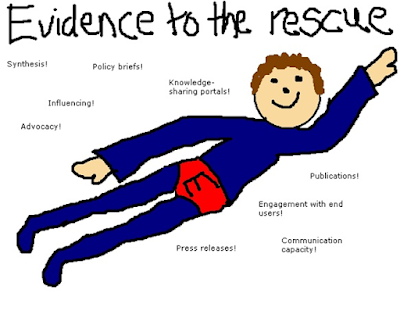
A Christmas story about gifting knowledge (featuring Evidence Man)


It was the week before Christmas. After a long day in the office at her university, Ana Lyst rushed out to do some last-minute Christmas shopping. She had been too busy writing grant applications and journal papers to even think about presents for family and friends. It was already dark, with a stiff, cold breeze and snow started falling around her.

As she approached the high street, Ana noticed a bookshop she hadn’t seen before. It looked rather grand, a bit like an ivory tower, but with more doors. Through large windows at the front, she could spot frantic people in white lab coats running between the shelves, carrying big loads of paper and folders. ‘Bingo!’, she thought: books make great Christmas presents and I can sort out all my gifts in this one shop. She merrily stepped inside and was greeted by a large, vaulted ceiling underneath which stood endless rows of books in all shapes and sizes, reaching all the way to the ceiling. On first impression, the books looked rather dull and colourless, many of them gathering dust, with long, incomprehensible titles edged on their spines in gold.


Undaunted by the ambush of knowledge and people, Ana walked over to the applied research section (which sported a large swirly sign, fusing five different colours) and spotted several books that looked like decent presents for friends. Taking them to the till, she was met by a stern looking clerk, named Pierre View, who inspected the books carefully and with an authoritative tone explained that many of the selected books were not yet ready to leave the bookshop, as they needed more work and review. Could she please come back in 17 years to collect them? The 14% of books that were ready to leave, were neatly packaged in shiny, glossy covers with pictures and key phrases all over them that Ana Lyst was sure would really impress her friends.

However, when she tried to leave, Ana noticed that there were many doors to exit the shop (the entrance was no longer visible) and when she tried the first door in front of her, it wouldn’t open. She went to the next five doors with the same result: all of them were firmly locked, or the ones that did open led to a dead-end. Ana started to panic and her earlier optimism
 quickly melt away, replaced with visions of being stuck in the bookshop over Christmas with not a mince pie in sight.

At that moment, a small backstage door hidden in a corner of the shop opened and a bold bespeckled man stepped out, fully dressed in a superhero outfit with bright blue tights and top (that looked a bit too tight), over which she wore red underpants featuring a large letter ‘E’. Ana Lyst didn’t know what to make of this man, but he looked friendly enough and was walking over to her to offer his services. As the man came closer, he produced a large set of antique brass keys from beneath his cape and began opening several doors. “Are you a bit lost?”, asked Evidence Man (for that is who he was) in an accent with a Dutch lilt. “Stuck between here and the outside world? Not to worry! I know the way out to some safe spaces with a friendly audience who would love to hear all about the books you just bought. They would even be interested in the ones that are not ready yet, and they might have a few books of their own to share with you. Shall we go?”

True to his word, when Ana stepped through the first door unlocked by Evidence Man, she emerged back in the now snow-covered high street, where a group of her friends were waiting and, even better, one of them was carrying a large plate of mince pies! Ana Lyst’s spirits lifted immediately, and she vowed to tell her friends all about the helpful Evidence Man in the bookshop. But when she turned around, the nice man had disappeared and through the windows of the bookshop could be seen flying to assist another confused customer.

The End.


The power of storytelling for scientific communication


I was inspired to write this Christmas tale (and blog) after attending a storytelling workshop at the Fuse end-of- year social event on 3 December, which was led by Duncan Yellowlees. Duncan is a Communications Trainer who works with researchers to improve their communications, confidence, and impact. Take a look at his online COMMunity website (Research Comms … but better) to find out more. 

In an engaging and entertaining way, he took us through the key elements of storytelling: from key principles (putting pictures in people’s heads; construct a narrative of causes and effects), to different types of stories (metaphorical, motivational or monster stories, stories as hooks, and point-of-view stories), their structures (problem, solution and results) and what to include in stories (the point, examples, people, heroes & villains, magical helpers, and tensions & conflicts). Did you spot any of these elements in my story? Scroll down to the bottom of this post for spoilers.

Overall, Duncan provided plenty of tips and tricks on how we can use storytelling as academic researchers to communicate our research findings to wider audiences. And this relates directly to the first point (and story) that he made during the workshop: researchers spend too much time throwing the ball (their research findings) but not nearly enough time on making sure there is someone there to catch it (knowledge users). Find your audience first and make them pay attention before you start talking about your research.

His second point was that all this might seem daunting: so many different techniques, plot lines and structures to think about, how can we ever get any good at this? But when comparing it to learning to drive a car, the same principles apply: keep practicing and it gradually (and sometimes quite quickly) becomes second nature. This is because storytelling is already embedded in everything we do in our daily lives: from telling our family and friends about our everyday experiences, to reading books or ‘binging’ on Netflix series.

Finally, Duncan suggested some simple techniques for storytelling in science communication: making stories relatable and relevant (e.g. stress before Christmas) by including named people and adding details (e.g. dark, snowy high streets and describing the interior of the bookshop), which start to paint a picture in people’s heads. Most importantly, start with a hook: a story to draw in your audience, so they want to hear more, or use a question or bold statement as bait (e.g. only 14 percent of research makes it into practice and policy after 17 years).

My story might not have been all you hoped for this Christmas, but the Fuse social event brought some useful gifts for the Fuse Communications toolkit and much needed festive cheer at the end of another challenging academic year. 

Merry Christmas everyone and happy storytelling!


Spoiler alert:
  • The point: knowledge mobilisation between academia and practice is facilitated by a knowledge exchange broker. Plus some points about the time it takes and difficulties faced by researchers when trying to get research into practice and policy.
  • Heroes: academics producing research and papers, while running between bookshelves.
  • Villain: Bookshop clerk (Reviewer 2).
  • Magic helper: Evidence Man (Knowledge Exchange Broker)
  • Tensions & conflicts: research dusting away on bookshelves or not being ready to leave the building, while access to knowledge users is restricted or confusing.
  • Type of story: metaphorical story, overlapping with stories as hooks (to introduce this blog and talk about the storytelling workshop).

Friday, 2 July 2021

Intersectionality: buzzword or key to tackling health inequalities?

Posted by Dr Daniel Holman, Professor Sarah Salway, Dr Andrew Bell, University of Sheffield

Intersectionality – the idea that multiple axes of inequality overlap and interact – arguably holds great potential to understand and tackle health inequalities. But what do researchers and those working in policy and practice in this area actually think about the approach? What do they see as the key challenges and opportunities? We held a professional stakeholder workshop and consultation survey to find out. Our findings indicated a ‘cautiously optimistic’ view of an intersectional health perspective.

A growing interest in intersectionality and health

Intersectionality is currently something of a buzzword. A search of the scientific literature reveals an explosion in interest, with an eight-fold increase in papers mentioning the term in the last ten years, and a twenty-fold increase for those mentioning both ‘intersectionality’ and ‘health’:

Figure 1 - SCOPUS documents mentioning both 'intersectionality' and 'health' in title, abstract or keywords


The interest in applying intersectionality to health research, and specifically health inequalities research, has now also been fuelled by the pandemic. Ethnicity, deprivation, and age strongly influence Covid-19 outcomes. Calls for intersectional analysis of Covid-19 have now been published in BMJ Global Health and The Lancet.

Yet recent events have indicated significant political barriers. The Sewell Report essentially explained away ethnic health inequalities with reference to socioeconomic factors – anathema to intersectionality – and last year the UK Government declared itself ‘unequivocally against’ Critical Race Theory (within which intersectionality is rooted).

Further, policy-making is a process of dialogue, negotiation and ‘knowledge interaction’, with power relationships, varied sources of ‘evidence’ and competing drivers clearly at play. So, we should not expect the concept to straightforwardly impact how health inequalities are understood and addressed.

Theory vs. practice

In theory, intersectionality offers a critical, innovative approach for understanding and tackling diverse health inequalities. It essentially concerns the power structures and processes that drive these inequalities, and seeks to highlight how unjust systems of discrimination such as racism, sexism and classism operate in tandem to result in unequal, unfair life chances. The animation video below gives an overview of the approach:


Putting intersectionality to work entails a number of practical challenges. Many of our participants thought the term sounded like just another buzzword, questioning what it adds. Concerns were raised about the complexity of intersectionality both as a conceptual and methodological framework. For resource-strapped public health teams this was felt to be a particular barrier. Complexity can sometimes inhibit action because policy making processes support simplicity and certainty.

Methodologically, intersectionality includes a danger of over-disaggregation. Working with finer and finer categories to produce a granular picture of inequalities risks losing sight of the processes of disadvantage that impact across groups of people. Questions were also raised over how we can reveal mechanisms including discrimination, use mixed methods and participatory approaches, include marginalised populations, and access large, high quality datasets that intersectional analyses might require.

How might intersectionality actually be implemented? We asked respondents to consider two suggestions

First was the idea of using intersectionality to target and tailor interventions and policies. This raised numerous concerns that it potentially takes focus away from structural changes; assumes that all those in a particular intersection are the same; excludes those who do not fall into the targeted category, and; reinforces deficit and stigmatising narratives. Nonetheless, respondents thought that targeting could have value if marginalised groups were included in the process. They also suggested that geography should be considered when targeting as it is a key aspect of social context.

Second was the idea of monitoring and evaluating the impact of policies and programmes on different sub-groups. This approach was more popular, with participants keen to be able to demonstrate differential and unanticipated outcomes of initiatives. Again, the importance of meaningful engagement of marginalised groups and careful attention to understanding mechanisms, were highlighted.

What is the way forward? Our participants emphasised some key principles and points of action:
  • Ensure a clear focus on systems of social discrimination and how they structure access to power, resources and life chances, especially via social institutions (such as schools).
  • Wherever appropriate, participatory and co-productive approaches - entailing more equitable knowledge-production – should be used.
  • Carefully consider complexity; arguably intersectionality’s biggest asset and challenge. What constitutes the right level of complexity and in which context? Trade-offs are inevitable.
  • Develop clear methodological guidelines, possibly in the form of a toolkit, to help with implementing intersectionality, especially for non-academics with limited research resources.
  • Big datasets with well measured social variables are essential.
Intersectionality holds much promise. It has the potential to help ensure that those experiencing multiple discrimination are not further disadvantaged by the Covid recovery phase. Acknowledging and addressing potential pitfalls and limitations of the approach is therefore crucial. Marginalised populations, researchers, policy and practice professionals all need to be part of the conversation.

To read more about the project from which this research originated, please take a look at the project website: http://intersectionalhealth.org

Saturday, 15 May 2021

Is it ethical to promote quitting smoking to patients with mental health issues?

Posted by Susan Jones, Research Associate, Teesside University

Smoking rates and levels of dependency are high in people with psychiatric problems and, it has been argued, that smoking helps people with mental health disorders to cope with the struggles in their lives (Malone et al., 2018). On the other hand, the National Institute for Health and Care Excellence (NICE, 2013) argues that introducing a smokefree culture into NHS Trusts offers an opportunity for patients and staff to benefit in terms of physical and mental health and is achievable with appropriate support. Certainly this viewpoint was supported in our research:
"I think for some of our patients because it’s actually a learning disabilities hospital but obviously a lot of them have mental health issues as well, it increased their confidence and self-esteem. A lot of our patients had poor self-esteem and they actually achieved something by stopping smoking, they achieved something that was extremely difficult and I think it made them think, if we can do that we can do other things as well." 
Frontline Staff, Trust B
Nevertheless, by taking this position, NICE have highlighted a contentious issue. In our research we found that the patients and healthcare community were still divided about introducing smokefree policies and supporting patients and staff to quit smoking (Jones et al., 2020). There was a lot of passion on both sides! In some wards (mostly those with non-acute patients, such as those with learning difficulties or associated with forensics) staff and patients took on the challenge to change their environment and behaviours and embrace a smokefree way of life. They were creative in how they prepared for quitting and even made it fun, with games and decorations.

In other areas e.g. acute services, the challenges were different and there was much more scepticism about the ethics and value of offering support to quit smoking. Although awareness raising and training in smoking cessation was available, the role of choice and a pro-smoking narrative was widespread. 

Normalisation of smokefree policies

In mental health, smoking is an established cultural norm both in the community and in healthcare settings. We found that it is seen as an acceptable, even beneficial, coping mechanism for people who suffer from mental health disorders.

Research evidence would argue the converse; that the physical and mental benefits are far greater than continuing to smoke (Harker & Cheeseman, 2016). People with psychiatric problems tend to be highly addicted and there is a definite need to push through the initial stages of withdrawal from nicotine, which can be harder due to greater dependency, and more complicated due to interactions with psychiatric medication. Nevertheless, the evidence shows that people still want to be physically healthier, free from the downsides of addiction and supported to achieve these goals (Harker & Cheeseman, 2016).

Promoting normalisation through collective action

Perseverance is required to change any norm; old habits and perspectives die hard and continual reinforcement of new patterns are needed for success (Jones et al., 2020). This applies at an individual level but also at the organisational level.

Role of context

Our environment is so important in enabling or blocking behaviour; or even ‘nudging’ it in a certain direction (Ratschen et al, 2011). If a hospital is smokefree, then patients who don’t smoke will be able to maintain their status as non-smokers more easily. Alternatively, a smoking environment legitimises and encourages continued smoking. 

Sustainability

Maintaining changed behaviours, like smoking, is known to be challenging; however there is an inherent contradiction in implementing smokefree policies on-site only. Patients and staff move between hospital and community and it is all too easy for this to be seen as abstaining while in hospital, rather than quitting for good.

What we found 

Two mental health trusts in North East England - Northumberland Tyne and Wear NHS Foundation Trust and Tees, Esk and Wear Valleys NHS Foundation Trust - went smokefree in March 2016. In our research to evaluate the implementation of smokefree policies within the trusts, we found that:
  • Inroads had been made in changing an entrenched, smoking culture into one that was smokefree on Trust sites. However, there remained variations across specialities and challenges to full implementation.
  • Once there was sufficient ‘buy-in’ to a non-smoking culture it was anticipated that the issues relating to enforcement and perceived risk would diminish.
  • Long-term perseverance is required to establish smokefree sites in participating mental health trusts, supported by robust, routine, data collection.
  • Normalisation Process Theory and logic modelling are helpful in increasing understanding of the dynamic implementation process. 
Policy relevance and implications
  • Careful use of language is needed to encourage smokefree policies to be seen positively.
  • When interpretation of the term ‘patient leave’ was left open for leave to be used for smoking, it led to inconsistent practice.
  • Consistency of enforcement is key to success.
  • There were many details that needed to be worked out following the introduction of the policies; suggesting a requirement for ongoing review and response in a timely manner.

Read more about Sue's research in this Fuse research brief: Introducing smokefree policies into hospital mental health services.


References:

Harker K, Cheeseman H. The mental health and smoking action report: the

Jones, Susan E; Billett, A; Mulrine, S; Clements, H; Hamilton S. (2020) Supporting mental health service users to stop smoking: findings from a mixed method evaluation of the implementation of nicotine management policies into two mental health trusts. BMC Public Health, 20:1619

Malone V, Harrison R, Daker-White G. Mental health service user and staff
perspectives on tobacco addiction and smoking cessation: a meta-synthesis
of published qualitative studies. J Psychiatr Ment Hlt. 2018;25(4):270–82. https://doi.org/10.1111/jpm.12458

National Institute for Health and Care Excellence. Public health guidance 48:
smoking: acute, maternity and mental health services. London: NICE; 2013. https://www.nice.org.uk/guidance/ph48

Ratschen E, Britton J, McNeill A. The smoking culture in psychiatry: time for
change. Brit J Psychiat. 2011;198(1):6–7. https://doi.org/10.1192/bjp.bp.110.081372


Images:

1. “Smoke-Free Bench” by Michael Coghlan via Flickr.com, copyright © 2011: https://www.flickr.com/photos/mikecogh/5645977385/in/photostream/ (CC BY-SA 2.0)

2. Copyright © South Tees Hospitals NHS Foundation Trust: https://www.southtees.nhs.uk/news/services/trust-to-go-completely-smokefree/ (2019)


The views expressed here are those of the authors and do not necessarily reflect those of the author's employer or organisation.

Friday, 30 April 2021

Can putting distinct services under one roof prevent mental illness? We (cold) called in the experts to find out

In today's Fuse blog post, Fiona Duncan, Postdoctoral Research Associate from Durham University, writes about co-locating services to improve mental health and the perils of pulling together an expert panel during a pandemic. 

'Cold Calling' by Darren Tennant
This past year has been tough for many of us.  Financial worries, feeling socially isolated and lonely, facing unemployment, and missing opportunities for physical activity are just some of the things that have impacted on mental health and wellbeing during the pandemic.  This means that finding ways to improve mental health and prevent mental illness in our communities is more important than ever.

Over the past few months, I have been working on a NIHR School for Public Health Research (SPHR) project which aims to investigate how “co-located” services based in the community can be used to promote wellbeing.  A co-located service is where two or more distinct services are in the same physical space and the staff of each service interact with each other, either formally or informally.  Co-located services are often found within traditional health services like GP practices when welfare, legal and/or mental health services are delivered in the same building.  The project will investigate the benefits and disadvantages of co-locating in community spaces, rather than within traditional health services.  For example, a debt service within a faith institution, a welfare service in a library, a mental health support service in a sports centre, or a money advice service within a foodbank.  We are interested in finding out exactly how co-location helps to improve mental health and whether they work for all people in all circumstances, or just some people in certain circumstances. For instance, does co-location increase access, reduce stigma, or encourage a higher quality of service by allowing professionals to work together better?

To start this research, I was given the task of setting up and facilitating an expert panel workshop. The idea being that if we want to gain a deep understanding of how co-located services may or may not work then we should ask the people who actually design, fund or deliver these services in the real world.  We hoped that this workshop would consist of service practitioners, policy-makers, and commissioners at local authorities and people who work for organisations that provide funding for community projects. 

My first challenge in setting up the workshop was getting people to take part.  Where was I going to find these experts and would they be able to give up two hours of their time in the middle of a pandemic?  I was planning on the workshop being small (5-8 people) but, in the circumstances, I realised that I was probably going to have to ask a lot of experts to even hit this target!

I used a variety of approaches to find my experts.  I asked members of the wider research team to email any suitable contacts, we approached the other NIHR Schools and we advertised the study on twitter.  I also personally contacted some people that had participated in a previous research project and my colleague, Dr Emily Oliver from Durham University, mentioned the workshop during a webinar at which she was presenting. Through these methods, three experts signed up.  To get a few more people, I then started to ‘cold call’ potentially suitable people and organisations, including almost 40 local authority Directors of Public Health in England.  Despite the pressures that this group of people are currently under due to COVID, this ‘cold calling’ led to three more people agreeing to attend.

Having six people confirmed still felt like a very precarious position to be in, and it turned out that I was right to be nervous, as one person unfortunately had to pull out on the morning of the workshop. However, luck was on my side as at the last minute another expert who had found out about the workshop from a colleague at one of the organisations I had contacted, asked if they could come along.  Panic over!

Selfridges
The nerves kicked in again at the start of the event, as I had never facilitated a Zoom workshop before and it was clear that some of our experts were feeling nervous too.  This could have been a problem as we wanted them to freely and openly talk about the benefits and disadvantages of co-located services.  Luckily, Gillian Samuel, a member of our research team from the McPin Foundation, was able to facilitate a brilliant icebreaker exercise.  She asked everyone to talk about something that we all had in common, specifically, what we are looking forward to most when lockdown ends?  Everyone had some great answers to this question (the re-opening of Selfridges was my personal favourite answer) and this made for a more relaxed atmosphere.

This almost certainly helped the workshop discussions flow as our experts provided rich and detailed information about co-located services.  However, in some ways the workshop did not go as I had expected.  I thought the experts would talk about the benefits of their co-located services and the mechanisms involved in how these services work. I had prepared a long list of questions to prompt such a conversation, but it soon became clear that the panel had a lot to say about how co-located services quite often don’t work.  They were all clearly very passionate about what they do but expressed frustrations surrounding service delivery.  One theme to emerge was that co-located services are dependent on different types of professional working together, but the reality is that they often don’t communicate well with each other at all.

Although I wasn’t expecting the panel to say these things, I’m glad they did.  It helps us to understand how co-located services are working, or not, and is very important if we want to improve services and therefore improve mental health and prevent mental illness in our communities. This information will also be very helpful in the next part of our study where we will be interviewing people who work at and use selected co-located services.


Fiona works on the NIHR School for Public Health Research (SPHR) Public mental health programme through Fuse's membership of the School.


Images:

1. 'Cold Calling' by Darren Tennant via Flickr.com, copyright © 2014 (Attribution-NonCommercial-NoDerivs 2.0 Generic (CC BY-NC-ND 2.0)): https://www.flickr.com/photos/10678076@N03/16001016758