Monday, 30 July 2012

How to be the perfect research student, part 2: content matters

Posted by Martin White and Jean Adams
In our first post on what research students can do to make their, and their supervisor’s, lives easier we focused on process. In this second, and final, instalment we address the product(s) of your endeavours.

1. Pay attention to grammar and style. Well written documents are easier to read and increase the reader’s confidence in your abilities. Grammar and style are not just window dressing; they are an essential part of good communication. You may find the BMJ’s house style guide useful.
Pay attention to grammar and style
2. Use sub-headings. They help you structure your text and keep related pieces of information together. They also help the reader understand where your argument is leading.

3. Be critical in your literature review. Try to go beyond just describing the literature, to critically interpreting it. This doesn’t necessarily mean providing a detailed critique of every paper you read. It means identifying the major knowledge gaps in the literature, identifying common methodological limitations, identifying limitations of existing theories, and suggesting reasons for all of these things. This requires you to think for yourself and put your own, personal stamp on your interpretation of the reading you’ve done.

4. Frame research questions, not aims and objectives. Try to state clearly the scientific rationale for your research, identifying the gaps in knowledge that you aim to fill, and then specify the question that needs to be answered to fill each gap. In public health, research questions tend to be preferred to null and alternative hypotheses.

5. Separate your methods, results and discussion. Methods say what you did. Write them like a recipe book, which others can follow. Reference established techniques. Don’t muse about which methods might have been better (reserve that for the discussion). Results say what you found. Don’t repeat what is in tables, figures or boxes in the text. Don’t veer off into discussion of the results. The discussion interprets your findings, sets them in the context of existing knowledge and discusses their strengths, limitations and implications.

6. Don’t confuse association with causation. Finding a statistically significant association between two variables does not necessarily mean that one causes the other. Be careful when you are writing not to imply causation unless you have good evidence of it.

7. Structure your discussion. Many people find the discussion the hardest section of their thesis, dissertation or paper to write. One way of easing the pain is to use the sub-headings suggested by Docherty and Smith (1999).

8. Don’t repeat yourself. Repetition is boring, insults the reader by assuming they didn’t read it the first time you said it, and is a waste of words. Read and reread your drafts to eliminate repetition.

9. Proof read. Once you have a first draft that includes the key points you need to cover, re-read and revise to hone your message. Consider each sentence individuallly and ask yourself if there is a clearer way to convey the idea. Think particularly about if you could use fewer words and less jargon.

10. Try to write your thesis with publication(s) in mind. In a PhD you can nest each distinct piece of work in a separate chapter, each of which will lead to a paper. If you structure these chapters like a paper, then your publishing challenge is made easier. For an MSc or undergraduate research project, try to structure your whole dissertation like a paper if appropriate.

Thursday, 26 July 2012

This post would have been about bureaucracy, but it got caught up in red tape

Posted by Bronia Arnott

When your research is funded it is such a great feeling. You have spent hours toiling over your budget spreadsheet, having it rejected by the Institute finance officer, reclassifying your directly incurred and indirectly incurred costs. You have carefully crafted your theoretical argument and honed your methodological choices. You have even agreed to do another systematic review. And all that hard work has paid off; your research grant has been funded. Now that the money is finally in your hands you can do what you wanted. Right? You clearly haven’t worked in a University before, have you? 


If you had, you would have met the Director of the Institute of Red Tape: Mr Bureaucracy*. Mr Bureaucracy doesn’t care what your research project is, how much money you got, or who it was funded by; all that he cares about are rules and regulations. Before his promotion to Direction of Red Tape, he was Head of Health & Safety. The most impressive thing on his CV to date is his design of the Research Passport System.

I wouldn’t mind but I’m not asking to go out and buy a designer handbag with the money, I’m not asking to inflict torture on participants, I’m not even suggesting that my colleagues and I go on a round the world cruise; I’m asking to do what I said I would do and what I was funded to do. If I carefully researched the cost of an iPhone, made sure I put it into the right costings column on my grant application, and then the funding body agreed that we needed it so that we could develop a smartphone app to investigate mHealth then please, PLEASE, don’t tell me that a Nokia is just as good AND significantly cheaper.

Thankfully, all of the staff within my research institute who deal with finance and research governance are absolute stars and are not like Mr Bureaucracy at all. But if you do come across him please let me know; I need to speak to him about an iPhone.

*This character is entirely fictional, and any resemblance to any individual dead or alive is coincidental.

Wednesday, 25 July 2012

Working effectively with patients and public in research

Posted by Dorothy Newbury-Birch

I’m chair of the Engagement Strategy Group in my research institute. I’m not sure, like most things, how that came about, but I’m here and I’m on a steep learning curve. You see, like most of us, for a long time I thought that patient and public involvement meant that we should have a couple of lay people on our steering groups. And I was wrong, so wrong. It is so much more than that and if done properly can make your research much better in so many ways. I can only talk for myself but I’ve really started thinking about this differently, in particular, in relation to one of the trials I am the Principal Investigator (PI) for.
How not to do patient and public involvement in research
SIPS JR-HIGH is a pilot feasibility trial of alcohol screening and brief interventions in schools with 14-15 year olds. On the program management group we have a representative from the education department at the local council. He has expertise in alcohol and drug education in schools and we’ve met with him a number of times both at the project management group and separately to discuss the intricacies of the work. He’s a co-PI on the project and his input was invaluable to its success in being funded. He was also our link to getting the schools on board.

We have the Young Mayor (yes, North Tyneside has a Young Cabinet) on our Trial Steering Group, who we have met and spoken to a number of times. The Young Cabinet also looked over all our paperwork prior to submitting our application for university ethics approval. We also have a young person and their mum on the steering group. They were interested in the research, trialled our intervention and gave us valuable feedback. We've been to a couple of the schools a few times to trial the questionnaires and to ask them what they think of the information leaflets we’re using.

So what are my tips from my new found knowledge? Firstly, don’t just expect people to rock up to a meeting after sending them piles of paperwork and expect them to engage. Meet with them prior to the meeting; explain what is going to happen at the meeting. Talk through some of the issues and the paperwork and get their views. Explain to them that their input is important. Check to see if they need any help in coming to the meeting i.e car parking or childcare. Make sure you have spoken to them about financial reimbursement for their time. A great resource is available from INVOLVE which can help.

Secondly, have someone in the group meet with the person a few minutes before a meeting and have a coffee and introduce people as they turn up for the meeting. Have this person sit next to the lay member and explain things if necessary and encourage them to have their say if they want to. Don’t rush them away after the meeting; ask them what they thought and if they have any questions. Make arrangements to give them a call in a couple of weeks to chat through things if necessary. Work at their pace, don’t assume they can or can’t do things.

If you take these things on board, your research, I promise you, will be better and more fulfilling for yourself and the people we are doing the research with and for.

Monday, 23 July 2012

How to be the perfect research student, part 1: process matters

Posted by Jean Adams & Martin White

Being a research student isn’t always easy. But nor is supervising research students. We have spent many unproductive hours ranting about the things that research students should, but don’t always, do to make their, and our, lives easier. Here they are in one easy list (in two parts…).

1. Prepare for meetings. Send an agenda of things you would like to cover in advance of supervisory meetings. Ask your supervisors if there are items they wish to cover too. If you don’t have anything you need to discuss, ask if the meeting should be cancelled. But remember, sometimes it’s good to touch base even if there's nothing specific to discuss.

Lisa Simpson: the perfect student?
2. Send documents in good time. If you've written something that you would like to discuss during a meeting, send it in advance – it’s hard to discuss your work without having had time to read, think about and comment on it. If possible, agree in advance when you will send documents so that reading can be timetabled into busy schedules.

3. Don’t send things you’re still working on. When you send documents for comment it should be on the understanding that you’ve done your best with them. They might not be the finished article and part of a supervisor’s job is to offer advice on how your best effort can be made better. If you ask for comments on something that you are still actively working on, chances are you will just get suggestions for things you were planning to do anyway – a waste of everyone’s time. An exception to this is getting comments on outlines, which can be useful to check you are on the right track.

4. Negotiate realistic deadlines. One way to avoid sending things that you are still working on is to be sensible when negotiating interim deadlines. If you find that you’re nearing the deadline but are not going to be finished in time, request an extension.

5. Say if your supervisor has got it wrong. Everyone makes mistakes – in designing studies, understanding the literature, interpreting data, and lots of other things. One of the joys of supervising is the new insights that students bring.

6. Use a citation manager (e.g. Endnote, Zotero, Mendeley). These help you store details on things you have read and automatically insert citations into your text. Some are free, others available via your university. On-line tutorials are available for whatever programme you choose.

7. Learn to use your software. A little pain getting to know your software will almost always pay off in the long run. As well as learning how to use your citation manager optimally, you should also learn how to get the best out of your word processor (in particular, the formatting options) and your data management package.

8. If you’re a PhD student, offer to supervise an undergraduate research project. This will help you to appreciate the art of good supervision and the frustrations of a student who fails to do any of the above!

9. Be proactive about the possibility of publication. Lots of our undergraduate, masters and PhD students have published papers based on the work they did with us. The main point of most student projects is to achieve the relevant educational objectives, but many are also worth publishing. This lets you share your findings with the world and gives you something extra to put on your CV. And who doesn't get a buzz out of seeing their name in print?

Thursday, 19 July 2012

Seeing is believing: exploring qualitative methods beyond text and talk

Posted by Shelina Visram (with Ann Crossland)

In the run up to the recent UKCRC Public Health Research Centres of Excellence meeting, I received an email asking for volunteers to help organise and deliver workshops. One of the suggested topics – ‘The use of novel qualitative methods in evaluation research’ – immediately caught my eye. I’ve been involved in a number of evaluations and most have relied on qualitative methods. So I put myself forward and was glad to hear Professor Ann Crosland had volunteered too. We decided Ann should do the bits on using commonplace methods in novel ways and I’d do the bits on visual methods. Then we went our separate ways to work on the content.

That’s when I stopped and thought: how much do I really know about visual methods? Yes, I’ve used them in a number of projects but I’m certainly no expert. I wondered who would attend this workshop. Would they be expecting to explore the philosophy of creative methods? Should I be using words like epistemology and ontology? Or could I get away with showing cute pictures drawn by small children? I decided the most sensible approach would be to hedge my bets and do a bit of both (without getting bogged down by philosophy).

Picture drawn by a 7-year-old when asked “What things affect your health?” during the evaluation of a weight management programme 
Here comes the science… Qualitative research relies heavily on the things people write or say. If you’re a positivist, you might ask how we know whether this information is ‘true’, i.e. does it accurately reflect the ‘real world’? We interpretivists tend not to worry about those things and instead accept the existence of multiple realities and therefore multiple versions of the ‘truth’. However, we still assume that what people write or say is a reliable account of their truth. Yet we know that people have different capacities and motives for sharing information. During interviews or focus groups, participants are telling particular stories in a particular social context. To what extent can we use these stories to draw interpretations about their lives outside of that context?*

This is part of the rationale for using visual methods. We acknowledge that the information people provide verbally or in writing is only ever partial and cannot be taken at face value. Visual methods give us an alternative means to examine their beliefs, attitudes, experiences and ideas about themselves. These methods are particularly useful in exploring the routine of daily life that tends to go unnoticed. For example, how many of us could describe our journey to work in any great detail? Yet if we were asked to draw, map, photograph or film our travels, we would undoubtedly provide a far richer picture of the same journey. Other examples of creative methods include spider diagrams, clay modelling, body mapping, and something called Lego Serious Play which I am desperate to try (but maybe with Fuzzy Felts – remember them?).

Advantages of using visual methods include the fact that they are interactive, encourage free expression, and often generate unexpected findings. They are also inclusive, in that they don’t require participants to be especially articulate in speaking or writing in English. I’ve used drawing in a project involving children from 4-years-old and this helped to give them a ‘voice’ in evaluating a service. Challenges include the potential to generate vast amounts of data that can be difficult to interpret, although visual methods are generally used alongside interviews and focus groups. This helps to engage participants in the process of interpretation. There are also ethical issues to consider; for example, consent is required if others appear in photos or videos.

It can take a lot of time, energy and resources to use creative methods in any research or evaluation activity. But I would argue that they represent one way of overcoming some of the criticisms about the validity and anecdotal nature of qualitative research. And they’re fun too.


*For an in-depth discussion of this argument, read this book.

Wednesday, 18 July 2012

From middle-class to world-class

Posted by Peter Tennant

I enjoy watching tennis, use words like 'loo' and 'supper', and open my Christmas presents after lunch. In the UK, this makes me firmly middle-class. But much as I might protest (usually by wittering about my 'deprived' schooling), I know it's the truth. Why else would I feel so at home in academic research, a profession dominated by the middle classes?

Strawberries and cream at Wimbledon
On the plus side, this makes for some delicious bring-and-share lunches, what with all the Marks & Spencer nibbles, and home-made cakes (made, of course, with organic locally-sourced ingredients). But much as I enjoy free-range cupcakes, is it good for research, especially in a subject called 'public' health?

Former British Prime Minister Tony Blair might have once declared that 'we're all middle class now', but the gap between the UK's rich and poor is arguably wider than any time since the Second World War. And where there are income differences, there are also differences in health status and health-behaviour. Which has left me wondering, are a largely middle-class community best placed to understand and empathise with the UK's most deprived, so often the 'public' we are trying to target in 'public health'?

Don't get me wrong - I'm not saying that great work isn't being done by great people. And I'm not saying any researcher is actively biased. Anyone who's ever met a Scientist will agree; we are generally quite objective. After years of being drilled to act like a robot, some of us have even converted to running on petrol and oil, rather than continuing to rely on the inefficiency of food and water.* But even the most robotic researcher will find it harder to accept something, or even think to ask about something, that doesn't fit with their own experiences or world-view.

ERROR! ERROR! DOES NOT COMPUTE

Could this narrow demographic also (partly) explain why researchers find certain groups so hard to recruit? Or, to put it more bluntly, are UK public health researchers sometimes talking a different language? As an unhealthy person working in an Institute with the word ‘health’ in its name, I know how patronising it can feel:

“Post-exercise endorphins you say? I’m afraid all I get is wheezing, cramp, and a sensation of impending death”

I doubt it’s a coincidence that successful commercial organisations like Weight Watchers employ members of the local community, who have previously lost weight and maintained a healthy weight thereafter, to run their meetings. In other words, people who speak the same language. Could you imagine the same meetings being run by an average public health researcher?

1) LOADING WEIGHT LOSS PROGRAMME LESSON 001
2) INSTRUCT AUDIENCE TO “DO 30 MINUTES OF MVPA**”.
3) LESSON END


OK. Slight over-exaggeration. In fact, the best public-health interventions draw on detailed qualitative research (i.e. where brave researchers have ventured outside the ivory tower to speak to real members of the public) to ensure it addresses the needs and barriers of the target population. But I still think a bit more demographic diversity wouldn’t do the profession any harm.


*This sentence may contain factual errors
**MVPA, by the way, is public health research speak for 'Moderate or Vigorous Physical Activity'

Monday, 16 July 2012

NICE work

Posted by Linda Penn

Just being in that auspicious oak panelled room, breathing history, made me feel delightfully important, although I had done absolutely nothing to warrant the illusion. Then a nice NICE person suggested I might apply. ‘Well’, thought I, ‘no harm in applying, shy bairns etc.’ So I did. And I was eventually enrolled as a member of the NICE Programme Development Group (PDG) for: “Preventing type 2 diabetes: risk identification and interventions for individuals at high risk.” This NICE guidance was published last week, accompanied by a summary in the BMJ.

The National Institute of Health & Clinical Excellence
There is good evidence for prevention of type 2 diabetes, but evidence is not NICE guidance. Guidance may be based on evidence, but there is a huge chasm of reviews, discussion, expert testimony, drafting, comments, more reviews, debate, more comments, economics, considerations, redrafting, more redrafting, consensus and hard work; between literature and guidance. I am full of admiration for the patience and professional endeavour of the NICE team. I do not think I have ever listened so closely, or thought so carefully. ‘Do I have something to say? Is it really worth saying? Am I sure of the point and if so how can I comment in a clear, concise and constructive manner?’ The feeling that ‘This is important, it matters’ never really goes away. The guidance is published. So how did we do?

However good or otherwise, the guidance is one thing. The real importance is in implementation, but that’s a whole different story.

Thursday, 12 July 2012

From aged PhD to aged Intern

Posted by Lynne Forrest

I’ve previously blogged on why I’m doing a PhD in my forties and how I regard it as a career ‘second chance’, having not really quite got it together, career-wise, for the first 20 years of working life. As part of that spirit of positive thinking, when I started my PhD I decided I would embrace all the opportunities that came along. One of these was the chance to do a three month Internship, via my PhD funder the ESRC.

Now Internships don’t generally get a very good press, being pretty much regarded as a way for businesses to avoid paying someone a salary whilst offering ‘job experience’ that mostly consists of filing and making the tea.

However, I’d recently read that doing an internship was a good PhD career move. Also, as these were paid internships that were being offered by a range of high profile Government and charity organisations which required specific skills (of which tea-making wasn’t one), it seemed like a good idea. As a mature student, I didn’t need an internship to gain general work experience. I was looking for an opportunity to develop my skills base and gain experience in an area that wasn’t covered by my PhD.


The internship that I was interested in involved working in the Strategic Research Team at the Scottish Government conducting health research and translating the research into policy and practice. They were looking for someone with systematic reviewing experience, advanced quantitative skills and who had worked with large datasets, all of which applied to me. It seemed a perfect fit. And it was – they’ve offered it to me!

Although I’m very excited at this opportunity, the same age and status-related worries apply to doing an internship as to doing a PhD. However, for the most part, PhD students are treated similarly to staff in my department* and so I’m sure I will cope just as well as an aged Intern as I do being an aged PhD student. Unlike young interns I also have children, who are not best pleased that I will be away for 3 months. I’m hoping to negotiate flexible working hours and will be home every weekend, so I’m ignoring the emotional blackmail and guilt and am going anyway. It’s just too good an opportunity to turn down.

I think it’s going to be very interesting to be able to observe the reality of how the translation of evidence to policy actually works in a political environment and, indeed, to see how much policy is, in fact, evidence-based.

As well as the amazing career opportunity, the other positive for me is that I will be spending three months in Edinburgh, my home town. Having spent the past 15 years in Newcastle, I’ve latterly become terribly nostalgic for Scotland (getting all misty eyed over VisitScotland adverts and watching tartan and bagpipe-style programmes at New Year. I know. I need help). The reality of a few months in dreich Edinburgh over the winter may be just what I need to get over this.

Anyway, I’ll let you know how I get on….

*except that PhD students are required to ‘hot desk’. When I complained and got a proper desk it was on the understanding that I gave it up if someone ‘more important’ required it…

Wednesday, 11 July 2012

How to get the evidence message across

Guest post by Katie Cole

The mantra of “but there’s no evidence for it!” is one I’ve said or thought many times, both in my work, discussions with family and friends, or when shouting at the BBC Today programme.


But as an early-career academic, I’m increasingly aware there is a complex web of considerations when trying to translate evidence into policy, and that there are times when chanting our mantra may do more harm than good.

I recently attended a Royal College of Physicians/Alma Mata seminar on alcohol advocacy. At one point, a panel member suggested that social norms interventions to address excessive alcohol consumption on university campuses “sounded very promising” and policy-makers were considering it. I’ve looked into US research into these interventions: a national evaluation concluded that they are ineffective in reducing alcohol consumption. Whilst I could have made this point, I felt it was more complex than that. Don’t we need to test the policy in the UK drinking context to make a more robust contribution to the debate? Shouldn’t we seek to support policy-makers to integrate evaluations into pilots, or to finance full-scale trials?

Another challenge I’ve had was during a placement at a Primary Care Trust. I was involved in the Individual Funding Request process, where the PCT considers funding treatments and procedures not normally available on the NHS. I worked up a number of cases, looked at the evidence base and presented the case to a panel of clinicians and non-clinicians. In most cases, the evidence base was of poor quality: finding a case series for the exact condition and treatment in question represented a minor professional achievement. Usually, the case series found that, lo and behold, most cases improved, which often sparked disproportionate optimism that we had a justification for funding the treatment. In contrast, when I found a randomised controlled trial with only modest results, the panel were more inclined to propose not funding the treatment. Here I was challenged to explain the difference between the strength of the evidence base, and the strength of the effect size; whilst at the same time, acknowledging the difficulty of decision-making against a poor evidence base.

A final challenge has been in developing The Lancet UK Policy Matters website, which includes short summaries of the evidence underpinning a range of UK health-related policy changes. In developing the format of the summaries, we had to be very clear to authors that statements purporting the intended benefit of the policy should not be included in the ‘evidence’ sections of the summary – this was reserved for peer-reviewed research or evaluations. Our experience in guiding authors highlighted to us how meticulous we as professionals need to be in the choice of language we use when drawing on our scientific expertise.

Above all other lessons, these experiences have taught me that advocating for evidence in policy making is challenging, complicated and requires skill. It demands an understanding of the evidence itself – its strengths and limitations – but also of the policy making process. Whilst these issues can be difficult to reconcile, the above experiences have only strengthened my drive to communicate effectively with all actors in the policy making process.

Katie Cole co-founded The Lancet UK Policy Matters website with Rob Aldridge and Louise Hurst.

Monday, 9 July 2012

The joys of systematic reviewing

Posted by Dorothy Newbury-Birth

I’m often asked what my methodological expertise is. Hmmmm, expertise aye…..

Well, I love a randomised controlled trial – the more complex and difficult the better. But I have grown to love systematic reviewing aswell. As funding becomes harder to get, funders are looking more at systematic reviews and meta-analyses (and modelling) to get to grips with what research is already out there.

As with most things I fell into my first systematic review (which was actually a rapid review so not quite as difficult) on alcohol and liver disease. My role was to manage the team and I found the process fascinating. It was all about preparation and organisation.

I am the module leader on a 10 credit MSc module in Systematic Reviewing. The first thing I tell anyone who asks about how to do a systematic review is that it’s important to do get your team around you. You wouldn't do a trial without a statistician and a methodologist, so we shouldn’t do a systematic review without the necessary expertise. I’m sure I could come up with a half-decent search strategy but I know that our Information Specialists can do it much better than me. I could make a half-decent attempt at meta-analysis (I’ve been on a course you know!) but there are statisticians who can do it far better.

First thing's first: get your team together
So the first thing to do is get your team around you, and then work out what you want to know and how you’re going to do it. Write a protocol like you would for any research work. Importantly, scope the literature, find out what’s been done before. You really don’t want to get half way through and realise someone else has done the work that you are doing or, even worse, not find anything because your question is so obscure. Have regular team meetings to discuss progress. Divide the work into sections – writing the protocol; designing the search strategy; first sift of the data; second sift of the data etc. Draw a gantt chart and be realistic with it – ask other people for their advice on time frames.

Stay positive, lots of people will tell you horror stories of the process of carrying out a systematic review but that is really not the case. It’s like anything, if you go in negatively you will hate it, but if you are positive you will enjoy it.

Finally, be organised, use Endnote as your management tool and make it your friend, make it work for you.

Enjoy.

Thursday, 5 July 2012

How to improve your productivity: don’t read this blog

Posted by Jonathan Ling

One of my first office mates was Roger.

He was an older academic who had just been recruited by my department. As I helped him carry boxes of books into our room, I noticed that at the top of one of them was a book with his name on the cover. I was impressed – I was sharing my office with an author! I told him how great it must be when someone said to him: “I’ve read your book”. He agreed that it was a nice feeling, but what felt even better was when, having written a couple more books, he was able to say: “Which one?”

I’d never really thought about writing a book myself, until I was asked a couple of years ago to co-author a short textbook. It was on a topic I knew a bit about, but I’d never met the co-author who came from a university at the other end of the country. The editor suggested that the process would be reasonably straightforward and fairly speedy. As he had written several books himself I thought he obviously knew what he was talking about.

With hindsight I now realise he must be significantly more methodical in his approach to writing than I am.

I eventually finished my part of the book and it was published last year. Mostly by trial and error, I learnt a few things as I went along:

1. Have a writing routine. Take time out of every day to write. If you don’t block out a specific time each day to write (and stick to it), you won’t get anything written. It doesn’t matter when it is (I work better in the afternoons), just hang a “Do not disturb” sign on your door, or around your neck, and get going.

2. Don’t get side-tracked. See point 1. Your writing time is for writing – it’s not time for admin, catching up with emails, fitting in meetings or reading engaging and erudite blogs.

3. Seek feedback from your target audience. Unless it’s your diary, everything you write is for an audience. Think about who the audience is, and make sure they get a look at it. For a textbook, this was undergraduate students and other lecturers. For a journal article, most likely it would be fellow academics, as well as practitioners or policy makers.

Egg timer, by Martin Lopatka

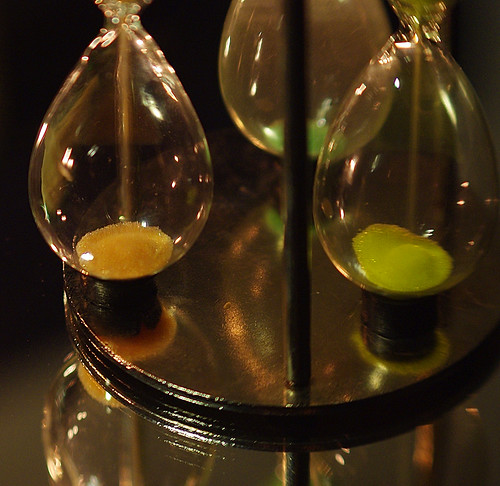
4. When all else fails, get an egg timer. There were some parts of the book where I really struggled – topics I was unfamiliar with, that required lots of reading and which I wasn’t particularly interested in. But I just had to grind these sections out. In one of my more (possibly only) fruitful side-tracks, (see point 2), I came across the Pomodoro technique. In essence, this is just working on your chosen task for 20 minutes (no email, no looking out of the window – just work!) and then having a 5 minute break before another 20 minute session. Try it sometime – it did the trick for me.

Eventually, with the help and support of my co-author, editor and publishers, the book was finished, proofread and published. It is nice to have a book on the shelf with my name down the spine. But it was a huge amount of work, on something that’s not REF-able. So it’s not something I can see myself doing again.
Although, in my weaker moments I can’t help but think that one day it might be quite nice to say “Which one?” when someone tells me that they’ve read my book….

Wednesday, 4 July 2012

Turning the corner

Posted by Jean Adams

In university research there are two sorts of jobs: research jobs and academic jobs.

Research jobs are all about getting a particular research project done. Contracts are time-limited and you do research – collect data, analyse results, write reports. Academic jobs tend to be permanent and involve the classic triad of research, teaching and administration. The research bit is more about leadership than in research jobs – submitting grant applications, and supervising researchers employed on your projects. But there is also classroom teaching and student supervision. And let’s just not talk about the admin.

You can see why many people might aspire to an academic position - for the job security if nothing else.
Turning the academic corner
I wouldn’t be an academic if I didn’t now say “well, that’s actually a bit of an oversimplification, really – but it gives you an idea, doesn’t it?”.

Even before I finished my PhD I wanted an academic position. I wanted to ‘lead’. I wanted to teach. And after all those years as a full-time student (n=9), you betcha I wanted a nice, healthy pay-check every month forever.

I spent four years as a post-doctoral researcher before getting my first academic position. Less time than many, and for this I am very grateful. Now, a further four years on, it occurred to me recently that only now am I actually doing the job.

Although I knew all that stuff about the difference between research and academic jobs, when I first made the transition myself it seemed like nothing changed. Yes it was nice to stop getting those letters telling me that my contract was due to expire in three months. Yes it was nice to get a little bump in my salary with promises of more in due course. Yes it was nice to put “Lecturer in Public Health” in my email footer. But that was about it. My day-to-day job was pretty much the same. I analysed data, wrote papers, suggested ideas for projects to senior colleagues, shied away from any real responsibility.

And then I got scared. I wouldn’t be the “new lecturer” able to hang on the coat-tails of more senior colleagues forever.

And then I got more scared. I knew I had to get some grant funding, make sure my post-grad students flourished, and deliver good teaching. I tried to do all these things. But I didn’t seem very good at any of them. My grant applications were rejected. My post-grads seemed unable to tie down their research questions, let alone do some research. The big lecture theatre petrified me.

But, you know, it does seem true what they say. Once you’ve started, it gets easier; you just have to start. I got a little grant funded. Then I got another, bigger one. Then I got another. My post-grads are making their own, individual, journeys towards completion. I look forward to teaching seminars (although not preparing them) and whilst the big lecture theatre still scares me, I don't think it shows so much anymore.

So here I am just starting to think that I have finally turned the corner and might truly be doing the job I’m paid to do. And guess what? From August, they've promoted me.

Monday, 2 July 2012

Venice

Posted by Dorothy Newbury-Birch

I’m at a conference in Venice and I think it's the most beautiful place I've ever been to. But, with a bit of time on my hands (there’s no English TV in the apartment I’m staying in), I'm wondering why we come to conferences. I've probably been to about 50 conferences, heard around 300 speakers and seen hundreds of posters. I can only remember a handful of any of them.


We’re told that its important for us to attend conferences and disseminate our work. But as I stood in front of my carefully crafted poster today for an hour and a half in the baking heat and spoke to a grand total of three people I wondered just how much dissemination was happening. I once gave an oral presentation in America to three members of my research team and someone who I think was in the wrong room but felt too bad to leave. I have, of course, also given presentations in front of hundreds of people.

So why is it so important and why do I keep coming to conferences? Well the reason is that by coming to these conferences I ‘connect’ with other like-minded people from around the world. I chat with people about their research and my research and we talk about how we can perhaps collaborate on future work.

I sat on the boat to the conference venue today (yes in Venice it's a boat not a bus!) and talked with an academic from Kansas about research in schools - a really useful conversation for a project I'm currently working on. During lunch, I chatted with some colleagues from Barcelona about a European project we are involved in. Over coffee yesterday I talked with someone from Cardiff about complex methodologies and had a chat with a member of the steering group for a recent UK trial we worked on. On the boat back from the venue, I chatted with a researcher from the USA about the differences in obtaining ethical approval in America and the UK.

These are just a few of the many conversations I have had in the last two days. I have also been introduced to some important people in the field who I didn't know before.

I know others find this whole networking thing really difficult. Anyone who knows me will know that my two greatest loves are talking and biscuits, so for me it's fantastic. But it's more than just chatting. These events give me time to think about past, present and future research and to explore ideas with others who are giving themselves the time to do the same.

They give me time to ponder and that's a good thing and that's why I come to conferences.

Thursday, 28 June 2012

What happens when you put fresh fruit & veg in local corner shops?

Posted by Jean Adams

This post is about a research paper that is published on-line today. Writing about research findings is a new venture for the Fuse Blog. Let us know if you want to see more results write-ups like this by leaving a comment below, or tweeting me @jeanmadams

In 2008, the Department of Health in England decided that one way to get people to eat more fruit and veg was to make it more readily available in local, corner shops.

The rationale was fairly simple – corner shops are less likely to sell fruit and veg; people who live in poorer neighbourhoods are less likely to have cars; thus they probably shop more at local corner shops and so probably have less opportunities for buying fruit and veg than people who have a car and use it to shop at a big supermarket.

Simple, but perhaps flawed. But let’s not talk about that for now. 

The corner store initiative was part of the all-singing-all-dancing Change4Life campaign. In our region, the North East, 17 stores were selected for an intensive intervention that involved part funding for a brand new chiller cabinet, a partial store re-fit to allow fruit and veg to be displayed more prominently, a funky little fruit and veg stand on wheels, and lots of Change4Life branded ‘merch’ – posters, stickers, shelf strips, you name it. A further 70 stores got just the stand and the merch. All stores were given various written materials to help them make more of fruit and veg.

Launch of a new Change4Life store in Portsmouth
There was a lot of publicity around the intervention and lots of shops got in their local papers. Which was great. But the point was to encourage people to eat more fruit and veg. Did it?

We spent a lot of time and effort trying to get funding to do a full-on outcome evaluation of this intervention. Sadly, although we did initially get awarded funding, it was withdrawn at the last moment (a story for a different post). Instead we did a small, process evaluation. Around two years after initial implementation, we looked at whether the stores were still using the intervention materials. We also asked 10 people who had been involved in the intervention in different capacities how it had gone.

What we found was that less than half of the stores were still using the campaign materials – apart from the funded chillers, which were all still in place. Shopkeepers told us that the merch just didn’t last very long and they didn’t know how to get replacements. They also thought that the campaign had been intended as a short-term initiative and were a bit surprised that we were still interested two years on.

Lots of shopkeepers and managers complained about a lack of communication with the intervention team. They didn’t have a clear idea what the intervention was aiming to do, or how to keep it going after the initial fanfare of its launch. DH was aware of this, and they tried to maintain the momentum by linking shops to local health workers and primary schools in the hope that schools and other community organisations might choose to buy their fruit and veg from Change4Life stores. Unfortunately, this never really worked and there were some tensions between the ultimate commercial aims of shops and health promotion aims of health workers.

As we weren’t able to collect any information on the impact of the intervention on consumption of fruit and veg amongst local people, we can’t ever say for sure whether or not the campaign was effective. But our results do suggest that it was unlikely to have had any sustained impact.

Sadly, lots of enthusiasm and funding seems to have got bogged down by poor communication and a focus on style over substance. The lessons are wide reaching, but perhaps not new.

You can read the full results here.

Wednesday, 27 June 2012

Can banking help fight health inequalities?

Guest post by Cam Donaldson

In 2010, Glasgow Caledonian University established the Yunus Centre for Social Business and Health. Muhammad Yunus is the 2006 Nobel Peace Laureate, awarded jointly with Grameen Bank for their efforts to relieve poverty, largely through promulgating microcredit. Grameen - 97% owned by its borrowers - issues small collateral-free loans, often for enterprise, to millions of the poorest people in Bangladesh and in several other countries.

Yunus does not fund our Centre. Why, then, is a UK University working with him, and what has microcredit got to do with health? Let me try to explain by bringing together three strands of thought.

Cam, with Muhammad Yunus and GCU Principal Pamela Gillies
First, on health, a more explicit strategy of inclusion combined with fair loan provision - essentially what Grameen promote - could facilitate health improvement. Gaps in life expectancy between the richest and poorest areas of Glasgow have grown to 28 years. We already have a world class NHS, so solutions do not lie there. Even public health policy seems more like “products chasing diseases”. We identify ‘risk factors’ and then target products (mainly drugs) at them. Either that or we tell people to exercise more, eat less fatty foods, give up smoking and drink less. But, can health be ‘compartmentalised’ like this? Further away from diseases and risk factors are the root causes - it is low income, societal exclusion and hopelessness that kill people. Without working on the ‘causes of the causes’ more-conventional attempts at public health improvement will have limited impact.

Second, on banking, the sector has been bolstered by national bailouts and quantitative easing. The bonus culture continues. Banks pander to middle class ‘trendies’ with more flexible opening hours (a 1980s phenomenon on which they had cut back!) and the entry of flash providers like Metro and Virgin. As we argue whether regulation goes far enough, the poorest are largely ignored – many trapped on benefits, which, despite being squeezed, people still cannot get off because, whilst raking in billions from QE, banks will not go near such people or their business ideas.

Government matches this lack of support, not allowing the welfare system to become a facilitator. They could do this by permitting schemes allowing income from welfare to taper off gradually whilst that from private sources grows - providing a minimum income overall and a guarantee of a return to welfare if such businesses fail. No less a guarantee than the banks have had, and one with much less risk – if a business is a success, one more person is off welfare and likely creating jobs for others. If it fails, then, at worst, we are merely back where we started, although it is thought that having tried and failed still enhances future job prospects. Money is placed more directly in the hands of those more likely to spend, contributing in a small way to getting the economy moving.

Third, on the ‘Big Society’, implementing some of the above would mean society could truly claim to be big, ensuring enhancement of well-being amongst the worst off. So far, many examples of the Big Society merely show it being captured by the middle class to their own advantage – with many more schemes in affluent as opposed to more-deprived areas, despite notable exceptions.

So here it is. To create a truly Big Society, and enhance the health and well-being of the poor, there is a role for banking. Examples are now spreading to the West – Fair Finance in London, started up by the son of Bangladeshi immigrants, is an excellent case. But we need more and they need more strategic support. Hence, the attempt to bring Yunus’ ideas to the most deprived areas of Scotland and the creation of our research centre to assess its impact. 

If it can be done in Bangladesh, why not here?

Monday, 25 June 2012

How can I help you help me?

Posted by Dorothy Newbury-Birch

I’ve never failed to get practitioners on board for a research project.

I’m not bragging (oh okay I am a bit). Some of the projects have been really difficult environments to do research: Accident and Emergency Departments, prisons, probation, magistrates courts, crown courts, youth offending teams, police stations, schools, GP surgeries. But I see people struggling with engaging practitioners and I wonder why. It’s by no means easy – actually getting someone to answer the phone or respond to your email can be really difficult but there are ways around that. Don’t believe what people say about it being more difficult elsewhere in England either – we’re often told that its much harder in London to engage but I don't agree: it is harder to get around London for meetings, but not harder to engage. I’ve done it – I know!

So what are my tips for success in engaging practitioners?

1. Send an email followed up by a telephone call about a week later where you tell them you’re following up on your email will probably get you somewhere. If you are a Dr. or working with a Dr. saying this helps.

2. Use current contacts to help you – however remember if you say that ‘Dorothy’ suggested I call you that you are using my reputation, so use it wisely.

3. When arranging to meet, ask what suits them best. Making it clear that you will come to them,  out of hours if necessary, usually works.

4. NEVER say you want to arrange a meeting (even though you do). Always say something like, ‘have you got time for a coffee and a chat about some research I’m working on which I think you would be really interested in’.

5. When you do meet (for a coffee!) find out very quickly if they are the right person to talk to about the research – they may be the PI but it may be someone else that you will be liaising with. Get the first person to introduce you to the next person.

6. Don’t go the meeting (coffee) with a huge list of things you need them to do. Tell them about the research and go through the main things – the list should come later (although you should never have too long a list).

7. When you get to meet the team (there is usually a team) my years of research experience tell me that ONLY providing blueberry muffins works. For some reason, chocolate ones don’t work the same.

8. Offer solutions to problems. In one trial I worked on with probation where I wanted them to fax me something each day, they said that they didn’t have time. So I offered to set the fax up to send me the list at the same time that they HAD to send it to someone else.

9. Listen to their solutions. They know their systems much better than you.

10. Keep them updated with what is going on throughout the research. THIS IS REALLY IMPORTANT not just for your research project, but for others that may come after.

11. Ok, I know I have 11 tips and 10 sounds better but this one is important. Involve the people you’re working with in the design, carrying out and the dissemination of the work (if they want to) it really makes for much better research.

Thursday, 21 June 2012

On realist approaches

Posted by Monique Lhussier

Whilst I was originally educated as a scientist (an engineer in biological processes), many years later, I wrote a PhD thesis in… Nomadology.

This is not only about the kind of nomadism that describes the life of Bedouins in North Africa. It’s also about a flexibility of the mind, which allows us to accept that all research paradigms have a point, but rejects the fact that any single one of them could provide answers for everything at all times. The approach is postmodern and offers perspectives that most, at best, consider iconoclastic. It is as far from science as one can go, but I found it liberating. My PhD journey was one of discovery and intellectual indulgence that we rarely have the opportunity to engage in. This, for me, is what working in academia is all about. In fact, my ambition in life is to reach a stage where I am paid to think and do little else…that unlikely dream is what keeps me interested. 

The hampter wheel career stage
After my PhD, I went through a hamster-on-the-wheel stage. Work needed to be done to attract funding, deliver, attract more funding and deliver some more, with little time to build some kind of cumulative knowledge. 

Then, in the past few years I discovered realist approaches (evaluation, synthesis), which are about building theories of understanding. Understanding of how things work, for whom and in what circumstances. The kind of theory that isn’t a million miles away from the realities of life, but explains it in a way we might not have thought about before. It talks about the way in which contexts interact with underlying mechanisms to produce favourable outcomes. 

I recently attended a seminar on realist approaches, where the presenter illustrated this beautifully. Imagine a tennis ball in a hand. On earth, if the hand releases its grip, the ball falls. The action of the opening hand is only the visible part of what made the ball fall, though, as it is gravity that attracts the ball to the floor. Take that hand in outer space and, when it opens, the ball floats. The same visible thing happened (hand opening), but gravity has ceased to work. Take that hand under water and the ball goes upwards, towards the water surface. Gravity still applies, but is outweighed by buoyancy. Take the same action in three different contexts, and it leads to three different outcomes. 

How relevant is this in public health? Unless we can understand what really happens as a result of a public health intervention, we have no chance of replicating its successes and avoiding its pitfalls. I am currently undertaking a realist synthesis. Existing theories provide me with potential ‘menu’ of forces that may, in isolation or combination, explain published outcomes in any given circumstances. We constantly operate a toing and froing from theories to published data, until we feel we have developed a comprehensive enough explanatory framework. This process forces us to step out of our normal modus operandus of understanding (engaging in some kind of nomadism), to develop a new area of knowledge that can readily be translated. 

That knowledge is also beginning to instil conceptual sense in many other things I have done – whilst unfortunately not all I do, I at last am being paid to think my way out of the wheel.

Wednesday, 20 June 2012

Happy birthday health economics, from public health!

Guest post from Cam Donaldson, Kenny Lawson, Helen Mason and Emma McIntosh

UK Health economics is 40 years old this year. Well, more accurately, the Health Economists’ Study Group is 40 years old. This is to be celebrated in itself – few areas of applied economics have been as successful in terms of sustainability and influence, as well as contributing significantly to our parent discipline of economics.

Ironically, health economics concepts can be traced back to Adam Smith’s pronouncements on public health:

“In some parts of Lancashire it is pretended, I have been told, that bread of oatmeal is a heartier food for labouring people than wheaten bread, and I have frequently heard the same doctrine held in Scotland. I am, however, somewhat doubtful of the truth of it. The common people of Scotland, who are fed with oatmeal, are in general neither so strong nor so handsome as the same rank of people in England, who are fed with wheaten bread. They neither work so well, nor look so well; and as there is not the same difference between people of fashion in the two countries, experience would seem to show that the food of the common people of Scotland is not so suitable to the human constitution as that of their neighbours of the same rank in England.”

We say ‘ironically’ because, despite the claimed successes of health economics and public health, growing health inequalities within nations remains an outstanding societal challenge, and one with significant health economic consequences. The main challenge, of course, is in devising effective and efficient interventions to reduce such inequalities. For health economics, the question then becomes one of whether our tools, which have been so successful to date, are up to the task of economic appraisal of public health interventions.

Indeed the dominant rubric of ‘cost per quality adjusted life year’ seems to present something of a moral dilemma for health economics when it comes to assessing public health interventions. The cost-per-QALY metric has served well the assessment of health technologies, but, amongst others, has the following limitation: all that is measured (and hence valued) are health gains for health care resources expended.

Public health economics: more than just cost-per-QALY?
On the cost side this is limiting, given that many public health interventions will, by their nature, be multi-sectoral, thus requiring more of a ‘societal approach’. Likewise, on the benefit side: although one may wish to assess the output of public health interventions in QALYs, what about other outcomes such as ‘improving life chances’ as well as enhancements in quality of housing and built environment, dignity, esteem and capabilities? Many community-based public health interventions also have spill over effects on their communities which need to be captured. The reductionism of the now-dominant health economics evaluation approach does not match what needs to be measured in evaluating public health. A broader and longer time horizon is required to fully capture all impacts.

This becomes a moral dilemma because, given that so many interventions previously evaluated by bodies such as NICE have been assessed using cost-per-QALY, should we permit others to be appraised via a broader societal approach which now takes these ‘other broader attributes’ into account?

There are two answers to this question. First, if the general scientific principle of working from ‘broad to specific’ were adhered to in health economics, no such moral dilemma would exist. We could start off our evaluations by thinking broadly and then either remain so or work to something more specific (e.g. cost per QALY) depending on the issue at hand. Just because health economics has come at this principle the wrong way round - specific to general - should that be allowed to limit our evaluations by leaving out the measurement of important potential impacts?

Secondly, and following on from this, a broader societal approach actually takes us back to the origins of economic evaluation, which was designed to:

“...identify relevant options for consideration; enumerate all costs and benefits to various relevant social groups; quantify as many as can be sensibly quantified; not assume the unquantified is unimportant; use discounting where relevant to derive present values; use sensitivity analysis to test the response of net benefits to changes in assumptions; and look at the distributive impact of the options”

So, public health has given health economics a birthday present - the opportunity to return to a societal perspective, which many, even in health economics itself, have been advocating for some time.

Hopefully, we can take advantage of this coming together of health economics and public health in measuring and valuing what is relevant and so implementing effective and efficient public health solutions to reduce health inequalities in the communities we all seek to serve.


Cam, Kenny, Helen and Emma run the Economics of Public Health blog, hosted by the Glasgow Centre for Population Health

Monday, 18 June 2012

Communicating science

Posted by Jean Adams

Not so long ago, I promised never to do another degree again. This came after finally completing an MSc in Psychology and Health in London. For 20 long weeks I caught the early flight to London each Thursday morning, attended lectures for two days, and then struggled to make it back to Newcastle before midnight on Friday evening. I learnt some stuff. I did an interesting dissertation that I’m still pretty pleased with. But overall, the effort was not worth the gain.

But another fellowship application, and another blank ‘training plan’ section, and I found myself thinking that the only thing I needed to do to become an ‘independent researcher’ was a Postgraduate Certificate in Science Communication – at the University of the West of England, in Bristol. A PGCert isn’t a degree anyway. So it’s not like I was breaking a promise.

Love the box hedge logo at UWE Frenchay campus
So let’s be clear: Bristol is further from Newcastle than London is. The travelling was longer, more expensive and more arduous this time; each trip was three days, rather than two. But, I only had to make six trips. And, most importantly, I learnt so much more during those six trips than I did from the 20 I made to London.

In a nutshell, I learnt that it’s all about story. Communicating stuff is about narrative. Communicating difficult science to people who aren’t necessarily that interested in it, is about telling a good story. You catch people’s attention with a compelling tale, then once you’ve got them hooked, you can slip in whatever you want – complex methods, difficult concepts, mashed swede, whatever.

Which is not exactly rocket science. But, you know, the science communication field is full of used-to-be scientists – if they were rocket scientists, they might have stayed in science.

I also got to do some pretty cool other stuff. I edited a (pretend) travel magazine, I set up a blog, I recorded and edited a podcast, I got totally over-excited in the Knit-a-Neuron workshop, I bought a copy of The Sunday Telegraph – for research purposes (which wasn’t that cool, but it’s certainly something I’ve never done before). In order to complete my writing portfolio, I attended a conference and pretended I was journalist, not a researcher. At the end of each day I wrote a 500 word news article on something I had heard. It made the whole experience a whole lot more immediate and exciting.

Which is all well and good, Dr. Adams, and we are certainly trying to encourage our staff to do more in the way of 'public engagement', but not at the expense of research excellence and impact.

I think this stuff is important for research excellence and impact too. Good research papers also tell good stories. Not necessarily in the same way that a newspaper or novel does, but without narrative your paper is just a series of facts (or, if you’re a social scientist, just a series of 'facts'). That's why you remember some research papers so much better than others. Ditto good grant applications, teaching sessions, and conference presentations.

So, I’m thinking about doing a degree in creative writing.

Only joking.

Thursday, 14 June 2012

Nothing personal

Posted by Peter Tennant

When I was four feet tall, and each year felt like a Chinese dynasty, certain annual events used to really standout. The first hot day of summer. That strange day when there were flying ants everywhere. And the day when young adults would cry in the streets.

Apparently they had 'A-levels'. Or more accurately, they didn't.

These days, I find it harder to notice anything among the blur. Christmas is a long lunch. Summer a short weekend. But every now and again, grown men and women can still be found crying. The tears are usually less visible. But there’s no doubt about it, Fellowship applications are the A-levels of the early career researcher.
Vladimir Putin, after hearing he didn't get his fellowship

In a recent post, Fuse director Martin White listed personal funding (in particular getting a Fellowship) as one of 10 "easy" steps to achieve "rapid and effective progression" in a research career. It reminded me of one of those weird logic puzzles. If Andrea is lazier than Beth, and Catherine is greedier than Delia, how many cakes will Delia eat before Andrea has woken up? In short, getting a Fellowship may make career progression easier, but it's certainly not easy to get one. At least not in my experience.

At this point, my academic enemy would probably volunteer a simple explanation. Like the overly-blunt PE teacher to the short fat boy (sorry, boy of below average height and above average weight) who doesn't understand why he's so rubbish at the high-jump. But as much as we might blame my own academic physique, the statistics tell a bruising story. For every 5-10 applications, only one will be successful.

On the surface of it, this doesn't sound too bad. At least not in a world where there are hundreds of applications for any one academic position. But firing off a job application and applying for a Fellowship are like chalk and cheese. Occasionally cheese may have a chalky texture. But I guarantee, the chalk and pickle sandwich will never catch on.

To start with, Fellowship applications belong to that special category of things that completely take over your life. Partly because they take up so much time – I reckon I did about 200 hours on my NIHR Fellowship application, not to mention the countless time staring into space 'thinking' about it. And whenever I did stop thinking about it, a friend would usually ask: "Have you heard about your Fellowship yet?".

But it's the personal focus that makes a Fellowship application so uniquely challenging. Yes, the project needs to appear excellent. But so do you. And, sadly, not just in the eyes of your Mum (sorry Mum, but I'm afraid 'having good A-levels' isn't quite enough any more). Which means there's lots to write about how great you are and why you deserve the money more than anyone else. There's no place for modesty. So if I ever come across like a egotistical jerk, I'm just practising for my next application. Honest.

Before finishing, I would like to offer some advice. Some magic formula that boosts those slim chances of acceptance. But as a twice-reject, you might as well ask McDonald's to help solve the obesity epidemic. All I can advise, is you try to keep your emotional distance. They might call it personal funding, but (believe it or not) rejection is nothing personal.