Thursday, 27 June 2013

Asking the right questions

These tweets from @sal_brown caught my attention a few weeks ago (the nature of Twitter is that they're listed here in reverse order):


I was reminded about them again at an event I went to last week to celebrate Sally Macintyre’s contribution to health inequalities research and policy. Amongst all the many other complementary things people had to say about Professor Dame Sally, one of the common factors seemed to be that she keeps asking the right questions.

I guess the explanation for the bloke on train incident is that he thought he was applying for a lecturer-as-in-teacher job, whilst the interview panel thought there was at least a bit of lecturer-as-in-researcher involved.

What these tweets and the comments on Sally Macintyre’s career leave me wondering is whether or not “research plans” and posing the right research questions are really the key to a successful research career.

Sometimes I feel a little overwhelmed by all that it takes to be successful in research. You need grants, and papers, and conference presentations, and research students who submit good work on time, and to teach well enough that you aren’t slammed in feedback, and to do peer review for other people’s grants and papers and then maybe join an editorial board or research funding committee or both, and to make sensible contributions to your institute’s research strategy committee, and to do public engagement well enough that it’s not embarrassing, and to try and engage with policy enough that you have some sort of ‘impact’, and to do a bit of adminny stuff on the side.

And, and, and the list goes on. And what I really want is some way to get to the essence of what I really have to do. Otherwise I might just find it impossible to juggle everything. Getting a grant should lead to papers, and presentations and maybe some good students. Good papers and presentations lead to peer review requests. So maybe grants are the essence that I’m looking for.

I have come across people who have built a very respectable career on hardly any external research funding. They tend to be people who focus on secondary analysis – things that you can do pretty quickly yourself without much in the way of external expertise or support. Sometimes I’m jealous of these people – getting to play with Stata themselves, rather than just getting to look at other people’s output. Other times I wonder how limiting it must be to never be able to do anything that isn’t free. I love secondary analysis as much as (more than) the next person, but sometimes I want to do things that even the most inventive use of secondary data wont allow.

Either way, tho, whether you go for primary or secondary data, you are reliant on your research plans. So maybe it’s true, unless you have ideas for research, and original research questions you’re never going to get anywhere.

But what about all those people who have long and respectable careers but are rarely, if ever, principal applicants on grants? The career researchers, rather than academics, that our departments are all built on. These are the people who seem to know how to get things done. Yet they are not the sort of people who regularly lead grant applications. Do they need to have lots of great research ideas?

So maybe the right question here is not “what is at the heart of a successful research career?”, but “what do you mean by successful?”. Is that it?

Tuesday, 25 June 2013

Research Career Pathways

Posted by Lynne Forrest

As I enter the final few months of my PhD, although I know I should be concentrating on writing up my thesis and getting it submitted on time, I have been somewhat distracted recently by thinking about what I’m going to do when it’s all over. It’s a difficult balancing act, finishing the piece of work that will allow you to move on to the next stage whilst simultaneously looking for that next opportunity, but I’m sure it’s one that most people working in research, at all levels, are familiar with.

I’m lucky in one respect in that I’m sure that I want to stay in academia. But it’s very disheartening to read endless articles about the surplus of PhD students and the bottlenecks that occur at each stage of the academic pathway. In fact, I think I’ve yet to read an article that promotes any positives of an academic career, although, as far as I can see, there are many. Perhaps because I’ve worked elsewhere I can definitely see that the grass isn’t greener. Yes, being a female academic with children is difficult but then so is being a professional female with children in any industry. The flexibility of academia can actually be a real advantage. The freedom of managing your own time and research and doing something you love shouldn’t be easily dismissed either.

The dreaded PhD surplus
I’m also lucky in that my PhD supervisors have been fabulously supportive and have found me funding that will allow me to analyse the cancer data that I didn’t have time to look at for my PhD and to write up any remaining papers from my thesis. It also looks hopeful that other funding will then become available to allow me to stay on at Newcastle and also write a Fellowship application so I can quickly move on from the temporary Research Associate (RA) route. And, unlike a lot of younger researchers who come straight in to a PhD after their undergrad degree, I have no illusions about how research and academia works. I don’t want to go down the endless RA-jobs route and although I’m not wholly convinced I have what it takes to be a ‘research leader’, I’m going to give it a go.

I know how things work as, in an irony that is not lost on me now, my previous job before my return-to-research mid-life crisis was as the Career Pathways Scheme Manager, a scheme that was being developed to help support researchers in their career management.

In this, a survey of RA attitudes to career development found that the majority of researchers did not want to become research leaders or academics, they just wanted to continue as RAs on a project, but without having to look for a new job every 3 years or so. The idea of the scheme was to develop a ‘third way’ so that the choice was not just between following the Fellowship-to-academic or RA paths but to offer a third option of becoming a Team Scientist, a specialist in their field, who was not an academic but held a permanent post. It was an admirable idea from Newcastle University but it didn’t take long to see the major flaw in the scheme as, apart from in a couple of cases, there was no funding for these posts.

I’m not sure what the answer to all this is. Without a system-wide change in the funding structure for research all the issues are going to remain. I fully understand why RAs who are constantly changing job and location become disillusioned and leave research. There’s undoubtedly a lot of stress and pressure. And yet, with optimism still intact, I’m prepared to give academia a go…

Thursday, 20 June 2013

Go as you Please: Public health in the neighbourhood

Posted by Heather Yoeli

Living in nondescript surburbia between a miniature Tesco, a dodgy pub, a neighbourhood vet, a vast psychiatric hospital and an unexpected nature reserve, it makes life interesting. A couple of months back, an enterprising chap attempted to turn our abandoned local sub post office into what his planning application euphemistically termed a ‘hot food takeaway’. He did not succeed, mainly because of the hyperbolic nimbyism of residents alarmed that the proposed chippy might bring greasy elements into the hood and depreciate yet further local property values but partly (I hope, at least) because psychiatric inpatients are highly at risk of obesity and its associated diseases and therefore having a ‘hot food takeaway’ a chip’s throw away from the windows of their ward would therefore be a bit unhelpful. 


A few weeks ago, then, a new business not requiring of additional planning permission opened on the old sub post office site: the Go as you Please funeral service. It is a bold enterprise, to say the least. Rather than the twee lilies and discreetly blacked-out shopfronts of most funeral parlours, the Go as you Please proudly displays its coffins to the street. At the moment, they’re showcasing three coffins: an emo-gothic purple floral coffin with a mischievous nod to the archetypal lily, a faintly jingoistic Union Jack coffin which might save the need to drape a proud flag, and a photo-montaged Beatles one presumably for those wanting to have All you need is Love sung at their funeral. The semiotics of the storefront assaults us with the profoundly taboo and challenging questions: how would you choose to die, and how would you like to ensure that you are remembered? I wonder what my neighbours think. I know what they thought about the putative ‘hot food takeaway’, but I don’t know what they think about the funeral parlour. We live in a culture which can comfortably talk about both the ways in which we make our communities unhealthy and the things we do that are bad for our health, but it’s a culture nevertheless which rarely, if ever, speaks openly about death.

I wonder whether the presence of the Go as you Please coffins has dented the sales of alcohol, tobacco and confectionary at the local Tesco. If it were possible to submit a Freedom of Information request to a major supermarket chain, I might be tempted to ask them. More seriously, though, I wonder what impact the Go as you Please coffins have had upon the thoughts and feelings and behaviours of inpatients living on the nearby hospital wards. If I could produce a research proposal aimed at providing an answer which would sufficiently benefit the inpatients themselves, I might be tempted to approach their NHS Trust’s R&D people to discuss some sort of study. But to be honest, I’d be a bit nervous of raising the idea with my colleagues, simply because, again, ours is a culture far more comfortable with discussing obesity than death.

And if that reluctance to engage with death as the ultimate endpoint of sick environments and unhealthy lifestyles is a cultural tic embedded even within the social norms of public health, how does that affect what and how we choose to research?

Tuesday, 18 June 2013

What’s in it for me?

Posted by Jean Adams

For quite a while I mulled on the idea of getting involved with the committee of a learned society. Initially I didn’t because I thought no-one would ever vote for a no-one like me. Then I worked out that they’re all pretty desperate for anyone and elections were more about process than manifestos or popularity contests. By which time I had decided it sounded like a lot of work, with nothing much in it for me.

I quite often find myself thinking, “nah...that sounds like a lot of work, with nothing much in it for me”. My interpretation of this is that I am a pretty lazy person with a strong selfish streak. But when I’ve talked about it to other people they say it is ‘being strategic’. From which I have concluded that other people justify their personal shortcomings to themselves by dressing them up in management speak.

It is all about me
But you know how these things happen. You have your annual appraisal and your appraiser says: “why don’t you get involved with a learned society?” And you can’t say straight out that you’re not going to do that because it’s sounds like a lot of work, with not much pay back and that really you’re a pretty lazy person with a strong selfish streak. So you put it down on your list of objectives for the next year. Then you get a e-newsletter from a society seeking nominations for committee members, and your appraiser forwards it to you as well so you can’t ignore it, and before you know it you find yourself as secretary of the UK Society for Something No-one’s Ever Heard Of.

I am General Secretary of the UK Society of Behavioural Medicine. If you’ve not heard of it, you should look us up. It’s a great society. The annual meetings are well organised (I have been to all but one of them), they attract high quality keynote speakers, the parallels are interesting, and the longer symposia and structured discussion sessions are well thought out and stimulating. But the very best thing about UKSBM is that Behavioural Medicine is such a wide topic area that a huge range of interesting people come to the meetings.

I have been General Secretary of UKSBM for eighteen months now. Although my tenure was preceded by a six month period of shadowing the out-going secretary, I think I spent at least the first 12 months of the job feeling like I was just on the right side of totally out of control. My first task was to organise an election for a new Membership Secretary. Which I pretty much made up as I went along. And then there was the minutes – of four committee meetings a year plus an AGM. I guarantee there is no-one in the world who hates writing minutes more than me.

To be honest, it’s not a lot of work. It is, by its nature, something that you have to be pretty well organised to do okay at. Which can sometimes be a challenge. It is possible that I have agreed to organise the 2015 annual scientific meeting, which I expect will be a lot of work. But right now I am doing my best not to think about that. I don’t get free conference registration. I do get one free lunch at a committee meeting and one free pre-conference dinner per year – which is nice. I have met a lot of people I would never have met before.

What I’d never anticipated was something that happened right in the middle of the last committee meeting I went to. There I was, trying my best to document the decisions that were being made, when I suddenly realised that I was enjoying myself. Not enjoying myself writing minutes. That’s never going to happen. But just enjoying myself having interesting discussions on how to make UKSBM better with a bunch of clever, interesting people. Which, I promise you, is more than enough ‘what’s in it for me’ to keep me doing it for at least another 18 months.

Tuesday, 11 June 2013

They f*ck you up these parenting 'experts'

Posted by Bronia Arnott

Oliver James, author of They f*** you up: How to survive family life, spoke at the Hay Festival recently criticising modern parenting as too 'parent-led'. He said that infant’s needs should be responded to immediately and children should be given a sense of control for optimal development.

As someone who has studied parenting styles in infancy, the effects of infant-led parenting on breast feeding continuation, and the role of parental representations on attachment security in infancy you might think I would be nodding my head in agreement with him.

You would be wrong.

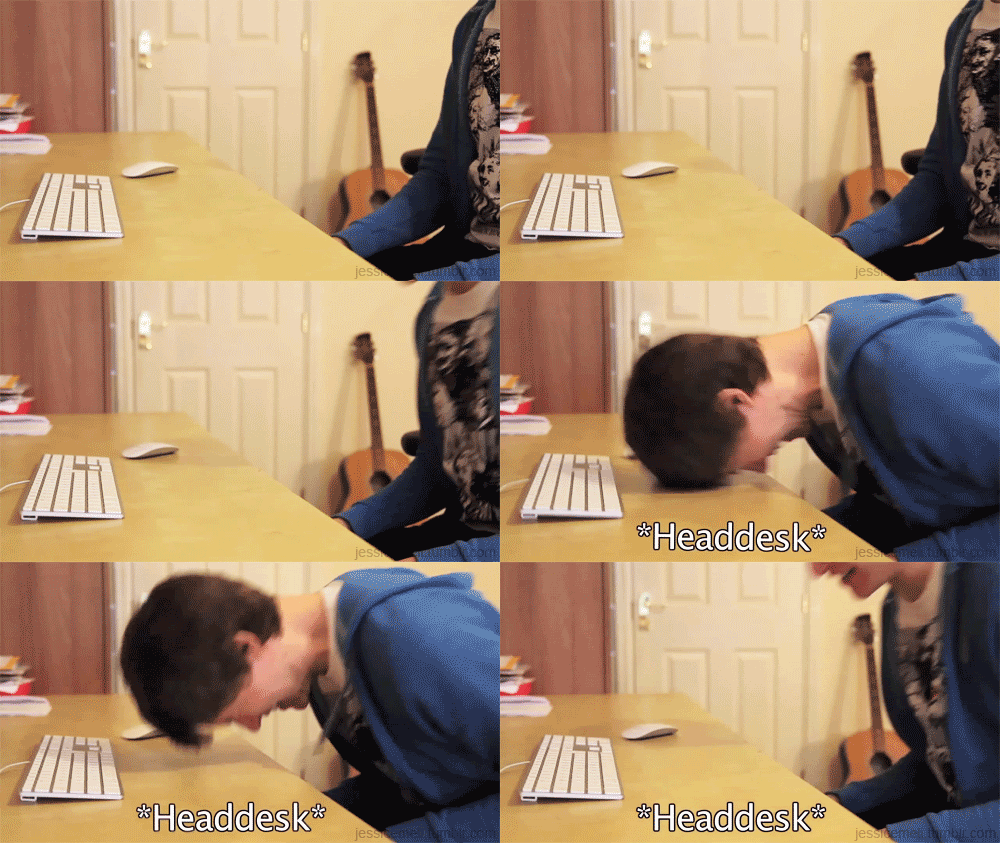
Instead I was doing this:

Thanks to @RachelStocker for bringing this gif to my attention
Why?

Firstly, because I think James is misguided in what being a ‘child-led’ parent is all about. He talks about responding “immediately” to infants, but responding quickly does not equate to responding sensitively. You can imagine a scenario where a parent responds quickly to a crying baby by shouting at it; the response is immediate but few would consider it to be very 'child-led'. Moving on to consider older children, James thinks that we should ‘love-bomb’ them. This ridiculous-sounding term apparently involves taking children away for a one-on-one weekend of activities directed by the child. That’s great, I’m all for fostering children’s sense of agency, but what happens when your child requests that you go to Disney World when you have been saving for weeks just to buy them some new school shoes?

The second problem that I have with what James had to say is his blatant disregard for scientific evidence. There is evidence out there which concludes that infant-led parenting and that treating your child as an individual with a mind of their own have positive effects. However, there is no evidence for what James specifically proposes. Unlike other scientists and researchers who actually need evidence to support our ideas, if you are Oliver James apparently you just announce it to the media and claim that you are far too busy and “don’t have time to muck about doing intervention studies”. 

You know Oliver, I feel your pain – I’m a busy working mum. It might seem like a lot of a hassle having to go through ethical approval, research governance, piloting, and assessing whether your intervention is effective. However, that is the way that research works. If I have a hypothesis then I am expected to test it, and then to publish my findings for scrutiny by others. I need to have evidence of efficacy, feasibility, and acceptability of any interventions I propose, not just anecdotes from parents who have emailed me to tell me that they think that I am right.

This brings me to the final point. James talks about 'parenting' but when you dig a bit deeper what he is really talking about is mothers. It is mothers who "should respond immediately" and what children really need is "a weekend with their mothers". Do fathers not have some role to play in this? Is parenting solely the domain of women? Does James not have anything to say about men? Actually he does have a lot to say about men. He says that men are “unpleasant, psychopathic, narcissistic, and Machiavellian”. He argues that we live in a society in which women are to blame for wanting to be like men and to beat mean at their own game. A game which clearly doesn’t involve love-bombing their children…

I disagree with what James had to say as a parent, as a scientist and as a woman.

But, I’m not writing this because I disagree with what he has to say. I can choose not to read any other articles by him. Instead I feel compelled to write this because there are many other parents out there who will read his comments. I’m not overly concerned that they might go out and ‘love-bomb’ their kids; maybe James is right and it “wouldn’t do any harm”. What I am concerned about is that parents are constantly overloaded with conflicting ‘advice’ from so called parenting ‘experts’. James is not alone in providing unsubstantiated ‘expert advice’ on parenting - yes, I’m looking at you Susan Greenfield and also at you Gina Ford. 

Mothers and fathers trying to do their best for their children are constantly bombarded with all sorts of unsupported conjecture dressed up as science through the media. If parents are looking for information then why can they not be given evidence-based research rather than being exposed to the uncorroborated opinions of self-styled parenting gurus? Parenting is hard enough without trying to fight your way through pseudo-science pedalled by these so called ‘experts’.

This kind of parenting expert could really f*ck you off, if not f*ck you up.


All quotes in this post are taken directly from this article.


Thursday, 6 June 2013

Who ya gonna call?

Posted by Mark Welford

I think it’s fair to say that those of us in public health all want to improve health and wellbeing and help reduce the gap between the least and most healthy in our society.

And that’s why Fuse exists - to tackle the major health problems people face, that prevent them leading longer and more fulfilling lives.

This mission is a two-way collaboration with our partners in public health and social care. But, we face a dilemma:

1) How useful is most research?
2) How many decisions in public health commissioning or service development are properly evidence based?

Or to massively simplify (I’m no academic):

1) Supply - there are researchers in universities waving around their academic papers shouting: “I wish my research would change the world!”
2) Demand - there are our partners in public health (often called policy and practice partners, although I’m not sure this really captures them) seated at their desks thinking: “I wish I had some evidence to inform my decision”.

At which point - spotting a potentially dangerous chasm - we have traditionally all looked to the skies for help. To the shout of: Is it a bird? Is it a plane? No, it’s Evidence-man (unmistakable ‘E’ on red underwear over blue tights), an academic might have flown in with even shinier evidence briefs (double entendre intended!) or an implementation ‘tool’ to rescue the situation.

Unfortunately our evidence superhero often hits the wall with a resounding ‘Thwaak!’ as his worked up implementation solution still fails to grab his practice partners and become part of their reality.

All too often research results take too long to get into practice or they aren’t as relevant or useful as they should be. Maybe we need to look at public health problems from a practitioner perspective and work collaboratively to define the sorts of research questions we should be asking and attempting to answer? Perhaps then the answers would be both relevant and pertinent to local circumstances.

And that’s why today we’ve launched askfuse, our new research and evaluation service with a single point of contact. Designed to respond to requests made by our partners working in public health and social care, we hope that it will help to find research solutions to address pressing local issues.

The aim is to provide a service that acts as a portal to broker access to expertise in the five North East Universities, provides useful, timely outputs, that are independent, high quality and in plain English, builds long term working collaboration to improve flow of evidence into practice, and works for the benefit of the health of local people.

Working with those people at the coal face, we’ll be able to evaluate services, review documents, analyse and interpret data, or collaborate on larger projects that establish new evidence.

Over a number of months Janet Shucksmith, Rosemary Rushmer, Avril Rhodes, Rebekah McNaughton and I have been putting all the systems in place to ensure that the service (fingers crossed) runs smoothly but I won’t bore you with all that detail, just visit the askfuse webpages to find out more.


The Batphone is manned and - all being well - we will soon be travelling around the region in the BatCorsa.

We’ve even created an animation to help communicate the message about askfuse in an innovative and exciting way, which you can see premiered at the launch of askfuse during Fuse’s fifth birthday celebration today at Beamish Hall. Hope to see you there.

So to finish this post with a catchphrase spawned from another US multi-media movie franchise.

Who ya gonna call?


To find out how askfuse could help you, call 01642 342757, email ask@fuse.ac.uk, or visit the website. 

Tuesday, 4 June 2013

Data collection

Posted by Heather Yoeli

What follows is the hypothetical transcript of a conversation I’ve had a few times recently:

COLLEAGUE Heather, hello! Where have you been for the last few months and why didn’t you reply to that email I sent round about the night out?

ME Hi! Sorry I’ve not been around. I’ve been busy with fieldwork with participants, and have been interviewing people for my PhD.

COLLEAGUE Great! So you’ve finally started data collection, then…

ME (awkward pause) Well, I’ve been interviewing people…

COLLEAGUE But that is data collection, surely. Have you begun data analysis yet?

ME (awkward pause) Ummm… but how’s your study going? Have you heard back from the Ethics Committee yet? And how’s your partner getting on with the new job?

Research participants or human beings?

Ever since I began this project, I’ve had a niggling and non-specific aversion to the term ‘data collection’ being used to describe my research activities. Sometimes, though, words reveal more than we realise.

The OED defines data as:

Facts and statistics collected together for reference or analysis; the quantities, characters, or symbols on which operations are performed by a computer … things known or assumed as facts, making the basis of reasoning or calculation

Similarly, the FreeDictionary defines data as:

1. Factual information, especially information organized for analysis or used to reason or make decisions.

2. Numerical or other information represented in a form suitable for processing by computer.

3. Values derived from scientific experiments.

And the BBC’s GCSE Bitesize website provides an excellent explanation of the relationship between data and information and knowledge.

From these three sources, we could surmise the following:
  • Data is fact
  • Data is that which we collect for our research
  • Data is collected for analysis and for use 
  • Most of our thinking about data is informed by the quantifiable, and by our use of computers
Certainly, then, the concept of data collection as integral to the PhD process presents a challenge for PhD studies like mine, which seek to be as qualitative, as theoretical, as participatory, and as participant-led as possible. The term data collection presses the question of what we might be taking from participants, of what we might be doing with what they have given us, of what ownership of and control over what they have given us our participants might retain, and of therefore what responsibilities we might have towards them. As fellow human beings, my participants are more than simply pseudonymous nodes with attitude codes on an NVivo database.

What common terms in research, or in public health, make you uncomfortable?

Thursday, 30 May 2013

The Pig Observation

Posted by Peter Tennant

You don't make a pig any fatter by weighting it. For years this has been my favourite animal-related moral, narrowly beating The Fox and the Grapes*. The pig observation is a classic remark on the value, or lack thereof, of examination as an educational device. You don't make a child any cleverer by testing it. Yet for every summer of my childhood (and much of my early adulthood), I was ritually weighed. Since I had a good memory, I rather enjoyed it. But much I believed that recounting the four chambers of a cow's stomach proved I was smart, it didn't; it just proved I could remember the four chambers of a cow's stomach.


This October, UK higher education takes part in its own pig weighting festival, the Research Excellence Framework (or REF). The premise is reasonable. The UK government has £1.76 billion that it wants to spend on research. Rather than dole it out equally, it's decided it's fairer (and more cost effective) to try and give the money to the places that do the most and the best research.

So far so fair. But how do you go about such a task? They could have done a complete audit. Each university presents the sum of all its research (in the form of books, publications etc) and the money is then given to those that have done the most. Except quality obviously matters more than quantity, so only those 'outputs' over a certain minimum standard will be deemed worthy of reward, with standard judged in the usual academic way, i.e. by groups of dusty professors. Presumably they were offered biscuits; professors will do anything for biscuits. Of course, they can't be expected to read everything (have you ever tried to read an academic paper? YAWN!), so instead universities only have to provide a selection of outputs for each researcher, and they don't have to include every member of staff either.

Sounds reasonable enough? Except you now have the formula for a right old mess. Especially once you add that as well as deciding how the money gets spent, the REF will also be used to judge reputation.

Poppleton University: Home to the fattest pigs outside the banking industry

Most people agree that academic league tables are a pretty useless way of comparing schools. Yet schools still do everything they can to maximise their standing. My school focused relentlessly on the C boundary (the grade considered a good pass in the English aged 16 examinations). If you were safely above it, you were on your own. If you were too far below it? Well, around 50 kids were expelled at aged 15 for 'behavioural problems'. The fact they had no hope of getting 5 subjects at C or above was presumably a convenient coincidence.

Similar shenanigans were apparent during the last audit of UK academic research. Some departments amusingly entered only a handful of their best performing staff to boost their showing. This time, star researchers are being parachuted in like premier league football stars and some places are even employing specialist REF gurus to help boost their submissions.

But isn't this all just harmless pig trading? Well, there's another more insidious problem. You can't measure something without changing it. In fact, you can't even observe something without changing it. In a remarkable experiment that not only forms the foundation of quantum physics, but also (and more importantly) forms my favourite non-animal related moral, it can be shown that the universe itself will mischievously change its behaviour when it's being observed. Fire a beam of electrons at two narrow slits and they will make a pattern as if each electron has miraculously gone through both slits at the same time. Set up monitors on each slit to watch this happening and... the pattern changes... to the boring 'one electron per slit' one that you would classically expect. Somehow the electrons know when they're being watched and behave differently. Like me if I'm practising a silly voice and then realise someone can hear me.

In trying to measure 'quality', the REF changes the research environment in a number of ways, the biggest being a dangerous shift towards short-termism. To be REFable (the quite unsavoury term used to mean 'worthy of submission') a member of staff usually needs (among other things) four high quality publications within the audit timeframe. Firstly, this means that a lot of staff are going to be branded as 'unworthy' despite producing work that is 'recognised internationally'**. Which isn't very nice. Or very motivating. If a group of dusty professors told me that my research wasn't any good, I'd instantly conclude they're all past it. So yes, I'd be just like the fox in the Fox and the Grapes. Only with a slightly less bushy tail. Secondly, focussing on 'four high quality publications' doesn't leave much time for any real scientific exploration, i.e. the kind that takes a lot of time and repeated effort to perfect. Like Darwin's On the Origin of Species. 20 years to write a single book? There's no way Darwin would have been REFable.

This shortermism is further exaggerated by the REF's attempt to measure 'impact'. The argument goes like this: since the public pay for academic research they deserve to see tangible benefits. Thanks to 'evidence based medicine' this isn't too hard for someone working in public health, just come up with some good evidence and eventually it'll filter through the system***. But for other subjects… Computing? Electricity? E=MC^2? List the world's greatest intellectual advances and most of them have one thing in common: it took years for any of them to have a measurable 'impact' on society. Then they changed the world.

So next time you set about trying to measure something, think carefully about the possible side effects. In other words, beware Goodhart's Law: 'When a measure becomes a target, it ceases to be a good measure'. Targets are blamed for many evils within the NHS. The REF seems pretty tame in comparison. It may cost millions, stress out thousands, and undermine the very heart of scientific endeavour, but there was no alternative, especially not one that was considerably cheaper and easier... Actually, scratch that last point... I don't know about you, but I fancy a bacon sandwich…


*The Fox and the Grapes is my favourite of Aesop's fables, and a classic illustration of cognitive dissonance. A hungry fox spies some grapes hanging from a tree. Several times he tries to reach them, but he can never quite jump high enough. Eventually, he gives up and concludes the grapes were probably sour anyway, thereby reducing the dissonance between his desire to eat them and his inability to obtain them.

**The REF will grade research into four categories. Unless the work is considered at least 'internationally excellent' (i.e. 3 star) it won't be considered worthy of funding.

***Well, that's the idea. Unfortunately, politicians don't always like 'evidence'. Especially when the evidence works against their financial interests.

Tuesday, 28 May 2013

Seaweed for sustainable prosperity: why is it a public health issue and why would I go to a seaweed symposium?

Posted by Duika Burges Watson

I recently returned from Indonesia and the 21st International Seaweed Symposium. It’s been a bit of a fascination since my honours thesis in Indonesia documenting the international seaweed trade and the relationship between the hundred of thousands of farmers and the main consumers of the resource – us in the west. In my PhD I focused on one extract from seaweed, carrageenan, and considered how perceptions of risk in the public health sphere have influenced where and when it is used.

When I say ‘seaweed’ to a UK audience the common response is that people have tried ‘crispy seaweed’ in Chinese restaurants - and like it. The use of seaweed in the western diet and health applications is far more extensive than most people realise, and the potential of seaweeds to mitigate impacts of climate change, to address worsening food security issues and to provide some astonishing preventive health technologies (including as a barrier to viruses like HIV and HPV and for immune function) is not what most people would think about. The ‘story’ of seaweed is a rapidly developing one, and at the International Seaweed Symposium I was exposed to the many ways that we need to start thinking differently not just about this expanding and plentiful resource, but it also how we are going to address food security, climate change and health prevention issues in the future. 

Indonesian women make new food products from seaweed to sell at local markets
Climate change is having a major impact on agriculture. What we can grow is changing, the needs for more food increasing, and yet we have limited fresh water and land. Most of the world is covered by salt water. The United Nations is promoting ‘climate smart agriculture’- but how will this conversion happen with such limited space? Seaweed doesn’t need fresh water to grow and in 2010, the 20 million tonnes of seaweed that was grown around the world was from aquaculture. The Indonesian government alone estimates 1,110,900 hectares are undeveloped and suitable for aquaculture of seaweed – and they are promoting its development like crazy.

We don’t currently eat much seaweed ‘direct’, but we are the major consumers of extracts from seaweed; and seaweeds are used in foods for animals, fish and plants. At the conference there were many discussions about using seaweed in animal and fish feeds – the latter has taken awhile to develop. The UN's Food & Agriculture Organization is now talking about non-carnivorous fish as more environmentally friendly (vegi-fish!). Supplementing fish feeds with seaweed (currently mostly fed on fish with less than perfect ‘conversion ratios’) and aquaculture of seaweed eating fish were topics at the conference.
Indonesian farmers were in force at the ISS; the bulk of the Indonesian seaweed gets used for additives and winds up in processed food and health products in the west. There were presentations on new food uses, both as novel food products made from the ‘raw’ material and for functional extracts for nutraceuticals. Seaweeds contain things that land plants do not. Some of these values are erroneously called ‘micro-nutrients’ but there is nothing micro about their impact on health. I was struck by the presentation for example, by a senior lecturer from the Menzies Institute for Health in Australia on the immune modulation values of ‘fucoidans’ from brown seaweeds. I came home wanting to eat more brown seaweeds.

On climate change I was given the honour of introducing Ik Kyo Chung’s plenary lecture on seaweeds as a carbon sink. From Pusan University in Korea, he is leading a new world movement that recognises that seaweeds ‘capture’ carbon at rates greater than any land based plant. And in Korea they are growing seaweeds on a large scale for such purposes – but as yet there is much to do to present the evidence to policy makers in order that seaweed aquaculture can be used for carbon credits.

But there was something else I needed to know. In 2007 I published an article in the leading science journal on seaweeds about the regulatory history of carrageenan. Carrageenan is ubiquitous in processed food products in the west, particularly dairy where as little as 0.1% is sufficient to suspend the cocoa in chocolate milk. The article had recently been cited in a Food and Drug Administration review of carrageenan in the States. This got taken up by a radical food advocacy group arguing that I had no right as a ‘geographer’ to be commenting on ‘science’ about the safety of carrageenan. So my name duly slurred (and along with that the field of health and medical geography) I wanted to know how the industry itself would react to the scare that the Cornucopia report was generating in the blogosphere about carrageenan safety.

My paper was a regulatory review, and the argument in the paper was about the public perception of risk. I concluded that no matter how much science you throw at it, once someone has generated a fear, it’s impossible to then put the ‘risk genie’ back in the bottle. Carrageenan is one of the most thoroughly studied polysaccharides on the planet, all regulatory agencies worldwide have declared it safe, and the number of independent reviews is staggering. The controversy over carrageenan was a result of some work done in the 1950s to develop a treatment for peptic ulcer. Scientists had a good idea that carrageenan was ‘soothing’ but to consume it in the amounts needed would gag you – it would be too viscous. So it was purposefully degraded. 

In human studies following 200 people over 2 years consuming large amounts of degraded carrageenan they found absolutely no problem at all. But a rat study showed some evidence that it might cause ulceration in the gut – and given the fear at the time related to the new discoveries around cancer – degraded carrageenan (and by association carrageenan used in foods), ulceration and cancer got irretrievably linked in the public perception of the substance. 

Since then there have been multiple reviews – and still no new evidence it is any risk to human health. Yet the more studies, the more the perception of risk appears in blogs, stories and tales written by people who do not know the history of the risk, or understand the difference between a purposefully degraded substance and an extract. In many ways this is not surprising, when ‘E’ numbers were introduced in the UK for example, rather than demonstrating to the public as the regulatory agencies hoped, that these substances were well studied and safe, people started to fear them. 

The latest fear campaign, written up as a report by the organic advocacy group Cornucopia, had been generated by studies discredited by regulatory agencies worldwide. The science on which the campaign was based even suggested consuming carrageenan-bearing seaweeds was a risk to health. Papers at the conference demonstrated multiple benefits to consuming carrageenan-bearing seaweeds. But the public perception of risk feeds on controversy, and feeds off the risk stories (particularly about food additives) far more than the scientific studies. Some ‘organic’ producers in the US have been removing carrageenan from their products as a result of the latest scare. It struck me was that if you are consuming large amounts of carrageenan, chances are you are consuming a heavily ‘processed’ food diet – in which case my public health training suggests to me there are other things to worry about than 0.1% of a seaweed extract in your chocolate milk.

The ISS is in my view a pretty unique organisation. The conference is attended by academics from multiple disciplines, industry representatives, government (the Indonesian minster of fisheries attended the whole thing) and the people who farm it. It is ‘translational’ as many of the people involved are there to find solutions that meet the needs of all stakeholders. I liked the model the conference provides for thinking about some of the issues we are going to confront, and in all the examples above, working in cross-disciplinary ways gives bigger picture answers that take more issues into account. The UK is surrounded by sea, with a wealth of seaweed resources and a great potential to do more in this field. But given that most people don’t even know that crispy seaweed is made of cabbage, there is a long way to go to convince policy makers to take this industry seriously.

Thursday, 23 May 2013

The PhD Viva: a thing of nightmares? Some reflections from a recently viva-ed PhD student

Posted by Grant Gibson

Having recently been through the PhD viva process, I thought it might be interesting to share some of my experiences.

Ever since starting my PhD, the viva had been something to fear. Initially it’s little more than a vague, inchoate fear on the distant horizon, slowly growing as I analyse my data, begin writing up, and eventually submit my final draft. Then, a week after submission I get my viva date; suddenly it’s not so distant at all! At four weeks away the viva is all I can think about. A week to go and just thinking about the viva brings me out in a cold sweat. Friends and colleagues are supportive, telling me 'you'll be fine’. 

Add caption"Piled Higher and Deeper" by Jorge Cham; www.phdcomics.com
But on my mind are the horror stories; the 6 hour viva in which the student is ripped apart page by painful page; the examiner with a score to settle against you, your supervisors and your department; or the poor soul who had to resubmit and worst of all be re-viva-ed. I dutifully prepare, asking myself 'what are the strengths and weaknesses of my work', but many of the fears remain. 

Finally, the day arrives and I’m sat outside the meeting room, trying to outwardly look calm but quivering like jelly inside. Then the internal examiner calls me and in I walk, ready to face my doom...

Maybe I'm being melodramatic, but I'm sure this story will be familiar to anyone who has undergone or is waiting for their viva. Undoubtedly a certain amount of anxiety is to be expected, after all the viva is an important event in the life of any postgraduate. But having been through the process I wonder, do these fears really reflect the reality of the viva? And more importantly, why do we do this to ourselves, collectively torturing ourselves like this? Has the viva taken on a mythic quality, making us like children, scared of the bogeyman hiding under the bed? Are the stories we all hear about the viva a rite of passage, a collective myth, or an extension of our very real anxieties about the PhD process? 

Perhaps you can only truly know what a viva is like by going through it, but in truth, far from an interrogation a good viva should be one of the few chances you'll ever get for you and your work to truly take central stage.

So did the horror stories come true? Of course not. My viva was very different to what I expected and much closer to what those who have gone through the process said it would be. Both of my examiners were enthusiastic about my work and genuinely wanted me to do well. Sure I was challenged; this is a PhD after all. But neither tried to trip me up or catch me out. And I found I had the confidence in my work to answer any tricky questions. 

My viva lasted an hour (not six!) and in the end I came through remarkably unscathed. Dare I say it, in a strange way I actually enjoyed it! I guess the moral of my story should be that no matter how much you might worry about your viva, it will almost certainly be nowhere near as bad as you think. So try not to let pre-viva anxiety get the better of you, you never know, you might even enjoy it!

Tuesday, 21 May 2013

(Why) do we need food policy councils in the North East?

Posted by Duika Burges Watson

At a 'Food Policy Councils' workshop, organised by the Newcastle Institute for Research on Sustainability on 9th of May, I asked what may have seemed an obvious question of the expert panel of national and notable figures in food policy related work: do you think we need food policy councils and if so, at what scale - local authority, regional and/or national?

There were certainly people in the room with reasons to favour an advocacy body on food policy. As Jamie Sadler of Food Nation noted, the north east has seen a proliferation of food banks, loss of cooking skills, rising childhood obesity levels and a research lacuna about some of these issues (Jamie is involved in research with Fuse members). Food Nation have been working to establish a food policy steering group and food charter, but there may be insufficient political will to address these issues front on.

Bristol Food Policy Council's structure
Tim Payne of the much eviscerated Taste Club North East has long been a champion of local and regional food, but their advocacy work has been hampered by a lack of funding. Ian Short of Edinburgh Community Food (est. 1996) was also bemoaning the loss of support for his organisation, and they've had to respond by developing a social enterprise to sell to the corporate sector to fund their work. Liz Charles of the Durham Rural Community Council noted the high levels of deprivation, the export of around 75% of produce from the area, slow growth of alternative food movements and lack of diversity of local production heavily weighted to meat and grains.

The silence on food policy from the current government was noted by many - such a change after the 'joined up' thinking represented by comprehensive white papers such as Food Matters and the Scottish Diet Action Plan. Tom Andrews of the Bristol Food Group (a policy council by another name) noted the value of his organisation as advocates for food policy action in providing a legitimacy and expertise that could be used in the political process, but also expressed the difficulty of getting food back on the agenda of government.

The meeting was in itself a good example of stakeholder engagement - the diversity of participants included rural producers and retailers, non-government food groups, council representatives, health workers,  academics from Fuse, and the Centre for Food Policy at City University, and even the Newcastle University catering group. 

The keynote speaker was a US consultant and academic Mark Winne, author of Closing the Food Gap, and Food Rebels, Guerilla Gardeners, and Smart Cookin' Mamas and respected speaker on food policy councils. But the question of the difference between the UK and US context became apparent as the workshop developed. While we all may confront the possibility that we are not ready for the food challenges of the 21st century, US examples did not always 'resonate' for local participants. The organisation of UK agriculture and import/export context, the geography of distribution and the political context are all very very different. I certainly felt that while the US may seem to be forging ahead in establishing food policy councils, the UK has a good and solid record of stakeholder work on food policy, and we had an active national food policy council until quite recently. 

So the answer to the question? Clare Devereux of the very successful Food Matters in Brighton  was of the opinion that we need councils at all scales - local regional and national; others felt that regional was most important, others local. Whatever the answer, what stood out for me was the crisis of confidence and loss of stakeholder engagement in policy making, the major challenges that local communities are now facing, and the hollowing out of groups that have been working on food policy for decades. Given the impact of climate change on agriculture, the growing population, economic decline and worsening health issues; not doing something to beef up food policy is a recipe for trouble.

Thursday, 16 May 2013

Is this how it goes?

Posted by Jean Adams

Is this how it goes? You get promoted to lecturer and you are suddenly fair game for teaching; you get promoted to senior lecturer and you are suddenly fair game for chairing non-research committees?

Don’t get me wrong. I was pretty damn chufferoonied to get the letter about the promotion. I still can’t quite believe I have blagged my way so very far – me, just a bookish, boyish little girl who likes playing with yarn and fabric and screams if you make her wear a skirt. I often wonder what exactly the the promotions committee was thinking.

At the moment I seem to find myself constantly petrified by the next new thing I have been asked to do, can’t think of a reason to say no to, and yet have no idea quite how to do. Will I chair the Fuse Communications Group? Well, I could do....but I haven’t ever chaired a big meeting like that, and it sounds like an important enough job that you wouldn’t want to give it to an amateur to mess up. Will you lead a group developing new social media guidance for the institute? Emmm, I guess I could do....but that sounds like something with massive s**t:fan potential, are you sure you want to have to dig me out when that all goes wrong?

Being a grown up is just like skiing - that is definitely me on the near horizon
I did enough outdoor ed things as a kid to know all about how much being a grown up is just like skiing/abseiling/catching a horse. If you don’t do these things with confidence you end up in a heap of ski equipment with snow down your jacket/hanging upside down hoping your hips are big enough to stop the rest of you slipping out of your harness/sat in a pile of horse poo. But confidence doesn’t mean arrogance. There is always more to learn and it pays to observe the instructor even when they’re not instructing.

And so I adopt my usual air of confidence, hoping that no-one will notice I have no idea what I am doing, and spend all other meetings I go to watching the chair and trying to figure out how you are supposed to chair a meeting.

It is possible that this is exactly what my parents had in mind when they signed me up for all those summer camps all those years ago. But I doubt it. I think they were mostly just glad there was something I would enjoy enough to let them go to grown ups’ camp.

Tuesday, 14 May 2013

The wrong end of the carrot stick

Posted by Joel Halligan

A little while back I went to see a ‘play’ at Newcastle’s Live Theatre. This ‘play’ was, in fact, a ‘dramatisation’ of six months’ worth of researcher-led discussion around healthy and sustainable food systems. Cue four stereotypical characters: the older lady who sounded liked she’d smoked 40-a-day for most of her life, arbiter of The Sunday Roast, and a love for anything cooked in beef dripping (sounds like my grandmother); the young ‘lad’ reliant on processed food and who’s idea of treating his girlfriend was a Tesco’s Finest microwave lasagne; the mum trying to do the best by her kids but without the time to make the right choices; and finally, the older middle class man who likes to spend his time growing all his own veg, foraging berries from bushes and, harvesting roadkill. I’m sure we can all relate to one of them, right? Well, not me, I say, slightly uncomfortably.

Between them the characters hashed out, what seemed to me, an enjoyable but over-simplistic summary of apparently all that is wrong with our food system. The young man with a disturbing fetish for crisp sandwiches developed an irregular heartbeat because of it (I’m no doctor, but I struggle to believe cardiac arrhythmias have anything to do with crisp consumption), whilst the man who grew/cooked/killed his own food was held up as a paragon of virtue. Interspersed amongst the choppy dialogue were mock-TV adverts extolling the virtues of cooking your own meals and shock facts about how often British and Indian farmers commit suicide. The overarching message of the play seemed to be ‘supermarkets bad: grow your own/cook your own food, good’.


Now, let me get this straight: I’m not a huge lover of supermarkets, primarily because they’re far too busy. However, I’ve resigned myself to the fact that, like it or not, they’re here to stay, and also the fact that many (in fact I would hazard a completely not-based-in-evidence guess that the majority of) people quite like supermarkets (*cue gasps*). As mentioned in a previous blog post, I believe your average Joe(l) is looking for a combination of cost and convenience, at least many of the people I know definitely are, representative or not. I did try not to shop at supermarkets for a period, but believe me, tramping from pillar to post across Sheffield (this isn’t a thrilling prospect believe you me: it’s very hilly) on a rainy Saturday afternoon with a small suitcase-cum-shopping trolley, and then battling through crowds to make my way onto the overcrowded and overheated bus, is a period of my life that reminds me of why supermarkets were invented.

This excursion to the theatre did remind me of the folly of assuming that every other reasonable human being must also share the same desires and convictions as us. What about all those people who are apathetic and disinterested in ‘food systems’, beyond feeding themselves and their families from one day to the next? What would their views be? Would they be as militant and anti-supermarket? I feel that there may be some, albeit mild interest or concern, but it wouldn’t be as dramatic as we might like to think. I believe it’s all too easy to fall into the trap that, just because I scrutinise the ingredients and nutritional labels on everything I buy, regularly cook ‘from scratch’ 5 out of 7 days a week, and think about how what I eat might influence my health, that other people have the same interest about food and nutrition. It’s akin to when I smile vaguely, nod along and only half-listen when people talk to me about cars or computer games or modern gizmos; the finer detail is lost on me. And so, I imagine that’s how food is for many people these days, nothing more than a means to an end, with only mild concern for the detail, which does seem a bit of a shame to me.

Now, I’m acutely aware of how supermarkets may have played a large part in this, and why some people may dislike them so much; but should we really vilify them like this? No, I don’t think we should, because I don’t believe that any supermarket set out with this goal. At some point they were all just small businesses trying to make money (shock horror) and they wouldn’t have proliferated if people really didn’t want them. But, I do believe that they should take more responsibility, something which resonates strongly with yesterday’s attendance at the NiRES-hosted Food Policy Council workshop which discussed many of these issues around food systems which I’m still trying to digest (pun-intended).

As a final note, one thing I have been wondering about community engagement, is how realistic it is to expect to achieve a truly balanced sampled of views from the community when conducting qualitative research like this. Will you always primarily attract those who can shout their strongly-held opinions the loudest?

But, I’m an inexperienced researcher, with little experience of qualitative research, and so I’m sure somebody can answer this question for me with ease.

Thursday, 9 May 2013

Darling! Wont you have a slice of media tart?

Posted by Jean Adams 

I am totally sold on the importance of researchers engaging with the media. I get that we are publicly funded and have a duty to publicly share our results; that our research is only made more useful by telling more people about it, and the implications of it; and that somehow it makes the world a better place for scientists to be visible and engaged with the world outside of the ivory tower.

I don’t particularly love doing media interviews about my research, but I’m happy to engage with the press and do my best to make sure the right message gets out. I try hard to remember to let the press office know about work that I think might deserve a press release. I do sometimes find their insistence that I get in a taxi to the ITV studios this second a little annoying, but I realise that that’s what I signed up for and it gives me something to say in response to the scary extended-family “how’s work?” question.

What I am entirely less comfortable about is responding to ‘cold’ press enquiries: when someone contacts me either directly, or through the press office, looking for a comment on something or other. The sort of stuff I tend to get the most is local radio – either a request to contribute to the mid-morning phone-in, or to comment on some not very news-y news.

I’ve done it a few times. The phone-in man calls me ‘the doctor’ and every so good humouredly slags off the whole concept of public health as nanny-state-gone-mad-innit at the same time as mildly flirting with me. But mostly I turn them down. I’m happy to be media-active, but I don’t want to be a media tart.

Then last week I somehow found myself agreeing to go on the local radio morning show to chat about Oxfam’s Live Below the Line campaign - where people were challenged to live on a food budget of just £1 per day for five days.

I don’t really know what I was thinking of. I’m not a nutritionist, so I can’t comment in great detail about what might be a healthful diet beyond some common sense stuff on fruit and veg versus cake. I’ve never tried to live on a food budget of £1 a day. I’ve been to quite a few food shops and know what sort of things are cheaper than others – but hasn’t just about everyone in the country?

There is something so inane about much ‘expert’ comment in the media: what sort of expert do you have to be to come up with the suggestion that if you’re shopping on a budget, potatoes might be a better way to go than bananas? Far from making me, and ‘scientists’ in general, more accessible and approachable, I can’t help but think this makes us look stuck up our own backsides. You spent 10 years as a student and can now confirm that potatoes tend to be cheaper than bananas? I might well be publically funded, but I start to feel a little embarrassed when the public realises that’s the sort of insight they’re paying me for.

Of course, there are counter-arguments. Responding to media requests for inane comment builds the sort of trust and collaboration that’s important when I have a piece of research I want to publicise: I’ll scratch your back, if you scratch mine eighteen months from now when my manuscript has finally made it through peer-review, formatting, proofing, and publication.

Perhaps responding to media requests for inane comment is also part of our role as members of a ‘civic’ university embedded in its city. It makes us visible and shows that we are engaged in the everyday concerns of the local community (or just the local media?).

And finally, responding to media requests for inane comment ensures, as someone reassured me on Twitter the other day, that “some other schmuck” doesn’t end up doing it. At least I know that I will say something sensible. Who knows what some other crank might have said: the best way to eat healthily on a budget is to blow it all on kiwi-fruit.

The problem is I don’t always say something sensible. I always get hi-jacked by some question out of nowhere that I have no idea how to answer. This time it was “is tinned veg as good for you as fresh veg”? Well, I dunno. I think most tinned veg is fairly far down the appetising scale and I’m pretty pleased I don’t have to eat it very often. But probably it’s better than no veg at all?

What do you think? Media darling or media tart?

Tuesday, 7 May 2013

The value of involving patients and the public in research

Posted by Christina Dobson

After working for two years as a researcher in the Evaluation, Research and Development Unit at Durham, I began my PhD in January. My PhD examines the effects of social context on symptom appraisal and help-seeking behaviour among patients with symptoms suggesting lung or colorectal cancer. Specifically I'm comparing the accounts of patients who have relatively short help-seeking intervals and patients who have a longer time to presentation. Over the past few years I have been lucky enough to attend a number of seminars which touched upon, or discussed in detail, the importance of patient and public involvement (PPI) in research. I always agreed with the value of public involvement and was sure I wanted to incorporate it into my PhD but arguably viewed it in a ‘rose-tinted spectacles’ type of way - not really understanding it’s potential. 


I tried to recruit some patients for a bit of PPI two months before my ethics application was due but with two weeks to go I still had no-one. My previous passion about patient involvement became more of a fear of not having that ‘box ticked’. A few days later I had got two lay representatives who were interested in being involved, Simon*, a local patient, and Penny*, a patient rep on another study I work on. I sent the documents off (after a terrible explanation of patient involvement in research during the call to Simon) and felt relief that that it was coming together and I had ‘ticked the PPI box’.

After a few days I got a phone call from Simon, and then a couple of days later one from Penny too. I received a comment about the absence of a question on the national bowel screening programme in my interview schedule, something so obvious considering I had worked on a study looking at the barriers to participation in FOBT screening. The title on the study documents (‘Understanding Factors Affecting Help-Seeking’) was heavily critiqued, and rightly so, it was complete jargon and obviously intimidating. So we co-created a new title of ‘A study about what makes people decide to go to their doctor.’ There were a number of other issues raised but I also received a lot of support and praise for other aspects of the study design which boosted my confidence and belief that the research is valuable.

During these conversations I was listening more as a ‘person’ and less as a ‘researcher’ and agreeing – nothing either Simon or Penny said did I disagree with. Reflecting on these conversations made me realise that as researchers, it is very easy to remain firmly seated within our academic bubbles, using our exclusive languages and assuming people understand our implications without explaining them. If we took a more detached look at our research we would be able to see many of these issues ourselves. But too often we become wrapped up in our work. It gets difficult to see the wood for the trees and even harder to take a truly critical look at our ‘babies’. This is why PPI is so valuable, and should be a central part of our research approach.

Most of us in research do what we do because we believe in it and hope that someday our work may make even make the tiniest bit of difference to someone, somewhere. To help us achieve this we need to have good, representative recruitment rates, and to achieve this we need to make participation accessible and interesting.

I can't thank Simon and Penny enough for their input into my study so far. Not only have they improved the quality of the application and study documents, I believe their input will have improved recruitment to the study. Most importantly though, they kicked me out of my academic bubble, and made me think about the study as my lay self, and not my researcher self.

At this point in the study I don’t have any real pearls of wisdom to share. All I can say is please ‘go there’ and don’t just treat PPI as token gesture. I have found that embracing the lay representatives’ input has significantly benefited my study and I am excited to see how Simon and Penny will help to shape the study as it progresses.

Has anyone else had much experience with patient involvement in their research? I would love to hear your stories.


*not their real names

Tuesday, 30 April 2013

Working at home

Posted by Jean Adams

I quite often hear myself saying to people “no, sorry – I don’t work on Fridays”. This isn’t true. I work full-time and that includes Fridays. What I mean is that I work at home on Fridays and so am not available for meetings. But it’s not a Freudian slip. I don’t stay at home on Fridays and potter around doing the laundry, drinking coffee, nipping out for a manicure, and answering the odd email. I really do work at home on Fridays.

One of the best things about life as an academic is the flexibility and freedom. I can (within reason) work on what I please (and can get funding for). I am primarily judged on outcomes and (within reason) it doesn’t really matter how or where I work, as long as I deliver. I can block out one full day a week of my diary ad infinitum and no-one has ever questioned it or suggested it might be inappropriate. 

With two people working at it, we're lucky to have a big kitchen table
I like working at home. I like that I can sleep instead of commute. I like that I can have the radio on whilst I work. I like that I can warm up some leftovers for lunch rather than have yet another cheese sandwich. I like that there is never another meeting in 35 minutes that means there’s no point in even starting the next big task I have to do.

But there is something about working at home that makes me feel guilty. Maybe a little guilty that not everyone has this luxury. A little guilty that when I’m working at home alone I am heating the kitchen just for lonely old me. But I think mostly guilty that perhaps I am somehow ‘working’ at home, rather than working at home, without noticing it.

The result is that I go into overdrive. I work and work. It is true that I might put on some laundry. But I often forget about hanging it out or stuffing it in the drier. When I work at work I aim to leave my desk by 5.30pm to get a run in before going home. Often this turns into 5.30pm for 6pm in a frightfully posh drinks party sort of way. But 6pm is the very latest. When I work at home, it’s more often 6.30pm for 7pm. And now it’s light in the evening, it can turn into something much later that only works because I can sleep in on Saturday.

My working at home guilt seems to primarily productivity-related. I have to work harder than normal to justify being at home. But I have heard others describe a presence-related working at home guilt. They feel they have to be somehow more available in their kitchen than in their office – answering emails as soon as they land, ever-ready on the end of the phone. To me this negates the benefit of the wide open time and space that working at home gives me to concentrate on big tasks. I can understand the sentiment, but this expression of the guilt would undermine why I continue to work at home. At least with my guilt I get something productive out being here at the kitchen table.

How does working at home work for you?

Thursday, 25 April 2013

How to annoy people at conferences; or, a few hints for keeping the Chair and the audience happy.

Posted by Sally Brown

I attended the British Sociological Association conference a couple of weeks ago, and it was an excellent conference with a wide range of interesting papers on all topics under the sociology umbrella. However, I confess that during a couple of papers my mind began to drift, and I was thinking more about what the presenter was doing wrong and not about what they were saying. Having racked up many hours at conferences, listening to papers and chairing sessions, a list of “what to do when presenting a paper” began to form.

No presenter wants to lose the attention of their audience, annoy their fellow presenters or get on the wrong side of the person chairing the session (you never know when they might be chairing you again!), so I hope the following hints and tips help anyone preparing to present at a conference.

Presumably the president is not used to loosing the attention of his audience

1. Turn up, and be on time. Seems obvious, but some people who are on the programme sometimes just don’t show up. If you know you can’t make it, withdraw ahead of time. Fair enough, sometimes there’s a crisis and you can’t get there on the day, in which case ring the conference and tell them you’re stuck on a train (or wherever you are) as it will save the Chair of the session running up and down three flights of stairs looking for you.

2. Get into the room ahead of your session, load your presentation onto the desktop, then check that it opens. If you’re doing anything complicated like using video clips or sound, test them. Timing is usually quite tight and if you only have 10 minutes to speak, you don’t want to lose 3 trying to get your presentation to work.

3. While we’re on timing – before the conference, find out how long you’ve got, then practice until you are spot on. As a Chair, one of the most annoying things people do, when I wave the “one minute to go” sign, is to say “I’ve only got a few more slides” then take five minutes to finish. Even worse is to do that when I’m holding the “please stop” sign. For one thing, it eats into your allocated question and discussion time, and equally as important, it potentially eats into your fellow presenters’ time. I once chaired a session where the presenter refused to stop after her allocated 20 minutes, continued talking for another ten, and then when I stopped her and said we had no time for questions, she complained. To me, it’s showing disrespect to the Chair and the other presenters, and you don’t want to get a reputation for being inconsiderate.

4. The other thing that practising will show you is that you can’t fit 55 powerpoint slides into a 15 minute presentation. My rough rule of thumb is one slide per minute. And don’t spend 15 minutes on your background and introduction, and only start on the meaty stuff when the Chair waves the “five minutes to go” sign. If you’ve got a ton of interesting data, pick out 2 or 3 elements that you think are crucial, and focus on them. I find a presentation that really gets to grips with a few of the key findings and issues is much more engaging than one that skates over every code and category that emerged during analysis, but doesn’t really give the audience any insights into any of them. Of course, if your slot is longer than 15 minutes, you can fit more in, but I’d still suggest you consider going for greater depth on a few elements rather than trying to cram loads of material in.

5. Don’t have slides packed with lines of solid text, and don’t read out your slides word for word. You’ve got two ways of presenting your material, verbal and visual, so use them both effectively. Slides jammed with text, or a series of slides being read aloud means a boring presentation.

6. Take advantage of the fact that you’re in a room with people who have decided that your abstract is interesting enough for them to listen to you, even if you can’t fit everything into your presentation. Tell your audience that you’re presenting a selection of the key findings, and that you’re happy to chat afterwards about your paper. Some of the best bits of conferences are the bits that happen between papers, at coffee or at lunch.

7. Enjoy it! You’ve practised, you know your material inside out, you’ve got the right number of slides, your video insert works and you’ll be on your final remarks just before that “please stop” sign gets waved, so relax and give a great presentation.

Tuesday, 23 April 2013

An Iron Fist in a Velvet Glove

Posted by Avril Rhodes

Many is the time in Fuse-land when we think and dream of little else but Fuse branded goods. I know what you’re thinking of, the inevitable parade of pens, pencils, post-it notes, folders, mouse-mats, highlighter pens and so on. I also know that you’ve got a stash of these at home when you’ve filled those plastic bags at conferences, and that sometimes you’ll look wistfully at a pen as you think, “What is that logo?” “What does that stand for?” perhaps ten years after the critical event. There are masses of these things in the Rhodes household – and most of the pens don’t work all that well!

Fuse-land has had its thinking cap on though with an eye to more imaginative branded items and yes, we’ve come up with the ultimate Fuse branded item. Superlative claims just don’t do it justice…..it….

  • Can be used uniquely to celebrate, and indeed, publicise “Fuse at Five” 
  • Is a fashion item of note 
  • Will keep you warm in the coldest of winters (and recent summers) 
  • Makes a useful gift for your gran 
  • Is cheap to produce…mmm… sorry I mean economic 
  • Will coordinate with any wardrobe 
  • Fits in with the latest trend for “yarn bombing” – this is really current 
  • Will appeal to all those crafty academics out there 
  • Might be the beginning of a new career if the research grants just dry up 
  • And will be the envy of all the other UKCRC Centres 
And what is this unique item? It is the Fuse gloves – each digit crafted in a Fuse colour following the order of the Fuse swirl – from the outside to the centre and from the centre to the outside; for reasons of egalitarianism. Dead easy for all you knitting folk – just get a standard glove pattern, a selection of wools, and away you go! And much cheaper than buying the Fuse Communications Officer a black sports car with a fuse logo on the driver’s door. Perish the thought!

Fuse gloves - designed, knitted & modelled by Avril, photo by Mark
So, of course this begs a question – what else could we make, and quickly? The Fuse scarf – a bit dull but could be done. The Fuse beanie hat – possibly only to be seen on a mountain top, which might defeat the object of spreading the word, but you have to admit, tempting to work the motif in the round. The Fuse tea cosy – maybe? Egg cosies for all the family? A laptop woolly cover or carrying case? A mobile phone sock?      

Having made Fuse proto-gloves, I now need further inspiration – what’s next? As I know the Fuse gloves will be such an attractive fashion item, I’m prepared, selflessly, to offer them as a prize to anyone who can come up with the best suggestion for an “alternative” branded good! I look forward to receiving your suggestions…now where are my needles?

Thursday, 18 April 2013

A second slice of the cake

Posted by Annette Payne and Emma Giles

As Emma mentioned in her blog post last week, we have endeavoured to write two joint posts and I guess that these are in fact testament of the Fuse Sandpit event for early career researchers that we both were lucky enough to attend in February 2013 at Linden Hall.

Previous to this sandpit, Emma and I did not know each other and the fact we got along, had a lot of research interests in common and the same pragmatic perspective led us to keep in touch, have coffee (no cake though….oh has Emma already mentioned that??!!) and to write these posts.

It's all about the cake
So was this part of the Sandpit process? Well Emma and I were not members of the winning team but maybe there was more than one prize and we did win in our own way?

We might have received some strong criticism about our bid of blood, sweat and almost tears (I know there were loud whispers that the feedback was disproportionate to the task in hand and in reality all the teams would have spent more than a few hours writing a bid for submission), we still may not have seen what a successful bid does actually look like and what it would have taken for our bids to make it through to successful funding. Yet both Emma and I fully acknowledge that it was still worth attending and that this was the first event of this type, and that lessons will be learnt, and processes improved upon, but we are both very proud to have been selected to attend and to just have been a part of the sandpit process!

Over our coffee (and NO cake) we discussed the sandpit as a whole process and although we came away without the financial prize we did come away with little personal prizes of our own. We both realised that we were able to work with a research team where there were at times challenging dynamics but that both Emma and myself possessed a degree of self-awareness to manage and blend where required into that team dynamic, enough to allow the process to move forward. I personally came away reassured that I do have academic, research and clinical knowledge that I often don’t give myself enough credit for. I know Emma surprised herself at times how she stepped up and took the lead and was able to get her point across despite a couple of resistant audience members. We both witnessed how the different philosophies of universities both old and new don’t have to clash and compete, but can complement and enhance outcomes.

I think the best prize however is that we have made contact with someone who we would work with, have coffee (and cake??) with to discuss work and any professional issues, and perhaps a fledgling friendship within the research world.