

Fuse open science blog
Showing posts with label 2016. Show all posts
Showing posts with label 2016. Show all posts
Thursday, 22 December 2016

Thursday, 8 December 2016
The one where we ask you to vote...
Posted by Mark Welford, Fuse Communications Officer, Teesside University
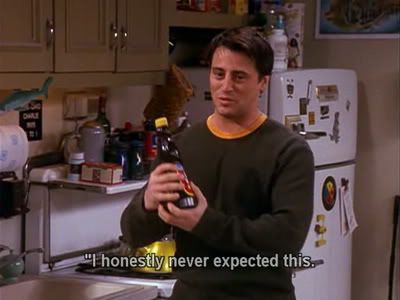
This post is a little like those episodes of Friends in which one of the cast says: “Do you remember the time when [cue wobbly vertical lines]…” and the rest of the 22-23mins is made up of clips from previous shows.
Let me take you back to a post on Thursday 7 January in which we made a shameless plea to ask for your votes in the UK Blog Awards 2016. In that post we told you how the blog’s 334 posts had received just over 167,000 views. Eleven months on and 40 additional blog posts later, the page views have risen to nearly 325,000 - a fantastic achievement I hope you’ll agree! I discovered this when an ambitious academic asked me if I could provide them with some killer stats about the blog to support their bid for a promotion. The power this blog wields!
This year we have had posts covering everything from Dry January, the ‘nanny state’, animation, Jamie Oliver's school dinner and sugar tax campaigns, to ‘fat shaming’, indigenous Australians, Baywatch, energy drinks, Grandmothers, e-cigarettes, and 'legal highs'.
Five years on from the blog's inception and we have reached the point where people are actively approaching us and generously giving up their time to write posts, rather than having to send in our crack team (the fear inducing) ‘blog working group’ to chase, harry and cajole*. Could this - and the increased viewing figures - have something to do with the little matter of winning a UK Blog Award last year? I'd like to think so.
And now, we come to the crux of this post. It is you, our dear readers and contributors that make the blog a success and it is thanks to you that we won a national award. So we've decided to go for it again in the UK Blog Awards 2017!
Here comes the shameless plug
The blog has again been entered into two categories: 'Health and Social Care', and 'Education'. You can vote for us in either category but of course we would really appreciate it if you voted for us in both.
Vote now by following this link
 The above link takes you to our profile page on the UK Blog Awards website in which we have chosen two of our favourite posts from 2016:
Hopefully it won't be a maple syrup bottle we'll be holding aloft in celebration come April 2017!
Thank you for your support.
*We do still need your posts! Please contact me (m.welford@tees.ac.uk) if you would like to write a post for the Fuse blog. Here’s how to take part.
This post is a little like those episodes of Friends in which one of the cast says: “Do you remember the time when [cue wobbly vertical lines]…” and the rest of the 22-23mins is made up of clips from previous shows.
 | |
| Courtesy of photobucket.com/user/xuyu79/media/blog/s7/s07e18 / Warner Bros. |
This year we have had posts covering everything from Dry January, the ‘nanny state’, animation, Jamie Oliver's school dinner and sugar tax campaigns, to ‘fat shaming’, indigenous Australians, Baywatch, energy drinks, Grandmothers, e-cigarettes, and 'legal highs'.
Five years on from the blog's inception and we have reached the point where people are actively approaching us and generously giving up their time to write posts, rather than having to send in our crack team (the fear inducing) ‘blog working group’ to chase, harry and cajole*. Could this - and the increased viewing figures - have something to do with the little matter of winning a UK Blog Award last year? I'd like to think so.
And now, we come to the crux of this post. It is you, our dear readers and contributors that make the blog a success and it is thanks to you that we won a national award. So we've decided to go for it again in the UK Blog Awards 2017!
The blog has again been entered into two categories: 'Health and Social Care', and 'Education'. You can vote for us in either category but of course we would really appreciate it if you voted for us in both.
Vote now by following this link
The above link takes you to our profile page on the UK Blog Awards website in which we have chosen two of our favourite posts from 2016: - From school dinners to sugar tax: Jamie Oliver to the rescue! - Victoria McGowan looks at whether celebrity endorsement has really helped some of the biggest food campaigns.
- England won’t make it past the quarter finals - Clare Bambra analyses the huge health divides across Europe ahead of Euro 2016 (with added infographics, video and social media content).
Hopefully it won't be a maple syrup bottle we'll be holding aloft in celebration come April 2017!
Thank you for your support.
*We do still need your posts! Please contact me (m.welford@tees.ac.uk) if you would like to write a post for the Fuse blog. Here’s how to take part.
Thursday, 1 December 2016
The biology of inequality and the role of the generalist

The increase in data linkage to routinely collected data records (e.g. education surveys linked to health records) is also allowing us to research the long-term health consequences of social and economic circumstances, even after studies and surveys have stopped running. It may also be possible in the future to carry out such linkage between health and social data with biomarker data, collected when visiting your doctor for example. There are obviously many ethical, financial and practical challenges and questions linked to these types of data linkage ideas, but they offer possibilities to broaden our knowledge of the social determinants of health. It is also becoming slightly more common to see intervention studies including biomarker measures that will allow us to see the physiological effects that will be occurring long before we ‘feel’ or see changes in health, perhaps changing how we can demonstrate ‘effectiveness’.

If you’re interested in finding out more, please visit Tony’s website www.BiologyOfInequality.com and you can also find him on Twitter @tonyrobertson82
Photo attribution:
- “jack-of-all-trades” by shai aharony via Flickr.com, copyright © 2016: https://www.flickr.com/photos/139807035@N05/25607414481
- “match_maker_love_machine” by Capes Treasures via Flickr.com, copyright © 2012: https://www.flickr.com/photos/26652069@N07/8390808924
Thursday, 24 November 2016
Novel Psychoactive Substances: “Cheap drug, better buzz for your money”
Posted by Fuse Associate Dr Michelle Addison, Institute of Health and Society, Newcastle University
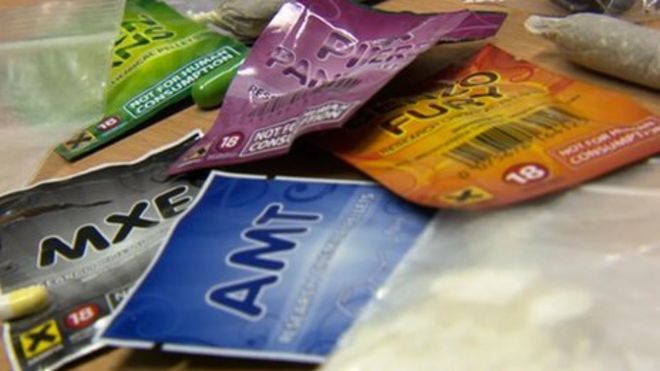
At the beginning of November practice partners, police, health professionals, academics and service users came together at ‘The Core’ in Newcastle to discuss the impact and consequences of Novel Psychoactive Substances (NPS) – commonly known as ‘legal highs’. Before anything had even begun we had the BBC on the phone, asking if they could come and film us and interview people about NPS for their forthcoming Panorama show, airing in 2017. NPS is certainly newsworthy. It has captured the public imagination in a myriad of ways, sparking fears of an epidemic, concerns over the impact it is having on resources, and headlines from The Independent declaring Newcastle to be ‘Britain’s most addicted city’. How much truth is there in these claims and how much of this is just hyperbole? What impact are NPS having on North East England, and what are the consequences? We tackled these questions during the event, generating lively debate. These discussions were grounded in the most up-to-date research, as well as city-wide strategies to tackle NPS, and personal accounts of NPS use.
But what are NPS I hear you ask? They’ve been around a while – they are a group of synthetic or plant based substances that mimic the effects of other more well know illicit drugs like cannabis, ecstasy and heroin – to name a few. They have become increasingly popular across most of the United Kingdom, but particularly in the North East. The law recently changed in the UK (26 May 2016) making it an offence to produce, supply, offer to supply, possess with intent to supply, import or export (including over the internet) any psychoactive substances. However, possession of NPS is not an offence except in a custodial institution. The debates during our event showed that the speed of change in this drug market and an increase in the reported associated harms of NPS have meant that they are a growing concern to local, regional and national bodies.
Professor Eugene Milne, the Director for Public Health in Newcastle Local Authority, opened the discussions by highlighting that NPS use is continuing to put pressure on available resources across emergency responders in the local area, that service providers are working hard to develop pathways to treatment, and that there are unknown long-term health consequences for this group of people. He spoke about the local and city-wide strategies that are currently being developed through a collaborative process within the ‘Task and Finish’ group focused on tackling issues around NPS use, distribution and management.
Dr Michelle Addison (that’s me!) and Dr Kelly Stockdale were up next to discuss our research, funded by N8 Policing Partnership, about the impact and consequences that NPS are having on police practitioners and substance users in the North East. We showed that NPS users are perceived to be extremely volatile in custody and the staff were concerned with managing risk – both to themselves and this vulnerable group of people. The custody nurse was viewed to be a great asset but users were still frequently transferred to A&E – creating a further resourcing challenge. NPS users felt that the substances were be highly addictive and linked to poor health outcomes. They were keen on getting help and treatment but were unsure about where to access this.
We were joined by Kieran Platts, Project Officer at Youth Homeless North East (YHNE). He gave a lively account of the really valuable work he has undertaken exploring young people’s views on NPS. This work was prompted by concerns raised through the housing and youth homeless sector who report finding it increasingly difficult to manage the impact of NPS on their resources and service users. Kieran added to the debate, saying that NPS are undermining the operational delivery of services for homeless young people and adversely effecting young people’s ability to address their individual housing and associated needs.
Professor Simon Thomas, from Newcastle University, talked about the toxicology of NPS – an elegant and accessible insight into their chemistry and toxic effects. He presented interim data from the Identification of Novel psychoActive Substances (IONA) study which is collating information about the range and prevalence of NPS that are present in patients who have ingested acutely toxic substances in the UK. He talked everyone through the emerging trends of NPS use in different areas of the UK, as well as changes over time, and differences in clinical effect.
Lorna Smith, (Public Health Registrar) and Rachael Hope (Community Safety Specialist - Drugs) Newcastle City Council, delivered important key messages about the evidence led approach underway to address NPS across Newcastle. Leading on the Task and Finish group, they have developed a detailed city-wide plan focused on understanding the circumstances of the NPS user, improving practice, and ways of protecting vulnerable groups of people. They highlighted the importance of tackling supply in the city and across the force area, but described this as an iterative process of action and learning in a relatively unknown context.
Chris Strachan, who is currently a volunteer at Positive Response to Overcoming Problems of Substance misuse (PROPS) North East, talked us through his personal account of NPS from a user perspective – offering bold and challenging insights into how users are perceived. Not all users are vulnerable and some would prefer to self-identify as psychonauts (Davey et al., 2012) – people who purposely experiment with drugs and establish detailed technical knowledge. His feelings were that practitioners should not be fearful about engaging with NPS users, adding that they are often incredibly knowledgeable about the chemical structures of these substances.
We couldn’t permit the BBC to film us for ethical reasons, but many of our speakers have been in communication with them since and will appear on Panorama in 2017. After a lot of rich debate however, Chief Inspector Lisa Hogan, Northumbria Police, brought it all together by emphasising that there are ongoing strategies and research underway to expand the evidence base around NPS – but this needs to be further developed. These discussions helped to provide in depth insight into where we are at with NPS, and what we currently know – but of course, there is more to be done. Future directions at the moment are focused on developing meaningful therapeutic interventions to help support users and understand the long-term health outcomes from NPS use.
The event Novel Psychoactive Substance (NPS) use and its consequences was delivered in partnership with Public Health England (John Liddell) and Fuse.
Join the discussion on Twitter using: #NPSimpact
At the beginning of November practice partners, police, health professionals, academics and service users came together at ‘The Core’ in Newcastle to discuss the impact and consequences of Novel Psychoactive Substances (NPS) – commonly known as ‘legal highs’. Before anything had even begun we had the BBC on the phone, asking if they could come and film us and interview people about NPS for their forthcoming Panorama show, airing in 2017. NPS is certainly newsworthy. It has captured the public imagination in a myriad of ways, sparking fears of an epidemic, concerns over the impact it is having on resources, and headlines from The Independent declaring Newcastle to be ‘Britain’s most addicted city’. How much truth is there in these claims and how much of this is just hyperbole? What impact are NPS having on North East England, and what are the consequences? We tackled these questions during the event, generating lively debate. These discussions were grounded in the most up-to-date research, as well as city-wide strategies to tackle NPS, and personal accounts of NPS use.
 |
| Image courtesy of the bbc website |
Professor Eugene Milne, the Director for Public Health in Newcastle Local Authority, opened the discussions by highlighting that NPS use is continuing to put pressure on available resources across emergency responders in the local area, that service providers are working hard to develop pathways to treatment, and that there are unknown long-term health consequences for this group of people. He spoke about the local and city-wide strategies that are currently being developed through a collaborative process within the ‘Task and Finish’ group focused on tackling issues around NPS use, distribution and management.
Dr Michelle Addison (that’s me!) and Dr Kelly Stockdale were up next to discuss our research, funded by N8 Policing Partnership, about the impact and consequences that NPS are having on police practitioners and substance users in the North East. We showed that NPS users are perceived to be extremely volatile in custody and the staff were concerned with managing risk – both to themselves and this vulnerable group of people. The custody nurse was viewed to be a great asset but users were still frequently transferred to A&E – creating a further resourcing challenge. NPS users felt that the substances were be highly addictive and linked to poor health outcomes. They were keen on getting help and treatment but were unsure about where to access this.
We were joined by Kieran Platts, Project Officer at Youth Homeless North East (YHNE). He gave a lively account of the really valuable work he has undertaken exploring young people’s views on NPS. This work was prompted by concerns raised through the housing and youth homeless sector who report finding it increasingly difficult to manage the impact of NPS on their resources and service users. Kieran added to the debate, saying that NPS are undermining the operational delivery of services for homeless young people and adversely effecting young people’s ability to address their individual housing and associated needs.
Professor Simon Thomas, from Newcastle University, talked about the toxicology of NPS – an elegant and accessible insight into their chemistry and toxic effects. He presented interim data from the Identification of Novel psychoActive Substances (IONA) study which is collating information about the range and prevalence of NPS that are present in patients who have ingested acutely toxic substances in the UK. He talked everyone through the emerging trends of NPS use in different areas of the UK, as well as changes over time, and differences in clinical effect.
Lorna Smith, (Public Health Registrar) and Rachael Hope (Community Safety Specialist - Drugs) Newcastle City Council, delivered important key messages about the evidence led approach underway to address NPS across Newcastle. Leading on the Task and Finish group, they have developed a detailed city-wide plan focused on understanding the circumstances of the NPS user, improving practice, and ways of protecting vulnerable groups of people. They highlighted the importance of tackling supply in the city and across the force area, but described this as an iterative process of action and learning in a relatively unknown context.
Chris Strachan, who is currently a volunteer at Positive Response to Overcoming Problems of Substance misuse (PROPS) North East, talked us through his personal account of NPS from a user perspective – offering bold and challenging insights into how users are perceived. Not all users are vulnerable and some would prefer to self-identify as psychonauts (Davey et al., 2012) – people who purposely experiment with drugs and establish detailed technical knowledge. His feelings were that practitioners should not be fearful about engaging with NPS users, adding that they are often incredibly knowledgeable about the chemical structures of these substances.
We couldn’t permit the BBC to film us for ethical reasons, but many of our speakers have been in communication with them since and will appear on Panorama in 2017. After a lot of rich debate however, Chief Inspector Lisa Hogan, Northumbria Police, brought it all together by emphasising that there are ongoing strategies and research underway to expand the evidence base around NPS – but this needs to be further developed. These discussions helped to provide in depth insight into where we are at with NPS, and what we currently know – but of course, there is more to be done. Future directions at the moment are focused on developing meaningful therapeutic interventions to help support users and understand the long-term health outcomes from NPS use.
The event Novel Psychoactive Substance (NPS) use and its consequences was delivered in partnership with Public Health England (John Liddell) and Fuse.
Join the discussion on Twitter using: #NPSimpact
Thursday, 17 November 2016
What do I really get from a conference?
Posted by Christina Cooper, Fuse Postgraduate Researcher, Faculty of Health & Life sciences, Northumbria University
As a PhD student there comes a point in your research when you are ready to start disseminating your work and opening it up to feedback from your peers. This is not only important for your personal development as a researcher, but also in demonstrating your contribution to knowledge, a vital step, the importance of which is reinforced throughout the PhD process. Conferences provide an accessible and valuable way for students to present their work, as either a poster or short oral presentation. Attending a conference can feel daunting at first, but regardless of whether you are presenting or not, the benefits of attending and participating cannot be highlighted enough. Conferences can be regional, national or international, but they all share in common the opportunity to learn from, and network with peers and experts with some shared common interest.
I am a public health PhD student at the beginning of my third, and final, year investigating what works, for whom, and in what circumstances in the prevention of risky behaviour by young people, using realist methodologies. For me, my second year felt like the ideal time to begin disseminating my work, through publishing in peer reviewed journals and attending conferences. I have participated in a number of conferences over the last year, from small university based and local regional conferences, to larger national and international conferences. Submissions so far have been in poster format, detailing various aspects of my research covering the research protocol, methodology, and early findings. Far from being ‘just a poster’ these presentations have provided me with an opportunity to discuss my work with other students, and professionals in the field, helping me to develop my ideas, make connections with those investigating similar subjects, and perhaps most importantly, to build up a support network with those in a similar position to myself. The expert advice and guidance gained from a conference is of course invaluable, but often there is nothing more reassuring, when you are struggling with a difficult concept, than hearing the words ‘me too’. Knowing you are not alone can be just the motivation you need to keep reading, keep talking, and keep going until you find a way through.
Most recently I attended the 2nd International Conference on Realist Evaluation and Synthesis held by the Centre for Advancement of Realist Evaluation and Synthesis (CARES), in London. The focus of which was Advancing Principles and Strengthening Practice. Aside from the benefits of presenting
as discussed above, attendance at this three day conference allowed me to attend talks and presentations by a wide range of researchers, including some of the biggest names in realist research. Covering subjects addressing complexity in public health research, attaining funding for realist projects, and knowledge building and translation. The breadth and depth of the material presented provided insight into the realist methodology that would be hard to gain elsewhere. In addition to these thought provoking sessions, time was given to discussion of the myriad of ways in which the realist methodology is employed in research, and how these may be developed to advance knowledge, not just within our specific fields, but also within the methodology itself. These ‘open mic’ sessions, in which disagreement was not only welcome, but encouraged, provided an opportunity to think through new ideas, allowing us to present, debate, challenge and defend our use of the realist methodology regardless of level of expertise. For me, being present for and involved in these discussions was a unique opportunity which allowed me to engage with my chosen methodology at a deeper level.
As a student, relatively new to realism, two key themes emerged repeatedly over the course of the conference. Firstly, how do I know what I am doing is really realist? Secondly, the difficulty of grappling with the complexity of realist research as a lone working student. Both issues I have experienced myself in the last two years, and were indeed part of the reason I wanted to attend the conference; it was greatly reassuring to discover I was not the only one. Not only were there other students there feeling exactly the same way, many of the other delegates, including some of the ‘big names’ such as Professor Ray Pawson, Dr Gill Westhorp, and Professor David Byrne were able to identify with us, and provide support and encouragement. There is still a great deal of work to be done in taking the realist methodology forwards and I am excited about being a part of that, both in the work towards my PhD, and as a researcher in the future.
Photo attribution: “Academic fact fight - debate” by Frits Ahlefeldt FA-L.com via Flickr.com, copyright © 2015: https://www.flickr.com/photos/hikingartist/17163831686
As a PhD student there comes a point in your research when you are ready to start disseminating your work and opening it up to feedback from your peers. This is not only important for your personal development as a researcher, but also in demonstrating your contribution to knowledge, a vital step, the importance of which is reinforced throughout the PhD process. Conferences provide an accessible and valuable way for students to present their work, as either a poster or short oral presentation. Attending a conference can feel daunting at first, but regardless of whether you are presenting or not, the benefits of attending and participating cannot be highlighted enough. Conferences can be regional, national or international, but they all share in common the opportunity to learn from, and network with peers and experts with some shared common interest.
 |
| Far from being 'just a poster' - an opportunity to discuss my work |
Most recently I attended the 2nd International Conference on Realist Evaluation and Synthesis held by the Centre for Advancement of Realist Evaluation and Synthesis (CARES), in London. The focus of which was Advancing Principles and Strengthening Practice. Aside from the benefits of presenting
 |
| "...disagreement was not only welcome, but encouraged..." |
Photo attribution: “Academic fact fight - debate” by Frits Ahlefeldt FA-L.com via Flickr.com, copyright © 2015: https://www.flickr.com/photos/hikingartist/17163831686
Thursday, 10 November 2016
It’s complicated: health inequalities and e-cigarettes
Guest post by Frances Thirlway, Fuse Associate member, Anthropology Department, Durham University
While the e-cigarette wars continue to rage, we still have very little information on the extent to which the most disadvantaged smokers are using e-cigarettes to quit. The smoking toolkit provides invaluable information regarding overall UK usage; however, most international research into the practices of e-cigarette users has been done via on-line user groups or forums. For anyone concerned with health inequalities and the social gradient in smoking, this is of limited use since the digital divide means that e-cigarette users active on internet forums are unlikely to come from the poorer communities where smoking is now concentrated.
In contrast, slow research ‘takes the local as a starting point’ and does this through ‘extended interaction in particular sites’ (Adams 2014 p. 181). Anthropological work involving in-depth place-based research and examining local culture as a dynamic influence can be particularly helpful in researching e-cigarette use. This is not only because user practices vary according to age, gender, class and other factors, but also because e-cigarettes themselves are not a single product. Moreover, the typical ‘user life cycle’ involves a progression from basic to more sophisticated models of e-cigarettes over time. Complete smoking cessation can happen at any point in this process and is likely to be gradual and difficult to capture in simplistic smoker/former smoker divisions, which is why research which follows smokers and quitters over months or years is needed – one participant in my recent study took three years to move from dual use of tobacco and e-cigarettes to e-cigarette use only, and he was not untypical. As Figure 1 and the associated article illustrate, most successful users start with ‘first-generation’ models, but those who persevere generally find that second-generation models and beyond are more satisfying.
The key word here is ‘successful’ - because switching from tobacco to e-cigarettes is not an easy process. I found that users: ‘struggle with the time, effort and expense involved in finding the ‘right’ e-cigarette and the frequency of product failure i.e. cheaper tank models splitting, leaking, or bubbling if over-tightened or dropped, and problems with batteries running out or failing to charge.’ This meant that: ‘unless users were highly motivated to quit, smoking was significantly easier, and often cheaper taking into account the cost of e-cigarette replacement and the ready availability of illicit tobacco.’ (Thirlway 2016 pp. 109-110)
Whilst some public bodies and individual users have started to provide information and guidance about using e-cigarettes to quit smoking, many barriers to use remain, particularly for the poorest. There is little doubt that you are more likely to switch successfully if you can afford to try different models, and replace the ones you break. It also helps if you have time to spare, a fondness for electronic gadgets and the ability to feel at home in the – largely male - vaping subculture.
These and other issues are explored further in: Thirlway, F. (2016) Everyday tactics in local moral worlds: e-cigarette practices in a working-class area of the UK. Social Science & Medicine 170 pp. 106-113
While the e-cigarette wars continue to rage, we still have very little information on the extent to which the most disadvantaged smokers are using e-cigarettes to quit. The smoking toolkit provides invaluable information regarding overall UK usage; however, most international research into the practices of e-cigarette users has been done via on-line user groups or forums. For anyone concerned with health inequalities and the social gradient in smoking, this is of limited use since the digital divide means that e-cigarette users active on internet forums are unlikely to come from the poorer communities where smoking is now concentrated.
 |
| Figure 1: The life cycle of a vaper - but note the gendered image |
In contrast, slow research ‘takes the local as a starting point’ and does this through ‘extended interaction in particular sites’ (Adams 2014 p. 181). Anthropological work involving in-depth place-based research and examining local culture as a dynamic influence can be particularly helpful in researching e-cigarette use. This is not only because user practices vary according to age, gender, class and other factors, but also because e-cigarettes themselves are not a single product. Moreover, the typical ‘user life cycle’ involves a progression from basic to more sophisticated models of e-cigarettes over time. Complete smoking cessation can happen at any point in this process and is likely to be gradual and difficult to capture in simplistic smoker/former smoker divisions, which is why research which follows smokers and quitters over months or years is needed – one participant in my recent study took three years to move from dual use of tobacco and e-cigarettes to e-cigarette use only, and he was not untypical. As Figure 1 and the associated article illustrate, most successful users start with ‘first-generation’ models, but those who persevere generally find that second-generation models and beyond are more satisfying.
The key word here is ‘successful’ - because switching from tobacco to e-cigarettes is not an easy process. I found that users: ‘struggle with the time, effort and expense involved in finding the ‘right’ e-cigarette and the frequency of product failure i.e. cheaper tank models splitting, leaking, or bubbling if over-tightened or dropped, and problems with batteries running out or failing to charge.’ This meant that: ‘unless users were highly motivated to quit, smoking was significantly easier, and often cheaper taking into account the cost of e-cigarette replacement and the ready availability of illicit tobacco.’ (Thirlway 2016 pp. 109-110)
Whilst some public bodies and individual users have started to provide information and guidance about using e-cigarettes to quit smoking, many barriers to use remain, particularly for the poorest. There is little doubt that you are more likely to switch successfully if you can afford to try different models, and replace the ones you break. It also helps if you have time to spare, a fondness for electronic gadgets and the ability to feel at home in the – largely male - vaping subculture.
These and other issues are explored further in: Thirlway, F. (2016) Everyday tactics in local moral worlds: e-cigarette practices in a working-class area of the UK. Social Science & Medicine 170 pp. 106-113
Wednesday, 2 November 2016
Too stressed for words? Involving those experiencing stress in research (part 2)
Following on from our post last year on National Stress Awareness Day, and in light of the current media attention paid to welfare benefits, we wanted to take the opportunity to reflect on the difficulties of involving those experiencing stress in research. This is in relation to our recent recruitment efforts for a realist evaluation of the impact of Citizens Advice (CA) on health.
 |
| "Stress" by Bernard Goldbach |
We carried out a mixed methods evaluation, detailed here. This required CA clients to complete a questionnaire when they first accessed CA and six weeks later. CA staff collected the questionnaire data for the research. Twenty-seven clients were also invited to participate in interviews. CA staff were initially apprehensive about data collection, due to clients often being in crisis and therefore having extremely high levels of stress.
Initially, recruitment was very slow. This was due to a variety of factors, some of which could be related to stress:
- Some clients were too stressed to engage in completing the questionnaire at Time 1 (initial contact with CA).
- CA staff found it extremely difficult at times to get in contact with clients at Time 2 (six weeks later). This was often due to their own heavy workload but also due to client reluctance to answer calls from unknown numbers (CA has a withheld number) and client wishes to move on with their lives once issues had been resolved.
- Clients were reluctant to participate in interviews because they were too stressed and had often been let down by other organisations when disclosing personal information.
- Some clients also suffered from severe mental health issues which meant they found the prospect of an interview very stressful.
- We worked with CA staff to develop a bespoke questionnaire, meaning that CA staff felt confident that it was not over burdensome for clients. This included shortened versions of questionnaires where possible. Questionnaires were also carried out by a client’s named CA contact who they trusted and would be more comfortable disclosing information to.
- We ensured that CA staff had a detailed understanding of the research aims in order to explain the research clearly to participants and gain their trust in the research. They could therefore highlight the importance of completing the Time 2 questionnaire to participants. When participants understood that the research aim was to show the ‘good work’ CA do, as opposed to focusing on their issues, they were more likely to engage.
- Offering interviews at a client’s home or via skype, in addition to the original offer of interviews at CA Gateshead allowed for participants to be in a location where they felt most relaxed.
- Offering clients the option of having their named and trusted CA staff member attend the interview for the first 10 minutes allowed this trusting relationship to be transported to the interviewer.
- Offering clients the option of having a relative or friend attend the interview also helped to put the client at ease. In one case, the client gave permission for their partner to do the interview on their behalf as they had been highly involved in the process of interacting with CA.
These improved strategies led to the collection of 261 Time 1 questionnaires with a 92 per cent follow up rate, and 23 clients participating in interviews.
Although CA staff were initially apprehensive about data collection, working in partnership and being flexible with recruitment strategies overcame this. It is important to provide all clients with the option of participating in research; presumptions of non-participation remove client autonomy which is unethical. In this research project and all research with people experiencing difficult circumstances it is essential to involve - where possible - any potential participants, the organisations working with clients, and experts, to find the most fruitful recruitment strategies.
The CA research team also consists of Monique Lhussier (Reader in Public Health and Wellbeing); Philip Hodgson (Senior Research Assistant) and Sue Carr (Professor of Public Health Research), who have all read and contributed to this blog post.
The study ‘Exposing the impact of advice services on health and inequalities’ is funded by the NIHR School for Public Health Research (SPHR), via the Public Health Practice Evaluation Scheme (PHPES). The views expressed are those of the author(s) and not necessarily those of the NHS, the NIHR or the Department of Health.

Photo attribution: “Stress” by Bernard Goldbach via Flickr.com, copyright © 2011: https://www.flickr.com/photos/topgold/6273248505
Although CA staff were initially apprehensive about data collection, working in partnership and being flexible with recruitment strategies overcame this. It is important to provide all clients with the option of participating in research; presumptions of non-participation remove client autonomy which is unethical. In this research project and all research with people experiencing difficult circumstances it is essential to involve - where possible - any potential participants, the organisations working with clients, and experts, to find the most fruitful recruitment strategies.
The CA research team also consists of Monique Lhussier (Reader in Public Health and Wellbeing); Philip Hodgson (Senior Research Assistant) and Sue Carr (Professor of Public Health Research), who have all read and contributed to this blog post.
The study ‘Exposing the impact of advice services on health and inequalities’ is funded by the NIHR School for Public Health Research (SPHR), via the Public Health Practice Evaluation Scheme (PHPES). The views expressed are those of the author(s) and not necessarily those of the NHS, the NIHR or the Department of Health.

Links:
- More information about this research is available on the NIHR SPHR project pages on the Fuse website.
- Fuse research brief: How do Citizens Advice Bureau services improve people’s health?
Thursday, 27 October 2016
Mapping collaboration and constructing a compass
Guest post by Lindy Turnbull, Senior Lecturer, Faculty of Health and Life Sciences, Northumbria University
Collaboration is promoted as a key aspect of commissioning and delivery in public health (NHS England, 2016) and health care (NHS England and NHS Improvement, 2016). Joint working and integration of services are seen as the way forward for the future NHS with new integrated models of care at the forefront of service redesign, and collaboration core to managing increased demands with diminishing resources. Although collaboration is a familiar concept and has been the subject of research and discussion it is still an area of practice which is poorly understood. It is striking that existing definitions of collaboration identify professional sharing with the focus on patient care, yet there is little representation of patients in most studies and the role of patients in collaboration seems to be missing from the existing theory.

I began my research after leading the development of Outpatient Parenteral Antimicrobial Therapy (OPAT) a new model of care which required collaborative working across secondary and primary care to deliver treatment in patient homes. The development of this service was challenging and required strong collaborative relationships to overcome the organisational barriers to integration. Having experienced the challenges of collaborating to develop an integrated service I wondered if these difficulties continue into the delivery of the service in practice, and how collaboration takes place within the challenging environment of the constantly reorganised NHS.
The aim of my research was to develop substantive theory about what collaboration means in the delivery of integrated care, the way it is manifested in day-to-day practice and how it is shaped by the situation in which it takes place. I viewed patients and professionals as participants in collaboration and interviewed three patients and 21 professionals. I have used a social constructionist approach to grounded theory (Charmaz, 2008) and a range of situational mapping techniques (Clarke, 2005)1 to map collaboration within the situation of integrated care delivery. Analysis was a fascinating and absorbing experience as I used mind mapping software to analyse and compare the perspectives of those involved in collaboration and then to combine perspectives to map and analyse the complexity of the situation.
Participants expressed a number of interactive mechanisms (trusting, communicating, co-ordinating and rehearsing) which were influenced by a range of situational co-ordinates (goals, limits, certainty, uncertainty and power) and these were used together to navigate the complexity of the healthcare situation and direct the process and outcomes of collaboration. The capability of individuals to act, or interact was informed by their interpretation of the situation and this directed the capacity for collaboration within the care situation. Positional mapping techniques identified four directions of collaboration: developing, maintaining, limited and disrupted, and I found that limiting factors were significant in changing the direction of collaboration. The communication of some social limitations such as terminal illness, professional roles or work requirements altered an individual’s capability to collaborate and the capacity for collaboration within the situation.
My analysis has constructed a collaboration compass which is used to navigate the situation and direct the collaboration experienced by patients and professionals. I am in the process of writing up and still fighting my enthusiasm to write about everything I found and learned during my study; there simply aren’t enough words!
Reference:
Collaboration is promoted as a key aspect of commissioning and delivery in public health (NHS England, 2016) and health care (NHS England and NHS Improvement, 2016). Joint working and integration of services are seen as the way forward for the future NHS with new integrated models of care at the forefront of service redesign, and collaboration core to managing increased demands with diminishing resources. Although collaboration is a familiar concept and has been the subject of research and discussion it is still an area of practice which is poorly understood. It is striking that existing definitions of collaboration identify professional sharing with the focus on patient care, yet there is little representation of patients in most studies and the role of patients in collaboration seems to be missing from the existing theory.
I began my research after leading the development of Outpatient Parenteral Antimicrobial Therapy (OPAT) a new model of care which required collaborative working across secondary and primary care to deliver treatment in patient homes. The development of this service was challenging and required strong collaborative relationships to overcome the organisational barriers to integration. Having experienced the challenges of collaborating to develop an integrated service I wondered if these difficulties continue into the delivery of the service in practice, and how collaboration takes place within the challenging environment of the constantly reorganised NHS.
The aim of my research was to develop substantive theory about what collaboration means in the delivery of integrated care, the way it is manifested in day-to-day practice and how it is shaped by the situation in which it takes place. I viewed patients and professionals as participants in collaboration and interviewed three patients and 21 professionals. I have used a social constructionist approach to grounded theory (Charmaz, 2008) and a range of situational mapping techniques (Clarke, 2005)1 to map collaboration within the situation of integrated care delivery. Analysis was a fascinating and absorbing experience as I used mind mapping software to analyse and compare the perspectives of those involved in collaboration and then to combine perspectives to map and analyse the complexity of the situation.
Participants expressed a number of interactive mechanisms (trusting, communicating, co-ordinating and rehearsing) which were influenced by a range of situational co-ordinates (goals, limits, certainty, uncertainty and power) and these were used together to navigate the complexity of the healthcare situation and direct the process and outcomes of collaboration. The capability of individuals to act, or interact was informed by their interpretation of the situation and this directed the capacity for collaboration within the care situation. Positional mapping techniques identified four directions of collaboration: developing, maintaining, limited and disrupted, and I found that limiting factors were significant in changing the direction of collaboration. The communication of some social limitations such as terminal illness, professional roles or work requirements altered an individual’s capability to collaborate and the capacity for collaboration within the situation.
My analysis has constructed a collaboration compass which is used to navigate the situation and direct the collaboration experienced by patients and professionals. I am in the process of writing up and still fighting my enthusiasm to write about everything I found and learned during my study; there simply aren’t enough words!
Reference:
- Clarke, A. (2005). Situational analysis: Grounded theory after the postmodern turn. Thousand Oaks, CA: Sage.
Thursday, 20 October 2016
Who wins: the tortoise or the hare in the race for health benefits?
Posted by Liane Azevedo, Fuse staff member and Senior Lecturer in Physical Activity and Public Health, Teesside University
At the 63rd American College of Sports Medicine Annual Meeting in Boston, USA this year, an interesting debate took place which was titled ‘Who Wins: the Tortoise or the Hare?'. The debate discussed the latest research findings on a hot topic in physical activity research: what is better for your health; high intensity exercise or reducing sedentary behaviour in favour of light to moderate exercise? I was expecting a heated debate; however, the session was quite balanced with both sides presenting the pros and cons of their approach, followed by a talk on the middle ground by Tim Church suggesting that the best is exercise in moderation (the benefits of regular moderate-intensity exercise).
At the 63rd American College of Sports Medicine Annual Meeting in Boston, USA this year, an interesting debate took place which was titled ‘Who Wins: the Tortoise or the Hare?'. The debate discussed the latest research findings on a hot topic in physical activity research: what is better for your health; high intensity exercise or reducing sedentary behaviour in favour of light to moderate exercise? I was expecting a heated debate; however, the session was quite balanced with both sides presenting the pros and cons of their approach, followed by a talk on the middle ground by Tim Church suggesting that the best is exercise in moderation (the benefits of regular moderate-intensity exercise).

Let’s start with the arguments for reducing sedentary behaviour. The sedentary behaviour ‘defence’ was presented by Genevieve Healy from the University of Queensland. She talked about a study which showed that a reduction in sitting, in favour of more standing or stepping, could both promote cardio-metabolic benefits (concerning heart disease and metabolic disorders such as diabetes) to improvements in glucose and lipid metabolism (the synthesis and breakdown of glucose and fatty acids). Similar results were shown in other presentations at the conference with a number of studies also showing that interrupted sitting with walking (rather than just standing) can improve insulin response, resting blood pressure and lipid concentration. Moreover, Genevieve provided a number of examples of interventions for the workplace and for older populations, such as Small Steps, Stand Up For Health and Stand Up Australia, which have all shown to be effective
I presented evidence of this argument myself at the conference in a poster about a systematic review which we conducted on sedentary behaviour interventions for children. We found that sedentary interventions are mostly ineffective to reduce BMI (body mass index) in a mixed-weight population but can be effective for treatment of an overweight or obese population.
In the case of sedentary behaviour major questions still remain, for instance, are the risks of sedentary behaviour for cardiovascular diseases independent of physical activity? In other words, if you have a job like mine that requires you to sit for long hours and you try to compensate for this behaviour at the end of the day by doing 30-40 mins of moderate to vigorous physical activity, does this mean that you still have the same cardiovascular disease risks as, for instance, someone who does not exercise? The answer appears to be no; the risk seems lower (phew … ). However, the data in the literature is still contradictory. But it was interesting to see well known scientists in the field like Charles Matthews recognising that these behaviours might not be as independent of each other as it was originally thought when it relates to health risks.
The case for the opposite argument - that high intensity exercise is more important for your health - was made by Professor Ulrik Wisløff from the Norwegian University of Science and Technology. He presented a number of studies which showed the additional benefits of vigorous activity compared to moderate or total physical activity on a number of health indicators, such as all-cause mortality, improvement of maximum aerobic capacity and in endothelial (the inner lining of blood vessels) function, and as an effective treatment of arterial fibrillation (abnormal heart rhythm) in unhealthy patients.
The audience questioned Professor Wisløff about the risk of injury when doing high intensity exercise, how to translate these findings into physical activity guidelines, and the long term sustainability of this type of exercise. Wisløff said that in their studies there were no report of injuries, but admitted that long term sustainability still needs to be investigated. A starting point for demonstrating the feasibility of high intensity exercise in a real-life setting can be found in the study completed by Dr Kathryn Weston at Teesside University. In the study she investigated the effect of a school-based high-intensity interval training on cardio-metabolic health. She found that the high intensity exercise did not only improve some cardio-metabolic parameters but was also delivered as intended.
Therefore, I would say that the answer to the question ‘who wins the tortoise or the hare?’ is that both are winners. For some people high intensity exercise can be the most exciting way to exercise, while for others just the substitution of sedentary to light and moderate is the suitable (also it doesn’t need to be one or the other). The most important point is to choose something that will encourage you to do physical activity, because the health benefit is there for both.
Acknowledgment: Liane Azevedo would like to thank Fuse and Teesside University for the support to attend this Conference.
Photo attribution: “Image from page 216 of "St. Nicholas [serial]" (1873)” by Internet Archive Book Images via Flickr.com: https://www.flickr.com/photos/internetarchivebookimages/14781657201
Thursday, 13 October 2016
Bridging the gap between (mental) health services and needs: negotiating power and political values
Guest post by Dr Angus Forsyth, Senior Lecturer in Mental Health Nursing, Northumbria University
As Monday was World Mental Health day, there will be familiar messages in the media about the barriers faced by people with mental health problems when seeking appropriate care and treatment. These include (but are not limited to) the difficulties that children and young people face in accessing local services, not to mention specialist services, such as support for young people who may experience eating disorders. For adults the suicide rate has increased, and there are more and more pressures on crisis services and in-patient beds. As overall funding within the NHS is further reduced, mental health services face additional financial cuts as their funding is diverted to other clinical groups whose needs have been identified as more of a priority.
As if lack of access to mental health services is not problematic enough, people with mental health problems are also more predisposed to physical health disorders due to the combined effects of certain medications, lifestyle factors, such as smoking and lack of exercise, contributing to obesity and other metabolic disorders. This contributes to early mortality for people with long standing mental health diagnosis such as schizophrenia, having a reduced lifespan of 20 years. Despite these inequalities the Department of Health’s guidance (2011) recommended parity of esteem for people with mental health problems to have the same level of access to services as those with physical illnesses. And even this recommendation has yet to be achieved.
On the positive side, there has been a relative increase in coverage of mental health related issues within the media and society, either through celebrities disclosing personal issues, storylines in popular TV dramas; magazines, and social media. However, there still persists a stigma associated with the experience of mental ill-health, for example that people with Schizophrenia are unpredictable and predisposed to violence (Houses of Parliament 2015).
Whilst fear and lack of understanding are factors that maintain stigmatising beliefs and attitudes, power inequalities are also evident when exploring the above barriers to meaningful services. These power imbalances can lead to the development of oppressive social systems and organisational practices where the exercise of authority or power can lead to the marginalisation of specific groups. An example of this is the implementation of government policy, for example the reduction of resources and the subsequent allocation of funding by commissioning agencies (as servants of government), can result in further disadvantaging of citizens as in the case of young people attempting to access mental health care. In the majority of these cases, care can only meaningfully be accessed when there is a serious risk to self and others and is provided under the legislative procedures of the mental health act and in locations far from the individual’s home. This example illustrates how healthcare is provided in an oppressive system.
As Monday was World Mental Health day, there will be familiar messages in the media about the barriers faced by people with mental health problems when seeking appropriate care and treatment. These include (but are not limited to) the difficulties that children and young people face in accessing local services, not to mention specialist services, such as support for young people who may experience eating disorders. For adults the suicide rate has increased, and there are more and more pressures on crisis services and in-patient beds. As overall funding within the NHS is further reduced, mental health services face additional financial cuts as their funding is diverted to other clinical groups whose needs have been identified as more of a priority.
 |
| Steve McDonald (Simon Gregson) battled depression in Coronation Street |
As if lack of access to mental health services is not problematic enough, people with mental health problems are also more predisposed to physical health disorders due to the combined effects of certain medications, lifestyle factors, such as smoking and lack of exercise, contributing to obesity and other metabolic disorders. This contributes to early mortality for people with long standing mental health diagnosis such as schizophrenia, having a reduced lifespan of 20 years. Despite these inequalities the Department of Health’s guidance (2011) recommended parity of esteem for people with mental health problems to have the same level of access to services as those with physical illnesses. And even this recommendation has yet to be achieved.
On the positive side, there has been a relative increase in coverage of mental health related issues within the media and society, either through celebrities disclosing personal issues, storylines in popular TV dramas; magazines, and social media. However, there still persists a stigma associated with the experience of mental ill-health, for example that people with Schizophrenia are unpredictable and predisposed to violence (Houses of Parliament 2015).
Whilst fear and lack of understanding are factors that maintain stigmatising beliefs and attitudes, power inequalities are also evident when exploring the above barriers to meaningful services. These power imbalances can lead to the development of oppressive social systems and organisational practices where the exercise of authority or power can lead to the marginalisation of specific groups. An example of this is the implementation of government policy, for example the reduction of resources and the subsequent allocation of funding by commissioning agencies (as servants of government), can result in further disadvantaging of citizens as in the case of young people attempting to access mental health care. In the majority of these cases, care can only meaningfully be accessed when there is a serious risk to self and others and is provided under the legislative procedures of the mental health act and in locations far from the individual’s home. This example illustrates how healthcare is provided in an oppressive system.
This brief summary of the challenges in accessing comprehensive care and resources that are available to people with mental health issues highlight that as the expression of mental health becomes more dominant, service provision and resource allocation has not kept pace with increasing need and demand for services. This is particularly in light of mental and physical ill-health co-existing and becoming common bedfellows in chronic disease management. Let’s hope that World Mental Health Day not only highlights issues related to the experience of mental health but acts as a catalyst to mobilise meaningful social actions such as:-
- Reviewing the public and political structures to include the meaningful involvement of service users at all levels of the decision making process (Rethink 2016). This would further highlight inequalities and disadvantage experienced by individuals and meaningfully influence the development of comprehensive mental health service provision.
- Reorganise health and social care structures around the holistic needs of service users rather than in the functional silos that currently operate.
- Use World Mental Health Day to evaluate the impact of service delivery for vulnerable groups to identify meaningful changes and clarify further challenges.
References:
- Department of Health (2011) No Health Without Mental Health, DH.
- Houses of Parliament (2015) Parity of Esteem for Mental Health. Postnote No 485.
- Rethink mental Illness (2016) News & Views: Co-production & Commissioning - how the people who decide on mental health services can partner with the people who use them. Rethink Mental Illness.
Sunday, 2 October 2016
Giving Grandmothers a Voice
Today is Grandparents’ Day, a day which celebrates the contributions of grandparents to families and
society overall. Grandparents can have important roles in the health related decisions of families and my research is looking at the influence of grandmothers on introducing solid food. Much of the literature describes grandmothers in a negative light, suggesting they may advise their daughters to start solids before the recommended six months. I found that there was very little research that addressed this from the perspectives of grandmothers’ themselves, and therefore I set out on my research journey with the intention of finding out ‘how do grandmothers make sense of the role they play in introducing solid foods to their grandchildren?’
 I am using constructivist grounded theory methods based on the works of Charmaz (2014)1, and am still finding new meaning in my data, as I try to write up my findings. I am finding this an exciting time in the research, after the arduous task of trying to understand the terminology in qualitative methodology! I must admit that I expected to find grandmothers defending the older methods of introducing solids, which was generally started at around four months, but I actually found that they were open to change and generally accepted the new guidelines. I have also uncovered a complicated web of dynamic family interactions in which grandmothers can struggle to come to terms with competing values of the wider family that they find themselves in. Some grandmothers expressed how marginalised they feel, as they do not have access to the latest information, except through their daughters or daughters in law, and yet, they are often providing extensive childcare.
 One of the issues that this research has highlighted for me, is the contested levels of responsibility that grandmothers face. On the one hand they are ‘proxy’ parents, making autonomous decisions about the food that they offer their grandchildren, whilst on the other hand, this can compete with the parents’ decisions and parenting styles (which may in turn be influenced by the other grandparents). Being able to switch this responsibility on and off can cause tension and conflict, particularly if there is a feeding issue. The problems of having a fussy eater can cause parents and grandparents immense distress, with issues of power and control coming to the fore. Grandmothers often worry about conflict within the family and are wary about raising their concerns, for fear of fracturing relationships and possibly losing contact with their children and grandchildren.
Of course it’s not all doom and gloom, as they all report feeling immense love for their grandchildren and a similar nurturing feeling that they had for their own children. They get tremendous satisfaction from these relationships, and I hope that my research will help practitioners to have a better understanding of the issues grandmothers face. I am looking forward to using the findings to develop an intervention that will help families navigate potential intergenerational conflicts and find ways of developing collaboration within families, as they all have the best interests of the children at the heart of what they do.
Reference:
Thursday, 22 September 2016
Is the UK an intolerant society for children?
Posted by Peter van der Graaf, AskFuse Manager, Teesside University
UNICEF statistics about child wellbeing among the 29 wealthiest countries in the world made for uncomfortable reading in 2007 with the UK bottom of the league table. Children and young people in Britain were among the unhappiest, unhealthiest, poorest and least educated in the developed world in the early years of the new millennium. Since then many initiatives and policies have been implemented to increase child wellbeing in the UK and when the league table was repeated by UNICEF in 2013 the UK moved up 15 places to a mid-table position of 16th.
 However, we are still behind many European countries and with the ongoing austerity measures and continued disinvestment in health and social care services for children we could find ourselves back at the bottom league in the not too distant future. This begs the questions whether ‘simply’ improving health and other services for children is enough?
According to Sir Al Aynsley-Green, Professor Emeritus of Child Health at University College London and former President of the British Medical Association, the problem runs much deeper. He argued at the Fuse Knowledge Exchange Seminar yesterday in Newcastle, titled 'Think Adult - Think Child', that the real problem in the UK is that we are becoming an intolerant society for children. He pointed to the dire straits of politics for children in the UK: not only is the voice of children lacking from national policy making (an argument that he is well positioned to make as the first Children’s Commissioner for England), the policy making itself has often been poor.
The BMA published a damning report in 2013 in which it concluded that “the national focus on children has been short term, inconsistent and untrustworthy”. Specific policies to support children, such as Every Child Matters, have been systematically eroded by consecutive governments; the recent much watered-down Childhood Obesity Strategy is another example of this and Theresa May’s new enthusiasm for grammar schools strikes further fear into the hearts of child rights advocates.
Politicians are not the only ones to blame according to Sir Al: the media regularly publish headlines about children and young people being a nuisance and causing crimes, while shops put up signs in their windows stating that dogs are welcome but that kids can only enter two at a time and, only then, without a backpack and when closely supervised. Most shockingly, public places such as railway stations are increasingly being fitted with high pitched devices that adults can’t hear but which are very unpleasant for young people and deliberately intend to drive them away.
One area where the neglect of children’s needs is particularly visible is bereavement: every 22 minutes a child in the UK loses a parent. While no routine data are collected in the UK on this group, estimates suggest that the majority of young people face the death of a close relative or friend by the time they are 16 years old. In spite of the many services available to families to help them stop smoking, exercise more and eat healthier, there is very little available for children who experience bereavement.
Specialist service providers attending the Knowledge Exchange (KE) seminar expressed their concern about not being able to cope with the current demand, as school teachers and parents lack basic skills in being able to talk to children about emotional problems, such as bereavement. In spite of this, we know from research that bereavement can have a lasting impact on the life of children long into adulthood. Bereavement in childhood has been linked to educational underachievement, joblessness, fractured adult relationships, adverse psychological and psychiatric consequences, together with poor physical health.
Sir Al’s presentation was therefore more a call to arms. What can we do in and outside Fuse to improve child health and wellbeing in the North East? Firstly, we can act as an advocate organisation to draw more attention to the needs of children and their position in society. Are their voices heard within Fuse? Do we engage with them in our projects?
Secondly, we can bring partners together across public health and related sectors in the North East to focus attention on this topic and bring together evidence and best practice to inform new collaborations. The KE seminar provided a platform for this that could be followed up. We also have a dedicated Early Life and Adolescence Programme (ELAP) within Fuse but does our research link to education and events later in the life course? For example, in Finland shops can rent a grandparent to help them engage with children when they visit their shop.
Thirdly, we need to turn this dialogue into a research agenda for child wellbeing in the North East. How can we mobilise evidence to change the prevailing attitude among politicians and the wider society so that they instead see children as valuable assets and a key policy priority for any government? This also involves challenging popular concepts, such as school readiness, which focus on individual responsibility. As Sir Al suggested at the end of the seminar, we should turn this concept around: are schools ready for children and what do they need to be able to be ready? Are they able to support children’s emotional development and can they help them to cope with bereavement experiences?
Making the UK a better place to live for children requires more than service redesign, it needs political will and consistent pressure from a coalition of organisations to achieve this, supported by actionable research to change hearts and minds.
UNICEF statistics about child wellbeing among the 29 wealthiest countries in the world made for uncomfortable reading in 2007 with the UK bottom of the league table. Children and young people in Britain were among the unhappiest, unhealthiest, poorest and least educated in the developed world in the early years of the new millennium. Since then many initiatives and policies have been implemented to increase child wellbeing in the UK and when the league table was repeated by UNICEF in 2013 the UK moved up 15 places to a mid-table position of 16th.
According to Sir Al Aynsley-Green, Professor Emeritus of Child Health at University College London and former President of the British Medical Association, the problem runs much deeper. He argued at the Fuse Knowledge Exchange Seminar yesterday in Newcastle, titled 'Think Adult - Think Child', that the real problem in the UK is that we are becoming an intolerant society for children. He pointed to the dire straits of politics for children in the UK: not only is the voice of children lacking from national policy making (an argument that he is well positioned to make as the first Children’s Commissioner for England), the policy making itself has often been poor.
The BMA published a damning report in 2013 in which it concluded that “the national focus on children has been short term, inconsistent and untrustworthy”. Specific policies to support children, such as Every Child Matters, have been systematically eroded by consecutive governments; the recent much watered-down Childhood Obesity Strategy is another example of this and Theresa May’s new enthusiasm for grammar schools strikes further fear into the hearts of child rights advocates.
Politicians are not the only ones to blame according to Sir Al: the media regularly publish headlines about children and young people being a nuisance and causing crimes, while shops put up signs in their windows stating that dogs are welcome but that kids can only enter two at a time and, only then, without a backpack and when closely supervised. Most shockingly, public places such as railway stations are increasingly being fitted with high pitched devices that adults can’t hear but which are very unpleasant for young people and deliberately intend to drive them away.
One area where the neglect of children’s needs is particularly visible is bereavement: every 22 minutes a child in the UK loses a parent. While no routine data are collected in the UK on this group, estimates suggest that the majority of young people face the death of a close relative or friend by the time they are 16 years old. In spite of the many services available to families to help them stop smoking, exercise more and eat healthier, there is very little available for children who experience bereavement.
 |
| Sir Al presenting at the Fuse Knowledge Exchange Seminar |
Sir Al’s presentation was therefore more a call to arms. What can we do in and outside Fuse to improve child health and wellbeing in the North East? Firstly, we can act as an advocate organisation to draw more attention to the needs of children and their position in society. Are their voices heard within Fuse? Do we engage with them in our projects?
Secondly, we can bring partners together across public health and related sectors in the North East to focus attention on this topic and bring together evidence and best practice to inform new collaborations. The KE seminar provided a platform for this that could be followed up. We also have a dedicated Early Life and Adolescence Programme (ELAP) within Fuse but does our research link to education and events later in the life course? For example, in Finland shops can rent a grandparent to help them engage with children when they visit their shop.
Thirdly, we need to turn this dialogue into a research agenda for child wellbeing in the North East. How can we mobilise evidence to change the prevailing attitude among politicians and the wider society so that they instead see children as valuable assets and a key policy priority for any government? This also involves challenging popular concepts, such as school readiness, which focus on individual responsibility. As Sir Al suggested at the end of the seminar, we should turn this concept around: are schools ready for children and what do they need to be able to be ready? Are they able to support children’s emotional development and can they help them to cope with bereavement experiences?
Making the UK a better place to live for children requires more than service redesign, it needs political will and consistent pressure from a coalition of organisations to achieve this, supported by actionable research to change hearts and minds.
Tuesday, 30 August 2016
Where you live can kill you
Posted by Clare Bambra, Associate Director of Fuse and Professor of Public Health Geography, Durham University
In 1842, the English social reformer Edwin Chadwick documented a 30-year discrepancy between the life expectancy of men in the poorest social classes and the gentry. He also found a North-South health divide with people from all social classes faring better in the rural South than in the industrial North.
Today, these inequalities persist. People in the most affluent areas of the United Kingdom, such as Kensington and Chelsea, can expect to live 14 years longer than those in the poorest areas, such as Glasgow or Blackpool. Men and women in the North of England will, on average die two years earlier than those in the South. Scottish people also suffer a health penalty with the highest mortality rates in Western Europe.
Such geographical inequalities in health exist, to varying degrees, in all high-income countries. People living in more deprived areas fare particularly badly in the casino capitalism of the United States; where gaps in life expectancy between rich and poor areas of some cities, such as New Orleans, are as large as 25 years. Indeed, the US as a whole has a significant health disadvantage in comparison to other high-income countries with, for example, American men living on average three years less than their counterparts in France and five years less than Swiss men.
Understanding and reducing these health inequalities remains a major public-policy challenge worldwide and has garnered significant recent political attention. For example, in her opening speech on the steps of 10 Downing Street, the new British Prime Minister Theresa May highlighted the nine-year gap in life expectancy between the richest and the poorest boys in England. It is not only a moral issue though; health inequalities carry significant economic costs to individuals and society (e.g. NHS costs, lost productivity). But the causes of such inequalities are complex and the solutions contested.
Where you live affects how long you live and the health of different places is determined both by the population composition (who lives here) and the environmental context (where you live).
Who lives here? The demographic, health behaviours and socio-economic profile of the people within a place influences its health outcomes. Generally speaking, health deteriorates with age, women live longer than men, and health status also varies by ethnicity. Levels of smoking, alcohol, physical activity, diet, and drugs – all influence the health of populations significantly. The socio-economic status – or social class in “old money” – of people living in a country also matters as those with higher occupational status (e.g. professionals such as teachers or lawyers) have better health outcomes than non-professional workers (e.g. manual workers). So differences in the characteristics of people living in a country, city or neighbourhood will impact on the health of that place.
However, where you live matters. The economic environment of a country, such as poverty rates, unemployment rates, or wage levels can all influence public health. The social environment, including the services provided within a country to support people in their daily lives such as child care or health care and welfare, can also impact on population level health. The physical environment is also an important determinant with research suggesting that proximity to waste facilities and brownfield or contaminated land, as well as levels of air pollution can negatively affect health. So countries, cities or neighbourhoods with worse economic, social or physical environments will have worse health outcomes.
Even though both composition and context matter, and can be supported by scientific evidence, politics can matter more than science in determining which strategies policymakers pursue to reduce health divides – or if they even care about inequalities at all. After all, some potential solutions are politically easier to implement within existing systems than others.
For example, interventions aimed at changing individual health behaviours are far less challenging to prevailing power structures than those that demand extensive investment in improving the social economic environment. Indeed, by blaming people for their own health problems, such interventions let governments and businesses off the hook for the wider economic, social and environmental determinants of health inequalities.
Such “downstream” approaches only tackle one side of the coin and there is little evidence that lifestyle interventions are effective in reducing health inequalities: more comprehensive measures are needed. Most of the health gains over the nineteenth and twentieth centuries were brought about by far-reaching economic, political, and social reforms which improved the wider environment and also significantly improved the financial position of the poorest people.
It has been clearly demonstrated that more equal societies almost always do better in health terms and the poorest and most vulnerable groups, say in Sweden or Norway, are far healthier and live longer than the equivalent groups in the UK or the US. These countries have done so through the development of a stable, inclusive economy, a supportive welfare system and a high standard of living.
So, where you live matters for how long you live – and changing how we live could reduce health inequalties.
Professor Bambra’s book Health Divides: where you live can kill you is available now from Policy Press.
Clare Bambra
Professor of Public Health Geography, Department of Geography, Durham University, Associate Director of Fuse: the Centre for Translational Research in Public Health and lead of the Health Inequalities research programme
Twitter @ProfBambra
In 1842, the English social reformer Edwin Chadwick documented a 30-year discrepancy between the life expectancy of men in the poorest social classes and the gentry. He also found a North-South health divide with people from all social classes faring better in the rural South than in the industrial North.
Today, these inequalities persist. People in the most affluent areas of the United Kingdom, such as Kensington and Chelsea, can expect to live 14 years longer than those in the poorest areas, such as Glasgow or Blackpool. Men and women in the North of England will, on average die two years earlier than those in the South. Scottish people also suffer a health penalty with the highest mortality rates in Western Europe.
 |
| House for sale in New Orleans |
Understanding and reducing these health inequalities remains a major public-policy challenge worldwide and has garnered significant recent political attention. For example, in her opening speech on the steps of 10 Downing Street, the new British Prime Minister Theresa May highlighted the nine-year gap in life expectancy between the richest and the poorest boys in England. It is not only a moral issue though; health inequalities carry significant economic costs to individuals and society (e.g. NHS costs, lost productivity). But the causes of such inequalities are complex and the solutions contested.
Explaining health and place
Where you live affects how long you live and the health of different places is determined both by the population composition (who lives here) and the environmental context (where you live).
Who lives here? The demographic, health behaviours and socio-economic profile of the people within a place influences its health outcomes. Generally speaking, health deteriorates with age, women live longer than men, and health status also varies by ethnicity. Levels of smoking, alcohol, physical activity, diet, and drugs – all influence the health of populations significantly. The socio-economic status – or social class in “old money” – of people living in a country also matters as those with higher occupational status (e.g. professionals such as teachers or lawyers) have better health outcomes than non-professional workers (e.g. manual workers). So differences in the characteristics of people living in a country, city or neighbourhood will impact on the health of that place.
However, where you live matters. The economic environment of a country, such as poverty rates, unemployment rates, or wage levels can all influence public health. The social environment, including the services provided within a country to support people in their daily lives such as child care or health care and welfare, can also impact on population level health. The physical environment is also an important determinant with research suggesting that proximity to waste facilities and brownfield or contaminated land, as well as levels of air pollution can negatively affect health. So countries, cities or neighbourhoods with worse economic, social or physical environments will have worse health outcomes.
Reducing health inequalities
Even though both composition and context matter, and can be supported by scientific evidence, politics can matter more than science in determining which strategies policymakers pursue to reduce health divides – or if they even care about inequalities at all. After all, some potential solutions are politically easier to implement within existing systems than others.
For example, interventions aimed at changing individual health behaviours are far less challenging to prevailing power structures than those that demand extensive investment in improving the social economic environment. Indeed, by blaming people for their own health problems, such interventions let governments and businesses off the hook for the wider economic, social and environmental determinants of health inequalities.
Such “downstream” approaches only tackle one side of the coin and there is little evidence that lifestyle interventions are effective in reducing health inequalities: more comprehensive measures are needed. Most of the health gains over the nineteenth and twentieth centuries were brought about by far-reaching economic, political, and social reforms which improved the wider environment and also significantly improved the financial position of the poorest people.
It has been clearly demonstrated that more equal societies almost always do better in health terms and the poorest and most vulnerable groups, say in Sweden or Norway, are far healthier and live longer than the equivalent groups in the UK or the US. These countries have done so through the development of a stable, inclusive economy, a supportive welfare system and a high standard of living.
So, where you live matters for how long you live – and changing how we live could reduce health inequalties.
Professor Bambra’s book Health Divides: where you live can kill you is available now from Policy Press.
Clare Bambra
Professor of Public Health Geography, Department of Geography, Durham University, Associate Director of Fuse: the Centre for Translational Research in Public Health and lead of the Health Inequalities research programme
Twitter @ProfBambra
Photo attribution: “House for sale, New Orleans” by K.G.
Schneider via Flickr.com, copyright © 2006: https://www.flickr.com/photos/kgs/177196564/in/
Thursday, 4 August 2016
Au revoir et bonnes vacances
Posted by Emma Dorée, Fuse Communications Assistant, Teesside University
The blog has spent the last few weeks trying to stay motivated at work whilst watching everyone else share their holiday snaps on social media - enough of the hot-dog legs, already! It feels as though everyone is enjoying a nice relaxing break except for the blog. However that is all about to change as it is holiday time!
It’s been another busy (academic) year for the blog but the crowning glory has to be winning the award for best blog in the Education category at this year's UK Blog Awards. A fantastic achievement for everyone involved, especially as this was the first time the Fuse blog had been nominated.
I have really enjoyed my time working for Fuse and have gained much experience and many skills from being given the opportunity of working in this post. Working as part of a great team to help the blog to victory in the UK Blog Awards has definitely been one of my greatest achievements and something that I will treasure.
So that’s it! It’s farewell from me and happy holidays from the blog.
The blog will return in September with many more exciting posts about public health. Enjoy your summer everyone!
--------------------------------------------------------------------------------------------------------------------------
We still need your 500-700 word blog posts so that we can start September in style.
Please email them to Mark Welford (m.welford@tees.ac.uk).
Here’s how to take part and why you should blog.
The blog has spent the last few weeks trying to stay motivated at work whilst watching everyone else share their holiday snaps on social media - enough of the hot-dog legs, already! It feels as though everyone is enjoying a nice relaxing break except for the blog. However that is all about to change as it is holiday time!
It’s been another busy (academic) year for the blog but the crowning glory has to be winning the award for best blog in the Education category at this year's UK Blog Awards. A fantastic achievement for everyone involved, especially as this was the first time the Fuse blog had been nominated.
So where is the blog going on holiday this year I hear you ask? Well, instead of going abroad it is having an ever so trendy ‘staycation’ and going to the Lake District. This will be a good chance for the blog to get away from its desk, do some physical activity and take in the lovely views. Not to mention, improve its chances of catching some water-type Pokémon - gotta catch 'em all!
 |
| Saying goodbye to friends at Teesside University |
As well as the blog taking a well-deserved break, this will be my last blog post as a Communications Assistant for Fuse. After having a holiday myself in the sunny south of France, I will be working at West Park Hospital in Darlington as a Communications Assistant.I have really enjoyed my time working for Fuse and have gained much experience and many skills from being given the opportunity of working in this post. Working as part of a great team to help the blog to victory in the UK Blog Awards has definitely been one of my greatest achievements and something that I will treasure.
So that’s it! It’s farewell from me and happy holidays from the blog.
The blog will return in September with many more exciting posts about public health. Enjoy your summer everyone!
--------------------------------------------------------------------------------------------------------------------------
We still need your 500-700 word blog posts so that we can start September in style.
Please email them to Mark Welford (m.welford@tees.ac.uk).
Here’s how to take part and why you should blog.
Thursday, 23 June 2016
‘First, do no harm’: How to think about austerity and public health
Posted by Ted Schrecker, Fuse Associate and Professor of Global Health Policy, Durham University
The current ‘neoliberal epidemic’ of (selective) austerity directs our attention to public health impacts of choices about public finance in several ways. Most fundamentally, anticipated post-2015 public expenditure cuts in the UK will reduce public expenditure as a proportion of Gross Domestic Product (GDP) to the levels of the 1930s, ‘taking the size of the state to its smallest in many generations’, in the words of a 2014 Institute for Fiscal Studies briefing. In fact, on recent projections by 2020 public spending in the UK as a proportion of GDP will be below the figure for the US, despite the latter country’s bloated defence budget. It is implausible that a National Health Service that is free at the point of use can be maintained with pre-World War II levels of public spending. Even a brief conversation with anyone familiar with US health care reminds us just how much that matters.
Meanwhile, the health consequences of social spending cuts that fall disproportionately on the poorest people and regions are beginning to be manifest in rising food insecurity and increased use of food banks – the latter trend probably related to the rising rates at which benefit recipients are sanctioned. Further health impacts, more difficult to isolate epidemiologically but probably at least as significant, are associated with the stresses of chronic insecurity, powerlessness, and lack of ‘control over destiny’.
There is a basic ethical and political point here about the politics of evidence. Sir Michael Marmot and colleagues wrote in 2010 that ‘It is hard to see how even ideologically driven commentators could think that having insufficient money to live on is irrelevant to health inequalities’. Good point.
In a previous blog with Clare Bambra, we demonstrated that politics can make us sick; Clare recently wrote a similar blog highlighting large health divides across Europe, showing that where you live (and the health policies implemented there) strongly affects how long you live. Against the background of austerity and the rising costs of healthy diets, it is indefensible to ask public health professionals and advocates to demonstrate, over and over again, that (for example) inadequate incomes lead to unhealthy diets and poor health. Rather, the burden of proof should be shifted: we must insist on clear and convincing evidence that national governments’ choices about the level and composition of public expenditure first, do no harm to health, except in extraordinary and clearly justified circumstances. This is an important part of the case for (independent, third party, adequately resourced) health impact assessments, especially of policies and programmes outside the health sector. Such a shift in the burden of proof is also congruent with the strong presumption in international law against retrogression (backsliding) with respect to human rights such as the right to health – a presumption that assumes special importance in an era of austerity.
Public finance, then, is a public health issue. This point applies to the revenue side, as well. The publication of the ‘Panama papers’ reminds us of the extent to which cross-border tax avoidance, whether legal or questionably legal, represents one of the ‘fiscal termites’ that can undermine states’ ability to provide everyone with the prerequisites for a healthy life. (Interestingly, the phrase ‘fiscal termites’ was coined by the former director of the International Monetary Fund’s Fiscal Affairs Department.) The question of how maintaining health services free at the point of use and investing effectively in prevention could be financed should be asked as a routine element of public health practice and advocacy – part of a broader strategy of interrogating scarcity. One answer could be using revenues from clamping down on UK corporate taxes avoided by major transnational corporations. In the real world, resources can almost always be found for the purposes of the powerful: think HS2, Trident renewal, and so on.
Choices about public finance are political choices with consequences for health and health inequalities; academics and practitioners must not be shy about pointing out those consequences.
A more extensive list of references is available from the author. All views expressed are exclusively those of the author.
Photo: Servizi Mediali.
Reproduced under a Creative commons 2.0 licence.
The current ‘neoliberal epidemic’ of (selective) austerity directs our attention to public health impacts of choices about public finance in several ways. Most fundamentally, anticipated post-2015 public expenditure cuts in the UK will reduce public expenditure as a proportion of Gross Domestic Product (GDP) to the levels of the 1930s, ‘taking the size of the state to its smallest in many generations’, in the words of a 2014 Institute for Fiscal Studies briefing. In fact, on recent projections by 2020 public spending in the UK as a proportion of GDP will be below the figure for the US, despite the latter country’s bloated defence budget. It is implausible that a National Health Service that is free at the point of use can be maintained with pre-World War II levels of public spending. Even a brief conversation with anyone familiar with US health care reminds us just how much that matters.
Meanwhile, the health consequences of social spending cuts that fall disproportionately on the poorest people and regions are beginning to be manifest in rising food insecurity and increased use of food banks – the latter trend probably related to the rising rates at which benefit recipients are sanctioned. Further health impacts, more difficult to isolate epidemiologically but probably at least as significant, are associated with the stresses of chronic insecurity, powerlessness, and lack of ‘control over destiny’.
There is a basic ethical and political point here about the politics of evidence. Sir Michael Marmot and colleagues wrote in 2010 that ‘It is hard to see how even ideologically driven commentators could think that having insufficient money to live on is irrelevant to health inequalities’. Good point.
In a previous blog with Clare Bambra, we demonstrated that politics can make us sick; Clare recently wrote a similar blog highlighting large health divides across Europe, showing that where you live (and the health policies implemented there) strongly affects how long you live. Against the background of austerity and the rising costs of healthy diets, it is indefensible to ask public health professionals and advocates to demonstrate, over and over again, that (for example) inadequate incomes lead to unhealthy diets and poor health. Rather, the burden of proof should be shifted: we must insist on clear and convincing evidence that national governments’ choices about the level and composition of public expenditure first, do no harm to health, except in extraordinary and clearly justified circumstances. This is an important part of the case for (independent, third party, adequately resourced) health impact assessments, especially of policies and programmes outside the health sector. Such a shift in the burden of proof is also congruent with the strong presumption in international law against retrogression (backsliding) with respect to human rights such as the right to health – a presumption that assumes special importance in an era of austerity.
 |
| Is corporate tax avoidance a public health issue? |
Choices about public finance are political choices with consequences for health and health inequalities; academics and practitioners must not be shy about pointing out those consequences.
A more extensive list of references is available from the author. All views expressed are exclusively those of the author.
Thursday, 9 June 2016
Aspiring to new lows in North West waistlines
Guest post by Naoimh McMahon, Postgraduate student, NIHR CLAHRC NWC
In theory weight management is a ‘simple’ balance between consuming enough energy to adequately fuel ourselves and moving enough to ensure that extra energy is used up. However, in reality there is a complex web of influences that determine our eating and activity habits. We are becoming increasingly more sedentary and are prone to consuming more energy-dense foods. This combination is making the energy balance harder to achieve. When it comes to weight management interventions, what works for one individual is rarely guaranteed to work for the next and so there are real challenges to understand what the right mix of actions are to enable people to achieve and maintain a healthy weight.
 Last summer, when preparing a doctoral fellowship application I met with providers and service users from a range of local health improvement initiatives in the North West of England. I was really intrigued by one initiative in particular called Aspire. Aspire is a weight loss programme delivered by a local charity. The design of the programme was unlike any other weight loss programme I had encountered and there was a real sense of personal investment in the programme from both the providers and participants. The thinking behind Aspire is that for individuals who have a lot of weight to lose, intensive and ongoing support is needed to make a positive and sustainable change. The programme runs for 26 weeks and each group has 12 participants. Aspire includes all the traditional elements that you would expect to find in a weight loss programme such as advice and education on food and healthy eating. It also supports participants, many of whom have a body mass index (BMI) of over 35, to engage in graded physical activity.
 I think what I found most intriguing about this programme was the emphasis it placed on the person, trying to build confidence and esteem to really convince people that they could achieve their weight loss goals. For example one of the activities that participants spoke about with most feeling was a step climb in a local park at the beginning of the programme. The Aspire providers discussed how this activity served two purposes: (i) to act as a ‘shock to the system’ by allowing the participants to really reflect on their current fitness levels and (ii) to provide a goal to work towards and make a commitment that it will never be that hard again. The group returned to this step climb at the end of the 26 weeks with smart phones in tow and there is some really fantastic footage that captures the excitement and pride at the progress they had made along with the disbelief at how it had once taken hours to complete.
 There is never a ‘one size fits all’ and any programme will work for some but not for others. It certainly seems like now it is less about finding a single ‘effective’ or ‘perfect’ programme and more about trying to understand what it is about programmes that enable different people to make positive and sustainable changes. I think we will all know people personally who have taken control over their weight by stumbling upon park runs and ‘getting the bug’ or by using commercial weight loss programmes such as Weight Watchers or Slimming World - finding a system that really works for them. Like other weight loss programmes, there were Aspire participants who did not achieve their goal weight and there were participants who regained the weight that they had worked so hard to lose. What is important is not to write-off such efforts as ‘ineffective’ but to get a better understanding of how and why these outcomes came about. Aspire is only one example of a novel approach to enable people to lose weight but there are certainly elements that have been particularly effective for some participants.
Find out more about the programme and how participants felt about what worked for them.
In theory weight management is a ‘simple’ balance between consuming enough energy to adequately fuel ourselves and moving enough to ensure that extra energy is used up. However, in reality there is a complex web of influences that determine our eating and activity habits. We are becoming increasingly more sedentary and are prone to consuming more energy-dense foods. This combination is making the energy balance harder to achieve. When it comes to weight management interventions, what works for one individual is rarely guaranteed to work for the next and so there are real challenges to understand what the right mix of actions are to enable people to achieve and maintain a healthy weight.
 Last summer, when preparing a doctoral fellowship application I met with providers and service users from a range of local health improvement initiatives in the North West of England. I was really intrigued by one initiative in particular called Aspire. Aspire is a weight loss programme delivered by a local charity. The design of the programme was unlike any other weight loss programme I had encountered and there was a real sense of personal investment in the programme from both the providers and participants. The thinking behind Aspire is that for individuals who have a lot of weight to lose, intensive and ongoing support is needed to make a positive and sustainable change. The programme runs for 26 weeks and each group has 12 participants. Aspire includes all the traditional elements that you would expect to find in a weight loss programme such as advice and education on food and healthy eating. It also supports participants, many of whom have a body mass index (BMI) of over 35, to engage in graded physical activity.
 I think what I found most intriguing about this programme was the emphasis it placed on the person, trying to build confidence and esteem to really convince people that they could achieve their weight loss goals. For example one of the activities that participants spoke about with most feeling was a step climb in a local park at the beginning of the programme. The Aspire providers discussed how this activity served two purposes: (i) to act as a ‘shock to the system’ by allowing the participants to really reflect on their current fitness levels and (ii) to provide a goal to work towards and make a commitment that it will never be that hard again. The group returned to this step climb at the end of the 26 weeks with smart phones in tow and there is some really fantastic footage that captures the excitement and pride at the progress they had made along with the disbelief at how it had once taken hours to complete.
Find out more about the programme and how participants felt about what worked for them.
Subscribe to:
Posts (Atom)