Showing posts with label suicide. Show all posts

Monday, 20 June 2022

Father's Day is a reminder that men’s mental health is everyone’s concern

Posted by Heidi Stevens and Katie Webb, Researchers from the Department of Health Sciences at University of York.

** Content/trigger warning: mental health, depression, suicide **

It cannot have escaped your attention that Sunday was Father’s Day (happy belated wishes to all the dad’s out there!), but did you also know that it was the culmination of Men's Health Week?

The campaign run by the Men’s Health Forum encourages men everywhere to give their bodies and minds an MOT and includes resources to boost mental wellbeing.
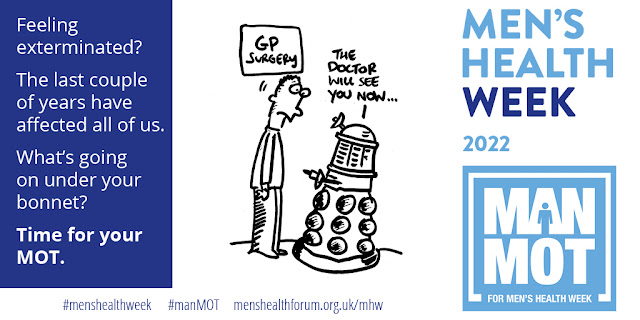

This and other campaigns like Movember try to raise awareness that, for our sons, fathers, brothers, partners…for wider society… men’s mental health is everyone’s concern. Sadly, men’s mental health in general is looking quite poor.

Having just completed work as a research associate on an NIHR Applied Research Collaboration North East and North Cumbria (ARC NENC) funded project focused on severe mental illness, I started a fresh project in a completely different area of mental health at the University of York. Namely, men’s mental health.

Until I applied to work on this research, I had honestly never considered men’s mental health as I had generally always been female gender focused. Traditionally, women’s poor health is viewed as a product of social circumstances, while men’s poor health has been seen as a product of men’s ‘bad behaviour’. Working on this research has revealed a completely different perspective and as such I have developed a lot more empathy towards men’s health.

In England, suicide is highest among men and is the leading cause of death for men aged 20-34 (Men's Health Forum). Similarly, records within NHS ambulance services indicate that the risk of suicide amongst paramedics who are men is 75% higher than the general population (Mars, 2020). Other industries also show higher rates of depression amongst workers who are men, such as construction workers and utility workers, sometimes due to long or unsociable work hours.

Despite this poor picture, only 36% of referrals to psychological therapies are men (Mental Health).


So why is this?

גברים אמיתיים לא אוכלים קיש
Sjustdoitright, CC BY-SA 4.0, via Wikimedia Commons

Barriers to improving men’s mental health relate to hegemonic ideals. Although men range in class, age, sexuality and ethnicity, the theory of hegemonic masculine identity in western society embodies shared attributes of stoicism and restriction of emotions to which many men may have been socialised or expected to conform. As such, some men may find it challenging to express or take action in response to ill health as they feel this may make them appear weak or not masculine (Galdas, 2005 )

For example, 38% of employed men with mental health concerns feel that their employer will think badly of them if they take time off for a mental health appointment (Men's Health Forum).

Then there is the use of coping strategies such as substance misuse. Generally, men tend to deal with health problems by seeking refuge in addictions or ignoring treatment needs, as such common mental illness such as depression often remains undiagnosed. In the UK, since 2001, rates of alcohol-specific deaths for men have consistently been more than double those for women (ONS).

The World Health Organization (WHO) states that achieving gender equality requires men to be engaged in transforming patterns of care, including self-care. This may include tailoring health interventions to men and involving men from all backgrounds in the role of mental healthcare co-production and promoting the positive aspects of masculinity such as humour and goal-orientation.

This year in the UK, the All-Party Parliamentary Group (APPG) on men and boys’ issues have been urging the Government to develop a men’s health strategy with a focus on inequalities stating that this would benefit not just men and boys but also women and girls. So, for our sons, fathers, brothers, partners…for wider society, let’s promote a wider understanding of men’s health issues.


Our research in the Mental Health and Addictions Research Group (MHARG) at the University of York aims to prevent the development of common mental illness among male frontline NHS workers. With funding from Movember, we will deliver a brief Behavioural Activation intervention which will be carefully tailored to men with guidance from our consensus group of NHS staff from diverse roles. Behavioural Activation is an evidence based talking therapy which aims to break the cycle of avoidance created by low mood or anxiety, by reinstating valued and meaningful activities.

To find out more please see our links below or feel free to contact us.

Images: 
  1. 'FVHjjxFXEAAaBos' with thanks to Men's Health Forum.
  2. Sjustdoitright, CC BY-SA 4.0, via Wikimedia Commons.

Friday, 16 April 2021

The other third wave: a mass epidemic of very individual pain

Posted by Jack Nicholls, Lecturer in Social Work at Northumbria University

*Content/trigger warning: mental health, depression, suicidal feelings.

This post is a contradiction. It starts with the experience of one person, extrapolates out from that to consider the potential hardships faced by others, and then argues that this extrapolation may be unsafe from a policy and practice perspective. Our topic is the long-term mental health consequences of the pandemic, of lockdown and social restrictions, and of its easing – specifically, those consequences we have not necessarily seen coming, because to those who do not know, they do not seem logical.
Katsushika Hokusai: The Great Wave off Kanagawa


I have knowingly lived alongside depression for nearly two decades. There have been long periods where it has been minimal and manageable, and others where it has nearly destroyed me. Many who experience mental ill health in any form will recognise this undulating pattern, and that the peaks and troughs can have exactly nothing to do with how well life is going objectively. I’ve felt perfectly steady in situations of very high pressure. Conversely, the lowest point of the last few years was at a prestigious conference. I was presenting my work – an opportunity I had been looking for since starting my research – while internally considering whether I wanted to remain alive. I doubt any of the audience would have suspected, because I performed the role of the good presenter. I did what was expected – by them, by me, by the world. More recently, but less severely, I had a short but acute period of utterly disabling depression after submitting my PhD thesis. Something excellent and long-awaited had happened. Celebration was expected, even in lockdown, but I wanted only drawn curtains and my duvet.

During the pandemic, we have had over a year of restriction, upheaval, loss, fear and strain. There has been some discussion of the impact on psychological wellbeing, but nowhere near enough. It has become an afterthought to vaccines and viral containment, which is understandable, and to macro-economics, which may be less so. Alongside we mental illness veterans, hundreds of thousands of people have consciously experienced moderate or severe mental ill health for the first time in their lives.

What particularly concerns me however is the psychological impact of the easing of lockdown. With all its hardship, pandemic restrictions have been our reality. The end of lockdown will represent a change to that reality. It will be accompanied by returning to workplaces, pubs, cinemas, planes, trains and shopping centres.

For some, the change back will be more jarring than they can currently anticipate, even if, like the submission of my thesis, it is on the face of it a ‘good thing’. We are facing a third wave of mental distress. There are those of us who have managed symptoms for years, and those who recognised their genesis in lockdown. There is a strong chance that after the jubilation, many will start noticing that they aren’t feeling how they think they should. They may try to rationalise it – ‘I wasn’t on the frontline, I didn’t lose anybody, I wasn’t furloughed – why the hell do I feel like this?’. If we are not careful, no-one will tell them that this is normal, if awful, and they are entitled to help.

I am unbelievably fortunate. I understand my condition well. I am by-and-large not shamed by it. I have friends, family and colleagues who understand it and me. I have a job with a degree of flexibility. For all of those wonderful protective factors and others, all that privilege of acceptance, the first stage of any episode is still denial, and the second is the instinct to run, hide and dynamite all my bridges. For anyone going through this for the first time, and particularly going through it when they think they should be celebrating like it is VE day, the loneliness, alienation and self-doubt could be pernicious and devastating. It could be fatal. In the context of public policy, planning and rebuilding, and particularly for those who do not want to go back to ‘normal’ but to create a fairer reality, we need to be prepared to offer a pro-active and public response to varied and individual suffering. At the point of both collective relief and collective exhaustion, we need to be ready to be accepting and kind. And we need to do it now.


Below are links to support organisations relating to the issues raised in the post: 
Link to an interview with Owen Paterson MP, who lost his wife to suicide last year


Image:
Katsushika Hokusai, (CC0 1.0), via Wikimedia Commons

Thursday, 19 November 2020

Surely men should have their day too...

Posted by Shelina Visram, Senior lecturer in public health, Newcastle University (on behalf of the BoroManCan research team)

*Trigger warning: mental health and suicide

Unless you’re a fan of the comedian and writer Richard Herring, you may not have given much thought to International Men’s Day. For almost a decade Herring has raised huge sums of money for the domestic violence charity Refuge by spending International Women's Day (8 March) answering each person who asks on Twitter 'But when is International Men's Day?' He then follows up the enquiries on International Men’s Day (19 November) to raise money for CALM, the Campaign Against Living Miserably. 


Presumably, these people are under the illusion that there is no dedicated day to celebrate men, yet International Men’s Day was founded in 1999 to do just that. The theme for 2020 is ‘Better health for men and boys’ with the strapline ‘Laugh stronger, live longer’, but many have struggled to find reasons to be cheerful this year. Although women are more likely to suffer the social and economic consequences of the pandemic, being a man greatly increases the risk of death from COVID-19.(1,2) Men tend to have many underlying health conditions that worsen coronavirus and generally contribute towards lower life expectancy. Our region (North East England) is likely to see high numbers of COVID-related deaths but also significant impacts in terms of poverty and unemployment, given that the North of England’s economy has been hit hardest by the pandemic.(3)

We don’t yet know what long-term impact the lockdowns will have on mental health and wellbeing, but early reports suggest an increase in suicide. Globally, men were almost twice as likely to die by suicide as women were before the pandemic.(4) Harmful masculine norms – in other words, what it means to be a man – are a key driver of suicidal tendencies and encourage risk-taking behaviours like drinking and smoking. These norms often stop men from seeking medical help and have a knock-on effect on women’s lives, placing increased responsibilities on them to care for men’s wellbeing.(5) They also affect women in other ways, for example, there have been reports of a dramatic increase in domestic violence during the pandemic.


So, not much to celebrate this year then? Well, actually, there is some cause for optimism. Men’s health is starting to move up the agenda in policy and practice. I was involved in an evidence review and expert meeting to inform the first World Health Organization strategy on men’s health and wellbeing in Europe, which was published in 2018. World Health Statistics were separated by sex from 2019 so that we can better understand gender differences that affect health outcomes. There are also a number of initiatives that have adopted gender-sensitive approaches to actively address masculine norms, for example, through rugby or football.(6,7) In the North East, the BoroManCan campaign aims to inspire positive behavioural, health and culture change in Middlesbrough, where four out of five suicides involve men and the rate of male suicide is the second highest in the country. Various activities have been developed in partnership with community groups, including Barbers for Health, young men’s workshops in schools, and a one-day training course to develop Men’s Health Champions. Many of these activities are on hold because of the pandemic but the BoroManCan website, podcast and social media pages continue to share stories from local men and services, as well as providing advice and links to further support.

To infinity... and beyond!
I’m working with a team from Newcastle, Durham and Teesside Universities to develop a programme of research around men’s health and wellbeing. We were recently awarded funding from the NIHR Applied Research Collaboration (ARC) North East & North Cumbria to conduct research that will help practice partners begin to understand what has worked so far in relation to BoroManCan and where improvements can be made. Findings and outputs will be shared widely so they can be used to inform the development of similar initiatives aimed at addressing gender equality. I’m looking forward to being part of efforts to change the conversation around men’s health and wellbeing, not least because my own little man celebrates his birthday the day after International Men’s Day. Hopefully by the time he’s older the phrase ‘man up’ will mean something quite different, like being comfortable with your emotions and having the confidence to ask for help when you need it. 


References

1. Burki T (2020). The indirect impact of COVID-19 on women. The Lancet Infectious Diseases, 20(8): 904-905.

2. Williamson EJ, Walker AJ, Bhaskaran K et al (2020). Factors associated with COVID-19-related death using OpenSAFELY. Nature, 584: 430–436.

3. Bambra C, Munford L et al (2020). COVID-19 and the Northern Powerhouse, Newcastle-upon-Tyne: Northern Health Science Alliance. https://www.thenhsa.co.uk/app/uploads/2020/11/NP-COVID-REPORT-101120-.pdf.

4. Dearden L (2020). Coronavirus: Mental health incidents rising during UK lockdown, police say. The Independent, 6 April 2020. https://www.independent.co.uk/news/uk/home-news/coronavirus-suicide-rates-ukmental-health-support-a9451086.html.

4. WHO (2014). Preventing suicide: A global imperative. Geneva: World Health Organization.

5. Marcos-Marcos J, Mateos JT, Gasch-Gallén À, Álvarez-Dardet C (2019). Men’s health across the life course: A gender relational (critical) overview. Journal of Gender Studies, epub ahead of print 18 December 2019.

6. Witty K, White A (2011) Tackling men's health: Implementation of a male health service in a rugby stadium setting. Community Practitioner, 84(4): 29-32.

7. Gray CM, Wyke S, Zhang R, et al. (2018) Long-term weight loss following a randomised controlled trial of a weight management programme for men delivered through professional football clubs: The Football Fans in Training follow-up study. Public Health Research, 6(9): 1-14.

Thursday, 13 October 2016

Bridging the gap between (mental) health services and needs: negotiating power and political values

Guest post by Dr Angus Forsyth, Senior Lecturer in Mental Health Nursing, Northumbria University

As Monday was World Mental Health day, there will be familiar messages in the media about the barriers faced by people with mental health problems when seeking appropriate care and treatment. These include (but are not limited to) the difficulties that children and young people face in accessing local services, not to mention specialist services, such as support for young people who may experience eating disorders. For adults the suicide rate has increased, and there are more and more pressures on crisis services and in-patient beds. As overall funding within the NHS is further reduced, mental health services face additional financial cuts as their funding is diverted to other clinical groups whose needs have been identified as more of a priority. 
Steve McDonald (Simon Gregson) battled depression in Coronation Street

As if lack of access to mental health services is not problematic enough, people with mental health problems are also more predisposed to physical health disorders due to the combined effects of certain medications, lifestyle factors, such as smoking and lack of exercise, contributing to obesity and other metabolic disorders. This contributes to early mortality for people with long standing mental health diagnosis such as schizophrenia, having a reduced lifespan of 20 years. Despite these inequalities the Department of Health’s guidance (2011) recommended parity of esteem for people with mental health problems to have the same level of access to services as those with physical illnesses. And even this recommendation has yet to be achieved. 

On the positive side, there has been a relative increase in coverage of mental health related issues within the media and society, either through celebrities disclosing personal issues, storylines in popular TV dramas; magazines, and social media. However, there still persists a stigma associated with the experience of mental ill-health, for example that people with Schizophrenia are unpredictable and predisposed to violence (Houses of Parliament 2015).

Whilst fear and lack of understanding are factors that maintain stigmatising beliefs and attitudes, power inequalities are also evident when exploring the above barriers to meaningful services. These power imbalances can lead to the development of oppressive social systems and organisational practices where the exercise of authority or power can lead to the marginalisation of specific groups. An example of this is the implementation of government policy, for example the reduction of resources and the subsequent allocation of funding by commissioning agencies (as servants of government), can result in further disadvantaging of citizens as in the case of young people attempting to access mental health care. In the majority of these cases, care can only meaningfully be accessed when there is a serious risk to self and others and is provided under the legislative procedures of the mental health act and in locations far from the individual’s home. This example illustrates how healthcare is provided in an oppressive system.

This brief summary of the challenges in accessing comprehensive care and resources that are available to people with mental health issues highlight that as the expression of mental health becomes more dominant, service provision and resource allocation has not kept pace with increasing need and demand for services. This is particularly in light of mental and physical ill-health co-existing and becoming common bedfellows in chronic disease management. Let’s hope that World Mental Health Day not only highlights issues related to the experience of mental health but acts as a catalyst to mobilise meaningful social actions such as:-
  1. Reviewing the public and political structures to include the meaningful involvement of service users at all levels of the decision making process (Rethink 2016). This would further highlight inequalities and disadvantage experienced by individuals and meaningfully influence the development of comprehensive mental health service provision.
  2. Reorganise health and social care structures around the holistic needs of service users rather than in the functional silos that currently operate.
  3. Use World Mental Health Day to evaluate the impact of service delivery for vulnerable groups to identify meaningful changes and clarify further challenges.
References: