Showing posts with label food. Show all posts

Friday, 20 March 2026

Moving from blame to support: rethinking food insecurity in diabetes

Posted by Ruth Boocock, Associate Professor and Dietitian, Teesside University, in Nutrition and Hydration Week.

This work started with a deceptively simple question: ‘How do clinicians identify food insecurity in people living with type 2 diabetes, and what actually helps once they do?’

By clinicians, I mean the people working directly with patients, for example GPs, nurses, dietitians, and others working in busy, often stretched diabetes services.

To explore this, I reviewed published research from across the world. Over many coffees, I read and debated papers, regularly asking other colleagues: ‘Is this really a pattern, or am I reading too much into it?’

What came through very clearly were the human stories beneath the data. Clinicians wanting to help, but constrained by time and systems. People with diabetes trying to manage blood glucose, while also worrying about whether there is enough food at home.


Asking about food only works if there’s something to offer next

Many clinicians want to ask patients about access to food and some already do, but the evidence shows that screening alone is not enough.

Without time, clear processes, or obvious referral routes, screening often stalls. I repeatedly came across similar experiences: ‘I asked the question. They said yes. And then I didn’t know what to do’. That moment matters. It can leave clinicians feeling stuck and distressed, and patients feeling exposed and unsupported.

One of the key messages from the evidence is that this isn’t about individual clinicians doing more. Food insecurity needs to be part of everyday systems, with prompts, shared responsibility across teams, and links to support that actually exists. Without that organisational backing, raising the issue of food tends to fall down the priority list, especially on busy clinic days.


Trust makes disclosure possible


You can’t script disclosure about food insecurity. People tend to talk when they feel listened to and not judged.

Shifts in practice, even just small changes in language came up repeatedly. A nurse replacing ‘Why aren’t you following the diet?’ with ‘What gets in the way?’ or a GP explaining ‘We ask everyone about access to food, because it can affect diabetes management.’

These shifts matter, they help move conversations away from blame and towards problem‑solving.

There was also a consistent tension between dietary advice and financial reality. Guidance may be clinically sound but still impossible to follow when money is tight. Recommended foods and ideal meal plans don’t always match what someone can afford or access.

Across the evidence, one message stood out, ‘Starting where people are really matters’. Advice framed around better, not perfect is far more likely to support engagement than aiming for an ideal that feels unreachable.


This isn’t something clinicians can fix alone

Many clinicians described feeling unsure where to send people for help. Knowledge of local food support was often limited or quickly out of date. Some avoided the conversation altogether, worried about raising an issue they couldn’t help with.

Where things seemed to work better was in areas with strong links between health services and community organisations such as food banks, pantries, community kitchens, and social prescribers. Not just signposting, but relationships and connection.

Another common theme was confidence and skills. Here, even when people accessed food support, they didn’t always feel able to turn unfamiliar ingredients into meals that worked for diabetes. Practical, community‑based support, including cooking sessions or simple recipe swaps helped bridge that gap.


What did I learn?


One of the biggest surprises was how rarely food insecurity appeared on its own. Transport costs, prepayment meters, missed appointments, and medication routines were often part of the same picture.

Stigma also ran throughout the existing research. Many people felt blamed for their diabetes and ashamed of needing help with food. Seen in that light, it becomes easier to understand why disclosure feels risky.

Perhaps most surprising was the impact of small system changes. Adding two evidence-based questions to patient records and a clear referral route doesn’t sound transformative. In practice, it can change conversations and access to support in very real ways.


Where I’ve landed

I started with the academic literature. I ended with a clearer sense that while food insecurity shows up in clinical settings, it isn’t something clinicians can or should be expected to solve alone.

If we want better diabetes outcomes, we need systems that make it:
  • easier to ask about food
  • realistic to respond to what we hear, and
  • normal to work alongside community organisations beyond clinic walls.
My review is now published and available here.

If you’ve tried something that worked, or something that didn’t, I’d really like to hear about it. Being open about the messy space between screening and support feels like a good place to start.

Friday, 12 December 2025

Nourishing our tomorrow needs to start today

Posted by Professor Amelia Lake, Fuse Deputy Director, and Professor of Public Health Nutrition at Teesside University

How do we create a future where every child has access to healthy, affordable food?

That question took centre stage at the British Nutrition Foundation annual conference, which brought together academics, policymakers, and practitioners to tackle one of the most pressing public health challenges of our time: improving the diets of children and young people.

The event was given a special highlight with the attendance of Her Royal Highness The Princess Royal, Patron of the British Nutrition Foundation, who delivered a powerful address on the importance of food in society and education.

Professor Amelia Lake and collegues meeting Her Royal Highness The Princess Royal
Children’s health and children’s diets are hugely important. Yet, rising rates of obesity, food insecurity, and exposure to unhealthy food environments challenge the ability to have affordable and healthy food.

This conference explored both the challenges and solutions, offering evidence-based insights and practical strategies.

I spoke in the morning session alongside my Fuse colleague Professor Greta Defeyter (Northumbria University) and 
Professor Maria Bryant (University of York). A great representation of Northern University academics!

Profs Maria Bryant, Greta Defeyter, Amelia Lake (L-R) 
Our morning session had a very special guest in the audience, Patron of the British Nutrition Foundation, Her Royal Highness The Princess Royal. Earlier the speakers were invited to meet The Princess Royal and individually talk to her about our work. A good ear for accents, Her Royal Highness. quickly recognised I wasn’t a Teesside native. Those who know me will be aware that I am from Northern Ireland, and I very much sound like I am.

My talk was titled: “Unpacking the Food Environment: Implications for Children and Families” and I discussed Healthy Planning and was able to introduce the audience not just to our academic evidence but also our evidence informed free online training on the topic aimed both at public health and planning teams in local authorities.

I presented our recent ‘Dark Kitchens’ research. The rise of online meal delivery and “dark kitchens” is reshaping how families access food, increasing exposure to calorie-dense options at the click of a button and increasing the availability of accessibility of less-healthy food choices.

While planning allows us to shape our food environment there is much we can do around food retail to create healthier food environments. I discussed some findings from our Fuse Foodscape study funded by the NIHR School for Public Health Research.

We cannot describe the food environment without acknowledging that many households face significant barriers to accessing affordable, healthy food, with direct consequences for children’s health and wellbeing. Food insecurity is real and affects families across the UK. At Teesside, we have worked with communities and organisations using innovative methods to produce healthy food within local social supermarkets such as our healthy ready meal.

Amelia speaking at the event
I called for stronger planning policies and interventions to create healthier food environments, emphasising the importance of collaboration between communities, professionals within local authorities, government and industry.

Improving dietary health isn’t simply about individual choice - it’s about transforming the food environments in which those choices are made.

Her Royal Highness The Princess Royal has been patron of the British Nutrition Foundation since 1988 and delivered a powerful speech at the conference, emphasising the importance of food in society and within education. Her remarks reinforced the British Nutrition Foundation’s mission to ensure every family can access a healthy, sustainable diets.

The conference showcased many impactful speakers and left us with the key message that Nourishing our tomorrow, needs to start today.


The British Nutrition Foundation hosted its annual conference, Nourishing Tomorrow: Equipping Children and Young People for Better Dietary Health in the Future took place on Tuesday 25 November 2025.

Friday, 25 July 2025

What did you eat yesterday? The messy science of measuring what we eat

Posted by Dr Kath Roberts, Senior Lecturer in Public Health Nutrition, University of York

Ask anyone what they ate yesterday and you’ll likely get a pause, a guess, and maybe a laugh. That’s the reality nutritional epidemiologists (scientists who study how diet affects people’s health) work with every day. Measuring what people eat sounds straightforward but is surprisingly complex. And yet, understanding dietary intake is central to advancing nutrition science, improving public health, and shaping government dietary guidelines.

Increasingly, attention is turning not just to what people eat, but how well they eat overall. The concept of diet quality, looking at the overall balance, variety, and healthfulness of the diet has become a cornerstone of nutrition research. It also offers a way to bring together fragmented messages about nutrients, food groups, ultra-processed foods and national guidelines into one meaningful measure. But defining and measuring diet quality is just as tricky as tracking individual foods.

This blog reflects on the practical and scientific challenges of defining, collecting, analysing and interpreting dietary data and reflects on how improvements in methods and technology are shaping the future of dietary data.

Why measuring diet is so difficult

Capturing dietary intake data involves a tangle of practical and methodological problems. First, there’s the human element. People often don’t remember exactly what they ate or may selectively forget. This recall bias is especially tricky with foods eaten on the go or in small amounts. Then there’s social desirability bias. People want to give the “right” answers, especially if being questioned by an actual human (as opposed to filling out a diary or survey). So while a few honest folk might confess to having a chocolate bar for breakfast and a midweek takeaway, many prefer to report kale and quinoa - or at least a committed adherence to the holy ‘five-a-day’ grail. The result? A gap between what people say they eat and reality.

Then there’s the issue of burden. Some methods, like weighed food diaries, ask a lot of participants. Accurately weighing and logging every bite is time-consuming and often tedious. It may even change behaviour just to make recording easier. My own experience some years ago with logging foods through a free and widely used app was that it made me lean towards buying and consuming processed foods that I could just scan the barcode of, rather than cooking from scratch or shoving whatever was in the fridge onto a plate as I usually would. Other methods like food frequency questionnaires (FFQs) and 24-hour recalls try to reduce this burden but come with their own compromises.

Tools of the trade: strengths, weaknesses, and trade-offs

FFQs remain popular in large epidemiological studies because they’re cost-effective and can capture habitual intake over time. However, they rely on memory and a fixed list of foods that might not reflect cultural or personal variation, only capturing, by design, data on what they ask about. 24-hour recalls offer more flexibility and less reliance on long-term memory, especially when conducted with structured prompts like the USDA's multiple-pass method. But they only capture a snapshot in time and one day rarely reflects the whole story. Diaries, whether weighed or estimated, provide rich detail but at a cost. They demand motivation, literacy, and a willingness to record every meal, snack, and nibble without altering usual habits.

Brief screeners, like the US Healthy Eating Index or dietary diversity scores, offer pragmatic options for surveys or interventions. They’re easier to administer and analyse, but they tend to gloss over the nuance of full dietary patterns. And they still face questions of sensitivity and specificity - are they really measuring what matters most for health?

So what is a healthy diet anyway?


Amidst the tangle of dietary data collection challenges, there is the important question of ‘what is a healthy diet’? This is where the idea of diet quality comes in. Rather than counting single nutrients or fixating on particular foods or food groups, diet quality looks at the whole picture: how balanced, varied, and aligned with health guidelines someone’s overall eating pattern is. It’s become a cornerstone of nutrition science and epidemiology, but it’s surprisingly hard to pin down and turn into a clear, usable measure for research.

This also matters for public health messaging. People are bombarded with a range of different messages. We have the NHS Eatwell Guide, the High Fat Salt Sugar (HFSS) advertising restrictions, front-of-pack nutrition labelling, SACN Dietary Reference Values, rising concerns about ‘ultra-processed foods’ - and these don’t always line up. Each of these frameworks is based on different criteria and assumptions; food-based, nutrient-based, processing-based - which can send mixed messages and make public health advice feel inconsistent or overwhelming. Without a consistent definition of what a ‘healthy diet’ looks like, it’s easy to get confused.

That’s why the idea of diet quality is so powerful: it can provide a coherent construct that integrates these strands and translates complex nutritional science into something more intuitive and holistic. But the reality of defining and measuring diet quality is messy. Efforts like the UK-DQQ show promise, offering a simple, food-based screener aligned with national guidance, derived from empirical dietary patterns and validated against both biomarkers (e.g. blood and urine) and nutrient intakes. But even this needs updating as dietary trends evolve and must be validated in diverse population groups.

The trouble with comparing apples to oranges (or diet scores to diet scores)

No universal agreement on how to define a ‘healthy diet’ contributes to variation between studies, making it hard to compare results or synthesise evidence. Some researchers focus on diet quality scores (like HEI), others on dietary diversity, others on adherence to national guidelines or cultural patterns like the Mediterranean diet. These varied definitions mean that two studies can report on ‘diet quality’ but be talking about quite different things.

The Mediterranean Diet Index and its adaptations, such as the relative Mediterranean Diet Score or alternate Mediterranean Diet Score, are widely used in Europe. These scores capture core elements of Mediterranean dietary patterns: a lot of vegetables, pulses, fruits, nuts, olive oil and fish; moderate alcohol drinking; and low amount of red meat and dairy. In countries like Spain, Italy and Greece, these tools have helped characterise regional diets and assess traditional dietary patterns in relation to cardiovascular disease, cancer, and overall death rate.

European examples such as the EPIC cohort (European Prospective Investigation into Cancer and Nutrition) show how differing dietary patterns and assessment methods between countries can complicate analyses. EPIC responded by conducting extra studies to adjust for differences in how diets were measured across countries.

The cost of precision

Gold-standard methods like weighed food diaries or duplicate meals offer unmatched detail, but they’re expensive, burdensome, and often impractical for large groups. Even with trained coders and food composition databases, analysis is slow and complex. Participants may forget to record, misestimate, or change how they eat.

And food diaries only capture a few days raising the question: are those days typical? People might eat differently on weekends, holidays, or when they’re sick. So we need multiple days, and sometimes biomarkers or repeat measures, to estimate what is usual. That’s time and resource intensive. And even then, we must account for people who report eating less than they actually do.

In the UK, the National Diet and Nutrition Survey switched from 7-day weighed diaries to 4-day estimated ones, to computerised 24 hour recall methods. These changes reflect the challenge of balancing accuracy, rigour, realism and resource constraints.

From challenge to opportunity: smarter tools, better insight

The good news? We’re getting better. Digital tools like Intake24, MyFood24 and ASA24 allow self-administered, online 24 hour recalls with built-in prompts, portion images, and food databases. These tools reduce burden and standardise data collection. AI is also being explored for recognising foods from images, helping reduce reliance on memory and self-reporting.

Dietary pattern analysis is also on the rise. Rather than fixating on individual nutrients, researchers are looking at how foods cluster together using tools like principal component analysis. These approaches acknowledge that we eat meals, not molecules and that whole-diet patterns may offer a more stable and interpretable link to people’s health.

What now?

Dietary data collection isn’t perfect and may never be. But it’s getting better. By balancing scientific rigour with practical constraints, and by using emerging technologies and analytic strategies, researchers can produce meaningful insights. Whether it’s via smarter recalls, better biomarkers, or dietary pattern-based analysis, the goal is the same: to understand how what we eat affects our health and how we live. That journey starts with listening carefully, thoughtfully, and with an appreciation for just how tricky it is to answer the simple question: “What did you eat yesterday?”

So the next time you try to recall what you ate yesterday, remember you're not alone - even science is still figuring it out!

Tuesday, 8 July 2025

This isn’t just about food. It’s about fairness, dignity, and giving communities the tools they need to support themselves

Why Community Food Organisations deserve a place in the Child of the North APPG report


Posted by Andrea Burrows, Dr Claire O’Malley, Dr Helen Moore and Professor Amelia Lake, Fuse researchers from Teesside University

Andrea Burrows, Helen Moore with other contributors at the launch of the report in parliament

Across the North of England, families are facing a dual crisis: rising food insecurity and growing food waste. In response, Community Food Organisations (CFOs) - like social supermarkets and pantries - are stepping up in powerful, community led ways. These aren’t just places to get food. They’re places of dignity, connection, and hope.

But despite their growing role, CFOs are still flying under the radar. They’re under-researched, inconsistently defined, and often left out of the bigger policy picture. That’s why they were included in the Child of the North APPG report.

What is the Child of the North APPG?

The Child of the North All-Party Parliamentary Group (APPG) is a cross-party group of MPs, peers, researchers, and practitioners working together to tackle the deep-rooted inequalities affecting children in the North of England. From poverty and poor health to educational disadvantage, the APPG is committed to finding evidence-based solutions that give every child a fair start in life.

Backed by research from the Northern Health Science Alliance (NHSA), Health Equity North and the N8 Research Partnership, the APPG has already produced influential reports on the cost of living, education, and health. Now, it’s time to shine a light on food, and the role CFOs can play in transforming communities and the lives of children.

A different kind of food support

Unlike traditional food banks, CFOs operate more like supermarkets, offering surplus food at low prices. Often delivered in a familiar, retail-style setting, this model not only reduces food waste but also gives people choice and dignity in how they access food. It’s a far cry from the stigma that can come with emergency food aid.

Research shows that this approach better meets the needs of people experiencing food insecurity. It empowers them, rather than making them feel like recipients of charity.

One model, many faces


CFOs are incredibly diverse. Some are membership-based and serve specific groups; others are open to all. Some offer wraparound support like job training or help with household income; others focus purely on food. This flexibility is a strength, it not only allows CFOs to adapt to local needs, but it also makes it hard to evaluate their impact or share what works best.

"Community Food Organisations... aren’t just places to get food. They're places of dignity, connection, and hope."

A recent review led by by colleague Claire O'Malley (currently under review) found that there’s no single definition of a social supermarket. And many operate informally, relying on local relationships and community goodwill to source food. This makes them agile, but also vulnerable.

Why now?

Since the pandemic, food insecurity has increased, especially in the North. But so too has the rise of CFOs. In the North East and North Cumbria, there are now 67 social supermarkets. In the North East town of Middlesbrough alone, the number of Eco Shops, the dominant social supermarket model, has jumped from nine in 2021 to 28 in 2025.

This growth shows just how much communities value these spaces. But it also raises urgent questions:
  • How can we make these models sustainable?
  • What support do they need to thrive?
  • How do they fit into the bigger picture of public health and food policy?
Why the Child of the North report matters

Including CFOs in the report will:
  • Raise national awareness of their role and potential.
  • Create shared definitions and standards to help evaluate impact.
  • Highlight best practices and support scaling of successful models.
  • Ensure CFOs are recognised as part of the wider food and health system - not just a stopgap.
This isn’t just about food. It’s about fairness, dignity, and giving communities the tools they need to support themselves. CFOs are already making a difference. With the right recognition and support, they could transform community support with accessible, socially accessible methods of community aid.


About the authors:

Andrea Burrows is a Research Associate at Teesside University and a Fuse Associate member

Dr Claire O'Malley is a Research Associate at Teesside University and a Fuse Associate member

Helen Moore is an Associate Professor at Teesside University and a Fuse Associate member

Amelia Lake is Professor of Public Health Nutrition at Teesside University, Deputy Director of Fuse, the Centre for Translational Research in Public Health, a dietitian and public health nutritionist.

Friday, 27 September 2024

Amplifying voices to tackle inequalities in South Asian and Muslim communities

Posted by Zeibeda Sattar, Assistant Professor in Health Policy, Northumbria University

L-R: Greta Defeyter, Humaira Khan and Zeb Sattar 
I recently had the opportunity to chair the Health Inequalities Symposium hosted by the Centre for Health and Social Equity (CHASE) at Northumbria University, in collaboration with Fuse. It was an incredible event that brought together over 100 people, including researchers, policymakers, healthcare providers, and community members, all focused on tackling the pressing health challenges facing South Asian and Muslim (SAM) communities. The main goal was clear: to find ways to bridge the gap between research and real-world impact.

The presentations were enlightening and underscored how critical it is to engage with minority communities effectively to shape public health services. Each speaker highlighted a different, but equally important, health issue impacting SAM communities. Public partner Humaira Khan, who co-chaired the symposium, pointed out that the mental health challenges facing South Asian and Muslim are often misunderstood and stigmatised. Hearing her talk about the need for culturally competent healthcare really hit home. Her words - “researchers are warriors; they don’t fight for themselves - they amplify the voices of the people” - perfectly captured why events like this matter.

“researchers are warriors; they don’t fight for themselves - they amplify the voices of the people” 

Humaira Khan, public partner


Dr Sarah Croke from the University of Manchester spoke about the language and cultural barriers that often lead to untreated health issues. This can leave community members struggling because healthcare services aren’t designed with South Asian and Muslim needs in mind. Dr Saeed Ahmed from Sunderland Royal Hospital took on the tough topic of organ donation disparities. He pointed out the harsh reality: SAM communities are in desperate need of organ transplants but are also among the least likely to donate. His call to raise awareness and educate was powerful, especially when he reminded us that one donor can change up to nine lives.

There were also discussions about everyday barriers that many of us face but rarely see addressed. Professor Defeyter from Northumbria University talked about the lack of culturally appropriate meals, like halal options, in schools. It was a reminder of how even things like food choices can create a sense of exclusion for our children and why legal changes to recognise cultural diversity are long overdue.

I found Simon Luddington’s (SearchNewcastle) presentation about the West-End Befrienders project particularly inspiring. It’s easy to forget how isolating language barriers can be and how vital social connections are for our wellbeing. Their work in bringing people together, especially in helping with access to primary care and breaking down isolation, felt like a model that should be replicated.

One of the more challenging discussions was around drug and alcohol use in our communities. Lydia Lochhead’s (Northumbria University) research laid bare the stigma that prevents so many from seeking help. It’s a tough conversation to have, but hearing about Mushtaq Dakri’s community-led approach to addiction support was a beacon of hope. They offer a holistic service - combining therapy, physical activity, and spirituality - and it’s designed by and for the SAM community. Knowing there’s a women-only support space now available shows their commitment to evolving and meeting community needs.

Fuse Associate Director Dr Floor Christie and Dr Rawand Jarrar from Sunderland University, wrapped up the day with their work on improving cancer screening uptake among Muslim women. Their workshops have reached over 260 women, and it’s encouraging to see how culturally sensitive approaches can genuinely improve health outcomes. This was a reminder of how vital it is to build services that reflect our communities.

As I reflect on the symposium, it’s clear to me that these health inequalities are not just about accessing services - they’re about how these services are designed and delivered. The urgency to address these gaps cannot be overstated. The event reinforced the need for services that truly understand and respect South Asian and Muslim communities, going beyond just offering a service to creating environments where people feel welcomed, understood, and valued.

Leaving the symposium, I felt hopeful. Change is possible, but it won’t happen without consistent engagement with our communities. Trust needs to be built, and community voices must be represented and acted upon. The gap between research and impact can be bridged if we keep pushing for culturally relevant, accessible, and respectful health services.

Plans are already in place for a follow-up symposium in November, focusing once again on the health inequalities that continue to affect SAM communities. I urge everyone to get involved. This is our chance to be part of the change and to make our voices heard in the ongoing fight for a more equitable health system. Sign-up details will be shared soon, and I hope to see more of us there - because turning these conversations into action is how we create a healthier future for all of us.

Friday, 10 February 2023

Treats: a helpful reward, or to be approached with care?

Posted by Anita Attala, Lead Adult Weight Management Dietitian from Northumbria Healthcare NHS Foundation Trust, and research team from Teesside University

We all like to have a ‘treat’ and to give ‘treats’ to others. Indeed, the use of food, and in particular what we in public health call ‘high fat, sugar, and salt’ containing foods or ‘HFSS’, are often chosen as rewards. The notion of food cultures is certainly a social anthropological (study of humans) concept, with an example being the use of food in positive reinforcement; using ‘treat’/HFSS foods to reward children in particular. Taken at ‘face-value’ such treats may appear harmless, however repeated use of HFSS in this way has been shown to physiologically influence the human food reward system, and impact on our ability to regulate how much food we eat. This, together with other detrimental impacts, has led to advice not to regularly use food as a reward. Research has also shown that using food rewards in adults can hinder healthy weight management, especially from a psychological perspective.

But what exactly is a ‘treat’? Why do we feel the need to ‘treat’ someone? Are ‘treats’ always a positive experience or can they be used in a detrimental or harmful way?

While working in a forensic service I saw patients gain weight, and often gain this weight very rapidly. I also noted that some staff seemed frustrated and concerned about the weight gain some patients experienced. However, I also noticed that HFSS food was frequently used as part of patient care. This sparked my interest in wanting to understand this apparent conflict.

Forensic services provide care for people with a severe mental illness or learning disability, who have committed a crime but are too vulnerable to be in prison. For example, they are high risk either to themselves or the public, and therefore are unable to live in the community. People in these environments are often here for a long time and are reported to die 15-20 years prematurely, often from avoidable diseases. There are often restrictions imposed on the person and their environment. These restrictions will depend on the level of security required and the risk posed by the patient, and can be directed by the Ministry of Justice. An example of a restriction might be the person is not able to leave the ward.

Limited research seems to have been undertaken around the use of HFSS food ‘treats’ for adults, let alone adults who are in hospital. Yet, it is something many of us seem primed to do – bring (HFSS) food to someone when they’re ill.

The word ‘treat’ conjures up a particular thought of food – which is often high in calories, high fat and high in sugar. What you view as a ‘treat’ and how to ‘treat’ can often have been learnt in childhood and can differ from person to person. But, while it is entirely possible to have a non-food ‘treat’, it’s often harder to think of one and can be more difficult to provide while in hospital (particularly one with restrictions such as forensic wards).

You could argue that ‘treats’, by definition, can only be a ‘treat’ if you don’t consume them on a regular basis. As research shows, regular behaviours of any kind, can soon develop into habits.

Wanting to learn more about the use of ‘treats’ to show care and kindness, particularly in a hospital setting, I applied for research funding from my Trust (Cumbria, Northumberland, Tyne and Wear NHS Foundation Trust). Also, in 2020, I was successful in obtaining a clinical academic internship with Health Education England (HEE) and the National Institute for Health and Care Research (NIHR). Both awards enabled me to research the use of treats in forensic inpatient care settings.

Using this funding, I decided to focus on whether ‘treats’ were being used to prompt a particular behaviour from a person, while in inpatient care settings; whether these ‘treats’ impacted on a person’s weight and physical health; and why treats were chosen and if it was related to ideas of care and kindness. Certainly, from my observations this is what seemed to be happening - often perhaps unconsciously – but this research allowed us to evidence what may be happening.

What we found

Our research into treats in the health care sector has now been published. It found that treats were used for a number of reasons including:
  • Being an affordable way to reward someone
  • An incentive to encourage patients to participate in activities, and
  • A way to express love/care for someone.
Of course, food as a bonding mechanism is not a new phenomenon, and the idea of certain foods providing comfort is well-established.

It’s entirely possible to have ‘treats’ as part of a healthy balanced diet, and that the origin of using HFSS as treats may be from a place of nurture, but the advice is that food treats should be infrequent and limited in quantity. While it would appear ‘easy’ to say that those working in institutions, like in NHS care services, need to be mindful of how food is being used, our research findings suggest that it may take a much bigger system/cultural change to reduce the use of HFSS as treats in services. I think the idea of a ‘positive food culture’ is useful here. One where the focus is on preserving and nurturing good health and wellbeing through the use of healthy, positive, food behaviours, attitudes and values.

Authors:

Anita Attala, Lead Adult Weight Management Dietitian from Cumbria, Northumberland, Tyne & Wear NHS Foundation Trust, and postgraduate student from Teesside University.

Jo Smith, Consultant Dietitian (Clinical Academic) from Tees, Esk and Wear Valleys NHS Foundation Trust, and PhD student from Teesside University

Amelia Lake, Fuse Associate Director and Professor of Public Health Nutrition from Teesside University

Dr Emma Giles, co deputy-lead of the Fuse Behaviour Change Theme and Associate Professor Public Health from Teessside University


References:
  1. Alonso-Alonso M, Woods SC, Pelchat M, Grigson PS, Stice E, Farooqi S, Khoo CS, Mattes RD, Beauchamp GK. Food reward system: current perspectives and future research needs. . Nutr Rev 2015;73(5):296-307. https://www.ncbi.nlm.nih.gov/pmc/articles/PMC4477694/
  2. Roberts L, Marx JM, Musher-Eizenman DR. Using food as a reward: An examination of parental reward practices. Appetite 2018;120:318-326. https://doi.org/10.1016/j.appet.2017.09.024
  3. Hsu A BA. Designing for Psychological Change: Individuals’ Reward and Cost Valuations in Weight Management. J Med Internet Res 2014;16(6). https://www.jmir.org/2014/6/e138
  4. Attala A, Smith J, Lake AA, Giles E. Investigating ‘treat culture’ in a secure care service: a study of inpatient NHS staff on their views and opinions on weight gain and treat giving for patients in a forensic secure care service. J Hum Nutr Diet 2023; 1-13. http://doi.org/10.1111/jhn.13129
  5. Human Relations Area File. Craving comfort: bonding with food across cultures. 2023; Available at: https://hraf.yale.edu/craving-comfort-bonding-with-food-across-cultures/
  6. Mingay E, Hart M, Yoong S, Hure A. Why We Eat the Way We Do: A Call to Consider Food Culture in Public Health Initiatives. International journal of environmental research and public health 2021; 18(22) https://www.ncbi.nlm.nih.gov/pmc/articles/PMC8623951/

Friday, 6 November 2020

Changing the habit(s) of a lifetime: an intense body and mind affair

Posted by Fiona Ling, Senior Lecturer in Sport & Exercise Psychology, and Gavin Tempest, Senior Lecturer in Exercise Neuropsychology, Northumbria University

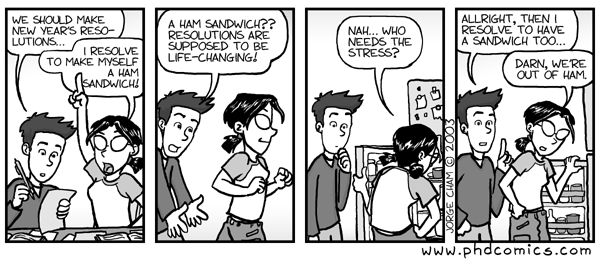
Many of us will be soon be thinking about making New Year’s resolutions, whether it’s to do with eating more healthily or doing more exercise. However, how many of us have actually managed to stick to our resolutions even though we know they are good for us? The question is – why is it so difficult to change our health habits?

While it’s well recognised that our environment does not help in encouraging a healthy lifestyle - from food and drink marketing to electronic devices promoting inactivity - could there be other reasons why we find it hard to change behaviour?

"Piled Higher and Deeper" by Jorge Cham www.phdcomics.com

What actually drives our behaviour?

Currently there exists many theories that try to explain why we do what we do, however, explanations are still lacking in regards to how our body and brain works together to directly drive our behaviour. When it comes to changing our habits, a key point to remember is that this involves stopping ourselves from doing things we consider pleasurable. For example, if you’re on a diet, every time you see an unhealthy snack, you have to tell yourself to STOP. Or, if you’re not a fan of exercising, why would you get off the sofa and slip on your running shoes? Making ourselves do things that don’t provide us with an instant reward can be stressful. These examples suggest that changing our habits can be stressful, that is, (the thought of) diet or exercise can become a source of stress (a stressor), and this makes our brain’s impulse control system work harder in order to adopt a new habit. Researchers have found that some of us can become stressed when seeing images of food, and are also not as good at controlling our impulses.1 Food craving, especially from seeing foods that we like, is a known stressor and the stress experienced from having to control our cravings is likely to tire out the impulse control system that can lead us to give in to temptations.

We might be able to change our habits for a short time as we become vigilant towards our goals, that is, the need to stick to our diet or exercise. However, we all have our limits and if stress from restricting our behaviour continues it will sap our ability to control our impulses, and our behaviour will return to what we are used to (or our ‘normal’). We saw another example of short-term success in behaviour change during our research. When monitoring children’s physical activity, some showed a burst of activity level at the start, but before long, it quickly dropped.2 These children were characterised by being hyper-vigilant towards stressors and they were generally more inactive than other children. We speculated that it was our monitoring of the activity that increased stress as the children felt that they had to show us they were more active which might spur on the initial activity spike, but as the children’s impulses for inactivity built up, it resulted in a considerable drop later on.

What’s next - how can we possibly take up, and keep up with, good health habits?

To influence health behaviour, it is crucial to understand the stress-impulse control mechanisms that DIRECTLY drive the behaviour. To use an analogy, if a person has a fractured arm, a direct treatment would be fixing the bone, rather than taking painkillers which would help to relieve the pain but not fix the problem. Similarly, if it is the stress from behaviour change and its influence on impulse control that directly causes us to succumb to temptations, we ought to target psychological interventions that reduce stress, or the brain’s impulse control system. Being able to manage our stress-impulse control system is particularly vital in the current environment where we are constantly exposed to temptations that lead to an unhealthy lifestyle. It is important to note that other factors, such as motivation and intentions, are also influential in changing our behaviour, however, this stress-impulse control process may more directly dictate the way we behave within split seconds and without our conscious awareness.

A possible psychological intervention is mindfulness training which can increase awareness of the stress cues, so that self-control can be executed before the brain’s impulse mechanism takes over. So next time we have a craving for an unhealthy snack or we are getting worked up about going for a run, we can potentially cope by containing and managing stress and impulses.

We believe that more research needs to be invested in the stress-impulse control mechanisms as it can potentially enhance the effectiveness of future individual health behaviour interventions and public health messages in getting us live a healthier lifestyle, and crucially, it can revolutionise the way we think about health behaviour change.


References
  1. Spitoni, G.F., Ottaviani, C., Petta, A.M., Zingaretti, P., Aragona, M., Sarnicola, A.,. & Antonucci, G. (2017). Obesity is associated with lack of inhibitory control and impaired heart rate variability reactivity and recovery in response to food stimuli. International Journal of Psychophysiology, 116, 77-84. https://www.sciencedirect.com/science/article/abs/pii/S0167876016307310?via%3Dihub
  2. Ling, F.C.M., Masters, R.S.W., & McManus, A.M. (2011). Rehearsal and pedometer reactivity in children. Journal of Clinical Psychology, 67, 261-266. https://onlinelibrary.wiley.com/doi/abs/10.1002/jclp.20745

The views expressed here are those of the authors and do not necessarily reflect those of Fuse (the Centre for Translational Research in Public Health) or the author's employer or organisation.

Friday, 20 March 2020

Food shaming is not a game

Posted by Sarah Dempster, Registered Nutritionist (Public Health)

“Our current learning focus is food. We are exploring what makes a food healthy / unhealthy” says the notice board in the entrance to my daughter’s nursery. I sigh. Is this a battle I want to pick? I already had some difficult words with the Head Teacher last year about food-based rewards, and I don’t really want to become known as that mum who complains about every food-related activity that happens in the school. Especially when people don’t seem to get what it is that I’m actually complaining about.

I’ve worked in and around public health nutrition for ten years. Over the past few years - probably since having children of my own - I’ve become increasingly concerned about the way we communicate to children about food. Take this “teacher tested” educational game for four to eight year olds as an example:


I wonder if, in our worthy quest to do everything we can to improve children’s eating patterns, some of the things we say and do are having unintended consequences. What might be the impact of teaching nursery-age children to polarise foods into “unhealthy” versus “healthy” categories? What are we saying when we imply that people who eat so-called “junk” foods like burgers or pizza are “greedy”? What happens in children’s minds when they’re presented with those same “unhealthy” or “junk” foods as a reward for good behaviour? Or when their parent’s food choices are so constrained that a hotdog is the only option for dinner?

Mixed messages

My biggest concern relates to the disconnect between nutrition education and children’s day-to-day experiences of food. One UK study involving 9-10-year olds showed that children have difficulty interpreting healthy eating messages. An example quote was:
“it’s not true that chocolate’s bad for you because I eat chocolate, and I’m not completely fat, am I?” (Fairbrother, Curtis, & Goyder, 2016, p. 481)
Overall, it is thought that what children believe and know from their own experiences about food has a greater influence on their eating behaviours than what they are taught (Schultz & Danford, 2016). This makes me wonder why we’re teaching children about “healthy eating” at a young age at all - shouldn’t we just be showing them through the experiences we facilitate and/or provide for them and their families? 

What do children understand from nutrition education?

Health is an abstract concept and we know that young children are concrete thinkers. While they may be able to categorise foods as “healthy” or “unhealthy” by rote in pre-school, they are unlikely to make sense of why each food is in each category. They can understand that food provides energy but it isn’t until they are much older that they can accurately explain physiological reasons for eating (Inagaki & Hatano, 2006; Nguyen, Gordon, & McCullough, 2011; Slaughter & Ting, 2010). They find the concept of “prevention” particularly difficult (Legare & Gelman, 2014).

There’s little research on the impact this may have. However, Pinhas et al. (2013) found some evidence that healthy eating lessons could trigger eating disorder development in susceptible children, who may become preoccupied with food after learning about nutrition. We know that children are under pressure to conform to the “thin ideal” body type from a young age. One Australian study found that 34% of 5-year old girls were already restricting food (Damiano et al., 2015). Meanwhile, children demonstrate anti-fat attitudes from as early as two years old (Di Pasquale & Celsi, 2017). Oversimplifying the relationship between food and size in a game like Greedy Gorilla will at best be ineffective and at worst, fuel the well-known negative consequences of weight stigma (World Health Organization, 2017).

What does the curriculum actually say?

Food and nutrition is a focus area in UK curriculum frameworks, with defined knowledge and skills outcomes at specific ages or stages. Food literacy is covered in a much broader way than just teaching kids what to eat for health. This provides the opportunity for rich, multi-sensory learning experiences… how food is grown, how people from different countries and cultures eat, what different foods look, smell and taste like, how to prepare foods… and as children get older, bringing in critical appraisal around what influences our food choices (e.g. social, health-related or financial factors, the food industry, diet culture). There are lots of examples of good practice around this and it can be done in very positive and inclusive ways.

Until recently, there was little evidence of moralistic language such as “junk food” or reference to “unhealthy eating” within the curriculum. However, the Department for Education (2019) now states that by the end of primary school, children should know: “the characteristics of a poor diet and risks associated with unhealthy eating (including, for example, obesity)”. This worries me, especially for young children who are dependent on adults for all the food they consume, and because we know that weight bias is prevalent in education settings (Nutter et al., 2019).

Food education is really important for young children, but I think we need to look at how public health and education professionals collaborate to get it right for all children. This means improving our understanding of the impact of the language we use, to ensure that we are not fuelling fear, shame or stigma around food or body size.


References:
  1. Fairbrother, H., Curtis, P., & Goyder, E. (2016). Making health information meaningful: Children’s health literacy practices. SSM - Population Health, 2, 476–484. https://doi.org/10.1016/j.ssmph.2016.06.005 
  2. Schultz, C. M., & Danford, C. M. (2016). Children’s knowledge of eating: An integrative review of the literature. Appetite. https://doi.org/10.1016/j.appet.2016.08.120 
  3. Inagaki, K., & Hatano, G. (2006). Young Children’ s Conception of the Biological World. Current Directions in Psychological Science, 15(4), 177–181. https://doi.org/10.1111/j.1467-8721.2006.00431.x
  4. Nguyen, S. P., Gordon, C. L., & McCullough, M. B. (2011). Not as easy as pie. Disentangling the theoretical and applied components of children’s health knowledge. Appetite, 56(2), 265–268. https://doi.org/10.1016/j.appet.2011.01.008 
  5. Slaughter, V., & Ting, C. (2010). Development of ideas about food and nutrition from preschool to university. Appetite, 55(3), 556–564. https://doi.org/10.1016/j.appet.2010.09.004 
  6. Legare, C. H., & Gelman, S. A. (2014). Examining Explanatory Biases in Young Children’s Biological Reasoning. Journal of Cognition & Development, 15(2), 287–303. https://doi.org/10.1080/15248372.2012.749480 
  7. Pinhas, L., McVey, G., Walker, K. S., Norris, M., Katzman, D., & Collier, S. (2013). Trading Health for a Healthy Weight: The Uncharted Side of Healthy Weight Initiatives. Eating Disorders, 21(2), 109–116. https://doi.org/10.1080/10640266.2013.761082 
  8. Damiano, S.R., Paxton, S.J., Wertheim, E.H., McLean, S.A. & Gregg, K.J. (2015) Dietary restraing of 5-year old girls: Associations with internalization of the thin ideal and maternal, media and peer influences. International Journal of Eating Disorders, 48: 1166-1169. https://doi.org/10.1002/eat.22432
  9. Di Pasquale, R. & Celsi, L. (2017) Stigmatization of Overweight and Obese Peers among Children. Frontiers in Psychology. https://doi.org/10.3389/fpsyg.2017.00524 
  10. World Health Organization (2017). Weight bias and obesity stigma: considerations for the WHO European Region. WHO: Geneva. http://www.euro.who.int/en/health-topics/noncommunicable-diseases/obesity/publications/2017/weight-bias-and-obesity-stigma-considerations-for-the-who-european-region-2017)
  11. Department for Education (2019) Relationships Education, Relationships and Sex Education (RSE) and Health Education: Statutory guidance for governing bodies, proprietors, head teachers, principals, senior leadership teams, teachers. Department for Education: London. https://assets.publishing.service.gov.uk/government/uploads/system/uploads/attachment_data/file/805781/Relationships_Education__Relationships_and_Sex_Education__RSE__and_Health_Education.pdf
  12. Nutter, S., Ireland, A., Alberga, A.S., et al. (2019). Weight Bias in Educational Settings:a Systematic Review.Current Obesity Reports, 8, 185-200. https://link.springer.com/content/pdf/10.1007/s13679-019-00330-8.pdf#page32

Friday, 17 January 2020

School food research and teenage diets mean sleepless nights and a mountain to climb

Posted by Kelly Rose, Graduate Tutor/PhD researcher at Teesside University

In the spirit of the commencement of the New Year, I thought it the perfect timing to write a second Fuse blog post reflecting on my first year of PhD study. Also, driven by my waking at 2am, Monday of the first week back in a cold sweat, realising I am more baffled than ever!

In my first blog post, I described myself as feeling at the bottom of a mountain…

Now a year and a half in, I can report some relief at successfully passing my annual review, confirmation that I have the capability. This is definite progress, and a sure sign of having climbed at least a little higher towards the summit. A few days ago I also celebrated my 44th birthday, and I suppose the coinciding of a new decade brought a significantly reflective mood (in the most positive sense). This past year has tested me in so many ways that I had never expected. If you want to know yourself at a deeper level, I think a PhD certainly would be the recommendation. I started this journey with the attitude (that I was always telling my students and children) that anyone can do anything they set their mind to. This mantra has definitely helped in times of significant self-doubt.

Progress update

So far, I have completed a systematic review, had a paper of the political timeline of food policy published in the Nutrition Bulletin, shared my research in a conference, and was boosted by an article I contributed to the conversation.com being shared in the Independent online.

What have I learned?

I left secondary school teaching in July 2018 with a strong sense that more was needed to improve adolescent nutrition. Today, with more of a grasp on the research, I am even more incredulous as to why more is not being done by policymakers.

The evidence is clear, teenagers have the poorest diets of any other age group in the UK. The Lancet commission stated we can reap huge benefits from improved health policies, focusing on the global adolescent population, after all they are our future parents and workforce. As I found in the political timeline research and systematic review, there are many examples of good practice with regards to implementing and evaluation of school food standards, whole school policy and health interventions. But still no priority being placed on consistent evaluation and of policing school food provision in England.

Waking up at 2am questions
  • Why is our school food provision failing to improve adolescent nutrition?
  • Why does the Childhood obesity strategy (part 2) make the assumption that all schools in England are following the national school food standards when there is no evidence that most schools are? #pizzaandcookies. 
  • Why the inertia and lack of prioritising teen diets, when the evidence points to the impacts of diet on mental health and school performance? 
Of course, it’s just not that easy, because, this is a multilevel issue, and the problem is much more complex than just implementing a policy or three. There are significant barriers to challenge, as we see the commercial determinants to health as a major part (defined as “strategies and approaches used by the private sector to promote products and choices that are detrimental to health” (Kickbusch et al 2016)).

One of the factors I want to focus in on over the next two years, is the social aspect of teen diets. It is becoming more and more an accepted ‘norm’ that teenagers have a poor diet, and food choice is a major factor in fitting in with peers, with healthy food choices often ridiculed. A low risk perception of unhealthful food choice seems to be a barrier in improving the health of the next generation. I wonder how we can flip this influence.

With all the reflecting done, I am ready to move forward into 2020. This year the plan is to see my systematic review published, to plan and conduct research in building a picture of experiences, views and what is happening in a range of schools in the North East. And with this public declaration I aim to keep momentum and to contribute to the body of research moving forward.

Keep believing and achieving.


Image:
"Junk fast Food illustrations infographics editorial" by Svajune Garnyte is licensed under CC BY-NC 4.0

Friday, 10 January 2020

Now that's what I call blogging 2019

Posted by Mark Welford, Fuse Communications Officer, Teesside University

Happy New Year – can I still say that or have we reached peak-greet when this obligatory salutation is no longer required in email, phone, or awkward fleeting corridor exchange?

This time of year is all about numbers: the 12 days of Christmas, the pounds you’ve gained (lbs) or lost (£), counting steps, units, the 31 days of Dry January, Veganuary, or the point at which you can grant yourself a run free day.

It therefore seems fitting that the Fuse blog has a countdown of its own.  Last year was a fine vintage for blog posts but you may not have had the opportunity to read all 40 of them.  To save you time we have had a look back and created a Top 5 Chart of the ‘bestsellers’.

So without further ado, here’s our chart toppers:

5. The provocatively titled Can cancer ever be a good thing? in which Fiona Menger (@slt_fi) revisits the writing of 'cancer columnist' John Diamond while working on a head-and-neck cancer research study with a focus on a phenomenon called post-traumatic growth.

Page views: 585.  Posted: 31 May 2019 

4. In What old crisp packets dig up Duika Burges Watson (@debedub) gets hands on to unpack the mystery of the humble crisp.  What is their continued value as ‘food’ and can we still enjoy them as a cultural icon without creating so much waste and damaging our health?

Page views: 640.  Posted: 22 February 2019

Still from the animation
3. Why do some women continue to smoke when they are pregnant?  Sue Jones (@Susan_E_Jones) shares research findings on overcoming barriers to implementing NICE guidance on supporting pregnant women to quit smoking.  The blog includes a short animation which was developed based on the findings.

Page views: 663.  Posted: 10 May 2019

2. If at first you don’t succeed, try, try, try & try again...  Suzanne Moffatt (@SuzanneMoffatt) reflects on 58 months of knock backs in her efforts to secure ‘the big grant’ because multiple failures before success is often untold and sometimes persistence pays off.

Page views: 686.  Posted: 15 February 2019

Courtesy of Children's Future Food Inquiry via twitter
1. "It’s time to act!  It’s time this country gave every child the right to food!"  Pamela Graham (@PamLGraham) begins her blog post with this powerful statement from Corey (pictured right), a 15-year-old Young Food Ambassador who sat on a stage in Westminster and bravely told an audience about her experiences of food insecurity.  With more than double the views of its nearest competitor, Young people taking a stand for their #Right2Food takes the crown as most popular blog post in 2019.

Page views: 1474.  Posted: 03 May 2019

So there you have it, the top five Fuse blog posts from 2019. Can we can do any better in 2020? If you fancy giving it a go, please find out what we are looking for and how to take part here.


P.s. perhaps we need to look more closely at what's going on in February and May!?


Image:
  1.  'Now That's What I Call Music! 1989' by brett jordan via Flickr. Attribution 2.0 Generic (CC BY 2.0): https://www.flickr.com/photos/x1brett/45056607035/

Friday, 26 July 2019

By invitation-only, at a secret location, with no agenda - this is Sci Foo ‘unconferencing’

Amelia Lake, Associate Director of Fuse and Reader in Public Health Nutrition at Teesside University

I’ve been back home from Sci Foo for more than a week. I’m not missing the Californian sunshine as the North East weather has actually been rather seasonal, but I am missing two things; the incredible Google micro-kitchens and the people I had the good fortune to meet.

Before the email arrived - which incidentally, I almost deleted thinking it was another spam invitation to a fictional conference in some far flung location - I hadn’t heard of Sci Foo. Thankfully, I forwarded it to our University Director of Corporate Communications and Public Relations, who was suitably excited.

That was April.  Fast forward to July and I’m on a 10-hour flight to San Francisco (feeling very relieved that I don’t have to entertain the kids on such a long haul). At this point I’m still not that clear what an ‘unconference’ conference is.

When I arrive, I have to download Uber to my phone (not a necessity when living in rural north Yorkshire) and I find my destination with only jet lag to contend with - a theme common throughout my three days at Sci Foo. To be fair, I had jet lag before getting here courtesy of a three-year-old.

On Friday evening, we are bused to the top secret Google X complex and it starts – as all good things should – with food. I can’t remember the last time I went to an event where I didn’t know anyone at all other than some vaguely recognisable faces from the twittersphere.
But with food came conversation. 
Participant-driven 'rugby scrum' 

At around 8pm the conference started (bearing in mind that I had been awake since 3am) and the message was clear. Be inclusive, be kind, be curious and talk to people from as many diverse fields as possible. That was very easy, as I soon discovered, most people were doing or studying things I hadn’t heard of, or had zero comprehension. It was awe inspiring.

I soon discovered that an ‘unconference’ is completely participant-driven and from a distance this looked a bit like a rugby scrum.                                 

       But with encouragement from my new found food friends I joined the pack and put down a session on ‘silencing science’ - discussing whether our role as scientists is to be neutral or advocates. I met Prof Shaun Hendy and Dr Siouxsie Wiles both phenomenal science communicators from the University of Auckland, New Zealand and we devised a session for Saturday morning based on the range of experiences Shaun had collated in his book ‘Silencing Science’.

The rest of the day was incredible – from sessions on trust in science, to the future of scientific publishing – and did I say that the food was great?! Sleep deprivation is nothing when you have access to kettles with higher and lower temperatures depending on the type of tea you select.

On Sunday morning it was my turn to give a ‘lightening talk’ on our Fuse energy drink research, alongside a handful of other presenters. Speakers one and two were incredible with amazing graphics, audio and visuals. My more low-tech approach highlighted the powerful words of our young respondents, illustrating what the consumption of energy drinks means to them.

Sci Foo was only three days but it felt longer, in a good way. There were many highlights, including holding a Woolly Mammoth’s actual tooth during breakfast [add photo], discussing galaxy formations with cosmologist and Prof of Physics Risa Wechsler and attending a session on ‘fully automated luxury feminism’!

There can’t be many conferences – no make that occasions in life - where you can share the same room with the most influential skateboarder in history, Rodney Mullen and a Nobel Laureate.

I hit a conference high attending Sci Foo. It was incredible and lots of people worked very hard to make it such a brilliant event. Particularly Cat Allman, the team from O’Reilly Media, Digital Science, Nature Publishing Group and Google Inc.

My take home message is: if you ever get invited to one of these ‘Foo’ events, say yes - you won’t regret it.


Images:
2: Courtesy of Alex Cagan: https://twitter.com/ATJCagan/status/1149897137640988672
3: Amelia Lake with Prof Shaun Hendy
4: Quotes from the young people involved in Fuse energy drinks research
5: Amelia Lake with a Woolly Mammoth tooth