Showing posts with label industry. Show all posts

Friday, 10 October 2025

Changing the narrative on gambling harms in the North East

Posted by Dr Andrew Richardson - Research Associate (Gambling Harms), Newcastle University; Alice Beadle, Public Health Specialist - Gambling Harms, Middlesbrough Council; and Laura Sheridan, Public Health Officer – Gambling Harms, Middlesbrough Council


Gambling is staking money, or something of value, on the outcome of something involving chance. Gambling activities can include arcades, esports and video games, betting shops, online betting, gaming machines, lotteries, bingo, casinos and other common types of gambling. Gambling harms affect thousands of people across England but the North East faces the greatest risk. National estimates suggest that 3.8% of people are at elevated risk from gambling. In the North East, that figure rises to nearly 5% of people aged 16 and over - the highest rate of at-risk gambling in the country. These people experience a range of negative consequences, from financial hardship to serious mental health challenges.

To explore the scale and impact of gambling harms in the region, read the Regional Health Needs Assessment for Gambling.

What are gambling harms?

Gambling harms are any negative consequence or side effect experienced because of gambling. They may be felt by the person who is gambling or may be experienced by those close to them, such as a family member, friend or colleague, known as ‘affected others’. For each person who experiences gambling harm, on average six others are affected - often partners and children.

Whilst anyone can be harmed by gambling, it does not affect everyone equally. The harms from gambling are varied and may also be interconnected. They include:
  • Increased stress and poor mental health (such as anxiety, depression and suicide risk).
  • Financial hardship, debt, asset loss and bankruptcy.
  • Relationship breakdowns due to increased conflict, issues with trust and stress associated with harmful gambling. There are also links between gambling and domestic violence.
  • Reduced performance and absenteeism in education and in the workplace.
  • Stigma and shame associated with gambling behaviour.
  • Threatening behaviour, damage to property, fraud and theft.
For many, gambling harms leave a legacy and may be experienced for many years after the event.

A public health approach


The Association of Directors of Public Health in the North East (ADPH NE) Gambling Harms Programme aims to tackle the harm caused by gambling in the North East with a coordinated regional approach. The Programme received funding that originally came from a gambling operators’ penalty but was redirected by the Gambling Commission - called a ‘regulatory settlement’.

Gambling harms are complex, and prevention approaches need to move away from ‘personal responsibility’ to population-wide social, economic and environmental interventions. Messaging from the gambling industry often sets the narrative by placing responsibility onto the individual to address harmful gambling, despite the many ways gambling products are designed to be addictive. This can lead to increased stigma and shame and create additional barriers to help-seeking behaviour.

The Regional Office, a team hosted by Middlesbrough Council, supports the 12 Local Authorities in the North East to pilot prevention approaches to help reduce gambling harms. The Programme has developed resources which include awareness raising materials and evidence summaries to support practitioners in local authority settings.

Eight key priority areas have been established under the Regional Office:

1. Support and Partnerships – Responding to requests from local authorities and wider stakeholders to support understanding of gambling harms and embed prevention activity.

2. Advocacy – Contributing to the shaping of policy at a local, regional and national level by promoting a public health approach to support those impacted by gambling harms and to build an environment that prevents future harm.

3. Media, Communications and Education – Raising awareness of gambling harms and aiming to reduce stigma.

4. Treatment – Promoting regional treatment services and referral routes for residents and professionals across the North East of England.

5. Data, Research and Evaluation – Develop and create evidence bespoke to the North East and contribute literature to the national evidence base regarding gambling harms.

6. Licensing – Supporting planning and licensing colleagues to create environments that prevent future gambling harms.

7. Protecting Young People – Recognising the risks of gambling to children and young people, and developing resources to support caregivers to reduce risks of gambling harms.

8. Lived Experience – Co-producing all outputs with the Lived Experience Forum, made up of members from across the Region. This ensures all outputs reflect real-world experiences and have maximum impact.

To learn more about gambling and gambling harms, please use the ADPH NE Gambling Harms slide deck or access free Making Every Contact Count (MECC) and Gambling Harms training here.

You may also be interested in these national resources:

Learning from others

The North East Programme was inspired by the Greater Manchester Combined Authority and ADPH Yorkshire and the Humber to share findings and best practice. The three regional programmes collaborated on a Language Guide to promote language choices that reduces the stigma associated with gambling.

Building the evidence

The Programme will be evaluated and this will contribute to the evidence base on actions to reduce gambling harms, which is currently dominated by gambling industry narratives. The team is working with local partners to explore the wide range of healthcare services and practitioners who may be in contact with gamblers or people affected by gambling and educational toolkits for schools and communities etc. To learn more, see this academic paper co-authored by Fuse researchers or view a free slide deck that summarises the latest research on gambling harms.

Lived experience

The Programme also facilitates a Lived Experience Forum to help shape work happening across the region. If you have experienced gambling harms, either directly or as an ‘affected other’ and are based in or from the North East, this is open to you. If you would like to influence the work being done to tackle gambling harms in the region, please email GHR@middlesbrough.gov.uk.

Stay in the loop

The ADPH NE Gambling Harms newsletter includes news about events, new research, resources like podcasts and documentaries, and ways to get involved. Join the newsletter mailing list by contacting GHR@middlesbrough.gov.uk or complete the sign-up form here. New resources can also be found on the ADPH NE Gambling Harms website.

Treatment and support

Visit the Gambling Harms MECC page to find treatment, support and blocking tools. For some people in recovery from gambling harms, treatment may be the best option, whereas peer support groups may be better for others. Professionals can refer directly into these services. This may make it easier for those needing treatment and support to take the first step on their recovery journey.


Photo by Michele Lana on Unsplash

Tuesday, 31 May 2022

Are we really aware of the harm Big Tobacco causes our planet?

Posted by Ailsa Rutter OBE, Director of Fresh and Balance on World No Tobacco Day

The annual World Health Organization (WHO) campaign highlights the many harms of tobacco. This year’s theme explores the growing threat to our environment.


We know that smoking is the worst thing that we can do for our health – 8 million people around the world lose their lives from it each year.

Many of us are already taking action to do our bit in tackling climate change. But do we ever think about how tobacco is polluting our world globally, nationally and here in North East England?

As we face a climate emergency, our fragile ecosystems are being put under even more pressure by the tobacco industry. Tobacco damages the environment, from growing and production, distribution to waste.

Reflecting on my 24 plus years in tobacco control, I’ve seen many appalling tactics from Big Tobacco (the largest global tobacco companies who make billions in profit from killing people and destroying the planet) – including ploys to get kids hooked on a life-long addiction.

It takes a lot to shock me these days, but even I am shocked to read the things that the tobacco industry is doing to our environment.

What we see on the surface is just the tip of the iceberg. Some of the mind-blowing statistics every year:
  • 600 million trees chopped down for tobacco.
  • 84 million tonnes of C02 released into the air, raising global temperatures.
  • 22 billion tonnes of water used to make cigarettes.
  • 4.5 trillion cigarette butts not disposed of properly across the globe, generating 1.69 billion pounds of toxic waste and releasing thousands of chemicals into the environment.
Big Tobacco ‘greenwashes’ its impact on the environment through sustainability corporate social responsibility and marketing initiatives, designed to make people and investors think it cares.

Every day we see its impact on our streets and beaches. Cigarettes are the most commonly littered item in the world.

Cigarette butts are made of cellulose acetate, a man-made plastic material, which takes years to degrade and dump a toxic mix of nicotine, arsenic and heavy metals into our water, soil and oceans before turning into microplastic pollution. It makes me so sad to think what this toxic waste is doing to our marine and river wildlife.

Eight out of 10 (81%) North Easterners in a YouGov poll commissioned by Action on Smoking and Health (ASH) want to see plastic in cigarette butts banned. As part of our World No Tobacco Day activity, we’re joining forces with environmental campaigners to protect the region’s beaches from plastic cigarette butts.

Beyond our region, in the developing world, deforestation for tobacco plantations is happening on a vast scale. Around 3.5 million hectares of land are destroyed for tobacco growing each year. That’s the equivalent of over 1.4 million football fields!

The environmental burden is falling on the countries which are the least able to cope with it. Farmers in low- and middle-income countries are left in debt, with widespread poverty and illness among farm workers. Meanwhile the global tobacco companies continue to make billions in profit.

I reflect on when I attended a world conference in 2006 and heard about young children being exploited for child labour by tobacco companies; picking tobacco leaves and exposed to toxic pesticides and hazardous working conditions. The consequences are life-long and this is happening around the world, as shown in the devastating 2016 Human Right Watch report “Harvest is in my Blood”.

As a mother, with children and grandchildren, I am extremely concerned about the future impact.

The question I think we should ask ourselves is – are we really aware of the harm that the tobacco industry is causing to the environment? If the answer is no, then let’s pledge to read some of the fantastic resources on the issue, including those on the WHO website. Talk to people about it, call for action. Learn more about the tobacco industry; the harm it causes.


We are supporting national colleagues Action on Smoking and Health in calling for a levy on Big Tobacco, to clean up the harm and to further reduce smoking to reach the Government’s target of a Smokefree 2030 (5% by 2030).

In the North East we’ve seen smoking rates fall faster than anywhere else in the country, thanks to the hard work and dedication of colleagues in the region.

But as the major threat of climate change looms, it’s vital that we go further and faster than ever to reduce the tobacco industry’s destructive impact and make smoking history for the next generation.


Ailsa Rutter OBE, is Director of Fresh and Balance, the North East’s combined alcohol and tobacco programme, working to reduce the harm, the death and disease caused by smoking and alcohol.

Tobacco is still the biggest cause of premature death in the UK, with an estimated 74,000 deaths each year in England and over 113,000 deaths from smoking in the North East since the year 2000.

Friday, 19 November 2021

Tackling stereotypes, stigma and self-help: What 'BoroManCan' is doing for the health and wellbeing of Boro Men

Posted by Shelina Visram, Senior Lecturer in Public Health, and Mabel Lie, Research Associate, from Newcastle University

It’s that time of year again… No, we’re not talking about Christmas. Today is International Men’s Day! If you’ve got no idea what this is, you may want to read the Fuse blog we wrote on the same day last year. The theme for 2021 is ‘Better relations between men and women’, recognising the need to promote gender equality for women as well as men. Which sounds good to us, as two female researchers who’ve been working on a men’s health project for the past year.

In last year’s blog we mentioned being awarded funding from the NIHR ARC NE&NC to conduct research into the BoroManCan campaign, which aims to inspire positive change around men’s health and wellbeing in Middlesbrough and Redcar & Cleveland. Colleagues from Public Health South Tees were keen to know which elements of BoroManCan were working and where improvements could be made. In collaboration with academics from Durham and Teesside Universities, we interviewed staff, representatives of partner organisations and other key stakeholders to capture their views on BoroManCan. We also trained and supported three peer researchers to gather insights from local men (and one woman). They chose to conduct interviews to explore men’s health and wellbeing needs, to help us understand whether BoroManCan could be doing more to improve their access to health services and other sources of support.

The interviews provided valuable insights into barriers to men’s help-seeking behaviour. To start with, Teesside’s industrial heritage has led to an expectation that the stereotypical ‘Boro man’ should be tough, resilient, and able to fulfil the roles of household provider and protector. Industrial decline, increasing unemployment and job insecurity were felt to have impacted negatively on men’s mental health. There was a general perception that men are not as likely as women to talk about their feelings or their health, and that there is a particular stigma to discussing mental health problems. Rather than accessing formal services, many Boro men prefer to avoid embarrassment by attempting self-help or using coping strategies such as excessive alcohol consumption and substance misuse. Apart from wanting to maintain their masculine image, there were also practical hurdles around demands from employment and the benefits system.

Two of the three peer researchers, Matthew (left) and Neil (right)
But it’s not all doom and gloom. We also identified a number of factors that were felt to impact positively on men’s health and wellbeing and their likelihood of seeking help. These included: having support from a partner or family members; activities such as Men’s Sheds that value life skills; creating male-friendly spaces; and providing opportunities to spend time outdoors. Some interviewees emphasised the importance of sport and particularly football as a way to connect with other men. What was clear was that apart from addressing men’s health within existing services, male-specific interventions such as BoroManCan were needed. The campaign was viewed positively as a way of sharing inspirational stories from others who have dealt with their own challenges, as well as signposting to relevant activities. Online elements such as the website and podcast were key to the campaign, particularly during the pandemic. However, staff and stakeholders were keen to return to offline elements such as the men’s health champion training and showcase events. Local men believed that the campaign needed to be promoted more widely to ensure it was reaching all those who might benefit.

Here's what our stakeholders had to say about the campaign:
"So I think one of the really good things about it [BoroManCan] is it's very specific to Middlesbrough. And obviously when you look at the stats, you know, you look at suicide rates and mental health in Middlesbrough, they're really high and I think men do struggle to engage. But when local men that are very similar to them are engaging, I think it helps other people." (Stakeholder 1)
"When people feel anxious, they're feeling alone. And BoroManCan, it was a way forward for them not to feel alone and to be able to share their story and find a way forward. 'Cos BoroManCan, it leads onto other things. If you share your story, you’re finding you're not alone. You find out how other people have pain, depression and anxiety and you can follow suit. It leads you to find help." (Stakeholder 7)

Today we’re hosting a webinar to share and discuss our research findings in more detail. For anyone who can’t make it, the webinar will be recorded and shared via the BoroManCan YouTube channel. Please get in touch if you’d like to know more about the campaign or the research; we’d be happy to share our final report once this is ready for publication. And watch this space for future blogs on this subject from our practice partners and peer researchers.


Below are links to support organisations relating to the issues raised in the post: 

Friday, 29 October 2021

Are zero and low alcohol alternative drinks just a drop in the ocean when it comes to tackling the real harms of alcohol?

Posted by Professor Peter Anderson, Professor Eileen Kaner and Dr Amy O’Donnell, Newcastle University

We’ve come a long way since Becks Blue was your go-to if you were looking for an alcohol-free alternative to beer.

The drinks industry now caters for a growing number of adults who are looking to reduce their alcohol consumption, or not drink at all.
‘Sober-curious’ and ‘Quit-Lit’ are buzzwords of our time, and Sober October and Dry January are now firm calendar fixtures for many.

Supermarkets offer shelves full of zero alcohol gin, 0% craft beer, prosecco – and more. A non-alcoholic Cobra with your curry? No problem. Even Guinness now offers an alcohol-free version.

They’re all a great alternative if you want to reduce or stop drinking, especially if you still want to ‘feel’ like you’re having a drink.

But who is this helping?


Our latest research has found that you’re more likely to buy zero or low alcohol alternatives if you’re younger, you fall into a higher earning bracket and you’re well-educated.

And that’s probably unsurprising, given that non-alcoholic alternatives aren’t cheap - and can sometimes be more expensive than their ‘normal’ equivalents.

For example, at the time of writing, a UK supermarket was selling a litre of Gordon’s Gin (37.5% ABV) at £15.99 a litre, alongside the new 0.0% version at £20 a litre. So if you want to switch, you’re going to have to pay a bit more.

It’s a similar story when it comes to other health-related behaviours, such as eating good quality, fresh food or having a gym membership, where those who are more affluent will lead the way – possibly because they can simply afford to.

Which leads to further questions – are zero or low alcohol drinks only able to make a small difference when it comes to harmful levels of drinking across all groups, including those who are economically disadvantaged? And - does the price and accessibility of these alternatives create some inequality in itself?

Headline findings from our study – do low or no alcohol drinks increase health inequalities?


We wanted to find out whether the purchase and consumption of zero or low alcohol beers differs by demographic and socio-economic characteristics.

To do so, we looked at purchase data from almost 80,000 households and surveys from over 100,000 adults, provided by Kantar World Panel.

We found that zero alcohol beer was more likely to be bought and drunk by younger people and more socio-economically advantaged consumers.

We also saw higher purchase levels in those who generally bought and drank the most alcohol – and this was higher in men, younger adults, and those with higher incomes.

Households that were more likely to buy low alcohol beer were also heavier buyers of alcohol overall, and more likely to be middle-aged (45-64 years).

We also found that for every purchase of a low or no alcohol alternative, there were just under 46 purchases of the alcoholic equivalent – so buying and drinking levels of the low or no alcohol products are still relatively low.

Proportion (%) of households that reported at least one purchase of zero alcohol beer (green, left vertical axis), low alcohol beer (orange, left vertical axis) and all other beer (red, right vertical axis) for any day that a household made an alcohol purchase by study day, 2015 to 2020. Data points: daily.


What does this mean?


The increasing availability of low or no alcohol alternatives might be a useful tool to reduce overall drinking in the more socially advantaged groups in society, but not so beneficial for the rest of the population.

Zero or low alcohol alternatives are great if you can afford them, but they’re not the whole answer when it comes to addressing the real issues around drinking alcohol – including some of the deeper and wider reasons that drive people to drink so much in the first place, the ready availability of alcohol, and its relatively low price.

In conclusion, we believe that promoting zero and low alcohol alternatives is not enough to address the harm done by alcohol, including alcohol-related health inequalities.

Additional evidence-based policy measures - such as a Minimum Unit Price and improved funding for alcohol treatment and intervention and prevention services - are needed to lessen harms of alcohol which are experienced by the most disadvantaged people in our society.


References

This blog is based on a paper published in September 2021 in the International Journal of Environmental Research and Public Health- ‘Is buying and drinking zero and low alcohol beer a higher socio-economic phenomenon? Analysis of British survey data, 2015-2018 and household purchase data 2015-2020.’ – by Peter Anderson, Amy O’Donnell, Dasa Kokole, Eva Jane Llopis, Eileen Kaner.

Professor Eileen Kaner, Professor Peter Anderson and Dr Amy O’Donnell are based at Newcastle University and members of the NIHR ARC North East and North Cumbria. This blog was produced by the NIHR ARC North East and North Cumbria on behalf of the report authors.

You can read the full paper, here.

Other linked research that may be useful for readers:

Friday, 6 March 2020

Out of the shadows: Corporate activity and our health

Posted by Nason Maani, Harkness Fellow, Boston University School of Public Health

When considering the impact of commercial actors on health, our minds in public health turn immediately to tobacco. However, while the tobacco industry has earned its reputation and associated exclusion from policymaking, what is unique about those actors misleading policymakers and the public for commercial advantage? Arguably, nothing at all. Asbestos, leaded paint, fossil fuel, sugar-sweetened-beverage and alcohol companies and their proxies have been found to pursue similar tactics.

This is not to say that large commercial actors cannot in many cases benefit society while making a profit. Rather, it is to say that such commercial actors have a track record of focusing on maintaining profit while avoiding litigation, negative PR, and regulatory burdens. When these goals conflict with population health, such actors have the power and scale to negatively influence health, the evidence base, policy options, and even public discourse. The commercial determinants of health, in their broadest sense, are defined as activities of the private sector that affect the health of the population.

As we discussed in a recent commentary, there is a need to progress our understanding in this area because all these areas of influence matter to societal progress, and there are commonalities across many different industries in terms of their motivations, strategies, networks, tactics and interventions that merit the attention of public health researchers.

There is also currently a lack of conceptual focus on these powerful actors by policy-makers and non-governmental organisations, and some gaps in our thinking about these issues. We know that it is largely the conditions in which we are born, grow, live, work and age that determine our health, sometimes called “the social determinants of health”. However, in a recent review, we showed that commercial determinants were often absent from conceptual frameworks of the social determinants of health. This is problematic because such actors have the incentives, resources and strategic ability to influence everything from individual behaviours, attitudes and preferences, to the pollution of the environment, and the funding of politicians who are unwilling to consider the weight of evidence on a particular issue.

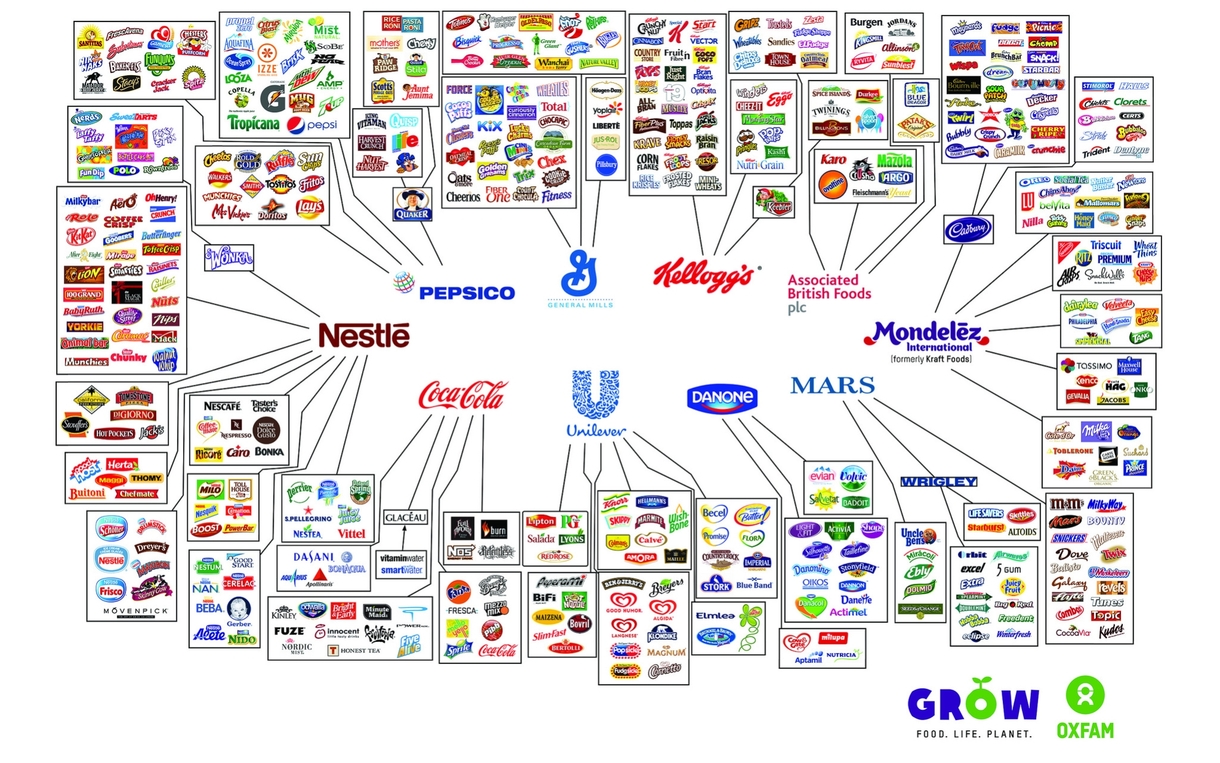
Oxfam’s infographic making the connections between big companies and some very familiar brands.


There is a large space for study in this area, but many challenges to doing so, not least because there is relatively little research funding or political will to tackle these issues directly. Many researchers and advocates remain “silo-ed”, focusing on a particular product, or discipline. This “zoomed-in” view stands in contrast to the intersectional ways in which a single large company might act, never mind an industry sector as a whole, or different industry sectors with overlapping interests, acting, for example, to diminish employment rights or environmental standards. We argue that there must be much greater scope for the convening of interdisciplinary research to explore these issues and offer potential solutions.

What about practice?

Aside from research, what about practice? There is also a need for the evidence that does exist to translate more effectively into policy. The challenge public health practitioners often face is that there is a strong political will for partnership and collaboration with the private sector at the local, national and global level, both through direct partnerships, and multilateral engagements. Such arrangements are, on the face of it, appealing. Access to the resources of the private sector is an obvious solution to the problem of increasingly restricted budgets for public health departments, particularly as these private resource pools are so large. Voluntary commitments between the public and private sectors are also conceptually appealing, echoing the type of multi-stakeholder engagement that public health advocates strive for.

However, in the UK, the evidence suggests such activities are often characterised by an abundance of words (in the form of voluntary pledges) and a paucity of deeds (in the form of meaningful changes to how harmful products are produced and marketed). Without regulatory safeguards, it appears unlikely that harmful product manufacturers will voluntarily act in ways that could reduce their own profit margins or lead to “stranded assets”. Instead, such actors will go to great lengths in framing themselves as part of the solution to a “complex” problem, while attempting to diminish the role they play in creating that problem, and rejecting what they termed “one size fits all” approaches such as policy best buys.

There is, however, progress on the research front. Research on specific harmful products and the industries that produce and market them continue apace, and commonalities in corporate strategies are being increasingly discussed. Networks of interested researchers in related topics are beginning to emerge. Perhaps most promisingly, it is becoming clear that commercial determinants are an important component of the broader determinants of health. As the “elephants in the room” become more widely perceived in issues such as alcohol harm, climate change and the opioid crisis, let us hope that, informed by a growing evidence base, the tools to properly address them will follow.


Photo attribution:
  1. "140/365 - Coke Shadow" by Adam Wyles via Flickr.com, copyright © 2011: https://www.flickr.com/photos/the-travelling-bum/5418900013 (CC BY-ND 2.0).
  2. Oxfam infographic courtesy of Oxfam, copyright © 2013: https://firstperson.oxfamamerica.org/2013/03/10-everyday-food-brands-and-the-few-giant-companies-that-own-them

Friday, 29 November 2019

Bridging the research industry 'Valley of Death'

Posted by Peter van der Graaf, AskFuse Research Manager / Fuse Knowledge Exchange Broker, Teesside University

I was recently invited to attend a meeting in the British Library of the Bloomsbury SET. Not a group of subversive English writers, intellectuals, philosophers and artists but an Advisory Council for an innovative collaboration between four partner Colleges of the University of London. Namely, the Royal Veterinary College; London School of Hygiene and Tropical Medicine; School of Oriental and African Studies; and the London School of Economics and Political Sciences.

Death Valley, Eastern California
The partnership is funded by Research England and aims to bridge the ‘Valley of Death’: supporting research projects that get stuck between university and the market place. It does this by creating a knowledge exchange platform between the four Colleges that accelerates the delivery of innovative scientific and technical solutions in the field of infectious disease and antimicrobial resistance.

Pronouncing pathogen emergence, zoonotic disease and antimicrobial whatsit was hard enough, let alone my hope of making a meaningful contribution. I thought I would feel completely out of place as a public health researcher and the only social scientist in the room, but to my surprise I quickly discovered that the collaboration faces very similar challenges to Fuse.

For example, the project is trying to pool their commercialisation expertise across the Colleges and create a ‘single open door’ for government agencies, big pharmaceutical companies, small and medium sized enterprises, and overseas partners particularly in Africa. So, similar to our AskFuse service but with industry. In spite of their best efforts to engage researchers from the different Colleges, the project leads found that not all academics are keen to engage in partnership working outside their immediate area of expertise and that interdisciplinary partnerships, particularly with social sciences and humanities colleagues, proved challenging, as they speak a different language and have different cultures for sourcing funding.

It also proved challenging to develop trusting relationships with industry partners: academics don’t know how to find these partners and engage them in their projects, while industry partners allege that academics are ignorant of innovate technologies that have been developed in-house. This is akin to public health researchers not being aware of different types of knowledge that are being used in local government. It takes time to develop these relationships and exchange knowledge within them, for which the three-year grant funding is not long enough to show full results.

While the partnership is keen to engage with social scientists about the social aspects of the commercialisation process (e.g. work with local non-governmental organisations on engaging communities and identifying cultural and societal perceptions around vaccine use and human health), Research England is more interested in the commercialisation of ‘hard’ intellectual property through licensing or spin-out. Hence, the key performance indicators are all skewed towards these outputs. In other words, the incentive structure set by the funder is not encouraging the very thing that the partnership is trying to achieve. This sounds very similar to the lack of incentives and career opportunities within universities for engaging in knowledge exchange in public health.

Group photo (me, furthest right)
During the meeting, the need for creating an infrastructure within the Bloomsbury SET that can facilitate conversations between academics across the Colleges and broker relationships with industry partners was acknowledged by the Advisory Council members. Dedicated funding to develop collaborative proposals between industry partners and academic researchers that address this need was suggested as a useful knowledge transfer mechanism. Similar to the Public Health Practice Evaluation Scheme (PHPES) operated within the NIHR School for Public Health Research.

In summary, even if you don’t have any expertise in a particular scientific field (and can’t even pronounce their topics), chances are that you have more in common and face similar struggles when moving research findings outside academic institutions, whether that involves industry or policy and practice partners. The Colleges study transmittable diseases from animals to humans but to have impact with their research equal attention is needed to the transmission of knowledge from one human sector/ academic discipline to another.

Friday, 7 June 2019

Take it away: a masterclass in healthy takeaways

Post by Scott Lloyd, Advanced Public Health Practitioner at Public Health South Tees and Karen Pearson, Catering Monitoring & Advisory Officer at Redcar & Cleveland Council

Whether it is the Golden Cod or the Taste of India, independent hot food takeaways get a bad rap in Public Health circles. They serve food and drink that is predominantly higher in fat, salt and sugar and may contribute to noise pollution and other environmental ills. Furthermore, they may not be the best option for our beleaguered high streets as they tend to be shuttered up during the daytime.

Up to March 2018, for a variety of reasons (including health), 164 out of 325 Local Authorities (50.5%) have introduced powers through Local Plans or Supplementary Planning Documents (SPD) that aim to restrict the proliferation of hot food takeaways (Keeble et al. 2019)[1].


Watch this video to find out more about how we worked with takeaway owners
(click here if the video doesn't appear above)

But let’s be honest – that horse has already bolted. Analysis by Public Health England has shown that there is an average of 96.1 hot food takeaways per 100,000 population in England (Public Health England, 2018)[2].

Where we work in Redcar and Cleveland, the Local Authority introduced a SPD in 2008 that restricted the percentage of hot food takeaways (A5 class use in planning terminology) in any commercial centre to no more than 5% - but even then, each commercial centre already had more than 5% hot food takeaways.

So we have to accept that hot food takeaways are here to stay – at least for the foreseeable future. Many Local Authorities have implemented interventions such as award schemes that engage these businesses to support them to improve the healthiness of their food offerings, but with limited evaluation (Hillier-Brown et al. 2017)[3]. Indeed, we have a Food4Health award in Redcar and Cleveland, which is open to all out-of-home caterers. We were doing OK in engaging hot food takeaways but we wanted to try something different.

In 2015, the Foodscape team organised a Fuse Quarterly Research Meeting on developing interventions with out-of-home caterers. One of the presentations was by Louise Muhammad from Kirklees Council on the healthy takeaway masterclass that they had developed and delivered to over 20% of the eligible businesses on their patch. The masterclass was described as a three-hour session in which hot food takeaway owners and managers learn about the small, sustainable changes they can make so their food is a little healthier without costing a huge amount or that will actually save them money/generate new custom.

A few months later, we travelled down to Huddersfield to watch a masterclass being delivered. It was clear from the start that this was something that engaged businesses and had potential. The decision to repeat it in Redcar and Cleveland was easy.

Takeaway owners and managers learning about small changes to make their food healthier
We worked with the teams from Kirklees and Foodscape to deliver our first masterclass in May 2016. In line with what Kirklees do, we invited hot food takeaways with a food hygiene rating of three or above – the feeling was that any outlets with less than this really needed to concentrate on food hygiene first. In total, 181 invitations were sent out and 18 attended, representing 10% of those eligible – a figure that we practitioners were happy with (if not all the academics!).

The Foodscape team conducted a mixed methods evaluation to explore the acceptability and feasibility of the masterclass intervention (Hillier-Brown et al. 2019)[4]. The takeaways businesses that attended made a variety of pledges – the ones that required less effort and cost (e.g. reducing salt and sugar in pizza dough) were implemented more so than other more potentially costly or difficult changes (e.g. stocking reduced sugar tomato ketchup).

Pledging to use healthier alternatives
Has this work made the hot food takeaways in Redcar and Cleveland healthy? No it hasn’t. Like the rest of us, businesses owners have a living to make and will cater to what their customers want. But as an example, Carol - the owner of a sandwich shop in Guisborough who stars in the film above - pledged to take 10% of the sugar out of her baking. Did her customers notice? No. Did, this make her flapjacks ‘healthy’? Of course not but they are now a little healthier. Hence, has the masterclass via all the pledges made their food offerings a little healthier? Probably.

We have since delivered a further six masterclasses, with the offer extended to other out-of-home caterers such as restaurants. About 30% of all eligible takeaways in Redcar and Cleveland have now attended a masterclass, with follow up support provided by the Food4Health award.

Engaging with hot food takeaways can be difficult. We are now struggling to attract new businesses onto the masterclass and may hit a saturation point at 35% or 40% of those who are eligible. Some owners have other priorities and some may not accept the healthy eating messages. Also, some hot food takeaway owners are not even resident to the UK so engaging them is nigh on impossible. But we have to continue to try.

Another key learning point is that we need to work more closely with suppliers. The majority of masterclass attendees pledged to start using healthier alternatives, such as reduced sugar tomato ketchup or reduced salt soy sauce but they were unable to source these items from suppliers at a reasonable cost or not at all. Hence, wider work is needed with suppliers which, as one of the other Foodscape projects showed, is possible (Goffe et al. 2019)[5].

But the masterclass is an acceptable and feasible intervention to engage a good proportion of hot food takeaways. We will continue to deliver it once or twice a year as long as there is sufficient demand. We’re hoping to run the next class in September, so lookout for that.

What the masterclass doesn’t do is engage the big operators such as McDonald’s and Just Eat, accepting that the latter works mainly through local independent takeaways (but what requirements can the national corporation specify on their local deliverers?). It’s likely that national work is needed with those corporations, continuing the good work of Public Health England and others.

We also need to be mindful of the potential impact of “dark kitchens” – potentially the “satanic mills of our era”. But I’ll save that for another time…


Read our handy Fuse research brief to find out more about the Foodscape study.


References:
  1. Keeble, M., Burgoine, T., White, M., Summerbell., C., Cummins. S., Adams, J. (2019). How does local government use the planning system to regulate hot food takeaway outlets? A census of current practice in England using document review. Health & Place, 57, 171 – 178. https://doi.org/10.1016/j.healthplace.2019.03.010
  2. Public Health England (2018). Fast Food Outlets: Density by Local Authority in England. Available at: https://www.gov.uk/government/publications/fast-food-outlets-density-by-local-authority-in-england [accessed 27 May 2019] 
  3. Hillier-Brown, F.C., Summerbell C.D., Moore, H.J., Wrieden, W.L., Adams, J., Abraham, C., Adamson, A., Araújo-Soares, V., White, M., Lake, A.A. (2017). A description of interventions promoting healthier ready-to-eat meals (to eat in, to take away, or to be delivered) sold by specific food outlets in England: a systematic mapping and evidence synthesis. BMC Public Health, 17 (1), 93. https://doi.org/10.1186/s12889-016-3980-2
  4. Hillier-Brown, F. C., Lloyd, S., Muhammad, L., Goffe, L., Summerbell, C., Hildred, N. J., ... Araújo-Soares, V. (2019). Feasibility and acceptability of a Takeaway Masterclass aimed at encouraging healthier cooking practices and menu options in takeaway food outlets. Public Health Nutrition. https://doi.org/10.1017/S1368980019000648
  5. Goffe, L. Hillier-Brown, F., Hildred, N., Worsnop, M., Adams, J., Araújo-Soares, V., Penn, L., Wrieden, W., Summerbell, C.D., Lake, A.A., White, M., Adamson, A.J. (2019). Feasibility of working with a wholesale supplier to co-design and test acceptability of an intervention to promote smaller portions: an uncontrolled before-and-after study in British Fish & Chip shops. BMJ Open, 9 (2), e023441. https://doi.org/10.1136/bmjopen-2018-023441

Friday, 23 November 2018

The Age of Bubble-gum Gin?

In a post for Alcohol Awareness Week, John Mooney, Fuse Associate and University of Sunderland Senior Public Health Lecturer, ponders how the alcohol industry will respond to declines in youth drinking. 


1990s alcopops on display at the Museum of Brands
There is no doubt about the current trend: youths and young adults are clearly drinking less alcohol. In what seems to run counter to the traditional image of “irresponsible teenagers” drinking to excess and partying the night away, a number of recently published studies and reports have confirmed an increasing indifference to the “charms of the demon drink” on the part of young people that extends across all age groups. In their recent report for example, University of Sheffield alcohol research group (SARG) in a Wellcome Trust funded study [1], highlighted that:
“Among 16-17 year-olds, the proportion who reported drinking nowadays fell from 88% in 2001 to 65% in 2016 and the decline over the same time period for 16-24 year-olds was from 90% to 78%...”
Similarly in a nearly 10,000 strong sample of participants aged 16 to 24 years using a ten year analysis of Health Survey for England datasets, rates of non-drinking increased from 18% in 2005 to 29% in 2015 (largely attributable to increases in lifetime abstention) [2]. In the same study for the same period, “not drinking in the past week” increased from 35% to 50%. The SARG Wellcome Trust report noted that younger drinkers were also consuming alcohol less often and in smaller quantities: Between 2003 and 2016, for example, the proportion of 11-15 year-old drinkers who “had consumed alcohol in the last week” fell from 41% to 19%. Among 16-17 year-old drinkers, the decline was from 58% to 39%, while for 16-24 year-olds it was from 75% to 60%.

As the Sheffield report also notes, these declines in alcohol consumption are by no means confined to the UK with similar reductions in youth drinking being seen across many European nations, North America and Australasia.

Declines in drinking would be expected of course to be accompanied by public health benefits and therefore alcohol-related hospital admission rates in England have been falling in line with consumption, as have the numbers of under 18s referred to specialist alcohol services. This has a particular resonance for North East England, where the rates of alcohol-related hospital admissions for under 18s have been among the highest in the country [3] and which in recent years have been falling more sharply than for England as a whole (though of course, the starting point was higher).

While the reasons behind these regional, national and international declines in youth drinking are as yet not particularly well understood, it is probably worth noting that we have been here before, with the early 1990s seeing international declines in youth drinking. Many experts on alcohol consumption trends at that time also noted that this decline was accompanied by a robust ‘product diversification’ response by the alcohol industry, most notably the rise of ‘alcoholic soft drinks’ or ‘alcopops’. In an article published in the Independent in 2003 [4], the then chair of Alcohol Concern, Eric Appleby commented:
"The whole alcopops thing came about because at that stage the industry had realised that they weren't getting the normal flow of drinkers coming through. Young people were more independent and drugs had taken over for a lot of young people as a recreational high instead of drink. The industry knew it had to do something. They will always deny it but it is pretty clear that the whole alcopops thing was about recruiting young drinkers and getting them at an early stage. Young people don't have a natural affinity for the taste of alcohol – this was a crash course, cutting out the middle man."
Consumption data confirmed these suspicions, with figures released by the UK Department of Health in 2002 revealing the average alcohol consumption of children aged 11 to 15 who were drinkers had rocketed from 5.3 units a week in 1990 to 9.8: ‘Alcopops’ or ready to drink mixes (RTD’s) of spirits and soft drinks were blamed.

This previous experience and the industry response does of course beg the question if there will be a similar response this time around and the format that this might take. As the Sheffield report also notes, drinking habits formed when young, have a major influence on lifetime alcohol consumption patterns, so these trends will not have escaped industry analysts and those who might be concerned about maintaining “medium to long-term consumption and sales forecasts”.

For a number of commentators, the industry responses are already clearly in evidence, most notably perhaps being a proliferation in novelty gin varieties, perhaps the most blatant ‘cross-over’ with confectionary style marketing being ‘bubble-gum gin’ or ‘marshmallow flavoured vodka’.

Of course, there is also a ready-made consumer base among young adults for energy drinks, which have been the focus of much publicised research by Fuse colleagues and there is a long established practice of these drinks as alcoholic mixers, to say nothing of the fortified caffeine and sugar enriched wine of choice, most popular in my native Scotland and the product of serene ‘Buckfast Abbey’ surroundings in South West England.

Current downward trends in alcohol consumption therefore might already be seeing a familiar  marketing response… but the extent to which that will succeed is still guesswork, given the as yet lack of clear understanding around what might be behind current trends.

From a North East public health perspective of course, long may these trends continue, since the medium to long-term population health benefits in this part of the world in particular are likely to be considerable!


#AlcoholAwarenessWeek
#AlcoholChange 


References: 
  1. Oldham M, Holmes J, Whitaker V, Fairbrother H, Curtis P: Youth Drinking in Decline. University of Sheffield Alcohol Research Group & Wellcome Trust; 2018. 
  2. Ng Fat L, Shelton N, Cable N: Investigating the growing trend of non-drinking among young people; analysis of repeated cross-sectional surveys in England 2005–2015. BMC Public Health 2018, 18(1):1090. 
  3. Public Health England: Local Alcohol Profiles for England In.: https://www.gov.uk/government/collections/local-alcohol-profiles-for-england-lape; 2017.
  4. Harding N: The Demonised Drink: How Has Youth Drinking Evolved 20 years Since The Launch of Alcopops? Independent. London; 2013.
Image: "1990s alcopops on display at the Museum of Brands, west London" by Ben Sutherland via Flickr.com, copyright © 2017: https://www.flickr.com/photos/bensutherland/37299742285

Friday, 15 June 2018

The Government’s new Clean Air Strategy – hope or hype?

Dr Susan Hodgson, lecturer in Environmental Epidemiology and Exposure Assessment at the MRC-PHE Centre for Environment and Health, Imperial College London

© 2018 Imperial College London
Air pollution was been high on the agenda at Imperial College London recently, with Environment Secretary Michael Gove choosing to launch the Government’s new Clear Air Strategy at Imperial’s Data Science Institute[1]. To coincide with this launch, Health Secretary Jeremy Hunt announced a new tool, developed by Imperial and the UK Health Forum, to help local authorities estimate the health-care costs due to air pollution - an estimated £157 million from exposure to fine particulates and nitrogen dioxide across England in 2017[2].

Academics and researchers worldwide have worked over many decades to produce an evidence base of high quality research which now clearly links air pollution and health. Globally, 4.2 million deaths are attributed to outdoor air pollution, with 91% of the world’s population living in areas where air quality exceeds health-based guidance limits[3]. Figures for the UK also make grim reading, with an estimated 40,000 deaths per year attributable to outdoor air pollution[4]. While research on this topic makes an unequivocal case for action, Government policy to improve air quality for public health has been found lacking, with the UK (along with France, Germany, Hungary, Italy and Romania) being taken to the European court of Justice for failing to meet EU limits for nitrogen dioxide.

© 2018 Imperial College London
The new Clear Air Strategy[5] outlines how the Government plans to protect the nation’s health. The stated intention of halving the number of people living where concentrations of fine particulate matter are above 10μg/m3 - the concentration of an air pollutant is given in micrograms (one-millionth of a gram) per cubic meter air or 'µg/m3' - by 2025, if achieved, would reap a significant health dividend. However, the focus on a ‘personal air quality messaging system to inform the public…about the air quality forecast [and] air pollution episodes’ places onus on individuals to avoid exposure, rather than creating clean and safe environments within which to live. While there is a place for such messaging, when more than 2000 education/childcare providers across England and Wales are within 150m of a road breaching the legal limit for Nitrogen dioxide pollution (25 of which are in the North East and more than 1500 in London)[6], is it clear that a population based approach is required to tackle this pressing public health issue.

The Strategy also restates the previously announced plan to phase out conventional petrol and diesel cars and vans by 2040, to be replaced by zero exhaust emissions vehicles. This is a positive step, but not sufficient to tackle traffic-related pollution. What comes out of the exhaust represents less than half of vehicle emissions; ‘clean’ vehicles will still generate pollution from tyre and brake wear, and re-suspension of road dust, as explained by Imperial PhD student Liza Selley in her 2016 Max Perutz Science Writing Award-winning essay[7].

The Strategy proposes steps to address not just road traffic pollution, but also shipping, aviation, agriculture and industry, and links health, the environment and economy, marking a welcome move away from silo thinking. There is also mention of ‘appraisal tools and accompanying guidance…to enable the health impacts of air pollution to be considered in every relevant policy decision that is made’ – it is not clear if this extends beyond policy decisions on air pollution, i.e. represents a move towards a coherent ‘health in all’ approach[8], but, if so, would represent a welcome prioritisation of health across Government departments.

© 2018 Imperial College London
Focussing on cleaner vehicles and technological solutions can only offer a partial solution to reducing the impact of air pollution on health, so it is good to see modal shift towards public transport and active transport is mentioned (briefly) in the Strategy. There are funds to support bus and rail infrastructure to improve public transport, and an ambition to double the levels of cycling by 2025 - though this would only raise levels from 2% to 4%, compared to 39% in the Netherlands[9].

If the Government is serious about adopting a more holistic approach to the environment, health and economy, then I feel far more could have been made of the great potential to tackle air quality, sustainability and health collectively. We need ambition and vision to create sustainable cities, and approaches to transport and living that reduce air pollution and additionally tackle inactivity and obesity, which are key drivers of population health. Barcelona’s Institute for Global Health recently launched its #CitiesWeWant initiative[10], which highlights some of the features we need to be prioritising in our cities to benefit future health and wellbeing. We have the research evidence to support these priorities, but Governments will require buy-in from experts and demand from the public to enact bold change. Those passionate about improving our environment for health have the opportunity to voice their views via the Government consultation on this newly launched Clear Air Strategy, which will inform a National Air Pollution Control Programme due March 2019.


The views represented here are those of the author, Dr Susan Hodgson.

Susan is a lecturer in environmental epidemiology and exposure assessment at the MRC- PHE Centre for Environment and Health at Imperial College London. Her research focusses on understanding how interactions with our environment (including air pollution), influences health.

More details at: www.imperial.ac.uk/people/susan.hodgson


References:
  1. https://www.imperial.ac.uk/news/186390/michael-gove-launches-governments-clean-air/
  2. https://www.imperial.ac.uk/news/186406/air-pollution-england-could-cost-much/
  3. http://www.who.int/airpollution/en/
  4. https://www.rcplondon.ac.uk/projects/outputs/every-breath-we-take-lifelong-impact-air-pollution
  5. https://consult.defra.gov.uk/environmental-quality/clean-air-strategy-consultation/user_uploads/clean-air-strategy-2018-consultation.pdf   
  6. https://unearthed.greenpeace.org/2017/04/04/air-pollution-nurseries/
  7. http://www.insight.mrc.ac.uk/2016/10/14/braking-perceptions-of-traffic-pollution/
  8. http://www.who.int/healthpromotion/frameworkforcountryaction/en/
  9. https://ec.europa.eu/transport/road_safety/specialist/knowledge/pedestrians/pedestrians_and_cyclists_unprotected_road_users/walking_and_cycling_as_transport_modes_en
  10. https://www.isglobal.org/en/ciudadesquequeremos

Friday, 9 March 2018

How industry-funded organisations mislead the public on alcohol & cancer

Guest post by Dr Nason Maani Hessari, Research Fellow, London School of Hygiene and Tropical Medicine

When it comes to the risk of cancer associated with alcohol consumption, there is a significant disconnect between scientific evidence and public opinion.

The evidence of the independent link between alcohol consumption and cancer is clear, as emphasised by recent comprehensive reviews by the UK Committee on Carcinogenicity* (Committee on Carcinogenicity of chemicals in food, 2015), and the International Agency for Research on Cancer (IARC, 2012). Drinking alcohol can cause a range of cancers, including oral cavity, pharynx (cavity behind the nose and mouth), larynx (voice box), oesophagus (gullet), colorectal (bowel and colon), breast and liver cancer. Furthermore, the risk of developing cancers of the mouth, throat and breast increases with any amount consumed on a regular basis (Department of Health, 2016). However, public awareness of this link remains low, with a 2016 survey reporting only 12.9% of respondents identifying cancer as a potential consequence of drinking too much alcohol (Buykx et al., 2016).

What does this have to do with the alcohol industry? Well, in the UK and many other countries, alcohol-industry funded organisations, called Social Aspects Public Relations Organisations (SAPROs), present themselves as sources of health information to the public, particularly around ‘responsible drinking’, underage drinking and drink driving (Maani Hessari and Petticrew, 2017). These organisations have been criticised for their inherent conflict of interest, as they are linked to large multinational alcohol producers, for whom a large proportion of profits come from harmful drinking (Casswell et al., 2016). The industry has a track record of focusing on education and individual responsibility, while lobbying against population-level measures to reduce alcohol-related harm (Babor and Robaina, 2013), even though these are evidence-based (Burton et al., 2017), and form the basis of the WHO Global Alcohol Strategy, in which alcohol producers participated (World Health Organisation, 2010).

Considering the role of the alcohol industry in providing information to consumers, we decided to examine the extent to which the industry fully and accurately communicated the scientific evidence on alcohol and cancer. To do this, we systematically examined the content of 27 industry-funded organisations or websites. In each case, we analysed how information regarding alcohol and cancer was presented, and whether the statements they made about cancer risk were in agreement with the scientific evidence, as presented in the Committee on Carcinogenicity (COC) and IARC reviews.

We found that most alcohol industry SAPROs appeared to misrepresent evidence by denying, distorting or distracting from links to cancer, particularly breast cancer (Petticrew et al., 2017, Petticrew et al., 2018). A full list of examples can be found in our paper and the supplementary information, but as an example of denial, consider this:
“Moderate wine intake may actually reduce the risk of oesophagus, thyroid, lung, kidney and colorectal cancers as well as Non-Hodgkin’s Lymphoma…Concerning breast cancer, there may also be a protective role for wine.” [Wine Information Council].
When some risk was acknowledged, it was often presented alongside a range of other confounders, thus undermining the evidence that there is an independent relationship. For example:
“Alcohol has been identified as a known human carcinogen by IARC, along with over 1,000 others, including solvents and chemical compounds, certain drugs, viral infection, solar radiation from exposure to sunlight, and processed meat.” [International Alliance for Responsible Drinking]
Or in another instance:
“Not all heavy drinkers get cancer, as multiple risk factors are involved in the development of cancers including genetics and family history of cancer, age, environmental factors, and behavioural variables, as well as social determinants of health.” [Australia: Drinkwise].
It is not clear how the consumer is meant to interpret this information. The use of such descriptions to describe risk of cancer from smoking would in essence be both equally correct, and equally misleading. In fact, this type of language is highly reminiscent of arguments used by the tobacco industry, which emphasise the complex causes of lung cancer and coronary heart disease, in order to help deny the scientific evidence and identify other independent risk factors for smoking-related diseases to deflect focus from their products (Petticrew and Lee, 2011).

Since the publication of our findings (Petticrew et al., 2017, Petticrew et al., 2018), additional examples of alcohol industry representatives openly disputing the link between alcohol and cancer continue to emerge. For example, a recent study in the Yukon, Canada, examining the effects of adding a cancer warning label to alcohol (as one of three potential labelling options) has been suspended due to industry pressure.

Perhaps even more striking: as part of the ongoing debate in Ireland regarding the Public Health Alcohol Bill (PHAB), when a physician noted on live TV that alcohol was a carcinogen, a leading alcohol industry spokesperson countered inaccurately that alcohol was in fact, not a carcinogen, and that there were “…as many studies, medical studies, as there are on the ‘pro’ side…” (clip below).


It has been argued that greater public awareness, particularly of the risk of breast cancer, poses a significant threat to the alcohol industry (Connor, 2017). In response to other threats to profits, there is evidence that the industry has attempted to engage in “denialism” (Katikireddi and Hilton, 2015), and it appears this may also be the case for cancer, particularly breast cancer.

Currently, the alcohol industry remains involved in developing alcohol policy in many countries, and in disseminating health information to the public, including school children. Our research findings, which build on existing evidence regarding the activities of SAPROs (Babor and Robaina, 2013, McCambridge et al., 2014, Moodie et al., 2013), should be cause for a re-evaluation of such arrangements. The World Health Organisation has previously stated that ‘In the view of the WHO, the alcohol industry has no role in the formulation of alcohol policies, which must be protected from distortion by commercial or vested interests.’(Chan, 2013). The clear and obvious similarities to tobacco industry tactics that we report, which reflect the inherent conflict of interest, serve as a reminder that policies are but one aspect at risk of industry distortion.


All views expressed are those of the author.


References

BABOR, T. F. & ROBAINA, K. 2013. Public health, academic medicine, and the alcohol industry's corporate social responsibility activities. Am J Public Health, 103, 206-14.

BURTON, R., HENN, C., LAVOIE, D., O'CONNOR, R., PERKINS, C., SWEENEY, K., GREAVES, F., FERGUSON, B., BEYNON, C., BELLONI, A., MUSTO, V., MARSDEN, J. & SHERON, N. 2017. A rapid evidence review of the effectiveness and cost-effectiveness of alcohol control policies: an English perspective. Lancet, 389, 1558-1580.

BUYKX, P., LI, J., GAVENS, L., HOOPER, L., LOVATT, M., GOMES DE MATOS, E., MEIER, P. & HOLMES, J. 2016. Public awareness of the link between alcohol and cancer in England in 2015: a population-based survey. BMC Public Health, 16, 1194.

CASSWELL, S., CALLINAN, S., CHAIYASONG, S., CUONG, P. V., KAZANTSEVA, E., BAYANDORJ, T., HUCKLE, T., PARKER, K., RAILTON, R. & WALL, M. 2016. How the alcohol industry relies on harmful use of alcohol and works to protect its profits. Drug Alcohol Rev, 35, 661-664.

CHAN, M. 2013. WHO's response to article on doctors and the alcohol industry. Bmj, 346, f2647.

COMMITTEE ON CARCINOGENICITY OF CHEMICALS IN FOOD, C. P. A. T. E. C. 2015. Statement 2015/S2.

CONNOR, J. 2017. Alcohol consumption as a cause of cancer. Addiction, 112, 222-228.

DEPARTMENT OF HEALTH 2016. UK Chief Medical Officers' Alcohol Guidelines Review - Summary of the proposed new guidelines.

IARC 2012. Personal habits and indoor combustions. IARC monographs on the evaluation of carcinogenic risks to humans.

KATIKIREDDI, S. V. & HILTON, S. 2015. How did policy actors use mass media to influence the Scottish alcohol minimum unit pricing debate? Comparative analysis of newspapers, evidence submissions and interviews. Drugs (Abingdon Engl), 22, 125-134.

MAANI HESSARI, N. & PETTICREW, M. 2017. What does the alcohol industry mean by 'Responsible drinking'? A comparative analysis. J Public Health (Oxf), 1-8.

MCCAMBRIDGE, J., KYPRI, K., MILLER, P., HAWKINS, B. & HASTINGS, G. 2014. Be aware of Drinkaware. Addiction, 109, 519-24.

MOODIE, R., STUCKLER, D., MONTEIRO, C., SHERON, N., NEAL, B., THAMARANGSI, T., LINCOLN, P. & CASSWELL, S. 2013. Profits and pandemics: prevention of harmful effects of tobacco, alcohol, and ultra-processed food and drink industries. Lancet, 381, 670-9.

PETTICREW, M., MAANI HESSARI, N., KNAI, C. & WEIDERPASS, E. 2017. How alcohol industry organisations mislead the public about alcohol and cancer. Drug Alcohol Rev.

PETTICREW, M., MAANI HESSARI, N., KNAI, C. & WEIDERPASS, E. 2018. The strategies of alcohol industry SAPROs: Inaccurate information, misleading language and the use of confounders to downplay and misrepresent the risk of cancer. Drug Alcohol Rev.

PETTICREW, M. P. & LEE, K. 2011. The "father of stress" meets "big tobacco": Hans Selye and the tobacco industry. Am J Public Health, 101, 411-8.

WORLD HEALTH ORGANISATION 2010. Global Strategy to Reduce the Harmful Use of Alcohol.

*Carcinogen is any substance or agent that promotes the formation of cancer


Image: ‘Spilling wine’ (3375802661_fc4ff615ba_z) by Gunnar Grimnes via Flickr.com, copyright © 2009: https://www.flickr.com/photos/gromgull/3375802661