Showing posts with label University of Sunderland. Show all posts

Wednesday, 5 February 2020

Coronavirus: expect the unexpected in an unfolding emergency

Posted by John Mooney, FFPH (Fellow, Faculty of Public Health), Fuse Associate & Senior Lecturer in Public Health at University of Sunderland @StandupforPHlth 

In an age when public health and health improvement efforts in much of the world are justifiably focused on chronic disease, lifestyle factors and the ever increasing health and social care needs of an ageing population, we would do well to remember that humankinds’ most determined and persistent adversaries are always “waiting in the wings” ready to step on the stage for a lead role once again.


Step forward new variant Coronavirus (2019-nCoV), which the World Health Organisation has declared a Global public health emergency[1] reminding us all of the enduring critical importance of basic public health principles and practice and internationally co-ordinated vigilance for new microbial challenges. ‘International’ of course being a critical component of any response plans, since infectious diseases do not respect national borders and less so, referendum results. The first confirmed UK cases on Friday[2], currently being treated in this region, only serves to remind us of the ‘global village’ we all inhabit from the perspective of infectious diseases.

Coronaviruses are a large family of viruses, some causing (mostly mild) illnesses in people and others that circulate among animals, including camels, cats and bats. The recently emerged 2019-nCoV is not the same as the coronaviruses that caused Middle East Respiratory Syndrome (MERS) or Severe Acute Respiratory Syndrome (SARS) though genetic analyses so far suggests that the new variant is more closely related to SARS[3].

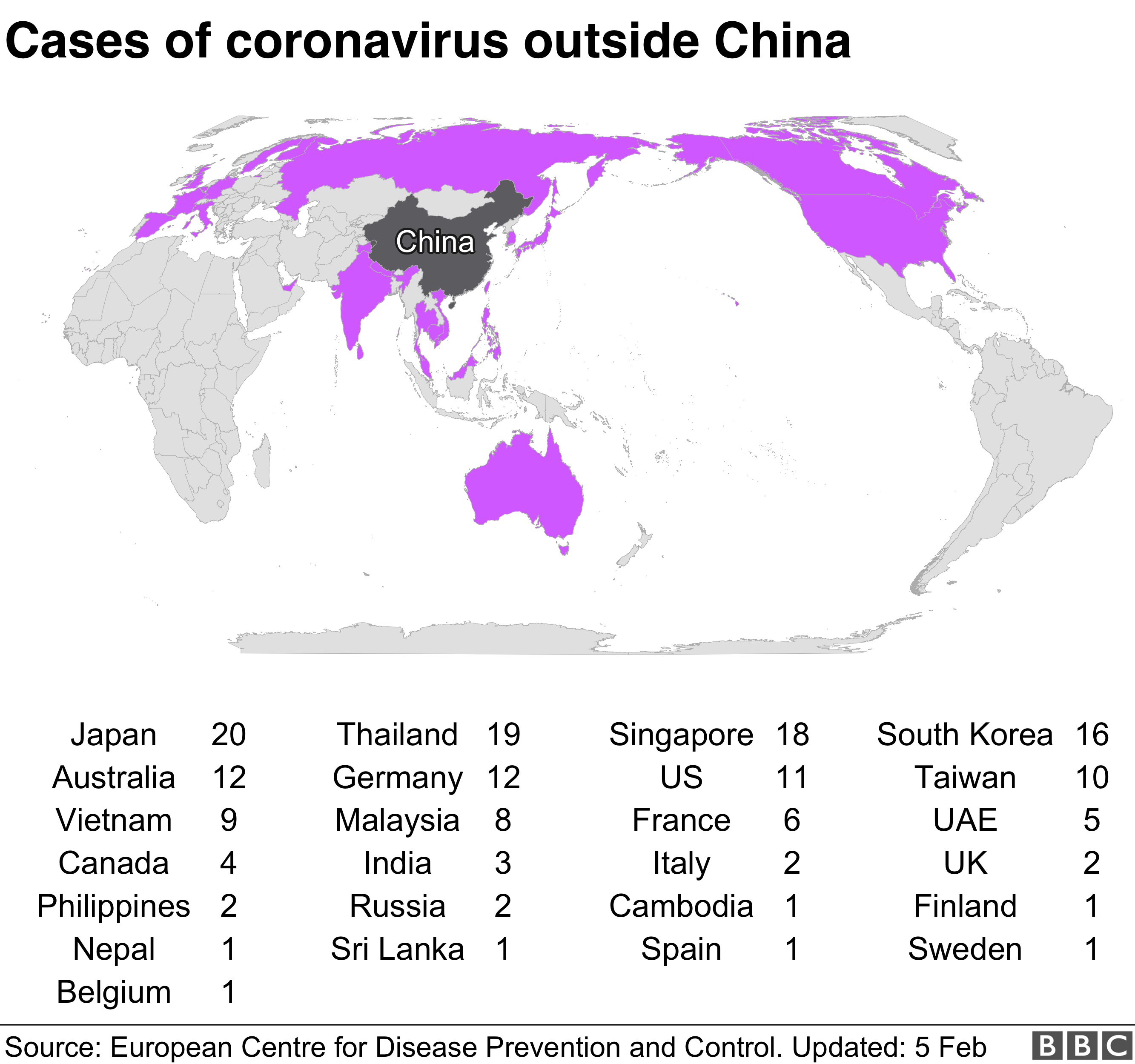
Ninety Nine percent (99%) of the 24,000+ cases and nearly all of the 490 confirmed deaths (with 2 exceptions, one in Hong Kong and one in the Philippines) so far have been in China.  Despite this, the WHO emergency declaration crucially allows for additional resources and support for lower and middle-income countries to strengthen their disease surveillance and prepare them for potential cases or outbreaks. At the present time, to the considerable credit of the Chinese response – partly arising of course from international condemnation of a less than transparent response to the SARS outbreak in 2003 – there are Herculean efforts and resources being devoted to containing the threat from the new pathogen.  This includes the drastic attempted quarantine of a whole region and the speed of construction of new facilities such as 1000 bed dedicated hospitals.


While 2019-nCoV seems to be less lethal than SARS, there is no doubt that it is clearly more transmissible with The World Health Organization stating that the preliminary R0 (reproduction number) estimate is 1.4 to 2.5, meaning that every person infected can potentially infect between 1.4 and 2.5 people (R0 for SARS being 0.19–1.08, with a median of 0.49)[4]. With the spectrum of clinical presentations ranging from mild respiratory illness to life threatening viral pneumonia, the health impact of the ongoing outbreak is very difficult to predict and unanswered questions abound. How many people may have shrugged off mild / virtually asymptomatic infections for instance is not possible to know until follow-up sero-conversion studies[5] can be used to estimate the burden of ‘silent infections’.

Aside from higher transmissibility, the more worrying aspect of 2019-nCov however is the reports of an incubation period of up to 14 days during which an infected individual might both be asymptomatic (displaying no evident symptoms that could be screened for) and also crucially, at the same time during this period, infectious and capable of transmitting the virus to new hosts. The potential 14 day incubation period without symptoms effectively means that the cases which are being confirmed at the present time merely reflect the ‘true burden of infection’ from two weeks ago. As a result we will only have any real sense of the effectiveness of Chinese efforts to contain the virus a fortnight after the stringent travel restrictions imposed around Wuhan province and other parts of China.

As many seasoned experts in these matters have cautioned, schooled as they have been by experience of previous episodes, predicting the behaviour of a newly emergent pathogen is a hazardous business and a great deal of uncertainty surrounds its likely route to potential pandemic status. A virus adapting to a new species host (in this case humans!) is an unstable entity and its defining characteristics today in terms of those who are most vulnerable and their risk of serious or life threatening illness may be very different in the weeks and months ahead.

Eventually of course, a virus keen on longevity in a new host needs to curb its pathogenicity[6] and ideally result in only mild symptoms that will reduce the attention it attracts from a host immune response. Many of the hundreds of viruses, including coronavirus subtypes that cause the common cold, once jumped the species barrier and evolved into relatively benign pathogens. Even the deadly “Spanish flu” epidemic of 1918[7], which killed around 60 million people Worldwide in 1918-1920 and comprised of the influenza subunits H1N1, circulates today in the form of seasonal flu in a genetic variant with greatly reduced lethality.

How serious the current outbreak will be in terms of impact and mortality remains to be seen. SARS of course was eventually successfully contained by stringent infection control, contact tracing and quarantine procedures. While 2019-nCov is not currently as life-threatening an illness as SARS, its greater transmissibility, longer incubation period and potential for symptomless transmission (SARS was only transmissible when symptomatic), do not bode well for ease of containment so it is hardly surprising that the WHO have seen fit to play their strongest card and declare it an emergency.

We can only hope that the response may be timely enough.


John Mooney worked previously for NHS Health Protection where he specialised in the epidemiology of respiratory infectious diseases.


References:
  1. Coronavirus declared global health emergency by WHO: https://www.bbc.co.uk/news/world-51318246
  2. Coronavirus: UK patient is University of York student: https://www.bbc.co.uk/news/health-51337400 
  3. 2019 Novel Coronavirus Basics: CDC FAQs: https://www.cdc.gov/coronavirus/2019-ncov/faq.html
  4. Emerg Infect Dis. 2004 Jul; 10(7): 1258–1263 https://www.ncbi.nlm.nih.gov/pmc/articles/PMC3323341/
  5. Seroconversion: The development of detectable antibodies in the blood that are directed against an infectious agent. Antibodies do not usually develop until some time after the initial exposure to the agent.
  6. Pathogenicity is defined as the absolute ability of an infectious agent to cause disease/damage in a host - an infectious agent is either pathogenic or not. From: Fenner and White's Medical Virology (Fifth Edition), 2017
  7. 1918 Pandemic (H1N1 virus): https://www.cdc.gov/flu/pandemic-resources/1918-pandemic-h1n1.html

Image 2: Capture from the BBC News website, 5 February 2020. Coronavirus: Ten passengers on cruise ship test positive for virus. Source: European Centre for Disease Prevention and Control. Updated 5 Feb. https://www.bbc.co.uk/news/world-asia-51381594.

Monday, 11 November 2019

Can Scottish inventiveness curb the nation’s alcohol habit?

Posted by John Mooney, Senior Lecturer in Public Health, University of Sunderland
 Churchill is defeated by a Temperance movement MP - Dundee election result in 1922

“Of all the nations of this earth, perhaps only the ancient Greeks surpass the Scots in their contribution to mankind…” 
Sir Winston Churchill


This often cited sentence from the great orator’s canon of memorable expressions, frequently (in social media posts at least), is accompanied by a story of the number of times in a normal day ‘the typical Englishman’ is obliged to thank his Northern cousins for gifts bestowed:

From the spreading of ‘Dundee marmalade’ in the morning to his whisky night-cap it is easy to lose count of those almost innumerable causes for daily gratitude. In these days of Prophet Greta, perhaps the less said about ‘TarMacAdam’ and the internal combustion engine the better… but in our defence there is always Kirkpatrick MacMillan’s bicycle to offset that carbon footprint!

It’s no accident of course that pride of place be afforded in the above account to Scotland’s national drink of distilled and malted barley – renowned the World over for its unparalleled quality and distinctive dalliance on the palate. Scotland’s broader relationship with alcohol however, has not traditionally been a reputation to which one might raise a glass and is perhaps better summed up by the lovable and tragic Rab C Nesbit (right). The real tragedy of course being the excessive and abiding toll of alcohol related illness and premature death for which Scotland is infamous and also near the top of the World league table, for all the wrong reasons...

And yet, the nation’s pioneering spirit (of the non-liquid variety!) and very inventiveness in the face of a challenge may yet serve up another exemplar for others to follow. In May 2018 Scotland became the first country in the World to introduce legislation that set a minimum floor price for a unit of alcohol (MUP). While other fiscal mechanisms have been tried and tested for tackling cheap alcohol, MUP has consistently shown the greatest promise in modelling studies, since it cannot be “absorbed” by the retailer [1].

Sure enough, the first evaluation of the population level impact of MUP has found the policy to be associated with reduced alcohol purchasing. In line with model predictions, the reductions were largest for those households purchasing the most alcohol and for those drinks with the cheapest alcohol content [2, 3]. The very modest impacts on household budgets and the effect of reducing alcohol purchasing / consumption the most for those at greatest risk of harm also in line with predictions [4], helps counter any serious criticisms that the policy represents a regressive measure by unfairly targeting the economically disadvantaged. In the words of the Glaswegian novelist Val McDermid, on BBC Television’s Question Time in 2017: “There is nothing regressive about preventing people in Scotland’s poorest communities drinking themselves to death with cheap alcohol”.

Returning to the bigger picture, Scotland’s appetite for policy innovation to tackle alcohol harms is by no means restricted to minimum pricing. Rather, MUP is seen as only one component of a ‘whole system’ approach to tackling this most intractable and culturally embedded of public health problems. Bringing drink driving levels into line with the lower threshold in place across the rest of the EU [5] and incorporating health outcomes as a long overdue legitimate alcohol licensing objective [6], being two potential ingredients in the mix…

The Scottish ‘double edged’ relationship with alcohol can be best summed up by another snippet of Churchillian wisdom, a man who by all accounts was not unaccustomed to enjoying a ‘brandy before breakfast’:

"Whisky has killed more men then bullets, but most men would rather be full of whisky then bullets." 
Sir Winston Churchill

Perhaps the pragmatic recognition of a population’s natural affinity for a risky behaviour responsible for such a significant health burden is the first step towards realising that only meaningful restrictions in access mediated through price and availability, as well as legislative sanctions, might yet constitute the best defence against our worst excesses. Most Scots, myself included, know only too well of the devastating impact alcohol can exert on friends, families and communities. Maybe that is why we are most responsive to the remedies!


References:
  1. Meier PS, Holmes J, Angus C, Ally AK, Meng Y, Brennan A: Estimated Effects of Different Alcohol Taxation and Price Policies on Health Inequalities: A Mathematical Modelling Study. PLoS Med 2016, 13(2):e1001963-e1001963.
  2. Mooney JD, Carlin E: Minimum unit pricing for alcohol in Scotland. BMJ 2019, 366:l5603.
  3. O’Donnell A, Anderson P, Jané-Llopis E, Manthey J, Kaner E, Rehm J: Immediate impact of minimum unit pricing on alcohol purchases in Scotland: controlled interrupted time series analysis for 2015-18. BMJ 2019, 366:l5274.
  4. Holmes J, Meng Y, Meier PS, Brennan A, Angus C, Campbell-Burton A, Guo Y, Hill-McManus D, Purshouse RC: Effects of minimum unit pricing for alcohol on different income and socioeconomic groups: A modelling study. The Lancet 2014, 383(9929):1655-1664.
  5. Haghpanahan H, Lewsey J, Mackay DF, McIntosh E, Pell J, Jones A, Fitzgerald N, Robinson M: An evaluation of the effects of lowering blood alcohol concentration limits for drivers on the rates of road traffic accidents and alcohol consumption: a natural experiment. Lancet 2019, 393(10169):321-329.
  6. Mooney JD, Sattar Z, de Vocht F, M Smolar M, Nicholls J, Ling J: Assessing the feasibility of using health information in alcohol licensing decisions: a case study of seven English local authorities. In: Lancet Public Health Science: 2016; Cardiff: The Lancet; 2016: 78.
Image:
  1. Election result in Dundee in the 1920s when Churchill was defeated by a Temperance movement MP. With thanks to Eric Carlin, Director of the Scottish Health Action on Alcohol Problems (SHAAP).

Thursday, 3 October 2019

This is my truth, now tell me yours

National Poetry Day was launched in 1994 with the aim of inspiring people to enjoy, discover and share poems.

To mark this year's event on the theme of Truth, we issued a challenge to our followers on Twitter @fuse_online to write a poem about public health research.

Below are the literary masterpieces we received!


Wordsworth's Work-Balance

Mark Green, Senior Lecturer in Health Geography, University of Liverpool
@markalangreen


I wondered lonely as a cloud,
Over the summer where I found,
That working was not always for me,
Papers and grants failed to bring me glee.

So I chose to work a little less,
And I admit I must confess,
I’ll write a little less this year,
But be happier, and smarter, without that fear.


Changing the story

Emma Halliday, Senior Research Fellow, Lancaster University
@halliday_e

Illustration © Joe Decie 2018
We were ranked deprived,
left behind, always maligned;
that place - nobody moved to.
Public health called time
on booze and smoking islands.
Newspapers traded fears of
crime and wild west violence -
no one counted the human cost
or listened to the local voice.
When did reality get so lost?

So, the community took control
of a more powerful story -
it started with a conversation
about the decisions they’d make
to improve their place;
what they wanted to change
to reclaim this space.
Now, carnivals attract crowds,
lanterns of hope light the town;
residents fight back with pride.

These days, when they label us;
we don’t believe what they say.


A poem inspired by the Communities in Control study


Buckfast Free Zone

John Mooney, Senior Lecturer in Public Health, University of Sunderland
@StandupforPHlth


Once upon the Tyne, there was disorder, there was crime,
Cos’ everyone was pickled on the bevvy,
But that all came to grief,
When the Police and the Council Chief,
Introduced a top-up charging late night levy!

Now stags and hens all go tae Durham
Cos’ there’s nothing left here ‘fur them’
An all-night drinking parties have been banned!
They've installed the impact zone on their google map and phone
And the Toon’s the safest city in the land!


A poetic reflection on Public health alcohol policies in Newcastle, which have included the introduction of a late night levy and a cumulative impact zone for alcohol licences. 

Extract from my Stand-up comedy set: ‘Buckfast Free Zone’ performed at The Stand Comedy Club as part of Bright Club Newcastle

Friday, 11 January 2019

New Year, New You or is it?

Happy New Year - or is it too late to say that? Eleven days in and how are the resolutions going? In this, the first blog of 2019, two Fuse experts take a wry look at the healthy change rhetoric around at this time of year.


New year, new backlash?


Amelia Lake, Associate Director of Fuse and Reader in Public Health Nutrition at Teesside University

Annually we have a period of feast (December) followed by a period of resolution and attempted behaviour change. Is it just me, or is there a trend away from the new year new you pressure? While there is the January diet season and 'detox' season (which requires a blog post in itself), there is also the increase in gym membership (in this article in the Independent, one gym claims a 40% increase in web traffic between December and January). Also the Veganuary campaign, encouraging people to try a vegan diet for the month, which passed 225,000 sign-ups in its first week.

I may be stating the obvious here but we go from excess to aspired deprivation. Add into the mix the oh so helpful food environment. Did anyone else notice Easter eggs appearing in supermarkets on Boxing Day? Just as pestered parents (me) breathed a sigh of relief that the queue at our local convenience store (Co-op I’m looking at you) wouldn’t be filled with chocolate after Christmas – no…. we've already moved onto April’s feasting!

Back to the new year new you backlash, there seems to be a movement away from drastic change and a desire to be self accepting, more realistic and thoughtful about food. I have noticed a number of intuitive eating books thrust into the limelight and a trend towards body acceptance.

I appreciate that social media in general can be an echo chamber. In the world of nutrition on twitter and instagram, I try to follow people with qualifications in nutrition, as opposed to the general #nutribollocks which is so abundant at this time of year.

However #nutribollocks or not, intuitive eating or not, detoxing or not… we are surrounded (physical, advertising, online) with unhealthy options, also known as the Obesogenic Environment. Finding the healthy option still remains challenging. With the increase in popularity of vegetarianism and veganism[1], food outlets have a broader range available, for example the now infamous VeganSausageRoll - still not a healthy option, but what an incredible social media team!

So despite the rhetoric at this time of year about healthy changes, until we have systemic changes in our environment that make the healthy option the easy option, that make it easy and safe for us to build exercise into our daily life, that make alcohol less accessible, we are not going to have a healthy population.

Amelia is a dietitian and public health nutritionist.
@Lakenutrition


The benefits of dry January and remembering Scotch & Wry


John Mooney, Fuse Associate and University of Sunderland Senior Public Health Lecturer

The late Scottish Comedian Rikki Fulton’s sketch entitled New Year’s day sums up perfectly the rationale and motivation that many might share for giving up the demon drink, at least for a while, as the New Year dawns. Learning of the events of the previous night’s ‘Hogmanay party’, during which he had gambled away his car in a poker game and set fire to and destroyed his own uninsured house, the revelation that he had won a 5 litre bottle of whisky in the raffle was precious little compensation!

For most people choosing to abstain from alcohol in January however, their reasons are usually less extreme! Indeed one of the criticisms of the concept of “dry January” is that those most likely to successfully abstain are probably already light drinkers in any case and the resulting likely health gains are correspondingly small. At the other extreme of course, for those who are dependent on alcohol (by clinical definition), impersonating the Christmas leftovers by going ‘cold-turkey’ with respect to alcohol, can have serious adverse health consequences such as convulsions etc. and should be avoided. An evaluation by de Vocht and colleagues published in 2016 showed that while ‘dry January’ led to an increase in attempts to cut down, any detectable impact on consumption remained elusive[2]. In an era in which excess alcohol consumption has become normalised and the price of alcohol in real terms has never been cheaper (in the absence as yet of minimum unit pricing for most of the UK), the overwhelming consensus is that most of the population would benefit from reducing their alcohol consumption, particularly if the resolution held all year round!

John is a public health specialist and a part-time public health stand-up comedian.
@StandupforPHlth


References:
  1. "In May 2016, the Vegan Society commissioned Ipsos Mori to poll 10,000 people on their dietary habits and found that Britain’s vegan population had increased from 150,000 to 542,000 in the space of a decade (alongside a vegetarian population of 1.14 million".  Hancox, D. (2018).  The unstoppable rise of veganism: how a fringe movement went mainstream. The Guardian, [online]. Available at: https://www.theguardian.com/lifeandstyle/2018/apr/01/vegans-are-coming-millennials-health-climate-change-animal-welfare [Accessed 10 Jan. 2019].
  2. de Vocht F, Brown J, Beard E, Angus C, Brennan A, Michie S, Campbell R, Hickman M: Temporal patterns of alcohol consumption and attempts to reduce alcohol intake in England. BMC public health 2016, 16(1):917.

Friday, 23 November 2018

The Age of Bubble-gum Gin?

In a post for Alcohol Awareness Week, John Mooney, Fuse Associate and University of Sunderland Senior Public Health Lecturer, ponders how the alcohol industry will respond to declines in youth drinking. 


1990s alcopops on display at the Museum of Brands
There is no doubt about the current trend: youths and young adults are clearly drinking less alcohol. In what seems to run counter to the traditional image of “irresponsible teenagers” drinking to excess and partying the night away, a number of recently published studies and reports have confirmed an increasing indifference to the “charms of the demon drink” on the part of young people that extends across all age groups. In their recent report for example, University of Sheffield alcohol research group (SARG) in a Wellcome Trust funded study [1], highlighted that:
“Among 16-17 year-olds, the proportion who reported drinking nowadays fell from 88% in 2001 to 65% in 2016 and the decline over the same time period for 16-24 year-olds was from 90% to 78%...”
Similarly in a nearly 10,000 strong sample of participants aged 16 to 24 years using a ten year analysis of Health Survey for England datasets, rates of non-drinking increased from 18% in 2005 to 29% in 2015 (largely attributable to increases in lifetime abstention) [2]. In the same study for the same period, “not drinking in the past week” increased from 35% to 50%. The SARG Wellcome Trust report noted that younger drinkers were also consuming alcohol less often and in smaller quantities: Between 2003 and 2016, for example, the proportion of 11-15 year-old drinkers who “had consumed alcohol in the last week” fell from 41% to 19%. Among 16-17 year-old drinkers, the decline was from 58% to 39%, while for 16-24 year-olds it was from 75% to 60%.

As the Sheffield report also notes, these declines in alcohol consumption are by no means confined to the UK with similar reductions in youth drinking being seen across many European nations, North America and Australasia.

Declines in drinking would be expected of course to be accompanied by public health benefits and therefore alcohol-related hospital admission rates in England have been falling in line with consumption, as have the numbers of under 18s referred to specialist alcohol services. This has a particular resonance for North East England, where the rates of alcohol-related hospital admissions for under 18s have been among the highest in the country [3] and which in recent years have been falling more sharply than for England as a whole (though of course, the starting point was higher).

While the reasons behind these regional, national and international declines in youth drinking are as yet not particularly well understood, it is probably worth noting that we have been here before, with the early 1990s seeing international declines in youth drinking. Many experts on alcohol consumption trends at that time also noted that this decline was accompanied by a robust ‘product diversification’ response by the alcohol industry, most notably the rise of ‘alcoholic soft drinks’ or ‘alcopops’. In an article published in the Independent in 2003 [4], the then chair of Alcohol Concern, Eric Appleby commented:
"The whole alcopops thing came about because at that stage the industry had realised that they weren't getting the normal flow of drinkers coming through. Young people were more independent and drugs had taken over for a lot of young people as a recreational high instead of drink. The industry knew it had to do something. They will always deny it but it is pretty clear that the whole alcopops thing was about recruiting young drinkers and getting them at an early stage. Young people don't have a natural affinity for the taste of alcohol – this was a crash course, cutting out the middle man."
Consumption data confirmed these suspicions, with figures released by the UK Department of Health in 2002 revealing the average alcohol consumption of children aged 11 to 15 who were drinkers had rocketed from 5.3 units a week in 1990 to 9.8: ‘Alcopops’ or ready to drink mixes (RTD’s) of spirits and soft drinks were blamed.

This previous experience and the industry response does of course beg the question if there will be a similar response this time around and the format that this might take. As the Sheffield report also notes, drinking habits formed when young, have a major influence on lifetime alcohol consumption patterns, so these trends will not have escaped industry analysts and those who might be concerned about maintaining “medium to long-term consumption and sales forecasts”.

For a number of commentators, the industry responses are already clearly in evidence, most notably perhaps being a proliferation in novelty gin varieties, perhaps the most blatant ‘cross-over’ with confectionary style marketing being ‘bubble-gum gin’ or ‘marshmallow flavoured vodka’.

Of course, there is also a ready-made consumer base among young adults for energy drinks, which have been the focus of much publicised research by Fuse colleagues and there is a long established practice of these drinks as alcoholic mixers, to say nothing of the fortified caffeine and sugar enriched wine of choice, most popular in my native Scotland and the product of serene ‘Buckfast Abbey’ surroundings in South West England.

Current downward trends in alcohol consumption therefore might already be seeing a familiar  marketing response… but the extent to which that will succeed is still guesswork, given the as yet lack of clear understanding around what might be behind current trends.

From a North East public health perspective of course, long may these trends continue, since the medium to long-term population health benefits in this part of the world in particular are likely to be considerable!


#AlcoholAwarenessWeek
#AlcoholChange 


References: 
  1. Oldham M, Holmes J, Whitaker V, Fairbrother H, Curtis P: Youth Drinking in Decline. University of Sheffield Alcohol Research Group & Wellcome Trust; 2018. 
  2. Ng Fat L, Shelton N, Cable N: Investigating the growing trend of non-drinking among young people; analysis of repeated cross-sectional surveys in England 2005–2015. BMC Public Health 2018, 18(1):1090. 
  3. Public Health England: Local Alcohol Profiles for England In.: https://www.gov.uk/government/collections/local-alcohol-profiles-for-england-lape; 2017.
  4. Harding N: The Demonised Drink: How Has Youth Drinking Evolved 20 years Since The Launch of Alcopops? Independent. London; 2013.
Image: "1990s alcopops on display at the Museum of Brands, west London" by Ben Sutherland via Flickr.com, copyright © 2017: https://www.flickr.com/photos/bensutherland/37299742285

Friday, 22 June 2018

Public health isn’t good politics (part 2)

Knowledge exchange lessons from the spotlight event at the University of Sunderland

Posted by Peter van der Graaf, AskFuse Research Manager, Teesside University and John Mooney, Senior Lecturer, University of Sunderland

In our last blog, we reported on the 4th Fuse international conference on knowledge exchange in Vancouver, B.C. Provocative speakers explained that public health is, at best a hard sell to policy makers and at worst impossible to influence decision making. Luckily, they also presented short cuts for making it more likely that public health evidence would be heard by policy makers.

Sharon Hodgson, Shadow Minister for Public Health, speaking
at the Spotlight on Public Health event in Sunderland
These challenges and the potential short cuts were clearly present at the University of Sunderland spotlight event that we attended, which aimed to increase the visibility of public health research at the university.

Sharon Hodgson, the Shadow Minister for Public Health, opened the afternoon session with a passionate plea for introducing a minimum unit price for alcohol in England, following the example of Scotland. However, she made it clear that the Scottish choice for a 50p unit price would be a hard sell to both her voters and the Labour party. Labour colleagues simply dismissed the policy as a ‘tax on the poor’ and voters would feel the pinch on their already austerity squeezed household budget.

This ignited a lively debate with researchers in the room, who highlighted the research evidence that is available in favour of a 50p unit price. While statistical models consistently demonstrate that this would have the biggest impact on reducing alcohol related harm, such as liver disease, the Shadow Minister was concerned with how the price selected might impact on her voters. Specifically, she felt it was more important that increased costs to people living in more deprived communities were not dismissed, but instead presented as a health improvement incentive.

Having visited various supermarkets in her constituency to check the prices of different types of alcohol in order to work out the impact of different MUP limits, her conclusions sided with the views of the voters and Labour peers: 50p would hit all the different types of alcohol and not just the cheap ciders and therefore penalised not just the heavy drinkers but also the moderate drinkers in deprived communities. Instead, she argued for a 40p unit price, which would mostly affect the price of cheap ciders, and therefore target only the problem drinkers and not the other drinkers in her constituency. What counted as the most important evidence for the Shadow Minister was quite different from what the researchers in the room perceived as the best evidence to inform policy.

When an audience participant also tried to make the economic case by suggesting that the 50p tax would generate a better return for the Government that could be used to finance alcohol addiction services, the Shadow Minister remained unconvinced.

What did start to sway her was another suggestion to change the narrative from a ‘tax on the poor’ (which might be used as a stick by Conservative party members to beat their Labour colleagues), to a ‘tax for the wellbeing of all’. This narrative framed the 50p MUP as a policy that would affect all walks of life and could encourage a change in drinking cultures among all ages and classes, with the money raised being reinvested across a range of policy areas.

Shanon Hodgson agreed that this might make for an ‘easier sell’ and perhaps more importantly serve as the basis of a future health legacy that she could leave for her voters. By reframing the narrative from a small group problem (problem drinkers in deprived communities) to an emotive public issue of damaging drinking cultures, better policy and voter engagement might be secured.

Paul Cairney presenting at the 4th Fuse International
Conference on Knowledge Exchange in Public Health  
The evidence that she really needed were stories to demonstrate meaningful (personal) health gains and cultural change across different sectors of society. This requires a new type of evidence. It does not mean dismissing academic research and all the rigorous evidence it generates, but it does require a careful consideration of the policy system and process in which it is used and a willingness to adapt the messages and narrative to that context and the other types of evidence that are prevalent in that context. This is neatly summarised in the top tips from political science offered by Paul Cairney in his presentation at the 4th international Fuse conference:
  1. Find out where the action is (‘actors’) 
  2. Learn the rules (‘institutions’) 
  3. Learn the language/ currency (‘ideas’) 
  4. Build trust and form alliances (‘networks’) 
  5. Be entrepreneurs, exploit ‘windows of opportunity’
Public health researchers operating as political entrepreneurs might be a hard sell to academic institutions but they have a world to win when trying to get evidence into decision making where it matters and creates impact.

Saturday, 18 November 2017

‘Afore ye go’… across the border for a cheap pint

John Mooney, University of Sunderland and Sunderland City Council, asks how Scotland’s minimum unit pricing policy would go down in North East England.


Like many former native Scots now living and working in North East England, the geographical, social and cultural parallels are just three areas of overlap that help keep homesickness for my country of origin at bay!

As a public health researcher some less fortunate similarities are often at the forefront of my mind, including a fondness for deep-fried food, an aversion to fresh vegetables and a damagingly long-ingrained culture of heavy drinking.  This is accompanied by an almost Scottish-scale public health burden to match. It will come as no surprise that as a whole, the North East has among the worst health statistics for alcohol related harm in England [1].

Of course it is also no coincidence that both North East England and much of Scotland’s central belt, particularly Greater Glasgow and Clyde Valley, have some of the most longstanding and concentrated areas of social deprivation and economic disadvantage in the UK. As recent research from Glasgow University has highlighted [2], deprivation and alcohol related health damage, present a particular kind of “double whammy”, even after adjusting for alcohol intake and other lifestyle factors such as smoking.

With these similarities in mind, there is an inescapable logic in looking to Scotland for a steer in terms of policy interventions that might reduce the unacceptably high public health burden due to alcohol in this part of the World. I refer of course to the introduction of a minimum unit price (MUP) of 50p for a unit of alcohol, which on the basis of rigorously evaluated international studies combined with sophisticated cost effectiveness modelling from the Alcohol Research Group at the University of Sheffield [3], is one of the best evidenced policies for reducing alcohol harm in the population.

Scotland is also at the forefront of (what may eventually lead to) a much more ‘fit-for-purpose’ legislative framework around alcohol licensing and availability: namely the inclusion of 'health' as a licensing objective (or ‘HALO’). In principle, this has the potential to transform the capacity of public health teams in English local authorities to make much more use of information on health harms as part of the licensing process. This would ensure that challenges to new licence applications - however potentially damaging the new licence may be - no longer need to be based exclusively on crime and public disorder evidence. To explore whether HALOs could also be used in England, our team at the University of Sunderland looked at the practicalities and logistics of using health information in English licensing decisions. The results have recently been published by Public Health England [4].

So what are the prospects for importing MUP and health objective policies to North East England?

Thankfully, on both policy and research fronts, there are also significant grounds for encouragement in the North East! Indeed, some of the most progressive public health policies around alcohol harm reduction, such as cumulative impact zones and late night levies, are now well established in a number of local authority areas. This has been possible thanks to strong political will and high profile regional level advocacy for alcohol harm reduction policies from Balance North East [5], which is funded collectively across most North East local authorities. Balance NE has already been calling for better controls on cheap alcohol availability in the wake of the Scottish Policy decision [6].

There is also no shortage of public health alcohol research effort in the North East, with a long tradition of internationally renowned research from the Universities of Newcastle, Teesside and most recently our own contributions to several national level evaluations (such as HALO mentioned above).

In brief, there are many regional policy drivers already in place for North East England to emulate Scotland’s very progressive approach to the reduction of alcohol harms. With regard to the often raised criticism that price based measures such as MUP are ‘regressive’ due to a disproportionate financial impact on the poorest, it is difficult to rival the response of Scottish novelist Val McDermid on Thursday's (16 Nov) BBC Question time: “it’s actually about preventing people in our poorest communities drinking themselves to death with cheap alcohol”. It is difficult to figure out what particular definition of the term ‘regressive’ that this conforms to…


References:
  1. Local Alcohol Profiles for England [May 2017]: https://fingertips.phe.org.uk/profile/local-alcohol-profiles/data#page/0
  2. Katikireddi SV, Whitley E, Lewsey J, et al. Socioeconomic status as an effect modifier of alcohol consumption and harm: analysis of linked cohort data. The Lancet Public Health 2017;2(6):e267-e76. doi: https://doi.org/10.1016/S2468-2667(17)30078-6
  3. Sheffield Alcohol Policy Model:  https://www.sheffield.ac.uk/scharr/sections/ph/research/alpol/research/sapm
  4. Findings from the pilot of the analytical support package for alcohol licensing: https://www.gov.uk/government/uploads/system/uploads/attachment_data/file/620478/Alcohol_support_package.pdf
  5. Balance North East: http://www.balancenortheast.co.uk/about-us/
  6. Balance North East news item: http://www.balancenortheast.co.uk/latest-news/balance-calls-on-government-to-follow-scotland-on-mup 
Images:
  1. 'cheap booze, hackney' (3892082333_943f3cc70e_o) by ‘quite peculiar' via Flickr.com, copyright © 2009: https://www.flickr.com/photos/quitepeculiar/3892082333 (cropped)
  2. Courtesy of Alcohol Focus Scotland: https://twitter.com/AlcoholFocus/status/922822671599054848

Friday, 12 May 2017

Alcohol use in retirement: A silent epidemic?

Posted by Roxanne Armstrong-Moore, Fuse PhD student, University of Sunderland

I was on a course recently and someone mentioned that her parents, since retiring were all about the “three Gs – Gardening, Grandchildren and the Grape”. Laughter ensued from other colleagues, then a sadness dawned on me – she explained that the drinking had gone beyond a social drink with friends and was ingrained in their lives, the glass of wine was getting earlier and earlier and functioning was getting less. It made me think, why is this acceptable once someone has left work? Of course, individuals have worked hard all their lives and they deserve some respite – but should this come at a cost of lessened functioning, higher chance of diseases, premature death and breakdowns in the relationships that have been nurtured over a lifetime?

My PhD aims to develop a strategy for those in, or about to enter retirement, to avoid what seems to be a downward spiral into ill health.

In what is a relatively scarce area of literature, myself and my supervisory team have begun this task by conducting a systematic review of current literature. This is to investigate what we currently know about current interventions and how they can help older individuals to reduce negative effects of alcohol. Six papers were included, all of which were in the United States. Individuals in this age group appear to respond well to interventions, with all interventions showing improvements (a reduction in drinking or, in one case study, improvements in quality of life) in at least one area of alcohol consumption or frequency of consumption. These findings were presented at the European Health Psychology Conference in Aberdeen (2016).

This scarce amount of literature available on interventions shows that older people are currently being neglected in our field. Healthcare professionals may feel it is not their duty to step in and “ruin the fun” but - with predictions that by 2050, 22% of the world population will be aged 60 and over, and that a significant amount of these older individuals will have a “pattern or level of drinking which places them at harm” (Wadd & Galvani, 2014, p. 656)1 - something needs to be done.

But what can be done? Don’t they deserve to have a drink? Are we spoiling their fun? Would they even want an intervention and how would this work? This is where the hard work begins…

Older people are more susceptible to the detrimental effects of alcohol, as tolerance to alcohol lowers with age. Drinking more than five standard drinks per week has been found to quadruple the risk of developing psychiatric problems including depression and memory loss (Stevenson, 2005)2. Cognitive impairment as a result of alcohol use can lead to an increased likelihood of falls, and because older people often have weaker bones, this can lead to hip fractures - one of the highest causes of death in the older population (Mukamal et al., 2004; Merrick et al., 2008)3.4.

While much research has focused on students and younger adults, little has explored the drinking of older individuals. The evidence in this field is growing, however it is still not adequate to inform an intervention in the area.

So, why retirement? Evidence suggests that those who have recently entered retirement are statistically and significantly more likely to drink almost every day compared to those who are still in work, or those who have been retired for a longer time. At the moment, there is limited support and guidance offered by employers, government and the third sector to those who are retiring in the future. The “Easing the Transition” report from the Drink Wise - Age Well project (Holley-Moore & Beach, 2016)5 suggests that for some individuals, this can be a negative time marred with a loss of purpose, periods of ill health or financial difficulties.

So this is where my PhD comes in, at the moment very little qualitative data exists in this area. We are hoping to interview individuals – not only those who have retired recently and those who are due to retire, but also their employers. This data will then be analysed to establish core themes using a framework approach and fitted to an intervention map to really find a tool that could be used to help people going through this (at times) difficult transition.

From data collection, we will use the findings to begin to develop an intervention that can be implemented in the workplace, or after leaving work. This will be the first protocol of its type that uses the information gathered from those who are going through this transition and will hopefully ease the transition between working and retirement and reduce the growing burden on public health.


References:
  1. Wadd, S., & Galvani, S. (2014). Working with Older People with Alcohol Problems: Insight from Specialist Substance Misuse Professionals and their Service Users. Social Work Education, 33(5), 656–669. http://doi.org/10.1080/02615479.2014.919076
  2. Stevenson, J. S. (2005). Alcohol use, misuse, abuse, and dependence in later adulthood. Annual Review of Nursing Research, 23, 245–80. Retrieved from http://www.ncbi.nlm.nih.gov/pubmed/16350768
  3. Mukamal, K. J., Cushman, M., Mittleman, M. A., Tracy, R. P., & Siscovick, D. S. (2004). Alcohol consumption and inflammatory markers in older adults: the Cardiovascular Health Study. Atherosclerosis, 173(1), 79–87. http://doi.org/10.1016/j.atherosclerosis.2003.10.011
  4. Merrick, E. L., Horgan, C. M., Hodgkin, D., Garnick, D. W., Houghton, S. F., Panas, L., … Blow, F. C. (2008). Unhealthy Drinking Patterns in Older Adults: Prevalence and Associated Characteristics. Journal of the American Geriatrics Society, 56(2), 214–223. http://doi.org/10.1111/j.1532-5415.2007.01539.x
  5. Holley-Moore, G., & Beach, B. (n.d.). Drink Wise, Age Well: Alcohol Use and the Over 50s in the UK. Retrieved from www.drinkwiseagewell.org.uk

Photo attribution:

Friday, 13 January 2017

A prescription for tackling riskier drinking?

Guest post by John Mooney, Fuse associate and Senior Lecturer in Public Health, University of Sunderland.

In keeping with the ‘Dry-January’ season, John Mooney reflects on a current initiative to assess the feasibility of alcohol brief interventions in high street pharmacies…

“A man walks into a high street chemist – and asks for a paracetamol and an Alka-Seltzer…” could be the start of a very unpromising joke or sketch outline… Thankfully, it’s neither, as it more accurately depicts a very common scenario, which might represent the basis of a potentially effective setting (namely pharmacy / high street chemist shops) for health promotion messages around the health risks from alcohol misuse and / or overconsumption.

AUDIT score card collection box, with prize incentive to participate
Alcohol unit indicator diagram


Unsurprisingly perhaps, it is by now fairly well established that “alcohol brief interventions” (ABIs) - in which short well-validated questionnaires about habitual drinking patterns and consequences are linked to tailored advice and feedback - can be an effective intervention in primary care based consultations / GP practices as evidenced in the SIPS trial. Evidence for the effectiveness of such interventions however is less convincing in other settings, even those where, as in a GP consultation, health is the primary focus of the interaction. Pharmacy outlets for example might be considered an obvious parallel candidate ‘setting’ where, as in the scenario above, there may clearly have been an alcohol related context surrounding the primary reason for the person’s visit.

Indeed, in addition to over-the-counter ‘remedies’ which might be sought out after alcohol over-indulgence, there are a number of ‘indicator-prescriptions’ which could be suggestive of a more chronic / long-term damaging level of alcohol consumption (such as stomach acid suppressants or high blood pressure medications). High street chemists therefore, by virtue of their community embedded location, specialist knowledge and windows of opportunity for engagement, could theoretically present a very promising setting for ABIs. The lack of evidence of effectiveness in studies where this has been rigorously evaluated, has prompted questions as to why this might be the case. Investigators have speculated on the explanation being attributable to anything from the variable attitudes of pharmacy staff to the additional time and resource constraints associated with modern pharmacy practice. A recent Master of Pharmacy dissertation at the University of Sunderland(1) – which explored possible reasons in interviews with pharmacy staff, provided some local corroboration for these potential explanations. Interviews with participating pilot sites had also however noted the value of the awareness raising aspect of the process:

“Some patients had been drinking a bottle of wine a night and didn’t realise that it could contain 9-10 units and they were really shocked when they realised”

Other potential strengths of pharmacies as a setting for ABIs might be the now well established practice of providing support to pharmacies looking to embrace a wider health promotion role. As part of NHS England’s current ‘Promotion of Healthy Lifestyles’ programme, pharmacies are now required to participate in up to six health promotion campaigns per year(2). This generally involves the display and distribution of leaflets provided by NHS England or other collaborating institutions or stakeholders. As a result, there are usually highly visible and engaging ‘health promoting and awareness raising materials’ adorning the display areas of high street pharmacies and messages around alcohol health risks and reducing them are often a focus of such displays.

Given that the brief questionnaires and tailored advice of alcohol brief interventions is a more pro-active approach than the passive display of information, a current UK pilot feasibility study for pharmacies in several UK regions funded by Drinkaware UK, involves participants self-completing a score card that is the basis of most ABI interventions. Abbreviated as AUDIT, the Alcohol Use Disorder Identification Test, developed by the World Health Organisation(3), involves a series of questions about drinking habits and the extent to which drinking might have impacted on daily activities. Not quite ‘shock tactics’, the revelation of a score that flags up concern – can give respondents some cause for reflection – especially after the season of excess! Of course the score cards themselves have information on where respondents can seek further help and participating outlets receive training in responding to questions that might arise. Essentially the pilot aims to examine how best to integrate ABIs, as unobtrusively as possible into the day-to-day working of the pharmacy.

Not a programme lacking in ambition, the same score cards are also being distributed by trained advisors in selected participating supermarkets and other community settings across the UK, the evaluation of which is set to be complex and challenging. Ultimately the organisers hope to be able to make best practice recommendations about the most effective way to implement ABIs in pharmacies and other settings, where traditionally ‘hard to reach groups’ including working age men (a key high risk group for developing alcohol related health problems) can be more easily targeted.

AUDIT score cards with information leaflets
Indeed the current Drinkaware national campaign (‘Have a little less’) of which the above initiative is a part, will be run to coincide with 'Dry-January'. With a particular focus on working age men aged between 45-60, the message is that ‘Having a little less’ alcohol can have significant health benefits. This is in line with an emerging expert consensus around some of the potential drawbacks of an over-emphasis on one month of the year(4) and that it would be more beneficial for example to achieve three drinking free days for every week of the year. With long term trends in UK consumption still on the rise and a 44 per cent increase since 2009 in those aged 50 and over accessing alcohol treatment, all initiatives exploring innovative ways of getting the message across are to be welcomed. Don’t be too surprised therefore if you are asked about alcohol consumption the next time you collect a prescription!


Note: The Sunderland University Team who are evaluating the Drinkaware community ABI pilot comprises: Prof Jonathan Ling, Mr John Mooney (PI), Dr Zeibeda Sattar and Dr Nicola Hall. Please address any correspondence to john.mooney@sunderland.ac.uk

References:
  1. Asghar S. Assessing the Feasibility and Practicality of delivering Alcohol Brief Interventions in Pharmacy Settings. MPharm Dissertation, University of Sunderland 2015/16.
  2. PSNC page on promoting healthy lifestyles: http://psnc.org.uk/services-commissioning/essential-services/public-health/ 
  3. PHE Guide to WHO AUDIT: https://www.alcohollearningcentre.org.uk/Topics/Latest/AUDIT-Alcohol-Use-Disorders-Identification-Test/ 
  4. http://theconversation.com/dry-january-is-it-worth-giving-up-alcohol-for-a-month-51956
Photography by Eileen Robinson Art ©