Showing posts with label working life. Show all posts

Friday, 1 May 2020

Jerry-rigging, day chunking and comfy slippers: Coping with working from home

Posted by Jack Nicholls, Graduate Tutor, Northumbria University

I am a huge fan of Firefly. For the uninitiated, it’s a TV series centred on a rag-tag quasi-criminal crew, working for themselves on a tired but solid cargo spaceship, taking jobs as they can. It has a phenomenal amount to recommend it, and is rich and complex in terms of plot, dialogue and morality. Given that the ship serves as home, workspace, transport and social space, no-one discusses work-life balance. Maybe it’s not such an issue in sci-fi.

In the real world, most of our homes have over the last couple of months been 'jerry-rigged'* into offices, studio, workshops and lecture podiums. Some of us are sharing our new occupational spaces with family or flatmates with their own needs and pressures. Some of us are completely on our own, missing our colleagues. All possible permutations come with challenges and difficulties, and the one commonality is that there aren’t necessarily that many commonalities.

As the diversity of experiences became apparent, I decided to seek and compile a range of different coping strategies from colleagues in my department. What follows is the thematised synthesis of those colleagues’ input and ideas.


Getting writing (or anything else) done
My 'jerry-rigged' free-form workstation
  • Short bursts of focused concentration throughout the day - Pomodoro technique is a variant of this.
  • Daily goal of one substantial work task and one admin task
    • ....or a day given over wholly to one or the other
    • ....or a few small achievable goals.
  • Shutting emails / twitter/ phone off for allotted time periods.
  • Ending the day mid-sentence or with the next idea ready.
  • Content drafting or form/language editing when writing, but never both at the same time 


Structure and timing
  • Choose a daily time to start and definitely finish work, with regular breaks and small treats.
  • Differentiate between the working week and the evenings/weekends/(bank) holidays.
  • Alternatively......giving up on the 9-5... some are working in short bursts when able. 
  • Use your best available thinking time for the more complex/academic/difficult/thinky work (generally morning for me).
  • A ‘panic to do list’ - dump everything out of your head onto paper (work and otherwise) – then prioritise.
  • To-do-list for the next day – 3 things max.
  • Forcing yourself to do the worst job first - (known in some circles as ‘eat the frog’ – I can’t advise taking this literally ☹). 
  • Split tasks up to reduce boredom/weariness. 
  • If able, work early in the day on internet-reliant tasks (internet speed can slow in the afternoon).
  • Spread the admin tasks throughout the week.
  • Open the curtains in the morning, turn the lights on in the evening and then off before going to sleep - good for psychological rhythm.
  • Agree to morning video calls - it forces you to get dressed.
  • Clean and tidy up, either first or last thing - you will feel a sense of accomplishment and peace. 

Habits
  • Get dressed for work – not necessarily what you’d wear to the office/library/placement – but something that is different to your ‘comfy’ wear. When you're finished working get changed.
  • Alternatively...some find it freeing and comfortable to work in their pyjamas if they don’t have a Skype call.
  • Comfy slippers, but smart/casual wear for torso (just in case anyone Zooms, FaceTimes or Teams you).
  • Exercise at some point in the day – that could be anything – online pilates, weights, a stroll.
  • Don’t work excessive hours and be realistic about expectations (it will never all be done).
  • Get some fresh air – if you or one of your household are among the shielded, an open window will do.
  • Give yourself a bedtime and try observing some sleep hygiene.
  • Sing (or even dance) when you have a break and interact with pets if you have them.
  • Keep in regular contact with colleagues and friends, but also be prepared to turn off contact devices when you need to concentrate.
  • Keep your work space organised if possible – if space is limited, some people find it helpful to put all their work things on a tray, then it can be moved to wherever there is space, and quickly out of the away. 
  • Some find working in the same place suits them, others move around for variety, or depending on the task.
  • Switch the background on your Word document to something other than bright white – less strain on the eyes. Any pastel shade is good. 

Pickle & Missy failing to follow social distancing rules
These tips are diverse, and some contradict one another. This is neither a surprise nor a bad thing – academic staff, like anyone else, vary in their personal circumstances, geography, family situation, preferences and strengths. I don’t have caring responsibilities (rabbits aside) but am in a risky health category, so my time is possibly more flexible, but my ability to leave the house extra-limited. The way to look at this list is as a broad range of suggestions, and to take or try things that you think might work for you and your situation. It may be that some things work better under some circumstances than others, and there will be things here that just don’t work in your personal situation. Customise, reverse-engineer, and fit to your needs.


I’ll end where I started – with Firefly. The following exchange takes place after a tumultuous, dangerous escapade.
"We're still flying." 
"That's not much." 
"It's enough" 
Stay as safe as you can, and good luck.

*for those of a less nautical persuasion, 'jerry-rigged' or 'jury-rigged' means having temporary makeshift rigging. In this case my improvised workstation!


Contributors:
Melanie Gibson, Sarah Lonbay, Katie Haighton, Tim Rapley, Monique Lhussier, Natalie Foster, Sonia Dalkin, David Nichol, Julie-Anne Lowe, Kay Heslop, Peter Kruithof, Donna Carlyle

Image:
  1. "Firefly boxset cover" by Tom Mulrooney via Flickr.com, copyright © 2006: https://www.flickr.com/photos/mullers/232714398. Attribution-NonCommercial-ShareAlike 2.0 Generic (CC BY-NC-SA 2.0)

Thursday, 9 April 2020

Working from home isn’t for everyone - here’s how to cope if you’re struggling

Posted by Annabel van Griethuysen, Floating Dietetic Clinical Specialist, Tees, Esk and Wear Valleys NHS Foundation Trust (TEWV)

You may find yourself, as I have, being asked to work from home during the COVID-19 crisis. Although my work as a dietitian is vital to the NHS and to the care of patients, it is something which can be done remotely. Whilst those working from home may feel relieved in some ways to be able to socially distance, unlike our colleagues in front line services, this still comes with its own challenges.


Being isolated at home can be hard; it is easy to feel cut off from friends and co-workers, to feel out of the loop when it comes to work decisions and to feel stressed with how best to work when at home. Some people may find it frustrating that they cannot work as they did, and find performance dropping; others have told me that they are working over and beyond to almost prove that they are still being productive.

Working from home works for some people, and not for others. So what should we do if we are asked to work from home, and are struggling?

One thing which is key is to ensure that you keep a routine as much as possible. It is tempting to roll out of bed and turn on the laptop; no hair brushing, in pyjamas, no makeup. However, getting up and keeping a routine is very helpful to maintain mental health and structure. Getting up with enough time to relax before turning on the computer, to get dressed and to have breakfast, will help to separate relaxing time at home from work time at home. This also goes for the rest of the day - make time to do enjoyable activities, make sure you are getting enough sleep, and schedule breaks into your working day.

Ensuring you are eating and drinking well is also extremely important. Having time away from the computer for lunch and sitting in a different place to eat can help to break up the day and give you a much needed break. Generally, the British Dietetic Association has advised to continue to eat and drink normally throughout this pandemic, focussing on a balance of food groups. If we are struggling to shop regularly, they advise using fresh foods first, but also frozen, dried and tinned produce, for example vegetables, are still a valuable sources of nutrition. It is tempting to snack more when working from home; I know personally the lure of the biscuit tin is strong, but instead of reaching for a biscuit, try getting a hot drink, or having a wander to a different room for a 5 minute break. I’m lucky enough to have a garden to use to get a quick bit of exercise.

One thing to potentially consider is a supplement of vitamin D. This is usually the sunshine vitamin which, in the spring, we would be able to get from sunlight, but with limited exposure to the sun at the moment, a 10microgram supplement may be beneficial.

Having a completely separate space to work which is tidied or hidden away at the end of the day can help to establish structure and boundaries, and resist the temptation to work on into the night. Try to make sure that this space is appropriate as well, with a desk, supportive chair, and enough natural light and ventilation. It can also help to keep two or four legged ‘helpers’ at bay!

But finally, it is normal and understandable to feel anxious and stressed, especially at this time. So make sure you are talking if this is the case. Reach out to your social circles (I have somehow managed to teach my mother to use WhatsApp video calling!) and keep connected. Together we will be strong.

Some sources of support and information:

Annabel is a Floating Dietetic Clinical Specialist at Tees, Esk and Wear Valleys NHS Foundation Trust (TEWV). Practitioner of Public Health, Faculty of Public Health, Trade Union Representative for the BDA (Association of UK Dietitians) and Staff and Dietetic Wellness Champion.

Photo attribution: 

Friday, 31 January 2020

Does reaching the ‘hard-to-reach’ mean leaving traditional academia at the door?

Angela Wearn, PhD Researcher, Department of Psychology, Northumbria University

“You tend to find the ones that are protesting and telling you to go and get your smears are the ones that have their cushy little jobs and that lovely flash car that they can just jump in and dive down to the doctors”


From all the conversations I’ve had throughout my research career, this is one of the quotes that has stuck with me the most. For over three years I have been working on my doctoral research, conducted across Newcastle, which explores barriers to cervical screening participation in areas of high relative deprivation. We know that uptake rates tend to be lower in areas of socioeconomic disadvantage, but reviewing existing literature showed very little insight from women who lived within these communities themselves. Incidentally, I am one of these women. I grew up, and still live, within a neighbourhood which, according to the Index of Multiple Deprivation, falls within the 10% most deprived areas in the country. It’s therefore no accident that I ended up with a programme of research which aimed to prioritise the voice of this community.

Graffiti walls can be a simple and effective way of starting conversations
Initially, I had dreams of a wonderfully participatory project, where I formed a steering group and we worked together to find answers and seek solutions. As often happens in research, time ticked on and it didn’t work out the way I had planned. My participatory ideals had to take a backseat for a less time-consuming participant-researcher approach. I suspected my ‘insider’ status might open doors for me and to be fair, it did. I found myself being able to quickly connect and build a rapport with others when I discussed my own background and why I wanted to do this project. However, getting to the point of even having these conversations was by no means easy. I spent days, weeks, months trying to speak to community groups, charities and community members about my research. Some were very open and interested, others were not. I attended community get-togethers handing out cakes alongside research information, making ‘graffiti walls’ with post-its, even chatting about life over freshly made biryani at a cookery club. Actually, these were the most rewarding and enjoyable moments over the past three years, but the more I did this the more I felt I was straying from what academia expected of me. I also began to feel my status as an academic researcher was a hindrance to what I was aiming to do at community level. For a lone PhD researcher, bringing together these two worlds, at times, felt completely impossible.

"community get-togethers...were the most rewarding and enjoyable moments over the past three years, but the more I did this the more I felt I was straying from what academia expected of me"

Attending community events was a great way to connect with 
people who were otherwise unfamiliar with research
The quote at the beginning of this blog was when it all clicked into place. Although we were talking about cervical screening, I acknowledged something that I had already known all along - the same issues of accessibility and trust apply to involvement with academic research. If I put my working-class hat on for a minute, academic research feels neither accessible nor promotes interpersonal trust. From the outside, academia appears to be filled with people who think they know better than you, patronising you, sometimes even using you to showcase the poor decisions people make in life. I had to work hard to reassure people that I wasn’t there to pass judgement on their screening status. I’m still not sure many believed me. ‘Eat a healthy diet’, ‘Stop smoking’, ‘Engage in physical activity’, ‘Attend your screening appointments’. These are the messages that come through, focusing on the individual and discounting all the structural and social barriers that exist for people living in communities like mine. If you are trying to figure out how to afford the weekly food shop, the kids have come home with a tear in the coat you only bought a fortnight ago and you’re worried about not getting enough work from your zero hours contract, there is no mental space for ‘living your best life’ (and certainly no space for sitting with a stranger from some university taking part in a research study).

Those living in socioeconomically disadvantaged areas are often described as ‘hard-to-reach’. This often implies that despite best efforts to reach out, these groups are disinterested and disengaged. I tend to believe the reverse is true. Some groups are hard to reach because academic research is too disengaged from the community. I know of many academics who are so obviously committed to tackling the avoidable and unjust disparities in health, and for this reason I do feel positive for the future. However, as someone who is positioned in between the ivory towers of academia and the working-class neighbourhoods at home, I know there is still a lot of work to do. There is a long history of mistrust and marginalisation to put right. If we are serious about tackling inequality and involving so called ‘hard-to-reach’ groups in research, then we need more focus on developing trust and togetherness…and occasionally, this might mean leaving traditional academia at the door.

Friday, 8 November 2019

The hardest thing was admitting that I was stressed at work...

To coincide with International Stress Awareness Week Annabel Gipp writes about workplace stress and shares her personal experience of working in the NHS.


Stress is something we all experience at some point in our working life, academic studies and at home. It’s almost become a standard for measuring how our day has been. I can recall many a time when I have exclaimed ‘That day was pretty unstressful!’, where this has really been code for ‘I’ve had a really great day’.

Being in employment has been found to have a beneficial impact on the health and wellbeing of a person, and helps to reduce workplace inequalities. Sadly however, being in low paid, insecure employment can actually contribute more to stress than being unemployed according to the National Institute for Health & Care Excellence. In non-manual workers, the most common cause of workplace absence was stress.

Workplace stress in defined as a harmful reaction people have to undue pressures and demands placed on them at work. Stress can manifest in a variety of mental and physical symptoms. Mentally, this includes:

  • Trouble concentrating
  • Negative feelings towards yourself, others and situation 
  • Difficulty processing information or thinking logically 
  • Constantly worrying something awful might happen 
  • Forgetfulness 
This can also manifest in physical symptoms:
  • Dizziness/ hyperventilating
  • Trouble sleeping 
  • High blood pressure 
  • Chest pains 
  • Tension and muscle pains 
  • Fatigue 
  • Digestive problems 

All of these can make it very difficult to focus on work or study, or even just keeping your home and socialising. This can result in a vicious circle which can worsen stress: 

A paper written by the Health and Safety Executive in October 2019 estimated that there were 602,000 workers across the UK suffering from work related stress, depression and anxiety. This resulted in 12.8 million working days lost and 54% of all working days lost to ill health were as a result of stress, anxiety and depression. The biggest cause of a build-up of stress was due to increasing workload, tight deadlines, too much responsibility and lack of managerial support.

It is also acknowledged that stress, depression and anxiety are more prevalent in public sector industries such as education, health and social care and public administration. Sadly, trends of reported workplace stress seem to be increasing slowly year-on-year, with 1,800 per 100,000 workers reporting work place stress in 2018/2019.

Stress has been linked with increased risk of many chronic health conditions, including heart disease, high blood pressure and depression. It has also shown to have links with immune system suppression, including in the progression of cancers, gastrointestinal disorders such as irritable bowel syndrome, skin conditions, neurological and emotional disorders.

So, stress is a very serious condition that needs to be reduced wherever possible, and organisations have a part to play to help manage it as much as possible.

Sadly it is not always possible to remove stress completely. I work in the NHS, and the nature of working in this organisation can potentially increase stress. Using this as one example, workers within the NHS are often faced with increasingly large workloads, stretched budgets, emotionally distressing situations or challenging patients - which can all increase stress.

I have had to take some time off work due to workplace stress. For me this was caused by a number of factors but what helped me return was a very supportive manager and team, and adjustments at work to help manage my caseload.

For me, the hardest thing was admitting that I was stressed at work. I felt guilty for letting the team down and that I should be able to manage. However, reducing the stigma around workplace stress is essential, as seeking support allowed me to return more quickly and stay in work.

So what can we do? The NHS Employers Website has a great tool to assess how you are feeling today, and it’s essential to check in on yourself. Having space to reflect and allowing yourself to voice worries or anxieties can help and give you time away from the stressful environment.

Trying to connect with people around you and with meaningful activities can all be helpful as well. But the key message is to seek support when you need it, from whoever you feel able to seek this from. Be it a colleague, friend, GP or charitable service, talking is essential and no-one is an island.


Annabel is a Floating Dietetic Clinical Specialist at Tees, Esk and Wear Valleys NHS Foundation Trust (TEWV). Practitioner of Public Health, Faculty of Public Health, Trade Union Representative for the BDA (Association of UK Dietitians) and Staff and Dietetic Wellness Champion.


Good sources of information:

Image:
  1. "According to HR you haven't had any stress-related illnesses yet." by Grizelda Grizlingham via University of Kent, British Cartoon Archive (Reference number: GGD1406, Published by: Prospect, Sep 2017, with thanks to Copyright holder: Grizelda Grizlingham): https://archive.cartoons.ac.uk/Record.aspx?src=CalmView.Catalog&id=GGD1406&pos=11

Friday, 12 July 2019

Managing difficult conversations at work; ambulances, snow ploughs and submarines

Posted by Peter van der Graaf, AskFuse Research Manager / Fuse Knowledge Exchange Broker, Teesside University

We all face difficult conversations in our work; whether as a PhD student trying to tell a supervisor that they are not very helpful, or as post-doctoral researcher, explaining to your line manager that you really don’t want to take up any more teaching responsibilities. Or even as a practitioner having to point out to an esteemed researcher that their pet project is not relevant at all for your practice.

Like most people, I try to avoid these conversations as much as I can and prefer ‘flight’ rather than ‘fight’. Best to give in and avoid confrontation than have an uncomfortable row that will keep me up at night.

But could confrontations also be useful, and if so, how could you manage them in a way that they benefit you? This was the aim of the Courageous and Compelling Conversations Masterclass I attended in London as part of the NIHR Leadership Development Programme. Before starting the masterclass, I had to complete a self-assessment of my preferred response mode to confrontational conversations, which neatly confirmed my ‘flight’ status and gave me new labels for it: 60% Give In; 20% Run Away; and 20% Compromise.

What the masterclass taught me was that confrontation is not about preparing well for the other’s potential responses; for instance, by endlessly scripting clever and rational dialogues to counteract every accusation that a person could throw at me.

Instead, the course focused on better understanding my own response style in relation to other people. My light bulb moment was the realisation that you can’t control the response of the person you are talking to, but that you can manage yourself on how to respond, and take time to formulate this response during the conversation. Therefore, my nights (more preferably work hours) would be better spent understanding what I want to get out of the confrontation (outcome) and plan my conversations accordingly, instead of worrying what the other person will say and need.

During the course we were split into three groups, according to our preferred Motivation Value Style, with each group given its own emblem in the shape of a transport vehicle. Apparently, I am an ambulance, which is the symbol of the ‘carer’ group, who are motivated by the protection, growth and welfare of others. We prefer to ensure that everyone is happy, relationships are good and don’t want to be a burden to others. As an ambulance, I am responsive to other people’s needs and therefore go into conversations where I am needed (with blue lights if possible!).
In contrast, the ‘driver’ group (snow ploughs) - motivated by task accomplishment and achieving results - prefer to exercise persuasion. The third group, technicians (submarines) are different again in that they are motivated by meaningful order and thinking things through; they want to be practical and fair.

Although, these three styles feel quite stereotypical, I was surprised to see how much each of us on the course was conforming to these styles when explaining their behaviour in difficult conversations. We discovered that we incorporate elements of each style into our conversations but have a natural gravitas to a particular style. Realising your preferred style and working out the preferred style of your conversation partner, proved really helpful.

For example, someone who prefers to be a submarine (technician style), does not respond well to pressure to make an on the spot decision. Forcing them to agree to a solution at the end of the conversation will only escalate the confrontation. Instead, agreeing to give them time to mull the problem over and come back with a response later, will likely result in a much more favourable response and implementable solution.

Under stress, people tend to respond in either of two ways: they become more extreme in their preferred style (dig their heels in) or switch to a different style. What we were encouraged to do during the training course, was to play with different styles and practice switching during a confrontational conversation to a different style that would be more attuned to the person we were speaking to. In that sense, we are better able to manage ourselves and the responses we get from the person we are confronting.

A key part of this switching of styles was being assertive; not shouting over the other or ignoring what they say, but quite the opposite: taking more time to listen to the other and trying to understand what they say and where they are coming from. Are we really hearing what the other person is telling us or are we too busy trying to contain our emotions and constructing our next argument in our heads? Armed with this understanding, you will be better prepared to say what you think and feel, and, most importantly, what you want to happen.

As an ambulance, I need to be patient with submarines and focus on the practical, while being more competitive and assertive with snow ploughs, or team up with submarines to create new opportunities in joint conversation with snow ploughs.


Image:
  1. 'Arguments' by Jeff Eaton via Flickr. Attribution-ShareAlike 2.0 Generic (CC BY-SA 2.0): https://www.flickr.com/photos/jeffeaton/7436909698

Friday, 15 February 2019

If at first you don’t succeed, try, try, try and try again…

Posted by Suzanne Moffatt, Reader in Social Gerontology, Institute of Health & Society, Newcastle University

Ways to Wellness Link Workers provide support to people with
 long-term health conditions who are referred by their GP
Publishing a study protocol is always gratifying (even though it counts for nothing in the Research Excellence Framework!). Publication of this particular protocol evaluating the impact of social prescribing on health and wellbeing caused me to reflect on the 58 months that had elapsed between that initial invitation to develop an evaluation and getting the study protocol into print. Why on earth had it taken so long and what had we done in those months? Well, we weren’t twiddling our research thumbs, but we did get quite a few knock backs in our efforts to secure “the big grant”, and I thought it worth sharing with the research community as multiple failures before success is often untold.

We started with an outline bid to the National Institute of Health Research (NIHR) Public Health Research Programme in 2015 which was shortlisted, but not successful at the full proposal stage. Fortunately an application to the Cabinet Office was successful that same year, which enabled us to complete a qualitative study exploring the impact of social prescribing for service users and perspectives of ‘link workers’ delivering the intervention (work currently accepted for publication). In 2015 (busy year!) applications to the School for Public Health Research (SPHR) Public Health Practice Evaluation Scheme (PHPES) and School for Primary Care were both unsuccessful. But in 2016 we achieved success with a ‘cut down’ version of our SPHR PHPES application (capitalising on end of year finances, I believe) that allowed us to pilot questionnaire data collection (paper rejected and currently being prepared for re-submission). 2017 also saw us obtain a relatively small grant from Newcastle University’s Institutes for Ageing and Social Renewal, allowing us to follow up 24 out of our original qualitative sample of 30 service users, findings of which have recently been published.

Ukulele group, Throckley Community Centre, Newcastle upon Tyne
Despite our lack of success so far in obtaining the “big” grant, we had contributed a valuable body of work on the impact of social prescribing and into the bargain employed some excellent researchers – Mel Steer, Kirsty Laing and Jo Wildman. Yet, in spite of the apparently unstoppable popularity of social prescribing as a way of addressing long term health problems and tackling inequalities, a systematic review demonstrated that a robust evidence base about impact and cost effectiveness is lacking. When the 2017 NIHR Public Health Programme call for research on Community Groups and Health Promotion[1] (16/122) hit my inbox, it dawned on me that another application (our seventh in case you had lost count) fitted the bill. I felt a mixture of dread and exhilaration. Definitely the last chance saloon.

So, why was this bid successful? In essence, because it was more clearly focused on a specific condition (type 2 diabetes), our substantial body of underpinning research, the mixing of quasi-experimental and ethnographic methods and a really excellent team of researchers. So now all we have to do is deliver. But remember, if at first you don’t succeed, sometimes persistence pays off.

For more information about our evaluation of Ways to Wellness Social Prescribing, visit the project website.

Applications to the SPHR Public Health Practice Evaluation Scheme (PHPES) are now being accepted with funded projects expected to start from January 2020.


After 10 years’ success, as of 18 July 2025, this initial project by Ways to Wellness is closed following a withdrawal in funding. However, the learning from it provided the foundation upon which Ways to Wellness was able to build its varied current prototypes. Find out more about the work it continues to do at www.waystowellness.org.uk/projects


Reference:
  1. This work is funded by the National Institute of Health Research, Public Health Research Programme, Community Groups and Health Promotion (grant no. 16/122/33). The research was informed by a NIHR School for Public Health Research (SPHR) funded project (project reference: SPHR-FUS-PES-WTW).

The views expressed are those of the author and not necessarily those of the NHS, the NIHR or the Department of Health and Social Care.

Thursday, 12 November 2015

Sublime and ridiculous: the glamorous life of a public health researcher

Guest post by Rebekah McNaughton, Research Associate in Public Health and Lecturer in Research Methods at Teesside University 

They say that variety is the spice of life and that is certainly true in my line of work. When I started my career as a public health researcher I understood that a great deal of my time would be spent reading other people’s research, doing fieldwork and writing numerous reports. That has certainly been true of the last 10 years of my career. What I didn't expect was the huge variety that I would come to love.

Doing fieldwork is by far my favourite aspect of the job. I'm naturally quite inquisitive and I'm really lucky to get paid to do something I enjoy- being nosey! So far, I have worked on projects with children and young people, parents, teachers, public health professionals and patients. You name it: I've probably worked with them. And, to be honest, it has ranged from the sublime to the ridiculous…
Crowd control: Some research participants refused to be quiet for the focus group
Yes, I've done focus groups in schools and community venues. I've sat on people’s sofas having a cup of tea and a biscuit. I've been challenged by young people determined to embarrass me whilst talking about sex and relationships education. All of this I expected as part of the ‘routine’.

What I didn't expect, however, was trying my hardest to concentrate on asking ‘the right questions’ whilst the washing machine was screaming in the background on the extended spin cycle. Or being mauled by a rather ‘licky’ dog and trying to make sense of the tape afterwards. I didn't expect to need crowd control skills when trying to carry out work with 24 new mums and their 28 babies and toddlers, all wriggling on the floor and not one of them being courteously quiet for the tape. However, today took the biscuit. I went to talk to two health visitors, at their place of work. Nothing out of the ordinary, or so I thought. In need of some privacy, I was led into a tiny windowless room (a cupboard), a cupboard lined with patient notes and not enough room to swing a cat. The three of us huddled around a mop and bucket, like women dancing around their handbags in a club circa 1989, whilst I held out the voice recorder. At the same time I was trying desperately not to drop it in the murky water swimming at the bottom of the bucket. Oh, the glamorous life I lead…

Would I change it? Absolutely not! No two projects are the same. Meeting participants is by far the best aspect of my job; it brings obstacles and challenges but most of all it makes my job a lot of fun!

Photo attribution: www.flickr.com, Anthony J, 'Six pack', The results of the 'final project' in our childbirth class, (Left to right: Sienna, Maguire, Sophia, Ethan, Claire and Noah)

Did you enjoy reading this post? If so, please vote for Fuse in the UK Blog Awards 2016 by clicking here

Thursday, 28 May 2015

52 weeks in public health research – the (very) rough guide

Guest post by Avril Rhodes

Remember the natty idea to take photographs representing a year of working in public health research? Well, how about a quick analysis of what we saw, snapped and submitted? Here are the exciting and indeed revealing results.

After looking at 198, or was it 200, images a portrait of researchers concerns emerges – not exactly Maslow’s hierarchy of needs, so much as the Rhodes' hierarchy of academic obsessions.


Bottom or is it top of the pile comes food. It’s official – no less than 42 pictures, close up and distance shots, ranging from individual snacks, drinks and meals to full size conference spreads and displays. I felt slightly queasy after looking at them all. Feed those academics!


The next most important thing is to feed the mind. Any passing course, lecture, symposium and the like weighing in with 20 pictures. But there’s lots more that get close to the mind-feeding category although making more cameo-esque appearances, such as degree ceremonies, IT, stands and posters, books, theses, work in progress and journal covers. Publication definitely counts. Completing work even more.


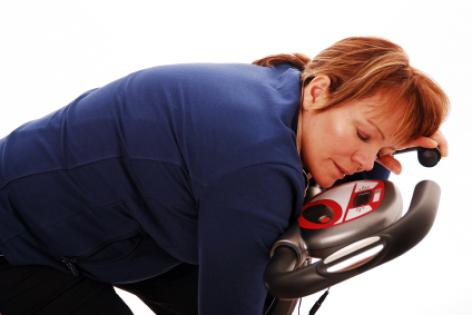
The office – no not the TV series, comes next, with 16 images, inflated perhaps with opportunities created by moving office and the delights of standing desks and desks tied to exercise apparatus. I would not have dreamed that taking a picture of the immediate work environment was so important. 


Travel ranks highly but possible to count in different ways. Railway stations are significant at 11 pictures, especially Newcastle Central – of world significance as stations go, but that’s just me. Car travel featured just slightly with a nod to cycling. Active travel (good and bad) is clearly a source both of delight, when stairs get favoured, and frustration, when lifts are promoted. Exercise equipment got a decent look in too. 


Signs and marketing really played on the collective academic mind. Labelling, the impact of shop placements and advertising, spelling mistakes, unintended humour, public health messaging, came in with around 12 images. Some of this felt a bit judgemental, when it came to cheap unhealthy food signs. Not too many wider determinants of health, it has to be said.
 

Field work related images scored a fairly respectable 9.
 

Culture kept creeping in. Museum visits, architecture, music, sculpture were all there. Nature played a relatively small part, but researchers did appreciate the cute, the beautiful, office plants and the changing seasons.
 

Then a whole rag bag of one-offs. Some were clearly novelty items or personal reminiscences, and some seemed like stream of consciousness, or pet concerns.


Curiously, the academic world was quite short of pictures of people, except in crowd shots doing serious lecture type stuff. It looked a camera shy world. So what do we have? A hard working, semi-office bound, nomadic community that likes writing, learning, unable to switch off form public health even when undertaking a leisure activity or just walking around the town, that enjoys high art and longs to sniff a flower. Is this what we are? The camera apparently doesn’t lie.

Tuesday, 3 March 2015

No time to run: is role overload contributing to physical inactivity in parents?

Posted by Caroline Dodd-Reynolds

Last night during a Twitter exchange, it somehow came about that I would write a #fuseblog on barriers to physical activity and a healthy diet in working mums. Interestingly, my one-year-old daughter had just gone nicely to bed at this point and so my husband and I treated ourselves to a healthy(ish) home-cooked dinner, albeit at 9pm. Normal service was resumed however at 12.30am when we were woken by the sound of the one-year-old vigorously banging on her cot and shouting, ‘Is DARK!’ (yes, it’s the middle of the night). So here I am typing this blog with two hours of sleep under my belt. Primarily this is why I no longer do very much exercise-based physical activity, or indeed eat as healthily as I used to. I am sure there are many who can relate to this sleep-deprived existence. Certainly the transition to parenthood can be an experience of life-changing proportion. For me, the transition back to work after months of no sleep and complete displacement from my previous identity was interesting.


There is guilt at leaving my little one at nursery and then there is the race through the day so that I can leave early enough for us to have an hour of (potentially active) play before bedtime. There is guilt at not being able to attend the evening functions at work, the interesting lectures that I know would be pure luxury to immerse myself in. There is pressure to succeed at work, not so much to prove that I can be both a parent and an academic, but more that if I don’t, then there is little point in having endured the guilt. And what of physical activity? Well, please see my previous points as to why this takes a seat so far back that I can barely see it.

The Chief Medical officers recommend 2hr 30min moderate-vigorous physical activity (MVPA) per week for adults; an individual is classed as inactive if achieving less than 30min moderate physical activity per week. Time spent engaged in MVPA declines with age and in 2012, 67% of men and 55% of women aged 16 years and over were meeting recommendations. These data were self-reported and objective monitoring methods suggest these figures are inflated. Guidelines for reducing sedentary behaviour are less clear but should involve avoiding prolonged periods of sitting. I am a full-time Lecturer in Physical Activity and Nutrition and so the irony of spending hours (sitting) writing lectures on the perils of sedentary behaviour and energy-dense snacks, is not lost on me. I did a quick PubMed search including physical activity and working mums as key terms and found a lonely but slightly reassuring 10 articles.

One article describes succinctly and astutely the fact that much is known about motherhood as a transitional influence on the physical activity habits of new parents, but actually very little about those new parents (or indeed any parents) who work. Emily Mailey and her colleagues, from the Dept of Kinesiology at Kansas State University, talk about ‘role overload’ and how this is associated with negative health outcomes such as elevated stress, depression and anxiety. I am starting to feel better here. The 25 mothers and fathers who participated in focus groups for this study reported barriers such as ‘scheduling constraints’ which I think many working parents may identify with – for me it is the Outlook calendar that keeps me on track and I know that if I schedule 30min into it on a Tuesday, I do have time to nip out for a run and I am more productive for it. But then what if someone requests a meeting or tutorial? Interestingly, ‘prioritising’ is noted as a facilitator. One mother comments that she had to get up at 5am to fit her physical activity into her day. Indeed this is a thought that often crosses my mind. Another, is that working parents may well comprise a special population in terms of physical (in)activity habits and sedentary behaviour; when I was on maternity leave I was certainly more active than I am now.

Anyway, I’m writing this on a Friday (thank goodness for the weekend). I really must clean the bathroom tomorrow, and the car needs a good wash, these will get my activity counts up, great. Oh but then there is that paper I need to write, and next week’s lecture I have yet to prepare. I know realistically what I will be doing this weekend – and it may not comprise any minutes of MVPA, nor help my preparation for next week at work, but I know it is the finest choice and that my little girl will laugh out loud with delight when she sees the animals on the farm.

Feeling slightly more awake after some strong coffee, I have just read this blog back and am sad that it sounds rather negative. It isn’t meant to, but it has made me think a little more about how I spend my days (and the potential to ask for a standing desk at work). And in case you were wondering, I would not swap my little girl for any amount of physical activity. Mailey and co. talk about being a role model and being active with your children. In a good week with no illness, sleepless nights or marking, we probably do manage to achieve this to an extent. And my little girl is happy, active and eats a healthy but balanced diet (vegetables and chocolate included) so perhaps we are doing things right after all?

Tuesday, 13 January 2015

Feeling welcome, getting lost and being my own woman: My first week as a Professor

Posted by Dorothy Newbury-Birch

On Monday last week I was asked to introduce myself to a room full of fellow new starters at Teesside University. For the first time, officially I said: ‘I’m Dorothy Newbury-Birch, Professor of Alcohol and Public Health Research’. WOW!!
Making the news
I remember when I started my last post as a Senior Research Associate at Newcastle University, seven and a half years ago and I was asked to do a presentation to introduce myself to the department and my very clever (I thought anyway) title was ‘I’m a criminologist let me into here’. I’ve been thinking about that presentation a lot over the last few days – not least because I am going to give a professorial inaugural lecture on the 26th January (have you booked yet?). What it has made me realise is that unlike when I have started jobs in the past this one is different.

You know that feeling you have in the first week you start a new job? The feeling of not fitting in; being afraid that people are going to realise you don’t know what you are doing? That feeling of wondering what you are supposed to be doing? That feeling you have that says, please let me in, please accept me which I think is what I was asking in my presentation all those years ago.
 
My new office
Well I’ve been in post for a week and for the first time in my career I feel that I have fit in from day one; that I do know what I’m doing (well mostly!) and that I am in the perfect place in my career, my institute and my life. I’ve been wondering why that is? Of course it’s because I have been made to feel so included and welcome in my new department. It's also because I was lucky enough to have a colleague come with me at the same time so we were able to share the asking of questions, and spend an hour driving around Middlesbrough looking for a car-park that we had been assigned and laughing so much about not being able to find it. But it's more than all this, it's about knowing that the time is right for me to lead the work I want to lead, to develop my own team to lead work that makes a difference to society. I’m also lucky to have told by my line manager that ‘I am my own woman’ in this job. What does that mean? Well for me, it means that I can spend some time working out a plan for my research and developing a team of likeminded people. I want to be moving forward, to interact with the people who can help me do this and I know that I will be supported to do this.

I can only see good things ahead. I will let you know in a couple of months how it is going and remember if you are at Teesside come and say hello – I’d tell you where I’m based but I keep getting lost!

Tuesday, 23 September 2014

As long as you can manage to stay awake

Posted by Jean Adams

I was sitting in a meeting the other week when someone started talking about ‘Jamie and Tom’,* in a slightly context-free way, like I would definitely know who they were. It was at this point that I realised I only knew who about 50% of the people around the table were and that we’d got to agenda point 3 without any introductions.

One of the most common activities I did as a medical student was sitting at the back of a clinic. The doctor would do their job, seeing each patient on that morning or afternoon’s list; my job was to learn by observing. It’s not always easy to keep concentrating on this sort of ‘just watching’ learning. Hospitals tend to be warm places and the student isn't actively engaged in the consultation. To help me stay awake, I made a rule that I would try to ask the doctor at least one question after every patient. Sometimes I asked questions I knew the answer to, just to prove to everyone that I was still awake.


"Thomas Eakins, The Agnew Clinic 1889" by Mark Skrobola - note how engaged medical students were in the 19th century
I’m not sure I can remember anything I was actively taught during a clinic. What I really remember is learning what sort of doctor I did, and didn’t, want to be. I wanted to be the doctor who spent a whole afternoon consulting with people with the dreadfully debilitating, but hard to treat, chronic pain syndrome without once loosing their patience. I never wanted to be the doctor who walked out of the door when their patient started weeping, leaving the nurse to 'deal with it'.

As the meeting went on I eventually worked out that Jamie was female, and was a little bit upset with myself for auto-assuming she wasn’t, but a little bit pleased with myself for taking a tiny step towards nailing down her identity. Then someone started talking about GVS-super-TRP**. I looked at the meeting papers for a clue as to what this might be, lost the thread of the discussion, and my brain slipped away to something much easier.

In order to stay awake, I wrote a list of the things that had gone wrong in the meeting. Right there, on my agenda: no introductions, no explanation of GVS-super-TRP. Looking back, I hope that I wrote in enough of a scrawl that the person next to me wasn’t able to witness my impudence. It’s not like I'm some ninja-meeting super-hero. Note: I didn't interrupt to clarify what GVS-super-TRP was, or ask who Jamie and Tom were. Participants not asking for clarification when required was on my list.

The bad meeting experience reminded me of my medical student days and how much you can learn by just watching. How much you can learn about how to do things well and how to do things badly.

I was attracted to medicine partly because I liked the idea that it would take a long time to get any good at it – learning and working at doing it well would keep me busy for a while. Similarly, I like that research is not something I will be done learning soon. You don’t get a piece of paper one day saying “you are now qualified as a researcher: go forth and research”. There is always more to learn and always more opportunities for learning – even from meetings that don't go so well. As long as you can stay awake.


*Obviously not their real names, but definitely one name was one that could be either male or female.

**Whatever it was, I don’t want to compromise the true acronym’s confidentiality, so also not it’s real name.

Tuesday, 9 September 2014

You can't ever win

Posted by Jean Adams

Brian McNeil sings a song called Sell you labour not your soul. The chorus goes: “Young and old, true and bold/ Sell your labour not your soul/ Solidarity's your goal - join the union”. It invariably involves a lot of audience foot stamping and fist waving.

I was reminded of this song during a conversation with my ‘leadership mentor’ a few months ago. NIHR sent a guy up to Newcastle to watch me at work, feedback on my leadership style, and discuss my career direction with me. My mentor had worked with lots of people funded by NIHR, so when he asked which UK academics I really wanted to be like, he knew the names I reeled off. “If you want to be like them,” he said, “you’re going to have to work more hours”. Then he laughed at me when I told him the university already got enough of my soul and said, “well you know the old saying: ‘if you’re not a socialist by the time you’re 20, you haven’t a heart; if you’re still one by the time you’re 40, you haven’t a brain’”. I still have a few years left to make the full transition.

All the images on work:life balance were cheesy. But I thought you'd be impressed by this photo of Brian McNeill playing the double-kneck bouzouki
There are people at the university that I strongly feel don’t get paid enough to work more than their contracted hours. But that’s not me – I get paid plenty well enough. And it’s not that I don’t feel passionate about (most of) what I do, or find myself enjoying thinking about it when I’m running or climbing hills, or sometimes get so engrossed in it that I’m still at my desk way past home time. I just think there should be more to life than work. That my life, and work, are both better for there being more to life than work.

I know there are many, many people working in public health research (and in lots of other areas) who work more than their contracted hours. In fact, my contract is a little vague about what my ‘contracted hours’ might be. Sometimes it seems like working all the time is the only way to be successful – somehow ‘good’ means ‘lots’. There seems no way to do everything that you want, or have, to do without working all the hours.

Academia is inherently a competitive venture. There is no absolute benchmark of good enough – it’s only ever relative to what other people manage. When one person starts churning out twice as much as anyone else by working longer and longer hours, it puts pressure on the rest of us to do the same. To keep up. Before you know it, you feel guilty every Sunday afternoon you don’t spend at your laptop.

But I have also come across well respected, and undoubtedly successful, academics who tell me how important it is to them not to start work before 8.30am, and not to leave the office after 6pm. Not just because it makes their lives better, but because this is the role model they want to be to those around them. These are not people who are doing sneaky work at home that they don’t let on about. They just seem to be focused in what they agree to do, to do it efficiently, and then to go home and do something else.

It is this type of person that I really want to be like. For me, the challenge is the focus and efficiency, not finding the energy to stay at my desk until midnight – although I would also struggle with that. Every Sunday afternoon that I spend at my laptop I feel that I have failed. I promise myself that next week I will focus more and be more efficient. I list the ways that I waste time and the things I should never have agreed to do. Instead of feeling guilty when I’m not working, I feel guilty when I am.

You can’t ever win.

Tuesday, 26 November 2013

Taking control

Posted by Jean Adams

Being an early career researcher (ECR) isn’t always easy. So much emphasis is put on finishing your PhD, you slog your guts out getting the thing done, then a bottle of champagne and a long sleep later and life doesn’t seem to have changed much. As an early post-doctoral researcher you aren’t paid a whole lot more than a PhD studentship. And whilst that studentship might have been three, or even four, years of fairly secure ‘employment’, now you are suddenly in at the sharp end of short term contracts. On more than one occasion, I got sent a redundancy notice before I’d received the relevant contract to sign. You are generally beholden to more senior colleagues to find money to pay your salary and the dark arts of patching together pots of money from here and there to make a job can seem incomprehensible, sinister and even vaguely illegal.* It is easy to feel like your career is suddenly way out of your control.

It ain't easy being an ECR
At the same time, the demands can be overwhelming. The PhD that you thought was going to be the crowning glory of your CV suddenly feels as irrelevant as your GCSEs were the day you got some A-levels. It now has to be added to with teaching experience, publications, grants of your own, and examples of impact, engagement and outreach. All at the same time as fulfilling the demands of the day job, or jobs, that the person, or people, who have found you a salary require.

High demands. Lack of control. Sound familiar? It’s not surprising that so many ECRs feel totally stressed out by the whole thing. It is the very definition of a stressful working environment.

Of course the story above is a gross over-simplification. There are all sorts of pathways by which people come to the role of ECR. Just as there are all sorts of pathways that ECRs take from the point of PhD onwards. I don’t know the magic formula for ‘making it’. But I would suggest that if you want to get a grip on the stress, there are two things you can do: reduce the demands, or take back some control. I am not too great at moderating the demands of academic life. There always feels way too much to do, I’m hopeless at saying ‘no’ (and make it worse for myself by using synonyms for ‘no’ and then getting pissed off when these are interpreted as ‘yes’), and I’m never sure who I could or should delegate to. So my main strategy is to try and maintain a modicum of control.

Here is my five-step plan:

1. Decide what you want to do. Having a PhD doesn’t mean you have to stay in research, or that you will have failed if you don’t. It might feel like that in a university, because that’s what the people who seem to have the most status do. But I know lots of people with PhDs and MDs who have fulfilling lives and careers outside of university research. On the life achievement side, all of them have more children than I do.

2. If you want to stay in research, decide what sort of role you want. Not everyone has to be a professor. In fact, it’s quite obvious when you look around any university department that it’s pretty unlikely that every ECR could become a professor. Without a massive expansion in the sector, there will just never be enough professorial positions to go around. But there are other jobs within research - either within the ‘lab’ as a career researcher, or outwith it in research support.

3. Work out a plan. Once you’ve decided what you want to achieve in the long term, work out what the main steps are for getting there - say over the next 5 to 10 years. Then work out a more detailed plan for achieving the first of the steps - say over the next couple of years.

4. Make sure you have formal and informal mentors and support groups. The ‘answers’ to steps 1 to 3 are going to be obvious to some people and totally opaque to others, with a range of experience in between. Throughout your career (just as throughout your life) you are going to need advice and support. Make use of all the advice and support you can to help you work out where you want to go, how to get there, to keep you on track, and to remind you that you are awesome. It’s way too easy to forget, in an environment full of high achievers and extraordinarily clever people, that you too are amazing.

5. Reappraise regularly. If you’re not getting what you want from your chosen plan then go back to step 1 and reconsider.


*I promise they aren’t. They just seem that way.


Tuesday, 17 September 2013

Oh, stop your whining.

Posted by Jean Adams
I used to loath those consultants who told us medical students that 36 continuous hours on the ward and 100 hour working weeks never did them any harm, so the junior doctors of today should just stop their whining.

Sure stupidly long working hours might not have done the junior docs of the 1980s any lasting harm. But it certainly did their patients some harm and I’ve heard lots of stories of the short term damage such ridiculous working practices did to health and sanity. Really I thought those days were over, but apparently not.


Now that I have some responsibilities for earlier career staff and students, I am wary of becoming those loathsome consultants. For quite a while I would tell people who worked with me, quite truthfully, "well I don’t work at the weekend, so I don’t see why you should have to". This was sometimes accompanied by "I don’t think you get paid enough to work more than you’re paid to". 

I still try really hard not to work at the weekend. But I’m not as good at is as I used to be. I increasingly find myself turning on my laptop in the evening because there’s just a little job (more often jobs) that I have to do before the meeting(s) tomorrow to avoid being totally unprepared.

I think I sometimes work too many hours. Not all the time. But some weeks, and I don’t get a chance to slack off the other weeks to make up for it. My contract helpfully doesn’t specify how many hours I should work – just that I should get my job done – so it’s hard to be sure about this. I just sometimes get the feeling that there is too much work in my life. But I get paid well, I knew that this was coming when I signed up for the job, and there are certainly other people who work more than I do.

What bothers me is that my increasing working hours seem to be accompanied by decreasing sympathy for other people’s work:life balance. I still say that stuff about working the hours you’re paid for and if you can’t fit it in, we need to think about getting some help, but somehow it doesn’t feel so convincing. Genuinely, it isn’t that convincing – I am getting worse and worse at convincing myself to work that way.

The very worst thing is that I am starting to resent the people who I think aren’t pulling their weight. The people who say they’re too busy to help out, who I know aren’t as busy as me. Jeez. Who am I to judge whether other people are too busy to help out? When did I stop thinking that ‘too busy’ can mean all sorts of things that has nothing to do with working at the weekend?

Tell me I haven’t become one of those loathsome consultants.

Thursday, 18 July 2013

I am not a doctor

Posted by Jean Adams

My name is Jean and I am not a doctor.

Twelve years ago this week I graduated with an MBBS (Bachelor of Medicine, Bachelor of Surgery – a medical degree to its friends). Since then I have varyingly described myself as “a medic”, someone who “trained as a doctor”, and most recently a “failed doctor”. They are all true to varying degrees. Only recently have I become truly comfortable with the reality that I am not be a doctor, without the need for qualification or explanation.

I graduated with an MBBS. But I never practiced as a doctor. I didn’t complete the early post-graduate experience you need to become fully registered as a doctor. I was briefly listed on the medical register as a ‘pre-registration’ doctor. But only as long as it was free. After that I voluntarily removed myself from the register. Which, I assure you, is an entirely different thing from being struck off.

Just to confirm...none of these people are me
For a while I kidded myself (but mostly I reassured my friends, family and advisors) that I might go back to medicine. I would indulge myself with research for a short while and complete my PhD. Then I would see the light and realise that the only true and good career path was medicine. I would become a GP or a psychiatrist. Maybe I would do a little research on the side. It was going to be fine. I was not going to be a failure.

Despite not wanting to be paid to practice medicine, for a long time I clung on to the medic label. To begin with I think this was mostly because I wanted something to show for my six years at medical school. All my friends were junior doctors. I was...still a student. I needed something to suggest that I might be a worthwhile person. For the three years that I worked towards becoming one sort of Dr Adams, I clung to the other sort of Dr Adams as some sort of confirmation that, despite appearances, I was definitely a fully fledged adult, and not ‘just’ a student.

After my mother died, my father told me that the most important thing for her, as a psychiatrist, was her dual qualification as a general physician as well as a psychiatrist. This was, he said, what gave her legitimacy during her (endless) negotiations with the rest of the hospital – no-one was ever going to listen to a shrink whine about being under-staffed, but they might listen to a ‘proper’ doctor who was playing at being a shrink for a while.

Even after I became Dr Dr Adams I didn’t quite trust that one Dr was up to the other Dr. Yeah, I had a PhD, but I was also a ‘proper’ doctor. Just like my dad said, I thought that it gave me some legitimacy with the men in suits from the rest of the medical school.

Now it all seems a bit of a joke. I can barely remember how to examine a chest, let alone suggest a differential diagnosis and management plan for your intermittent breathlessness. There was a time when I considered watching ‘ER’ to be half way between doing nothing and revising for finals. These days I struggle to work out what all the acronyms stand for.

But however much I disliked medical school as a phenomenon, I am still grateful that I went. It is a fine training in life. I’m sure I’ve forgotten more than half of what I learnt. But you don’t forget the time you held a stranger’s hand as they delivered their first baby, the hour you spent with a floridly psychotic young man trying to decipher his world, the women dignifiedly dying of malignant melanoma who still dressed like she was just about to go out for a run, or being taught how to certify someone (very newly dead) as dead.

I have finally arrived at a place where I am confident enough with the career and identify I have, that I don’t need to cling to one that isn’t really mine.

I am not a doctor.


With thanks to Lynne Stobbart, whose post on always being a nurse helped me realise that I was never going to be a doctor.

Thursday, 27 June 2013

Asking the right questions

These tweets from @sal_brown caught my attention a few weeks ago (the nature of Twitter is that they're listed here in reverse order):


I was reminded about them again at an event I went to last week to celebrate Sally Macintyre’s contribution to health inequalities research and policy. Amongst all the many other complementary things people had to say about Professor Dame Sally, one of the common factors seemed to be that she keeps asking the right questions.

I guess the explanation for the bloke on train incident is that he thought he was applying for a lecturer-as-in-teacher job, whilst the interview panel thought there was at least a bit of lecturer-as-in-researcher involved.

What these tweets and the comments on Sally Macintyre’s career leave me wondering is whether or not “research plans” and posing the right research questions are really the key to a successful research career.

Sometimes I feel a little overwhelmed by all that it takes to be successful in research. You need grants, and papers, and conference presentations, and research students who submit good work on time, and to teach well enough that you aren’t slammed in feedback, and to do peer review for other people’s grants and papers and then maybe join an editorial board or research funding committee or both, and to make sensible contributions to your institute’s research strategy committee, and to do public engagement well enough that it’s not embarrassing, and to try and engage with policy enough that you have some sort of ‘impact’, and to do a bit of adminny stuff on the side.

And, and, and the list goes on. And what I really want is some way to get to the essence of what I really have to do. Otherwise I might just find it impossible to juggle everything. Getting a grant should lead to papers, and presentations and maybe some good students. Good papers and presentations lead to peer review requests. So maybe grants are the essence that I’m looking for.

I have come across people who have built a very respectable career on hardly any external research funding. They tend to be people who focus on secondary analysis – things that you can do pretty quickly yourself without much in the way of external expertise or support. Sometimes I’m jealous of these people – getting to play with Stata themselves, rather than just getting to look at other people’s output. Other times I wonder how limiting it must be to never be able to do anything that isn’t free. I love secondary analysis as much as (more than) the next person, but sometimes I want to do things that even the most inventive use of secondary data wont allow.

Either way, tho, whether you go for primary or secondary data, you are reliant on your research plans. So maybe it’s true, unless you have ideas for research, and original research questions you’re never going to get anywhere.

But what about all those people who have long and respectable careers but are rarely, if ever, principal applicants on grants? The career researchers, rather than academics, that our departments are all built on. These are the people who seem to know how to get things done. Yet they are not the sort of people who regularly lead grant applications. Do they need to have lots of great research ideas?

So maybe the right question here is not “what is at the heart of a successful research career?”, but “what do you mean by successful?”. Is that it?