Showing posts with label student. Show all posts

Friday, 7 March 2025

Bringing dietetics into Public Health

Posted by Alex O'Connor-Sherlock, MSc Dietetic student, Teesside University.
Introduction by Steph Sloan, Senior Lecturer in Dietetics and Course Leader MSc Dietetics at Teesside University.
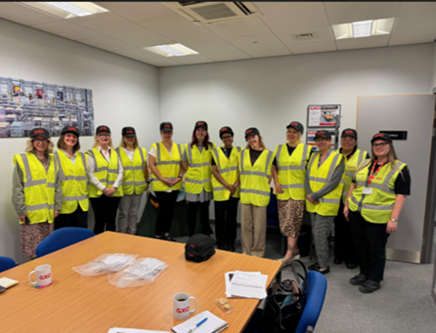
Practice-based learning (PBL) is a key part of dietetic training, with students required to complete 1,000 hours of hands-on experience in a practice setting. Traditionally, this has mostly taken place in NHS settings, with students working one-on-one with supervisors. However, as healthcare demands grow, diversifying placement opportunities is becoming increasingly important - not just to support student learning, but also to strengthen public health initiatives.

Suited and booted to present to a factory workforce
The Allied Health Professions (AHP) Strategy for England highlights the role of AHPs in disease prevention and health promotion, helping to reduce the burden on already stretched health and social care services. Diet-related diseases remain a major public health challenge, yet dietetic care is still largely focused on treatment rather than prevention. If the profession is to play a greater role in supporting population health, then equipping students with strong public health knowledge and skills is crucial.

To support this, Teesside University’s MSc Dietetics programme now includes public health placements alongside traditional NHS clinical placements. Here, Alex shares her experience of working in a Public Health practice-based learning setting. A must read in National Careers Week for anyone considering a future career as a dietitian!

------------------------------------------------------------------------------------------------------------------------------------------------------------------------------------------------------

What I worked on

During my placement, I was involved in three projects focused on health improvement and disease prevention. My work involved meeting with stakeholders, conducting research, presenting findings, and engaging with the public. The projects covered a wide range of population groups, including expectant mothers, school-age children, local workforces, and food bank users.

1. Supporting parents with child nutrition

A key part of my placement involved reviewing the nutrition education available to parents of children aged six months to four years.

What I did:
  • Conducted a literature and policy review
  • Spoke to parents, NHS staff, and school representatives
  • Attended a breastfeeding class to hear directly from parents
  • Presented my findings to several teams, including the Director of Public Health
Why it matters:
The insights from this work will help shape future research and improve nutrition support for families in the local area.

2. Linking oral health and nutrition


There is a strong connection between what we eat and oral health, but not everyone has access to clear, easy-to-understand information about this link.

What I created:
  • Infographics and presentations to educate local workforces
  • Materials designed in an easy-read format, avoiding jargon
Why it matters: 
My presentation was really well received, and I was even asked to record it for wider distribution, so it could be shared with professionals working with children and people with additional needs.

 
Infographics to educate local workforces

3. Reducing food waste in a local food pantry


Many food pantry users rely on short-dated products, and without clear guidance, a lot of good food can go to waste.

What I did:
  • Designed simple, visual signs with food storage and cooking tips (e.g. "Chop me then freeze me")
  • Introduced a ‘Freeze me’ sign for bread and monitored its impact
What happened?
Twice as much bread was sold the day after the sign was put up compared to the previous two weeks combined!


Signs made to reduce food waste

What I learned
  • Public health plays a key role in patient care - I saw first-hand how wider social factors impact people’s ability to manage their health and access services.
  • Being proactive is crucial - I reached out to stakeholders independently, which helped me build confidence and leadership skills.
  • Flexibility is a great learning experience - managing my own projects and working in a less structured environment improved my time management and adaptability.
  • Self-care matters - the flexibility of this placement meant I could work in different settings, including from the park on sunny days!
Final thoughts

Introducing dietetic placements into public health settings is a win-win. It helps students gain a broader skillset, supports NHS capacity, and brings dietetic expertise into community settings.

Of course, doing things differently comes with challenges. Expanding placements into public health settings has required commitment from everyone involved - academics, placement providers, and students. But we’re constantly learning and improving, and we’re proud to be making a real impact on the health of our local communities.

Friday, 16 February 2024

Beyond stats and diseases: my summer internship in Public Health

Posted by Bethany Henshaw, NIHR School for Public Health Research (SPHR) Intern in Fuse, undergraduate at Newcastle University

The NIHR School for Public Health Research (SPHR) recently asked its members (including Fuse) if we would like to host an internship this summer. The summer internships are aimed at undergraduate students with an interest in a career in public health research. The internships offer support for 6-8-week projects supervised by SPHR Early Career Researcher (ECRs), Fellows and PhD students. 

In this post, Beth (pictured right) tells us about her internship experience last year at Gateshead Council. 


When you think of the term ‘public health’ what comes to mind? According to the World Health Organization, it is:
“the art and science of preventing disease, prolonging life and promoting health through the organised efforts of society.” 
If you had asked me this question in early 2023, I would probably have given a very general, slightly muddled answer which was focused on the disease aspect of the field. What my answer would have highlighted was that I had very little understanding of just how broad and wide ranging the field of public health is.

Last year I undertook a NIHR School for Public Health Research (SPHR) summer internship in Fuse, looking at the perspectives of social prescriber link workers (who connect people to community-based support) on the promotion of active travel. Active travel refers to modes of travel that involve a level of physical activity such as walking and cycling. I was interested in understanding how social prescriber link workers felt the prescription of this to their patients would impact them.

The findings will be used to inform the development of an active travel pilot in Gateshead. The internship was a fantastic experience in many ways: it enabled me to develop my qualitative research skills, for example, I developed a topic guide for the social prescriber link worker focus group, and gave me valuable insight into professional working life. However, my biggest take-away was the insight it gave me into career options within public health.

Behind the stats are real people with their own unique story
As a biomedical science undergraduate, I spent two years studying topics like physiology, pharmacology, and immunology largely at the molecular level. I understand how many different diseases invade the body and make a patient ill. However, for a while now I have been interested in understanding disease at a population level. Rather than the cellular mechanisms of disease, I have grown more interested in why some people are more susceptible, and how we can reduce this disparity and prevent further people from becoming ill in the future. Before my internship, I mainly considered public health from a disease related perspective and thought that health protection covered the vast majority of the field. However, by speaking to both researchers and members of the Public Health team at Gateshead Council, it became clear to me that it covers significantly more than this! Issues such as environmental health, health services and health improvement are all things I previously wouldn’t have thought about when trying to define what I considered public health to be.

Something that surprised me during my internship was just how central recognising the individuality of each patient’s situation is in public health. I came to the realisation that when I had read research papers on disease outbreaks or rates of chronic disease as part of my degree, I had been overlooking this important detail: that behind the stats are real people with their own unique story. Talking to members of the active travel social prescribing team at the Council, made me realise just how individual and unique the journey is for each patient. Summarising, for example, how many patients continued to regularly use active travel for the time period they were prescribed it as a percentage does not reflect the reality of what these patients go through, something that will only be understood by talking to the patients to understand their experience. I found this outlook on viewing patients as people and not just statistics to be incredibly refreshing, and it has provided me with a new perspective to take into my final year of university and beyond.

My internship offered me a view of what life could be like working within public health research and the broader field. My understanding of what public health is, has been challenged and has been significantly changed from the disease focused perspective I had before. However, one of the main things I will take away is that behind all the statistics we see in the news and read in research papers regarding rates of disease, it is vital to remember that each statistic is a patient whose own unique experience should not be undermined.

Friday, 11 June 2021

Things I wish I’d known when I started my PhD… (part 2)

Posted by members of the Population Health Interventions Programme at the MRC Epidemiology Unit

This is Part 2 of our PhD SURVIVAL GUIDE. In Part 1 we found out that doing a PhD (or any research) is challenging but the ‘this might be okay’ stage always comes; continuously comparing your work, and yourself, to others is the thief of joy; and research is a team sport and you're the boss so start channelling your inner Arsène Wenger!

Like most research groups, ours comprises an ever-changing cast of early, mid and senior career researchers. Our training is in a variety of academic disciplines and we all have different short, medium and long term life and career aspirations. While our experiences of public health research are naturally individual, we have noticed some commonalities. We share these here to provide reassurance to those new to the game that whatever they’re feeling is almost certainly ‘normal’. Challenging experiences are often interpreted negatively, particularly when they are first met. We propose that they can often be reassessed and reframed in ways that make them positive parts of a continuous learning and career development journey. Other people might have different experiences, this is ours…


Licensed to YouTube by: UMG (on behalf of Walt Disney Records); UNIAO BRASILEIRA DE EDITORAS DE MUSICA - UBEM, ASCAP, AMRA, LatinAutorPerf, Walt Disney Music Company (Publishing), LatinAutor - SonyATV, LatinAutor - UMPG, CMRRA, UMPI, and 15 Music Rights Societies

4. We’re all in this together – don’t take it personally

It is impossible to overstate the importance of not taking feedback personally. Opening a document containing feedback from your supervisor or peers and seeing a page full of colourful tracked changes and comments can sometimes feel like personal criticism. It’s all too easy to see this as a setback but in reality, this is what teamwork looks like. Your supervisor is there to ask the difficult questions, and to stretch you intellectually. All feedback is intended to be helpful, so you can produce a stronger output.

Trust us, your supervisor doesn’t expect perfection. Think they don’t receive similar feedback from their colleagues? Think again. But they’ve learned from experience that falling short of perfection is okay. Few imperfect ideas are that imperfect!

Also, what does perfect look like? There’s rarely a ‘right’ answer to any question, and there are different but equally valid ways to approach most things. Different is not necessarily better. Although you’re bound to immediately presume what you’ve done is ‘wrong’, our advice is to take a breath, remind yourself why you did what you did, and be prepared to defend that. This will be an essential skill for your viva! But remember to respect the time it took for someone to really consider your work, by reciprocating and carefully considering their ideas.

Your supervisor wants to see you succeed because your success is also theirs. Seeing your student flourish is immensely gratifying. It rewards everyone’s intellectual contribution to the work, and validates that seedling of an idea, planted by your supervisor, which has since blossomed under your care. Lastly, don’t forget that as much as you’re learning from them, they’re learning from you, too. You wouldn’t be doing that systematic review if they knew the answer already. 

"Piled Higher and Deeper" by Jorge Cham www.phdcomics.com
5. A PhD is a job, not a way of life

For most of us, reaching the start of a PhD represents lots of hard work and effort. It is tempting to think that means you should pour your life into research, and nothing but research, for three or more years, to do justice to that opportunity.

But your PhD can benefit from some down time. Giving yourself a mental break from research means you can return to work with renewed enthusiasm. Time away can also offer clarity and sometimes inspiration! Setting boundaries between research and the rest of your life can make the entire PhD process more sustainable and ultimately, more enjoyable. It can be easier to work efficiently and effectively in distinct working hours (even if those aren’t 9-5), with the incentive of doing something else that you enjoy at the end of it.

However, intending to take time off work and actually doing it are two very different things. During busy periods, it is easy to prioritise your PhD over other areas of life. It also becomes harder to switch off thoughts like “should I read that extra paper?” or “maybe I should do that analysis?” while you are trying to relax.

There are simple ways you can give yourself a better chance of achieving the elusive ‘work-life’ balance. Scheduling time – and protecting that time – to do a particular hobby, sport or social activity can help. It is much easier to rearrange a “hope to do yoga at some point this week” than a class you have booked at 7pm on Wednesday. Similarly, committing to doing things with other people is a great way to cultivate new friendships with colleagues, enjoy their company, and follow through with a plan. At times of self-doubt, it is also a good reminder that there are many other things you are capable of, and that life isn’t all about the PhD! 

6. Some bad things may happen that are not okay

A healthy PhD experience should be challenging, yes, but if this starts to have a negative impact on your physical or mental health and affects how you would normally function, something could be wrong. There are fantastic resources on the Mind website which are a great starting point to help you be more aware of your feelings. Struggling with mental health is very common in life and you are not alone. Seeking help and support is important though. Don’t be afraid to tell your supervisor if you’re struggling.

Sometimes though, the cause of these struggles can be external, and in particular, your relationships with supervisors. Supervisors are responsible for challenging you but also encouraging and supporting you. If there is a problem with your relationship, it is always wise to talk to your supervisor if you can, as they may not realise there is a problem. People are not always immediately compatible in their working styles; this is okay and can be worked through.

If a dysfunctional relationship is caused by a supervisor who is behaving inappropriately, this is not okay. Harassment or bullying of any kind should be escalated through the proper channels in your university. Speak to fellow students you trust candidly about your experiences too; you may not be the only one suffering and they could help support you through it.

The student always becomes the master
7. Enjoy every step of the journey

The good things that come from doing a PhD are not necessarily what you might expect. For some, the highest high is indeed right at the end, the crescendo, when the thesis is submitted. But for many this can feel like an anti-climax. The more you can learn to embrace and enjoy the process, and the less you anticipate what you think will be the good things, the more good things will come your way. A breakthrough with your data collection, your first set of meaningful results, mastering a new skill, or even just a meeting with your supervisor that goes particularly well, are all cause for celebration. Each milestone is a block that forms the foundation of your PhD and each one is a vital move towards your end goal. There is nothing more rewarding than the sense you are on the right track.

As you progress, you will also start noticing that people begin treating you like the expert you are becoming. You might not feel like it, but the student always becomes the master. As strange as these moments feel, you should enjoy them. They are an external reminder that you know more than you think you do. 

Occasionally you will sit back and realise, "I'm doing a PhD! And that’s pretty cool". Stop thinking that you need to have all the answers, or even that you know where your research is going, and instead realise you are there to learn and there to explore, wherever that takes you.

That’s it!

We hope that these points have been helpful, and that you are able to look back at these blog posts when it feels like everything is going wrong. Trust us, it most probably isn’t. We have all been where you are and have lived to tell the tale. Most of us would love to be in the position you are right now again, even just to spend time reading those papers that we still can’t get around to. Try your best to enjoy this incredible experience. You’ve got this!

Authors: Catrin Penn-Jones, David Ogilvie, David Pell, Dolly Theis, Emma Lawlor, Hannah Forde, Jean Adams, Jenna Panter, John Rahilly, Kate Ellis, Martin White, Matt Keeble, Nina Rogers, Rich Patterson, Roxanne Armstrong-Moore, Tom Burgoine, Yuru Huang.


Video: 
Song: We're All In This Together (From "High School Musical"/Soundtrack Version)
Artist: High School Musical Cast
Writers: Robbie Nevil, Matthew Gerrard
Licensed to YouTube by: UMG (on behalf of Walt Disney Records); UNIAO BRASILEIRA DE EDITORAS DE MUSICA - UBEM, ASCAP, AMRA, LatinAutorPerf, Walt Disney Music Company (Publishing), LatinAutor - SonyATV, LatinAutor - UMPG, CMRRA, UMPI, and 15 Music Rights Societies

Images:
1. "Piled Higher and Deeper" by Jorge Cham www.phdcomics.com

Friday, 4 June 2021

Things I wish I’d known when I started my PhD… (part 1)

Posted by members of the Population Health Interventions Programme at the MRC Epidemiology Unit
“By three methods we might learn wisdom: first by reflection, which is noblest; second by imitation, which is easiest; third by experience, which is the bitterest.” 
Confucius
Like most research groups, ours comprises an ever-changing cast of early, mid and senior career researchers. Our training is in a variety of academic disciplines and we all have different short, medium and long term life and career aspirations. While our experiences of public health research are naturally individual, we have noticed some commonalities. We share these here to provide reassurance to those new to the game that whatever they’re feeling is almost certainly ‘normal’. Challenging experiences are often interpreted negatively, particularly when they are first met. We propose that they can often be reassessed and reframed in ways that make them positive parts of a continuous learning and career development journey. Other people might have different experiences, this is ours…

1. Research is challenging but you’ve got this

"Piled Higher and Deeper" by Jorge Cham www.phdcomics.com
Research is certainly challenging. One of the first hurdles of the PhD will be trying to figure out how your research will contribute new knowledge to the area - this is one of the toughest challenges! Stick with it, because thankfully it does get a bit easier over time as you immerse yourself in the research and build your specialist knowledge. But even the most accomplished still find research hard. All the papers you read are from months (often years) of thinking, hard work, and negotiating multiple barriers - it doesn’t happen overnight. As a PhD student, you have the additional challenge of trying to do this in a short time frame, and it doesn’t always go to plan (which is usually out of your control). But, if good research was easy, anyone could do it.

An obvious interpretation of experiencing something as being difficult is to think that we, as individuals, are not up to it. The cycle of creativity suggests, rather glibly, that all projects are associated with a thought cycle that goes something like: this is awesome, this is difficult, this is terrible, I am terrible, this might be okay, this is awesome. We are not sure that we routinely experience the second ‘this is awesome’ stage. But push through because the ‘this might be okay’ stage always comes.

If you have been selected to pursue the PhD, your supervisors think that you are capable. You wouldn’t be on this journey if there were any real doubts about your ability. Encountering difficulties and making mistakes is normal and expected. Even those researchers you admire the most have moments of self-doubt, numerous journal and grant rejections and bad days when nothing goes right.

2. Comparison can be the thief of joy

Academic research is often experienced as highly competitive. In many ways it is. There is competition for limited research, studentship and fellowship funding; limited space in ‘prestigious’ journals; and limited podium time at conferences. This leads to the tendency to continuously compare your own work, and yourself, to others - and to experience a feeling of falling short.

It’s worth pointing out the selection bias present in the successes others share, and how most of the time we’re not seeing the full picture. Despite knowing this, we understand it is sometimes hard to see everyone else seemingly thriving, while you feel you’re just about surviving! Keep in mind that everyone’s PhD is different, and our successes will run to different timelines. And remember, you bring to your PhD your own unique skills and experiences. We’re confident that others are comparing themselves to you, too…

However, rather than continuously comparing yourself to others, we recommend trying to learn from them. If others appear to be succeeding where we are not, what, if anything, can we learn from their approach? Sometimes this will lead to the conclusion that there are better ways of doing things. Other times it might lead to the conclusion that the sacrifices required to achieve a particular outcome are not something we as individuals are willing to make. Or, indeed, that the outcome is not something we want.

We suggest being clear about what our own success criteria are and trying to stick to judging ourselves by those alone. These criteria can be set alone or with others in the context of formal or informal regular appraisals and personal review. At the risk of getting too SMART*-arsed, they should, at a minimum, be realistic.

Rather than interpreting others’ achievements as indicators of our own lack of success, we propose embracing and celebrating them. Informal and formal research group meetings achieve many things, but we see the sense of community that they build amongst ourselves as one of the most important. By embracing each other’s achievements we can support and build each other up, rather than letting comparison get us down.
 
Channel your inner Arsène - "Le Professeur"
3. Research is a team sport and you’re the boss


Completing a PhD might be seen as a lonely, individual pursuit. But while the end result is your own, you aren’t alone on the journey. In fact, research is a team sport.

Your home team is the one you share with your supervisor(s), and you’ll revel in the highs (and lows) of your PhD experience together. In this team you’re the captain. Lead from the front and manage your supervisors by communicating clearly with them, arranging supervision meetings and keeping them up to speed with your progress. As the captain, you make the final decisions related to your research and you are responsible for defending them. If you don’t agree with your supervisor then you should say so, and explain why. Your supervisor doesn’t want you to nod along, as the idea is to learn from each other and make better research (i.e. win) as a team. This can often feel really hard, especially early on while they’re still the experts, but they expect you to take the lead.

In other teams to which you’ll belong, you might play a different role but still make an impact. For example, you might run a writing group, attend group meetings or present in a seminar series; these are all important aspects of teamwork and becoming a valued member of the research community. You are also a member of teams that are less obvious. You probably aren’t sure now how the Facilities or IT department are going to help you achieve your PhD, but when you need a new chair or an obscure software package installed, be glad that you have them as teammates.

In part 2 next week: learning how not to take things personally, life isn't all about the PhD, bad things may happen that are not okay, and enjoying every step of the journey.


Authors: Catrin Penn-Jones, David Ogilvie, David Pell, Dolly Theis, Emma Lawlor, Hannah Forde, Jean Adams, Jenna Panter, John Rahilly, Kate Ellis, Martin White, Matt Keeble, Nina Rogers, Rich Patterson, Roxanne Armstrong-Moore, Tom Burgoine, Yuru Huang


*SMART Goals: Specific, Measurable, Assignable, Realistic, and Time-related

Images:
1. "Piled Higher and Deeper" by Jorge Cham www.phdcomics.com
2. Mr. Alexander Ottesen, CC BY-SA 2.5 <https://creativecommons.org/licenses/by-sa/2.5>, via Wikimedia Commons

Friday, 19 February 2021

"Whatever their answer, double it and you should be close..."

Posted by Hannah Mehmood, Medical Student, Newcastle University

Hannah undertook a 6-week NIHR School for Public Health Research (SPHR) internship with Fuse based at Newcastle University in summer 2020. She was supervised by Fuse / NIHR SPHR Doctoral Student, Cassey Muir.

A question asked in every GP consultation is how much alcohol a patient drinks. It provides a useful insight into a person’s physical, social, and psychological health. According to my GP tutor, most people underestimate the amount they drink, as well as the impact this has on them.

Substance misuse is a complex issue, and as a medical student I have learned to focus on the impact of problematic drug and alcohol use on individual patient wellbeing. Last summer, as an NIHR SPHR intern, I studied substance misuse from a different perspective. The basis of my internship was a research project focusing on young people whose parents misuse drugs and alcohol. I aimed to explore how young people viewed school and education to understand if this environment could be used to deliver supportive interventions.

I analysed ten UK based qualitative studies which examined the experiences of young people affected by parental substance misuse. Qualitative studies examine non-statistical data to develop themes and deep understanding of the research question. The young people from the studies I explored were under the age of 25 and from various social, economic and demographic groups.

Young people viewed school as a space away
 from issues they may face at home
I was particularly interested in the ways in which young people viewed school as a separate space away from issues they may face at home, to the extent that many young people did not even discuss their home life with close friends. But despite the mental separation of home and school, the reality of their home life often prevented a complete detachment of the two. One young person described how caring for her parent resulted in frequently missing school, while another recognised that his aggressive behaviour in school was a way to offload stress at home.

Many young people also expressed a lack of trust towards their place of education, as well as a desire to blend-in with their peers. This contributes to barriers in identifying young people who may benefit from intervention, as many are fearful of being singled out while in the detached school environment.

In conducting my research, I came to appreciate the difficulty in generating themes from such varied experiences. I often felt that my insights did not do justice to the nuances of each individual story. I discussed this in a virtual meeting with a programme coordinator at ADFAM, a national charity that works with families affected by drugs and alcohol. Her experience, delivering interventions at an operational level, allowed me to see how my research fit into the real world. I came to understand that while research is conducted with the aim of applying findings to whole populations, these findings are only actionable when combined with existing knowledge and expertise. This discussion was a lesson in the value of cross-collaboration, an important tool in bridging the gap between research and intervention.

Over six weeks I have broadened my understanding of public health, conducted my own research project, developed my professional skills, and furthered my personal career goals. Although this internship took place remotely, my mentors enabled me to virtually meet various public health professionals. Hearing about their research roles, motivation and future plans has shown me the variety of career paths available within public health and helped to develop my own ambitions. The NIHR SPHR internship with Fuse has been a valuable personal and professional experience and I would recommend it to other students interested in pursuing a career in public health.


Part of our Fuse blog Student Series
The Fuse blog Student Series showcases posts by students who have been challenged to write a blog as part of their studies at one of the universities in the Fuse collaboration, the NIHR School for Public Health Research, or perhaps further afield. The authors may be new to blogging and we hope to provide a 'safe space' for the students to explore their subject and find their voice in the world of public health research.


Images:

1. 'Doctor with prescription stop drinking alcohol' by Marco Verch Professional Photographer via Flickr.com, copyright © 2019 (Attribution 2.0 Generic (CC BY 2.0)): https://m.flickr.com/photos/30478819@N08/48719845996

3. Logo courtesy of ADFAM https://twitter.com/AdfamUK/photo

Friday, 10 February 2017

The importance of partnership working to improve priority-setting in public health decision-making

Guest post by Sarah Hill, Fuse PhD student, Newcastle University

Last month I attended a workshop in London that explored how local authorities could be supported in setting priorities to improve people’s health and wellbeing. The workshop provided a platform to report the findings of a follow-on study to the Fuse led "Shifting the Gravity of Spending?" project and to explore methods for supporting local authorities in priority-setting.  Watch the video below to find out more about the study.

As a health economics PhD student looking into methods of evaluating public health interventions, the workshop was of interest to me since the prioritisation tools focused on at the workshop are a part of the evaluative toolkit I am examining. Additionally, as a health economist by trade - who was thrown-in at the deep-end of public health just over a year ago when I started my PhD research - any opportunity to meet those working in the public health field is one that I seize in order to broaden my knowledge and appreciation of the public health context.  Particularly public health officers and those working outside of the academic realm.

A full report of the workshop can be found here for those who are interested in the outcomes of the event; I will focus here on a few of the key points from the event.

Small group discussions centred around partnership working
At the close of the workshop, following small group discussions, each group of delegates was asked to feedback one key point that came out of their discussion regarding how to aid the use of prioritisation tools for public health spending decisions. Interestingly, a number of the points fed back from each group were related to partnership working to make decisions; such as:
  •  “gathering together” with NHS partners to ensure funding for effective interventions is secured when benefits may fall outside of public health’s remit and more under the NHS umbrella; 
  • considering a “place based” approach to seek good outcomes within a place rather than within separate organisations and;
  • working with local politicians to move decisions forward by understanding their objectives.
The take-home message I got from these points was that for priority-setting to be most successful in public health, a wider viewpoint needs to be considered given the number of stakeholders outside of public health teams that are involved in funding decisions and interventions being successfully implemented. This point echoes a sentiment voiced by Professor Peter Kelly at the recent Fuse meeting on inequalities (see Professor Paul Johnstone’s blog on the meeting here) who emphasised the huge reduction in both alcohol-related hospital admissions and smoking rates in the North-East since a regional approach has been taken to tackling tobacco and alcohol through pooling local resources to invest in initiatives like Fresh and Balance.

The impetus placed on collaborative working coming out of the workshop has given me something to think about for my PhD research since it appears that being able to evaluate interventions in such a way that incorporates and reflects that way of working is valuable. In fact, this is not necessarily a new thought; incorporating intersectoral costs and consequences has been established as a challenge to be addressed when evaluating public health interventions by health economists previously. A review I recently conducted on existing economic evaluations of public health interventions indicates that there is still a lot of room for improvement when it comes to overcoming this challenge and actually incorporating intersectoral costs and consequences. Often evaluations are conducted from either a health care or provider perspective, thus only considering the costs to those sectors exclusively. Also, of the evaluations I reviewed and those previously identified in the literature, the incorporation of consequences (i.e. benefits or disbenefits) to sectors other than the intervention provider is practically non-existent.

Perhaps if more evaluations were able to reflect who benefits from an intervention and to what extent this may enable more collaborative working between different partners and sectors in either funding and/or aiding with the implementation of interventions. Of course the availability of appropriate data is a real barrier since an evaluation is only as good as its data, thus a drive needs to be made within public health departments to stipulate the collection of appropriate outcomes data from the very beginning of an intervention being commissioned to build up the database for effective evaluations.

Shifting the Gravity of Spending? Workshop to explore methods in public health priority-setting was held on the 17 January 2017, and funded by the NIHR School of Public Health Research and supported by the Local Government Association and Public Health England.  The “Shifting the Gravity of Spending?” project is led by Fuse Deputy Director Professor David Hunter at Durham University.

Thursday, 17 November 2016

What do I really get from a conference?

Posted by Christina Cooper, Fuse Postgraduate Researcher, Faculty of Health & Life sciences, Northumbria University

As a PhD student there comes a point in your research when you are ready to start disseminating your work and opening it up to feedback from your peers. This is not only important for your personal development as a researcher, but also in demonstrating your contribution to knowledge, a vital step, the importance of which is reinforced throughout the PhD process. Conferences provide an accessible and valuable way for students to present their work, as either a poster or short oral presentation. Attending a conference can feel daunting at first, but regardless of whether you are presenting or not, the benefits of attending and participating cannot be highlighted enough. Conferences can be regional, national or international, but they all share in common the opportunity to learn from, and network with peers and experts with some shared common interest.

Far from being 'just a poster' - an opportunity to discuss my work
I am a public health PhD student at the beginning of my third, and final, year investigating what works, for whom, and in what circumstances in the prevention of risky behaviour by young people, using realist methodologies. For me, my second year felt like the ideal time to begin disseminating my work, through publishing in peer reviewed journals and attending conferences. I have participated in a number of conferences over the last year, from small university based and local regional conferences, to larger national and international conferences. Submissions so far have been in poster format, detailing various aspects of my research covering the research protocol, methodology, and early findings. Far from being ‘just a poster’ these presentations have provided me with an opportunity to discuss my work with other students, and professionals in the field, helping me to develop my ideas, make connections with those investigating similar subjects, and perhaps most importantly, to build up a support network with those in a similar position to myself. The expert advice and guidance gained from a conference is of course invaluable, but often there is nothing more reassuring, when you are struggling with a difficult concept, than hearing the words ‘me too’. Knowing you are not alone can be just the motivation you need to keep reading, keep talking, and keep going until you find a way through.

Most recently I attended the 2nd International Conference on Realist Evaluation and Synthesis held by the Centre for Advancement of Realist Evaluation and Synthesis (CARES), in London. The focus of which was Advancing Principles and Strengthening Practice. Aside from the benefits of presenting
as discussed above, attendance at this three day conference allowed me to attend talks and presentations by a wide range of researchers, including some of the biggest names in realist research. Covering subjects addressing complexity in public health research, attaining funding for realist projects, and knowledge building and translation. The breadth and depth of the material presented provided insight into the realist methodology that would be hard to gain elsewhere. In addition to these thought provoking sessions, time was given to discussion of the myriad of ways in which the realist methodology is employed in research, and how these may be developed to advance knowledge, not just within our specific fields, but also within the methodology itself. These ‘open mic’ sessions, in which disagreement was not only welcome, but encouraged, provided an opportunity to think through new ideas, allowing us to present, debate, challenge and defend our use of the realist methodology regardless of level of expertise. For me, being present for and involved in these discussions was a unique opportunity which allowed me to engage with my chosen methodology at a deeper level.

"...disagreement was not only welcome, but encouraged..."
As a student, relatively new to realism, two key themes emerged repeatedly over the course of the conference. Firstly, how do I know what I am doing is really realist? Secondly, the difficulty of grappling with the complexity of realist research as a lone working student. Both issues I have experienced myself in the last two years, and were indeed part of the reason I wanted to attend the conference; it was greatly reassuring to discover I was not the only one. Not only were there other students there feeling exactly the same way, many of the other delegates, including some of the ‘big names’ such as Professor Ray Pawson, Dr Gill Westhorp, and Professor David Byrne were able to identify with us, and provide support and encouragement. There is still a great deal of work to be done in taking the realist methodology forwards and I am excited about being a part of that, both in the work towards my PhD, and as a researcher in the future.


Photo attribution: “Academic fact fight - debate” by Frits Ahlefeldt FA-L.com via Flickr.com, copyright © 2015: https://www.flickr.com/photos/hikingartist/17163831686

Thursday, 6 October 2016

A nation stood still for 25 years: Can we find solutions for action in policy and practice?

Guest post by Ben Rigby (pictured), a postgraduate student in Durham University’s School of Applied Social Sciences and Associate Member of the Wolfson Institute of Health and Wellbeing Research

Fourteen – the number of pieces of legislation published since 1991 which specifically state ‘physical activity’ (PA) in the context in which Public Health England presents as a problem needing a long-term solution. That is, an unsustainable burden on the UK economy, resulting from diminished health and well-being, which may be alleviated by increasing population-level PA.
 
I want to help do something about this problem. For the next few years, I will be undertaking a North East Doctoral Training Centre ESRC-funded PhD to research how PA-related practice, evidence, and policy interact to benefit or disadvantage different population subgroups. This project will be supervised by both Dr Emily Oliver and Dr Caroline Dodd-Reynolds, co-directors of Durham University’s Wolfson Institute Physical Activity Special Interest Group. 

Although advances in public health policy and evidence have emerged, not least through the work of the Fuse’s Physical Activity Group on improving evaluation and translation, for example, there remains a clear disconnect between use of evidence, proper evaluation and the influence (and interference) of policy and politics in decision making and the provision of activity opportunities. Having worked for Hampshire’s County Sport Partnership for the past year, these are issues I have experienced first-hand.
 
As a practitioner, it was often difficult to translate available evidence into viable practice. Reasons for this were numerous, though included funding issues, difficulty in physically accessing research, as well as in understanding complex ideas of theory and evaluation, within the particularly vague policy context by which one was guided. Emerging literature also highlights issues in policy, such as failing to consider local implementation barriers, persistent participation inequalities or the intricacies of behaviour change.
 
The aim of my research will be to identify systems and opportunities that facilitate a more integrated relationship between PA evidence, policy and practice. In order to garner a holistic appreciation of these factors, it is vital to understand how policy makers receive, adapt and adopt evidence; how organisational factors constrain or facilitate its adoption and importantly, recognise values and interests of those influencing responses to the evidence or policy problem. A particularly neglected policy research topic has been individual or organisational capacity to act upon evidence.
 
Previous research has perhaps been somewhat one dimensional in these areas. Alternatively by employing a mixed-methods approach and my applied social sciences background, I will be able to generate a much-needed complex understanding of the extent that local, regional and national stakeholders use evidence in PA policy design and implementation, and review factors associated with successful policy implementation. Whilst building upon existing literature, it is intended that this will offer a unique interpretive perspective on people, practices and policy processes (both locally and nationally), enabling and supporting policy development and implementation.
 
Does sitting and talking, and a lack of progressive
 policy action, promote our sedentary society?
Specifically by investigating the following two core propositions initially, I propose that it may be possible to find equitable solutions for progress in increasing physical activity and provide an important contribution to the field of public health research:
  1. Weak evidence results in inherently conflicting and ambiguous PA policy, thus constraining implementation efforts
  2. Political entrepreneurs may offer more effective solutions for policy development and implementation 
Being a fledgling researcher
One of my relatives (a PhD recipient herself), once told me that doing a PhD will be the hardest thing I ever do. I am under no illusions about the task before me, the complexity of which may be compounded by investigating one of society’s most entrenched problems. However I welcome the challenge and cannot wait to get stuck in, even if a little part of me wonders if I have what it takes to make a difference in the world, as I am sure many new Social Policy researchers before me have. I hope that my research will land well and have impact in the academic sense, but also in tangible real life outcomes for local communities in time.
 
I am not alone in this quest, and hope over the coming years to work closely with Fuse and its focus on Translational Research; specifically, the Fuse Physical Activity group offers an important platform for me to engage with physical activity policy makers, practitioners and academics who I hope will engage with me in developing this programme of work. I believe research evidence should be free and accessible wherever possible, an issue I have already raised. I wish to experiment with how better to present evidence to make it attractive to both policy makers and practitioners. At the same time, I am conscious of having to develop my academic reputation and profile and balancing this with experimentation is something I am wary of at this stage. 
 
I wish to build networks within local institutions with like-minded students and academics to share ideas and findings. My aim is to disseminate throughout my project and beyond. I hope to be able to present to Fuse research fora, access advice and support from the group’s members, as well as contribute to this blog. I welcome any feedback on this post. In particular I would be delighted to hear from individuals, practitioners or groups who:
  • have shared research interests
  • are responsible for PA-policy production locally
  • research health inequalities
  • had difficulties implementing policy guidance and evidence
  • believe research in this area may benefit their line of work
Ben can be emailed at benjamin.p.rigby@durham.ac.uk. He is also on Twitter, LinkedIn and has a blog.

 
Notes and References:

  1. Figure taken 27 June 2016 – using the search term ‘physical activity’ at http://www.legislation.gov.uk. Between 1991 and this date 72,088 pieces of legislation were published. Results were manually screened and filtered for ‘physical activity’ as recognised by the World Health Organisation as benefitting health, well-being and personal and social development.
  2. Bowen and Zwi.2005. Pathways to evidence-informed policy and practice: a framework for action.
  3. http://www.mirror.co.uk/news/uk-news/john-prescott-battle-jeremy-corbyn-8720209.

Thursday, 14 July 2016

Interdisciplinarity – facilitated serendipity?

Guest post by Jane Johnson, PhD student at Teesside University

With Professor Brian Caulfield booked to speak at the European Congress of the World Confederation of Physiotherapy Therapy in November on the topic of ‘the impact of interdisciplinary engagement’, and physiotherapists being encouraged to get out of discipline thinking (1), this is a topic I am coming to think about more and more, not least because my PhD involves supervisors from various fields. There is myself and the Director of Studies, both physiotherapists and from the School of Health and Social Care, a senior lecturer from the School of Computing, a professor of psychology from the School of Social Sciences, Business and Law, plus a Director of Research from the Anglo European College of Chiropractic; input has been necessary from a patenting specialist.

 Interdisciplinarity ‘…involves teams or individuals that integrate information, data, techniques, tools, perspectives, concepts, and/or theories from two or more disciplines or bodies of specialized knowledge to advance a fundamental understanding or to solve problems whose solutions are beyond the scope of a single discipline’ (3). Perhaps because it is …. ‘a term that everyone invokes and none understands’ (2) that I jumped at the chance of attending a free workshop* on this topic, welcoming the opportunity to explore how best to maximise the potential of this collaborative approach.

Asked to consider how we defined our disciplines, it was interesting to discover that whilst myself (physiotherapy), Profession Jane McNaughton (medicine), Andrew Rathbone (pharmacy) and Samuel Azubuike (public health) defined our disciplines in terms of codes of conduct and a sense of rigidity, workshop attendees from the fields of anthropology, theology, sociology, history and english defined themselves according to the methodologies they employed. This in itself was telling and got me thinking about how different disciplines understand and use common words. For example, in my own research, how physiotherapists, psychologists and those from the computing world use the word ‘functionality’ needs clarification in order for us to work together efficiently.

During the workshop we considered how disciplines linked to one another and I reflected that with respect to my own work, linkages came about in both a structured and an unstructured way: some team members were involved from the onset, others have been brought on board as the PhD has evolved. During the first nine months of this project I have come to understand that whilst one must have structure, fluidity is important too, and I am put in mind of the presentation given by Sir Ken Robinson in which he describes how life is not linear but serendipitous (4). I am a planner by nature and came home pondering how one follows a structure whilst leaving space for chance meetings. Some of the most useful contacts I have made in the first nine months of this PhD have been through attending workshops outside of my discipline. There is a need for balancing how many conferences, workshops and seminars one attends, where opportunities exist to meet people from other disciplines who may turn out to be helpful but where this is not guaranteed, against the necessity of following the designated research path. My conclusion is that there needs to be a kind of facilitated serendipity, a contradiction in terms I know.
------------------------------------------------------------------------------------------------------------------------------------------------------------------------------------------------------

References

*Supported by the Welcome Trust, the workshop The Practice, Benefits and Challenges of Interdisciplinarity hosted by the Medical Humanities Department at Durham University.

(1) Hitchcock, G. (2016) ‘Physios must get out of discipline thinking’, Frontline 22, 15 June, p.8.
(2) Cited in Mansilla, V., Lamont, M. and Sato, K., 2015. Shared Cognitive–Emotional–Interactional Platforms: Markers and Conditions for Successful Interdisciplinary Collaborations. Science, Technology, & Human Values, 1-42
(3) Callard, F. and Fitzgerald, D., 2015. Rethinking interdisciplinarity across the social sciences and neurosciences. Palgrave Macmillan. P.4
(4) School of Life & Passion - Ken Robinson - POWERFUL!!
https://www.youtube.com/watch?v=nj0NXky1rh8

Thursday, 10 December 2015

"What should I wear?!" - My first conference as a PhD student

Guest post by Roxanne Armstrong, PhD student at Sunderland University

First of all, let me introduce myself. My name is Roxanne and I am currently doing a PhD at the University of Sunderland and I am part of the Fuse partnership. On the 18 – 20 November I attended my first ever conference, the UKCRC public health conference that took place in Edinburgh. I am going to use this blog to guide you through my experience, not to include the academic research that was presented. Hopefully providing an insight into what the “First Conference” feels like for a PhD student.

I am writing this blog, because despite being surrounded by a really supportive supervisory team, there are some things you just wouldn’t ask. A few examples; “do you think a four inch wedge is too formal for the day events? How about with jeans? Do I wear a dress for the conference dinner? Are flat shoes okay?”. This list goes on… This “fashion anxiety” led me to take a suitcase that could clothe a small town, four pairs of shoes and an array of eye shadow shades that a stylist from London fashion week would be proud of.

I started my journey on the train. A busy, smelly, full train. I had reserved a seat, sure, but due to me being (possibly overly) kind, I let someone take it. I glanced around and saw some other Fuse members that I recognised; I braved going over and introducing myself and ended up having a really nice, chatty trip to Edinburgh. Hurdle one – accomplished!
Professor John Frank, Director of  SCPHRP, got into the Scottish spirit at the conference dinner
Second hurdle, accommodation. Would I have a bed? Would I be sharing with a stranger that was prone to sleepwalking? How about free toiletries? I had no idea what to expect and have heard some fairly scathing reviews about conference accommodation. When I walked into my room I practically had to call someone to pick my jaw up off the floor. My accommodation was bigger than my own house! Bed? Check. Free toiletries? Check. Oh and two double beds, two plasma TVs and a kitchen area. I felt like Kate Middleton; surely this means I have made it in the world….

The third hurdle I faced was being in a sociable environment with people I’d only ever seen in a professional light. This was the most rewarding aspect for me; making connections, talking about normal things with lovely, like minded people. We shared mealtime and a couple of drinks and I finished the first evening with people I now class as friends.
Making connections with lovely like minded people
The conference itself was another challenge; I was full of nerves thinking about all of the other academics that would be there and how I’d act around them, but in truth it was so easy going. I was engaging with lots of approachable individuals with a lot of knowledge to share and exchange. I left the conference sessions feeling excited for my own future and how I was so grateful that I have such a diverse and welcoming community around me for at least the next three years and hopefully many more after that.

If I had to give some advice to someone who had never been to a conference before it would be the following: be open minded – every conference is different and you will find yourself being a social chameleon, adapting to whoever you meet, this is a great skill to develop. Secondly, enjoy it! I enjoyed every minute and really made the most of it. Finally, take as many free pens as your pocket will allow… That’s what they’re there for!

Oh, and I couldn’t end this blog without telling you – I opted for three inch wedge boots, jeans and a neutral shade of eye shadow. You’re welcome.

Did you enjoy reading this post? If so, please vote for Fuse in the UK Blog Awards 2016 by clicking here

Tuesday, 1 December 2015

A day in the life of a 'Pracademic'

Guest post by Natalie Connor, PhD student and Healthy Communities Officer at Groundwork North East

It was at the Fifth Fuse Physical Activity Workshop in Durham a couple of months ago that Istvan Soos, a Reader in Sport and Exercise Sciences from the University of Sunderland introduced me to the term ‘Pracademic’. I had been trying to explain to a delegate what my role was and who I worked for, when Isvtan shouted across the room, "Natalie, you are a Pracademic!" I actually can’t believe it has taken me five years of being a PhD student before finally hearing this term. Cue frantic Googling of the term as soon as I got home, to find a plethora of information on the phrase, which even boasts an entry on the Urban Dictionary website from 2007. I am clearly way behind the times. But maybe it’s because I'm spending so much of my time delivering a PhD intervention that includes scrambling around outdoors in the dirt trying to get rid of some pesky weeds, or building a raised bed in the freezing cold, that the phrase hadn't had time to register.

So I wanted to give you a taste of what it is like to be someone who is still involved in working as a practitioner, as well as studying for a PhD, which qualifies me as a Pracademic.

Gardening selfie!

There are some cons to working out in the field as a practitioner:
  • Always looking like I've been dragged through a bush backwards; 
  • My blood must taste delicious as I am forever being bitten by ravenous midges; 
  • Rogue tomatoes that I find in the car boot two months after being picked; 
  • If I were stopped by the police, my boot containing spades, shovels, rope, duct tape and bin liners would look a little suspicious. Although the rogue tomatoes might actually help me explain myself here. 
Working on the ground delivering community projects can have a number of obstacles that perhaps are not encountered as much in the academic world: payment on result targets, political pressures and economic difficulties for the third sector to name a few. Occasionally, funding will become available at the very last minute. Although this may sound great, the time required to develop and then implement a robust service is lacking. In the academic world, it can sometimes take years to get funding through to deliver a research project. In that time frame, political and organisational objectives have often changed direction. Sometimes, things that sound great in theory are actually nigh on impossible to deliver, whether that’s due to lack of engagement within a community, resources or the lack of a particular skill set. On the other hand, sometimes programmes that are delivered aren't based on any real evidence or theory to justify them. So the two worlds need to come together to try to address these issues. Collaborative practice therefore is a necessity.


Not only are there practical and logistical barriers to navigate, but also the challenge of being an impartial researcher, when I am so heavily involved in the project being evaluated. I have found it very important to reflect after every single intervention session that I have delivered; to think about what has been said by participants, but also to think about what I have said. I need to ensure that I am recognising any potential bias on my part and be mindful of it. I also need to acknowledge that there could be the problem of participants not being completely honest, for fear of upsetting me due to the trusting relationships that have developed. I make sure that when I am collecting data, I remind the participants to be completely honest, as their honest answers are what will ultimately help to shape a better service in the future. I think these are the main issues that a Pracademic will face, but as long as we can continually reflect, and acknowledge that this could potentially affect data, we can do our best to prevent this from happening.


To balance all of this, there are some pretty amazing positives to working on the ground, which allow me to get a real insight into community life. Access to participants does not feel like a barrier to me, and is something that I know other researchers sometimes face. I am able to build a relationship with local people, who will then share their thoughts and views with me, as there is trust. I am not just seen as a researcher, but someone who is working for a local charity that is trying to make a difference to the participant’s local community. Carrying out research in the field means that there is a connection to what is happening in the real world. Getting ‘out there’ to deliver an intervention has been the easier part of this PhD, and for me, definitely the most enjoyable. I also seem to walk away with an abundance of fresh fruit and vegetables. Not a bad perk!

It has been a demanding journey so far as a Pracademic, filled with many ups and downs, many moments of self-doubt, and countless barriers that I've had to dig deep (got to get one pun in!) to overcome. But I’ll take rogue tomatoes in the boot of my car any day.

Did you enjoy reading this post? If so, please vote for Fuse in the UK Blog Awards 2016 by clicking here

Tuesday, 15 September 2015

Savour the flavour! Expanding young people's experience of food & eating

Posted by Duika Burges Watson, Fuse staff member and Lecturer in Evaluation and Policy Interventions in Centre for Public Policy & Health, Durham University

Food and drink that is high in fat, sugar and salt (HFSS) is disproportionately marketed and promoted to children and young people in the UK. Public health practitioners have long cried that excessive consumption of HFSS foods is detrimental to health but, overall, the health statistics show that globally, people are consuming more HFSS foods and have less healthy diets[1]. So, is there another way?

Chef Sam Storey applies blue colouring to a teacher's tongue
We decided to test an idea with a group of 14 year 9 students from Whitley Bay (a seaside town on the North East coast) to see how they would respond to a workshop exploring the science and gastronomy of ‘taste’ and ‘flavour’. The idea came from work in the NIHR/RfPB funded project, ‘Resources for Living: Exploring the potential of progressive cuisine for survivors of head and neck cancer’. In the course of doing this research we’ve expanded our own understanding of what is ‘good’ to eat. The multi-disciplinary team includes a research chef, Sam Storey, and with him we’ve been playing with food and flavour to try to improve cancer survivor’s experience of food and eating. We used teaching resources available from the Institute of Food Research[2] alongside ‘food play’ ideas developed in our project.

Our workshop involved students from Whitley Bay High School who were participating in a local Enquiry Based Learning (EBL) event. All 300 year 9 students were involved in one of 24 projects – a three day activity in the local community. Our group of 14 spent their three days exploring the senses; this involved a food play workshop, building a raised sensory bed in the local community garden, and talking with the chef and users of New Prospects, a centre for people with learning difficulties, about their experience of food and the senses.

In our two-hour food play workshop we demonstrated how taste and flavour are not the same thing. Salt, sugar and, some scientists now say, fat as well, are largely experienced through taste – that is, via receptors on the tongue and around the mouth; but flavour refers to a much broader ‘multi-modal’ experience[3] of food that includes the very powerful element of aroma. We know that we have around 350 different types of odour receptor that stimulate thousands of flavour experiences. Chewing a flavoursome sweet whilst holding their noses, the students could experience sweetness, but it was not until they let the nose go mid chew that they could identify the flavour of strawberry, blueberry, lime etc. We explored more about aroma on a tour of the Whitley Bay Station Master’s Community Wildlife Garden – rubbing herbs and other edibles to release the volatile compounds and experience numerous delicious smells.

There were many elements to our playful explorations of multi-modal flavour perception. In one experiment we gave the students three coloured jellies and asked them to tell us what the flavours were – red, green, and yellow. Uniformly they responded with colour recognition flavours – red was raspberry, green: lime, and yellow: lemon. When we ‘revealed’ that in fact, all the jellies were identical other than the colour – all flavoured with lemon – they were astonished.

If you think about the experience of food in a contemporary UK supermarket, the only ‘smell’ that really stands out is that of baking bread. Students noted that supermarket shopping while on summer holidays abroad was different – French or Italian supermarkets had more diverse smells. Could critical food awareness challenge their taste for HFSS foodstuffs and make them notice the over-use of piped bread smells? In the school evaluation of the EBL project, our senses workshop rated the highest of all programmes. Students highly valued the experience, which suggests that more could be done. Could flavour appreciation workshops change how young people eat?

Coming up: Flavour masterclass: with Dr Rachel Edwards Stuart, part of the Wolfson Research Institute's Special Interest Group on Culinary Innovation, Senses and Health Seminar Series. St Cuthbert’s Society, Durham - Monday 5 October 12-1pm.