Showing posts with label MAddison. Show all posts

Friday, 21 October 2022

Stigma: Where’s the Harm?

Posted by Dr Michelle Addison, Assistant Professor, Durham University

Stigma is a knotty, ugly problem we have in society: it marks out (often painfully) what is considered shameful, abject or contra to social norms, and impacts vulnerable and marginalised people the most. It seems intuitive to say it is unfair and unjust, but why then does it persist? 

Discussions of stigma are not new; we are all generally aware that stigma is something to be avoided and we could all very likely give some examples of it in action – benefit claimants, people who use drugs and ex-offenders are often easy targets and regularly feature in news headlines because stigma continues to be sensational – it elicits a voyeuristic feeling that is both intoxicating and a warning to us too. The use of stigma is further exacerbated by the ‘Cost of Living Crisis’, ‘Rising Interest Rates’, Fuel and Food poverty, and the withholding of the Government White Paper on Health Inequalities. We understand then that stigma is harmful, and yet we recognise it is powerful to those who can wield it.  

Erving Goffman discussed stigma using the concept of the ‘spoiled identity’ whereby certain aspects of who you are become discredited and devalued in his now infamous work Stigma: Notes on the Management of Spoiled Identity (1963/1990). This notion of a spoiled identity is also implicit in his observations of patients residing in ‘asylums’, the conditions impacting these people, and the roles of those working there (1961). Indeed, Goffman was acutely interested in the medicalisation and performance of roles in these settings and how behaviour was shaped by social expectations of ‘in-mates’, ‘guards’ and ‘medical staff’. The treatment of patients, he noted, was complexly bound up with expectations of socially acceptable roles and the reinforcement of discredited behaviours and identity.

What we learnt from this is that stigma matters in the social organisation and hierarchies of people and places in medicalised and wider social settings. But what tends to fly under the radar in early stigma research is the question of ‘in whose interests’ does stigma serve?  Professor Imogen Tyler later critiques Goffman’s work (2020) in her book ‘Stigma: The Machinery of Inequality’ for overlooking the power relations that are integral to how we understand stigma, and why indeed, stigma continues to persist. Tyler shows us that there is a ‘craft’ to how mechanisms of stigma operate and function to maintain political power and a social order that hinges on systemic and structural inequalities around class, race, gender (and not limited to) to reproduce privilege for the dominant factions. This is a hugely important step in stigma research because it draws attention upstream to how and why stigma is weaponised (Scambler, 2018) and the social harms that impact marginalised and minoritised individuals and communities in society – which is the subject of my forthcoming article (Addison, 2023). This is further evident in the recent Stigma Kills (2021, 2022) campaign launched by the NHS Addictions Provider-Alliance which gives credence in particular to the impact that stigma has on the health and wellbeing of those communities that are most harmed through health and social inequality.

This growing concern about the effects of stigma on health and wellbeing, arising out of social harm, led to our recent Fuse event Inequalities, Social Harm and Weaponised Stigma: Emerging Research and future priorities which brought together academics, practitioners and the public to discuss these key issues. I presented work from my Wellcome Trust research looking at stigma and how this relates to health inequalities amongst people who use drugs. In this study I highlight how the weaponisation of stigma is harmful, negatively impacts physical and mental health, and inhibits health seeking behaviours for fear of being judged and marginalised by service providers and the wider public.

Joanne McGrath discussed her NIHR funded research into women living with multiple disadvantage and complex needs and how they access services. In this talk she highlighted how escalating problems around homelessness, stigma and deteriorating physical and mental health have a cumulative impact in women’s lives.

Our ‘expert by experience’, Margaret Ogden, shared moving insights into the effects of stigma on her own life and how her mental health was harmed as a result.

Later, Mark Adley discussed his Doctoral work (which is funded by the NIHR Applied Research Collaboration (ARC) North East and North Cumbria (NENC)) and his recently published paper which explores stigma within-groups towards people who use the drug Spice. In this talk, Mark showed how intersections of identity mattered and how increased contact with people who used Spice helped to reduce levels of stigma. He highlighted the role of education programmes within service provision to help draw attention to the harms arising out of stigma and how practitioners might mitigate these effects.

This event was also an opportunity to launch our new Palgrave edited collection Drugs, Identity and Stigma (Addison, McGovern and McGovern, 2022). Our book calls attention to the impact of stigma experienced by people who use illicit drugs, and through this we show that stigma is powerful: it can do untold harm to a person and place with longstanding effects. Through an exploration of themes of inequality, power, and feeling ‘out of place’ in neoliberal times, this collection focuses on how stigma is negotiated, resisted and absorbed by people who use drugs. Dr Kelly Stockdale, a contributor to the book, spoke at our Fuse event and shared insights from our research into the challenges of navigating a custodial environments (prison and police) and the impacts of stigma from the point of view of people who use novel psychoactive substances (NPS). Collectively, our work in this area brings together a range of frameworks and data and draws attention to the damaging effects stigma can have on health inequalities, recovery, mental health, recidivism, and social inclusion.

Our knowledge and understanding of the harms that stigma does to health and wellbeing is still growing – as such, it is critical that developing stigma research becomes a priority in future inequalities research agendas, against a backdrop of political and economic crises. Whilst the social determinants of health are often tangible and measurable, providing the much-needed evidence base to tackle widening health inequalities, it is imperative that we think differently and critically about how stigma operates. In my own research I have tried to show that stigma operates at a symbolic level meaning it is not possible to treat stigma as something which is material and objective, to say ‘here is stigma’ – we must think more deeply about stigma as inscribed with meaning that becomes apparent through its effect on and between people (see also Addison, McGovern and McGovern, 2022).

I called this blog ‘Stigma: Where’s the harm?’ to be a little provocative to you, reader – on the one hand, stigma is so normalised in our society that we forget to see it, so I encourage you to pause and reflect on where the harm resides – like a million little paper cuts, stigma is painful and gets under the skin doing very real harm. On the other hand, my question is also a call to action to understand how and why stigma is weaponised, and how it leads to social harm amongst under-heard and underserved people. It is my strong belief that this is vital work if we are to tackle and reduce widening health and social inequalities right now.  


References:

Addison, M. (forthcoming, March 2023) ‘Framing Stigma as an Avoidable Social Harm that Widens Inequality’ in Emery, J., Powell, R., and Crookes, L. (eds.) The Sociological Review Special Issue

ADDISON, M., MCGOVERN, W. & MCGOVERN, R. E. (eds.) (2022) Drugs, Identity and Stigma, Houndsmill, Basingstoke and Hampshire, Palgrave Macmillan.

ADLEY, M., ATKINSON, A. M. & SUMNALL, H. R. (2022). Including the multiply excluded: a mixed methods study exploring intragroup stigma towards people who use synthetic cannabinoid receptor agonists. Drugs: Education, Prevention and Policy. DOI: 10.1080/09687637.2022.2025766

GOFFMAN, E. (1990) Stigma: Notes on theManagement of Spoiled Identity, London, Penguin Books

GOFFMAN, E. (1961) Asylums: Essays on the Condition of the Social Situation of Mental Patients and Other Inmates, London, Penguin Books

SCAMBLER, G. (2018). ‘Heaping blame of shame: 'Weaponising stigma' for neoliberal times’. The Sociological Review Monograph, 66, 766 - 782.

SINGH, S. (2019) available at: https://samiasingh.com/

TYLER, I. (2020). Stigma, The Machinery of Inequality, London, Zed Books.


Images:

1) Artwork by Samia Singh, https://samiasingh.com @samiasingh_art

2) Book: Drugs, Identity and Stigma, © 2022 Springer Nature Switzerland AG. Part of Springer Nature, ISBN : 978-3-030-98285-0, https://link.springer.com/book/10.1007/978-3-030-98286-7#about-this-book

Friday, 30 November 2018

Please mind the health gap: turning complex equations into a call for action

Guest post by Heather Brown, Senior Lecturer in Health Economics, and Michelle Addison, Research Associate, Newcastle University

As a quantitative researcher, I sometimes find it difficult to see how the output from complex equations can make a difference to people’s lives. The launch event for the Northern Health Science Alliance (NHSA) Health for Wealth report was a fantastic opportunity to see first-hand how statistical analysis can actually be used to influence policy and practice.


The productivity and health gap

There is a well-known productivity gap between the Northern Powerhouse and the rest of England of £4 per person per hour[1]. There is also a high health gap between the Northern Powerhouse and the rest of England, with life expectancy 2 years lower in the North. Given that both health and productivity are lower, the NHSA commissioned the Health for Wealth report to understand the impact of poor health on productivity and to explore the opportunities for improving UK productivity by unlocking regional growth through health improvement.

The perfect setting

The launch of the report took place in Newcastle at the Boiler Shop in the morning and at Lancaster House in London in the evening. The Boiler Shop is an impressive, urban industrial building set back from the Central Station. It was built in 1820 and was where Robert Stephenson and Company developed the world’s first locomotives. This has to be the perfect setting for the launch of the report. What better way to discuss how to build a healthier Northern Powerhouse for UK productivity than in this historically important space regarded as the ‘crucible of the Industrial Revolution’? The space is filled by a 100 plus audience of local policy makers, employers, health care practitioners, representatives from third sector organisations, academics, and the general public.

The morning event in Newcastle was kick started with a welcome address by Dame Jackie Daniel, Chief Executive of Newcastle Hospital and NHS Foundation Trust. She outlined how the Trust was very good at meeting targets and is one of the best performing Trusts in the country. But, the North East is still faced with reduced life expectancy and worse health outcomes than the rest of England. To solve this problem she said, we need a joint approach working with employers, local government, the voluntary sector, and the NHS. The report makes the case why it is in everyone’s interest to work together and that improving health, will improve economic prospects.

Fuse Deputy Director Professor Clare Bambra presents the report findings 
This was followed by a summary of the report findings by Fuse Deputy Director Professor Clare Bambra highlighting how 30% or £1.20 of the productivity gap between the Northern Powerhouse region and the rest of England can be explained by health. Reducing this health gap would generate an additional £3.2 billion in Gross Value Added (a measure of economic productivity). 

Next up was the leader of Newcastle City’s Council Nick Forbes. He discussed how in his role he can take the results from the report to try and make a positive change to the economic and health prospects for Newcastle. He also outlined the challenges faced from the current political climate in terms of squeezed budgets for local authorities and public health in particular.

Then there was a Q&A session where interesting questions were raised by a member of the voluntary sector on implementation and the need to involve the local community.

Finally, there was a closing address by Dr Hakim Yadi OBE, CEO of the NHSA, stressing how there was a need to make an economic case for improving health to get the central government to listen and take actual steps to make a difference.

I left the event thinking about how I present my research questions and findings and that when presented in a way that can be understood by key stakeholders, quantitative analysis can be meaningful and useful. The focus does not need to be on the complex equations but how the output from these equations can be used to change opinions or make a case for action.

I hope that the findings from this report lead to real change in improving health and economic prospects for all of us living in the Northern Powerhouse. I also hope that it changes the way I think about how I present my findings and research questions to generate evidence that can easily be used to make a real difference to public health and reducing health inequalities.


Report: Health for Wealth: Building a Healthier Northern Powerhouse for UK Productivity 
News: Major new report connects North’s poor health with poor productivity

The universities involved in the Northern Health Science Alliance (NHSA) commissioned ‘Health for Wealth’ report are: Newcastle University, University of Manchester, University of Lancaster, University of York, University of Liverpool and Sheffield University.

Reference:
  1. Office for National Statistics (2015), Regional and sub-regional productivity in the UK, https://www.ons.gov.uk/employmentandlabourmarket/peopleinwork/labourproductivity/articles/regionalandsubregionalproductivityintheuk/jan2017

Thursday, 24 November 2016

Novel Psychoactive Substances: “Cheap drug, better buzz for your money”

Posted by Fuse Associate Dr Michelle Addison, Institute of Health and Society, Newcastle University

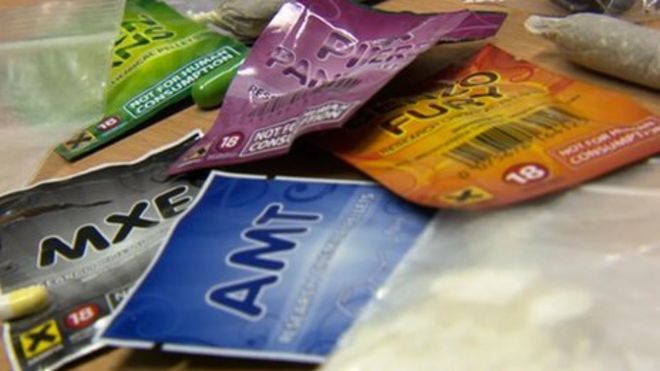
At the beginning of November practice partners, police, health professionals, academics and service users came together at ‘The Core’ in Newcastle to discuss the impact and consequences of Novel Psychoactive Substances (NPS) – commonly known as ‘legal highs’. Before anything had even begun we had the BBC on the phone, asking if they could come and film us and interview people about NPS for their forthcoming Panorama show, airing in 2017. NPS is certainly newsworthy. It has captured the public imagination in a myriad of ways, sparking fears of an epidemic, concerns over the impact it is having on resources, and headlines from The Independent declaring Newcastle to be ‘Britain’s most addicted city’. How much truth is there in these claims and how much of this is just hyperbole? What impact are NPS having on North East England, and what are the consequences? We tackled these questions during the event, generating lively debate. These discussions were grounded in the most up-to-date research, as well as city-wide strategies to tackle NPS, and personal accounts of NPS use.

Image courtesy of the bbc website
But what are NPS I hear you ask? They’ve been around a while – they are a group of synthetic or plant based substances that mimic the effects of other more well know illicit drugs like cannabis, ecstasy and heroin – to name a few. They have become increasingly popular across most of the United Kingdom, but particularly in the North East. The law recently changed in the UK (26 May 2016) making it an offence to produce, supply, offer to supply, possess with intent to supply, import or export (including over the internet) any psychoactive substances. However, possession of NPS is not an offence except in a custodial institution. The debates during our event showed that the speed of change in this drug market and an increase in the reported associated harms of NPS have meant that they are a growing concern to local, regional and national bodies.

Professor Eugene Milne, the Director for Public Health in Newcastle Local Authority, opened the discussions by highlighting that NPS use is continuing to put pressure on available resources across emergency responders in the local area, that service providers are working hard to develop pathways to treatment, and that there are unknown long-term health consequences for this group of people. He spoke about the local and city-wide strategies that are currently being developed through a collaborative process within the ‘Task and Finish’ group focused on tackling issues around NPS use, distribution and management.

Dr Michelle Addison (that’s me!) and Dr Kelly Stockdale were up next to discuss our research, funded by N8 Policing Partnership, about the impact and consequences that NPS are having on police practitioners and substance users in the North East. We showed that NPS users are perceived to be extremely volatile in custody and the staff were concerned with managing risk – both to themselves and this vulnerable group of people. The custody nurse was viewed to be a great asset but users were still frequently transferred to A&E – creating a further resourcing challenge. NPS users felt that the substances were be highly addictive and linked to poor health outcomes. They were keen on getting help and treatment but were unsure about where to access this.

We were joined by Kieran Platts, Project Officer at Youth Homeless North East (YHNE). He gave a lively account of the really valuable work he has undertaken exploring young people’s views on NPS. This work was prompted by concerns raised through the housing and youth homeless sector who report finding it increasingly difficult to manage the impact of NPS on their resources and service users. Kieran added to the debate, saying that NPS are undermining the operational delivery of services for homeless young people and adversely effecting young people’s ability to address their individual housing and associated needs.

Professor Simon Thomas, from Newcastle University, talked about the toxicology of NPS – an elegant and accessible insight into their chemistry and toxic effects. He presented interim data from the Identification of Novel psychoActive Substances (IONA) study which is collating information about the range and prevalence of NPS that are present in patients who have ingested acutely toxic substances in the UK. He talked everyone through the emerging trends of NPS use in different areas of the UK, as well as changes over time, and differences in clinical effect.

Lorna Smith, (Public Health Registrar) and Rachael Hope (Community Safety Specialist - Drugs) Newcastle City Council, delivered important key messages about the evidence led approach underway to address NPS across Newcastle. Leading on the Task and Finish group, they have developed a detailed city-wide plan focused on understanding the circumstances of the NPS user, improving practice, and ways of protecting vulnerable groups of people. They highlighted the importance of tackling supply in the city and across the force area, but described this as an iterative process of action and learning in a relatively unknown context.

Chris Strachan, who is currently a volunteer at Positive Response to Overcoming Problems of Substance misuse (PROPS) North East, talked us through his personal account of NPS from a user perspective – offering bold and challenging insights into how users are perceived. Not all users are vulnerable and some would prefer to self-identify as psychonauts (Davey et al., 2012) – people who purposely experiment with drugs and establish detailed technical knowledge. His feelings were that practitioners should not be fearful about engaging with NPS users, adding that they are often incredibly knowledgeable about the chemical structures of these substances.

We couldn’t permit the BBC to film us for ethical reasons, but many of our speakers have been in communication with them since and will appear on Panorama in 2017. After a lot of rich debate however, Chief Inspector Lisa Hogan, Northumbria Police, brought it all together by emphasising that there are ongoing strategies and research underway to expand the evidence base around NPS – but this needs to be further developed. These discussions helped to provide in depth insight into where we are at with NPS, and what we currently know – but of course, there is more to be done. Future directions at the moment are focused on developing meaningful therapeutic interventions to help support users and understand the long-term health outcomes from NPS use.

The event Novel Psychoactive Substance (NPS) use and its consequences was delivered in partnership with Public Health England (John Liddell) and Fuse.

Join the discussion on Twitter using: #NPSimpact