Showing posts with label MWelford. Show all posts

Friday, 8 January 2021

Now that's what I call blogging 2020: the Covid edition

Posted by Mark Welford, Fuse Communications Officer, Teesside University

It was business as usual for the Fuse blog in January 2020.  PhD student Kelly Rose told us about having sleepless nights thinking about school food and teenage diets; Coral Hanson and her co-authors channelled their inner Mr Motivator to consider whether exercise referral was fit for a new decade; and Angela Wearn asked if reaching the ‘hard-to-reach’ meant leaving traditional academia at the door?

So far so good… and then the ‘C’ word arrived and the world changed and with it the Fuse blog in the form of John Mooney’s frighteningly prescient post on the 5 February - Coronavirus: expect the unexpected in an unfolding emergency.

Last year we published posts about workplace health, tackling obesity through planning policy, the impact of commercial actors on health, food shaming, mental health, the emotional road to impact, Universal Credit, facing a Parliamentary Select Committee, inequalities, family carers of people living with dementia, International Men’s Day (yes, there is one!), and kicking Coca-Cola out of Christmas.

Our authors asked: 

  • Can your education, income or even your job affect your chances of receiving newer cancer treatments? 
  • Why is it so difficult to change our health habits? 
  • Does antibiotic prescribing penalise communities in most need? 
  • Would easy-read documents for all mean a more inclusive healthcare system? and;
  • What is the recipe for a happy retirement?

But it will come as no surprise that the 2020 chart of the top five most-read Fuse blog posts is dominated by one topic: Coronavirus, Covid-19 or just plain COVID.

Here are our chart-toppers of 2020:


5. Experts by Experience challenge us to create opportunities for them to take the lead in research

First up is our only non-Covid related entry in which Angela Broadbridge and Ged Hazlehurst from the Fulfilling Lives Newcastle Gateshead project write about co-producing research with people with lived experience of multiple and complex needs.

Page views: 1727.  Posted: 15 May 2020


4. COVID-19 has brought the “digital divide” to the fore

Gemma Wilson from Northumbria University explores how a lack of access to technology and wider support networks during the pandemic is significantly heightening inequalities.

Page views: 1839.  Posted: 29 May 2020


3. Coronavirus: expect the unexpected in an unfolding emergency

Up next is the aforementioned post by John Mooney, Locum Consultant in Public Health at NHS Highland and one-time specialist in the epidemiology of respiratory infectious diseases. Published days after the first confirmed UK cases, John's blog was prophetic in highlighting the potential for symptomless transmission, virus instability and divergent strains.

Page views: 1909.  Posted: 5 Feb 2020


2. This crisis has shown how many people were only just about managing

Our runner-up is Mandy Cheetham from Northumbria University writing about her experience with a community hub delivering food parcels, prescriptions and supporting vulnerable people during the pandemic.

Page views: 2019.  Posted: 9 May 2020


1. Working from home isn’t for everyone - here’s how to cope if you’re struggling

"Being isolated at home can be hard; it is easy to feel cut off from friends and co-workers, to feel out of the loop when it comes to work decisions and to feel stressed with how best to work when at home."  

During the first national lockdowns imposed by the UK governments, Annabel van Griethuysen from Tees, Esk and Wear Valleys NHS Foundation Trust, shared her tips on working from home. These include keeping a routine, eating and drinking well, having a completely separate space to work (if possible) which is tidied or hidden away at the end of the day, staying connected and reaching out to talk to your social circles if you feel anxious and stressed.

At a time when many people are again being asked to work from home it is apt that Annabel's post should take the crown as most popular blog in 2020.

Page views: 2106.  Posted: 9 April 2020


So there you have it, the top five Fuse blog posts from 2020.  All five received more page views than last year's number one, which is thanks to our loyal readers and fantastic contributors - thank you!  

Can we do any better in 2021?  If you fancy giving it a go, please find out what we are looking for and how to take part here.  All contributors receive a much sought-after Fuse badge, and the writer of the most read post wins a rare and coveted Fuse paperweight.*

Happy New Year!


*when we are allowed back in the office!


Images:

  1. "Now That's What I Call Music! 1991" by Brett Jordan is licensed under CC BY 2.0
  2. Courtesy of Fulfilling Lives Newcastle Gateshead: http://www.fulfillinglives-ng.org.uk

All page views correct at the time of writing.

Friday, 10 January 2020

Now that's what I call blogging 2019

Posted by Mark Welford, Fuse Communications Officer, Teesside University

Happy New Year – can I still say that or have we reached peak-greet when this obligatory salutation is no longer required in email, phone, or awkward fleeting corridor exchange?

This time of year is all about numbers: the 12 days of Christmas, the pounds you’ve gained (lbs) or lost (£), counting steps, units, the 31 days of Dry January, Veganuary, or the point at which you can grant yourself a run free day.

It therefore seems fitting that the Fuse blog has a countdown of its own.  Last year was a fine vintage for blog posts but you may not have had the opportunity to read all 40 of them.  To save you time we have had a look back and created a Top 5 Chart of the ‘bestsellers’.

So without further ado, here’s our chart toppers:

5. The provocatively titled Can cancer ever be a good thing? in which Fiona Menger (@slt_fi) revisits the writing of 'cancer columnist' John Diamond while working on a head-and-neck cancer research study with a focus on a phenomenon called post-traumatic growth.

Page views: 585.  Posted: 31 May 2019 

4. In What old crisp packets dig up Duika Burges Watson (@debedub) gets hands on to unpack the mystery of the humble crisp.  What is their continued value as ‘food’ and can we still enjoy them as a cultural icon without creating so much waste and damaging our health?

Page views: 640.  Posted: 22 February 2019

Still from the animation
3. Why do some women continue to smoke when they are pregnant?  Sue Jones (@Susan_E_Jones) shares research findings on overcoming barriers to implementing NICE guidance on supporting pregnant women to quit smoking.  The blog includes a short animation which was developed based on the findings.

Page views: 663.  Posted: 10 May 2019

2. If at first you don’t succeed, try, try, try & try again...  Suzanne Moffatt (@SuzanneMoffatt) reflects on 58 months of knock backs in her efforts to secure ‘the big grant’ because multiple failures before success is often untold and sometimes persistence pays off.

Page views: 686.  Posted: 15 February 2019

Courtesy of Children's Future Food Inquiry via twitter
1. "It’s time to act!  It’s time this country gave every child the right to food!"  Pamela Graham (@PamLGraham) begins her blog post with this powerful statement from Corey (pictured right), a 15-year-old Young Food Ambassador who sat on a stage in Westminster and bravely told an audience about her experiences of food insecurity.  With more than double the views of its nearest competitor, Young people taking a stand for their #Right2Food takes the crown as most popular blog post in 2019.

Page views: 1474.  Posted: 03 May 2019

So there you have it, the top five Fuse blog posts from 2019. Can we can do any better in 2020? If you fancy giving it a go, please find out what we are looking for and how to take part here.


P.s. perhaps we need to look more closely at what's going on in February and May!?


Image:
  1.  'Now That's What I Call Music! 1989' by brett jordan via Flickr. Attribution 2.0 Generic (CC BY 2.0): https://www.flickr.com/photos/x1brett/45056607035/

Friday, 20 December 2019

Happy New Year from everyone at Fuse

We would like to wish all our readers and contributors a very Happy New Year - why not make a resolution to blog in 2020 and send us your posts?


Image (adapted with thanks):
The original uploader was Rsabbatini at English Wikipedia. [CC BY 4.0], via Wikimedia Commons.

Friday, 22 December 2017

Merry Christmas from Fuse

We would like to wish all of our readers and contributors a very happy festive season. We will return in the New Year - why not make a resolution to blog in 2018 and send us your posts?


Friday, 16 June 2017

400 not out

Posted by Mark Welford, Fuse Communications Officer, Teesside University

This is the 400th post on the Fuse blog and in the spirit of using arbitrary milestones as worthy of note, I thought it was time for some (blog) post-match analysis.

Brian Lara who holds the record for the highest individual score in a Test innings
 after scoring 400 not out against England playing for the West Indies in 2004.

Over the last five-and-half-years, we have had 399 posts, written by 116 authors, and more than 395,000 page views. There has also been a lot of #fuseblog twittering, coffee room chats, and (you surely didn’t think it could be any other way?) blog-related committee discussions.

We even won a UK blog award last year (not that we mention it much!) and were shortlisted in two award categories earlier this year. But shortlisted isn’t winning and on the train back from those awards in April, I contemplated what we could do to improve the blog or - dare I say it - if the blog had run its course, done its job, had its time.

In academia, more than any sector that I’ve worked in (and I’ve worked in a few) you are encouraged to STOP, put down your machete, and climb above the canopy to see if the direction that you’re heading in is getting you to where you want to go. Academics will quite happily interrupt you in mid-flow to ask: ‘so what?’, ‘what impact are we making?’, ‘who are we reaching?’.

Since taking the wheel from blog founder Jean Adams I have enjoyed myself. I have learnt a bit about community and herding cats, I have made some real-life and virtual friends. I have written the odd post, although admittedly not as many as Jean, and I have enjoyed the discipline of having to write 500 -700 words for public consumption (usually when I can’t find anyone else to post).

I think the other writers have enjoyed it too, once they’d got past their initial reservations.

From all of this, I surmise that people value both reading and contributing to the blog. But I don’t have a clear view of who you are. You also seem to be discussing it in some forums. But you aren’t leaving comments on the blog itself. We have had a grand total of 480 comments posted, of which 234 were spam. So that’s 246 sensible comments. From 395,000 views.

So, I would now like to invite you to use the comment box below to post your thoughts on the blog so far. What sort of things do you like? What stuff would you rather we skipped? What would you like more of? Who are you? You don’t need to tell everyone your name, but what got you here? Why are you interested in this blog? What would make you more interested?

It isn’t that tricky:
  1. Depending on how you got to this page, you either start typing straight in the white box, or you need to click the orange link “No comments” at the bottom of the post to get the white box to appear.
  2. After writing your thoughts, click on the “Comment as” pull-down. If you know what any of the branded options mean, select one. If not, just chose “Name/URL” or “Anonymous”. Then do the ‘prove you’re not a robot’ thing and you’re done.
I’ll get an email. If you’re not flogging Viagra or using a barrage of abuse, I’ll approve your comment and you’ll be published.

And, just before you get to work: thanks. Thanks to the writers, the readers, the reviewers, the commenters, the retweeters, and the lurkers. See you all again at the next arbitrary milestone.

Thursday, 8 December 2016

The one where we ask you to vote...

Posted by Mark Welford, Fuse Communications Officer, Teesside University

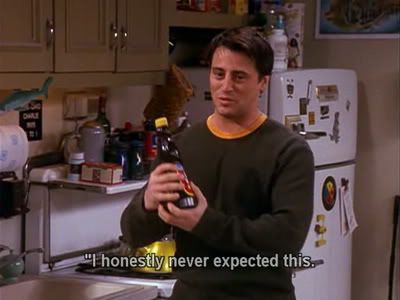
This post is a little like those episodes of Friends in which one of the cast says: “Do you remember the time when [cue wobbly vertical lines]…” and the rest of the 22-23mins is made up of clips from previous shows.

Courtesy of photobucket.com/user/xuyu79/media/blog/s7/s07e18 / Warner Bros.
Let me take you back to a post on Thursday 7 January in which we made a shameless plea to ask for your votes in the UK Blog Awards 2016.  In that post we told you how the blog’s 334 posts had received just over 167,000 views.  Eleven months on and 40 additional blog posts later, the page views have risen to nearly 325,000 - a fantastic achievement I hope you’ll agree!  I discovered this when an ambitious academic asked me if I could provide them with some killer stats about the blog to support their bid for a promotion. The power this blog wields!

This year we have had posts covering everything from Dry January, the ‘nanny state’, animation, Jamie Oliver's school dinner and sugar tax campaigns, to ‘fat shaming’, indigenous Australians, Baywatch, energy drinks, Grandmothers, e-cigarettes, and 'legal highs'.

Five years on from the blog's inception and we have reached the point where people are actively approaching us and generously giving up their time to write posts, rather than having to send in our crack team (the fear inducing) ‘blog working group’ to chase, harry and cajole*.  Could this - and the increased viewing figures - have something to do with the little matter of winning a UK Blog Award last year?  I'd like to think so.

And now, we come to the crux of this post.  It is you, our dear readers and contributors that make the blog a success and it is thanks to you that we won a national award.  So we've decided to go for it again in the UK Blog Awards 2017!

Here comes the shameless plug

The blog has again been entered into two categories: 'Health and Social Care', and 'Education'.  You can vote for us in either category but of course we would really appreciate it if you voted for us in both.

Vote now by following this link

The above link takes you to our profile page on the UK Blog Awards website in which we have chosen two of our favourite posts from 2016:
Voting closes at 10am on Monday 19 December.  One vote per email address.

Hopefully it won't be a maple syrup bottle we'll be holding aloft in celebration come April 2017!

Thank you for your support.

*We do still need your posts!  Please contact me (m.welford@tees.ac.uk) if you would like to write a post for the Fuse blog. Here’s how to take part.

Thursday, 5 May 2016

You are now reading the award winning Fuse blog

Posted by Mark Welford and Emma Dorée, Fuse Communications team, Teesside University

You may recall that in January we used this platform to make a shameless plea inviting readers to vote for the Fuse blog in the UK Blog Awards and a month later you may have heard the news that we had been shortlisted in the categories of Education, and Health and Social Care.

Well… (drum roll) …. We only went and won!  That’s right, you are now reading an award winning blog – fancy contributing?!


Last Friday (29 April), we took the Fuse blog monster on a road trip to the big smoke, that there London, where the streets are paved with, well… paving stones to attend the awards ceremony, in eager anticipation.

The awards ceremony was held at the swanky Park Plaza Hotel in Westminster, London and it is safe to say that it more than exceeded our expectations.  The invitation advised that we ‘dress to impress’ but some of the attire on show would have made Lady Gaga and James Bond feel underdressed.

We were welcomed to the event, themed on Roald Dahl’s The BFG with free drinks and canapes (not to mention all the frogsquinkers, buzzwangles, and bugwhiffles we could handle), while we networked with other bloggers and even the Big Friendly Giant himself. The most exciting part however was still to come: the awards ceremony itself.

Tech Reporter Kate Russell (you might know her from BBC show Click) hosted the evening and provided a great commentary, making every blogger there feel very welcome.  Her quirky comments worked to relax the atmosphere and ease frayed nerves.

Each category had two blogs that were highly commended by the judges, followed by an overall winner.  As the Education category came up on screen, we watched in anticipation - the Fuse Blog wasn't announced as Highly Commended - oh well there was still the other category - but then to our surprise as the overall winner of the category!

Having let out a little scream of excitement (and possibly the odd expletive), we went up onto the stage to collect our trophy – a rather lethal looking glass affair - and have our photograph taken with Kate and the judges. It was a surreal moment and very much unexpected with a dash of relief as there were no speeches.

Obligatory award selfie
Once the presentations were over, we were invited to have our photograph taken with the other winners. After which it was time to celebrate properly with more free prosecco (consumed in moderation), posh food and of course a little bit of disco dancing.

This was a great event to be a part of and the venue made it feel even more special and exciting. As the night drew to a close and we collected our certificate and goody bags (with complementary BFG themed dream jars), the fact that we had actually come away as winners had not yet sunk in - it still hasn't now to be honest!

Dream jars - also good for storing ginger biscuits
  
 This is a fantastic achievement for Fuse, as more than two thousands blogs were submitted. There were more than seventy eight thousand votes in total and it is great to think that the Fuse Blog has such a loyal following and a lot of support.

A special thank you must go to Jean Adams who founded the blog in 2011 and to everyone who has contributed over the years.  The posts have sparked great discussion and helped our readers learn what it is really like to work in public health.  Our many writers make the Fuse blog what it is.

We really hope that you will continue to enjoy reading our posts and don’t forget, if you would like to contribute to the Fuse Blog then please do not hesitate to get in touch.

If you would like to discuss a potential blog post or have something already written then please get in touch with Emma Dorée (E.Doree@tees.ac.uk).

Thursday, 17 December 2015

The big countdown

Posted by Emma Dorée, Communications Assistant for Fuse

It’s that lovely time of the year again when we count down the days to Christmas. Whilst we are frantically running around trying to complete our Christmas shopping, we are also eagerly waiting in anticipation to see if this year’s X Factor winner will make the number one top spot and whose festive Foxtrot will lead them to become the Strictly Come Dancing winner.

The Fuse Blog however is having a countdown of its own. Seeing as so many great blogs have been written this year, we thought it would be a good idea to have a look at all of the blogs from 2015 and create our very own ‘Top 5 chart’ of the ‘bestsellers’.
 
So let’s begin….

At number five: No time to run: role overload contributing to physical inactivity in parents? Caroline Dodd-Reynolds’ post looks at how parents find it difficult to fit physical activity into their daily busy routines. With 604 views, this is clearly a subject that lots of people, especially parents, can relate to.

At number four: How active are pregnant women? Measuring the methods. Louise Hayes and Cath McParlin debunk the ‘pregnant pause’ and tell us that guidance recommends that pregnant women should actually be doing at least 30mins of exercise on most days of the week to help reduce the risk of gestational diabetes. This post squeezes into fourth spot by the narrowest of margins, reaching 606 views since publication in May 2015.

In at number three: The troubled families programme: what’s health got to do with it? A guest post by PhD student Stephen Crossley explaining how the Government is helping (or rather not helping) families that need the most help. Stephen goes into great detail about the Troubled Families Programme explaining that health plays a huge role in this issue. This post has had 657 views since it was published in June 2015.

At number two: Bull Sperm and ‘poor parents’: the role of myths in public health practice. Another entry for Stephen Crossley. In this post he takes on the urban myths that surround energy drinks and political myths about benefits and austerity. This post has had close to 750 views.

And finally, time for the top Fuse blog post of 2015. Drum roll please….

Thunder, thunder, thunderclap: when a blog post hits the campaign trail. This blog was written by Fuse Communications Officer Mark Welford and has had an amazing 1575 views. It describes how a Fuse blog post caught the imagination of readers and became a national viral campaign, prompting a campaign page to be set up for people to support the idea that supermarkets should remove unhealthy food from their checkouts. This post followed two other ‘big-hitters’ on the same subject by Mel Wakeman and Amelia Lake: Who’s opting out of responsibility? Battle of the checkouts and Time to chuck the checkout junk? Both have received more than 900 views.

So there you have it, the top five Fuse blog posts from 2015. Let’s see if we can create even bigger and better blogs for 2016!

Did you enjoy reading this post? If so, please vote for Fuse in the UK Blog Awards 2016 by clicking here

Thursday, 25 June 2015

Go for the plums!

Posted by Mark Welford, Fuse Communications Officer

The title of this post was the provocative take home message from a session on ‘Writing for the media and Public Health Today’ at the Faculty of Public Health (FPH) conference held at the Sage in Gateshead earlier this week.

Public Health Today is the quarterly magazine for FPH members, featuring a range of articles from topical news items, to in-depth interviews with key public health figures. It is distributed to over 3,300 public health professionals in the UK and internationally.

Led by Richard Allen, Productions Editor of the magazine, the session aimed to give attendees an idea of what he and his team are looking for from contributors. The FPH want to hear about your research, but there are ways in which you can make it more likely that what you provide ends up in the magazine. Much of this also applies to the media and providing journalists with stories through press releases.


As the title says: ‘go for the plums’. Hit readers with the most important, unexpected or unusual fact, anecdote, or quote first. Your top line may not be the most important message but the ‘sweetie on the top’ designed to draw readers in and convince them to read on.

The first sentence should get across the key message and/or provide a brief summary of the research in 20 words. Many articles that the FPH receive start from the beginning. Instead, reverse history and put the background in later with the conclusion first.

Be concise. Richard and his team are looking for articles of 550 words – stick to the word count. Remove the long words and jargon, the public health and management speak. Use everyday language and write acronyms in full in the first instance. The news stories on the BBC website provide a good example of this.

Include short quotes that add opinion or emotion. This humanises the story and brings it to life. Write as though you’re describing your research to an educated friend.

Each issue of Public Health Today is themed. June's edition is on sex. The themes of future issues aren’t easy to find but I did eventually discover them in the latest FPH e-bulletin.

The special features for the other editions in 2015 are:
  • September: Disasters & emergencies
  • December: Healthcare public health
An editorial board decide on the themes for the year ahead at a meeting in December. Could you suggest a theme?

Here are Richard’s top tips in a handy list:
  1. Go for the plums!
  2. Is there anything ‘new’ in my article – what’s current?
  3. Is there anything unusual or unexpected about it?
  4. Would this be of interest and understandable to anyone outside of public health?
  5. What, who, when, where and why?
  6. Reverse history 
  7. Be concise
  8. Keep sentences short
  9. Avoid jargon
  10. Avoid management speak
  11. Avoid acronyms
  12. Use quotes to provide insight, not information
  13. Stick to the word count
  14. No references /footnotes
  15. No multiple bylines
  16. Provide contact details
Richard, like me, was once a journalist and it’s helpful to be reminded of good practice. So I’m going to follow no.13 and keep to the 550 word limit.

Did you enjoy reading this post? If so, please vote for Fuse in the UK Blog Awards 2016 by clicking here

Thursday, 19 February 2015

Thunder, thunder, Thunderclap: when a blog post hits the campaign trail*

Posted by Mark Welford

A nationwide viral campaign to remove junk food from supermarket checkouts has been launched on the back of the success of a post on this very blog.

The ‘Chuck out the checkout junk’ campaign was born out of a Fuse open science blog post, which described the ‘pester power’ difficulties faced by parents in supermarket checkouts, what supermarkets are or aren’t currently doing about it, and why they should be doing more in the midst of a growing obesity epidemic.

Written by Mel Wakeman, senior lecturer in nutrition and applied physiology at Birmingham City University and Fuse academic Amelia Lake, dietician and public health nutritionist based at Durham University, the post has received more than 500 views and sparked debate on Twitter.

Mel has now started a campaign using the social media tool ‘Thunderclap’ that has already reached close to 30,000 people.

Thunderclap will simultaneously post the health message on social media feeds
On the Thunderclap page Mel writes: “We are still in the midst of an obesity epidemic; poor diet is to blame for overweight and obesity, tooth decay, type 2 diabetes, high blood pressure, cardiovascular disease, cancers and more.

“As a nation we should be reducing much of the added sugar in our diet but we often need help to do this. Making positive changes to our diet is not easy; cutting down our sugar intake is difficult when it is present in so many everyday foods (like sweets and chocolate) and being constantly tempted to pick up confectionery at the checkout undermines much of our efforts to be healthier. Small changes can lead to big differences however, so let's ask more stores to adopt junk free checkouts.

Marks and Spencer, Morrisons, Asda, Sainsbury's Local and Iceland Foods as well as WHSmith and other non-food stores need to take more responsibility for the products they promote. Many stores have signed up to the Government's Voluntary Responsibility Deal but they could do so much more if they want to demonstrate they are truly committed to promoting healthier diets and improving public health.


“The evidence is irrefutable. Asking stores to replace confectionery with healthier foods will be a huge step forward in helping protect the future of the British public.”

Mel is also writing to the above stores, asking them to seriously consider this proposal.

Show your support


If you want to share your support for the campaign visit the Thunderclap page and click the red ‘support with’ buttons (via Facebook, Twitter or Tumblr).

“Let's make Britain healthier. Please remove all sweets from all tills and make EVERY store take responsibility.”

Thunderclap will simultaneously post the message above on your feed along with other supporters on 9 March when the campaign will ‘go viral’.

Still unsure? Below are six points that explain why this campaign is so important:

1. The UK has one of the highest levels of obesity in Western Europe: 67% of men and 57% of women are either overweight or obese.

2. More than half of men and women are at an increased risk of multiple health problems.

3. The level of childhood obesity is a huge concern. In the UK, 1 in 10 children are obese when they start school. By the time they leave primary school, nearly 20% of children are obese with a 75-80% risk of obese adolescents becoming obese adults.

4. According to the latest diet surveys, children and teenagers consume around 40% more added sugar than the recommended daily allowance; much of this coming from snacks and sweets. We are now seeing diabetes, high blood pressure and signs of heart disease in young children.

5. In 2014 Public Health England reported 12% of children under three have tooth decay and an average of three teeth in these children are decayed, missing or filled.

6. Obesity can reduce life expectancy by 8-10 years. This is equivalent to the effects of lifelong smoking.

*A headline for children growing up in the 1980s

Did you enjoy reading this post? If so, please vote for Fuse in the UK Blog Awards 2016 by clicking here

Thursday, 1 January 2015

52 weeks in public health research, part 52

Posted by Emma Foster, Amelia Lake, Lorraine McSweeney and Mark Welford

So this is it, we have reached the final week of our 52 week public health picture project. But what insights has it provided into the everyday lives of public health researchers? Find out in a blog post coming soon. A big thank you to all those who contributed their images.

Happy New Year!


Posted by Emma Foster: Not a New Year resolution as a) it seems silly to start the day after a big party and b) now is when I have a bit more time to exercise... So starting tomorrow this cross trainer is going to be getting much more use....and not just for drying clothes!


Posted by Amelia Lake: Less of a resolution more of an ambition! No more trainers on the bike - it's time to look like a pro... and possibly get a few knocks and bruises in the process!


Posted by Lorraine McSweeney: I recently attended a graduation ceremony at Newcastle University to receive my doctorate award. For the first time in the congregation history the PhD titles were announced during the ceremony; mine being 'Prevention of obesity: exploring strategies for intervention in preschool'. The ceremony was attended by my supervisor and Fuse Director Ashley Adamson. Also in attendance that day was television journalist and newsreader Angela Rippon who received an honorary degree for her charity work in dementia.


Posted by Mark Welford: Fundraisers braving the North Sea to earn money for their favourite charity in the Annual Boxing Day dip. A bit of physical activity after the Christmas day indulgence and the beginning of a New Year's resolution?

Tuesday, 23 December 2014

52 weeks in public health research, part 51


Posted by Mark Welford: I imagine this is what every academic's Christmas tree looks like. This fine specimen can be found in the Learning Resource Centre of Stockton Sixth Form College. As far as Christmas decorations go, we really should be taking a leaf out of their book!   
 

Posted by Caroline Dodd-Reynolds: Finishing my Christmas shopping this week, all seemed fairly quiet at the MetroCentre 'gym'...

Posted by Dorothy Newbury-Birch: This is my last Christmas working at the Institute of Health & Society at Newcastle University. From 5th January 2015 I will be Professor of Alcohol and Public Health Research at the Health and Social Care Institute at Teesside University. Very exciting times. I promise to write a blog in January letting everyone know what it's like to be a new professor!


Posted by Mark Welford: Can you guess the theme of this book display at Stockton Sixth Form College? Answers in the comments section below.


------------------
A reminder from the Fuse blog group:

Each week of 2014 we’ll try and post around four pictures on the Fuse blog that capture our weeks in public health research, from the awe-inspiring to the everyday and mundane. Given that more of the latter than the former exists in most of our lives, we foresee problems compiling 208 images worth posting on our own. So this is going to have to be a group project. Send an image (or images) with a sentence or two describing what aspect of your week in public health research they sum up and we’ll post them as soon as we can. You don’t have to send four together – we can mix and match images from different people in the same week.

Normal rules apply: images you made yourself are best; if you use someone else’s image please check you’re allowed to first; if anyone’s identifiable in an image, make sure they’re happy for it to be posted; nothing rude; nothing that breaks research confidentiality etc.

Email your posts to m.welford@tees.ac.uk or contact any member of the Fuse blog group.

Thursday, 18 December 2014

52 weeks in public health research, part 50

Posted by Mandy Cheetham, Amelia Lake and Mark Welford

It's all food, parties and away days in this week's Fuse blog picture post.  You'd think it was Christmas!


Posted by Amelia Lake: A balance? T'is the season to introduce your offspring to more sugary delights... Or is it a season for some balance! I like the balance option, some treats - both fruity and sugary!


Posted by Mandy Cheetham: A little (delicious) Christmas indulgence at the Health and Social Care Institute away day in Great Ayton, North Yorkshire. Reward for a morning's work including workgroups on software and apps (details below) designed to make our research life richer and easier!

Evernote & OneNote (information management), Inspiration & Prezi (visual mapping and presentational software), handling long documents in Word, and Twitter.


Posted by Mark Welford: Professor Graham Henderson giving a quick speech at his last staff Christmas party before he retires as Vice-Chancellor of Teesside University.  He resisted the urge to play a solo on the double bass temptingly placed behind him!

 
Posted by Amelia Lake: More food photos for the blog. Our traditional in canteen Christmas meal at Durham Queen's Campus in Stockton. With the obligatory whizzing balloons!
 
------------------
A reminder from the Fuse blog group:

Each Thursday of 2014 we’ll try and post around four pictures on the Fuse blog that capture our weeks in public health research, from the awe-inspiring to the everyday and mundane. Given that more of the latter than the former exists in most of our lives, we foresee problems compiling 208 images worth posting on our own. So this is going to have to be a group project. Send an image (or images) with a sentence or two describing what aspect of your week in public health research they sum up and we’ll post them as soon as we can. You don’t have to send four together – we can mix and match images from different people in the same week.

Normal rules apply: images you made yourself are best; if you use someone else’s image please check you’re allowed to first; if anyone’s identifiable in an image, make sure they’re happy for it to be posted; nothing rude; nothing that breaks research confidentiality etc.

Email your posts to m.welford@tees.ac.uk or contact any member of the Fuse blog group.

Thursday, 11 December 2014

52 weeks in public health research, part 49

Posted by Catt Turney Amelia Lake and Mark Welford

 
 Posted by Catt Turney: One of the photos taken by my colleague Britt Hallingberg at the DECIPHer symposium, where staff and students from the three partner universities (Cardiff, Bristol and Swansea) get together to discuss how our research is going and celebrate key achievements. As there are so many of us now we're only able to sympose once a year, and organising an ice-breaker at the beginning of the day is no mean feat. Luckily we had Dr. Jeremy Segrott (on the left, waving his arms in the air) on hand to conduct the task with aplomb. The ice-breaker involved a highly sophisticated and technically advanced approach to finding out our views on various subjects, by situating ourselves appropriately along a piece of string. This particular photo illustrates our views on mornings, about which we appear to have mixed feelings.
 
 
Posted by Amelia Lake: At this week's Fuse Members' Day - which was more popular? Fruit or crisps? (Disclaimer there were more bowls of crisps!!)
 
 
Posted by Mark Welford: Scott Lloyd demonstrating Mosaic, Experian's system for classification of UK households at the Fuse Members' Day. Mosaic is one of a number of commercially available geodemographic segmentation systems, applying the principles of geodemography to consumer household and individual data collated from a number of governmental and commercial sources. It's a bit scary how much it can churn out about you, your neighbours and where you live by simply entering a postcode!
 
 
Posted by Amelia Lake and Mark Welford: Fuse Director Ashley Adamson drawing to a close our Fuse Members' meeting at Durham University. A great meeting with lots of opportunities to catch up with colleagues from the five Fuse institutions and beyond!
 
The meeting was jointly hosted by the Fuse Communications Group and Knowledge Exchange Group and was centred around a blog post written by Scott Lloyd, Health Improvement Commissioning Lead, Redcar & Cleveland Borough Council.  He and his colleagues kindly agreed to give up there time to talk to us about improving partnerships, research and health.
 
This photo also shows off the new Fuse and AskFuse banners!
 
------------------
A reminder from the Fuse blog group:

Each Thursday of 2014 we’ll try and post around four pictures on the Fuse blog that capture our weeks in public health research, from the awe-inspiring to the everyday and mundane. Given that more of the latter than the former exists in most of our lives, we foresee problems compiling 208 images worth posting on our own. So this is going to have to be a group project. Send an image (or images) with a sentence or two describing what aspect of your week in public health research they sum up and we’ll post them as soon as we can. You don’t have to send four together – we can mix and match images from different people in the same week.

Normal rules apply: images you made yourself are best; if you use someone else’s image please check you’re allowed to first; if anyone’s identifiable in an image, make sure they’re happy for it to be posted; nothing rude; nothing that breaks research confidentiality etc.

Email your posts to m.welford@tees.ac.uk or contact any member of the Fuse blog group.

Thursday, 4 December 2014

52 weeks in public health research, part 48

Posted by Amelia Lake and Mark Welford


From Amelia Lake: A sign in an Italian café in Shildon where the energy drink team had a meeting and were about to conduct focus groups. The team Steven Crossley (@akindoftrouble), Shelina Visram (@ShelinaVisram), Mandy Cheetham & me took the opportunity to look around the local area and sample local (Italian) cuisine!


From Amelia Lake: With a two-and-a-half year old the arrival of the festive season means the arrival of advent calendars. So far we've avoided chocolate ones. Long may that avoidance last!


From Mark Welford: Kaffee und Kuchen (coffee and cake) event for the Health and Social Care Institute to celebrate completing the move into our new quarters. The idea was to bring everyone together following the upheaval of the move from Parkside West - I wonder if a Kaffee und Frucht theme would have been as popular?! 


From Mark Welford: Peter van der Graaf getting creative with art supplies borrowed from his children. As an institute we have been challenged to take a selfie and come up with a three word statement that sums up our message to stakeholders for the School of Health and Social Care winter conference. The conference will focus on how we communicate with, and present ourselves to, our key stakeholders.

Our three words: 'Is this REFable?' The Research Excellence Framework (REF) is the system for assessing the quality of research in UK higher education institutions - it's all about research with impact!

------------------
A reminder from the Fuse blog group:

Each Thursday of 2014 we’ll try and post around four pictures on the Fuse blog that capture our weeks in public health research, from the awe-inspiring to the everyday and mundane. Given that more of the latter than the former exists in most of our lives, we foresee problems compiling 208 images worth posting on our own. So this is going to have to be a group project. Send an image (or images) with a sentence or two describing what aspect of your week in public health research they sum up and we’ll post them as soon as we can. You don’t have to send four together – we can mix and match images from different people in the same week.

Normal rules apply: images you made yourself are best; if you use someone else’s image please check you’re allowed to first; if anyone’s identifiable in an image, make sure they’re happy for it to be posted; nothing rude; nothing that breaks research confidentiality etc.

Email your posts to m.welford@tees.ac.uk or contact any member of the Fuse blog group.

Thursday, 20 November 2014

52 weeks in public health research, part 46

Posted by Amelia Lake, Mark Welford, Sarah Smith, and Shelina Visram


From Amelia Lake: My office mate Duika Burges Watson (@debedub) doing her daily handstand #yogaintheoffice


From Mark Welford: Discussing blogging with Lisa Briggs and Kirsty Metcalfe from the Graduate Research School at Teesside University (@TeesUniResearch). They wanted to know all about the inner workings of a research related blog with a view to entering the blogosphere.


From Sarah Smith: Meta-analysis masterclass courtesy of the Centre for Reviews and Dissemination (CRD) York where I've been on the Systematic Reviewing course this week.


From Shelina Visram: Fieldwork for the HYPER! (Hearing Young People’s views on Energy drinks: Research) study is now underway. The focus groups with schoolchildren include a fun sorting exercise to explore perceived differences between energy drinks, soft drinks and sports drinks.

------------------
A reminder from the Fuse blog group:

Each Thursday of 2014 we’ll try and post around four pictures on the Fuse blog that capture our weeks in public health research, from the awe-inspiring to the everyday and mundane. Given that more of the latter than the former exists in most of our lives, we foresee problems compiling 208 images worth posting on our own. So this is going to have to be a group project. Send an image (or images) with a sentence or two describing what aspect of your week in public health research they sum up and we’ll post them as soon as we can. You don’t have to send four together – we can mix and match images from different people in the same week.

Normal rules apply: images you made yourself are best; if you use someone else’s image please check you’re allowed to first; if anyone’s identifiable in an image, make sure they’re happy for it to be posted; nothing rude; nothing that breaks research confidentiality etc.

Email your posts to m.welford@tees.ac.uk or contact any member of the Fuse blog group.

Thursday, 13 November 2014

52 weeks in public health research, part 45

Posted by Sarah Smith, Amelia Lake, David Hunter, and Mark Welford


From Sarah Smith: I attended the Public Health England work, health and wellbeing workshop on Monday in Manchester. This is Sam Haskell, Health and Work Lead from PHE, who used the Fuse logo in his presentation!


From Amelia Lake: I am grateful for the front of pack labelling which illustrate just how high in saturated fats & fats this prepared pizza is. Clear information is so important in terms of public health nutrition.


From David Hunter: Earlier this week I was involved in a Health Summit held at the Lindisfarne Centre in Durham to discuss and debate the challenges facing governance for health. We had a reception and dinner at the Castle on the first night and the event was attended by around 30 invited participants from across Europe, mainly from the UK. Partly organised to launch our WHO Collaborating Centre on Complex Systems Research, Knowledge and Action. Pictured are the speakers from the event.


From Mark Welford: Boxed, labelled and ready to go. We (the staff, students and researchers) at Teesside University's Health and Social Care Institute (HSCI) are moving offices from Parkside West to the much more central Constantine Building.   

Teesside University was originally founded as Constantine College and was officially opened by the Prince of Wales, the future King Edward VIII, on 2 July 1930. Below is a photo of two plaques that can be found on the wall of the Constantine Building.  Although you can't really see it clearly in the photo, the one above commemorates the fact that the college was a gift from local shipping magnate Joseph Constantine and his family and the one below marks the date when the college was officially opened.
    

The college became a polytechnic in 1969; and in 1992, the Privy Council gave approval to 14 higher education institutions, including Teesside, to become new universities.

------------------
A reminder from the Fuse blog group:

Each Thursday of 2014 we’ll try and post around four pictures on the Fuse blog that capture our weeks in public health research, from the awe-inspiring to the everyday and mundane. Given that more of the latter than the former exists in most of our lives, we foresee problems compiling 208 images worth posting on our own. So this is going to have to be a group project. Send an image (or images) with a sentence or two describing what aspect of your week in public health research they sum up and we’ll post them as soon as we can. You don’t have to send four together – we can mix and match images from different people in the same week.

Normal rules apply: images you made yourself are best; if you use someone else’s image please check you’re allowed to first; if anyone’s identifiable in an image, make sure they’re happy for it to be posted; nothing rude; nothing that breaks research confidentiality etc.

Email your posts to m.welford@tees.ac.uk or contact any member of the Fuse blog group.