Showing posts with label PHE. Show all posts

Friday, 27 January 2023

Public Health at a crossroads again: meeting the challenge of a reformed system in England

Posted by David Hunter, Newcastle University, Peter Littlejohns, King’s College London, and Albert Weale, University College London


With health policy understandably preoccupied with the pressures on, and changes occurring in, the NHS arising from the impact of COVID-19, implementation of the Health and Care Act 2022, and various strikes among the workforce, it is imperative not to overlook the public health system reforms in England.

Public Health England’s (PHE) sudden demise in August 2020 followed mounting criticisms of its performance during the early stages of the pandemic and general unpreparedness.1 Rather than consider how PHE might be reformed, the government rushed to replace it with two new bodies: UK Health Security Agency (UKHSA), and Office for Health Improvement and Disparities (OHID). Like PHE, the UKHSA is an executive agency with close ministerial oversight while still permitting ‘independence in the delivery of policy advice’. It will act as a ‘system leader’ for health security with responsibility for pandemic preparedness and external threats across the UK while bearing in mind that health is a devolved responsibility.

PHE’s remaining functions in respect of the wider public health, including health improvement and population health, lie with OHID. Located within the Department of Health and Social Care (DHSC) and jointly accountable to the Secretary of State for Health and Social Care and the Chief Medical Officer for England, it enjoys even less independence than the UKHSA. Building on the work of PHE, OHID’s priorities include tackling obesity, improving mental health, promoting physical activity and other population health issues, notably inequalities.

There is merit in taking stock to identify any lessons which might be gleaned from the mixed life of PHE and whether the new bodies offer hope to do things better.2

Learning the lessons

The findings from a research project to explore the circumstances surrounding the rise and fall of PHE may assist with the learning process.3 Five broad underlying issues were identified in the research which contributed to PHE’s demise.
  • PHE did not possess the capacity to undertake a testing regime
     of the size and complexity required by the pandemic
    Severe funding cuts in public health spending, nationally and locally, since 2010 meant that PHE functioned with reduced capacity when the pandemic struck
  • PHE did not possess the capacity to undertake a testing regime of the size and complexity required by the pandemic, the absence of which was the basis of the case against the organisation
  • The governance of PHE as an executive agency meant it lacked independence
  • While decisions made by PHE at the start of the pandemic were later considered mistakes (and judged outside the law by a judicial review) at the time there was little information about the nature and possible effects of the virus and limited capacity in the health system which required tough prioritisation decision to be made
  • The sudden closure of PHE without any consultation was widely reported to be due to blame-avoidance behaviour on the part of key actors, principally Dominic Cummins (as former Chief Advisor to the Prime Minister, Boris Johnson) and Matt Hancock (as former Secretary of State for Health and Social Care). There was also a view that the decision was based on policy favouring use of the private sector and contracting out functions like test and trace.
Key lessons from these findings centre on two major areas of concern: the respective remits of the new bodies, and their governance.

Remits


The respective remits of UKHSA and OHID need to be clearer and more transparent if the risk of fragmentation is to be avoided. A welcome feature of PHE was its attempt to bring together the key public health functions that had previously operated in separate silos. As things now stand, separating communicable diseases (CDs) from non-communicable diseases (NCDs) is a retrograde move since, as the pandemic highlighted in stark terms, close links exist between them when it comes to those groups and communities which suffered most in terms of illness and death. A syndemic understanding of diseases and their underlying social factors is pivotal in preventing disease in the future and avoiding fragmentation.4

Governance


Governance of the new public health bodies requires careful attention. As an executive agency, PHE was criticised for its lack of independence from government which restricted its ability to ‘speak truth to power’. Given UKHSA enjoys the same status, it remains unclear how it intends to avoid a similar fate. The problem is a deep-seated and pervasive one within government. The idea that OHID being housed in the DHSC will allow it to exercise greater influence and have a closer collaboration with ministers could be a good move, or, more likely if history is any guide, it may be overly optimistic. There is a risk that OHID may disappear into Whitehall and become invisible, lacking even the limited degree of independence PHE had. To succeed, OHID has to be visible and have allies inside government.

A further issue concerning the governance and working style of both agencies, especially OHID, centres on their ability to operate effectively across government. Public health comprises numerous ‘wicked issues’, that is, multi-faceted problems that are complex and for which there are no simple or single solutions. Confronting them will be especially challenging for a government which, for all its rhetoric about ‘levelling up‘, remains topic- and department-focused, operating in silos rather than concerned with cross-government issues.5

OHID has a steep hill to climb if it wants to lead a transformational agenda across the wider determinants of health which demands a whole-of-government approach. The hill just got steeper following government delays in tackling child obesity and its failure to implement a national food strategy. In keeping with the prevailing political ethos, there is a renewed focus on individual behaviour change and lifestyle choices rather than tackling the influence on health of commercial interests via taxation and regulation.6,7 If significant inroads into the population health agenda are to be made, then confronting powerful vested interests in, and lobbying from, the food and drinks industry and their ’friends’ in government engaged in what has been termed ’institutional corruption’ cannot be avoided.8 Whether OHID has either the backing from government or competences for such a struggle remains doubtful in the extreme.

Conclusion

Public health once again finds itself at a crossroads. It can either continue to ‘muddle through’ with a broken political and public policy system that is not fit for purpose.9 Or there is an opportunity to construct a strong and confident public health system that is well-placed to confront the challenges facing it. The aftermath of COVID-19 should make the choice of options self-evident. However, as things stand, it is unlikely that the UK’s broken political system with its focus on short-term fixes is up to the challenge. Without major systemic change aimed at overhauling the UK’s political system, a risk of further deterioration in the state of the public’s health may be unavoidable.


References:
  1. Calvert J, Arbuthnott G. Failures of state: the inside story of Britain’s battle with coronavirus. London: Mudlark, 2021. https://harpercollins.co.uk/products/failures-of-state-the-inside-story-of-britains-battle-with-coronavirus-jonathan-calvertgeorge-arbuthnott?variant=39528280391758
  2. Vize R. Controversial from creation to disbanding, via e-cigarettes and alcohol: an obituary of Public Health England. British Medical Journal 2020; 371:m4476 http://dx.doi.org/10.1136/bmj.m4476
  3. Littlejohns P, Khatun T, Knight A, Hunter DJ, Markham S, Coultas C, Kelly MP, Ahuja S. (2022) Lessons from the demise of Public Health England: where next for UK public health? London: NIHR ARC South London. https://arc-sl.nihr.ac.uk/sites/default/files/uploads/files/public-health-report-sept-2022-final.pdf
  4. Horton R. Offline: COVID-19 is not a pandemic. The Lancet 2020; 396: 874. https://doi.org/10.1016/S0140-6736(20)32000-6
  5. Pope T, Shearer E, Hourston P. What levelling up policies will drive economic change? The need for a long-term focus on skills and cities. London: Institute for Government, 2022. https://www.instituteforgovernment.org.uk/publications/levelling-up-policies?
  6. British Broadcasting Corporation (BBC). Junk food: obesity strategy falling apart, Jamie Oliver says. 15 May 2022 https://www.bbc.co.uk/news/uk-61449921
  7. Ralston R, Smith K, O’Connor CH, Brown A. Levelling up the UK: is the government serious about reducing regional inequalities in health? British Medical Journal 2022; 377:e070589 https://doi.org/10.1136/bmj-2022-070589
  8. Draca M. Institutional corruption? The revolving door in American and British politics. SMF-CAGE global perspectives series: 1. 2014. http://www.smf.co.uk/wp-content/uploads/2014/10/Social-Market-FoundationInstitutional-Corruption-the-revolving-door-in-American-and-British-politics.pdf
  9. Ricketts P. Hard choices: the making and unmaking of global Britain. London: Atlantic Books, 2022. https://atlantic-books.co.uk/book/hard-choices

David J Hunter, Emeritus Professor of Health Policy and Management, Population Health Sciences Institute, Newcastle University

Peter Littlejohns, Emeritus Professor of Public Health, Centre for Implementation Science, Institute for Psychiatry, Psychology and Neurosciences, King’s College London

Albert Weale, Emeritus Professor of Political Theory and Pubic Policy, University College 
London


The views and opinions expressed by the authors are those of the authors and do not necessarily reflect those of Newcastle University, King’s College London, University College London, or Fuse, the Centre for Translational Research in Public Health.

Friday, 3 July 2020

Would easy-read documents for all mean a more inclusive healthcare system?

Posted by Kate Byrnes, Graduate Tutor & PhD Student, and Emma Giles, Reader in Public Health Behaviour Change, Teesside University

When you receive letters from the hospital or the doctors, what do they look like? Text heavy, with no pictures, and in a small font size? That is how the letter looked when I received my invitation to cervical screening.

Traditional appointment letter
Now imagine that instead of getting that letter, you received a letter which was written in a large font, used shorter sentences and included pictures. How would you react? Would you feel like the information was simple and clear to understand? Would you feel like you were being patronised and treated like a child? Or, would you even care?

Public Health England, have developed a cancer screening invitation letter in an ‘easy read’ format along with an easy read booklet. Both of which can be provided to support women with learning disabilities to access cervical screening. 
 
PHE cervical screening: easy read invitation letter template
Within an easy read document, the images are left-aligned on the page, with text for each image on the right side. This helps the reader gain an understanding of what the written text says.

However, women with a learning disability, do not receive these easy read versions as standard. Every women invited to screening is given a booklet along with the invite letter which goes some way to explain both what happens during the appointment and the content of the letter. However, would it not be better for everyone to receive an easy-read version in the first instance?

Someone may only receive additional information in an easy read format, if they are identified by their GP surgery as having a learning disability, or because they receive support from healthcare services for people with a learning disability.

What about women who have a mild learning disability and do not receive any support? Or people who struggle to understand written information? It is possible these groups of people will be less likely to attend cancer screening simply because they do not understand the invitation letter.

Four in 10 adults in the UK struggle to understand and use typical medical information designed for the public (NHS, 2020). This is called ‘health literacy’. Having low health literacy has been linked to a range of problems, including poor general health, inappropriate use of health services and reduced life expectancy (NHS, 2020). One mechanism to limit the effects of poor health literacy, is having information in plain English, with simple and short sentences, without jargon.

Therefore, if the NHS is to use standardised letters, should they all be in a simplified, easy read format? This could help services meet the requirements of the Equality Act (2010) which stated that services need to make “reasonable adjustments” to their provision including to the information they provide.

The need for reasonable adjustments within the cervical and breast cancer screening programmes has been highlighted in my PhD research. The research is exploring the attitudes and opinions of women with a learning disability, family carers, and paid care workers towards cervical and breast cancer screening. Within the interviews each participant completes a Q sort (a card sorting task) to identify whether participants agree, disagree, or are neutral towards 28 statements. Each statement is placed on an individual card. The card is then placed onto a grid, to reflect how much they agree or disagree with the statement. Upon completion, it represents a picture of a participant’s range of attitudes and opinions towards cervical and breast cancer screening. The below figure shows a completed Q sort by a women with a learning disability.

Q sort by a women with a learning disability
When designing my PhD research, woman with a learning disability where involved in Patient and Public Involvement (PPI). PPI is defined as “research being carried out ‘with’ or ‘by’ members of the public rather than ‘to’, ‘about’ or ‘for’ them” (INVOLVE, 2020). The Health Research Authority (HRA) has acknowledged that public involvement can positively impact upon the design of research, especially in the design stage (Health Research Authority, 2017). By including Experts-by-Experience it is possible to find out what matters most to the public, especially when the research is controversial or on a sensitive topic. This is the primary reason that I wanted to use PPI during the research. Additionally, there has been very limited research conducted in England on this topic, and involving people with a learning disability in the design of the research.

The PPI in my research was split into three consecutive phases; identifying women’s preferences for how they would like written information to be presented to them; checking the easy-read documentation developed for the research, and obtaining the women’s preferences on the design of the Q grid. The importance of removing jargon and medical terms was highlighted in the results of the PPI, when the phrase ‘lady bits’ was used, women with a learning disability understood the location and some of the problems they might face going for screening, but didn’t always understand the word ‘cervix’. This is an important consideration for the invitation letters to cancer screening.

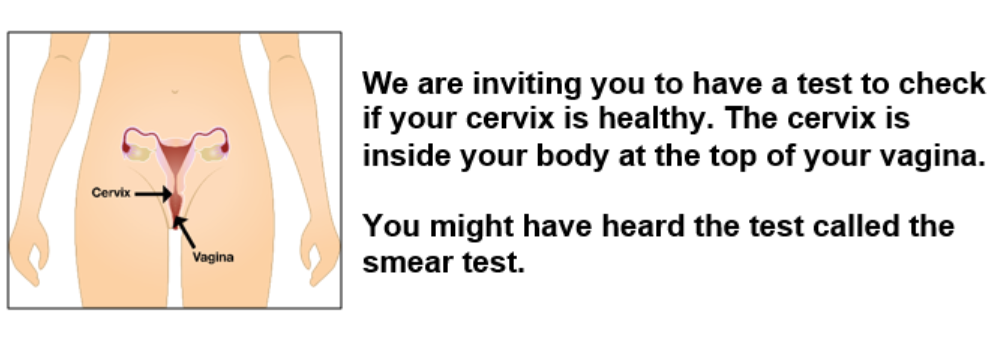
The invitation letters for cancer screening use terminology such as ‘cervical’, ‘cervix’ and ‘Human papillomavirus’ and assume that people will know what these words mean. What impact could using jargon and medical terminology have on the women receiving the letter? One problem is that women could misunderstand the procedure. Whereas, in an easy read document, the anatomically correct terms could be used, alongside an image, or further description. As the below image depicts:
PHE cervical screening: easy read invitation letter template
Ultimately, should there be standard information provided to all, which is written in a way that everyone can understand? Would more people be able to understand the information? Would this have an impact on uptake of services such as screening, and would this result in a more inclusive healthcare system?


Images:

1. Capture taken from the BBC News website, 18 April 2019, HEALTHWATCH/NHS ENGLAND The template for the letters is drawn up by Public Health England (https://www.bbc.co.uk/news/uk-england-tyne-47946395).

Friday, 14 February 2020

Uniting planning and health to tackle obesity

Public Heath England (PHE) has just published practical guidance, informed by Fuse research, for local authorities wanting to use the planning system to improve public health. In this blog post Andy Netherton and Michael Chang, from PHE's Healthy Places Team, tell us how they hope the guidance will be used to tackle obesity.


Obesity is a modern day public health challenge that cannot be met by a traditional scientific approach alone. Tackling obesity levels in England requires action by national and local government, health and social care, non-governmental agencies, communities and individuals – a whole system approach.

Traditionally the vast majority of public discussion and state campaigns target individual level behaviour change and treatment. This does not address the environment in which we live, that influences the decisions and actions that we make; things such as what we eat, whether we exercise, how we travel to work, how we interact within the community and if we have access to and use open spaces.

These physical environmental factors can be influenced by national and local policy and action. State led interventions are difficult to put into place due to the need for evidence within complex social and environmental determinants. The difficulty to isolate evidence related to these interventions and local government capacity to balance competing demands results in an inconsistent approach to policy adoption.

The use of planning policy and development management is a clear example of an intervention to tackle obesity which is not yet consistently applied across the country. Practice across the country has shown a diverse range of approaches in local plans and planning appeal decisions which has taken over 10 years to develop, but is now accelerating.

Figure 1 – Charting the use of planning for healthy weight environments


This policy to implementation lag has to be seen in the context of an increasing obesity challenge, both in terms of prevalence and health inequalities.

Figure 2 – key obesity data and trends

Statistics on Obesity, Physical Activity and Diet, England, May 2019 - NHS Digital, Government Statistical Service


Is the reason down to the nature of local evidence provided or the knowledge of the individual local authority teams, planning inspectors or the wider planning regime?

This was recognised within the Childhood Obesity: a plan for action, Chapter 2. The challenges it identified, included the proliferation of fast food outlets, less active travel, limited access to green spaces and physical activity; and these factors create an environment that makes it harder for children and their families to make healthy choices, particularly in some of our most deprived areas.

The Childhood Obesity plan confirmed that local authorities have a key role in tackling this challenge and pledged support:
  • to make sure that all local authorities are empowered and confident in finding what works for them, and;
  • to develop resources that support local authorities who want to use their powers and provide up to date guidance and training for planning inspectors. 
In response Public Health England (PHE) has released guidance on using the planning system to promote healthy weight environments.

Previous research by PHE (Spatial Planning and Health: Getting Research into Practice (GRIP) study report) identified that local authorities would benefit from support that reduced the need for resource input, for example reduced duplication to create policy and practice. This publication is aimed at getting knowledge into action by providing guidance and a template supplementary planning document (SPD), one of many planning levers available to local authorities, that can be used by local authority planning and public health teams. It answers the following questions:
  • What is the current evidence base linking the built and natural environment and healthy weight? Specifically, can the local food environment influence diet and obesity?
  • How can the planning regime be used to promote healthy weight environments?
The publication identifies the background work necessary in order to comply with planning policy development, where the key is the use of local evidence and consultation. It specifically provides guidance on the use of the 400m exclusion zone for hot food takeaways, features of the built environment and building design that promotes physical activity, use of green space, allotments and neighbourhood design.

The provided supplementary planning document (SPD) is a starting point that requires local content and policy to be added. It can be used as a whole or parts selected on local need or to dovetail to existing local policies. Clearly this intervention is one intervention that must be used within a wider national and local obesity strategy.

There remain challenges to promoting a healthy food environment, for example the impact from the rise of industrial kitchens for food delivery must be monitored. Work must continue to influence the energy and compositional content of other food options and build our homes and neighbourhood to allow people to more active.

This publication provides guidance on a practical evidence based intervention that draws together several professional groups within a local authority. Gateshead Council have successfully adopted and defended on appeal, controls on hot food takeaways as part of a wider approach to tackling obesity and promoting healthy weight environments. It is hoped that for many areas working together to tackle obesity will provide confidence to further unite planning and health. It moves the debate from a deficit model of obesity to an asset based (salutatogenic*) approach to promoting healthy weight.


*Israeli-American sociologist Aaron Antonovsky coined the term "salutogenesis" to describe an approach which focuses on a positive view of wellbeing rather than a negative view of disease.

Friday, 6 September 2019

Health inequalities in rural and coastal areas

Last November we, a team of Fuse academics, were successful in winning competitive funding from Public Health England (PHE) and given just four months to complete a rapid evidence review investigating health inequalities in older populations in coastal and rural areas. The team from Northumbria University and led by myself, consisted of Professor Katie Brittain a Social Gerontologist and Dr Sonia Dalkin Co-lead of the Fuse Healthy Ageing Research Programme (HARP). Read a case study about the review on the HARP pages of the Fuse Website.

The short timescale and vast quantity of literature made this a challenging project from the outset but the evidence was urgently needed to provide recommendations for taking an asset-based approach to reducing inequalities and promoting productive healthy ageing in rural and coastal areas. We worked closely, consulting and collaborating, with stakeholders including PHE Centre leads, Knowledge and Libraries Service, the Health Inequalities Team and Director of Public Health representatives from rural and coastal authorities. Key partners were approached from the start to recommend grey literature and case studies.

One hundred and eleven studies later the report is finally published and launched by our colleagues at Public Health England with this great blog showing how we age is strongly influenced by our environment, including where we live.

Katie Haighton, Associate Professor in Public Health, Northumbria University


How we age is strongly influenced by our environment, including where we live


Helen Brock - Programme Manager for Adults & Older Adults at Public Health England
Dr Rashmi Shukla - Director, Midlands and East of England at Public Health England

The impact of where we live

The long-term trend in life expectancy in the UK has been upwards; however, our experience of getting older varies across the nation. Some people have good physical and mental health well into old age, whereas others become frail or ill.

How we age is strongly influenced by our environment, including where we live. For both men and women, there is a 19-year difference in healthy life expectancy between those living in the most and the least deprived areas of the country.

Whether or not we live in an urban setting can also make a difference. While many of our country’s rural and coastal areas are picturesque, they can present significant challenges to protecting the health of the local population.

Our new evidence review builds on the existing evidence and suggests that older people living in rural or coastal areas may experience specific inequalities in their physical and mental health.

With almost 10 million of us living in rural areas, and older people making up a growing number of this group, it is important to understand why these health inequalities exist so that we can help to tackle them.

The evidence review aims to provide a synthesis of the evidence to support leaders in local areas in their efforts to reduce health inequalities.

Why are there public health inequalities in rural and coastal areas?

There are several drivers of health inequalities in rural and coastal areas.

One significant factor is social exclusion and isolation. Research suggests that loneliness can increase the risk of premature death by 30%.

Rural and coastal areas can face infrastructure challenges, with many villages and small towns lacking frequent and reliable public transport and high-speed internet. Having sufficient numbers of healthcare workers and carers in certain areas is an additional problem.

However, living in a rural or coastal area also has benefits. Rural places often have a strong sense of community, easier access to green space and lower crime rates than urban areas. ONS figures indicate that a higher proportion of people living in rural areas feel a sense of belonging and safety in their neighbourhood compared to people living in urban areas. Coastal environments may also provide benefits, through increased opportunities for physical activity as well as the restorative and stress-reducing impact of blue space (water).

What can we do to reduce these inequalities?

Local government and NHS partners, alongside the voluntary and community sectors, play a key role in taking action to improve the health and wellbeing of their populations.

PHE and NICE recognise that local interventions which bring communities together are some of the most valuable in addressing rural public health challenges.

Good social relationships and engagement in community life are necessary for good mental health and can help people become more resilient. By providing and maintaining community areas, green spaces and promoting public and community transport, councils can help to create a positive local environment and tackle social isolation.

Creating communities

Community activities such as lunch clubs can encourage older people to socialise and participate in community life. Bringing groups together in a village hall or other community space also provides the opportunity to reach older people with services, helping them to look after their wellbeing.

It is important to encourage social connections and contact for those in marginalised groups, who may be particularly affected by social exclusion. Involving older men who often find it harder than women to make friends later in life and may be reluctant to engage in community activities or social groups can also be a challenge.

Men’s Sheds is a programme that provides a place for older men in rural communities to participate in physical activities and projects such as gardening, woodwork and model-building. The initiative helps older men to meet, socialise and learn new skills, alleviating social isolation and creating a sense of purpose. With over 480 Sheds open in the UK, and more than 100 in development, it’s estimated that over 11,000 ‘Shedders’ are benefitting from Men’s Sheds across the country.

Promoting physical activity and making use of natural assets

There is potential for coastal and rural areas to use their natural assets to promote physical activity and reduce social isolation, for example, through volunteer-led walking groups or outdoor activities.

‘Stepping into Nature’ is a project led by Dorset Area of Outstanding Natural Beauty using Dorset’s natural and cultural landscape to provide activities and sensory-rich places for older people, including those with dementia and their carers. It seeks to increase physical and mental wellbeing, to reduce social isolation and loneliness, and to increase confidence and motivation for people to access the countryside.

Promoting and normalising physical activity as part of the experience of daily living for older people living in sheltered housing or residential care settings can result in further benefits.

In rural Norfolk, Active Norfolk – a partnership of organisations working to encourage people to participate in sport and physical activity – trialled Mobile Me, a physical activity programme for older people funded through Sport England.

For ten weeks, Mobile Me visited 65 sheltered housing and residential care homes to encourage them to get moving through games such as bowls and table tennis. The programme helped to reduce older peoples’ sedentary behaviour and fear of falling as well as increasing overall wellbeing.

Harnessing technology

Technology can be useful for providing care services to older people in the country’s most remote areas.

NHS Highland recently trialled video conferencing in remote care homes to allow doctors to speak to dementia patients in a familiar setting without the need for extensive travel.

The technology enabled care home residents to be assessed and reviewed more quickly and monitored more regularly. Video conferencing also helped care home staff to access specialist knowledge and advice more easily, helping them to feel more confident and actively involved in their residents’ care.

However, it’s important to find a balance between remote and direct face-to-face contact that many older people value.

Supporting local areas

With advances in healthcare and a greater understanding of how healthy lifestyles, supportive communities and environments can help us to live longer, enabling older people to lead fulfilling lives for as long as possible is more important than ever.

Recognising the health inequalities faced by people in different areas of the country, including rural and coastal places, is a crucial step to ensuring that all older people have the opportunities and care relevant to their needs, no matter where they live.

PHE’s evidence review seeks to share what is known about these issues, so that through Locality Plans, local Health and Wellbeing Strategies and other mechanisms, local authorities and the NHS locally are supported to prioritise work to address the health inequalities that exist within and between coastal and rural areas.

To find out more you can read the full report: An evidence summary of health inequalities in older populations in coastal and rural areas. You can also read our rural health report produced with the Local Government Association: Health and wellbeing in rural areas, and our recent health inequalities report: Place-based approaches for reducing health inequalities.


Reproduced with thanks to Public Health England and Exposure: 
https://publichealthengland.exposure.co/health-inequalities-in-rural-and-coastal-areas


Images:

Friday, 7 June 2019

Take it away: a masterclass in healthy takeaways

Post by Scott Lloyd, Advanced Public Health Practitioner at Public Health South Tees and Karen Pearson, Catering Monitoring & Advisory Officer at Redcar & Cleveland Council

Whether it is the Golden Cod or the Taste of India, independent hot food takeaways get a bad rap in Public Health circles. They serve food and drink that is predominantly higher in fat, salt and sugar and may contribute to noise pollution and other environmental ills. Furthermore, they may not be the best option for our beleaguered high streets as they tend to be shuttered up during the daytime.

Up to March 2018, for a variety of reasons (including health), 164 out of 325 Local Authorities (50.5%) have introduced powers through Local Plans or Supplementary Planning Documents (SPD) that aim to restrict the proliferation of hot food takeaways (Keeble et al. 2019)[1].


Watch this video to find out more about how we worked with takeaway owners
(click here if the video doesn't appear above)

But let’s be honest – that horse has already bolted. Analysis by Public Health England has shown that there is an average of 96.1 hot food takeaways per 100,000 population in England (Public Health England, 2018)[2].

Where we work in Redcar and Cleveland, the Local Authority introduced a SPD in 2008 that restricted the percentage of hot food takeaways (A5 class use in planning terminology) in any commercial centre to no more than 5% - but even then, each commercial centre already had more than 5% hot food takeaways.

So we have to accept that hot food takeaways are here to stay – at least for the foreseeable future. Many Local Authorities have implemented interventions such as award schemes that engage these businesses to support them to improve the healthiness of their food offerings, but with limited evaluation (Hillier-Brown et al. 2017)[3]. Indeed, we have a Food4Health award in Redcar and Cleveland, which is open to all out-of-home caterers. We were doing OK in engaging hot food takeaways but we wanted to try something different.

In 2015, the Foodscape team organised a Fuse Quarterly Research Meeting on developing interventions with out-of-home caterers. One of the presentations was by Louise Muhammad from Kirklees Council on the healthy takeaway masterclass that they had developed and delivered to over 20% of the eligible businesses on their patch. The masterclass was described as a three-hour session in which hot food takeaway owners and managers learn about the small, sustainable changes they can make so their food is a little healthier without costing a huge amount or that will actually save them money/generate new custom.

A few months later, we travelled down to Huddersfield to watch a masterclass being delivered. It was clear from the start that this was something that engaged businesses and had potential. The decision to repeat it in Redcar and Cleveland was easy.

Takeaway owners and managers learning about small changes to make their food healthier
We worked with the teams from Kirklees and Foodscape to deliver our first masterclass in May 2016. In line with what Kirklees do, we invited hot food takeaways with a food hygiene rating of three or above – the feeling was that any outlets with less than this really needed to concentrate on food hygiene first. In total, 181 invitations were sent out and 18 attended, representing 10% of those eligible – a figure that we practitioners were happy with (if not all the academics!).

The Foodscape team conducted a mixed methods evaluation to explore the acceptability and feasibility of the masterclass intervention (Hillier-Brown et al. 2019)[4]. The takeaways businesses that attended made a variety of pledges – the ones that required less effort and cost (e.g. reducing salt and sugar in pizza dough) were implemented more so than other more potentially costly or difficult changes (e.g. stocking reduced sugar tomato ketchup).

Pledging to use healthier alternatives
Has this work made the hot food takeaways in Redcar and Cleveland healthy? No it hasn’t. Like the rest of us, businesses owners have a living to make and will cater to what their customers want. But as an example, Carol - the owner of a sandwich shop in Guisborough who stars in the film above - pledged to take 10% of the sugar out of her baking. Did her customers notice? No. Did, this make her flapjacks ‘healthy’? Of course not but they are now a little healthier. Hence, has the masterclass via all the pledges made their food offerings a little healthier? Probably.

We have since delivered a further six masterclasses, with the offer extended to other out-of-home caterers such as restaurants. About 30% of all eligible takeaways in Redcar and Cleveland have now attended a masterclass, with follow up support provided by the Food4Health award.

Engaging with hot food takeaways can be difficult. We are now struggling to attract new businesses onto the masterclass and may hit a saturation point at 35% or 40% of those who are eligible. Some owners have other priorities and some may not accept the healthy eating messages. Also, some hot food takeaway owners are not even resident to the UK so engaging them is nigh on impossible. But we have to continue to try.

Another key learning point is that we need to work more closely with suppliers. The majority of masterclass attendees pledged to start using healthier alternatives, such as reduced sugar tomato ketchup or reduced salt soy sauce but they were unable to source these items from suppliers at a reasonable cost or not at all. Hence, wider work is needed with suppliers which, as one of the other Foodscape projects showed, is possible (Goffe et al. 2019)[5].

But the masterclass is an acceptable and feasible intervention to engage a good proportion of hot food takeaways. We will continue to deliver it once or twice a year as long as there is sufficient demand. We’re hoping to run the next class in September, so lookout for that.

What the masterclass doesn’t do is engage the big operators such as McDonald’s and Just Eat, accepting that the latter works mainly through local independent takeaways (but what requirements can the national corporation specify on their local deliverers?). It’s likely that national work is needed with those corporations, continuing the good work of Public Health England and others.

We also need to be mindful of the potential impact of “dark kitchens” – potentially the “satanic mills of our era”. But I’ll save that for another time…


Read our handy Fuse research brief to find out more about the Foodscape study.


References:
  1. Keeble, M., Burgoine, T., White, M., Summerbell., C., Cummins. S., Adams, J. (2019). How does local government use the planning system to regulate hot food takeaway outlets? A census of current practice in England using document review. Health & Place, 57, 171 – 178. https://doi.org/10.1016/j.healthplace.2019.03.010
  2. Public Health England (2018). Fast Food Outlets: Density by Local Authority in England. Available at: https://www.gov.uk/government/publications/fast-food-outlets-density-by-local-authority-in-england [accessed 27 May 2019] 
  3. Hillier-Brown, F.C., Summerbell C.D., Moore, H.J., Wrieden, W.L., Adams, J., Abraham, C., Adamson, A., Araújo-Soares, V., White, M., Lake, A.A. (2017). A description of interventions promoting healthier ready-to-eat meals (to eat in, to take away, or to be delivered) sold by specific food outlets in England: a systematic mapping and evidence synthesis. BMC Public Health, 17 (1), 93. https://doi.org/10.1186/s12889-016-3980-2
  4. Hillier-Brown, F. C., Lloyd, S., Muhammad, L., Goffe, L., Summerbell, C., Hildred, N. J., ... Araújo-Soares, V. (2019). Feasibility and acceptability of a Takeaway Masterclass aimed at encouraging healthier cooking practices and menu options in takeaway food outlets. Public Health Nutrition. https://doi.org/10.1017/S1368980019000648
  5. Goffe, L. Hillier-Brown, F., Hildred, N., Worsnop, M., Adams, J., Araújo-Soares, V., Penn, L., Wrieden, W., Summerbell, C.D., Lake, A.A., White, M., Adamson, A.J. (2019). Feasibility of working with a wholesale supplier to co-design and test acceptability of an intervention to promote smaller portions: an uncontrolled before-and-after study in British Fish & Chip shops. BMJ Open, 9 (2), e023441. https://doi.org/10.1136/bmjopen-2018-023441

Monday, 25 March 2019

Are you making the most of your public health budget.............? There's a tool for that

Over the last few months researchers from Fuse based at Newcastle and Northumbria universities have been undertaking an independent evaluation of one of Public Health England’s published resources, the Prioritisation Framework. In the guest blog below Brian Ferguson and David Gardiner, both of whom were closely involved in the development of the Framework, comment on the evaluation’s findings.


How PHE’s Prioritisation Framework was developed

Public Health England is committed to supporting local systems to make the best possible investment decisions. With this in mind, in March 2018 we published the Prioritisation Framework, a product aimed at helping local authorities to make the most of their public health budgets. The project to develop the Prioritisation Framework traces its roots back to Shifting the Gravity of Spending? (2015), an academic report detailing how more systematic decision making could be made across public health. From there, the idea was picked up and developed through joint working between Directors of Public Health in the North East of England and their local PHE Centre. After successful prioritisation exercises had taken place in South Tyneside and Gateshead, the foundations of what would be the Prioritisation Framework were taken on by PHE’s Health Economics team to be developed at a national level.

Throughout the development of the Prioritisation Framework there has always been a strong emphasis on user engagement, evaluation of progress and continuous learning. This led to several rounds of user testing throughout the development of the Framework, and we see this latest evaluation by the NIHR School of Public Health Research as another step in helping to shape further work in this area.

How PHE sees the Prioritisation Framework

While the Prioritisation Framework has been developed to be as simple and supportive as possible, it is still easily misunderstood. As you read through the full evaluation report, we encourage you to consider why the Framework was developed, and how it can be used flexibly to reflect local context and needs.

Overview of prioritisation process
One misunderstanding that we often come across is the assumption that the Prioritisation Framework is a ‘health economics’ tool. This is not the way we typically describe it, as the consideration of economic concepts such as cost-effectiveness is only a small part of the information brought together to make prioritisation decisions. Instead, the Prioritisation Framework provides structure and guidance for local decision makers to agree the outcomes they see as important, in a transparent process, that can be tailored and controlled by the users themselves. Any criteria that can be defined and agreed upon by stakeholders, such as equity and political acceptability, can be included and considered. Furthermore, through appropriate facilitation there is the opportunity for effective stakeholder engagement, developing consensus and building influence. In this sense it is much more of a strategic tool, recognising that consideration of the evidence (on both effectiveness and cost-effectiveness) will only be one part of the overall decision making process.

In addition, there is a risk of over-emphasis on the act of assigning numerical scores to the evidence. While this is an important step, it is only a means to an end. More important than the scores themselves are the conversations that run alongside them, where people have a chance to air their views, challenge the assumptions of others and agree on the best course of action through consensus. Capturing these discussions means that the process is transparent, informed and robust.

Users therefore have a significant degree of control when using the Prioritisation Framework. The Framework guides users on how to approach each step, but all the key decisions remain in their hands. This flexibility is critical as ultimately local areas need to have ownership of the process. This also means that each time the Prioritisation Framework is undertaken, the outcomes will be completely unique to the area and the individuals taking part.

The results of the evaluation

The evaluation report yields valuable insights into how the Prioritisation Framework has been and could be used at a local level. Overall, the results are very encouraging and supportive of this type of systematic process. The feedback helps to validate the effort that has been dedicated to developing and implementing the Prioritisation Framework. This effort has extended well beyond the core project team, to the PHE Centres and Local Knowledge & Intelligence teams who have provided support to the early adoption sites, and of course the staff within the sites themselves. We hope that the Prioritisation Framework will continue to be used in these local authorities, and that they continue to provide feedback on their experiences over the longer term.

In addition to thanking the test sites for their kind words, we also want to acknowledge the areas for development identified by the evaluation participants. One issue identified was the time commitment needed. While it is true that the process can be resource-intensive in terms of people’s time, it is robust and evidence-based and is designed to ensure buy-in from key decision makers to help them to make the best use of their public health resources locally. To that extent the work involved can be seen as an investment that should pay off in terms of being clear (for example) about the outcomes that matter to the organisation. This will be particularly true where there is engagement and ownership from senior leaders within the organisation, as acknowledged in the report. There will always be a trade off between rigour and speed, and a balance clearly needs to be struck here. In order to help streamline the process as much as possible and reduce local workloads, the Prioritisation Framework is already heavily supported through guidance and signposting to useful resources.

Some of the other development issues identified have already been taken on board. The thoughts and comments of the early adopters have been instrumental in helping us understand how to better support prioritisation processes. As such, we feel that both the Prioritisation Framework itself, and the associated support from PHE Centres, are in a much stronger position now than when the test sites first took on the challenge. In particular, the guidance and communication on what the Framework can and cannot do are much clearer.

Future developments


Here, several users and developers of the framework discuss how it has supported decision-making in local authorities

Looking to the future, we will continue to make the changes that have been highlighted in the feedback to date in order to further improve the Prioritisation Framework and the support offer. This will include an exploration of how the Framework could be used more widely within local organisations to inform resource allocation decisions broader than the public health budget. We therefore see the Prioritisation Framework as a developing product that will evolve and change over time to keep pace with the needs of local systems. Central to this is understanding over time what impact there has been on outcomes: has using a tool like this actually delivered more value from the limited budgets that are available to improve population health and reduce health inequalities?


About the authors:
Brian Ferguson, Chief Economist, Public Health England
David Gardiner, Health and Wellbeing Programme Lead, Public Health England’s North East Centre

Friday, 7 December 2018

Steering the Coca-Cola Christmas trucks off course in 2018

Guest post by Beth Bradshaw, Alex Holt and Robin Ireland, Food Active

You may remember our guest blog for Fuse from last year, which discussed the media frenzy that goes into overdrive when the Coca-Cola Christmas Truck Tour sets off on its journey across various locations in the UK. We also noted our own campaigns and the efforts of others such as SUGAR SMART to make the case against welcoming the truck into towns and cities already grappling with a childhood obesity and oral health crisis.
 
Every year, we are met with growing support from the public health community and the public including GPs, dentists, teachers and parents. Last year Public Health England issued guidance to local authorities about hosting the Coca-Cola truck. However, there was also some criticism of our position, especially where we were seen as ‘spoiling’ Christmas in some way.

However, this year, things seem to be different. We feel a change in the air this festive period with a scaling back of the Coca-Cola tour, both in terms of numbers of locations and less prominent venues.

There are a number of important changes that have happened both in the build-up and the start of the Coca-Cola Christmas Truck Tour for 2018. While these might appear small, together they demonstrate quite a significant shift by the soft drinks corporate giant.

This year, the Coke Truck allowed just three days between the announcement of the tour and its start, compared to 11 days last year. Within this time frame, SUGAR SMART coordinated an open letter to Coca-Cola bosses with over 40 signatories from local authorities, Clinical Commissioning Groups, and national campaign groups to oppose the truck visiting their areas [1]. This meant there was time to coordinate responses both nationally and locally, including a series of Tooth Fairy stunts, and for noise to be made to create negative publicity before the truck had even arrived.

The Coke Truck vs the Tooth Fairies
Another important shift is the size of the tour – downsizing by over a third (37% to be exact), from 38 stops last year to just 24 this year. The 2018 tour is also visiting some much smaller locations - the media has called it ‘snubbing’ cities such as Milton Keynes and Liverpool - and there are just four visits on council-owned land. We are pleased to see so few local authorities allowing the truck on council-owned land but would urge those that are welcoming the truck to seriously consider whether this is in the best interest of their local population.

There are also more stops hosted on supermarket car parks this year, with as many as ten of the stops to Asda and Tesco. The same Tesco that announced a five-year ‘strategic partnership’ with national health charities including the British Heart Foundation, Cancer Research UK and Diabetes UK to help ‘remove barriers to healthy habits’ earlier this year. A Coca-Cola truck pitching up in their car park is certainly a barrier to healthier habits, both literally and figuratively speaking. This move has also been met with criticism and Sustain and SUGAR SMART are calling on the public to write to Asda and Tesco to ask them to reconsider hosting the truck next year. On taking this action ourselves, we received a response from Asda customer relations which said:
“We have been in conversation with Coca-Cola prior to this tour and we are happy that they will be encouraging customers to sample their sugar-free brands. They will only provide Red Coke on request and they estimate that at least 90% of their drinks sampled will be sugar free.”
As of yet and unsurprisingly, we have had no response from Tesco.

Asda’s response is consistent with the quote provided by Coca-Cola’s press release, which also appears to have satisfied Public Health England’s concerns, as they have decided not to respond to the truck this year.

Finally, in the North West of England (where Food Active is based), the truck is visiting just one city in the region compared to six visits in 2016 and four in 2017. Over the past four years, Food Active has been lobbying against the arrival of the truck in the North West, including publishing an article in the British Medical Journal [2], writing an open letter to local and national press (with over 100 signatories) and supporting SUGAR SMART’s open letters to Coca-Cola bosses. We hope that this continued pressure, even in the face of significant criticism, has helped to steer the Coke truck away from the North West.

However, we know the battle is by no means over - 14 of the 19 stops in England have above average prevalence of excess weight amongst 10-11 years old, and in some locations including Manchester, over 30% of the children have experienced tooth decay.

Last year, our blog concluded that “our experience shows us that public health has to be persistent in ensuring our messages are heard in the current victim-blaming culture”. This statement is perhaps even more validated following this year’s experiences.

In the spirit of good will this Christmas, we thank Coca-Cola for helping more of our local authorities in the North West to help tackle issues of childhood obesity and dental decay in their areas - many of which are already disproportionately burdened with deprivation and health inequalities.

www.foodactive.org.uk

@food_active


References:
  1. Ireland, R and Ashton, J.R. (2017) “Happy corporate holidays from Coca-Cola” i8633. Available at: https://www.bmj.com/content/356/bmj.i6833
  2. SUGAR SMART (2017) Spending holidays in good health. Available at: http://www.foodactive.org.uk/wp-content/uploads/2017/11/Open-Letter-to-Coca-Cola.pdf
Images:
  1. Courtesy of Beth Bradshaw
  2. With thanks to Sustain and Sugar Smart UK: https://www.sustainweb.org/blogs/nov17_coke_truck 

Friday, 26 January 2018

'Not making decisions on our behalf': Empowering communities to tackle health inequalities

Guest post by Sue Lewis, Senior Research Associate, Institute of Health & Society, Newcastle University and Emma Halliday, Senior Research Fellow, Lancaster University

Community empowerment and the mobilisation of resident knowledge have long been seen as fundamental in tackling health inequalities. Recent strategic documents (e.g., Public Health England’s A guide to community-centred approaches for health and wellbeing and The National Institute for Health and Care Excellence community engagement guidance have, more recently, also drawn attention to the need to place communities at the centre of approaches to reduce damaging differentials in health and wellbeing.

Photo: Courtesy of Liz Kessler
Are we – practitioners and public – ready to make this happen? What do we know (from research, from local experience) and what do we still need to understand or address? Delegates at the recent Fuse Quarterly Research Meeting (QRM) spent a lively morning pondering these important questions.

Emma’s reflections on her experience of research in this field sets the scene:
“Since joining Lancaster University, much of my time has been spent interviewing residents and practitioners about community engagement in area based initiatives.

One of my first encounters was a retrospective look at New Deal for Communities (NDC) approaches to engagement. In some areas, people shared powerful examples of what had been achieved from collaboration placed on a more equal footing. As one resident explained: ‘it was physically, mentally everything, you were involved in it all and you feel proud because you’ve had, you’ve taken part in something good…there’s an awful lot of these projects have come to fruition and you can see, you know, you can actually see the difference that it’s made.’
Yet within the same programme, experiences varied significantly. Elsewhere, residents were left disillusioned about the falling away of an early commitment to engagement where the model became increasingly driven by ‘top down’ pressures. 
‘It moved away from gathering the views of the people and acting on the views of the people to involving the people in New Deal for Communities’, explained another resident.

More recently, the Big Local programme, funded by the Big Lottery and managed by Local Trust, has been the focus of research. The NIHR School for Public Health Research (SPHR) Communities in Control study, undertaken by a collaboration of academic partners including Fuse (Fuse lead, Professor Clare Bambra; researchers Dr Sue Lewis and Dr Vicki McGowan) and led by Professor Jennie Popay at LiLaC, is evaluating the health and social impacts of the resident led programme. While still early days, latest findings show positive impacts for wellbeing for residents actively involved in the programme but also that experiences of involvement can at times also be stressful and challenging.”
So the Fuse QRM (Empowering communities and mobilising resident knowledge to tackle health inequalities, January 11th, 2018) was an important opportunity for public health partners in the North East to reflect on ways of working that enable more equitable collaboration between citizens, the public and the third sector. An exercise to warm people to the topic indicated that many in the audience agreed that there were opportunities in the region (and beyond) for citizens to influence decisions that affect the places where they live. In contrast, far fewer felt that public sector agencies had a sufficiently good understanding of the barriers that impede participation. We clearly have a lot still to learn from one another.

James Hadman, Stockton Catalyst, stimulated thinking
 about grassroots projects having positive impacts but also
drew attention to the times when things don’t work so well
It’s important, then, to share what we already know. The morning included presentations that provided complementary perspectives on the issues at hand. Insights from James Hadman from Stockton Catalyst stimulated thinking about grassroots projects having positive impacts including the role of the Stockton Voice Forum (which gives Stockton’s voluntary, community and social enterprise sector a say in strategic developments in the Borough). Importantly, however, he also drew attention to the times when things don’t work so well, including barriers that were also identified in the New Deal for Communities (NDC) research: where engagement is top down, or driven by professionals’ agendas.

Alison Patey (Yorkshire and Humber Public Health England) gave the national picture, arguing that working with communities should be considered as valid as any other social determinant. A new programme of support is also offering online training for practitioners. And presentations from Emma and myself (Sue) offered the view from research, including findings from the Communities in Control study (in which three North East Big Local areas participated).

Looking ahead, the Communities in Control programme has received SPHR funding to produce resources for residents and practitioners. These will draw attention to the public health evidence already available for place based initiatives and take inspiration from stories of community action that illustrate the potential effects (positive and negative) for community participation and collaboration and, ultimately, empowerment, control and health inequalities.

There aren’t quick fixes to overcoming the imbalances of power between citizens and agencies. But it is, as a resident interviewed in the Communities in Control study put it, about creating a public health system where decisions don’t get ‘made on our behalf as to what they think we should have.’

Friday, 15 December 2017

Not addicted but still having an impact: children living with parents who misuse drugs and alcohol

Guest post by Dr Ruth McGovern, Institute of Health & Society, Newcastle University

There is growing political interest in the misuse of alcohol and drugs by parents and its impact upon children. The newly published Drug Strategy 2017 highlights drug and alcohol dependent parents as a priority group with an estimated 360,000 children living with parents who are dependent upon alcohol or heroin.

As a registered social worker, I have often identified ‘dependent parental substance misuse’ as a risk factor in many ‘child in need’ assessments conducted by Children’s Services. Around half of all child protection cases, recurring care proceedings (repeat children removed and placed into local authority care) and serious case reviews (enquiries following child death or serious injury where neglect or abuse is known or suspected) involve parents who misuse substances. However, the impact of parental substance misuse is not limited to addicts. The number of children living with parents who misuse but aren’t dependent upon alcohol and drugs is likely to be substantially more than the number of children living with those who are addicts. As such, greater harm in the population as a whole is likely to be experienced by these children.

I have been part of a group of academics and clinicians who have recently concluded a rapid evidence review funded by Public Health England (PHE). The review found evidence that parents who misuse, but aren’t dependent on substances, can have a significant impact on the physical, psychological and social health of their child. For instance, in early childhood we found that children of mothers misusing alcohol [1] were twice as likely to suffer a long bone fracture and five times as likely to be accidentally poisoned, than children whose mothers do not drink heavily. Children of mothers misusing alcohol or drugs are also more likely to require outpatient care or to be hospitalised due to injury or illness, and for longer. The impact of substance misuse by parents continues into adolescence, with our review showing an increased likelihood of antisocial, defiant and violent behaviour in late adolescence as well as substance misuse by the child. However, many of these children and families are not identified as being affected by the substance misuse of a parent and subsequently do not receive the help they need in the form of an intervention.

Therefore, our review also examined the evidence for effective interventions to help reduce the numbers of parents misusing alcohol and drugs. Family-level interventions, particularly those that offer intensive case management, or those which provide parents with a clear motivation (such as those linked to care proceedings) show promise in reducing the problem. Unfortunately, there was little research examining the effectiveness of interventions for parents misusing but not dependent on alcohol and drugs.

PAReNTS study logo
To respond to this evidence gap, we designed the PAReNTS study (Promoting Alcohol Reduction in Non Treatment Seeking parents). Within this study we are examining the feasibility and acceptability of alcohol screening (using the AUDIT-C questionnaire [2]) and brief interventions with parents involved in early help and statutory children’s social care services. The brief intervention is an adapted version of the ‘How much is too much?’ programme for parents [3] which combines advice and behaviour change activities and is delivered by both social care practitioners and the local alcohol service. Whilst alcohol brief interventions have been found to be effective in adults who misuse alcohol, little is known about the effectiveness of such interventions for parents with additional and complex needs. This presents unique challenges, for instance, parents may be concerned about the stigma of being labelled as having an alcohol problem, particularly if this could be used as a reason to remove their child from their care. There is clearly a need for a sensitive approach. In future blog posts, I hope to update you on the progress we make with the PAReNTS study and whether it is feasible to deliver early interventions with alcohol misusing parents to improve the wellbeing of children, who are often overlooked in public health.

References:
  1. Below the age of 10 years, much of the evidence focuses on mothers with alcohol misuse problems as most caregiving is carried out by mothers during early years. 
  2. The AUDIT-C is a 3-item alcohol screen that can help identify persons who are hazardous drinkers or have active alcohol use disorders (including alcohol abuse or dependence): https://www.integration.samhsa.gov/images/res/tool_auditc.pdf. 
  3. This programme was highlighted by the National Institute for Health and Clinical Excellence alcohol prevention guidance (PH24): https://www.nice.org.uk/guidance/ph24.
Image credits: