Showing posts with label CBambra. Show all posts

Friday, 10 July 2020

Not an equal opportunity disease: Covid-19 and health inequalities

Posted by Clare Bambra, Professor of Public Health, Newcastle University and Ryan Riordan, 5th Year Medical Student, University of Cambridge

Spanish Flu of 1918 was experienced unequally, with higher rates
  of infection and mortality among the most disadvantaged
As Covid-19 began to spread rapidly across the UK in early March, politicians and the media were keen to tell us that we were ‘all in it together’ and that the virus ‘does not discriminate’. As time passed, it became apparent that this wasn’t the case.

We now know that Covid-19 is far from a socially neutral disease, with clear clusters of more severe impact amongst our most deprived and marginalised communities.

We now know that people living in more socio-economically disadvantaged neighbourhoods and minority ethnic groups have suffered more with higher infections and death rates.

Historically, this has also been the case - evidence has shown that previous pandemics including the Spanish Flu of 1918 and the H1N1 pandemic of 2009 have also been experienced unequally, with higher rates of infection and mortality among the most disadvantaged parts of the country – both in the UK and internationally. 

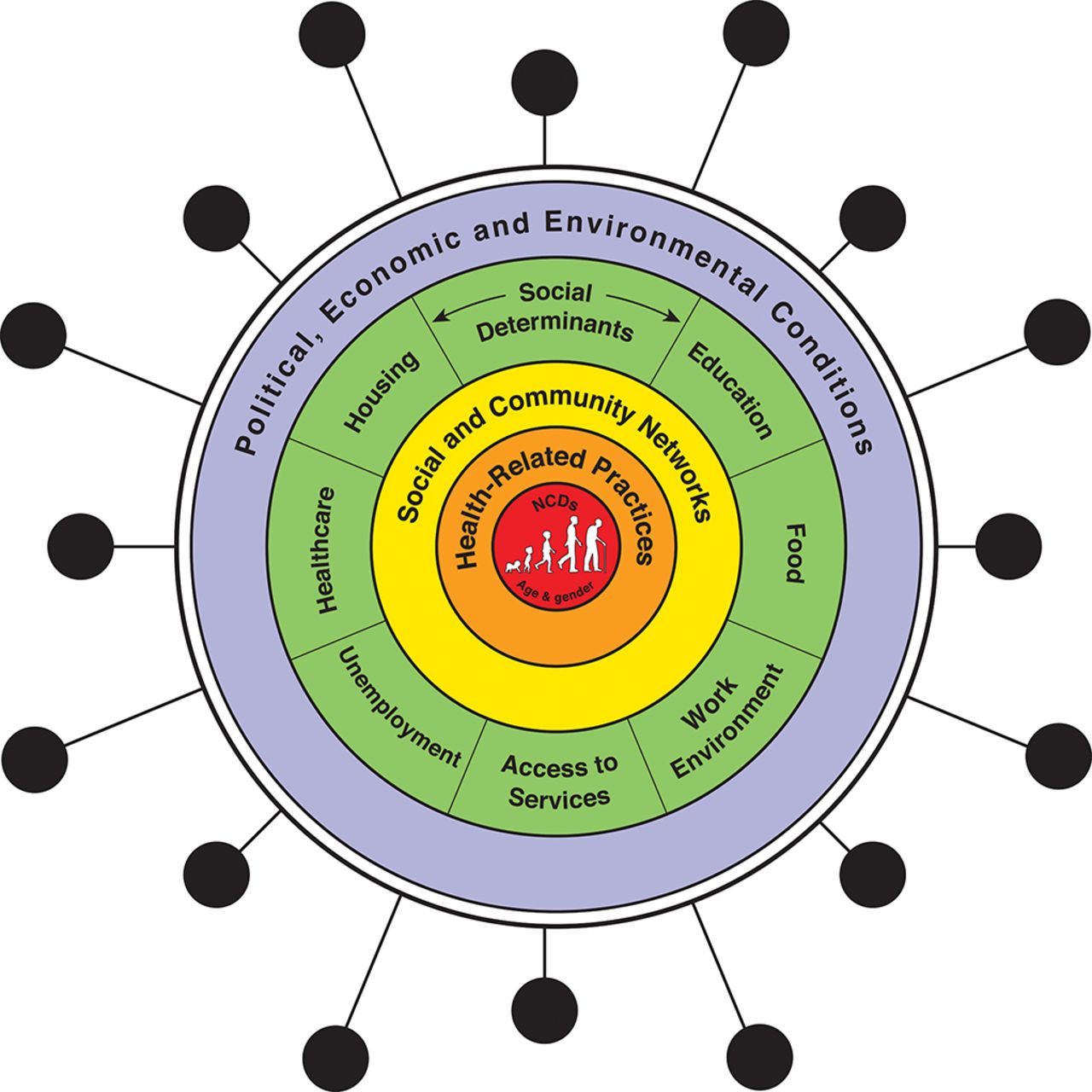
Emerging evidence from a variety of countries suggests that these inequalities are being mirrored today in the Covid-19 pandemic. Both then and now, these inequalities have emerged through the syndemic nature of Covid-19, as it interacts with and exacerbates existing social inequalities in chronic disease and the social determinants of health.

The syndemic of COVID-19, non-communicable diseases (NCDs)
 and the social determinants of health
This is down to a number of factors – not least unequal exposures to the social determinants of health (the conditions in which we are born, grow, live, work and age) leading to higher rates of almost all of the known underlying clinical risk factors that increase the severity and mortality of Covid-19 (e.g. high blood pressure, diabetes, cardiovascular disease).

We may have been living under the same regulations, but across the country, our experiences of ‘lockdown’ were widely different. We knew this. We weren’t ‘all in the same boat’ - we were in the same ocean in the middle of the same storm - but some were on luxury liners and others on rapidly-deflating dinghies.

We saw lower-paid care workers, shop workers, transport workers, factory workers continuing to work face-to-face with the public, while others worked from home on full pay or were furloughed with some semblance of job security.

There were families trying to stay sane in small flats without outdoor space and with empty cupboards, whilst others in more fortunate circumstances trebled their flower delivery order to ensure their homes looked good during Zoom meetings.

The divide in our society is stark on many levels, and as we go forward, who will pay the price of the multi-billion pound interventions that the government has put in place to see us through this period, and bear the brunt of the post-Covid-19 global economic slump? 

Covid-19 has laid bare our longstanding social, economic and political inequalities. Even before the pandemic, life expectancy amongst the poorest groups was already declining in the UK and the USA and health inequalities in some European countries have been increasing over the last decade.

I know that this all makes for grim reading for researchers, practitioners and policymakers concerned with health inequalities. So what can we do?

It is vital that this time, the right public policy responses, such as expanding social protection and public services and pursuing green inclusive growth strategies, are undertaken so that the Covid-19 pandemic does not increase health inequalities for future generations. Public health must ‘win the peace’ as well as the ‘war’. It is our job to make that case.

As we start to shape our ‘new normal’ and as the government unveils its post-Covid-19 recovery plans for the UK, public health policy must be a priority.

We need to act now if we want to avoid deepening the health inequality divide even further for generations to come.

Read the full essay: The Covid-19 pandemic and health inequalities


With thanks to the NIHR Applied Research Collaboration North East & North Cumbria 


Image attribution:
  1. Otis Historical Archives, National Museum of Health and Medicine / Public domain. https://commons.wikimedia.org/wiki/File:Emergency_hospital_during_Influenza_epidemic,_Camp_Funston,_Kansas_-_NCP_1603.jpg
  2. The syndemic of COVID-19, non-communicable diseases (NCDs) and the social determinants of health (adapted from Singer and Dahlgren and Whitehead). With acknowledgement to Chris Orton from the Cartographic Unit, Department of Geography, Durham University, for his assistance with the graphics. https://jech.bmj.com/content/early/2020/06/13/jech-2020-214401.full?ijkey=haFkUOyJurtabHz&keytype=ref#F1
  3. Screenshot taken from the Financial Times website: https://www.ft.com/content/8ea1c992-89f8-11ea-a109-483c62d17528 09/07/2020

Friday, 26 May 2017

Postcards from a public health tourist #1: Montréal, Québec, Canada

Posted by Clare Bambra, Fuse Associate Director and Professor of Public Health, Newcastle University

A few of our academics are lucky enough to have the opportunity to travel around the world to speak at conferences or explore collaborations - all in the line of work and the translation, exchange and expansion of knowledge of course.

The least we could expect is a postcard, to hear all about the fun that they're having while we’re stuck in the office watching droplets of rain compete to reach the windowsill…

So here’s the first from Professor Bambra.


Dear Fuse Open Science Blog,

I spent late April and May 2017 as a visiting Professor at the Institute of Research in Public Health, part of the University of Montréal. I was the guest of Professor Louise Potvin who is a leading international researcher in health promotion and the editor-in-chief of the Canadian Journal of Public Health. She was an amazing and generous host.

Me (bottom right) with Louise Potvin (centre) - an amazing and generous host
I had a really enjoyable and fruitful time both intellectually and socially at the Institute. It is an exciting place to be as a health equity researcher. They are leading the field in health equity research in Canada and alongside the other Montréal universities and the municipal public health agency, they have set up the joint Lea Roback Centre which examines health equity. There I was honoured to deliver the annual Paul Bernard lecture on social determinants of health – you can watch a video of the talk here.

I was also an invited speaker at the World Health Summit speaking alongside Ilona Kickbush (World Health Organization Europe) and Connie Clements (Canadian National Collaborating Centre on the Determinants of Health - NCCDH) about the legacies of the Ottawa charter. The NCCDH is tasked with integrating health equity and the social determinants of health into Canadian public health practice. Jane Philpott, the Minister of Health for the Federal Canadian government also gave an inspiring speech at the summit about the importance of the social determinants of health and her journey from being a family doctor to a leading politician.

Montréal experienced unprecedented rain and flooding while I was there
Montréal is an amazing place to visit, an extremely vibrant multicultural bilingual city with great restaurants and a very welcoming feel to it. It was very exciting to be there in 2017 as Canada celebrates 150 years and Montréal celebrates its 375th year. However, weather wise Montréal experienced unprecedented rain and flooding while I was there with many homes and businesses evacuated and the army required to provide emergency support.


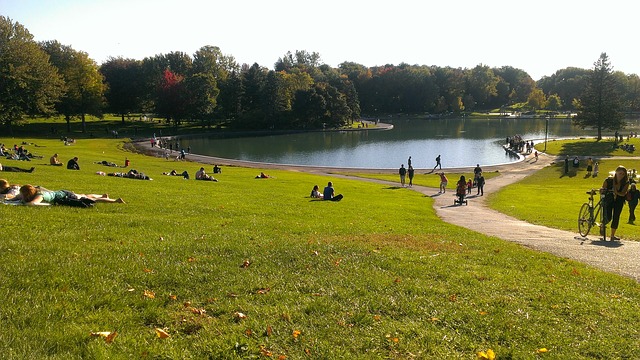
Montréal is also an interesting place from a public health perspective, it’s a city with a lot of green spaces and a variety of parks and recreation areas. It’s a very safe place to be, and very walkable - unlike other areas of North America. Public transport costs are low with a flat rate on the Metro and the buses of around $3. They also have a shared bicycle scheme called Bixi - which is free for a cycle ride of up to 30 minutes.

However, Montréal and Canada are of course not without their own public health problems. There was very visible homelessness. The Montréal health gap is 11 years between the most and least affluent neighbourhoods and most significantly, the Inuit and indigenous populations have average life expectancies of only 70 years - 10 years less than the average Canadian. Inuit health is understandably a key focus for health equity researchers in Montréal - including former Fuse associate Mylene Riva. She is now researching the effects of housing conditions and food security on the health of Inuit people in Arctic Quebec.

So a very useful visit for me and I was able to make good future connections for the Fuse Health Inequalities research theme.


Photo attribution:

Tuesday, 30 August 2016

Where you live can kill you

Posted by Clare Bambra, Associate Director of Fuse and Professor of Public Health Geography, Durham University

In 1842, the English social reformer Edwin Chadwick documented a 30-year discrepancy between the life expectancy of men in the poorest social classes and the gentry. He also found a North-South health divide with people from all social classes faring better in the rural South than in the industrial North.

Today, these inequalities persist. People in the most affluent areas of the United Kingdom, such as Kensington and Chelsea, can expect to live 14 years longer than those in the poorest areas, such as Glasgow or Blackpool. Men and women in the North of England will, on average die two years earlier than those in the South. Scottish people also suffer a health penalty with the highest mortality rates in Western Europe.

House for sale in New Orleans
Such geographical inequalities in health exist, to varying degrees, in all high-income countries. People living in more deprived areas fare particularly badly in the casino capitalism of the United States; where gaps in life expectancy between rich and poor areas of some cities, such as New Orleans, are as large as 25 years. Indeed, the US as a whole has a significant health disadvantage in comparison to other high-income countries with, for example, American men living on average three years less than their counterparts in France and five years less than Swiss men.

Understanding and reducing these health inequalities remains a major public-policy challenge worldwide and has garnered significant recent political attention. For example, in her opening speech on the steps of 10 Downing Street, the new British Prime Minister Theresa May highlighted the nine-year gap in life expectancy between the richest and the poorest boys in England. It is not only a moral issue though; health inequalities carry significant economic costs to individuals and society (e.g. NHS costs, lost productivity). But the causes of such inequalities are complex and the solutions contested.

Explaining health and place


Where you live affects how long you live and the health of different places is determined both by the population composition (who lives here) and the environmental context (where you live).

Who lives here? The demographic, health behaviours and socio-economic profile of the people within a place influences its health outcomes. Generally speaking, health deteriorates with age, women live longer than men, and health status also varies by ethnicity. Levels of smoking, alcohol, physical activity, diet, and drugs – all influence the health of populations significantly. The socio-economic status – or social class in “old money” – of people living in a country also matters as those with higher occupational status (e.g. professionals such as teachers or lawyers) have better health outcomes than non-professional workers (e.g. manual workers). So differences in the characteristics of people living in a country, city or neighbourhood will impact on the health of that place.

However, where you live matters. The economic environment of a country, such as poverty rates, unemployment rates, or wage levels can all influence public health. The social environment, including the services provided within a country to support people in their daily lives such as child care or health care and welfare, can also impact on population level health. The physical environment is also an important determinant with research suggesting that proximity to waste facilities and brownfield or contaminated land, as well as levels of air pollution can negatively affect health. So countries, cities or neighbourhoods with worse economic, social or physical environments will have worse health outcomes.

Reducing health inequalities


Even though both composition and context matter, and can be supported by scientific evidence, politics can matter more than science in determining which strategies policymakers pursue to reduce health divides – or if they even care about inequalities at all. After all, some potential solutions are politically easier to implement within existing systems than others.

For example, interventions aimed at changing individual health behaviours are far less challenging to prevailing power structures than those that demand extensive investment in improving the social economic environment. Indeed, by blaming people for their own health problems, such interventions let governments and businesses off the hook for the wider economic, social and environmental determinants of health inequalities.

Such “downstream” approaches only tackle one side of the coin and there is little evidence that lifestyle interventions are effective in reducing health inequalities: more comprehensive measures are needed. Most of the health gains over the nineteenth and twentieth centuries were brought about by far-reaching economic, political, and social reforms which improved the wider environment and also significantly improved the financial position of the poorest people.

It has been clearly demonstrated that more equal societies almost always do better in health terms and the poorest and most vulnerable groups, say in Sweden or Norway, are far healthier and live longer than the equivalent groups in the UK or the US. These countries have done so through the development of a stable, inclusive economy, a supportive welfare system and a high standard of living.

So, where you live matters for how long you live – and changing how we live could reduce health inequalties.


Professor Bambra’s book Health Divides: where you live can kill you is available now from Policy Press.

Clare Bambra
Professor of Public Health Geography, Department of Geography, Durham University, Associate Director of Fuse: the Centre for Translational Research in Public Health and lead of the Health Inequalities research programme
Twitter @ProfBambra


Photo attribution: “House for sale, New Orleans” by K.G. Schneider via Flickr.com, copyright © 2006: https://www.flickr.com/photos/kgs/177196564/in/

Thursday, 23 June 2016

‘First, do no harm’: How to think about austerity and public health

Posted by Ted Schrecker, Fuse Associate and Professor of Global Health Policy, Durham University

The current ‘neoliberal epidemic’ of (selective) austerity directs our attention to public health impacts of choices about public finance in several ways. Most fundamentally, anticipated post-2015 public expenditure cuts in the UK will reduce public expenditure as a proportion of Gross Domestic Product (GDP) to the levels of the 1930s, ‘taking the size of the state to its smallest in many generations’, in the words of a 2014 Institute for Fiscal Studies briefing. In fact, on recent projections by 2020 public spending in the UK as a proportion of GDP will be below the figure for the US, despite the latter country’s bloated defence budget. It is implausible that a National Health Service that is free at the point of use can be maintained with pre-World War II levels of public spending. Even a brief conversation with anyone familiar with US health care reminds us just how much that matters.

Meanwhile, the health consequences of social spending cuts that fall disproportionately on the poorest people and regions are beginning to be manifest in rising food insecurity and increased use of food banks – the latter trend probably related to the rising rates at which benefit recipients are sanctioned. Further health impacts, more difficult to isolate epidemiologically but probably at least as significant, are associated with the stresses of chronic insecurity, powerlessness, and lack of ‘control over destiny’.

There is a basic ethical and political point here about the politics of evidence. Sir Michael Marmot and colleagues wrote in 2010 that ‘It is hard to see how even ideologically driven commentators could think that having insufficient money to live on is irrelevant to health inequalities’. Good point.

In a previous blog with Clare Bambra, we demonstrated that politics can make us sick; Clare recently wrote a similar blog highlighting large health divides across Europe, showing that where you live (and the health policies implemented there) strongly affects how long you live. Against the background of austerity and the rising costs of healthy diets, it is indefensible to ask public health professionals and advocates to demonstrate, over and over again, that (for example) inadequate incomes lead to unhealthy diets and poor health. Rather, the burden of proof should be shifted: we must insist on clear and convincing evidence that national governments’ choices about the level and composition of public expenditure first, do no harm to health, except in extraordinary and clearly justified circumstances. This is an important part of the case for (independent, third party, adequately resourced) health impact assessments, especially of policies and programmes outside the health sector. Such a shift in the burden of proof is also congruent with the strong presumption in international law against retrogression (backsliding) with respect to human rights such as the right to health – a presumption that assumes special importance in an era of austerity.
Is corporate tax avoidance a public health issue?
Public finance, then, is a public health issue. This point applies to the revenue side, as well. The publication of the ‘Panama papers’ reminds us of the extent to which cross-border tax avoidance, whether legal or questionably legal, represents one of the ‘fiscal termites’ that can undermine states’ ability to provide everyone with the prerequisites for a healthy life. (Interestingly, the phrase ‘fiscal termites’ was coined by the former director of the International Monetary Fund’s Fiscal Affairs Department.) The question of how maintaining health services free at the point of use and investing effectively in prevention could be financed should be asked as a routine element of public health practice and advocacy – part of a broader strategy of interrogating scarcity. One answer could be using revenues from clamping down on UK corporate taxes avoided by major transnational corporations. In the real world, resources can almost always be found for the purposes of the powerful: think HS2, Trident renewal, and so on.

Choices about public finance are political choices with consequences for health and health inequalities; academics and practitioners must not be shy about pointing out those consequences.


A more extensive list of references is available from the author.  All views expressed are exclusively those of the author.

Photo: Servizi Mediali.  Reproduced under a Creative commons 2.0 licence. 

Tuesday, 24 May 2016

Why England could get knocked out in the quarter finals

Posted by Clare Bambra, Fuse Associate Director & Professor of Public Health Geography, Durham University

If Euro 2016 was based on how healthy each nation is, there would be some surprising results. England would get knocked out in the quarter finals of Euro 2016 if the tournament was based on how healthy each nation is. Based on health statistics, Switzerland would walk away as European Champions for the first time in the competition’s history, narrowly beating Iceland on penalties in the final. 

Click here to see more Country Health Fact Files‌
Our analysis of differences in life expectancy for men in the 24 countries taking part in the forthcoming football tournament shows huge health divides across Europe and highlights the links between where you live and how long you live.

The European Health Championship is an accessible way to shed light on these stark differences. It scores each nation’s football team based on the country’s male life expectancy at birth for 2013. From these scores, the winners and losers of each group are decided as well as the results of the games in the knock out stages.

England, with a male life expectancy of 79 years, would be winners of their group by beating Russia (63 years), Slovakia (72 years) and Wales (78 years). England would then beat Czech Republic (75 years) in the round of 16 knockout stage but would lose to Iceland (81 years) in the quarter-finals. Likewise, Wales and Northern Ireland, with a male life expectancy of 78 years each, would be beaten by Austria and France (79 years each) in the round of 16 knockout stages. Switzerland and Iceland both with male life expectancy of 81 years meet in the final, with Switzerland winning on penalties because female life expectancy there is 85 years compared to 84 years in Iceland.

The European Health Championship also reveals a clear east-west gap with worse health in the countries of Eastern Europe compared to those in the West. For example, in the host country France (the runners-up in group A), baby boys are expected to live up to 79 years old whilst in Ukraine, who finish bottom of group C, it is just 66 and in Russia (bottom of group B) it is a mere 63 years. Spain and Italy also fare well with men expected to live up to 80 in those countries.

But what explains these differences in health across European countries? Why do some countries perform so much better in health terms than others? Geographical research suggests that the answer is twofold: the health of places is determined by the population composition (who lives here) and the environmental context (where you live).


Who lives here? The demographic, health behaviours and socio-economic profile of the people within a place influences its health outcomes. Generally speaking, health deteriorates with age, women live longer than men, and health status also varies by ethnicity. Levels of smoking, alcohol, physical activity, diet, and drugs – all influence the health of populations significantly. Indeed, research has strongly linked Russia’s comparatively low life expectancy amongst men with the high levels of alcohol consumption in the country particularly since the collapse of communism. The socio-economic status – or social class in “old money” – of people living in a country also matters as those with higher occupational status (e.g. professionals such as teachers or lawyers) have better health outcomes than non-professional workers (e.g. manual workers). So differences in the characteristics of people in the countries of Europe will contribute to these country level differences in life expectancy.

However, research also shows that where you live matters. The economic environment of a country, such as poverty rates, unemployment rates, or wage levels can influence health. Countries with lower poverty rates, for example Switzerland or Iceland, do better than countries with higher poverty rates such as England. The social environment, including the services provided within a country to support people in their daily lives such as child care or health care and welfare, can also impact on population level health. The physical environment is also important determinant with research suggesting that proximity to waste facilities and brownfield or contaminated land, as well as levels of air pollution can negatively affect health. So countries with worse economic, social or physical environments will have worse health outcomes.

Infographics
The underlying research to the European Health Championship and these links between health and place are explored further in Professor Bambra’s forthcoming book Health Divides: where you live can kill you. Reducing health inequalities between and within the countries of Europe is also the focus of HiNEWS, an international project led by the Department of Geography at Durham University. It is funded by the New Opportunities for Research Funding Agency Co-operation in Europe (NORFACE) which is a partnership of European research councils including the Economic and Social Research Council (ESRC).

Thursday, 15 October 2015

Obesity: How neoliberalism made us fat

Posted by Ted Schrecker, Fuse Associate Member and Clare Bambra, Fuse Associate Director

A 2010 editorial in the Journal of the American Medical Association warned: “If left unchecked, overweight and obesity have the potential to rival smoking as a public health problem, potentially reversing the net benefit that declining smoking rates have had on the US population over the last 50 years”. Obesity increases the risk of developing cardiovascular disease (CVD), certain types of cancer, Type 2 diabetes, and orthopaedic problems. At the end of the 1970s it was estimated that 15% of US adults were obese. By 2012, this had more than doubled, to 35%. Among adolescents the increase is even more striking – from 5% at the end of the 1970s to 20% in 2012. In the UK, it is estimated that obesity nearly tripled between 1980 and 2002, from 6% amongst men and 8% amongst women to 23 percent and 25 percent women respectively. Amongst children in England, obesity has increased from 11% among boys and 12% among girls in 1995 to around 20% today.

In our book Neoliberal Epidemics: How Politics Makes Us Sick we argue that obesity in high–income countries is partly the result of political and economic choices made since the 1980s. Since the early 1980s, neoliberalism or “market fundamentalism” has dominated politics and economics across much of the globe, perhaps nowhere more conspicuously than in the post-Thatcher UK. Obesity is a neoliberal epidemic – one of four, along with austerity, stress, and inequality. They are neoliberal because they are associated with or exacerbated by the rise of neoliberal politics. They are epidemics because they are on such an international scale and have been transmitted so quickly across time and space that if they were a biological contagion they would be seen as of epidemic proportions.
North American contrasts between rich and poor urban areas, less than a mile from one another
Photo: T. Schrecker
Other high-income countries have also experienced increases in obesity. Obesity has no single cause; the many influences include changes in the food environment (including advertising, marketing, accessibility and affordability); the growth of sedentary work occupations and leisure time activity, such as television viewing; changing settlement patterns, notably the rise of a privatised approach to planning organised around driving rather than walking or the provision of public transportation; and changes in the built environment that reduce the safety and attractiveness of physical activity, especially for those who do not live in leafy places. However, countries that have gone farthest down the neoliberal road, the UK and the US in particular, have experienced greater increases in obesity – suggesting that neoliberalism has magnified and accelerated trends that are present to some extent throughout the high-income world.

Obesity is a neoliberal epidemic for several reasons. These include: (1) economic and social policies that have meant fewer people can afford a healthy and balanced diet; (2) increasing time poverty, as when the demands of work (often on unpredictable schedules), transportation, and (especially for women) child care within ‘flexible’ labour markets are combined, there is not much time or energy left for eating a healthy diet and the attraction of a quick stop at the shopping park’s fast food outlet are strong; (3) the role of aggressive corporate marketing of unhealthy, energy-dense foods, notably as multi-national supermarkets, manufacturers of ultra-processed food and fast food chains expand into developing economies with the lowering of barriers to foreign investment. This helps to explain why overweight and obesity are now also rising rapidly in many middle- and some low-income countries, with prevalence in Mexican adults comparable to levels in the United States.
Corporate food systems and time poverty interact at the shopping park.
Photo: T. Schrecker
A fourth connection was addressed at a groundbreaking workshop at the University of Oxford in 2009: political structures such as welfare state regimes. More specifically, higher levels of economic insecurity – associated with neoliberal policies like the rollback of welfare state protections and opening up labour markets to the “creative destruction” that Joseph Schumpeter extolled as a defining virtue of capitalism – are causally linked with a higher prevalence of obesity through both biological (stress-related) and psychosocial (comfort eating) mechanisms, in addition to the more direct effects on time and food budgets.

Public health researchers, who agree on little else, recognize that reducing overweight and obesity is a formidable challenge. A first step is to avoid the lifestyle trap. A recent literature review on policy interventions to tackle what has been called the obesogenic environment produced by the Scottish Collaboration for Public Health Research and Policy provides some useful directions. Its authors do not shrink from arguing the need for large-scale interventions that may be expensive or challenging to vested interests, noting (for example) that the transport mode split in urban areas is 84% by car versus 9 percent walking in the United States, while it’s 36% by car versus 39% walking in Sweden. “Suffice it to say, it has been a concerted combination of infrastructure provision, integrated transport planning and disincentives for private cars which has helped to bring about the higher active travel rates.” We have no easy solutions, but emphasise that neoliberalism and the associated political choices have exacerbated the obesity crisis. Obesity is an example of how politics makes us sick.

Links: Schrecker, T. and Bambra, C. (2015) Neoliberal Epidemics: How Politics Makes Us Sick, Palgrave Macmillan, available at: http://www.palgrave.com/page/detail/how-politics-makes-us-sick-ted-schrecker/?K=9781137463098

Professors Schrecker and Bambra will be discussing their new book 'How Politics Makes Us Sick' at an event at Durham University on 15 October 2015. For more details click here.

Did you enjoy reading this post? If so, please vote for Fuse in the UK Blog Awards 2016 by clicking here


About the authors

In June 2013, Ted Schrecker moved from Canada to take up a position as Professor of Global Health Policy, Centre for Public Policy and Health, Durham University (UK). Since 2002, most of his research has focused on the implications of globalization for health; he also has long-standing interest in issues at the interface of science, ethics, law and public policy. A political scientist by background, Ted worked as a legislative researcher and consultant for many years before coming to the academic world, and co-edits the Journal of Public Health. Among his publications, he is editor of the Ashgate Research Companion to the Globalization of Health (2012) and co-editor of a four-volume collection of key sources in Global Health for the Sage Library of Health and Social Welfare (2011). Ted is also an Associate Member of Fuse. Ted can be followed on Twitter @ProfGlobHealth.

As well as being an Associate Director of Fuse, Clare Bambra PhD is Professor of Public Health Geography and Director of the Centre for Health and Inequalities Research, Durham University (UK). Her research focuses on the health effects of labour markets, health and welfare systems, as well as the role of public policies to reduce health inequalities. She has published extensively in the field of health inequalities including a book on Work, Worklessness and the Political Economy of Health (Oxford University Press, 2011). She contributed to the Marmot Reviews of Health Inequalities in England (2010) and Europe (2013); the US National Research Council Report on US Health in International Perspective (2013); a UK Parliamentary Labour Party Inquiry into international health systems (2013), as well as the Public Health England commissioned report on the health equity in the North of England: Due North (2014). She is a member of the British Labour Party and can be followed on Twitter @ProfBambra.

Thursday, 16 July 2015

Who needs nudging, shoving, and shaming? Individuals or government?

Guest post by Victoria McGowan, Post-Doctoral Research Associate at Teesside Uni, Alcohol & Public Health Research Team

I recently attended International Society for Behavioural Nutrition and Physical Activity (ISBNPA) conference in Edinburgh (see #ISBNPA2015 on twitter). The conference was a great event and I’m very grateful to Teesside University for supporting my attendance.

Conferences have a tendency to be sedentary affairs and can often have limited opportunities for physical activity or even just standing during sessions. However, I was delighted to see that the conference organisers had marked out significant space for standing during sessions. Not only that, but there was the opportunity for yoga and health walks early every morning as well as lessons in ceilidh dancing at lunch time and a walk to Arthur’s Seat as part of the social programme. It was quite a physically active, physical activity conference.

Lunch time ceilidh dancing
However, there were some interesting discussions about whether us delegates were being socially shamed or nudged into partaking in physical activity during the conference. The conference opened with Professor Nanette Mutrie describing how she’d spotted one of her own researchers using the escalator as opposed to the stairs and encouraged delegates to give standing ovations to all speakers in an attempt to get us on our feet more. Although I found the level of physical activity on offer a refreshing change from being largely sedentary, I was slightly unnerved about the underlying social shaming.

I’m a strong advocate for informed choice, I love posters on stairs telling me how many calories I’ll burn by walking up them but I also love having the option of taking the escalator. There were stories of academics taking photos of people using the escalator to shame them for not using the stairs. It was interesting to watch the Mexican wave of delegates standing to applaud, a few individuals would stand and then row after row behind them followed suit… until it came to me and I would sit in defiance. Why did I stay seated? Because I have a choice and honestly, I don’t like being socially shamed into doing something. Yes, I agree obesity, nutrition, and physical activity researchers should not be hypocritical and practice what they preach. However, we also need to be mindful that we’re working with people who are more concerned about paying their rent, whether their children need new school shoes, zero hours contracts, whether they can get an appointment with their GP, the list goes on. Yes, taking the stairs may improve our health if we use them regularly but we have to understand that some individuals choose the unhealthier option due to a whole host of external pressures. Lecturing these individuals about taking the stairs may fall on deaf ears or, as in my case, may lead to defiance. I used the escalator on occasion because it was quicker for me to walk up/down the escalator to dash between sessions and avoid the crammed stairs.

There are other reasons why individuals choose the less healthy option and we need to understand these external pressures rather than shaming people into taking the stairs. As Professor Alan Batterham rightly pointed out in his debate with Professor Stuart Biddle we’re evolutionary predisposed to conserve energy whenever possible so sometimes we may choose the escalator. However, we may choose the stairs if we’re provided with information on why it’s good for our health, or if we alter the environment to make healthy choices easier. But please don’t shame us into choosing one option or the other as this could lead to unintentional detrimental consequences of purposeful rebellion. Yes, I’m aware of the obesity ‘epidemic’, but I’m also aware this is caused by factors which are outside of individual control. Professors Ted Schrecker and Clare Bambra’s book How Politics Makes Us Sick shows how the rise in neoliberal policies in the UK and US are associated with rises in obesity and health inequalities.

Inequalities are having the greatest impact on health
Kylie Ball highlighted this point at the end of her keynote speech, yes we need to help improve nutrition and physical activity BUT we also need to help reduce inequalities in nutrition and physical activity. Inequalities are having the greatest impact on the nation’s health, not occasionally taking the escalator.

It’s time to nudge, shove, and shame our government, not individuals, into reducing health inequalities and improving overall public health.

Did you enjoy reading this post? If so, please vote for Fuse in the UK Blog Awards 2016 by clicking here

Thursday, 9 July 2015

Setting resolutions or finding solutions?

Posted by Dr Joanne-Marie Cairns, Fuse Post-Doctoral Research Associate at Durham University

So it’s National Childhood Obesity week and yet again we are surrounded by plenty of public health campaigns promoting us to lead healthier lives – be more physically active, join the gym, lose weight, eat and cook more healthily as well as problematic media rhetoric such as ‘beat the bulge’ and de-moralising and stigmatising imagery typically of overweight or obese children on scales or eating junk food. How is this helpful? This will only serve to further exacerbate the situation rather than help to bring about effective and sustainable solutions to not only help those who wish to become more active and lose weight but promote healthier population health more widely.

I am heartened to hear that Head of NHS England, Simon Stevens, has called for a national conversation to be held and a joined-up approach which has started to think about regulating food and drink companies. In my opinion this is long overdue. We may have a degree of individual ‘choice’ but how much choice do we really have when we are surrounded by (and in some places bombarded with) advertisements, local take away shops, overly-priced fresh nutritious food compared to the tempting ‘bogof’ (buy one get one free) offers which typically tempts us into getting double the amount of unhealthy snacks, often at a fraction of the price it would cost to get healthier options?

I came across this image as I was searching through websites related to National Childhood Obesity week on http://www.noaw.org.uk/about/ with reference to National Obesity week earlier on this year.


While I am sympathetic to this message which encourages us to make these positive changes I am also sceptical about the effectiveness of doing these alone. Repeatedly research studies have shown that educational and behavioural interventions have limited and short-term effectiveness, so why do we continue to focus on the individual rather than looking at the environment within which the individual is placed?


So I urge you, instead of making yet another individualised ‘resolution’ this coming New Year (which will come around before you know it!) to lose weight or exercise more, why don’t we collectively put our efforts together by standing up and protesting about the lack of resources or opportunities within our localities to be able to lead healthier lives and be more physically active? For example, if you have children in schools ask yourself (or better yet ask the school directly) the question: what is the school doing to not only promote healthier food and physical activity but to actually enable this to happen by creating school environments that support children to do this? Or what are supermarkets doing to help us to afford to buy fresh and nutritious food and drink that isn’t going to cost a fortune? Or write to your local MP to ask the government to recognise the wider issues that can prevent even those of us with the best of intentions from eating more healthily and increasing our exercise. Childhood obesity is not the responsibility of the child/family, since ‘responsibility’ infers that we have ‘control’ over something. It is rather a societal consequence, and therefore society should bear the responsibility for finding a solution.

Jo Cairns and Professor Clare Bambra have produced a Fuse brief entitled: What is the most effective way to reduce inequalities in childhood obesity?

Did you enjoy reading this post? If so, please vote for Fuse in the UK Blog Awards 2016 by clicking here

Tuesday, 28 January 2014

Two cheap ways councils can fight health inequality

By Clare Bambra, Durham University and Danny Dorling, University of Oxford

In the UK today, there are sizeable inequalities in health – and sometimes that gap isn’t just about north versus south. In Stockton Tees in the north-east of England, for example, there’s a 15-year gap in life expectancy between the least and most deprived areas. In London, the gap between such areas is nearly 25 years; and there is a five-year gap between the 10 tube stops between Westminster and Canning Town on the Jubilee Line. Glasgow has an infamous 28-year gap in life expectancy across the city.

It’s clear that the problem isn’t just national but local. And the British Academy has just launched a collection of opinion pieces from leading social scientists with ideas on what councils could do to reduce these inequalities, based on the evidence. They come in the wake of Michael Marmot’s 2010 review into the scale of the problem in England, where people with a better education, a higher income, or a better occupation, experience better health and a longer life.

A US analysis of things that most influence health suggest our physical environment counts for about 10%, clincial care (for example hospital treatment) 20% and health behaviour such as smoking and diet accounted for 30%. But the biggest influence on our health was socioeconomic factors at 40% – these of course also influence health behaviour.

The government has suggested local authorities are best placed to influence these factors. But local authorities have limited powers and are also being subjected to large (up to 50%) budget cuts. So what can they still do?


Claire Bambra: tackle health-related worklessness

Reducing worklessness has had a high profile, but previous policies have failed because they’ve largely ignored the root cause – ill health.

There is a strong relationship between ill health and unemployment and  one of the key drivers of health inequality is health-related worklessness. We know that being sick or disabled greatly reduces an individual’s employment prospects – the employment rates of people with a disability or chronic illness in the UK are around 40% compared to 70% for those with good health.

But being out of work also results in poorer health and health-related job loss is more likely to be experienced by those in lower social groups. There are also substantial geographical inequalities, with rates highest in the north and in the most deprived areas.

There are areas where improvements have come from looking at the issue in a different way. The County Durham Worklessness and Health programme, for example, which was commissioned by the NHS in partnership with the local authority, has been successful in addressing barriers to employment such as debt or housing among those in receipt of incapacity-related benefits by seeing health as the key issue. Over six months an evaluation showed the general and mental health of participants almost doubled and that the intervention was good value for money.

There’s clear potential for this health-first approach. And it could be an important way for clinical commissioning groups, work programme providers and local authorities to work in partnership.


Danny Dorling: replace 30mph zones with 20mph

When asked what single policy I would suggest to improve public health, I always reply “20mph” or, if I’m being a little more verbose: “20’s plenty”.

This normally elicits some surprise. The person I’m speaking to usually expects me to suggest reducing poverty by reducing unnecessary privileges for the rich, narrowing economic inequalities, or improving health services or education; not simply slowing cars down. All these things are very laudable, but if you want to do just one thing, then the thing you can actually do, the thing that makes a difference that you can feel, see and measure straight away, is to stick a sign that says 20mph on a circular piece of plastic over the 30mph signs where you live.

Implementing 20mph speed limits (where 30mph ones have been) could be one of the cheapest and most effective methods for improving public health today. Easily enacted at the local level, this very literal slow-down would reduce the risk of pedestrian – and especially child – fatalities and bring about wider benefits such as less pollution and stronger communities.

The proportion of pedestrian road crash deaths is steadily increasing, and it tends to be in the poorer parts of cities that people are most at risk of being hurt or killed by cars.

Besides reducing death and injuries, a widespread slow-down of fast cars would reduce the indirect harm that comes from them, including that affecting ill health suffered by the family and friends of those who are victims of road crashes.

20mph speed limits have now been implemented in more than 100 local authorities already (including the City of London just last year). Success stories include Burnley in Lancashire where a pilot scheme to introduce 20mph from February 2011 to April 2012 resulted in the overall figures falling from 46 casualties a year, with six deaths and serious injuries, to 25 casualties a year with only two deaths and serious injuries.

At almost the same time in Newcastle upon Tyne it was recently reported: “The number of car-related accidents on Newcastle’s residential streets has dropped by more than half in some areas of the city following the council’s introduction of 20mph speed limits.”

Therefore, I would urge other councils to follow their example. Changing the speed limits in residential areas to help significantly improve public health.
Danny Dorling is a patron of the charity RoadPeace

Clare Bambra does not work for, consult to, own shares in or receive funding from any company or organisation that would benefit from this article, and has no relevant affiliations.
The ConversationThis article was originally published at The Conversation.
          Read the original article.
       

Thursday, 14 November 2013

The north loses out yet again under NHS funding proposals

By Clare Bambra, Durham University and Alison Copeland, Durham University

The north-south divide is a powerful trope within popular English culture and it’s also evident within the country’s health. A recent report by Public Health England showed that between 2009 and 2011, people in Manchester were more than twice as likely to die early (455 deaths per 100,000) compared to people living in Wokingham (200 deaths per 100,000).

This sort of finding isn’t new; for the past four decades, the north of England has persistently had higher death rates than the south, and the gap has widened over time. People in the north are also consistently found to be less healthy than those in the south across all social classes and among men and women. For example, average male life expectancy in 2008-10 in the north-west was 77 years, compared to 80 in the south-east.


A large amount of this geographical health divide can be explained by social and economic differences with the north being poorer than the south.  Certainly, over the past 20 years the north has consistently had lower employment rates (for example this is 70% in the north-east compared to 80% in the south-east).

This is of course associated with the lasting effects of de-industrialisation (with the closure of large scale industry such as mining, ship building and steel) and the lack of any replacement jobs or a strong regional economic policy.

While the NHS clearly cannot address all the issues that cause the north-south divide, there have been attempts to increase NHS funding in areas that have the worst health – and many of these are in the north. The current NHS funding formula considers factors such as deprivation and ill-health indicators by area, so places with worse health and higher deprivation have higher NHS budgets.

However, NHS England has a new funding formula out for consultation which fundamentally changes the way money is allocated to General Practitioners for the care of patients, and it appears that the north will lose out.

In our BMJ letter, we mapped the new NHS funding data and this showed clearly that the more affluent and healthier south-east will benefit at the expense of the poorer and less healthy north. For example, in areas like south-eastern Hampshire, where average life expectancy is 81 years for men and 84 years for women, and healthy life expectancy is 67 years for men and 68 years for women, NHS funding will increase by £164 per person (+14%).

This is at the expense of places such as Sunderland, where average life expectancy is 77 years for men and 81 years for women and healthy life expectancy is 57 years for men and 58 years for women, and where NHS funding will decrease by £146 per person (-11%). More deprived parts of London will also lose out with Camden receiving £273 less per head (-27%) under the proposed formula.

While the objective of the new formula is to provide “equal opportunity of access for equal need”, these geographical shifts are because it has defined “need” largely in terms of age and gender, with a reduced focus on deprivation.

It also uses individual-level, not area-level need, GP-registered populations rather than higher wider population estimates, and secondary care (use of hospitals and A&E) not primary or community care use. This means that areas with older populations have higher health care usage so they are getting money transferred to them from areas with fewer old people.

However, areas with more old people are also areas that have healthier populations who live longer – hence there are more old people. These healthy old people are largely in the south-east so, within a fixed NHS budget, the new NHS formula can only shift money to them by taking it from others.

The new formula appears to shift NHS funds from some unhealthy to healthy areas, from north to south, from urban to rural and from young to old.

Many of the areas that will lose NHS funding if the new formula is implemented are the same areas that have also lost out from above average cuts to local authority budgets. The scale of the potential NHS funding shifts will add further stress onto these local health and social care systems and potentially widen the north-south health divide by reducing access to NHS services where they are needed most.

The authors do not work for, consult to, own shares in or receive funding from any company or organisation that would benefit from this article. They also have no relevant affiliations.


The Conversation This article was originally published at The Conversation. Read the original article.