Showing posts with label theatre. Show all posts

Friday, 19 December 2025

Spark ideas, inspire change and fuel innovation - sharing research creatively

Posted by Ella Anderson, Fuse Public Involvement and Engagement Manager, Newcastle University

Have you ever wondered how to share your research in a way that engages with new and diverse audiences? Are there ways to share your work in a way that reaches the people it was designed to serve? If the answer is yes, then read on!

Research can spark ideas, inspire change and fuel innovation but all too often it gets buried in academic journals and dense reports that few people read, particularly the communities the research intends to serve. So what if there were more engaging, creative and accessible ways to share your findings? From interactive infographics and animations, to events, theatre and podcasts, Fuse researchers are re-imagining how to communicate their work with wider audiences.

Whether you are looking to captivate the public, influence policy makers or engage fellow experts, this post explores some creative ideas to make your research truly resonate.
  • In the first instance, reach out to any people who you have worked with as part of your research including public partners, young people, charities and voluntary organisations. What would they like to see? Actively liaise with and listen to the communities your research is intending to serve - how do they want findings presented?
  • Infographics and visual summaries can be a useful way to transform your findings into a simplified visual. Infographics are a graphic representation of information, data or knowledge to present complex content quickly and clearly. Emma Adams has worked with More than Minutes to summarise research about co-located services in a visual and accessible way. Steph Scott worked with Nifty Fox - specialists in visual storytelling - to produce a flipbook drawing on content from the ‘Divided Households’ report relating to children and parental imprisonment. Fuse Deputy Director Amelia Lake, Shelia Visram and team co-produced the Hyper Energy drink leaflet with young people to communicate key findings. Or what about a zine (DIY-style booklet or magazine) like this, ‘Moving Spaces’, co-produced by Caroline Dodd-Reynolds with LGBTQIA+ young people, exploring how physical activity spaces could be more joyful and safe.
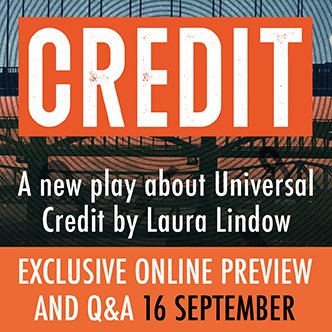
    • Theatre and performance is an exciting way of communicating research. For example, Cap-A-Pie and researchers including Mandy Cheetham were involved in developing an emotive theatre production called Credit, based on stories and experiences of people living on Universal Credit.
       
    • Creative and engaging community events and workshops (with catering if you have budget!) are always a popular option. The more interactive, accessible and collaborative the better. Use the opportunity to close any feedback loops with people, charities, organisations who you have engaged with throughout the research. Show how you listened, what you found out, how findings are applicable to people's lives and work, and what happens next... keeping people in the loop is so important. Be sure to include opportunities for plain language Q&As and conversations, both informal (through breaks) and formal (via panel discussions). At one of Fuse’s International Women’s Day events, there was an optional gong bath for people attending the event. Although a sound bath may not have been directly linked to the research, the event was about creating a welcoming, inclusive and ‘safe space’ for people to come together.
    • If you have the budget, consider having an event doodled in real-time. We have had colleagues who have worked with Camille Aubry, Josie Brookes and Nifty Fox who offer this skill. Get in touch with us if you would like any other recommendations when sourcing quotes.
    • Have you thought about gamification of research findings or using interactive digital tools? You can create interactive quizzes or clickable maps to allow people to explore findings in an engaging way, applying insights to local contexts. Simulation tools allow public partners and individuals to visualise the impact of different public health interventions based on research findings. Take a look at Joanne McGrath's online Maze, which provided an interactive resource portraying women’s narratives of multiple exclusion, homelessness and accessing support.
    • Storytelling has long been a way to share information. Case studies lend themselves well to this, as human-centric narratives show the research in action. It can demonstrate how a specific person or community has benefitted or will benefit from the findings. Stories are a different way to 'humanise' data or translate findings in a way that is appropriate for the intended audience. For example, Cassey Muir and Ruth McGovern’s co-produced Twinkle Twinkle Arti children’s story book communicated messages about parental substance use in a gentle, age-appropriate manner. The book is available as a physical copy, an electronic copy and also has been made into a CBeebies style story time video.
    • Are there any opportunities for the use of creative methods throughout the project that you could bring together as part of an exhibition in a public space e.g. library, community centre, schools? Documenting the research and experience through photography, crafts or art can be a creative way of capturing interest and making research more understandable. Sarah Martin-Denham’s crochet blanket made up of 2,999 squares representing the number of children excluded every day from schools in England (2021/22 academic year) is a great example of this, and has been on a national tour engaging with 24 organisations - including the Children’s Commissioner Office and multiple councils.
    • You can share bite-sized research or findings through social media channels using visuals, animations, short videos - or even livestreaming to provide information and engage with people in real-time. Have a hashtag at the ready to encourage people to join the conversation and share perspectives. In a similar vein, there are opportunities to share research and knowledge via 'Ask Me Anything' style forums, for example as seen on Reddit. Yes, this is low cost but it comes with risks as questions are unpredictable! However, it is worth flagging as an option and is a creative, ‘non-traditional’ way to share research and answer questions.
    • Blogs, like the award-winning one you are reading right now, are a great way to share your research. Posts can make complex information more accessible to a wider audience. It allows you to present findings in a clear, engaging and informal style, reaching readers outside of academic circles, including policy makers, practitioners and the wider public. For guidance and support in writing your own blog post, contact Fuse Communications Manager, Mark Welford: m.welford@tees.ac.uk.
    • Could you take your research findings to places in the local community? Fuse colleagues Balbir Singh (Artistic Director of the Balbir Singh Dance Company) and Paul Chazot displayed art works from their Unmasking Pain project in pop-up displays in GP surgeries and a repurposed shop in a shopping centre. There is now a dedicated space at the Grainger Market, Newcastle-upon-Tyne called the Being Well Place, which is a place to connect and engage with the local community.
    • Do you have the option of translating materials/outputs for different audiences, and communities with diverse language needs? Translated summaries and visuals e.g. in multiple languages, work well and ensure inclusivity in dissemination. For example, Nicola Heslehurst worked with local designer, Twentyseven Design to develop English and Welsh infographics relating to pregnancy outcomes.
    • And finally what kind of Fuse Public Involvement and Engagement Manager would I be if I wasn’t promoting the wonderful and award-winning public partner-led podcast Public Health Research and Me?! Accessible, informative, flexible and friendly - this is a great way to share quality research with a diverse and international audience. 

    There are many more creative ways to share research and remember - there is a no ‘one-size-fits-all’ approach to sharing your findings. Always take into account your research topic, your findings and above all your target audience.

    Why not send us a message today if you have used a creative or innovative way to share your research or findings? We would love to hear from you and find out more ways to promote and share high quality research.


    Following strong interest from Fuse members, we have launched a Community of Practice (CoP) focused on creative research, involvement and dissemination.

    The first meeting will take place in the New Year. Places are limited for the first event but please register or get in touch (info@fuse.ac.uk), as there will be plenty more opportunities in future!

    A CoP is a network of people who share common interests and goals, creating a space for knowledge exchange, learning, and mutual support.

    Friday, 9 February 2024

    How can we fail more intelligently?

    Posted by Peter van der Graaf, Northumbria University; Amanda Purington Drake, Cornell University; and Ien van de Goor, Tilburg University

    We don’t like talking about failures, as it signals loss of time, resources and reputation, but failures present opportunities for learning in knowledge exchange. 

    However, this requires a ‘failure culture’ in academia and policy, in which failures are no longer avoided but actively encouraged. To learn how to turn failures into successes, we need to share and publish our failures, have early engagement with all stakeholders in the knowledge exchange process, and make more use of boundary spanners.

    There are plenty of academic papers celebrating successes in knowledge exchange, but not many researchers and policy makers talk openly about their failures. But learning from failures is just as important, if not more crucial, than celebrating successes. Allowing partners to reflect in a safe space on knowledge exchange practices and research projects gone wrong, in which communication broke down, partners did not engage or dropped out, and evidence was not taken up or ignored, will provide important lessons on how knowledge exchange practices and research can be improved.

    Paul Iske. Chief Failure Officer, speaking at the Fuse conference in 2022  
    At the 5th Fuse Conference on Knowledge Exchange in Public Health in 2022, we created such a space in Newcastle by bringing together over 100 academic researchers, policy makers, practitioners, and community members to share and reflect on their failures and how to turn them into success. Don't miss the 6th conference in the US ! 

    Our Special Issue: Learning from failures in knowledge exchange published this month in journal Evidence & Policy brings together selected papers from the conference and papers that were submitted in response to an open call afterwards. From 23 original submissions from 14 different countries (including the UK, USA, Canada, Norway, Switzerland, Kenya, Chile, South Korea, and Portugal) and from a range of disciplines and areas of focus (Public Health, Primary Care, Oral Health, Sociology, Anthropology, Public Management, Policy-Making, and Community and Voluntary Sector), we invited four research papers and three practice papers for full submissions.

    This includes a paper from Fuse Associate Mandy Cheetham and her practice colleagues on the challenges of co-production. They reflect on the failed performance of a theatre play to mobilise the research findings of a qualitative study into the health and wellbeing effect of major social security reforms (Universal Credit) in the North East of England. They argue that academics fail to appreciate emotional engagement of stakeholders in knowledge exchange.

    The point about emotional labour in knowledge exchange and research is further developed (and flipped) by Louise Warwick-Booth, Ruth Cross and James Woodall. They reflect on data generated from three evaluation studies across different Voluntary, Community and Social Enterprise (VCSE) interventions in the North of England. In their paper, they expose the conflict between the research teams and evaluation partners, structured around five key features of co-production to highlight the emotional costs and labour involved for researchers.

    The seven papers highlight different ways of defining and conceptualising failures in knowledge exchange, ranging from mis-implementations, to setbacks, pitfalls, unproductive interactions between stakeholders, conflicts in co-production, and deviations from expected and desired results. Using different theories and frameworks, the papers in this special issue demonstrate that failures are complex problems, involving many actors at different levels across various organisations and networks. These organisations and networks are in turn influenced by a range of determinants, from workforce instability, leadership challenges, and lack of adequate funding to practical, everyday issues, such as logistical, technical, and buy-in considerations.

    Each paper offers a different perspective on relational barriers and structural stressors contributing to failures, but all authors agree that failures offer opportunities for learning, particularly small failures. We tend to focus on large catastrophic failures, but small failures are often the early warning signs, which can help to avoid larger failure in the future. To support this learning, we need to talk more openly about failures and create a culture where talking about and sharing of failures is more accepted and, even better, actively encouraged. Therefore, we argue for more deliberate experimentation in organisations and partnerships to allow for failures that provide rich insight and learning. How can we fail more intelligently? And how do we create spaces and time for reflection on failures between evidence producers, brokers and users to share this learning and support them in turning failures into successes?


    This blog post is based on the article, ‘Learning from failures in knowledge exchange and turning them into successes’, which introduces the Special Issue: ‘Learning from Failures in Knowledge Exchange’. Adapted with thanks to Evidence & Policy.


    Authors

    Peter van der Graaf is an Associate Professor in Public Health at Northumbria University and Research Manager of AskFuse - the responsive research and evaluation service run by Fuse. Peter is interested in the interface between research, practice and policy making and how this interface facilitates (or hinders) social improvement processes at local, regional, national and international levels. He conducts research on knowledge mobilisation in public health, with a focus on the wider determinants of health (e.g. housing, health landscapes, urban regeneration) and how they affect people’s health and wellbeing.

    Amanda Purington Drake, PhD, is the Director of the ACT for Youth Center for Community Action at the Bronfenbrenner Center for Translational Research and a research collaborator with the Social Media Lab, both at Cornell University, USA. Amanda has a passion for using research and evaluation to help communities to promote and support the health and wellbeing of youth. Her work in the Bronfenbrenner Center has focused on promoting positive youth development, investigating non-suicidal self-injury in general populations of adolescents and young adults, and evaluating the effectiveness of large-scale adolescent sexual health initiatives. She has co-developed and evaluated interventions to develop youth social media literacy and to promote parent-teen communication about sexual health. Amanda works to bridge research and evaluation with practice and policymaking to prevent youth risk-behavior and promote healthy development.

    Ien van de Goor (MSc, PhD) works as endowed professor and program leader in Public Health and Prevention at Tranzo, Faculty of Social and Behavioral sciences, Tilburg University, in the Netherlands. She has a background in health sciences with many years of research experience in evidence-informed public health. Central areas of interest are healthy behaviour in relation to the environment, poverty and vulnerable groups, and monitoring and public health policy.


    The views and opinions expressed by the authors are those of the authors and do not necessarily reflect those of Fuse, the Centre for Translational Research in Public Health.

    Friday, 1 October 2021

    “Next slide, please!” Newcastle children’s reflections on the pandemic

     Posted by Laura Basterfield, Research Associate, Newcastle University

    Often in research, once we’ve collected the data, analysed and published it, we don’t have the opportunity to go back to the participants to discuss what we found. When children are involved, we may give a feedback presentation at a school assembly, but let’s be honest it can be difficult to make Powerpoint fun!


    I’ve worked closely with Walkergate Community School over the last few years on my research into children’s physical fitness and mental wellbeing and I wanted to deliver my feedback in an assembly that the children would enjoy. I thought the best way to do that might be to let them do it themselves, as who knows what children like better than other children? And I am so pleased I did; it was a fascinating process. 

    The ‘Young Science Communicators’ project was due to have taken place in June/July 2020, but had been delayed due to the COVID-19 school closures. Whilst I was initially disappointed last year, the realities of the past 12 months brought an added dimension, intensity and poignancy that would not have been there otherwise.  

    There weren’t many rules, but the assembly should include some of the results of the study, including both the physical and mental benefits of physical fitness and activity. Other than that I was happy for the children to take the assembly wherever they saw fit. To start, thirteen Year 6 pupils (aged 10-11 years) discussed with me the project specifically, fitness in general, and about the impact the COVID-19 lockdowns and school closures had on them and their families. Then I taught the children some of the key skills they would need to do my research. I wanted them to really understand why I do what I do, and what better way than to then practice on your friends?! There were some wonderful comments from the children about how they liked the experience: “I enjoyed it because I want to do your job when I’m older” and “I liked being in control!” (which must be quite unfamiliar at 11 years old), and they quickly learned both the techniques and how to talk politely to their class-mates! 

    The following week it was over to the children and their ideas. The goal was for them to create an assembly, film their performance, and share it with the rest of the school – all within three days. Scott and Claire are practitioners with local theatre company Mortal Fools and they led the children on a games-based journey to increase their confidence, public speaking and team-working skills. The children were all totally engaged and willing to share their thoughts, feelings and experiences to create a collegiate and supportive atmosphere. For me as an observer at this point, I was struck by the children’s recreations of the school closure periods and how they articulated their feelings: “I had no motivation to do anything”, “I was lonely”, “frustrated”, “isolated”. This was especially the case for those without their own mobile phone – some were unable to speak to friends for weeks. They also showed a mature insight into how the adults in their life had been affected, acting out money worries, family health issues, the stress of getting children to do schoolwork and go to bed on time, when there was nothing to get up for the next day…

    As the group moved on to the awkwardness of meeting up with people after such a long time “Errr… so have you been up to much?!”, to their joy and excitement of seeing family, friends and teachers again, the whole process felt reflective and cathartic. Claire and Scott’s skill was evident as the children’s confidence grew before my eyes. Along the way the children had us in stitches with impressions of Boris Johnson, ‘next slide please’, and Joe Wicks.

    Finally, they got to film their creation with the help of a proper film-maker. Most scenes only took a couple of takes, and the children showed incredible focus and concentration throughout. The final co-produced 9-minute film is informative, funny and affecting, and the children should be incredibly proud of their efforts. We still weren’t able to completely escape COVID, as three children missed the filming day due to a positive case in their class, but their input on the previous days made it a true team effort. 

    The process showed me how important it is that we involve children not just in our research but in everything that affects them – simply asking children how they are, what they are feeling, and what they would like to be involved in gives us a hugely important insight into their world. 

    I hope you enjoy their film.


    Thanks go to all the children and staff at Walkergate Community School; Scott Wilson, Clare Rimington and Helen Ferguson at Mortal Fools, and Matt Jamie the film-maker. Permission to share this film has been granted by the parents and school of the children involved. 

    Funding from EngageFMS at Newcastle University supported this project. 

    Originally written for VOICE.

    Friday, 11 December 2020

    Being part of UC:US

    Posted by Maria Thompson, UC:US member, and Ruth Patrick, Lecturer in Social Policy, University of York

    Illustration by: www.hatiillustration.com 
    In this blog post we hear from Maria, a member of UC:US, a group of people claiming Universal Credit in Belfast working to share experiences of the benefit and to make recommendations for change.

    Maria was introduced to Fuse by Ruth Patrick, from the University of York, after an exclusive showing of a new play called 'Credit', described in this accompanying Fuse blog post by Mandy Cheetham.

    Maria took part in research with Universal Credit claimants living in Northern Ireland funded by Joseph Rowntree Foundation (JRF)*.

    The below is in Maria's own words and has been unedited.


    Two years ago, I was made redundant. Due to my postcode I had to claim Universal Credit. This created a massive snowball effect and after two years I am still dealing with the negative consequences. Claiming Universal Credit was the easy bit. I found myself in rent arrears of £1600 and with an old tax credit overpayment of £1400. A week later the eviction letters arrived. Even after explaining my situation, I was faced with third stage eviction letters. I got legal advice from my solicitor as I was already getting divorced and I contacted my MLA (Member of the Legislative Assembly of the Northern Ireland Assembly) for more help.

    Listen to Maria's experience of Universal Credit

    My MLA asked if I’d be interested to get involved in a research project funded by the Joseph Rowntree Foundation and working with Mark Simpson (Ulster University) and Ruth Patrick (University of York). Mark met with me first, and we talked about my experiences on Universal Credit. Then, we met up as part of a wider group with about 12 people who are on Universal Credit across Belfast. The group met over the course of a year and we decided to name ourselves UC:US.

    The purpose of the project was to gather information from different participants’ experience of Universal Credit. We discussed our stories individually.

    From day one, nobody had anything positive to say. We all agreed that Universal Credit needed to be drastically improved or scrapped. We worked with an illustrator to show our journeys on universal credit; talking about how the benefit made us feel. We also heard from other experts about their ideas for change to Universal Credits. We put it all together in a leaflet setting out our recommendations for change.

    We found that for Universal Credit to be improved, there is a need to:
    • Increase the amount paid to avoid people living in poverty
    • End the 5 week wait time for a first payment
    • Stop the benefit triggering debt 
    • Have experienced and trained staff 
    • Make Universal Credit user friendly. 
    After we concluded our findings, we were delighted to be invited to speak at the House of Lords. We were all excited about a day trip to London and to the Houses of Parliament. This was cancelled due to Coronavirus. We did eventually though get to participate in a meeting virtually at the House of Lords on Universal Credit via Zoom, hosted by Baroness Ruth Lister, and organised by the Social Policy Association. This for our group was very empowering to hear our voices being spoken, listened to and approved by Members of Parliament and the House of Lords.

    UC:US hope the government can learn from past mistakes so that Universal Credit can be improved. We want a future where new claimants are not financially scarred or mentally drained from a never ending battle for pennies only to end up owing thousands.

    You can find out more about the work of UC:Us at www.ucus.org.uk


    * More about the research

    As part of research funded by Joseph Rowntree Foundation (JRF), Universal Credit claimants living in Northern Ireland took part in a series of six participatory workshops in 2019. These workshops - which were conceived as 'experts by experience panels' - were a chance for participants to share their experiences and journeys on Universal Credit, and to work together to develop recommendations for change. Importantly, the project adopted a participatory approach; and participants were involved in all the key decisions; including choosing which arts-based output to develop to share key project findings. Participants decided to develop an illustrated flyer; working in partnership with illustrator Hannah Miller. Participants also had the opportunity to hear from people with other forms of expertise about their views about what changes are needed to Universal Credit, and why, and to use that information to inform key decisions about their final recommendations for change. 
     
    The project findings have been published by JRF, and participants have since taken part in policy meetings and discussions with Northern Irish politicians and officials, as well as talking at a number of national parliamentary events. The project is now entering a new phase, with funding from the Economic and Social Research Council enabling collaborative work to continue policy discussions between the participants - who call themselves UC:Us - and policymakers and work to create a guide for new claimants of Universal Credit.

    “Speaking truth to power is all we can do”

    Bringing arts and research together to prompt debate about Universal Credit


    Posted by Mandy Cheetham, Research Fellow in the Applied Research Collaboration North East and North Cumbria (ARC NENC), Northumbria University  

    As a researcher, it is not every day that you get to work alongside talented artists, actors and writers. I recently had this privilege as part of the planning and development of theatre production Credit. The play was prompted by research commissioned by Gateshead Council, which showed the negative impact of Universal Credit on vulnerable claimants and staff supporting them in North East England. We were grateful to participants who shared their stories so openly and wanted to use the findings to prompt wider debates about welfare reform, beyond published academic papers.

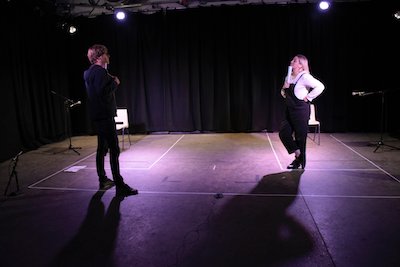
    I had limited knowledge of Universal Credit before starting the research in 2017, when community members began voicing their concerns about the roll out. I was shocked by the insights gathered during the fieldwork in 2018. Credit was the culmination of a collaboration with Cap-a-Pie theatre company, who we approached with our ideas. Unfortunately, plans for a theatre production were shelved in April because of the COVID-19 restrictions. The team worked hard to create an online rehearsed reading of part of the play, brilliantly performed by two skilful actors. Supported by a panel of knowledgeable and passionate local and national speakers, we negotiated the challenges of an online post-show discussion. We were unsure how it would go, as we joined by more than 400 people who watched the 40 minute extract from the play. Over 150 stayed for the live Q&A and discussion afterwards, providing thoughtful comments and feedback.

    During the panel discussion following the evening performance, the writer, Laura Lindow, commented that she hoped the audience could “hear her own fury in the poetry”, hoping it would “smack everyone around the ears”. The reactions from the Q&A suggest that participants felt similarly moved, describing Credit as: 
    “Brilliant, angry, urgent work”

    “Extremely powerful and incredibly important”

    “I had tears in my eyes watching this”

    “Heart breaking, but very realistic. Especially poignant was the reference to starvation”

    “The reference to loan sharks took my breath away, eased so gently into lives, but so destructive”
    The questions, observations and exchanges with panel members were insightful and engaging. The audience challenged us as researchers to think about how to move beyond the echo chambers of online events to ensure the messages reach those in positions of power to affect change.

    As a result of this screening, we have made more connections, with people who have claimed Universal Credit, and academics doing research in related areas. Maria Thompson was one of the people we met following the post-show discussion and you can read about her personal experience of Universal Credit in this accompanying blog post. We also made links with people keen to use the arts to communicate their research findings, engage others in wider debates and challenge us to act: 
    “Lyrical, hard hitting, honest writing”

    “Beautifully written and acted”

    “Speaking truth to power is all we can do and this play was a great example”

    “How do we fight negative perceptions of benefit claimants? How do we continue to show the need for a supportive welfare system?”
    In the feedback, participants commented on the importance of changing negative stereotypes about claimants. At the end of the evening performance, Patrick Butler, social affairs editor from the Guardian newspaper called on revisions to UC to be made with the input of claimants who have direct experience of the system.
    “For me, a decent social security system is a citizen's right. It has to be effective, it has to be humane. I think it has to be an entitlement, not a privilege or reward for good behaviour.”
    We’re keen to use the play in different ways to stimulate debate and reflection. Emotions clearly have played a role in galvanising action. We have received requests to use it in staff training and to promote arts/research collaborations. As one participant commented:
    “We don’t make best use of art in public health. This is such a moving and poignant play. My hope is that one day we can get it into mandated training in the NHS.”
    The diversity of claimant experiences has increased enormously since COVID-19, but the stigma is far from disappearing according to debt charity Turn2Us. Recent reports by the National Audit Office (2020) and the Work and Pensions Select Committee suggest that there is still a long way to go before vulnerable claimants’ rights are protected. Perhaps this is the moment for government to show they have listened to those voices who have long campaigned for meaningful change, to ensure that Universal Credit provides the safety net that people need in times of adversity and to keep the changes to the standard allowance introduced as a result of COVID-19.

    If you missed the last performance of Credit, we are planning to show more performances in 2021, so keep an eye out. We are working on a short film with extracts from the rehearsed reading of Credit and interviews with those who support claimants, who were involved in the research, script development and production. This will be available on YouTube in the New Year. We will continue our efforts to raise awareness of this important issue and look forward to working with others keen to do the same.


    Acknowledgment

    We are grateful to the funders, Newcastle University, Catherine Cookson Foundation and Arts Council Lottery Fund for their support and flexibility.

    Friday, 2 November 2018

    Why dramatic enquiry as a form of public engagement gave me my most enjoyable week as an academic

    Guest post by Santosh Vijaykumar, Vice Chancellor’s Senior Research Fellow, Northumbria University

    “It’s important to eat healthy but we also need sugars, although in moderation.” These are not the words of an expert on BBC’s Food Programme, but a Year 5 student at Chillingham Road Primary School in Newcastle, fidgety and impatient for the next activity to resume. And the caution came about not through a series of in-depth interviews by public health researchers such as myself, but through ‘dramatic enquiry’. Brad McCormick and Katy Vanden from Cap-a-Pie, the theatre company that developed this approach, describe it as one that “places participants in a fictional scenario where they are in-role from start to finish. They are placed in a situation where there is no clear ‘right’ or ‘wrong’ answer and where they have to express their own beliefs and values.”

    Brad directing the drama

    Over the course of a week, we conducted four such dramatic enquiry workshops with three schools in Newcastle, each session comprising approximately 30 Year 5 pupils (10-11 year olds). Although these workshops were part of the public engagement strategy of my ongoing ESRC funded project* that seeks to understand psychological drivers of confidence in probiotics products, we decided to explore broader themes beyond just probiotics. The aim – suggested by Brad and Katy and gladly welcomed by us – was to avoid a top-down health education approach, and instead utilise this engagement format to get children to think and talk about fundamental issues: why do they eat what they eat? Can food be healthy and unhealthy at the same time? Should the government control what foods we consume? What is the relationship between responsibility and choice in the context of food? We used these themes as a funnel to eventually involve the children in a discussion on probiotics.

    Each workshop starts with the children seated in a semi-circle. As soon as they are settled, Brad catches them off guard. He starts shaking hands with one of them and says “I ate at your restaurant last week, superb!”, and then goes to another: “I read your article on raw food diets, so interesting!”, and so on and so forth, setting off a series of giggles or muffled peals of laughter among the children as they make sense of the goings on. Soon after they are informed that they are all members of the Food and Drink Committee of Arcadia (a fictional country) and are asked to take a pledge of allegiance to Arcadia. A series of dramatic games such as DilemmaRama, Shake Hands/High Fives and Stop/Go has now completely warmed them up to Brad and to each other. This lays the foundation for their enthusiastic participation in the ensuing small group activities, each of which is followed by a philosophical discussion or reflection.

    The small-group activities include identifying and enacting their favourite dish in a freeze frame, contemplating what it means to be healthy, and explaining the rationale for why they agree or disagree with a certain food policy from different viewpoints (as a journalist, scientist, manufacturer, etc.). In the second half of the session, they are introduced to a fictional probiotics product, to develop a commercial for it, and then asked to make a decision about whether it should be sold after exposing them to news articles reporting conflicting evidence related to the health effects of probiotics products.

    As a researcher, observing these sessions live can be tough – it’s so much fun, you want to participate with the kids and leave taking notes for later. And taking notes is not easy either, even after you have committed to it. For, you realise quickly that every activity and philosophical discussion reveals a new strand of thought among children, a sharp, counter-intuitive insight, or a larger ethical perspective. As someone who is newly baptised to this form of public engagement, I realise how uninhibited and enthusiastic kids are in terms of participating in what would seem tricky terrain for adults, and how even seemingly quieter kids volunteer to voice their opinions. I am beginning to understand how this approach lends itself to unearthing perspectives of greater complexity and nuance than a traditional research method, such as a survey or experiment would. Essentially, if one were to invest in dramatic enquiry as a means of formative research for investigating a public health problem, they would reap a rich, and dare I say endless harvest of research questions worth investigating in a format that’s fun, engaging, and revelatory.

    If you are waiting to know what we learned from these workshops, I will share links to a podcast series (on this blog) sometime over the next few weeks. These podcasts will give you a more detailed idea about dramatic enquiry, how the participating children benefited from it, and some perspectives that emerged about how kids perceive scientists, media, and the industry that really surprised us.

    When I first arrived into the UK academic environment in February 2017, public engagement seemed a policy or media interfacing, translational exercise for researchers. Being involved in dramatic enquiry has now broadened my personal understanding of public engagement and triggered a cascade of ideas about creative ways to get a conversation going with communities whose lives we seek to positively influence through public health research. And, without a doubt, it has given me my most enjoyable week in eight years as an academic. Brad and Katy deserve some chocolate cake, but in moderation.

    *Acknowledgment: This project was funded by the Consumer Data Research Centre, an ESRC Data Investment, under project ID CDRC 085, ES/L011840/1; ES/L011891/1.