Showing posts with label Housing. Show all posts

Friday, 11 October 2024

Going beyond bricks and mortar to 'Up' awareness of healthy homes

Posted by Natalie Forster, Philip Hodgson, and Alex Kirton from Northumbria University

“It’s just a house”. Words famously uttered by Mr Fredricksen in the much-loved film, ‘Up’. But does this really do justice to the complicated relationships we have with our homes?

There’s a steady stream of evidence now showing that housing characteristics (including issues like overcrowding, poor insulation, damp and mould) can impact on physical and mental health. And far from being just a house, we know that where you live can make a big difference to how socially connected you are, the services you can access and how safe you feel.

This increasing awareness of home as a social determinant of health has led to many local authorities introducing initiatives to address housing-related issues. Yet, evaluations often look at the effects of specific housing enhancements in isolation, and more understanding is needed of how healthy homes services can tackle housing issues in their widest sense.

The Healthy Homes service in South Tyneside is an advice and signposting-based service that aims to address people’s home-related health needs. As Fuse researchers we set out to explore its benefits for residents. We worked with the service to create a data collection tool to help capture the financial benefits of advice given, alongside interviews to explore the experiences of those who used the service.

So, what did we find?

Our analysis showed that the service was reaching people with multiple and complex housing needs, including those related to health conditions, low income and age. We found the personalised approach taken by the service to be especially successful in engaging proactively with older homeowners (like Mr Fredricksen!) who often presumed they wouldn’t qualify for housing improvements, didn’t want to be seen to be asking for help or didn’t want to lose their independence. And without this support they would have otherwise put off seeking help until a crisis hit.

Some participants were keen to swap their bricks and mortar entirely and relocate to a more suitable home or area. For others, longstanding and deep psychological connections to homes and areas meant a move would be too painful. In these circumstances, changes to home environments made through the service (like getting extra bannisters or a stairlift, and support to address cold, damp and mould) helped reduce worries about housing problems and avoided the need for unsuitable coping strategies like coming down the stairs backwards. Participants described how small housing modifications – even getting a different lightbulb when you’re worried about your electricity bills – made a difference both practically and emotionally, helping them resume ordinary and taken-for-granted aspects of life like going to bed upstairs with your partner. Yet, for many, the service also worked on a different level, with the face-to-face interaction and warm and friendly manner of staff helping people feel heard and cared for.

Ultimately, the project illuminates the complex and varied issues and feelings people have around their homes. It underscores the importance of services which see beyond the bricks and mortar of houses and consider the importance of people’s “homes”, such as those offered by South Tyneside Council, but also the crucial role that other (non-home focused) services can play in addressing the interactions between homes, health and wellbeing. Many people we spoke to were unsure of what support they are entitled to and so there’s a need to raise awareness and take up of healthy home enhancements before problems escalate. Finally, both the stories of our participants and Mr Fredricksen demonstrate how our relationships toward our homes can shift and change over time, highlighting a need for long-term and sustainable models of housing care and support.


Natalie Forster, Assistant Professor, Social Work, Education and Community Wellbeing, Northumbria University and co-lead of the Fuse Health Inequalities Research Cluster

Philip Hodgson, Assistant Professor, Nursing, Midwifery and Health, Northumbria University

Alex Kirton, Research Fellow, Northumbria University


Image by Pascal Laurent from Pixabay

Friday, 1 April 2022

Breaking down barriers in End of Life care

Posted by Colette Hawkins, Consultant in Palliative Medicine, South Tees NHS Foundation Trust

Health research achieves extraordinary things. There are countless examples of life-changing, disease preventing or curative treatments. These are rightly celebrated and have shaped our society, as well as our expectations, around health and illness.
Break Through 1995 "Walls break hearts, hearts break walls" by 
Pierre Marcel via Flickr © 2011 (CC BY-NC-ND 2.0)


But what about people living with a life-limiting illness and those approaching end of life? Health professionals often struggle to move away from an interventional, disease-focussed approach to a more holistic, person-centred approach. This risks unwanted intervention and missed opportunities for choice. This is mirrored by health research. In the UK, just 0.21% of health research is focussed on palliative and end of life care.

The reality is that people living towards end of life really struggle and whilst this may be directly related to ill-health, it is often issues of daily life which incapacitate them. These are generally overlooked by health professionals.

Since 2017, I have been involved in running research on legal needs in life-limiting illness. One element of this is social welfare legal needs (SWL): matters of daily life for which the law defines rights, entitlements and protections. In the context of life-limiting illness, the ‘big three’ are issues relating to money, employment and housing. These are prevalent, impacting most people in some way. However, their greatest impact is on people who are already disadvantaged, for example those experiencing homelessness, financial insecurity or debt, socially excluded or marginalised groups and people with multiple physical and/or mental illness. These people experience the most SWL needs, are most affected by them and are least likely to access support successfully.

Social welfare legal needs will often be presented to health professionals, wrapped up in a person’s physical complaints, but missed in favour of a focus on disease. So where else could they go? Our foundation research scoped the system of support for these issues. A wide range of services beyond health and social care provide advice and support for SWL needs, including charities, community groups, advice sector, legal services, social services, Jobcentre, housing groups, social prescribing, statutory organisations and more.

But if we took months to map the system (and it’s still growing), can we expect people in vulnerable and difficult situations to find their way?

Funded by the NIHR Applied Research Collaboration (ARC) North East and North Cumbria (NENC), our research has engaged members of the public with lived experience, as well as service providers in Gateshead, to find an effective system response to social welfare legal needs. We used Human Learning Systems, an approach which accepts the complexity of a system and supports co-produced responses to need founded on continuous learning.

Engagement of people with lived experience of life-limiting illness and SWL needs proved critical to the value of this project. Focus group discussions revealed the scale of the challenge to manage SWL needs. The walls they faced included not feeling heard, not knowing where to go for help, lack of information to help themselves, lack of responsibility from professionals or services, poor communication between services and long delays to resolution (or non-resolution). These insights, along with those of service providers, told us that the ideal system response should be founded on relationships and offering information, problem solving and a joined up approach. This seems quite obvious and appropriate, so why are there so many walls?

Attitudes and structures 

The walls come from two main sources: professional attitudes and structures. Attitudes obstruct when they use labels, stereotypes or assumptions, treat illness, not people, miss opportunities for honest discussion, restrict choice through failing to listen to priorities and wishes, overlook responsibility for holistic needs and forget to work in partnership. Structures maintain silos and fragmentation of care with the lack of clear routes to advice and support, boundaries to access through geography, referral criteria or social context, expectations that patients and carers will self-advocate and navigate themselves and missed opportunities to capitalise on the expertise of others. These walls obstruct identification and management of social welfare legal needs and amplify inequalities in care towards end of life.

We believe interprofessional learning is a route to breaking down these walls. We use short stories of experience instead of ‘sterile’ clinical cases, and facilitate discussion to explore what matters most, and the approaches to meeting needs in an inclusive, respectful and effective way. Initial pilots have shown that this is a route to closer integration of services, although the latest pilot, within the ARC project, also highlighted the challenge of engagement with online learning, accentuated by the pressure and workplace fatigue linked to COVID-19. Feedback showed that people felt too busy to attend or just didn’t turn up on the day.

We have secured a NIHR End of Life Partnership grant which we are using to co-design a research strategy for evaluation of system-wide learning around SWL needs in life-limiting illness. We are re-evaluating what we mean by ‘end of life’, pushing beyond traditional views and including people at risk of premature death. We are broadening our insight into the inequalities and prejudices embedded within care of people who may be living towards end of life. We can see the walls; our task is to break them down.


This project ‘Integrating care to meet social welfare legal needs in life-limiting illness. Qualitative investigation of a multi-agency, complexity-informed intervention’ has been funded by by the National Institute for Health Research (NIHR) [Applied Research Collaboration North East and North Cumbria (NIHR200173)]. The views expressed are those of the author(s) and not necessarily those of the NIHR or the Department of Health and Social Care.


Image: Break Through 1995 "Walls break hearts, hearts break walls" by Pierre Marcel via Flickr © 2011: https://www.flickr.com/photos/21063155@N06/5409729627 (CC BY-NC-ND 2.0)

Friday, 3 April 2020

The mental health of the nation has never been so under threat

Posted by Fiona Duncan, Postdoctoral Research Associate, Durham University

Lockdowns and self-isolation, increasing care demands, concern for others, and ongoing uncertainty are exacerbated by a reinforcing 24-hour news and opinion cycle, playing havoc with our stress and anxiety levels and battering our overall sense of wellbeing. The coronavirus crisis.

However, for many people across the country, a feeling of their wellbeing being under attack is not new. Experiences of overwhelming debt, long-term unemployment, insecure housing, poverty, food insecurity, social isolation lasting months or years and/or discrimination are common and can collectively chronically diminish the mental health of the public as a whole.

These normal and extraordinary circumstances raise the question of how the mental health of an entire population can be supported, or in other words, how can we improve public mental health (PMH)? Over the past year, I have had the privilege of investigating this complex question in detail within Fuse.

My work has primarily involved mapping interventions currently being delivered to improve PMH, exploring models of good practice and searching for emerging innovative ideas. This focused on two areas – Blackburn with Darwen, and Redcar and Cleveland – which were selected on the basis of mental health statistics and varying characteristics (e.g. rurality, deprivation etc.).

I found this mapping exercise a great opportunity to get out and about and talk to people who organise and deliver projects to improve PMH on the ground in their local area. I spoke to a lot of very helpful people who were very passionate about the work they did and it was inspiring to hear about the variety of innovative projects that were being provided for people in these local authority areas to promote good mental health and prevent mental illness.

One of our main findings was that interventions to prevent social isolation and loneliness by providing various social activities were most common. This may reflect how recent campaigns surrounding reducing social isolation in older adults have influenced policy. Although a multitude of individual, family, community and structural factors influence PMH, not all of these were addressed. Does this suggest a wider variety of interventions are required in the future or would it be better to develop interventions which have the ability to target multiple factors at the same time? For instance, interventions which increase social networks within society, self-confidence or self-efficacy may enable people to deal with many different threats to their mental health without having to use a specific service.

An interesting finding of this mapping exercise was that a lot of these interventions either hadn’t been evaluated at all or only a very basic evaluation had been carried out so there was very little objective evidence regarding their effectiveness. This is something we hope to address in the next phase of the project by carrying out in-depth evaluations of promising interventions, including their potential to be delivered on a larger scale.

One final finding from this mapping that seems more relevant now than a month ago is that very few of the public mental health interventions could be delivered exclusively online. The implications of this are that the vast majority of the projects that we identified will most likely be suspended and many people who depended on this support will be left to cope alone. Moreover, people who are currently struggling with the isolation of lockdown have reduced options for help. Although Public Health England has published online guidance for the public on the mental health and wellbeing aspects of coronavirus there is an urgent need for supporting remote delivery or new online interventions within the next few weeks (of course, recognising that not everyone has access to these).

We also need to consider what we are all going to do when the COVID-19 situation is over. Will the country’s mental health bounce back to normal levels without any help, perhaps benefitting from the shared sense of community and new ways of living and working developed during the crisis? Or, will we need to work hard to develop and deliver services at the individual, family, community and structural levels to repair the damage that has been done to the mental health of the nation?


This work was part of WP4 of phase one of the NIHR SPHR Public Mental Health programme.  Information about the wider programme is on the SPHR website and was a collaboration of researchers based at Fuse, UCL, Imperial College London and Cambridge University.

Friday, 20 October 2017

Monopoly money, pitching to the converted, and sending Mr Grumpy away happy: doing home and healthy ageing research differently

Dr Philip Hodgson, Senior Research Assistant, Northumbria University


Endings are rubbish, right?  Whether it be a great novel, play, film, TV series – there’s always that feeling that no matter how things are pulled together, it will never be as good as you have pictured in your imagination.  And then, you know, it just ends…

It was perhaps with this in mind that we decided to take a different approach in the last of our four workshops on home and healthy ageing.  Rather than guest speakers being invited to share their knowledge and prompt discussion, the project team attempted to summarise and pitch their ideas for future research back to the group (think Dragons’ Den).  This proved to be challenging, as the previous sessions had been so rich that even synthesising them into brief slides was difficult, never mind placing them in a strategic context for the participants to critique and reflect upon.  Yet, three key themes were identified.  These were in addition to the concept of a ‘home’ being more than just bricks and mortar but personal/psychological, physical and social/environment space(s) – an idea that we used as a starting block in week one and illustrated below.

More than just bricks and mortar
'Home' illustration used in the seminars 
The key themes were:
  • Policies and contexts: not only a tension between housing and health policies, but also the need to consider market and narrative factors influencing housing and health decisions;
  • The life course approach: the need to think about housing as an individual pathway, in which preventative measures and services are considered before crisis point;
  • Transitions and soft services: the need for support to be available as and when people experience key housing and life changes, such as reduced physical health, retirement, or the loss of support networks and being able to navigate different services on offer.
However, this is where we’d like to leave you with a cliff hanger: rather than going through each of themes in-depth (fans of this series will have to wait for our spin off…  er, research papers for that!), we’d instead like to reflect on our process at this stage.  These sessions took a slightly different approach as, rather than being a series of open seminars with presentations that people could dip in and out of, we invited several key individuals to attend each session in turn.  The reasons for this were many, but primarily we wanted to ensure that a diverse range of backgrounds were represented throughout (housing providers, architects, academics, local authority workers, homelessness workers, etc.) to go on a learning journey with us as a research team.  This meant that by the time we reached the final session, there was enough of a shared understanding that we could make the most of the group’s commitment to the project – we would be actually able to start to pin down quite complex concepts, practical issues and, hopefully, future projects.

We tried out different formats to structure the discussions: from world cafés, to games (with Monopoly money!) with researchers pitching ideas to mock panels, which worked to various degrees but always ensured a lively debate.

Do not pass Go. Do not collect £200
Pitching ideas with Monopoly money 
There were, of course, some difficulties.  As I’m sure everyone reading this will know, it is a lot to ask of a practitioner to take one morning out of their schedule, let alone for four seminars.  As a result, engagement had to remain a constant focus and I spent much time nervously lingering by the registration desk hoping for just a few more name badges to disappear before we started!  It was also a challenge in terms of managing the conversations during the sessions: you want all voices to be heard in such a diverse group but we all needed to be pulling in the same direction by the end.

Yet, by the final session, the rewards were immense.  Not only were we able to pitch ideas to a group who had already undergone some of the same learning as us, but this gave everybody the confidence to relate the complex theoretical issues to their own practice (allowing us to capture the breadth of what was possible).  It allowed us to discuss concrete projects, and leave the session with a sense of trust that networks were in place to actually deliver on them.  Perhaps most importantly we found that, what started as a broad idea, was something of relevance across the housing and health sectors.  Even the grumpiest of the project group (naming no names) left the day with a spring in their step.  For that alone, everyone who attended deserves some massive thanks…

So, who needs endings, when we can all just sign up to the sequel?

To be continued…


Photo 2: By James Petts from London, England (Monopoly) [CC BY-SA 2.0 (https://creativecommons.org/licenses/by-sa/2.0)], via Wikimedia Commons

Friday, 26 May 2017

Postcards from a public health tourist #1: Montréal, Québec, Canada

Posted by Clare Bambra, Fuse Associate Director and Professor of Public Health, Newcastle University

A few of our academics are lucky enough to have the opportunity to travel around the world to speak at conferences or explore collaborations - all in the line of work and the translation, exchange and expansion of knowledge of course.

The least we could expect is a postcard, to hear all about the fun that they're having while we’re stuck in the office watching droplets of rain compete to reach the windowsill…

So here’s the first from Professor Bambra.


Dear Fuse Open Science Blog,

I spent late April and May 2017 as a visiting Professor at the Institute of Research in Public Health, part of the University of Montréal. I was the guest of Professor Louise Potvin who is a leading international researcher in health promotion and the editor-in-chief of the Canadian Journal of Public Health. She was an amazing and generous host.

Me (bottom right) with Louise Potvin (centre) - an amazing and generous host
I had a really enjoyable and fruitful time both intellectually and socially at the Institute. It is an exciting place to be as a health equity researcher. They are leading the field in health equity research in Canada and alongside the other Montréal universities and the municipal public health agency, they have set up the joint Lea Roback Centre which examines health equity. There I was honoured to deliver the annual Paul Bernard lecture on social determinants of health – you can watch a video of the talk here.

I was also an invited speaker at the World Health Summit speaking alongside Ilona Kickbush (World Health Organization Europe) and Connie Clements (Canadian National Collaborating Centre on the Determinants of Health - NCCDH) about the legacies of the Ottawa charter. The NCCDH is tasked with integrating health equity and the social determinants of health into Canadian public health practice. Jane Philpott, the Minister of Health for the Federal Canadian government also gave an inspiring speech at the summit about the importance of the social determinants of health and her journey from being a family doctor to a leading politician.

Montréal experienced unprecedented rain and flooding while I was there
Montréal is an amazing place to visit, an extremely vibrant multicultural bilingual city with great restaurants and a very welcoming feel to it. It was very exciting to be there in 2017 as Canada celebrates 150 years and Montréal celebrates its 375th year. However, weather wise Montréal experienced unprecedented rain and flooding while I was there with many homes and businesses evacuated and the army required to provide emergency support.


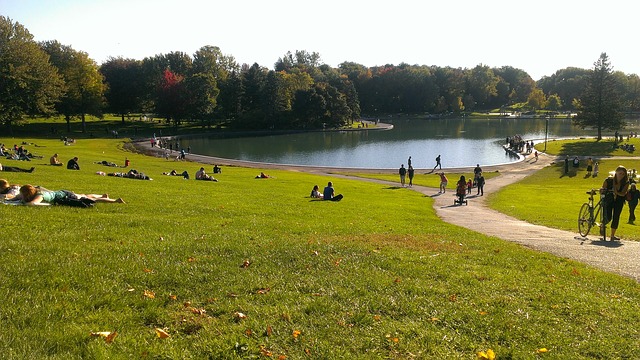
Montréal is also an interesting place from a public health perspective, it’s a city with a lot of green spaces and a variety of parks and recreation areas. It’s a very safe place to be, and very walkable - unlike other areas of North America. Public transport costs are low with a flat rate on the Metro and the buses of around $3. They also have a shared bicycle scheme called Bixi - which is free for a cycle ride of up to 30 minutes.

However, Montréal and Canada are of course not without their own public health problems. There was very visible homelessness. The Montréal health gap is 11 years between the most and least affluent neighbourhoods and most significantly, the Inuit and indigenous populations have average life expectancies of only 70 years - 10 years less than the average Canadian. Inuit health is understandably a key focus for health equity researchers in Montréal - including former Fuse associate Mylene Riva. She is now researching the effects of housing conditions and food security on the health of Inuit people in Arctic Quebec.

So a very useful visit for me and I was able to make good future connections for the Fuse Health Inequalities research theme.


Photo attribution:

Friday, 19 May 2017

Beyond ownership: a lifetime of housing and health

Posted by Natalie Forster (Fuse Senior Research Assistant) and Philip Hodgson (Senior Research Assistant), Northumbria University

Last month saw the second ‘Home and Health’ research interest group meeting hosted by Northumbria University and Fuse (supported through the Fuse pump-priming fund). Building on the key message that a greater emphasis is needed on understanding the relationship between housing and health – particularly in the absence of strong public health messages on the subject (such as 5-a-day) – the focus here was on good examples of practice.

It's a race to own a “forever home” but circumstances change with age
Participating in these sessions is continually challenging us to rethink the values that we attach to the idea of ‘home’ in society, and the implications this has for supporting people through housing choices and transitions. The narrative surrounding housing is often singular and fixed – the race to find and own a “forever home”, relocate to a bungalow in retirement and then manage the difficulties of ageing-in-place as ill health and social isolation increase in later life. Yet the reality painted by the examples here posed a more complex problem: how do we identify and sustain a model of housing that allows our homes to reflect and adapt to the wide range of transitions experienced by individuals? The services presented - Safe and Healthy Homes (North Tyneside Council); Housing for older people (Derwentside Homes); Wellbeing and mental health service for adults (Crisis); and Wellbeing for Life Newcastle’s Age-friendly Cities - all reflected the huge range of resources and circumstances people bring to their homes, and the need to be flexible in supporting them. Yet questions remain around how public health approaches can best prepare people to make decisions about the housing which will best support their health in later life, before a crisis occurs. One idea from the meeting was to assess future housing needs alongside the NHS health check.

The second ‘Home and Health’ research interest group meeting
Just as the much-publicised difficulties for younger people to get on the “property ladder” are prompting a shift to much less-settled housing patterns in that age group, the transitions faced in ageing are varied enough to suggest the need for more person-centred thinking. Just as retirement and later life can threaten some with social isolation and ill health, for others it can be a period of vibrant reconnection with their communities. Once again, a lifecourse approach which encourages people to engage with these transitions before they occur (e.g. groups organised by employers to maintain social contact after retirement) may help give them the agency to maintain a healthy home environment throughout their lives. Innovations are emerging which propose alternatives to traditional living arrangements (for example, housing schemes where university students live alongside older people for free, in exchange for undertaking voluntary work). The first Home and Health session illustrated how the lack of equity held by future generations can be problematic, as this cannot then be leveraged to pay for care later on. However, discussion in the second meeting prompted thought about whether present forms of home ownership (and even home design) might be too inflexible, and whether other more innovative practices could allow people a more fluid approach to tenancy.

In focusing on preparing people to make informed housing decisions, it is important not to emphasise individual responsibility at the expense of addressing structural inequalities in the choices people have available to them. Those living in poverty are likely to experience an impoverished range of choices. People are often segregated in housing according to their age and socio-economic status and some groups, such as people experiencing homelessness may ‘settle’ for housing that is inadequate for their needs, as they feel they have no alternative. This led to a ‘lightbulb moment’ for further research from group members – the need to map out the different routes people take through housing options over the course of their lives, and the menu of choices available to them depending on their circumstances at different points in time. Perhaps this will allow services to enable people to have a different form of ownership in housing – the ownership of the housing journey through the transition of our lives, rather than simply owning a building.


Photo attribution: "Home, health and happiness / Bile Bean Manufacturing Co". See page for author [CC BY 4.0], via Wikimedia Commons

Friday, 31 March 2017

Do public health practitioners make good fire fighters?

Posted by Peter van der Graaf, AskFuse Research Manager, Teesside University

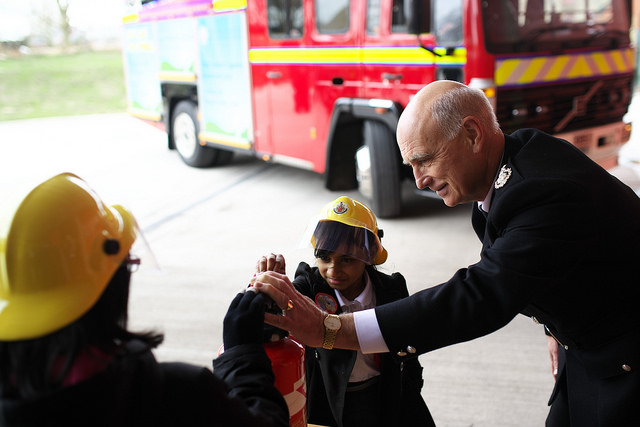
Given ongoing budget cuts and diminishing local capacity, one might be forgiven for thinking that soon public health practitioners will only be responding to emergencies, such as disease outbreaks and substance abuse epidemics. Fighting these public health fires would leave little time and resources for prevention and working with other public organisations. An event co-organised by Fuse, Durham County Council and Darlington Fire & Rescue Service recently proved quite the opposite: fire fighters and other public organisations are very capable of ‘doing’ public health.

Can public health researchers learn a trick or two from fire fighters?
The increasing focus of the Fire and Rescue Services on prevention over the last 10 years has seen the development of innovative approaches that support public health: from helping people with dementia, to tackling child obesity and getting people active (for some excellent examples, see the Local Government Association (LGA) report Beyond fighting fires).

In Durham, the Fire and Rescue Service implemented so-called Health and Wellbeing Visits. As part of home visits to check fire safety, fire fighters ask residents questions about their health and wellbeing (e.g. about falls, smoking and alcohol use, heating and loneliness and isolation) and provide them with advice or signpost residents to relevant services to address any health concerns.

Over the past year (Feb 2016 – Jan 2017), no less than 15,732 Health and Wellbeing Visits have taken place with over 1,800 referrals to various services in Durham and Darlington, accessing vulnerable residents that are often not on public health’s radar. Because of their trusted reputation, the Fire and Rescue Service can get behind the front doors of these people and help them access health services. Perhaps not surprisingly most referrals relate to loneliness and isolation, with an ageing population keen to live at home independently but with a social care system lacking resources to support these people in and outside their homes.

Even the police is getting in on the act of public health prevention with partnerships being established between health and the police across the UK to support, among others, suicide prevention and reduce alcohol-related harm, as was recently illustrated in a Public Health England paper.

In turn, public health practitioners are taking on new activities that were previously deemed outside of their scope. For instance, the Durham County Council’s public health team is actively supporting energy efficiency improvement schemes (such as Warm and Healthy Homes), in recognition of the link between excess winter death and cold houses. Poor quality housing, low incomes and high energy costs result in residents having to choose between food or fuel. To prevent residents from having to make that choice, council officers are providing tenants at high risk (e.g. people with cardiovascular and respiratory conditions) with new central heating, boiler repairs, home insulation and energy saving advice.

This blurring of boundaries between public professionals is not new, but public health moving back into local authorities has created opportunities for linking prevention activities across a wider range or organisations. The event provided many other examples of this, e.g. GPs prescribing boilers to patients with long-term conditions and Citizens Advice providing welfare rights advice to elderly residents.

This new boundary blurring builds on existing policy initiatives, such as Making Every Contact Count and Health in All Policies, which all involve the wider public health system. Participants at the event made it clear though that this is not a simple cost-saving exercise, allowing councils to pass the public health buck to other parts of the system. Instead, these new partnerships are characterised by a genuine exchange of knowledge and practices between public organisations at the front-line. It highlights a new way of working that recognised joint priorities and the values of other professions to achieve these priorities through the sharing of resources and by taking on new roles. As Professor David Hunter outlined in his presentation at the start of the event, these new partnerships require a different form of leadership, which is less hierarchical and formal, not so much concerned with Key Performance Indicators and commissioner-provider splits, but more focused on the value of relationship building, trust and 'soft' skills.

The event provided a platform for looking at these new partnerships and the evidence for their effectiveness. If anything, it highlighted a challenge for public health academics to research these new partnerships: how to make sense of the contribution of each partner in a system where boundaries are rapidly blurring? Maybe public health researchers can learn a trick or two from fire fighters.

Find out more about the event: Creating Healthy Places in the North East: the Role of Fire and Rescue Services and Fuel Poverty Partnerships

Photo attribution: "Rochdale Fire Station Opening Day" by Manchester Fire via Flickr.com, copyright © 2014: https://www.flickr.com/photos/manchesterfire/13288225965/

Friday, 24 March 2017

Beyond bricks and mortar: re-thinking home and health

Dr Philip Hodgson, Senior Research Assistant, Northumbria University

In a time of continued public spending cuts, policy drivers to age in place (to grow old in the home or in a non-institutional setting in the community) and an increasing ageing population, the challenge to ensure that people can live longer and healthier in their own homes is growing. Yet, solutions for this, when a host of other factors – the development of housing to meet commercial rather than health pressures, future generations with little equity in housing that can be used to fund future care, the prevalence of a belief in a “forever home” – are difficult to identify.

That was one of the core messages discussed at the first ‘Home and Health’ research group hosted by Northumbria University and Fuse (via the pump-priming research fund) last month. This brings together researchers, practitioners and policy makers interested in the impact of housing on health. The seminars aim to foster a core working group, culminating in the development of concrete plans for collaborating on further research in this area. Building on insights from previous Fuse Quarterly Research Meetings (‘Creating Healthy Places in the North East’ in October 2015 and ‘Reuniting Planning and Health’ in April 2016), the seminars aim to take stock of existing evidence on how housing conditions can promote or impede healthy ageing, and identify gaps for further research. Our first seminar explored priorities for research from a policy perspective and we were thrilled to welcome Gill Leng (National Home and Health Advisor to Public Health England) to present.

Gill Leng, Public Health England, presenting at the Fuse research meeting
Gill highlighted the need to think about ‘homes’ (a term which people identify with and encompasses emotional connections to a place of living) rather than just ‘housing’ (a term used when referring to the workforce and describing bricks and mortar). While evidence and action often focuses on the risks posed by unhealthy homes, little is done to address unsuitable or precarious housing. Although most older people own their homes, these are not necessarily healthy. The challenge we face is to identify an approach to housing which allows its support to develop and mirror our own changing health needs through the life course. This is not just a case of using adaptations and facilities, but reframing how we conceptualise the home as a physical location, a part of a wider social environment and a personal / psychological space.

The conceptual spaces of home illustration used in the seminars 
Group discussions focused on this issue (among others). At the personal level, a tension was found between the maintenance of private life and the role of external sources of support. Current policy relies on care delivered by family members, but this can in turn cause problems for individuals without these links. Also, how do we develop mechanisms that initiate people’s thoughts on the best accommodation for them before they reach a point when they’re in crisis / a change is urgently needed and driven by necessity rather than choice (e.g. when people with dementia still have capacity to make an informed choice)? At the level of buildings and services, these problems take on a more concrete form, where the permanence, inconvenience and cost of a housing adaptation to support health is seen more as an obstacle to avoid rather than an enabler in the future. Meanwhile, within social and environmental factors, the current focus of housing policy on volume, rather than quality of public space, and a decrease in social cohesion were both noted as linked factors that could influence health as the population ages. The depth of discussion at each of these levels highlighted the importance of issues of home and health. But to address it we need to move beyond the ideas of bricks and mortar, and consider how we think about and use our homes to facilitate our health and wellbeing as individuals and a wider society.


Our first seminar explored priorities for research from a policy perspective
All of these issues will be picked up in future sessions, which will focus on good practice, existing research in the field and funding opportunities. We’ll be continuing to blog about each of these events and their outcomes, so please check back for more information soon.

If you are interested in joining the group and attending future seminars, please contact Phil Hodgson philip2.hodgson@northumbria.ac.uk

From left: Peter van der Graaf, Monique Lhussier, Natalie Forster, Phil Hodgson
and Dominic Aitken; organising team for the home and health research interest group

Thursday, 26 November 2015

Housing and health: aligning stars or weathering a perfect storm?

Posted by Peter van der Graaf, AskFuse Research Manager

Last Wednesday I attended the annual conference of the Housing Learning and Improvement Network (LIN), which explored how the housing and health sectors can work more closely and effectively together.

The case for this partnership was well made by the keynote speakers: not only are there already strong historic roots but the present day challenges faced by both sectors make them obvious partners. With the recent move of Public Health to Local Authorities, the central message from the Marmot review - improving social determinants is central to improving population health and wellbeing - has taken on a new significance for public health commissioners faced with the needs of other local government departments.


Housing is one of the key social determinants and has received much attention in recent Government policies that seek to redefine the remit of health. For instance, the Care Act outlines an overarching vision for adult social care and emphasises various housing solutions that can help to support the integration of health and social care.

The NHS has also recognised the role of housing and has proposed a new care model around housing in its Five Year Forward View, such as the Healthy New Towns initiative. As Neil Revely from Sunderland City Council and Chair of the Association of Directors of Adult Social Services (ADASS), proclaimed: “the stars seem to align once more to bring housing and health together”. For this reason, ADASS has worked closely with NHS England to develop a Memorandum of Understanding on Housing and Health.

However, the same politics that bring both sectors together could be stumbling blocks for the partnership to take off. As members of the audience pointed out, prevention services have been hardest hit by austerity measures and many local authorities have decommissioned the services that are now most needed. With a growing and ageing population, demand is likely to increase while resources are more likely to decrease with continued budget cuts. Moreover, the ageing population means an increase in complex needs that cannot be addressed by a prevention agenda alone and in which (supported) housing is just one part of the solution.

In short, the current political and financial climate might provide a perfect storm, making it difficult for housing and health to work effectively together. The balance might be decided by the ability of the partnership to access new resources and powers, for instance, by claiming a stake in the North East devolution plans, mirrored on the success of the Greater Manchester Devolution Agreement that includes an MOU on Health and Social Care worth £6bn each year (see also the Fuse blog post by Patrick Vernon on this topic).

To make the business case for these claims, the partnership will need to build the evidence base around the impact of a joint housing and health programme in the North East. An abundance of data is available to highlight the problem areas and populations, supporting the call to arms, but limited evidence was presented at the conference on what housing providers, public health teams and care providers can effectively do to address these problems and populations. Much of the current evidence is anecdotal and in the format of case studies.

The need for more evidence of the impact of the home/housing on health and wellbeing was also reiterated by Gill Leng from Public Health England (PHE) and this is an area where Fuse could provide helpful support. What research evidence do we have available within our Centre to support the North East partnership between housing and heath? What support can we provide in developing the monitoring and evaluation framework for their programme? The recent Fuse Quarterly Research Meeting (QRM) and corresponding research brief on health and housing is a first step in this direction and the upcoming QRM in April 2016 on planning and health another, but more practical evidence is required to align the stars of local policy, practice and research and help the North East health and housing partnership to weather the current political and financial storm.

Photograph 'Incoming Storms No. 2' by Mike Lewinski via Flickr.com © 2013: https://www.flickr.com/photos/ikewinski/9448689046

Did you enjoy reading this post? If so, please vote for Fuse in the UK Blog Awards 2016 by clicking here

Wednesday, 21 October 2015

Back to the Future: health and housing working together

Guest post by Patrick Vernon, Health Lead, National Housing Federation

The launch of the Due North report in September 2014 was a rallying cry for greater priority around tackling health inequalities with a manifesto in how all stakeholders and system players can recycle effectively the £136 billion in public spend for transforming services. Since May 2015 we have a new Government with a clear agenda on austerity, public sector reform and the revitalisation of the devolution agenda with the mantra of the "Northern Powerhouse". In the middle of this maelstrom has been the Government's approach to tackling the housing crisis with the immediate reduction of 1 per cent in rents over the next four years, the extension of the Right to Buy and the ongoing impact of welfare reforms. These changes have become a major turning point in the history of the social housing sector along with the changes in supported housing.


Although there is an emotional, political, moral and (increasing) evidence base for the links between poor housing and health, the gap between fact and reality still feels light years away. There is a clear role for the social housing sector to work with the NHS, social care and employers in transforming services and care pathways to meet demographic, lifestyle and morbidity changes in the population. A step in the right direction is the Memorandum of Understanding (MoU) to support joint action on improving health through the home which was signed by all stakeholders in the health and housing sector in Autumn 2014. The document highlights at a strategic and national level the key principles and actions around a collective approach around delivery. However, what is currently missing is a regional approach that is embedded in the devolution agenda. This is already happening in Greater Manchester as part of DevoManc (giving greater powers to the combined authority working in partnership with a directly-elected Mayor). In the North East we need to ensure that housing and health are part of the devolution plans.

Thus the Fuse Quarterly Research Meeting (QRM) ‘Creating Healthy Places in the North East: the Role of Housing’ on Tuesday (20 October) in Darlington is the start of another important chapter in the health and housing trilogy (or may be pre-sequel) on how health, social care and housing can work together in meeting the needs of local communities in a period of austerity. All the speakers at the event had - in essence - the same message: a need for strengthening partnerships and system leadership along with collating, translating and communicating the evidence for cost-effective interventions.

The event not only had international examples from the Netherlands and New Zealand but also local case studies from a number of housing associations such as Thirteen Group (Middlesbrough Recovering Together project), Gentoo Housing (Boilers on Prescription), Home Group (social prescribing), Tyne Housing (working with homeless people in the community) and South Tyne side Homes (sheltered accommodation for residents with dementia). The case studies illustrated how better commissioning and service integration can make a difference to the lives of people.

The challenge in a period of reduced budgets and further potential cuts in the forthcoming Comprehensive Spending Review is how we make the business case and get the right people in the room to transform services, building on the spirit and vision of the Due North report in tackling health inequalities and achieving greater health equity.

I think one of the key outcomes of the QRM is for Fuse to act as broker between service providers, commissioners and service users in creating a strong North East dialogue between the health, social care and the housing sector. This can be achieved by networking, sharing good practice, supporting development of the evidence and, finally, an advocacy role in influencing the devolution agenda.

Thus, if Marty McFly and Doc Brown pop out of their DeLorean DMC-12 again in the future, we can share with them the successful journey that we have undertaken in ensuring that the housing sector is a valued, respected and key partner in delivering better health and social care services and an integral agent in tackling the public health agenda.

For more information visit the National Housing Federation website or read the Fuse research brief accompanying this event: Creating healthy places in the North East - the role of housing.


Photograph 'Back to the Future DeLorean Time Machine' by AdamL212 via Flickr.com © 2007: https://www.flickr.com/photos/lautenbach/1393032429

Did you enjoy reading this post? If so, please vote for Fuse in the UK Blog Awards 2016 by clicking here