Showing posts with label methods. Show all posts

Thursday, 5 February 2026

More than quit rates - our smoking research was about complexity, trust, and real voices

Posted by Angela Rodrigues, Associate Professor at Northumbria University, and co-lead of the Fuse Behaviour Change Cluster, and Team

By the time we wrapped up our final interviews, we felt a mix of pride, exhaustion, and curiosity. Pride because we’d managed to complete a complex mixed-methods evaluation across four pilot sites. Exhaustion because, well, public health research never seems to run smoothly, and we had a few recruitment bumps along the way. And curiosity because we still weren’t sure how all the pieces would fit together. This was a mixed-methods evaluation of a 20-week smoking cessation service in the North East & North Cumbria.

The context: why this service mattered

When we first got involved, the idea was simple: evaluate an enhanced stop smoking service designed specifically for people living with severe mental illness (SMI). People with SMI experience stark health inequalities. On average, they die 15-20 years earlier than the general population, largely due to chronic physical health conditions rather than psychiatric causes. Smoking is a major reason for this health gap, and it is something that can be changed. Yet many tobacco dependence services do not adequately meet their needs.


The service offered more support than the standard provided by the local council, combining behavioural support with medication-assisted treatment over 20 weeks. It followed a ‘cut down to quit’ model, and aimed to be person-centred, flexible, and responsive.

Our approach: mixed methods and lived experience

We used a mixed-methods approach, including quantitative analysis of recruitment and outcomes, surveys with service providers, qualitative interviews with both staff and service users, and a review of Smokefree Taskforce documents. We started with a well-defined plan, but the process taught us to embrace flexibility. Recruitment was slow. Referral pathways shifted. Data systems didn’t always talk to each other. And finding service users willing to be interviewed was harder than we expected.

One of the most rewarding aspects was working with our Lived Experience Advisory Panel (LEAP). They helped shape our protocol, refine our interview questions, and interpret findings. Their input reminded us why we do this work. It’s easy to get lost in methodological frameworks, but the real insight often comes from lived experience. One LEAP member words stuck with us:
“You need to understand what it’s like to be told to quit smoking when smoking is the only thing that gets you through the day.”
What we found: complexity at every level

The Behaviour Change Wheel framework (figure 1) helped us make sense of what was happening on the ground. Service providers used a range of strategies, including medication, leaflets, nicotine e-cigarettes, planning, and social support. Most felt capable and motivated to deliver the service, but some found it more harder than expected. Complexity was a recurring theme, as illustrated in one advisor words:
“It’s not just about smoking, it’s about everything else going on in their lives.”
Figure 1: Visual map of key themes identified in our study

We also saw how broader systems shaped delivery. Some sites had strong links with primary care; others struggled. Data recording was patchy. Staff wanted more training, not just in smoking cessation, but in understanding mental health complexity more broadly. And while the service was designed to be flexible, that flexibility sometimes created confusion. Who was eligible? How long should support last? What counted as a successful quit?

For service users, the benefits were clear: 
  • better physical and mental health
  • financial savings
  • fewer unpleasant smells
  • and fewer side effects than expected.
But staying engaged was tough. Motivation fluctuated. Life got in the way. Participants reminded us regularly that behaviour change doesn’t happen in a vacuum:
“I wanted to quit, but then my meds changed and everything fell apart.”
The challenge and value of qualitative work

Personally, we found the qualitative interviews both the most challenging and the most illuminating part of the process. Some participants were open and reflective; others were more reserved and required extra support and reassurance to feel comfortable speaking openly, particularly service users. We learned to be flexible in our approach, arranging a casual phone call with service users to build a rapport prior to the interview.

Despite the difficulties recruiting service users, once they were engaged in the interviews, all were eager and willing to share their experiences. We learned that it is important to develop a level of trust with service users, and that patience and empathy can encourage openness and in-depth understanding.

There were challenges too. We had hoped for more interviews with service users, more consistent data, and deeper engagement with those delivering the service. In particular, connecting with service deliverers proved difficult, largely due to the time lag between service implementation and the research evaluation. By the time we began our research, staff had moved on, memories had faded, and priorities had shifted, making it harder to capture a full and accurate picture of delivery. But public health research rarely hands you a neatly packaged story. What it does offer is insight into systems, into people, and into the messy, unpredictable reality of trying to improve lives.

Why it worked: partnership and collaboration


Looking back, we think the study worked because it was grounded in genuine partnership. The Smokefree NHS strategic team were incredible, collaborative, responsive, and deeply committed to making the service work.

We built relationships with service providers who shared their experiences openly, with LEAP members who challenged our assumptions, and with service users who trusted us enough to talk. Within our research team, we supported each other through the inevitable ups and downs. That collective effort, across roles, organisations, and lived experiences, is what made the project feel meaningful.

This experience has already shaped how we’re approaching future projects. Next time, we’ll go in with clearer expectations, more flexible timelines, and a deeper appreciation for the emotional labour involved, not just for us as researchers, but for the people we’re working with.

Researching smoking cessation in people living with severe mental illness isn’t just about measuring quit rates or evaluating service models. It’s about recognising the complexity of their lives, earning trust, and ensuring their voices shape the research process. More than anything, this project reminded us that we, as researchers, must be more attuned, more patient, and more willing to adapt.


About the authors:

Dr Angela Rodrigues, Associate Professor, Northumbria University, and co-lead of the Fuse Behaviour Change Cluster

Dr Lauren Hoult, Associate Lecturer, Researcher in Behaviour Change & Public Health, Northumbria University

Prof Katie Haighton, Professor in Public Health and Wellbeing, Northumbria University

Friday, 19 December 2025

Spark ideas, inspire change and fuel innovation - sharing research creatively

Posted by Ella Anderson, Fuse Public Involvement and Engagement Manager, Newcastle University

Have you ever wondered how to share your research in a way that engages with new and diverse audiences? Are there ways to share your work in a way that reaches the people it was designed to serve? If the answer is yes, then read on!

Research can spark ideas, inspire change and fuel innovation but all too often it gets buried in academic journals and dense reports that few people read, particularly the communities the research intends to serve. So what if there were more engaging, creative and accessible ways to share your findings? From interactive infographics and animations, to events, theatre and podcasts, Fuse researchers are re-imagining how to communicate their work with wider audiences.

Whether you are looking to captivate the public, influence policy makers or engage fellow experts, this post explores some creative ideas to make your research truly resonate.
  • In the first instance, reach out to any people who you have worked with as part of your research including public partners, young people, charities and voluntary organisations. What would they like to see? Actively liaise with and listen to the communities your research is intending to serve - how do they want findings presented?
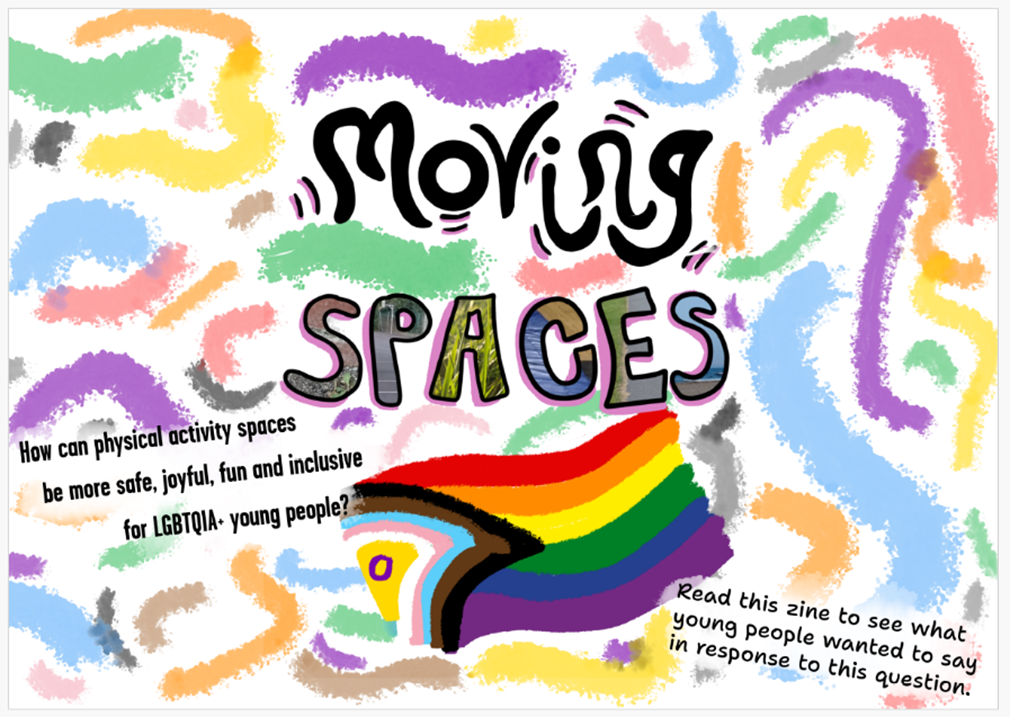
  • Infographics and visual summaries can be a useful way to transform your findings into a simplified visual. Infographics are a graphic representation of information, data or knowledge to present complex content quickly and clearly. Emma Adams has worked with More than Minutes to summarise research about co-located services in a visual and accessible way. Steph Scott worked with Nifty Fox - specialists in visual storytelling - to produce a flipbook drawing on content from the ‘Divided Households’ report relating to children and parental imprisonment. Fuse Deputy Director Amelia Lake, Shelia Visram and team co-produced the Hyper Energy drink leaflet with young people to communicate key findings. Or what about a zine (DIY-style booklet or magazine) like this, ‘Moving Spaces’, co-produced by Caroline Dodd-Reynolds with LGBTQIA+ young people, exploring how physical activity spaces could be more joyful and safe.
    • Theatre and performance is an exciting way of communicating research. For example, Cap-A-Pie and researchers including Mandy Cheetham were involved in developing an emotive theatre production called Credit, based on stories and experiences of people living on Universal Credit.
       
    • Creative and engaging community events and workshops (with catering if you have budget!) are always a popular option. The more interactive, accessible and collaborative the better. Use the opportunity to close any feedback loops with people, charities, organisations who you have engaged with throughout the research. Show how you listened, what you found out, how findings are applicable to people's lives and work, and what happens next... keeping people in the loop is so important. Be sure to include opportunities for plain language Q&As and conversations, both informal (through breaks) and formal (via panel discussions). At one of Fuse’s International Women’s Day events, there was an optional gong bath for people attending the event. Although a sound bath may not have been directly linked to the research, the event was about creating a welcoming, inclusive and ‘safe space’ for people to come together.
    • If you have the budget, consider having an event doodled in real-time. We have had colleagues who have worked with Camille Aubry, Josie Brookes and Nifty Fox who offer this skill. Get in touch with us if you would like any other recommendations when sourcing quotes.
    • Have you thought about gamification of research findings or using interactive digital tools? You can create interactive quizzes or clickable maps to allow people to explore findings in an engaging way, applying insights to local contexts. Simulation tools allow public partners and individuals to visualise the impact of different public health interventions based on research findings. Take a look at Joanne McGrath's online Maze, which provided an interactive resource portraying women’s narratives of multiple exclusion, homelessness and accessing support.
    • Storytelling has long been a way to share information. Case studies lend themselves well to this, as human-centric narratives show the research in action. It can demonstrate how a specific person or community has benefitted or will benefit from the findings. Stories are a different way to 'humanise' data or translate findings in a way that is appropriate for the intended audience. For example, Cassey Muir and Ruth McGovern’s co-produced Twinkle Twinkle Arti children’s story book communicated messages about parental substance use in a gentle, age-appropriate manner. The book is available as a physical copy, an electronic copy and also has been made into a CBeebies style story time video.
    • Are there any opportunities for the use of creative methods throughout the project that you could bring together as part of an exhibition in a public space e.g. library, community centre, schools? Documenting the research and experience through photography, crafts or art can be a creative way of capturing interest and making research more understandable. Sarah Martin-Denham’s crochet blanket made up of 2,999 squares representing the number of children excluded every day from schools in England (2021/22 academic year) is a great example of this, and has been on a national tour engaging with 24 organisations - including the Children’s Commissioner Office and multiple councils.
    • You can share bite-sized research or findings through social media channels using visuals, animations, short videos - or even livestreaming to provide information and engage with people in real-time. Have a hashtag at the ready to encourage people to join the conversation and share perspectives. In a similar vein, there are opportunities to share research and knowledge via 'Ask Me Anything' style forums, for example as seen on Reddit. Yes, this is low cost but it comes with risks as questions are unpredictable! However, it is worth flagging as an option and is a creative, ‘non-traditional’ way to share research and answer questions.
    • Blogs, like the award-winning one you are reading right now, are a great way to share your research. Posts can make complex information more accessible to a wider audience. It allows you to present findings in a clear, engaging and informal style, reaching readers outside of academic circles, including policy makers, practitioners and the wider public. For guidance and support in writing your own blog post, contact Fuse Communications Manager, Mark Welford: m.welford@tees.ac.uk.
    • Could you take your research findings to places in the local community? Fuse colleagues Balbir Singh (Artistic Director of the Balbir Singh Dance Company) and Paul Chazot displayed art works from their Unmasking Pain project in pop-up displays in GP surgeries and a repurposed shop in a shopping centre. There is now a dedicated space at the Grainger Market, Newcastle-upon-Tyne called the Being Well Place, which is a place to connect and engage with the local community.
    • Do you have the option of translating materials/outputs for different audiences, and communities with diverse language needs? Translated summaries and visuals e.g. in multiple languages, work well and ensure inclusivity in dissemination. For example, Nicola Heslehurst worked with local designer, Twentyseven Design to develop English and Welsh infographics relating to pregnancy outcomes.
    • And finally what kind of Fuse Public Involvement and Engagement Manager would I be if I wasn’t promoting the wonderful and award-winning public partner-led podcast Public Health Research and Me?! Accessible, informative, flexible and friendly - this is a great way to share quality research with a diverse and international audience. 

    There are many more creative ways to share research and remember - there is a no ‘one-size-fits-all’ approach to sharing your findings. Always take into account your research topic, your findings and above all your target audience.

    Why not send us a message today if you have used a creative or innovative way to share your research or findings? We would love to hear from you and find out more ways to promote and share high quality research.


    Following strong interest from Fuse members, we have launched a Community of Practice (CoP) focused on creative research, involvement and dissemination.

    The first meeting will take place in the New Year. Places are limited for the first event but please register or get in touch (info@fuse.ac.uk), as there will be plenty more opportunities in future!

    A CoP is a network of people who share common interests and goals, creating a space for knowledge exchange, learning, and mutual support.

    Friday, 25 July 2025

    What did you eat yesterday? The messy science of measuring what we eat

    Posted by Dr Kath Roberts, Senior Lecturer in Public Health Nutrition, University of York

    Ask anyone what they ate yesterday and you’ll likely get a pause, a guess, and maybe a laugh. That’s the reality nutritional epidemiologists (scientists who study how diet affects people’s health) work with every day. Measuring what people eat sounds straightforward but is surprisingly complex. And yet, understanding dietary intake is central to advancing nutrition science, improving public health, and shaping government dietary guidelines.

    Increasingly, attention is turning not just to what people eat, but how well they eat overall. The concept of diet quality, looking at the overall balance, variety, and healthfulness of the diet has become a cornerstone of nutrition research. It also offers a way to bring together fragmented messages about nutrients, food groups, ultra-processed foods and national guidelines into one meaningful measure. But defining and measuring diet quality is just as tricky as tracking individual foods.

    This blog reflects on the practical and scientific challenges of defining, collecting, analysing and interpreting dietary data and reflects on how improvements in methods and technology are shaping the future of dietary data.

    Why measuring diet is so difficult

    Capturing dietary intake data involves a tangle of practical and methodological problems. First, there’s the human element. People often don’t remember exactly what they ate or may selectively forget. This recall bias is especially tricky with foods eaten on the go or in small amounts. Then there’s social desirability bias. People want to give the “right” answers, especially if being questioned by an actual human (as opposed to filling out a diary or survey). So while a few honest folk might confess to having a chocolate bar for breakfast and a midweek takeaway, many prefer to report kale and quinoa - or at least a committed adherence to the holy ‘five-a-day’ grail. The result? A gap between what people say they eat and reality.

    Then there’s the issue of burden. Some methods, like weighed food diaries, ask a lot of participants. Accurately weighing and logging every bite is time-consuming and often tedious. It may even change behaviour just to make recording easier. My own experience some years ago with logging foods through a free and widely used app was that it made me lean towards buying and consuming processed foods that I could just scan the barcode of, rather than cooking from scratch or shoving whatever was in the fridge onto a plate as I usually would. Other methods like food frequency questionnaires (FFQs) and 24-hour recalls try to reduce this burden but come with their own compromises.

    Tools of the trade: strengths, weaknesses, and trade-offs

    FFQs remain popular in large epidemiological studies because they’re cost-effective and can capture habitual intake over time. However, they rely on memory and a fixed list of foods that might not reflect cultural or personal variation, only capturing, by design, data on what they ask about. 24-hour recalls offer more flexibility and less reliance on long-term memory, especially when conducted with structured prompts like the USDA's multiple-pass method. But they only capture a snapshot in time and one day rarely reflects the whole story. Diaries, whether weighed or estimated, provide rich detail but at a cost. They demand motivation, literacy, and a willingness to record every meal, snack, and nibble without altering usual habits.

    Brief screeners, like the US Healthy Eating Index or dietary diversity scores, offer pragmatic options for surveys or interventions. They’re easier to administer and analyse, but they tend to gloss over the nuance of full dietary patterns. And they still face questions of sensitivity and specificity - are they really measuring what matters most for health?

    So what is a healthy diet anyway?


    Amidst the tangle of dietary data collection challenges, there is the important question of ‘what is a healthy diet’? This is where the idea of diet quality comes in. Rather than counting single nutrients or fixating on particular foods or food groups, diet quality looks at the whole picture: how balanced, varied, and aligned with health guidelines someone’s overall eating pattern is. It’s become a cornerstone of nutrition science and epidemiology, but it’s surprisingly hard to pin down and turn into a clear, usable measure for research.

    This also matters for public health messaging. People are bombarded with a range of different messages. We have the NHS Eatwell Guide, the High Fat Salt Sugar (HFSS) advertising restrictions, front-of-pack nutrition labelling, SACN Dietary Reference Values, rising concerns about ‘ultra-processed foods’ - and these don’t always line up. Each of these frameworks is based on different criteria and assumptions; food-based, nutrient-based, processing-based - which can send mixed messages and make public health advice feel inconsistent or overwhelming. Without a consistent definition of what a ‘healthy diet’ looks like, it’s easy to get confused.

    That’s why the idea of diet quality is so powerful: it can provide a coherent construct that integrates these strands and translates complex nutritional science into something more intuitive and holistic. But the reality of defining and measuring diet quality is messy. Efforts like the UK-DQQ show promise, offering a simple, food-based screener aligned with national guidance, derived from empirical dietary patterns and validated against both biomarkers (e.g. blood and urine) and nutrient intakes. But even this needs updating as dietary trends evolve and must be validated in diverse population groups.

    The trouble with comparing apples to oranges (or diet scores to diet scores)

    No universal agreement on how to define a ‘healthy diet’ contributes to variation between studies, making it hard to compare results or synthesise evidence. Some researchers focus on diet quality scores (like HEI), others on dietary diversity, others on adherence to national guidelines or cultural patterns like the Mediterranean diet. These varied definitions mean that two studies can report on ‘diet quality’ but be talking about quite different things.

    The Mediterranean Diet Index and its adaptations, such as the relative Mediterranean Diet Score or alternate Mediterranean Diet Score, are widely used in Europe. These scores capture core elements of Mediterranean dietary patterns: a lot of vegetables, pulses, fruits, nuts, olive oil and fish; moderate alcohol drinking; and low amount of red meat and dairy. In countries like Spain, Italy and Greece, these tools have helped characterise regional diets and assess traditional dietary patterns in relation to cardiovascular disease, cancer, and overall death rate.

    European examples such as the EPIC cohort (European Prospective Investigation into Cancer and Nutrition) show how differing dietary patterns and assessment methods between countries can complicate analyses. EPIC responded by conducting extra studies to adjust for differences in how diets were measured across countries.

    The cost of precision

    Gold-standard methods like weighed food diaries or duplicate meals offer unmatched detail, but they’re expensive, burdensome, and often impractical for large groups. Even with trained coders and food composition databases, analysis is slow and complex. Participants may forget to record, misestimate, or change how they eat.

    And food diaries only capture a few days raising the question: are those days typical? People might eat differently on weekends, holidays, or when they’re sick. So we need multiple days, and sometimes biomarkers or repeat measures, to estimate what is usual. That’s time and resource intensive. And even then, we must account for people who report eating less than they actually do.

    In the UK, the National Diet and Nutrition Survey switched from 7-day weighed diaries to 4-day estimated ones, to computerised 24 hour recall methods. These changes reflect the challenge of balancing accuracy, rigour, realism and resource constraints.

    From challenge to opportunity: smarter tools, better insight

    The good news? We’re getting better. Digital tools like Intake24, MyFood24 and ASA24 allow self-administered, online 24 hour recalls with built-in prompts, portion images, and food databases. These tools reduce burden and standardise data collection. AI is also being explored for recognising foods from images, helping reduce reliance on memory and self-reporting.

    Dietary pattern analysis is also on the rise. Rather than fixating on individual nutrients, researchers are looking at how foods cluster together using tools like principal component analysis. These approaches acknowledge that we eat meals, not molecules and that whole-diet patterns may offer a more stable and interpretable link to people’s health.

    What now?

    Dietary data collection isn’t perfect and may never be. But it’s getting better. By balancing scientific rigour with practical constraints, and by using emerging technologies and analytic strategies, researchers can produce meaningful insights. Whether it’s via smarter recalls, better biomarkers, or dietary pattern-based analysis, the goal is the same: to understand how what we eat affects our health and how we live. That journey starts with listening carefully, thoughtfully, and with an appreciation for just how tricky it is to answer the simple question: “What did you eat yesterday?”

    So the next time you try to recall what you ate yesterday, remember you're not alone - even science is still figuring it out!

    Friday, 31 January 2025

    Our experience co-producing a zine with LGBTQIA+ young people

    Posted by Scarlet Hall, Research Assistant, Durham University and Fuse

    We have been collaborating with LGBTQIA+ young people in the North East and South Yorkshire, through Fuse led research funded by the NIHR School for Public Health Research (SPHR) exploring how physical activity spaces could be more joyful and safe. This blog describes how the ‘Moving Spaces’ zine was made and makes suggestions for those wishing to co-produce creative research outputs.

    This blog draws from reflective conversations between Caroline Dodd-Reynolds (Fuse), Mary Crowder (University of Sheffield) and Shevek Fodor (Sounds Like Shevek) during the making of the zine. It is written with contributions from Caroline, Mary and Shev.

    Seek continuity between research methods and research outputs

    At the start of our research project we knew we wanted to host a series of research workshops and then co-produce a physical activity resource with the young people we were working with. After seeing the results of using visual creative approaches in our workshops, we knew we wanted a highly visual and creative resource that would connect and resonate with people.

    Shevek Fodor
    Working with the right designer and format

    We sent an advert out to LGBTQIA+ networks for a graphic designer who would understand the lives of diverse LGBTQ+ people, in particular young neurodiverse people. When Shevek Fodor shared their zines with us our eyes and hearts lit up. We invited Shev to lead on making a collaborative zine. We chose the zine because of its DIY ethos, radical history of self- publishing and as a vehicle for self or group expression of thoughts and feelings.

    What is a zine?

    Zines originated through people writing letters and sharing information about things they were driven and passionate about. They’ve been used as a way for people who were overlooked within mainstream media to have their voices heard.

    Practice reciprocity

    We thought the young people would be inspired meeting Shev, a young neurodiverse queer artist. For Shev, this role offered a new opportunity to experiment with collaborative zine-making in a research setting. We offered hands-on guidance (budgeting, finance systems, mentoring) as part of co-production principles of reciprocity. We introduced Shev to the young people prior to the zine session and their curiosity was piqued…’is this person one of us or one of them.…?’

    Involving artists at later stages of research is not straightforward. We aimed for a balance between giving Shev space to design and lead the sessions while also sharing our own knowledge, ideas and learning. The trust built in earlier research workshops meant we could also pass on an established  quality of ease in the group when it came to the zine making workshops.

    Trust the creative process of each person and the group

    Shev laid the zine making table out in a beautiful, organised chaos of found images, stickers, magazines and cards. Young people made creative contributions to the zine, inspired by earlier conversations about physical activity. They found ways to take part and to also hang out in their safe space – which we were encroaching on. Some people chewed and chewed over the right words to express themselves with contributions coming together at the end. One person got stuck and did their piece later with a youth workers’ support. Two zine contributions were made that involved multiple voices, through Scarlet documenting conversations around particular images. Scarlet also made contributions from a researcher’s perspective. Shev took these contributions – writings, drawings and collages – and wove them together into a first draft.

    Allowing the time for collaborative editing – it brings difference into conversation

    We shared this draft with the youth groups, the SPHR and Fuse communications teams and academic colleagues. We received a lot of feedback – the zine was provoking conversations. The young people gave detailed feedback on what they liked, what was missing, and sequencing of ideas. They spoke the words that became the introduction and expressed their small hopes for a few people to engage with the zine. There was a thoughtful conversation across the youth groups, about whether to personalise individual contributions or depersonalise to show that it could be any LGBTQIA+ young person saying this.

    Academic colleagues also read and shared reflections with us, including feedback that policymakers might struggle to engage with the zine’s non-linearity and various people suggested we include a page of key take-home messages and recommendations ‘so things don’t get lost’. The young people responded to this feedback saying that people needed to listen and pay more attention to the messages that were implicitly in there. This dialogue led to the writing of a framing document for the zine. 

    Value queer embodied theory and practice 

    Another dialogue arose around authorship. Some reviewers found it confusing not knowing who had written what and had a strong wish to know who – a young person or adult – had written different bits – a desire perhaps for a clear identification of distinct voices. For Scarlet, a queer researcher, the ‘queer polyvocality’ (Brice et al., forthcoming) of the zine – many voices that weaved together in to more than sum of their parts – reflected queer practices of overflowing notions of stable identity, disrupting predetermined binaries and unsettling ideas of authenticity (Lescure, 2023).

    This somewhat aligned with ideas from the young people. For some, there was a wish for attribution so ‘friends and family would know I made this’, and there was also a wish for zine contributions to be unnamed ‘because any queer young person could have made any piece’ and ‘we made it all together’.

    One young person said they appreciated that researchers ‘weren’t butting in with your opinions but also giving your views when right to do so’ and another adding ‘it’s important that the adults’ voices are also in there as you were part of the conversation, and some adults have also had similar experiences’. The young people decided to make creative doodles in place of signatures which were mixed in with academic doodles/logos to show the talking and making and editing together – the polyvocality – of the zine making process.

    Through this collaborative editing process (over three months), the young people began to converse indirectly with interested adults who wanted to help, including with the funders. These conversations happened with the young people keeping editorial control. We sense this may open up and shape more generative future encounters between these young people and further influential adults.

    Indeed, some of the young people involved have made a plan to hand deliver zines to local venues around town (hairdressers, surgeries etc.). It seems empowerment and co-ownership inadvertently leads to physical activity!

    Explore the zine

    To find out more about this work, please contact Scarlet scarlet.hall@durham.ac.uk or Caroline caroline.dodd-reynolds@durham.ac.uk 


    References

    Lescure, R.M., 2023. (Extra) ordinary Relationalities: Methodological Suggestions for Studying Queer Relationalities Through the Prism of Memory, Sensation, and Affect. Journal of Homosexuality, 70(1), pp.35-52.

    Brice, S. Marston, K. Wright, R. and Hall, S. (forthcoming). ‘Mycelial Love’ in Harrison, P. Joronen, M. and Secor, A. Love and Catastrophe in Cultural Geography. Edinburgh University Press

    Friday, 5 January 2024

    Using board games to increase inclusion in research - a trivial pursuit?

    Posted by Lesley Haley, AskFuse Research Associate, Teesside University 

    Did you play any board games over the holidays? As we scrabble into 2024, have you ever thought about how they could be used as a way to engage people in your research?

    I hadn’t, until I went to a recent Creative Methods in Research conference, where Kath Maguire (University of Exeter/NIHR School for Public Health Research) showcased how using board games in research was anything but trivial! Kath demonstrated the concept of using board games in public involvement and engagement can increase participation by reaching people less comfortable with standard formats of engagement or data collection, such as interviews or questionnaires.

    Kath brought examples, like a “pairs” game used with public partners to break down barriers of understanding around the jargon used in research. Pairing research jargon, concepts or acronyms (‘randomised control’, ‘double blinded’, ‘SPHR’, ‘NIHR’ for example) with their plain English explanations allowed all participants to probe the underlying assumptions and constructs, and perhaps to reduce the power imbalance between the knowledge giver (usually researchers) with the knowledge receiver (usually public partners). And of course this game can be used to redress that balance by public partners sharing their knowledge with researchers.

    However, the most surprising game that Kath has used in increasing involvement was the repurposing of that classic multicultural game, Snakes and Ladders.

    While AskFuse (the responsive research and evaluation service run by Fuse) created the pictured Snakes and Ladders game as an interactive way to explore successes (Ladders) and setbacks (Snakes) of getting research knowledge used in practice, Kath has taken the game to a whole new level.

    Kath has a wealth of experience in using board games as a creative method of inclusion to reach people less comfortable with more literacy-based research methods. They bring a blank paper board and a variety of stick-on snakes and ladders as a visual prompt to generate discussion and reflection using the metaphor of the game to explore a range of experiences. The aim is not necessarily to play the game, but to use the building of a bespoke “game” to reflect and “illustrate” narratives and experiences.

    Participating in Kath’s interactive workshop was, for me, a real game changer. We explored how using snakes and ladders enabled discussion, reflection and inclusion. We could design our own individual game to tell our story, or do it collaboratively. We used the game layout as a metaphor for exploring changes through time or to illustrate a “journey” (for example, exploring access or barriers to health services). It allowed us to describe and reflect on different pathways or starting points. Being a physical representation of our narrative meant that, at times, “gaps” emerged which led to questions around “what was happening here?” and “what are we missing?” The grid could also used to reflect emotional journeys in response to a given (research) question or situation. We explored how focussing on a game allowed for different viewpoints to emerge and for less vocally confident people to engage without having to “carry” a conversation or justify their experience. The game squares could be filled with comments, contributing factors, and ideas. We reflected that the snakes and ladders could be reconfigured for creative re-imagining of time/place/situations - “what would happen if we did this”? And of course the complexities of the research process can be illustrated through the metaphor of Snakes and Ladders.

    At the end of the session, there was a tangible product and graphic representation of the research question, the process and the outcomes of the exploration. We reflected that over several sessions, the game would perhaps change and this progress could be captured in photos. The “game” could also then be used creatively to disseminate the research (Coon et al 2022).

    We also explored the risk that a gaming method for engagement or data collection, especially in the “Snakes & Ladders” format, could be seen by some people as trivialising the serious business of research, as in the UK it is perceived as a child’s game. However the game is not all it appears. Originally known in “Moksha Patamu”, it was a philosophical game of actions and consequences for adults developed in ancient India (Museum of Gaming 2015). Over time and locality, the game has evolved into other versions, with snakes transformed into “drainpipes” or “chutes (Start the Week 2023). So the game has a tradition of being adapted and re-purposed and perhaps we should not be shy of re-purposing it to make research more accessible?

    Since Kath’s workshop, I’ve had a quick look around to see if there are other researchers using gaming. While there is literature on using board games in health education and promotion (Nakao 2019) and public health policy (Spitters 2018) there seems less on the use of board games in public involvement and engagement in health.

    Of course, snakes and ladders doesn’t have the monopoly on being the only board game that can be used. So, do you use board games in your research to engage with people and communities? What's been your experience of what works for who? How do you pitch it? What have you found the setbacks and successes of using board games as a creative way of engaging people and communities?

    As you scrabble to fit all the board games back into the cupboard after Christmas, maybe it’s time to reflect that participatory board games in research could be for the rest of the year too, not just for Christmas.

    With thanks to Kath Maguire for the interactive workshop and to SPHR for funding attendance at the conference.


    References:

    Coon, J.T., Orr, N., Shaw, L. et al. (2022) Bursting out of our bubble: using creative techniques to communicate within the systematic review process and beyond. Syst Rev 11, 56 https://systematicreviewsjournal.biomedcentral.com/articles/10.1186/s13643-022-01935-2

    Kath’s work:

    Museum of Gaming Newsletter (2015) Issue 2 Snakes and Ladders History. Accessed 2 Jan 2024 Available at: https://www.museumofgaming.org.uk/documents/Newsletter2.pdf https://www.museumofgaming.org.uk/index.cfm

    Nakao M (2019) Effects of board games on health education and promotion” board games as a promising tool for health promotion: a review of recent literature BioPsychoSocial Medicine (2019) 13:5 https://doi.org/10.1186/s13030-019-0146-3

    Spitters H.P.E.M , van de Goor L.A.M, Juel Lau C, Sandu P , Eklund Karlsson L , Jansen J, van Oers J.A.M (2018) Learning from games: stakeholders’ experiences involved in local health policy Journal of Public Health | Vol. 40, Supplement 1, pp. i39–i49 | doi:10.1093/pubmed/fdx149 https://academic.oup.com/jpubhealth/article/40/suppl_1/i39/4925598

    Start the Week: Playing Games (2023) BBC Radio 4 Monday 4th December 2023 09.00 Available at: https://www.bbc.co.uk/sounds/play/m001t2xq?partner=uk.co.bbc&origin=share-mobile (Accessed 8 Dec 2023)

    Friday, 1 December 2023

    Getting creative to make research more accessible and inclusive

    Posted by Victoria Bartle, Fuse Public Partner

    We were throwing balls of wool around, picking picture cards to describe ourselves and having a thoroughly inspiring time. This was not your typical research conference!

    It was day one and keynote speaker Pam Burnard was encouraging us to challenge the system using creative methods to subvert common assumptions.

    Many of the researchers at the International Creative Research Methods Conference in Manchester are independent, not linked to a specific university or funder and this allows them to approach research from a variety of unusual and unfamiliar angles.

    The conference is the brainchild of Dr Helen Kara: independent researcher, author, teacher, speaker and creative research methods (CRM) expert. Helen’s vision was to bring together the global CRM community to share knowledge, promote understanding, enable networking and have fun!

    After the first day's keynote, I went to see Nicole Brown, a researcher looking at fibromyalgia, a condition that I also have. She had asked people living with fibromyalgia to collect objects to describe how the condition made them feel. One person had taken a photo of her chair - a really comfortable armchair, with a blanket, a table beside it holding drinks, snacks and distractions. This could have been a picture of my own living room! Due to chronic pain and fatigue I have what I call my 'nest'. I have reclining sofas with a side table with all of my remotes, chargers, creams, spare meds, thermostat, drinks, snacks, book, switch, lip balm (etc.) just so that everything I need is within reach and I don’t have to move too much or cause myself too much pain. I found the picture really impactful and saw the potential for objects, artwork and abstract thinking to be able to describe conditions like fibromyalgia which is extremely difficult to explain to someone who doesn’t have it. Using objects as data to assess and evaluate was really interesting and a methodology that I wasn’t previously aware of.

    We were then given the task of picking some cards to describe ourselves as researchers.

    These are the lego cards I chose to describe me during the sessions by Nicole Brown, who works with objects as data in research.

    The skydiver because I feel like I just ask to do things and hope for the best, the singer because I like to present and talk about PPI (Patient and Public Involvement) in research. 

    Black widow because she’s a superhero and fights for people who can’t and Rocket because he’s been made up with tech and I felt like he’s a disabled superhero :)


    Jargon buzzing

    On day 2 the Lawnmowers Theatre Company, run by and for people with learning difficulties, brought out jargon buzzers which were amazing! The characters pressed the buzzers every time someone used a term or word that they didn’t understand. I really want to use these in PPI meetings in the future, but we might not get anything done having to explain all the acronyms and research language that is often used!

    Making a 'zine'

    I didn’t know anything about zines and wasn’t aware of the Madzine project to help people with mental health conditions to explain how they feel, get things out and be creative. The session was really interesting giving us some history on zines before we were able to create our own. I made one about a project that I have been working on using some paper with stars on to represent the PPI Group members. A black page for accessibility as we all had different barriers to involvement and some of them were difficult to address, hidden or unknown. Some of the zines that they showed us were amazing: creative, visual, unusual, thought provoking and touching. They plan to create a mobile Madzine library that tours around the country so that people can read the zines and share in the experiences of the creators to increase awareness and understanding of living with mental health conditions.

    Board games, rockpools and podcasts  

    Kath McGuire (University of Exeter/NIHR School for Public Health Research), led our session talking about working with creative methods, public involvement and research dissemination. I briefly introduced the Fuse podcast and explained the collaborative approach to creating it. People were then able to take a look around the room at the variety of creative outputs that we had brought with us, and a video about how we have creatively communicated research in Fuse (see below). We had a snakes and ladders game to be used with PPI groups, or groups of researchers to evaluate their projects: snakes were barriers and challenges and ladders were successes and wins. We also took posters created by Fuse researchers showing their project results (Emma Adams) and Kath had a Blue Health Rockpool from another project. We took questions and explained how we created the podcast, what its impact had been and answered lots of technical questions about equipment, hosting and distribution. Hopefully accurately!


    Attending the conference really broadened my view of research and public involvement. Lots of researchers at the conference felt that by making their work more creative it made it more inclusive. By reducing or removing established barriers to involvement such as language, terminology, education level and academic preconceptions they were able to engage with a wider, more diverse group of people. They could still be academically rigorous and produce research that stands up to peer review and meets publication standards whilst including more people, accessing people with appropriate lived experience of their topic of study and making involvement engaging, interesting and fun!

    I have come away from the conference wanting to make Patient and Public Involvement meetings more creative, use games and objects to describe feelings and opinions, implement the jargon buzzer and design engaging dissemination methods that are relevant to the target audience of the study, drawing on the skills of the researchers and PPI teams.

    A special thanks to Kath Maguire, Daniel Mutanda and Heather Boult (University of Exeter/NIHR School for Public Health Research), and the Fuse colleagues: Lesley Haley, who helped me with the podcast aspect of the workshop 'market place'; Ella Anderson for preparing the workshop activity; and Mark Welford for producing the Creatively communicating research video that we used in the session.

    Friday, 30 October 2020

    Summer school at home: Learning online and adapting research to reach the ‘hard to reach’

    Posted by Emma Adams, Newcastle University, and Jo Dawes, University College London, NIHR School for Public Health Research (SPHR) Pre-Doctoral Fellows

    Starting a new post in a new institution just as a global pandemic and lockdown sweeps the UK is not how we envisaged beginning our NIHR School for Public Health Research (SPHR) fellowships. When our training and development allowance letters came through initial thoughts were to delay booking any training until it was possible to attend in person. However, as time passed, it became clear we may be waiting some time. This realisation coincided with hearing about the “Applied Research Methods with hidden, marginal and excluded populations” course run by Nuffield College, University of Oxford. The course is usually a weeklong residential summer school, but this year it was offered online. The idea of spending five full days sitting at home doing online learning seemed a disappointing second best to a week in Oxford and somewhat limited our enthusiasm. However, these concerns were misplaced. We could not believe how engaging the course was, with tutor Andrea Rossi doing an excellent job of varying the activities, keeping us captivated and packing the course with relevant, interesting, and interactive tasks. 

    For this ‘participatory research method’ we were given 5 minutes to create a map of our childhood community, using items we could easily reach. The task was designed as an ‘icebreaker’ activity to start a conversation about our childhoods. Using available objects, rather than drawing, takes away any pressure interviewees might feel about their aptitude for drawing. This activity could be adapted in rural communities using found items outside. Once my map was created, I talked about the map and why I had highlighted specific aspects of my community - this is the point at which ‘data collection’ might start.


    Beginning with what makes a population ‘hard to reach’, we were armed with the linguistic tools to define whether our population was hidden, marginal, elusive, rare, excluded, or blurred (see Table 1 for breakdown). By breaking down populations into these different categories, we were better able to understand approaches for reaching and involving them in research. People experiencing homelessness may be perceived as ‘hard to reach’, when in fact they might just be elusive (purposely hiding or not reporting). If we, as researchers, recognise individuals may be making a conscious decision not to report, then perhaps we need to build a foundation of trust. The responsibility a researcher has to find ways to reach the ‘hard to reach’ was one of the most important things that we learned. 


    With optimism that the virtual learning might not be as onerous as we had feared, we jumped into three days of research methods (both qualitative and quantitative). Challenging us to approach every technique from both the researcher and participant perspective, we were pulled out of our comfort zones and into creatively mixing research techniques. Opportunities to transform recruitment strategies (such as respondent driven sampling into a data collection tool for analysing social networks were explored. Learning to make the interview experience more interactive challenged our preconceptions of data collection - ever thought about asking a participant to reconstruct an important/memorable place with only items in their kitchen? Having experienced this first-hand, we both agree it was a great facilitation tool as a participant and researcher. The breadth of material in the course left us feeling that it was a week well spent, despite the initial apprehension and sitting at a computer in the blistering summer heat.

    As a result of attending this course, we have already adapted how we approach our research activities. Jo was struggling to define a ‘hard to reach’ population in a patient and public involvement (PPI) paper. The course provided real clarity about this topic and helped her confidently address this definition in her writing. Emma was trying to find a way to approach recruitment and the re-shaping and framing of populations has provided me with optimism about my future recruitment strategy.

    There is no doubt that by learning online instead of face-to-face, we really missed out on networking opportunities with our course peers - nothing could really replace a good natter over coffee. Conversely, the online nature of the course really opened up the cohort - we were learning with people sitting in their homes in England, Wales, Switzerland, France and Germany, while our tutor taught us from his apartment in Bangkok. Perhaps without being online, we would have been a far less international cohort. After undertaking this excellent course, we certainly feel more positive about online learning, how engaging it can be and how - in these uncertain times - it is important to not simply wait for face-to-face learning to return as the norm. The variety of learning and research activities we used online challenged us to translate so much of what we usually do face-to-face to our ‘virtual classroom’. As a result, we developed skills in how to adapt our current methods of communication in our research.

    Our take home messages from the course:
    1. Online research and learning can work well if you are creative and willing to be flexible.
    2. Researchers must consider reasons some populations are ‘hard to reach' (are they rare, hidden, elusive, marginal, excluded or blurred?).
    3. When you recognise WHY a group of people are ‘hard to reach’, you must adapt your research methods to better reach them.
    4. Through mixing methods/data sources you can strengthen your understanding of ‘hard to reach’ groups.

    Friday, 24 January 2020

    Is Exercise Referral fit for a new decade?

    Posted by Coral Hanson, Emily Oliver, Caroline Dodd-Reynolds and Paul Kelly

    “Exercise referral doesn’t work”. We have heard this said time and time again, particularly by those who are peripherally aware of the field, but perhaps most worryingly by commissioners and those involved in public health policy. We’ve argued that this is simply not true. A different interpretation is that the exercise referral evidence-base, and the way it is used, hasn’t been working.

    The term ‘exercise’ conjures images of Mr Motivator-style aerobics in eye-searing 1990’s lycra


    Exercise referral is a decades-old process where professionals in primary care (GP/practice nurse) or secondary care (specialist doctor/physiotherapist) refer patients to a community-based physical activity scheme - often delivered by a leisure provider. National policy guidance (NICE, 2014) recommends that referrals are made where a patient is otherwise inactive or sedentary (both different parameters and not simple to classify in a primary care setting such as a GP surgery) and additionally has an existing health condition, or is at risk of having one.

    Traditional evidence-generation for exercise referral has tended to be single-site studies that are then condensed using systematic-review-based methods. Given the considerable variation in how schemes are designed, delivered and evaluated at local level, this is problematic. Vague policy guidance and limited evaluation funding means that most scheme iterations are unsuitable for inclusion and interpretation in this outcome-driven way (Oliver et al., 2016). Collectively, the findings of such overviews are rather underwhelming.

    Consequently, during times of tightened public health spending and commissioning, many UK exercise referral schemes have been de-commissioned. This seems misguided, given evidence that some schemes work, for some individuals, in some contexts. Understanding these nuances is at odds with the ‘best practice’ and ‘scaling-up’ that is so often seen as desirable within physical activity policy. Evidence must (and thankfully is starting to) account for consideration of local tailoring and best fit for a given community. Incorporating such evidence into policy is a different matter, of course.

    To assist with collating evidence that can meaningfully inform policy and commissioning decisions in this area, our recent editorial in the British Journal of Sports Medicine proposes a sea change in how exercise referral is considered, categorised and reported. The term ‘exercise referral’ is outdated in 2020. ‘Physical activity referral schemes’ more appropriately describes the innovative and extensive range of programmes being delivered, and allows for other types of referral including self-referral, social prescribing and group-based needs assessments, to potentially contribute to the evidence base.
    Personally, we’re not keen on the term ‘exercise’; it conjures images of Mr Motivator-style aerobics in eye-searing 1990’s Lycra. It sounds so imposed and constrained
    You may have noticed we have replaced ‘exercise’ with ‘physical activity’ – surely a more inclusive term for what is ultimately a behaviour – and one which we are trying to change. Traditionally exercise referral schemes were mainly gym-based and we think that this image probably persists when we think of exercise referral today. Personally, we’re not keen on the term ‘exercise’; it conjures images of Mr Motivator-style aerobics in eye-searing 1990’s lycra. It sounds so imposed and constrained. Even a simple phrasing change can have far-reaching implications, and hopefully for the better in this case.

    In the editorial, we propose a simple way of identifying, classifying, and recording key information about physical activity referral schemes that will enable better understanding of what exists and what is working. Our new reporting checklist (or taxonomy) encompasses all physical activity schemes that:
    1. have the primary aim of increasing physical activity,
    2. have a formalised referral process, 
    3. are provided for individuals who are inactive/sedentary, and/or have or are at risk of a health condition. 
    The classification framework can be seen in figure 1 (below). The full reporting checklist can be found in the editorial. We propose that this be used by commissioners, practitioners and researchers alike: for auditing and monitoring, to capture service delivery and in generation of evidence reviews.

    Figure 1
    We are very keen to hear from anyone working in exercise/physical activity referral of any kind as we move forward with refining this idea. The model was proposed to policy-makers, practitioners and academics at a consensus event in late 2019, and we are currently refining it by undertaking a Delphi Survey. We are inviting further comment, critique and engagement to make the final version as accessible and ‘fit for purpose’ as it possibly can be, so please get in touch with Coral, Caroline, Paul, or Emily via twitter or email - details below.


    Coral Hanson, Research Fellow, Edinburgh Napier University @HansonCoral / C.Hanson@napier.ac.uk

    Emily Oliver, Associate Professor, Director of Research in the Department of Sport and Exercise Sciences, Durham University @_EJOliver

    Caroline Dodd-Reynolds, Associate Professor, Department of Sport and Exercise Sciences, Durham University @carolinedod / caroline.dodd-reynolds@durham.ac.uk  

    Paul Kelly, Lecturer in Physical Activity for Health, The University of Edinburgh @narrowboat_paul 


    References:

    Images: 
    1. ‘Mr Motivator 2’ by Dave Tett via Flickr. Attribution-NonCommercial-NoDerivs 2.0 Generic (CC BY-NC-ND 2.0): https://www.flickr.com/photos/66551670@N00/388434590 © 2007.
    2. 'Figure 1' reproduced from Hanson, CL, Oliver, EJ, Dodd-Reynolds, CJ & Kelly, P (2019). We are failing to improve the evidence base for “Exercise Referral” How a PhysicalActivity Referral Scheme Taxonomy can help. British Journal of Sports Medicine Published Online First: 17 December 2019. doi: 10.1136/bjsports-2019-101485 with permission from BMJ Publishing Group Ltd.