Showing posts with label social determinants of health. Show all posts

Friday, 11 October 2024

Going beyond bricks and mortar to 'Up' awareness of healthy homes

Posted by Natalie Forster, Philip Hodgson, and Alex Kirton from Northumbria University

“It’s just a house”. Words famously uttered by Mr Fredricksen in the much-loved film, ‘Up’. But does this really do justice to the complicated relationships we have with our homes?

There’s a steady stream of evidence now showing that housing characteristics (including issues like overcrowding, poor insulation, damp and mould) can impact on physical and mental health. And far from being just a house, we know that where you live can make a big difference to how socially connected you are, the services you can access and how safe you feel.

This increasing awareness of home as a social determinant of health has led to many local authorities introducing initiatives to address housing-related issues. Yet, evaluations often look at the effects of specific housing enhancements in isolation, and more understanding is needed of how healthy homes services can tackle housing issues in their widest sense.

The Healthy Homes service in South Tyneside is an advice and signposting-based service that aims to address people’s home-related health needs. As Fuse researchers we set out to explore its benefits for residents. We worked with the service to create a data collection tool to help capture the financial benefits of advice given, alongside interviews to explore the experiences of those who used the service.

So, what did we find?

Our analysis showed that the service was reaching people with multiple and complex housing needs, including those related to health conditions, low income and age. We found the personalised approach taken by the service to be especially successful in engaging proactively with older homeowners (like Mr Fredricksen!) who often presumed they wouldn’t qualify for housing improvements, didn’t want to be seen to be asking for help or didn’t want to lose their independence. And without this support they would have otherwise put off seeking help until a crisis hit.

Some participants were keen to swap their bricks and mortar entirely and relocate to a more suitable home or area. For others, longstanding and deep psychological connections to homes and areas meant a move would be too painful. In these circumstances, changes to home environments made through the service (like getting extra bannisters or a stairlift, and support to address cold, damp and mould) helped reduce worries about housing problems and avoided the need for unsuitable coping strategies like coming down the stairs backwards. Participants described how small housing modifications – even getting a different lightbulb when you’re worried about your electricity bills – made a difference both practically and emotionally, helping them resume ordinary and taken-for-granted aspects of life like going to bed upstairs with your partner. Yet, for many, the service also worked on a different level, with the face-to-face interaction and warm and friendly manner of staff helping people feel heard and cared for.

Ultimately, the project illuminates the complex and varied issues and feelings people have around their homes. It underscores the importance of services which see beyond the bricks and mortar of houses and consider the importance of people’s “homes”, such as those offered by South Tyneside Council, but also the crucial role that other (non-home focused) services can play in addressing the interactions between homes, health and wellbeing. Many people we spoke to were unsure of what support they are entitled to and so there’s a need to raise awareness and take up of healthy home enhancements before problems escalate. Finally, both the stories of our participants and Mr Fredricksen demonstrate how our relationships toward our homes can shift and change over time, highlighting a need for long-term and sustainable models of housing care and support.


Natalie Forster, Assistant Professor, Social Work, Education and Community Wellbeing, Northumbria University and co-lead of the Fuse Health Inequalities Research Cluster

Philip Hodgson, Assistant Professor, Nursing, Midwifery and Health, Northumbria University

Alex Kirton, Research Fellow, Northumbria University


Image by Pascal Laurent from Pixabay

Friday, 19 March 2021

Simple, likeable, luck? How to get physical activity research into practice

Posted by Nicola McCullogh, Post-graduate Researcher, Northumbria University

Sometime last year – I can’t remember exactly when due to lockdown blur – I was asked by my mentor Caroline Dodd-Reynolds if I’d like to join the Fuse Physical Activity Network. I’d been to a number of workshops and I loved the focus on putting knowledge into practice, so I said yes and spent the rest of the year being in awe of the speakers we’ve had from across the world. And the discussion following the first workshop of 2021 (22nd January) was so rich that we wanted to do a bit of a follow-up to – as they say – ‘continue the conversation’.

                                     Watch a recording the 5th Fuse Physical Activity Workshop

This isn’t a report on the workshop itself, but it would be wrong to start on the discussion between the attendees without first acknowledging the speakers who inspired that discussion. First Professor Adrian Bauman (University of Sydney) spoke about how we can improve physical activity practices locally and nationally, and then Ben Rigby (Durham University) took us through 10 guiding principles for local physical activity practice which were developed by the Fuse Physical Activity Network. Some of the points that jumped out from the chat box during the presentations were around the topics of:
  • Inclusivity: How can we make sure that physical activity messages get to specific groups of people? (e.g. can we do this via carers?)
  • Scalability: Physical activity interventions tend to be less effective when scaled up; is this because they are often adapted in the scaling-up process?
  • ‘Business as usual’: Should we move away from thinking about physical activity programmes and towards encouraging physical activity by integrating it into people’s daily lives?
  • Making every contact count: How can we measure the effects of conversations between health professionals and patients about regular physical activity in a way that meets the definition of ‘evidence’ for all of the different groups interested in this sort of practice and research?
As you can see, there was so much going on that it’s no surprise there were a few things we didn’t get to explore on the day! So we pulled together the remaining key themes from the chat and these are considered below.


Are physical activity interventions long enough, as it can take years to become active/inactive? And when we’re researching interventions do we give enough thought to people staying active afterwards?

This seems to be one of those areas where there’s an unfortunate disconnect between research and practice. At the workshop we discussed the value of academic research in understanding the needs of communities but also acknowledged the potentially lengthy timeframes involved before research hits policy and practice. On the other hand, limitations on the practice side can include timescales over which practitioners need to deliver interventions due to funding requirements, meaning that interventions may be shorter than they would ideally be. When it comes to people staying active, although studies with follow-ups do exist, interventions tend to try to give their participants the skills to stay active on their own once the programme finishes, rather than being ‘maintenance interventions’. Maybe we need to try an approach a bit like weight loss groups for ongoing support?


Could we use financial incentives to increase people’s physical activity?


Anyone who knows me knows I love a bit of self-determination theory so I’m going to default to that for my answer, though of course other theories are available! Tying in with the above question, I think what we all want to see is interventions with long-term effects. Financial incentives might encourage physical activity while incentives are available, but we’re unfortunately not giving people the motivation to continue without these rewards and we know the rewards won’t last forever. On another level, those running the interventions have targets to reach to show the effects of their work, so they’re operating under short-term reward systems, too. Shifting our targets towards long-term effects may help.


How can we address the social factors that influence physical activity?


Social determinants of health (conditions in which people are born, grow, work, live, and age) are well recognised by physical activity researchers and practitioners. On a broad level, interventions try to reduce anything that would hinder participation for the groups they aim to help. But an interesting area of thought is how we can use people’s sense of belonging to a group, and their perception of what that group does, to encourage them to be active (e.g. encouraging new parents to be active together at parent and baby groups). We just need to explore the best ways to do this when people identify with groups to different degrees and their group identifications can change over time.


Our efforts can be supported by following the 10 guiding principles for local physical activity practice, which bring together some of the issues discussed above including social determinants of health, inclusivity, and harnessing things that are already happening to promote physical activity. Over the years there have been many different initiatives to encourage people to get active, and some of them have really stuck. The Daily Mile is a simple idea to get children moving in schools, and it seems to be something that works for pupils and staff because it’s been running for over five years now. And Park Run has been successful around the world for over a decade. So it might seem like it’s difficult to get something in place that has an effect, that is sustainable and that people actually like, but sometimes with a bit of luck we can put research into practice and it all comes together.

I think the overall conclusion – summarised very nicely by Professor Bauman – was "keep trying".

What do you think? Let us know in the comments below.


Thank you to everyone who attended the webinar and contributed to the discussion, and to everyone involved in the Fuse Physical Activity Network for their support.

Friday, 10 July 2020

Not an equal opportunity disease: Covid-19 and health inequalities

Posted by Clare Bambra, Professor of Public Health, Newcastle University and Ryan Riordan, 5th Year Medical Student, University of Cambridge

Spanish Flu of 1918 was experienced unequally, with higher rates
  of infection and mortality among the most disadvantaged
As Covid-19 began to spread rapidly across the UK in early March, politicians and the media were keen to tell us that we were ‘all in it together’ and that the virus ‘does not discriminate’. As time passed, it became apparent that this wasn’t the case.

We now know that Covid-19 is far from a socially neutral disease, with clear clusters of more severe impact amongst our most deprived and marginalised communities.

We now know that people living in more socio-economically disadvantaged neighbourhoods and minority ethnic groups have suffered more with higher infections and death rates.

Historically, this has also been the case - evidence has shown that previous pandemics including the Spanish Flu of 1918 and the H1N1 pandemic of 2009 have also been experienced unequally, with higher rates of infection and mortality among the most disadvantaged parts of the country – both in the UK and internationally. 

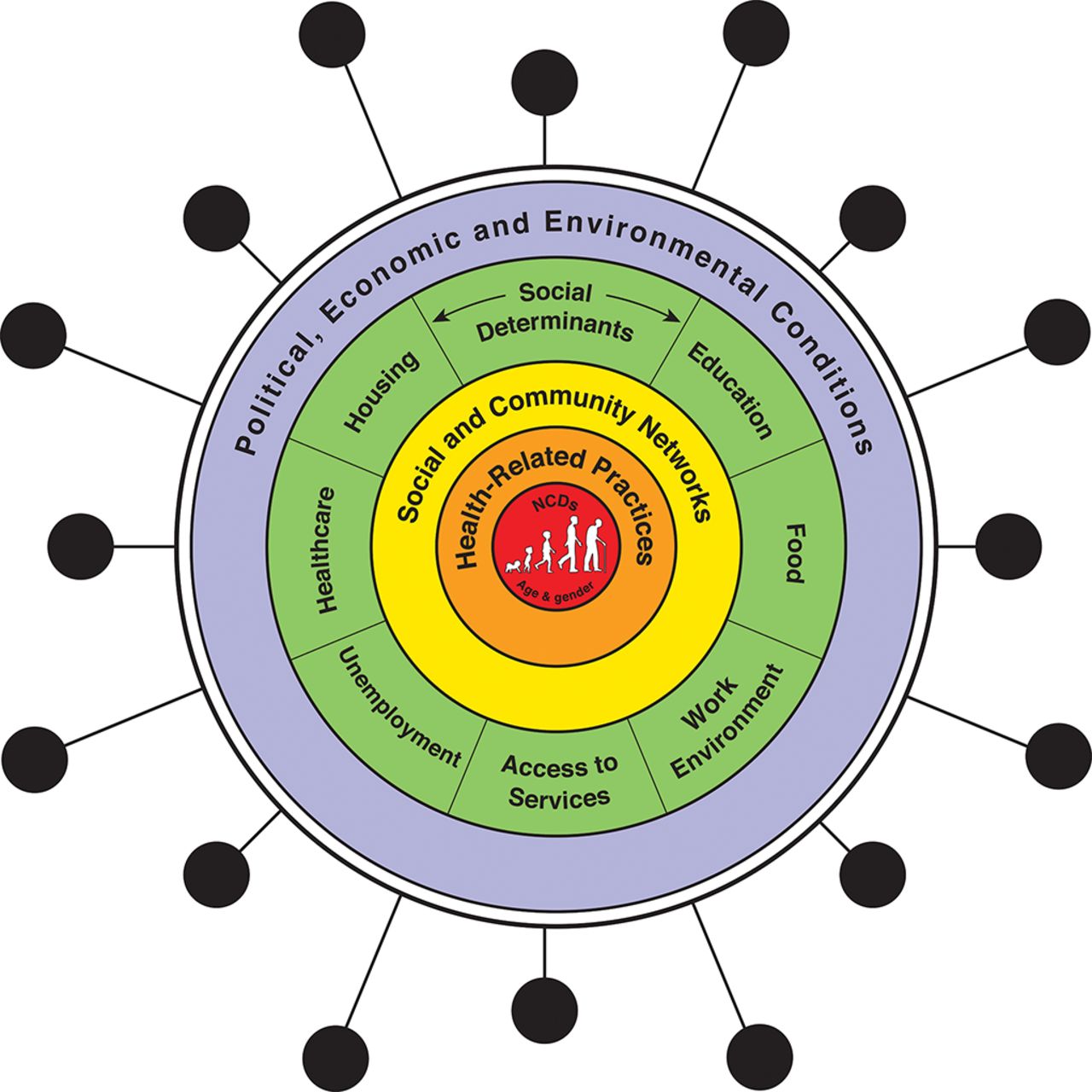
Emerging evidence from a variety of countries suggests that these inequalities are being mirrored today in the Covid-19 pandemic. Both then and now, these inequalities have emerged through the syndemic nature of Covid-19, as it interacts with and exacerbates existing social inequalities in chronic disease and the social determinants of health.

The syndemic of COVID-19, non-communicable diseases (NCDs)
 and the social determinants of health
This is down to a number of factors – not least unequal exposures to the social determinants of health (the conditions in which we are born, grow, live, work and age) leading to higher rates of almost all of the known underlying clinical risk factors that increase the severity and mortality of Covid-19 (e.g. high blood pressure, diabetes, cardiovascular disease).

We may have been living under the same regulations, but across the country, our experiences of ‘lockdown’ were widely different. We knew this. We weren’t ‘all in the same boat’ - we were in the same ocean in the middle of the same storm - but some were on luxury liners and others on rapidly-deflating dinghies.

We saw lower-paid care workers, shop workers, transport workers, factory workers continuing to work face-to-face with the public, while others worked from home on full pay or were furloughed with some semblance of job security.

There were families trying to stay sane in small flats without outdoor space and with empty cupboards, whilst others in more fortunate circumstances trebled their flower delivery order to ensure their homes looked good during Zoom meetings.

The divide in our society is stark on many levels, and as we go forward, who will pay the price of the multi-billion pound interventions that the government has put in place to see us through this period, and bear the brunt of the post-Covid-19 global economic slump? 

Covid-19 has laid bare our longstanding social, economic and political inequalities. Even before the pandemic, life expectancy amongst the poorest groups was already declining in the UK and the USA and health inequalities in some European countries have been increasing over the last decade.

I know that this all makes for grim reading for researchers, practitioners and policymakers concerned with health inequalities. So what can we do?

It is vital that this time, the right public policy responses, such as expanding social protection and public services and pursuing green inclusive growth strategies, are undertaken so that the Covid-19 pandemic does not increase health inequalities for future generations. Public health must ‘win the peace’ as well as the ‘war’. It is our job to make that case.

As we start to shape our ‘new normal’ and as the government unveils its post-Covid-19 recovery plans for the UK, public health policy must be a priority.

We need to act now if we want to avoid deepening the health inequality divide even further for generations to come.

Read the full essay: The Covid-19 pandemic and health inequalities


With thanks to the NIHR Applied Research Collaboration North East & North Cumbria 


Image attribution:
  1. Otis Historical Archives, National Museum of Health and Medicine / Public domain. https://commons.wikimedia.org/wiki/File:Emergency_hospital_during_Influenza_epidemic,_Camp_Funston,_Kansas_-_NCP_1603.jpg
  2. The syndemic of COVID-19, non-communicable diseases (NCDs) and the social determinants of health (adapted from Singer and Dahlgren and Whitehead). With acknowledgement to Chris Orton from the Cartographic Unit, Department of Geography, Durham University, for his assistance with the graphics. https://jech.bmj.com/content/early/2020/06/13/jech-2020-214401.full?ijkey=haFkUOyJurtabHz&keytype=ref#F1
  3. Screenshot taken from the Financial Times website: https://www.ft.com/content/8ea1c992-89f8-11ea-a109-483c62d17528 09/07/2020

Friday, 26 January 2018

'Not making decisions on our behalf': Empowering communities to tackle health inequalities

Guest post by Sue Lewis, Senior Research Associate, Institute of Health & Society, Newcastle University and Emma Halliday, Senior Research Fellow, Lancaster University

Community empowerment and the mobilisation of resident knowledge have long been seen as fundamental in tackling health inequalities. Recent strategic documents (e.g., Public Health England’s A guide to community-centred approaches for health and wellbeing and The National Institute for Health and Care Excellence community engagement guidance have, more recently, also drawn attention to the need to place communities at the centre of approaches to reduce damaging differentials in health and wellbeing.

Photo: Courtesy of Liz Kessler
Are we – practitioners and public – ready to make this happen? What do we know (from research, from local experience) and what do we still need to understand or address? Delegates at the recent Fuse Quarterly Research Meeting (QRM) spent a lively morning pondering these important questions.

Emma’s reflections on her experience of research in this field sets the scene:
“Since joining Lancaster University, much of my time has been spent interviewing residents and practitioners about community engagement in area based initiatives.

One of my first encounters was a retrospective look at New Deal for Communities (NDC) approaches to engagement. In some areas, people shared powerful examples of what had been achieved from collaboration placed on a more equal footing. As one resident explained: ‘it was physically, mentally everything, you were involved in it all and you feel proud because you’ve had, you’ve taken part in something good…there’s an awful lot of these projects have come to fruition and you can see, you know, you can actually see the difference that it’s made.’
Yet within the same programme, experiences varied significantly. Elsewhere, residents were left disillusioned about the falling away of an early commitment to engagement where the model became increasingly driven by ‘top down’ pressures. 
‘It moved away from gathering the views of the people and acting on the views of the people to involving the people in New Deal for Communities’, explained another resident.

More recently, the Big Local programme, funded by the Big Lottery and managed by Local Trust, has been the focus of research. The NIHR School for Public Health Research (SPHR) Communities in Control study, undertaken by a collaboration of academic partners including Fuse (Fuse lead, Professor Clare Bambra; researchers Dr Sue Lewis and Dr Vicki McGowan) and led by Professor Jennie Popay at LiLaC, is evaluating the health and social impacts of the resident led programme. While still early days, latest findings show positive impacts for wellbeing for residents actively involved in the programme but also that experiences of involvement can at times also be stressful and challenging.”
So the Fuse QRM (Empowering communities and mobilising resident knowledge to tackle health inequalities, January 11th, 2018) was an important opportunity for public health partners in the North East to reflect on ways of working that enable more equitable collaboration between citizens, the public and the third sector. An exercise to warm people to the topic indicated that many in the audience agreed that there were opportunities in the region (and beyond) for citizens to influence decisions that affect the places where they live. In contrast, far fewer felt that public sector agencies had a sufficiently good understanding of the barriers that impede participation. We clearly have a lot still to learn from one another.

James Hadman, Stockton Catalyst, stimulated thinking
 about grassroots projects having positive impacts but also
drew attention to the times when things don’t work so well
It’s important, then, to share what we already know. The morning included presentations that provided complementary perspectives on the issues at hand. Insights from James Hadman from Stockton Catalyst stimulated thinking about grassroots projects having positive impacts including the role of the Stockton Voice Forum (which gives Stockton’s voluntary, community and social enterprise sector a say in strategic developments in the Borough). Importantly, however, he also drew attention to the times when things don’t work so well, including barriers that were also identified in the New Deal for Communities (NDC) research: where engagement is top down, or driven by professionals’ agendas.

Alison Patey (Yorkshire and Humber Public Health England) gave the national picture, arguing that working with communities should be considered as valid as any other social determinant. A new programme of support is also offering online training for practitioners. And presentations from Emma and myself (Sue) offered the view from research, including findings from the Communities in Control study (in which three North East Big Local areas participated).

Looking ahead, the Communities in Control programme has received SPHR funding to produce resources for residents and practitioners. These will draw attention to the public health evidence already available for place based initiatives and take inspiration from stories of community action that illustrate the potential effects (positive and negative) for community participation and collaboration and, ultimately, empowerment, control and health inequalities.

There aren’t quick fixes to overcoming the imbalances of power between citizens and agencies. But it is, as a resident interviewed in the Communities in Control study put it, about creating a public health system where decisions don’t get ‘made on our behalf as to what they think we should have.’

Saturday, 18 November 2017

‘Afore ye go’… across the border for a cheap pint

John Mooney, University of Sunderland and Sunderland City Council, asks how Scotland’s minimum unit pricing policy would go down in North East England.


Like many former native Scots now living and working in North East England, the geographical, social and cultural parallels are just three areas of overlap that help keep homesickness for my country of origin at bay!

As a public health researcher some less fortunate similarities are often at the forefront of my mind, including a fondness for deep-fried food, an aversion to fresh vegetables and a damagingly long-ingrained culture of heavy drinking.  This is accompanied by an almost Scottish-scale public health burden to match. It will come as no surprise that as a whole, the North East has among the worst health statistics for alcohol related harm in England [1].

Of course it is also no coincidence that both North East England and much of Scotland’s central belt, particularly Greater Glasgow and Clyde Valley, have some of the most longstanding and concentrated areas of social deprivation and economic disadvantage in the UK. As recent research from Glasgow University has highlighted [2], deprivation and alcohol related health damage, present a particular kind of “double whammy”, even after adjusting for alcohol intake and other lifestyle factors such as smoking.

With these similarities in mind, there is an inescapable logic in looking to Scotland for a steer in terms of policy interventions that might reduce the unacceptably high public health burden due to alcohol in this part of the World. I refer of course to the introduction of a minimum unit price (MUP) of 50p for a unit of alcohol, which on the basis of rigorously evaluated international studies combined with sophisticated cost effectiveness modelling from the Alcohol Research Group at the University of Sheffield [3], is one of the best evidenced policies for reducing alcohol harm in the population.

Scotland is also at the forefront of (what may eventually lead to) a much more ‘fit-for-purpose’ legislative framework around alcohol licensing and availability: namely the inclusion of 'health' as a licensing objective (or ‘HALO’). In principle, this has the potential to transform the capacity of public health teams in English local authorities to make much more use of information on health harms as part of the licensing process. This would ensure that challenges to new licence applications - however potentially damaging the new licence may be - no longer need to be based exclusively on crime and public disorder evidence. To explore whether HALOs could also be used in England, our team at the University of Sunderland looked at the practicalities and logistics of using health information in English licensing decisions. The results have recently been published by Public Health England [4].

So what are the prospects for importing MUP and health objective policies to North East England?

Thankfully, on both policy and research fronts, there are also significant grounds for encouragement in the North East! Indeed, some of the most progressive public health policies around alcohol harm reduction, such as cumulative impact zones and late night levies, are now well established in a number of local authority areas. This has been possible thanks to strong political will and high profile regional level advocacy for alcohol harm reduction policies from Balance North East [5], which is funded collectively across most North East local authorities. Balance NE has already been calling for better controls on cheap alcohol availability in the wake of the Scottish Policy decision [6].

There is also no shortage of public health alcohol research effort in the North East, with a long tradition of internationally renowned research from the Universities of Newcastle, Teesside and most recently our own contributions to several national level evaluations (such as HALO mentioned above).

In brief, there are many regional policy drivers already in place for North East England to emulate Scotland’s very progressive approach to the reduction of alcohol harms. With regard to the often raised criticism that price based measures such as MUP are ‘regressive’ due to a disproportionate financial impact on the poorest, it is difficult to rival the response of Scottish novelist Val McDermid on Thursday's (16 Nov) BBC Question time: “it’s actually about preventing people in our poorest communities drinking themselves to death with cheap alcohol”. It is difficult to figure out what particular definition of the term ‘regressive’ that this conforms to…


References:
  1. Local Alcohol Profiles for England [May 2017]: https://fingertips.phe.org.uk/profile/local-alcohol-profiles/data#page/0
  2. Katikireddi SV, Whitley E, Lewsey J, et al. Socioeconomic status as an effect modifier of alcohol consumption and harm: analysis of linked cohort data. The Lancet Public Health 2017;2(6):e267-e76. doi: https://doi.org/10.1016/S2468-2667(17)30078-6
  3. Sheffield Alcohol Policy Model:  https://www.sheffield.ac.uk/scharr/sections/ph/research/alpol/research/sapm
  4. Findings from the pilot of the analytical support package for alcohol licensing: https://www.gov.uk/government/uploads/system/uploads/attachment_data/file/620478/Alcohol_support_package.pdf
  5. Balance North East: http://www.balancenortheast.co.uk/about-us/
  6. Balance North East news item: http://www.balancenortheast.co.uk/latest-news/balance-calls-on-government-to-follow-scotland-on-mup 
Images:
  1. 'cheap booze, hackney' (3892082333_943f3cc70e_o) by ‘quite peculiar' via Flickr.com, copyright © 2009: https://www.flickr.com/photos/quitepeculiar/3892082333 (cropped)
  2. Courtesy of Alcohol Focus Scotland: https://twitter.com/AlcoholFocus/status/922822671599054848

Friday, 6 October 2017

Looking for trouble: deceit and duplicity in the Troubled Families Programme

Introduced by Peter van der Graaf


Guest post by Stephen Crossley, Senior Lecturer in Social Policy at Northumbria University

Many families facing health problems, limiting illnesses, or with disabled family members have been labelled as ‘troubled families’ under the government’s Troubled Families Programme. Originally established following the 2011 riots to ‘turn around’ the lives of 120,000 allegedly anti-social and criminal families, the programme is now in its second phase and is working with a far larger group of families, many of whom experience troubles, but don’t necessarily cause trouble. In April of this year, the focus of the programme shifted again in an attempt to improve the number of so-called ‘troubled families’ who moved back into employment, despite the majority of them being in work and many of the remainder not being expected to be looking or available for work.

The programme has been dogged by controversy from day one. Research about families experiencing multiple disadvantages was misrepresented at the launch of the programme to provide ‘evidence’ that there were 120,000 troublesome families in England. The government has since been accused of suppressing the official evaluation of the first phase of the programme after it found ‘no discernible impact’ of the programme and also of ‘over-claiming’ the 99% success rate of the first phase. 

David Cameron with Louise Casey, former Director General of Troubled Families

Many health workers will be involved with the delivery of the Troubled Families Programme in their day-to-day work, although there is also a good chance that they will not be aware of it. Many local authorities do not refer to their local work as ‘troubled families’ because of the stigmatising rhetoric and imagery associated with it. Many families are not aware that they have been labelled as ‘troubled families’ for the same reason, and because it would undoubtedly hinder engagement with the programme. They are not always made aware that the data that is collected on them as part of the programme, is shared with other local agencies and, in an anonymised format, with central government.

My PhD research, conducted in three different local authority areas, found that the programme was based on, and relied upon duplicity from design to implementation. Despite government narratives about the programme attempting to ‘turn around’ the lives of ‘troubled families’, the programme appeared to be more concerned with helping to restructure what support to disadvantaged families looks like, and reducing the cost of such families to the state.

For example, support – both symbolic and financial - for universal services, such as libraries, children’s centres and youth projects, is reducing. Direct financial support to marginalised groups is also being cut, with welfare reforms hitting many of the most disadvantaged groups hardest. These forms of support, and many other more specialist services, are being replaced, rhetorically at least, by an intensive form of ‘family intervention’ which allegedly sees a single key worker capable of working with all members of the family, able to ‘turn around’ their lives no matter what problems, health-related or otherwise, they may be facing or causing.

The simplistic central government narrative of the almost perfect implementation of the Troubled Families Programme was not to be found ‘on the ground’, where there were multiple frustrations and concerns about the depiction of the families and the programme, and numerous departures from the official version of events. Despite the rhetoric of ‘turning around’ the lives of ‘troubled families’, in the face of cuts in support and benefits to families, my PhD thesis concluded that the Troubled Families Programme does little more than intervene to help struggling families to cope with their poverty better, despite the efforts of local practitioners.

Put simply, the programme does not attempt to address the structural issues that cause many of the problems faced by ‘troubled families’, but instead encourages them to ‘learn to be poor’. In my previous Fuse blog, I drew on the concept of ‘lifestyle drift’ advanced by David Hunter and Jenny Popay: where the focus of interventions drifts towards attempting to change individual behaviour, despite the wealth of evidence pointing to other solutions. There is no room in the narrative for wider determinants of people’s circumstances. Because of this, the government’s Troubled Families Programme will do little to turn around the lives and health of the families it claims to help.


A summary of Stephen Crossley’s PhD research can be found here. His first book In Their Place: The Imagined Geographies of Poverty is out now with Pluto Press. He tweets at @akindoftrouble


Photograph ‘Almost 40,000 troubled families helped’ (14087270645_3453006d12_c) by ‘Number 10’ via Flickr.com, copyright © 2014: https://www.flickr.com/photos/number10gov/14087270645

Friday, 26 May 2017

Postcards from a public health tourist #1: Montréal, Québec, Canada

Posted by Clare Bambra, Fuse Associate Director and Professor of Public Health, Newcastle University

A few of our academics are lucky enough to have the opportunity to travel around the world to speak at conferences or explore collaborations - all in the line of work and the translation, exchange and expansion of knowledge of course.

The least we could expect is a postcard, to hear all about the fun that they're having while we’re stuck in the office watching droplets of rain compete to reach the windowsill…

So here’s the first from Professor Bambra.


Dear Fuse Open Science Blog,

I spent late April and May 2017 as a visiting Professor at the Institute of Research in Public Health, part of the University of Montréal. I was the guest of Professor Louise Potvin who is a leading international researcher in health promotion and the editor-in-chief of the Canadian Journal of Public Health. She was an amazing and generous host.

Me (bottom right) with Louise Potvin (centre) - an amazing and generous host
I had a really enjoyable and fruitful time both intellectually and socially at the Institute. It is an exciting place to be as a health equity researcher. They are leading the field in health equity research in Canada and alongside the other Montréal universities and the municipal public health agency, they have set up the joint Lea Roback Centre which examines health equity. There I was honoured to deliver the annual Paul Bernard lecture on social determinants of health – you can watch a video of the talk here.

I was also an invited speaker at the World Health Summit speaking alongside Ilona Kickbush (World Health Organization Europe) and Connie Clements (Canadian National Collaborating Centre on the Determinants of Health - NCCDH) about the legacies of the Ottawa charter. The NCCDH is tasked with integrating health equity and the social determinants of health into Canadian public health practice. Jane Philpott, the Minister of Health for the Federal Canadian government also gave an inspiring speech at the summit about the importance of the social determinants of health and her journey from being a family doctor to a leading politician.

Montréal experienced unprecedented rain and flooding while I was there
Montréal is an amazing place to visit, an extremely vibrant multicultural bilingual city with great restaurants and a very welcoming feel to it. It was very exciting to be there in 2017 as Canada celebrates 150 years and Montréal celebrates its 375th year. However, weather wise Montréal experienced unprecedented rain and flooding while I was there with many homes and businesses evacuated and the army required to provide emergency support.


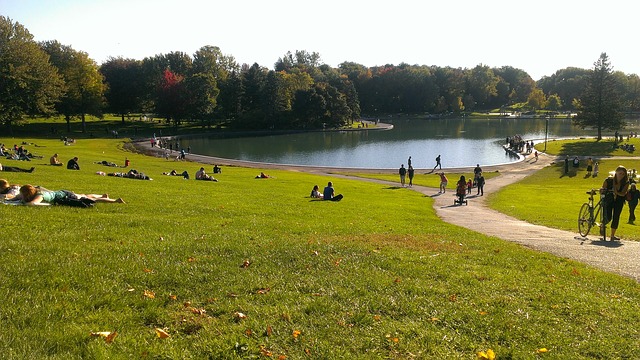
Montréal is also an interesting place from a public health perspective, it’s a city with a lot of green spaces and a variety of parks and recreation areas. It’s a very safe place to be, and very walkable - unlike other areas of North America. Public transport costs are low with a flat rate on the Metro and the buses of around $3. They also have a shared bicycle scheme called Bixi - which is free for a cycle ride of up to 30 minutes.

However, Montréal and Canada are of course not without their own public health problems. There was very visible homelessness. The Montréal health gap is 11 years between the most and least affluent neighbourhoods and most significantly, the Inuit and indigenous populations have average life expectancies of only 70 years - 10 years less than the average Canadian. Inuit health is understandably a key focus for health equity researchers in Montréal - including former Fuse associate Mylene Riva. She is now researching the effects of housing conditions and food security on the health of Inuit people in Arctic Quebec.

So a very useful visit for me and I was able to make good future connections for the Fuse Health Inequalities research theme.


Photo attribution:

Friday, 19 May 2017

Beyond ownership: a lifetime of housing and health

Posted by Natalie Forster (Fuse Senior Research Assistant) and Philip Hodgson (Senior Research Assistant), Northumbria University

Last month saw the second ‘Home and Health’ research interest group meeting hosted by Northumbria University and Fuse (supported through the Fuse pump-priming fund). Building on the key message that a greater emphasis is needed on understanding the relationship between housing and health – particularly in the absence of strong public health messages on the subject (such as 5-a-day) – the focus here was on good examples of practice.

It's a race to own a “forever home” but circumstances change with age
Participating in these sessions is continually challenging us to rethink the values that we attach to the idea of ‘home’ in society, and the implications this has for supporting people through housing choices and transitions. The narrative surrounding housing is often singular and fixed – the race to find and own a “forever home”, relocate to a bungalow in retirement and then manage the difficulties of ageing-in-place as ill health and social isolation increase in later life. Yet the reality painted by the examples here posed a more complex problem: how do we identify and sustain a model of housing that allows our homes to reflect and adapt to the wide range of transitions experienced by individuals? The services presented - Safe and Healthy Homes (North Tyneside Council); Housing for older people (Derwentside Homes); Wellbeing and mental health service for adults (Crisis); and Wellbeing for Life Newcastle’s Age-friendly Cities - all reflected the huge range of resources and circumstances people bring to their homes, and the need to be flexible in supporting them. Yet questions remain around how public health approaches can best prepare people to make decisions about the housing which will best support their health in later life, before a crisis occurs. One idea from the meeting was to assess future housing needs alongside the NHS health check.

The second ‘Home and Health’ research interest group meeting
Just as the much-publicised difficulties for younger people to get on the “property ladder” are prompting a shift to much less-settled housing patterns in that age group, the transitions faced in ageing are varied enough to suggest the need for more person-centred thinking. Just as retirement and later life can threaten some with social isolation and ill health, for others it can be a period of vibrant reconnection with their communities. Once again, a lifecourse approach which encourages people to engage with these transitions before they occur (e.g. groups organised by employers to maintain social contact after retirement) may help give them the agency to maintain a healthy home environment throughout their lives. Innovations are emerging which propose alternatives to traditional living arrangements (for example, housing schemes where university students live alongside older people for free, in exchange for undertaking voluntary work). The first Home and Health session illustrated how the lack of equity held by future generations can be problematic, as this cannot then be leveraged to pay for care later on. However, discussion in the second meeting prompted thought about whether present forms of home ownership (and even home design) might be too inflexible, and whether other more innovative practices could allow people a more fluid approach to tenancy.

In focusing on preparing people to make informed housing decisions, it is important not to emphasise individual responsibility at the expense of addressing structural inequalities in the choices people have available to them. Those living in poverty are likely to experience an impoverished range of choices. People are often segregated in housing according to their age and socio-economic status and some groups, such as people experiencing homelessness may ‘settle’ for housing that is inadequate for their needs, as they feel they have no alternative. This led to a ‘lightbulb moment’ for further research from group members – the need to map out the different routes people take through housing options over the course of their lives, and the menu of choices available to them depending on their circumstances at different points in time. Perhaps this will allow services to enable people to have a different form of ownership in housing – the ownership of the housing journey through the transition of our lives, rather than simply owning a building.


Photo attribution: "Home, health and happiness / Bile Bean Manufacturing Co". See page for author [CC BY 4.0], via Wikimedia Commons

Thursday, 1 December 2016

The biology of inequality and the role of the generalist

Guest post by Tony Robertson, Lecturer in Public Health, University of Stirling

My research focuses on trying to better understand how our cultural, social and economic circumstances ‘get under the skin’ to impact on our physiological systems and influence our health and the development of disease. The emergence of this field investigating the social-to-biological transition has grown over the last twenty years with the increased availability of biological measures biomarkers in many of the large, population-based health and social surveys such as Understanding Society and the English and Scottish Health Surveys. This growth in collecting simultaneous biological and social data, longitudinally (repeatedly over a period of time from the same individuals) and across the life course, is key if we are to continue to advance our knowledge of the biological and health impacts of our environments and society. So far, much of the evidence is based on cross-sectional data (data collected at only one point in time, rather than repeatedly) or where we have biomarkers measured once, but with repeat social data for the same individuals over a number of years. However, studies such as Understanding Society are beginning to provide us with biological measures from the same individuals measured over several years. This type of longitudinal data will help us to better understand how our bodies change over time and the relative importance of different stages of our lives (for example, childhood versus young adulthood).

The increase in data linkage to routinely collected data records (e.g. education surveys linked to health records) is also allowing us to research the long-term health consequences of social and economic circumstances, even after studies and surveys have stopped running. It may also be possible in the future to carry out such linkage between health and social data with biomarker data, collected when visiting your doctor for example. There are obviously many ethical, financial and practical challenges and questions linked to these types of data linkage ideas, but they offer possibilities to broaden our knowledge of the social determinants of health. It is also becoming slightly more common to see intervention studies including biomarker measures that will allow us to see the physiological effects that will be occurring long before we ‘feel’ or see changes in health, perhaps changing how we can demonstrate ‘effectiveness’.

Public health and social epidemiology are often multidisciplinary pursuits, or at least many of us arrive working in these fields from multiple academic and professional backgrounds. However, there remains a need for greater cross-discipline collaborations to help us better study the links between our social, cultural, environmental and political circumstances and our wellbeing, health and physiology. I am keen to see more biologists, epidemiologists, social scientists, statisticians etc. work together on these projects. I trained as a biologist up to and including PhD-level before moving into public health and social epidemiology. One of the key roles I now fulfil (and enjoy) is acting like a match-maker, and sometimes a translator, for lab scientists and social and public health scientists to come together to work on research projects. This type of role is becoming ever more common, especially in public health where we need a mix of specialists and more of these generalists, with expertise across a range of disciplines. This is by no means an easy role to play as it can mean being the conduit to link specialist researchers and/or practitioners together without then being able to play a leading role in the development and implementation of these research studies. It’s the ‘jack of all trades, master of none’ issue. However, without these generalists with interests and expertise that span multiple disciplines we continue to risk limiting innovation and interaction to help impact on areas like health inequalities. Perhaps the saying ‘a jack of all trades is a master of none, but oftentimes better than a master of one’ is a better representation of what I’m aiming for. I hope.

If you’re interested in finding out more, please visit Tony’s website www.BiologyOfInequality.com and you can also find him on Twitter @tonyrobertson82 

Photo attribution: 
  1. “jack-of-all-trades” by shai aharony via Flickr.com, copyright © 2016: https://www.flickr.com/photos/139807035@N05/25607414481 
  2. “match_maker_love_machine” by Capes Treasures via Flickr.com, copyright © 2012: https://www.flickr.com/photos/26652069@N07/8390808924

Thursday, 8 September 2016

Stress is a universal experience, but is it unequally distributed across society?

Posted by Dr Joanne-Marie Cairns and Dr Emily Henderson, Durham University and Fuse.

How are you feeling today? Stressed at all?! If so, you are in good company.

Stress is so pervasive in our society that it contributed to a shocking 9.9 million working days lost in 2014/15(1), which equates to an average of 23 days per person. From an evolutionary perspective, stress is useful to animals such as humans to help us react to physical and social threats, commonly known as the ‘fight or flight’ response. According to Danielsson(2) and colleagues, stress can simply be defined as an imbalance between demands placed on us and our ability to cope with them. But if stress continues over a long period of time then a permanent imbalance may arise between the body’s degenerative (reduced growth) and regenerative (regrowth) functions. Stress can also lead to everyday problems including poor performance at work, low mood, lack of motivation, fatigue, sleep disturbance and chest and muscular pain as well as major life-limiting health problems such as high blood pressure, depression and chronic pain.


In light of these concerns, we organised a Health Summit on inequalities-related stress, with colleagues from the Local Area Research & Intelligence Association (LARIA), the Wolfson Research Institute for Health and Wellbeing, and Fuse - the Centre for Translational Research in Public Health. This event was hugely popular and brought together a wonderful mix of delegates and speakers from policy, practice and academia, from the North East and across the UK. The programme, which includes a list of speakers and a description of the talks, can be found here.

While stress can be a universal experience, it doesn’t manifest equally amongst certain population groups. For instance, Thoits(3) conducted a review which highlighted how unequally high exposure to stress by women and people in lower socioeconomic and minority groups lead to inequalities in health outcomes. Moreover, we see health inequalities accumulate over the life course as a result of this unequal distribution of disadvantage, for example Thoits refers to a study conducted by Turner and colleagues(4) that examined the effect of cumulative stressors in adults. These stressors that accumulated over time, explained a significant 50 per cent of the Socioeconomic status (SES) gap in depressive symptoms.

What are health inequalities then? These are differences in health status or determinants of health between different population groups. There are also intersecting inequalities, for example, if you are a lone parent but also on a low income, living in a disadvantaged area. Moreover, coping mechanisms sometimes adopted to mitigate stress can be health-damaging and lead to other forms of health problems, such as smoking or alcohol misuse. John Watson (Deputy Chief Executive, Action on Smoking & Health (ASH) Scotland) quite rightly argues that smoking IS NOT A LIFESTYLE ISSUE; rather in his words it is a form of medication to society’s maladies. Just think of the current global economic downturn as a societal issue that can be at the root cause of individual depression. As well, unequal access to jobs (at least good jobs that aren’t precarious in nature or that might lack autonomy) or good schools, which already limit an individual’s future prospects and may as a result contribute to psychosocial stress and poorer health highlighting the structural factors that are beyond the individual. Furthermore, stress at the population-level can manifest into geographical health inequalities. Data published by the Health and Social Care Information Centre (HSCIC) shows that the North East Strategic Health Authority (SHA) had the highest admission rate due to anxiety of any of England's 10 SHAs (just under 24 per 100,000 of the population), while South Central SHA had the lowest (at nearly 11 per 100,000), mirroring other health outcomes and shows the stark North-South health divide in England.

‘Lifestyle’ is used ubiquitously in current public discourse, and can be understood as a set of factors that describe a person’s daily living. Obesity-related lifestyle often refers to people’s behaviours and apparent food choices(5). These so-called behaviours are ways in which individuals respond to challenging circumstances. They are not choices in the purest sense of the word. Rather, an individual may be experiencing financial difficulties and, feeling the demands in their life which outweigh their ability to cope, may respond to the situation by smoking, drinking or comfort eating. But what is actually causing the financial difficulty in the first place? Are individuals to blame for reacting to the bleak reality of poverty and the social gradient they find themselves in? The seminal work by Sir Michael Marmot tells us that we instead need to consider the “causes of the causes” of inequality, not just the symptoms. Politics is also important, as we have seen in the government’s release of the new obesity strategy which continues to support healthy choices, and maintains the voluntary efforts by industry by suggesting a 5 per cent sugar reduction in children’s food and drink. The chairwoman of the Health Select Committee, Dr Wollaston, told BBC Radio 5 live that “it does show the hand of big industry lobbyists and that’s really disappointing”(6). A key political talking point relates to the fact that what was a 50-page document was shortened to a mere 10 pages which does not do something as complex as obesity justice – it was “weak and watered down”.

To sum up, the discussions from our Health Summit supported the principle of moving away from individualised and stigmatising conceptions of unhealthy behaviours; after all it is not just poor people that behave poorly!


References:
  1. Figures obtained from: http://www.hse.gov.uk/statistics/causdis/stress/ [last accessed 17/08/16]
  2. Danielsson M, Heimerson I, Lundberg U, Perski A, Stefansson C-G, Ákerstedt T. 2012. Psychosocial stress and health problems. Scandinavian Journal of Public Health, 40(9):121-134.
  3. Thoits PA. 2010. Stress and Health: Major finding and policy implications. Journal of Health and Social Behavior, 51(s):41-53.
  4. Turner R, Jay and William R. Avison. 2003. Status Variations in Stress Exposure: Implications for the Interpretation of Research on Race, Socioeconomic Status, and Gender. Journal of Health and Social Behavior,44:488–505.
  5. Nettleton S. Lay health beliefs, lifestyles and risk. The sociology of health and illness. 2nd ed. Cambridge: Polity Press; 2006. p. 33-70.
  6. http://www.bbc.co.uk/news/health-37108767 [last accessed 19/08/16]

Tuesday, 30 August 2016

Where you live can kill you

Posted by Clare Bambra, Associate Director of Fuse and Professor of Public Health Geography, Durham University

In 1842, the English social reformer Edwin Chadwick documented a 30-year discrepancy between the life expectancy of men in the poorest social classes and the gentry. He also found a North-South health divide with people from all social classes faring better in the rural South than in the industrial North.

Today, these inequalities persist. People in the most affluent areas of the United Kingdom, such as Kensington and Chelsea, can expect to live 14 years longer than those in the poorest areas, such as Glasgow or Blackpool. Men and women in the North of England will, on average die two years earlier than those in the South. Scottish people also suffer a health penalty with the highest mortality rates in Western Europe.

House for sale in New Orleans
Such geographical inequalities in health exist, to varying degrees, in all high-income countries. People living in more deprived areas fare particularly badly in the casino capitalism of the United States; where gaps in life expectancy between rich and poor areas of some cities, such as New Orleans, are as large as 25 years. Indeed, the US as a whole has a significant health disadvantage in comparison to other high-income countries with, for example, American men living on average three years less than their counterparts in France and five years less than Swiss men.

Understanding and reducing these health inequalities remains a major public-policy challenge worldwide and has garnered significant recent political attention. For example, in her opening speech on the steps of 10 Downing Street, the new British Prime Minister Theresa May highlighted the nine-year gap in life expectancy between the richest and the poorest boys in England. It is not only a moral issue though; health inequalities carry significant economic costs to individuals and society (e.g. NHS costs, lost productivity). But the causes of such inequalities are complex and the solutions contested.

Explaining health and place


Where you live affects how long you live and the health of different places is determined both by the population composition (who lives here) and the environmental context (where you live).

Who lives here? The demographic, health behaviours and socio-economic profile of the people within a place influences its health outcomes. Generally speaking, health deteriorates with age, women live longer than men, and health status also varies by ethnicity. Levels of smoking, alcohol, physical activity, diet, and drugs – all influence the health of populations significantly. The socio-economic status – or social class in “old money” – of people living in a country also matters as those with higher occupational status (e.g. professionals such as teachers or lawyers) have better health outcomes than non-professional workers (e.g. manual workers). So differences in the characteristics of people living in a country, city or neighbourhood will impact on the health of that place.

However, where you live matters. The economic environment of a country, such as poverty rates, unemployment rates, or wage levels can all influence public health. The social environment, including the services provided within a country to support people in their daily lives such as child care or health care and welfare, can also impact on population level health. The physical environment is also an important determinant with research suggesting that proximity to waste facilities and brownfield or contaminated land, as well as levels of air pollution can negatively affect health. So countries, cities or neighbourhoods with worse economic, social or physical environments will have worse health outcomes.

Reducing health inequalities


Even though both composition and context matter, and can be supported by scientific evidence, politics can matter more than science in determining which strategies policymakers pursue to reduce health divides – or if they even care about inequalities at all. After all, some potential solutions are politically easier to implement within existing systems than others.

For example, interventions aimed at changing individual health behaviours are far less challenging to prevailing power structures than those that demand extensive investment in improving the social economic environment. Indeed, by blaming people for their own health problems, such interventions let governments and businesses off the hook for the wider economic, social and environmental determinants of health inequalities.

Such “downstream” approaches only tackle one side of the coin and there is little evidence that lifestyle interventions are effective in reducing health inequalities: more comprehensive measures are needed. Most of the health gains over the nineteenth and twentieth centuries were brought about by far-reaching economic, political, and social reforms which improved the wider environment and also significantly improved the financial position of the poorest people.

It has been clearly demonstrated that more equal societies almost always do better in health terms and the poorest and most vulnerable groups, say in Sweden or Norway, are far healthier and live longer than the equivalent groups in the UK or the US. These countries have done so through the development of a stable, inclusive economy, a supportive welfare system and a high standard of living.

So, where you live matters for how long you live – and changing how we live could reduce health inequalties.


Professor Bambra’s book Health Divides: where you live can kill you is available now from Policy Press.

Clare Bambra
Professor of Public Health Geography, Department of Geography, Durham University, Associate Director of Fuse: the Centre for Translational Research in Public Health and lead of the Health Inequalities research programme
Twitter @ProfBambra


Photo attribution: “House for sale, New Orleans” by K.G. Schneider via Flickr.com, copyright © 2006: https://www.flickr.com/photos/kgs/177196564/in/

Thursday, 23 June 2016

‘First, do no harm’: How to think about austerity and public health

Posted by Ted Schrecker, Fuse Associate and Professor of Global Health Policy, Durham University

The current ‘neoliberal epidemic’ of (selective) austerity directs our attention to public health impacts of choices about public finance in several ways. Most fundamentally, anticipated post-2015 public expenditure cuts in the UK will reduce public expenditure as a proportion of Gross Domestic Product (GDP) to the levels of the 1930s, ‘taking the size of the state to its smallest in many generations’, in the words of a 2014 Institute for Fiscal Studies briefing. In fact, on recent projections by 2020 public spending in the UK as a proportion of GDP will be below the figure for the US, despite the latter country’s bloated defence budget. It is implausible that a National Health Service that is free at the point of use can be maintained with pre-World War II levels of public spending. Even a brief conversation with anyone familiar with US health care reminds us just how much that matters.

Meanwhile, the health consequences of social spending cuts that fall disproportionately on the poorest people and regions are beginning to be manifest in rising food insecurity and increased use of food banks – the latter trend probably related to the rising rates at which benefit recipients are sanctioned. Further health impacts, more difficult to isolate epidemiologically but probably at least as significant, are associated with the stresses of chronic insecurity, powerlessness, and lack of ‘control over destiny’.

There is a basic ethical and political point here about the politics of evidence. Sir Michael Marmot and colleagues wrote in 2010 that ‘It is hard to see how even ideologically driven commentators could think that having insufficient money to live on is irrelevant to health inequalities’. Good point.

In a previous blog with Clare Bambra, we demonstrated that politics can make us sick; Clare recently wrote a similar blog highlighting large health divides across Europe, showing that where you live (and the health policies implemented there) strongly affects how long you live. Against the background of austerity and the rising costs of healthy diets, it is indefensible to ask public health professionals and advocates to demonstrate, over and over again, that (for example) inadequate incomes lead to unhealthy diets and poor health. Rather, the burden of proof should be shifted: we must insist on clear and convincing evidence that national governments’ choices about the level and composition of public expenditure first, do no harm to health, except in extraordinary and clearly justified circumstances. This is an important part of the case for (independent, third party, adequately resourced) health impact assessments, especially of policies and programmes outside the health sector. Such a shift in the burden of proof is also congruent with the strong presumption in international law against retrogression (backsliding) with respect to human rights such as the right to health – a presumption that assumes special importance in an era of austerity.
Is corporate tax avoidance a public health issue?
Public finance, then, is a public health issue. This point applies to the revenue side, as well. The publication of the ‘Panama papers’ reminds us of the extent to which cross-border tax avoidance, whether legal or questionably legal, represents one of the ‘fiscal termites’ that can undermine states’ ability to provide everyone with the prerequisites for a healthy life. (Interestingly, the phrase ‘fiscal termites’ was coined by the former director of the International Monetary Fund’s Fiscal Affairs Department.) The question of how maintaining health services free at the point of use and investing effectively in prevention could be financed should be asked as a routine element of public health practice and advocacy – part of a broader strategy of interrogating scarcity. One answer could be using revenues from clamping down on UK corporate taxes avoided by major transnational corporations. In the real world, resources can almost always be found for the purposes of the powerful: think HS2, Trident renewal, and so on.

Choices about public finance are political choices with consequences for health and health inequalities; academics and practitioners must not be shy about pointing out those consequences.


A more extensive list of references is available from the author.  All views expressed are exclusively those of the author.

Photo: Servizi Mediali.  Reproduced under a Creative commons 2.0 licence.