Showing posts with label council. Show all posts

Friday, 11 October 2024

Going beyond bricks and mortar to 'Up' awareness of healthy homes

Posted by Natalie Forster, Philip Hodgson, and Alex Kirton from Northumbria University

“It’s just a house”. Words famously uttered by Mr Fredricksen in the much-loved film, ‘Up’. But does this really do justice to the complicated relationships we have with our homes?

There’s a steady stream of evidence now showing that housing characteristics (including issues like overcrowding, poor insulation, damp and mould) can impact on physical and mental health. And far from being just a house, we know that where you live can make a big difference to how socially connected you are, the services you can access and how safe you feel.

This increasing awareness of home as a social determinant of health has led to many local authorities introducing initiatives to address housing-related issues. Yet, evaluations often look at the effects of specific housing enhancements in isolation, and more understanding is needed of how healthy homes services can tackle housing issues in their widest sense.

The Healthy Homes service in South Tyneside is an advice and signposting-based service that aims to address people’s home-related health needs. As Fuse researchers we set out to explore its benefits for residents. We worked with the service to create a data collection tool to help capture the financial benefits of advice given, alongside interviews to explore the experiences of those who used the service.

So, what did we find?

Our analysis showed that the service was reaching people with multiple and complex housing needs, including those related to health conditions, low income and age. We found the personalised approach taken by the service to be especially successful in engaging proactively with older homeowners (like Mr Fredricksen!) who often presumed they wouldn’t qualify for housing improvements, didn’t want to be seen to be asking for help or didn’t want to lose their independence. And without this support they would have otherwise put off seeking help until a crisis hit.

Some participants were keen to swap their bricks and mortar entirely and relocate to a more suitable home or area. For others, longstanding and deep psychological connections to homes and areas meant a move would be too painful. In these circumstances, changes to home environments made through the service (like getting extra bannisters or a stairlift, and support to address cold, damp and mould) helped reduce worries about housing problems and avoided the need for unsuitable coping strategies like coming down the stairs backwards. Participants described how small housing modifications – even getting a different lightbulb when you’re worried about your electricity bills – made a difference both practically and emotionally, helping them resume ordinary and taken-for-granted aspects of life like going to bed upstairs with your partner. Yet, for many, the service also worked on a different level, with the face-to-face interaction and warm and friendly manner of staff helping people feel heard and cared for.

Ultimately, the project illuminates the complex and varied issues and feelings people have around their homes. It underscores the importance of services which see beyond the bricks and mortar of houses and consider the importance of people’s “homes”, such as those offered by South Tyneside Council, but also the crucial role that other (non-home focused) services can play in addressing the interactions between homes, health and wellbeing. Many people we spoke to were unsure of what support they are entitled to and so there’s a need to raise awareness and take up of healthy home enhancements before problems escalate. Finally, both the stories of our participants and Mr Fredricksen demonstrate how our relationships toward our homes can shift and change over time, highlighting a need for long-term and sustainable models of housing care and support.


Natalie Forster, Assistant Professor, Social Work, Education and Community Wellbeing, Northumbria University and co-lead of the Fuse Health Inequalities Research Cluster

Philip Hodgson, Assistant Professor, Nursing, Midwifery and Health, Northumbria University

Alex Kirton, Research Fellow, Northumbria University


Image by Pascal Laurent from Pixabay

Friday, 12 February 2021

Placement, parcels and a pandemic: five weeks embedded in a public health team

Posted by Maisie Rowland, Research Assistant and Registered Nutritionist, Human Nutrition Research Centre (HNRC), Newcastle University

Newcastle Civic Centre
My research has taken me from primary schools in the West End of Newcastle to rural schools in the mountains of Moshi, Tanzania but I have always been curious about other job roles and what they involve. I have also been interested in how, as researchers, we can collaborate with those outside of academia to ensure that the research we do has the desired impact. So on seeing an advertisement for an embedded researcher placement in Newcastle City Council with the Public Health team, I put in an application. This felt like a great opportunity to expand my knowledge of other job sectors, while creating links outside the university and maintaining my work in the HNRC (working there one day a week). Before I knew it, I was walking to the city’s Civic Centre for the first day of my five-week placement.

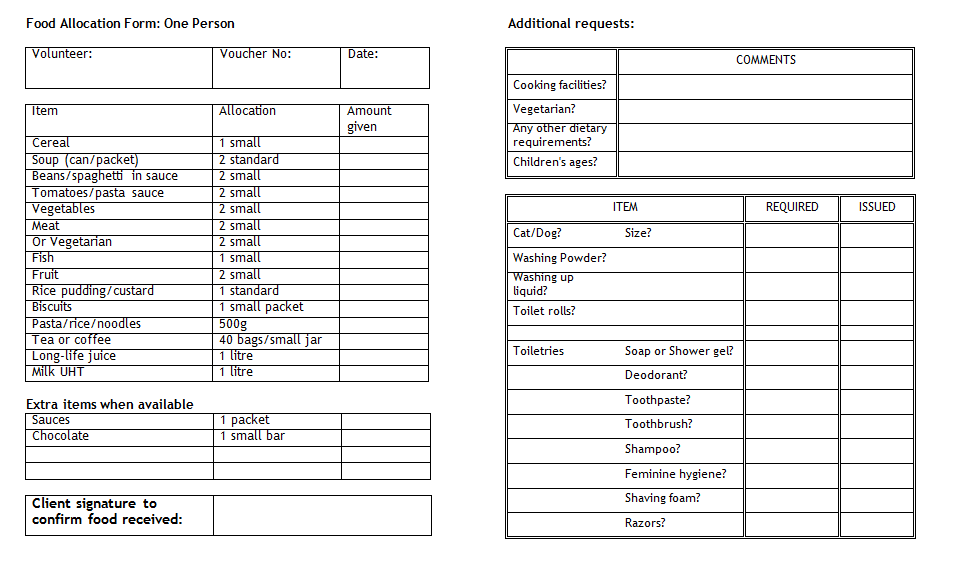
I spent my first week learning about the wide variety of projects and roles the team were involved in, such as the redevelopment of Fenham library to include a drugs and alcohol recovery hub and the health education with schools and young people. I was able to sit-in on a number of interesting meetings and was able to contribute to the Wider Determinants of Health team meetings. I learned about how projects happen and was surprised at how much it differed from a university research setting, such as the different resources used for background research for projects and the differences in terms of ethical approvals. I was also given the opportunity to put forward my ideas and interests and, working alongside my colleagues Dr Annette Payne (Health Improvement Practitioner) and Lorna Smith (Speciality Registrar in Public Health), we developed an idea for a project working with food banks. As a nutritionist, I have a strong interest in this area. Through conducting online research, and visiting food banks and ‘pay as your feel’ supermarkets, we gained an insight into how these organisations and similar providers work. We also learned about the nutritional content of ‘standard’ emergency food parcels, the demographics of those who find themselves needing to use food banks, the situations these people might be in, and finally the shocking numbers of people finding themselves in need of using them. From this research, we developed a report which was presented at the Public Health Senior Management Team meeting for approval and feedback from other team members. Our project was well received, which was encouraging, and we were given the go-ahead to continue with our work.

Life Foodbank in Newcastle upon Tyne
From this background research, I learned that those who use food banks have usually been referred through care providers (such as through school or through social workers), and there is a limit on the number of times they are able to use the food bank. Help is given in the form of an emergency food parcel containing at least three days’ worth of food, and users are often offered help and advice which aims to resolve the issues that have led them there. Although there has been nutritional guidance on the food parcels, the reality is that a lot of the food comes from public donations. Therefore, as the donations vary, so will the food parcels. Within the team, we considered possible changes to the parcels that could be suggested, in order to benefit those who have to use food banks. It was quickly decided that any work we did would be with the food banks themselves, rather than those using the food bank. We devised a plan with three ‘phases’, including:
  • Phase one involved a consideration of how to suggest very small changes to the ‘food call outs’. For example, typical foods that are given in food parcels, and are regularly requested in the call outs, include breakfast cereals, soups, pasta and pasta sauces, rice, tins (beans, meat, vegetables, and fruit), tea or coffee, sugar, biscuits, snacks, jams, and fruit juice. Due to the variation in these particular food groups, and the variation in the foods that are donated to the banks, the nutrient content of the packages will also vary widely. Our suggested changes to the call outs will include requesting tinned fruit in juice rather than syrup, reduced sugar/salt baked beans and tinned pasta in sauce, tinned vegetables without added salt or sugar, and higher fibre/lower sugar breakfast cereals.
  • Phases two and three will involve creating some user-led resources for the food banks such as recipe cards, which will provide inspiration for different meals that could be made from the foods in the parcels. We also hope to include a ‘community access card’, which will provide information on nutrition, healthy weight ranges and local support available. The local support would involve signposting to free cooking classes, food banks and ‘pay as you feel’ supermarkets, community groups, and computer facilities at libraries.
Food parcel single person packing list from the Trussel Trust


As I approached the end of my placement (which felt like it was ending just as quickly as it started!), we made plans to keep in contact about the ongoing development of the resources. We planned meetings with a food poverty group and with those running the food banks, and felt that good progress was being made. However, during the last week of my placement Covid-19 put a halt to our work. The last meeting that I attended in the council was geared towards how it could help to mitigate the impacts of the inevitable poverty that the virus would induce, as schools and food banks began to close, and many people expected to lose their jobs. Current projects at the council are now on ‘pause’ and those working in Public Health are tasked with devising solutions to the increasing number of problems that are arising from the pandemic.

At a time in which increasing numbers of people may need to access food banks and services, projects in Public Health and nutrition seem particularly relevant. I hope to be able to continue the project that we started during my placement in the future, taking into account new factors that may develop through this pandemic.

Maisie has worked at Newcastle University for over five years, collaborating with colleagues and researchers in Public Health England, charities such as Coeliac UK, international nutrition research centres, and the media.


Images:

1. Bob Castle, CC BY-SA 3.0, via Wikimedia Common

Friday, 11 December 2020

“Speaking truth to power is all we can do”

Bringing arts and research together to prompt debate about Universal Credit


Posted by Mandy Cheetham, Research Fellow in the Applied Research Collaboration North East and North Cumbria (ARC NENC), Northumbria University  

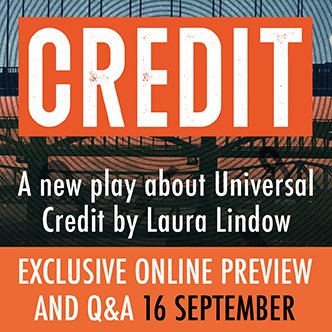
As a researcher, it is not every day that you get to work alongside talented artists, actors and writers. I recently had this privilege as part of the planning and development of theatre production Credit. The play was prompted by research commissioned by Gateshead Council, which showed the negative impact of Universal Credit on vulnerable claimants and staff supporting them in North East England. We were grateful to participants who shared their stories so openly and wanted to use the findings to prompt wider debates about welfare reform, beyond published academic papers.

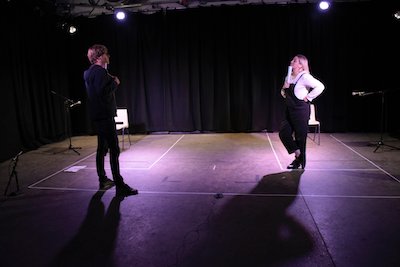
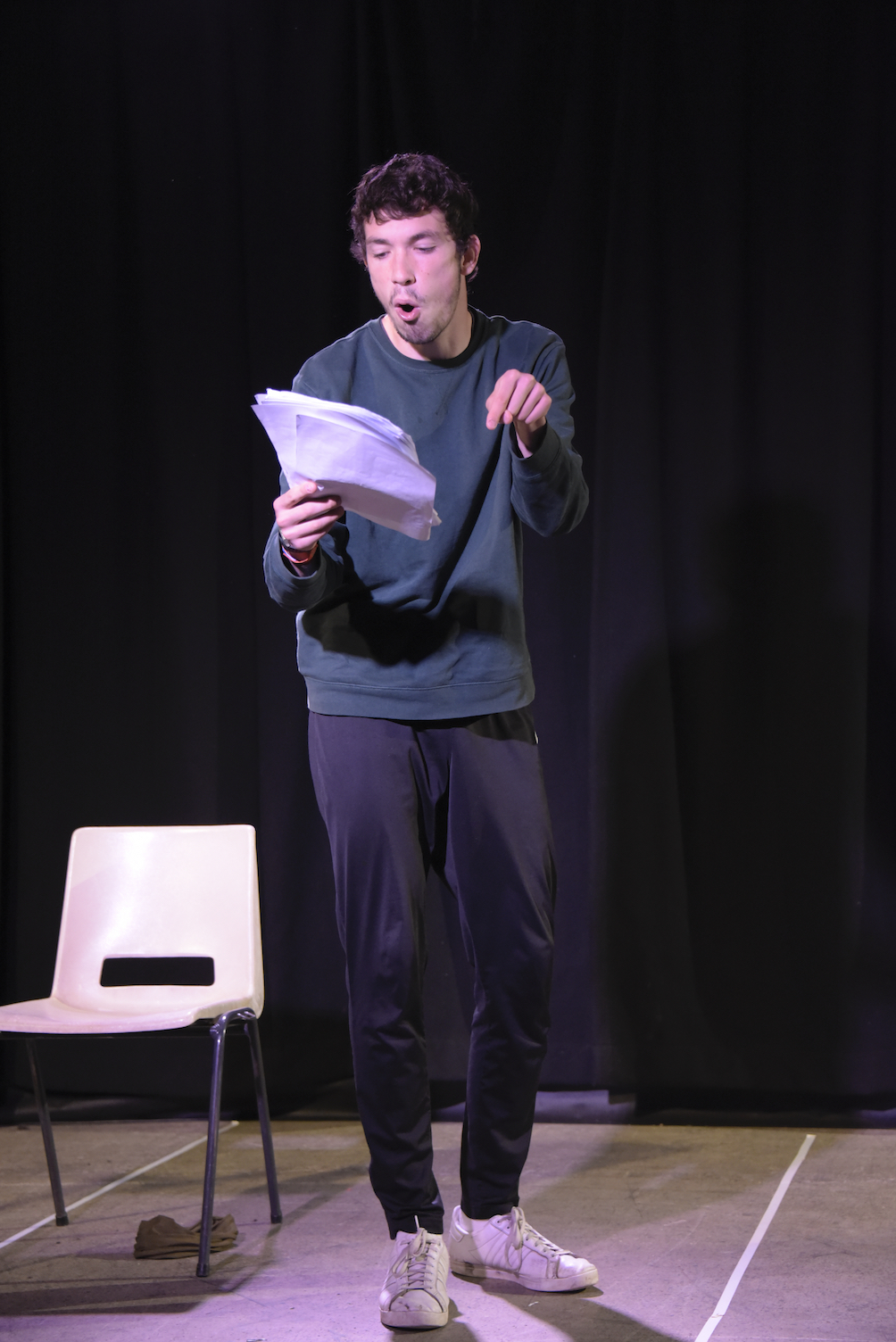
I had limited knowledge of Universal Credit before starting the research in 2017, when community members began voicing their concerns about the roll out. I was shocked by the insights gathered during the fieldwork in 2018. Credit was the culmination of a collaboration with Cap-a-Pie theatre company, who we approached with our ideas. Unfortunately, plans for a theatre production were shelved in April because of the COVID-19 restrictions. The team worked hard to create an online rehearsed reading of part of the play, brilliantly performed by two skilful actors. Supported by a panel of knowledgeable and passionate local and national speakers, we negotiated the challenges of an online post-show discussion. We were unsure how it would go, as we joined by more than 400 people who watched the 40 minute extract from the play. Over 150 stayed for the live Q&A and discussion afterwards, providing thoughtful comments and feedback.

During the panel discussion following the evening performance, the writer, Laura Lindow, commented that she hoped the audience could “hear her own fury in the poetry”, hoping it would “smack everyone around the ears”. The reactions from the Q&A suggest that participants felt similarly moved, describing Credit as: 
“Brilliant, angry, urgent work”

“Extremely powerful and incredibly important”

“I had tears in my eyes watching this”

“Heart breaking, but very realistic. Especially poignant was the reference to starvation”

“The reference to loan sharks took my breath away, eased so gently into lives, but so destructive”
The questions, observations and exchanges with panel members were insightful and engaging. The audience challenged us as researchers to think about how to move beyond the echo chambers of online events to ensure the messages reach those in positions of power to affect change.

As a result of this screening, we have made more connections, with people who have claimed Universal Credit, and academics doing research in related areas. Maria Thompson was one of the people we met following the post-show discussion and you can read about her personal experience of Universal Credit in this accompanying blog post. We also made links with people keen to use the arts to communicate their research findings, engage others in wider debates and challenge us to act: 
“Lyrical, hard hitting, honest writing”

“Beautifully written and acted”

“Speaking truth to power is all we can do and this play was a great example”

“How do we fight negative perceptions of benefit claimants? How do we continue to show the need for a supportive welfare system?”
In the feedback, participants commented on the importance of changing negative stereotypes about claimants. At the end of the evening performance, Patrick Butler, social affairs editor from the Guardian newspaper called on revisions to UC to be made with the input of claimants who have direct experience of the system.
“For me, a decent social security system is a citizen's right. It has to be effective, it has to be humane. I think it has to be an entitlement, not a privilege or reward for good behaviour.”
We’re keen to use the play in different ways to stimulate debate and reflection. Emotions clearly have played a role in galvanising action. We have received requests to use it in staff training and to promote arts/research collaborations. As one participant commented:
“We don’t make best use of art in public health. This is such a moving and poignant play. My hope is that one day we can get it into mandated training in the NHS.”
The diversity of claimant experiences has increased enormously since COVID-19, but the stigma is far from disappearing according to debt charity Turn2Us. Recent reports by the National Audit Office (2020) and the Work and Pensions Select Committee suggest that there is still a long way to go before vulnerable claimants’ rights are protected. Perhaps this is the moment for government to show they have listened to those voices who have long campaigned for meaningful change, to ensure that Universal Credit provides the safety net that people need in times of adversity and to keep the changes to the standard allowance introduced as a result of COVID-19.

If you missed the last performance of Credit, we are planning to show more performances in 2021, so keep an eye out. We are working on a short film with extracts from the rehearsed reading of Credit and interviews with those who support claimants, who were involved in the research, script development and production. This will be available on YouTube in the New Year. We will continue our efforts to raise awareness of this important issue and look forward to working with others keen to do the same.


Acknowledgment

We are grateful to the funders, Newcastle University, Catherine Cookson Foundation and Arts Council Lottery Fund for their support and flexibility.

Saturday, 9 May 2020

This crisis has shown how many people were only just about managing

Mandy Cheetham, Research Associate from Teesside University, on the community response to the coronavirus crisis


I have been working as an embedded researcher at Larkspur House, a community project run by the charity Edberts House, funded by Big Lottery, to build happier, healthier and safer communities since October 2019. I started there, not long after it opened, to explore what difference the project is making, and fieldwork was well underway when COVID-19 struck. The project reluctantly had to take the decision to close and the groups and activities temporarily stopped. Like many others, I started working from home, feeling helplessly disconnected from people that I’d got to know, and wondering how everything was going.

A phone call from a colleague at 6pm on 30 March changed all that with an invitation to get involved in the multi-agency response to the COVID-19 crisis. Larkspur House was to morph into one of nine community hubs co-ordinated by Gateshead Council distributing food parcels, delivering prescriptions and offering support to people who are medically and socially vulnerable. I jumped at the chance, and since then, it has been something of a rollercoaster. We are a small, multi-disciplinary team, with complementary skills, talents and experience in an extremely busy hub. We phone people who have contacted the council for help to see what they need. In 4 weeks, we have delivered 250 food parcels to approximately 1000 people in the local community and three neighbouring estates. It’s important, exhausting, rewarding and at times frustrating work. It has revealed enormous generosity, neighbourliness, resilience, kindness and anxiety in the communities we serve. The crisis has also shown how many people were only just about managing day to day.

Since the lockdown started, I have listened to people who are fearful for their lives, worried about how they, their families and friends are going to manage through this crisis; the precariousness and embarrassment of people having to admit they are down to the last packet of pasta; people having to borrow from neighbours, family and friends; at the end of their resilience facing additional hurdles; people relying on Universal Credit, who’ve been sanctioned pre-lockdown and whose money has been stopped for 4 weeks during lockdown; the family with 4 children under 7 whose utility company cut off their gas supply leaving them without hot water or heating; the response of an unflappable team member who calmly and unquestioningly dropped off a food parcel and topped up the gas meter at 9pm on a Friday night to help a family through the weekend.

People who are routinely going out of their way to help people through this; pharmacists working flat out to process and deliver prescriptions, family members in touch with concerns about parents, grandparents and great-grandparents who they cannot help for fear of putting them at risk. The kindness and dependability of the volunteers from the estate who deliver daily packed lunches to children on free school meals, including on Good Friday and Easter Monday. The same volunteers who methodically planned, packed and delivered more than 300 craft packs to go out with donations of Easter eggs in the local area. The drivers and volunteers delivering the food; the unquestioning generosity of supermarket managers in local shops who I have approached for donations of bread, eggs, toiletries, nappies, baby wipes and fresh vegetables to include in the emergency boxes we distribute. The teachers, assistants and school staff looking after key workers’ children and children of families who need extra help. The humour of the Larkspur craft and natter group, formed by staff in response to being unable to meet weekly, so people can offer encouragement and support remotely, sharing tips, knitting hearts and NHS bears for patients and their families. People’s willingness to help where they can in creative and diverse ways; the unrelenting drive and ambition to help people through this awful, unprecedented crisis.

In such a short space of time, it has revealed so much of what can be achieved when we pull together, build on the trusting relationships and networks we have developed, sometimes over years, with respect, kindness, compassion, thoughtful leadership and careful co-ordination, non-judgemental and flexible approaches. It is, and continues to be a privilege to be part of this team. It couldn’t have happened in the way it has without the community members, staff and volunteers from Larkspur House whose nimble, agile response has made a tangible difference to local people. Relationships have been strengthened and cemented; bonds that will last.

Some people are saying the world has changed forever. I hope it is for the better. I hope the academic and research community has been able to show what a difference we can make when we work together, in collaboration with local communities, responsive voluntary organisations working alongside staff from local government, NHS, and education. Universities can claim to be part of a wider civic response, and at times like this, we can contribute in multiple ways. Whether our area of research is on vaccines, testing, contact tracing, epidemiology, modelling, food poverty, Universal Credit, welfare reform, nutrition or any other area of public health, there are multiple ways to be useful in the short, medium and long term. It involves working with others, as part of teams generating solutions together. We need to accept we do not have all the answers, we are part of a jigsaw of possible responses. That might mean moving out of our comfort zone, rolling up our sleeves and packing food parcels with colleagues and communities who will remember you were there with them when it mattered.

There are wider issues of course, longer term policy issues to focus our attention on, including policy issues to do with Universal Credit, welfare reform and its impact, which pushed people to the edge of coping before COVID-19 started. But for now, there are more pressing issues of food and prescriptions to deal with. Your local area will have its own responses and networks in place, formal and informal. If you’re shopping for others, that’s great. Can you safely check on neighbours around you? When you’re in the supermarket, foodbanks need your donations more than ever. Find out what they need. For the hubs, tinned meat, tinned fish, coffee, UHT milk, cereal, washing up liquid, shower gel and shampoo are useful. If you are in a position to donate, please do. Find out where your local voluntary organisations are helping and how you can support them. If you want to find out more about the charities involved in the Gateshead hubs, visit https://www.ageuk.org.uk/gateshead/help-pages/coronavirus/ or http://edbertshouse.org

Friday, 25 January 2019

Universally discredited?

Posted by Mandy Cheetham, Research Associate, Teesside University and colleagues.

I listened to the budget in October 2018 in anticipation of an announcement about Universal Credit. We had just completed a study commissioned by Gateshead Council about the impact of the roll out of Universal Credit. I had been profoundly moved by the accounts of Universal Credit claimants with health conditions and disabilities who participated in the research. In a budget for “strivers, grafters and carers”, Philip Hammond announced that the “period of austerity was coming to an end”. He promised an additional £1 billion over five years to ‘smooth the transition’ to Universal Credit. Despite acknowledging “genuine concerns” about implementation of the programme, “Universal Credit is here to stay” Hammond asserted.


Two weeks after the budget announcement, I had the pleasure of meeting Philip Alston, the UN Special Rapporteur for Extreme Poverty and Human Rights, who was visiting the North East as part of his UK tour. We presented the findings of the Universal Credit research and he asked probing questions about the implications. We were not alone in drawing attention to concerns about the adverse effects of Universal Credit on people with disabilities. A statement of Alston’s conclusions can be found here.

Our research report was published on 15 November and the findings covered by the Guardian and Independent newspapers, local radio and television news.  Doctors’ concerns about Universal Credit were also highlighted in a British Medical Journal feature which cites our research.

The research team and Gateshead's Director of Public Health have received emails from people sharing their experiences and thanking us for raising this important subject. It has been highlighted by the Association of Directors of Public Health. I have met with local MPs, elected members, and senior managers in the Council and voluntary sector in Gateshead where I work as an embedded researcher. The findings have been shared with Department for Work and Pensions staff and we have been invited to the House of Lords. This kind of (inter)national interest is rare and a bit overwhelming! The research was made possible, because Gateshead Council commissioned it. Independent academic research of this kind is essential if we are to understand the impact of government policy on North East communities.

The findings raise questions (again) about public health advocacy and research. What is our role if not to work with communities whose voices are often unheard or ignored in policy to enable their views and experiences to contribute to debates (Smith and Stewart 2017[1]). This research demonstrates the power those voices can have when assembled using robust qualitative research methods and in the absence of any other data. The policy changes taking place under the guise of welfare ‘reform’ present huge challenges to public health and wider efforts to address health inequalities. If Universal Credit continues to be rolled out, vulnerable claimants will continue to endure hardship and destitution. Suicide rates will rise and the human and financial costs to the health and social care system will increase. As public health researchers, we have a duty to raise awareness of the effects of a policy which is undermining the health and wellbeing, employment prospects, food, financial and housing security of the most vulnerable people in society. It remains to be seen whether the government is listening to a growing body of evidence (Arie 2018[2], Cheetham et al 2018[3], Walton 2018[4]) about the impact of Universal Credit or whether, as Philip Alston (2018: 1) observed, ministers will continue to dismiss concerns and doggedly resist change in response to the many problems highlighted.

Mandy will present her research at the Fuse Quarterly Research Meeting: The impact of Universal Credit on health & wellbeing in Gateshead.  Find out more on the Fuse website.


About the authors:
Dr Mandy Cheetham Research Associate, Teesside University
Dr Suzanne Moffatt Reader in Social Gerontology, Newcastle University 
Dr Michelle Addison Research Associate, Newcastle University 
Alice Wiseman, FFPH, Director of Public Health Gateshead Council

The views expressed here are those of the authors and do not necessarily reflect those of the author's employer or organisation.


References:
  1. Smith and Stewart (2017) Academic advocacy in public health: Disciplinary 'duty' or political 'propaganda'? Social Science and Medicine Sep;189:35-43. doi: 10.1016/j.socscimed.2017.07.014. Epub 2017 Jul 21.
  2. Arie, S. (2018) Doctors concerns over universal credit are mounting BMJ 363: doi: 10.1136/bmj.k5131 5th December 
  3. Cheetham, M. Moffatt, S. Addison M. (2018) “It’s hitting the people that can least afford it the hardest” The impact of the roll out of Universal Credit in two North East localities: a qualitative study. Gateshead Council, Teesside university and Newcastle university and Fuse, the Centre for Translational research in Public Health https://www.gateshead.gov.uk/media/10665/The-impact-of-the-roll-out-of-Universal-Credit-in-two-North-East-England-localities-a-qualitative-study-November-2018/pdf/Universal_Credit_Report_2018pdf.pdf
  4. Walton, E. (2018) Life and Times A truth universally acknowledged: moving to Universal Credit leads to large debt and poor mental health British Journal of General Practice 68 (677): 577. doi: https://doi.org/10.3399/bjgp18X699977. 

Friday, 31 March 2017

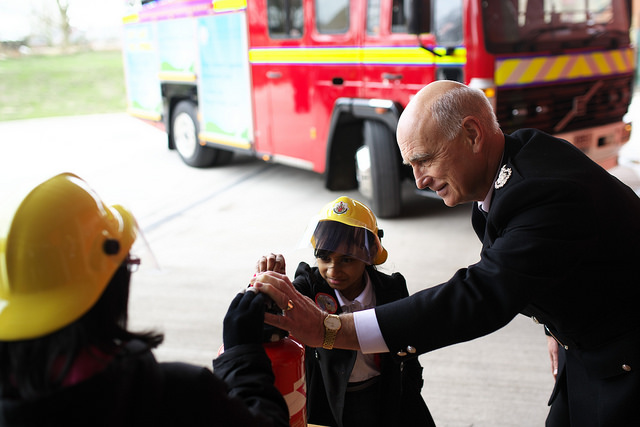
Do public health practitioners make good fire fighters?

Posted by Peter van der Graaf, AskFuse Research Manager, Teesside University

Given ongoing budget cuts and diminishing local capacity, one might be forgiven for thinking that soon public health practitioners will only be responding to emergencies, such as disease outbreaks and substance abuse epidemics. Fighting these public health fires would leave little time and resources for prevention and working with other public organisations. An event co-organised by Fuse, Durham County Council and Darlington Fire & Rescue Service recently proved quite the opposite: fire fighters and other public organisations are very capable of ‘doing’ public health.

Can public health researchers learn a trick or two from fire fighters?
The increasing focus of the Fire and Rescue Services on prevention over the last 10 years has seen the development of innovative approaches that support public health: from helping people with dementia, to tackling child obesity and getting people active (for some excellent examples, see the Local Government Association (LGA) report Beyond fighting fires).

In Durham, the Fire and Rescue Service implemented so-called Health and Wellbeing Visits. As part of home visits to check fire safety, fire fighters ask residents questions about their health and wellbeing (e.g. about falls, smoking and alcohol use, heating and loneliness and isolation) and provide them with advice or signpost residents to relevant services to address any health concerns.

Over the past year (Feb 2016 – Jan 2017), no less than 15,732 Health and Wellbeing Visits have taken place with over 1,800 referrals to various services in Durham and Darlington, accessing vulnerable residents that are often not on public health’s radar. Because of their trusted reputation, the Fire and Rescue Service can get behind the front doors of these people and help them access health services. Perhaps not surprisingly most referrals relate to loneliness and isolation, with an ageing population keen to live at home independently but with a social care system lacking resources to support these people in and outside their homes.

Even the police is getting in on the act of public health prevention with partnerships being established between health and the police across the UK to support, among others, suicide prevention and reduce alcohol-related harm, as was recently illustrated in a Public Health England paper.

In turn, public health practitioners are taking on new activities that were previously deemed outside of their scope. For instance, the Durham County Council’s public health team is actively supporting energy efficiency improvement schemes (such as Warm and Healthy Homes), in recognition of the link between excess winter death and cold houses. Poor quality housing, low incomes and high energy costs result in residents having to choose between food or fuel. To prevent residents from having to make that choice, council officers are providing tenants at high risk (e.g. people with cardiovascular and respiratory conditions) with new central heating, boiler repairs, home insulation and energy saving advice.

This blurring of boundaries between public professionals is not new, but public health moving back into local authorities has created opportunities for linking prevention activities across a wider range or organisations. The event provided many other examples of this, e.g. GPs prescribing boilers to patients with long-term conditions and Citizens Advice providing welfare rights advice to elderly residents.

This new boundary blurring builds on existing policy initiatives, such as Making Every Contact Count and Health in All Policies, which all involve the wider public health system. Participants at the event made it clear though that this is not a simple cost-saving exercise, allowing councils to pass the public health buck to other parts of the system. Instead, these new partnerships are characterised by a genuine exchange of knowledge and practices between public organisations at the front-line. It highlights a new way of working that recognised joint priorities and the values of other professions to achieve these priorities through the sharing of resources and by taking on new roles. As Professor David Hunter outlined in his presentation at the start of the event, these new partnerships require a different form of leadership, which is less hierarchical and formal, not so much concerned with Key Performance Indicators and commissioner-provider splits, but more focused on the value of relationship building, trust and 'soft' skills.

The event provided a platform for looking at these new partnerships and the evidence for their effectiveness. If anything, it highlighted a challenge for public health academics to research these new partnerships: how to make sense of the contribution of each partner in a system where boundaries are rapidly blurring? Maybe public health researchers can learn a trick or two from fire fighters.

Find out more about the event: Creating Healthy Places in the North East: the Role of Fire and Rescue Services and Fuel Poverty Partnerships

Photo attribution: "Rochdale Fire Station Opening Day" by Manchester Fire via Flickr.com, copyright © 2014: https://www.flickr.com/photos/manchesterfire/13288225965/

Friday, 17 March 2017

Food as a job, life and research: the many meanings of what we eat

Posted by Amelia Lake, dietitian and public health nutritionist & Fuse Lecturer in Knowledge Exchange in Public Health, Durham University

Food is my job. As an academic dietitian and public health nutritionist I spend my time questioning why people eat what they eat, and thinking about what we can do to change behaviours. As a mum, I also spend a lot of time at home wondering why a 4-year-old and a 17-month-old eat what they eat!

Its nutrition and hydration week, which aims to highlight, promote and celebrate improvements in the provision of nutrition and hydration locally, nationally and globally. So this is an excellent opportunity to explore the many roles of food in public health.
Top shelf material

Food is life. We need nutrition and hydration for life and to maintain health.

Food is a thread that moves through every aspect of our life from the everyday to the special occasion.

I read somewhere that the origin of culture was when raw ingredients were cooked. The importance of this event was not so much in how food was prepared but in the organisation of individuals around meals and meal times.

Food has shifted populations and started wars; think of the thirst for sugar, tea and coffee (also known as the ‘hot drinks revolution of the eighteenth century’) and the impact that had on various countries and their populations.

Food is our culture and identity; it is an intrinsic description of who we are and where we come from. For example, I am a complex mixture of Persian dishes, Indonesian dishes and some Northern Irish wheaten bread and Tayto crisps.

Food is our comfort. That dish your mother made, it’s a warm familiar blanket; it evokes memories, both good and bad. It is a way in which we show others that we care for them and are thinking of them.

The party bag horde - a focal point for arguments
Food is a focal point for arguments: “No you can’t have any more sweets from the party bag…” A conversation every parent has at one point or another.

Our social media feeds provide us with ‘food porn’, hands that whizz up magical results in seconds. Additionally, social media and the press provide us with self-styled food and nutrition 'experts' presenting us with spiralised courgette and clean eating advice.

Food continues to dominate our life and the public health agenda on a global scale.

The World Health Organization’s global targets for 2025 to improve maternal, infant and young child nutrition tackle a range of issues from obesity to stunting and wasting.

In this country we are familiar with the concept of our obesogenic environment; an environment in which calories are easily accessible and available and with little opportunity to expend that energy. In an attempt to tackle the obesity problem in this country our government will follow Mexico and introduce a sugar levy.

Despite the issues of over-nutrition and the seemingly endless opportunity to buy food, food poverty is a term we have become more familiar with. Despite it sounding like it belongs to another era, it’s a very real issue for a significant proportion of our population. Oxfam estimates that 500,000 people in the UK are now reliant on food parcels. Foodbanks provide nutrition to those who struggle to feed themselves and their families and have sadly experienced rapid growth in recent years, especially in the UK.

How can research help to address these global and local problems?

Free fruit with every purchase
Within Fuse ‘food’ runs through a number of research themes, from behaviour change to healthy ageing. As part of the national School for Public Health Research, a team of Fuse researchers has evaluated a food training programme run by Redcar and Cleveland Council. To promote the findings from this research we decided to create a short film and this week were filming in a small sandwich shop in the market town of Guisborough, where you were offered a free piece of fruit with every purchase. This small business owner’s focus is food. She provides food to customers every lunch time. This owner had attended the training course run by the Council and decided to make a difference by providing more healthy food.

This is an important step, supported by research. On this nutrition and hydration week, I am sure you will agree that there is still much to be done on this important and vast topic across many disciplines and on a global scale.

Thursday, 3 March 2016

Practice what you preach

Guest post by Robin Ireland, Chief Executive, Health Equalities Group and Director, Food Active

I am invited to review the morning papers on a regular basis for BBC Radio Merseyside. I mainly pick health subjects to discuss and went for air pollution last week. A recent report suggests that 40,000 premature deaths annually in the UK are attributable to outdoor air pollution. The biggest contributor is diesel engines and we obviously need national policy in place to support people to make the switch; ideally to walking, cycling and public transport but - at a stretch - to engines not kicking out toxic fumes.

I had cycled to the studio that morning, as I usually do, but mentioned I own a car as well. The DJ focused on me and said, “I bet it’s a diesel …..”

Which got me thinking about practising what we preach. Instead of constantly haranguing people to eat better, exercise more, not smoke etc., are we putting our own house in order?  Yes, this can be important on an individual level, but it is critical at a population level.

We look to Government for legislation to support our healthier lifestyles and I was disappointed to hear about the latest delay in the publication of the Childhood Obesity Strategy. Yes, I would like to see a tax on sugary drinks and yes, I would like to see more controls on the marketing of junk food and drinks to young people.

But I would also like to see more powers to local authorities in their efforts to promote healthy weight. This is in fact what the Health Select Committee on Obesity recommended back in November: “Greater powers for local authorities to tackle the environment leading to obesity”

Blackpool Council sign the Local Authority Declaration on Healthy Weight
Back in August 2014, the North West’s Healthy Weight campaign, Food Active, invited Action on Smoking and Health (ASH) to give a presentation in Manchester on their Local Authority Declaration on Tobacco Control. Could this approach also work for overweight and obesity? Essentially, can local authorities look in-house at their own polices to see how they impact on healthy weight?

Healthy Weight has proved to be a lot more complicated than Tobacco Control – I am not in any way suggesting that the latter is straightforward either – as of course we don’t have a product that is toxic in every way!

What has now become the Food Active Local Authority Declaration on Healthy Weight, has gone through many iterations and discussions. Our governance team, which includes myself and local public health practitioners and academics, considered a number of options. Should a Declaration be focused purely on sugar for example? Food Active decided not, as local authority policies on healthy weight would be much the same and could be positive (around encouraging active transport for example) as well as negative.

Of course Sugar Smart Cities, launched at the end of last year in Brighton, is an alternative equally valid approach where, given the evidence base around the amount of sugar in our diet, it has been singled out as a target.

On 20 January 2016, Blackpool Council became the first local authority in the country to pass the Local Authority Declaration on Healthy Weight. It was signed in front of cameras in February by the local Director of Public Health and the Cabinet Member for Reducing Health Inequalities.

The Declaration commits an authority to take measures (there are 12 listed) where possible to, for example: “protect residents from the commercial pressures and vested interests of the food and drink industry ….” and “consider how strategies, plans and infrastructures for regeneration and town planning positively impact on physical activity”. For the full list please visit www.foodactive.org.uk.

So Blackpool Council are practising what they preach and they are doing their best to take on a complex and challenging task. As the declaration states: “We recognise that we need to exercise our responsibility in developing and implementing policies which promote healthy weight”. It won’t be a piece of paper that lies on a shelf …..

And, no, I don’t have a diesel engine in my car.