Showing posts with label review. Show all posts

Friday, 10 December 2021

Once upon a time in research... the power of storytelling for scientific communication

Posted by Peter van der Graaf, Associate Professor, AskFuse Research Manager & NIHR Knowledge Mobilisation Research (KMR) Fellow, Teesside University

A Christmas story about gifting knowledge (featuring Evidence Man)


It was the week before Christmas. After a long day in the office at her university, Ana Lyst rushed out to do some last-minute Christmas shopping. She had been too busy writing grant applications and journal papers to even think about presents for family and friends. It was already dark, with a stiff, cold breeze and snow started falling around her.

As she approached the high street, Ana noticed a bookshop she hadn’t seen before. It looked rather grand, a bit like an ivory tower, but with more doors. Through large windows at the front, she could spot frantic people in white lab coats running between the shelves, carrying big loads of paper and folders. ‘Bingo!’, she thought: books make great Christmas presents and I can sort out all my gifts in this one shop. She merrily stepped inside and was greeted by a large, vaulted ceiling underneath which stood endless rows of books in all shapes and sizes, reaching all the way to the ceiling. On first impression, the books looked rather dull and colourless, many of them gathering dust, with long, incomprehensible titles edged on their spines in gold.


Undaunted by the ambush of knowledge and people, Ana walked over to the applied research section (which sported a large swirly sign, fusing five different colours) and spotted several books that looked like decent presents for friends. Taking them to the till, she was met by a stern looking clerk, named Pierre View, who inspected the books carefully and with an authoritative tone explained that many of the selected books were not yet ready to leave the bookshop, as they needed more work and review. Could she please come back in 17 years to collect them? The 14% of books that were ready to leave, were neatly packaged in shiny, glossy covers with pictures and key phrases all over them that Ana Lyst was sure would really impress her friends.

However, when she tried to leave, Ana noticed that there were many doors to exit the shop (the entrance was no longer visible) and when she tried the first door in front of her, it wouldn’t open. She went to the next five doors with the same result: all of them were firmly locked, or the ones that did open led to a dead-end. Ana started to panic and her earlier optimism
 quickly melt away, replaced with visions of being stuck in the bookshop over Christmas with not a mince pie in sight.
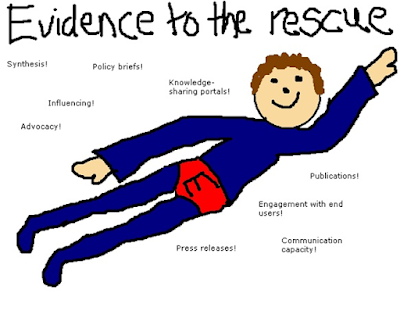
At that moment, a small backstage door hidden in a corner of the shop opened and a bold bespeckled man stepped out, fully dressed in a superhero outfit with bright blue tights and top (that looked a bit too tight), over which she wore red underpants featuring a large letter ‘E’. Ana Lyst didn’t know what to make of this man, but he looked friendly enough and was walking over to her to offer his services. As the man came closer, he produced a large set of antique brass keys from beneath his cape and began opening several doors. “Are you a bit lost?”, asked Evidence Man (for that is who he was) in an accent with a Dutch lilt. “Stuck between here and the outside world? Not to worry! I know the way out to some safe spaces with a friendly audience who would love to hear all about the books you just bought. They would even be interested in the ones that are not ready yet, and they might have a few books of their own to share with you. Shall we go?”

True to his word, when Ana stepped through the first door unlocked by Evidence Man, she emerged back in the now snow-covered high street, where a group of her friends were waiting and, even better, one of them was carrying a large plate of mince pies! Ana Lyst’s spirits lifted immediately, and she vowed to tell her friends all about the helpful Evidence Man in the bookshop. But when she turned around, the nice man had disappeared and through the windows of the bookshop could be seen flying to assist another confused customer.

The End.


The power of storytelling for scientific communication


I was inspired to write this Christmas tale (and blog) after attending a storytelling workshop at the Fuse end-of- year social event on 3 December, which was led by Duncan Yellowlees. Duncan is a Communications Trainer who works with researchers to improve their communications, confidence, and impact. Take a look at his online COMMunity website (Research Comms … but better) to find out more. 

In an engaging and entertaining way, he took us through the key elements of storytelling: from key principles (putting pictures in people’s heads; construct a narrative of causes and effects), to different types of stories (metaphorical, motivational or monster stories, stories as hooks, and point-of-view stories), their structures (problem, solution and results) and what to include in stories (the point, examples, people, heroes & villains, magical helpers, and tensions & conflicts). Did you spot any of these elements in my story? Scroll down to the bottom of this post for spoilers.

Overall, Duncan provided plenty of tips and tricks on how we can use storytelling as academic researchers to communicate our research findings to wider audiences. And this relates directly to the first point (and story) that he made during the workshop: researchers spend too much time throwing the ball (their research findings) but not nearly enough time on making sure there is someone there to catch it (knowledge users). Find your audience first and make them pay attention before you start talking about your research.

His second point was that all this might seem daunting: so many different techniques, plot lines and structures to think about, how can we ever get any good at this? But when comparing it to learning to drive a car, the same principles apply: keep practicing and it gradually (and sometimes quite quickly) becomes second nature. This is because storytelling is already embedded in everything we do in our daily lives: from telling our family and friends about our everyday experiences, to reading books or ‘binging’ on Netflix series.

Finally, Duncan suggested some simple techniques for storytelling in science communication: making stories relatable and relevant (e.g. stress before Christmas) by including named people and adding details (e.g. dark, snowy high streets and describing the interior of the bookshop), which start to paint a picture in people’s heads. Most importantly, start with a hook: a story to draw in your audience, so they want to hear more, or use a question or bold statement as bait (e.g. only 14 percent of research makes it into practice and policy after 17 years).

My story might not have been all you hoped for this Christmas, but the Fuse social event brought some useful gifts for the Fuse Communications toolkit and much needed festive cheer at the end of another challenging academic year. 

Merry Christmas everyone and happy storytelling!


Spoiler alert:
  • The point: knowledge mobilisation between academia and practice is facilitated by a knowledge exchange broker. Plus some points about the time it takes and difficulties faced by researchers when trying to get research into practice and policy.
  • Heroes: academics producing research and papers, while running between bookshelves.
  • Villain: Bookshop clerk (Reviewer 2).
  • Magic helper: Evidence Man (Knowledge Exchange Broker)
  • Tensions & conflicts: research dusting away on bookshelves or not being ready to leave the building, while access to knowledge users is restricted or confusing.
  • Type of story: metaphorical story, overlapping with stories as hooks (to introduce this blog and talk about the storytelling workshop).

Friday, 8 October 2021

Can Forest School inspire the next generation to be happy & healthy?

Posted by Katie Beresford, undergraduate student, Durham University

Katie completed a 6-week NIHR School for Public Health Research (SPHR) internship with Fuse based at Durham University in summer 2021. She was supervised by Fuse / NIHR SPHR PhD student, Sophie Phillips.

Richard Louv, in his book Last Child in the Woods, theorises that lack of connection to nature is causing a plethora of health problems in children. Can reconnecting children to the natural world provide a holistic solution to health and developmental issues?

Growing up in the Lake District, I spent my childhood climbing trees, swimming in rivers, and making mud pies. Embracing nature and enjoying letting my imagination reshape the world around me was part of my everyday life. In contrast, I found school restrictive and struggled academically in my early years – often being described as a ‘late developer’.

While completing my NIHR SPHR summer internship within Fuse, I reviewed literature discussing the effectiveness of Forest School as a public health intervention. One article titled: The hare and the tortoise go to Forest School: Taking the scenic route to academic attainment via emotional wellbeing outdoors struck me as similar to my own story, describing how children considered ‘behind’ their peers could catch up, like the tortoise in Aesop's fable. Now nearly two decades later and about to go into my final undergraduate year at University, I truly believe in the power of the outdoors to inspire children to be curious and healthy individuals.

Forest School is a child-led educational practice, whereby children spend time in a Forest or woodland under the guidance of a trained Forest School practitioner. The ethos and philosophy of Forest School is based on a rich heritage of outdoor learning. This ranges from whole movements such as the romantic movement, which exalted the sublimeness of nature as a push-back against the industrial revolution, to the work of individuals such as the great educationalists like Steiner and Montessori. However, the concept of ‘Forest School’ emerged originally from Scandinavia, where in many cases children spend their entire early years education playing outdoors.

The practice developed in the UK in the early 1990s and is ubiquitous across the country today. Although much of the practice in the UK places emphasis on freedom and play, often activities are incorporated into the sessions designed to connect the children to the natural world. Forest School aims to be beneficial for the holistic development of children, offering a wide range of social, emotional, cognitive, and physical benefits.

My summer internship consisted of writing up a literature review which drew on both the current research on Forest School and the thoughts of practitioners and stakeholders in the field. I considered both the effectiveness of Forest School on the health and development of children and the accessibility of the programme.

Due to its rapid growth, there is still much work to be done on improving the evidence base for Forest School, but in general there is huge enthusiasm from researchers and practitioners alike on the effectiveness of the practice. Forest school appears to equip children with social skills such as teamwork and collaboration; emotional skills such as resilience and self-esteem and cognitive skills like problem solving. There is evidence that it also increases children’s levels of physical activity and improves their appreciation of nature.

But, perhaps the most striking finding was that Forest School not only had an impact during the session itself, but long after the children stopped attending the Forest School. Through the pure enjoyment of being outside and not bound up by the norms of classroom behaviour, the children were inspired to be curious about the world around them. They started asking questions and thinking creatively and collaboratively.

Taking the scenic route to academic attainment
Some studies found that through attending Forest School, children who were academically behind their classmates caught up to a similar level of academic attainment since their interest in learning had increased. Forest School impacted children’s overall wellbeing, as it encouraged them that physical activity and spending time in the outdoors could be fun and rewarding. The children were therefore more likely to want to exercise and complete similar activities to Forest School in their own time – asking parents to take them to local natural spaces after school and at the weekend. Conversations with practitioners showed that this was pivotal to challenging the cultural lifestyle of families, especially in more deprived areas, improving perceptions of what it means to be healthy.

In a changing world, where children spend far less time outside as a result of factors like the increase of technology and availability of entertainment, Forest School offers an innovative and holistic approach to reconnecting children with nature. Through this, we can hope to inspire the next generation to be the curious, positive, and healthy individuals of tomorrow.


This project was funded and supported by the National Institute for Health Research (NIHR) School for Public Health Research (SPHR), Grant Reference Number PD-SPH-2015. The views expressed are those of the author(s) and not necessarily those of the NIHR or the Department of Health and Social Care.

Part of our Fuse blog Student Series
The Fuse blog Student Series showcases posts by students who have been challenged to write a blog as part of their studies at one of the universities in the Fuse collaboration, the NIHR School for Public Health Research, or perhaps further afield. The authors may be new to blogging and we hope to provide a 'safe space' for the students to explore their subject and find their voice in the world of public health research.


Images:
  1. Photo by Markus Spiske on Unsplash
  2. The Tortoise and the Hare. From Childhood's Favorites and Fairy Stories, by Various. Project Gutenberg etext 19993 http://www.gutenberg.org/etext/19993. From Wikimedia Commons: https://commons.wikimedia.org/wiki/File:The_Tortoise_and_the_Hare_-_Project_Gutenberg_etext_19993.jpg

Friday, 23 October 2020

Can your education, income or even your job affect your chances of receiving newer cancer treatments?

Posted by Ruth Norris, PhD Researcher, Newcastle University

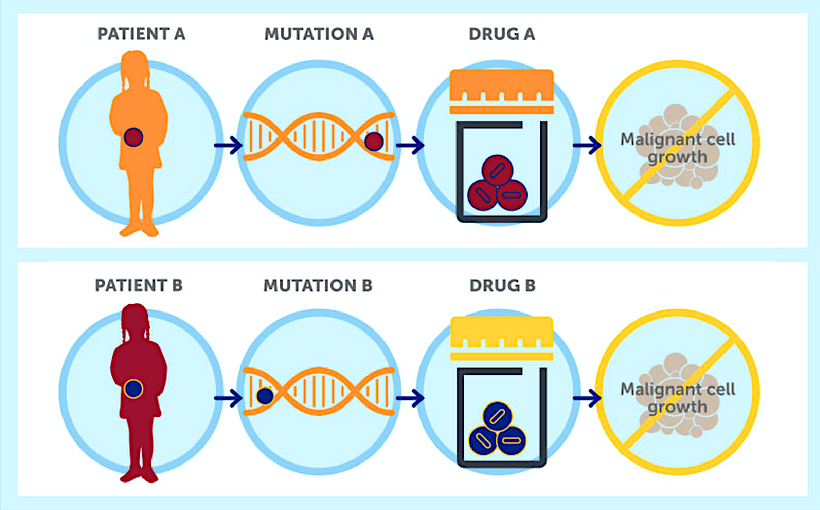
The way we treat cancer is rapidly changing. We know that individual cancers cause different genetic changes and that new drugs targeting these differences could help improve treatment. This approach is known as precision medicine. In addition, there are treatments using the immune system to attack the cancer, known as immunotherapy. The number of these new treatments have grown hugely over the past few years. In 2018 alone, they accounted for over 90% of the new cancer drugs being developed. These new treatments are also often associated with hefty price tags. For example, immunotherapy as a course of treatment for advanced lung cancer, can cost over £80,000.


Used alongside these new treatments are specific biomarker tests, which help determine if the cancer is likely to respond to these drugs. Doctors use this information to guide decision making so that in theory, the right patients, who will benefit the most from these drugs, receive them. Without biomarker testing it may be impossible to access these drugs or use them appropriately. 

Sounds great, so what’s the catch?

Unfortunately, we know with traditional cancer treatments (surgery, chemotherapy and radiotherapy), that access is not always decided based on the patients’ needs. There are many complex reasons why this might be - and having a lower socio-economic status is one of them. Socio-economic status means your individual or family’s social and economic standing relative to others. It is measured using factors such as income, education and your job. Socio-economic reasons may impact the number of other health conditions a patient has, their ability to request help or even the conversation they have with a doctor. All of which can affect the treatments they receive and the outcomes from therapy. What we don’t know yet is whether the socio-economic differences we see in traditional cancer treatments are also seen with both biomarker testing and the delivery of precision medicines and immunotherapies described above.

Why is this work important?

The NHS was set up on the idea that treatment should be provided to all on the basis of clinical need. We don’t expect that our level of education, the amount of money in our bank accounts or the power associated with our jobs will affect our access to treatment compared to another patient diagnosed with the same cancer at the same stage and with the same prognosis. Yet if these newer treatments can improve cancer outcomes (for example by increasing tumour responses, minimising side effects and improving survival), socio-economic status should not be a factor in determining access. We already know that socio-economic differences are present in cancer survival, but this could be exacerbated if patients with lower socio-economic status are restricted from biomarker testing and access to new therapies, so we need to assess the size of this problem (if any).

What did we do about it?

To investigate this question, we carried out a new systematic review (reviewing the available high quality research evidence) using 58 previous studies showing information on over 1 million patients. Newer cancer drug access was compared between patients with a low to a high socio-economic status. The review looked at 7 cancers, 5 biomarker tests and 11 cancer therapies. The evidence showed that patients with a lower socio-economic status were 17% less likely to receive newer cancer treatments when compared to those patients with a higher socio-economic status. However, the strength of these differences did vary with cancer type, and were clearest in lung cancer. Similar differences were also seen in access to biomarker testing (often seen as a precondition for new cancer drug access).

Can we trust this evidence?

As 42 of the 58 studies were from the USA, more work is needed using UK data to see if similar patterns are observed here. Also, as studies used different measures of socio-economic status (i.e. some income, others education etc.), we need to be careful making conclusions in case the choice of measure used affects the strength of the findings.

What next?

Our review shows that we need more research questioning why factors such as income and education could still be affecting treatment access when clinical decisions should be guided by the patient and tumour genetics. It is important that whilst continuing the important research in developing new precision medicine and immunotherapies, we work to ensure fair access to all patients regardless of socio-economic differences.

Take home points
  • Cancer treatment is now guided by genetics and new cancer drugs can help personalise care.
  • Having a low socio-economic status can reduce the likelihood of receiving a newer cancer drug and the test linked to your eligibility for the new drug. 
  • We need more UK based research to investigate these differences, to ensure fair access and reduce differences in cancer outcomes.

Thursday, 12 March 2020

A decade of school food policy inertia

To mark International School Meals Day, we asked former-schoolteacher turned school food researcher Kelly Rose from Teesside University to reflect back on the progress of school food over the last decade.


As a former schoolteacher, now researching the secondary school food environment and adolescent dietary habits, it seems fitting to mark school meals day 2020 by reflecting on a decade of secondary school food policy.

Of late, ‘other’ focuses you could say, have overshadowed the important fact that our young people’s diets are nutritionally poor in the UK. But that begs the question, why are the population of future parents and workforce not a priority at all times?

Currently more than 91 million school children around the world are reported to be living with obesity, with the UK being in the top 20 countries for childhood obesity levels, doubling during the primary school years and increasing further into secondary education. The majority of adolescents in the UK have nutrient deficient diets, high in processed foods and very low in fruit and vegetables. With only 4% of teenagers meeting UK public health fibre recommendations, a significant concern given that dietary fibre is linked to a decreased risk of heart disease, type 2 diabetes and cancers. Furthermore, the health inequalities gap is a devastating burden of poor health for our children living in more disadvantaged areas and minority communities, in comparison to those from more affluent areas.

"In my research I have noticed a level of inertia on the evaluation or policing of school food policy this decade"

In my research I have noticed a level of inertia on the evaluation or policing of school food policy this decade, impacting on school’s healthy food choice offerings. Only the other day my friends 11-year-old daughter explained to me the best thing about her new (secondary) school was the food; “I can eat pizza and cookies every day” - oh dear. Kind of explains why our young people are generally low in at least five micronutrients essential for growth, development mood, reproductive health, energy levels and immunity.

2009 – The Nutrient based standards (NBS)

In 2009 the NBS were rolled out to secondary schools in England, after first being introduced into primary schools. Not only were these food standards focused on meeting young people’s nutrient requirements, but also the mapping of 4 areas of influence provided a framework for which to apply the policy across the nation (Haroun et al 2011). These were considered ‘the most detailed and comprehensive in the world’ (Harper and Wells 2007; Evans and Harper 2009). Plus the Initial evaluations were encouraging (Adamson et al 2013; Stevens et al 2013). However, the NBS was for some a ‘complex task’ to implement (Rose et al 2019).

What happened in 2010?

A change in government (the introduction of the Coalition led by David Cameron) meant a change to school food. Firstly, any ‘newly established academies and free schools’ were not required to adhere to the NBS. A decision which some viewed as a deregulation of school food. Quite soon, school food standards were under review, and in 2013 the School Food plan (SPF) developed by Henry Dimbleby and John Vincent (Long, 2019) was introduced.

The School Food Plan

Over the next few years we see SFP replacing NBS as a legal requirement for ‘all food served in most schools’ (Rose et al 2019). Remember the decision in 2010 to release the new academies and free schools? Well, this means that these schools are still exempt from following the standards, however, some have signed up voluntarily. The aim of the SPF is to transform what children are eating in school and to support schools to create a ‘healthy school ethos’. The SFP is certainly visual, providing ease of use, and the comprehensive resources give schools checklists and guidance. But, here lies a problem, where is the school support system?

Part two of the decade

The first chapter of the UK childhood obesity strategy published in 2016 (DHSC, 2016) provided some recommendations and support for school health initiatives, for the most part within primary aged children. Then in 2017 two things of note happened. The School Food Trust integral to the systems mapping approach of the NBS had been an independent organisation since 2011 providing school resources and opportunities for research closed without funds to carry on. The second was an independent review (the Food Education and Learning Landscape review (FELL)) carried out by The Jamie Oliver Food Foundation. The researcher reported a vast difference in the approach to healthy eating and food education in secondary school environments, stating to be ‘alarmed’ at the state of the problems surrounding the “secondary school food environment”.

Chapter two of the Childhood Obesity strategy (DHSC, 2018) included a pledge to commit to support ‘all children with high quality nutrition’ by conducting consultations on nutrition within buying standards for school catering services and introducing ‘a healthy rating scheme’ allowing for ‘self-evaluation’, whilst also providing a more robust Ofsted framework. My issue as a former food and nutrition teacher/head of health education in a school with supportive leadership is that schools need support externally to evaluate and help develop menus and implement nutritious school meals. The capacity, knowledge and often willingness of school leads, along with the lack of monitoring of adherence to school food standards remain huge barriers to effective school food provision.

2020 current picture

This is where we find the current school food picture in England, no real change from 2018. Awaiting the healthy school’s framework and a priority to be placed on school food provision policy. And, in the meantime social norms of poor teen diets are becoming more and more acceptable, healthy food is so ‘uncool’ to a teenager’s street cred. With the myriad of fast food options on the ‘School fringe’ less expensive and more convenient, thus appealing to the innate biology and the impulsivity of teenagers. A plan to shift teen risk perception of unhealthy eating (i.e. behaviour change) as well as consistency in following the SFP is needed.

A big question

The big question here is why has there been no evaluation of the SFP? There is limited evidence of schools following the school food plan. School staff and leaders have in my mind the most strenuous roles in terms of juggling priorities and educating young people. To expect schools to take on the huge role of making sure food provision meet the nutrient requirements of the nations young people without support is to my mind crazy and as we see presently, will not work…


About Kelly:

Kelly is a registered nutritionist and a former school teacher, currently investigating ways to reduce the obesogenic environment with a secondary school food focus as part of her PhD. She is passionate about the impact of nutrition on adolescent health and has spoken locally, nationally and internationally on the topic of school interventions and the importance of social influence on food choice and the impact of nutrition on mood and behaviour. Kelly is registered with the Association for Nutrition (AFN), a member of Plant based health professionals UK, Nutrition Society, British Nutrition Foundation, Fuse: the Centre for Translational Research in Public Health and The Association for the Study of Obesity.


Adapted with thanks to Food Active


Image: 'primary school, lunch, break, school, activities' by Amanda Mills, USCDCP via PIXNIO (https://pixnio.com/people/children-kids/primary-school-taking-their-daily-lunch-break-during-their-school-day-activities) (Personal & commercial use (CC0).

Friday, 6 March 2020

Out of the shadows: Corporate activity and our health

Posted by Nason Maani, Harkness Fellow, Boston University School of Public Health

When considering the impact of commercial actors on health, our minds in public health turn immediately to tobacco. However, while the tobacco industry has earned its reputation and associated exclusion from policymaking, what is unique about those actors misleading policymakers and the public for commercial advantage? Arguably, nothing at all. Asbestos, leaded paint, fossil fuel, sugar-sweetened-beverage and alcohol companies and their proxies have been found to pursue similar tactics.

This is not to say that large commercial actors cannot in many cases benefit society while making a profit. Rather, it is to say that such commercial actors have a track record of focusing on maintaining profit while avoiding litigation, negative PR, and regulatory burdens. When these goals conflict with population health, such actors have the power and scale to negatively influence health, the evidence base, policy options, and even public discourse. The commercial determinants of health, in their broadest sense, are defined as activities of the private sector that affect the health of the population.

As we discussed in a recent commentary, there is a need to progress our understanding in this area because all these areas of influence matter to societal progress, and there are commonalities across many different industries in terms of their motivations, strategies, networks, tactics and interventions that merit the attention of public health researchers.

There is also currently a lack of conceptual focus on these powerful actors by policy-makers and non-governmental organisations, and some gaps in our thinking about these issues. We know that it is largely the conditions in which we are born, grow, live, work and age that determine our health, sometimes called “the social determinants of health”. However, in a recent review, we showed that commercial determinants were often absent from conceptual frameworks of the social determinants of health. This is problematic because such actors have the incentives, resources and strategic ability to influence everything from individual behaviours, attitudes and preferences, to the pollution of the environment, and the funding of politicians who are unwilling to consider the weight of evidence on a particular issue.

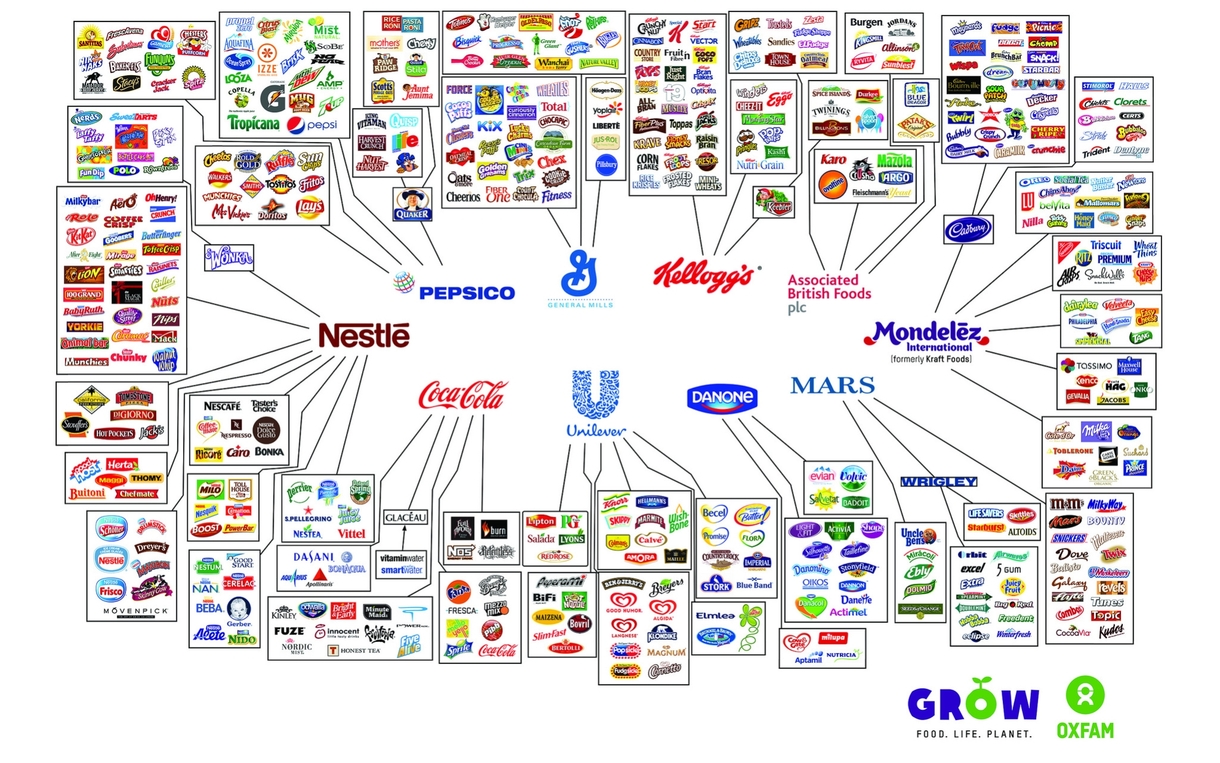
Oxfam’s infographic making the connections between big companies and some very familiar brands.


There is a large space for study in this area, but many challenges to doing so, not least because there is relatively little research funding or political will to tackle these issues directly. Many researchers and advocates remain “silo-ed”, focusing on a particular product, or discipline. This “zoomed-in” view stands in contrast to the intersectional ways in which a single large company might act, never mind an industry sector as a whole, or different industry sectors with overlapping interests, acting, for example, to diminish employment rights or environmental standards. We argue that there must be much greater scope for the convening of interdisciplinary research to explore these issues and offer potential solutions.

What about practice?

Aside from research, what about practice? There is also a need for the evidence that does exist to translate more effectively into policy. The challenge public health practitioners often face is that there is a strong political will for partnership and collaboration with the private sector at the local, national and global level, both through direct partnerships, and multilateral engagements. Such arrangements are, on the face of it, appealing. Access to the resources of the private sector is an obvious solution to the problem of increasingly restricted budgets for public health departments, particularly as these private resource pools are so large. Voluntary commitments between the public and private sectors are also conceptually appealing, echoing the type of multi-stakeholder engagement that public health advocates strive for.

However, in the UK, the evidence suggests such activities are often characterised by an abundance of words (in the form of voluntary pledges) and a paucity of deeds (in the form of meaningful changes to how harmful products are produced and marketed). Without regulatory safeguards, it appears unlikely that harmful product manufacturers will voluntarily act in ways that could reduce their own profit margins or lead to “stranded assets”. Instead, such actors will go to great lengths in framing themselves as part of the solution to a “complex” problem, while attempting to diminish the role they play in creating that problem, and rejecting what they termed “one size fits all” approaches such as policy best buys.

There is, however, progress on the research front. Research on specific harmful products and the industries that produce and market them continue apace, and commonalities in corporate strategies are being increasingly discussed. Networks of interested researchers in related topics are beginning to emerge. Perhaps most promisingly, it is becoming clear that commercial determinants are an important component of the broader determinants of health. As the “elephants in the room” become more widely perceived in issues such as alcohol harm, climate change and the opioid crisis, let us hope that, informed by a growing evidence base, the tools to properly address them will follow.


Photo attribution:
  1. "140/365 - Coke Shadow" by Adam Wyles via Flickr.com, copyright © 2011: https://www.flickr.com/photos/the-travelling-bum/5418900013 (CC BY-ND 2.0).
  2. Oxfam infographic courtesy of Oxfam, copyright © 2013: https://firstperson.oxfamamerica.org/2013/03/10-everyday-food-brands-and-the-few-giant-companies-that-own-them

Friday, 31 January 2020

Does reaching the ‘hard-to-reach’ mean leaving traditional academia at the door?

Angela Wearn, PhD Researcher, Department of Psychology, Northumbria University

“You tend to find the ones that are protesting and telling you to go and get your smears are the ones that have their cushy little jobs and that lovely flash car that they can just jump in and dive down to the doctors”


From all the conversations I’ve had throughout my research career, this is one of the quotes that has stuck with me the most. For over three years I have been working on my doctoral research, conducted across Newcastle, which explores barriers to cervical screening participation in areas of high relative deprivation. We know that uptake rates tend to be lower in areas of socioeconomic disadvantage, but reviewing existing literature showed very little insight from women who lived within these communities themselves. Incidentally, I am one of these women. I grew up, and still live, within a neighbourhood which, according to the Index of Multiple Deprivation, falls within the 10% most deprived areas in the country. It’s therefore no accident that I ended up with a programme of research which aimed to prioritise the voice of this community.

Graffiti walls can be a simple and effective way of starting conversations
Initially, I had dreams of a wonderfully participatory project, where I formed a steering group and we worked together to find answers and seek solutions. As often happens in research, time ticked on and it didn’t work out the way I had planned. My participatory ideals had to take a backseat for a less time-consuming participant-researcher approach. I suspected my ‘insider’ status might open doors for me and to be fair, it did. I found myself being able to quickly connect and build a rapport with others when I discussed my own background and why I wanted to do this project. However, getting to the point of even having these conversations was by no means easy. I spent days, weeks, months trying to speak to community groups, charities and community members about my research. Some were very open and interested, others were not. I attended community get-togethers handing out cakes alongside research information, making ‘graffiti walls’ with post-its, even chatting about life over freshly made biryani at a cookery club. Actually, these were the most rewarding and enjoyable moments over the past three years, but the more I did this the more I felt I was straying from what academia expected of me. I also began to feel my status as an academic researcher was a hindrance to what I was aiming to do at community level. For a lone PhD researcher, bringing together these two worlds, at times, felt completely impossible.

"community get-togethers...were the most rewarding and enjoyable moments over the past three years, but the more I did this the more I felt I was straying from what academia expected of me"

Attending community events was a great way to connect with 
people who were otherwise unfamiliar with research
The quote at the beginning of this blog was when it all clicked into place. Although we were talking about cervical screening, I acknowledged something that I had already known all along - the same issues of accessibility and trust apply to involvement with academic research. If I put my working-class hat on for a minute, academic research feels neither accessible nor promotes interpersonal trust. From the outside, academia appears to be filled with people who think they know better than you, patronising you, sometimes even using you to showcase the poor decisions people make in life. I had to work hard to reassure people that I wasn’t there to pass judgement on their screening status. I’m still not sure many believed me. ‘Eat a healthy diet’, ‘Stop smoking’, ‘Engage in physical activity’, ‘Attend your screening appointments’. These are the messages that come through, focusing on the individual and discounting all the structural and social barriers that exist for people living in communities like mine. If you are trying to figure out how to afford the weekly food shop, the kids have come home with a tear in the coat you only bought a fortnight ago and you’re worried about not getting enough work from your zero hours contract, there is no mental space for ‘living your best life’ (and certainly no space for sitting with a stranger from some university taking part in a research study).

Those living in socioeconomically disadvantaged areas are often described as ‘hard-to-reach’. This often implies that despite best efforts to reach out, these groups are disinterested and disengaged. I tend to believe the reverse is true. Some groups are hard to reach because academic research is too disengaged from the community. I know of many academics who are so obviously committed to tackling the avoidable and unjust disparities in health, and for this reason I do feel positive for the future. However, as someone who is positioned in between the ivory towers of academia and the working-class neighbourhoods at home, I know there is still a lot of work to do. There is a long history of mistrust and marginalisation to put right. If we are serious about tackling inequality and involving so called ‘hard-to-reach’ groups in research, then we need more focus on developing trust and togetherness…and occasionally, this might mean leaving traditional academia at the door.

Friday, 24 January 2020

Is Exercise Referral fit for a new decade?

Posted by Coral Hanson, Emily Oliver, Caroline Dodd-Reynolds and Paul Kelly

“Exercise referral doesn’t work”. We have heard this said time and time again, particularly by those who are peripherally aware of the field, but perhaps most worryingly by commissioners and those involved in public health policy. We’ve argued that this is simply not true. A different interpretation is that the exercise referral evidence-base, and the way it is used, hasn’t been working.

The term ‘exercise’ conjures images of Mr Motivator-style aerobics in eye-searing 1990’s lycra


Exercise referral is a decades-old process where professionals in primary care (GP/practice nurse) or secondary care (specialist doctor/physiotherapist) refer patients to a community-based physical activity scheme - often delivered by a leisure provider. National policy guidance (NICE, 2014) recommends that referrals are made where a patient is otherwise inactive or sedentary (both different parameters and not simple to classify in a primary care setting such as a GP surgery) and additionally has an existing health condition, or is at risk of having one.

Traditional evidence-generation for exercise referral has tended to be single-site studies that are then condensed using systematic-review-based methods. Given the considerable variation in how schemes are designed, delivered and evaluated at local level, this is problematic. Vague policy guidance and limited evaluation funding means that most scheme iterations are unsuitable for inclusion and interpretation in this outcome-driven way (Oliver et al., 2016). Collectively, the findings of such overviews are rather underwhelming.

Consequently, during times of tightened public health spending and commissioning, many UK exercise referral schemes have been de-commissioned. This seems misguided, given evidence that some schemes work, for some individuals, in some contexts. Understanding these nuances is at odds with the ‘best practice’ and ‘scaling-up’ that is so often seen as desirable within physical activity policy. Evidence must (and thankfully is starting to) account for consideration of local tailoring and best fit for a given community. Incorporating such evidence into policy is a different matter, of course.

To assist with collating evidence that can meaningfully inform policy and commissioning decisions in this area, our recent editorial in the British Journal of Sports Medicine proposes a sea change in how exercise referral is considered, categorised and reported. The term ‘exercise referral’ is outdated in 2020. ‘Physical activity referral schemes’ more appropriately describes the innovative and extensive range of programmes being delivered, and allows for other types of referral including self-referral, social prescribing and group-based needs assessments, to potentially contribute to the evidence base.
Personally, we’re not keen on the term ‘exercise’; it conjures images of Mr Motivator-style aerobics in eye-searing 1990’s Lycra. It sounds so imposed and constrained
You may have noticed we have replaced ‘exercise’ with ‘physical activity’ – surely a more inclusive term for what is ultimately a behaviour – and one which we are trying to change. Traditionally exercise referral schemes were mainly gym-based and we think that this image probably persists when we think of exercise referral today. Personally, we’re not keen on the term ‘exercise’; it conjures images of Mr Motivator-style aerobics in eye-searing 1990’s lycra. It sounds so imposed and constrained. Even a simple phrasing change can have far-reaching implications, and hopefully for the better in this case.

In the editorial, we propose a simple way of identifying, classifying, and recording key information about physical activity referral schemes that will enable better understanding of what exists and what is working. Our new reporting checklist (or taxonomy) encompasses all physical activity schemes that:
  1. have the primary aim of increasing physical activity,
  2. have a formalised referral process, 
  3. are provided for individuals who are inactive/sedentary, and/or have or are at risk of a health condition. 
The classification framework can be seen in figure 1 (below). The full reporting checklist can be found in the editorial. We propose that this be used by commissioners, practitioners and researchers alike: for auditing and monitoring, to capture service delivery and in generation of evidence reviews.

Figure 1
We are very keen to hear from anyone working in exercise/physical activity referral of any kind as we move forward with refining this idea. The model was proposed to policy-makers, practitioners and academics at a consensus event in late 2019, and we are currently refining it by undertaking a Delphi Survey. We are inviting further comment, critique and engagement to make the final version as accessible and ‘fit for purpose’ as it possibly can be, so please get in touch with Coral, Caroline, Paul, or Emily via twitter or email - details below.


Coral Hanson, Research Fellow, Edinburgh Napier University @HansonCoral / C.Hanson@napier.ac.uk

Emily Oliver, Associate Professor, Director of Research in the Department of Sport and Exercise Sciences, Durham University @_EJOliver

Caroline Dodd-Reynolds, Associate Professor, Department of Sport and Exercise Sciences, Durham University @carolinedod / caroline.dodd-reynolds@durham.ac.uk  

Paul Kelly, Lecturer in Physical Activity for Health, The University of Edinburgh @narrowboat_paul 


References:

Images: 
  1. ‘Mr Motivator 2’ by Dave Tett via Flickr. Attribution-NonCommercial-NoDerivs 2.0 Generic (CC BY-NC-ND 2.0): https://www.flickr.com/photos/66551670@N00/388434590 © 2007.
  2. 'Figure 1' reproduced from Hanson, CL, Oliver, EJ, Dodd-Reynolds, CJ & Kelly, P (2019). We are failing to improve the evidence base for “Exercise Referral” How a PhysicalActivity Referral Scheme Taxonomy can help. British Journal of Sports Medicine Published Online First: 17 December 2019. doi: 10.1136/bjsports-2019-101485 with permission from BMJ Publishing Group Ltd.

Friday, 17 January 2020

School food research and teenage diets mean sleepless nights and a mountain to climb

Posted by Kelly Rose, Graduate Tutor/PhD researcher at Teesside University

In the spirit of the commencement of the New Year, I thought it the perfect timing to write a second Fuse blog post reflecting on my first year of PhD study. Also, driven by my waking at 2am, Monday of the first week back in a cold sweat, realising I am more baffled than ever!

In my first blog post, I described myself as feeling at the bottom of a mountain…

Now a year and a half in, I can report some relief at successfully passing my annual review, confirmation that I have the capability. This is definite progress, and a sure sign of having climbed at least a little higher towards the summit. A few days ago I also celebrated my 44th birthday, and I suppose the coinciding of a new decade brought a significantly reflective mood (in the most positive sense). This past year has tested me in so many ways that I had never expected. If you want to know yourself at a deeper level, I think a PhD certainly would be the recommendation. I started this journey with the attitude (that I was always telling my students and children) that anyone can do anything they set their mind to. This mantra has definitely helped in times of significant self-doubt.

Progress update

So far, I have completed a systematic review, had a paper of the political timeline of food policy published in the Nutrition Bulletin, shared my research in a conference, and was boosted by an article I contributed to the conversation.com being shared in the Independent online.

What have I learned?

I left secondary school teaching in July 2018 with a strong sense that more was needed to improve adolescent nutrition. Today, with more of a grasp on the research, I am even more incredulous as to why more is not being done by policymakers.

The evidence is clear, teenagers have the poorest diets of any other age group in the UK. The Lancet commission stated we can reap huge benefits from improved health policies, focusing on the global adolescent population, after all they are our future parents and workforce. As I found in the political timeline research and systematic review, there are many examples of good practice with regards to implementing and evaluation of school food standards, whole school policy and health interventions. But still no priority being placed on consistent evaluation and of policing school food provision in England.

Waking up at 2am questions
  • Why is our school food provision failing to improve adolescent nutrition?
  • Why does the Childhood obesity strategy (part 2) make the assumption that all schools in England are following the national school food standards when there is no evidence that most schools are? #pizzaandcookies. 
  • Why the inertia and lack of prioritising teen diets, when the evidence points to the impacts of diet on mental health and school performance? 
Of course, it’s just not that easy, because, this is a multilevel issue, and the problem is much more complex than just implementing a policy or three. There are significant barriers to challenge, as we see the commercial determinants to health as a major part (defined as “strategies and approaches used by the private sector to promote products and choices that are detrimental to health” (Kickbusch et al 2016)).

One of the factors I want to focus in on over the next two years, is the social aspect of teen diets. It is becoming more and more an accepted ‘norm’ that teenagers have a poor diet, and food choice is a major factor in fitting in with peers, with healthy food choices often ridiculed. A low risk perception of unhealthful food choice seems to be a barrier in improving the health of the next generation. I wonder how we can flip this influence.

With all the reflecting done, I am ready to move forward into 2020. This year the plan is to see my systematic review published, to plan and conduct research in building a picture of experiences, views and what is happening in a range of schools in the North East. And with this public declaration I aim to keep momentum and to contribute to the body of research moving forward.

Keep believing and achieving.


Image:
"Junk fast Food illustrations infographics editorial" by Svajune Garnyte is licensed under CC BY-NC 4.0

Friday, 6 September 2019

Health inequalities in rural and coastal areas

Last November we, a team of Fuse academics, were successful in winning competitive funding from Public Health England (PHE) and given just four months to complete a rapid evidence review investigating health inequalities in older populations in coastal and rural areas. The team from Northumbria University and led by myself, consisted of Professor Katie Brittain a Social Gerontologist and Dr Sonia Dalkin Co-lead of the Fuse Healthy Ageing Research Programme (HARP). Read a case study about the review on the HARP pages of the Fuse Website.

The short timescale and vast quantity of literature made this a challenging project from the outset but the evidence was urgently needed to provide recommendations for taking an asset-based approach to reducing inequalities and promoting productive healthy ageing in rural and coastal areas. We worked closely, consulting and collaborating, with stakeholders including PHE Centre leads, Knowledge and Libraries Service, the Health Inequalities Team and Director of Public Health representatives from rural and coastal authorities. Key partners were approached from the start to recommend grey literature and case studies.

One hundred and eleven studies later the report is finally published and launched by our colleagues at Public Health England with this great blog showing how we age is strongly influenced by our environment, including where we live.

Katie Haighton, Associate Professor in Public Health, Northumbria University


How we age is strongly influenced by our environment, including where we live


Helen Brock - Programme Manager for Adults & Older Adults at Public Health England
Dr Rashmi Shukla - Director, Midlands and East of England at Public Health England

The impact of where we live

The long-term trend in life expectancy in the UK has been upwards; however, our experience of getting older varies across the nation. Some people have good physical and mental health well into old age, whereas others become frail or ill.

How we age is strongly influenced by our environment, including where we live. For both men and women, there is a 19-year difference in healthy life expectancy between those living in the most and the least deprived areas of the country.

Whether or not we live in an urban setting can also make a difference. While many of our country’s rural and coastal areas are picturesque, they can present significant challenges to protecting the health of the local population.

Our new evidence review builds on the existing evidence and suggests that older people living in rural or coastal areas may experience specific inequalities in their physical and mental health.

With almost 10 million of us living in rural areas, and older people making up a growing number of this group, it is important to understand why these health inequalities exist so that we can help to tackle them.

The evidence review aims to provide a synthesis of the evidence to support leaders in local areas in their efforts to reduce health inequalities.

Why are there public health inequalities in rural and coastal areas?

There are several drivers of health inequalities in rural and coastal areas.

One significant factor is social exclusion and isolation. Research suggests that loneliness can increase the risk of premature death by 30%.

Rural and coastal areas can face infrastructure challenges, with many villages and small towns lacking frequent and reliable public transport and high-speed internet. Having sufficient numbers of healthcare workers and carers in certain areas is an additional problem.

However, living in a rural or coastal area also has benefits. Rural places often have a strong sense of community, easier access to green space and lower crime rates than urban areas. ONS figures indicate that a higher proportion of people living in rural areas feel a sense of belonging and safety in their neighbourhood compared to people living in urban areas. Coastal environments may also provide benefits, through increased opportunities for physical activity as well as the restorative and stress-reducing impact of blue space (water).

What can we do to reduce these inequalities?

Local government and NHS partners, alongside the voluntary and community sectors, play a key role in taking action to improve the health and wellbeing of their populations.

PHE and NICE recognise that local interventions which bring communities together are some of the most valuable in addressing rural public health challenges.

Good social relationships and engagement in community life are necessary for good mental health and can help people become more resilient. By providing and maintaining community areas, green spaces and promoting public and community transport, councils can help to create a positive local environment and tackle social isolation.

Creating communities

Community activities such as lunch clubs can encourage older people to socialise and participate in community life. Bringing groups together in a village hall or other community space also provides the opportunity to reach older people with services, helping them to look after their wellbeing.

It is important to encourage social connections and contact for those in marginalised groups, who may be particularly affected by social exclusion. Involving older men who often find it harder than women to make friends later in life and may be reluctant to engage in community activities or social groups can also be a challenge.

Men’s Sheds is a programme that provides a place for older men in rural communities to participate in physical activities and projects such as gardening, woodwork and model-building. The initiative helps older men to meet, socialise and learn new skills, alleviating social isolation and creating a sense of purpose. With over 480 Sheds open in the UK, and more than 100 in development, it’s estimated that over 11,000 ‘Shedders’ are benefitting from Men’s Sheds across the country.

Promoting physical activity and making use of natural assets

There is potential for coastal and rural areas to use their natural assets to promote physical activity and reduce social isolation, for example, through volunteer-led walking groups or outdoor activities.

‘Stepping into Nature’ is a project led by Dorset Area of Outstanding Natural Beauty using Dorset’s natural and cultural landscape to provide activities and sensory-rich places for older people, including those with dementia and their carers. It seeks to increase physical and mental wellbeing, to reduce social isolation and loneliness, and to increase confidence and motivation for people to access the countryside.

Promoting and normalising physical activity as part of the experience of daily living for older people living in sheltered housing or residential care settings can result in further benefits.

In rural Norfolk, Active Norfolk – a partnership of organisations working to encourage people to participate in sport and physical activity – trialled Mobile Me, a physical activity programme for older people funded through Sport England.

For ten weeks, Mobile Me visited 65 sheltered housing and residential care homes to encourage them to get moving through games such as bowls and table tennis. The programme helped to reduce older peoples’ sedentary behaviour and fear of falling as well as increasing overall wellbeing.

Harnessing technology

Technology can be useful for providing care services to older people in the country’s most remote areas.

NHS Highland recently trialled video conferencing in remote care homes to allow doctors to speak to dementia patients in a familiar setting without the need for extensive travel.

The technology enabled care home residents to be assessed and reviewed more quickly and monitored more regularly. Video conferencing also helped care home staff to access specialist knowledge and advice more easily, helping them to feel more confident and actively involved in their residents’ care.

However, it’s important to find a balance between remote and direct face-to-face contact that many older people value.

Supporting local areas

With advances in healthcare and a greater understanding of how healthy lifestyles, supportive communities and environments can help us to live longer, enabling older people to lead fulfilling lives for as long as possible is more important than ever.

Recognising the health inequalities faced by people in different areas of the country, including rural and coastal places, is a crucial step to ensuring that all older people have the opportunities and care relevant to their needs, no matter where they live.

PHE’s evidence review seeks to share what is known about these issues, so that through Locality Plans, local Health and Wellbeing Strategies and other mechanisms, local authorities and the NHS locally are supported to prioritise work to address the health inequalities that exist within and between coastal and rural areas.

To find out more you can read the full report: An evidence summary of health inequalities in older populations in coastal and rural areas. You can also read our rural health report produced with the Local Government Association: Health and wellbeing in rural areas, and our recent health inequalities report: Place-based approaches for reducing health inequalities.


Reproduced with thanks to Public Health England and Exposure: 
https://publichealthengland.exposure.co/health-inequalities-in-rural-and-coastal-areas


Images:

Friday, 19 October 2018

What’s a night out without a takeaway?

Ingrained & intertwined risky drinking & eating habits

Posted by Stephanie Scott, Senior Lecturer in Criminology & Sociology, Teesside University

A recent Fuse blog post reflected on the ways in which alcohol and food come together in the lives of young adults (Cassey Muir and Alice Graye ‘the booze, the binge and the bulge’). For example, some young adults may eat a takeaway after a night of drinking and a fry-up the next day, some may choose not to eat prior to drinking and some may drink alcohol alongside a meal. Such reflections are based on findings from the recently completed FOrwaRD project, a study that I have had heavy involvement in as a project applicant and lead researcher.

Yet, whilst the reflections of those on the cusp of adulthood are extremely important, one of the key messages from this project and an abundance of public health research evidence is that behaviours such as risky drinking and associated eating patterns become ingrained and intertwined in our lives long before we turn 18. In other words, health behaviours cluster in adolescence and track to adulthood. Think back. How long have you associated a beer with a curry or white wine with fish or, more bluntly, that going for a takeaway at the end of a night of heavy drinking is the norm? And, are these messages instilled in us during adolescence or perhaps even earlier in childhood? We also know that an unhealthy approach towards food and alcohol is more likely for some young people than others, particularly for alcohol, where we have seen a steady decline in the overall percentages of those who drink alcohol juxtaposed against those who do drink doing so at extremely high levels.

My point here is that, not only do eating and drinking behaviours interact, but the influences on these behaviours, such as parents, peers, marketing, urban space, also overlap, and overlap from an early age. Frankly, we eat and drink certain products for pleasure, for popularity or to socialise. One way in which to tackle a growth in obesogenic and alcohol-related harm is to explore overlapping and distinct influences on these behaviours at the point in which they accelerate i.e. late childhood / early adolescence and use this knowledge in the design of interventions which link rather than separate out such behaviours.

With this in mind, we set out (using Fuse pump prime funding) to identify and synthesise qualitative research evidence into common underlying factors which influence alcohol use and unhealthy eating behaviours amongst young people aged 10–17. This involved bringing together two separate bodies of literature to enable analysis and comparison across two associated fields of study. Thus, our synthesis involves the interpretation of individual studies by identification of second-order constructs (interpretations offered by the original researchers) and third-order constructs (development of new interpretations beyond those offered in individual studies) by way of the development of a ‘model structure’ of shared influences upon both unhealthy eating behaviours and alcohol use amongst young people aged 10–17.

Of the 63 studies included in the review, 27 studies focused on alcohol whereas 36 focused on eating behaviours. Initial analysis of the data identified 16 themes, 14 of which demonstrate shared or overlapping influences on young people’s alcohol use and eating behaviours. For example, we found that both alcohol and food were used by adolescents to overcome personal problems such as to relieve stress, to push away negative feelings or emotions and in some cases to replace human interaction: “…it’s a way like any other to forget or to let off steam, it depends on the person.” (Petrilli et al., 2014).

Whilst these findings are at an exceptionally early stage, one thing is clear – there remains very little research linking young people’s eating behaviours and alcohol use together. Hopefully, emerging publications from this review and the FOrwaRD project will help to lead this change.

With thanks to the core project team Louisa Ells, Emma Giles, Frances Hillier-Brown and Wafa Elamin.


Reference:
  1. Enrico Petrilli, Franca Beccaria, Franco Prina & Sara Rolando (2014) Images of alcohol among Italian adolescents. Understanding their point of view, Drugs: Education, Prevention and Policy, 21:3, 211-220, DOI: 10.3109/09687637.2013.875128

Friday, 20 July 2018

How can governments reduce health inequalities in high-income countries?

Guest post by Dr Katie Thomson, Institute of Health and Society, Newcastle University

In recent months, there have been high profile stories of how governments can influence public health. The Scottish minimum unit price for alcohol introduced on the 1 May 2018, and more recently the publication of Chapter 2 of the Government’s Childhood Obesity Plan. This update proposed measures to address children’s exposure to junk food advertising on television and online, and called for a ban of price promotions on products that are high in fat, salt or sugar.

20mph zones were shown to increase inequalities in cycle accidents and
 rates of death between more and less deprived neighbourhoods

Such policies have great potential to improve public health, by shifting the distribution of health risk and addressing the underlying social, economic and environmental conditions (Hawe and Potvin, 2009)1. However, it is imperative to understand the impact of these policies on health across the entire social gradient. Thereby ensuring the most marginalised, are not adversely effected by policies which aim to improve health overall.

I have been part of a group of academics which recently completed an umbrella systematic review (‘review of reviews’) which aimed to understand the effects of public health policies in high-income countries. You can read about the research in a handy two-page Fuse research brief. As part of the Health inequalities in European welfare states (HiNews) project, we found evidence of 29 reviews (comprising 150 unique primary studies) which detailed the evidence of how fiscal (government revenue), regulatory, education, preventative treatment and screening approaches can be used by governments to influence health inequalities across eight key domains.

Conceptual framework of population-level preventative public health policies to reduce health inequalities
Our review highlighted 13 key interventions which were demonstrated to reduce health inequalities. These include taxes on unhealthy food and drinks; food subsidy programmes for low-income families; incentive schemes linked to immunisation status; proof of immunisation for school admission; tobacco advertising control measures; traffic calming measures; oral health (water fluoridation and tooth brushing campaigns); some nutritional and cancer education programmes; universal and targeted vaccinations for indigenous populations; and targeted and population screening interventions.

Worryingly, we also found evidence of interventions that were shown to increase health inequalities – potentially leading to so-called 'intervention generated inequalities’ (Lorenc et al., 2013)2. For instance, lowering alcohol tax by 33% was shown to increase inequalities in rates of death amongst disadvantaged groups in Finland. Environmental interventions, including 20mph and low emission zones, were also shown to increase inequalities in cycle accidents and rates of death between more and less deprived neighbourhoods.

Our research also demonstrates that for some potentially important interventions, such as for policies to control alcohol, there is a lack of robust evaluations highlighting the effects on different groups of people.

Given the volume of literature we found on the effects of government-led policies on health overall, it was disappointing that we could only identify 29 reviews that reported data on health inequalities. Going forward, those tasked with evaluating such policies must report how health outcomes differ for specific interventions by subgroup as standard. Furthermore, reviews should incorporate sufficient information on how the intervention was implemented and enforced to be useful for policy makers thinking of adopting such approaches. We also found many of the reviews and their primary studies were US-based, which could potentially limit the transferability of interventions from one country to another.

Undertaking a systematic review is not without its challenges. When published, the article reads like a definitive narrative when in reality it comprises a multitude of subjectivities – which reviews to include? Which primary studies are relevant? Which outcomes are most appropriate? And how to summarise the state of evidence in a particular field given multiple studies/reviews? The methodology is designed to be systematic, but as it uses human interpretation there is always an element of judgement. Umbrella reviews assess the state of the evidence across a wide area of interest, and are therefore worth the blood, sweat and tears which goes into producing them.

Upstream public health interventions involving state or institutional control offer great hope to improve health for all. However, a comprehensive understanding on the effects of different interventions is a necessary first step to ensure policies have an equitable benefit for all members of society and therefore are worthy tools at the disposal of governments tasked with improving health.


The Health inequalities in European welfare states (HiNews) project is a collaboration between the universities of Newcastle, York, Trondheim, Siegen and Harvard and funded by the New Opportunities for Research Funding Agency Cooperation in Europe (NORFACE).

References:
  1. Hawe, P., Potvin, L., 2009. What is population health intervention research? 100, I8-I14.
  2. Lorenc, T., Petticrew, M., Welch, V., Tugwell, P., 2013. What types of interventions generate inequalities? Evidence from systematic reviews. Journal of Epidemiology and Community Health 67, 190-193.
Photo: © Albert Bridge (cc-by-sa/2.0)