Showing posts with label co-production. Show all posts

Friday, 24 July 2026

Sparking curiosity with Twinkle, Twinkle Arti

Posted by Nicola Aldridge, Research Associate, and Cassey Muir, Research Associate / Co-lead of the Fuse Early Life and Adolescence Research Cluster, both from Newcastle University

We were recently given the exciting opportunity to showcase the Twinkle, Twinkle Arti project at Discover Festival, a free, one-day festival organised by Newcastle University that brings together families, communities, and researchers through interactive activities and inspiring ideas.

Nicola and Cassey
Discover Festival is designed to spark curiosity, build connections, and encourage people of all ages to explore new ideas. Each year, the university creates a packed programme of family-friendly events, and this year, we were delighted to be part of it as members of the Twinkle, Twinkle Arti research team.


Bringing Arti's story to life

Throughout the day, we invited families to step into Arti’s world through the Twinkle, Twinkle Arti storybook. Developed by Fuse researchers at Newcastle University, with funding from the NIHR School for Public Health Research, the book was created and co-produced with families to support the wellbeing of children experiencing challenging family circumstances, such as drug and alcohol use. While these experiences inspired the story, its themes of feelings, belonging, resilience, and hope resonate with all children.

Visitors to our stall in the Great North Museum had the chance to watch a CBeebies Bedtime Stories style video of it being read aloud by the author. They could also explore puppets and original illustrations from the book, and view artwork created by primary school-aged children who had participated in a pilot study of classroom lessons based on the story.

Families were also able to take home a free copy of the storybook, along with a link to the online read-aloud video and a set of simple conversation prompts designed to encourage creativity, emotional expression, and meaningful family time at home. We handed out nearly 80 copies on the day!


Conversations that matter


Beyond engaging with families, it was equally exciting to see the conversations that the project sparked among professionals attending the festival. We spoke with people from a range of sectors, including teaching, school governance, clinical psychology, and general practice with social prescribing links. Their curiosity about the project and enthusiasm for its potential applications highlighted the broad relevance of Twinkle, Twinkle Arti and the importance of creating accessible resources that support children's emotional and social wellbeing.

One particularly rewarding conversation was with a family who shared their personal experience of the impact of alcohol on family life and how they might be able to use the book. Hearing their reflections was both moving and affirming. It served as a powerful reminder of why the project began in the first place and reinforced the continued need for resources that help children navigate difficult experiences. Moments like these bring the research to life, reminding us that behind every study, storybook, and activity are real families whose experiences matter and whose voices continue to shape our work.

Creating a community star mural

Another highlight of the day was our evolving community star mural. We invited children to create their own star by drawing, colouring, or writing ideas about what they or Arti could do when they felt sad or worried, with 114 stars being created on the day. It was wonderful to see children enthusiastically embracing the activity, and even more special to watch parents, carers and grandparents join in too, talking to their children about the messages in the book. The excitement on their faces as they added their stars to the mural was a lovely reminder of the power of creativity to bring people together.


A colourful celebration of hope and resilience

By the end of the day, the mural had grown into a colourful display of hope, kindness, and imagination. It was a privilege to share the Twinkle, Twinkle Arti project with so many families and to see first-hand how children connected with Arti’s story and messages of hope, resilience and belonging. Events like Discover Festival provide a fantastic opportunity to bring research into the community, and we were grateful to be part of such an inspiring day.


Find out more about Twinkle, Twinkle Arti

Friday, 31 January 2025

Our experience co-producing a zine with LGBTQIA+ young people

Posted by Scarlet Hall, Research Assistant, Durham University and Fuse

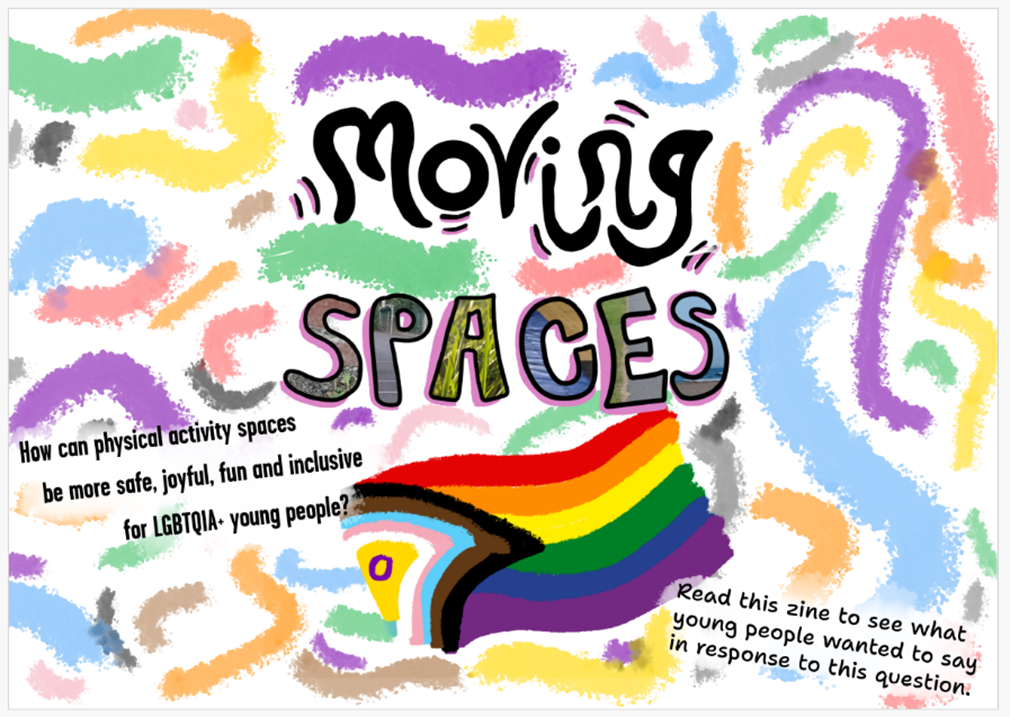
We have been collaborating with LGBTQIA+ young people in the North East and South Yorkshire, through Fuse led research funded by the NIHR School for Public Health Research (SPHR) exploring how physical activity spaces could be more joyful and safe. This blog describes how the ‘Moving Spaces’ zine was made and makes suggestions for those wishing to co-produce creative research outputs.

This blog draws from reflective conversations between Caroline Dodd-Reynolds (Fuse), Mary Crowder (University of Sheffield) and Shevek Fodor (Sounds Like Shevek) during the making of the zine. It is written with contributions from Caroline, Mary and Shev.

Seek continuity between research methods and research outputs

At the start of our research project we knew we wanted to host a series of research workshops and then co-produce a physical activity resource with the young people we were working with. After seeing the results of using visual creative approaches in our workshops, we knew we wanted a highly visual and creative resource that would connect and resonate with people.

Shevek Fodor
Working with the right designer and format

We sent an advert out to LGBTQIA+ networks for a graphic designer who would understand the lives of diverse LGBTQ+ people, in particular young neurodiverse people. When Shevek Fodor shared their zines with us our eyes and hearts lit up. We invited Shev to lead on making a collaborative zine. We chose the zine because of its DIY ethos, radical history of self- publishing and as a vehicle for self or group expression of thoughts and feelings.

What is a zine?

Zines originated through people writing letters and sharing information about things they were driven and passionate about. They’ve been used as a way for people who were overlooked within mainstream media to have their voices heard.

Practice reciprocity

We thought the young people would be inspired meeting Shev, a young neurodiverse queer artist. For Shev, this role offered a new opportunity to experiment with collaborative zine-making in a research setting. We offered hands-on guidance (budgeting, finance systems, mentoring) as part of co-production principles of reciprocity. We introduced Shev to the young people prior to the zine session and their curiosity was piqued…’is this person one of us or one of them.…?’

Involving artists at later stages of research is not straightforward. We aimed for a balance between giving Shev space to design and lead the sessions while also sharing our own knowledge, ideas and learning. The trust built in earlier research workshops meant we could also pass on an established  quality of ease in the group when it came to the zine making workshops.

Trust the creative process of each person and the group

Shev laid the zine making table out in a beautiful, organised chaos of found images, stickers, magazines and cards. Young people made creative contributions to the zine, inspired by earlier conversations about physical activity. They found ways to take part and to also hang out in their safe space – which we were encroaching on. Some people chewed and chewed over the right words to express themselves with contributions coming together at the end. One person got stuck and did their piece later with a youth workers’ support. Two zine contributions were made that involved multiple voices, through Scarlet documenting conversations around particular images. Scarlet also made contributions from a researcher’s perspective. Shev took these contributions – writings, drawings and collages – and wove them together into a first draft.

Allowing the time for collaborative editing – it brings difference into conversation

We shared this draft with the youth groups, the SPHR and Fuse communications teams and academic colleagues. We received a lot of feedback – the zine was provoking conversations. The young people gave detailed feedback on what they liked, what was missing, and sequencing of ideas. They spoke the words that became the introduction and expressed their small hopes for a few people to engage with the zine. There was a thoughtful conversation across the youth groups, about whether to personalise individual contributions or depersonalise to show that it could be any LGBTQIA+ young person saying this.

Academic colleagues also read and shared reflections with us, including feedback that policymakers might struggle to engage with the zine’s non-linearity and various people suggested we include a page of key take-home messages and recommendations ‘so things don’t get lost’. The young people responded to this feedback saying that people needed to listen and pay more attention to the messages that were implicitly in there. This dialogue led to the writing of a framing document for the zine. 

Value queer embodied theory and practice 

Another dialogue arose around authorship. Some reviewers found it confusing not knowing who had written what and had a strong wish to know who – a young person or adult – had written different bits – a desire perhaps for a clear identification of distinct voices. For Scarlet, a queer researcher, the ‘queer polyvocality’ (Brice et al., forthcoming) of the zine – many voices that weaved together in to more than sum of their parts – reflected queer practices of overflowing notions of stable identity, disrupting predetermined binaries and unsettling ideas of authenticity (Lescure, 2023).

This somewhat aligned with ideas from the young people. For some, there was a wish for attribution so ‘friends and family would know I made this’, and there was also a wish for zine contributions to be unnamed ‘because any queer young person could have made any piece’ and ‘we made it all together’.

One young person said they appreciated that researchers ‘weren’t butting in with your opinions but also giving your views when right to do so’ and another adding ‘it’s important that the adults’ voices are also in there as you were part of the conversation, and some adults have also had similar experiences’. The young people decided to make creative doodles in place of signatures which were mixed in with academic doodles/logos to show the talking and making and editing together – the polyvocality – of the zine making process.

Through this collaborative editing process (over three months), the young people began to converse indirectly with interested adults who wanted to help, including with the funders. These conversations happened with the young people keeping editorial control. We sense this may open up and shape more generative future encounters between these young people and further influential adults.

Indeed, some of the young people involved have made a plan to hand deliver zines to local venues around town (hairdressers, surgeries etc.). It seems empowerment and co-ownership inadvertently leads to physical activity!

Explore the zine

To find out more about this work, please contact Scarlet scarlet.hall@durham.ac.uk or Caroline caroline.dodd-reynolds@durham.ac.uk 


References

Lescure, R.M., 2023. (Extra) ordinary Relationalities: Methodological Suggestions for Studying Queer Relationalities Through the Prism of Memory, Sensation, and Affect. Journal of Homosexuality, 70(1), pp.35-52.

Brice, S. Marston, K. Wright, R. and Hall, S. (forthcoming). ‘Mycelial Love’ in Harrison, P. Joronen, M. and Secor, A. Love and Catastrophe in Cultural Geography. Edinburgh University Press

Friday, 9 February 2024

How can we fail more intelligently?

Posted by Peter van der Graaf, Northumbria University; Amanda Purington Drake, Cornell University; and Ien van de Goor, Tilburg University

We don’t like talking about failures, as it signals loss of time, resources and reputation, but failures present opportunities for learning in knowledge exchange. 

However, this requires a ‘failure culture’ in academia and policy, in which failures are no longer avoided but actively encouraged. To learn how to turn failures into successes, we need to share and publish our failures, have early engagement with all stakeholders in the knowledge exchange process, and make more use of boundary spanners.

There are plenty of academic papers celebrating successes in knowledge exchange, but not many researchers and policy makers talk openly about their failures. But learning from failures is just as important, if not more crucial, than celebrating successes. Allowing partners to reflect in a safe space on knowledge exchange practices and research projects gone wrong, in which communication broke down, partners did not engage or dropped out, and evidence was not taken up or ignored, will provide important lessons on how knowledge exchange practices and research can be improved.

Paul Iske. Chief Failure Officer, speaking at the Fuse conference in 2022  
At the 5th Fuse Conference on Knowledge Exchange in Public Health in 2022, we created such a space in Newcastle by bringing together over 100 academic researchers, policy makers, practitioners, and community members to share and reflect on their failures and how to turn them into success. Don't miss the 6th conference in the US ! 

Our Special Issue: Learning from failures in knowledge exchange published this month in journal Evidence & Policy brings together selected papers from the conference and papers that were submitted in response to an open call afterwards. From 23 original submissions from 14 different countries (including the UK, USA, Canada, Norway, Switzerland, Kenya, Chile, South Korea, and Portugal) and from a range of disciplines and areas of focus (Public Health, Primary Care, Oral Health, Sociology, Anthropology, Public Management, Policy-Making, and Community and Voluntary Sector), we invited four research papers and three practice papers for full submissions.

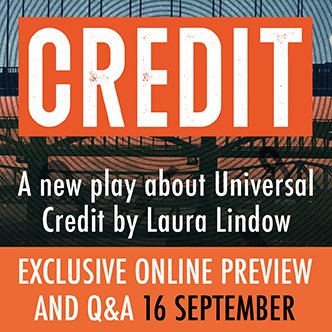
This includes a paper from Fuse Associate Mandy Cheetham and her practice colleagues on the challenges of co-production. They reflect on the failed performance of a theatre play to mobilise the research findings of a qualitative study into the health and wellbeing effect of major social security reforms (Universal Credit) in the North East of England. They argue that academics fail to appreciate emotional engagement of stakeholders in knowledge exchange.

The point about emotional labour in knowledge exchange and research is further developed (and flipped) by Louise Warwick-Booth, Ruth Cross and James Woodall. They reflect on data generated from three evaluation studies across different Voluntary, Community and Social Enterprise (VCSE) interventions in the North of England. In their paper, they expose the conflict between the research teams and evaluation partners, structured around five key features of co-production to highlight the emotional costs and labour involved for researchers.

The seven papers highlight different ways of defining and conceptualising failures in knowledge exchange, ranging from mis-implementations, to setbacks, pitfalls, unproductive interactions between stakeholders, conflicts in co-production, and deviations from expected and desired results. Using different theories and frameworks, the papers in this special issue demonstrate that failures are complex problems, involving many actors at different levels across various organisations and networks. These organisations and networks are in turn influenced by a range of determinants, from workforce instability, leadership challenges, and lack of adequate funding to practical, everyday issues, such as logistical, technical, and buy-in considerations.

Each paper offers a different perspective on relational barriers and structural stressors contributing to failures, but all authors agree that failures offer opportunities for learning, particularly small failures. We tend to focus on large catastrophic failures, but small failures are often the early warning signs, which can help to avoid larger failure in the future. To support this learning, we need to talk more openly about failures and create a culture where talking about and sharing of failures is more accepted and, even better, actively encouraged. Therefore, we argue for more deliberate experimentation in organisations and partnerships to allow for failures that provide rich insight and learning. How can we fail more intelligently? And how do we create spaces and time for reflection on failures between evidence producers, brokers and users to share this learning and support them in turning failures into successes?


This blog post is based on the article, ‘Learning from failures in knowledge exchange and turning them into successes’, which introduces the Special Issue: ‘Learning from Failures in Knowledge Exchange’. Adapted with thanks to Evidence & Policy.


Authors

Peter van der Graaf is an Associate Professor in Public Health at Northumbria University and Research Manager of AskFuse - the responsive research and evaluation service run by Fuse. Peter is interested in the interface between research, practice and policy making and how this interface facilitates (or hinders) social improvement processes at local, regional, national and international levels. He conducts research on knowledge mobilisation in public health, with a focus on the wider determinants of health (e.g. housing, health landscapes, urban regeneration) and how they affect people’s health and wellbeing.

Amanda Purington Drake, PhD, is the Director of the ACT for Youth Center for Community Action at the Bronfenbrenner Center for Translational Research and a research collaborator with the Social Media Lab, both at Cornell University, USA. Amanda has a passion for using research and evaluation to help communities to promote and support the health and wellbeing of youth. Her work in the Bronfenbrenner Center has focused on promoting positive youth development, investigating non-suicidal self-injury in general populations of adolescents and young adults, and evaluating the effectiveness of large-scale adolescent sexual health initiatives. She has co-developed and evaluated interventions to develop youth social media literacy and to promote parent-teen communication about sexual health. Amanda works to bridge research and evaluation with practice and policymaking to prevent youth risk-behavior and promote healthy development.

Ien van de Goor (MSc, PhD) works as endowed professor and program leader in Public Health and Prevention at Tranzo, Faculty of Social and Behavioral sciences, Tilburg University, in the Netherlands. She has a background in health sciences with many years of research experience in evidence-informed public health. Central areas of interest are healthy behaviour in relation to the environment, poverty and vulnerable groups, and monitoring and public health policy.


The views and opinions expressed by the authors are those of the authors and do not necessarily reflect those of Fuse, the Centre for Translational Research in Public Health.

Friday, 3 November 2023

Should researchers act as disruptors?

Learning from the Dutch Academic Collaborative Centres

Posted by Peter van der Graaf, Associate Professor in Public Health & AskFuse Research Manager, and Mandy Cheetham, Research Fellow, from Northumbria University

While Storm Babette was wreaking havoc in the UK, a team of international delegates from Tranzo, scientific centre for care and wellbeing of Tilburg University visited Fuse. The visit focused on sharing learning on how to develop and maintain collaborative research partnerships between policymakers, health practitioners, communities and academic researchers.

Tranzo works in Academic Collaborative Centres (ACCs),which are sustainable partnerships between Tilburg University researchers and health and care organisations at both a regional and national level, including (local) government, third sector organisations and other research institutes. Tranzo hosts in total 11 ACCs, each with a different topic area: ranging from mental health, addiction, intellectual disability, to public health, youth, work & health, social work, care for older adults, and technological and social innovations for mental health. Each centre could be compared to a research cluster within Fuse and is led by an academic lead.

Despite the diversity in topics addressed in each centre, there are five underlying research themes:

  1. health-related behaviour, health care policies and societal influences; 
  2. social inequality and inclusivity; 
  3. mental health care, capabilities and recovery; 
  4. client perspective and participation, experiential expertise, and; 
  5. the (health) care system.

We could call these cross-cutting themes, and this is something Fuse could consider to integrate research across clusters. For example, translational research could act as a cross-cutting theme within Fuse.

The ACCs work in a similar way to Fuse: they connect science, lived experience and professional practice in the domain of health and wellbeing in the Netherlands through co-creation of research and knowledge exchange. These diverse sources of knowledge are valued equally. The principles of establishing long-term partnerships, based on equality, personal relationships will also sound familiar to Fuse members.

During the discussions on the day, we reflected on the importance and challenges of blurring boundaries and the need for ‘living bridges’ between partners organisations. Personal and trusted relationships and a commitment to reciprocity were identified as key for this, but also the need for systems that support and incentivise collaborative working. Unfortunately, universities and research funding programmes are often not set up for this way of working, or narrowly confine knowledge exchange to commercial spin-off companies.

Blurring boundaries, science practitioners, and the fourth-generation university

One of the ways in which Tranzo has tried to blur boundaries is by developing science practitioner roles, which are practitioners who take up a temporary post in universities to develop their research skills and act as boundary spanners for the knowledge they co-create within their practice organisations. These roles can be funded by the health and care organisations (in kind), as they recognise the importance of using more evidence to inform their decision making, by blending scientific knowledge with the knowledge and expertise from practitioners and service users. But sometimes also external funding (grants) is available for co-creation projects with science practitioners. Sometimes it is a combination of in kind and grant funding.

This makes science practitioners the flip side of embedded researchers in Fuse: instead of academic researchers co-locating temporarily in a practice organisation (for example a public health team in a local authority) practitioners spend time in academia, (partly) paid for by their organisation and supported by academics to develop their own research. Both roles help to blur boundaries and therefore science practitioners, which go beyond short-term placements, could be a valuable role to consider for Fuse.

To support this two-way traffic between researchers and practitioners, Tranzo has defined itself as a ‘developing towards a fourth-generation university’: an open network university reaching out and working on innovation with partners and citizens in an ecosystem. While first generation universities are focused on education and second generation universities combine education with research, third generation universities embrace entrepreneurship and try to market their knowledge. However, this happens solely within the space of the university (Steinbuch, 2016).

In contrast, fourth generation universities see themselves as only one space within a wider knowledge eco-system that requires close collaboration with all participants in this eco-system, including policymakers, professionals and service users, but also private organisations, arts and creative industries and international collaborations. Interestingly, the function of senior leaders within fourth generation universities is not to manage processes and structures, but to disrupt them. By disrupting existing practices, ways of thinking, and valuing and using different types of knowledge, more value can be created within the eco-system.

This perspective suggests an extended new role for Fuse: not only trying to be a bridge between different worlds (research and practice) or between different research infrastructures and networks within the North East and North Cumbria - Applied Research Collaboration (ARC), Health Determinants Research Collaborations (HDRCs), and Research Support Service (RSS) - but actively disrupting the status quo by building structures and processes to enable the creation of value through new collaborative partnerships and by stimulating multi-actor innovation.  

The new value that could be created in this way was clearly visible during the two site visits on the day, when we were welcomed by staff and community members at Edberts House and Gateshead Council. Embedded research roles have shone a light in Gateshead on the importance of control for residents, whose lives are often defined by a lack of control and influence over decisions affecting their lives. Research helped them to learn from a community-centred approach and use this learning to inform future planning. Council staff felt more confident and skilled to develop their own research and evaluations and implement solutions using this knowledge and the connections it helped to create with external partners.

It was inspiring to hear from our colleagues in Tranzo and share examples of our collaborative research. We had positive and fruitful exchanges about our experiences, challenges and shared interests including training in the craft of knowledge exchange, mentoring, engagement and impact. We look forward to continuing the conversations and would be interested in any readers' thoughts on how we can be more disruptive as Fuse researchers?

The view from Tranzo

Reflections from Prof. Dr. Ien van de Goor, Program leader Academic Collaborative Center Public Health, Tranzo and Tilburg University

On behalf of the Tranzo delegation, first of all many thanks for the very warm welcome on this stormy day in October. We were impressed by the introductions in the morning program on how translational research within Fuse is taking form. There were some very nice examples of how knowledge exchange can help to increase the flow of evidence into public health practice. And how push and pull factors in this process are taken into account in the Fuse knowledge exchange model. It was very interesting to hear about the co-creation process where research was translated in a book for children with parents suffering from addiction problems. As was the report on the relation between the Covid-19 pandemic and health inequities. Both resonated with Tranzo’s way of working: a diversity of themes and different ways of making an effort to do impactful research.  

Next in the afternoon program we were invited to Edberts House and the Gateshead Council. The way the voice of the community is a driving force in making Edberts House into a successful and valued community project, was impressive to experience (as was the lovely lunch offered!).

The program was finalised by meeting with representatives of Gateshead Council. The enthusiasm of the members from the Council's Public Health team and the Fuse researchers was striking and made clear that direct collaboration and co-creation between academic research and local authorities can contribute significantly to the uptake of evidence in public health policy and practice.

So for Tranzo it was a very insightful and inspiring visit learning about Fuse collaborating with practice and sharing our ways of working and trying to be impactful with scientific research. We really look forward to exploring further opportunities to collaborate, co-create and share our thoughts on finding ways to be disruptive (for the better!)

Friday, 16 June 2023

The Power of Partnership

Our Top Tips for co-production with inclusive and meaningful Public and Patient Involvement and Engagement 


Posted by Rosemary Nicholls, Patient and Public Involvement and Engagement (PPIE) member, and Charlotte Parbery-Clark, Fuse researcher at Newcastle University and Public Health Registrar

This image was co-produced with members of the public, researchers and film production company Kaleidoscope CFA as part of the UNFAIR research programme. You are welcome to use and share the animation or images whilst acknowledging the source (https://bit.ly/UNFAIRstudy) when doing so. 


Earlier this year, members of the public with researchers at Newcastle University launched an animation that explores public views of health inequalities. The animation was created as part of the UNFAIR project, which is funded by the National Institute for Health and Care Research (NIHR).

Here Rosemary and Charlotte share their experiences as co-applicants on the project and give some top tips for members of the public and researchers.


Rosemary

"A key factor in the success of this project was the leadership style of the professional UNFAIR researchers. Their excitement and commitment to the study and to us as members of the Patient and Public Involvement (PPI) advisory team was infectious. The timely exchange of emails kept us all informed of progress and involved in deciding next steps. There was ongoing respect for what we had to offer.

"I was confident in my views and sometimes doubtful about the practicalities of what was being proposed, thinking: “This isn’t going to work.” But I found various methods much more successful than I expected and I learned through my surprise that I’d been wrong!

"A risk of consulting people in disadvantaged settings is that they may assume that the researchers will be able to effect immediate improvement in their circumstances, so it’s important to be clear from the outset about the aims and likely outcomes of a project and I feel we succeeded in this. The people we met in community groups emphasised how vital it is for them to be treated with respect and I’m confident that we put their needs at the top of our agenda when we asked them questions.

"There were occasions when we had to reassess our approach and resilience became a useful quality. The excellent teamwork that Charlotte and I had developed over previous months enabled us to undertake a successful review of our methods and move forward."

Charlotte

"When the opportunity came up to co-lead the project, I was excited but also a bit apprehensive as I was new to this type of work and was unsure about how to 'get it right'. One thing I was sure of was that I wanted to involve members of the public throughout the project in a meaningful way and avoid it being 'tokenistic'. So, the start of my PPIE journey involved lots of reading and reflecting about how to approach it!

"Co-leading with Rosemary and working with the UNFAIR PPIE contributors was invaluable as we could bounce ideas off each other and consider a variety of perspectives. They kept me right with the 'academic speak' I would sometimes slip into. I learnt so much with so many firsts, such as applying for funding for this type of work (and being successful!), creating flyers, navigating remuneration, as well as being involved in creating an animation."


Top tips for members of the public (especially if considering a co-applicant role)
  • Be confident about taking up the role, if you would like to do it. The researchers have asked you because they’re confident you can contribute relevant skills and experience.
  • Check that you have the time to commit to being a co-applicant. In terms of hours, the commitment may not be very great, but being able to respond to emails quickly (within 48 hours) and to attend online and in person meetings at arranged times can be important. It’s likely that you will be consulted about suitable times, perhaps by doodle poll, but there may be occasions when you need to prioritise the project to ensure continuity and re-arrange your diary. Ongoing dialogue between you and the researchers to figure out the best approach together works well.
  • Each stage of the project will be well-planned and costed in advance by the researchers and the lay co-applicant is paid by the hour in my experience, depending on the nature of the work. However, there may be occasions when lay co-applicants feel that they can offer further insights and they should feel freely encouraged to check that comments outside the box will be welcome and if so, volunteer their thoughts to the researchers by email.
  • Be willing to ask questions of the researchers and put your point of view across with confidence, but be prepared to find that your assumptions may be proved wrong as the project progresses. Remember that it’s a learning process for us all. Be resilient when necessary and work together to keep the project on track.

Top tips for researchers

Ways of working:

  • Decide how you will involve public contributors at each stage of the project in line with your budget.
  • If working with a specific group of PPIE contributors on a project, decide together how you would like to work. There are tools to help you with this, such as Working Together.
Diversity and inclusion:
  • Remove barriers for involvement as much as you can. For example, provide options such as different online and/or in-person sessions on different days/times, go to community groups and be flexible about timings to ensure it suits public contributors (not expecting people to come to you), or use online platforms, such as Padlet, for people who want to be involved but can't attend the session.
  • Language is really important, be as clear and as simple as possible.
  • To increase diversity of public contributors, networks can help promote the opportunities particularly in public health research compared to disease related research as public health research typically has a wider remit.
Time:
  • Building relationships is key and takes time. It is good practice to keep people updated and adapt according to need where you can.
  • Make sure you know how to remunerate public contributors in your organisation before any PPIE sessions to reduce delays.
  • Build in extra project time for unforeseen events.
Challenges:
  • Any challenges that may come about with PPIE work or co-production are opportunities to make the project even better, see them as gifts.
  • Sometimes, what is feasible in the time/resources available may not align with the feedback so be clear that you may not be able to act on all suggestions at the outset. Compromise as well as sharing why you have not been able to act on certain suggestions is useful. Have a way of deciding what you will do if the feedback conflicts with others' feedback is important.

Involving members of the public is incredibly worthwhile strengthening the project in so many ways. Also, undertaking PPIE and/or co-leading provides opportunities for rich learning and skill development for both researchers and public contributors. There is lots of support especially if this is your first time doing this type of work, as either a member of the public or researcher. To find out more about PPIE or public co-applicants, the following resources may be useful:

Guidance:
Opportunities for public involvement:
 

-----------------------------------------------------------------------------------------------------------------------------------------------------------------------------------------------------

Rosemary Nicholls is a Patient and Public Involvement and Engagement (PPIE) Representative and Consumer Panel Member, National Institute for Health and Care Research (NIHR) Research Design Service (RDS) North East North Cumbria (NENC) and one of the UNFAIR PPI members.

We would like to thank the UNFAIR PPIE and research team, members of staff who helped facilitate the online workshop as well as everyone who took part in the workshops.

This project was funded by the Tilly Hale Award from Newcastle University and the National Institute for Health and Care Research (NIHR) (ref CA-CL-2018-04-ST2-010).The views expressed in this blog are of the authors and not necessarily those of the NIHR, the Department of Health and Social Care or Newcastle University.

Friday, 30 September 2022

Going beyond research to empower involvement and smash stereotypes

Posted by Sheena Ramsay, Professor of Public Health & Epidemiology, (and team: Emma Joyes, Emma Adams, Laura McGowan) in collaboration with Fulfilling Lives Newcastle Gateshead Experts by Experience

The way researchers approach some groups is often not sensitive to or inclusive of their needs. For example, the information can use technical language (such as ‘licit substances’ or ‘quasi-experimental’) which can be difficult to understand and off-putting. This can lead to people not wanting to take part in studies. Which means that new research insights, including changes to practice, can exclude those who are often most impacted.

Over the last two years, we have been working with Fulfilling Lives Newcastle Gateshead and their Experts by Experience Network of individuals with lived experience of multiple disadvantage. We have explored perceptions of services and programmes relating to oral health and related health behaviours - such as substance use, smoking, and diet - for people who experience severe and multiple disadvantage (a combination of homelessness, substance misuse, and offending). From the beginning, the Experts by Experience Network has shaped our work and helped us ensure it is accessible to those we want to speak to the most.

One of the ways that the Network has shaped our research is by helping us to create a video to help reach out to potential participants for our research - particularly people who are often excluded in research studies, such as people experiencing homeless.


Our team worked with the Experts by Experience Network to look at ways to get people involved in the research. We wanted to work with those who had insights into the issues we hoped to study, so that we could communicate the research in a way that would resonate with people. Together, we co-created an animated video as a means of reaching out to people, so they could find out about the research and how to take part.

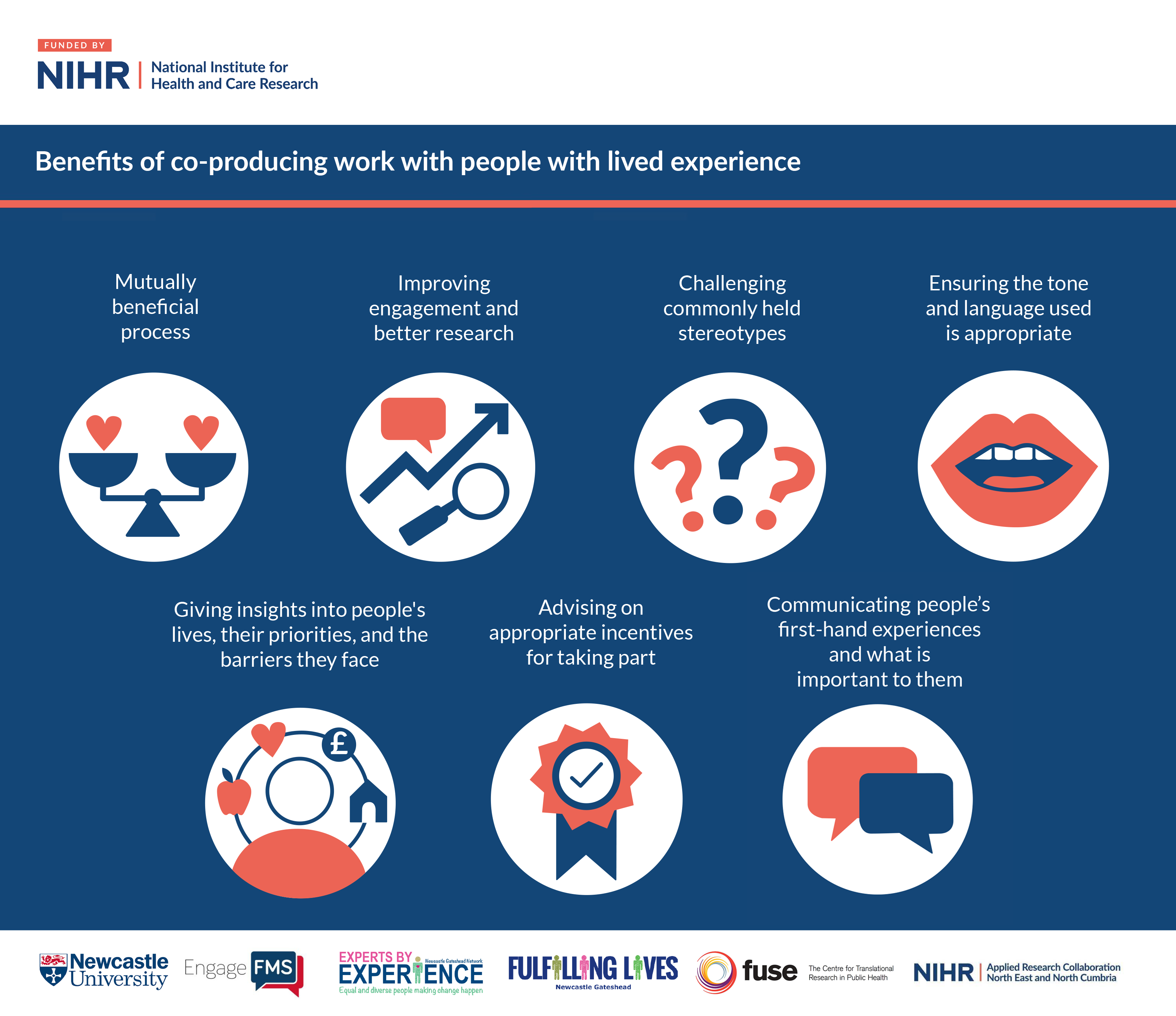
The infographics in this blog show what we have learnt from this process of co-creating the video and the value of co-production.


Creating a video provided an easy way in which organisations (such as Crisis, Fulfilling Lives, and other providers) and local Expert by Experience networks could share information about the study.

Those involved in creating the video were able to draw upon their experiences to help shape the content. One of the members of the group shared their experience of the process:
“Some of us in the Network feel really strongly about this issue and have personal experience of it ourselves so we were keen to be involved and share our ideas and opinions.”
Another member said:
“I joined this project because my own oral health has been something I've been embarrassed about in the past so I thought I could add something useful to this work.”
We have tried to map out how we designed our video in the image below.


The video has also been shared nationally with a wide range of organisations that support severe and multiple disadvantage groups in Newcastle and Gateshead, London, and Plymouth to promote engagement with policy and commissioners, local authority, criminal justice system, primary care, and third sector organisations. Producing a video was no easy feat, but it was a simple way of sharing our research with people who are pressed for time. You can check out the video below.


A clear benefit of engaging with people with lived experience was having their input on how best to communicate our research widely. They provided real-life stories and examples, which helped create the narrative for the video. They helped challenge stereotypes of ways in which people can be portrayed in research studies - this resulted in modifying the images and language used in the video which were much more realistic and sensitive to the people we were wanting to engage. This has helped our research team become more aware of and appreciate the importance of stereotyping and how it can result in putting people off taking part in research.

The benefits reached beyond the research team and the video (the below infographic highlights some of these), as many of the Experts by Experience echoed how involvement has led to them feeling empowered and one member wrote a blog about their experience.


We plan to build on this collaboration as we continue our research and gain further input on findings from our study and next steps.


This study ‘Improving the oral health and related health behaviours of adults experiencing severe and multiple disadvantage: evidence synthesis and qualitative stakeholder research’ is funded by the NIHR Policy Research Programme (grant reference NIHR200415). The video was supported by Newcastle University Engage FMS. The views expressed are those of the author(s) and not necessarily those of the NIHR or the Department of Health and Social Care.

Friday, 25 March 2022

Is a picture truly worth a thousand words?

Posted by Emma Adams, NIHR ARC NENC Mental Health Fellow at Newcastle University, and Experts by Experience from Fulfilling Lives Newcastle Gateshead & #HealthNow Newcastle

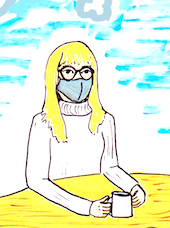
An illustration of me! Taken from one of the images
below created by Siân from More than Minutes
We have all heard some variation on the saying “a picture is worth a thousand words”, and yet often information is shared through large reports with thousands of words and few images. A 2019 paper published in Nature Communications highlighted that with all the information people can read, gaining people’s attention is increasingly difficult.

Take the image of me (right), it tells you about my hair colour, glasses, outfit, that I'm partial to a tea or coffee and that I am sitting at a table. If I had written a description of everything that you can get from the picture, it would have likely taken up far more space. If it were me, I would probably only have skimmed the text. As a public health researcher, part of my job is finding ways to share research findings in a way that will engage people to want to learn more and have a conversation (something we in Fuse like to call knowledge translation).

Alongside my Experts by Experience (individuals with lived experience of homelessness, mental ill-health, and/or substance use) we began to ponder how to share what we learned from our NIHR School for Public Health Research (SPHR) funded study exploring access to community based mental health and substance use support during the COVID-19 pandemic for individuals experiencing homelessness and those providing support. We had finally reached a point where there was a light at the end of the tunnel, as we moved away from understanding to sharing the findings. Yes, we figured we would write a couple of papers, attend some conferences, and likely write a report, but the bigger question was would the people in policy and practice and individuals experiencing homelessness read those documents? While trying to be nice, one person levelled with me and said Emma, “I’m probably not going to share a PowerPoint with a friend” and another said, “I don’t even know what that journal is”. Quickly the realisation sunk in that we were going to have to come up with a better solution for sharing our findings.

I began to think about visuals but realised my failed attempts at drawing stick people meant I probably would not be able to do this on my own. Two of the Experts by Experience spoke about a visual they had seen designed by More than Minutes for a peer research study around barriers to accessing care and treatment for people experiencing homelessness (#HealthNowManchester). I realised in that moment we had found our answer. Suddenly the Zoom call was abuzz with energy as everyone got excited about what story our visual might tell. As one person said, “it’s aimed at people who can’t read or write, or have a disability - someone like my brother”. Perhaps even more insightful was the comment that, “it [a visual] could have a different meaning for each person depending on their own experience”. 

We met with Siân (an illustrator from More than Minutes) and began planning the image and figuring out how to depict our endless pages of ideas into a visual that was engaging without being overwhelming. Over the next few months, we had a bit of back and forth on what we were envisioning. When the initial pencil sketch arrived, we were shocked at how the images captured so much of what we wanted to share without being a visual overload. Like kids at Christmas, we sat in suspense waiting to see what the final colour version would look like. We knew it captured exactly what we wanted when we saw the coloured versions. It was the physical depiction of everything we had learned and would proudly adorn our homes and offices! Through working with Experts by Experience and having input from colleagues in practice, we believe we have created a poster that depicts the experiences without some of the stigma we often see. Each of us saw something a little bit different in the poster, and we could not wait to share it with friends, colleagues, and providers. 

Created by Siân from More than Minutes; See the full images on the NIHR School for Public Health Research website.

Having had the experience of seeing words and quotes come to life, I cannot wait to do it again. Although we will continue to write papers and reports, the ability to share the images from our phones or by email with anyone has made us think about other creative ways to communicate research in the future.

So, I end this post with a question for you, do these pictures tell a better story of the findings than a one-page summary would have? Between you, me, and our Experts by Experience, we will be returning to this visual time-and-time again whereas the paper and report might not have the same reach and engagement. 

-----------------------------------------------------------------------------------------------------------------------------------------------------------------------------------------------------

To make this visual freely accessible, we would welcome organisations printing their own copies. If you are printing the poster, please print it in its entirety and email Emma Adams emma.adams@newcastle.ac.uk so we can see all the places sharing our findings. A limited number of printed posters are available directly from Emma for pick up from Newcastle University.

Initial findings from Emma’s study have now been published in the International Journal of Environmental Research and Public Health.
Fuse Research Programme Meeting is planned to share more information about Emma’s study. Stay tuned for the save the date and further information. 

-----------------------------------------------------------------------------------------------------------------------------------------------------------------------------------------------------


Emma is a Mental Health Fellow for the NIHR Applied Research Collaboration (ARC) North East and North Cumbria (NENC) and a previous NIHR School for Public Health Research (SPHR) Pre-Doctoral Fellow.  Her study 'Exploring and understanding access to community-based mental health and addiction services in Newcastle and Gateshead' is NIHR SPHR ResNet funded.

This project is funded by/supported by the National Institute for Health Research (NIHR) School for Public Health Research (SPHR) (Grant Reference Number PD-SPH-2015-10025). Emma was supported by the NIHR SPHR Pre-doctoral Fellowship Funding Scheme (Grant Reference Number PD-SPH-2015). Emma is now supported by the NIHR Applied Research Collaboration (ARC) North East and North Cumbria (NENC) (NIHR200173). The views expressed are those of the author(s) and not necessarily those of the NIHR or the Department of Health and Social Care.

Friday, 11 March 2022

Universal Credit experiences and research co-production

Introduction by Mandy Cheetham, Research Fellow in the Applied Research Collaboration North East and North Cumbria (ARC NENC), Northumbria University

I contacted David in my role as public involvement lead for the NIHR funded study on Universal Credit. As a research team, we made a commitment to include the views of people with experience of claiming Universal Credit as part of our public involvement and engagement activities. David very kindly offered his assistance and has been one of the contributors who have helped shape the study so far.

------------------------------------------------------------------------------------------------------------------------------------------------------------------------------------------------------

Posted by David Black, Fuse Public Partner and Expert by Experience

David takes part in a wide variety of public involvement and engagement activities  
I had noted many observations during my experience of engaging with the Universal Credit system and had a little experience of welfare benefits in a previous roll assessing applications for legal aid. As I'd been involved in co-production work relating to clinical research and healthy ageing in a number of patient and public involvement roles, I knew what would be expected of me in terms of sharing my perspectives about Universal Credit with the research team. Preparation prior to the initial meeting was key to getting my messages across, so I made some notes and checked out dates and relevant facts about the benefit online.

The messages I wanted to share about Universal Credit related to my direct experience and also what I'd see at local libraries when other people had been trying to use computers to apply for the benefit and respond to requests from the Department for Work and Pensions (DWP) that were expected to be done online. Some of the people trying to use computers were clearly struggling and I found myself and the librarians were regularly asked for assistance. I'm a helpful kind of person, so I would try my best to assist. Many of the people I met did not have the basic computer skills necessary to complete what was requested and with a time limit on computer access at the library, it was often a struggle.

As part of my co-production work I shared my experience of the initial application process and explained to the researchers that I had to go to my local library with all of my personal data in document form in order to complete the online application. It took me an hour and I was concerned that I had all the information to complete the form in full in one go. One of the frustrations I had related was the process of proving your identity via an online checking tool. Having initially been relieved once I'd got the main online form completed and saved, I found myself beaten by the simple process of proving who I was! The system simply did not work for me in this regard and after going home and phoning the DWP I was given an appointment to go to a Jobcentre to complete this process manually.

It was clear to me what information I wanted to share with the researchers and the fact that they were good listeners and gave me the time and space to explain my experiences helped a great deal. In the past I'd always found the process of seeking help from the unemployment benefit system to be relatively easy, but Universal Credit was a disaster for me. Not only did the DWP assume all claimants had access to the internet all of the time - something that I did not have until the pandemic started, which was years after my experiences of Universal Credit - but a constant stream of text messages in relation to Universal Credit created a state of panic and worry for me.

An important message I got across to the researchers was that ultimately I was deemed to not qualify for Universal Credit and left without any help or assistance. Something I'd never experienced when I'd previously reached out for help from the state system. Continuing my co-production work with researchers in this area of study has given me an immense sense of pride and satisfaction. I hope that in working on this research in some small way I can assist in the future understanding of how changes to benefits and the wider government welfare system can have real impact on the lives and wellbeing of people.


If you are interested in becoming a Fuse Public Partner, please visit the Public Involvement page on the Fuse website.

Friday, 5 November 2021

Cookies, coffee and co-production during Covid

Posted by Emma Adams, Fuse/NIHR School for Public Health Research (SPHR) Pre-doctoral Fellow at Newcastle University, in collaboration with Experts by Experience from Fulfilling Lives Newcastle Gateshead and #HealthNow Newcastle

Photo taken by Jeff Parker (one of the individuals with lived experience involved in our
co-production) of the masks he made for each of us at our first face-to-face meeting. 
COVID-19, has forced all researchers to re-think engagement and how we work with people with lived experience. I like many, have been navigating how best to do this within my study that aims to explore and understand access to community-based mental health and substance use support in Newcastle and Gateshead for those experiencing homelessness during the pandemic.

Since March 2020 I have been collaborating with five people with personal experience of homelessness, mental health, and/or substance use to co-produce the analysis for this study. During that time we have discovered a very helpful approach (albeit with an imposing name) - Interpretative Phenomenological Analysis.

Here comes the science…


This approach was very reflective and recognised that we were trying to understand how our participants made sense of what had happened to them. We wrote exploratory comments to reflect on the word-for-word text from interviews and then used both to develop themes. This approach lent itself really well to our analysis, as we found it was less rigid than other coding-based approaches (such as thematic analysis) and had more opportunity for reflection. 

The saying ‘no two things are alike’ describes how we ran our co-production meetings given COVID-19 restrictions. We sent out printed packages with anonymised transcripts for comments, held Zoom meetings to discuss our comments and thoughts, hosted in-person meetings with sticky notes and marker pens to develop themes and unpick key ideas, and used physical and virtual highlighters to identify our top quotes. Accompanied with a healthy amount of coffee, baked treats, and fruit, we set our sights on trying to understand our data. We broke down each analysis into three sessions, with the first session focussed on reviewing the transcripts and writing comments, the second focussed on developing some initial themes, and the third focussed on identifying and refining all the themes and key quotes.

Friendship, findings and reflections


We are now starting to share initial findings and determine creative ways to present the information. Having built a strong friendship, we reflected on how much we enjoyed the collaborative co-production experience, despite the circumstances created by COVID. We also reflected that not all co-production is positive. Here we share a few thoughts from the experience.

Why did you become involved in the study?
Everyone in our group felt motivated by the opportunity to have their voices heard and make a difference.
"Because I am interested in how the pandemic has affected people and am a member of the Experts by Experience and would like to change things for the better" – Joanne
"I wanted to do a different sort of user health research having done some last year in Newcastle for Crisis and Groundswell. Getting involved in analysing the anonymised data was a fantastic opportunity for myself" – Tony

What did you enjoy and learn?
Everyone enjoyed being involved as the research continued to grow and their continuous involvement meant we could develop friendships.

"Actually being involved from start to finish, Emma baking" – Jeff

"Analysing some of the data and the group! I feel new friendships have been made" – Fiona

 Although different learnings were shared, it was clear that everyone enjoyed working in a team to try out new things and have a ‘behind the scenes’ peak into doing research.

"One day I would really like to do more of this work in a permanent position as part of my continuing personal development. So it was very nice to get the opportunity to find out what this sort of work entailed and whether or not I would enjoy doing it too" – Tony

"Co-production can really work if it's formulated with an organic and lived experience perspective at the heart of the study, the information gathered was not lost in translation and the language from participants' interview was not tampered with" – Des

What did you find challenging and wish researchers knew?
Forcing ourselves to think about some of the things we all found challenging, we realised it is important to touch base with people involved in co-production to understand what they are struggling with and how they can be better supported.

"Biggest problem I have is getting to a venue, I have anxiety issues travelling by bus" – Jeff

"Emma would send me a gentle reminder a few days before work was due and it would spur me to either start, or finish off and get the work sent in. This really helped me" – Fiona
What would you say to a friend about getting involved in research?
Across the board, everyone said they want to continue to be involved in research projects and would encourage friends to do so.
"At first it might fly over the top of your head, but give it time and you will learn things you never knew you were capable of" – Joanne

"Go for it, maybe you can help affect change that will help others who have been through what you have. Plus, you’ll make some new friends and may enjoy yourself too" – Jeff

What are you most excited about?
When asked about what they were most looking forward to and anything else they wanted to share, responses ranged from gaining specific experience, to celebrating successes.

"It made a nice change to be more involved and now I’m doing more research with Crisis its helped me to help them shape how it can be done and how sense making is carried out" – Jeff

"The biggest rush of the project was to receive an email from the Lancet after we submitted a piece on the work. If it gets published, I’m throwing a party" – Fiona

"Emma has kept us updated throughout and involvement moving forward looks bright … and on the back of this there is confidence to come back to the university and vice versa in other research projects" – Des

Lessons learned from a researcher perspective


The depth and richness gained through co-producing my analysis is something I could have never done on my own. I learned that it is okay to admit when you are feeling a bit lost about the best approach, as that allows for an open dialogue to determine what can be done to make things better. Through our co-production, I realised how to make findings more accessible and engaging for everyone. The pandemic has meant that we have all missed out on in-person contact. Listening to our group I was shocked and humbled by how much the little touches mattered; well-timed cookies or an invite for a coffee chat can make a big difference. These small touches allowed me to develop relationships with everyone and have frank and honest conversations. From this experience, I have learned that you do not need to wait until you have findings to make a difference, rather you have a chance through co-production to make lasting impacts across the span of your research project.


Emma's study 'Exploring and understanding access to community-based mental health and addiction services in Newcastle and Gateshead' is NIHR School for Public Health Research (SPHR) ResNet funded.

This project is funded by/ supported by the National Institute for Health Research (NIHR) School for Public Health Research (Grant Reference Number PD-SPH-2015-10025). The views expressed are those of the author(s) and not necessarily those of the NIHR or the Department of Health and Social Care.