Showing posts with label CBradford. Show all posts

Friday, 20 October 2023

Pulling the PINS on takeaways

Creating healthier food environments through the planning system

Posted by Callum Bradford and Claire O'Malley, Research Associates, Teesside University

Obesity continues to be significant health and social problem, especially due to its links with cardiovascular disease, diabetes, and certain cancers. One potential solution is to change our environment so we are better equipped to make healthier food choices, however, as you can imagine, this is easier said than done!


A tool that can be used to help shape the environment with help from Local Authorities is the Planning System. Many of our towns and cities are full of hot food takeaway outlets and unless you are made of stone (or perhaps a public health researcher?), there will come a day when your motivation is low and you don’t have time to cook a meal, making the local takeaway feel like the obvious solution. But, if we can limit the number of takeaways and improve access to healthier food, we can encourage individuals to make healthier choices.

Research has shown that just over half of Local Authorities in England use the planning system to limit the number of hot food takeaways in their area, with 34% doing so with public health in mind. The most well-known example of this policy is setting a minimum distance a new takeaway must be from local schools, usually set at 400-800m away.

However, when a newly proposed takeaway is rejected, the owner has the right to appeal the decision. This appeal moves the decision from the Local Authority to the Planning Inspectorate (PINS) on behalf of the Secretary of State.

Our research looked at the ins-and-outs of this process. Specifically:
  • What are the influences behind a decision by the Planning Inspectorate?
  • How is the Planning Inspectorate perceived by professionals involved in the process?
  • What barriers do Local Authorities need to overcome to win a case?
  • What factors make for a better chance of success?
To explore this, we spoke to local planners and public health professionals, including the Planning Inspectorate to get a greater insight into the process.

The main findings from our interviews were that:
  1. there was a discrepancy between what public health professionals, planners and the Planning Inspectorate considered to be public health evidence; and
  2. how public health professionals countered this with their enthusiasm to try and shape healthier environments.
The Planning Inspectorate was viewed by all as fair and neutral. However, public health professionals believed they had to go out of their way to ‘state the obvious’, in that new takeaway outlets would likely be harmful to local health. Conversely, planners and the PINS were keen to point out that public health is just one small aspect of planning policy.
“I think there seems to be an expectation from the public health side of things that planning will provide policy…like restricting take-aways will be the end of it from a health point of view, and of course planning is not actually designed to do that.”    
Planning Officer
This perceived constraint that health-based evidence was not given enough weight in decisions was offset by the enthusiasm of public health professionals to limit hot food takeaways in their area. They were often very proactive in defending appeal cases, stressing the importance of communication across a Local Authority, finding robust statistical evidence (as opposed to ‘anecdotal qualitative evidence’), and having good knowledge of their local area. Having this information in a Local Authority’s Local Plan (this guides decisions on future development proposals and addresses the needs and opportunities of the area) supported this activity and removed the need for re-researching the area for each application.
“It's all well and good having the policy but it needs the evidence as well to back it up. So, having access to the public health team and the public health evidence is a really, really relevant part of the appeals process” 
Public Health Professional
Planning policy can be used to successfully limit the number of takeaways within a local area. However, if such policies are to be used reliably to prevent their spread in our towns, public health professionals need adequate support to defend appeals, and planning needs to give greater consideration to public health evidence.

Friday, 16 December 2022

Walking football for people with chronic breathlessness – has it got legs?

Posted by Callum Bradford, Research Associate, Teesside University

Following on from the recent success of the England Women’s football team, and with the Men’s World Cup final just around the corner, now seems like a good opportunity to talk about our walking football project, designed exclusively for people with chronic breathlessness. What is walking football you ask? Well it's football, without running (you don’t say?!), and the physical contact is a bit more restricted. Thankfully, FIFA hasn't got its hands on walking football just yet, with the World Cup being an example of why we perhaps should avoid such a thing.


Chronic Breathlessness is predominantly caused by pulmonary conditions, such as chronic obstructive pulmonary disease (COPD), impacting 75 million people globally. With Covid-19 and an ageing population this number is expected to rise, increasing the burden on families, carers, and health and social care services. For individuals, breathlessness is associated with a lower quality of life, decreased capacity to do exercise, and higher levels of anxiety and depression

Pulmonary rehabilitation is recommended for everyone with breathlessness. Consisting of both exercise and education, its benefits on health are unequivocal, however, any benefits gained by patients are often reduced three months after completion. This is primarily because patients go back to doing less physical activity once the programme has finished and support from healthcare professionals is removed. With this in mind, we wanted to develop an intervention that could step-in when patients finish their rehabilitation, offering a form of exercise maintenance and continued social support. Given the nation's love of football (most of the time), we believed walking football might have potential.

To develop the intervention, we initially consulted pulmonary physiotherapists, and a local walking football team. The physios were initially very sceptical, raising concerns that the pace would be too fast, and highlighting the number of people with breathlessness who required oxygen or walking-aids. Walking-aids?! Oxygen?! I hadn't even considered that. I was starting to worry that this idea might be a complete non-starter.

So next stop was to see some walking football for myself at Middlesbrough’s Herlingshaw Centre. I left the session with mixed feelings. They played three-touch, meaning everyone got the opportunity to play, forcing that one player who thinks they're Allan Saint-Maximin to pass the ball. It was also proactively refereed to the benefit of everyone, with players encouraged to talk to the ref if they felt the pace of the game was too fast. However, after giving it a go myself, the pace was still surprisingly quick, despite what Father Ted might have you believe, bringing back concerns as to whether it would be too high an intensity. What I really needed to know was what patients themselves thought of walking football.

So we linked up with Breathe Easy Darlington, a local support group for people with lung conditions. Describing the input from Breathe Easy members as invaluable to our research over the last few years would be a massive understatement. So much so that, as a small thank you, we held a fundraiser for them last month on World COPD Day, raising £1120.76.

Their opinions would be vital to walking football’s success... however, they were also dubious of the idea. Again, concerns were raised about the speed, the walking-aids, and the balance required to play. So I asked, under what circumstances – if any – would they consider giving walking football a go? They stated that if the football was exclusive to people with breathlessness like themselves, they would give it a try, as they would be able to dictate the pace of the game and not feel too self-conscious of their footballing abilities. Our original plan involved asking patients to join onto sessions at the Herlingshaw. Luckily, by consulting with Breathe Easy members, I now understand how that plan – to mix people with and without breathlessness - would have likely ended in disaster, demonstrating the importance of including end-users when designing research studies.

Twelve Breathe Easy members agreed to play and the stage was set for our walking football taster sessions, and as you can see from our video, I don't think it could have gone much better.

The players embraced the competitive aspect of football, stating that “On the pitch you forget about breathlessness”; and the concern for walking-aids was turned on its head after we agreed that hitting the ball with a walking-stick is a perfectly fine way to score a goal. Our coach, Monty Towers, was key to its success, mixing up the session with fun games, while allowing everyone to play football at their own pace. In our follow-up conversations, members also suggested implementing a buddy system, where more experienced participants take responsibility for introducing new patients to the group so they feel more welcome – a brilliant idea that we intend to implement in the future.

Throughout 2023 we will be assessing the feasibility of walking football following pulmonary rehabilitation in collaboration with both North Tees & Hartlepool and South Tees NHS Foundation Trusts, plus the North Riding FA; and I’m confident if it’s anything like our sessions with Breathe Easy members, it will be a great success.

And if you’re still upset about the World Cup, don’t worry, I’m sure our walking football team will bring it home next year.


The views and opinions expressed by the author are those of the author and do not necessarily reflect those of Teesside University or Fuse, the Centre for Translational Research in Public Health.

Tuesday, 9 August 2022

How Covid-19 changed the takeaway landscape

Posted by Callum Bradford, Research Associate, Teesside University

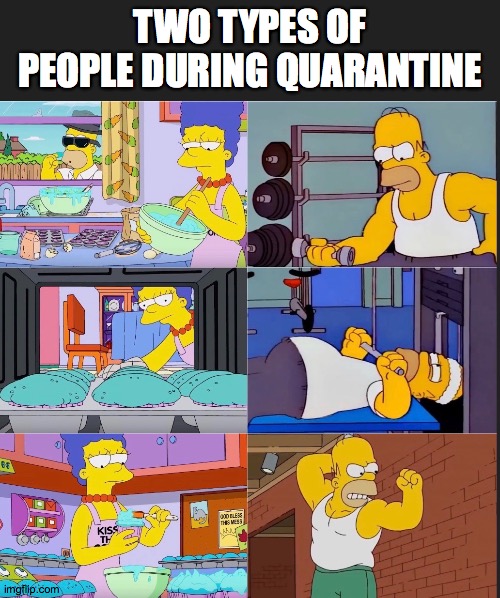
During the Covid pandemic, you may have seen the memes for how there are two types of people during lockdown. First there were those who used lockdown as an excuse to exercise more, eat well, and generally take care of themselves in a manner of which they had never had the time for previously. Then there were those who out of sheer boredom, decided to drink and order takeaway on more days than not as it was ‘something to do’.

As you can probably guess, I very much fell into the second category.

To my detriment, takeaways typically sell food which is relatively cheap, high in calories, low in nutritional value, and (annoyingly) very appetising; all delivered to your front door in a matter of minutes. Now I don’t want to come across as anti-takeaway, or anti-business, there is a place in our society for unhealthy food, nor do I blame anyone else for my questionable dietary choices. However, I’m sure most of us agree that we can have too much of a good thing at the impairment of not only our own health, but also the health of the high-street.

Apparently I’m not the only one who is too easily tempted by takeaways, with local governments implementing planning regulations to further prevent this takeover-of-takeaways, in the knowledge that our willpower is often lacking. You’re likely familiar with some of the rules already in place, such as no takeaways within 200m of a school, or that most restaurants and pubs can only provide takeaway food on an ‘ancillary’ basis.

However, with the Covid-19 lockdowns pubs and restaurants lost their ability to trade. In an attempt to combat the potential loss of business, the government introduced new temporary measures allowing these businesses to trade as takeaways, without needing to apply for planning permission. In other words, my options for takeaway just increased threefold, and by ordering-in I was ‘doing my bit’ to keep businesses open.

As we were now stuck indoors, every occasion was now an excuse for a takeaway; Birthday? Takeaway. Passed Uni? Takeaway. Anniversary? Slightly fancier takeaway with cocktails (highly recommend).

With these temporary regulations in mind, we consulted with various planners, public health leads, and environmental health officers from across the North East, to better understand how these regulations were impacting their roles, alongside any public health trepidations they may have (if my diet alone wasn’t enough cause for concern).

The main theme throughout our conversations was an overwhelming sense of uncertainty. Covid had an unprecedented impact on the priorities of local authorities. Because of this, they could not organise the infrastructure needed to identify how many businesses were choosing to trade as takeaways. Even today as we slowly return to a sense of normality, the role of collecting this data appears to be unassigned as authorities play catch-up on work lost to Covid. Therefore, as you can imagine, gauging the impact of these regulations became very challenging and speculative. There was also uncertainty around how and when these regulations would end, or what elected members planned to do (if anything) about the potential long-term consequences to health.

Surprisingly, the main finding from our research had little to do with the regulations themselves, but rather how Covid has accelerated change in the takeaway landscape. During Covid, we all developed new habits (for better or worse); one of which was the use of online delivery services such as Deliveroo and Uber Eats.

Despite the temp Covid regulations now ending, with these delivery services, many businesses that could not originally offer takeaway now can, and local authorities have limited ability to prevent them from doing so since they aren’t technically providing the deliveries themselves. A quick search on Deliveroo in Middlesbrough for example offers me delivery for Burger King, Starbucks, and Creams Cafe. None of these options are well-known as takeaways, but all now provide the delivery of unhealthy food. And although these services were technically available pre-Covid, the pandemic has led to a huge increase in their popularity, allowing for more unhealthy-food options and the changing of shopping habits. There are also traffic implications. Have you ever tried to walk through Liverpool city centre during lunch hour? Attempting to dodge Deliveroo riders on their bikes as you stroll through town is quite the experience.

To summarise, the Covid pandemic had an unparalleled impact on public health professionals, to the extent that the government implementing new regulations regarding takeaways was considered low priority. Ambiguity surrounding the impact of these regulations remains, with the ending of the regulations becoming somewhat nullified given the rise of online delivery.

In conclusion I offer some advice. if you’re trying to eat healthier, writing a blog post on takeaways whilst doing ‘research’ on Deliveroo, might not be the wisest of ideas – speaking from experience.