Showing posts with label marketing. Show all posts

Tuesday, 4 November 2025

Brand to ban: What young people really think about energy drinks

Posted by Professor Amelia Lake, Fuse Deputy Director; Dr Helen Moore, Fuse Associate; and Grace Stewart - Teesside University. 

Walk into any corner shop, and you’ll see them lined up in the fridge: brightly coloured cans promising energy, improved focus and even hydration. They’re everywhere online too, all over social media feeds... What are we talking about? Energy drinks. They have become a familiar part of the landscape in the UK, but particularly for young people who are consuming them in ever increasing numbers; the question is, why are they so popular, and what is being done about it?

What are energy drinks?


High-caffeine energy drinks are soft drinks that contain at least 150 milligrams (mg) of caffeine per litre of drink, which is higher than other soft drinks. Back in 2018, Jamie Oliver led a campaign that resulted in many retailers voluntarily banning sales to under-16s. Fast forward to July 2024, and the new Labour Government announced in the King’s Speech that it would restrict the sale of energy drinks to under-18s. There is currently a live Government consultation around banning the sale of high-caffeine energy drinks to children which will close on 26 November 2025. If you want to contribute, please do so.

Our research


Our mixed-method qualitative study was published in the Journal of Human Nutrition and Dietetics this week. The work was carried out in North-East England and sheds light on the reasons behind young people still consuming these drinks in large numbers, and what they, the consumers, really think could be done about it.

Our research involved:
  • Focus groups with 50 students aged 9–14 years old
  • A survey completed by 22 Year 9 students (aged 13–14 years old)
The aim was to understand how children and young people perceive energy drinks and hydration drinks, and to explore their consumption habits post the UK’s 2018 voluntary sales ban to under-16s. This follows on from our earlier work published in 2017.

What did we find?
  • 81.8% of surveyed students (13-14 year olds) consume energy drinks, with boys drinking more frequently than girls.
  • Most young people drink EDs 2-4 times a week, and many started before age 12 years.
  • Taste, branding, and peer influence were major motivators.
  • Corner/local shops were the most common purchase point, often with little enforcement of age restrictions.
  • Hydration drinks (e.g. PRIME) are seen as healthier alternatives, though their actual health impact is still unclear.

So, why are energy drinks so popular?

Through the focus groups, we learned that young people are really clued-up about energy drinks. They talked about branding, marketing, taste, peer influence, cost, and just how easy it is to get hold of them. From YouTube ads to celebrity endorsements (think F1 and YouTubers like Logan Paul and KSI), marketing was seen as a powerful force driving consumption. One young person said:

“If I made the exact same drink, in a bottle, no one would buy it.”

Bright colours, cool designs, and slogans were all cited as reasons that young people are drawn to these products. Many of the young people taking part in the research knew that they were being targeted by the manufacturers, but they didn’t mind. In fact, some saw energy drinks as part of their identity, linked to gaming, sports, or just being “cool.”


Policy gaps and opportunities


Despite the 2018 voluntary ban mainly in supermarkets, energy drinks remain easily accessible. Many children believed there was a legal age restriction but said that they could still buy energy drinks from shops or online without ID checks. This links back to the importance of the current live consultation around Energy Drinks and sales restrictions.

This raises an important point for policymakers to consider: if energy drinks are still seen as aspirational, accessible, and part of youth culture, young people will find ways to get them, or switch to similar products that exist outside of the ban. There needs to be a wider strategy to tackle this, which means tighter regulation of marketing (anywhere that young people spend their time - including online spaces), effective, up-to-date, accurate education about the health impacts of energy drinks and the tactics used by manufacturers, and importantly including young people in this conversation.

Our research shows that young people are not passive consumers of energy drinks. They’re thoughtful, aware, and influenced by a range of social and cultural factors that need to be understood if we want to reduce energy drink consumption.

Our study had several possible interventions suggested by young people:
  • Actual legislative enforcement of age restrictions.
  • Changing product placement in stores (e.g., away from essentials and in areas similar to cigarettes and alcohol).
  • Duller packaging and clearer health warnings.
  • Wider awareness around health risks.
Why this matters

Energy drinks are linked to a range of health issues; from insomnia and anxiety to obesity and poor academic performance. Yet, their appeal among young people remains strong, driven by clever, pervasive, marketing in addition to peer influence.

Our paper highlights the urgent need for strong policy action, increased awareness, and further research in this space.


Images:
2: Photo by thom masat on Unsplash (with modifications)

Friday, 19 January 2024

Energy drinks may be commercially lucrative but what is more valuable than the health of our children?

Posted by Amelia A Lake, Professor of Public Health Nutrition at Teesside University, and Shelina Visram, Senior Lecturer in Public Health at Newcastle University

As we prepared our new review on the health effects of the consumption of energy drinks by children and young people, we have been dwelling more and more on the Commercial Determinants of Health.
The Commercial Determinants of Health are defined by the World Health Organisation (WHO) as: 

“...the private sector activities that affect people’s health, directly or indirectly, positively or negatively.”

The WHO definition goes on to expand on how these activities might include the private sector influencing:
“...the social, physical and cultural environments through business actions and societal engagements; for example, supply chains, labour conditions, product design and packaging, research funding, lobbying, preference shaping and others.”
Now cast your mind back to pre-Covid… a Government consultation on the banning of energy drinks had a 93% backing to restrict the sale of these drinks to under 16s. There was even a Green Paper proposing this. Yet, there has been inaction (helpfully summarised here by Sustain: the alliance for better food and farming).

What is causing this inaction? Is it a turnaround in evidence that suggests these drinks are not as harmful as previously thought, or is there something else going on...? Perhaps, instead there are some pretty significant commercial interests at stake; but what could be more valuable than the health and wellbeing of our children and young people?

Energy Drinks are VERY commercially viable. They have been the fastest growing sector of the soft drink market for some time. In 2020 the global market was worth $45.80 billion and this is projected to grow at an annual rate of 8.2%. In an article in December 2023, The Grocer described the hydration drink and energy drink market as “buoyant”.

Research has found that around one in three young people (under 18) say that they regularly consume energy drinks, typically containing high levels of caffeine and sugar in combination with other ingredients known to have stimulant properties. On average, young people in the UK consume more energy drinks than those in other European countries.

You may be familiar with the labelling on energy drinks:

Image courtesy of www.parliament.uk (by URL)
‘‘High caffeine content. Not recommended for children or pregnant or breast-feeding women’’

Under current labelling rules, any drink, other than tea or coffee, that contains over 150mg of caffeine per litre requires this label and should state the amount of caffeine in milligrams per 100ml of the drink.

Yet why do we see these drinks unrestricted and available to children and young people, not just in the UK but globally? Some countries have attempted to regulate energy drinks (see our research for more on this).

Our new review of the global evidence around energy drinks and the health impacts on children and young people shows a worrying increase in the types of health outcomes associated with their consumption. This includes mental as well as physical health behaviours. Not only health impacts but wider impacts around sleep and educational attainment.

This new review is the latest of many which have highlighted the impacts of these products to our younger population.

We accept the evidence is from mostly cross-sectional studies, exploring association rather than causation. Experimental studies to establish causation have both ethical and feasibility issues. We have argued before that the precautionary principle should be applied. This country bans the sale of a number of items to young people (fireworks, crossbows, knives) presumably these don’t have the large commercial interests or lobbying groups that the energy drink industry has?

Why are we applying a higher standard of evidence to energy drinks, if it isn’t around their commercial value?

The evidence is here, the labels clearly say these drinks are not suitable for children. How many more studies are needed before policy action is enacted?

------------------------------------------------------------------------------------------------------------------------------------------------------------------------------------------------------

Fuse Podcast about this Energy Drinks research
Listen to the latest episode of the Fuse podcast ‘Public Health Research and Me’, in which host and Fuse Public Partner Cheryl Blake chats with Amelia and Shelina about their research, to cut through the confusion and ask some the questions that you want to know about Energy Drinks.
> Listen now

Find out more


Images:
2. Courtesy of www.parliament.uk (by URL) > Parliamentary business > Publications & records > Energy drinks and children > 4 Labelling and advertising: 

The views and opinions expressed by the authors are those of the authors and do not necessarily reflect those of Teesside University, Newcastle University, or Fuse, the Centre for Translational Research in Public Health.

Friday, 10 November 2023

What is the best way to reduce the amount of meat we eat?

Posted by Jack Hughes, PhD Candidate in Behavioural Science; Mario Weick, Professor of Behavioural Science; and Fuse Associate Milica Vasiljevic, Associate Professor of Behavioural Science, from Durham University

The science is clear that eating meat can be bad for our health; eating meat has been linked to an increase in cardiovascular risks, diabetes, stroke, cancers, and even dementia. Meat is also bad for the planet, with the livestock industry being estimated to be responsible for up to 15% of greenhouse gas emissions. Eating meat is also surprisingly closely connected to the risk of pandemics, with zoonotic diseases (caused by harmful germs that spread between animals and people) much more easily spread from eating animals.


Governmental policy and legislative choices play an important role in our excessive meat consumption. The Committee on Climate Change has recommended a 20% reduction in UK meat consumption by 2030 if we want to hit our net zero targets. Additionally, the Department of Health and Social Care recommends eating no more than 70g of meat a day, but average meat consumption in the UK is closer to 90g. So, what is the best approach? Do we advocate for a ‘nanny state’ that bans meat or imposes hefty taxes? Or do we advocate for a removal of all subsidies for meat farming and just let the market and people decide how much meat we consume under the hopes that awareness of the dangers of meat will drive down consumption?

There are of course significant problems with both approaches, but maybe there is a third option. One that can be applied not just to meat but to all society’s destructive large-scale behaviours, from alcohol to tobacco to ultra-processed foods to sedentary lifestyles.

In 2003 Richard Thaler and Cass Sunstein coined the phrase Libertarian Paternalism. Essentially arguing that the best way to produce policy is to design interventions that change behaviour without affecting people’s right to choose. So, you can still eat as many steaks as you like but policy will build an environment that unconsciously discourages eating an excessive amount. This idea could be argued to balance individual and government responsibilities, the government is nudging people to healthier choices, but the individual still gets to make the final decision.

For example, in a recent study of ours we found that sticking a graphic warning label (similar to those you see on cigarettes) onto meals could reduce the amount of meat chosen. Not only were the labels effective, leading to between a seven and 10 percent reduction in meat meals chosen, but the idea of introducing them as policy received fairly neutral responses. Which, let’s be honest, makes it more popular than most policy proposals!

When we look at recent research we can see that a variety of interventions have shown promising effectiveness on reducing meat consumption. Whether changing the ratio of meat to non-meat meals on offer, making meat meals less appealing by using less flattering descriptions, changing which meals appear at the top of the menu, or adding eco and warning labels to discourage the selection of meat meals, there are many ways of changing the environment without reducing the freedom of choice consumers ask for.

The question is though: is this approach the best or the worst of both arguments? Does Libertarian Paternalism thread the needle between governmental and personal responsibility? Others might say the approach is too hands off, or too hands on. If we accept that as a society we would benefit from eating less meat, which policy strategy do you support? The ‘nanny state’, the free market, or the libertarian paternalist approach?

The paper described in this blog-post can be accessed here:

Hughes, J. P., Weick, M., & Vasiljevic, M. (2023). Impact of pictorial warning labels on meat meal selection: A randomised experimental study with UK meat consumers. Appetite, 190, 107026. https://www.sciencedirect.com/science/article/pii/S0195666323024881

Tuesday, 31 May 2022

Are we really aware of the harm Big Tobacco causes our planet?

Posted by Ailsa Rutter OBE, Director of Fresh and Balance on World No Tobacco Day

The annual World Health Organization (WHO) campaign highlights the many harms of tobacco. This year’s theme explores the growing threat to our environment.


We know that smoking is the worst thing that we can do for our health – 8 million people around the world lose their lives from it each year.

Many of us are already taking action to do our bit in tackling climate change. But do we ever think about how tobacco is polluting our world globally, nationally and here in North East England?

As we face a climate emergency, our fragile ecosystems are being put under even more pressure by the tobacco industry. Tobacco damages the environment, from growing and production, distribution to waste.

Reflecting on my 24 plus years in tobacco control, I’ve seen many appalling tactics from Big Tobacco (the largest global tobacco companies who make billions in profit from killing people and destroying the planet) – including ploys to get kids hooked on a life-long addiction.

It takes a lot to shock me these days, but even I am shocked to read the things that the tobacco industry is doing to our environment.

What we see on the surface is just the tip of the iceberg. Some of the mind-blowing statistics every year:
  • 600 million trees chopped down for tobacco.
  • 84 million tonnes of C02 released into the air, raising global temperatures.
  • 22 billion tonnes of water used to make cigarettes.
  • 4.5 trillion cigarette butts not disposed of properly across the globe, generating 1.69 billion pounds of toxic waste and releasing thousands of chemicals into the environment.
Big Tobacco ‘greenwashes’ its impact on the environment through sustainability corporate social responsibility and marketing initiatives, designed to make people and investors think it cares.

Every day we see its impact on our streets and beaches. Cigarettes are the most commonly littered item in the world.

Cigarette butts are made of cellulose acetate, a man-made plastic material, which takes years to degrade and dump a toxic mix of nicotine, arsenic and heavy metals into our water, soil and oceans before turning into microplastic pollution. It makes me so sad to think what this toxic waste is doing to our marine and river wildlife.

Eight out of 10 (81%) North Easterners in a YouGov poll commissioned by Action on Smoking and Health (ASH) want to see plastic in cigarette butts banned. As part of our World No Tobacco Day activity, we’re joining forces with environmental campaigners to protect the region’s beaches from plastic cigarette butts.

Beyond our region, in the developing world, deforestation for tobacco plantations is happening on a vast scale. Around 3.5 million hectares of land are destroyed for tobacco growing each year. That’s the equivalent of over 1.4 million football fields!

The environmental burden is falling on the countries which are the least able to cope with it. Farmers in low- and middle-income countries are left in debt, with widespread poverty and illness among farm workers. Meanwhile the global tobacco companies continue to make billions in profit.

I reflect on when I attended a world conference in 2006 and heard about young children being exploited for child labour by tobacco companies; picking tobacco leaves and exposed to toxic pesticides and hazardous working conditions. The consequences are life-long and this is happening around the world, as shown in the devastating 2016 Human Right Watch report “Harvest is in my Blood”.

As a mother, with children and grandchildren, I am extremely concerned about the future impact.

The question I think we should ask ourselves is – are we really aware of the harm that the tobacco industry is causing to the environment? If the answer is no, then let’s pledge to read some of the fantastic resources on the issue, including those on the WHO website. Talk to people about it, call for action. Learn more about the tobacco industry; the harm it causes.


We are supporting national colleagues Action on Smoking and Health in calling for a levy on Big Tobacco, to clean up the harm and to further reduce smoking to reach the Government’s target of a Smokefree 2030 (5% by 2030).

In the North East we’ve seen smoking rates fall faster than anywhere else in the country, thanks to the hard work and dedication of colleagues in the region.

But as the major threat of climate change looms, it’s vital that we go further and faster than ever to reduce the tobacco industry’s destructive impact and make smoking history for the next generation.


Ailsa Rutter OBE, is Director of Fresh and Balance, the North East’s combined alcohol and tobacco programme, working to reduce the harm, the death and disease caused by smoking and alcohol.

Tobacco is still the biggest cause of premature death in the UK, with an estimated 74,000 deaths each year in England and over 113,000 deaths from smoking in the North East since the year 2000.

Friday, 7 May 2021

Children’s exposure to junk food advertising: can the UK hold firm in the face of industry resistance?

Posted by Chris Baker, primary school teacher and distance learning tutor at the London School of Hygiene and Tropical Medicine

Growing up in a sweet shop was, as you can imagine, an absolute dream. Who wouldn’t want an entire store of confectionery under their own roof? It was the 1990s and I didn’t realise how lucky I was - living above a newsagent run by my parents. I’d get home from school, give a cursory wave to my mum behind the counter and immediately grab a chocolate bar, or an ice cream. It was the best.

Clearly, it wasn’t a recipe for good health. I was continuously surrounded by the bold and colourful logos, the marketing strategies and the special offers - all designed to hook me into habitual consumption. I paid little attention to the nutritional contents of the things I was snaffling (this was long before front-of-package labelling came along). My physical health (particularly my teeth) paid the price.

Cut to 2020 and I find myself thinking back to that era - before the internet, before screen-time, before social media. I am now a primary school teacher (with experience in public health) committed to promoting children’s health and well-being. I see that the relationship between children and junk food today has not changed all that much. There are still products high in fat, sugar and/or salt that kids crave. And what’s helping them to connect with these products? Digital marketing.

I teach ten and eleven-year-olds in an international school, so the demographic group I am most familiar with is not representative of the UK. However, I believe there are important similarities. Many children of this age now have smartphones and use apps intended for older audiences. Through these apps, they are exposed to new and sophisticated marketing strategies, unheard of by older generations.

Fortunately, there are plans to address this. Last year the UK government proposed a total ban of online marketing for foods high in fat, salt and sugar. Not a restriction, or a tightening of rules: a total ban. The preamble to this consultation suggests that completely reducing exposure to ‘endless prompts’ to eat offers the best way forward. The government’s response to the consultation, with an accompanying plan of action, is due to be published this Spring.

The scope and scale of this proposal are noteworthy. To date, no countries have successfully implemented a complete ban (there are strong restrictions in Chile and French-speaking Canada). Implementation of the government’s proposal would place the UK firmly at the front of the pack, delivering strong policy action with the potential for significant public health benefit.

Unsurprisingly, industries affected by such a ban have been critical of the proposals. In an open letter, a consortium of food companies and advertising agencies called for a rethink. Their arguments are predictable and are representative of a cross-industry playbook, seen repeatedly in recent years across several other industries interested in unhealthy commodities. They claim the proposal is disproportionate. They claim the evidence is lacking in detail. They distance themselves from the issue and play down their role. They demand a meeting with the government to discuss ‘alternative’ (but unspecified) approaches.

A total ban would be an entirely appropriate response in the face of an industry that has altered considerably in recent years. An earlier attempt to merely limit adverts for unhealthy foods in and around children’s tv programming (as well as other non-broadcast media) was found to expose children to no less advertising. Artificial separation of children’s media and adult media is a fallacy, and doesn’t reflect the reality of tv consumption nowadays.

More importantly, this proposal addresses the issue of children’s developing ability to distinguish an advert (and its provenance). Research suggests that over a third of 12-15 year olds are not aware of the financial arrangements behind promotional posts. Astroturfing - the artificially-created “buzz” around a product, designed to look authentic and spontaneous - can be difficult to identify, especially when delivered by a relatable vlogger or influencer, who may not have disclosed endorsement arrangements.

Most schools nowadays (mine included) encourage “digital citizenship”. As a teacher, I am responsible for helping my students navigate the risks and benefits of the internet. Often, I hear children referring to spurious news stories, and am reminded of the sophisticated ways even adults can be tricked into believing something.

Age restrictions for social media platforms, often put forward as a robust mechanism to shield children from inappropriate content, are weak and inconsistently controlled. Parental control settings on popular sites are not widely understood or implemented and the rapid changes in children’s media habits is named as a key driver in the government’s desire to strengthen legislation.

I believe that young people should have the freedom to use television and the internet for enjoyment and education. Exposure to insidious marketing that promotes and profits from the development of unhealthy eating habits should not be a price to pay for this. The UK government has proposed a bold course of action. In the face of strong opposition from industry, they should stay firm with their intentions; the health of future generations stands to benefit.

Thursday, 17 December 2020

Let’s kick Coca-Cola out of Christmas for good

Posted by Robin Ireland, Director of Research, Food Active, PhD Candidate, University of Glasgow @robinHEG

You may have thought Coca-Cola invented Christmas. In a sort of way, they did of course. Arguably, modern Santa was designed by an advertising campaign for Coca-Cola in 1933 (Forsyth 2016). And, Santa, whether in the twentieth or twenty-first century, is all about encouraging us to consume. In Coca-Cola’s case, a sweet brown liquid that should logically have absolutely nothing to do with a winter celebration in, originally at least, the Northern Hemisphere.


Coca-Cola has been creative at making up traditions as part of their marketing campaigns since the soft drink was invented in Atlanta, USA, in the late nineteenth century. They have been muscling in on our favourite cultural practices pretty much ever since, in their growth to become a hugely successful and profitable transnational corporation. They have been involved with the Olympics since 1928 when vendors set up branded kiosks in Amsterdam (Keys 2004). A similar relationship with the FIFA World Cup from 1975 was seen as critical at expanding Coca-Cola’s influence into China and the Arab countries (Sugden and Tomlinson 1998).

Coca-Cola expert at manipulating our deepest wishes and our emotions whether they are talking Christmas or football. The pandemic may have prevented their Christmas Truck tour in the UK, but, never fear, their international marketing department is on the case. A two and a half minute commercial on YouTube featuring a little girl and her Dad’s attempts to deliver her letter to Santa at the North Pole had already received over 37 million views at the time of writing, whilst pulling at our heart strings.

Professor Dame Sally Davies, the previous Chief Medical Officer in England, wrote, “Commercial companies use a range of strategies and other approaches to promote products and choices that affect human and environmental health, defined as the commercial determinants of health” (Davies 2019 Annex D, p.4). And Coca-Cola are the masters. Luke Allen (Allen 2020) described the corporation as “virtually a cartoon villain in many public health circles” (p.29). Commercial determinants of health can be divided into four channels in which transnational corporations influence health (Kickbusch et al. 2016). Let’s consider how Coca-Cola use these channels.

The marketing is the most obvious. The red and white Coca-Cola brand is ubiquitous. This year the Christmas Truck Tour will not be visiting Liverpool or Glasgow and other major British cities. But the corporation’s partnership with the Premier League enabled it to tour those city centres in 2019.

This year the Christmas Truck Tour will not be visiting major British cities but the corporation’s 
partnership with the Premier League enabled it to tour those city centres in 2019

How about lobbying then? Marion Nestle (2015) has done a great job in describing how the ‘soda industry’ has learned from the tactics of the tobacco industry in funding dubious research. In funding campaigns and legal challenges to taxes on sugary drinks for example.

As many transnational corporations are criticised for the damage that consumption of their products can cause to human health, so, many try to position themselves as good corporate citizens. Coca-Cola adopt the same tactics and support a number of charities such as FareShare, Street Games, the World Wildlife Fund and Special Olympics GB. It’s sad that in a tough world, it’s often left to corporations to fund good causes rather than government. I thought that had been left in the Victorian age rather than reappearing in the twenty-first century. Coca-Cola also support the Department of Transport’s THINK road safety campaign. In this a volunteer is encouraged to be a Designated Driver to bring intoxicated friends home safely from their Christmas parties. The language of a “responsible drinking culture” is all part of the transnational corporations’ tactics of blaming all of us for believing their marketing and over-consuming their products. That’s right, the soaring levels of overweight and obesity and distressing images of tooth decay amongst youngsters in the UK, are all down to us, the irresponsible parents.

Finally, transnational corporations are experts at developing extensive supply chains to amplify their global ambitions. According to Nestle (2015), Coca-Cola claims to sell its products in two hundred countries with only Cuba and North Korea escaping its clutches. And that’s down to US trade embargoes not to Coca-Cola’s marketing executives.

It’s very hard to argue against Coca-Cola’s Christmas truck tour. Food Active and public health advocates have done so for many years being called the fun police along the way and advocates of the nanny state. We can only speculate the reasons why the tour has been scaled back in the North West in recent years (where Food Active largely operates), but we would take some comfort in the idea that our lobbying played a role in steering the truck off course.

Allen (2020), referenced Coca-Cola’s 2018 annual report, to show the corporation spends approximately US$4 billion per year on advertising. And they wouldn’t be spending that kind of money if the advertising didn’t work. The marketing has persuaded some that Christmas isn’t Christmas without the Coca-Cola Truck Tour. Well, you know the Holidays ARE Coming this year. Because this dreadful pandemic has at least kept some of Coca-Cola’s marketing out of our towns. Let’s just hope that the growing link between obesity and Covid-19 (Alberca et al. 2020) may encourage more to consider how we can limit the advertising of Coca-Cola and other transnational corporations that promote their high in fat, sugar and/or salt products to children. And let’s start to kick Coca-Cola out of Christmas.


References:

Alberca, R.W., Oliveira, L.d.M., Branco, A.C.C.C., Pereira, N.Z. and Sato, M.N. (2020) 'Obesity as a risk factor for COVID-19: an overview', Critical Reviews in Food Science and Nutrition, 1-15, available: http://dx.doi.org/10.1080/10408398.2020.1775546.

Allen, L.N. (2020) 'Commercial Determinants of Global Health' in Kickbusch, I., Ganten, D. and Moeti, M., eds., Handbook of Global Health, Geneva: Springer International.

Davies, S.C. (2019) Time to Solve Childhood Obesity, London, available: https://assets.publishing.service.gov.uk/government/uploads/system/uploads/attachment_data/file/837907/cmo-special-report-childhood-obesity-october-2019.pdf [accessed 27 November 2020].

Forsyth, M. (2016) 'Coca-Cola didn’t invent Santa ... the 10 biggest Christmas myths debunked', The Guardian, 21 December 2016, available: https://www.theguardian.com/lifeandstyle/2016/dec/21/coca-cola-didnt-invent-santa-the-10-biggest-christmas-myths-debunked [accessed 27 November 2020].

Keys, B. (2004) 'Spreading Peace, Democracy , and Coca-Cola®: Sport and American Cultural Expansion in the 1930s', Diplomatic History, 28(2), 165-196.

Kickbusch, I., Allen, L. and Franz, C. (2016) 'The commercial determinants of health', The Lancet, 4, 895-896.

Nestle, M. (2015) Soda Politics. Taking On Big Soda (And Winning). Oxford: Oxford University Press.

Sugden, J. and Tomlinson, A. (1998) FIFA and the Contest for World Football. Who rules the peoples' game? , Cambridge: Polity Press.


Image 2: Coca-Cola Tour Bus. Liverpool, March 2019. Photo courtesy of E.Boyland.


The views expressed in posts are those of the authors and do not necessarily reflect those of Fuse (the Centre for Translational Research in Public Health) or the author's employer or organisation.

Friday, 6 November 2020

Changing the habit(s) of a lifetime: an intense body and mind affair

Posted by Fiona Ling, Senior Lecturer in Sport & Exercise Psychology, and Gavin Tempest, Senior Lecturer in Exercise Neuropsychology, Northumbria University

Many of us will be soon be thinking about making New Year’s resolutions, whether it’s to do with eating more healthily or doing more exercise. However, how many of us have actually managed to stick to our resolutions even though we know they are good for us? The question is – why is it so difficult to change our health habits?

While it’s well recognised that our environment does not help in encouraging a healthy lifestyle - from food and drink marketing to electronic devices promoting inactivity - could there be other reasons why we find it hard to change behaviour?

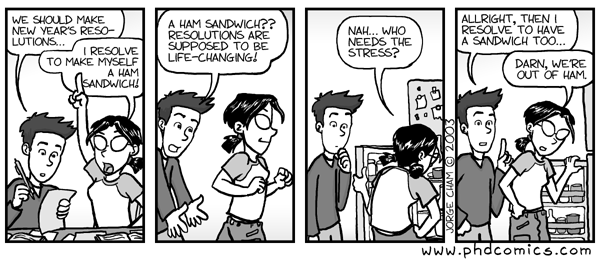
"Piled Higher and Deeper" by Jorge Cham www.phdcomics.com

What actually drives our behaviour?

Currently there exists many theories that try to explain why we do what we do, however, explanations are still lacking in regards to how our body and brain works together to directly drive our behaviour. When it comes to changing our habits, a key point to remember is that this involves stopping ourselves from doing things we consider pleasurable. For example, if you’re on a diet, every time you see an unhealthy snack, you have to tell yourself to STOP. Or, if you’re not a fan of exercising, why would you get off the sofa and slip on your running shoes? Making ourselves do things that don’t provide us with an instant reward can be stressful. These examples suggest that changing our habits can be stressful, that is, (the thought of) diet or exercise can become a source of stress (a stressor), and this makes our brain’s impulse control system work harder in order to adopt a new habit. Researchers have found that some of us can become stressed when seeing images of food, and are also not as good at controlling our impulses.1 Food craving, especially from seeing foods that we like, is a known stressor and the stress experienced from having to control our cravings is likely to tire out the impulse control system that can lead us to give in to temptations.

We might be able to change our habits for a short time as we become vigilant towards our goals, that is, the need to stick to our diet or exercise. However, we all have our limits and if stress from restricting our behaviour continues it will sap our ability to control our impulses, and our behaviour will return to what we are used to (or our ‘normal’). We saw another example of short-term success in behaviour change during our research. When monitoring children’s physical activity, some showed a burst of activity level at the start, but before long, it quickly dropped.2 These children were characterised by being hyper-vigilant towards stressors and they were generally more inactive than other children. We speculated that it was our monitoring of the activity that increased stress as the children felt that they had to show us they were more active which might spur on the initial activity spike, but as the children’s impulses for inactivity built up, it resulted in a considerable drop later on.

What’s next - how can we possibly take up, and keep up with, good health habits?

To influence health behaviour, it is crucial to understand the stress-impulse control mechanisms that DIRECTLY drive the behaviour. To use an analogy, if a person has a fractured arm, a direct treatment would be fixing the bone, rather than taking painkillers which would help to relieve the pain but not fix the problem. Similarly, if it is the stress from behaviour change and its influence on impulse control that directly causes us to succumb to temptations, we ought to target psychological interventions that reduce stress, or the brain’s impulse control system. Being able to manage our stress-impulse control system is particularly vital in the current environment where we are constantly exposed to temptations that lead to an unhealthy lifestyle. It is important to note that other factors, such as motivation and intentions, are also influential in changing our behaviour, however, this stress-impulse control process may more directly dictate the way we behave within split seconds and without our conscious awareness.

A possible psychological intervention is mindfulness training which can increase awareness of the stress cues, so that self-control can be executed before the brain’s impulse mechanism takes over. So next time we have a craving for an unhealthy snack or we are getting worked up about going for a run, we can potentially cope by containing and managing stress and impulses.

We believe that more research needs to be invested in the stress-impulse control mechanisms as it can potentially enhance the effectiveness of future individual health behaviour interventions and public health messages in getting us live a healthier lifestyle, and crucially, it can revolutionise the way we think about health behaviour change.


References
  1. Spitoni, G.F., Ottaviani, C., Petta, A.M., Zingaretti, P., Aragona, M., Sarnicola, A.,. & Antonucci, G. (2017). Obesity is associated with lack of inhibitory control and impaired heart rate variability reactivity and recovery in response to food stimuli. International Journal of Psychophysiology, 116, 77-84. https://www.sciencedirect.com/science/article/abs/pii/S0167876016307310?via%3Dihub
  2. Ling, F.C.M., Masters, R.S.W., & McManus, A.M. (2011). Rehearsal and pedometer reactivity in children. Journal of Clinical Psychology, 67, 261-266. https://onlinelibrary.wiley.com/doi/abs/10.1002/jclp.20745

The views expressed here are those of the authors and do not necessarily reflect those of Fuse (the Centre for Translational Research in Public Health) or the author's employer or organisation.

Friday, 7 December 2018

Steering the Coca-Cola Christmas trucks off course in 2018

Guest post by Beth Bradshaw, Alex Holt and Robin Ireland, Food Active

You may remember our guest blog for Fuse from last year, which discussed the media frenzy that goes into overdrive when the Coca-Cola Christmas Truck Tour sets off on its journey across various locations in the UK. We also noted our own campaigns and the efforts of others such as SUGAR SMART to make the case against welcoming the truck into towns and cities already grappling with a childhood obesity and oral health crisis.
 
Every year, we are met with growing support from the public health community and the public including GPs, dentists, teachers and parents. Last year Public Health England issued guidance to local authorities about hosting the Coca-Cola truck. However, there was also some criticism of our position, especially where we were seen as ‘spoiling’ Christmas in some way.

However, this year, things seem to be different. We feel a change in the air this festive period with a scaling back of the Coca-Cola tour, both in terms of numbers of locations and less prominent venues.

There are a number of important changes that have happened both in the build-up and the start of the Coca-Cola Christmas Truck Tour for 2018. While these might appear small, together they demonstrate quite a significant shift by the soft drinks corporate giant.

This year, the Coke Truck allowed just three days between the announcement of the tour and its start, compared to 11 days last year. Within this time frame, SUGAR SMART coordinated an open letter to Coca-Cola bosses with over 40 signatories from local authorities, Clinical Commissioning Groups, and national campaign groups to oppose the truck visiting their areas [1]. This meant there was time to coordinate responses both nationally and locally, including a series of Tooth Fairy stunts, and for noise to be made to create negative publicity before the truck had even arrived.

The Coke Truck vs the Tooth Fairies
Another important shift is the size of the tour – downsizing by over a third (37% to be exact), from 38 stops last year to just 24 this year. The 2018 tour is also visiting some much smaller locations - the media has called it ‘snubbing’ cities such as Milton Keynes and Liverpool - and there are just four visits on council-owned land. We are pleased to see so few local authorities allowing the truck on council-owned land but would urge those that are welcoming the truck to seriously consider whether this is in the best interest of their local population.

There are also more stops hosted on supermarket car parks this year, with as many as ten of the stops to Asda and Tesco. The same Tesco that announced a five-year ‘strategic partnership’ with national health charities including the British Heart Foundation, Cancer Research UK and Diabetes UK to help ‘remove barriers to healthy habits’ earlier this year. A Coca-Cola truck pitching up in their car park is certainly a barrier to healthier habits, both literally and figuratively speaking. This move has also been met with criticism and Sustain and SUGAR SMART are calling on the public to write to Asda and Tesco to ask them to reconsider hosting the truck next year. On taking this action ourselves, we received a response from Asda customer relations which said:
“We have been in conversation with Coca-Cola prior to this tour and we are happy that they will be encouraging customers to sample their sugar-free brands. They will only provide Red Coke on request and they estimate that at least 90% of their drinks sampled will be sugar free.”
As of yet and unsurprisingly, we have had no response from Tesco.

Asda’s response is consistent with the quote provided by Coca-Cola’s press release, which also appears to have satisfied Public Health England’s concerns, as they have decided not to respond to the truck this year.

Finally, in the North West of England (where Food Active is based), the truck is visiting just one city in the region compared to six visits in 2016 and four in 2017. Over the past four years, Food Active has been lobbying against the arrival of the truck in the North West, including publishing an article in the British Medical Journal [2], writing an open letter to local and national press (with over 100 signatories) and supporting SUGAR SMART’s open letters to Coca-Cola bosses. We hope that this continued pressure, even in the face of significant criticism, has helped to steer the Coke truck away from the North West.

However, we know the battle is by no means over - 14 of the 19 stops in England have above average prevalence of excess weight amongst 10-11 years old, and in some locations including Manchester, over 30% of the children have experienced tooth decay.

Last year, our blog concluded that “our experience shows us that public health has to be persistent in ensuring our messages are heard in the current victim-blaming culture”. This statement is perhaps even more validated following this year’s experiences.

In the spirit of good will this Christmas, we thank Coca-Cola for helping more of our local authorities in the North West to help tackle issues of childhood obesity and dental decay in their areas - many of which are already disproportionately burdened with deprivation and health inequalities.

www.foodactive.org.uk

@food_active


References:
  1. Ireland, R and Ashton, J.R. (2017) “Happy corporate holidays from Coca-Cola” i8633. Available at: https://www.bmj.com/content/356/bmj.i6833
  2. SUGAR SMART (2017) Spending holidays in good health. Available at: http://www.foodactive.org.uk/wp-content/uploads/2017/11/Open-Letter-to-Coca-Cola.pdf
Images:
  1. Courtesy of Beth Bradshaw
  2. With thanks to Sustain and Sugar Smart UK: https://www.sustainweb.org/blogs/nov17_coke_truck 

Friday, 23 November 2018

The Age of Bubble-gum Gin?

In a post for Alcohol Awareness Week, John Mooney, Fuse Associate and University of Sunderland Senior Public Health Lecturer, ponders how the alcohol industry will respond to declines in youth drinking. 


1990s alcopops on display at the Museum of Brands
There is no doubt about the current trend: youths and young adults are clearly drinking less alcohol. In what seems to run counter to the traditional image of “irresponsible teenagers” drinking to excess and partying the night away, a number of recently published studies and reports have confirmed an increasing indifference to the “charms of the demon drink” on the part of young people that extends across all age groups. In their recent report for example, University of Sheffield alcohol research group (SARG) in a Wellcome Trust funded study [1], highlighted that:
“Among 16-17 year-olds, the proportion who reported drinking nowadays fell from 88% in 2001 to 65% in 2016 and the decline over the same time period for 16-24 year-olds was from 90% to 78%...”
Similarly in a nearly 10,000 strong sample of participants aged 16 to 24 years using a ten year analysis of Health Survey for England datasets, rates of non-drinking increased from 18% in 2005 to 29% in 2015 (largely attributable to increases in lifetime abstention) [2]. In the same study for the same period, “not drinking in the past week” increased from 35% to 50%. The SARG Wellcome Trust report noted that younger drinkers were also consuming alcohol less often and in smaller quantities: Between 2003 and 2016, for example, the proportion of 11-15 year-old drinkers who “had consumed alcohol in the last week” fell from 41% to 19%. Among 16-17 year-old drinkers, the decline was from 58% to 39%, while for 16-24 year-olds it was from 75% to 60%.

As the Sheffield report also notes, these declines in alcohol consumption are by no means confined to the UK with similar reductions in youth drinking being seen across many European nations, North America and Australasia.

Declines in drinking would be expected of course to be accompanied by public health benefits and therefore alcohol-related hospital admission rates in England have been falling in line with consumption, as have the numbers of under 18s referred to specialist alcohol services. This has a particular resonance for North East England, where the rates of alcohol-related hospital admissions for under 18s have been among the highest in the country [3] and which in recent years have been falling more sharply than for England as a whole (though of course, the starting point was higher).

While the reasons behind these regional, national and international declines in youth drinking are as yet not particularly well understood, it is probably worth noting that we have been here before, with the early 1990s seeing international declines in youth drinking. Many experts on alcohol consumption trends at that time also noted that this decline was accompanied by a robust ‘product diversification’ response by the alcohol industry, most notably the rise of ‘alcoholic soft drinks’ or ‘alcopops’. In an article published in the Independent in 2003 [4], the then chair of Alcohol Concern, Eric Appleby commented:
"The whole alcopops thing came about because at that stage the industry had realised that they weren't getting the normal flow of drinkers coming through. Young people were more independent and drugs had taken over for a lot of young people as a recreational high instead of drink. The industry knew it had to do something. They will always deny it but it is pretty clear that the whole alcopops thing was about recruiting young drinkers and getting them at an early stage. Young people don't have a natural affinity for the taste of alcohol – this was a crash course, cutting out the middle man."
Consumption data confirmed these suspicions, with figures released by the UK Department of Health in 2002 revealing the average alcohol consumption of children aged 11 to 15 who were drinkers had rocketed from 5.3 units a week in 1990 to 9.8: ‘Alcopops’ or ready to drink mixes (RTD’s) of spirits and soft drinks were blamed.

This previous experience and the industry response does of course beg the question if there will be a similar response this time around and the format that this might take. As the Sheffield report also notes, drinking habits formed when young, have a major influence on lifetime alcohol consumption patterns, so these trends will not have escaped industry analysts and those who might be concerned about maintaining “medium to long-term consumption and sales forecasts”.

For a number of commentators, the industry responses are already clearly in evidence, most notably perhaps being a proliferation in novelty gin varieties, perhaps the most blatant ‘cross-over’ with confectionary style marketing being ‘bubble-gum gin’ or ‘marshmallow flavoured vodka’.

Of course, there is also a ready-made consumer base among young adults for energy drinks, which have been the focus of much publicised research by Fuse colleagues and there is a long established practice of these drinks as alcoholic mixers, to say nothing of the fortified caffeine and sugar enriched wine of choice, most popular in my native Scotland and the product of serene ‘Buckfast Abbey’ surroundings in South West England.

Current downward trends in alcohol consumption therefore might already be seeing a familiar  marketing response… but the extent to which that will succeed is still guesswork, given the as yet lack of clear understanding around what might be behind current trends.

From a North East public health perspective of course, long may these trends continue, since the medium to long-term population health benefits in this part of the world in particular are likely to be considerable!


#AlcoholAwarenessWeek
#AlcoholChange 


References: 
  1. Oldham M, Holmes J, Whitaker V, Fairbrother H, Curtis P: Youth Drinking in Decline. University of Sheffield Alcohol Research Group & Wellcome Trust; 2018. 
  2. Ng Fat L, Shelton N, Cable N: Investigating the growing trend of non-drinking among young people; analysis of repeated cross-sectional surveys in England 2005–2015. BMC Public Health 2018, 18(1):1090. 
  3. Public Health England: Local Alcohol Profiles for England In.: https://www.gov.uk/government/collections/local-alcohol-profiles-for-england-lape; 2017.
  4. Harding N: The Demonised Drink: How Has Youth Drinking Evolved 20 years Since The Launch of Alcopops? Independent. London; 2013.
Image: "1990s alcopops on display at the Museum of Brands, west London" by Ben Sutherland via Flickr.com, copyright © 2017: https://www.flickr.com/photos/bensutherland/37299742285

Friday, 19 October 2018

What’s a night out without a takeaway?

Ingrained & intertwined risky drinking & eating habits

Posted by Stephanie Scott, Senior Lecturer in Criminology & Sociology, Teesside University

A recent Fuse blog post reflected on the ways in which alcohol and food come together in the lives of young adults (Cassey Muir and Alice Graye ‘the booze, the binge and the bulge’). For example, some young adults may eat a takeaway after a night of drinking and a fry-up the next day, some may choose not to eat prior to drinking and some may drink alcohol alongside a meal. Such reflections are based on findings from the recently completed FOrwaRD project, a study that I have had heavy involvement in as a project applicant and lead researcher.

Yet, whilst the reflections of those on the cusp of adulthood are extremely important, one of the key messages from this project and an abundance of public health research evidence is that behaviours such as risky drinking and associated eating patterns become ingrained and intertwined in our lives long before we turn 18. In other words, health behaviours cluster in adolescence and track to adulthood. Think back. How long have you associated a beer with a curry or white wine with fish or, more bluntly, that going for a takeaway at the end of a night of heavy drinking is the norm? And, are these messages instilled in us during adolescence or perhaps even earlier in childhood? We also know that an unhealthy approach towards food and alcohol is more likely for some young people than others, particularly for alcohol, where we have seen a steady decline in the overall percentages of those who drink alcohol juxtaposed against those who do drink doing so at extremely high levels.

My point here is that, not only do eating and drinking behaviours interact, but the influences on these behaviours, such as parents, peers, marketing, urban space, also overlap, and overlap from an early age. Frankly, we eat and drink certain products for pleasure, for popularity or to socialise. One way in which to tackle a growth in obesogenic and alcohol-related harm is to explore overlapping and distinct influences on these behaviours at the point in which they accelerate i.e. late childhood / early adolescence and use this knowledge in the design of interventions which link rather than separate out such behaviours.

With this in mind, we set out (using Fuse pump prime funding) to identify and synthesise qualitative research evidence into common underlying factors which influence alcohol use and unhealthy eating behaviours amongst young people aged 10–17. This involved bringing together two separate bodies of literature to enable analysis and comparison across two associated fields of study. Thus, our synthesis involves the interpretation of individual studies by identification of second-order constructs (interpretations offered by the original researchers) and third-order constructs (development of new interpretations beyond those offered in individual studies) by way of the development of a ‘model structure’ of shared influences upon both unhealthy eating behaviours and alcohol use amongst young people aged 10–17.

Of the 63 studies included in the review, 27 studies focused on alcohol whereas 36 focused on eating behaviours. Initial analysis of the data identified 16 themes, 14 of which demonstrate shared or overlapping influences on young people’s alcohol use and eating behaviours. For example, we found that both alcohol and food were used by adolescents to overcome personal problems such as to relieve stress, to push away negative feelings or emotions and in some cases to replace human interaction: “…it’s a way like any other to forget or to let off steam, it depends on the person.” (Petrilli et al., 2014).

Whilst these findings are at an exceptionally early stage, one thing is clear – there remains very little research linking young people’s eating behaviours and alcohol use together. Hopefully, emerging publications from this review and the FOrwaRD project will help to lead this change.

With thanks to the core project team Louisa Ells, Emma Giles, Frances Hillier-Brown and Wafa Elamin.


Reference:
  1. Enrico Petrilli, Franca Beccaria, Franco Prina & Sara Rolando (2014) Images of alcohol among Italian adolescents. Understanding their point of view, Drugs: Education, Prevention and Policy, 21:3, 211-220, DOI: 10.3109/09687637.2013.875128

Friday, 1 December 2017

When the Coca-Cola truck comes to your town

Guest post by Robin Ireland, Director of Research at Food Active and Beth Bradshaw, Project Officer at Food Active.

When Coca-Cola announced their 'Holidays Are Coming' truck tour (ironically coinciding with Sugar Awareness Week), our local media in the North West covered the story like it was the first sign of Christmas, the first cuckoo to be spotted in spring.

And in the run up to the big red shiny sugar-laden truck’s arrival to our towns and cities, from Bolton to Liverpool, Manchester to St Helens, the local newspapers will cover the story in page after page of advertorials, telling you where to get your picture taken posing with Coca-Cola's sugary products and even live blogs in some cases.

In previous years, at no time did the reporters consider that not everyone welcomed the truck in their neighbourhood. Many people are concerned that the truck was marketing Coke to children despite the company's protestations that they do not promote their products to the under twelves. Furthermore, in some locations in the North West the truck was allowed to promote their unhealthy drinks to children and families on Council owned landed. 

To demonstrate our concern, last year Food Active drafted a letter objecting to Coca-Cola's tour coming to the North West which was sent to the national and regional media. No less than 108 people signed in support including the current and past Presidents of the Faculty of Public Health, five Directors of Public Health, Professors, Doctors, educationalists and of course parents. If we are honest, we were shocked that the letter was almost entirely ignored. It would appear that Coca-Cola's commercial clout and public relations campaign counted more than the collective voice of those who are having to address the results of diets regularly fuelled by liquid sugar.

Just before Christmas 2016, Professor John Ashton and I (Robin) were in contact with the British Medical Journal concerning these issues and were invited to submit an editorial which was published in January [1]. In contrast to their previous experience the media attention was huge including coverage in over 60 regional and national newspapers and interviews on various channels including Sky News and Wales Today.

This year, the media attention and discussions around the Coca Cola Christmas Tour has continued. Before the tour was even announced, a news story hit the local press in the North West from Liverpool councillor Richard Kemp CBE (also Deputy Chair of the Community Wellbeing Board at the Local Government Association of England and Wales), who raised concerns about its arrival in Liverpool given the city is ‘in the grip of an obesity epidemic’ – although we know this is not an issue only in Liverpool – the whole country is in the grip on an obesity epidemic. Once the tour was announced, including six visits to the North West, we were pleased to see none were on council-owned land (in 2016 the truck visited Williamson Square in Liverpool which is owned by the Council)

Following this came a cascade of news stories from local and national newspapers and radio stations. This year, Food Active joined up with Sugar Smart to encourage Directors of Public Health, Council Leads and Clinical Commissioning Group Chairs across the country to sign an open letter to Coca-Cola opposing its arrival, given the health harms associated with the consumption of their products and calling for more responsible marketing during the festive period. The North West represented one quarter of the 29 areas, cities and towns who signed the letter. This advocacy may have helped to prompt a response from Public Health England and Public Health Wales – there is a sense that the argument against the Coca-Cola truck are now being taken seriously and media coverage of the 2017 Coca Cola Christmas Tour is not just about when and where you can get your photo taken - but also the health concerns. 
Coca-Cola says that it does not promote its products to the under twelves

Following excellent work by Public Health England, by national organisations including Action on Sugar, the Children's Food Campaign and many others, and of course by Food Active in the North West, we know that we must target sugary drinks as part of a strategy to address the tsunami of obesity, type 2 diabetes and dental disease we face in our poorest and most deprived communities. Moreover, as highlighted in a blog by Dr. Alison Tedstone, Director of Diet and Obesity at Public Health England, the truck will be visiting some of our poorest areas which are often disproportionately burdened with higher levels of obesity [2]. As such, a symbol of ill health should not be welcomed nor celebrated within our communities during a season of good will and cheer. 

However, this is not only about high sugar drinks. Protecting children from junk food marketing has been outlined as the number one priority in tackling obesity by the Obesity Health Alliance (a coalition of over 40 organisations committed to reducing obesity – of whom Food Active is a member). We must not mistake the Coca-Cola truck for anything but a very high profile marketing stunt. We do not allow products high in fat, sugar and salt to be advertised to children on children’s TV programmes, so why is the Coca-Cola truck welcomed into our communities year on year with such open arms? Speaking at the Socialist Health Alliance Public Health Conference, we called for junk food marketing controls to be extended to cover family attractions such as the Coca-Cola truck, as well as sports sponsorship and marketing communications in schools. By allowing the truck into our towns and cities, we are allowing Coca-Cola to exploit the festive period to market their products to the community – and to children in particular.

Our experience shows us that public health has to be persistent in ensuring our messages are heard in the current victim-blaming culture. There is little point in local authorities spending their ever restricted funds on promoting healthier eating and drinking if each Christmas we allow Coca-Cola and others to highjack our messages. There is certainly no excuse for local authorities at to allow this truck on their land and it is the responsibility of public health advocates to continue to make the case to Give Up Loving Pop in 2018. 
  
References:
  1. Ireland, Robin, and John R. Ashton. "Happy corporate holidays from Coca-Cola." (2017): i6833. Available at: http://www.bmj.com/content/356/bmj.i6833
  2. Tedstone, Alison. “An update on sugar reduction”. (2017). Available at: https://publichealthmatters.blog.gov.uk/2017/11/14/sugar-reduction-an-update/


Photo © Oast House Archive (cc-by-sa/2.0)


All views expressed in a post are exclusively those of the author or authors.

Friday, 17 February 2017

How big food and drink are using sport

Guest post by Robin Ireland, Director of Research, Food Active and Healthy Stadia

You don't have to do much travelling to realise that the unhealthy alliance between sport and the Food and Drink Industry isn't only an issue in the UK.

I am lucky enough to be visiting New Zealand and Australia at the moment and it's easy to see all the same signs - and very similar marketing campaigns and messaging. Whether it's the All Blacks rugby team being pictured with the product of their "Official Hydration Partner", Gatorade, or the recent Australian Tennis Open full of alcohol advertisements (and I haven't even mentioned cricket), it's clear that the Food and Drink Industry have an international agenda.

Advertising featuring the All Blacks rugby team photographed in New Zealand

In January, the British Medical Journal published an editorial (Ireland and Ashton 2017)1 that I wrote (with Professor John Ashton CBE) about how Coca-Cola's publicity machine was subverting the Christmas message.

If anything, it's even more blatant in sport and we have been aware of it for some time from London's "Obesity Games" (Garde and Rigby 2012)2 to Rio's promotion of ultra-processed foods (Loughborough University)3. Even when spectators want healthier food, this choice is rarely made available to them.

George Monbiot recently referred to "Dark Money" (Monbiot 2017)4 which describes the funding of organisations involved in political advocacy that are not obliged to disclose where the money comes from. In public health terms, we may describe this as Commercial Determinants of Health where industry interests impact on our health. It is often linked to the increasingly sophisticated Corporate Social Responsibility policies being adopted by big corporations.

The latest of these is of course the deal just announced by the English Premier League and Cadburys criticised by the Obesity Health Alliance in a letter to The Times (Obesity Health Alliance 2017)5. Cadburys no doubt will argue that they are taking an ethical position to help educate people. But can we really take a chocolate company seriously that wishes to advise schoolchildren on nutrition, healthy eating and exercise?


FC Bayern München's branded energy drink
It is no coincidence that the mantra parroted by food and drink sponsors is that our diets are down to individual choice and that if we simply took more exercise we wouldn't be having the obesity epidemic now prevalent worldwide. This is rubbish. So called energy and sports drinks should have no part to play in the diet of the average member of the public. Kids do not need more sugar (or more protein for that matter) if they are eating a balanced diet with lots of fruit and veg. But of course the food and drink industry do not make their enormous profits in this way.

It is these concerns - amongst many others - that encouraged myself and colleagues to establish Healthy Stadia in 2005, of which I am a Director. Healthy Stadia takes a holistic and integrated approach to developing sports stadia and clubs as "health promoting settings":
"Healthy Stadia are those which promote the health of visitors, fans, players, employees and the surrounding community" (from Healthy Stadia website)6.

Healthy Stadia's Conference which will be held at the Emirates Stadium, London, in April will be discussing food and drink sponsorship in professional sport among other issues. I anticipate that these topics will come under increasing public scrutiny in years to come, as we develop more awareness of the impact that marketing has on our food and drink choices. (Cairns et al., 2013)7.

Sports fans and public health professionals alike should be questioning how 'Our Beautiful Games' are being manipulated by the Food and Drink Industry to promote ultra-processed food and drink - including alcohol - to audiences, often well populated by impressionable youngsters. Let's see if we can link up the campaigns in different countries to make a louder voice demanding change from the governing bodies of sport.
References:
  1. Ireland R and Ashton John R. (2017). Happy corporate holidays from Coca-Cola. BMJ 2017;356:i6833. http://www.bmj.com/content/356/bmj.i6833. 10 January 2017.
  2. Garde A and Rigby N. (2012). Going for gold – should responsible governments raise the bar on sponsorship of the Olympic games and other sporting events by food and beverage companies? Commun Law. 2012:356:42-9.
  3. Loughborough University Press Release (2016). Loughborough research calls for change in spectator food and drink provision at sports mega events such as Rio 2016. PR/16/158. http://www.lboro.ac.uk/media-centre/press-releases/2016/december/loughborough-research-calls-for-change-in-spectator-food-and-drink-provision-at-.html. 05 December 2016.
  4. Monbiot G. How corporate dark money is taking power on both sides of the Atlantic. The Guardian. https://www.theguardian.com/commentisfree/2017/feb/02/corporate-dark-money-power-atlantic-lobbyists-brexit. 02 February 2017.
  5. Obesity Health Alliance (2017). Letter to The Times – Cadbury and Premier League Sponsorship. Accessed online at: http://obesityhealthalliance.org.uk/2017/02/06/letter-times-cadbury-premier-league-sponsorship/?utm_campaign=Cadbury%20letter. 06 February 2017.
  6. European Healthy Stadia Network. http://www.healthystadia.eu/about.html
  7. Cairns G, Angus K, Hastings, G and Caraher M (2013). Systematic reviews of the evidence on the nature, extent and effects of food marketing to children. A retrospective summary. Appetite 2013: 356:209-15. http://www.sciencedirect.com/science/article/pii/S0195666312001511. 03 March 2013.
All views expressed are exclusively those of the author.