Showing posts with label drugs. Show all posts

Friday, 11 July 2025

“It’s not something that you just openly discuss” - Supporting British South Asian carers affected by drug and alcohol use

Posted by Jayne Black, Public Health Officer, Harm Reduction and Social Inclusion, Public Health Directorate, Newcastle City Council

Access to services, such as those related to drugs and alcohol and other health services, can be challenging. This challenge may be harder for some minority communities due to a variety of additional factors which impact people from accessing support when required. It is important that we identify these issues and barriers that prevent people in need from accessing help.
PROPS Community Connector, Fatema Rahman (C) with colleagues Annette
  Walby (L) and Helen Thompson (R), celebrating Eid at Fenham Library

In Newcastle, an ethnic minority needs assessment has been carried out and is available on our Joint Strategic Needs Assessment webpage.

We have also partnered with Northumbria University to explore barriers and perceptions to accessing drug and alcohol support.

An important area of focus is how family members are affected by a loved one’s substance use. In Newcastle, a recent research project backed by Fuse seedcorn funding investigated the perspective of British South Asian carers, who care for people who use drugs and/or alcohol, regarding their experiences and access to specialist drug and alcohol carer services in Newcastle.

The collaboration which included, co-production with people with lived experience, was between Newcastle City Council, PROPS (Specialist Family Drugs and Alcohol Service), Northumbria and Newcastle Universities.

What do we know are some of the barriers?

Attitudinal (personal)

The limited research suggests that attitudinal barriers within minority groups exist in relation to accessing care services. These are suggested to be in relation to not wanting to involve services. This is due to low awareness of services and availability, and concerns around cultural or religious appropriateness.

Stigma

Stigma is harmful and has been defined as the devaluing of an individual based on their characteristics or behaviour.

We know that stigma in general can have an impact on whether an individual seeks support for alcohol or drug issues, or other health issues.

Within the British South Asian and Muslim community, it has been identified that societal stigma, within the community, can impact upon people’s willingness to access help. This stigma may be centred around concerns of what other members of the community perceive about a particular individual or family and their use of alcohol or drugs.

Carers

The research evidence within this area rarely extends to those who are in a caring role for family or friends who are struggling with issues around alcohol or drugs. This could be an important area of focus, as support from a family member or friend is incredibly important. Whether day-to-day or during recovery, supporting carers is vital. However, it is worth noting that some people may not identify or recognise themselves as a carer and therefore, are unaware of support.

The Census of England and Wales in 2021 identified that North East England has the highest number of people providing unpaid care. It also suggests that unpaid carers in the North East provide the most hours of care.

Providing care may impact the health and wellbeing of a carer, this could include financial as well as if someone is a kinship carer. Therefore, it is important to identify if there are barriers to accessing carer support services for people who care for family members or friends using drugs and or alcohol.

What did we discover?

Our research results identified a variety of key areas. These areas related to the topic of drugs and alcohol in terms of it being ‘taboo’, with associated stigma, the barriers that are experienced for accessing family support, along with the general awareness of family support services.

Drug and alcohol use as a taboo topic

Carers highlighted the difficulty of discussing their loved one’s use of drugs and alcohol with other people who are close to them. The topic itself can be seen as something which creates unease. This creates a possible negative effect as talking with others may help create a supportive network and help carers feel supported and provided with guidance.

“the drug use; it’s not something that you just openly discuss. It’s like [frowned] upon. You know, people, I think, blame the parents, “well why aren’t you doing something?” […] Unless somebody can help you, you know, guide you, there’s no point having these discussions with people […] I mean, I’ve spoke to their grandma about it and stuff. Like, people who genuinely care.” 
                                                                             Participant
In contrast, others mentioned conversations about drugs and alcohol being more prevalent in the community, requiring more awareness for community members.

Barriers to accessing family support

The issue of stigma is evident from the discussion, with drug and or alcohol use being seen as an individual issue of choice, which not only impacts the individual, but affects the reputation of the family. It is seen as different to mental health issues, as something that people are unable to physically observe or have an understanding of.

“I don’t even talk about his mental health condition, ‘cos it’s a stigma. People like, laugh at it and things and say, ‘look, he’s barking; he’s crazy’. It’s this whole attitude that he’s crazy. You know, there’s no sympathy. […] it’s better and easier to get cancer than it is to [have anything] like that, because no one’s going to be understanding. […] People don’t understand, they think they’re putting it on half the time. They’re not understanding the side effects that it has.” 
                                                                            Participant 
There is recognition that seeing or being aware of someone in a community accessing help for drugs and alcohol, or in recovery, can help shift perceptions and show that support is accessible to other members of the community.

Misconceptions around confidentiality and issues of trust can be seen within those working with services or accessing a service. Carers need to be reassured that services are bound by confidentiality. In terms of confidentiality within the community, raising awareness about available support can play a major role in reducing stigma associated with engagement and seeking support.

There is hope in the organisations that provide family support services, and allowing a carer to progress on their support journey at their own pace is important.

“I got involved with them and *the family support service* were really good, because at that time, I didn’t want anyone to know, ‘cos I didn’t know what was happening and they offered me so many different solutions and like, I don’t have to see them straight away […] Cos some people don’t want to talk about… You know what I mean? So at that time, I didn’t want to see who I am in this. I just wanted to understand what’s happening.” 
                                                                             Participant
Awareness of family support services

It was identified that there is limited knowledge of services that provide support for drug and alcohol recovery. This may create difficulty, as the role of the carer can be a ‘navigator’. Therefore, limited knowledge may add an additional pressure to the carer, which was an issue raised during the interviews.

Services reaching into communities, rather than people who require support finding their own their way, is highlighted as being a positive - which can be used to make recommendations for a future response.

Using an approach which makes the most of existing support already within communities and working at a pace that suits the carer. Also, harnessing the power and visible importance of communities can create a support network, ensuring assistance is sustainable and effective.

“Over the phone, it was fine. Then eventually, they came to my house. Eventually met in cafes, then started a course with them.”

“[They] are very good with giving me a variety of choices that suited me when I needed, so whatever suits you, with patients and carers, however it suits them. However it suits every individual is different, so they met my needs.”
     
                                                                             Participant
Recommendations

We must connect with those who have relationships with members of a community to enhance trust and help support people who need it. Recommendations from the research included outreach into the community for connections with leaders. This must include vital considerations around caring and family support.

Encouraging visibility of services and people in recovery or who have lived experience within the community is also important to help not only the carers, but those who are struggling with the use of alcohol and drugs.

Developing work in Newcastle


Work in Newcastle is being developed within this area. Public Health have been engaging with British South Asian community leaders to enhance treatment and recovery efforts including carers. Two key meetings were held with stakeholders such as the Bangladeshi Association, local Imams, and university researchers. These meetings facilitated open dialogue on barriers to treatment, cultural sensitivities, and support systems, building trust and shared goals.

Engagement with the Health and Race Equality Forum (HAREF) emphasised the initiative's importance, with leaders showing enthusiasm for ongoing collaboration. A rough plan is being developed from these discussions, with next steps involving continued dialogue and refining the action plan to meet community needs. This approach highlights the value of community-led, culturally informed initiatives in promoting health equity.

Newcastle is also working with PROPS to fund a part time South Asian Muslim worker who will serve as a community connector to bridge the gap between community and support services. This is building on their existing effective practice in this space. The community connector worker will provide tailored support to facilitate access to support, ensuring carers, and families get the help they need in a culturally sensitive manner.

Personal reflection

The research highlights the importance of the voice from carers and communities, and those with lived experience. The importance of understanding the issues from those with lived experience who are supporting someone and working through any daily challenges. We must ensure that valuable information that we discover from research, such as this, is used to act and ensure that everyone has an opportunity to be supported and live well.

Wednesday, 7 May 2025

Understanding the ‘zoppie buzz’ in Teesside

Posted by Hannah Poulter, Teesside University, Visiting Research Associate, University of Bristol

Hannah's post coincides with International Harm Reduction Day, which is observed each year on 7 May and is dedicated to harm reduction approach to drug addiction.


At the conclusion of our research into Heroin Assisted Treatment (HAT) in the North East of England, so many questions remained for me, one of which was: What’s with the zoppie (zopiclone) ‘buzz’ in Teesside?

Teesside gets quite a bad reputation when it comes to drug and alcohol use, which perhaps isn’t surprising when you consider in Middlesbrough you’re more likely to die from a drug related death than a car crash. What we don’t often hear about is the ongoing innovative and groundbreaking work to create solutions to complex problems such as those spanning multiple public budgets - health, justice and social care.

Through our research on HAT we got an insight into the havoc caused by street tablets (such as zopiclone) in Middlesbrough, a story also found in other places within Teesside and further afield. Street tablets are defined as illicitly manufactured prescription-like tablets (that look similar to prescription medication in packaging) bought from illicit sources (street dealers) and used without medical advice.

The prevalence and availability of street tablets here, such as zopiclone, combined with their adverse health consequences and impact on treatment engagement makes a rather toxic combination of risk factors for people who are already vulnerable. I feel empathy for both the marginalised people struggling with their addiction to street tablets (amongst other substances), who felt that there was no feasible offer of treatment for them and the healthcare practitioners tasked to support them, with little advice to draw upon beyond ‘don’t take them’.

While we found there were pockets of great work being undertaken, we also saw that the work wasn’t particularly joined up and that there were lots of gaps in knowledge:
  • What was the appeal of zopiclone in Teesside, a seemingly unique feature of the local drug market here?
  • What do people who use street tablets think could be done to help improve treatment?
  • How could we increase knowledge, collaboration and capacity between local practitioners, academics, people with lived experience and the police to address this public health issue together?
As an Early Career Researcher with a ‘non-standard’ research career (I had a career in business development, research and policy in the housing sector prior to re-entering higher education), I was both confident and daunted by the prospect of leading a project in this area.

Confident because I was sure I could achieve this as I had led on, and been part of many projects focused on collaboration, capacity development and research in the past. Daunted because this was one of the first projects I had led in my own research area as an academic, and I wanted to prove that I was able to do so alongside delivering academic outputs and impact.

I feel proud and relieved now this project is over and am incredibly delighted that we delivered extra value for the funders alongside some solid impactful work in this important area. Here’s a summary of our work:

Engaging people who are often less well represented in research and involving them in the process and co-production of solutions to addressing street tablet use.

One workstream of this project used Community Based Participatory Research with a lived experience researcher, Peter DaSilva from Recovery Connections. With Peter’s knowledge of the local drug market, operating context, and behavioural factors we were able to engage some of the most marginalised people at risk of a drug related death into the research process.

I am so passionate about lived experience recovery organisations and their crucial work using lived experience to engage and retain people in treatment. We have a publication on this currently under review with the Harm Reduction Journal.

Understanding the harms associated with zopiclone use and unique features of the zopiclone market in Teesside.

Several smaller spin off projects have been developed as a result of this grant. We delivered two student projects which involved speaking to healthcare practitioners (HCPs) in Teesside about their perceptions of street tablet usage. I’m currently working with Dr Jenny Scott at the University of Bristol to combine our data with a larger multi-site project on HCP insights, funded by the Economic and Social Research Council. To support the completion of my Stage 2 Doctorate in Health Psychology I’m conducting a rapid review of the existing evidence base on zopiclone. Another paper we have nearly completed is one analysing prescription rates to understand how changes to safe prescription of zopiclone may be associated with the illicit market. Through this portfolio of work we will have a much better understanding of the unique features of the zopiclone market in Teesside.

Developing ways to share information and access better technology within Teesside for real-time testing to help reduce harms and overdose risk for people who use drugs.

Key relationships and mechanisms of information sharing have been built, improved and solidified through this project. Dr Gillian Taylor (Teesside University) has been testing locally seized samples such as zopiclone and pregabalin to improve local knowledge sharing. Gillian and I have worked with Joanne Russell from Public Health South Tees supporting their establishment of the Local Drug Information System in Middlesbrough such as the standard operating procedure. Dr Taylor is now sharing testing information of locally seized samples to supplement local overdose alerts and has a formal relationship with Cleveland Police which she has developed as a result of engaging on this project.

Better knowledge exchange between academics, practitioners, and policy makers locally, regionally and nationally.

Local regional and national connections were key ingredients to this project and have led to knowledge exchange beyond the remits of this funding stream. The connection which has personally stood out for me, has been with the team at University of Bristol, led by Professor Graeme Henderson, Professor Matt Hickman and Dr Jo Kesten. Through engaging with them on this project, I was appointed as Senior Qualitative Researcher within the School of Clinical Epidemiology and Public Health at Bristol between September 2022 and March 2024 on their project: Opioid overdose deaths: Understanding the lethal interactions between benzodiazepines and opioids to develop new harm reduction strategies funded by the Medical Research Council. I have learned so much from working on this project, and from my colleagues, which I hope will lead to other projects in the future. We are currently writing up the outputs from our qualitative work, have presented our findings at the Society for the Study of Addiction conference in 2023 and our team presented our work at the European Conference on Addictive Behaviours and Dependencies in Lisbon in October 2024.

Where next?

Now this project is over, (and following me being on maternity leave for a year), we are working on writing up the key outputs from our work. Our ultimate goal is to improve the offer of care for people who use drugs in Teesside and beyond.

What I’ve learned from this project is that we can only do work of this nature, with the right funding, and right support from senior members of Teesside University and local decision makers. Having the funding to support me to completely dedicate one day a week to capacity building enabled by the Targeting Health Needs grant from NIHR Clinical Research Network, gave me brain space from my busy role within the Evaluation and Impact Team, was transformational. It takes time to create good quality dedicated multidisciplinary and translational research, and often the intangible but important factors in this process such as ‘connection building’ can take the most time.


The Heroin Assisted Treatment (HAT) study was funded by the National Institute of Health and Care Research (NIHR) Applied Research Collaboration (ARC) North East and North Cumbria (NENC)

Targeting Health Needs project funded by National Institute of Health and Care Research [NIHR] 2022/23 Clinical Research Network (ref: 17969707). 

Friday, 13 December 2024

When stigma came to town: why a quick fix can never work with a life-long problem

Posted by Ian Treasure, Programme Manager, Changing Futures Lancashire and Cassey Muir, Research Associate, Newcastle University

“When you point a finger, three point back,” a member of our Lived Experience panel said while discussing stigma. Stigma is often invisible, yet it shapes how people perceive themselves and are perceived by others. This saying reminds us that before we judge others, we should first reflect on our own behaviours, actions, and beliefs.


The Changing Futures Lancashire Programme and taking a trauma-informed approach

The Changing Futures Lancashire (CFL) programme was one of 15 areas in England chosen to receive funding to test and learn approaches to supporting adults experiencing multiple disadvantage. Anyone experiencing three of the following five conditions were able to access our services:
  • substance misuse
  • homelessness
  • criminal justice involvement
  • poor mental health
  • domestic violence
CFL was a follow on from Fulfilling Lives which also supported this cohort. CFL was different as it was funded through local authorities in an attempt to gain more traction for system-wide change needed to support a seldom heard group. The funders were Ministry for Housing Communities and Local Government (MHCLG) and The National Lottery Community Fund.

Nationally, we focused on measuring improvements for the people we support, how well services work together, and how decisions are made at a higher level. The aim was to create significant changes in the system so that people with complex needs can access the support they need more easily. We adopted a trauma informed approach in the way we offer and provide support. For example, we understand that individuals who may appear aggressive could actually be scared, confused, or reliving past trauma. This non-judgmental approach not only shapes how our providers assist individuals with complex needs but also affects how the adults we support view themselves.

The majority of beneficiaries (90%+) in the Changing Futures programme face poly-substance use (using more than one substance at a time) as the main condition that developed into multiple disadvantage. Many have shared how chronic drug use often leads to involvement with the criminal justice system, poor mental health, and eventually homelessness. Alongside these challenges, many individuals have experienced parental abuse or neglect. Their negative school experiences, often tied to undiagnosed learning disabilities or other barriers, have also shaped their struggles. Over time, our beneficiaries have developed coping strategies to survive—tools they rely on to navigate a world that often feels unsupportive.

Shining a light on stigma

The CFL Programme has made significant strides in supporting individuals facing multiple disadvantage. However, as we delved deeper into the challenges faced by our beneficiaries, we uncovered an invisible yet pervasive barrier: stigma. This insight shifted our focus and prompted us to ask: 
how can we tackle the stigma that often prevents people from seeking the help they need?
People with lived experience helped shape the CFL model, ensuring that it addresses the needs of those who understand these challenges best. During conversations with our beneficiaries, we found that many initially hesitated to seek help because of the trauma and judgment they felt during comprehensive assessments. We responded by removing this entry barrier, focusing instead on the sharing of information between services followed by a more conversational approach that helps build trust without the fear of interrogation. This small change proved to be a key turning point for many individuals, making them feel more comfortable returning for support.


Across Lancashire we also have started to shed light on the issue of stigma. We created the powerful and thought-provoking film above featuring people with lived experience and other professionals sharing their stories, which has been viewed thousands of times. One case study highlighted a single mum afraid to visit the pharmacy near her child’s school for fear of being seen picking up methadone by another parent, and the stigma she faces as a result. Another featured a man who is street homeless, sleeping in a public toilet, only to be kicked out by the cleaner in font of commuters. These are painful reminders of some people’s situations and how different they feel from everyone else. It became clear that it wasn’t enough for us to only think about how we tackle stigma across our services, we also had to ask ourselves: what else can be done to prevent stigma and to reduce its impact on individuals?

The CFL board agreed that we should do some credible research into the topic. We sent out an enquiry of interest form and Fuse researchers responded.

Reducing stigma: research findings and key recommendations

The project between the CFL programme and Fuse was to conduct a review of the research into what can be done to reduce stigma for adults who experience multiple disadvantage.

At the heart of our work are the people with lived experience who have been instrumental in shaping our approach. Their first-hand insights have been invaluable not only in designing effective services but also in guiding our research on stigma. Many panel members shared how they overcame their own stigma through achievements like gaining employment, while others still face the stigma of past criminal convictions – something that remains a barrier to moving forward. Their voices are central to the research and the recommendations we’ve developed.

We brought together 51 review papers and found that most focused on reducing mental health stigma. Fewer studies addressed stigma related to drug and alcohol use. There was limited research on stigma linked to domestic violence, homelessness, criminal justice involvement, and poverty. Our panel felt that the findings would be relevant across various forms of disadvantage, reflecting that poor mental health or alcohol and drug use often serve as the primary ways people come into contact with services.

The research we reviewed found that stigma reduction approaches typically focused on:
  • individuals experiencing disadvantage and stigma
  • practitioners who provide support
  • the public
There was little research on system-level changes, such as policy changes, that could address stigma more broadly.

We found that social support, particularly through peer-led or group-based approaches, was highly effective in reducing self-stigma among people facing multiple disadvantage. Peer connections helped individuals build stronger and more positive identities and gain confidence, breaking down feelings of isolation.

Additionally, we discovered that combining educational strategies with contact-based training was a powerful way to reduce stigma amongst practitioners and the public. Educational efforts - such as presentations or information addressing misconceptions about disadvantages - were most effective when paired with opportunities for practitioners and the public to meet and learn from people with lived experience. This combination allowed for a deeper understanding of the challenges faced by those with multiple disadvantages and proved more effective than using either method alone.

We engaged with our Lived Experience panel to discuss and explore recommendations. They came up with eight key recommendations to advance this work into practice:
  1. Facilitate peer connections: Provide opportunities for individuals experiencing disadvantage to connect with others who share similar lived experiences. This can help reduce isolation, foster mutual support, and reduce feelings of shame and embarrassment.
  2. Promote peer leadership and advocacy: Encourage individuals with lived experience to take on leadership roles or act as advocates within services. This could help challenge stigma and provide role models for others facing similar challenges.
  3. Incorporate lived experience in service design and delivery: Actively involve individuals with lived experience in the design, development, and delivery of services to ensure they are relevant, responsive, and inclusive.
  4. Embed trauma and stigma informed practices throughout the organisation: Apply both a trauma and stigma informed approach across all levels of the workplace. Training should not only be limited to frontline staff but also extend to managers, supervisors, and directors to ensure everyone is stigma-aware.
  5. Ensure long-term commitment to anti-stigma efforts: Integrate anti-stigma interventions into ongoing practice, ensuring they are not one-off sessions. Offer regular refresher courses to reinforce learning and maintain long-term impact.
  6. Foster collaboration across services: Promote collaboration between all services to ensure they adopt stigma-aware practices. This includes working together across sectors, such as housing, mental health, and other support services, to create a cohesive approach to addressing stigma.
  7. Engage the community: Work on community outreach to raise awareness about stigma and its effects, helping to foster a more inclusive and empathetic environment in the wider community.
  8. Implement system-wide change: Advocate for policy changes that address the root causes of stigma, such as social inequalities, and promote fair access to services for all individuals, regardless of their background or circumstances. System-level changes are crucial because stigma isn’t just about individual attitudes; it’s embedded in our systems, policies, and institutions.
We need your help

The insights from the Changing Futures programme and our research are clear: tackling stigma requires a holistic, multi-level approach. By prioritising peer support, lived experience, and trauma-informed practices, we can make real, lasting change. Now, we need your help. Join us in challenging stigma, watch and share our videos, and support this movement. Together, we can create a more inclusive, empathetic society where everyone has the chance to thrive.


Take the next step (useful resources):

Friday, 19 July 2024

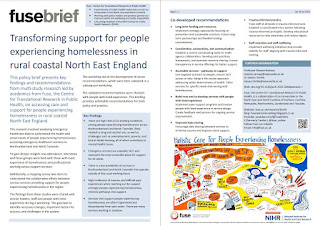
From crisis to collaboration: Transforming support for people experiencing homelessness in North East England

Posted by Steven Thirkle, Research Associate, Newcastle University

People experiencing homelessness often have multiple and complex health and social care needs that require support from many services. However, accessing and coordinating this support can be difficult when services are disconnected geographically or relationally. Often the person who is experiencing these challenges is the one who has to reach out for help, and this can be extremely hard for someone also managing day-to-day homelessness.

During our workshop, More Than Minutes visually captured our discussions, providing a dynamic summary. These visuals encapsulate key insights and recommendations, offering an engaging snapshot of our collective journey towards transforming support for people experiencing homelessness.


Over the past two years, our team has been working with services that provide support to people experiencing homelessness in rural and coastal areas of North East England. Our goal has been to explore innovative ways to improve access to care and support for these vulnerable people. Here, we share our research findings, shed light on the challenges faced by people experiencing homelessness and present our co-produced recommendations for creating a more effective and holistic (whole person) support system.

What does hospital data tell us?

To understand why people experiencing homelessness in the North East often turn to emergency care services in rural and coastal areas rather than seeking alternative forms of support, we examined hospital data on people attending emergency care services who had no recorded address. We discovered that there are many contributing factors, including struggles with alcohol and drugs, mental health issues, and challenging social situations. These challenges often occur at the same time, exacerbating their complexity and approaches to treatment.

What is stopping homeless people accessing services?

While this numerical data provided valuable insights, it did not uncover the underlying reasons behind the lack of engagement with other support services. To gain deeper insights, we interviewed people experiencing homelessness as well as those providing support in rural and coastal areas. The interviews aimed to explore experiences with emergency care services, overall health, social lives, and past traumas. They revealed significant barriers to accessing services, such as limited resources, transportation challenges inherent to rural areas, and the isolation often felt in coastal communities. Additionally, rigid service criteria and thresholds prevented people from receiving the support they urgently needed, further compounded by the sparse availability of services in these regions.

What is the current picture?

A comprehensive and integrated approach tailored to the rural and coastal context was needed to provide effective support to people experiencing homelessness in these areas, so we mapped out existing services and their collaborative relationships in the areas. Our findings showed a fragmented system, with many services operating independently and lacking essential connections to the core network of services necessary for addressing the unique challenges faced by people in rural and coastal areas.

How do we address the gaps?

In response to these gaps, we organised a workshop at the Community Hub in Cramlington, Northumberland, bringing together over 70 people including professionals from health, housing, social services, local authorities, law enforcement, emergency response, and third-sector organisations, as well as people with lived experience of homelessness and mental health issues in these regions. Together we developed recommendations for a more effective and collaborative approach to supporting people experiencing homelessness in rural and coastal areas. Seven key areas for recommendations were identified:
  1. Long-term funding and resources: Campaign for sustained funding and increased resources to support comprehensive and ongoing assistance for homeless people.
  2. Coordination, connectivity, and communication: Establish robust ways to coordinate, foster better connectivity between services, and improve communication channels to ensure a seamless and integrated support system.
  3. Accessible services - pathways to support: Develop clear and accessible pathways for homeless people to access a wide range of support services, including health, housing, social services, and mental health resources.
  4. Building trust and co-developing services with lived experience: Foster trust and inclusivity by actively involving peoples with lived experience of homelessness in the design, development, and evaluation of support services.
  5. Trauma-informed practice: Implement trauma-informed approaches across all support services, recognising and addressing the underlying trauma experienced by homeless people.
  6. Improved data sharing: Establish efficient data-sharing agreements for support services to ensure comprehensive and up-to-date information, enabling better coordination and informed decision-making.
  7. Staff retention and wellbeing: Prioritise the wellbeing of support staff by providing resources, training, and support to prevent burnout and turnover, fostering continuity of care.

We have developed a handy two-page Fuse research brief which pulls out the key findings and recommendations for practice and policy co-developed with people with lived experience. 

Friday, 17 May 2024

Animating practitioners to take action on stigma

Matty Starforth, Public Health Practitioner-Harm Reduction and Social Inclusion Portfolio, Newcastle City Council

“Stigma, stated simply, is a set of negative and often unfair beliefs. Stigma can be experienced on a societal, structural and personal level. It is employed largely unconsciously but at times also consciously”. 
Anti Stigma Network


Stigma is often a word that is associated with harm but it is important to recognise that stigma can have a huge impact on individuals and groups in society. From my own professional experiences, I am aware, like many of my colleagues and partner services are, that the harms of stigma can include and are associated with inequality, disadvantage, discrimination. Stigma increases stress, shame, depression, isolation, and can lead to the avoidance of healthcare and decreases treatment engagement and retention for individuals and groups.


It’s clear that there is a need to address stigma and embed an ‘anti stigma approach’ as part of the work we do to tackle inequalities, but doing so can be challenging. While people tend to be generally aware of the term stigma and how this can affect individuals, there is often less understanding of the depths that people go through to avoid and overcome the stigma they experience, such as not attending appointments or seeking the help or support they deserve. There is also less awareness of the steps that we can all take as individuals to not only avoid stigmatising people through our language and practices, but also actively speak out and promote an anti-stigma approach more widely.

What we are doing about it

To address this, we have had several areas of work in Newcastle upon Tyne looking to raise awareness and address some of the harms of stigma on others. This started with the publication of Drugs, Identity and Stigma and ongoing discussions about changing how we focus on people who use drugs or alcohol and the language we use for those facing multiple disadvantage and exploitation. Academics, policy makers, public health and key stakeholders, from working together on various research, came together to deliver a practitioner conference, improve practitioner training, development and networking and production of a practice briefing, stigma animation and a planned education package. All of this has been informed by lived experience.

In May 2023 we worked with partners to hold a conference to over 320 practitioners, service providers and community members from across the region. The Stigma, Trauma, Substance Use and Domestic Violence Conference involved a range of international, national and regional researchers and academics including a keynote talk from international anti-stigma lead, Professor Carla Treloar. The Conference was designed to promote knowledge exchange and good practice of Anti-Stigma work from across the region. A practice briefing that was developed from the event can be found here. A key theme in the discussions has been around vulnerability and exploitation, and partners have worked together, from research developed by the University, to produce animations around exploitation and home takeover. Research into practice improvement. Two artists were employed to capture the key themes and discussions of the conference as a visual (see below) which could then be shared with services.

Visual capturing the key themes and discussions of the conference

Developing the stigma animation

From this work, we explored how we can explain the ongoing theme of stigma and its impact. A recent project that I have coordinated, in collaboration with university colleagues, is the production of a stigma animation which you can see above. Aimed at practitioners and volunteers, this will help raise awareness and become a key resource to support the work and objectives we have within Newcastle Public health, and also the wider local authority. The animation has involved consultation and input from a range practitioners, service users and individuals with lived experience of stigma. At each stage of the animation production, I have attended the Newcastle Service User and Carer forum. Inclusion of those with lived experience of stigma was essential in these discussions and has been key in helping to shape the direction and design of the animation, particularly in relation to service needs and solutions.

A key challenge during this work has been ensuring we produce an animation which doesn’t unintentionally stereotype or stigmatise individuals through the imagery used. There has been a lot of thought-provoking conversations and discussions which have led to both personal and professional reflections. For example, figures in early storyboard drafts of the animation which were uniformly male and able bodied were subsequently changed to be more inclusive and represent a diverse range of bodies. Throughout the process there have also been a lot of discussion in relation to the language that we use to support the imagery. Some key insight was gained from the Newcastle Service User and Carer forum where participants identified examples of where they had felt stigmatised through language and how potential changes could have changed outcomes. These examples have been included within the animation to highlight the impact of language.

We plan to share the animation across a range of practitioners working within fields such as drug and alcohol, mental health and wider health and social care roles. This will support the drive to encourage sign up to the Anti-stigma network and prompt organisations to develop an anti-stigma strategy for their workplace. Alongside this we wish to support practice improvement by developing a stigma education package, which the academics are leading on, and which we hope to eventually deliver through an educators by experience model.

Addressing stigma will require individual and collective action from all of us, and so we urge you to please watch and share the animation, use the resources available, sign up to the Anti-Stigma Network and help us to spread an anti-stigma approach.

Background and context

Addressing stigma is a key priority in Newcastle upon Tyne. In 2022 the Director of Public Health report stipulated that policy and practice should ensure health improvement is free from stigma. This issue is also gaining National traction, with the Office for Health Improvement and Disparities (OHID) recently announcing the project ADDER stigma indicator programme and currently adapting Professor Carla Treloar’s (University of New South Wales) Australian stigma indicator and monitoring model for the UK. The NHS Alliance Stigma Kills campaign has recently been rolled out, with the North East and North Cumbria Integrated Care System (ICS) backing this campaign for our region. The Anti Stigma Network has also recently formed to raise the profile and awareness of stigma, especially the impact on people who use or have issues with drugs and/alcohol.

Thursday, 7 March 2024

Creating an out of this world children’s book to help families affected by substance use

Cassey Muir, Research Associate from Newcastle University


To celebrate #WorldBookDay, Cassey tells us about going beyond the research to co-produce a children's story book to help families affected by substance use which is now freely available.

“To take the findings from our lived experience and create something real for families and people beyond the world of research has been brilliant” 
Young person involved in the project


Creating something real: How we produced a children’s story book

When I had the opportunity to create a children’s story book based on some of my PhD research that could help families affected by substance use, I was really excited to get started with the project. Ever since I was little, I wanted to write a children’s storybook and I had even mentioned this at my PhD interview panel, so being part of this project was a dream come true in many ways. 

To be able to create a book that has such meaning for the children and families involved has been incredibly rewarding, if not emotionally challenging at times. To help shape the plot and character development based on the stories of the young people that I had talked to during my PhD, felt like an enormous privilege but also a weight to get right. I wanted to make sure the story reflected the different experiences of children, while other members of the team were making sure the story reflected parents and caregivers’ experiences. Working with the talented Danielle Slade (author) and Josie Brookes (illustrator) helped make this process go as smoothly as possible. They were empathetic to the stories of families and wanted to keep to the integrity of family’s experiences and impacts, while making a story that was engaging.

With the creative minds of Danielle and Josie, we worked with 15 family members who were affected by parental alcohol or drug use, three teachers, Coram Life Education, and Coram Beanstalk to co-produce this storybook. Using techniques like free writing to music, drawing different characters, and storyboarding ideas, we involved children and parents in the creative process from the start. Families were also able to see early mock-ups of the book and feedback their ideas on improvements to the story and share their preferences on illustrations. Josie and Danielle were really receptive to the ideas from children and parents and valued their input.


We met with teachers from local primary schools and practitioners from Coram to think about who the target age range of the book would be, how the book could be used within schools and practice, and how to help adults have conversations with children. Through these discussions we developed conversation prompts for adults that are at the back of the book. These prompts (for example, what do you think of the Yozzle?) can help with discussing the characters and themes within the book with children in one to ones, in groups, or within a whole class setting. Anyone can follow along with this story of Arti, a wishing star. We have received positive feedback from practitioners where this book has been used with younger children (5-8 years), older children as a discussion point for reflecting on childhood (14-16 years) as well as with children who have special educational needs and disabilities.

We have also recently collaborated with Newcastle Film Club to produce a ‘story time’ video of the book being read by the author. This video allows the book to be accessed more widely and can be used alongside the book. Being able to produce this video, with Amy Mains (Director and Editor) and Scott Anderson (Director of Photography), who are also both teachers, was a fun and unique experience. We set up the equipment and reshuffled the backdrop in Fenham Library and managed to shoot the film in under two hours, just in time for the library opening to the public. I think this video adds an extra bit of magic to the story, with soft music and twinkling sounds!


Beyond the world of research: Creatively disseminating research findings

For context on the book, Twinkle, Twinkle Arti is a free story book co-produced with and for children who experience parental alcohol and drug use. This book helps start conversations between trusted adults and affected children. The messages within the book are based on two linked studies around the needs of affected families, led by Fuse Researchers.

The Safe Space project, led by Ruth McGovern, found that many parents and caregivers find it difficult to talk to their child about substance use and the impact upon the child and family. Parents and caregivers spoke about wanting resources to help with these conversations. Alongside this, research led by me, explored the experiences and support needs of children and young people. Children and young people told me that they valued the importance of confiding in a trusted adult such as a teacher, social worker, or family support worker but often did not know who they could trust or talk to, and prioritised approaches within schools which promoted conversations about parental substance use.

The story book captures the emotional and social impacts of living in a difficult family situation, from the perspective of the child and the parent or caregiver, and highlights helpful strategies to support the child’s wellbeing, for example talking about your feelings.

Using out of this world storytelling and fictional characters, the findings from these two studies are told in a way that makes them accessible to families and practitioners and offers positive messages and validation not only to children but to parents/caregivers and practitioners who find it challenging to know how to broach this sensitive topic.


We are freely sharing this book with families, schools, and practitioners across the country. To help understand the usability and impact of the storybook, we are gathering feedback from practitioners with a short online survey. This feedback will contribute to informing further development of the book and additional resources that are needed. I hope the book can be used across many different settings (schools, social care, and voluntary organisations) and can be shared with families who want to have those conversations. Within schools, we hope it is used in whole class situations, to reduce the stigma and show children they are not alone. It’s a fun story with fictional characters, and I hope families feel the book is engaging and non-stigmatising.

Here is some of the feedback that we have received so far about the book.

A practitioner told us: “It is so meaningful for children to know about the Yozzle [fictional character depicting alcohol or drugs in the book] and how it makes them feel. What a very complex idea to get across to children and yet it has been achieved with such skill!”

A child who reviewed the book shared: “It [the story] shows you’re not on your own and that there are other stars [fictional character depicting trusted adults] to support you.”

A primary school teacher shared the following: “There were no problems at all using Twinkle, Twinkle Arti in a whole class situation. In fact, I think it worked well as an introduction because it wasn't only alcohol use that the children discussed it was mental health, feelings, and how to overcome problems.”

A parent who helped co-produce the book reflected: “I am proud of the book because other children won't have to go through what my children have."

I think it is really important for researchers to work collaboratively with public, practice, and policy partners and to engage in creative processes that open their research to wider audiences. Through this process, you might learn something new and have fun doing it. But don’t just take my word for it, here are the perspectives of the illustrator and young person involved in the project:

Josie, the story’s illustrator, says: “This has been a really inspirational project, and a joy to work with Danielle, the research team, and all the families involved. We collectively believed in the power of storytelling to get these important issues across, and the resulting book is something I am so proud to have been a part of making. I think children will connect with Arti, her colourful world, and her story. I am excited for it to be used as a positive resource with children and families, in opening up those very crucial conversations, whilst simultaneously being so enjoyable to read!”

A young person reflected: “This book is something I would have loved to have been able to give to ‘little’ me, having something that related to my home situation when I was a child. I feel rewarded to be able to do this for ‘me’ now, for little me going through all those hard times and for all the children who will read this book, who are going through something, have a hard home life, have parents who are struggling, anything.

I hope through the book, we are able to show them that they are not alone and that there are people around them who are there to give them love and support. Hopefully, the book can help reach them earlier than I was reached out to. To create a book that would educate and support whomever read it, no matter their age or background, to be more than a storybook and to be able to help them, even in a small subtle way. It is a chance to reach the children that need it through a storybook that they come across all the time in life. It is incredibly rewarding to have a book that exists, that will last and be passed on to different children who are in a variety of situations for years to come. I am very proud of it.

I sincerely hope the book not only entertains children at bedtime, but that it can in some ways soothe a child's worries. It was an honour to hear the brave accounts from families and even more so, that they have trusted us to put their feelings and stories into this book.”

Fuse researchers and lived experience expert at book launch event. From left to right: Ruth McGovern, Kira Terry, Cassey Muir and Debbie Smart 

If you would like to learn more about this research, then please go to the links at the bottom of this page. And if you would like to join Arti on her journey of bravery, self-discovery, and learning about the important of talking about your feelings then take a look at the story book or watch the video.

Find out more
  • Download the book free.
  • Listen to this Fuse podcast to hear Cassey discussing her research on social and emotional resilience in children and young people affected by parental substance use.
  • Read this Fuse news article about Twinkle, Twinkle Arti.
  • Read this Alcohol Action Ireland blog and listen to the podcast.


All illustrations by Josie Brookes

Friday, 9 December 2022

What support do children and young people actually want when their parents use drugs and alcohol?

Posted by Cassey Muir, Fuse & NIHR School for Public health Research (SPHR) funded PhD Researcher from Newcastle University and Kira Terry, Lived Experience Expert. 


“No-one has ever asked me about how I feel in any of this.”


I found the powerful quote above from a young person during my research exploring parent drug and alcohol (or substance) use from the young person’s perspective. Since then the question of ‘what support do children and young people ACTUALLY want?’ has remained central to my PhD research in this area.

Most schemes focus on the parents themselves, to reduce the risk to young people. While these interventions are needed it should be alongside and in addition to support for the child or young person as well. There are currently a very limited number of evidence-based interventions for young people whose parents use substances, with low quality effectiveness. The distribution of support services for children and young people whose parents use substances is also patchy across the country, with practitioners doing really great work with little funding and resources.

In a recently published review of the research in this area, I aimed to understand the experiences, perceived impacts, and coping strategies of young people whose parents used substances. The review was extensive - covering the perspective of over 700 children and young people from across twenty different countries - and I hope that it can help to inform practice and policy through illustrative cases of young people’s experiences, as well as giving insights into what support could be useful.

Feeling different and isolated

Working with PROPS Young Person’s Project, a group of young people with lived experience supported the early stages of this review to help us understand the findings. One area that the young people felt was missing and may not have been explored across the current studies was the experience of feeling different to their peers, and how they felt isolated and like they had to keep everything hidden from others. This idea, relating to the experience of stigma, helped me to explore the data from a different perspective.

Children and young people described living highly disrupted and chaotic lives, characterised by unpredictability and insecurity within their relationships. They also often experienced adversity occurring at the same time in childhood, such as parents with mental health problems, domestic violence and abuse, as well as poverty. Children and young people were impacted both emotionally and socially from their experiences of parental substance use, which often extended beyond their parents stopping use, further highlighting that child-focused support is crucial. The painful experience of shame, stigma, and discrimination due to their close association and relationship with a parent who uses substances, was often further compounded for those who had experienced poverty or lower socioeconomic status.

Resisting and coping

Most of the studies described the negative impacts of parental substance, without recognising children and young people’s agency and attempts to change, control, and resist their experiences or impacts. Children and young people tried to manage and mitigate vulnerabilities and be resilient to unpredictable, adverse, and stigmatising experiences. While it is not a child’s role to resist and cope with the negative impacts of parental substance use, they were trying to do this anyway, often without formal support in place. Formal support was often thought of as something children and young people only have at times of crisis and due to the stigma and fear of speaking out it was also difficult for young people to seek support for themselves before a crisis point.

What can we do to support?

The findings had little to say about how young people wanted to be supported following their experiences. So, as part of my PhD I have been chatting with young people, and the practitioners that support them, around what we can do to support and build on their strengths, agency, resistance, and resiliency. For instance, young people and practitioners thought it would be good to develop a digital app that teenagers and young adults can access themselves at any time of day. They can choose what topics or sessions they want to go through and hear about other young people’s stories. Such digital interventions could be used alongside in-person support with a practitioner or act as a gateway to more formal support, with the aim of helping reduce the stigma of speaking out and accessing help. Additionally, young people wanted free text support lines that they can access out of hours, usually in the evening when things may be worse at home. Text and chat-based support lines provide young people with the opportunity to safely get support without having to physically talk to somebody and gives them more flexibility. Both young people and practitioners wanted in-depth training for professionals (e.g. teachers or first responders) around the experiences and impacts of parental substance use on children and young people and how to signpost to support.

Finally, one of the main areas that the young people and practitioners wanted to focus was on the co-production of resources to be used in primary and secondary schools. Young people wanted parent drug and alcohol use to be talked about in schools, as many reflected that it had never been spoken about making them feel more alone and isolated. Having lessons around the emotional and social impacts of family substance use within secondary school, or having story books read out loud in primary school about a child whose parent drinks alcohol or uses drugs would begin to reduce the stigma and fear of speaking about such a hidden and taboo subject.

“I’ve really enjoyed that chat, thanks for reaching out to me and wanting to hear about my experiences and how to support young people.”
Young person after taking part in this study


“He has told us he has gotten so much out of chatting with you and is really happy to have been involved and listened to regarding what might help others.”
Practitioner on behalf of a young person 

The young person’s voice

In any decisions made throughout my PhD, I have tried to ensure that the young person’s voice is lasting and at the forefront. Young people have been involved in this project from the start, guiding the research questions, designing research materials, contributing to ethics procedures, analysing data, and presenting results to over 100 practice and policy professionals. To finish this blog post, Kira shares her thoughts on contributing to this project as a Lived Experience Research Advisor and what she thinks is needed to support young people whose parents use substances:

“It has been an absolute honour to be involved as part of this project. To use my ‘negative’ life experience and be able to turn it into a positive impact for other children like me in the future: to help speak for those who feel they don’t have a voice and aren’t seen by people around them in the position they are in. The main part of supporting young children is accessing them and communicating with them. Reaching out to young people in general about parental substance use issues, getting the knowledge out there about it is important. This in turn will help the young people experiencing parental substance use, as the subject isn’t so hidden anymore as it usually feels hidden in the home. And through that we must back up with access to different support links. Some children aren’t ready, some don’t want help, some we won’t reach, but to push and be as present for as many children as possible, as long as possible and to reduce the isolation of the stigma around it is vital.”


Find out more about this research in the first Public Health Research and Me Fuse Podcast: How can we promote resilience in children and young people affected by parental substance use?


  1. Photo by Polina Zimmerman from Pexels: https://www.pexels.com/photo/young-woman-talking-with-therapist-3958461/
  2. PROPS Family Recovery Service logo. Copyright © 2022 - All Right Reserved - PROPS North East: https://props.org.uk/

Friday, 21 October 2022

Stigma: Where’s the Harm?

Posted by Dr Michelle Addison, Assistant Professor, Durham University

Stigma is a knotty, ugly problem we have in society: it marks out (often painfully) what is considered shameful, abject or contra to social norms, and impacts vulnerable and marginalised people the most. It seems intuitive to say it is unfair and unjust, but why then does it persist? 

Discussions of stigma are not new; we are all generally aware that stigma is something to be avoided and we could all very likely give some examples of it in action – benefit claimants, people who use drugs and ex-offenders are often easy targets and regularly feature in news headlines because stigma continues to be sensational – it elicits a voyeuristic feeling that is both intoxicating and a warning to us too. The use of stigma is further exacerbated by the ‘Cost of Living Crisis’, ‘Rising Interest Rates’, Fuel and Food poverty, and the withholding of the Government White Paper on Health Inequalities. We understand then that stigma is harmful, and yet we recognise it is powerful to those who can wield it.  

Erving Goffman discussed stigma using the concept of the ‘spoiled identity’ whereby certain aspects of who you are become discredited and devalued in his now infamous work Stigma: Notes on the Management of Spoiled Identity (1963/1990). This notion of a spoiled identity is also implicit in his observations of patients residing in ‘asylums’, the conditions impacting these people, and the roles of those working there (1961). Indeed, Goffman was acutely interested in the medicalisation and performance of roles in these settings and how behaviour was shaped by social expectations of ‘in-mates’, ‘guards’ and ‘medical staff’. The treatment of patients, he noted, was complexly bound up with expectations of socially acceptable roles and the reinforcement of discredited behaviours and identity.

What we learnt from this is that stigma matters in the social organisation and hierarchies of people and places in medicalised and wider social settings. But what tends to fly under the radar in early stigma research is the question of ‘in whose interests’ does stigma serve?  Professor Imogen Tyler later critiques Goffman’s work (2020) in her book ‘Stigma: The Machinery of Inequality’ for overlooking the power relations that are integral to how we understand stigma, and why indeed, stigma continues to persist. Tyler shows us that there is a ‘craft’ to how mechanisms of stigma operate and function to maintain political power and a social order that hinges on systemic and structural inequalities around class, race, gender (and not limited to) to reproduce privilege for the dominant factions. This is a hugely important step in stigma research because it draws attention upstream to how and why stigma is weaponised (Scambler, 2018) and the social harms that impact marginalised and minoritised individuals and communities in society – which is the subject of my forthcoming article (Addison, 2023). This is further evident in the recent Stigma Kills (2021, 2022) campaign launched by the NHS Addictions Provider-Alliance which gives credence in particular to the impact that stigma has on the health and wellbeing of those communities that are most harmed through health and social inequality.

This growing concern about the effects of stigma on health and wellbeing, arising out of social harm, led to our recent Fuse event Inequalities, Social Harm and Weaponised Stigma: Emerging Research and future priorities which brought together academics, practitioners and the public to discuss these key issues. I presented work from my Wellcome Trust research looking at stigma and how this relates to health inequalities amongst people who use drugs. In this study I highlight how the weaponisation of stigma is harmful, negatively impacts physical and mental health, and inhibits health seeking behaviours for fear of being judged and marginalised by service providers and the wider public.

Joanne McGrath discussed her NIHR funded research into women living with multiple disadvantage and complex needs and how they access services. In this talk she highlighted how escalating problems around homelessness, stigma and deteriorating physical and mental health have a cumulative impact in women’s lives.

Our ‘expert by experience’, Margaret Ogden, shared moving insights into the effects of stigma on her own life and how her mental health was harmed as a result.

Later, Mark Adley discussed his Doctoral work (which is funded by the NIHR Applied Research Collaboration (ARC) North East and North Cumbria (NENC)) and his recently published paper which explores stigma within-groups towards people who use the drug Spice. In this talk, Mark showed how intersections of identity mattered and how increased contact with people who used Spice helped to reduce levels of stigma. He highlighted the role of education programmes within service provision to help draw attention to the harms arising out of stigma and how practitioners might mitigate these effects.

This event was also an opportunity to launch our new Palgrave edited collection Drugs, Identity and Stigma (Addison, McGovern and McGovern, 2022). Our book calls attention to the impact of stigma experienced by people who use illicit drugs, and through this we show that stigma is powerful: it can do untold harm to a person and place with longstanding effects. Through an exploration of themes of inequality, power, and feeling ‘out of place’ in neoliberal times, this collection focuses on how stigma is negotiated, resisted and absorbed by people who use drugs. Dr Kelly Stockdale, a contributor to the book, spoke at our Fuse event and shared insights from our research into the challenges of navigating a custodial environments (prison and police) and the impacts of stigma from the point of view of people who use novel psychoactive substances (NPS). Collectively, our work in this area brings together a range of frameworks and data and draws attention to the damaging effects stigma can have on health inequalities, recovery, mental health, recidivism, and social inclusion.

Our knowledge and understanding of the harms that stigma does to health and wellbeing is still growing – as such, it is critical that developing stigma research becomes a priority in future inequalities research agendas, against a backdrop of political and economic crises. Whilst the social determinants of health are often tangible and measurable, providing the much-needed evidence base to tackle widening health inequalities, it is imperative that we think differently and critically about how stigma operates. In my own research I have tried to show that stigma operates at a symbolic level meaning it is not possible to treat stigma as something which is material and objective, to say ‘here is stigma’ – we must think more deeply about stigma as inscribed with meaning that becomes apparent through its effect on and between people (see also Addison, McGovern and McGovern, 2022).

I called this blog ‘Stigma: Where’s the harm?’ to be a little provocative to you, reader – on the one hand, stigma is so normalised in our society that we forget to see it, so I encourage you to pause and reflect on where the harm resides – like a million little paper cuts, stigma is painful and gets under the skin doing very real harm. On the other hand, my question is also a call to action to understand how and why stigma is weaponised, and how it leads to social harm amongst under-heard and underserved people. It is my strong belief that this is vital work if we are to tackle and reduce widening health and social inequalities right now.  


References:

Addison, M. (forthcoming, March 2023) ‘Framing Stigma as an Avoidable Social Harm that Widens Inequality’ in Emery, J., Powell, R., and Crookes, L. (eds.) The Sociological Review Special Issue

ADDISON, M., MCGOVERN, W. & MCGOVERN, R. E. (eds.) (2022) Drugs, Identity and Stigma, Houndsmill, Basingstoke and Hampshire, Palgrave Macmillan.

ADLEY, M., ATKINSON, A. M. & SUMNALL, H. R. (2022). Including the multiply excluded: a mixed methods study exploring intragroup stigma towards people who use synthetic cannabinoid receptor agonists. Drugs: Education, Prevention and Policy. DOI: 10.1080/09687637.2022.2025766

GOFFMAN, E. (1990) Stigma: Notes on theManagement of Spoiled Identity, London, Penguin Books

GOFFMAN, E. (1961) Asylums: Essays on the Condition of the Social Situation of Mental Patients and Other Inmates, London, Penguin Books

SCAMBLER, G. (2018). ‘Heaping blame of shame: 'Weaponising stigma' for neoliberal times’. The Sociological Review Monograph, 66, 766 - 782.

SINGH, S. (2019) available at: https://samiasingh.com/

TYLER, I. (2020). Stigma, The Machinery of Inequality, London, Zed Books.


Images:

1) Artwork by Samia Singh, https://samiasingh.com @samiasingh_art

2) Book: Drugs, Identity and Stigma, © 2022 Springer Nature Switzerland AG. Part of Springer Nature, ISBN : 978-3-030-98285-0, https://link.springer.com/book/10.1007/978-3-030-98286-7#about-this-book