Showing posts with label fuse. Show all posts

Friday, 8 March 2024

Saying farewell to Fuse and celebrating its remarkable women on International Women's Day

Laura Ritson, Programme Manager, NIHR Three Research Schools, Prevention Research Programme, Newcastle University

We are marking International Women's Day by saying thank you and a farewell to Laura Ritson, who helped to establish Fuse in 2008 and has been integral to the Centre's success, while at the same time welcoming new Fuse Manager Agata Robertson.

In this post Laura talks about her journey with Fuse.

Celebrating Fuse's 10th birthday
After an incredible 16-year journey, the realisation that my chapter with Fuse has come to a close feels surreal. I am deeply grateful for the opportunity to have collaborated with an exceptional group of colleagues. Their contributions not only fuelled the growth of Fuse but also played a vital role in my personal development, fostering a continuous journey of learning and growth throughout this period.

Casting my mind back to 2008, I had the privilege of supporting Professor Martin White in spearheading an application to the UK Clinical Research Collaboration (UKCRC) for a Centre for Translational Research in Public Health. This ambitious venture united our five esteemed North East Universities in a unique collaboration dedicated to advancing world-class public health research. Our mission was clear: to enhance health and well-being and combat inequalities. Professors David Hunter, Charlotte Clarke, Janet Shucksmith, and Ann Crosland, among others, joined forces with us in this endeavour. The success of the application was made possible through the invaluable support of policy and practice leaders in Public Health, including Professors Peter Kelly and Eugene Milne. Their ongoing commitment to flying the Fuse flag is truly commendable. The Fuse funding was allocated for infrastructure to build public health capacity in our region. Securing funding alongside four other national centres forged close working relationships that have endured over the years. In 2009, I was delighted to be appointed as the Administrator for Fuse.

Reflecting on the past, our initial funding contract mandated a two-year review due to concerns about the complexity of our collaborative model, one which we passed with flying colours. Fast forward to today, and it's evident that collaborative efforts are now an integral part of our professional landscape. Embracing collaboration with practice partners and the public has been a significant aspect of our growth during my tenure with Fuse. How times have changed, and how exciting it has been to witness and contribute to this transformative evolution.

There have been so many highlights that it’s difficult to know where to start, and impossible to cover them all!

We underwent a lengthy process to identify our name, debating between Fuse and Rede! The communications agenda has grown considerably since we first established Fuse, and we have produced this award-winning blog and our public partner led podcast, and found many other creative ways to share our research supported by Fuse Communications Manager Mark Welford. The Fuse network has expanded to 2000 members, and we now have a dedicated Public Partner network, thanks to the support of Fuse Public Involvement and Engagement Manager Ella Anderson.

Another jewel in the crown has been AskFuse, a rapid response and evaluation service for our policy and practice partners. Special thanks must go to Professor Janet Shucksmith and Rosemary Rushmer, who were integral to establishing the service, and Dr Peter van der Graaf, Lesley Haley, and Annmarie Ruse, who have supported the development and continued to lead the way with a service that has also inspired and influenced the development of other regional and national infrastructures.

Capacity building has been integral to the Fuse endeavour, and it’s been great to see the development of public health leaders of the future. I’ve witnessed Fuse PhD students progress to senior-level careers in local authorities, prestigious NIHR awards, and professorial appointments.

I have been delighted to be part of the founders and planning of the Fuse International Conference on Knowledge Exchange in Public Health, and I am looking forward to connecting with colleagues at Cornell in June for the 6th International Conference.

Receiving the Director's Award from Ashley at the Fuse Awards 2023
I’ve seen many changes over the years, including in directorship to Professor Ashley Adamson. Working with Ashley over the last 10 years has been truly inspirational. A successful woman leader, she has steered Fuse through two renewals of its membership to the NIHR School for Public Health Research (SPHR) and also successfully directed the national School since 2017, with the support of a fantastic directorate team at Newcastle University who I’ve been fortunate to work alongside. I’ve also been inspired by the work of Professors Eileen Kaner, Carolyn Summerbell, Clare Bambra, Susan Carr, Monique Lhussier, and Amelia Lake. All of them challenged and helped me grow in the Administrator role, which expanded considerably between 2008 and 2017, enabling a strong case for a promotion opportunity to Fuse Manager.

In 2018, we moved towards a Fuse sustainability model, transitioning away from research council funding and towards Fuse partner University contributions, one which took time, effort and challenging conversations. Sustainability funding covers core staff costs and non-staff activities, including successful research events that serve as a key opportunity for disseminating our research, engaging in dialogue about implications for policy and practice, making new and strengthening existing contacts, and building a dialogue around research results and potential future projects. These events are a crucial forum for knowledge exchange. There has also been the development of the Physical Activity network and Embedded Researcher network which attract national level engagement.

In 2020, I was an integral part of a Fuse-led application to the NIHR Public Health Interventions Responsive Studies scheme, in which PHIRST Fusion was established. The Fusion initiative takes an evaluability assessment approach to co-producing evaluation design that addresses the priorities of Local Authority stakeholders. Due to my experience with Fuse, I led the communications agenda for PHIRST at a national level and helped secure funding from the Department of Health and Social Care for a dedicated Communications Manager post, which we now host within PHIRST Fusion.

I’ve been dedicated to working with Fuse for a number of years, drawn by; the people, nature, and variety of the Programme Manager role, the difference public health research is making to the population, and the flexibility I’ve had during my career to bring up my children through a combination of part-time and flexible working and during a national pandemic. I was also enthused by the challenge each day brought my way.

I’ve been grateful to Cheryl Wiscombe for supporting Fuse Administration and, more recently, Ann Payne, who has supported me with Fuse’s membership in SPHR. 

I’m thrilled to have transitioned into the role of Programme Manager for the NIHR Three Schools Prevention Research Programme, hosted by the School for Public Health Research, all while pursuing a part-time MSc in strategic leadership. Considering the latter, I had never thought myself capable of undertaking such a commitment. However, thanks to the support and encouragement of close colleagues, I've grown in confidence to seize this opportunity.

I extend my heartfelt gratitude to everyone who has shown dedication to Fuse over the years. I wish Fuse the best of luck for the future under the leadership of the new Director, Professor Sheena Ramsay, and Programme Manager Agata Robertson. I am confident that the coming years will bring both joy and challenges, and I eagerly anticipate following your progress, including the expansion of Fuse into Cumbria and the reinvigoration of the Fuse research clusters.

----------------------------------------------------------------------------------------------------------------------------------------------------------------------------------------------------

Visit the Fuse website to meet new Fuse Manager Agata Robertson, as she tells us about herself, her interest in public health, and what attracted her to working with Fuse.

Friday, 19 February 2021

"Whatever their answer, double it and you should be close..."

Posted by Hannah Mehmood, Medical Student, Newcastle University

Hannah undertook a 6-week NIHR School for Public Health Research (SPHR) internship with Fuse based at Newcastle University in summer 2020. She was supervised by Fuse / NIHR SPHR Doctoral Student, Cassey Muir.

A question asked in every GP consultation is how much alcohol a patient drinks. It provides a useful insight into a person’s physical, social, and psychological health. According to my GP tutor, most people underestimate the amount they drink, as well as the impact this has on them.

Substance misuse is a complex issue, and as a medical student I have learned to focus on the impact of problematic drug and alcohol use on individual patient wellbeing. Last summer, as an NIHR SPHR intern, I studied substance misuse from a different perspective. The basis of my internship was a research project focusing on young people whose parents misuse drugs and alcohol. I aimed to explore how young people viewed school and education to understand if this environment could be used to deliver supportive interventions.

I analysed ten UK based qualitative studies which examined the experiences of young people affected by parental substance misuse. Qualitative studies examine non-statistical data to develop themes and deep understanding of the research question. The young people from the studies I explored were under the age of 25 and from various social, economic and demographic groups.

Young people viewed school as a space away
 from issues they may face at home
I was particularly interested in the ways in which young people viewed school as a separate space away from issues they may face at home, to the extent that many young people did not even discuss their home life with close friends. But despite the mental separation of home and school, the reality of their home life often prevented a complete detachment of the two. One young person described how caring for her parent resulted in frequently missing school, while another recognised that his aggressive behaviour in school was a way to offload stress at home.

Many young people also expressed a lack of trust towards their place of education, as well as a desire to blend-in with their peers. This contributes to barriers in identifying young people who may benefit from intervention, as many are fearful of being singled out while in the detached school environment.

In conducting my research, I came to appreciate the difficulty in generating themes from such varied experiences. I often felt that my insights did not do justice to the nuances of each individual story. I discussed this in a virtual meeting with a programme coordinator at ADFAM, a national charity that works with families affected by drugs and alcohol. Her experience, delivering interventions at an operational level, allowed me to see how my research fit into the real world. I came to understand that while research is conducted with the aim of applying findings to whole populations, these findings are only actionable when combined with existing knowledge and expertise. This discussion was a lesson in the value of cross-collaboration, an important tool in bridging the gap between research and intervention.

Over six weeks I have broadened my understanding of public health, conducted my own research project, developed my professional skills, and furthered my personal career goals. Although this internship took place remotely, my mentors enabled me to virtually meet various public health professionals. Hearing about their research roles, motivation and future plans has shown me the variety of career paths available within public health and helped to develop my own ambitions. The NIHR SPHR internship with Fuse has been a valuable personal and professional experience and I would recommend it to other students interested in pursuing a career in public health.


Part of our Fuse blog Student Series
The Fuse blog Student Series showcases posts by students who have been challenged to write a blog as part of their studies at one of the universities in the Fuse collaboration, the NIHR School for Public Health Research, or perhaps further afield. The authors may be new to blogging and we hope to provide a 'safe space' for the students to explore their subject and find their voice in the world of public health research.


Images:

1. 'Doctor with prescription stop drinking alcohol' by Marco Verch Professional Photographer via Flickr.com, copyright © 2019 (Attribution 2.0 Generic (CC BY 2.0)): https://m.flickr.com/photos/30478819@N08/48719845996

3. Logo courtesy of ADFAM https://twitter.com/AdfamUK/photo

Friday, 29 January 2021

Bringing the voice of lived experience and community learning into research

Posted by Angela Broadbridge, Peer Research Lead, The Young Foundation (former Research and Evaluation Lead, Fulfilling Lives Newcastle Gateshead)

“There’s something really interesting in our data here, we don’t quite have the full picture, let’s talk to some people to puzzle it over more.”
This is something I hear myself or the team at Fulfilling Lives Newcastle Gateshead (FLNG) say really regularly. We’re an 8 year National Lottery Community Fund learning programme working to improve the lives of people facing multiple disadvantage and build a trauma-informed approach within the services that supports them. We have a wealth of data from supporting over 250 people locally, and we work with a team of Experts by Experience, people with lived experience working to bring about change across the systems they have been through, using their voices to be heard across different platforms.
Fulfilling Lives Newcastle Gateshead Experts by Experience Network co-design session

As the programme has developed our relationship with Fuse has changed and connections have grown, we now do much of our ‘puzzling over’ with Fuse colleagues! I joined Fuse as an associate member back in 2017 when I took up my post as research and evaluation lead for FLNG. I attended Fuse Quarterly Research Meetings to build up my contact base and learn from others operating in this interesting space between frontline practice and research and learning. As I began to see frontline practitioners come into those sessions, I invited some of our own frontline staff to join me to share their experience of working with people who have experienced complicated and challenging circumstances and struggled navigating systems.

I want to highlight some of our learning from building collaborative relationships through and with Fuse researchers, as this has proved to offer new platforms for the voice of lived experience not just to be heard in research, but to set research agendas and co-produce work alongside academics.

In 2018, Dr Sheena Ramsey (co-lead of the Fuse Healthy Ageing Research Programme) invited me to attend a Research Hub Initiative event with Public Health England and I pitched a seed grant funding idea with support from Fuse researchers. Our recently published work on deaths in the multiple complex needs community, an issue our Experts by Experience network encouraged us to explore, was borne out of this funding. We have since joined up with Sheena again in a new study identifying effective and sustainable interventions to improve the oral health of adults with severe and multiple disadvantage. This collaboration works because Sheena and other researchers associated with the study took the time to really get to know our programme, and our Experts by Experience network. Sheena visited us at the men’s accommodation project where we were based a few years ago, met some of our frontline staff and also built trusting relationships with the network, introducing us to academic and practice colleagues to further situate our programme learning within Fuse.

Brainstorm - what makes a good collaboration?
While this was happening, Prof Susan Carr (Fuse Associate Director), set up a meeting with her team at Northumbria University and FLNG peer researchers to talk about projects we were both working on and to explore collaborations. She also arranged for our peer researchers to present early findings from their work to Prof Kevin Fenton, Public Health Regional Director for London, and it was at this point that we started to see how people with lived experience could be involved in local research and practice beyond being participants. There were opportunities for genuine collaboration and learning together.

Fast forward to early in the pandemic and we were involved in two applications to the NIHR Applied Research Collaboration (ARC) for the North East and North Cumbria. One of these applications was exploring food insecurity with Fuse Associate Dr Steph Scott, and Kevin Dobson and Keith Gibson from FLNG’s research team set about exploring our own programme data around foodbank use. Our Lottery funded programme is quite unique in that we have a personal budget fund to use to support people on the programme with anything from their basic needs, including food and accommodation, to more creative uses like buying art materials or enjoying an afternoon at the cinema. Once again we had a ‘there’s something interesting here’ moment.

I sent Steph an email saying:
“we’ve worked with 259 people in Newcastle Gateshead over 6 years and of these 127 individual client records contained a reference to food insecurity or food poverty. We had 14 unique cases, interestingly all female, whose notes had 10 or more references to food poverty and we can see from the notes frequent references to benefits being suspended, people not eating, or missing the foodbank opening times.”
Working with partners to surface system barriers and solutions
The conversation that followed led to us talking to the Experts by Experience about food insecurity, they were similarly enthused by the topic and together we made a successful joint application to the Catherine Cookson Foundation within Newcastle University for a project exploring mutual aid during Covid-19. Using our Lottery funded programme learning and building on our experience co-producing research in other projects with Fuse researchers we are working with a group of Experts by Experience who have developed research questions to start a listening exercise with their peers around their experiences of food insecurity, mutual aid and Covid-19.

This relationship with Fuse is evolving and changing, and it now feels like a relationship truly rooted in the principles of co-production. Our team report that they feel their frontline experience is listened to and helps shape research projects, and our peer researchers are involved in numerous projects and have the confidence to approach Fuse researchers to develop new pieces of work building on the issues that are important to them and their communities. As our programme comes to an end in March 2022, the Experts by Experience network is now thinking about its legacy, we very much hope to continue to build on this strong foundation for collaboration and learning.

Friday, 20 December 2019

Happy New Year from everyone at Fuse

We would like to wish all our readers and contributors a very Happy New Year - why not make a resolution to blog in 2020 and send us your posts?


Image (adapted with thanks):
The original uploader was Rsabbatini at English Wikipedia. [CC BY 4.0], via Wikimedia Commons.

Friday, 22 December 2017

Merry Christmas from Fuse

We would like to wish all of our readers and contributors a very happy festive season. We will return in the New Year - why not make a resolution to blog in 2018 and send us your posts?


Thursday, 8 December 2016

The one where we ask you to vote...

Posted by Mark Welford, Fuse Communications Officer, Teesside University

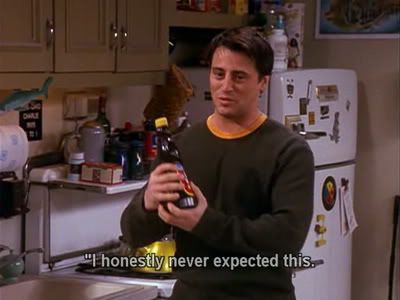
This post is a little like those episodes of Friends in which one of the cast says: “Do you remember the time when [cue wobbly vertical lines]…” and the rest of the 22-23mins is made up of clips from previous shows.

Courtesy of photobucket.com/user/xuyu79/media/blog/s7/s07e18 / Warner Bros.
Let me take you back to a post on Thursday 7 January in which we made a shameless plea to ask for your votes in the UK Blog Awards 2016.  In that post we told you how the blog’s 334 posts had received just over 167,000 views.  Eleven months on and 40 additional blog posts later, the page views have risen to nearly 325,000 - a fantastic achievement I hope you’ll agree!  I discovered this when an ambitious academic asked me if I could provide them with some killer stats about the blog to support their bid for a promotion. The power this blog wields!

This year we have had posts covering everything from Dry January, the ‘nanny state’, animation, Jamie Oliver's school dinner and sugar tax campaigns, to ‘fat shaming’, indigenous Australians, Baywatch, energy drinks, Grandmothers, e-cigarettes, and 'legal highs'.

Five years on from the blog's inception and we have reached the point where people are actively approaching us and generously giving up their time to write posts, rather than having to send in our crack team (the fear inducing) ‘blog working group’ to chase, harry and cajole*.  Could this - and the increased viewing figures - have something to do with the little matter of winning a UK Blog Award last year?  I'd like to think so.

And now, we come to the crux of this post.  It is you, our dear readers and contributors that make the blog a success and it is thanks to you that we won a national award.  So we've decided to go for it again in the UK Blog Awards 2017!

Here comes the shameless plug

The blog has again been entered into two categories: 'Health and Social Care', and 'Education'.  You can vote for us in either category but of course we would really appreciate it if you voted for us in both.

Vote now by following this link

The above link takes you to our profile page on the UK Blog Awards website in which we have chosen two of our favourite posts from 2016:
Voting closes at 10am on Monday 19 December.  One vote per email address.

Hopefully it won't be a maple syrup bottle we'll be holding aloft in celebration come April 2017!

Thank you for your support.

*We do still need your posts!  Please contact me (m.welford@tees.ac.uk) if you would like to write a post for the Fuse blog. Here’s how to take part.

Thursday, 24 March 2016

Supporting vulnerable communities in Australia and the UK: linking data through knowledge exchange

Posted by Theodora Machaira, PhD student at Teesside University

On the 8th of March we were pleased to welcome Jen Lorains, researcher from Australia, in Fuse. Jen was successful in winning a Winston Churchill fellowship and decided to visit Fuse as her main research interest is knowledge exchange and translational research.

As part of her visit, Jen delivered a Knowledge Exchange Seminar on ‘Early Childhood Data with Communities in Australia’. Her presentation focused on the Australian Early Development Census (AEDC) which is a national census which measures physical health, social skills, communication and general knowledge, language skills and emotions of 5 years old children. The AECD data is publically available and although it is not primarily used for knowledge exchange, it certainly facilitates it by enabling key stakeholders in early years to work with the data in order to improve child development outcomes.

Theodora (left) with Jen Lorains
Jen’s presentation was interesting on a number of levels but from a PhD researcher’s point of view, two things were most striking. First of all, thinking about child development assessments in diverse populations, I felt that Australia and the UK are not as different as I thought. In Australia, diversity exists mainly between indigenous and non-indigenous populations. Indigenous Australians have their own language, rituals and beliefs, which in early years and education settings can be challenging to deal with. Although, diversity in the UK is different and not as clear cut with many different cultures calling the country their home, diversity is also an issue over here and is now perhaps more prominent than ever. With that in mind, I was wondering, how fair (or accurate for that matter), is it to collect data on child development from all 5 years old children in English? Isn’t it possible that an indigenous child has good communication skills but in a different language? Of course, this cannot necessarily be taken into consideration in a national census. But surely that begs the question, are we classing children as having delayed development when perhaps we shouldn’t?

The second thing that got my attention was the issues with knowledge exchange in Australia that Jen discussed. She talked about how different professionals use the data and how challenging it is to have everyone on board when trying to develop common approaches to help children in areas where vulnerable children are identified as different professionals identify different solutions for highlighted problems. As my PhD focuses on systems change and developing a common approach between early years’ professionals, I again, thought about the similarities between Australia and the UK. Perhaps foolishly (I am only a year into my PhD!) I thought that these issues are a UK phenomenon, however, I quickly realised during Jen’s presentation that they are not.

Intrigued by these observations, I started talking to Jen after the seminar (and because Jen had an hour and a half to kill before her train) we decided to go for a drink after her seminar. Although some people might disagree, I thought that the pub was a great setting for knowledge exchange! We discussed my and her thoughts having travelled to the UK, USA, Canada and Peru, and realised that using research data with different communities in these counties requires researchers to be skilled in knowledge exchange. This will enable researchers to include these communities in interpreting the data and developing useful interventions with these communities. This might sometimes feel like fighting a lost battle but is essential to support vulnerable children identified through collected census data.

Thursday, 14 January 2016

Christmas dinner: a pleasure not to be underestimated

Posted by Duika Burges Watson, Fuse staff member and Lecturer in Evaluation and Policy Interventions, Centre for Public Policy & Health, Durham University

The final event for our research project exploring the potential of progressive cuisine to improve quality of life for head and neck cancer survivors was a Babette’s feast of sorts. Babette’s feast, the novella by Isak Dinesen (Karen Blixen), centres on the story of a most remarkable and transformative meal. In a remote and austere community in Northern Denmark, Babette cooks up a storm for the abstemious community. A religious cult denying all pleasure, the community is reluctant to eat anything that might be ‘wickedly’ enjoyable. Finally convinced of Babette’s desire to thank them for their support at the time of her father’s death, the French trained chef is permitted to use some new found wealth to prepare a sumptuous feast. During the multiple courses, the community is existentially transformed. Their enjoyment and love of life and feelings of well-being become undeniable as each delicious course is presented, despite their efforts to pretend otherwise...

Courtesy of amazon.co.uk
With our Christmas dinner, we didn’t set out to do anything other than thank the participants for their involvement in the research. We knew from our qualitative food play workshops (25 in all) that participant survivors missed the opportunity to socialise around food; their difficulties with food and eating (including swallowing, speed of eating, limited food choices, and fear of choking) made a ‘normal’ eating out experience unlikely[i]. So we invited the project’s Research Chef to prepare a Christmas meal that we hoped they would enjoy.

The tasting menu, or menu degustation (below) was designed as an adventure in dining, in which multiple very small courses make it easier to undertake - when you know that if you don’t like one, there are plenty more before and after to select from. The delightful setting at Irvin’s brassiere on the North Shields Fish Quay provided an opportunity for survivors to dine out, at their pace; to select from a range of dishes, and to enjoy some of the foods we now knew would be acceptable (with a diversity of eating difficulties, increasing options would ensure there was something on the menu for everyone). What we hadn’t anticipated was how much they’d enjoy the leisurely three hour lunch. Unlike the diners at Babette’s feast, survivors of head and neck cancer do not deny the pleasure of food, it simply may not be an option.

The menu that was offered to participants
Our Resources for Living research has centred on the potential of using some of the progressive cuisine techniques derived from the new ‘science of deliciousness’, an interdisciplinary approach to understanding our sensory perception of food with input from physics, chemistry, neurology and psychology[ii]. Chefs around the world are gaining insights into food in ways never before explored, and we developed the interdisciplinary research project on the assumption that some of these new understandings might improve quality of life for those living with the long term altered eating side effects of cancer and its treatment.

Our research, and the research of others, has showed that the loss of pleasure associated with food can be ‘almost unbearable’. Recent research in neurology suggests that there is one ‘pleasure centre’ in the human brain. In other words, “the pleasure evoked by food is remarkably similar to that of other rewards, suggesting a unitary pleasure system, whether engaging with food, sex, social or higher-order rewards”[iii]. In our research, finding ways to improve quality of life is intimately connected with the loss of pleasure. While we uncovered some ‘compensatory pathways’ such as participants finding pleasure in cooking for loved ones or engaging in exercise, the ability to eat a nine course meal appeared to do much more than just provide satisfaction. Participants reported feelings of well-being and happiness that they’d truly missed, some for years.

For our Christmas meal insights, thanks must go to Sam Storey, our brilliant chef on the project, and to the team of researchers and survivors involved who together have worked to understand, and find ways to manage, the challenge of living with altered eating difficulties.

Resources for Living (R4L) Pilot: Exploring the Potential of Progressive Cuisine for Quality of Life Improvement for Head and Neck Cancer Survivors is funded by the National Institute for Health Research (NIHR) Research for Public Benefit (RfPB) programme.

--------------------------------------------------------------------------------------------------------------------------
[i] Wells, M., 1998. The hidden experience of radiotherapy to the head and neck: a qualitative study of patients after completion of treatment. Journal of Advanced Nursing, 28(4), pp.840-848; Cousins, N., MacAulay, F., Lang, H., MacGillivray, S. and Wells, M., 2013. A systematic review of interventions for eating and drinking problems following treatment for head and neck cancer suggests a need to look beyond swallowing and trismus. Oral Oncology, 49(5), pp.387-400. 

[ii] Mouritsen, Ole G. "The science of taste." Flavour 4.1 (2015): 18.

[iii] Kringelbach, M.L., 2015. The pleasure of food: underlying brain mechanisms of eating and other pleasures. Flavour, 4(1), p.20.

Thursday, 7 January 2016

The blog monster returns with a shameless plug

Posted by Emma Dorée, Fuse Communications Assistant

Just over a year ago, we wrote about how far the blog had come since it hatched and it’s safe to say that the waistline of the - now fully grown - ravenous blog monster continues to expand.

Feed me, Seymour!
Since its creation in May 2010, the Fuse blog has had just over 167,000 views and we’ve posted 334 blogs – a great achievement, right?!

As a result, we wanted to do something to celebrate this success and to see if we could reward all the contributors that make the Fuse blog what it is, so we have entered the UK Blog Awards 2016!

The blog has been entered into two categories: 'Health and Social Care', and 'Education'. You can vote for us in either category but of course we would really appreciate it if you voted for us in both.

You can vote for the Fuse blog once a day by following this link. We will be encouraging people to do this via our social media feeds but it would be even better if you could spread the word and encourage your friends and family to vote for us too.

http://www.blogawardsuk.co.uk/ukba2016/my-entry/fuse-open-science-blog
Click here to vote for the Fuse blog now

Most importantly however, we still need people to continue sending us blog posts so if you work in public health then please get in touch.

We want to hear about your aims, priorities and challenges or which issues you think need to be brought in to the public eye and debated. Could you give an insight into your role within public health for those not directly involved? Or is there a public health campaign in your area that you wish to promote or a topical news issue or event happening which could coincide with your post?

We post blogs at least once a week and publicise them via our Facebook page and Twitter account. The blog has its own website but of course, you can also view the blogs by visiting the Fuse website.

Email your posts to me (E.Doree@tees.ac.uk) and please let us know if you think there is anything we can do to improve the blog.

Thank you to everyone who has contributed to the blog so far. You have sparked great discussion and helped our readers learn what it is really like to work in public health, no matter what your role is.

The UK Blog Awards 2016 competition closes at 9pm on the 25 January so don’t forget to keep voting for us as much as possible until then!

Photograph ‘into the mouth’ by Len "Doc" Radin via Flickr.com © 2005: https://www.flickr.com/photos/drurydrama/1079598181

Thursday, 17 December 2015

The big countdown

Posted by Emma Dorée, Communications Assistant for Fuse

It’s that lovely time of the year again when we count down the days to Christmas. Whilst we are frantically running around trying to complete our Christmas shopping, we are also eagerly waiting in anticipation to see if this year’s X Factor winner will make the number one top spot and whose festive Foxtrot will lead them to become the Strictly Come Dancing winner.

The Fuse Blog however is having a countdown of its own. Seeing as so many great blogs have been written this year, we thought it would be a good idea to have a look at all of the blogs from 2015 and create our very own ‘Top 5 chart’ of the ‘bestsellers’.
 
So let’s begin….

At number five: No time to run: role overload contributing to physical inactivity in parents? Caroline Dodd-Reynolds’ post looks at how parents find it difficult to fit physical activity into their daily busy routines. With 604 views, this is clearly a subject that lots of people, especially parents, can relate to.

At number four: How active are pregnant women? Measuring the methods. Louise Hayes and Cath McParlin debunk the ‘pregnant pause’ and tell us that guidance recommends that pregnant women should actually be doing at least 30mins of exercise on most days of the week to help reduce the risk of gestational diabetes. This post squeezes into fourth spot by the narrowest of margins, reaching 606 views since publication in May 2015.

In at number three: The troubled families programme: what’s health got to do with it? A guest post by PhD student Stephen Crossley explaining how the Government is helping (or rather not helping) families that need the most help. Stephen goes into great detail about the Troubled Families Programme explaining that health plays a huge role in this issue. This post has had 657 views since it was published in June 2015.

At number two: Bull Sperm and ‘poor parents’: the role of myths in public health practice. Another entry for Stephen Crossley. In this post he takes on the urban myths that surround energy drinks and political myths about benefits and austerity. This post has had close to 750 views.

And finally, time for the top Fuse blog post of 2015. Drum roll please….

Thunder, thunder, thunderclap: when a blog post hits the campaign trail. This blog was written by Fuse Communications Officer Mark Welford and has had an amazing 1575 views. It describes how a Fuse blog post caught the imagination of readers and became a national viral campaign, prompting a campaign page to be set up for people to support the idea that supermarkets should remove unhealthy food from their checkouts. This post followed two other ‘big-hitters’ on the same subject by Mel Wakeman and Amelia Lake: Who’s opting out of responsibility? Battle of the checkouts and Time to chuck the checkout junk? Both have received more than 900 views.

So there you have it, the top five Fuse blog posts from 2015. Let’s see if we can create even bigger and better blogs for 2016!

Did you enjoy reading this post? If so, please vote for Fuse in the UK Blog Awards 2016 by clicking here

Wednesday, 4 November 2015

Too stressed for words? Involving those experiencing stress in research

Post by Fuse members Natalie Forster, Senior Research Assistant, Northumbria University and Sonia Dalkin, Lecturer in Public Health at Northumbria University

On this National stress awareness day, we wanted to take the opportunity to reflect on the ethics of involving those experiencing stress in research.

Fuse researchers are currently undertaking a realist evaluation to understand how, when and for whom, Citizens Advice Bureau (CAB) interventions improve people's health. CAB provide independent, impartial, confidential, and free advice to everyone on their rights and responsibilities. This includes advice on debt, benefits, employment, housing and discrimination.

Changes to physical health take a long time to show, and are therefore difficult to capture in the evaluation timescale. The impact of CAB on stress therefore forms a core focus of the study. As we know already that stress is linked to many mental and physical health outcomes, determining if and how CAB services reduce stress should enable us to project the potential health impact of CAB.

At the point when people approach CAB, they are often under considerable strain. Two in three people accessing CAB services report feeling stressed, depressed or anxious as a result of the problem or problems that they are experiencing, more than one in five people have had to move home or are worried about losing their home, and almost one in five are experiencing difficulties in relationships with other people.
We have had much discussion as a research team, together with CAB staff, around how to design the research in a way that generates sufficient data to assess the impact of the service, but which remains sensitive to what clients are experiencing. Imagine a scenario for example, whereby you approach a service for help already under significant stress, you are anxious to resolve a financial problem, yet before you can start to address the issue you're asked to fill in a lengthy questionnaire about your health. Furthermore, CAB have projects specifically designed to support those diagnosed with cancer. In the case of CAB clients who are currently undergoing treatment for, or supporting a family member with cancer, stress is likely to remain in spite of addressing financial concerns, and to ask if their health has improved would be inappropriate.

These are just some of the issues we've been grappling with and which have informed our decisions about which client groups we invite to participate, when we contact potential participants, and what they can reasonably be asked to take part in. A decision was made for instance, not to include a project for patients and families with cancer among those being evaluated. Baseline questionnaires will not be delivered before, but rather during or just after clients’ initial appointments. The number of questionnaires clients will be asked to complete has been carefully considered and where possible, shorter versions of questionnaires have been used in order to avoid over-burdening participants.

That said, we're also conscious of the risk of excluding people from taking part by making too many presumptions about participant preferences. We have often reflected during involvement with previous research on how generously people have shared their time and experiences even when undergoing difficult circumstances. We therefore continue to consider the balance between participant protection and autonomy when recruiting potentially stressed participants. In research with people experiencing difficult circumstances, involving potential participants and organisations working with them in designing data collection strategies is key to ensuring their appropriateness.

Photo attribution: Photograph ‘Anxious 1’ (File ID #1431663) by Joana Croft via freeimages.com, copyright © 2007: http://www.freeimages.com/photo/anxious-1-1431663

Did you enjoy reading this post? If so, please vote for Fuse in the UK Blog Awards 2016 by clicking here

Thursday, 25 December 2014

Thursday, 11 December 2014

52 weeks in public health research, part 49

Posted by Catt Turney Amelia Lake and Mark Welford

 
 Posted by Catt Turney: One of the photos taken by my colleague Britt Hallingberg at the DECIPHer symposium, where staff and students from the three partner universities (Cardiff, Bristol and Swansea) get together to discuss how our research is going and celebrate key achievements. As there are so many of us now we're only able to sympose once a year, and organising an ice-breaker at the beginning of the day is no mean feat. Luckily we had Dr. Jeremy Segrott (on the left, waving his arms in the air) on hand to conduct the task with aplomb. The ice-breaker involved a highly sophisticated and technically advanced approach to finding out our views on various subjects, by situating ourselves appropriately along a piece of string. This particular photo illustrates our views on mornings, about which we appear to have mixed feelings.
 
 
Posted by Amelia Lake: At this week's Fuse Members' Day - which was more popular? Fruit or crisps? (Disclaimer there were more bowls of crisps!!)
 
 
Posted by Mark Welford: Scott Lloyd demonstrating Mosaic, Experian's system for classification of UK households at the Fuse Members' Day. Mosaic is one of a number of commercially available geodemographic segmentation systems, applying the principles of geodemography to consumer household and individual data collated from a number of governmental and commercial sources. It's a bit scary how much it can churn out about you, your neighbours and where you live by simply entering a postcode!
 
 
Posted by Amelia Lake and Mark Welford: Fuse Director Ashley Adamson drawing to a close our Fuse Members' meeting at Durham University. A great meeting with lots of opportunities to catch up with colleagues from the five Fuse institutions and beyond!
 
The meeting was jointly hosted by the Fuse Communications Group and Knowledge Exchange Group and was centred around a blog post written by Scott Lloyd, Health Improvement Commissioning Lead, Redcar & Cleveland Borough Council.  He and his colleagues kindly agreed to give up there time to talk to us about improving partnerships, research and health.
 
This photo also shows off the new Fuse and AskFuse banners!
 
------------------
A reminder from the Fuse blog group:

Each Thursday of 2014 we’ll try and post around four pictures on the Fuse blog that capture our weeks in public health research, from the awe-inspiring to the everyday and mundane. Given that more of the latter than the former exists in most of our lives, we foresee problems compiling 208 images worth posting on our own. So this is going to have to be a group project. Send an image (or images) with a sentence or two describing what aspect of your week in public health research they sum up and we’ll post them as soon as we can. You don’t have to send four together – we can mix and match images from different people in the same week.

Normal rules apply: images you made yourself are best; if you use someone else’s image please check you’re allowed to first; if anyone’s identifiable in an image, make sure they’re happy for it to be posted; nothing rude; nothing that breaks research confidentiality etc.

Email your posts to m.welford@tees.ac.uk or contact any member of the Fuse blog group.

Tuesday, 11 December 2012

Oh, you’ve been playing in the Sandpit again?

Posted by Avril Rhodes

When you mention to colleagues or to your nearest and dearest that you’ve spent your working day going around country hotels trying to find the best venue for the Fuse Sandpit residential training event some really sceptical looks are forthcoming. They don’t say it, but each is thinking “What a waste of time – hasn’t she anything better to do?” But, honestly, it really is hard work.

When M’Lord was building his country seat, he thought about creating spectacular grounds, rooms for an army of servants, stable blocks, fine dining rooms and a grand entrance. Strangely, he did not think about the post-aristocratic world of conferencing, or even imagine electricity and internet access. Consequently, whilst ambience, embossed wallpaper, log fires, wonderful views, and curtains that could be turned into seven man (sorry, person) tents are there in abundance, they do not necessarily make for suitable workshop or break out rooms. Country house eccentricity, whilst good for life-size Cluedo (was it Professor Plum in the drawing room with the digital projector or Research Assistant Scarlett in the library with the flip chart?), doesn’t always readily adapt to one’s conference needs.

The final decision: Linden Hall
Some of the country hotels adapted for conference purposes seem to have lost their individuality. The brochure might show a glorious Adam frontage or Palladian columns, but your event mysteriously turns out to be in a windowless, purpose-built block with polystyrene roof tiles, refreshment points (read rubbish coffee machines) or in a wing that separates you from other patrons as if you were somehow infectious.

Never mind, these monstrosities shouldered aside, we have a lovely venue which oozes individuality and charm. Now to envision our use of the space… Yes - the lounge makes a good plenary room, until you realise the public are going to troop through to the dining room. Yes – the library makes a good workshop, until you realise that it only has one socket. Yes – the so-and-so suite would be good until you realise that it’s the wrong shape or size, or might be cold, or doesn’t have enough clear wall space, or is miles away from the other workshop rooms. Debates break out like, “Well, if we use room A for B and space D for C, then we could use room E for G and that will still leave the informal seating area F untouched”, only for someone else to undermine everything you’ve said.

In the end if we’re going to invest properly in the Sandpit style of training, it is worth the effort to get things as right as possible, even if that involves some of us sinking, once again, into the period sofas, or forcing ourselves into yet another lunch in the conservatory. Get the venue right - then the creative juices will flow. The incisive ideas for responding to real problems out there in public health will come, and, everyone will be guaranteed a fun experience that truly beats your average university seminar room and is memorable for years to come!

Ahh… I think it’s time for afternoon tea. Earl Grey, Professor?

Monday, 14 May 2012

Just trying to make the world a better place

Posted by Jean Adams

People who work in public health research seem to have a universal desire to make the world a better place.

Mostly they also have that innate finding-out-new-stuff-is-cool streak that unites scientists of every flavour. But in public health research, getting out of bed seems more about working out how (health) things could be better.
We just want to make the world a better place....


Which is what Fuse is all about: not just finding out how we could, under ideal circumstances, improve people’s health; but also working out how we can ‘translate’ public health research evidence into public health policy and practice to make it more ‘evidence-based’. To use the jargon.

I am grateful to Fuse. Not just because they have paid my salary for the last few years, but also for getting me to think more about the problem of evidence-based policy.

I was also really pleased to be invited to a workshop on Economic Evaluation of Population Health Interventions in Glasgow last week. Admittedly, I was pretty apprehensive before-hand: all I know about health economics, I learnt during an MSc module led by one of the guys who organised the workshop. What could I usefully contribute?

Perhaps I didn’t contribute anything useful. But I did enjoy the workshop – which was very trendily multidisciplinary (maybe I was just a token public health rep?). I particularly enjoyed chatting to an ex-academic, now working for the Scottish Government, who gave me a very candid window into how government works.

Way back when, before I had really thought about it much, I thought evidence-based public health policy was all about educating the policy makers – about what scientific evidence is, how us scientists generate it, and how the policy makers should use it. If we just shouted louder, maybe they would hear us.

This is not an unreasonable approach. So much so, that an eminent science writer has just written a, much-praised, book about it. But it only takes a minute reflecting on the minimal effectiveness of health education in changing behaviour, to work out why it might not work.

Of course policy makers, and politicians in particular, take more into account than just scientific evidence of what ‘works’ when they make decisions about what they should spend our money on. Which is where the health economists come in. If we can’t convince them with straight-up ‘what works’ arguments, perhaps we can appeal to their mercenary instincts and convince them with arguments about what might save money. But this is just more-better education.

So what can we do? My first suggestion is that instead of trying to get policy-makers to think more like scientists, us scientists need to start thinking a bit more like policy-makers. And what my loose tongued academic-turned-civil-servant-health-economist reminded me of last week, was that we don’t elect our politicians on the basis of whether or not they are the sort that might be ‘evidence-based’. We elect them on the basis of ideology.

Perhaps, the only way to change policy is to appeal to ideology. Blitz the broccoli-evidence, mix it up with some yummy-ideology, and slip it down the hatch airplane style.