Showing posts with label Cap-a-pie. Show all posts

Friday, 11 December 2020

“Speaking truth to power is all we can do”

Bringing arts and research together to prompt debate about Universal Credit


Posted by Mandy Cheetham, Research Fellow in the Applied Research Collaboration North East and North Cumbria (ARC NENC), Northumbria University  
As a researcher, it is not every day that you get to work alongside talented artists, actors and writers. I recently had this privilege as part of the planning and development of theatre production Credit. The play was prompted by research commissioned by Gateshead Council, which showed the negative impact of Universal Credit on vulnerable claimants and staff supporting them in North East England. We were grateful to participants who shared their stories so openly and wanted to use the findings to prompt wider debates about welfare reform, beyond published academic papers.

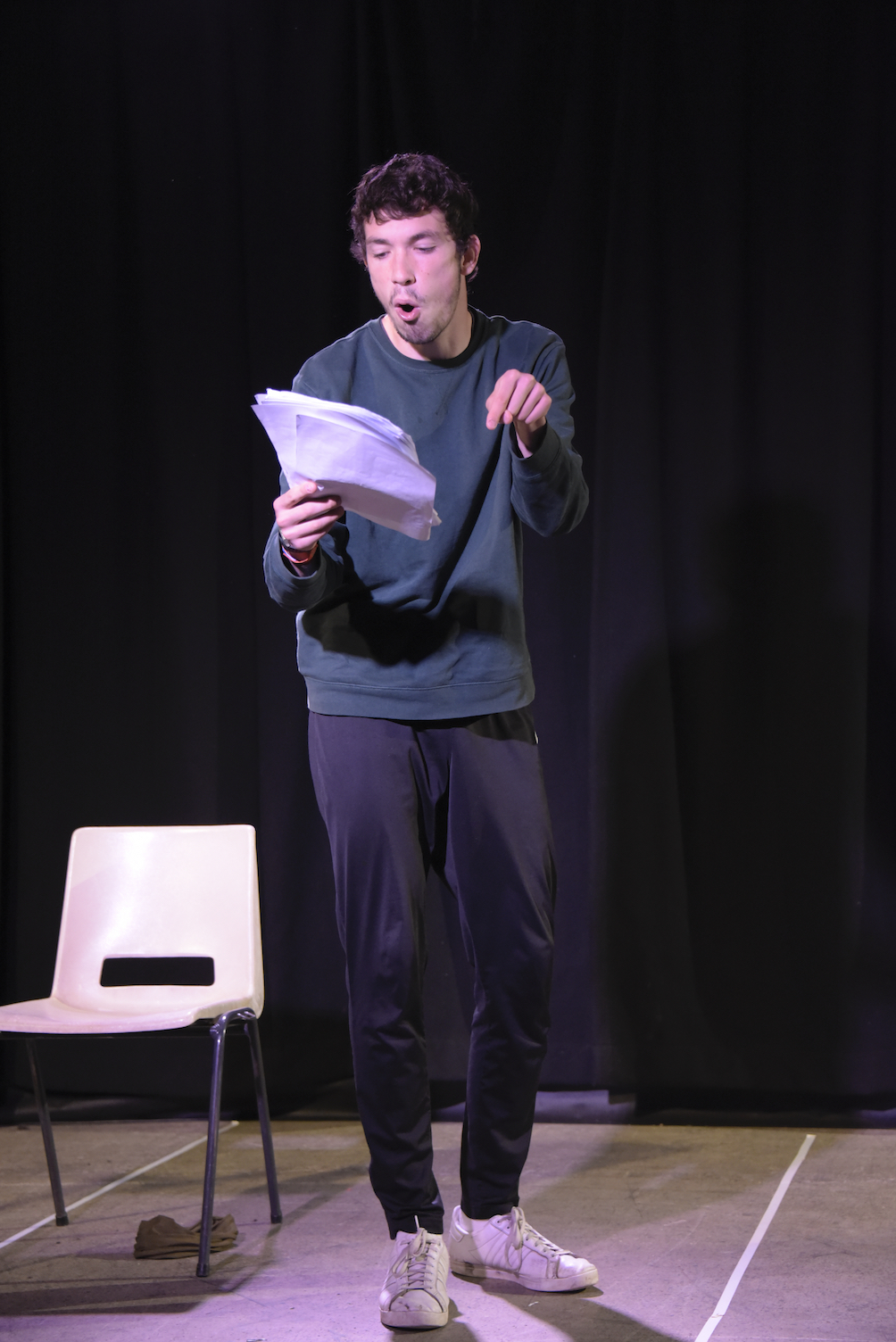
I had limited knowledge of Universal Credit before starting the research in 2017, when community members began voicing their concerns about the roll out. I was shocked by the insights gathered during the fieldwork in 2018. Credit was the culmination of a collaboration with Cap-a-Pie theatre company, who we approached with our ideas. Unfortunately, plans for a theatre production were shelved in April because of the COVID-19 restrictions. The team worked hard to create an online rehearsed reading of part of the play, brilliantly performed by two skilful actors. Supported by a panel of knowledgeable and passionate local and national speakers, we negotiated the challenges of an online post-show discussion. We were unsure how it would go, as we joined by more than 400 people who watched the 40 minute extract from the play. Over 150 stayed for the live Q&A and discussion afterwards, providing thoughtful comments and feedback.
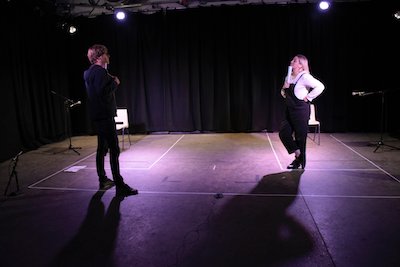
During the panel discussion following the evening performance, the writer, Laura Lindow, commented that she hoped the audience could “hear her own fury in the poetry”, hoping it would “smack everyone around the ears”. The reactions from the Q&A suggest that participants felt similarly moved, describing Credit as: 
“Brilliant, angry, urgent work”

“Extremely powerful and incredibly important”

“I had tears in my eyes watching this”

“Heart breaking, but very realistic. Especially poignant was the reference to starvation”

“The reference to loan sharks took my breath away, eased so gently into lives, but so destructive”
The questions, observations and exchanges with panel members were insightful and engaging. The audience challenged us as researchers to think about how to move beyond the echo chambers of online events to ensure the messages reach those in positions of power to affect change.

As a result of this screening, we have made more connections, with people who have claimed Universal Credit, and academics doing research in related areas. Maria Thompson was one of the people we met following the post-show discussion and you can read about her personal experience of Universal Credit in this accompanying blog post. We also made links with people keen to use the arts to communicate their research findings, engage others in wider debates and challenge us to act: 
“Lyrical, hard hitting, honest writing”

“Beautifully written and acted”

“Speaking truth to power is all we can do and this play was a great example”

“How do we fight negative perceptions of benefit claimants? How do we continue to show the need for a supportive welfare system?”
In the feedback, participants commented on the importance of changing negative stereotypes about claimants. At the end of the evening performance, Patrick Butler, social affairs editor from the Guardian newspaper called on revisions to UC to be made with the input of claimants who have direct experience of the system.
“For me, a decent social security system is a citizen's right. It has to be effective, it has to be humane. I think it has to be an entitlement, not a privilege or reward for good behaviour.”
We’re keen to use the play in different ways to stimulate debate and reflection. Emotions clearly have played a role in galvanising action. We have received requests to use it in staff training and to promote arts/research collaborations. As one participant commented:
“We don’t make best use of art in public health. This is such a moving and poignant play. My hope is that one day we can get it into mandated training in the NHS.”
The diversity of claimant experiences has increased enormously since COVID-19, but the stigma is far from disappearing according to debt charity Turn2Us. Recent reports by the National Audit Office (2020) and the Work and Pensions Select Committee suggest that there is still a long way to go before vulnerable claimants’ rights are protected. Perhaps this is the moment for government to show they have listened to those voices who have long campaigned for meaningful change, to ensure that Universal Credit provides the safety net that people need in times of adversity and to keep the changes to the standard allowance introduced as a result of COVID-19.

If you missed the last performance of Credit, we are planning to show more performances in 2021, so keep an eye out. We are working on a short film with extracts from the rehearsed reading of Credit and interviews with those who support claimants, who were involved in the research, script development and production. This will be available on YouTube in the New Year. We will continue our efforts to raise awareness of this important issue and look forward to working with others keen to do the same.


Acknowledgment

We are grateful to the funders, Newcastle University, Catherine Cookson Foundation and Arts Council Lottery Fund for their support and flexibility.

Friday, 2 November 2018

Why dramatic enquiry as a form of public engagement gave me my most enjoyable week as an academic

Guest post by Santosh Vijaykumar, Vice Chancellor’s Senior Research Fellow, Northumbria University

“It’s important to eat healthy but we also need sugars, although in moderation.” These are not the words of an expert on BBC’s Food Programme, but a Year 5 student at Chillingham Road Primary School in Newcastle, fidgety and impatient for the next activity to resume. And the caution came about not through a series of in-depth interviews by public health researchers such as myself, but through ‘dramatic enquiry’. Brad McCormick and Katy Vanden from Cap-a-Pie, the theatre company that developed this approach, describe it as one that “places participants in a fictional scenario where they are in-role from start to finish. They are placed in a situation where there is no clear ‘right’ or ‘wrong’ answer and where they have to express their own beliefs and values.”

Brad directing the drama

Over the course of a week, we conducted four such dramatic enquiry workshops with three schools in Newcastle, each session comprising approximately 30 Year 5 pupils (10-11 year olds). Although these workshops were part of the public engagement strategy of my ongoing ESRC funded project* that seeks to understand psychological drivers of confidence in probiotics products, we decided to explore broader themes beyond just probiotics. The aim – suggested by Brad and Katy and gladly welcomed by us – was to avoid a top-down health education approach, and instead utilise this engagement format to get children to think and talk about fundamental issues: why do they eat what they eat? Can food be healthy and unhealthy at the same time? Should the government control what foods we consume? What is the relationship between responsibility and choice in the context of food? We used these themes as a funnel to eventually involve the children in a discussion on probiotics.

Each workshop starts with the children seated in a semi-circle. As soon as they are settled, Brad catches them off guard. He starts shaking hands with one of them and says “I ate at your restaurant last week, superb!”, and then goes to another: “I read your article on raw food diets, so interesting!”, and so on and so forth, setting off a series of giggles or muffled peals of laughter among the children as they make sense of the goings on. Soon after they are informed that they are all members of the Food and Drink Committee of Arcadia (a fictional country) and are asked to take a pledge of allegiance to Arcadia. A series of dramatic games such as DilemmaRama, Shake Hands/High Fives and Stop/Go has now completely warmed them up to Brad and to each other. This lays the foundation for their enthusiastic participation in the ensuing small group activities, each of which is followed by a philosophical discussion or reflection.

The small-group activities include identifying and enacting their favourite dish in a freeze frame, contemplating what it means to be healthy, and explaining the rationale for why they agree or disagree with a certain food policy from different viewpoints (as a journalist, scientist, manufacturer, etc.). In the second half of the session, they are introduced to a fictional probiotics product, to develop a commercial for it, and then asked to make a decision about whether it should be sold after exposing them to news articles reporting conflicting evidence related to the health effects of probiotics products.

As a researcher, observing these sessions live can be tough – it’s so much fun, you want to participate with the kids and leave taking notes for later. And taking notes is not easy either, even after you have committed to it. For, you realise quickly that every activity and philosophical discussion reveals a new strand of thought among children, a sharp, counter-intuitive insight, or a larger ethical perspective. As someone who is newly baptised to this form of public engagement, I realise how uninhibited and enthusiastic kids are in terms of participating in what would seem tricky terrain for adults, and how even seemingly quieter kids volunteer to voice their opinions. I am beginning to understand how this approach lends itself to unearthing perspectives of greater complexity and nuance than a traditional research method, such as a survey or experiment would. Essentially, if one were to invest in dramatic enquiry as a means of formative research for investigating a public health problem, they would reap a rich, and dare I say endless harvest of research questions worth investigating in a format that’s fun, engaging, and revelatory.

If you are waiting to know what we learned from these workshops, I will share links to a podcast series (on this blog) sometime over the next few weeks. These podcasts will give you a more detailed idea about dramatic enquiry, how the participating children benefited from it, and some perspectives that emerged about how kids perceive scientists, media, and the industry that really surprised us.

When I first arrived into the UK academic environment in February 2017, public engagement seemed a policy or media interfacing, translational exercise for researchers. Being involved in dramatic enquiry has now broadened my personal understanding of public engagement and triggered a cascade of ideas about creative ways to get a conversation going with communities whose lives we seek to positively influence through public health research. And, without a doubt, it has given me my most enjoyable week in eight years as an academic. Brad and Katy deserve some chocolate cake, but in moderation.

*Acknowledgment: This project was funded by the Consumer Data Research Centre, an ESRC Data Investment, under project ID CDRC 085, ES/L011840/1; ES/L011891/1.