Showing posts with label debate. Show all posts

Friday, 11 December 2020

“Speaking truth to power is all we can do”

Bringing arts and research together to prompt debate about Universal Credit


Posted by Mandy Cheetham, Research Fellow in the Applied Research Collaboration North East and North Cumbria (ARC NENC), Northumbria University  
As a researcher, it is not every day that you get to work alongside talented artists, actors and writers. I recently had this privilege as part of the planning and development of theatre production Credit. The play was prompted by research commissioned by Gateshead Council, which showed the negative impact of Universal Credit on vulnerable claimants and staff supporting them in North East England. We were grateful to participants who shared their stories so openly and wanted to use the findings to prompt wider debates about welfare reform, beyond published academic papers.

I had limited knowledge of Universal Credit before starting the research in 2017, when community members began voicing their concerns about the roll out. I was shocked by the insights gathered during the fieldwork in 2018. Credit was the culmination of a collaboration with Cap-a-Pie theatre company, who we approached with our ideas. Unfortunately, plans for a theatre production were shelved in April because of the COVID-19 restrictions. The team worked hard to create an online rehearsed reading of part of the play, brilliantly performed by two skilful actors. Supported by a panel of knowledgeable and passionate local and national speakers, we negotiated the challenges of an online post-show discussion. We were unsure how it would go, as we joined by more than 400 people who watched the 40 minute extract from the play. Over 150 stayed for the live Q&A and discussion afterwards, providing thoughtful comments and feedback.
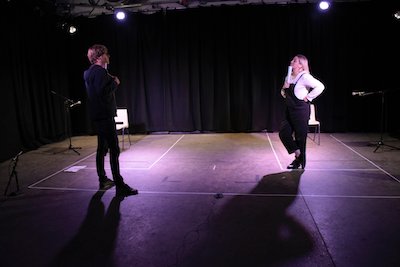
During the panel discussion following the evening performance, the writer, Laura Lindow, commented that she hoped the audience could “hear her own fury in the poetry”, hoping it would “smack everyone around the ears”. The reactions from the Q&A suggest that participants felt similarly moved, describing Credit as: 
“Brilliant, angry, urgent work”

“Extremely powerful and incredibly important”

“I had tears in my eyes watching this”

“Heart breaking, but very realistic. Especially poignant was the reference to starvation”

“The reference to loan sharks took my breath away, eased so gently into lives, but so destructive”
The questions, observations and exchanges with panel members were insightful and engaging. The audience challenged us as researchers to think about how to move beyond the echo chambers of online events to ensure the messages reach those in positions of power to affect change.

As a result of this screening, we have made more connections, with people who have claimed Universal Credit, and academics doing research in related areas. Maria Thompson was one of the people we met following the post-show discussion and you can read about her personal experience of Universal Credit in this accompanying blog post. We also made links with people keen to use the arts to communicate their research findings, engage others in wider debates and challenge us to act: 
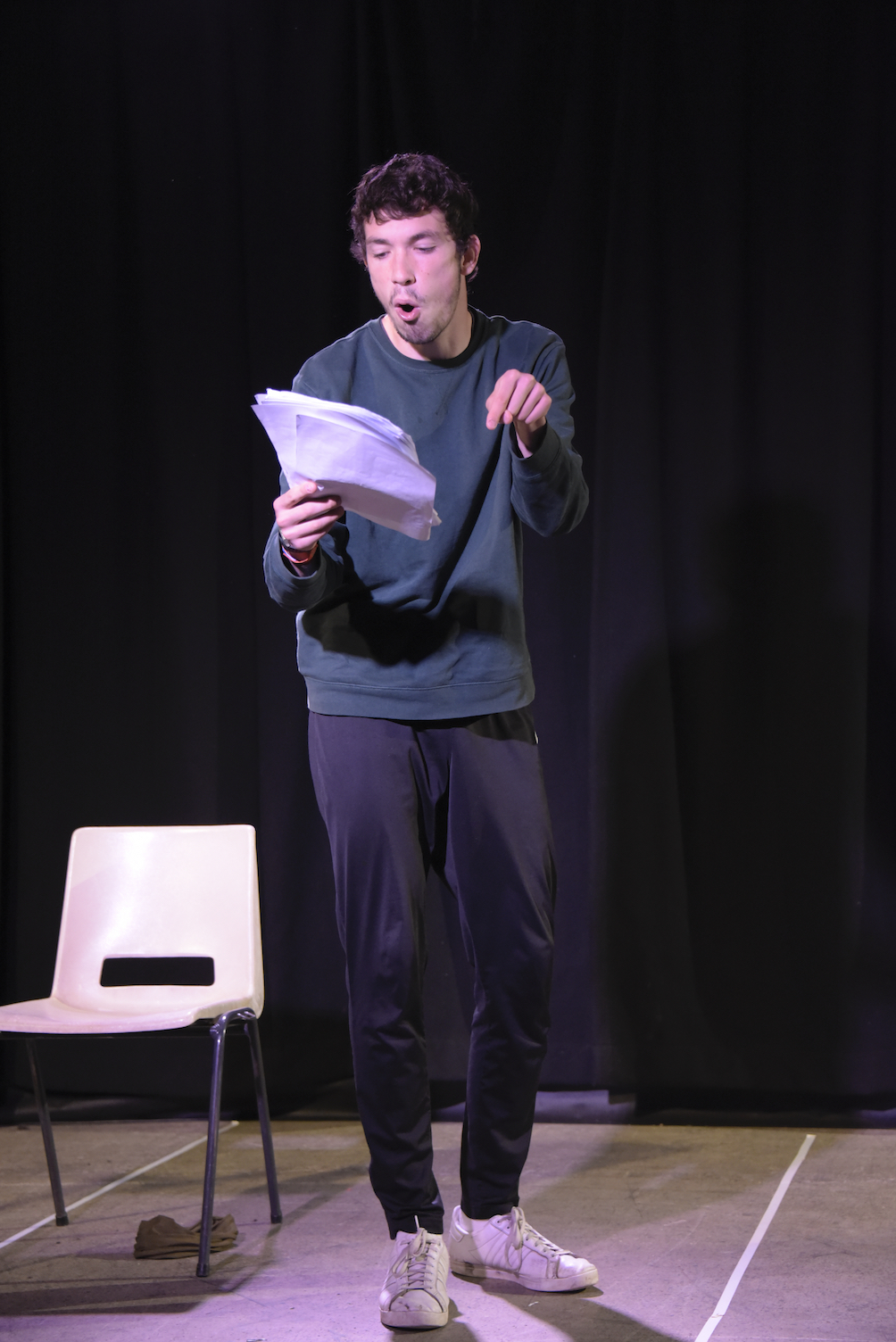
“Lyrical, hard hitting, honest writing”

“Beautifully written and acted”

“Speaking truth to power is all we can do and this play was a great example”

“How do we fight negative perceptions of benefit claimants? How do we continue to show the need for a supportive welfare system?”
In the feedback, participants commented on the importance of changing negative stereotypes about claimants. At the end of the evening performance, Patrick Butler, social affairs editor from the Guardian newspaper called on revisions to UC to be made with the input of claimants who have direct experience of the system.
“For me, a decent social security system is a citizen's right. It has to be effective, it has to be humane. I think it has to be an entitlement, not a privilege or reward for good behaviour.”
We’re keen to use the play in different ways to stimulate debate and reflection. Emotions clearly have played a role in galvanising action. We have received requests to use it in staff training and to promote arts/research collaborations. As one participant commented:
“We don’t make best use of art in public health. This is such a moving and poignant play. My hope is that one day we can get it into mandated training in the NHS.”
The diversity of claimant experiences has increased enormously since COVID-19, but the stigma is far from disappearing according to debt charity Turn2Us. Recent reports by the National Audit Office (2020) and the Work and Pensions Select Committee suggest that there is still a long way to go before vulnerable claimants’ rights are protected. Perhaps this is the moment for government to show they have listened to those voices who have long campaigned for meaningful change, to ensure that Universal Credit provides the safety net that people need in times of adversity and to keep the changes to the standard allowance introduced as a result of COVID-19.

If you missed the last performance of Credit, we are planning to show more performances in 2021, so keep an eye out. We are working on a short film with extracts from the rehearsed reading of Credit and interviews with those who support claimants, who were involved in the research, script development and production. This will be available on YouTube in the New Year. We will continue our efforts to raise awareness of this important issue and look forward to working with others keen to do the same.


Acknowledgment

We are grateful to the funders, Newcastle University, Catherine Cookson Foundation and Arts Council Lottery Fund for their support and flexibility.

Friday, 2 November 2018

Why dramatic enquiry as a form of public engagement gave me my most enjoyable week as an academic

Guest post by Santosh Vijaykumar, Vice Chancellor’s Senior Research Fellow, Northumbria University

“It’s important to eat healthy but we also need sugars, although in moderation.” These are not the words of an expert on BBC’s Food Programme, but a Year 5 student at Chillingham Road Primary School in Newcastle, fidgety and impatient for the next activity to resume. And the caution came about not through a series of in-depth interviews by public health researchers such as myself, but through ‘dramatic enquiry’. Brad McCormick and Katy Vanden from Cap-a-Pie, the theatre company that developed this approach, describe it as one that “places participants in a fictional scenario where they are in-role from start to finish. They are placed in a situation where there is no clear ‘right’ or ‘wrong’ answer and where they have to express their own beliefs and values.”

Brad directing the drama

Over the course of a week, we conducted four such dramatic enquiry workshops with three schools in Newcastle, each session comprising approximately 30 Year 5 pupils (10-11 year olds). Although these workshops were part of the public engagement strategy of my ongoing ESRC funded project* that seeks to understand psychological drivers of confidence in probiotics products, we decided to explore broader themes beyond just probiotics. The aim – suggested by Brad and Katy and gladly welcomed by us – was to avoid a top-down health education approach, and instead utilise this engagement format to get children to think and talk about fundamental issues: why do they eat what they eat? Can food be healthy and unhealthy at the same time? Should the government control what foods we consume? What is the relationship between responsibility and choice in the context of food? We used these themes as a funnel to eventually involve the children in a discussion on probiotics.

Each workshop starts with the children seated in a semi-circle. As soon as they are settled, Brad catches them off guard. He starts shaking hands with one of them and says “I ate at your restaurant last week, superb!”, and then goes to another: “I read your article on raw food diets, so interesting!”, and so on and so forth, setting off a series of giggles or muffled peals of laughter among the children as they make sense of the goings on. Soon after they are informed that they are all members of the Food and Drink Committee of Arcadia (a fictional country) and are asked to take a pledge of allegiance to Arcadia. A series of dramatic games such as DilemmaRama, Shake Hands/High Fives and Stop/Go has now completely warmed them up to Brad and to each other. This lays the foundation for their enthusiastic participation in the ensuing small group activities, each of which is followed by a philosophical discussion or reflection.

The small-group activities include identifying and enacting their favourite dish in a freeze frame, contemplating what it means to be healthy, and explaining the rationale for why they agree or disagree with a certain food policy from different viewpoints (as a journalist, scientist, manufacturer, etc.). In the second half of the session, they are introduced to a fictional probiotics product, to develop a commercial for it, and then asked to make a decision about whether it should be sold after exposing them to news articles reporting conflicting evidence related to the health effects of probiotics products.

As a researcher, observing these sessions live can be tough – it’s so much fun, you want to participate with the kids and leave taking notes for later. And taking notes is not easy either, even after you have committed to it. For, you realise quickly that every activity and philosophical discussion reveals a new strand of thought among children, a sharp, counter-intuitive insight, or a larger ethical perspective. As someone who is newly baptised to this form of public engagement, I realise how uninhibited and enthusiastic kids are in terms of participating in what would seem tricky terrain for adults, and how even seemingly quieter kids volunteer to voice their opinions. I am beginning to understand how this approach lends itself to unearthing perspectives of greater complexity and nuance than a traditional research method, such as a survey or experiment would. Essentially, if one were to invest in dramatic enquiry as a means of formative research for investigating a public health problem, they would reap a rich, and dare I say endless harvest of research questions worth investigating in a format that’s fun, engaging, and revelatory.

If you are waiting to know what we learned from these workshops, I will share links to a podcast series (on this blog) sometime over the next few weeks. These podcasts will give you a more detailed idea about dramatic enquiry, how the participating children benefited from it, and some perspectives that emerged about how kids perceive scientists, media, and the industry that really surprised us.

When I first arrived into the UK academic environment in February 2017, public engagement seemed a policy or media interfacing, translational exercise for researchers. Being involved in dramatic enquiry has now broadened my personal understanding of public engagement and triggered a cascade of ideas about creative ways to get a conversation going with communities whose lives we seek to positively influence through public health research. And, without a doubt, it has given me my most enjoyable week in eight years as an academic. Brad and Katy deserve some chocolate cake, but in moderation.

*Acknowledgment: This project was funded by the Consumer Data Research Centre, an ESRC Data Investment, under project ID CDRC 085, ES/L011840/1; ES/L011891/1.

Friday, 13 July 2018

Putting the 'occupation' in Occupational Therapy and debating its role in Public Health

Guest post by Andrew Graham, Registered Occupational Therapist and PhD Candidate, Teesside University

Having recently made the move from NHS clinician into academia (I started my PhD at Teesside University in December 2017), I arrived in Belfast for the Royal College of Occupational Therapy Annual Conference with an appetite to hear new and interesting research in the profession.


In my welcome pack, I received a copy of the RCOT’s Strategic Intentions which represent the leadership response to the challenges of the changing landscape of health and social care. The principle that stood out for me was to ‘position the Profession, and our members, for the 21st century’.

With my background in amputee rehabilitation I have seen first-hand the impact of socio-economic inequalities and lifestyle trends on amputation rate in North East England. For example, the amount of amputations due to diabetes, and more shockingly intra-venous drug use, has spiked in the past 10 years or so. As an Occupational Therapist (OT), I view the person holistically and always try to take into account the social and psychological not just physical barriers they will need to overcome post amputation. My focus will always be on what the person needs and wants to do. The person’s meaningful activities (occupations).

The pledge tree

During the conference, we were asked to make a pledge about how we would do our part to ensure the new strategic intentions are met. The pledge tree seemed to have a recurring theme of ‘ensuring occupation is central to my work’.

My own pledge was to better explain ‘occupation’ and its meaning within occupational therapy to a range of audiences.

So, my attempt at articulating ‘occupation’? I’ll go with ‘doing things that we need to do and want to do (meaningful activities), which enable a sense of self-meaning and improved health and well-being.

I feel as a profession we are experts in using occupation as a goal (top down approach) and/or a means (bottom up approach) to ensure provision of high-quality, client centred services. Utilising the OT process from information gathering to evaluation we strive to enable growth, confidence and self-meaning.

Despite OTs generally being able to better define what they do and what the outcomes can be, it was a bit of a shock to see that the debate at the conference highlighted that the profession is still unsure about its stakeholders. The topic up for discussion was ‘This house believes that Occupational Therapy needs to be predominately based in public health, not in secondary or tertiary services’.

From my experience, this issue had been debated and answered years ago. My pre-registration training saw me working in the NHS, community mental health teams, a special needs school and a charity. The OTs all had a prominent and effective role in these sectors, so as intrigued as I was to hear the debate, I knew which way I would be voting!

For the purpose of this blog I’d like to highlight the case for OTs working in Public Health. A starting point would be the statement by the professional body, which points out that the Public Health Agenda has been of increasing importance and relevance for occupational therapists, who facilitate health promotion through working with people of all ages to enable their participation in meaningful occupations (RCOT 2004).

The evidence base is also pretty strong. A systematic review of Allied Health Professions and Health Promotion (Needle et al 2011) reviewed 28 studies related to occupational therapy and Public Health, and found related interventions in the areas of mental health, arthritis, pain and fatigue, pulmonary rehabilitation, stroke, drug and alcohol problems, and falls prevention.

Not only are OTs already working with people on aspects of Public Health and health promotion activity, but there is an expectation that this focus will form part of the delivery of all occupational therapy interventions in the future. For example, I remember reading about the ‘make every contact count’ campaign when working on an acute stroke ward and making sure I asked about smoking and drinking habits as part of my OT assessment.

So, it was with no surprise that the result swung against the motion at the conference. A particularly convincing rebuttal speech was given by Professor Diane Cox and Dr Jenny Preston, clearly showing the professions ability to address Public Health matters but also reach a wider audience through demonstrating outcomes in secondary and tertiary services.

Overall, I left the conference with a sense that the profession has strategically positioned itself to demonstrate that it is making a difference and will continue to make a difference to the health and well-being of people in the 21st century. It is time for OTs working in Public Health and other services to be proud. In my favourite quote of the conference….‘we are not the jack of all trades, rather we are the masters of human occupation’.


Andrew Graham is investigating ‘Sensory Discriminating Training for Phantom Limb Pain’, as a PhD candidate in the School of Health and Social Care at Teesside University.

Friday, 9 February 2018

How I chanced upon the 70 year War in Public Health: Aye vs Nay for Water Fluoridation

Guest post by Priyanka Vasantavada, PhD student, School of Health and Social Care, Teesside University

Exactly a year ago to this day, I embarked on my PhD at Teesside University. Little did I know then that a year later I would find myself working on one of the most widely debated and contentious issues in public health.

Water Fluoridation is the controlled addition or removal of fluoride to water supply. Fluoride level of water is maintained at a level that is optimum for preserving dental health by making teeth resistant to decay. The practice of water fluoridation remains controversial even though half a century has passed since its first introduction. This is attributed to various issues such as, the possible negative health effects of fluoridation, lack of dose regulation at the individual level, if fluoride is mass medication and the ethical issues of consent or lack thereof.

Most academics seem surprised when I mention that water fluoridation is controversial. This may be because of the amount of research that already exists supporting the notion of the intervention being both efficient and safe. Water fluoridation happens to be one of the most widely researched topics in public health. Countries that artificially fluoridate water undertake systematic reviews every 5-10 years to update the evidence base. Studies conducted in areas with naturally high fluoride levels (i.e., fluoride endemic regions in parts of Asia) have linked high fluoride levels to skeletal disorders, and cancers etc. However, these studies are not relevant to artificial water fluoridation schemes as the health effects are dose dependent.

I vividly remember my first meeting with my Director of Studies Professor Vida Zohoori who had then asked me to come up with an original research idea and remarked, “A PhD is to foster independent scientific thought and not merely to work on a previously designed project”. I was a little taken aback by that as I had indeed applied for, and was selected to work on, an advertised PhD project! I ended up asking her what was left for me to research on this subject as seemingly all bases had already been covered. (I was neither completely wrong nor completely correct as I would realise in the months that followed.)

So, that day when I went home, I did what any millennial would do and Googled ‘water fluoridation’. Now before any of my readers from academia roll their eyes at this, I would like to clarify that I had already done a fair amount of background reading on water fluoridation from scientific databases and I also happen to be a dentist!

Through the looking glass

The search results were in equal parts exciting and exasperating. With each search results page I visited, my heart sank a little more. Every single idea that floated in my head was destroyed by the discovery of a research paper on the same. Then half exhausted and half asleep, I followed the millennial motto of ‘If you can’t read, why not watch it’!

I clicked on YouTube and just like Alice, fell right into a world I had never known existed! The ‘water fluoridation’ videos on YouTube were more mindboggling and engaging than any literature I had ever read (including but not limited to Game of Thrones). The videos attributed properties to water fluoridation or fluorides, which I had neither heard, read nor even imagined in my wildest dreams.

My curiosity peaked, and I kept trying to look for the scientific basis for the content in the videos. This search led me right into the thick of the controversy: the seemingly contradictory evidence, the prejudices, the sides and the politics around it. I found that it was not merely a controversy but an ongoing war where no one trusts one another and where battle lines are clearly demarcated. Pardon my use of dramatic language but this is the only way the situation can be described.

There are two major parties: those in favour of fluoridation and those against it. These groups are very heterogenous in their composition and no generalisations can be made. Both lobby for their own point of view and battle it out at every place across the world where water fluoridation as a public health measure is considered. And in this cacophony, I felt that the real opinion of the public is lost.

I then discovered that scientific studies on public opinion had been conducted in the US, Canada, Australia, New Zealand, Europe, Japan, South Korea, South Africa, Norway, Denmark and Brazil. Small fluoridation opinion studies have been conducted amongst dentists and in certain localised parts of UK as well. However, a comprehensive study examining the aspects of public perception and engagement had not yet been undertaken in the UK. I had finally found a gap and thank God for it as in the months to follow, the advertised study I had applied for had to be shelved due to ethical concerns.


Since the fluoridation debates and discussions mostly take place on the web, I felt that this the ideal platform to engage people about the issue. To examine the public’s awareness and attitude towards water fluoridation in the UK, I have designed a 10-minute web survey (with optional follow-up e-mail interviews). There is even a prize draw for 10 e-shopping vouchers worth £10 each up for grabs! So, if you are interested to know more about the research or would like to participate, please follow the links below or email me at P.Vasantavada@tees.ac.uk.

You can complete the survey here


Image: By josconklin (Own work) [CC BY-SA 3.0 (https://creativecommons.org/licenses/by-sa/3.0)], via Wikimedia Commons

Saturday, 8 April 2017

Passionate Advocacy versus Dry Evidence

Posted by Peter van der Graaf, AskFuse Research Manager, Teesside University

Should public health researchers be passionate advocates of their work when engaging with policy makers or should they present their findings in the most neutral way possible, sticking to the facts only (and preferably economic figures) to encourage take up of their research? This question was the focus of a heated debate at the recent national School for Public Health Research Annual Scientific Meeting, bringing together researchers from eight different centres of excellence across the UK and a selection of senior health practitioners at the Royal Society in London.

Chris Whitty: academics should present their findings neutrally
to politicians without making any advocacy statements
The tone for the debate was set by Professor Chris Whitty, Chief Scientific Adviser for the Department of Health, who challenged the audience to be more ambitious in their public health goals. At the same time, he warned academics to play to their strengths: if they wanted to ensure impact of their work, academics should present their findings neutrally to politicians without making any advocacy statements, as this would deter politicians. Advocacy should be reserved for politicians, who in turn are supported by economic advisors. Therefore, academics would do well to present their data in terms of opportunity costs and trade-offs; without solid economic back-up, any evidence claim would be quickly dismissed by politicians, according to Whitty.

This provoked strong reactions from audience members and particularly on Twitter, where a lively discussion ensued throughout the rest of the day. People questioned whether it is possible or even desirable to leave advocacy at the door when dealing with politicians. Some argued that, from a social science perspective, there is no such thing as neutral evidence and that it is our duty as public health scientists to take a stand and advocate against increasing health inequalities. Others disputed the need from politicians for dry evidence, stating that purely evidence based approaches can leave politicians cold without a persuasive narrative. Instead, emotionally informed and narrative research was important to persuade local government. Researchers needed to align themselves with local government concerns and cultures and acknowledge the importance of context to have any impact.

Duncan Selbie: academics should be more ruthless, coordinated and angry
in the interactions with policy makers to get them to act on the evidence
Duncan Selbie, Chief Executive at Public Health England, poured oil on the fire in the afternoon by appealing for the exact opposite to Chris Whitty’s call for more neutrality: academics should be more ruthless, coordinated and angry in the interactions with policy makers to get them to act on the evidence that academics have generated. He encouraged public health researchers to make more use of behavioural science to help policy makers take notice and implement their findings. This provoked several reactions, with some participants highlighting the role that advocacy played in the public health fight against the tobacco industry, while others made passionate pleas on soapboxes for the re-politicising of public health science, arguing that it was unhelpful to divide science and politics into two separate worlds.

The storm seemed to settle towards the end of the day, when Twitter users and audience members started suggesting solutions for the debate, which was dubbed “Passionate Advocacy vs. Dry Evidence”. One suggestion was that public health researchers should develop a ‘horses for courses’ approach: at certain times some people needed to be passionate advocates, while others at different times needed be neutral scientists to get the listening ear of politicians. The different approaches were related to different levels at which politicians operate: local politicians were more persuaded by narratives emerging from research and advocacy, while national politicians valued neutrally presented evidence and data.

Others suggested the use of intermediates to make the advocacy case for public health, such as voluntary community organisations that represent the will of the people, and by focusing research on the key questions that front line workers are struggling with. Or even better, persuade policy makers to become advocates of research evidence!

Overall, participants agreed that science needed to be pushed more up the policy agenda, as research is currently losing out to politics and economics. Therefore, in some circumstance researchers need to consider accept that submitting good enough evidence quickly is better than waiting too long for perfect peer reviewed publications. Furthermore, we need to be aware that different kinds of evidence are used in decision making processes.

My favourite solution was proposed by Professor John Frank, Director of the Scottish Collaboration for Public Health Research & Policy: if you want good policy influencers, you need to change the academic model to produce them. The biggest barriers to knowledge mobilisation are structural and often in academia. As long as we don’t train public health students in engaging with policy and practice partners, fail to teach and reward them in how to use different types of evidence and do not involve them in collaborative research, we will keep returning to this debate for many Annual Scientific Meetings to come.