Showing posts with label virus. Show all posts

Friday, 30 July 2021

The Sound of Sirens

Posted by John Mooney FFPH, Consultant in Public Health, NHS Grampian @StandupforPHlth

Easily my most notable memory from the first Covid-induced lockdown was the unmistakable and disconcerting shriek of ambulance siren calls, regularly piercing the ‘lockdown’ silence of largely empty streets. Prompted by the memory of the mythical origins of the word ‘siren’, in which enchanting songstresses lured sailors and their ships to a rocky destruction, it struck me that the lure and temptation of ‘freedom day’ on which all Covid-19 constraints on social and other gatherings are no longer mandatory might yet similarly have an unfortunate aftermath. While I expect that risks placing me firmly in the ‘doomster’ camp, it seems I am in good company after the letter in last week’s Observer from some of our most eminent public health leaders who were at pains to point out that “living with Covid is not the same thing as letting it rip”.

   
Watch 'Sound of Sirens' by John Mooney and Dr Clare Pettinger (AKA the Singing Dietitian) inspired by this blog post

This is now my third Fuse blog about Covid, in what is sadly proving to be a rather prescient series of posts about the pandemic. I set out in the first (published in February 2020), that as a newly emergent single stranded RNA virus, Covid-19 would be genetically unstable and undergo mutations which could influence its epidemiological characteristics including virulence and transmissibility. To say therefore that the present situation was not foreseeable (given my rudimentary grasp of evolutionary genetics), is clearly not that convincing. It’s probably even more self-evident that the more transmissible variants will be the same variants that are most transmitted, because this is the essence of viral survival strategy. Even with that knowledge however, the speed with which the Delta variant became the dominant strain (from under 10% to over 90% in a matter of weeks and now accounting for 99% of identified cases), was fairly breath-taking even by viral standards. 

A particular concern just now of course must be that the UK’s success in achieving a high vaccination uptake creates a new ‘selection pressure’ of its own, in that any newly emergent strain with the capacity to evade vaccine induced immunity will have an enormous selection ‘advantage’ in a population which has the combined characteristics of a high vaccination rate plus a high level of circulating virus. It’s easy to appreciate then how such a new variant could assume a ‘delta-style’ trajectory towards dominance, leaving even the fully vaccinated vulnerable once more. This is of course not a reason for reducing vaccination efforts which have been critical in protecting vaccinated age groups, thereby reducing the proportion of the population susceptible to new infections. If I could squeeze in one final take-home vaccine basics key message: the more infectious a particular variant, the higher proportion of a population needs to be vaccinated to mitigate transmission. This has prompted some commentators to expect that the holy grail of ‘herd immunity’ will always prove elusive for Covid.

The very real challenge for those of us in practice settings (having recently returned to NHS public health myself), is how best to advise local populations and relevant agencies in order to keep reducing the levels of circulating virus. The mechanisms that work here are very much those that are already in place combined with ongoing vaccination and access to local testing. The extent to which people might be willing to submit to testing that could sacrifice a long-coveted holiday, versus their readiness to isolate away from work, might begin to explain a divergence in the surveillance data in some health-board areas between declining numbers of cases and relatively stable hospital admissions (even allowing for the two week lag). The latter of which has already led to cancelled elective procedures in ours and other regions. We also know that infections in younger age groups are more likely to be mild / asymptomatic taking away the ‘illness prompting’ rationale for seeking a test.

Receiving supplemental oxygen in A&E
 6 months after initial Covid symptoms
 (mask displaced to drink)

At this point it would be useful to highlight the relevance of the second blog in this series as then it all looks impressively planned! (Spoiler alert: it wasn’t!). In that article, I described my experience with Long-covid which I was unfortunate enough to develop very early in the first wave and which included an unscheduled hospital stay and fast track angiogram (think X-ray to check heart blood vessels) thanks to a “dangerous ECG”. Thankfully 18 months on I am much recovered, but remain very conscious that there was more than one false dawn over the course of the illness, although later episodes were milder. The inescapable parallel from a population standpoint is that Covid-19 can prove a truly mercurial adversary, lulling you into a sense of comfort and security, just like the mythological Sirens, before dashing you against the rocks of reality once again. The attached illustration above: ‘Ulysses and the Sirens’ is an 1891 painting by Pre-Raphaelite artist John William Waterhouse. In the words of the Wikipedia description:

"The work depicts a scene from the ancient Greek epic the Odyssey, in which the Sirens attempt to use their enchanting song to lure the titular hero Odysseus and his crew towards deadly waters. As per the Odyssey, Odysseus' crew had already blocked their ears to protect themselves from the Sirens' singing, but Odysseus, wanting to hear the Sirens, had ordered his crew to tie him to the mast so that he may have the pleasure of listening without risking himself or his ship."

In other words, the measures clearly employed were distancing and personal protective equipment! [Note the bound ears of the crew]. Perhaps the fact that the new variants are being ascribed Greek lettering might help persuade us to take a leaf from these mythological mariners and maintain some of our protective measures just a little longer while vaccine roll-out continues. In keeping with worrying reports from our clinical colleagues and as anecdotal as this could certainly be described, I have increasingly of late been hearing much more of the sound of sirens… 


John is currently employed as a consultant in public health with NHS Grampian and has a background in respiratory infectious disease epidemiology. 


Image:
1. John William Waterhouse, Public domain, via Wikimedia Commons


The views expressed in posts are those of the authors and do not necessarily reflect those of Fuse (the Centre for Translational Research in Public Health) or the author's employer or organisation.

Wednesday, 5 February 2020

Coronavirus: expect the unexpected in an unfolding emergency

Posted by John Mooney, FFPH (Fellow, Faculty of Public Health), Fuse Associate & Senior Lecturer in Public Health at University of Sunderland @StandupforPHlth 

In an age when public health and health improvement efforts in much of the world are justifiably focused on chronic disease, lifestyle factors and the ever increasing health and social care needs of an ageing population, we would do well to remember that humankinds’ most determined and persistent adversaries are always “waiting in the wings” ready to step on the stage for a lead role once again.


Step forward new variant Coronavirus (2019-nCoV), which the World Health Organisation has declared a Global public health emergency[1] reminding us all of the enduring critical importance of basic public health principles and practice and internationally co-ordinated vigilance for new microbial challenges. ‘International’ of course being a critical component of any response plans, since infectious diseases do not respect national borders and less so, referendum results. The first confirmed UK cases on Friday[2], currently being treated in this region, only serves to remind us of the ‘global village’ we all inhabit from the perspective of infectious diseases.

Coronaviruses are a large family of viruses, some causing (mostly mild) illnesses in people and others that circulate among animals, including camels, cats and bats. The recently emerged 2019-nCoV is not the same as the coronaviruses that caused Middle East Respiratory Syndrome (MERS) or Severe Acute Respiratory Syndrome (SARS) though genetic analyses so far suggests that the new variant is more closely related to SARS[3].

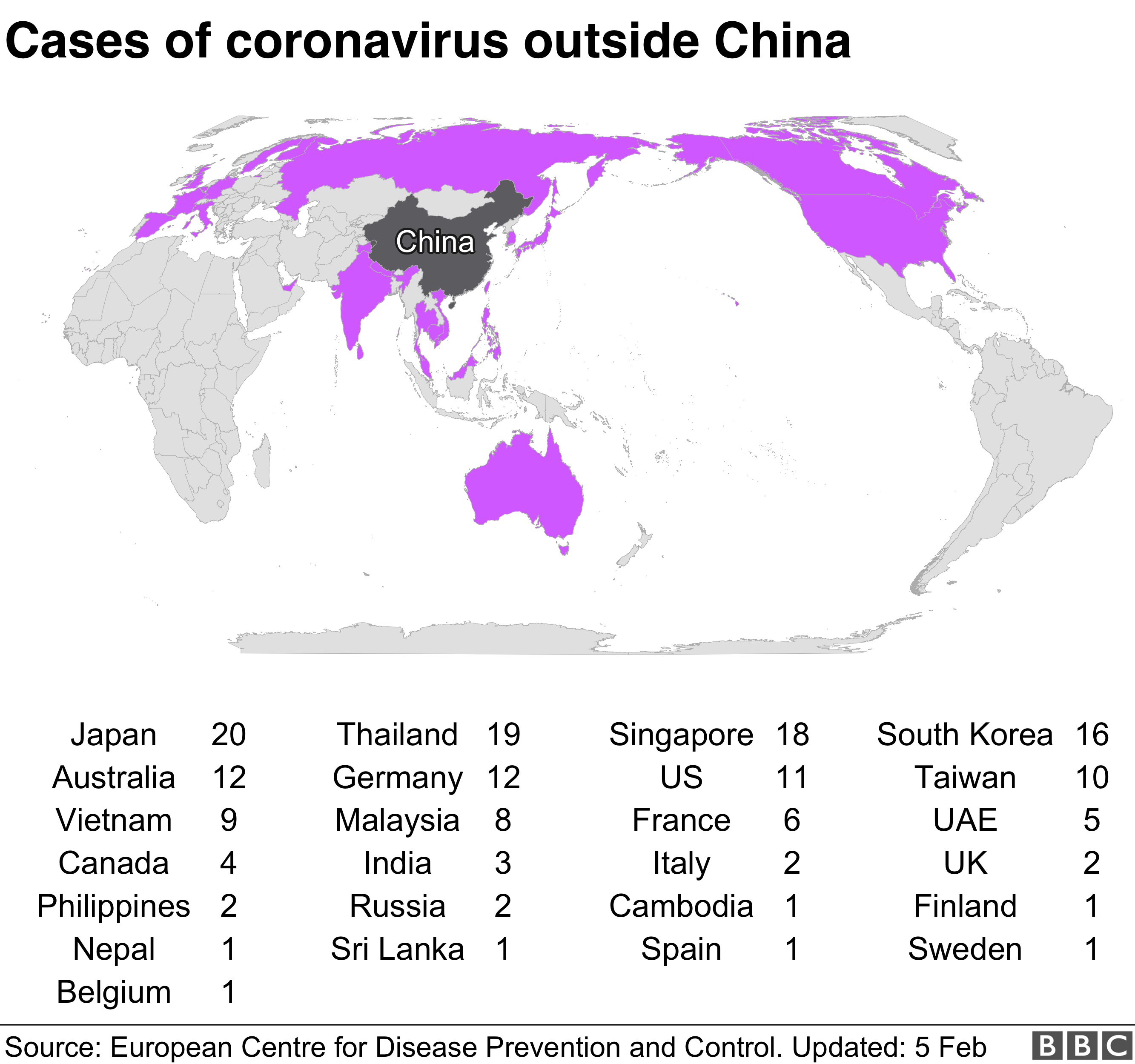
Ninety Nine percent (99%) of the 24,000+ cases and nearly all of the 490 confirmed deaths (with 2 exceptions, one in Hong Kong and one in the Philippines) so far have been in China.  Despite this, the WHO emergency declaration crucially allows for additional resources and support for lower and middle-income countries to strengthen their disease surveillance and prepare them for potential cases or outbreaks. At the present time, to the considerable credit of the Chinese response – partly arising of course from international condemnation of a less than transparent response to the SARS outbreak in 2003 – there are Herculean efforts and resources being devoted to containing the threat from the new pathogen.  This includes the drastic attempted quarantine of a whole region and the speed of construction of new facilities such as 1000 bed dedicated hospitals.


While 2019-nCoV seems to be less lethal than SARS, there is no doubt that it is clearly more transmissible with The World Health Organization stating that the preliminary R0 (reproduction number) estimate is 1.4 to 2.5, meaning that every person infected can potentially infect between 1.4 and 2.5 people (R0 for SARS being 0.19–1.08, with a median of 0.49)[4]. With the spectrum of clinical presentations ranging from mild respiratory illness to life threatening viral pneumonia, the health impact of the ongoing outbreak is very difficult to predict and unanswered questions abound. How many people may have shrugged off mild / virtually asymptomatic infections for instance is not possible to know until follow-up sero-conversion studies[5] can be used to estimate the burden of ‘silent infections’.

Aside from higher transmissibility, the more worrying aspect of 2019-nCov however is the reports of an incubation period of up to 14 days during which an infected individual might both be asymptomatic (displaying no evident symptoms that could be screened for) and also crucially, at the same time during this period, infectious and capable of transmitting the virus to new hosts. The potential 14 day incubation period without symptoms effectively means that the cases which are being confirmed at the present time merely reflect the ‘true burden of infection’ from two weeks ago. As a result we will only have any real sense of the effectiveness of Chinese efforts to contain the virus a fortnight after the stringent travel restrictions imposed around Wuhan province and other parts of China.

As many seasoned experts in these matters have cautioned, schooled as they have been by experience of previous episodes, predicting the behaviour of a newly emergent pathogen is a hazardous business and a great deal of uncertainty surrounds its likely route to potential pandemic status. A virus adapting to a new species host (in this case humans!) is an unstable entity and its defining characteristics today in terms of those who are most vulnerable and their risk of serious or life threatening illness may be very different in the weeks and months ahead.

Eventually of course, a virus keen on longevity in a new host needs to curb its pathogenicity[6] and ideally result in only mild symptoms that will reduce the attention it attracts from a host immune response. Many of the hundreds of viruses, including coronavirus subtypes that cause the common cold, once jumped the species barrier and evolved into relatively benign pathogens. Even the deadly “Spanish flu” epidemic of 1918[7], which killed around 60 million people Worldwide in 1918-1920 and comprised of the influenza subunits H1N1, circulates today in the form of seasonal flu in a genetic variant with greatly reduced lethality.

How serious the current outbreak will be in terms of impact and mortality remains to be seen. SARS of course was eventually successfully contained by stringent infection control, contact tracing and quarantine procedures. While 2019-nCov is not currently as life-threatening an illness as SARS, its greater transmissibility, longer incubation period and potential for symptomless transmission (SARS was only transmissible when symptomatic), do not bode well for ease of containment so it is hardly surprising that the WHO have seen fit to play their strongest card and declare it an emergency.

We can only hope that the response may be timely enough.


John Mooney worked previously for NHS Health Protection where he specialised in the epidemiology of respiratory infectious diseases.


References:
  1. Coronavirus declared global health emergency by WHO: https://www.bbc.co.uk/news/world-51318246
  2. Coronavirus: UK patient is University of York student: https://www.bbc.co.uk/news/health-51337400 
  3. 2019 Novel Coronavirus Basics: CDC FAQs: https://www.cdc.gov/coronavirus/2019-ncov/faq.html
  4. Emerg Infect Dis. 2004 Jul; 10(7): 1258–1263 https://www.ncbi.nlm.nih.gov/pmc/articles/PMC3323341/
  5. Seroconversion: The development of detectable antibodies in the blood that are directed against an infectious agent. Antibodies do not usually develop until some time after the initial exposure to the agent.
  6. Pathogenicity is defined as the absolute ability of an infectious agent to cause disease/damage in a host - an infectious agent is either pathogenic or not. From: Fenner and White's Medical Virology (Fifth Edition), 2017
  7. 1918 Pandemic (H1N1 virus): https://www.cdc.gov/flu/pandemic-resources/1918-pandemic-h1n1.html

Image 2: Capture from the BBC News website, 5 February 2020. Coronavirus: Ten passengers on cruise ship test positive for virus. Source: European Centre for Disease Prevention and Control. Updated 5 Feb. https://www.bbc.co.uk/news/world-asia-51381594.