Showing posts with label arts. Show all posts

Friday, 24 July 2026

Sparking curiosity with Twinkle, Twinkle Arti

Posted by Nicola Aldridge, Research Associate, and Cassey Muir, Research Associate / Co-lead of the Fuse Early Life and Adolescence Research Cluster, both from Newcastle University

We were recently given the exciting opportunity to showcase the Twinkle, Twinkle Arti project at Discover Festival, a free, one-day festival organised by Newcastle University that brings together families, communities, and researchers through interactive activities and inspiring ideas.

Nicola and Cassey
Discover Festival is designed to spark curiosity, build connections, and encourage people of all ages to explore new ideas. Each year, the university creates a packed programme of family-friendly events, and this year, we were delighted to be part of it as members of the Twinkle, Twinkle Arti research team.


Bringing Arti's story to life

Throughout the day, we invited families to step into Arti’s world through the Twinkle, Twinkle Arti storybook. Developed by Fuse researchers at Newcastle University, with funding from the NIHR School for Public Health Research, the book was created and co-produced with families to support the wellbeing of children experiencing challenging family circumstances, such as drug and alcohol use. While these experiences inspired the story, its themes of feelings, belonging, resilience, and hope resonate with all children.

Visitors to our stall in the Great North Museum had the chance to watch a CBeebies Bedtime Stories style video of it being read aloud by the author. They could also explore puppets and original illustrations from the book, and view artwork created by primary school-aged children who had participated in a pilot study of classroom lessons based on the story.

Families were also able to take home a free copy of the storybook, along with a link to the online read-aloud video and a set of simple conversation prompts designed to encourage creativity, emotional expression, and meaningful family time at home. We handed out nearly 80 copies on the day!


Conversations that matter


Beyond engaging with families, it was equally exciting to see the conversations that the project sparked among professionals attending the festival. We spoke with people from a range of sectors, including teaching, school governance, clinical psychology, and general practice with social prescribing links. Their curiosity about the project and enthusiasm for its potential applications highlighted the broad relevance of Twinkle, Twinkle Arti and the importance of creating accessible resources that support children's emotional and social wellbeing.

One particularly rewarding conversation was with a family who shared their personal experience of the impact of alcohol on family life and how they might be able to use the book. Hearing their reflections was both moving and affirming. It served as a powerful reminder of why the project began in the first place and reinforced the continued need for resources that help children navigate difficult experiences. Moments like these bring the research to life, reminding us that behind every study, storybook, and activity are real families whose experiences matter and whose voices continue to shape our work.

Creating a community star mural

Another highlight of the day was our evolving community star mural. We invited children to create their own star by drawing, colouring, or writing ideas about what they or Arti could do when they felt sad or worried, with 114 stars being created on the day. It was wonderful to see children enthusiastically embracing the activity, and even more special to watch parents, carers and grandparents join in too, talking to their children about the messages in the book. The excitement on their faces as they added their stars to the mural was a lovely reminder of the power of creativity to bring people together.


A colourful celebration of hope and resilience

By the end of the day, the mural had grown into a colourful display of hope, kindness, and imagination. It was a privilege to share the Twinkle, Twinkle Arti project with so many families and to see first-hand how children connected with Arti’s story and messages of hope, resilience and belonging. Events like Discover Festival provide a fantastic opportunity to bring research into the community, and we were grateful to be part of such an inspiring day.


Find out more about Twinkle, Twinkle Arti

Friday, 19 December 2025

Spark ideas, inspire change and fuel innovation - sharing research creatively

Posted by Ella Anderson, Fuse Public Involvement and Engagement Manager, Newcastle University

Have you ever wondered how to share your research in a way that engages with new and diverse audiences? Are there ways to share your work in a way that reaches the people it was designed to serve? If the answer is yes, then read on!

Research can spark ideas, inspire change and fuel innovation but all too often it gets buried in academic journals and dense reports that few people read, particularly the communities the research intends to serve. So what if there were more engaging, creative and accessible ways to share your findings? From interactive infographics and animations, to events, theatre and podcasts, Fuse researchers are re-imagining how to communicate their work with wider audiences.

Whether you are looking to captivate the public, influence policy makers or engage fellow experts, this post explores some creative ideas to make your research truly resonate.
  • In the first instance, reach out to any people who you have worked with as part of your research including public partners, young people, charities and voluntary organisations. What would they like to see? Actively liaise with and listen to the communities your research is intending to serve - how do they want findings presented?
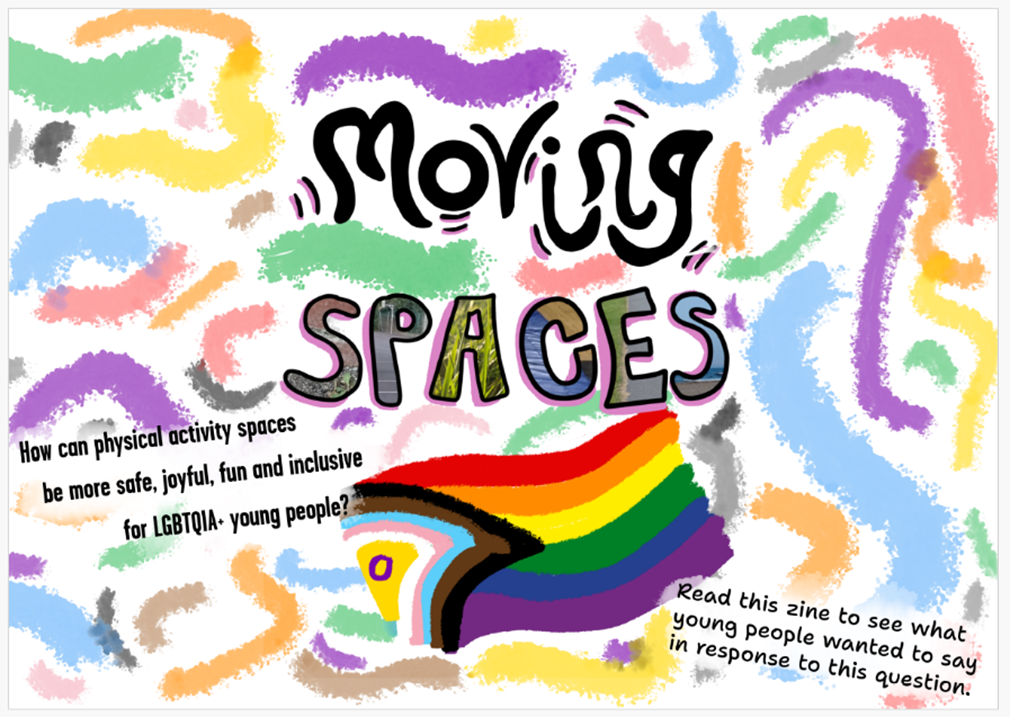
  • Infographics and visual summaries can be a useful way to transform your findings into a simplified visual. Infographics are a graphic representation of information, data or knowledge to present complex content quickly and clearly. Emma Adams has worked with More than Minutes to summarise research about co-located services in a visual and accessible way. Steph Scott worked with Nifty Fox - specialists in visual storytelling - to produce a flipbook drawing on content from the ‘Divided Households’ report relating to children and parental imprisonment. Fuse Deputy Director Amelia Lake, Shelia Visram and team co-produced the Hyper Energy drink leaflet with young people to communicate key findings. Or what about a zine (DIY-style booklet or magazine) like this, ‘Moving Spaces’, co-produced by Caroline Dodd-Reynolds with LGBTQIA+ young people, exploring how physical activity spaces could be more joyful and safe.
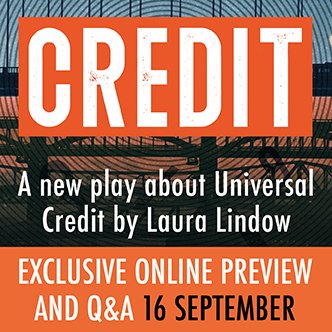
    • Theatre and performance is an exciting way of communicating research. For example, Cap-A-Pie and researchers including Mandy Cheetham were involved in developing an emotive theatre production called Credit, based on stories and experiences of people living on Universal Credit.
       
    • Creative and engaging community events and workshops (with catering if you have budget!) are always a popular option. The more interactive, accessible and collaborative the better. Use the opportunity to close any feedback loops with people, charities, organisations who you have engaged with throughout the research. Show how you listened, what you found out, how findings are applicable to people's lives and work, and what happens next... keeping people in the loop is so important. Be sure to include opportunities for plain language Q&As and conversations, both informal (through breaks) and formal (via panel discussions). At one of Fuse’s International Women’s Day events, there was an optional gong bath for people attending the event. Although a sound bath may not have been directly linked to the research, the event was about creating a welcoming, inclusive and ‘safe space’ for people to come together.
    • If you have the budget, consider having an event doodled in real-time. We have had colleagues who have worked with Camille Aubry, Josie Brookes and Nifty Fox who offer this skill. Get in touch with us if you would like any other recommendations when sourcing quotes.
    • Have you thought about gamification of research findings or using interactive digital tools? You can create interactive quizzes or clickable maps to allow people to explore findings in an engaging way, applying insights to local contexts. Simulation tools allow public partners and individuals to visualise the impact of different public health interventions based on research findings. Take a look at Joanne McGrath's online Maze, which provided an interactive resource portraying women’s narratives of multiple exclusion, homelessness and accessing support.
    • Storytelling has long been a way to share information. Case studies lend themselves well to this, as human-centric narratives show the research in action. It can demonstrate how a specific person or community has benefitted or will benefit from the findings. Stories are a different way to 'humanise' data or translate findings in a way that is appropriate for the intended audience. For example, Cassey Muir and Ruth McGovern’s co-produced Twinkle Twinkle Arti children’s story book communicated messages about parental substance use in a gentle, age-appropriate manner. The book is available as a physical copy, an electronic copy and also has been made into a CBeebies style story time video.
    • Are there any opportunities for the use of creative methods throughout the project that you could bring together as part of an exhibition in a public space e.g. library, community centre, schools? Documenting the research and experience through photography, crafts or art can be a creative way of capturing interest and making research more understandable. Sarah Martin-Denham’s crochet blanket made up of 2,999 squares representing the number of children excluded every day from schools in England (2021/22 academic year) is a great example of this, and has been on a national tour engaging with 24 organisations - including the Children’s Commissioner Office and multiple councils.
    • You can share bite-sized research or findings through social media channels using visuals, animations, short videos - or even livestreaming to provide information and engage with people in real-time. Have a hashtag at the ready to encourage people to join the conversation and share perspectives. In a similar vein, there are opportunities to share research and knowledge via 'Ask Me Anything' style forums, for example as seen on Reddit. Yes, this is low cost but it comes with risks as questions are unpredictable! However, it is worth flagging as an option and is a creative, ‘non-traditional’ way to share research and answer questions.
    • Blogs, like the award-winning one you are reading right now, are a great way to share your research. Posts can make complex information more accessible to a wider audience. It allows you to present findings in a clear, engaging and informal style, reaching readers outside of academic circles, including policy makers, practitioners and the wider public. For guidance and support in writing your own blog post, contact Fuse Communications Manager, Mark Welford: m.welford@tees.ac.uk.
    • Could you take your research findings to places in the local community? Fuse colleagues Balbir Singh (Artistic Director of the Balbir Singh Dance Company) and Paul Chazot displayed art works from their Unmasking Pain project in pop-up displays in GP surgeries and a repurposed shop in a shopping centre. There is now a dedicated space at the Grainger Market, Newcastle-upon-Tyne called the Being Well Place, which is a place to connect and engage with the local community.
    • Do you have the option of translating materials/outputs for different audiences, and communities with diverse language needs? Translated summaries and visuals e.g. in multiple languages, work well and ensure inclusivity in dissemination. For example, Nicola Heslehurst worked with local designer, Twentyseven Design to develop English and Welsh infographics relating to pregnancy outcomes.
    • And finally what kind of Fuse Public Involvement and Engagement Manager would I be if I wasn’t promoting the wonderful and award-winning public partner-led podcast Public Health Research and Me?! Accessible, informative, flexible and friendly - this is a great way to share quality research with a diverse and international audience. 

    There are many more creative ways to share research and remember - there is a no ‘one-size-fits-all’ approach to sharing your findings. Always take into account your research topic, your findings and above all your target audience.

    Why not send us a message today if you have used a creative or innovative way to share your research or findings? We would love to hear from you and find out more ways to promote and share high quality research.


    Following strong interest from Fuse members, we have launched a Community of Practice (CoP) focused on creative research, involvement and dissemination.

    The first meeting will take place in the New Year. Places are limited for the first event but please register or get in touch (info@fuse.ac.uk), as there will be plenty more opportunities in future!

    A CoP is a network of people who share common interests and goals, creating a space for knowledge exchange, learning, and mutual support.

    Friday, 31 January 2025

    Our experience co-producing a zine with LGBTQIA+ young people

    Posted by Scarlet Hall, Research Assistant, Durham University and Fuse

    We have been collaborating with LGBTQIA+ young people in the North East and South Yorkshire, through Fuse led research funded by the NIHR School for Public Health Research (SPHR) exploring how physical activity spaces could be more joyful and safe. This blog describes how the ‘Moving Spaces’ zine was made and makes suggestions for those wishing to co-produce creative research outputs.

    This blog draws from reflective conversations between Caroline Dodd-Reynolds (Fuse), Mary Crowder (University of Sheffield) and Shevek Fodor (Sounds Like Shevek) during the making of the zine. It is written with contributions from Caroline, Mary and Shev.

    Seek continuity between research methods and research outputs

    At the start of our research project we knew we wanted to host a series of research workshops and then co-produce a physical activity resource with the young people we were working with. After seeing the results of using visual creative approaches in our workshops, we knew we wanted a highly visual and creative resource that would connect and resonate with people.

    Shevek Fodor
    Working with the right designer and format

    We sent an advert out to LGBTQIA+ networks for a graphic designer who would understand the lives of diverse LGBTQ+ people, in particular young neurodiverse people. When Shevek Fodor shared their zines with us our eyes and hearts lit up. We invited Shev to lead on making a collaborative zine. We chose the zine because of its DIY ethos, radical history of self- publishing and as a vehicle for self or group expression of thoughts and feelings.

    What is a zine?

    Zines originated through people writing letters and sharing information about things they were driven and passionate about. They’ve been used as a way for people who were overlooked within mainstream media to have their voices heard.

    Practice reciprocity

    We thought the young people would be inspired meeting Shev, a young neurodiverse queer artist. For Shev, this role offered a new opportunity to experiment with collaborative zine-making in a research setting. We offered hands-on guidance (budgeting, finance systems, mentoring) as part of co-production principles of reciprocity. We introduced Shev to the young people prior to the zine session and their curiosity was piqued…’is this person one of us or one of them.…?’

    Involving artists at later stages of research is not straightforward. We aimed for a balance between giving Shev space to design and lead the sessions while also sharing our own knowledge, ideas and learning. The trust built in earlier research workshops meant we could also pass on an established  quality of ease in the group when it came to the zine making workshops.

    Trust the creative process of each person and the group

    Shev laid the zine making table out in a beautiful, organised chaos of found images, stickers, magazines and cards. Young people made creative contributions to the zine, inspired by earlier conversations about physical activity. They found ways to take part and to also hang out in their safe space – which we were encroaching on. Some people chewed and chewed over the right words to express themselves with contributions coming together at the end. One person got stuck and did their piece later with a youth workers’ support. Two zine contributions were made that involved multiple voices, through Scarlet documenting conversations around particular images. Scarlet also made contributions from a researcher’s perspective. Shev took these contributions – writings, drawings and collages – and wove them together into a first draft.

    Allowing the time for collaborative editing – it brings difference into conversation

    We shared this draft with the youth groups, the SPHR and Fuse communications teams and academic colleagues. We received a lot of feedback – the zine was provoking conversations. The young people gave detailed feedback on what they liked, what was missing, and sequencing of ideas. They spoke the words that became the introduction and expressed their small hopes for a few people to engage with the zine. There was a thoughtful conversation across the youth groups, about whether to personalise individual contributions or depersonalise to show that it could be any LGBTQIA+ young person saying this.

    Academic colleagues also read and shared reflections with us, including feedback that policymakers might struggle to engage with the zine’s non-linearity and various people suggested we include a page of key take-home messages and recommendations ‘so things don’t get lost’. The young people responded to this feedback saying that people needed to listen and pay more attention to the messages that were implicitly in there. This dialogue led to the writing of a framing document for the zine. 

    Value queer embodied theory and practice 

    Another dialogue arose around authorship. Some reviewers found it confusing not knowing who had written what and had a strong wish to know who – a young person or adult – had written different bits – a desire perhaps for a clear identification of distinct voices. For Scarlet, a queer researcher, the ‘queer polyvocality’ (Brice et al., forthcoming) of the zine – many voices that weaved together in to more than sum of their parts – reflected queer practices of overflowing notions of stable identity, disrupting predetermined binaries and unsettling ideas of authenticity (Lescure, 2023).

    This somewhat aligned with ideas from the young people. For some, there was a wish for attribution so ‘friends and family would know I made this’, and there was also a wish for zine contributions to be unnamed ‘because any queer young person could have made any piece’ and ‘we made it all together’.

    One young person said they appreciated that researchers ‘weren’t butting in with your opinions but also giving your views when right to do so’ and another adding ‘it’s important that the adults’ voices are also in there as you were part of the conversation, and some adults have also had similar experiences’. The young people decided to make creative doodles in place of signatures which were mixed in with academic doodles/logos to show the talking and making and editing together – the polyvocality – of the zine making process.

    Through this collaborative editing process (over three months), the young people began to converse indirectly with interested adults who wanted to help, including with the funders. These conversations happened with the young people keeping editorial control. We sense this may open up and shape more generative future encounters between these young people and further influential adults.

    Indeed, some of the young people involved have made a plan to hand deliver zines to local venues around town (hairdressers, surgeries etc.). It seems empowerment and co-ownership inadvertently leads to physical activity!

    Explore the zine

    To find out more about this work, please contact Scarlet scarlet.hall@durham.ac.uk or Caroline caroline.dodd-reynolds@durham.ac.uk 


    References

    Lescure, R.M., 2023. (Extra) ordinary Relationalities: Methodological Suggestions for Studying Queer Relationalities Through the Prism of Memory, Sensation, and Affect. Journal of Homosexuality, 70(1), pp.35-52.

    Brice, S. Marston, K. Wright, R. and Hall, S. (forthcoming). ‘Mycelial Love’ in Harrison, P. Joronen, M. and Secor, A. Love and Catastrophe in Cultural Geography. Edinburgh University Press

    Friday, 1 December 2023

    Getting creative to make research more accessible and inclusive

    Posted by Victoria Bartle, Fuse Public Partner

    We were throwing balls of wool around, picking picture cards to describe ourselves and having a thoroughly inspiring time. This was not your typical research conference!

    It was day one and keynote speaker Pam Burnard was encouraging us to challenge the system using creative methods to subvert common assumptions.

    Many of the researchers at the International Creative Research Methods Conference in Manchester are independent, not linked to a specific university or funder and this allows them to approach research from a variety of unusual and unfamiliar angles.

    The conference is the brainchild of Dr Helen Kara: independent researcher, author, teacher, speaker and creative research methods (CRM) expert. Helen’s vision was to bring together the global CRM community to share knowledge, promote understanding, enable networking and have fun!

    After the first day's keynote, I went to see Nicole Brown, a researcher looking at fibromyalgia, a condition that I also have. She had asked people living with fibromyalgia to collect objects to describe how the condition made them feel. One person had taken a photo of her chair - a really comfortable armchair, with a blanket, a table beside it holding drinks, snacks and distractions. This could have been a picture of my own living room! Due to chronic pain and fatigue I have what I call my 'nest'. I have reclining sofas with a side table with all of my remotes, chargers, creams, spare meds, thermostat, drinks, snacks, book, switch, lip balm (etc.) just so that everything I need is within reach and I don’t have to move too much or cause myself too much pain. I found the picture really impactful and saw the potential for objects, artwork and abstract thinking to be able to describe conditions like fibromyalgia which is extremely difficult to explain to someone who doesn’t have it. Using objects as data to assess and evaluate was really interesting and a methodology that I wasn’t previously aware of.

    We were then given the task of picking some cards to describe ourselves as researchers.

    These are the lego cards I chose to describe me during the sessions by Nicole Brown, who works with objects as data in research.

    The skydiver because I feel like I just ask to do things and hope for the best, the singer because I like to present and talk about PPI (Patient and Public Involvement) in research. 

    Black widow because she’s a superhero and fights for people who can’t and Rocket because he’s been made up with tech and I felt like he’s a disabled superhero :)


    Jargon buzzing

    On day 2 the Lawnmowers Theatre Company, run by and for people with learning difficulties, brought out jargon buzzers which were amazing! The characters pressed the buzzers every time someone used a term or word that they didn’t understand. I really want to use these in PPI meetings in the future, but we might not get anything done having to explain all the acronyms and research language that is often used!

    Making a 'zine'

    I didn’t know anything about zines and wasn’t aware of the Madzine project to help people with mental health conditions to explain how they feel, get things out and be creative. The session was really interesting giving us some history on zines before we were able to create our own. I made one about a project that I have been working on using some paper with stars on to represent the PPI Group members. A black page for accessibility as we all had different barriers to involvement and some of them were difficult to address, hidden or unknown. Some of the zines that they showed us were amazing: creative, visual, unusual, thought provoking and touching. They plan to create a mobile Madzine library that tours around the country so that people can read the zines and share in the experiences of the creators to increase awareness and understanding of living with mental health conditions.

    Board games, rockpools and podcasts  

    Kath McGuire (University of Exeter/NIHR School for Public Health Research), led our session talking about working with creative methods, public involvement and research dissemination. I briefly introduced the Fuse podcast and explained the collaborative approach to creating it. People were then able to take a look around the room at the variety of creative outputs that we had brought with us, and a video about how we have creatively communicated research in Fuse (see below). We had a snakes and ladders game to be used with PPI groups, or groups of researchers to evaluate their projects: snakes were barriers and challenges and ladders were successes and wins. We also took posters created by Fuse researchers showing their project results (Emma Adams) and Kath had a Blue Health Rockpool from another project. We took questions and explained how we created the podcast, what its impact had been and answered lots of technical questions about equipment, hosting and distribution. Hopefully accurately!


    Attending the conference really broadened my view of research and public involvement. Lots of researchers at the conference felt that by making their work more creative it made it more inclusive. By reducing or removing established barriers to involvement such as language, terminology, education level and academic preconceptions they were able to engage with a wider, more diverse group of people. They could still be academically rigorous and produce research that stands up to peer review and meets publication standards whilst including more people, accessing people with appropriate lived experience of their topic of study and making involvement engaging, interesting and fun!

    I have come away from the conference wanting to make Patient and Public Involvement meetings more creative, use games and objects to describe feelings and opinions, implement the jargon buzzer and design engaging dissemination methods that are relevant to the target audience of the study, drawing on the skills of the researchers and PPI teams.

    A special thanks to Kath Maguire, Daniel Mutanda and Heather Boult (University of Exeter/NIHR School for Public Health Research), and the Fuse colleagues: Lesley Haley, who helped me with the podcast aspect of the workshop 'market place'; Ella Anderson for preparing the workshop activity; and Mark Welford for producing the Creatively communicating research video that we used in the session.

    Friday, 11 December 2020

    “Speaking truth to power is all we can do”

    Bringing arts and research together to prompt debate about Universal Credit


    Posted by Mandy Cheetham, Research Fellow in the Applied Research Collaboration North East and North Cumbria (ARC NENC), Northumbria University  

    As a researcher, it is not every day that you get to work alongside talented artists, actors and writers. I recently had this privilege as part of the planning and development of theatre production Credit. The play was prompted by research commissioned by Gateshead Council, which showed the negative impact of Universal Credit on vulnerable claimants and staff supporting them in North East England. We were grateful to participants who shared their stories so openly and wanted to use the findings to prompt wider debates about welfare reform, beyond published academic papers.

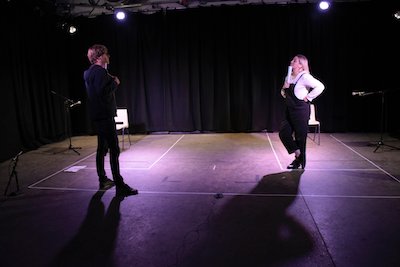
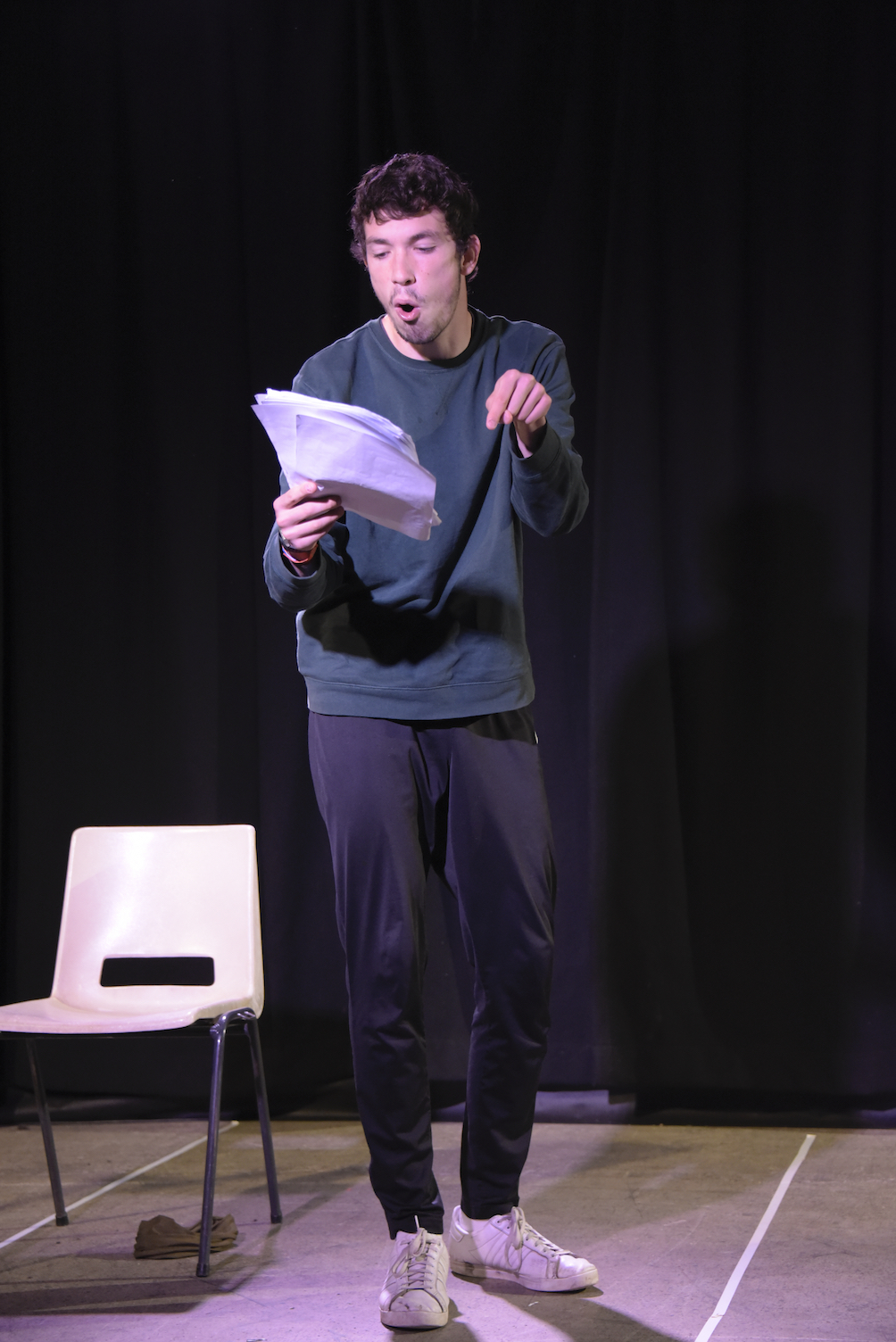
    I had limited knowledge of Universal Credit before starting the research in 2017, when community members began voicing their concerns about the roll out. I was shocked by the insights gathered during the fieldwork in 2018. Credit was the culmination of a collaboration with Cap-a-Pie theatre company, who we approached with our ideas. Unfortunately, plans for a theatre production were shelved in April because of the COVID-19 restrictions. The team worked hard to create an online rehearsed reading of part of the play, brilliantly performed by two skilful actors. Supported by a panel of knowledgeable and passionate local and national speakers, we negotiated the challenges of an online post-show discussion. We were unsure how it would go, as we joined by more than 400 people who watched the 40 minute extract from the play. Over 150 stayed for the live Q&A and discussion afterwards, providing thoughtful comments and feedback.

    During the panel discussion following the evening performance, the writer, Laura Lindow, commented that she hoped the audience could “hear her own fury in the poetry”, hoping it would “smack everyone around the ears”. The reactions from the Q&A suggest that participants felt similarly moved, describing Credit as: 
    “Brilliant, angry, urgent work”

    “Extremely powerful and incredibly important”

    “I had tears in my eyes watching this”

    “Heart breaking, but very realistic. Especially poignant was the reference to starvation”

    “The reference to loan sharks took my breath away, eased so gently into lives, but so destructive”
    The questions, observations and exchanges with panel members were insightful and engaging. The audience challenged us as researchers to think about how to move beyond the echo chambers of online events to ensure the messages reach those in positions of power to affect change.

    As a result of this screening, we have made more connections, with people who have claimed Universal Credit, and academics doing research in related areas. Maria Thompson was one of the people we met following the post-show discussion and you can read about her personal experience of Universal Credit in this accompanying blog post. We also made links with people keen to use the arts to communicate their research findings, engage others in wider debates and challenge us to act: 
    “Lyrical, hard hitting, honest writing”

    “Beautifully written and acted”

    “Speaking truth to power is all we can do and this play was a great example”

    “How do we fight negative perceptions of benefit claimants? How do we continue to show the need for a supportive welfare system?”
    In the feedback, participants commented on the importance of changing negative stereotypes about claimants. At the end of the evening performance, Patrick Butler, social affairs editor from the Guardian newspaper called on revisions to UC to be made with the input of claimants who have direct experience of the system.
    “For me, a decent social security system is a citizen's right. It has to be effective, it has to be humane. I think it has to be an entitlement, not a privilege or reward for good behaviour.”
    We’re keen to use the play in different ways to stimulate debate and reflection. Emotions clearly have played a role in galvanising action. We have received requests to use it in staff training and to promote arts/research collaborations. As one participant commented:
    “We don’t make best use of art in public health. This is such a moving and poignant play. My hope is that one day we can get it into mandated training in the NHS.”
    The diversity of claimant experiences has increased enormously since COVID-19, but the stigma is far from disappearing according to debt charity Turn2Us. Recent reports by the National Audit Office (2020) and the Work and Pensions Select Committee suggest that there is still a long way to go before vulnerable claimants’ rights are protected. Perhaps this is the moment for government to show they have listened to those voices who have long campaigned for meaningful change, to ensure that Universal Credit provides the safety net that people need in times of adversity and to keep the changes to the standard allowance introduced as a result of COVID-19.

    If you missed the last performance of Credit, we are planning to show more performances in 2021, so keep an eye out. We are working on a short film with extracts from the rehearsed reading of Credit and interviews with those who support claimants, who were involved in the research, script development and production. This will be available on YouTube in the New Year. We will continue our efforts to raise awareness of this important issue and look forward to working with others keen to do the same.


    Acknowledgment

    We are grateful to the funders, Newcastle University, Catherine Cookson Foundation and Arts Council Lottery Fund for their support and flexibility.

    Friday, 16 March 2018

    Knowledge mobilisation: relationship guidance for ‘stubborn’ practitioners and ‘smug’ scientists

    Posted by Peter van der Graaf, AskFuse Research Manager, Teesside University

    Last week, I presented at the UK Knowledge Mobilisation Forum in Bristol, which is an annual event for all those with a passion for ensuring that knowledge makes a positive difference to society. The Forum brings together practitioners, researchers, students, administrators and public representatives who are engaged in the art and science of sharing knowledge and ensuring that it can be used.
    
    Getting creative sticking to ‘unconference’ principles
    One of the key note speaker, Dez Holmes who is the Director of Research in Practice with 20 years of experience in championing evidence-informed practice in social care, vented her frustration about a question she was often asked by people interested in knowledge mobilisation (KMb): where can I access training in this? Her response: you can’t! Knowledge sharing is personal and therefore a social skill that you can only develop by practising it.

    The skills needed to practice KMb are everyday skills, such as listening, emotional intelligence and persuasion. Reciprocity and mutual respect are crucial in relationships and therefore in knowledge mobilisation. Knowledge mobilisers use these skills to make knowledge relatable and therefore relevant to people’s lives. Dez used a Japanese word to sum up these skills: ‘ikigai’ (meaning “reason for being”): if we can’t relate knowledge to people’s sense of self they won’t be inclined to use it.

    Acknowledging feelings in knowledge mobilisation is therefore important, not least because implementation barriers for knowledge are often personal. Dez quoted the common misperception between practitioners and academics that are at the heart of the so-called knowledge-to-action gap: “scientist blame the stubbornness of practitioners for insisting on doing it their way, believing they know their patients best, while practitioners lamented the smugness of scientists who believe that if they publish it practitioners will use it”. These misperceptions signify emotions at work in the knowledge gap that need to be addressed before we can start mobilising knowledge.

    A great example of on the job knowledge mobilisation learning was captured in a story told by Vicky Ward, Associate Professor in Knowledge Mobilisation at Leeds University and one of the organisers of the Forum, who reflected on her research about knowledge sharing between professionals in social care. The story, titled ‘Dealing with the carousal of knowledge’, illustrates how practitioners continuously added new and different types of knowledge to their team meetings but never really made use of this knowledge until Vicky started asking some ‘constructively clue less’ questions. These questions helped them to recognise the emotions they attached to the client cases that they were discussing and enabled them to discover patterns in their carousel of knowledge. Identifying patterns allowed the professionals to select knowledge that was most useful for each case and made this knowledge transferable.

    The conference format itself acknowledged the relational and context-specific work involved in knowledge mobilisation: participants were encouraged to hone their skills in randomised coffee trials, open space discussions, interactive poster sessions, market stalls, short presentations and practical, interactive workshops. The programme was deliberately based on ‘unconference’ principles, which means that it focused on offering opportunities for conversations, creativity and collaborative learning, with much of the direction being driven by the participants instead of the conference organisers. In this sense, the conference was a training ground for knowledge mobilisers to practice and learn new skills.

    Friday, 24 February 2017

    Two perspectives on arts and public health

    Andrew Fletcher, PhD researcher, Faculty of Health & Life Sciences, Northumbria University

    Engagement with the arts and/or creative practice benefits wellbeing in multiple ways. I am a musician and relatively new to public health. This post argues that arts and culture should have greater prominence in health and social care.

    Courtesy uk.pinterest.com
    So what of arts-based therapies? Compared to Cognitive Behavioral Therapy (CBT) for example, such programmes are not heavily promoted. Perhaps this is right; CBT is cheap and effective, whereas things like music therapy are often reserved for individuals with more complex needs. But this hierarchy contributes to the idea that arts-based therapies are ‘alternative’ – potentially placing them in the same category as, say, homeopathy. This is not a helpful perception, but anyone who’s tried to advocate for creative therapies will know it exists.

    Then there’s ‘evidence-based medicine’, which is of critical importance, but whose dominance has been challenged.2,3  This is particularly relevant to approaches to health and wellbeing that are seen as ‘alternative’, which still seem to remain the preserve of those who can afford to try more ‘esoteric’ interventions – thereby reinforcing inequality. So what’s the response? Promote holism*; make arts therapies mainstream; emphasise their part in everyday life; make creativity and cultural engagement as vital as exercise, healthy eating or social interaction. The idea that creativity is intrinsic to wellbeing needs to be established in the early years and beyond, and to neglect this idea is missing a trick.

    Courtesy tinybuddha.com
    Why do people do art? Usually to express a political statement, to communicate a specific feeling or sentiment, or to satisfy some intangible ‘urge’. Making a painting to hang on your bedroom wall cultivates a more pleasurable living environment; putting your kid’s collage on the fridge boosts self-esteem; and who never listens to music? Creative practice, in one way or another, feeds into numerous wellbeing outcomes. Artists know this instinctively, yet policy around art and culture focuses on tourism and/or entertainment income, and a vague ‘intrinsic’ social value. Lip service is paid to health, but as Tiffany Jenkins says: “If you’re competing with hospitals, you’ll lose”.4

    But art and wellbeing are significant components of the lived experience. They make us human. They sit at the apex of Maslow’s hierarchy** and most people understand the inherent value of culture to either social or personal wellbeing. If prevention really is better than cure, we must pay attention to the cultural-wellbeing landscape and the atmosphere these concepts exist in. Perceptions are changed through innovative and creative information delivery – so creativity not only has its own wellbeing outcomes, it’s also the key to shifting arts and culture towards being a major pillar in overall wellbeing.

    I can’t help but wonder what the world would be like if the perceptions of arts therapies were different. Stickley (2014)5 outlines one potential scenario as follows:
    The year is 2080. A new textbook has been published. The book is called ‘A Century of Healthcare’ and I would like to quote from this book:

    "For most of the last century it was unusual for people to be treated holistically. Incredible as it sounds today, healthcare systems separated physical interventions from anything they referred to as "mental". Thus a dualism existed and people were treated as divided objects. At the time, there were many attempts at holism, especially by those who practised alternative or complimentary therapies. However, anything that remotely threatened the domination of the medical model was largely side-lined and researchers gave little credence to anything that was not considered scientific.

    We should however give a great deal of credit to those who foresaw the potential contribution that the arts and humanities could make to healthcare and wellness but they operated in a narrow scientific paradigm that gave little acceptance to holism…”
    The contexts in which creative practice occurs are complex, but the benefits are multiple and well-known. The key here is changing perceptions. This takes time, but perhaps Stickley’s vision will bear out. I hope so.


    Footnotes:
    * The idea that the human experience of wellbeing is social, cultural and complex, and extends far beyond medical definitions of health.
    ** 'Self actualisation' appears at the apex of psychologist Abraham Maslow's 'hierarchy of needs' model and includes in its definition (among other things): "expressing one's creativity".

    References:
    1. Various demographic data available from www.theaudienceagency.org
    2. Greenhalgh, T., Howick, J. & Maskrey, N. (2014). Evidence based medicine: a movement in crisis? BMJ g3725.
    3. Stickley, T. (2015). A little rant about evidence, available from: https://ayrshirehealthandarts.wordpress.com/2015/03/31/dr-theo-stickley-a-little-rant-about-evidence/
    4. Jenkins, T. (2015). Front Row debate (23rd Feb, 2015). Are artists owed a living? Online: BBC.
    5. Monologue delivered at ESRC funded Seminar Series on Arts, Health & Wellbeing, 15th September 2014.