Showing posts with label alcohol. Show all posts

Friday, 11 July 2025

“It’s not something that you just openly discuss” - Supporting British South Asian carers affected by drug and alcohol use

Posted by Jayne Black, Public Health Officer, Harm Reduction and Social Inclusion, Public Health Directorate, Newcastle City Council

Access to services, such as those related to drugs and alcohol and other health services, can be challenging. This challenge may be harder for some minority communities due to a variety of additional factors which impact people from accessing support when required. It is important that we identify these issues and barriers that prevent people in need from accessing help.
PROPS Community Connector, Fatema Rahman (C) with colleagues Annette
  Walby (L) and Helen Thompson (R), celebrating Eid at Fenham Library

In Newcastle, an ethnic minority needs assessment has been carried out and is available on our Joint Strategic Needs Assessment webpage.

We have also partnered with Northumbria University to explore barriers and perceptions to accessing drug and alcohol support.

An important area of focus is how family members are affected by a loved one’s substance use. In Newcastle, a recent research project backed by Fuse seedcorn funding investigated the perspective of British South Asian carers, who care for people who use drugs and/or alcohol, regarding their experiences and access to specialist drug and alcohol carer services in Newcastle.

The collaboration which included, co-production with people with lived experience, was between Newcastle City Council, PROPS (Specialist Family Drugs and Alcohol Service), Northumbria and Newcastle Universities.

What do we know are some of the barriers?

Attitudinal (personal)

The limited research suggests that attitudinal barriers within minority groups exist in relation to accessing care services. These are suggested to be in relation to not wanting to involve services. This is due to low awareness of services and availability, and concerns around cultural or religious appropriateness.

Stigma

Stigma is harmful and has been defined as the devaluing of an individual based on their characteristics or behaviour.

We know that stigma in general can have an impact on whether an individual seeks support for alcohol or drug issues, or other health issues.

Within the British South Asian and Muslim community, it has been identified that societal stigma, within the community, can impact upon people’s willingness to access help. This stigma may be centred around concerns of what other members of the community perceive about a particular individual or family and their use of alcohol or drugs.

Carers

The research evidence within this area rarely extends to those who are in a caring role for family or friends who are struggling with issues around alcohol or drugs. This could be an important area of focus, as support from a family member or friend is incredibly important. Whether day-to-day or during recovery, supporting carers is vital. However, it is worth noting that some people may not identify or recognise themselves as a carer and therefore, are unaware of support.

The Census of England and Wales in 2021 identified that North East England has the highest number of people providing unpaid care. It also suggests that unpaid carers in the North East provide the most hours of care.

Providing care may impact the health and wellbeing of a carer, this could include financial as well as if someone is a kinship carer. Therefore, it is important to identify if there are barriers to accessing carer support services for people who care for family members or friends using drugs and or alcohol.

What did we discover?

Our research results identified a variety of key areas. These areas related to the topic of drugs and alcohol in terms of it being ‘taboo’, with associated stigma, the barriers that are experienced for accessing family support, along with the general awareness of family support services.

Drug and alcohol use as a taboo topic

Carers highlighted the difficulty of discussing their loved one’s use of drugs and alcohol with other people who are close to them. The topic itself can be seen as something which creates unease. This creates a possible negative effect as talking with others may help create a supportive network and help carers feel supported and provided with guidance.

“the drug use; it’s not something that you just openly discuss. It’s like [frowned] upon. You know, people, I think, blame the parents, “well why aren’t you doing something?” […] Unless somebody can help you, you know, guide you, there’s no point having these discussions with people […] I mean, I’ve spoke to their grandma about it and stuff. Like, people who genuinely care.” 
                                                                             Participant
In contrast, others mentioned conversations about drugs and alcohol being more prevalent in the community, requiring more awareness for community members.

Barriers to accessing family support

The issue of stigma is evident from the discussion, with drug and or alcohol use being seen as an individual issue of choice, which not only impacts the individual, but affects the reputation of the family. It is seen as different to mental health issues, as something that people are unable to physically observe or have an understanding of.

“I don’t even talk about his mental health condition, ‘cos it’s a stigma. People like, laugh at it and things and say, ‘look, he’s barking; he’s crazy’. It’s this whole attitude that he’s crazy. You know, there’s no sympathy. […] it’s better and easier to get cancer than it is to [have anything] like that, because no one’s going to be understanding. […] People don’t understand, they think they’re putting it on half the time. They’re not understanding the side effects that it has.” 
                                                                            Participant 
There is recognition that seeing or being aware of someone in a community accessing help for drugs and alcohol, or in recovery, can help shift perceptions and show that support is accessible to other members of the community.

Misconceptions around confidentiality and issues of trust can be seen within those working with services or accessing a service. Carers need to be reassured that services are bound by confidentiality. In terms of confidentiality within the community, raising awareness about available support can play a major role in reducing stigma associated with engagement and seeking support.

There is hope in the organisations that provide family support services, and allowing a carer to progress on their support journey at their own pace is important.

“I got involved with them and *the family support service* were really good, because at that time, I didn’t want anyone to know, ‘cos I didn’t know what was happening and they offered me so many different solutions and like, I don’t have to see them straight away […] Cos some people don’t want to talk about… You know what I mean? So at that time, I didn’t want to see who I am in this. I just wanted to understand what’s happening.” 
                                                                             Participant
Awareness of family support services

It was identified that there is limited knowledge of services that provide support for drug and alcohol recovery. This may create difficulty, as the role of the carer can be a ‘navigator’. Therefore, limited knowledge may add an additional pressure to the carer, which was an issue raised during the interviews.

Services reaching into communities, rather than people who require support finding their own their way, is highlighted as being a positive - which can be used to make recommendations for a future response.

Using an approach which makes the most of existing support already within communities and working at a pace that suits the carer. Also, harnessing the power and visible importance of communities can create a support network, ensuring assistance is sustainable and effective.

“Over the phone, it was fine. Then eventually, they came to my house. Eventually met in cafes, then started a course with them.”

“[They] are very good with giving me a variety of choices that suited me when I needed, so whatever suits you, with patients and carers, however it suits them. However it suits every individual is different, so they met my needs.”
     
                                                                             Participant
Recommendations

We must connect with those who have relationships with members of a community to enhance trust and help support people who need it. Recommendations from the research included outreach into the community for connections with leaders. This must include vital considerations around caring and family support.

Encouraging visibility of services and people in recovery or who have lived experience within the community is also important to help not only the carers, but those who are struggling with the use of alcohol and drugs.

Developing work in Newcastle


Work in Newcastle is being developed within this area. Public Health have been engaging with British South Asian community leaders to enhance treatment and recovery efforts including carers. Two key meetings were held with stakeholders such as the Bangladeshi Association, local Imams, and university researchers. These meetings facilitated open dialogue on barriers to treatment, cultural sensitivities, and support systems, building trust and shared goals.

Engagement with the Health and Race Equality Forum (HAREF) emphasised the initiative's importance, with leaders showing enthusiasm for ongoing collaboration. A rough plan is being developed from these discussions, with next steps involving continued dialogue and refining the action plan to meet community needs. This approach highlights the value of community-led, culturally informed initiatives in promoting health equity.

Newcastle is also working with PROPS to fund a part time South Asian Muslim worker who will serve as a community connector to bridge the gap between community and support services. This is building on their existing effective practice in this space. The community connector worker will provide tailored support to facilitate access to support, ensuring carers, and families get the help they need in a culturally sensitive manner.

Personal reflection

The research highlights the importance of the voice from carers and communities, and those with lived experience. The importance of understanding the issues from those with lived experience who are supporting someone and working through any daily challenges. We must ensure that valuable information that we discover from research, such as this, is used to act and ensure that everyone has an opportunity to be supported and live well.

Friday, 13 December 2024

When stigma came to town: why a quick fix can never work with a life-long problem

Posted by Ian Treasure, Programme Manager, Changing Futures Lancashire and Cassey Muir, Research Associate, Newcastle University

“When you point a finger, three point back,” a member of our Lived Experience panel said while discussing stigma. Stigma is often invisible, yet it shapes how people perceive themselves and are perceived by others. This saying reminds us that before we judge others, we should first reflect on our own behaviours, actions, and beliefs.


The Changing Futures Lancashire Programme and taking a trauma-informed approach

The Changing Futures Lancashire (CFL) programme was one of 15 areas in England chosen to receive funding to test and learn approaches to supporting adults experiencing multiple disadvantage. Anyone experiencing three of the following five conditions were able to access our services:
  • substance misuse
  • homelessness
  • criminal justice involvement
  • poor mental health
  • domestic violence
CFL was a follow on from Fulfilling Lives which also supported this cohort. CFL was different as it was funded through local authorities in an attempt to gain more traction for system-wide change needed to support a seldom heard group. The funders were Ministry for Housing Communities and Local Government (MHCLG) and The National Lottery Community Fund.

Nationally, we focused on measuring improvements for the people we support, how well services work together, and how decisions are made at a higher level. The aim was to create significant changes in the system so that people with complex needs can access the support they need more easily. We adopted a trauma informed approach in the way we offer and provide support. For example, we understand that individuals who may appear aggressive could actually be scared, confused, or reliving past trauma. This non-judgmental approach not only shapes how our providers assist individuals with complex needs but also affects how the adults we support view themselves.

The majority of beneficiaries (90%+) in the Changing Futures programme face poly-substance use (using more than one substance at a time) as the main condition that developed into multiple disadvantage. Many have shared how chronic drug use often leads to involvement with the criminal justice system, poor mental health, and eventually homelessness. Alongside these challenges, many individuals have experienced parental abuse or neglect. Their negative school experiences, often tied to undiagnosed learning disabilities or other barriers, have also shaped their struggles. Over time, our beneficiaries have developed coping strategies to survive—tools they rely on to navigate a world that often feels unsupportive.

Shining a light on stigma

The CFL Programme has made significant strides in supporting individuals facing multiple disadvantage. However, as we delved deeper into the challenges faced by our beneficiaries, we uncovered an invisible yet pervasive barrier: stigma. This insight shifted our focus and prompted us to ask: 
how can we tackle the stigma that often prevents people from seeking the help they need?
People with lived experience helped shape the CFL model, ensuring that it addresses the needs of those who understand these challenges best. During conversations with our beneficiaries, we found that many initially hesitated to seek help because of the trauma and judgment they felt during comprehensive assessments. We responded by removing this entry barrier, focusing instead on the sharing of information between services followed by a more conversational approach that helps build trust without the fear of interrogation. This small change proved to be a key turning point for many individuals, making them feel more comfortable returning for support.


Across Lancashire we also have started to shed light on the issue of stigma. We created the powerful and thought-provoking film above featuring people with lived experience and other professionals sharing their stories, which has been viewed thousands of times. One case study highlighted a single mum afraid to visit the pharmacy near her child’s school for fear of being seen picking up methadone by another parent, and the stigma she faces as a result. Another featured a man who is street homeless, sleeping in a public toilet, only to be kicked out by the cleaner in font of commuters. These are painful reminders of some people’s situations and how different they feel from everyone else. It became clear that it wasn’t enough for us to only think about how we tackle stigma across our services, we also had to ask ourselves: what else can be done to prevent stigma and to reduce its impact on individuals?

The CFL board agreed that we should do some credible research into the topic. We sent out an enquiry of interest form and Fuse researchers responded.

Reducing stigma: research findings and key recommendations

The project between the CFL programme and Fuse was to conduct a review of the research into what can be done to reduce stigma for adults who experience multiple disadvantage.

At the heart of our work are the people with lived experience who have been instrumental in shaping our approach. Their first-hand insights have been invaluable not only in designing effective services but also in guiding our research on stigma. Many panel members shared how they overcame their own stigma through achievements like gaining employment, while others still face the stigma of past criminal convictions – something that remains a barrier to moving forward. Their voices are central to the research and the recommendations we’ve developed.

We brought together 51 review papers and found that most focused on reducing mental health stigma. Fewer studies addressed stigma related to drug and alcohol use. There was limited research on stigma linked to domestic violence, homelessness, criminal justice involvement, and poverty. Our panel felt that the findings would be relevant across various forms of disadvantage, reflecting that poor mental health or alcohol and drug use often serve as the primary ways people come into contact with services.

The research we reviewed found that stigma reduction approaches typically focused on:
  • individuals experiencing disadvantage and stigma
  • practitioners who provide support
  • the public
There was little research on system-level changes, such as policy changes, that could address stigma more broadly.

We found that social support, particularly through peer-led or group-based approaches, was highly effective in reducing self-stigma among people facing multiple disadvantage. Peer connections helped individuals build stronger and more positive identities and gain confidence, breaking down feelings of isolation.

Additionally, we discovered that combining educational strategies with contact-based training was a powerful way to reduce stigma amongst practitioners and the public. Educational efforts - such as presentations or information addressing misconceptions about disadvantages - were most effective when paired with opportunities for practitioners and the public to meet and learn from people with lived experience. This combination allowed for a deeper understanding of the challenges faced by those with multiple disadvantages and proved more effective than using either method alone.

We engaged with our Lived Experience panel to discuss and explore recommendations. They came up with eight key recommendations to advance this work into practice:
  1. Facilitate peer connections: Provide opportunities for individuals experiencing disadvantage to connect with others who share similar lived experiences. This can help reduce isolation, foster mutual support, and reduce feelings of shame and embarrassment.
  2. Promote peer leadership and advocacy: Encourage individuals with lived experience to take on leadership roles or act as advocates within services. This could help challenge stigma and provide role models for others facing similar challenges.
  3. Incorporate lived experience in service design and delivery: Actively involve individuals with lived experience in the design, development, and delivery of services to ensure they are relevant, responsive, and inclusive.
  4. Embed trauma and stigma informed practices throughout the organisation: Apply both a trauma and stigma informed approach across all levels of the workplace. Training should not only be limited to frontline staff but also extend to managers, supervisors, and directors to ensure everyone is stigma-aware.
  5. Ensure long-term commitment to anti-stigma efforts: Integrate anti-stigma interventions into ongoing practice, ensuring they are not one-off sessions. Offer regular refresher courses to reinforce learning and maintain long-term impact.
  6. Foster collaboration across services: Promote collaboration between all services to ensure they adopt stigma-aware practices. This includes working together across sectors, such as housing, mental health, and other support services, to create a cohesive approach to addressing stigma.
  7. Engage the community: Work on community outreach to raise awareness about stigma and its effects, helping to foster a more inclusive and empathetic environment in the wider community.
  8. Implement system-wide change: Advocate for policy changes that address the root causes of stigma, such as social inequalities, and promote fair access to services for all individuals, regardless of their background or circumstances. System-level changes are crucial because stigma isn’t just about individual attitudes; it’s embedded in our systems, policies, and institutions.
We need your help

The insights from the Changing Futures programme and our research are clear: tackling stigma requires a holistic, multi-level approach. By prioritising peer support, lived experience, and trauma-informed practices, we can make real, lasting change. Now, we need your help. Join us in challenging stigma, watch and share our videos, and support this movement. Together, we can create a more inclusive, empathetic society where everyone has the chance to thrive.


Take the next step (useful resources):

Friday, 19 July 2024

From crisis to collaboration: Transforming support for people experiencing homelessness in North East England

Posted by Steven Thirkle, Research Associate, Newcastle University

People experiencing homelessness often have multiple and complex health and social care needs that require support from many services. However, accessing and coordinating this support can be difficult when services are disconnected geographically or relationally. Often the person who is experiencing these challenges is the one who has to reach out for help, and this can be extremely hard for someone also managing day-to-day homelessness.

During our workshop, More Than Minutes visually captured our discussions, providing a dynamic summary. These visuals encapsulate key insights and recommendations, offering an engaging snapshot of our collective journey towards transforming support for people experiencing homelessness.


Over the past two years, our team has been working with services that provide support to people experiencing homelessness in rural and coastal areas of North East England. Our goal has been to explore innovative ways to improve access to care and support for these vulnerable people. Here, we share our research findings, shed light on the challenges faced by people experiencing homelessness and present our co-produced recommendations for creating a more effective and holistic (whole person) support system.

What does hospital data tell us?

To understand why people experiencing homelessness in the North East often turn to emergency care services in rural and coastal areas rather than seeking alternative forms of support, we examined hospital data on people attending emergency care services who had no recorded address. We discovered that there are many contributing factors, including struggles with alcohol and drugs, mental health issues, and challenging social situations. These challenges often occur at the same time, exacerbating their complexity and approaches to treatment.

What is stopping homeless people accessing services?

While this numerical data provided valuable insights, it did not uncover the underlying reasons behind the lack of engagement with other support services. To gain deeper insights, we interviewed people experiencing homelessness as well as those providing support in rural and coastal areas. The interviews aimed to explore experiences with emergency care services, overall health, social lives, and past traumas. They revealed significant barriers to accessing services, such as limited resources, transportation challenges inherent to rural areas, and the isolation often felt in coastal communities. Additionally, rigid service criteria and thresholds prevented people from receiving the support they urgently needed, further compounded by the sparse availability of services in these regions.

What is the current picture?

A comprehensive and integrated approach tailored to the rural and coastal context was needed to provide effective support to people experiencing homelessness in these areas, so we mapped out existing services and their collaborative relationships in the areas. Our findings showed a fragmented system, with many services operating independently and lacking essential connections to the core network of services necessary for addressing the unique challenges faced by people in rural and coastal areas.

How do we address the gaps?

In response to these gaps, we organised a workshop at the Community Hub in Cramlington, Northumberland, bringing together over 70 people including professionals from health, housing, social services, local authorities, law enforcement, emergency response, and third-sector organisations, as well as people with lived experience of homelessness and mental health issues in these regions. Together we developed recommendations for a more effective and collaborative approach to supporting people experiencing homelessness in rural and coastal areas. Seven key areas for recommendations were identified:
  1. Long-term funding and resources: Campaign for sustained funding and increased resources to support comprehensive and ongoing assistance for homeless people.
  2. Coordination, connectivity, and communication: Establish robust ways to coordinate, foster better connectivity between services, and improve communication channels to ensure a seamless and integrated support system.
  3. Accessible services - pathways to support: Develop clear and accessible pathways for homeless people to access a wide range of support services, including health, housing, social services, and mental health resources.
  4. Building trust and co-developing services with lived experience: Foster trust and inclusivity by actively involving peoples with lived experience of homelessness in the design, development, and evaluation of support services.
  5. Trauma-informed practice: Implement trauma-informed approaches across all support services, recognising and addressing the underlying trauma experienced by homeless people.
  6. Improved data sharing: Establish efficient data-sharing agreements for support services to ensure comprehensive and up-to-date information, enabling better coordination and informed decision-making.
  7. Staff retention and wellbeing: Prioritise the wellbeing of support staff by providing resources, training, and support to prevent burnout and turnover, fostering continuity of care.

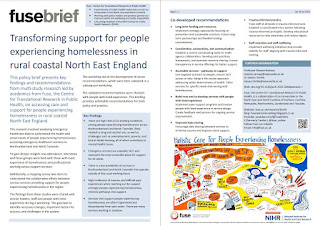
We have developed a handy two-page Fuse research brief which pulls out the key findings and recommendations for practice and policy co-developed with people with lived experience. 

Thursday, 7 March 2024

Creating an out of this world children’s book to help families affected by substance use

Cassey Muir, Research Associate from Newcastle University


To celebrate #WorldBookDay, Cassey tells us about going beyond the research to co-produce a children's story book to help families affected by substance use which is now freely available.

“To take the findings from our lived experience and create something real for families and people beyond the world of research has been brilliant” 
Young person involved in the project


Creating something real: How we produced a children’s story book

When I had the opportunity to create a children’s story book based on some of my PhD research that could help families affected by substance use, I was really excited to get started with the project. Ever since I was little, I wanted to write a children’s storybook and I had even mentioned this at my PhD interview panel, so being part of this project was a dream come true in many ways. 

To be able to create a book that has such meaning for the children and families involved has been incredibly rewarding, if not emotionally challenging at times. To help shape the plot and character development based on the stories of the young people that I had talked to during my PhD, felt like an enormous privilege but also a weight to get right. I wanted to make sure the story reflected the different experiences of children, while other members of the team were making sure the story reflected parents and caregivers’ experiences. Working with the talented Danielle Slade (author) and Josie Brookes (illustrator) helped make this process go as smoothly as possible. They were empathetic to the stories of families and wanted to keep to the integrity of family’s experiences and impacts, while making a story that was engaging.

With the creative minds of Danielle and Josie, we worked with 15 family members who were affected by parental alcohol or drug use, three teachers, Coram Life Education, and Coram Beanstalk to co-produce this storybook. Using techniques like free writing to music, drawing different characters, and storyboarding ideas, we involved children and parents in the creative process from the start. Families were also able to see early mock-ups of the book and feedback their ideas on improvements to the story and share their preferences on illustrations. Josie and Danielle were really receptive to the ideas from children and parents and valued their input.


We met with teachers from local primary schools and practitioners from Coram to think about who the target age range of the book would be, how the book could be used within schools and practice, and how to help adults have conversations with children. Through these discussions we developed conversation prompts for adults that are at the back of the book. These prompts (for example, what do you think of the Yozzle?) can help with discussing the characters and themes within the book with children in one to ones, in groups, or within a whole class setting. Anyone can follow along with this story of Arti, a wishing star. We have received positive feedback from practitioners where this book has been used with younger children (5-8 years), older children as a discussion point for reflecting on childhood (14-16 years) as well as with children who have special educational needs and disabilities.

We have also recently collaborated with Newcastle Film Club to produce a ‘story time’ video of the book being read by the author. This video allows the book to be accessed more widely and can be used alongside the book. Being able to produce this video, with Amy Mains (Director and Editor) and Scott Anderson (Director of Photography), who are also both teachers, was a fun and unique experience. We set up the equipment and reshuffled the backdrop in Fenham Library and managed to shoot the film in under two hours, just in time for the library opening to the public. I think this video adds an extra bit of magic to the story, with soft music and twinkling sounds!


Beyond the world of research: Creatively disseminating research findings

For context on the book, Twinkle, Twinkle Arti is a free story book co-produced with and for children who experience parental alcohol and drug use. This book helps start conversations between trusted adults and affected children. The messages within the book are based on two linked studies around the needs of affected families, led by Fuse Researchers.

The Safe Space project, led by Ruth McGovern, found that many parents and caregivers find it difficult to talk to their child about substance use and the impact upon the child and family. Parents and caregivers spoke about wanting resources to help with these conversations. Alongside this, research led by me, explored the experiences and support needs of children and young people. Children and young people told me that they valued the importance of confiding in a trusted adult such as a teacher, social worker, or family support worker but often did not know who they could trust or talk to, and prioritised approaches within schools which promoted conversations about parental substance use.

The story book captures the emotional and social impacts of living in a difficult family situation, from the perspective of the child and the parent or caregiver, and highlights helpful strategies to support the child’s wellbeing, for example talking about your feelings.

Using out of this world storytelling and fictional characters, the findings from these two studies are told in a way that makes them accessible to families and practitioners and offers positive messages and validation not only to children but to parents/caregivers and practitioners who find it challenging to know how to broach this sensitive topic.


We are freely sharing this book with families, schools, and practitioners across the country. To help understand the usability and impact of the storybook, we are gathering feedback from practitioners with a short online survey. This feedback will contribute to informing further development of the book and additional resources that are needed. I hope the book can be used across many different settings (schools, social care, and voluntary organisations) and can be shared with families who want to have those conversations. Within schools, we hope it is used in whole class situations, to reduce the stigma and show children they are not alone. It’s a fun story with fictional characters, and I hope families feel the book is engaging and non-stigmatising.

Here is some of the feedback that we have received so far about the book.

A practitioner told us: “It is so meaningful for children to know about the Yozzle [fictional character depicting alcohol or drugs in the book] and how it makes them feel. What a very complex idea to get across to children and yet it has been achieved with such skill!”

A child who reviewed the book shared: “It [the story] shows you’re not on your own and that there are other stars [fictional character depicting trusted adults] to support you.”

A primary school teacher shared the following: “There were no problems at all using Twinkle, Twinkle Arti in a whole class situation. In fact, I think it worked well as an introduction because it wasn't only alcohol use that the children discussed it was mental health, feelings, and how to overcome problems.”

A parent who helped co-produce the book reflected: “I am proud of the book because other children won't have to go through what my children have."

I think it is really important for researchers to work collaboratively with public, practice, and policy partners and to engage in creative processes that open their research to wider audiences. Through this process, you might learn something new and have fun doing it. But don’t just take my word for it, here are the perspectives of the illustrator and young person involved in the project:

Josie, the story’s illustrator, says: “This has been a really inspirational project, and a joy to work with Danielle, the research team, and all the families involved. We collectively believed in the power of storytelling to get these important issues across, and the resulting book is something I am so proud to have been a part of making. I think children will connect with Arti, her colourful world, and her story. I am excited for it to be used as a positive resource with children and families, in opening up those very crucial conversations, whilst simultaneously being so enjoyable to read!”

A young person reflected: “This book is something I would have loved to have been able to give to ‘little’ me, having something that related to my home situation when I was a child. I feel rewarded to be able to do this for ‘me’ now, for little me going through all those hard times and for all the children who will read this book, who are going through something, have a hard home life, have parents who are struggling, anything.

I hope through the book, we are able to show them that they are not alone and that there are people around them who are there to give them love and support. Hopefully, the book can help reach them earlier than I was reached out to. To create a book that would educate and support whomever read it, no matter their age or background, to be more than a storybook and to be able to help them, even in a small subtle way. It is a chance to reach the children that need it through a storybook that they come across all the time in life. It is incredibly rewarding to have a book that exists, that will last and be passed on to different children who are in a variety of situations for years to come. I am very proud of it.

I sincerely hope the book not only entertains children at bedtime, but that it can in some ways soothe a child's worries. It was an honour to hear the brave accounts from families and even more so, that they have trusted us to put their feelings and stories into this book.”

Fuse researchers and lived experience expert at book launch event. From left to right: Ruth McGovern, Kira Terry, Cassey Muir and Debbie Smart 

If you would like to learn more about this research, then please go to the links at the bottom of this page. And if you would like to join Arti on her journey of bravery, self-discovery, and learning about the important of talking about your feelings then take a look at the story book or watch the video.

Find out more
  • Download the book free.
  • Listen to this Fuse podcast to hear Cassey discussing her research on social and emotional resilience in children and young people affected by parental substance use.
  • Read this Fuse news article about Twinkle, Twinkle Arti.
  • Read this Alcohol Action Ireland blog and listen to the podcast.


All illustrations by Josie Brookes

Friday, 26 January 2024

A new social contract for Public Health

By David Hunter, Newcastle University; Peter Littlejohns, King’s College London; Albert Weale, University College London; Jacqueline Johnson, public health and management consultant; and Toslima Khatun, King’s College London

Air pollution is widely recognised as a serious health hazard while Covid-19 shone a spotlight on the weaknesses of the UK’s public health system

The UK is in the grip of a public health crisis. With depressing regularity, new research shows the growing deterioration of the public’s health. Improvements in life expectancy have stalled, health inequalities have widened, obesity and alcohol misuse are placing an increasing strain on health services, and air pollution is now widely recognised as a serious health hazard. While Covid-19 shone a spotlight on the weaknesses of the UK’s public health system, they had existed for some time. Indeed, as Michael Marmot has argued, most of the deterioration in health stems from 2010 and the Coalition government’s austerity policy. This resulted in cuts to public spending with local government, which is responsible for public health, suffering some of the deepest.

Despite the wealth of evidence testifying to the parlous state of public health and with many studies offering solutions that are both cost-effective and for which there is robust evidence, there remain significant political and organisational barriers to the realisation of an effective public health system. Unless these are confronted, the chances of progress are slim.

A new social contract for public health

We support the case for a new social contract in which health policy is truly public. Public health policies are often criticised by those of a neoliberal persuasion for restricting individual choice and for ‘nanny statism’. We refer to this form of liberalism as ‘vulgar individualism’. Big government and state overreach are viewed as problems which stifle personal freedom and hinder private sector growth on which the economy depends.

In fact, a much bigger problem is state underreach and a failure to take up and apply policies and policy instruments that are known to be effective in order to improve health. But as long as governments continue to subscribe to the view that the health of individuals is a matter of personal responsibility then action of the kind needed will not be forthcoming. Over the past 13 years or so, successive governments have subscribed to this view ignoring all the evidence which demonstrates the flaw at the heart of such thinking, namely, a belief that that government is best which governs least.

In place of such a stunted political ideology we propose a new social contract for public health incorporating the principles of what might be termed ‘social individualism’, that is, a commitment to using the instruments of collective political authority to create the conditions for individual choice and fulfilment.

What are the elements of the new social contract for public health?

First, and importantly, a social contract for public health would focus on prevention, reflecting the significant body of evidence demonstrating how a wide range of public health measures would prevent more serious conditions developing. But while it is easy to state all this, as indeed numerous academics and analysts have done over many years, unless political leadership is in place to confront the challenges the prospect of change happening is slim.

A particular challenge is the tension arising from the urgent driving out the important. With an NHS under extreme pressure in respect of growing waiting lists and staff shortages, for electoral and other reasons, politicians are most likely to prioritise addressing these to the exclusion of longer-term public health measures. Yet, as the Hewitt Review of Integrated Care Systems points out, ‘we have mistaken NHS policy for healthcare policy’.

Second, a new social contract requires a precautionary state, paying attention not only to known hazards but also to remote and uncertain ones. If the pandemic taught us anything, it was the need to be prepared and have sufficient resources in place to enable swift and effective action to be taken. Sadly, for a government emerging from the debacle over Brexit and trapped in a mindset of short-termism with a focus on campaigning rather than governing, adopting a policy of precaution does not come naturally.

Third, social solidarity is required in the face of health inequalities. Social individualism recognises that policies for the most vulnerable are not policies for a particular group in society, but policies for all of us when in need. What is required from public policy is the support to resilience over the life cycle.

Fourth, a new social contract requires a different approach to government and governance. In particular, addressing the short-termism that pervades our politics has to be challenged and replaced by a more sober acknowledgement of how governments need to function. A populist politics that wishes away the need for planning and relies on easy, facile slogans to attain and retain office – ‘the unbearable lightness of politics’ as the historian, Tony Judt, put it – undercuts the seriousness that is needed for effective government.

Above all, a new social contract sees a central role for an active state. To this end, we set out a manifesto to frame the approach to public health that is needed in the hope that it might inform the political debate as preparations get underway for a general election due over the next year.

A manifesto

Much that needs to be done already exists and is supported by a sound evidence base as well as by the main UK public health bodies. The Hewitt Review’s plea for priority to be given to population health matched by new investment is also worth acting on. Some measures could be swiftly adopted by a new government if it so chose. Others will take longer but making a start by implementing what be done quickly would make most sense in tackling the crisis facing public health.

Above all, regardless of the particular topic demanding attention, at the heart of public health policy is the need to work in a cross-organisational and cross-sectoral way. This will not happen without strong political leadership, but to embed a cross-government commitment to public health requires new legislation to place a duty on all government departments to respect in their policies the claims of public health. To monitor how policy is taken forward and implemented, there is a strong case for making the publication of health impact statements obligatory.

If the winds of change blowing through the country offer a turning point in the public’s health, then the incoming government has no time to lose in seizing the opportunity.


For an extended discussion of the issues raised go to our new book: Littlejohns P, Hunter DJ, Weale A, Johnson J and Khatun T (2024) Making Health Public: A Manifesto for a New Social Contract. Bristol: Policy Press

Bristol University Press | Making Health Public - A Manifesto for a New Social Contract, By Peter Littlejohns, David J. Hunter, Albert Weale, Jacqueline Johnson and Toslima Khatun


Authors

David J Hunter, Emeritus Professor of Health Policy and Management, Population Health Sciences Institute, Newcastle University

Peter Littlejohns, Emeritus Professor of Public Health, Centre for Implementation Sciences, Institute for Psychiatry, Psychology and Neurosciences, King’s College London

Albert Weale, Emeritus Professor of Political Theory and Public Policy, University College London

Jacqueline Johnson, pubic health and management consultant

Toslima Khatun, teaching fellow, King’s College London


References

The answer starts with austerity, The Guardian, 10 August

Hewitt P (2023) The Hewitt Review: An independent review of integrated care systems, GOV.UK https://assets.publishing.service.gov.uk/government/uploads/system/uploads/attachment_data/file/1148568/the-hewitt-review.pdf

Judt T (2010) Ill Fares the Land. Harmondsworth: Penguin Books 


The views and opinions expressed by the authors are those of the authors and do not necessarily reflect those of Fuse, the Centre for Translational Research in Public Health.


Image:
Image by Jacques GAIMARD from Pixabay.

Friday, 9 December 2022

What support do children and young people actually want when their parents use drugs and alcohol?

Posted by Cassey Muir, Fuse & NIHR School for Public health Research (SPHR) funded PhD Researcher from Newcastle University and Kira Terry, Lived Experience Expert. 


“No-one has ever asked me about how I feel in any of this.”


I found the powerful quote above from a young person during my research exploring parent drug and alcohol (or substance) use from the young person’s perspective. Since then the question of ‘what support do children and young people ACTUALLY want?’ has remained central to my PhD research in this area.

Most schemes focus on the parents themselves, to reduce the risk to young people. While these interventions are needed it should be alongside and in addition to support for the child or young person as well. There are currently a very limited number of evidence-based interventions for young people whose parents use substances, with low quality effectiveness. The distribution of support services for children and young people whose parents use substances is also patchy across the country, with practitioners doing really great work with little funding and resources.

In a recently published review of the research in this area, I aimed to understand the experiences, perceived impacts, and coping strategies of young people whose parents used substances. The review was extensive - covering the perspective of over 700 children and young people from across twenty different countries - and I hope that it can help to inform practice and policy through illustrative cases of young people’s experiences, as well as giving insights into what support could be useful.

Feeling different and isolated

Working with PROPS Young Person’s Project, a group of young people with lived experience supported the early stages of this review to help us understand the findings. One area that the young people felt was missing and may not have been explored across the current studies was the experience of feeling different to their peers, and how they felt isolated and like they had to keep everything hidden from others. This idea, relating to the experience of stigma, helped me to explore the data from a different perspective.

Children and young people described living highly disrupted and chaotic lives, characterised by unpredictability and insecurity within their relationships. They also often experienced adversity occurring at the same time in childhood, such as parents with mental health problems, domestic violence and abuse, as well as poverty. Children and young people were impacted both emotionally and socially from their experiences of parental substance use, which often extended beyond their parents stopping use, further highlighting that child-focused support is crucial. The painful experience of shame, stigma, and discrimination due to their close association and relationship with a parent who uses substances, was often further compounded for those who had experienced poverty or lower socioeconomic status.

Resisting and coping

Most of the studies described the negative impacts of parental substance, without recognising children and young people’s agency and attempts to change, control, and resist their experiences or impacts. Children and young people tried to manage and mitigate vulnerabilities and be resilient to unpredictable, adverse, and stigmatising experiences. While it is not a child’s role to resist and cope with the negative impacts of parental substance use, they were trying to do this anyway, often without formal support in place. Formal support was often thought of as something children and young people only have at times of crisis and due to the stigma and fear of speaking out it was also difficult for young people to seek support for themselves before a crisis point.

What can we do to support?

The findings had little to say about how young people wanted to be supported following their experiences. So, as part of my PhD I have been chatting with young people, and the practitioners that support them, around what we can do to support and build on their strengths, agency, resistance, and resiliency. For instance, young people and practitioners thought it would be good to develop a digital app that teenagers and young adults can access themselves at any time of day. They can choose what topics or sessions they want to go through and hear about other young people’s stories. Such digital interventions could be used alongside in-person support with a practitioner or act as a gateway to more formal support, with the aim of helping reduce the stigma of speaking out and accessing help. Additionally, young people wanted free text support lines that they can access out of hours, usually in the evening when things may be worse at home. Text and chat-based support lines provide young people with the opportunity to safely get support without having to physically talk to somebody and gives them more flexibility. Both young people and practitioners wanted in-depth training for professionals (e.g. teachers or first responders) around the experiences and impacts of parental substance use on children and young people and how to signpost to support.

Finally, one of the main areas that the young people and practitioners wanted to focus was on the co-production of resources to be used in primary and secondary schools. Young people wanted parent drug and alcohol use to be talked about in schools, as many reflected that it had never been spoken about making them feel more alone and isolated. Having lessons around the emotional and social impacts of family substance use within secondary school, or having story books read out loud in primary school about a child whose parent drinks alcohol or uses drugs would begin to reduce the stigma and fear of speaking about such a hidden and taboo subject.

“I’ve really enjoyed that chat, thanks for reaching out to me and wanting to hear about my experiences and how to support young people.”
Young person after taking part in this study


“He has told us he has gotten so much out of chatting with you and is really happy to have been involved and listened to regarding what might help others.”
Practitioner on behalf of a young person 

The young person’s voice

In any decisions made throughout my PhD, I have tried to ensure that the young person’s voice is lasting and at the forefront. Young people have been involved in this project from the start, guiding the research questions, designing research materials, contributing to ethics procedures, analysing data, and presenting results to over 100 practice and policy professionals. To finish this blog post, Kira shares her thoughts on contributing to this project as a Lived Experience Research Advisor and what she thinks is needed to support young people whose parents use substances:

“It has been an absolute honour to be involved as part of this project. To use my ‘negative’ life experience and be able to turn it into a positive impact for other children like me in the future: to help speak for those who feel they don’t have a voice and aren’t seen by people around them in the position they are in. The main part of supporting young children is accessing them and communicating with them. Reaching out to young people in general about parental substance use issues, getting the knowledge out there about it is important. This in turn will help the young people experiencing parental substance use, as the subject isn’t so hidden anymore as it usually feels hidden in the home. And through that we must back up with access to different support links. Some children aren’t ready, some don’t want help, some we won’t reach, but to push and be as present for as many children as possible, as long as possible and to reduce the isolation of the stigma around it is vital.”


Find out more about this research in the first Public Health Research and Me Fuse Podcast: How can we promote resilience in children and young people affected by parental substance use?


  1. Photo by Polina Zimmerman from Pexels: https://www.pexels.com/photo/young-woman-talking-with-therapist-3958461/
  2. PROPS Family Recovery Service logo. Copyright © 2022 - All Right Reserved - PROPS North East: https://props.org.uk/

Friday, 25 March 2022

Is a picture truly worth a thousand words?

Posted by Emma Adams, NIHR ARC NENC Mental Health Fellow at Newcastle University, and Experts by Experience from Fulfilling Lives Newcastle Gateshead & #HealthNow Newcastle

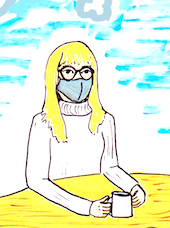
An illustration of me! Taken from one of the images
below created by Siân from More than Minutes
We have all heard some variation on the saying “a picture is worth a thousand words”, and yet often information is shared through large reports with thousands of words and few images. A 2019 paper published in Nature Communications highlighted that with all the information people can read, gaining people’s attention is increasingly difficult.

Take the image of me (right), it tells you about my hair colour, glasses, outfit, that I'm partial to a tea or coffee and that I am sitting at a table. If I had written a description of everything that you can get from the picture, it would have likely taken up far more space. If it were me, I would probably only have skimmed the text. As a public health researcher, part of my job is finding ways to share research findings in a way that will engage people to want to learn more and have a conversation (something we in Fuse like to call knowledge translation).

Alongside my Experts by Experience (individuals with lived experience of homelessness, mental ill-health, and/or substance use) we began to ponder how to share what we learned from our NIHR School for Public Health Research (SPHR) funded study exploring access to community based mental health and substance use support during the COVID-19 pandemic for individuals experiencing homelessness and those providing support. We had finally reached a point where there was a light at the end of the tunnel, as we moved away from understanding to sharing the findings. Yes, we figured we would write a couple of papers, attend some conferences, and likely write a report, but the bigger question was would the people in policy and practice and individuals experiencing homelessness read those documents? While trying to be nice, one person levelled with me and said Emma, “I’m probably not going to share a PowerPoint with a friend” and another said, “I don’t even know what that journal is”. Quickly the realisation sunk in that we were going to have to come up with a better solution for sharing our findings.

I began to think about visuals but realised my failed attempts at drawing stick people meant I probably would not be able to do this on my own. Two of the Experts by Experience spoke about a visual they had seen designed by More than Minutes for a peer research study around barriers to accessing care and treatment for people experiencing homelessness (#HealthNowManchester). I realised in that moment we had found our answer. Suddenly the Zoom call was abuzz with energy as everyone got excited about what story our visual might tell. As one person said, “it’s aimed at people who can’t read or write, or have a disability - someone like my brother”. Perhaps even more insightful was the comment that, “it [a visual] could have a different meaning for each person depending on their own experience”. 

We met with Siân (an illustrator from More than Minutes) and began planning the image and figuring out how to depict our endless pages of ideas into a visual that was engaging without being overwhelming. Over the next few months, we had a bit of back and forth on what we were envisioning. When the initial pencil sketch arrived, we were shocked at how the images captured so much of what we wanted to share without being a visual overload. Like kids at Christmas, we sat in suspense waiting to see what the final colour version would look like. We knew it captured exactly what we wanted when we saw the coloured versions. It was the physical depiction of everything we had learned and would proudly adorn our homes and offices! Through working with Experts by Experience and having input from colleagues in practice, we believe we have created a poster that depicts the experiences without some of the stigma we often see. Each of us saw something a little bit different in the poster, and we could not wait to share it with friends, colleagues, and providers. 

Created by Siân from More than Minutes; See the full images on the NIHR School for Public Health Research website.

Having had the experience of seeing words and quotes come to life, I cannot wait to do it again. Although we will continue to write papers and reports, the ability to share the images from our phones or by email with anyone has made us think about other creative ways to communicate research in the future.

So, I end this post with a question for you, do these pictures tell a better story of the findings than a one-page summary would have? Between you, me, and our Experts by Experience, we will be returning to this visual time-and-time again whereas the paper and report might not have the same reach and engagement. 

-----------------------------------------------------------------------------------------------------------------------------------------------------------------------------------------------------

To make this visual freely accessible, we would welcome organisations printing their own copies. If you are printing the poster, please print it in its entirety and email Emma Adams emma.adams@newcastle.ac.uk so we can see all the places sharing our findings. A limited number of printed posters are available directly from Emma for pick up from Newcastle University.

Initial findings from Emma’s study have now been published in the International Journal of Environmental Research and Public Health.

Fuse Research Programme Meeting is planned to share more information about Emma’s study. Stay tuned for the save the date and further information. 

-----------------------------------------------------------------------------------------------------------------------------------------------------------------------------------------------------


Emma is a Mental Health Fellow for the NIHR Applied Research Collaboration (ARC) North East and North Cumbria (NENC) and a previous NIHR School for Public Health Research (SPHR) Pre-Doctoral Fellow.  Her study 'Exploring and understanding access to community-based mental health and addiction services in Newcastle and Gateshead' is NIHR SPHR ResNet funded.

This project is funded by/supported by the National Institute for Health Research (NIHR) School for Public Health Research (SPHR) (Grant Reference Number PD-SPH-2015-10025). Emma was supported by the NIHR SPHR Pre-doctoral Fellowship Funding Scheme (Grant Reference Number PD-SPH-2015). Emma is now supported by the NIHR Applied Research Collaboration (ARC) North East and North Cumbria (NENC) (NIHR200173). The views expressed are those of the author(s) and not necessarily those of the NIHR or the Department of Health and Social Care.

Friday, 19 November 2021

Tackling stereotypes, stigma and self-help: What 'BoroManCan' is doing for the health and wellbeing of Boro Men

Posted by Shelina Visram, Senior Lecturer in Public Health, and Mabel Lie, Research Associate, from Newcastle University

It’s that time of year again… No, we’re not talking about Christmas. Today is International Men’s Day! If you’ve got no idea what this is, you may want to read the Fuse blog we wrote on the same day last year. The theme for 2021 is ‘Better relations between men and women’, recognising the need to promote gender equality for women as well as men. Which sounds good to us, as two female researchers who’ve been working on a men’s health project for the past year.

In last year’s blog we mentioned being awarded funding from the NIHR ARC NE&NC to conduct research into the BoroManCan campaign, which aims to inspire positive change around men’s health and wellbeing in Middlesbrough and Redcar & Cleveland. Colleagues from Public Health South Tees were keen to know which elements of BoroManCan were working and where improvements could be made. In collaboration with academics from Durham and Teesside Universities, we interviewed staff, representatives of partner organisations and other key stakeholders to capture their views on BoroManCan. We also trained and supported three peer researchers to gather insights from local men (and one woman). They chose to conduct interviews to explore men’s health and wellbeing needs, to help us understand whether BoroManCan could be doing more to improve their access to health services and other sources of support.

The interviews provided valuable insights into barriers to men’s help-seeking behaviour. To start with, Teesside’s industrial heritage has led to an expectation that the stereotypical ‘Boro man’ should be tough, resilient, and able to fulfil the roles of household provider and protector. Industrial decline, increasing unemployment and job insecurity were felt to have impacted negatively on men’s mental health. There was a general perception that men are not as likely as women to talk about their feelings or their health, and that there is a particular stigma to discussing mental health problems. Rather than accessing formal services, many Boro men prefer to avoid embarrassment by attempting self-help or using coping strategies such as excessive alcohol consumption and substance misuse. Apart from wanting to maintain their masculine image, there were also practical hurdles around demands from employment and the benefits system.

Two of the three peer researchers, Matthew (left) and Neil (right)
But it’s not all doom and gloom. We also identified a number of factors that were felt to impact positively on men’s health and wellbeing and their likelihood of seeking help. These included: having support from a partner or family members; activities such as Men’s Sheds that value life skills; creating male-friendly spaces; and providing opportunities to spend time outdoors. Some interviewees emphasised the importance of sport and particularly football as a way to connect with other men. What was clear was that apart from addressing men’s health within existing services, male-specific interventions such as BoroManCan were needed. The campaign was viewed positively as a way of sharing inspirational stories from others who have dealt with their own challenges, as well as signposting to relevant activities. Online elements such as the website and podcast were key to the campaign, particularly during the pandemic. However, staff and stakeholders were keen to return to offline elements such as the men’s health champion training and showcase events. Local men believed that the campaign needed to be promoted more widely to ensure it was reaching all those who might benefit.

Here's what our stakeholders had to say about the campaign:
"So I think one of the really good things about it [BoroManCan] is it's very specific to Middlesbrough. And obviously when you look at the stats, you know, you look at suicide rates and mental health in Middlesbrough, they're really high and I think men do struggle to engage. But when local men that are very similar to them are engaging, I think it helps other people." (Stakeholder 1)
"When people feel anxious, they're feeling alone. And BoroManCan, it was a way forward for them not to feel alone and to be able to share their story and find a way forward. 'Cos BoroManCan, it leads onto other things. If you share your story, you’re finding you're not alone. You find out how other people have pain, depression and anxiety and you can follow suit. It leads you to find help." (Stakeholder 7)

Today we’re hosting a webinar to share and discuss our research findings in more detail. For anyone who can’t make it, the webinar will be recorded and shared via the BoroManCan YouTube channel. Please get in touch if you’d like to know more about the campaign or the research; we’d be happy to share our final report once this is ready for publication. And watch this space for future blogs on this subject from our practice partners and peer researchers.


Below are links to support organisations relating to the issues raised in the post: 

Friday, 5 November 2021

Cookies, coffee and co-production during Covid

Posted by Emma Adams, Fuse/NIHR School for Public Health Research (SPHR) Pre-doctoral Fellow at Newcastle University, in collaboration with Experts by Experience from Fulfilling Lives Newcastle Gateshead and #HealthNow Newcastle

Photo taken by Jeff Parker (one of the individuals with lived experience involved in our
co-production) of the masks he made for each of us at our first face-to-face meeting. 
COVID-19, has forced all researchers to re-think engagement and how we work with people with lived experience. I like many, have been navigating how best to do this within my study that aims to explore and understand access to community-based mental health and substance use support in Newcastle and Gateshead for those experiencing homelessness during the pandemic.

Since March 2020 I have been collaborating with five people with personal experience of homelessness, mental health, and/or substance use to co-produce the analysis for this study. During that time we have discovered a very helpful approach (albeit with an imposing name) - Interpretative Phenomenological Analysis.

Here comes the science…


This approach was very reflective and recognised that we were trying to understand how our participants made sense of what had happened to them. We wrote exploratory comments to reflect on the word-for-word text from interviews and then used both to develop themes. This approach lent itself really well to our analysis, as we found it was less rigid than other coding-based approaches (such as thematic analysis) and had more opportunity for reflection. 

The saying ‘no two things are alike’ describes how we ran our co-production meetings given COVID-19 restrictions. We sent out printed packages with anonymised transcripts for comments, held Zoom meetings to discuss our comments and thoughts, hosted in-person meetings with sticky notes and marker pens to develop themes and unpick key ideas, and used physical and virtual highlighters to identify our top quotes. Accompanied with a healthy amount of coffee, baked treats, and fruit, we set our sights on trying to understand our data. We broke down each analysis into three sessions, with the first session focussed on reviewing the transcripts and writing comments, the second focussed on developing some initial themes, and the third focussed on identifying and refining all the themes and key quotes.

Friendship, findings and reflections


We are now starting to share initial findings and determine creative ways to present the information. Having built a strong friendship, we reflected on how much we enjoyed the collaborative co-production experience, despite the circumstances created by COVID. We also reflected that not all co-production is positive. Here we share a few thoughts from the experience.

Why did you become involved in the study?
Everyone in our group felt motivated by the opportunity to have their voices heard and make a difference.
"Because I am interested in how the pandemic has affected people and am a member of the Experts by Experience and would like to change things for the better" – Joanne
"I wanted to do a different sort of user health research having done some last year in Newcastle for Crisis and Groundswell. Getting involved in analysing the anonymised data was a fantastic opportunity for myself" – Tony

What did you enjoy and learn?
Everyone enjoyed being involved as the research continued to grow and their continuous involvement meant we could develop friendships.

"Actually being involved from start to finish, Emma baking" – Jeff

"Analysing some of the data and the group! I feel new friendships have been made" – Fiona

 Although different learnings were shared, it was clear that everyone enjoyed working in a team to try out new things and have a ‘behind the scenes’ peak into doing research.

"One day I would really like to do more of this work in a permanent position as part of my continuing personal development. So it was very nice to get the opportunity to find out what this sort of work entailed and whether or not I would enjoy doing it too" – Tony

"Co-production can really work if it's formulated with an organic and lived experience perspective at the heart of the study, the information gathered was not lost in translation and the language from participants' interview was not tampered with" – Des

What did you find challenging and wish researchers knew?
Forcing ourselves to think about some of the things we all found challenging, we realised it is important to touch base with people involved in co-production to understand what they are struggling with and how they can be better supported.

"Biggest problem I have is getting to a venue, I have anxiety issues travelling by bus" – Jeff

"Emma would send me a gentle reminder a few days before work was due and it would spur me to either start, or finish off and get the work sent in. This really helped me" – Fiona
What would you say to a friend about getting involved in research?
Across the board, everyone said they want to continue to be involved in research projects and would encourage friends to do so.
"At first it might fly over the top of your head, but give it time and you will learn things you never knew you were capable of" – Joanne

"Go for it, maybe you can help affect change that will help others who have been through what you have. Plus, you’ll make some new friends and may enjoy yourself too" – Jeff

What are you most excited about?
When asked about what they were most looking forward to and anything else they wanted to share, responses ranged from gaining specific experience, to celebrating successes.

"It made a nice change to be more involved and now I’m doing more research with Crisis its helped me to help them shape how it can be done and how sense making is carried out" – Jeff

"The biggest rush of the project was to receive an email from the Lancet after we submitted a piece on the work. If it gets published, I’m throwing a party" – Fiona

"Emma has kept us updated throughout and involvement moving forward looks bright … and on the back of this there is confidence to come back to the university and vice versa in other research projects" – Des

Lessons learned from a researcher perspective


The depth and richness gained through co-producing my analysis is something I could have never done on my own. I learned that it is okay to admit when you are feeling a bit lost about the best approach, as that allows for an open dialogue to determine what can be done to make things better. Through our co-production, I realised how to make findings more accessible and engaging for everyone. The pandemic has meant that we have all missed out on in-person contact. Listening to our group I was shocked and humbled by how much the little touches mattered; well-timed cookies or an invite for a coffee chat can make a big difference. These small touches allowed me to develop relationships with everyone and have frank and honest conversations. From this experience, I have learned that you do not need to wait until you have findings to make a difference, rather you have a chance through co-production to make lasting impacts across the span of your research project.


Emma's study 'Exploring and understanding access to community-based mental health and addiction services in Newcastle and Gateshead' is NIHR School for Public Health Research (SPHR) ResNet funded.

This project is funded by/ supported by the National Institute for Health Research (NIHR) School for Public Health Research (Grant Reference Number PD-SPH-2015-10025). The views expressed are those of the author(s) and not necessarily those of the NIHR or the Department of Health and Social Care.