Showing posts with label social networks. Show all posts

Friday, 30 October 2020

Summer school at home: Learning online and adapting research to reach the ‘hard to reach’

Posted by Emma Adams, Newcastle University, and Jo Dawes, University College London, NIHR School for Public Health Research (SPHR) Pre-Doctoral Fellows

Starting a new post in a new institution just as a global pandemic and lockdown sweeps the UK is not how we envisaged beginning our NIHR School for Public Health Research (SPHR) fellowships. When our training and development allowance letters came through initial thoughts were to delay booking any training until it was possible to attend in person. However, as time passed, it became clear we may be waiting some time. This realisation coincided with hearing about the “Applied Research Methods with hidden, marginal and excluded populations” course run by Nuffield College, University of Oxford. The course is usually a weeklong residential summer school, but this year it was offered online. The idea of spending five full days sitting at home doing online learning seemed a disappointing second best to a week in Oxford and somewhat limited our enthusiasm. However, these concerns were misplaced. We could not believe how engaging the course was, with tutor Andrea Rossi doing an excellent job of varying the activities, keeping us captivated and packing the course with relevant, interesting, and interactive tasks. 

For this ‘participatory research method’ we were given 5 minutes to create a map of our childhood community, using items we could easily reach. The task was designed as an ‘icebreaker’ activity to start a conversation about our childhoods. Using available objects, rather than drawing, takes away any pressure interviewees might feel about their aptitude for drawing. This activity could be adapted in rural communities using found items outside. Once my map was created, I talked about the map and why I had highlighted specific aspects of my community - this is the point at which ‘data collection’ might start.


Beginning with what makes a population ‘hard to reach’, we were armed with the linguistic tools to define whether our population was hidden, marginal, elusive, rare, excluded, or blurred (see Table 1 for breakdown). By breaking down populations into these different categories, we were better able to understand approaches for reaching and involving them in research. People experiencing homelessness may be perceived as ‘hard to reach’, when in fact they might just be elusive (purposely hiding or not reporting). If we, as researchers, recognise individuals may be making a conscious decision not to report, then perhaps we need to build a foundation of trust. The responsibility a researcher has to find ways to reach the ‘hard to reach’ was one of the most important things that we learned. 


With optimism that the virtual learning might not be as onerous as we had feared, we jumped into three days of research methods (both qualitative and quantitative). Challenging us to approach every technique from both the researcher and participant perspective, we were pulled out of our comfort zones and into creatively mixing research techniques. Opportunities to transform recruitment strategies (such as respondent driven sampling into a data collection tool for analysing social networks were explored. Learning to make the interview experience more interactive challenged our preconceptions of data collection - ever thought about asking a participant to reconstruct an important/memorable place with only items in their kitchen? Having experienced this first-hand, we both agree it was a great facilitation tool as a participant and researcher. The breadth of material in the course left us feeling that it was a week well spent, despite the initial apprehension and sitting at a computer in the blistering summer heat.

As a result of attending this course, we have already adapted how we approach our research activities. Jo was struggling to define a ‘hard to reach’ population in a patient and public involvement (PPI) paper. The course provided real clarity about this topic and helped her confidently address this definition in her writing. Emma was trying to find a way to approach recruitment and the re-shaping and framing of populations has provided me with optimism about my future recruitment strategy.

There is no doubt that by learning online instead of face-to-face, we really missed out on networking opportunities with our course peers - nothing could really replace a good natter over coffee. Conversely, the online nature of the course really opened up the cohort - we were learning with people sitting in their homes in England, Wales, Switzerland, France and Germany, while our tutor taught us from his apartment in Bangkok. Perhaps without being online, we would have been a far less international cohort. After undertaking this excellent course, we certainly feel more positive about online learning, how engaging it can be and how - in these uncertain times - it is important to not simply wait for face-to-face learning to return as the norm. The variety of learning and research activities we used online challenged us to translate so much of what we usually do face-to-face to our ‘virtual classroom’. As a result, we developed skills in how to adapt our current methods of communication in our research.

Our take home messages from the course:
  1. Online research and learning can work well if you are creative and willing to be flexible.
  2. Researchers must consider reasons some populations are ‘hard to reach' (are they rare, hidden, elusive, marginal, excluded or blurred?).
  3. When you recognise WHY a group of people are ‘hard to reach’, you must adapt your research methods to better reach them.
  4. Through mixing methods/data sources you can strengthen your understanding of ‘hard to reach’ groups.

Friday, 2 October 2020

Only connect: social survival during lockdown

Posted by Mihirini Sirisena, Research Associate, Newcastle University 

During the time when stringent national lockdown measures were in place, I noticed a new habit I had picked up, whenever I was outdoors. Every time I crossed the road to make way for a fellow runner or a walker, I made an attempt to catch their eye to thank, say hello or at least smile. Smiling or saying hello had gained a new meaning for me. It meant that I established a sense of solidarity and therefore rebutted the slightest chance of offending the other through avoidance by crossing the road. I don’t think I was alone in feeling like this. I crossed paths with many who seemed keen to connect at some level, including one woman who pulled a mask out of her pocket as I approached, covered her mouth and said, “I hope we don’t have to do this for long.” Many would agree that one of most significant challenges brought on by the measures to control the spread of COVID-19 was lockdown, for not only did it curtail our movements, it compelled us to do something that we are incapable of doing as a species - staying away from each other.

Initially, as the news of the epidemic spread, so did the stories of our responses. These stories recorded an array of responses, ranging from stock-piling and racism to altruism, and expressions of fear, suspicion, insecurity in the face of uncertainty and looking for culprits to place blame. As the dust started settling, focus shifted ever so slightly to talking about the mental health costs of lockdown, specifically in relation to social isolation. Alongside this developed a repertoire of how we could stay connected.

One of the first things that appeared on social media when the UK government and mass media began speaking about social distancing was that it is not social but physical distancing that we needed to overcome the epidemic. The message did not become a tagline but in myriad ways, it was clear that we had started to pay heed and show that we are together though apart. We sort alternative ways to maintain connections through digital platforms, despite many of us - including myself - being previously cautious about social media. These are not new but during lockdown we turned to them with vigour, deploying the likes of Zoom, Skype, WhatsApp and Microsoft Teams as platforms to live both our professional and personal lives[1]. Even gaming was pointed out as an effective way of socialising during lockdown and an antidote to social isolation.

Along with the quick assertion of social media as the platform to maintain human connection followed the conviction that these platforms are capable of extending human connection. Movements such as ‘clap for carers’ which were initiated and marketed through social media, stood as evidence of this capacity. In celebrating the success of this capacity to reach and connect, which is largely facilitated through social media itself, we run the risk of creating a one-dimensional discourse or version of social connection during lockdown. For instance, placing emphasis on social media as a means of connecting allows less space to recognise the other creative and meaningful methods some of us turned to, such as letters in the post or checking in at the doorstep.

In addition, a less discussed aspect of social media is its use to brandish intolerance - arguably no different to times before COVID-19 - of those who were seen to have violated ‘lockdown rules’ by driving for exercise or those who were seen to have crossed ‘community boundaries’, however they were defined. Cyclists were a popular target of such diatribes[2]. Similar vindications were abundant when the UK government announced plans to open schools to certain pupils. A narrative that was underlying such vindications appeared to be one that called for the celebration of the nucleus social unit, which took different forms. At times, this unit was understood to be ‘family’ as in instances that called for parents to see the lockdown as an opportunity to connect and spend time with their children. At other times, it was the ‘community’ as in instances where residents wanted to protect their locality from visitors. 

Yet another layer worthy of consideration is the effects of recent developments, such as those that emerged during the second wave of COVID-19 related restrictions, where the public was encouraged to ‘snitch’ on neighbours, if they were thought to be flouting lockdown rules. At one level, these expose our convictions about who we connect with, under what conditions, at what level, in which ways and the modes and the media we resort to, to connect and disconnect. At another, they hint at far reaching implications for what we might come to see or mean by social connections. 

As researchers and practitioners, considering the different ways in which connections were made and maintained will be helpful in our efforts to support and improve collective as well as individual wellbeing. Most importantly, we need to consider the less discussed topic of complex realities of everyday life and how they impact upon the connections that we can and cannot make and, the ways in which they impinge upon our collective and personal wellbeing[3]


References:
  1. Some suggest the rise in use of social media continues even as lockdown measures have begun to relax: https://thenextweb.com/growth-quarters/2020/07/21/everything-you-need-to-know-about-digital-use-around-the-world-in-july-2020/
  2. See also: https://www.thesun.co.uk/news/11547977/cyclists-coronavirus-lockdown-social-distancing/ and https://www.bristolpost.co.uk/news/bristol-news/covidiot-cyclists-stay-home-spike-4083230
  3. Particularly, in the period of time that followed the lockdown, popular discourses have begun to highlight ‘social connection’ as one of the positive developments that emerged during the lockdown. Such romantic notions of ‘connection’, which propose that it is 'not money nor fame that a good life needs but to be connected with the others,' tend to undermine the weight socio-economic realities of life have on individual as well as collective wellbeing. For instance, refer to Alain de Botton’s interview with Lauren Laverne on BBC Radio 6 (Aired on 27th August 2020) (https://www.bbc.co.uk/sounds/play/m000lyx0 from 2:08:45, last accessed on 07 September 2020).

Image 2: capture from the BBC news website, 26 April 2020, Coronavirus: Are cyclists being wrongly targeted during lockdown? By Alex Regan (https://www.bbc.co.uk/news/uk-england-derbyshire-52389245)

Friday, 29 May 2020

COVID-19 has brought the “digital divide” to the fore

Posted by Gemma Wilson, Health Psychologist & Research Fellow in Applied Health, Northumbria University

With the onset of COVID-19 it seems that we are relying on technology even more than usual. Many of us are using technology as our main source of communication, such as for work meetings via Zoom, family chats on FaceTime, WhatsApp messaging, or sending photos. Online food shopping, ordered and delivered to your door, has become the norm. Internet banking and health services have become more important than ever, and online communication platforms are even allowing us to continue our hobbies and exercise. But not everyone has access to these tools to support their daily living and wellbeing at home. Even people with access to the technology may not have the skills to use platforms, such as Facebook, Skype or Zoom, which still leads to exclusion.

There is an ever-growing number of older adults using the internet and social media, with notable increased use across the UK, USA, and Europe over the last decade. However, older adults still remain less likely than younger people to use the internet and social media. That’s why we decided to do a piece of research that aimed to explore older adults’ experiences of using technology, including social media, to connect with others. Part of this study involved interviewing 20 people who were over 65 years old from across the UK, to understand how they used technology to communicate with others, and to consider what helps and hinders their use of technology. 

All participants in the study regularly used digital devices and social media, however, despite their regular use of technology, they still experienced five barriers to using it as a tool to connect with others:

1. Confidence
Some had low confidence, seeing themselves as novices and not “technology minded”, and some lacked patience with technology.

2. Fear
Some were fearful that they would break the devices, do something “wrong” that they couldn’t fix, or they were worried about privacy and misinformation.

3. Practical issues
Some experienced physical barriers, such as the size of text, or the buttons being too small.

4. Culture and communication
Cultural differences around communication impacted the way some of the participants used social media and their online connections. They worried about how they would come across or didn’t like the way others communicated using social media.

5. Social network
Finally, we also found that existing social groups and relationships were key in the older adults choosing to use technology and in helping to provide ongoing support. Often without this existing social network, they would not have even received a digital device, let alone started using it, or understanding how to maintain it.

The overall message that we took away from this research is that technology - even for those who use it on a regular basis - is still only a tool for social connection, a welcome tool, but only a tool, and it certainly isn’t a replacement for face-to-face communication. However, during COVID-19, technology must be a replacement for face-to-face communication, and is the best available way for us to remain connected with friends and family.

The reliance on technology since the onset of COVID-19 has brought the “digital divide” to the fore in the context of these barriers. Many will continue to rely heavily on technology during this uncertain period, and for as long as we are social distancing. During these measures, it is important that we consider people who do not have access to technology and are unable to rely on it in a way that others can, as well as those that do have access but continue to experience difficulties in its use. Specifically, due to no longer being able to rely on social groups and wider support networks for guidance in using technology. This lack of access significantly heightens inequalities for so many people in all of the ways discussed above.

To find out more about this study, the podcast “Ageing in a Digital World” is available to listen/download on the following platforms:

Dr Gemma Wilson is a Health Psychologist, and a Research Fellow in Applied Health at Northumbria University, Newcastle. Her research interests are in ageing, psychosocial wellbeing, digital inclusion, social participation, digital health. Contact Gemma at gemma.wilson@northumbria.ac.uk, or on Twitter via @drgemmawilson.


Research team: Dr Gemma Wilson, Mrs Jessica Gates, Dr Santosh Vijaykumar, Dr Deborah Morgan.

The research was funded by the British Academy/Leverhulme Trust.

Friday, 17 April 2020

What is the recipe for a happy retirement?

Independence, identity, planning and staying socially connected says Anastasiia Fedeeva, Postgraduate Researcher, from Northumbria University


For the last two and a half years, I have been working on a PhD that aims to promote wellbeing and physical activity in retirement. Over this time some people have asked me whether I ever felt too young to understand what retired people might need to live their lives better. I must admit that is a fair question but not just because of the potential age difference with my target population.
 
First, before designing and implementing any initiatives to promote wellbeing or physical activity, it is recommended that you have a good knowledge of the people that you want to help; their needs, preferences, and feelings (Laverack, 2017). Furthermore, retirement itself is a unique and complex phenomena. Retirement experiences vary considerably between individuals and are influenced by a variety of contextual factors, for example the characteristics of a job, personal health, social networks, or whether a spouse is working (Wang, 2007). Therefore, it is important to understand the gaps in what can predict positive retirement (Amabile, 2019; Van Der Zwaan et al., 2019). One way to explore retirement more comprehensively is by conducting qualitative research to find out about the experiences of retirees, as this allows us to identify the key ways in which people adapt to a successful retirement in connection with individual and contextual factors. That’s why I spent several months last year conducting focus groups and individual interviews in order to better understand psychological predictors of retirement adjustment such as people’s attitudes, feelings, and behaviours.
 
To understand what is so good and bad about retirement, it is important to recognise what people leave behind after quitting their jobs. Work brings a lot of positives to our lives and this is not only limited to our finances. Among the most common benefit is the feeling of belongingness and connectedness with our colleagues. Retired people can be very concerned about losing valuable connections from their previous employment. For some, work may be the main source of social interaction, and those people might feel particularly vulnerable in retirement. 
 
Another positive aspect of work is in giving us an identity. If you ask people: “Who are they?”, very often the first answer would be related to the person’s work role. As people leave employment, they can no longer define themselves by their professions, and it brings the question: “Who are they now?” Although work identity can be substituted with other roles, such as those that are family or hobby-related, this process might take some time and individual effort. For those with a particularly strong attachment to work, such identity transition can be very challenging. 
 
However, one benefit associated with retirement that many look forward to, is increased freedom and independence. Most are excited to have the opportunity to finally live in accordance with their own preferences and choices, free from work-associated obligations and routines. This desire for independence seems to develop beyond just freedom from work commitments. Retired people value independence in other areas of life as well, and sometimes this even takes precedence over the importance of social connections. One reason can be that people of retirement age have already had all variety of commitments, including work and family responsibilities, and retirement is viewed as a relief from that. Another possible reason is that retirement is seen by many as the beginning of ‘old age’. As individuals acknowledge age-related health decline, they start appreciating physical and mental independence more than ever.
 
Additionally, some recently retired people see creating a new routine as another restriction to their freedom but planning day-to-day activities can be beneficial for wellbeing in the long-run. Planning seems to enable a better use of this increased freedom by helping retirees to participate in different activities of their choice. Thus, establishing new routines can be remarkably empowering as they foster feelings of control, sense of purpose and self-value, that “I’ve got my life back!”. 
 
As such, regardless of the differences in experiences and expectations, social connectedness, independence, successful identity transition, and planning activities in retirement appeared to be important for the vast majority of my participants. These findings supported and added to our ideas on how to promote healthy retirement. 
 
Personally, I feel privileged to have shared in the stories of retired adults. This has made me feel much closer to them – they aren’t ‘just participants’ anymore but real people who have gone through life’s joys and struggles. I have realised even more that despite the generational, cultural, and life experience gaps, we might just be looking for the same things that contribute to our happiness and wellbeing after all.
 
  
References:
  1. Laverack, G. (2017). The challenge of behaviour change and health promotion. Challenges, 8(2), 25. Retrieved from: https://www.mdpi.com/2078-1547/8/2/25
  2. Wang, M. (2007). Profiling retirees in the retirement transition and adjustment process: Examining the longitudinal change patterns of retirees’ psychological well-being. Journal of Applied Psychology, 92, 455-474. Retrieved from: https://www.ncbi.nlm.nih.gov/pubmed/17371091 
  3. Amabile, T. M. (2019). Understanding Retirement Requires Getting Inside People’s Stories: A Call for More Qualitative Research. Work, Aging and Retirement. Retrieved from: https://academic.oup.com/workar/article/5/3/207/5521007
  4. Van der Zwaan, G. L., Hengel, K. M. O., Sewdas, R., de Wind, A., Steenbeek, R., van der Beek, A. J., & Boot, C. R. (2019). The role of personal characteristics, work environment and context in working beyond retirement: a mixed-methods study. International archives of occupational and environmental health, 92(4), 535-549. Retrieved from: https://link.springer.com/article/10.1007/s00420-018-1387-3

Image:
  1. "Your father's opted out of a dignified retirement." by Grizelda Grizlingham via University of Kent, British Cartoon Archive (Reference number: GGD1456, Published by: Spectator, 02 Mar 2018, with thanks to Copyright holder: Grizelda Grizlingham): https://archive.cartoons.ac.uk/Record.aspx?src=CalmView.Catalog&id=GGD1456&pos=23

Thursday, 9 April 2020

Working from home isn’t for everyone - here’s how to cope if you’re struggling

Posted by Annabel van Griethuysen, Floating Dietetic Clinical Specialist, Tees, Esk and Wear Valleys NHS Foundation Trust (TEWV)

You may find yourself, as I have, being asked to work from home during the COVID-19 crisis. Although my work as a dietitian is vital to the NHS and to the care of patients, it is something which can be done remotely. Whilst those working from home may feel relieved in some ways to be able to socially distance, unlike our colleagues in front line services, this still comes with its own challenges.


Being isolated at home can be hard; it is easy to feel cut off from friends and co-workers, to feel out of the loop when it comes to work decisions and to feel stressed with how best to work when at home. Some people may find it frustrating that they cannot work as they did, and find performance dropping; others have told me that they are working over and beyond to almost prove that they are still being productive.

Working from home works for some people, and not for others. So what should we do if we are asked to work from home, and are struggling?

One thing which is key is to ensure that you keep a routine as much as possible. It is tempting to roll out of bed and turn on the laptop; no hair brushing, in pyjamas, no makeup. However, getting up and keeping a routine is very helpful to maintain mental health and structure. Getting up with enough time to relax before turning on the computer, to get dressed and to have breakfast, will help to separate relaxing time at home from work time at home. This also goes for the rest of the day - make time to do enjoyable activities, make sure you are getting enough sleep, and schedule breaks into your working day.

Ensuring you are eating and drinking well is also extremely important. Having time away from the computer for lunch and sitting in a different place to eat can help to break up the day and give you a much needed break. Generally, the British Dietetic Association has advised to continue to eat and drink normally throughout this pandemic, focussing on a balance of food groups. If we are struggling to shop regularly, they advise using fresh foods first, but also frozen, dried and tinned produce, for example vegetables, are still a valuable sources of nutrition. It is tempting to snack more when working from home; I know personally the lure of the biscuit tin is strong, but instead of reaching for a biscuit, try getting a hot drink, or having a wander to a different room for a 5 minute break. I’m lucky enough to have a garden to use to get a quick bit of exercise.

One thing to potentially consider is a supplement of vitamin D. This is usually the sunshine vitamin which, in the spring, we would be able to get from sunlight, but with limited exposure to the sun at the moment, a 10microgram supplement may be beneficial.

Having a completely separate space to work which is tidied or hidden away at the end of the day can help to establish structure and boundaries, and resist the temptation to work on into the night. Try to make sure that this space is appropriate as well, with a desk, supportive chair, and enough natural light and ventilation. It can also help to keep two or four legged ‘helpers’ at bay!

But finally, it is normal and understandable to feel anxious and stressed, especially at this time. So make sure you are talking if this is the case. Reach out to your social circles (I have somehow managed to teach my mother to use WhatsApp video calling!) and keep connected. Together we will be strong.

Some sources of support and information:

Annabel is a Floating Dietetic Clinical Specialist at Tees, Esk and Wear Valleys NHS Foundation Trust (TEWV). Practitioner of Public Health, Faculty of Public Health, Trade Union Representative for the BDA (Association of UK Dietitians) and Staff and Dietetic Wellness Champion.

Photo attribution: 

Friday, 3 August 2018

The booze, the binge and the bulge

Guest post by Cassey Muir, Research Assistant, and Alice Graye, MRes Student, Newcastle University.

Drinking behaviours and eating behaviours in young adults have been widely studied separately, but our research - FOrwaRD; exploring FOod and Risky Drinking behaviours in young adults aged 18-25 - takes a novel perspective to try and understand how drinking and eating behaviours interact and the implications for interventions.

We hope that intervening in early adulthood, when these linked unhealthy patterns emerge and are prominent, may prove beneficial in reducing the risks associated with obesity and heavy drinking. From our formative research, there seems to be an unquestioned norm that drinking alcohol and eating unhealthy food link together in the lives of young adults. There are a number of ways in which drinking and eating behaviours may interact, for example, some young adults may eat a takeaway after a night of drinking and a fry-up the next day, some may choose not to eat prior to drinking and some may drink alcohol alongside a meal (look out for research on this soon to be published by Dr Stephanie Scott and colleagues). 

While the answer to how these behaviours link together may vary, it is clear that young adults are provided with a social benefit from their linked eating and drinking patterns. A benefit that seems to be the biggest barrier for intervening with these linked behaviours.

Alice and I recently organised a Fuse Quarterly Research Meeting. The event kicked off with three inspiring talks. Firstly, Sharon Hodgson the Shadow Minister for Public Health, gave her thoughts on young adult alcohol use and eating patterns from a policy perspective. This was followed by Fuse Associate Director Dr Amelia Lake, a Reader in Public Health Nutrition who delved into the obesogenic environments that today’s young people live in, with particular emphasis on the high rates of energy drink consumption in the UK. The current research findings of the FOrwaRD project were presented by Dr Stephanie Scott and the team. These findings led into the workshop activities for the day, with attendees giving their views on young adult associated eating and drinking habits and intervention strategies. The meeting was attended by over 50 delegates responsible for policy or service delivery for young adults; this included people from Local Authorities, voluntary sector organisations and Higher Education Institutions from across the North East, as well as three young adults involved in patient and public involvement. 
Sharon Hodgson, Shadow Minister for Public Health, at the
Fuse Quarterly Research Meeting
For the workshop activities, attendees visited ‘FOrwaRD’s Food and Alcohol Big Market’ in which there were tables representing ‘venues’ and everyone had time to socialise in two venues, one bar and one takeaway shop. At each venue there was a topic to be discussed, which were:
  1. Young adult eating and drinking patterns
  2. Current support for young adults
  3. Developing an intervention
  4. Recruiting young adults at risk
There was lots of energy and positive discussions throughout the workshop activities and a clear opinion voiced that young adults should be better supported when it comes to safer drinking and healthier eating and the link between the two. Ideas to support this focused on both individual and population based approaches. Firstly, young adults may benefit from a change in policy around the food and alcohol environment. This could include; reducing the amount of alcohol and food promotional offers, restricting development of fast food and alcohol venues (for example, on and around student campuses), or setting up activities that do not revolve around food or alcohol. While these discussions mainly focused on the environment in and around Higher Education campuses, this approach may be beneficial more widely.
“We need to have a shift in the way that we approach planning and licensing around universities or colleges. Obviously, it’s harder to do because there are a lot of people who don’t go to university and college who you wouldn’t reach with that.” Group 1
Indeed, in earlier interviews with young adults, it was also found that linked food and alcohol pricing, and the night-time environment could be target areas for change.

In addition, attendees also discussed the importance of targeting a young adult’s social network, tailoring the motivational hook and goals to the individual, whether that be to lose weight, save money, to improve their appearance or mental health awareness, and that we offer healthier - and just as social - alternative behaviours.
“Perhaps finding more avenues for socialising as well that don’t involve eating and drinking. There are plenty of other things to be doing.” Group 5
“The important thing is your hook and what motivates them, because if you don’t get that then you’re not going to.” Group 3
While student eating and drinking behaviours were seen as problematic, there was a view throughout discussions that these behaviours may change or improve upon graduating, and that going into employment may act as a buffer against these behaviours escalating. Whereas, young adults who do not go to university may benefit from an intervention in the long-term. One way of accessing young adults may be to start within the community setting and approach services that support them.

At the event we made fantastic connections to discuss our findings with other young adults within community settings such as the YMCA, Balance North East, Matrix, and the Young Health Commissioners.

Do you know of any organisations who work with and support young adults and who would like to find out more information or get involved with our research project? If so, then please contact me, Cassey Muir (cassey.muir@newcastle.ac.uk). We are aiming to run workshops over the summer with young adults to get their views on how we can support them to drink safe, eat well and be social.

#DrinkSafeEatWellBeSocial

Cassey and Alice are part of a multidisciplinary research team working on the FOrwaRD project. Cassey is an early career researcher running the day-to-day activities of the project and Alice is an MRes student working on the project, exploring students’ experiences.

Tuesday, 20 May 2014

Using social media for building an academic & professional network

Posted by Lynne Forrest

As part of a general session within our Institute on using social media for research, I was recently asked to talk about using social media for building a professional network. It was a good chance to reflect on why I think Twitter is such a good tool for doing this, particularly for those at the start of their academic career, who are lacking in publications, a wide academic network and an established reputation.

I first joined Twitter at the beginning of the second year of my PhD and, initially, I really couldn’t quite see the point. It wasn’t until I wrote a couple of posts for the Fuseblog and starting picking up some followers that I began to realise what a useful tool it could be. Now, over two years later, post-PhD I have a twitter network of around 600 people (large enough, but not too big as to be unmanageable), am on 23 Twitter lists ranging from Women in Science to Academics at Newcastle and Tweeting Epidemiologists, contribute regularly to the Fuseblog, and am a total social media convert.


Twitter has been a brilliant medium for connecting with other PhD students (and now early career researchers) in order to ask questions, get advice and generally provide moral support during what can be quite an isolating experience. It’s also been of practical support in highlighting interesting epidemiological and public health research I might never have found myself (the fabulous @SCPHRP is great for this), advertising jobs and conferences, sharing resources (a list of viva questions has done the rounds of my twitter network), raising my profile, and connecting me with a wide network of like-minded people in public health and beyond.

As someone who can come across as quite reserved in real life (despite the fact I am actually fairly stroppy and opinionated), I do find the whole networking thing quite stressful. I realise it’s a necessary part of academia and I need to get better at speaking up more, but in the early stages of academia it’s easy to think you’ve got nothing useful to contribute, as well as the worry of saying the wrong thing and looking stupid. But Twitter has again been an excellent tool for this sort of thing. Blogging has given me an academic voice and Twitter has allowed me to interact with senior academics that I’d be far too terrified to approach blind at a conference. As a recent member of my Twitter network said ‘Twitter is networking for people who hate networking’ (thanks @PhDGeek for allowing me to pinch this for my talk!).

So, if you do plan to use twitter to build an academic network what should you do? I’d advise keeping your personal and professional identities mostly separate. I do tweet non-work related stuff but decided fairly early on to stop following David Tennant, various members of Duran Duran and the cast of Merlin (no-one needs to know about my love for dodgy 80s bands and kids’ tv programmes). Use your profile to detail your research interests and help others find you. And use a sensible twitter name. I initially just planned to lurk so chose a daft name that I’ve now changed. Also, if you’re using other academic resources such as Researchgate and google scholar citations it seems sensible to have a consistent professional online identity.

The best way to build up a twitter presence is to start interacting and not just re-tweeting. If you are going to re-tweet then occasionally add some comment or opinion. Tweet from a conference or seminar. If your Institute or department has a blog then contribute to this. There’s only so much you can say in 140 characters and a blog post allows you to talk about your research or other aspects of the research process in a lot more detail. Reply to interesting tweets, start conversations and, most importantly, engage. There’s a great network of academics out there, you just need to find them.

Thursday, 6 December 2012

Reaching for the blue rubber chicken

Posted by Peter Tennant

UK Prime Minister David Cameron once quipped, 'too many tweets… make a twit'. OK, so he didn't actually say twit, he said something far ruder. But you get the idea: man says rude things about Twitter, outcry follows. Trouble is, he was only repeating something that many people already think about the world's most famous 'micro-blogging' service; that it's full of the self-absorbed wittering on about what they'd had for breakfast. So a bit like Facebook, only more celebs and less baby photos.

Which is why it was so surprising when David Cameron suddenly joined Twitter last month. No doubt, he had expected the ensuing torrent of abuse. His opening tweet promising not to make 'too many tweets' was almost certainly an attempt to placate the predictable cries of 'U-turn'. But I guess he felt that the benefits of joining now outweighed the risks of looking like a twit.

Twitter evangelists: Ever feel like slapping them with a blue rubber chicken?
For a politician, the argument seems pretty clear. Over 10 million UK residents now use Twitter. Worldwide that figure has been estimated as high as half a billion. If, by sending out a few brief messages, a politician can communicate with just a fraction of that number, then the proceeds are palpable. Twitter provides a person, or an organisation, with a direct line to the public. Why waste your time being misquoted by journalists when you can mis-tweet all by yourself?

I (@Peter_Tennant) joined Twitter back in Summer 2011 to explore how it could be used for 'work'. And when I say work, remember I'm not something useful like a public health practitioner wanting to find new ways to get people to take their flu jab; I'm an Epidemiologist who spends most of his day staring blankly at a computer screen. So my interests were purely in Twitter as a networking tool, information feed, and broadcasting service.

I started out pretty cynical, spending the first few weeks mumbling about how rubbish it was. But as my followers increased, and I got myself involved in more and more conversations, my view began to change. Until, without noticing, I'd converted into one of those boring Twitter evangelists. The sort of person who I'd ordinarily want to slap across the face with an oversized rubber chicken (painted blue, of course, to resemble the twitter logo).

But the annoying truth is, Twitter can be useful. Almost everyone I follow is interested in some aspect of my professional interests. Which means my 'feed' is full of news about higher education, life as a PhD student, or articles about obesity, diabetes and/or pregnancy. I've lost count of the number of relevant articles I've discovered purely through Twitter, and there's not a tweet from Steven Fry in sight. On the flip side, this means that my followers will hopefully be interested when I tweet the results from my latest publication. At least, that's what I like to believe…

But neither of these benefits really compare to Twitter's strength as a networking tool. Not only have I made some new friends in my own building, but I've had several conversations with people at conferences purely on the back of Twitter. In fact, it was probably only when I went to my first academic conference as a Twitter user that I was truly sold.

But it's not all positive. First, there's the spam, which consists either of messages from friendly users who've clicked on a phishing link or, worse, from 'spam-bots' (the giveaway being the scantily clad profile picture). They're easy to deal with, but they’re also rather boring.

My main challenge, however, has been the scope for misinterpretation. Like when I tweeted about a colleague having a giant red nose and for some reason they were offended* It can be difficult getting the balance right on Twitter. If you don't have a personality, no-one will follow you, but if that personality is too open or opinionated, get ready for trouble. After one memorable incident, I had the words 'libel' and 'defamation' thrown in my direction. And that was despite my strict adherence to Peter's Rule:

"Never say anything on Twitter that you wouldn't be willing to say in person, out loud, to a room of your colleagues."

I have since realised that the perceived prominence and permanence of Twitter make even this rule a bit weak. Even when I say things completely consistent with my character, people have still accused me of overstepping the mark. Until I can work out a solution, I've decided to retreat to making bland statements and asking obscure statistical questions. So if you're on Twitter, I really wouldn't bother following me…

And I haven't even touched on the really big issues about power and privacy. Twitter has been simultaneously praised and damned for its roles in the Egyptian Revolution and the London riots respectively. Several people have been arrested following ill-conceived or distasteful tweets. And what about Twitter's unchallenged authority to block someone's account at will (a power that took on a darker twist when one journalist was blocked for attacking one of Twitter Inc's commercial partners)? Does any of this effect Twitter as a research tool? I don't think so. But I'm willing to change my mind if I ever get arrested for tweeting something libellous about Bayes.

*May not have happened. Thank goodness.

Tuesday, 16 October 2012

Are we asking the right question?

Posted by Bronia Arnott

Recently I wrote about using twitter to recruit participants for a research study and how others said it couldn't be done. But were they asking the right question? Should they be asking if it SHOULD be done?

When I tweet to my followers on twitter I am sending information out to people who are like minded individuals. They probably follow me because they share some of my interests and probably because they like me have been caught up in the fallout from the weapon of mass distraction that is the Internet. So are these the kind of people I should be trying to recruit for a research study? A large proportion of them have a PhD and many work in academia (and I know how strange academics can be!). Even if they don't fall into those categories they tend to be those interested in mental or physical health, quite well educated, or my friends - which might not be very inclusive!

Reduce, reuse, retweet
But before I shoot down my research paper with the biased sample bullet let's take the finger off the trigger for a moment. Of course those things are true of my followers, but what about the followers of those who re-tweeted (RT'd) my requests for participants? Their followers may be more diverse than my own - especially those such as local radio stations who kindly RT'd. So, in theory, the further the RT was RT'd the more likely I was reaching people who were not that similar to me.

Taking another step back from the big red button, what kind of participants did I want to recruit? Well I was actually looking for adults of working age who regularly commute and own a smartphone – so if twitter users tend to be adults of working age who regularly commute and own a smartphone then perhaps that isn’t a problem?

However, while most twitterers are lovely (and recruiting this way allowed me to meet some of them who I may not otherwise have had the opportunity to meet) they are clearly different in many ways to those who don’t use twitter. Therefore while I do think people can and should recruit via twitter I don't think it should be the only method of recruitment. Unless you want to measure the effect of the weapon of mass destruction that is the Internet, then go ahead.

But enough about what I think, what are your thoughts?

Tuesday, 9 October 2012

They said it couldn't be done…

Posted by Bronia Arnott

Recently I needed to recruit some participants for a user engagement study that we were organising as part of our research. I had had in my mind for a while that I would probably try to recruit some participants via twitter. Anyone who knows me knows that I am a twitter advocate. I had been thinking about this idea for a while. However, when I mentioned my plan to others they said that they didn't think it could be done...

The Incredulity of Saint Thomas, by Caravaggio
Due to some unexpected delays on the project I realised that my brief recruitment timescale was going to coincide with moving house and my daughter starting preschool. I negotiated to have time off as long as long as I could recruit participants while I was on leave. The appeal of a twitter recruitment drive became even more appealing. I thought maybe I should probably have a strategy (or maybe I was just procrastinating) so I checked out what times of the day were most likely to get Re-tweets and put my academic writing skills to the test trying to summarise the user engagement studies into the 140 characters allowed by twitter. I also thought about targeting specific people who I followed or who followed me (or our research project twitter account) and asking them to Re-tweet to their followers. "Shy bairns get nowt" and all that.

Soon the RTs were coming in and so were the hits on our project website. Slowly but surely the sessions filled up. So were the doubters right? It wasn't as successful as I would have liked but I think there were a few reasons for that: we had very specific inclusion criteria, limited time, no funds, and for some of the time I had no Internet access (the provider who messed up not once but twice will remain nameless).

I think in the end researchers probably can recruit using twitter. Whether they should or not is a different question...

Tuesday, 25 September 2012

Democratizing, or polarising and exclusive?

Posted by Jean Adams

There seems to be a lot of discussion around at the moment about the benefit of social media to researchers. The stuff I’ve been reading isn’t really about the value of social media as a research tool, more about the value of social media as a communication tool both within the research community, and between the research and other communities.

Much of the discussion takes place on social media, but I’ve also come across some in more traditional media too - in peer-reviewed journals and a recent conference workshop.

Almost everyone is enthusiastic. Twitter apparently helps researchers keep up to date with their field, and to disseminate their findings more widely, and provides an opportunity to ‘crowd source’ ideas, research funding and even volunteer researchers.

The social media adoption curve

One blogger found that blogging and tweeting about their publications led to a massive bump in downloads of her papers – suggesting that many more people were at least aware of them, if not reading and citing them. Others have proposed that the benefits of academic blogging are so self evident that the question has now moved from “why would a researcher blog?” to “why would a researcher not blog?”.

I don’t consider myself particularly ahead of (or even riding the crest of) the social media curve. In fact, I’m quite a social media laggard. I opened my Twitter account about two years ago, but have only been actively using it for around 12 months. I’ve been reading blogs for two or three years. But I follow less than twenty and hardly any of them are work-related. I’ve left fewer than half a dozen comments on other people’s blogs.

And yet I think I am a convert. In the last week I have used Twitter to share ideas with researchers I have never met, sound off about the boring bits of my job (and get a little support back), ‘speak’ to a journalist, and source references for this post. I have been alerted to research I will use in my teaching and been kept up to date with public health and university politics. Twitter provides the possibility of engaging with almost anyone (who is on Twitter) and in this way it is democratizing.

But I am increasingly starting to worry about the sentiment in parentheses in that last sentence. What sort of people are not on Twitter? Perhaps these people are also worth engaging with. Even amongst the Tweeps, I am not shy of the ‘unfollow’ button and rarely put up with people who I disagree with, of find too dull, for long. And in these ways, Twitter can be polarising and exclusive.

As we have developed the Fuse blog and @Fuse_online twitter feed, we have encountered the usual institutional angst about the risks that these media pose to our ‘reputation’. Much of this reflects our collective uncertainty and inexperience of how these avenues might develop. Some of us are not too far removed from previous social media horror-stories that, unsurprising, have put a few people off for good.

My, now almost reflexive, response to these issues is to turn to the internet, to Google, to Twitter and to other people’s blogs. What do others say about the balance of risks to benefits? What exactly might go wrong? How can we mitigate the risks? Good advice often boils down to: think before you act, and don’t do it when you’re drunk.

What is missing, is the other side of the argument. There does not seem to be any coherent discussion about why researchers shouldn’t engage with social media. Perhaps there is no such thing. Perhaps I have ‘unfollowed’ myself into isolation from such points of view.

Thursday, 20 September 2012

Making the connection

Guest post by Kathryn Oliver

About 2 years ago, I had one of those ‘Eureka’ moments that totally changed my life. Genuinely. It was right up there with finding out about Oyster cards, or washing machines, or something.

At the time, I was a PhD student in my first year, working on a fairly standard project about developing health indicators. As a project, it was fine – about the use of evidence by policy makers, one of my main interests, and I was getting lots of experience in survey design. But for years, I’d been kicking round ideas in my head about the importance of personal relations. Didn’t they really explain nearly all human behaviour? Weren’t peer effects important for the spread of obesity or smoking? Wasn’t social capital important for mental health?

I’d been living on my own in London for a year or two and had found myself pondering the role of human relationships more and more. Of course, I had friends and relations, but I also liked being known by the man in the newsagents and the end of the road, and saying 'hi' to the neighbours. Did they count, I wondered? Would these relationships be enough to protect me from isolation, or going ballistic on the tube?

Imagine my delight when, attending a Social Network Analysis seminar day, run by the Mitchell Centre at the University of Manchester, I discovered an entire body of research – methods, philosophy, approaches – which looked at connections between individuals using formal statistical methods. Finding out that other people had had similar ideas to me, and had developed dedicated research methods to investigating these ideas was probably one of the best research moments I’ve ever had.

Unlike traditional statistics, network analysis does not treat individuals (whether bridgespolicy makers, or swingers) as independent. Instead, any ties between actors are identified, described quantitatively and/or qualitatively and mapped. The statistics used are based on graph theory, but you don’t have to understand it to admire the elegance and usefulness of network analysis. Depending on the relationship collected, people’s attitudes, behaviours, health outcomes and more can be predicted.

For me, this is really the missing element from a lot of public health research. It can be used to identify good targets for research, or opinion leaders in secondary schools, so more targeted messages can be produced and sent out. It allows us to understand, describe, and analyse the social context within which individuals live. And, of course, make beautiful pictures. 

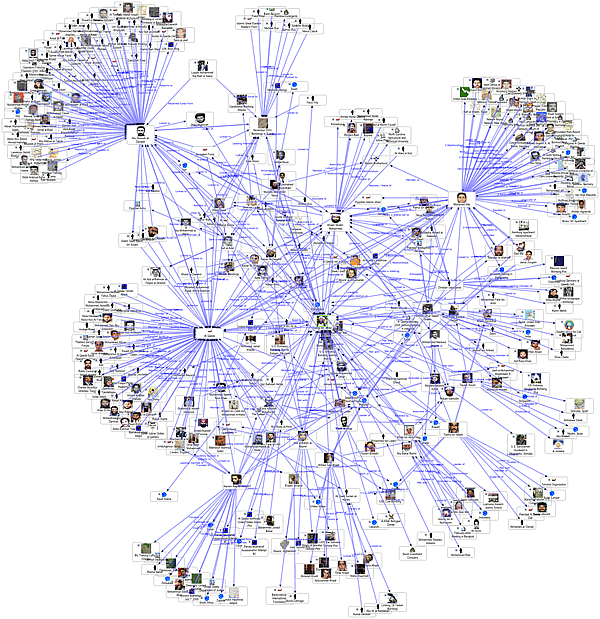
Example of Social Network Analysis diagram.
People have used network analysis to study all kinds of things – it’s very popular in the business world to identify ‘future leaders’ or ‘people who make things happen within my business’. Researchers have compared US senators voting patterns to cows who lick one another.

My PhD changed quite a lot after this seminar. I ended up using a combination of social network analysis and ethnography to study where public health policy makers found evidence, who the main sources of evidence were and how evidence was incorporated in the policy process. For years, academics in my field have been talking about the importance of interpersonal knowledge translation and how policy makers prefer to get their info from real people. Now I’ve been able to add my own tiny part of the story, come up with new research ideas on the basis of my findings, and learn a niche method (always useful).

My boyfriend still calls them snog webs though.

Friday, 23 March 2012

Twittering, not skiving

Posted by Bronia Arnott

I work in an open-plan office. A quick saunter to the coffee room is all it takes to find out who’s working and who’s on Facebook. Sometimes I find myself furtively opening up Twitter and hoping that nobody thinks I’m skiving. Because it is work, really…


Ollie the Twitter bird

Twitter is my social networking tool of choice. I have my own personal account and I also tweet alongside colleagues on the Reflect project account. We also use it to connect with others, including relevant government departments and charities. We use Twitter to share new posts on our blog and update our followers on recent news including publications.

There is evidence that tweets can increase citations of research papers. It’s called Twimpact of course. Some of this effect is through other networks of academics who follow each other on Twitter. But I know that in my case I also have a number of friends and other ‘normal people’ who follow my account and read, favourite and re-tweet my work. In some cases I even think it is because they genuinely find what I have to say interesting or useful, and don’t just feel sorry for me and my boring job.

The benefit of Twitter for non-researchers is that you can keep up to date with recent research without reading hefty journal articles – let the academics on twitter do that for you. And because tweets are limited to 140 characters even normally verbose researchers are forced to focus on the message, not the caveats!

I think the true value of Twitter has yet to be mined, however. In our project we hope to use social networking sites to link participants to our study in the next few years. A great example of innovative use of Twitter is the TWeetAsyouGO project which links up people investigating transport habits through the use of a common hashtag (#TWAGO)

If you are already on Twitter, you can find a number of Fuse members active on the site. Fuse also has an official @fuse_online Twitter stream.

If you are not already on Twitter yourself why not give it ago? You might find out that we are not a bunch of twits.