Showing posts with label soft drinks. Show all posts

Thursday, 17 December 2020

Let’s kick Coca-Cola out of Christmas for good

Posted by Robin Ireland, Director of Research, Food Active, PhD Candidate, University of Glasgow @robinHEG

You may have thought Coca-Cola invented Christmas. In a sort of way, they did of course. Arguably, modern Santa was designed by an advertising campaign for Coca-Cola in 1933 (Forsyth 2016). And, Santa, whether in the twentieth or twenty-first century, is all about encouraging us to consume. In Coca-Cola’s case, a sweet brown liquid that should logically have absolutely nothing to do with a winter celebration in, originally at least, the Northern Hemisphere.


Coca-Cola has been creative at making up traditions as part of their marketing campaigns since the soft drink was invented in Atlanta, USA, in the late nineteenth century. They have been muscling in on our favourite cultural practices pretty much ever since, in their growth to become a hugely successful and profitable transnational corporation. They have been involved with the Olympics since 1928 when vendors set up branded kiosks in Amsterdam (Keys 2004). A similar relationship with the FIFA World Cup from 1975 was seen as critical at expanding Coca-Cola’s influence into China and the Arab countries (Sugden and Tomlinson 1998).

Coca-Cola expert at manipulating our deepest wishes and our emotions whether they are talking Christmas or football. The pandemic may have prevented their Christmas Truck tour in the UK, but, never fear, their international marketing department is on the case. A two and a half minute commercial on YouTube featuring a little girl and her Dad’s attempts to deliver her letter to Santa at the North Pole had already received over 37 million views at the time of writing, whilst pulling at our heart strings.

Professor Dame Sally Davies, the previous Chief Medical Officer in England, wrote, “Commercial companies use a range of strategies and other approaches to promote products and choices that affect human and environmental health, defined as the commercial determinants of health” (Davies 2019 Annex D, p.4). And Coca-Cola are the masters. Luke Allen (Allen 2020) described the corporation as “virtually a cartoon villain in many public health circles” (p.29). Commercial determinants of health can be divided into four channels in which transnational corporations influence health (Kickbusch et al. 2016). Let’s consider how Coca-Cola use these channels.

The marketing is the most obvious. The red and white Coca-Cola brand is ubiquitous. This year the Christmas Truck Tour will not be visiting Liverpool or Glasgow and other major British cities. But the corporation’s partnership with the Premier League enabled it to tour those city centres in 2019.

This year the Christmas Truck Tour will not be visiting major British cities but the corporation’s 
partnership with the Premier League enabled it to tour those city centres in 2019

How about lobbying then? Marion Nestle (2015) has done a great job in describing how the ‘soda industry’ has learned from the tactics of the tobacco industry in funding dubious research. In funding campaigns and legal challenges to taxes on sugary drinks for example.

As many transnational corporations are criticised for the damage that consumption of their products can cause to human health, so, many try to position themselves as good corporate citizens. Coca-Cola adopt the same tactics and support a number of charities such as FareShare, Street Games, the World Wildlife Fund and Special Olympics GB. It’s sad that in a tough world, it’s often left to corporations to fund good causes rather than government. I thought that had been left in the Victorian age rather than reappearing in the twenty-first century. Coca-Cola also support the Department of Transport’s THINK road safety campaign. In this a volunteer is encouraged to be a Designated Driver to bring intoxicated friends home safely from their Christmas parties. The language of a “responsible drinking culture” is all part of the transnational corporations’ tactics of blaming all of us for believing their marketing and over-consuming their products. That’s right, the soaring levels of overweight and obesity and distressing images of tooth decay amongst youngsters in the UK, are all down to us, the irresponsible parents.

Finally, transnational corporations are experts at developing extensive supply chains to amplify their global ambitions. According to Nestle (2015), Coca-Cola claims to sell its products in two hundred countries with only Cuba and North Korea escaping its clutches. And that’s down to US trade embargoes not to Coca-Cola’s marketing executives.

It’s very hard to argue against Coca-Cola’s Christmas truck tour. Food Active and public health advocates have done so for many years being called the fun police along the way and advocates of the nanny state. We can only speculate the reasons why the tour has been scaled back in the North West in recent years (where Food Active largely operates), but we would take some comfort in the idea that our lobbying played a role in steering the truck off course.

Allen (2020), referenced Coca-Cola’s 2018 annual report, to show the corporation spends approximately US$4 billion per year on advertising. And they wouldn’t be spending that kind of money if the advertising didn’t work. The marketing has persuaded some that Christmas isn’t Christmas without the Coca-Cola Truck Tour. Well, you know the Holidays ARE Coming this year. Because this dreadful pandemic has at least kept some of Coca-Cola’s marketing out of our towns. Let’s just hope that the growing link between obesity and Covid-19 (Alberca et al. 2020) may encourage more to consider how we can limit the advertising of Coca-Cola and other transnational corporations that promote their high in fat, sugar and/or salt products to children. And let’s start to kick Coca-Cola out of Christmas.


References:

Alberca, R.W., Oliveira, L.d.M., Branco, A.C.C.C., Pereira, N.Z. and Sato, M.N. (2020) 'Obesity as a risk factor for COVID-19: an overview', Critical Reviews in Food Science and Nutrition, 1-15, available: http://dx.doi.org/10.1080/10408398.2020.1775546.

Allen, L.N. (2020) 'Commercial Determinants of Global Health' in Kickbusch, I., Ganten, D. and Moeti, M., eds., Handbook of Global Health, Geneva: Springer International.

Davies, S.C. (2019) Time to Solve Childhood Obesity, London, available: https://assets.publishing.service.gov.uk/government/uploads/system/uploads/attachment_data/file/837907/cmo-special-report-childhood-obesity-october-2019.pdf [accessed 27 November 2020].

Forsyth, M. (2016) 'Coca-Cola didn’t invent Santa ... the 10 biggest Christmas myths debunked', The Guardian, 21 December 2016, available: https://www.theguardian.com/lifeandstyle/2016/dec/21/coca-cola-didnt-invent-santa-the-10-biggest-christmas-myths-debunked [accessed 27 November 2020].

Keys, B. (2004) 'Spreading Peace, Democracy , and Coca-Cola®: Sport and American Cultural Expansion in the 1930s', Diplomatic History, 28(2), 165-196.

Kickbusch, I., Allen, L. and Franz, C. (2016) 'The commercial determinants of health', The Lancet, 4, 895-896.

Nestle, M. (2015) Soda Politics. Taking On Big Soda (And Winning). Oxford: Oxford University Press.

Sugden, J. and Tomlinson, A. (1998) FIFA and the Contest for World Football. Who rules the peoples' game? , Cambridge: Polity Press.


Image 2: Coca-Cola Tour Bus. Liverpool, March 2019. Photo courtesy of E.Boyland.


The views expressed in posts are those of the authors and do not necessarily reflect those of Fuse (the Centre for Translational Research in Public Health) or the author's employer or organisation.

Tuesday, 11 December 2018

It is time to ban the sale of energy drinks to children in the UK

Guest post by Prof Amandine Garde, Dr Amelia Lake and Dr Shelina Visram

In 2016 in the UK alone we consumed 679 million litres of high sugar, high caffeine drinks known as “energy drinks”. Described as the fastest growing sector of the soft drink market, they have become a major public health concern and have been subject to both a House of Commons Science and Technology Committee Enquiry (April – December 2018) and a Department of Health and Social Care consultation (which closed on 21 November 2018).

In the report it published on Tuesday (4 December), the Committee found that “the current quantitative evidence alone is not sufficient to warrant a statutory ban”, though it noted that “societal concerns could justify a ban on the sale of energy drinks to children”. This conclusion is puzzling for several reasons.

Energy drinks and children


Firstly, a growing body of evidence has established that energy drinks consumption, particularly by children, is associated with a wide range of harmful effects.
  • Whilst childhood and adolescence are periods of rapid growth requiring adequate sleep and good nutrition, energy drinks play a role in disrupting sleep (1 - see references below).
  • It is established that energy drinks are highly erosive in terms of dental health: they have low pH and a high non-reducing sugar content (2).
  • Consumption is also linked to increased energy intake and therefore obesity (3). Hence the proposal of the UK Government to ban the sale of energy drinks to children in the second iteration of its Childhood Obesity Action Plan, published in August 2018, and the public consultation that followed.
  • However, energy drinks consumption is also linked to physical symptoms such as headaches, stomach aches and sleeping problems (with some evidence of a dose-response effect), as well increased risk-taking behaviours, including binge drinking, smoking, illicit drug use, screen time and poor dietary behaviours (4). Moreover, mixing energy drinks with alcohol increases the risk of injury and unsafe driving (5) and 6).

Secondly, the Committee has failed to engage with the fact that gathering “quantitative evidence” on the impact of energy drinks on child health would be unethical (other than the aforementioned studies, which tend to involve large-scale, school-based surveys).

To our knowledge, there have been no experimental studies involving children’s use of other age-restricted products such as alcohol, tobacco, aerosols, solvents, fireworks, knives, crossbows, petrol or even Christmas crackers (sales of which are restricted in England to those aged 12 and over). Why should energy drinks be subjected to a higher standard of evidence than any of these products?

Thirdly, the evidence base has not prevented other countries from regulating the sale of energy drinks to children. In Europe, Lithuania introduced a ban on the sale of these drinks to under 18s in 2016, followed by Latvia, whilst Norway and Sweden are reflecting on similar legislation.

It is therefore unclear why the Committee has concluded that existing evidence is insufficient to adopt a similar law in the UK. The rationale seems to lie in the absence of a “causal link” between energy drinks consumption and childhood obesity, tooth decay and other diet-related diseases. This arguably demonstrates a lack of understanding by the Committee of the strategies required to address complex and multifactorial nature of these diseases.

It is indeed difficult to establish a causal link between the various measures adopted and the burden of non-communicable diseases: no single policy option can realistically tackle broad phenomena, such as growing obesity rates or tooth decay, when taken in isolation.

Governments must ensure that public health is effectively protected, and they can invoke the precautionary principle in the event of any outstanding scientific uncertainty regarding the impact of energy drinks consumption on public health. Hence, probably, the acknowledgement from the Committee that “it would be legitimate for the Government to go beyond the evidence that is available at the moment and implement a statutory ban based on societal concerns and evidence, such as the experience of school teachers and pupils”.

The logic of their reasoning is nonetheless difficult to follow. There is no doubt that the Government should introduce legislation banning the sale of energy drinks to children, following the lead of Lithuania and Latvia. This would not amount to going beyond the evidence; it would be acting on the basis of existing evidence. It is this body of evidence that has prompted very real and major societal concerns of the effects of energy drinks on our children’s health.

Fourthly, the call of the Committee for more effective labelling measures should not be envisaged as providing an alternative to a ban on the sale of energy drinks to minors; it should only be viewed as complementing such a ban. This is all the more so as labelling could increase existing health inequalities. Children and young people from all backgrounds consume energy drinks. However, as the Committee has noted “energy drinks are consumed disproportionately by disadvantaged groups”.

There may indeed be a link between regular consumption of energy drinks and eligibility for free school meals (FSM), which is often used as an indicator of lower socio-economic status. The 2018 Health-Behaviour in School-Aged Children Survey found that, among those who reported that they drank at least one energy drink per day, 23% received FSM, whereas those who said that they never drank energy drinks or did less than once a week, 11% received FSM (compared to 13% of FSM recipients across the whole sample). A study conducted in schools in the South West England also found that being eligible for FSM was significantly associated with drinking energy drinks once a week or more (Richards and Smith, 2016).

Energy drinks have no place in a healthy diet


Finally, the Committee does not seem to be aware that the Government has a duty to protect the rights of all children to the enjoyment of the highest attainable standard of health and to adequate nutritious food. Energy drinks have no place in a healthy diet. Shifting the responsibility of protecting them onto business actors, such as food manufacturers or food retailers, is highly problematic, not only because a voluntary ban will fail to create the level playing field within which all these actors should operate, but also because it will fail to protect child health and their rights and cannot therefore contribute to an effective obesity prevention strategy.

The Responsibility Deal has failed; regulatory measures that apply to all and are duly enforced are required to address the growing burden of obesity, tooth decay and other diet-related diseases. The conclusion that a statutory ban would be too restrictive is ideological rather than grounded in evidence.

A statutory ban is the most likely measure to ensure that children and young people are effectively protected from the many harmful effects of energy drink consumption.


About the authors:
  • Professor Amandine Garde, Professor of Law and Director of the Law & Non-Communicable Diseases Unit at the University of Liverpool. 
  • Dr Amelia Lake, Associate Director of Fuse - the Centre for Translational Research in Public Health and Reader in Public Health Nutrition at Teesside University. Amelia is a Dietitian and registered Public Health Nutritionist. 
  • Dr Shelina Visram, Programme Lead of the Complex Systems Research Programme for Fuse - the Centre for Translational Research in Public Health and Senior Lecturer in Public Health at Newcastle University.
The views expressed here are those of the authors and do not necessarily reflect those of the author's employer or organisation.


References:

Friday, 7 December 2018

Steering the Coca-Cola Christmas trucks off course in 2018

Guest post by Beth Bradshaw, Alex Holt and Robin Ireland, Food Active

You may remember our guest blog for Fuse from last year, which discussed the media frenzy that goes into overdrive when the Coca-Cola Christmas Truck Tour sets off on its journey across various locations in the UK. We also noted our own campaigns and the efforts of others such as SUGAR SMART to make the case against welcoming the truck into towns and cities already grappling with a childhood obesity and oral health crisis.
 
Every year, we are met with growing support from the public health community and the public including GPs, dentists, teachers and parents. Last year Public Health England issued guidance to local authorities about hosting the Coca-Cola truck. However, there was also some criticism of our position, especially where we were seen as ‘spoiling’ Christmas in some way.

However, this year, things seem to be different. We feel a change in the air this festive period with a scaling back of the Coca-Cola tour, both in terms of numbers of locations and less prominent venues.

There are a number of important changes that have happened both in the build-up and the start of the Coca-Cola Christmas Truck Tour for 2018. While these might appear small, together they demonstrate quite a significant shift by the soft drinks corporate giant.

This year, the Coke Truck allowed just three days between the announcement of the tour and its start, compared to 11 days last year. Within this time frame, SUGAR SMART coordinated an open letter to Coca-Cola bosses with over 40 signatories from local authorities, Clinical Commissioning Groups, and national campaign groups to oppose the truck visiting their areas [1]. This meant there was time to coordinate responses both nationally and locally, including a series of Tooth Fairy stunts, and for noise to be made to create negative publicity before the truck had even arrived.

The Coke Truck vs the Tooth Fairies
Another important shift is the size of the tour – downsizing by over a third (37% to be exact), from 38 stops last year to just 24 this year. The 2018 tour is also visiting some much smaller locations - the media has called it ‘snubbing’ cities such as Milton Keynes and Liverpool - and there are just four visits on council-owned land. We are pleased to see so few local authorities allowing the truck on council-owned land but would urge those that are welcoming the truck to seriously consider whether this is in the best interest of their local population.

There are also more stops hosted on supermarket car parks this year, with as many as ten of the stops to Asda and Tesco. The same Tesco that announced a five-year ‘strategic partnership’ with national health charities including the British Heart Foundation, Cancer Research UK and Diabetes UK to help ‘remove barriers to healthy habits’ earlier this year. A Coca-Cola truck pitching up in their car park is certainly a barrier to healthier habits, both literally and figuratively speaking. This move has also been met with criticism and Sustain and SUGAR SMART are calling on the public to write to Asda and Tesco to ask them to reconsider hosting the truck next year. On taking this action ourselves, we received a response from Asda customer relations which said:
“We have been in conversation with Coca-Cola prior to this tour and we are happy that they will be encouraging customers to sample their sugar-free brands. They will only provide Red Coke on request and they estimate that at least 90% of their drinks sampled will be sugar free.”
As of yet and unsurprisingly, we have had no response from Tesco.

Asda’s response is consistent with the quote provided by Coca-Cola’s press release, which also appears to have satisfied Public Health England’s concerns, as they have decided not to respond to the truck this year.

Finally, in the North West of England (where Food Active is based), the truck is visiting just one city in the region compared to six visits in 2016 and four in 2017. Over the past four years, Food Active has been lobbying against the arrival of the truck in the North West, including publishing an article in the British Medical Journal [2], writing an open letter to local and national press (with over 100 signatories) and supporting SUGAR SMART’s open letters to Coca-Cola bosses. We hope that this continued pressure, even in the face of significant criticism, has helped to steer the Coke truck away from the North West.

However, we know the battle is by no means over - 14 of the 19 stops in England have above average prevalence of excess weight amongst 10-11 years old, and in some locations including Manchester, over 30% of the children have experienced tooth decay.

Last year, our blog concluded that “our experience shows us that public health has to be persistent in ensuring our messages are heard in the current victim-blaming culture”. This statement is perhaps even more validated following this year’s experiences.

In the spirit of good will this Christmas, we thank Coca-Cola for helping more of our local authorities in the North West to help tackle issues of childhood obesity and dental decay in their areas - many of which are already disproportionately burdened with deprivation and health inequalities.

www.foodactive.org.uk

@food_active


References:
  1. Ireland, R and Ashton, J.R. (2017) “Happy corporate holidays from Coca-Cola” i8633. Available at: https://www.bmj.com/content/356/bmj.i6833
  2. SUGAR SMART (2017) Spending holidays in good health. Available at: http://www.foodactive.org.uk/wp-content/uploads/2017/11/Open-Letter-to-Coca-Cola.pdf
Images:
  1. Courtesy of Beth Bradshaw
  2. With thanks to Sustain and Sugar Smart UK: https://www.sustainweb.org/blogs/nov17_coke_truck 

Friday, 23 November 2018

The Age of Bubble-gum Gin?

In a post for Alcohol Awareness Week, John Mooney, Fuse Associate and University of Sunderland Senior Public Health Lecturer, ponders how the alcohol industry will respond to declines in youth drinking. 


1990s alcopops on display at the Museum of Brands
There is no doubt about the current trend: youths and young adults are clearly drinking less alcohol. In what seems to run counter to the traditional image of “irresponsible teenagers” drinking to excess and partying the night away, a number of recently published studies and reports have confirmed an increasing indifference to the “charms of the demon drink” on the part of young people that extends across all age groups. In their recent report for example, University of Sheffield alcohol research group (SARG) in a Wellcome Trust funded study [1], highlighted that:
“Among 16-17 year-olds, the proportion who reported drinking nowadays fell from 88% in 2001 to 65% in 2016 and the decline over the same time period for 16-24 year-olds was from 90% to 78%...”
Similarly in a nearly 10,000 strong sample of participants aged 16 to 24 years using a ten year analysis of Health Survey for England datasets, rates of non-drinking increased from 18% in 2005 to 29% in 2015 (largely attributable to increases in lifetime abstention) [2]. In the same study for the same period, “not drinking in the past week” increased from 35% to 50%. The SARG Wellcome Trust report noted that younger drinkers were also consuming alcohol less often and in smaller quantities: Between 2003 and 2016, for example, the proportion of 11-15 year-old drinkers who “had consumed alcohol in the last week” fell from 41% to 19%. Among 16-17 year-old drinkers, the decline was from 58% to 39%, while for 16-24 year-olds it was from 75% to 60%.

As the Sheffield report also notes, these declines in alcohol consumption are by no means confined to the UK with similar reductions in youth drinking being seen across many European nations, North America and Australasia.

Declines in drinking would be expected of course to be accompanied by public health benefits and therefore alcohol-related hospital admission rates in England have been falling in line with consumption, as have the numbers of under 18s referred to specialist alcohol services. This has a particular resonance for North East England, where the rates of alcohol-related hospital admissions for under 18s have been among the highest in the country [3] and which in recent years have been falling more sharply than for England as a whole (though of course, the starting point was higher).

While the reasons behind these regional, national and international declines in youth drinking are as yet not particularly well understood, it is probably worth noting that we have been here before, with the early 1990s seeing international declines in youth drinking. Many experts on alcohol consumption trends at that time also noted that this decline was accompanied by a robust ‘product diversification’ response by the alcohol industry, most notably the rise of ‘alcoholic soft drinks’ or ‘alcopops’. In an article published in the Independent in 2003 [4], the then chair of Alcohol Concern, Eric Appleby commented:
"The whole alcopops thing came about because at that stage the industry had realised that they weren't getting the normal flow of drinkers coming through. Young people were more independent and drugs had taken over for a lot of young people as a recreational high instead of drink. The industry knew it had to do something. They will always deny it but it is pretty clear that the whole alcopops thing was about recruiting young drinkers and getting them at an early stage. Young people don't have a natural affinity for the taste of alcohol – this was a crash course, cutting out the middle man."
Consumption data confirmed these suspicions, with figures released by the UK Department of Health in 2002 revealing the average alcohol consumption of children aged 11 to 15 who were drinkers had rocketed from 5.3 units a week in 1990 to 9.8: ‘Alcopops’ or ready to drink mixes (RTD’s) of spirits and soft drinks were blamed.

This previous experience and the industry response does of course beg the question if there will be a similar response this time around and the format that this might take. As the Sheffield report also notes, drinking habits formed when young, have a major influence on lifetime alcohol consumption patterns, so these trends will not have escaped industry analysts and those who might be concerned about maintaining “medium to long-term consumption and sales forecasts”.

For a number of commentators, the industry responses are already clearly in evidence, most notably perhaps being a proliferation in novelty gin varieties, perhaps the most blatant ‘cross-over’ with confectionary style marketing being ‘bubble-gum gin’ or ‘marshmallow flavoured vodka’.

Of course, there is also a ready-made consumer base among young adults for energy drinks, which have been the focus of much publicised research by Fuse colleagues and there is a long established practice of these drinks as alcoholic mixers, to say nothing of the fortified caffeine and sugar enriched wine of choice, most popular in my native Scotland and the product of serene ‘Buckfast Abbey’ surroundings in South West England.

Current downward trends in alcohol consumption therefore might already be seeing a familiar  marketing response… but the extent to which that will succeed is still guesswork, given the as yet lack of clear understanding around what might be behind current trends.

From a North East public health perspective of course, long may these trends continue, since the medium to long-term population health benefits in this part of the world in particular are likely to be considerable!


#AlcoholAwarenessWeek
#AlcoholChange 


References: 
  1. Oldham M, Holmes J, Whitaker V, Fairbrother H, Curtis P: Youth Drinking in Decline. University of Sheffield Alcohol Research Group & Wellcome Trust; 2018. 
  2. Ng Fat L, Shelton N, Cable N: Investigating the growing trend of non-drinking among young people; analysis of repeated cross-sectional surveys in England 2005–2015. BMC Public Health 2018, 18(1):1090. 
  3. Public Health England: Local Alcohol Profiles for England In.: https://www.gov.uk/government/collections/local-alcohol-profiles-for-england-lape; 2017.
  4. Harding N: The Demonised Drink: How Has Youth Drinking Evolved 20 years Since The Launch of Alcopops? Independent. London; 2013.
Image: "1990s alcopops on display at the Museum of Brands, west London" by Ben Sutherland via Flickr.com, copyright © 2017: https://www.flickr.com/photos/bensutherland/37299742285

Friday, 8 June 2018

Young people in the UK drink more energy drinks than any other countries in Europe

Posted by Amelia Lake, Associate Director of Fuse and Reader in Public Health Nutrition at Teesside University and Shelina Visram, Senior lecturer in public health at Newcastle University

It would be a bit shocking to see children and teenagers drinking espressos, yet it’s socially acceptable for young people to reach for energy drinks to give them a quick “boost”.

Energy drink sales in the UK are now worth more than £2 billion a year

Unaffected by the economic crisis, energy drinks are the fastest growing sector of the soft drinks market. Between 2006 and 2012 consumption of energy drinks in the UK increased by 12.8% – from 235m to 475m litres.

These drinks are very popular with young people – despite coming with a warning (in small letters on the back) that they are “not recommended for children”. A survey conducted across 16 European countries found that young people between the ages of ten and 18 in the UK consume more energy drinks on average than young people in other countries – just over three litres a month, compared to around two litres in other places.

More than two-thirds of young people surveyed in the UK had consumed energy drinks in the past year. And 13% identified as high chronic consumers – drinking them four to five times a week or more. Research also suggests that these drinks are more popular with boys and young men.

What goes into energy drinks?


Energy drinks are usually non-alcoholic and contain ingredients known to have stimulant properties. They are marketed as a way to relieve fatigue and improve performance: “Red Bull gives you wings”.

They contain high levels of caffeine and sugar in combination with other ingredients, such as guarana, taurine, vitamins, minerals or herbal substances. A 500ml can of energy drink for example, can contain 20 teaspoons of sugar and the same amount of caffeine as two cups of coffee.

Caffeine stimulates the central and peripheral nervous system. Consumed in larger doses, it can cause anxiety, agitation, sleeplessness, gastrointestinal problems and heart arrhythmias.

In the UK, there are no clear recommendations for caffeine intake for adults or children, although both the Food Standards Agency and the British Soft Drinks Association recommend that children should only consume caffeine in “moderation” and that caffeine content over [150mg/l] should be declared on the packaging. The current scientific consensus is that [less than 2.5 mg a day] in children and adolescents is not associated with adverse effects.

Should we be worried?


The evidence indicates that these drinks do not give you wings – or any other positive benefits. In fact their intake in young people, is associated with adverse health outcomes. There is growing evidence of the harmful effects of these drinks. Teachers are concerned about the detrimental impact these drinks have on pupils in their classrooms. There is also a known association between soft drink intake, dental erosion and obesity.

Lesser known are the effects of the cocktail of stimulant ingredients – such as guarana and taurine – contained within these drinks.

Our recent review of the scientific literature set out to look for any evidence of associations between children and young people’s consumption of energy drinks and their health and well-being – as well as their social, behavioural or educational outcomes.

We found that for young people, drinking energy drinks is associated with a range of adverse outcomes and risky behaviours. They are strongly and positively associated with higher rates of smoking, alcohol and other substance use – and linked to physical health symptoms such as headaches, stomach aches, hyperactivity and insomnia.

Why do young people buy them?


We also spoke with young people about their intake of these drinks. Discussions with our participants aged between ten and 14 indicated just how accessible and available these drinks are. They are also cheap – in some cases significantly cheaper than other soft drinks, as one of the girls we spoke to explained:

"I think it’s because like a normal can of Coke is like 70p, and [own brand energy drinks] are like 35p."

Our research found that energy drinks are often marketed on gaming sites and linked to sports and an athletic lifestyle – and are particularly aimed at boys. Taste, price, promotion, ease of access and peer influences were all identified as key factors in young people’s consumption choices.


Speaking with parents and teachers about these drinks there was confusion. Parents themselves identified the need for more information about energy drinks – and many admitted to not being fully aware of the contents and potential harmful effects on children.


Should they be banned?


Image used in a recent campaign led by Jamie Oliver
to ban the sale of energy drinks to under-16's
Recently there has been a move to restrict the sales of these drinks to under 16’s – an approach which has also been taken by other countries. This saw the self-imposed sales restriction by many larger retailers – including most supermarkets – to not sell to children under 16. But many places still continue to sell to young people – including convenience stores, which offer a wide range of brands, flavours and package sizes.

The Commons Science and Technology Committee’s enquiry into energy drinks called for submissions in April 2018 and will be reviewing in June 2018 – when we will also give oral evidence.

Of course, legislation to prevent the sales of energy drinks to under 16’s would be helpful. But the marketing of these drinks to young people through computer games and their association with sports is also a much wider issue. Far reaching discussions are needed about the direct and indirect marketing of these drinks (and other food and drinks) through multiple platforms other than TV – particularly through computer games.


This article was originally published on The Conversation. Read the original article.

Friday, 1 December 2017

When the Coca-Cola truck comes to your town

Guest post by Robin Ireland, Director of Research at Food Active and Beth Bradshaw, Project Officer at Food Active.

When Coca-Cola announced their 'Holidays Are Coming' truck tour (ironically coinciding with Sugar Awareness Week), our local media in the North West covered the story like it was the first sign of Christmas, the first cuckoo to be spotted in spring.

And in the run up to the big red shiny sugar-laden truck’s arrival to our towns and cities, from Bolton to Liverpool, Manchester to St Helens, the local newspapers will cover the story in page after page of advertorials, telling you where to get your picture taken posing with Coca-Cola's sugary products and even live blogs in some cases.

In previous years, at no time did the reporters consider that not everyone welcomed the truck in their neighbourhood. Many people are concerned that the truck was marketing Coke to children despite the company's protestations that they do not promote their products to the under twelves. Furthermore, in some locations in the North West the truck was allowed to promote their unhealthy drinks to children and families on Council owned landed. 

To demonstrate our concern, last year Food Active drafted a letter objecting to Coca-Cola's tour coming to the North West which was sent to the national and regional media. No less than 108 people signed in support including the current and past Presidents of the Faculty of Public Health, five Directors of Public Health, Professors, Doctors, educationalists and of course parents. If we are honest, we were shocked that the letter was almost entirely ignored. It would appear that Coca-Cola's commercial clout and public relations campaign counted more than the collective voice of those who are having to address the results of diets regularly fuelled by liquid sugar.

Just before Christmas 2016, Professor John Ashton and I (Robin) were in contact with the British Medical Journal concerning these issues and were invited to submit an editorial which was published in January [1]. In contrast to their previous experience the media attention was huge including coverage in over 60 regional and national newspapers and interviews on various channels including Sky News and Wales Today.

This year, the media attention and discussions around the Coca Cola Christmas Tour has continued. Before the tour was even announced, a news story hit the local press in the North West from Liverpool councillor Richard Kemp CBE (also Deputy Chair of the Community Wellbeing Board at the Local Government Association of England and Wales), who raised concerns about its arrival in Liverpool given the city is ‘in the grip of an obesity epidemic’ – although we know this is not an issue only in Liverpool – the whole country is in the grip on an obesity epidemic. Once the tour was announced, including six visits to the North West, we were pleased to see none were on council-owned land (in 2016 the truck visited Williamson Square in Liverpool which is owned by the Council)

Following this came a cascade of news stories from local and national newspapers and radio stations. This year, Food Active joined up with Sugar Smart to encourage Directors of Public Health, Council Leads and Clinical Commissioning Group Chairs across the country to sign an open letter to Coca-Cola opposing its arrival, given the health harms associated with the consumption of their products and calling for more responsible marketing during the festive period. The North West represented one quarter of the 29 areas, cities and towns who signed the letter. This advocacy may have helped to prompt a response from Public Health England and Public Health Wales – there is a sense that the argument against the Coca-Cola truck are now being taken seriously and media coverage of the 2017 Coca Cola Christmas Tour is not just about when and where you can get your photo taken - but also the health concerns. 
Coca-Cola says that it does not promote its products to the under twelves

Following excellent work by Public Health England, by national organisations including Action on Sugar, the Children's Food Campaign and many others, and of course by Food Active in the North West, we know that we must target sugary drinks as part of a strategy to address the tsunami of obesity, type 2 diabetes and dental disease we face in our poorest and most deprived communities. Moreover, as highlighted in a blog by Dr. Alison Tedstone, Director of Diet and Obesity at Public Health England, the truck will be visiting some of our poorest areas which are often disproportionately burdened with higher levels of obesity [2]. As such, a symbol of ill health should not be welcomed nor celebrated within our communities during a season of good will and cheer. 

However, this is not only about high sugar drinks. Protecting children from junk food marketing has been outlined as the number one priority in tackling obesity by the Obesity Health Alliance (a coalition of over 40 organisations committed to reducing obesity – of whom Food Active is a member). We must not mistake the Coca-Cola truck for anything but a very high profile marketing stunt. We do not allow products high in fat, sugar and salt to be advertised to children on children’s TV programmes, so why is the Coca-Cola truck welcomed into our communities year on year with such open arms? Speaking at the Socialist Health Alliance Public Health Conference, we called for junk food marketing controls to be extended to cover family attractions such as the Coca-Cola truck, as well as sports sponsorship and marketing communications in schools. By allowing the truck into our towns and cities, we are allowing Coca-Cola to exploit the festive period to market their products to the community – and to children in particular.

Our experience shows us that public health has to be persistent in ensuring our messages are heard in the current victim-blaming culture. There is little point in local authorities spending their ever restricted funds on promoting healthier eating and drinking if each Christmas we allow Coca-Cola and others to highjack our messages. There is certainly no excuse for local authorities at to allow this truck on their land and it is the responsibility of public health advocates to continue to make the case to Give Up Loving Pop in 2018. 
  
References:
  1. Ireland, Robin, and John R. Ashton. "Happy corporate holidays from Coca-Cola." (2017): i6833. Available at: http://www.bmj.com/content/356/bmj.i6833
  2. Tedstone, Alison. “An update on sugar reduction”. (2017). Available at: https://publichealthmatters.blog.gov.uk/2017/11/14/sugar-reduction-an-update/


Photo © Oast House Archive (cc-by-sa/2.0)


All views expressed in a post are exclusively those of the author or authors.

Friday, 13 October 2017

From shock to the system, to system map and beyond: evaluating the UK sugary drinks tax

Guest post by Jean Adams, Centre for Diet & Activity Research (CEDAR), University of Cambridge

Mostly you don’t get to watch TV at work. The day that George Osborne announced he would introduce a tax on sugary drinks in the UK, here at CEDAR HQ we all stood huddled around a computer monitor watching and re-watching the words coming out of his mouth. 

Oh. My. Goodness. I did not see that coming. 

The “soft drinks industry levy”, to give it it’s proper name.

A rather senior professor has since told me that he totally saw it coming.

After we’d got over the shock of the announcement, the conversation turned pretty quickly to research (well, this is a university, after all). We have got to evaluate this!

Colleagues at CEDAR had already written papers about how sugary drink taxes could be evaluated. We had talked with colleagues in other countries about evaluating their taxes – only for those taxes to fall through at the final political hurdle. I have more than one half-written application for research funds to evaluate sugary drink taxes stashed down the back of my computer.

And here it was, all systems go for designing an evaluation for a UK sugary drinks tax! In our back yard!

OK, so we have to work out whether it impacts on diet. But, what about jobs? Will people lose their jobs? Surely we need to know if it changes price and purchasing of sugary drinks. Right, but even if it does people might just shift to other foods – maybe they will just eat more cake instead? We are Public Health researchers, we need to focus on health: does the tax change how many people get diabetes? Or tooth decay? Or the number of obese children? And what about how this even happened? Did you see it coming? Why has this happened? Why now? Why don’t we do interviews with politicians and find out how it happened?

Woah, woah, woah! Ten seconds in and this is getting way more complicated than we (I) had ever thought it might. Before we did anything, we needed to work out what we thought might be going on here. Once we understood what the potential impacts might be, then we could start thinking about how we might evaluate them.

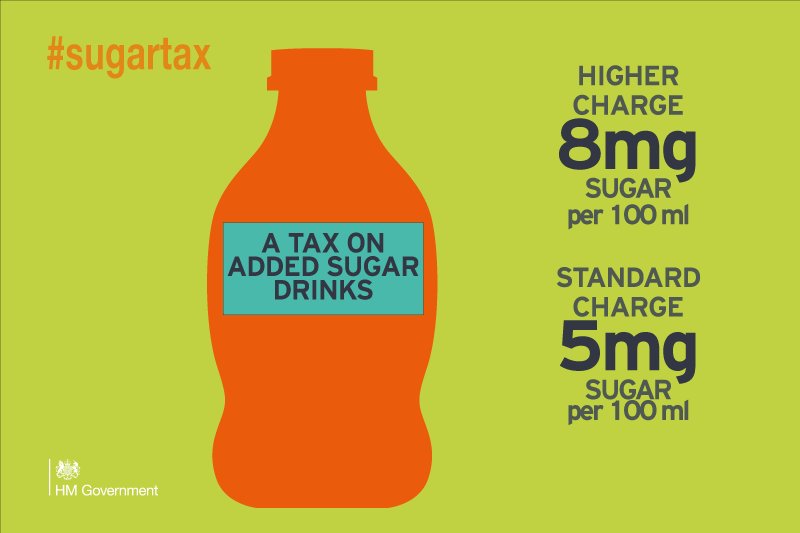
So that’s what we did. We spent 6 months developing a ‘systems map’ of the potential health-related impacts of the UK Soft Drinks Industry Levy (aka sugary drinks tax). The tax is explicitly designed to encourage soft drinks’ manufacturers to take sugar out of their drinks. There are two levels – a higher tax for drinks with the most sugar, a lower one for only moderately sugary drinks. So we started there (at ‘reformulation’) and worked out.

Then we sense-checked our map with people working in government, charities, and the soft drinks industry. They made lots of suggestions for things we’d missed, or needed to clarify. We changed our map and asked people to check it again. We changed it again. Only then did we decide what we should, and could, evaluate.

The current version of our systems map (we still think of it as a work in progress). Larger version here.


Yes, we are going to look at how the price of sugary drinks changes over the next few years. But we are also going to look at the amount of sugar in soft drinks in UK supermarkets, and the range of drinks available. We’re going to use commercial data to look at purchasing of soft drinks, as well as other sugary foods. We’ll use the National Diet & Nutrition Survey to explore whether there are any changes in how many sugary drinks, and other sweet foods, people in the UK eat. We’ll use hospital data to see if the number of children admitted with severe dental decay decreases. We’ll use statistical modelling to predict how changes in how many soft drinks people drink might translate into cases of diabetes and heart disease. We’ll look at the impact of the tax on jobs, and the economy. We’ll explore the ‘political processes’ of why and how this tax happened at this time. And we’ll conduct surveys to find out what people in the UK think of sugar, sugary drinks, and the tax itself – and whether this changes over time.

Obviously it’s going to be a lot of work. We’re going to need some excellent people to join the team to help us actually do this thing. Personally, I’m feeling a little overwhelmed/excited/overwhelmed/excited. It’s going to be brilliant!

Wanna be part of it?

Friday, 16 December 2016

Understanding the health benefits of the ‘sugar tax’: how will the soft drinks industry respond?

Guest post by Oliver Mytton, Centre for Diet and Activity Research (CEDAR) & MRC Epidemiology Unit, University of Cambridge
Today our paper, a health impact assessment of the government’s proposed ‘sugar tax’ was published in the Lancet Public Health. The government’s proposal, announced in April of this year, took health campaigners by surprise. Not only was it unexpected, but the government’s proposal was unusual.


Other countries, notably Mexico, have introduced a sales or excise tax on sugary drinks. However, the UK government proposed a levy on soft drinks manufacturers or importers based on the volume of sugary drinks sold. There will be two levels of tax, a higher level on drinks with more than 8g per 100ml, and a lower level on drinks with 5g to 8g per 100ml.

With others, I have previously modelled the potential health benefits of a ‘simple’ excise tax on sugary drinks, but the industry levy is more complicated.

Industry levy – how it might work  


The levy might lead to a reduction in sugary drinks consumption through a number of pathways, and from listening to industry experts and reviewing statements made by soft drinks manufacturers, it was apparent that nobody knew quite how the industry would respond.

The nature and magnitude of these responses might lead to very different health outcomes, which is what we describe in our paper. For our health impact assessment, we identified three broad responses that the industry might make:
  1. reformulation (reducing sugar content); 
  2. price rises that pass the cost on to consumers; and
  3. changes in marketing practices to ‘shift’ consumer preferences, e.g. away from high sugar drinks to diet drinks.
For each response, we then identified a ‘best case’ and ‘worst case’ scenario.

Modelled health benefits


From these six scenarios, we were able to estimate changes in consumption of sugary drinks. We then estimated changes in health, using data describing the relationship between sugary drinks consumption and three outcomes (dental caries, type 2 diabetes and obesity).

The most beneficial modelled scenario for health was reformulation (reduction of sugar content by 15% for ‘mid-sugar’ drinks and 30% for ‘high-sugar’ drinks), with an estimate of 140,000 fewer adults and children with obesity; 19,000 fewer incident cases of diabetes each year, and 270,000 fewer decayed, missing, or filled teeth annually in the UK. Important reductions in disease were also associated with the maximum expected price increase (equivalent to half the levy cost being passed onto consumers) and changes in marketing share.

The least beneficial modelled scenario for health was a change in market share that resulted in consumers switching not only from high-sugar drinks, but also from diet drinks, to low sugar drinks. This might result in an (small) increase in consumption of sugary drinks and consequent (small) increase in disease (using the measures we looked at). If the price is passed on to all soft drinks (rather than just sugary drinks) the health benefits were also substantially reduced.

Across the scenarios the most striking finding was the concentration of the health benefits in terms of obesity and dental caries amongst children and younger adults. They are the major consumers of sugary drinks. Diabetes follows a different pattern with many more cases likely to be prevented amongst adults than children, because there are relatively few incident cases of type 2 diabetes among children and young adults.

In doing this, we have not made an overall estimate of the health benefits of the new levy, rather we have identified the benefits attributable to different industry responses to the levy and put upper and lower bounds on those responses.

Policy implications

Consumers appear to be turning away from sugary drinks


Our assessment shows that the health benefits of the levy will be greatly affected by how the industry responds. We have identified scenarios where the health benefit is minimal (or conceivably negative). However, we think this is unlikely: there are strong signs from industry that there will be significant reformulation, consumers appear to be turning away from sugary drinks and most of the scenarios we modelled were beneficial for health.

While we are not as optimistic about reformulation as others, our work does further suggest that reformulation of sugary drinks has potential to mitigate some of the health risks associated with regular consumption of sugary drinks. Reformulation of soft drinks probably has more scope than I previously thought. The government levy may, particularly by using two tiers, be a relatively effective tool to incentivise reformulation.

It also suggests that the industry levy may not be a ‘simple’ intervention. Whilst we have described discrete responses, it is possible that the levy may stimulate several changes. Not just the changes described in our study but others, e.g. changes in consumer attitudes, reductions in portion sizes and introduction of new low sugar products. If it does do this, the government’s approach may be very effective, perhaps more effective than a ‘simple’ excise tax.

On the flipside, it may also be more uncertain or risky as its success depends on how industry responds. This creates a potential role for government and health organisations to apply pressure on industry to respond in ways that improve health. This uncertainty also underscores the need for a careful evaluation that can capture the important industry responses.

Finally, whilst there are reasons to be optimistic and the government should be applauded for this initiative, it does underscore the need for ‘brave and bold’ action across a variety of areas concerned with food and physical activity (which the recent Childhood Obesity Plan failed to deliver) to markedly reduce obesity. As I have written before, this measure alone will not ‘solve’ obesity, but it can be an important step towards improving population health.