Showing posts with label behaviour. Show all posts

Friday, 3 July 2026

Sun safety this summer: from UV apps to sun protection tips that actually work

Posted by Angela Rodrigues, Associate Professor in Psychology, Northumbria University and co-lead of the Fuse Behaviour Change Cluster

The UK has already seen unusually hot weather this year, with temperatures high enough to make sun safety a live issue well before many people have packed for their summer holidays.


For many of us, the instinctive response to good weather is to get outside while it lasts. But sudden bursts of hot, bright weather are also a reminder that sun protection needs to start before we are already on the beach.

UV exposure is not only a problem on foreign holidays or during peak summer. In the UK, UV levels can reach 3 or above from as early as April – this is the point at which many public health bodies advise taking sun protection seriously, especially for people who burn easily.

Abroad, particularly in southern Europe or long-haul destinations, levels commonly reach 8, 9 or 10 in summer. That is a significant jump from what most people living in the UK are used to at home, and one reason holidays are often when their skin is most at risk.

My research with holidaymakers suggests that people want to manage sun exposure better – especially when they are given clear, location-specific information about UV levels, plus practical reminders about when to protect themselves.

Staying safe in the sun works best as a combination of habits: seeking shade, wearing a hat, covering up, limiting time in strong midday sun, and using sunscreen properly.

Not just sunscreen

One of the most effective things you can do is seek shade during the middle of the day, when UV levels are at their highest – typically 11am-3pm in the UK and during similar peak hours abroad. A wide-brimmed hat, a long-sleeved layer for the hottest part of the day, and sunglasses that offer UV protection all add meaningful protection that sunscreen alone cannot provide.

Planning ahead makes this much easier. Before you head out, check the UV index for your destination. Most weather apps now include this. Then plan the highest-exposure parts of your day around it.

Think of sun protection as part of your morning routine: apply sunscreen before leaving the house, just as you would brush your teeth, and pack a hat, sunglasses and sunscreen in your day bag. It is also worth taking a light cover-up such as a T-shirt, kaftan or sarong to protect your shoulders and chest.

When you stop for lunch, that is your natural cue to reapply sunscreen. Many people on holiday take a midday break anyway. A shaded lunch, and even a short siesta during peak UV hours, is not just a pleasant holiday habit. It is good sun safety.

By the time you head back out later in the afternoon, you’ll have rested, cooled down and reapplied sunscreen, and you are making better use of the lower-UV part of the day.

Simple “if-then” plans can help too. If the UV index is forecast to be 3 or above, then I will cover up and seek shade. If I am heading to the beach, then I will reapply sunscreen as soon as I arrive and again after swimming.

One thing our research consistently shows is that most people underestimate how quickly their skin can burn, particularly in strong sun. Rather than trying to calculate a safe window, treat the UV index as your guide. If it is 3 or above, cover up and seek shade during the strongest part of the day.

Sunscreen works best when applied generously and reapplied regularly, but guidance on how much to use can feel vague. Our research suggests a helpful rule of thumb: for your face, neck and ears, aim for around a teaspoon’s worth. For a full body application, you need considerably more than most people use, roughly the equivalent of a golf ball.

Applying more than you think you need, and reapplying every two hours when you are outdoors, makes a real difference to the protection your skin gets. You should also reapply after swimming, sweating or towelling off, even if the product is labelled water resistant.

Apps are useful – if they change what you do

Studies of sun protection apps suggest these digital tools can help when they give people specific, usable information rather than vague warnings. In my research into holidaymakers’ views of these apps, participants valued UV index information and location-based reminders because these helped them to plan their day, rather than simply reacting once already in strong sun.

Personalised guidance can make sun protection feel less like guesswork by taking account of your skin type, where you are and how strong the UV is at that moment.

If you use a sun protection app, look for one that provides real-time, location-specific UV forecasting and concrete, practical advice, rather than general reminders. Even a basic UV index tracker can help you decide when to cover up, when to seek shade and when UV levels are lower.

The SunSmart Global UV app (supported by the World Health Organization, the World Meteorological Organization, the UN Environment Programme and the International Labour Organization) shows what this can look like. It gives users location-specific UV information and indicates when sun protection is needed.

That is the kind of practical guidance holidaymakers in my research said they wanted: advice that helps them make decisions in the moment, not just general messages about staying safe in the sun.

Enjoy the good weather

Sun protection does not mean staying indoors. It means making the sun easier to enjoy: checking the UV index, packing a hat and sunscreen, seeking shade when UV is strongest, and reapplying before your skin reminds you.

Skin cancer is largely preventable, and small habits add up. The aim is to make sun protection part of the day – not an afterthought once you are already hot, tired and turning pink.


Image: Photo by Kampus Production from Pexels

Adapted with thanks to The Conversation

Thursday, 5 February 2026

More than quit rates - our smoking research was about complexity, trust, and real voices

Posted by Angela Rodrigues, Associate Professor at Northumbria University, and co-lead of the Fuse Behaviour Change Cluster, and Team

By the time we wrapped up our final interviews, we felt a mix of pride, exhaustion, and curiosity. Pride because we’d managed to complete a complex mixed-methods evaluation across four pilot sites. Exhaustion because, well, public health research never seems to run smoothly, and we had a few recruitment bumps along the way. And curiosity because we still weren’t sure how all the pieces would fit together. This was a mixed-methods evaluation of a 20-week smoking cessation service in the North East & North Cumbria.

The context: why this service mattered

When we first got involved, the idea was simple: evaluate an enhanced stop smoking service designed specifically for people living with severe mental illness (SMI). People with SMI experience stark health inequalities. On average, they die 15-20 years earlier than the general population, largely due to chronic physical health conditions rather than psychiatric causes. Smoking is a major reason for this health gap, and it is something that can be changed. Yet many tobacco dependence services do not adequately meet their needs.


The service offered more support than the standard provided by the local council, combining behavioural support with medication-assisted treatment over 20 weeks. It followed a ‘cut down to quit’ model, and aimed to be person-centred, flexible, and responsive.

Our approach: mixed methods and lived experience

We used a mixed-methods approach, including quantitative analysis of recruitment and outcomes, surveys with service providers, qualitative interviews with both staff and service users, and a review of Smokefree Taskforce documents. We started with a well-defined plan, but the process taught us to embrace flexibility. Recruitment was slow. Referral pathways shifted. Data systems didn’t always talk to each other. And finding service users willing to be interviewed was harder than we expected.

One of the most rewarding aspects was working with our Lived Experience Advisory Panel (LEAP). They helped shape our protocol, refine our interview questions, and interpret findings. Their input reminded us why we do this work. It’s easy to get lost in methodological frameworks, but the real insight often comes from lived experience. One LEAP member words stuck with us:
“You need to understand what it’s like to be told to quit smoking when smoking is the only thing that gets you through the day.”
What we found: complexity at every level

The Behaviour Change Wheel framework (figure 1) helped us make sense of what was happening on the ground. Service providers used a range of strategies, including medication, leaflets, nicotine e-cigarettes, planning, and social support. Most felt capable and motivated to deliver the service, but some found it more harder than expected. Complexity was a recurring theme, as illustrated in one advisor words:
“It’s not just about smoking, it’s about everything else going on in their lives.”
Figure 1: Visual map of key themes identified in our study

We also saw how broader systems shaped delivery. Some sites had strong links with primary care; others struggled. Data recording was patchy. Staff wanted more training, not just in smoking cessation, but in understanding mental health complexity more broadly. And while the service was designed to be flexible, that flexibility sometimes created confusion. Who was eligible? How long should support last? What counted as a successful quit?

For service users, the benefits were clear: 
  • better physical and mental health
  • financial savings
  • fewer unpleasant smells
  • and fewer side effects than expected.
But staying engaged was tough. Motivation fluctuated. Life got in the way. Participants reminded us regularly that behaviour change doesn’t happen in a vacuum:
“I wanted to quit, but then my meds changed and everything fell apart.”
The challenge and value of qualitative work

Personally, we found the qualitative interviews both the most challenging and the most illuminating part of the process. Some participants were open and reflective; others were more reserved and required extra support and reassurance to feel comfortable speaking openly, particularly service users. We learned to be flexible in our approach, arranging a casual phone call with service users to build a rapport prior to the interview.

Despite the difficulties recruiting service users, once they were engaged in the interviews, all were eager and willing to share their experiences. We learned that it is important to develop a level of trust with service users, and that patience and empathy can encourage openness and in-depth understanding.

There were challenges too. We had hoped for more interviews with service users, more consistent data, and deeper engagement with those delivering the service. In particular, connecting with service deliverers proved difficult, largely due to the time lag between service implementation and the research evaluation. By the time we began our research, staff had moved on, memories had faded, and priorities had shifted, making it harder to capture a full and accurate picture of delivery. But public health research rarely hands you a neatly packaged story. What it does offer is insight into systems, into people, and into the messy, unpredictable reality of trying to improve lives.

Why it worked: partnership and collaboration


Looking back, we think the study worked because it was grounded in genuine partnership. The Smokefree NHS strategic team were incredible, collaborative, responsive, and deeply committed to making the service work.

We built relationships with service providers who shared their experiences openly, with LEAP members who challenged our assumptions, and with service users who trusted us enough to talk. Within our research team, we supported each other through the inevitable ups and downs. That collective effort, across roles, organisations, and lived experiences, is what made the project feel meaningful.

This experience has already shaped how we’re approaching future projects. Next time, we’ll go in with clearer expectations, more flexible timelines, and a deeper appreciation for the emotional labour involved, not just for us as researchers, but for the people we’re working with.

Researching smoking cessation in people living with severe mental illness isn’t just about measuring quit rates or evaluating service models. It’s about recognising the complexity of their lives, earning trust, and ensuring their voices shape the research process. More than anything, this project reminded us that we, as researchers, must be more attuned, more patient, and more willing to adapt.


About the authors:

Dr Angela Rodrigues, Associate Professor, Northumbria University, and co-lead of the Fuse Behaviour Change Cluster

Dr Lauren Hoult, Associate Lecturer, Researcher in Behaviour Change & Public Health, Northumbria University

Prof Katie Haighton, Professor in Public Health and Wellbeing, Northumbria University

Friday, 10 November 2023

What is the best way to reduce the amount of meat we eat?

Posted by Jack Hughes, PhD Candidate in Behavioural Science; Mario Weick, Professor of Behavioural Science; and Fuse Associate Milica Vasiljevic, Associate Professor of Behavioural Science, from Durham University

The science is clear that eating meat can be bad for our health; eating meat has been linked to an increase in cardiovascular risks, diabetes, stroke, cancers, and even dementia. Meat is also bad for the planet, with the livestock industry being estimated to be responsible for up to 15% of greenhouse gas emissions. Eating meat is also surprisingly closely connected to the risk of pandemics, with zoonotic diseases (caused by harmful germs that spread between animals and people) much more easily spread from eating animals.


Governmental policy and legislative choices play an important role in our excessive meat consumption. The Committee on Climate Change has recommended a 20% reduction in UK meat consumption by 2030 if we want to hit our net zero targets. Additionally, the Department of Health and Social Care recommends eating no more than 70g of meat a day, but average meat consumption in the UK is closer to 90g. So, what is the best approach? Do we advocate for a ‘nanny state’ that bans meat or imposes hefty taxes? Or do we advocate for a removal of all subsidies for meat farming and just let the market and people decide how much meat we consume under the hopes that awareness of the dangers of meat will drive down consumption?

There are of course significant problems with both approaches, but maybe there is a third option. One that can be applied not just to meat but to all society’s destructive large-scale behaviours, from alcohol to tobacco to ultra-processed foods to sedentary lifestyles.

In 2003 Richard Thaler and Cass Sunstein coined the phrase Libertarian Paternalism. Essentially arguing that the best way to produce policy is to design interventions that change behaviour without affecting people’s right to choose. So, you can still eat as many steaks as you like but policy will build an environment that unconsciously discourages eating an excessive amount. This idea could be argued to balance individual and government responsibilities, the government is nudging people to healthier choices, but the individual still gets to make the final decision.

For example, in a recent study of ours we found that sticking a graphic warning label (similar to those you see on cigarettes) onto meals could reduce the amount of meat chosen. Not only were the labels effective, leading to between a seven and 10 percent reduction in meat meals chosen, but the idea of introducing them as policy received fairly neutral responses. Which, let’s be honest, makes it more popular than most policy proposals!

When we look at recent research we can see that a variety of interventions have shown promising effectiveness on reducing meat consumption. Whether changing the ratio of meat to non-meat meals on offer, making meat meals less appealing by using less flattering descriptions, changing which meals appear at the top of the menu, or adding eco and warning labels to discourage the selection of meat meals, there are many ways of changing the environment without reducing the freedom of choice consumers ask for.

The question is though: is this approach the best or the worst of both arguments? Does Libertarian Paternalism thread the needle between governmental and personal responsibility? Others might say the approach is too hands off, or too hands on. If we accept that as a society we would benefit from eating less meat, which policy strategy do you support? The ‘nanny state’, the free market, or the libertarian paternalist approach?

The paper described in this blog-post can be accessed here:

Hughes, J. P., Weick, M., & Vasiljevic, M. (2023). Impact of pictorial warning labels on meat meal selection: A randomised experimental study with UK meat consumers. Appetite, 190, 107026. https://www.sciencedirect.com/science/article/pii/S0195666323024881

Friday, 17 March 2023

What can be done to improve the mental health of LGBTQ+ young people in schools?

By Liam Spencer, Research Assistant and ARC NENC Mental Health Research Fellow, Fuse & NIHR School for Public Health Research, Newcastle University

Young people who identify as lesbian, gay, bisexual, transgender, or queer/questioning (LGBTQ+) experience significant mental health inequalities in comparison with their peers. School environment is a major risk factor and is consistently associated with negative mental health for LGBTQ+ young people, as shown in research here, here and here. The UN Convention for the Rights of Child Committee has also specifically emphasised the need to take effective action to protect LGBTQ+ young people from all forms of violence, discrimination or bullying, and to improve mental health.

Our research

Our Creating LGBTQ+ Affirming School Environments (CLASS) research project aimed to investigate the impact of school-based interventions (schemes or initiatives) on the mental health of LGBTQ+ young people. In the first stage of our study, we reviewed published evidence, and identified positive interventions that supported LGBTQ+ mental health in school, however the focus tended to be on the outcomes rather than detailing how they were done.

We also interviewed 10 young people aged between 13 and 18 years, nine practitioners (e.g. people working in organisations who had delivered LGBTQ+ inclusivity interventions in UK schools), and three members of school staff, and analysed the data to identify interventions that improved mental health. We used this information to develop a theory model that aimed to explain how, why, for who, and in what context school-based interventions can prevent or reduce mental health problems in LGBTQ+ young people, in collaboration with these key stakeholders.

McDermott, E. et al. Understanding How School-Based Interventions Can Tackle LGBTQ+ Youth Mental Health Inequality:
A Realist Approach. Int. J. Environ. Res. Public Health 2023, 20, 4274. https://doi.org/10.3390/ijerph20054274

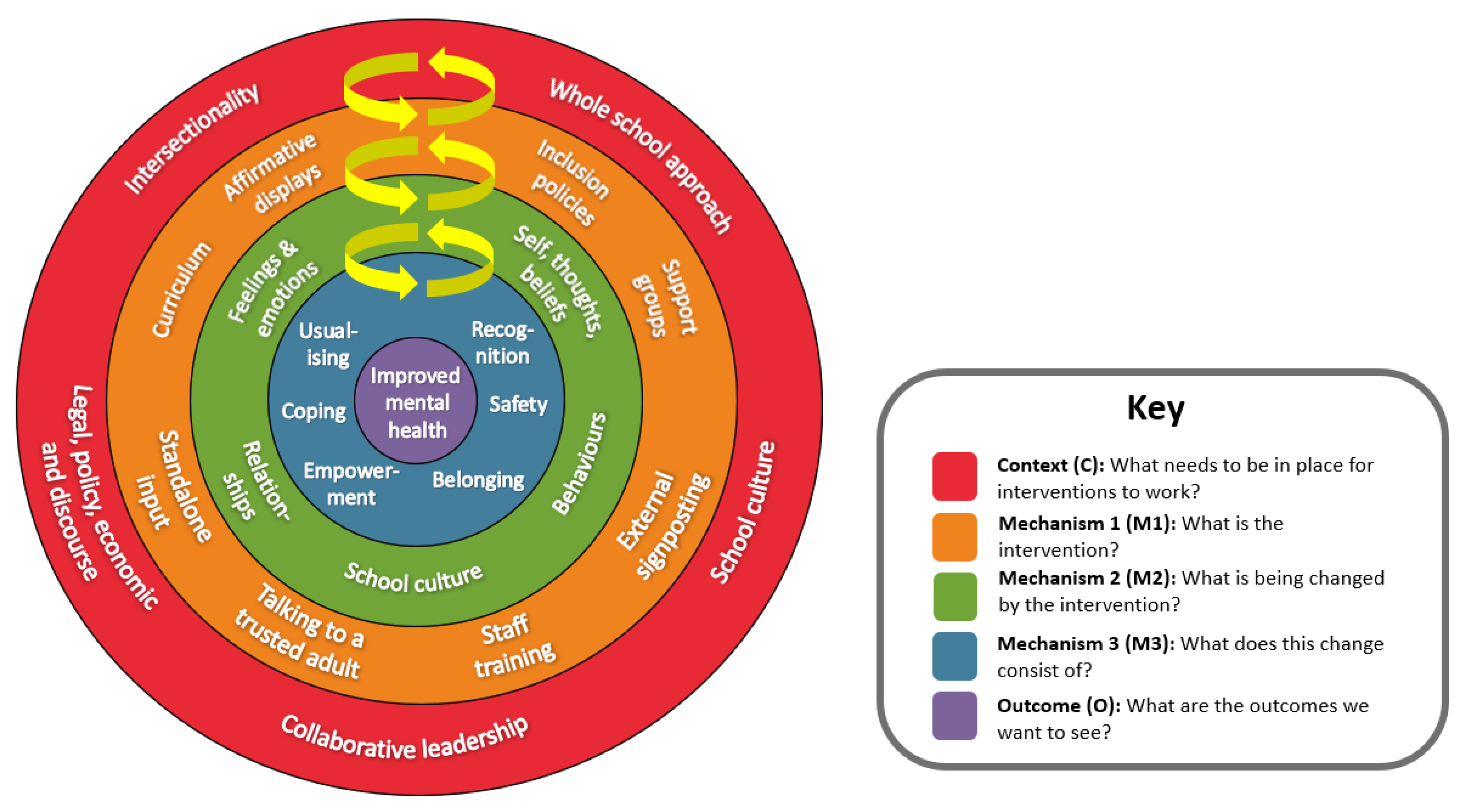
Our model (diagram above) has three levels at which interventions may work, on psychological, behavioural, emotional, cultural, and social levels. It explains how school-based interventions that directly tackle dominant cisgender and heterosexual norms can improve LGBTQ+ pupils’ mental health. 

Our findings

We found that contextual factors such as a ‘whole-school approach’ and ‘collaborative leadership’ were crucial to the delivery of successful interventions. Our theory suggests three ways (causal pathways) that might improve mental health:
  1. Interventions that promote LGBTQ+ visibility and ‘usualise’ the presence of LGBTQ+ identities, school belonging, and recognition.
  2. Interventions for talking and support that develop safety and coping.
  3. Interventions that address institutional school culture (staff training and inclusion polices) that foster school belonging, empowerment, recognition, and safety.
Our findings suggest that providing a school environment that affirms and ‘usualises’ LGBTQ+ identities, and that promotes school safety and belonging can improve mental health outcomes for LGBTQ+ pupils. The causal pathways we present are a starting point as theories, however more research to develop our understanding of how school interventions work to improve school climate and the mental health of LGBTQ+ young people is needed. We now need the UK, and other countries, to take seriously LGBTQ+ young people’s rights and ensure they are afforded equal respect and protection as their peers in schools. We may then find that the mental health of LGBTQ+ young people improves.

Read the full research paper here: Understanding How School-Based Interventions Can Tackle LGBTQ+ Youth Mental Health Inequality: A Realist Approach, 28/02/23

Funded as part of the NIHR School for Public Health Research (SPHR) Public Mental Health programme, the Creating LGBTQ+ Affirming School Environments (CLASS) research project, led by Professor Liz McDermott, aimed to investigate the mental health impact on LGBTQ+ young people of school-based interventions. Fuse is a founding member of the NIHR SPHR.


Friday, 10 February 2023

Treats: a helpful reward, or to be approached with care?

Posted by Anita Attala, Lead Adult Weight Management Dietitian from Northumbria Healthcare NHS Foundation Trust, and research team from Teesside University

We all like to have a ‘treat’ and to give ‘treats’ to others. Indeed, the use of food, and in particular what we in public health call ‘high fat, sugar, and salt’ containing foods or ‘HFSS’, are often chosen as rewards. The notion of food cultures is certainly a social anthropological (study of humans) concept, with an example being the use of food in positive reinforcement; using ‘treat’/HFSS foods to reward children in particular. Taken at ‘face-value’ such treats may appear harmless, however repeated use of HFSS in this way has been shown to physiologically influence the human food reward system, and impact on our ability to regulate how much food we eat. This, together with other detrimental impacts, has led to advice not to regularly use food as a reward. Research has also shown that using food rewards in adults can hinder healthy weight management, especially from a psychological perspective.

But what exactly is a ‘treat’? Why do we feel the need to ‘treat’ someone? Are ‘treats’ always a positive experience or can they be used in a detrimental or harmful way?

While working in a forensic service I saw patients gain weight, and often gain this weight very rapidly. I also noted that some staff seemed frustrated and concerned about the weight gain some patients experienced. However, I also noticed that HFSS food was frequently used as part of patient care. This sparked my interest in wanting to understand this apparent conflict.

Forensic services provide care for people with a severe mental illness or learning disability, who have committed a crime but are too vulnerable to be in prison. For example, they are high risk either to themselves or the public, and therefore are unable to live in the community. People in these environments are often here for a long time and are reported to die 15-20 years prematurely, often from avoidable diseases. There are often restrictions imposed on the person and their environment. These restrictions will depend on the level of security required and the risk posed by the patient, and can be directed by the Ministry of Justice. An example of a restriction might be the person is not able to leave the ward.

Limited research seems to have been undertaken around the use of HFSS food ‘treats’ for adults, let alone adults who are in hospital. Yet, it is something many of us seem primed to do – bring (HFSS) food to someone when they’re ill.

The word ‘treat’ conjures up a particular thought of food – which is often high in calories, high fat and high in sugar. What you view as a ‘treat’ and how to ‘treat’ can often have been learnt in childhood and can differ from person to person. But, while it is entirely possible to have a non-food ‘treat’, it’s often harder to think of one and can be more difficult to provide while in hospital (particularly one with restrictions such as forensic wards).

You could argue that ‘treats’, by definition, can only be a ‘treat’ if you don’t consume them on a regular basis. As research shows, regular behaviours of any kind, can soon develop into habits.

Wanting to learn more about the use of ‘treats’ to show care and kindness, particularly in a hospital setting, I applied for research funding from my Trust (Cumbria, Northumberland, Tyne and Wear NHS Foundation Trust). Also, in 2020, I was successful in obtaining a clinical academic internship with Health Education England (HEE) and the National Institute for Health and Care Research (NIHR). Both awards enabled me to research the use of treats in forensic inpatient care settings.

Using this funding, I decided to focus on whether ‘treats’ were being used to prompt a particular behaviour from a person, while in inpatient care settings; whether these ‘treats’ impacted on a person’s weight and physical health; and why treats were chosen and if it was related to ideas of care and kindness. Certainly, from my observations this is what seemed to be happening - often perhaps unconsciously – but this research allowed us to evidence what may be happening.

What we found

Our research into treats in the health care sector has now been published. It found that treats were used for a number of reasons including:
  • Being an affordable way to reward someone
  • An incentive to encourage patients to participate in activities, and
  • A way to express love/care for someone.
Of course, food as a bonding mechanism is not a new phenomenon, and the idea of certain foods providing comfort is well-established.

It’s entirely possible to have ‘treats’ as part of a healthy balanced diet, and that the origin of using HFSS as treats may be from a place of nurture, but the advice is that food treats should be infrequent and limited in quantity. While it would appear ‘easy’ to say that those working in institutions, like in NHS care services, need to be mindful of how food is being used, our research findings suggest that it may take a much bigger system/cultural change to reduce the use of HFSS as treats in services. I think the idea of a ‘positive food culture’ is useful here. One where the focus is on preserving and nurturing good health and wellbeing through the use of healthy, positive, food behaviours, attitudes and values.

Authors:

Anita Attala, Lead Adult Weight Management Dietitian from Cumbria, Northumberland, Tyne & Wear NHS Foundation Trust, and postgraduate student from Teesside University.

Jo Smith, Consultant Dietitian (Clinical Academic) from Tees, Esk and Wear Valleys NHS Foundation Trust, and PhD student from Teesside University

Amelia Lake, Fuse Associate Director and Professor of Public Health Nutrition from Teesside University

Dr Emma Giles, co deputy-lead of the Fuse Behaviour Change Theme and Associate Professor Public Health from Teessside University


References:
  1. Alonso-Alonso M, Woods SC, Pelchat M, Grigson PS, Stice E, Farooqi S, Khoo CS, Mattes RD, Beauchamp GK. Food reward system: current perspectives and future research needs. . Nutr Rev 2015;73(5):296-307. https://www.ncbi.nlm.nih.gov/pmc/articles/PMC4477694/
  2. Roberts L, Marx JM, Musher-Eizenman DR. Using food as a reward: An examination of parental reward practices. Appetite 2018;120:318-326. https://doi.org/10.1016/j.appet.2017.09.024
  3. Hsu A BA. Designing for Psychological Change: Individuals’ Reward and Cost Valuations in Weight Management. J Med Internet Res 2014;16(6). https://www.jmir.org/2014/6/e138
  4. Attala A, Smith J, Lake AA, Giles E. Investigating ‘treat culture’ in a secure care service: a study of inpatient NHS staff on their views and opinions on weight gain and treat giving for patients in a forensic secure care service. J Hum Nutr Diet 2023; 1-13. http://doi.org/10.1111/jhn.13129
  5. Human Relations Area File. Craving comfort: bonding with food across cultures. 2023; Available at: https://hraf.yale.edu/craving-comfort-bonding-with-food-across-cultures/
  6. Mingay E, Hart M, Yoong S, Hure A. Why We Eat the Way We Do: A Call to Consider Food Culture in Public Health Initiatives. International journal of environmental research and public health 2021; 18(22) https://www.ncbi.nlm.nih.gov/pmc/articles/PMC8623951/

Friday, 21 October 2022

Stigma: Where’s the Harm?

Posted by Dr Michelle Addison, Assistant Professor, Durham University

Stigma is a knotty, ugly problem we have in society: it marks out (often painfully) what is considered shameful, abject or contra to social norms, and impacts vulnerable and marginalised people the most. It seems intuitive to say it is unfair and unjust, but why then does it persist? 

Discussions of stigma are not new; we are all generally aware that stigma is something to be avoided and we could all very likely give some examples of it in action – benefit claimants, people who use drugs and ex-offenders are often easy targets and regularly feature in news headlines because stigma continues to be sensational – it elicits a voyeuristic feeling that is both intoxicating and a warning to us too. The use of stigma is further exacerbated by the ‘Cost of Living Crisis’, ‘Rising Interest Rates’, Fuel and Food poverty, and the withholding of the Government White Paper on Health Inequalities. We understand then that stigma is harmful, and yet we recognise it is powerful to those who can wield it.  

Erving Goffman discussed stigma using the concept of the ‘spoiled identity’ whereby certain aspects of who you are become discredited and devalued in his now infamous work Stigma: Notes on the Management of Spoiled Identity (1963/1990). This notion of a spoiled identity is also implicit in his observations of patients residing in ‘asylums’, the conditions impacting these people, and the roles of those working there (1961). Indeed, Goffman was acutely interested in the medicalisation and performance of roles in these settings and how behaviour was shaped by social expectations of ‘in-mates’, ‘guards’ and ‘medical staff’. The treatment of patients, he noted, was complexly bound up with expectations of socially acceptable roles and the reinforcement of discredited behaviours and identity.

What we learnt from this is that stigma matters in the social organisation and hierarchies of people and places in medicalised and wider social settings. But what tends to fly under the radar in early stigma research is the question of ‘in whose interests’ does stigma serve?  Professor Imogen Tyler later critiques Goffman’s work (2020) in her book ‘Stigma: The Machinery of Inequality’ for overlooking the power relations that are integral to how we understand stigma, and why indeed, stigma continues to persist. Tyler shows us that there is a ‘craft’ to how mechanisms of stigma operate and function to maintain political power and a social order that hinges on systemic and structural inequalities around class, race, gender (and not limited to) to reproduce privilege for the dominant factions. This is a hugely important step in stigma research because it draws attention upstream to how and why stigma is weaponised (Scambler, 2018) and the social harms that impact marginalised and minoritised individuals and communities in society – which is the subject of my forthcoming article (Addison, 2023). This is further evident in the recent Stigma Kills (2021, 2022) campaign launched by the NHS Addictions Provider-Alliance which gives credence in particular to the impact that stigma has on the health and wellbeing of those communities that are most harmed through health and social inequality.

This growing concern about the effects of stigma on health and wellbeing, arising out of social harm, led to our recent Fuse event Inequalities, Social Harm and Weaponised Stigma: Emerging Research and future priorities which brought together academics, practitioners and the public to discuss these key issues. I presented work from my Wellcome Trust research looking at stigma and how this relates to health inequalities amongst people who use drugs. In this study I highlight how the weaponisation of stigma is harmful, negatively impacts physical and mental health, and inhibits health seeking behaviours for fear of being judged and marginalised by service providers and the wider public.

Joanne McGrath discussed her NIHR funded research into women living with multiple disadvantage and complex needs and how they access services. In this talk she highlighted how escalating problems around homelessness, stigma and deteriorating physical and mental health have a cumulative impact in women’s lives.

Our ‘expert by experience’, Margaret Ogden, shared moving insights into the effects of stigma on her own life and how her mental health was harmed as a result.

Later, Mark Adley discussed his Doctoral work (which is funded by the NIHR Applied Research Collaboration (ARC) North East and North Cumbria (NENC)) and his recently published paper which explores stigma within-groups towards people who use the drug Spice. In this talk, Mark showed how intersections of identity mattered and how increased contact with people who used Spice helped to reduce levels of stigma. He highlighted the role of education programmes within service provision to help draw attention to the harms arising out of stigma and how practitioners might mitigate these effects.

This event was also an opportunity to launch our new Palgrave edited collection Drugs, Identity and Stigma (Addison, McGovern and McGovern, 2022). Our book calls attention to the impact of stigma experienced by people who use illicit drugs, and through this we show that stigma is powerful: it can do untold harm to a person and place with longstanding effects. Through an exploration of themes of inequality, power, and feeling ‘out of place’ in neoliberal times, this collection focuses on how stigma is negotiated, resisted and absorbed by people who use drugs. Dr Kelly Stockdale, a contributor to the book, spoke at our Fuse event and shared insights from our research into the challenges of navigating a custodial environments (prison and police) and the impacts of stigma from the point of view of people who use novel psychoactive substances (NPS). Collectively, our work in this area brings together a range of frameworks and data and draws attention to the damaging effects stigma can have on health inequalities, recovery, mental health, recidivism, and social inclusion.

Our knowledge and understanding of the harms that stigma does to health and wellbeing is still growing – as such, it is critical that developing stigma research becomes a priority in future inequalities research agendas, against a backdrop of political and economic crises. Whilst the social determinants of health are often tangible and measurable, providing the much-needed evidence base to tackle widening health inequalities, it is imperative that we think differently and critically about how stigma operates. In my own research I have tried to show that stigma operates at a symbolic level meaning it is not possible to treat stigma as something which is material and objective, to say ‘here is stigma’ – we must think more deeply about stigma as inscribed with meaning that becomes apparent through its effect on and between people (see also Addison, McGovern and McGovern, 2022).

I called this blog ‘Stigma: Where’s the harm?’ to be a little provocative to you, reader – on the one hand, stigma is so normalised in our society that we forget to see it, so I encourage you to pause and reflect on where the harm resides – like a million little paper cuts, stigma is painful and gets under the skin doing very real harm. On the other hand, my question is also a call to action to understand how and why stigma is weaponised, and how it leads to social harm amongst under-heard and underserved people. It is my strong belief that this is vital work if we are to tackle and reduce widening health and social inequalities right now.  


References:

Addison, M. (forthcoming, March 2023) ‘Framing Stigma as an Avoidable Social Harm that Widens Inequality’ in Emery, J., Powell, R., and Crookes, L. (eds.) The Sociological Review Special Issue

ADDISON, M., MCGOVERN, W. & MCGOVERN, R. E. (eds.) (2022) Drugs, Identity and Stigma, Houndsmill, Basingstoke and Hampshire, Palgrave Macmillan.

ADLEY, M., ATKINSON, A. M. & SUMNALL, H. R. (2022). Including the multiply excluded: a mixed methods study exploring intragroup stigma towards people who use synthetic cannabinoid receptor agonists. Drugs: Education, Prevention and Policy. DOI: 10.1080/09687637.2022.2025766

GOFFMAN, E. (1990) Stigma: Notes on theManagement of Spoiled Identity, London, Penguin Books

GOFFMAN, E. (1961) Asylums: Essays on the Condition of the Social Situation of Mental Patients and Other Inmates, London, Penguin Books

SCAMBLER, G. (2018). ‘Heaping blame of shame: 'Weaponising stigma' for neoliberal times’. The Sociological Review Monograph, 66, 766 - 782.

SINGH, S. (2019) available at: https://samiasingh.com/

TYLER, I. (2020). Stigma, The Machinery of Inequality, London, Zed Books.


Images:

1) Artwork by Samia Singh, https://samiasingh.com @samiasingh_art

2) Book: Drugs, Identity and Stigma, © 2022 Springer Nature Switzerland AG. Part of Springer Nature, ISBN : 978-3-030-98285-0, https://link.springer.com/book/10.1007/978-3-030-98286-7#about-this-book

Friday, 30 September 2022

Going beyond research to empower involvement and smash stereotypes

Posted by Sheena Ramsay, Professor of Public Health & Epidemiology, (and team: Emma Joyes, Emma Adams, Laura McGowan) in collaboration with Fulfilling Lives Newcastle Gateshead Experts by Experience

The way researchers approach some groups is often not sensitive to or inclusive of their needs. For example, the information can use technical language (such as ‘licit substances’ or ‘quasi-experimental’) which can be difficult to understand and off-putting. This can lead to people not wanting to take part in studies. Which means that new research insights, including changes to practice, can exclude those who are often most impacted.

Over the last two years, we have been working with Fulfilling Lives Newcastle Gateshead and their Experts by Experience Network of individuals with lived experience of multiple disadvantage. We have explored perceptions of services and programmes relating to oral health and related health behaviours - such as substance use, smoking, and diet - for people who experience severe and multiple disadvantage (a combination of homelessness, substance misuse, and offending). From the beginning, the Experts by Experience Network has shaped our work and helped us ensure it is accessible to those we want to speak to the most.

One of the ways that the Network has shaped our research is by helping us to create a video to help reach out to potential participants for our research - particularly people who are often excluded in research studies, such as people experiencing homeless.


Our team worked with the Experts by Experience Network to look at ways to get people involved in the research. We wanted to work with those who had insights into the issues we hoped to study, so that we could communicate the research in a way that would resonate with people. Together, we co-created an animated video as a means of reaching out to people, so they could find out about the research and how to take part.

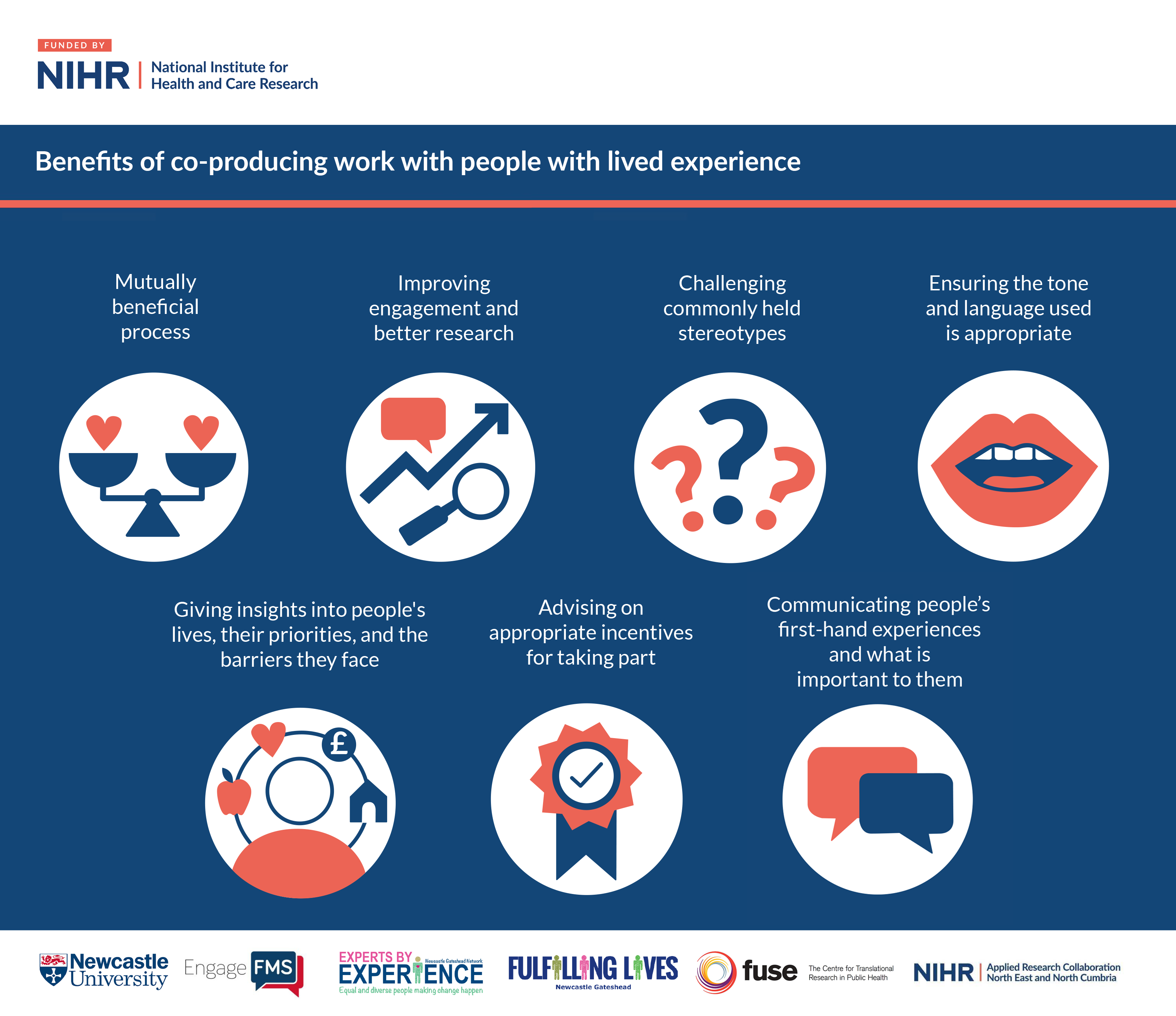
The infographics in this blog show what we have learnt from this process of co-creating the video and the value of co-production.


Creating a video provided an easy way in which organisations (such as Crisis, Fulfilling Lives, and other providers) and local Expert by Experience networks could share information about the study.

Those involved in creating the video were able to draw upon their experiences to help shape the content. One of the members of the group shared their experience of the process:
“Some of us in the Network feel really strongly about this issue and have personal experience of it ourselves so we were keen to be involved and share our ideas and opinions.”
Another member said:
“I joined this project because my own oral health has been something I've been embarrassed about in the past so I thought I could add something useful to this work.”
We have tried to map out how we designed our video in the image below.


The video has also been shared nationally with a wide range of organisations that support severe and multiple disadvantage groups in Newcastle and Gateshead, London, and Plymouth to promote engagement with policy and commissioners, local authority, criminal justice system, primary care, and third sector organisations. Producing a video was no easy feat, but it was a simple way of sharing our research with people who are pressed for time. You can check out the video below.


A clear benefit of engaging with people with lived experience was having their input on how best to communicate our research widely. They provided real-life stories and examples, which helped create the narrative for the video. They helped challenge stereotypes of ways in which people can be portrayed in research studies - this resulted in modifying the images and language used in the video which were much more realistic and sensitive to the people we were wanting to engage. This has helped our research team become more aware of and appreciate the importance of stereotyping and how it can result in putting people off taking part in research.

The benefits reached beyond the research team and the video (the below infographic highlights some of these), as many of the Experts by Experience echoed how involvement has led to them feeling empowered and one member wrote a blog about their experience.


We plan to build on this collaboration as we continue our research and gain further input on findings from our study and next steps.


This study ‘Improving the oral health and related health behaviours of adults experiencing severe and multiple disadvantage: evidence synthesis and qualitative stakeholder research’ is funded by the NIHR Policy Research Programme (grant reference NIHR200415). The video was supported by Newcastle University Engage FMS. The views expressed are those of the author(s) and not necessarily those of the NIHR or the Department of Health and Social Care.

Tuesday, 9 August 2022

How Covid-19 changed the takeaway landscape

Posted by Callum Bradford, Research Associate, Teesside University

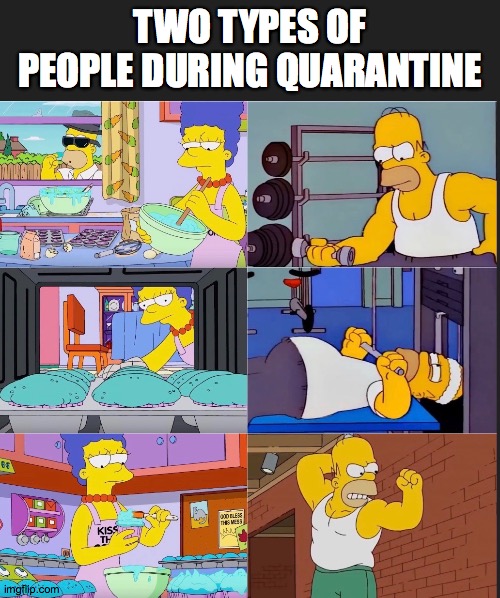
During the Covid pandemic, you may have seen the memes for how there are two types of people during lockdown. First there were those who used lockdown as an excuse to exercise more, eat well, and generally take care of themselves in a manner of which they had never had the time for previously. Then there were those who out of sheer boredom, decided to drink and order takeaway on more days than not as it was ‘something to do’.

As you can probably guess, I very much fell into the second category.

To my detriment, takeaways typically sell food which is relatively cheap, high in calories, low in nutritional value, and (annoyingly) very appetising; all delivered to your front door in a matter of minutes. Now I don’t want to come across as anti-takeaway, or anti-business, there is a place in our society for unhealthy food, nor do I blame anyone else for my questionable dietary choices. However, I’m sure most of us agree that we can have too much of a good thing at the impairment of not only our own health, but also the health of the high-street.

Apparently I’m not the only one who is too easily tempted by takeaways, with local governments implementing planning regulations to further prevent this takeover-of-takeaways, in the knowledge that our willpower is often lacking. You’re likely familiar with some of the rules already in place, such as no takeaways within 200m of a school, or that most restaurants and pubs can only provide takeaway food on an ‘ancillary’ basis.

However, with the Covid-19 lockdowns pubs and restaurants lost their ability to trade. In an attempt to combat the potential loss of business, the government introduced new temporary measures allowing these businesses to trade as takeaways, without needing to apply for planning permission. In other words, my options for takeaway just increased threefold, and by ordering-in I was ‘doing my bit’ to keep businesses open.

As we were now stuck indoors, every occasion was now an excuse for a takeaway; Birthday? Takeaway. Passed Uni? Takeaway. Anniversary? Slightly fancier takeaway with cocktails (highly recommend).

With these temporary regulations in mind, we consulted with various planners, public health leads, and environmental health officers from across the North East, to better understand how these regulations were impacting their roles, alongside any public health trepidations they may have (if my diet alone wasn’t enough cause for concern).

The main theme throughout our conversations was an overwhelming sense of uncertainty. Covid had an unprecedented impact on the priorities of local authorities. Because of this, they could not organise the infrastructure needed to identify how many businesses were choosing to trade as takeaways. Even today as we slowly return to a sense of normality, the role of collecting this data appears to be unassigned as authorities play catch-up on work lost to Covid. Therefore, as you can imagine, gauging the impact of these regulations became very challenging and speculative. There was also uncertainty around how and when these regulations would end, or what elected members planned to do (if anything) about the potential long-term consequences to health.

Surprisingly, the main finding from our research had little to do with the regulations themselves, but rather how Covid has accelerated change in the takeaway landscape. During Covid, we all developed new habits (for better or worse); one of which was the use of online delivery services such as Deliveroo and Uber Eats.

Despite the temp Covid regulations now ending, with these delivery services, many businesses that could not originally offer takeaway now can, and local authorities have limited ability to prevent them from doing so since they aren’t technically providing the deliveries themselves. A quick search on Deliveroo in Middlesbrough for example offers me delivery for Burger King, Starbucks, and Creams Cafe. None of these options are well-known as takeaways, but all now provide the delivery of unhealthy food. And although these services were technically available pre-Covid, the pandemic has led to a huge increase in their popularity, allowing for more unhealthy-food options and the changing of shopping habits. There are also traffic implications. Have you ever tried to walk through Liverpool city centre during lunch hour? Attempting to dodge Deliveroo riders on their bikes as you stroll through town is quite the experience.

To summarise, the Covid pandemic had an unparalleled impact on public health professionals, to the extent that the government implementing new regulations regarding takeaways was considered low priority. Ambiguity surrounding the impact of these regulations remains, with the ending of the regulations becoming somewhat nullified given the rise of online delivery.

In conclusion I offer some advice. if you’re trying to eat healthier, writing a blog post on takeaways whilst doing ‘research’ on Deliveroo, might not be the wisest of ideas – speaking from experience.

Monday, 20 June 2022

Father's Day is a reminder that men’s mental health is everyone’s concern

Posted by Heidi Stevens and Katie Webb, Researchers from the Department of Health Sciences at University of York.

** Content/trigger warning: mental health, depression, suicide **

It cannot have escaped your attention that Sunday was Father’s Day (happy belated wishes to all the dad’s out there!), but did you also know that it was the culmination of Men's Health Week?

The campaign run by the Men’s Health Forum encourages men everywhere to give their bodies and minds an MOT and includes resources to boost mental wellbeing.


This and other campaigns like Movember try to raise awareness that, for our sons, fathers, brothers, partners…for wider society… men’s mental health is everyone’s concern. Sadly, men’s mental health in general is looking quite poor.

Having just completed work as a research associate on an NIHR Applied Research Collaboration North East and North Cumbria (ARC NENC) funded project focused on severe mental illness, I started a fresh project in a completely different area of mental health at the University of York. Namely, men’s mental health.

Until I applied to work on this research, I had honestly never considered men’s mental health as I had generally always been female gender focused. Traditionally, women’s poor health is viewed as a product of social circumstances, while men’s poor health has been seen as a product of men’s ‘bad behaviour’. Working on this research has revealed a completely different perspective and as such I have developed a lot more empathy towards men’s health.

In England, suicide is highest among men and is the leading cause of death for men aged 20-34 (Men's Health Forum). Similarly, records within NHS ambulance services indicate that the risk of suicide amongst paramedics who are men is 75% higher than the general population (Mars, 2020). Other industries also show higher rates of depression amongst workers who are men, such as construction workers and utility workers, sometimes due to long or unsociable work hours.

Despite this poor picture, only 36% of referrals to psychological therapies are men (Mental Health).


So why is this?

גברים אמיתיים לא אוכלים קיש
Sjustdoitright, CC BY-SA 4.0, via Wikimedia Commons

Barriers to improving men’s mental health relate to hegemonic ideals. Although men range in class, age, sexuality and ethnicity, the theory of hegemonic masculine identity in western society embodies shared attributes of stoicism and restriction of emotions to which many men may have been socialised or expected to conform. As such, some men may find it challenging to express or take action in response to ill health as they feel this may make them appear weak or not masculine (Galdas, 2005 )

For example, 38% of employed men with mental health concerns feel that their employer will think badly of them if they take time off for a mental health appointment (Men's Health Forum).

Then there is the use of coping strategies such as substance misuse. Generally, men tend to deal with health problems by seeking refuge in addictions or ignoring treatment needs, as such common mental illness such as depression often remains undiagnosed. In the UK, since 2001, rates of alcohol-specific deaths for men have consistently been more than double those for women (ONS).

The World Health Organization (WHO) states that achieving gender equality requires men to be engaged in transforming patterns of care, including self-care. This may include tailoring health interventions to men and involving men from all backgrounds in the role of mental healthcare co-production and promoting the positive aspects of masculinity such as humour and goal-orientation.

This year in the UK, the All-Party Parliamentary Group (APPG) on men and boys’ issues have been urging the Government to develop a men’s health strategy with a focus on inequalities stating that this would benefit not just men and boys but also women and girls. So, for our sons, fathers, brothers, partners…for wider society, let’s promote a wider understanding of men’s health issues.


Our research in the Mental Health and Addictions Research Group (MHARG) at the University of York aims to prevent the development of common mental illness among male frontline NHS workers. With funding from Movember, we will deliver a brief Behavioural Activation intervention which will be carefully tailored to men with guidance from our consensus group of NHS staff from diverse roles. Behavioural Activation is an evidence based talking therapy which aims to break the cycle of avoidance created by low mood or anxiety, by reinstating valued and meaningful activities.

To find out more please see our links below or feel free to contact us.


Images: 
  1. 'FVHjjxFXEAAaBos' with thanks to Men's Health Forum.
  2. Sjustdoitright, CC BY-SA 4.0, via Wikimedia Commons.

Friday, 28 January 2022

Science, and the art of communication

Posted by Louis Goffe, Research Associate, NIHR Policy Research Unit in Behavioural Science

Brian Deer - Copyright cleared
“He’d found no cure for Crohn’s, or remedy for autism, no vaccine, no nothing in medicine. But now he was a man delivering fear, guilt, and disease to everywhere with an internet connection.”
Brian Deer, The Doctor Who Fooled the World


It wasn’t a scientist, not a medical doctor, nor an esteemed health institution, but Brian Deer, an investigative journalist, who researched, compiled, and detailed to the world ‘The fraud behind the MMR scare’. While the adjective to his profession alludes an expectation to the discovery of truth, it’s his journalistic craft that effectively communicates with passion and clarity how the now struck off doc and his associates formulated the non-existent relationship between MMR and autism.

Health promotion takes more than good science, there is
 an art to the delivery.  Photo by Jon Tyson on Unsplash

Deer lays out the complete narrative in his book The Doctor Who Fooled the World. It’s as gripping as your favourite thriller, though with the added heart-sinking poignancy that it is not a work of fiction. While I was keen to write a book review, others do this better, I considered what’s the take-home for those of us in translational research in public health.

I’m a researcher for the NIHR funded Policy Research Unit in Behavioural Science, where we ‘use behavioural science evidence, theory and methods to support decision-making’. Our approach is rigorous and grounded in scientific theory. However, the pandemic has brought into sharp focus that health promotion takes more than good science, there is an art to the delivery. I mean, how else have the sceptics convinced so many that wearing a face covering could be detrimental to health?

Prior to the Medicines and Healthcare products Regulatory Agency approval of the first COVID-19 vaccines, research institutions, health, and Government bodies had been virtually silent on the development process. Some were also critical of how the initial results were released to the world. This reservation to engage with a non-academic audience is partially understandable, we deal in uncertainty and it’s much more than simply crossing the i's and dotting the t's. No researcher worth their h-index wants to put something out into the world that they can’t back-up empirically. The sad fact is though, if we’re not on the front foot keeping the public informed of the vaccine trial process and approval milestones, then there’s a flock of 'quacks' more than happy to work their grift.

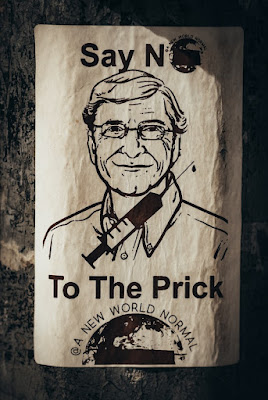
To their credit, they work with the religious zeal of a missionary, flooding every corner of the internet knowing our vulnerability to the illusory truth effect. While promotion is focused on social media, their word is also preached in podcasts and proliferated through e-commerce. Take a look at Amazon. Their charitable programme AmazonSmile has reportedly donated thousand of dollars to a vaccine misinformation soil pipe, and high ranking books on “vaccines” include: ‘Anyone who tells you vaccines are safe and effective is lying’, ‘The COVID vaccine: and the silencing of our doctors and scientists’, and ‘Vaccine-nation: poisoning the population, one shot at a time’. There is also the subtly titled: ‘******’s review of critical vaccine studies’, that gives the allusion of a systematic review (though don’t expect it to be listed in the Cochrane Library) but shares a publisher with the essential intergalactic phrasebook ‘Ambassador between worlds’ that provides answers to: What do extraterrestrials think about our religious beliefs, sexual attitudes, and goals in life? But most depressing of all, prominence is given to the book authored by the struck off doc, the man at the centre of Deer’s investigation.

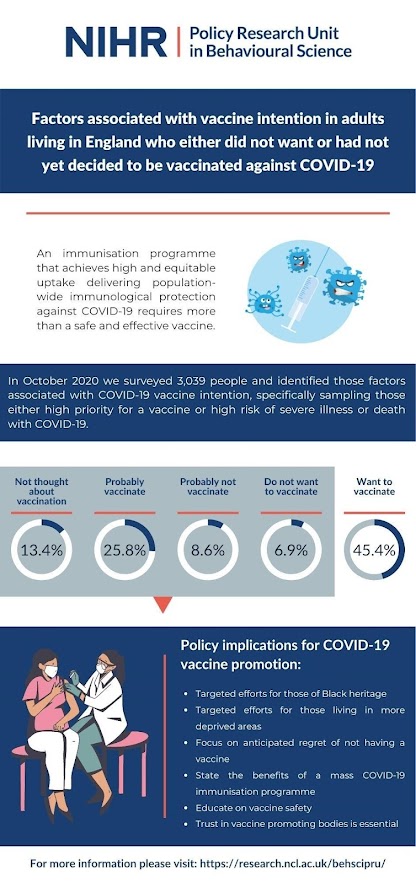
Before the first COVID-19 shots were available, to understand vaccine attitudes my Unit delivered a survey using belief-based statements in adults living in England who did not want, were yet to consider, or were not sure whether to vaccinate against COVID-19. This included their agreement to some of the more 'out-there' theories, including our own fictionalised theory that “Mass coronavirus vaccination is a ploy by environmental lobbyists to sterilise billions of people to reduce population growth”, to which 117 (7%) of respondents agreed to. While my literary intention here is to shock, I suspect that the pandemic has made you immune to such statistics. The problem is that once such views have taken root the typical counter arguments using facts are insufficient, and potentially detrimental in combating misinformation.

The vaccine rollout has been the biggest, most ambitious immunisation programme ever in the UK. It’s a historic achievement by the NHS, ably supported by the Vaccine Taskforce. But as we now reflect, it’s my view that if the Government, healthcare providers and research institutions had provided a cohesive, timely, and responsive informative service that detailed and provided a status update on vaccine development, this would have gone a long way to allay many people's rightful concerns. Sadly this reticence to comment continues as speculation increases over approval of jabs for younger children.

The public has shown an enthusiasm to learn a wealth of terminology during the course of the pandemic. My Unit’s work on the comprehension of antibody testing has shown that this isn’t easy, but it’s something that we shouldn’t shy away from. Patient and public involvement in research is vital to ensure that our lay outputs are fit for purpose and we should all consider how we can be better at science translation. Speaking on camera or on live radio is incredibly nerve-racking and not for all, but as I recently discovered following a two-hour training course, you don’t need a degree in design to produce a half decent infographic.

While I am advocating for your individual action, we also need to consider what systems, for example the new UK Health Security Agency, could put in place to fulfil the role that was missing during the pandemic. Most pressingly on our horizon is the delayed childhood vaccine strategy. The struck-off doc will be feeling emboldened. He understands and has mastered the artistic skill of communication, delivering his message with the gentle assured cadence of a BBC continuity announcer. In the absence of substantiated evidence, he expertly sows doubt and fear to the masses, and as the infodemic has shown, he is not alone. This is a huge challenge for us in public health research and the online vitriol is scary. But building the evidence-base isn’t enough, we all need to work on at least one aspect of the artistic craft of research promotion. Because if it’s not you, you can be assured that someone else most certainly is.


The views and opinions expressed by the author are those of the author and do not necessarily reflect those of the Policy Research Unit in Behavioural Science, the NIHR, the Department of Health and Social Care, Newcastle University or Fuse, the Centre for Translational Research in Public Health.

The Policy Research Unit is funded by the National Institute for Health Research (NIHR) [Policy Research Programme (Policy Research Unit in Behavioural Science PR-PRU1217-20501)]. The views expressed are those of the author(s) and not necessarily those of the NIHR or the Department of Health and Social Care.


Images: 

1) Lourenço Veado, CC BY-SA 4.0, via Wikimedia Commons
2) Photo by Jon Tyson on Unsplash