Showing posts with label transport. Show all posts

Friday, 13 May 2022

Planning for a healthier future?

Posted by Tim Townshend, Professor of Urban Design for Health, Newcastle University

Can we plan for a healthier future by intervening in the built environment? You may be surprised to find out this is not a new idea! Indeed, the very concept of Town Planning emerged in the last quarter of the 19th Century out of a concern for public health and to help prevent the spread of infectious diseases such as cholera.

Ebeneezer Howard - ‘slumless, smokeless’ garden cities

The resulting Victorian terraces, with fresh water supplies and internal toilets may seem unimaginative, but they were a huge improvement on what went before - and did indeed prove a boon to public health. What’s more many still provide decent homes today.

Early planning thinking was also dominated by a vision that the physical health attributes of the countryside – access to open space, clean air and fresh food could be combined with social and economic (mental health) benefits of the city – including opportunities for education, access to culture and wider social contacts. Such thinking is typified by the Garden City Movement associated with Ebenezer Howard and realised - at least in part - in towns such as Letchworth in, Hertfordshire.

Health was at the core of planning for much of the 20th century, however, in the post-war period it became eclipsed by other issues - particularly the need for economic regeneration. Consequently, the health and well-being impacts of the way our towns and cities were developing was not considered carefully enough.

“...primarily designing around the needs of the private car - rather than humans - has been a disaster.”

In retrospect, primarily designing around the needs of the private car - rather than humans - has been a disaster.  Busy roads now cut noisy polluted swathes through communities; poorer neighbourhoods find themselves served by ‘toxic high streets’ – a deadly mix of nutritionally poor food, subprime financial services, betting shops and other potentially harmful outlets; and vast tracts of poor-quality new build housing - devoid of adequate open space, or local services - have been constructed in the suburbs.  At the same time rates of obesity (and associated health/well-being consequences), respiratory and so-called ‘lifestyle’ diseases have all soared. Moreover, these impacts are not felt equally across all neighbourhoods, and health inequalities unjustly burden the poorest in society.   

 Interlinked themes explored in Healthy Cities? Design for Well-being
It does not have to be this way, however. We can plan for a healthier future and create places that support individuals and communities to take healthier lifestyle choices. In ‘Healthy Cities? Design for Well-being’ I explore five inter-related topics and the ways in which the goal of a healthier future can be achieved.

There is for example a large and robust evidence base around our need for urban greenspace (as was highlighted so graphically during the COVID-19 lockdown period). Green (and blue) spaces in our cities not only facilitate physical activity and socialisation (positive for physical health and mental well-being) but can mitigate against issues such as, air and noise pollution, ‘heat islands’ (the significant heat increases in urban areas as compared to their surroundings) and alleviate flood risk. Crucially, however, greenspaces have also been shown to reduce stress levels and help restore cognitive capabilities - for example concentration levels - just by being there.  

Planning policies can also be used in conjunction with public health goals to tackle specific health issues. A great example of this, is the development of planning guidance and regulation to tackle the further spread of hot food takeaways – a key component of my ‘toxic high street’ concept, which I explore in more detail in the book.  While planning cannot tackle existing businesses it can limit further spread, especially in sensitive areas – for example near schools, as research has proven the link between hot food availability and overweight/obesity in older children. Issues we will explore at the Fuse Research Programme Meeting “Planning for a healthier future: Priorities and Practicalities” on May 18, 2022, at Teesside University (and available online).

Therefore by encouraging those aspects of the built environment that support healthy lifestyle choices, while constraining those aspects we know are linked with less healthy lives, healthier places are within our grasp – but this can only be achieved if we collaborate across disciplines and garner the political support required to make it happen!


Healthy Cities? Design for Well-being is available to order now


Image:

1. Howard, Ebenezer. "Diagram of a group of slumless smokeless cities.". 1898. From Ebenezer Howard, "To-morrow: A Peaceful Path to Real Reform" [London, 1898]. https://www.aaeportal.com?id=40518. Web. 12 May. 2022.

Tuesday, 3 December 2019

Scaling the mini Matterhorn - risk and adventure with a disability

Posted by Llinos Jehu, Research Associate with AskFuse, Teesside University

Llinos introducing the blog and speaking about her experience of epilepsy

Happy ‘International Day of Persons with Disabilities’! That day set aside by the United Nations to ‘promote the rights and well-being of persons with disabilities in all spheres of society’.

There’s a lot to be happy about. When I was diagnosed with epilepsy in the 1970’s, the world was a very different place. I got used to being treated as a fire and safety hazard (so not allowed into some buildings or events), a risk (so refused insurance), and a liability (excluded from school trips ‘just in case’). Given all the gloom and doom, it’s amazing that I turned out to be such a boringly average sort of person, never knowingly causing anything to spontaneously combust.

Roseberry Topping has been compared to the Matterhorn in the Swiss-Italian Alps
And generally I am happy living as someone with epilepsy, identifying as a disabled person. But then I attend something like the launch of the NIHR Applied Research Collaboration (ARC) in North East & North Cumbria, and get told that I’m going to die 10 years before everyone else. OK, they didn’t actually say that, they didn’t necessarily mean me. But people living with a disability or long term condition are at risk of premature mortality, and that risk isn’t always linked with their condition. For me, good epilepsy management is dependent on taking medication like clockwork. Seizures don’t stop me from taking my medication, but having to remember to order a repeat prescription just might: not more than 10 working days before I run out, but not less than 8 working days as it takes time to process. Good epilepsy management requires a good standard of physical and mental health: managing the weight-gain that the medication can cause, managing stress and anxiety, getting a good night’s sleep. Most people want to achieve some of the things on that list. Epilepsy doesn’t stop me from travelling with my job or going out to see friends; that’s caused by poor public transport. Unless I actually drop down with a seizure (and there’s no reason that I should), epilepsy won’t stop me from doing a 16 mile hike across the Moors. Barriers are more likely to be caused by people asking me, ‘Are you sure you should? Is it safe? Is it wise?’.

Speaking to Steph Kilinc about her research on the experiences of people living with adult-onset epilepsy

So what would make me happy, and possibly live a bit longer? Good, accessible, affordable public transport for starters. And a text from my pharmacist to say that my meds are ready to collect – after all, they know I’m a responsible person who takes them as instructed. They also know I’m not the sort of person who will stock-pile meds to sell on the internet or feed to my goldfish! The text wouldn’t just make sure I had the meds to take, it would make an enormous contribution to reducing levels of stress and anxiety. It would make me feel that I was viewed as an adult with a range of competing demands on my attention, rather than an old child with nothing else to think about.

Phil and Llinos on how technology helps them to navigate both walks and public transport

What already makes me happy is that I’ve had a life filled with friends who’ve supported and encouraged me. They’ve helped to keep the stress and anxiety levels down, to get the good night’s sleep, to manage the risks and have the adventures. There’s still lots to be unhappy about. Sometimes I’m really, really angry. Hate crime targetting disabled people, increasing levels of inequality: sometimes there can seem little to celebrate. But for this year’s event I’ve walked up Roseberry Topping on a glorious day, accompanied by two great friends: Phil Jeffries who’s a very experienced walker and happens to be partially sighted, and Steph Kilinc, a member of Teesside University’s Behaviour, Health and Resilience Research Group who happens to be a somewhat less experienced walker. We’ve compared Steph’s research findings with our own experiences of living with a disability. Phil’s shown how technology can help someone with a visual impairment to read maps (actually how to interpret maps, he was good at orienteering before his sight loss and there’s only so much technology can achieve). Together we’ve managed to navigate the public transport system and arrived at the same place and at the same time. I’m not stressed, I’m not anxious, I’ll take my meds and have a good night’s sleep. I’ll leave being angry until tomorrow, when I might follow up on those ARC presentations and find out what’s to be done to address that premature mortality risk.


References:
  • Stephanie Kılınç a,. The experience of living with adult-onset epilepsy, Kilinc S, van Wersch A, Campbell C, Guy A, Epilepsy & Behvious 73 (2017) 189-196
  • Thomas R & Barnes M, 2010, Life expectancy for people with disabilities NEUROREHABILITATION Volume: 27 Issue: 2 Pages: 201-209

Friday, 12 April 2019

Making the rural a bit more idyllic

Guest post by Christina Dobson, Research Associate, Institute of Health and Society, Newcastle University

Ah, the countryside. The home of all that is natural and healthy, the epitome of the ‘good life’. Where you can stroll down the lane to collect fresh eggs or veggies from your neighbour, simply dropping your money in the honesty box left at the end of their drive. I grew up in a rural area, and still live in one now. I love that I only have to walk (more like dawdle - I have a very curious and distractible three year old!) for 10 minutes (five minutes without said three year old) from my front door and I am in the North Yorkshire Moors National Park.

And it seems that living in a rural area could actually be good for you in a number of ways. You are likely to be more satisfied with your life, experience better health overall, and live an average of two years longer than people in urban areas. Maybe it’s the un-polluted air, the connection between land and food, the sense of belonging and community? Or maybe that is just a myth, sold to us all through Postman Pat?


Because, actually, living amidst the beautiful rolling hills may not be so good for you if you develop cancer. In fact, it may even put you at greater risk of developing certain cancers and make you less likely to survive your cancer. With roughly 20% of the population of England living in a rural area, this poses a serious public health problem.

However, we don’t really know why rural patients are facing poorer survival rates than urban patients. One of the strongest factors is that cancer is often diagnosed at a more advanced stage in rural patients, limiting the treatment options available to them. We know that delays in diagnosis are strongly linked to advanced stage cancers, and, as such, encouraging early diagnosis has been central to UK cancer policy for over a decade.

When we begin to think about where diagnostic delays may be occurring for rural patients, it seems that they are investigated and diagnosed just as quickly as urban patients, after referral to hospital for specialist assessment. It follows then that there may be problems prior to referral to hospital that are slowing down rural cancer patients’ diagnoses, either in the way patients respond to symptoms, or the way they are managed in primary care.

Thanks to funding from Yorkshire Cancer Research, and alongside colleagues from Aberdeen and Glasgow, we are starting to look for answers to some of these questions. This study will involve interviewing people in rural Yorkshire to understand their experiences of bowel cancer symptoms and decisions around if, how, and when to seek help about them. The findings from these interviews will be used to work with local communities to think about what interventions we may be able to design to encourage people in rural areas to present to their GP and, hopefully, increase the likelihood that their cancer is diagnosed at an earlier stage and that they will survive.

It is an exciting study, as there is so little known about symptom experiences in rural populations, with lots of issues to explore. For instance, availability and regularity of public transport, provision of health care services in rural areas, hidden poverty, cultural beliefs and experiences of ill health and employment, to name but a few. And then there’s the messy complexity of defining the ‘rural’, or maybe we should be looking to instead describe the multitudes of ‘rurals’? Plenty to keep me busy!

With the arrival of National Bowel Cancer Awareness Month it’s been valuable to reflect on the importance of this study and the opportunities and challenges that lie ahead. Understanding some of the barriers to timely presentation that exist for rural populations, and devising ways to overcome them is our challenge for the next two years, and beyond. Maybe, longer term, we can help to make the ‘rural’ a bit more idyllic.

Friday, 15 June 2018

The Government’s new Clean Air Strategy – hope or hype?

Dr Susan Hodgson, lecturer in Environmental Epidemiology and Exposure Assessment at the MRC-PHE Centre for Environment and Health, Imperial College London

© 2018 Imperial College London
Air pollution was been high on the agenda at Imperial College London recently, with Environment Secretary Michael Gove choosing to launch the Government’s new Clear Air Strategy at Imperial’s Data Science Institute[1]. To coincide with this launch, Health Secretary Jeremy Hunt announced a new tool, developed by Imperial and the UK Health Forum, to help local authorities estimate the health-care costs due to air pollution - an estimated £157 million from exposure to fine particulates and nitrogen dioxide across England in 2017[2].

Academics and researchers worldwide have worked over many decades to produce an evidence base of high quality research which now clearly links air pollution and health. Globally, 4.2 million deaths are attributed to outdoor air pollution, with 91% of the world’s population living in areas where air quality exceeds health-based guidance limits[3]. Figures for the UK also make grim reading, with an estimated 40,000 deaths per year attributable to outdoor air pollution[4]. While research on this topic makes an unequivocal case for action, Government policy to improve air quality for public health has been found lacking, with the UK (along with France, Germany, Hungary, Italy and Romania) being taken to the European court of Justice for failing to meet EU limits for nitrogen dioxide.

© 2018 Imperial College London
The new Clear Air Strategy[5] outlines how the Government plans to protect the nation’s health. The stated intention of halving the number of people living where concentrations of fine particulate matter are above 10μg/m3 - the concentration of an air pollutant is given in micrograms (one-millionth of a gram) per cubic meter air or 'µg/m3' - by 2025, if achieved, would reap a significant health dividend. However, the focus on a ‘personal air quality messaging system to inform the public…about the air quality forecast [and] air pollution episodes’ places onus on individuals to avoid exposure, rather than creating clean and safe environments within which to live. While there is a place for such messaging, when more than 2000 education/childcare providers across England and Wales are within 150m of a road breaching the legal limit for Nitrogen dioxide pollution (25 of which are in the North East and more than 1500 in London)[6], is it clear that a population based approach is required to tackle this pressing public health issue.

The Strategy also restates the previously announced plan to phase out conventional petrol and diesel cars and vans by 2040, to be replaced by zero exhaust emissions vehicles. This is a positive step, but not sufficient to tackle traffic-related pollution. What comes out of the exhaust represents less than half of vehicle emissions; ‘clean’ vehicles will still generate pollution from tyre and brake wear, and re-suspension of road dust, as explained by Imperial PhD student Liza Selley in her 2016 Max Perutz Science Writing Award-winning essay[7].

The Strategy proposes steps to address not just road traffic pollution, but also shipping, aviation, agriculture and industry, and links health, the environment and economy, marking a welcome move away from silo thinking. There is also mention of ‘appraisal tools and accompanying guidance…to enable the health impacts of air pollution to be considered in every relevant policy decision that is made’ – it is not clear if this extends beyond policy decisions on air pollution, i.e. represents a move towards a coherent ‘health in all’ approach[8], but, if so, would represent a welcome prioritisation of health across Government departments.

© 2018 Imperial College London
Focussing on cleaner vehicles and technological solutions can only offer a partial solution to reducing the impact of air pollution on health, so it is good to see modal shift towards public transport and active transport is mentioned (briefly) in the Strategy. There are funds to support bus and rail infrastructure to improve public transport, and an ambition to double the levels of cycling by 2025 - though this would only raise levels from 2% to 4%, compared to 39% in the Netherlands[9].

If the Government is serious about adopting a more holistic approach to the environment, health and economy, then I feel far more could have been made of the great potential to tackle air quality, sustainability and health collectively. We need ambition and vision to create sustainable cities, and approaches to transport and living that reduce air pollution and additionally tackle inactivity and obesity, which are key drivers of population health. Barcelona’s Institute for Global Health recently launched its #CitiesWeWant initiative[10], which highlights some of the features we need to be prioritising in our cities to benefit future health and wellbeing. We have the research evidence to support these priorities, but Governments will require buy-in from experts and demand from the public to enact bold change. Those passionate about improving our environment for health have the opportunity to voice their views via the Government consultation on this newly launched Clear Air Strategy, which will inform a National Air Pollution Control Programme due March 2019.


The views represented here are those of the author, Dr Susan Hodgson.

Susan is a lecturer in environmental epidemiology and exposure assessment at the MRC- PHE Centre for Environment and Health at Imperial College London. Her research focusses on understanding how interactions with our environment (including air pollution), influences health.

More details at: www.imperial.ac.uk/people/susan.hodgson


References:
  1. https://www.imperial.ac.uk/news/186390/michael-gove-launches-governments-clean-air/
  2. https://www.imperial.ac.uk/news/186406/air-pollution-england-could-cost-much/
  3. http://www.who.int/airpollution/en/
  4. https://www.rcplondon.ac.uk/projects/outputs/every-breath-we-take-lifelong-impact-air-pollution
  5. https://consult.defra.gov.uk/environmental-quality/clean-air-strategy-consultation/user_uploads/clean-air-strategy-2018-consultation.pdf   
  6. https://unearthed.greenpeace.org/2017/04/04/air-pollution-nurseries/
  7. http://www.insight.mrc.ac.uk/2016/10/14/braking-perceptions-of-traffic-pollution/
  8. http://www.who.int/healthpromotion/frameworkforcountryaction/en/
  9. https://ec.europa.eu/transport/road_safety/specialist/knowledge/pedestrians/pedestrians_and_cyclists_unprotected_road_users/walking_and_cycling_as_transport_modes_en
  10. https://www.isglobal.org/en/ciudadesquequeremos

Friday, 27 April 2018

Responsibility for addressing obesity in local authorities: a changing landscape?

Posted by Dr Amelia Lake, Fuse Associate Director, Reader in Public Health Nutrition at Teesside University and Tim Townshend, Professor of Urban Design for Health at Newcastle University 

Planning and obesity has been in the news again – it’s a topic that is hotly debated in local authorities across the country.

In April 2013 public health came ‘home’ to local government. This coming home meant a shift from the NHS to closer collaborations with other local authority colleagues. We wondered what it meant in reality, how did local authority staff from two disciplines - public health and planning - see their role around obesity prevention in this changed landscape? Our research [1], conducted between November 2013 and March 2014) explored the views of individuals working in public health and those working in planning within local governments on their responsibilities for addressing obesity using spatial planning.


We know that planning policy can impact on people’s wellbeing and health in terms of access to food and the environment encouraging physical activity. Using planning policy to tackle health problems such as obesity may not be novel but it could help tackle a global problem.

Our research was based in North East England. We interviewed three Directors of Public Health, one Deputy Director and four planners with a range of seniority.

There were some clear differences in their approaches to the issue of responsibility. Planners were asked about responsibility for obesity, physical activity and community nutrition. They saw a clearer link between planning and physical activity than with community nutrition, primarily citing sustainable transport, path provision and recreation, though one identified takeaways. One planner said, “At the end of the day, it’s down to the individual to address their obesity (Planner 4)”.

These differences in views on responsibility for health would suggest a difference of understanding amongst some within local government about the complex causes of obesity and how to address inequalities. However, one planner did point out that it is health professionals’ responsibility to “make the link” between planning and health, “because I don’t think people from planning would start from a health improvement stance”. This has implications for leadership and leadership roles.

Overall, our interviews identified a range of barriers to engaging with planners, including an insufficient understanding of the causes of obesity and the importance of addressing obesity via multi-agency approaches (involving cooperation between several organisations), fragmentation in the health system and conflicting priorities. Planners could be better engaged in the obesity agenda via formal incentives (e.g. written within planners’ job descriptions or regulations), and aligning priorities via ‘soft approaches’ (e.g. public health leadership roles).

There have been attempts to reunite health with planning. International evidence has highlighted the transdisciplinary (involving investigators from different disciplines) effort required to tackle obesity due to its multifactorial nature (it has, or stems from, a number of different causes or influences) and underpinning health inequalities. However, there appears to be little evidence that English planners have engaged with the new public health agenda. No detailed investigation has attempted to fully understand the barriers to engaging planners in health issues.

Gateshead City Council’s award winning
Supplementary Planning Document
Despite our region having national recognition for planning policies (see Gateshead City Council’s award winning Supplementary Planning Document), there are clearly some issues around increasing responsibility within the area of planning and health. However, this is a rapidly developing field. A recent survey of authorities in North East England, showed that all, bar one authority, now has, or is in the process of developing, guidance to prevent the proliferation of hot food takeaways (with some policy already being tested at appeal). Furthermore, a chance for planners and public health officers to meet to discuss the issue at a Fuse event on 21st May 2018 has been greeted with much enthusiasm. This suggests attitudes may be changing, particularly with planners engaged with policy development, who appreciate that health may line up with other planning aims such as protecting shopping area vitality. We will report on this soon.


The event on planning for health will be held on May 21st in Newcastle.  To register or find out more visit the event page on the Fuse website.

Reference:

Friday, 26 May 2017

Postcards from a public health tourist #1: Montréal, Québec, Canada

Posted by Clare Bambra, Fuse Associate Director and Professor of Public Health, Newcastle University

A few of our academics are lucky enough to have the opportunity to travel around the world to speak at conferences or explore collaborations - all in the line of work and the translation, exchange and expansion of knowledge of course.

The least we could expect is a postcard, to hear all about the fun that they're having while we’re stuck in the office watching droplets of rain compete to reach the windowsill…

So here’s the first from Professor Bambra.


Dear Fuse Open Science Blog,

I spent late April and May 2017 as a visiting Professor at the Institute of Research in Public Health, part of the University of Montréal. I was the guest of Professor Louise Potvin who is a leading international researcher in health promotion and the editor-in-chief of the Canadian Journal of Public Health. She was an amazing and generous host.

Me (bottom right) with Louise Potvin (centre) - an amazing and generous host
I had a really enjoyable and fruitful time both intellectually and socially at the Institute. It is an exciting place to be as a health equity researcher. They are leading the field in health equity research in Canada and alongside the other Montréal universities and the municipal public health agency, they have set up the joint Lea Roback Centre which examines health equity. There I was honoured to deliver the annual Paul Bernard lecture on social determinants of health – you can watch a video of the talk here.

I was also an invited speaker at the World Health Summit speaking alongside Ilona Kickbush (World Health Organization Europe) and Connie Clements (Canadian National Collaborating Centre on the Determinants of Health - NCCDH) about the legacies of the Ottawa charter. The NCCDH is tasked with integrating health equity and the social determinants of health into Canadian public health practice. Jane Philpott, the Minister of Health for the Federal Canadian government also gave an inspiring speech at the summit about the importance of the social determinants of health and her journey from being a family doctor to a leading politician.

Montréal experienced unprecedented rain and flooding while I was there
Montréal is an amazing place to visit, an extremely vibrant multicultural bilingual city with great restaurants and a very welcoming feel to it. It was very exciting to be there in 2017 as Canada celebrates 150 years and Montréal celebrates its 375th year. However, weather wise Montréal experienced unprecedented rain and flooding while I was there with many homes and businesses evacuated and the army required to provide emergency support.


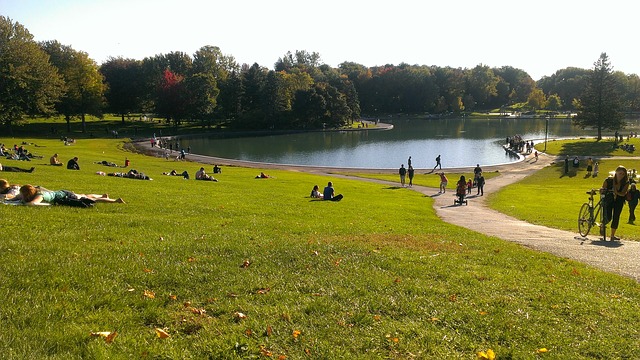
Montréal is also an interesting place from a public health perspective, it’s a city with a lot of green spaces and a variety of parks and recreation areas. It’s a very safe place to be, and very walkable - unlike other areas of North America. Public transport costs are low with a flat rate on the Metro and the buses of around $3. They also have a shared bicycle scheme called Bixi - which is free for a cycle ride of up to 30 minutes.

However, Montréal and Canada are of course not without their own public health problems. There was very visible homelessness. The Montréal health gap is 11 years between the most and least affluent neighbourhoods and most significantly, the Inuit and indigenous populations have average life expectancies of only 70 years - 10 years less than the average Canadian. Inuit health is understandably a key focus for health equity researchers in Montréal - including former Fuse associate Mylene Riva. She is now researching the effects of housing conditions and food security on the health of Inuit people in Arctic Quebec.

So a very useful visit for me and I was able to make good future connections for the Fuse Health Inequalities research theme.


Photo attribution: