Showing posts with label collaboration. Show all posts

Friday, 11 September 2026

Strengthening partnerships to improve primary care in the Deep End

Posted by Dr Angela Wearn, Associate Member of Fuse and Advocacy and Engagement Lead for the Deep End Network North East and North Cumbria

In this blog, Angela reflects on what people living in some of the region’s most disadvantaged communities have told the Deep End Network about challenges they face when it comes to accessing primary care, including attending appointments, and what we can do to improve this.

The Deep End Network is a growing GP-led international movement that began in Glasgow in 2009 as a response to the ‘inverse care law’, which is that those who need care the most often struggle the most to access it.

The North East and North Cumbria Deep End Network was established in 2020, with support from Fuse, the Centre for Translational Research in Public Health, and the NIHR Applied Research Collaboration North East and North Cumbria, creating a space for practitioners working in areas of severe socioeconomic disadvantage to share experience, shape solutions, and influence how primary care can better meet the needs of the people it serves.

Funded by the North East and North Cumbria Integrated Care Board, the Deep End Network focuses on four core priorities:
  • Workforce: Building and retaining a well‑supported workforce in high‑need communities.
  • Education: Strengthening training at all levels so current and future health professionals understand health inequalities and access to opportunities
  • Advocacy: Ensuring Deep End practices and communities shape local and regional decisions on funding, access and service design.
  • Research: Evaluating Deep End initiatives to understand what works, why it works, and how effective approaches can be scaled to improve outcomes.
Since 2023, I’ve been working as Advocacy and Engagement Lead to build and strengthen partnerships between Deep End communities, practitioners and researchers, ensuring the experiences and perspectives of underserved patients and communities inform both our research portfolio and the wider support and initiatives we offer practices.

Over this time, additional funding and support from across NIHR infrastructure, including the NIHR Applied Research Collaboration North East and North Cumbria, NIHR Three Schools and NIHR Research Delivery Network, has further supported targeted involvement and engagement work with those living in Deep End neighbourhoods, the majority of whom have had no previous experience of involvement in research or service development.

Support through the NIHR Three Schools collaboration was made possible through membership of Fuse, which is part of the NIHR School for Public Health Research, one of the three NIHR schools within the collaboration.

What we’re hearing from Deep End communities

Many Deep End patients face multiple, overlapping challenges including low income, insecure housing, poor mental or physical health, caring responsibilities, trauma, or homelessness. These pressures make it harder to engage with primary care, even when people want to.

Through conversations, workshops, and community-led sessions, people have shared why engagement can feel difficult:
  • Personal pressures: the emotional and practical effort of attending can feel overwhelming and ‘too much’ on the day of the appointment.
  • Feeling unheard or stigmatised: which makes reaching out feel pointless.
  • Time and capacity: life can be busy, chaotic, and demanding, with health often taking a backseat.
  • Overwhelming contact routes: getting through to the practice or accessing a suitable appointment can feel impossible.
  • Negative past experiences: GP practices don’t always feel welcoming or safe.
Overall, I regularly hear that disengagement is rarely about disinterest, it’s about the collective barriers that build up and make staying connected to care difficult.

What communities say needs to change

Improving patient engagement in Deep End areas is complex. There is no single fix, and practices are working under significant resource constraints. But through our involvement work, communities have highlighted three priorities for investment and change that they feel would make a meaningful difference:
  • Improve connection and communication
  • Strengthen co‑design approaches
  • Build sustainable, community‑based partnerships
These priorities align strongly with national ambitions around personalised care, prevention, and reducing inequalities, and they reflect what people say would help them feel more able to engage with primary care as the wider system shifts towards more integrated neighbourhood-level working.

Moving forward together

The NHS encourages practices to work closely with Patient Participation Groups (PPGs), but Deep End practices face additional challenges: limited resources, diverse patient needs, and complex barriers to involvement. From the community perspective, awareness of PPGs is low, confidence is often limited, and many people are unsure whether their voice will genuinely matter. To support better partnership working, the Deep End Public Advisory Group identified three simple involvement principles that are easy to remember and act upon, and clear enough to come back to when things get busy or complex:
  • Make it easy
  • Make it worthwhile
  • Value patient experience
These principles are practical, community-informed and can be applied across a range of contexts to guide diverse involvement.

New one‑page resources for practices

To help bring these messages to life, we’ve co‑developed two infographics with Deep End patients, communities, and Nifty Fox. They distil community insights into quick, usable one-page resources that GP practices and other decision-makers can draw on to strengthen engagement and build more inclusive partnerships.

Supporting Patient Engagement in the Deep End: insights from the community
Working Better Together in the Deep End: patients and GP practices as partners

These resources will sit alongside a wider collection of materials, including a public‑facing animation and an illustrated impact report, which will be shared over the coming months. A celebration event is planned for early next year.


Why this matters

The Deep End Network exists because tackling health inequalities requires more than goodwill, it requires meaningful partnerships and system‑level commitment. These new resources are an important step in supporting practices and others to work alongside communities in ways that feel respectful, realistic, and rooted in the experiences of people who face the greatest barriers to accessing and influencing the care they receive.

We hope they support teams across the North East and North Cumbria and beyond to strengthen relationships, reduce barriers, and create primary care environments that are more responsive to the needs of communities most affected by health inequalities.

If you would like to know more about partnership working, co-production or our involvement work in the Deep End please contact Dr Angela Wearn (angela.wearn@newcastle.ac.uk)

Find out more about the Deep End Network

About the author
Dr Angela Wearn is Advocacy and Engagement Lead for the Deep End Network North East and North Cumbria and a Research Fellow with the NIHR Applied Research Collaboration North East and North Cumbria. She is also an Associate Member of Fuse, the Centre for Translational Research in Public Health.

Friday, 21 August 2026

Training tomorrow’s Public Health leaders: impact, innovation and prevention

Posted by Liz Morgan, Head of School for Public Health North East, NHS England

The North East Public Health Postgraduate Specialty Training Programme holds an event annually to showcase the work that has been done by trainees over the previous year. This annual showcase highlights how public health trainees in the North East are delivering practical, high‑impact work across the health and care system, demonstrating the value of prevention-led leadership at a time of increasing system pressure. It not only celebrates the tremendous work our trainees have been doing but also provides an opportunity to share that work with public health colleagues in multiple settings During this time, our trainees will have been immersed in communities, health and health-related systems and research environments, identifying challenges, designing solutions and implementing projects that demonstrate innovation and impact. The projects presented at our last meeting ranged from heath protection and health improvement to policy development and healthcare public health. Each one reflected the commitment, curiosity and compassion that defines our public health workforce.


Tackling air pollution through NHS leadership


Most NHS Trusts in the North East employ at least one public health consultant, valuing the broad benefits that this can bring, but also providing greater capacity for public health training. Dr Laura Keast had been undertaking a placement in Northumbria NHS Trust, implementing the Clean Air Hospital Framework and demonstrated the value of collaboration between public health and sustainability teams. Air pollution remains the single greatest environmental threat to public health in the UK, contributing to an estimated 30,000 deaths annually and worsening health inequalities. By making air pollution a tangible and locally relevant issue through accessible monitoring of nitrogen dioxide levels and clear health messaging, the initiative has generated engagement and momentum for action. Importantly, the project highlighted that public health leadership, data expertise, powerful health messaging and alignment with national policy levers are critical in overcoming uncertainty and organisational resistance to change.

Reducing missed outpatient appointments for children

Dr Mark Riley presented a service evaluation undertaken at South Tees NHS Trust exploring why children are not brought to outpatient appointments, an issue with significant implications for health outcomes and system efficiency. Using surveys and follow-up telephone calls, the evaluation identified five key themes:
  • appointment timing
  • forgotten appointments and reminders
  • administrative barriers
  • health literacy
  • cost of attendance.
Forgotten appointments were the most common reason for non-attendance, with parents strongly favouring clearer and more frequent text reminders. Difficulties rearranging appointments, confusing letters and limited awareness of travel cost reimbursement schemes further contributed to missed care. The findings underscore how relatively small, system-level changes, such as health-literate communications in multiple languages and flexible appointment scheduling to include evenings, can reduce inequalities and improve service use. Finding a champion in the organisation to enable change was also critical.

How leaders make difficult priority-setting decisions

As pressures on the NHS intensify, difficult decisions about how to allocate limited resources are unavoidable. Dr Tom Seasman explored how senior health leaders justified priority-setting decisions. Qualitative in‑depth interviews with leaders across the English health system show broad support for prevention and reducing health inequalities. However, when faced with real-world trade-offs, decisions often favour short-term frontline clinical care over long-term preventative investment and leaders differ in their responses. Clinical leaders often prioritise immediate need and the “rule of rescue”, while those approaching the same problem from a public health perspective place greater emphasis on maximising population health gains through prevention. Political constraints, emotional proximity to patients and fragmented funding structures frequently limit leaders’ ability to shift resources from acute care to prevention, despite widespread recognition that long-term sustainability depends on doing so. These findings raise important questions about how the health system can better support leaders to make transparent and ethical trade-offs.

Policing and public health: prevention in action

Prevention also featured strongly in work exploring collaboration between policing and public health. This is important because of shared commitments to improve lives, reduce harm, reduce unnecessary demand on services, reduce vulnerability, improve equity and maintain public trust. Since the publication of a national consensus statement in 2018, prevention has become more explicitly embedded within policing policy and inspection frameworks. A 2025 review concluded that, while the original vision remained relevant, a refreshed consensus was needed to reflect current challenges and language. Kylie Murrell led on this national project, chairing the policing and public health collaborative, leading on the re-drafting of the document and sign off and associated ministerial briefing. The work highlights both the appetite within policing to engage more fully in prevention and the ongoing need for public health professionals to support cross-sector partners to identify upstream opportunities to reduce harm, vulnerability and demand. It's also an excellent example of how our trainees have led on national initiatives.

Supporting wellbeing within the public health workforce

Alongside the ongoing system-level challenges, attention to the wellbeing of the public health workforce itself is increasingly recognised as essential. Vineeta O’Key reflected on the work the trainees had been doing to support their own wellbeing and on how a Wellbeing Away Day could demonstrate how evidence-based wellbeing approaches could be embedded within training and professional development. Grounded in the “Five Ways to Wellbeing”, the day prioritised connection, learning, physical activity and engagement with nature through volunteering with Durham Wildlife Trust. Feedback highlighted the value of protected time for relationship-building, reflection and compassionate leadership, reinforcing the role of wellbeing as both a personal and professional competency in public health practice.

Julie Lowe presented her experience of travelling to Canada and the Netherlands on a Churchill Foundation fellowship. The Foundation funds approximately 100 Fellows each year to travel overseas to explore an issue of societal importance. This project focused on community interventions to improve the health and wellbeing of unpaid caregivers, who, as a population, experience poorer mental and physical health outcomes known informally as the ‘carer burden’. She shared reflections from her own experience as a young carer and motivation for choosing a career in public health. Findings from her experience included the importance of listening to diverse groups of carers to understand their needs and preferences, and the need for interventions that reduce carer burden rather than responding to health needs as they arise.

Taken together, these projects reflect a common theme: public health impact is maximised through leadership, collaboration and a commitment to prevention, even in constrained systems. Our trainees are already having an impact in their placements and communities by shaping national priorities, supporting workforce wellbeing and building partnerships beyond health. Creating spaces like this conference where recent projects and ideas can be shared, and challenges are explored are vital and demonstrates how public health continues to be pivotal in navigating complexity and working towards more equitable and sustainable futures. I would strongly encourage all of our public educators and senior public health colleagues to attend this event. As Public Health influencers, the task of considering, adapting and altering these ideas and interventions for the benefit of the populations we serve rests with us.

Friday, 16 May 2025

"We cannot afford to wait" - a call to prioritise support for people living with severe mental ill-health

Posted by Dan Steward, Research Assistant at Newcastle University, and the WHOLE-SMI Community Advisory Group and research team, for Mental Health Awareness Week

Fuse colleagues advocating the words of public contributors in mental health research
People living with severe mental ill-health (SMI) often face profound inequalities in both their physical and mental health - and the systems designed to support them are not always equipped to meet their complex needs. That is why we launched WHOLE-SMI (Wellbeing and HOListic health promotion for people with Severe Mental Illness), a programme of research led by Fuse researchers at Newcastle University, focused on understanding how services can better support the whole health of people living with SMI.

Our work set out to answer a vital question: How can we use the resources we already have to do more for those who need it most?

To find out, we engaged with a wide range of voices across the North of England: people with lived experience of SMI, those who commission services, GPs, and frontline staff. We wanted to understand what support is currently available, what the biggest challenges are in accessing it, and how services could be improved. This collaborative approach gave us deep insights into what is working and where real change is urgently needed.

At the heart of our project was a community advisory group made up of individuals with lived experience of SMI. This group worked alongside us from start to finish. They helped shape our questions, guide our focus, and ensure the findings reflected what really matters. Their input was not just advisory - it was transformational.

Together, we identified the most important messages from the research and created clear, compelling headlines to communicate them. We also co-wrote a letter to Prime Minister Sir Keir Starmer, urging the new government to take immediate action. With the recent announcement that NHS England will be abolished, we believe this moment is critical. There is a unique opportunity to rethink how health services work for people with severe mental ill-health, and we must not let it pass us by.

"We need you to be an advocate for those living with poor mental health and be compassionate and vocal in committing to service improvements." 

                                                          Quote from the letter to Prime Minister Sir Keir Starmer


We share our open letter respectfully, but with urgency. Too often, people with SMI are overlooked or underserved. They deserve care that supports all aspects of their health: physical, mental, emotional, and social. We hope this work sparks meaningful dialogue and real change in how services are designed and delivered.

Please read more about the WHOLE-SMI programme and access our findings here.

If you would like to get in touch, please contact Professor Emily Oliver.

Because no one should have to wait for the support they deserve.


Read the full letter below

------------------------------------------------------------------------------------------------------------------------------------------------------------------------------------------------------

Wednesday, 7 May 2025

Understanding the ‘zoppie buzz’ in Teesside

Posted by Hannah Poulter, Teesside University, Visiting Research Associate, University of Bristol

Hannah's post coincides with International Harm Reduction Day, which is observed each year on 7 May and is dedicated to harm reduction approach to drug addiction.


At the conclusion of our research into Heroin Assisted Treatment (HAT) in the North East of England, so many questions remained for me, one of which was: What’s with the zoppie (zopiclone) ‘buzz’ in Teesside?

Teesside gets quite a bad reputation when it comes to drug and alcohol use, which perhaps isn’t surprising when you consider in Middlesbrough you’re more likely to die from a drug related death than a car crash. What we don’t often hear about is the ongoing innovative and groundbreaking work to create solutions to complex problems such as those spanning multiple public budgets - health, justice and social care.

Through our research on HAT we got an insight into the havoc caused by street tablets (such as zopiclone) in Middlesbrough, a story also found in other places within Teesside and further afield. Street tablets are defined as illicitly manufactured prescription-like tablets (that look similar to prescription medication in packaging) bought from illicit sources (street dealers) and used without medical advice.

The prevalence and availability of street tablets here, such as zopiclone, combined with their adverse health consequences and impact on treatment engagement makes a rather toxic combination of risk factors for people who are already vulnerable. I feel empathy for both the marginalised people struggling with their addiction to street tablets (amongst other substances), who felt that there was no feasible offer of treatment for them and the healthcare practitioners tasked to support them, with little advice to draw upon beyond ‘don’t take them’.

While we found there were pockets of great work being undertaken, we also saw that the work wasn’t particularly joined up and that there were lots of gaps in knowledge:
  • What was the appeal of zopiclone in Teesside, a seemingly unique feature of the local drug market here?
  • What do people who use street tablets think could be done to help improve treatment?
  • How could we increase knowledge, collaboration and capacity between local practitioners, academics, people with lived experience and the police to address this public health issue together?
As an Early Career Researcher with a ‘non-standard’ research career (I had a career in business development, research and policy in the housing sector prior to re-entering higher education), I was both confident and daunted by the prospect of leading a project in this area.

Confident because I was sure I could achieve this as I had led on, and been part of many projects focused on collaboration, capacity development and research in the past. Daunted because this was one of the first projects I had led in my own research area as an academic, and I wanted to prove that I was able to do so alongside delivering academic outputs and impact.

I feel proud and relieved now this project is over and am incredibly delighted that we delivered extra value for the funders alongside some solid impactful work in this important area. Here’s a summary of our work:

Engaging people who are often less well represented in research and involving them in the process and co-production of solutions to addressing street tablet use.

One workstream of this project used Community Based Participatory Research with a lived experience researcher, Peter DaSilva from Recovery Connections. With Peter’s knowledge of the local drug market, operating context, and behavioural factors we were able to engage some of the most marginalised people at risk of a drug related death into the research process.

I am so passionate about lived experience recovery organisations and their crucial work using lived experience to engage and retain people in treatment. We have a publication on this currently under review with the Harm Reduction Journal.

Understanding the harms associated with zopiclone use and unique features of the zopiclone market in Teesside.

Several smaller spin off projects have been developed as a result of this grant. We delivered two student projects which involved speaking to healthcare practitioners (HCPs) in Teesside about their perceptions of street tablet usage. I’m currently working with Dr Jenny Scott at the University of Bristol to combine our data with a larger multi-site project on HCP insights, funded by the Economic and Social Research Council. To support the completion of my Stage 2 Doctorate in Health Psychology I’m conducting a rapid review of the existing evidence base on zopiclone. Another paper we have nearly completed is one analysing prescription rates to understand how changes to safe prescription of zopiclone may be associated with the illicit market. Through this portfolio of work we will have a much better understanding of the unique features of the zopiclone market in Teesside.

Developing ways to share information and access better technology within Teesside for real-time testing to help reduce harms and overdose risk for people who use drugs.

Key relationships and mechanisms of information sharing have been built, improved and solidified through this project. Dr Gillian Taylor (Teesside University) has been testing locally seized samples such as zopiclone and pregabalin to improve local knowledge sharing. Gillian and I have worked with Joanne Russell from Public Health South Tees supporting their establishment of the Local Drug Information System in Middlesbrough such as the standard operating procedure. Dr Taylor is now sharing testing information of locally seized samples to supplement local overdose alerts and has a formal relationship with Cleveland Police which she has developed as a result of engaging on this project.

Better knowledge exchange between academics, practitioners, and policy makers locally, regionally and nationally.

Local regional and national connections were key ingredients to this project and have led to knowledge exchange beyond the remits of this funding stream. The connection which has personally stood out for me, has been with the team at University of Bristol, led by Professor Graeme Henderson, Professor Matt Hickman and Dr Jo Kesten. Through engaging with them on this project, I was appointed as Senior Qualitative Researcher within the School of Clinical Epidemiology and Public Health at Bristol between September 2022 and March 2024 on their project: Opioid overdose deaths: Understanding the lethal interactions between benzodiazepines and opioids to develop new harm reduction strategies funded by the Medical Research Council. I have learned so much from working on this project, and from my colleagues, which I hope will lead to other projects in the future. We are currently writing up the outputs from our qualitative work, have presented our findings at the Society for the Study of Addiction conference in 2023 and our team presented our work at the European Conference on Addictive Behaviours and Dependencies in Lisbon in October 2024.

Where next?

Now this project is over, (and following me being on maternity leave for a year), we are working on writing up the key outputs from our work. Our ultimate goal is to improve the offer of care for people who use drugs in Teesside and beyond.

What I’ve learned from this project is that we can only do work of this nature, with the right funding, and right support from senior members of Teesside University and local decision makers. Having the funding to support me to completely dedicate one day a week to capacity building enabled by the Targeting Health Needs grant from NIHR Clinical Research Network, gave me brain space from my busy role within the Evaluation and Impact Team, was transformational. It takes time to create good quality dedicated multidisciplinary and translational research, and often the intangible but important factors in this process such as ‘connection building’ can take the most time.


The Heroin Assisted Treatment (HAT) study was funded by the National Institute of Health and Care Research (NIHR) Applied Research Collaboration (ARC) North East and North Cumbria (NENC)

Targeting Health Needs project funded by National Institute of Health and Care Research [NIHR] 2022/23 Clinical Research Network (ref: 17969707). 

Wednesday, 19 March 2025

How our ‘test & learn’ prototypes are strengthening Social Prescribing

Posted by Ang Broadbridge, Head of Implementation at Ways to Wellness, on #SocialPrescribingDay

Evaluation is often something that happens at the end of a project, but what if we built learning into the process from the very start?

At Newcastle-based charity Ways to Wellness, we believe that embedding a culture of learning from the outset helps social prescribing link workers share real-time insights, refine approaches, and ultimately improve support for the communities we serve.

One area where this model has been used is in maternal mental health


Co-designing for impact

A core part of our work is connecting with local communities to shape and refine prototypes that align with our mission:
  • Improving health and wellbeing
  • Tackling health inequalities
  • Reducing demand on NHS services
To ensure our link workers could share learning, develop key messages, and highlight gaps in services, we adopted the Learning Communities model. As described in the Learning Communities Handbook, these are:
"A group of peers who come together in a safe space to reflect and share their judgements and uncertainties about their practice and to share ideas or experiences to collectively improve."
To embed this approach into recruitment and training, we:
  • Included an expectation for link workers to actively engage in Learning Communities
  • Encouraged participation in ‘test and learn’ approaches
  • Provided ongoing support and facilitation to foster a sense of ownership and belonging.
This approach helped link workers collaborate across different host organisations, spanning locations across the North East and North Cumbria.

Extending learning into maternal mental health

One area where this model has been used is in maternal mental health. After eight months of Learning Community meetings, we expanded this approach through a series of external learning events. These events:
  • Shared early insights from our maternal mental health prototypes
  • Brought in new partners to co-develop next steps
  • Strengthened cross-sector collaboration
A key learning was that while social prescribing is well known in GP practices, it was midwives and health visitors who played a crucial role in referring parents to our prototypes - roles that hadn’t previously collaborated with link workers.

By opening up new referral pathways, we helped develop best practices for integrating link workers into maternal healthcare settings.

Turning insights into action

Our Learning Communities aren’t just discussion spaces - they drive change. Link workers use them to:
  • Identify barriers in accessing social prescribing
  • Test new ways to connect people with support
  • Share insights at external events and policy discussions
The impact has been tangible. For example, after testing different approaches, some link workers are now based in health appointment clinics - an innovation that has improved system-wide connectivity and access to services.

Why this approach matters

By embedding a culture of continuous learning, we are:
  • Strengthening partnerships across health and care sectors
  • Ensuring services are designed with communities, not just for them
  • Maximising the impact of social prescribing
At Ways to Wellness, we believe that the voluntary sector, healthcare services, and community organisations must work together to tackle health inequalities.

That’s why we’re committed to testing, learning, and adapting - so that social prescribing continues to evolve, improve, and reach the people who need it most.

Find out more at: waystowellness.org.uk


Image credits: Ways to Wellness Limited company number: 08798423

Friday, 31 January 2025

Our experience co-producing a zine with LGBTQIA+ young people

Posted by Scarlet Hall, Research Assistant, Durham University and Fuse

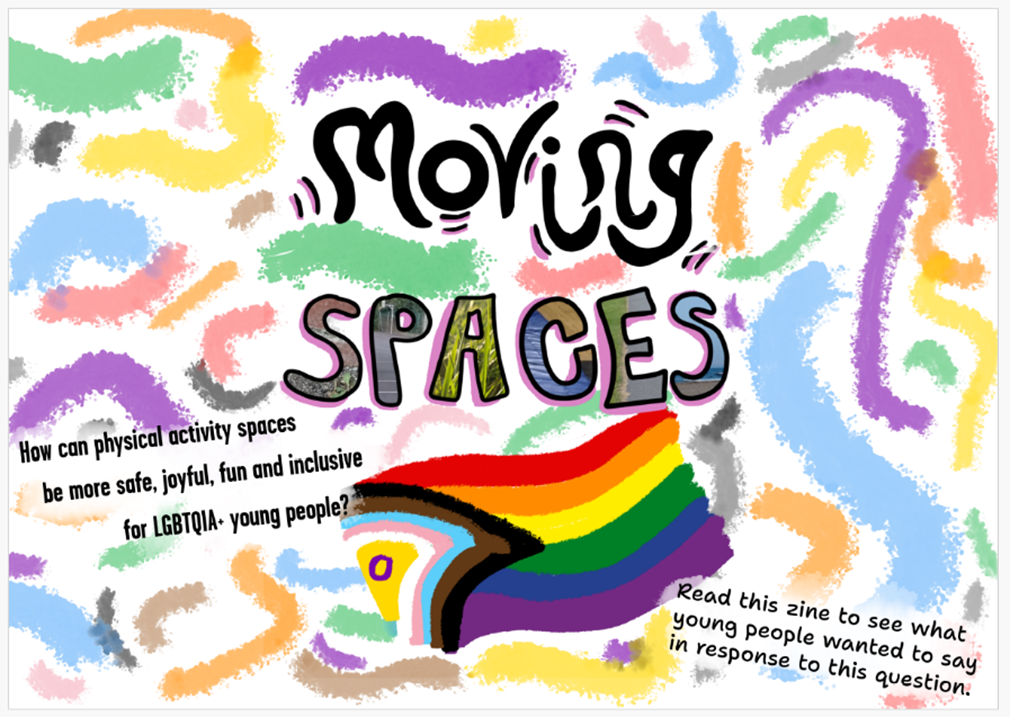
We have been collaborating with LGBTQIA+ young people in the North East and South Yorkshire, through Fuse led research funded by the NIHR School for Public Health Research (SPHR) exploring how physical activity spaces could be more joyful and safe. This blog describes how the ‘Moving Spaces’ zine was made and makes suggestions for those wishing to co-produce creative research outputs.

This blog draws from reflective conversations between Caroline Dodd-Reynolds (Fuse), Mary Crowder (University of Sheffield) and Shevek Fodor (Sounds Like Shevek) during the making of the zine. It is written with contributions from Caroline, Mary and Shev.

Seek continuity between research methods and research outputs

At the start of our research project we knew we wanted to host a series of research workshops and then co-produce a physical activity resource with the young people we were working with. After seeing the results of using visual creative approaches in our workshops, we knew we wanted a highly visual and creative resource that would connect and resonate with people.

Shevek Fodor
Working with the right designer and format

We sent an advert out to LGBTQIA+ networks for a graphic designer who would understand the lives of diverse LGBTQ+ people, in particular young neurodiverse people. When Shevek Fodor shared their zines with us our eyes and hearts lit up. We invited Shev to lead on making a collaborative zine. We chose the zine because of its DIY ethos, radical history of self- publishing and as a vehicle for self or group expression of thoughts and feelings.

What is a zine?

Zines originated through people writing letters and sharing information about things they were driven and passionate about. They’ve been used as a way for people who were overlooked within mainstream media to have their voices heard.

Practice reciprocity

We thought the young people would be inspired meeting Shev, a young neurodiverse queer artist. For Shev, this role offered a new opportunity to experiment with collaborative zine-making in a research setting. We offered hands-on guidance (budgeting, finance systems, mentoring) as part of co-production principles of reciprocity. We introduced Shev to the young people prior to the zine session and their curiosity was piqued…’is this person one of us or one of them.…?’

Involving artists at later stages of research is not straightforward. We aimed for a balance between giving Shev space to design and lead the sessions while also sharing our own knowledge, ideas and learning. The trust built in earlier research workshops meant we could also pass on an established  quality of ease in the group when it came to the zine making workshops.

Trust the creative process of each person and the group

Shev laid the zine making table out in a beautiful, organised chaos of found images, stickers, magazines and cards. Young people made creative contributions to the zine, inspired by earlier conversations about physical activity. They found ways to take part and to also hang out in their safe space – which we were encroaching on. Some people chewed and chewed over the right words to express themselves with contributions coming together at the end. One person got stuck and did their piece later with a youth workers’ support. Two zine contributions were made that involved multiple voices, through Scarlet documenting conversations around particular images. Scarlet also made contributions from a researcher’s perspective. Shev took these contributions – writings, drawings and collages – and wove them together into a first draft.

Allowing the time for collaborative editing – it brings difference into conversation

We shared this draft with the youth groups, the SPHR and Fuse communications teams and academic colleagues. We received a lot of feedback – the zine was provoking conversations. The young people gave detailed feedback on what they liked, what was missing, and sequencing of ideas. They spoke the words that became the introduction and expressed their small hopes for a few people to engage with the zine. There was a thoughtful conversation across the youth groups, about whether to personalise individual contributions or depersonalise to show that it could be any LGBTQIA+ young person saying this.

Academic colleagues also read and shared reflections with us, including feedback that policymakers might struggle to engage with the zine’s non-linearity and various people suggested we include a page of key take-home messages and recommendations ‘so things don’t get lost’. The young people responded to this feedback saying that people needed to listen and pay more attention to the messages that were implicitly in there. This dialogue led to the writing of a framing document for the zine. 

Value queer embodied theory and practice 

Another dialogue arose around authorship. Some reviewers found it confusing not knowing who had written what and had a strong wish to know who – a young person or adult – had written different bits – a desire perhaps for a clear identification of distinct voices. For Scarlet, a queer researcher, the ‘queer polyvocality’ (Brice et al., forthcoming) of the zine – many voices that weaved together in to more than sum of their parts – reflected queer practices of overflowing notions of stable identity, disrupting predetermined binaries and unsettling ideas of authenticity (Lescure, 2023).

This somewhat aligned with ideas from the young people. For some, there was a wish for attribution so ‘friends and family would know I made this’, and there was also a wish for zine contributions to be unnamed ‘because any queer young person could have made any piece’ and ‘we made it all together’.

One young person said they appreciated that researchers ‘weren’t butting in with your opinions but also giving your views when right to do so’ and another adding ‘it’s important that the adults’ voices are also in there as you were part of the conversation, and some adults have also had similar experiences’. The young people decided to make creative doodles in place of signatures which were mixed in with academic doodles/logos to show the talking and making and editing together – the polyvocality – of the zine making process.

Through this collaborative editing process (over three months), the young people began to converse indirectly with interested adults who wanted to help, including with the funders. These conversations happened with the young people keeping editorial control. We sense this may open up and shape more generative future encounters between these young people and further influential adults.

Indeed, some of the young people involved have made a plan to hand deliver zines to local venues around town (hairdressers, surgeries etc.). It seems empowerment and co-ownership inadvertently leads to physical activity!

Explore the zine

To find out more about this work, please contact Scarlet scarlet.hall@durham.ac.uk or Caroline caroline.dodd-reynolds@durham.ac.uk 


References

Lescure, R.M., 2023. (Extra) ordinary Relationalities: Methodological Suggestions for Studying Queer Relationalities Through the Prism of Memory, Sensation, and Affect. Journal of Homosexuality, 70(1), pp.35-52.

Brice, S. Marston, K. Wright, R. and Hall, S. (forthcoming). ‘Mycelial Love’ in Harrison, P. Joronen, M. and Secor, A. Love and Catastrophe in Cultural Geography. Edinburgh University Press

Friday, 27 September 2024

Amplifying voices to tackle inequalities in South Asian and Muslim communities

Posted by Zeibeda Sattar, Assistant Professor in Health Policy, Northumbria University

L-R: Greta Defeyter, Humaira Khan and Zeb Sattar 
I recently had the opportunity to chair the Health Inequalities Symposium hosted by the Centre for Health and Social Equity (CHASE) at Northumbria University, in collaboration with Fuse. It was an incredible event that brought together over 100 people, including researchers, policymakers, healthcare providers, and community members, all focused on tackling the pressing health challenges facing South Asian and Muslim (SAM) communities. The main goal was clear: to find ways to bridge the gap between research and real-world impact.

The presentations were enlightening and underscored how critical it is to engage with minority communities effectively to shape public health services. Each speaker highlighted a different, but equally important, health issue impacting SAM communities. Public partner Humaira Khan, who co-chaired the symposium, pointed out that the mental health challenges facing South Asian and Muslim are often misunderstood and stigmatised. Hearing her talk about the need for culturally competent healthcare really hit home. Her words - “researchers are warriors; they don’t fight for themselves - they amplify the voices of the people” - perfectly captured why events like this matter.

“researchers are warriors; they don’t fight for themselves - they amplify the voices of the people” 

Humaira Khan, public partner


Dr Sarah Croke from the University of Manchester spoke about the language and cultural barriers that often lead to untreated health issues. This can leave community members struggling because healthcare services aren’t designed with South Asian and Muslim needs in mind. Dr Saeed Ahmed from Sunderland Royal Hospital took on the tough topic of organ donation disparities. He pointed out the harsh reality: SAM communities are in desperate need of organ transplants but are also among the least likely to donate. His call to raise awareness and educate was powerful, especially when he reminded us that one donor can change up to nine lives.

There were also discussions about everyday barriers that many of us face but rarely see addressed. Professor Defeyter from Northumbria University talked about the lack of culturally appropriate meals, like halal options, in schools. It was a reminder of how even things like food choices can create a sense of exclusion for our children and why legal changes to recognise cultural diversity are long overdue.

I found Simon Luddington’s (SearchNewcastle) presentation about the West-End Befrienders project particularly inspiring. It’s easy to forget how isolating language barriers can be and how vital social connections are for our wellbeing. Their work in bringing people together, especially in helping with access to primary care and breaking down isolation, felt like a model that should be replicated.

One of the more challenging discussions was around drug and alcohol use in our communities. Lydia Lochhead’s (Northumbria University) research laid bare the stigma that prevents so many from seeking help. It’s a tough conversation to have, but hearing about Mushtaq Dakri’s community-led approach to addiction support was a beacon of hope. They offer a holistic service - combining therapy, physical activity, and spirituality - and it’s designed by and for the SAM community. Knowing there’s a women-only support space now available shows their commitment to evolving and meeting community needs.

Fuse Associate Director Dr Floor Christie and Dr Rawand Jarrar from Sunderland University, wrapped up the day with their work on improving cancer screening uptake among Muslim women. Their workshops have reached over 260 women, and it’s encouraging to see how culturally sensitive approaches can genuinely improve health outcomes. This was a reminder of how vital it is to build services that reflect our communities.

As I reflect on the symposium, it’s clear to me that these health inequalities are not just about accessing services - they’re about how these services are designed and delivered. The urgency to address these gaps cannot be overstated. The event reinforced the need for services that truly understand and respect South Asian and Muslim communities, going beyond just offering a service to creating environments where people feel welcomed, understood, and valued.

Leaving the symposium, I felt hopeful. Change is possible, but it won’t happen without consistent engagement with our communities. Trust needs to be built, and community voices must be represented and acted upon. The gap between research and impact can be bridged if we keep pushing for culturally relevant, accessible, and respectful health services.

Plans are already in place for a follow-up symposium in November, focusing once again on the health inequalities that continue to affect SAM communities. I urge everyone to get involved. This is our chance to be part of the change and to make our voices heard in the ongoing fight for a more equitable health system. Sign-up details will be shared soon, and I hope to see more of us there - because turning these conversations into action is how we create a healthier future for all of us.

Friday, 13 September 2024

How can Local Authorities help shape healthier food environments?

Posted by Amelia Lake, Claire O'Malley and Helen Moore, Fuse researchers from Teesside University

This week I joined other health professionals across the country in signing an open letter from the Obesity Health Alliance (OHA) to the Prime Minister, giving our support for new policy reforms, allowing the planning system to better support the creation of healthy, active local communities and reduce health inequalities. The letter was issued alongside the OHA's Local Government Position Statement: “Empowering Communities to Create Healthier Local Food Environments”, which contains a list of recommendations and a supporting package of evidence.

In support of the OHA statement paper and on the back of the news that the government plans to ban junk food TV adverts before 9pm next year, here we highlight the need to make it easier for local authorities to control their local food environments.


Why we need to act now

It’s essential to create healthier environments that make it easier for people to access nutritious food and engage in physical activity. With the cost of living rising, more people are facing food insecurity, and obesity remains a major health issue. Local authorities have a crucial role in shaping healthier communities, but they face challenges due to funding cuts. Despite these difficulties, professionals across the country are working hard, but they need clearer national policies to support their efforts.

The role of National Planning Guidance

Planning guidance should clearly prioritise public health. While policies often focus on individual responsibility, local governments can work with their communities to promote healthier lifestyles. Our research has shown how local authorities can shape healthier environments by collaborating with various stakeholders, from community members to policy makers.

Everyone’s responsibility


Creating healthy food environments requires collaboration among many professionals within local governments. When it comes to handling appeals for fast-food outlets, our research found that good communication between teams is key to defending decisions. It’s also important to understand how fast-food outlets affect communities and health over the long term. To improve the process, professionals should be trained in accessing relevant data and records.

Using regulations to improve the food landscape

Local authorities can use planning regulations to limit the number of fast-food outlets and promote healthier options. For example, in North East town Gateshead, limiting new fast-food outlets near schools, in areas with too many, or in places with high childhood obesity rates has reduced fast-food outlet numbers by 17.5% in just four years. This shows how strategic planning can make a real difference in promoting healthier food choices.

Working with the planning inspectorate

The National Planning Policy Framework supports the idea of “healthy communities,” and local governments can reject fast-food applications if they threaten local health goals. However, these decisions are often appealed, and the Planning Inspectorate makes the final decision. Our Fuse research shows that having a Local Plan in place helps local authorities reject such applications, but even with additional planning documents, success isn’t guaranteed. It's important for new planning guidelines to support public health and ensure that the Planning Inspectorate works with local authorities to meet health priorities.

Regulating outdoor food advertising

We support extending regulations on unhealthy food and drink ads beyond TV and online to outdoor spaces like bus stops. After London banned junk food ads on public transport, local governments began reviewing their advertising policies with the help of Sustain: the alliance for better food and farming. Our research in the North East found that almost half of bus shelter ads were for food, and 35% of those were for unhealthy options. Many of these ads appeal to children, which is concerning. Although local governments face challenges due to complex contracts with advertisers - and research has explored the advertising of unhealthy commodities (e.g. tobacco, alcohol, less healthy foods and gambling) - more work is needed to reduce the impact of unhealthy advertising.

The changing food landscape

A recent study in North East England showed that after a new fast-food outlet opened, visits by 11- to 16-year-olds increased significantly within the first nine months. The young people said they were attracted by the taste, low prices, socialising and free Wi-Fi. While this isn’t covered by current fast-food restrictions, it shows the need to look at the entire food system and where outlets are located. Policies that prevent students from leaving school during lunch could also help reduce fast-food consumption.

Another growing trend is "dark kitchens," which only prepare food for delivery services like Deliveroo and Uber Eats. While these kitchens bring economic benefits, they raise public health concerns, especially in low-income areas. Local authorities need to stay informed about this trend and address the challenges it presents, such as the increase in unhealthy food options. Some professionals worry that current regulations for fast-food outlets don’t work well for dark kitchens, so there’s a need to adapt the system to ensure public health is protected.

Monitoring and evaluation

It's important for local authorities to regularly review the food environment and assess how well their policies are working. By collecting and analysing data, they can identify areas for improvement and make sure their strategies are effective and responsive to community needs.

Focusing on these areas will help local governments create environments that support healthy choices and improve the overall wellbeing of their communities. With thoughtful planning and strong community involvement, they can significantly impact public health. To do this effectively, local authorities need clear understanding of planning policies, support from senior management, adequate staff, and the right resources to handle cases efficiently.


Amelia Lake is Professor of Public Health Nutrition at Teesside University, Associate Director of Fuse, the Centre for Translational Research in Public Health, a dietitian and public health nutritionist.

Dr Claire O'Malley is a Research Associate at Teesside University and a Fuse Associate member

Helen Moore is an Associate Professor at Teesside University and a Fuse Associate member


Photo by Erik Mclean on Unsplash

Friday, 19 July 2024

From crisis to collaboration: Transforming support for people experiencing homelessness in North East England

Posted by Steven Thirkle, Research Associate, Newcastle University

People experiencing homelessness often have multiple and complex health and social care needs that require support from many services. However, accessing and coordinating this support can be difficult when services are disconnected geographically or relationally. Often the person who is experiencing these challenges is the one who has to reach out for help, and this can be extremely hard for someone also managing day-to-day homelessness.

During our workshop, More Than Minutes visually captured our discussions, providing a dynamic summary. These visuals encapsulate key insights and recommendations, offering an engaging snapshot of our collective journey towards transforming support for people experiencing homelessness.


Over the past two years, our team has been working with services that provide support to people experiencing homelessness in rural and coastal areas of North East England. Our goal has been to explore innovative ways to improve access to care and support for these vulnerable people. Here, we share our research findings, shed light on the challenges faced by people experiencing homelessness and present our co-produced recommendations for creating a more effective and holistic (whole person) support system.

What does hospital data tell us?

To understand why people experiencing homelessness in the North East often turn to emergency care services in rural and coastal areas rather than seeking alternative forms of support, we examined hospital data on people attending emergency care services who had no recorded address. We discovered that there are many contributing factors, including struggles with alcohol and drugs, mental health issues, and challenging social situations. These challenges often occur at the same time, exacerbating their complexity and approaches to treatment.

What is stopping homeless people accessing services?

While this numerical data provided valuable insights, it did not uncover the underlying reasons behind the lack of engagement with other support services. To gain deeper insights, we interviewed people experiencing homelessness as well as those providing support in rural and coastal areas. The interviews aimed to explore experiences with emergency care services, overall health, social lives, and past traumas. They revealed significant barriers to accessing services, such as limited resources, transportation challenges inherent to rural areas, and the isolation often felt in coastal communities. Additionally, rigid service criteria and thresholds prevented people from receiving the support they urgently needed, further compounded by the sparse availability of services in these regions.

What is the current picture?

A comprehensive and integrated approach tailored to the rural and coastal context was needed to provide effective support to people experiencing homelessness in these areas, so we mapped out existing services and their collaborative relationships in the areas. Our findings showed a fragmented system, with many services operating independently and lacking essential connections to the core network of services necessary for addressing the unique challenges faced by people in rural and coastal areas.

How do we address the gaps?

In response to these gaps, we organised a workshop at the Community Hub in Cramlington, Northumberland, bringing together over 70 people including professionals from health, housing, social services, local authorities, law enforcement, emergency response, and third-sector organisations, as well as people with lived experience of homelessness and mental health issues in these regions. Together we developed recommendations for a more effective and collaborative approach to supporting people experiencing homelessness in rural and coastal areas. Seven key areas for recommendations were identified:
  1. Long-term funding and resources: Campaign for sustained funding and increased resources to support comprehensive and ongoing assistance for homeless people.
  2. Coordination, connectivity, and communication: Establish robust ways to coordinate, foster better connectivity between services, and improve communication channels to ensure a seamless and integrated support system.
  3. Accessible services - pathways to support: Develop clear and accessible pathways for homeless people to access a wide range of support services, including health, housing, social services, and mental health resources.
  4. Building trust and co-developing services with lived experience: Foster trust and inclusivity by actively involving peoples with lived experience of homelessness in the design, development, and evaluation of support services.
  5. Trauma-informed practice: Implement trauma-informed approaches across all support services, recognising and addressing the underlying trauma experienced by homeless people.
  6. Improved data sharing: Establish efficient data-sharing agreements for support services to ensure comprehensive and up-to-date information, enabling better coordination and informed decision-making.
  7. Staff retention and wellbeing: Prioritise the wellbeing of support staff by providing resources, training, and support to prevent burnout and turnover, fostering continuity of care.

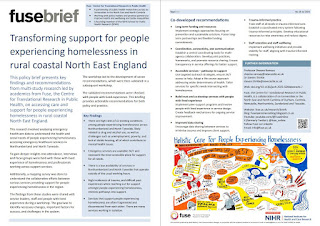
We have developed a handy two-page Fuse research brief which pulls out the key findings and recommendations for practice and policy co-developed with people with lived experience. 

Friday, 3 May 2024

How volunteering at 'biscuit club' helped me build bridges between parents and researchers

Posted by Ella Anderson, Fuse Public Involvement and Engagement Manager, Newcastle University


“volunteering feels like the morally right thing to do – we can’t just ‘take’ from groups and not offer something in return”


MumSpace volunteers together
Supported by the Newcastle University’s staff volunteering scheme and Fuse colleagues, I had the opportunity to volunteer with MumSpace. As Fuse’s Public Engagement and Involvement Manager, this meant that I could spend some time away from my desk learning more about the voluntary sector within a grass roots organisation, build sustainable community relationships, collaborate with volunteers who have valuable connections to local communities and, above all, help out in a way that was specific and useful to the needs of the community group.

What is MumSpace?

MumSpace is a warm, welcoming and inclusive community group for parents, carers and their little ones. Here, the focus is on building supportive networks and providing children with a safe space to play. MumSpace is part of Parents and Communities Together (PACT), set up by Citizens UK. PACT was first set up in London as a community-led social support project and has since been successfully piloted in North Tyneside too. The project aims to empower parents and improve the health and development of young children.

The community group meets twice a week in North Tyneside during term-time. There is no cost to attend, although it’s possible to leave a small optional donation that goes towards drinks and snacks.

Toy time at MumSpace
Why did I choose to volunteer with MumSpace?

There are both personal and professional reasons why MumSpace was an obvious choice as a place for me to volunteer. On a personal level, I was lucky enough to attend MumSpace myself with my two children, in particular with my little boy. I always found this to be a welcoming space, no matter how I was feeling or what kind of day I was having. It was a place where you could chat with other parents and carers or just have a quiet cuppa whilst your little one whizzed about and played. I have made some brilliant friends at this group and I witnessed first-hand the value groups like this have on people’s wellbeing. It felt like the natural thing to do to give something back.

When I joined Fuse in 2021, I was already a regular at MumSpace with my son. Every week, there would be new faces and new people to speak with. It was evident that everyone’s experiences and backgrounds were unique - the one constant was that we were all caring for a little person. Each parent or carer has their own story, and it shows beautifully how one person alone cannot represent all thoughts, feelings and experiences of an entire parenting community. It was this diversity of experience that I could see would be a valuable addition to the Fuse Public Partner Network, as we seek to celebrate and share a wide range of voices and experiences in public health research.

In some ways, it felt like a natural next step to see if the group organiser, Wendy McConnell, might like to talk about involvement in public health research. Nevertheless, I admit that I felt a little nervous speaking with Wendy about a possible collaboration with Fuse, not least because I didn’t want to change the general feel of this space that felt miles away from my ‘work life’. But I needn’t have worried. Wendy and I chatted easily about our respective roles, about Fuse more generally, and about how there might be opportunities for working together. It felt a bit strange to be talking about work whilst at the same time chasing after my 4 year-old and trying to encourage him to play with the toys rather than steadily work his way through all of the biscuits on offer. After all, this was the group he fondly called “biscuit club”...

Looking back, I suspect that it was this informal and gentle approach - building on an existing foundation of trust and knowing one another - that in turn has made the relationship between Fuse and PACT more meaningful and fruitful.

MumSpace disco
How has MumSpace been involved with Fuse?

Wendy, PACT and the MumSpace parents and carers have played a significant role across a number of public health research projects. Wendy, for example, originally joined as a Fuse Public Partner in a personal capacity. But her role as a Parent and Community Organiser also lends itself well to building bridges between members of community groups and researchers. For example, parents and carers from MumSpace are collaborating on a project around poverty-proofing maternity services, have contributed to research around barriers to returning to work and childcare costs, and a researcher will be visiting the group in May 2024 to discuss a new project relating to food insecurity during pregnancy. Wendy has also spoken at a Fuse Public Involvement and Engagement Group meeting to share what it was like to belong to a community group involved in health research and to reflect on the associated benefits.

Mam’s time
What have the benefits of involvement in research been for the group?

Wendy explained that benefits of involvement have included the feeling of empowerment for parents and carers, feeling ‘heard’ and making positive changes, for example to services. There have also been benefits from collaboration with researchers, for instance, the development of a formal evaluation of MumSpace. This evaluation played a key role in securing new funding* to continue running the group. This demonstrates that research relationships can be positive for all involved. It also shows how reward and recognition for involvement can extend beyond remuneration – there can be other ways for university-based researchers to usefully and meaningfully ‘give back’. Volunteering can fall into this category too.
Arts and crafts

Has volunteering been useful for building relationships within community groups?

There have been notable benefits to Fuse and wider health research as a result of the volunteering and community engagement activities with MumSpace. It has helped to build trust; shows a commitment to truly listening to people and their stories; acts as a gentle stepping-stone towards the inclusion of diverse voices and perspectives within the Fuse Public Partner Network; and offers a greater sense of transparency about what involvement in health research is and what it can look like. It aligns with many of the core principles of the NIHR Community Engagement Toolkit. Newcastle University have also added PACT as an organisation who university staff and students can volunteer with in the future, so even after I have left there will be opportunities for continuity. In short, volunteering feels like the morally right thing to do – we can’t just ‘take’ from groups and not offer something in return.

What has it been like to volunteer?

Volunteering has been an incredibly positive and rewarding experience. To be on the ‘other side’ of the group and helping to set up, offering people what would often be their first teas and coffees of the day, and welcoming new people to the group and then seeing them return the following week has been brilliant. I can still only remember a maximum of two drink orders at a time (!!) but I hope people have felt as welcome and included as I did when I first joined.

Want to find out more? Get in touch!

For more information, please email Ella Anderson, Fuse Public Involvement and Engagement Manager on eleanor.anderson@ncl.ac.uk.

For more information about MumSpace, PACT and Citizens UK in particular, email Parent and Community Organiser Wendy McConnell: wendy.mcconnell@citizensuk.org

New faces are always welcome at the group:

Tuesdays – 12.30pm to 2pm at St. Luke’s Church, 10 Frank Street, Wallsend NE28 6RN
Thursdays – 9.15am to 11.15am at St. Cuthbert’s Church, Albion Road West, North Shields NE29 0JB


*From March 2020 to August 2023, MumSpace was funded by Comic Relief and, following a successful funding bid, it is now funded by Public Health North Tyneside.