Showing posts with label childhood obesity. Show all posts

Monday, 15 September 2025

Not just what’s on the menu - the hidden forces behind food choice

Posted by Helen Moore, Associate Professor (Research) & Fuse Associate, Teesside University 

On Saturday, I had one of those incredibly energising moments that remind you why you do the work you do. I was invited to present at the Right To Food UK Conference at the University of Westminster. It was a powerful event led by Ian Byrne, Labour MP for Liverpool West Derby. The event represented a crucial moment for shaping policy and driving action to realise the right to food in the UK. The room was full of policymakers, researchers, and advocates, all engaged and working together talking about the issues.

Fuse Associate Helen Moore pictured third from the left

The invitation to speak followed my attendance at the launch of the Hungry for Change report by the Child of the North All Party Parliamentary Group (APPG) earlier in July. It’s been a privilege to be part of this journey, co-authoring the Environments chapter with Andrea Burrows, Amelia Lake and Claire O'Malley from Teesside University and Fuse (the Centre for Translational Research in Public Health), and Mark Green and Emma Boyland from the University of Liverpool.

Our chapter of the report looks at how the places and systems around us shape what we eat, often without us even realising it. We looked at everything from fast food outlets to social supermarkets, to advertising, to digital delivery platforms and planning policy. The big takeaway message? Food environments matter. And crucially they’re not the same for everyone.

So, what’s a food environment?

It’s not just about what’s in your fridge. It’s about what’s available in your local shop, what’s advertised to you on billboards and on your phone or computer screen, what your school or work canteen serves, how far you live from a supermarket, and even what your friends and family eat. It’s shaped by everything from planning and transport networks to cultural norms, pricing strategies, and national policies. Have you ever wondered why your local shops have two pizza places but no greengrocer? That’s a food environment in action. It is shaped by planning decisions, business models, and economic pressures, not just personal choice.

And here’s the kicker: these environments aren’t the same for everyone... If you live in a more deprived area, you’re more likely to be surrounded by cheap, high-calorie options, adverts for these types of foods and are less likely to have access to fresh, affordable food. That’s not a personal failing; it’s structural inequality.

What did our chapter of the report say?

Advertising
We explored how advertising aimed at children overwhelmingly promotes unhealthy foods. Even short exposure to adverts for fast food or sugary drinks can increase kids’ energy intake and influence their choices. And children in more deprived households tend to watch more commercial screen media, making them more vulnerable to this kind of marketing.

Community Food Organisations

We also discussed community food organisations, which are an innovative and alternative food relief model to food banks. They exist to try and tackle both food insecurity and food waste simultaneously. They utilise surplus from mainstream food retailers and sell via the usual supermarket format (adding items to a basket and paying at a checkout) but at greatly reduced prices. With lower costs than a traditional supermarket, and less stigmatising than using free emergency food aid, this model shows promise. Some of these organisations operate beyond a supermarket model, and offer additional social support, such as employment training, guidance with benefit claims, or community-building activities, but this differs across organisations. While these differences demonstrate the adaptability of the model, it also makes it difficult to establish a universal definition of community food organisations.

Fast food, screens, and the rise of dark kitchens
One of the most striking findings of our chapter was the increase in fast food outlet accessibility in the North, with an 84% rise in people living within 1km of a fast-food outlet between 2016 and 2025. However, we now must consider that access to food, including fast food, has moved to the digital space. We’re seeing a shift from people going to their local fast-food outlet to order, to using technology on a variety of screens to order food. In a recent piece of work, we found that one business (a delivery only kitchen, also known as a dark kitchen) could appear as eight different restaurant options on a food delivery app. What looks like more options for consumers, means more visibility for businesses, but all the food will be coming from the same place. It’s clever marketing, but it also widens the gap between consumers and the food they’re eating.

So, is this a problem?

I think it is something that needs looking at, particularly as another aspect of this is that planning regulations as they currently stand, (like preventing takeaways from opening near schools) don’t really apply to these virtual kitchens. They can deliver further, run more cheaply, and bypass traditional oversight. It’s a whole new frontier (this digital food environment), and one we urgently need to understand better.

Why does this matter?

At the conference on Saturday, I had the chance to present some of our report findings and speak directly with people who were interested in making changes in this area and improving food access for all. Seeing their genuine interest, being able to answer questions and provide context, was incredibly rewarding. These are the moments that remind me why this work matters, not just in theory, but in practice.

We need to stop thinking of food environments as neutral. They’re shaped by policy, economics, advertising, culture, marketing and technology. Food environments have been shaped and moulded to encourage us to eat less healthy food. The good news is that they can be reshaped. That means investing in healthier options, regulating advertising and marketing, supporting community food initiatives, and making sure digital platforms don’t become the new food deserts and swamps.

Food is more than just fuel. It’s about dignity, culture, and care. And we all deserve a food environment that supports our health and potential no matter where we’re born. To borrow a line from the report’s foreword: “Food insecurity is not about poor choices – it is about a lack of choices.”

Everyone deserves access to good food. Whether you're a policymaker, a researcher, or someone who just wants better options in your community, there’s a role for you in reshaping the food environment.


🔗 Read the full report here - Hungry for Change: Tackling Obesity and Food Insecurity in the North of England

Tuesday, 8 July 2025

This isn’t just about food. It’s about fairness, dignity, and giving communities the tools they need to support themselves

Why Community Food Organisations deserve a place in the Child of the North APPG report


Posted by Andrea Burrows, Dr Claire O’Malley, Dr Helen Moore and Professor Amelia Lake, Fuse researchers from Teesside University

Andrea Burrows, Helen Moore with other contributors at the launch of the report in parliament

Across the North of England, families are facing a dual crisis: rising food insecurity and growing food waste. In response, Community Food Organisations (CFOs) - like social supermarkets and pantries - are stepping up in powerful, community led ways. These aren’t just places to get food. They’re places of dignity, connection, and hope.

But despite their growing role, CFOs are still flying under the radar. They’re under-researched, inconsistently defined, and often left out of the bigger policy picture. That’s why they were included in the Child of the North APPG report.

What is the Child of the North APPG?

The Child of the North All-Party Parliamentary Group (APPG) is a cross-party group of MPs, peers, researchers, and practitioners working together to tackle the deep-rooted inequalities affecting children in the North of England. From poverty and poor health to educational disadvantage, the APPG is committed to finding evidence-based solutions that give every child a fair start in life.

Backed by research from the Northern Health Science Alliance (NHSA), Health Equity North and the N8 Research Partnership, the APPG has already produced influential reports on the cost of living, education, and health. Now, it’s time to shine a light on food, and the role CFOs can play in transforming communities and the lives of children.

A different kind of food support

Unlike traditional food banks, CFOs operate more like supermarkets, offering surplus food at low prices. Often delivered in a familiar, retail-style setting, this model not only reduces food waste but also gives people choice and dignity in how they access food. It’s a far cry from the stigma that can come with emergency food aid.

Research shows that this approach better meets the needs of people experiencing food insecurity. It empowers them, rather than making them feel like recipients of charity.

One model, many faces


CFOs are incredibly diverse. Some are membership-based and serve specific groups; others are open to all. Some offer wraparound support like job training or help with household income; others focus purely on food. This flexibility is a strength, it not only allows CFOs to adapt to local needs, but it also makes it hard to evaluate their impact or share what works best.

"Community Food Organisations... aren’t just places to get food. They're places of dignity, connection, and hope."

A recent review led by by colleague Claire O'Malley (currently under review) found that there’s no single definition of a social supermarket. And many operate informally, relying on local relationships and community goodwill to source food. This makes them agile, but also vulnerable.

Why now?

Since the pandemic, food insecurity has increased, especially in the North. But so too has the rise of CFOs. In the North East and North Cumbria, there are now 67 social supermarkets. In the North East town of Middlesbrough alone, the number of Eco Shops, the dominant social supermarket model, has jumped from nine in 2021 to 28 in 2025.

This growth shows just how much communities value these spaces. But it also raises urgent questions:
  • How can we make these models sustainable?
  • What support do they need to thrive?
  • How do they fit into the bigger picture of public health and food policy?
Why the Child of the North report matters

Including CFOs in the report will:
  • Raise national awareness of their role and potential.
  • Create shared definitions and standards to help evaluate impact.
  • Highlight best practices and support scaling of successful models.
  • Ensure CFOs are recognised as part of the wider food and health system - not just a stopgap.
This isn’t just about food. It’s about fairness, dignity, and giving communities the tools they need to support themselves. CFOs are already making a difference. With the right recognition and support, they could transform community support with accessible, socially accessible methods of community aid.


About the authors:

Andrea Burrows is a Research Associate at Teesside University and a Fuse Associate member

Dr Claire O'Malley is a Research Associate at Teesside University and a Fuse Associate member

Helen Moore is an Associate Professor at Teesside University and a Fuse Associate member

Amelia Lake is Professor of Public Health Nutrition at Teesside University, Deputy Director of Fuse, the Centre for Translational Research in Public Health, a dietitian and public health nutritionist.

Friday, 12 August 2022

What impact did a blanket ban on new takeaways have in Gateshead?

Posted by Heather Brown, Professor of Health Inequalities at Lancaster University

At the end of a road I used to live on, there was a wonderful curry house that always smelled amazing every time you walked by, even if it was 8am in the morning and they were just starting to prepare the food for the day. Whilst I lived there, I ate more takeaway curries then I have in any of my other many houses which were not so conveniently located to delicious smelling food.

The food available to us in our environment is likely to influence what we eat and subsequently our health. The use of planning policy can be one way for both local and national government to help shape a healthy environment by limiting or restricting where certain types of food outlets can be located. About half of all local authorities in England have some type of planning guidelines to restrict new fast-food outlets. In England there are three main types of planning policy used to promote a healthy food environment:

1. restricting new fast-food outlets near schools.

2. restricting new fast-food outlets if the density of existing outlets has surpassed a certain threshold of all retail outlets (e.g. no more than 20% of all outlets can be fast-food).

3. restricting new fast-food outlets if childhood obesity rates are above a certain threshold (e.g. above 20% based upon data from National Childhood Measurement Programme for children aged 4-5 and 10-11).

What Gateshead did


Gateshead Council, like many local authorities in North East England, has childhood overweight and obesity rates that are higher than the national average. To try and reduce childhood overweight and obesity to less than 10% by 2025, Gateshead implemented all three types of planning guidance (a school exclusion zone, restricting new outlets by retail density, and restricting new outlets by childhood obesity rates). This is effectively a blanket ban on establishing a new premise for use as a fast-food outlet if the building was not already being used for that purpose. Buildings that were being used for fast-food could change ownership and continue to sell fast-food. This guidance was implemented in June 2015.

As part of an NIHR Applied Research Collaboration (ARC) North East and North Cumbria (NENC) funded project, we evaluated if Gateshead Council’s approach to planning had any significant impact on the density and proportion of fast-food outlets in Gateshead compared to other local authorities in the North East which did not have any type of planning guidance. Data on food outlets came from the Food Standards Agency Food Hygiene Rating Scheme Data. Our analysis covered 2012-2019 (we did not include data during the Covid-19 pandemic because planning guidance on what type of food outlets could provide takeaways was relaxed) - a subject covered earlier this week in the Fuse blog post How Covid-19 changed the takeaway landscape by Callum Bradford from Teesside University.

What we found


We found that compared to other local authorities in the North East, Gateshead’s planning policy reduced the density of fast-food outlets by around 13 per 100,000 people and the proportion of fast-food outlets by around 14%.

Next, we are going to look at if this change in the density and proportion of fast-food outlets has had any impact on childhood overweight and obesity between 2015 to 2019 and if this did anything to reduce inequalities in childhood weight.

If you would like to read our paper in Social Science and Medicine on the impact of Gateshead’s planning policy on the food environment you can find it here.

Friday, 17 December 2021

The way the Government talks about ‘childhood obesity’ is flawed. Should we even be talking about it at all…?

Posted by Naomi Griffin, Fuse SPHR Post Doctoral Research Associate, Sport and Exercise Department, Durham University

‘Childhood obesity’ has been a key public health priority area for those with an interest in challenging health inequalities among children and young people. This is because we can see, at a population level, that children living in the most deprived areas in England are twice as likely to measure as ‘obese’ than children in the most affluent groups (as measured by Body Mass Index (BMI)*). The gap between the most and least deprived is growing.

Logic may suggest that if certain children are more likely to be categorised as ‘obese’, we should focus on ‘childhood obesity’. However, when exploring wider evidence, it is clear that this approach misses out important pieces of the puzzle. Our research used an approach to policy analysis developed by Professor Carol Bacchi called 'What’s the problem represented to be?', whereby the researcher infers what the policy makers are implying the ‘problem’ to be addressed is by looking at what is proposed. For example, if a policy calls for teacher training, the problem is represented to be: teachers lack training. We used this approach to investigate the way UK government ‘childhood obesity’ policy (which I will call ‘The Policy’ from this point) frames the ‘problem’ of ‘childhood obesity’ in relation to health inequalities.

What we did in our research


Firstly, we looked at the way ‘obesity’ is defined in the policy. The Policy’s definition of ‘obesity’ focuses on child weight status, rather than presence of health problems, where the determinants of change are calories consumed vs energy expended: 
‘at its root obesity is caused by an energy imbalance: taking in more energy through food than we use through activity’ (Chapter 1, p.3).
However, the causes of ‘obesity’ (as defined by BMI) are embedded in an extremely complex biological system that interact with cultural, structural and economic contextual factors, none of which exist in isolation. In truth, BMI is a rather crude measure of height versus weight. BMI data can tell us about population level trends in BMI, but it is not complex enough to tell us about individual health status. It is also not a particularly appropriate measure for children as it was designed for use in adults.

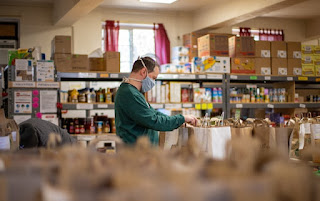
Food bank volunteer
Secondly, The Policy proposes ideas around ‘choice’ and ‘informed decisions’, implying the ‘problem’ is a lack of information or poor choices. For example:

‘I want to see parents empowered to make informed decisions about the food they are buying for their families when eating out.’ (Chapter 2, p.5).

However, it lacks consideration of the accessibility of a balanced diet due to: affordability of food, practical considerations on physical cooking equipment and energy costs of preparing and cooking food, skipping meals, needing to use food banks, or varied availability of healthy food options.

Thirdly, in The Policy, ‘stigma’ was given as a reason for the need for a childhood obesity policy, as children deemed ‘obese’ are likely to experience:
‘bullying, stigmatization and low self-esteem’ (Chapter 1, p6). 
However, there was no targeted response to stigma itself. The attention paid to stigma is necessary. The physical and psychological harms caused by stigma, and the negative impact that stigma can have on the quality of healthcare has been evidenced. Not only is stigma and misinformation about ‘obesity’ likely to impact an individual’s health and wellbeing, it also causes barriers to appropriate and timely treatment of many health concerns, not just those that have been linked to weight status. By framing stigma as the result of ‘obesity’, rather than a problem to challenge head-on, The Policy supports individual behaviour change and responsibility, rather than addressing the wider determinants that are necessary to understand these social trends and the negative impacts of weight stigma.

Challenging inequality


So, is ‘childhood obesity’ really the policy ‘problem’ we should be addressing in order to challenge health inequalities? I don’t think so. We propose that inequality itself is the ‘problem’ we need to challenge. For example, the unequal distribution of wealth that leaves millions of children in poverty, increasing food insecurity, unequal access to healthy food and green spaces, and unequal opportunities for physical activity. Policy decisions that have drained public services and policy approaches that unfairly tip the scales of responsibility for addressing the effects structural inequalities onto individuals must be challenged.

The proposals in The Policy, and the evidence bases drawn on (and those absent), reflect a broader ideological trend in government policy on health to move from addressing social/structural dynamics to focussing on individual responsibility. The Policy reflects ideological decisions which are difficult to challenge. The notable absence of the impact of austerity on health budgets and spending on child health inequalities in The Policy is evidence of this.

With Chapter 3 of The Policy potentially delayed due to COVID-19, I hope that government will revisit and review the aims of The Policy with a focus on structural dynamics like health inequality and poverty. At the very least, the government must work to remove barriers to healthy eating and physical activity, regardless of socioeconomic or weight status, for healthier outcomes for all young people.

Failing this, the government’s messaging about ‘obesity’ directly impacts the wider conversation and so I feel that it is the duty of those of us working in public health to challenge the ineffective proposals and damaging narratives that have been put forward in these policies, especially where we cannot change the policies themselves. I hope that our review can be used to challenge and strengthen future policy development, pushing for effective action against health inequalities and policy/intervention-generated inequalities in child health.

Reference: An open access research article detailing the project which informed this blog post is available via BMC Public Health.

For further information on the research project, please visit the NIHR School for Public Health Research website.

Friday, 5 March 2021

Patient and Public involvement with Parents during a Pandemic: the four ‘P’ challenge

Posted by Hannah Batten, Food and Human Nutrition undergraduate student, Newcastle University.  Hannah is on a placement year with the Population Health Sciences Institute, as part of the MapMe intervention team.

If you have a primary school age child, then you’ve probably heard of the National Child Measurement Programme (NCMP). For 13 years, it has collected data on the height and weight of children aged 4-5 and 10-11 years old in England. This information is used to calculate what is called the ‘weight status’ of a child and the results reported to parents via letter. Unfortunately, these letters often receive a mixed response, with many parents mistrusting the results.

Research has also shown that parents often struggle to recognise if their child is overweight, preventing them from taking action to address this.
Body image scales on the MapMe website are currently being updated for MapMe2


This issue sparked the development of the MapMe intervention, led by Fuse Director Prof Ashley Adamson and Angela Jones, which aims to help parents assess child overweight / obesity. The MapMe tool includes:
  • sex and age specific body images of children ranging from underweight to very overweight
  • information on the consequences of being overweight in childhood
  • advice on healthy eating, physical activity and links to further support.
Funded for large scale testing by the National Institute for Health Research, the MapMe tool will be delivered as part of the National Child Measurement Programme across nine areas, aiming to improve how parents respond to the letters and the NCMP process, supporting parents to take action.

The project originally had a 3-year time frame, with the intervention scheduled to be delivered in 2020/21. But, as with many other things, COVID-19 got in the way and with schools closed this prevented the delivery of the NCMP, which delayed the project by a year. Although this was disappointing, it has allowed extra time for us to focus on preparing for the next part of the study focusing on Patient and Public Involvement (PPI).

Doing PPI during a pandemic

PPI involves gaining insight during the research process from members of the public, improving research by providing additional expertise from a non-researcher perspective. One key task for the MapMe2 study was to figure out how we could recruit and run an online Parent Involvement Panel (PIP) to help review documents and study materials, when parents are already dealing with a global pandemic.

Recruitment and communication

To accommodate people being stuck at home during COVID-19, parents were recruited through social media and network sites such as the Newcastle University staff pages. Once the Panel was created, we asked parents how they wanted us to communicate with them and kept in frequent contact via email and newsletter to keep them informed and engaged in the project. As this was unknown territory for everyone, good communication with the Parent Involvement Panel was essential.

Moving online

Pre COVID-19, we had planned to hold face-to-face meetings with the parents in easily accessible venues such as the Great North Museum in Newcastle upon Tyne. However, as has become the norm with lockdown and social distancing measures, in person gatherings have been replaced with Zoom meetings. On the plus side, this allowed the meetings to go ahead and parents to attend from any location, but did result in frequent technical issues! When preparing for remote meetings, we sent out documents to parents in advance and scheduled breaks to avoid ‘Zoom fatigue’. We also used ice breakers at the beginning of sessions to make parents feel at ease.

Making information accessible to all

COVID-19 has intensified the digital divide in the UK, with a large number of people having limited access to, or understanding of, devices. Reading information and training documents on the small screen of a smartphone or tablet is not a practical or enjoyable experience. In an attempt to address this, we send hard copies of the Parent Involvement Panel manual through the post.

We have also created videos that will be posted on YouTube (example below), making them easily accessible to parents whenever they wish. The videos include members of the study team welcoming and informing parents about the project and their role, as well as short animations providing training tips. Although these are perhaps not Oscar-winning performances, they provide the information in an alternative and accessible format for volunteers.


Learning from our experience in carrying out remote Patient and Public Involvement during COVID-19, information needs to be provided in an accessible way like videos, and volunteers need to be aware and comfortable with the options available to feedback their opinions.

Saying thank you

Finally, and most importantly, is to say to our participants that we are extremely grateful for their time and input, particularly during these uncertain times.

As long as we are mindful of these new challenges, online Patient and Public involvement can still be a valuable and effective way to work.


Part of our Fuse blog Student Series
The Fuse blog Student Series showcases posts by students who have been challenged to write a blog as part of their studies at one of the universities in the Fuse collaboration, the NIHR School for Public Health Research, or perhaps further afield. The authors may be new to blogging and we hope to provide a 'safe space' for the students to explore their subject and find their voice in the world of public health research.

Thursday, 17 December 2020

Let’s kick Coca-Cola out of Christmas for good

Posted by Robin Ireland, Director of Research, Food Active, PhD Candidate, University of Glasgow @robinHEG

You may have thought Coca-Cola invented Christmas. In a sort of way, they did of course. Arguably, modern Santa was designed by an advertising campaign for Coca-Cola in 1933 (Forsyth 2016). And, Santa, whether in the twentieth or twenty-first century, is all about encouraging us to consume. In Coca-Cola’s case, a sweet brown liquid that should logically have absolutely nothing to do with a winter celebration in, originally at least, the Northern Hemisphere.


Coca-Cola has been creative at making up traditions as part of their marketing campaigns since the soft drink was invented in Atlanta, USA, in the late nineteenth century. They have been muscling in on our favourite cultural practices pretty much ever since, in their growth to become a hugely successful and profitable transnational corporation. They have been involved with the Olympics since 1928 when vendors set up branded kiosks in Amsterdam (Keys 2004). A similar relationship with the FIFA World Cup from 1975 was seen as critical at expanding Coca-Cola’s influence into China and the Arab countries (Sugden and Tomlinson 1998).

Coca-Cola expert at manipulating our deepest wishes and our emotions whether they are talking Christmas or football. The pandemic may have prevented their Christmas Truck tour in the UK, but, never fear, their international marketing department is on the case. A two and a half minute commercial on YouTube featuring a little girl and her Dad’s attempts to deliver her letter to Santa at the North Pole had already received over 37 million views at the time of writing, whilst pulling at our heart strings.

Professor Dame Sally Davies, the previous Chief Medical Officer in England, wrote, “Commercial companies use a range of strategies and other approaches to promote products and choices that affect human and environmental health, defined as the commercial determinants of health” (Davies 2019 Annex D, p.4). And Coca-Cola are the masters. Luke Allen (Allen 2020) described the corporation as “virtually a cartoon villain in many public health circles” (p.29). Commercial determinants of health can be divided into four channels in which transnational corporations influence health (Kickbusch et al. 2016). Let’s consider how Coca-Cola use these channels.

The marketing is the most obvious. The red and white Coca-Cola brand is ubiquitous. This year the Christmas Truck Tour will not be visiting Liverpool or Glasgow and other major British cities. But the corporation’s partnership with the Premier League enabled it to tour those city centres in 2019.

This year the Christmas Truck Tour will not be visiting major British cities but the corporation’s 
partnership with the Premier League enabled it to tour those city centres in 2019

How about lobbying then? Marion Nestle (2015) has done a great job in describing how the ‘soda industry’ has learned from the tactics of the tobacco industry in funding dubious research. In funding campaigns and legal challenges to taxes on sugary drinks for example.

As many transnational corporations are criticised for the damage that consumption of their products can cause to human health, so, many try to position themselves as good corporate citizens. Coca-Cola adopt the same tactics and support a number of charities such as FareShare, Street Games, the World Wildlife Fund and Special Olympics GB. It’s sad that in a tough world, it’s often left to corporations to fund good causes rather than government. I thought that had been left in the Victorian age rather than reappearing in the twenty-first century. Coca-Cola also support the Department of Transport’s THINK road safety campaign. In this a volunteer is encouraged to be a Designated Driver to bring intoxicated friends home safely from their Christmas parties. The language of a “responsible drinking culture” is all part of the transnational corporations’ tactics of blaming all of us for believing their marketing and over-consuming their products. That’s right, the soaring levels of overweight and obesity and distressing images of tooth decay amongst youngsters in the UK, are all down to us, the irresponsible parents.

Finally, transnational corporations are experts at developing extensive supply chains to amplify their global ambitions. According to Nestle (2015), Coca-Cola claims to sell its products in two hundred countries with only Cuba and North Korea escaping its clutches. And that’s down to US trade embargoes not to Coca-Cola’s marketing executives.

It’s very hard to argue against Coca-Cola’s Christmas truck tour. Food Active and public health advocates have done so for many years being called the fun police along the way and advocates of the nanny state. We can only speculate the reasons why the tour has been scaled back in the North West in recent years (where Food Active largely operates), but we would take some comfort in the idea that our lobbying played a role in steering the truck off course.

Allen (2020), referenced Coca-Cola’s 2018 annual report, to show the corporation spends approximately US$4 billion per year on advertising. And they wouldn’t be spending that kind of money if the advertising didn’t work. The marketing has persuaded some that Christmas isn’t Christmas without the Coca-Cola Truck Tour. Well, you know the Holidays ARE Coming this year. Because this dreadful pandemic has at least kept some of Coca-Cola’s marketing out of our towns. Let’s just hope that the growing link between obesity and Covid-19 (Alberca et al. 2020) may encourage more to consider how we can limit the advertising of Coca-Cola and other transnational corporations that promote their high in fat, sugar and/or salt products to children. And let’s start to kick Coca-Cola out of Christmas.


References:

Alberca, R.W., Oliveira, L.d.M., Branco, A.C.C.C., Pereira, N.Z. and Sato, M.N. (2020) 'Obesity as a risk factor for COVID-19: an overview', Critical Reviews in Food Science and Nutrition, 1-15, available: http://dx.doi.org/10.1080/10408398.2020.1775546.

Allen, L.N. (2020) 'Commercial Determinants of Global Health' in Kickbusch, I., Ganten, D. and Moeti, M., eds., Handbook of Global Health, Geneva: Springer International.

Davies, S.C. (2019) Time to Solve Childhood Obesity, London, available: https://assets.publishing.service.gov.uk/government/uploads/system/uploads/attachment_data/file/837907/cmo-special-report-childhood-obesity-october-2019.pdf [accessed 27 November 2020].

Forsyth, M. (2016) 'Coca-Cola didn’t invent Santa ... the 10 biggest Christmas myths debunked', The Guardian, 21 December 2016, available: https://www.theguardian.com/lifeandstyle/2016/dec/21/coca-cola-didnt-invent-santa-the-10-biggest-christmas-myths-debunked [accessed 27 November 2020].

Keys, B. (2004) 'Spreading Peace, Democracy , and Coca-Cola®: Sport and American Cultural Expansion in the 1930s', Diplomatic History, 28(2), 165-196.

Kickbusch, I., Allen, L. and Franz, C. (2016) 'The commercial determinants of health', The Lancet, 4, 895-896.

Nestle, M. (2015) Soda Politics. Taking On Big Soda (And Winning). Oxford: Oxford University Press.

Sugden, J. and Tomlinson, A. (1998) FIFA and the Contest for World Football. Who rules the peoples' game? , Cambridge: Polity Press.


Image 2: Coca-Cola Tour Bus. Liverpool, March 2019. Photo courtesy of E.Boyland.


The views expressed in posts are those of the authors and do not necessarily reflect those of Fuse (the Centre for Translational Research in Public Health) or the author's employer or organisation.

Thursday, 12 March 2020

A decade of school food policy inertia

To mark International School Meals Day, we asked former-schoolteacher turned school food researcher Kelly Rose from Teesside University to reflect back on the progress of school food over the last decade.


As a former schoolteacher, now researching the secondary school food environment and adolescent dietary habits, it seems fitting to mark school meals day 2020 by reflecting on a decade of secondary school food policy.

Of late, ‘other’ focuses you could say, have overshadowed the important fact that our young people’s diets are nutritionally poor in the UK. But that begs the question, why are the population of future parents and workforce not a priority at all times?

Currently more than 91 million school children around the world are reported to be living with obesity, with the UK being in the top 20 countries for childhood obesity levels, doubling during the primary school years and increasing further into secondary education. The majority of adolescents in the UK have nutrient deficient diets, high in processed foods and very low in fruit and vegetables. With only 4% of teenagers meeting UK public health fibre recommendations, a significant concern given that dietary fibre is linked to a decreased risk of heart disease, type 2 diabetes and cancers. Furthermore, the health inequalities gap is a devastating burden of poor health for our children living in more disadvantaged areas and minority communities, in comparison to those from more affluent areas.

"In my research I have noticed a level of inertia on the evaluation or policing of school food policy this decade"

In my research I have noticed a level of inertia on the evaluation or policing of school food policy this decade, impacting on school’s healthy food choice offerings. Only the other day my friends 11-year-old daughter explained to me the best thing about her new (secondary) school was the food; “I can eat pizza and cookies every day” - oh dear. Kind of explains why our young people are generally low in at least five micronutrients essential for growth, development mood, reproductive health, energy levels and immunity.

2009 – The Nutrient based standards (NBS)

In 2009 the NBS were rolled out to secondary schools in England, after first being introduced into primary schools. Not only were these food standards focused on meeting young people’s nutrient requirements, but also the mapping of 4 areas of influence provided a framework for which to apply the policy across the nation (Haroun et al 2011). These were considered ‘the most detailed and comprehensive in the world’ (Harper and Wells 2007; Evans and Harper 2009). Plus the Initial evaluations were encouraging (Adamson et al 2013; Stevens et al 2013). However, the NBS was for some a ‘complex task’ to implement (Rose et al 2019).

What happened in 2010?

A change in government (the introduction of the Coalition led by David Cameron) meant a change to school food. Firstly, any ‘newly established academies and free schools’ were not required to adhere to the NBS. A decision which some viewed as a deregulation of school food. Quite soon, school food standards were under review, and in 2013 the School Food plan (SPF) developed by Henry Dimbleby and John Vincent (Long, 2019) was introduced.

The School Food Plan

Over the next few years we see SFP replacing NBS as a legal requirement for ‘all food served in most schools’ (Rose et al 2019). Remember the decision in 2010 to release the new academies and free schools? Well, this means that these schools are still exempt from following the standards, however, some have signed up voluntarily. The aim of the SPF is to transform what children are eating in school and to support schools to create a ‘healthy school ethos’. The SFP is certainly visual, providing ease of use, and the comprehensive resources give schools checklists and guidance. But, here lies a problem, where is the school support system?

Part two of the decade

The first chapter of the UK childhood obesity strategy published in 2016 (DHSC, 2016) provided some recommendations and support for school health initiatives, for the most part within primary aged children. Then in 2017 two things of note happened. The School Food Trust integral to the systems mapping approach of the NBS had been an independent organisation since 2011 providing school resources and opportunities for research closed without funds to carry on. The second was an independent review (the Food Education and Learning Landscape review (FELL)) carried out by The Jamie Oliver Food Foundation. The researcher reported a vast difference in the approach to healthy eating and food education in secondary school environments, stating to be ‘alarmed’ at the state of the problems surrounding the “secondary school food environment”.

Chapter two of the Childhood Obesity strategy (DHSC, 2018) included a pledge to commit to support ‘all children with high quality nutrition’ by conducting consultations on nutrition within buying standards for school catering services and introducing ‘a healthy rating scheme’ allowing for ‘self-evaluation’, whilst also providing a more robust Ofsted framework. My issue as a former food and nutrition teacher/head of health education in a school with supportive leadership is that schools need support externally to evaluate and help develop menus and implement nutritious school meals. The capacity, knowledge and often willingness of school leads, along with the lack of monitoring of adherence to school food standards remain huge barriers to effective school food provision.

2020 current picture

This is where we find the current school food picture in England, no real change from 2018. Awaiting the healthy school’s framework and a priority to be placed on school food provision policy. And, in the meantime social norms of poor teen diets are becoming more and more acceptable, healthy food is so ‘uncool’ to a teenager’s street cred. With the myriad of fast food options on the ‘School fringe’ less expensive and more convenient, thus appealing to the innate biology and the impulsivity of teenagers. A plan to shift teen risk perception of unhealthy eating (i.e. behaviour change) as well as consistency in following the SFP is needed.

A big question

The big question here is why has there been no evaluation of the SFP? There is limited evidence of schools following the school food plan. School staff and leaders have in my mind the most strenuous roles in terms of juggling priorities and educating young people. To expect schools to take on the huge role of making sure food provision meet the nutrient requirements of the nations young people without support is to my mind crazy and as we see presently, will not work…


About Kelly:

Kelly is a registered nutritionist and a former school teacher, currently investigating ways to reduce the obesogenic environment with a secondary school food focus as part of her PhD. She is passionate about the impact of nutrition on adolescent health and has spoken locally, nationally and internationally on the topic of school interventions and the importance of social influence on food choice and the impact of nutrition on mood and behaviour. Kelly is registered with the Association for Nutrition (AFN), a member of Plant based health professionals UK, Nutrition Society, British Nutrition Foundation, Fuse: the Centre for Translational Research in Public Health and The Association for the Study of Obesity.


Adapted with thanks to Food Active


Image: 'primary school, lunch, break, school, activities' by Amanda Mills, USCDCP via PIXNIO (https://pixnio.com/people/children-kids/primary-school-taking-their-daily-lunch-break-during-their-school-day-activities) (Personal & commercial use (CC0).

Friday, 17 January 2020

School food research and teenage diets mean sleepless nights and a mountain to climb

Posted by Kelly Rose, Graduate Tutor/PhD researcher at Teesside University

In the spirit of the commencement of the New Year, I thought it the perfect timing to write a second Fuse blog post reflecting on my first year of PhD study. Also, driven by my waking at 2am, Monday of the first week back in a cold sweat, realising I am more baffled than ever!

In my first blog post, I described myself as feeling at the bottom of a mountain…

Now a year and a half in, I can report some relief at successfully passing my annual review, confirmation that I have the capability. This is definite progress, and a sure sign of having climbed at least a little higher towards the summit. A few days ago I also celebrated my 44th birthday, and I suppose the coinciding of a new decade brought a significantly reflective mood (in the most positive sense). This past year has tested me in so many ways that I had never expected. If you want to know yourself at a deeper level, I think a PhD certainly would be the recommendation. I started this journey with the attitude (that I was always telling my students and children) that anyone can do anything they set their mind to. This mantra has definitely helped in times of significant self-doubt.

Progress update

So far, I have completed a systematic review, had a paper of the political timeline of food policy published in the Nutrition Bulletin, shared my research in a conference, and was boosted by an article I contributed to the conversation.com being shared in the Independent online.

What have I learned?

I left secondary school teaching in July 2018 with a strong sense that more was needed to improve adolescent nutrition. Today, with more of a grasp on the research, I am even more incredulous as to why more is not being done by policymakers.

The evidence is clear, teenagers have the poorest diets of any other age group in the UK. The Lancet commission stated we can reap huge benefits from improved health policies, focusing on the global adolescent population, after all they are our future parents and workforce. As I found in the political timeline research and systematic review, there are many examples of good practice with regards to implementing and evaluation of school food standards, whole school policy and health interventions. But still no priority being placed on consistent evaluation and of policing school food provision in England.

Waking up at 2am questions
  • Why is our school food provision failing to improve adolescent nutrition?
  • Why does the Childhood obesity strategy (part 2) make the assumption that all schools in England are following the national school food standards when there is no evidence that most schools are? #pizzaandcookies. 
  • Why the inertia and lack of prioritising teen diets, when the evidence points to the impacts of diet on mental health and school performance? 
Of course, it’s just not that easy, because, this is a multilevel issue, and the problem is much more complex than just implementing a policy or three. There are significant barriers to challenge, as we see the commercial determinants to health as a major part (defined as “strategies and approaches used by the private sector to promote products and choices that are detrimental to health” (Kickbusch et al 2016)).

One of the factors I want to focus in on over the next two years, is the social aspect of teen diets. It is becoming more and more an accepted ‘norm’ that teenagers have a poor diet, and food choice is a major factor in fitting in with peers, with healthy food choices often ridiculed. A low risk perception of unhealthful food choice seems to be a barrier in improving the health of the next generation. I wonder how we can flip this influence.

With all the reflecting done, I am ready to move forward into 2020. This year the plan is to see my systematic review published, to plan and conduct research in building a picture of experiences, views and what is happening in a range of schools in the North East. And with this public declaration I aim to keep momentum and to contribute to the body of research moving forward.

Keep believing and achieving.


Image:
"Junk fast Food illustrations infographics editorial" by Svajune Garnyte is licensed under CC BY-NC 4.0

Friday, 14 June 2019

Battle planning to reduce childhood obesity

Michael Chang, Co-founder, Health and Wellbeing in Planning Network

Latest statistics show that obesity prevalence is highest in London, the West Midlands and the North East and there is a significant gap in children living in the most and least deprived areas. So I am supportive of Local Planning Authorities (LPAs) using relevant planning powers at their disposal to promote a healthier food environment to help reduce childhood obesity levels and close the inequalities health gap.

Here I want to reflect on efforts by councils to introduce planning policies and guidance to manage unhealthy food environments around schools and other educational settings. It follows on from a previous blog on whether councils have what they need to help tackle obesity?

The context of this blog is the recent session from the draft New London Plan examination on draft Policy E9 C which seeks to control proposals containing hot food takeaway uses (A5 class use in planning terminology) within 400 metres walking distance of an existing or proposed primary or secondary school. Many other local authorities are proposing similar policies and undergoing similar stages of the local plan in the North East and other parts of the country.

The London Plan is the Mayor of London's strategic planning document and sits above individual borough Local Plans. It sets out 'issues of strategic importance' (note terminology used) for all of London while individual borough issues are dealt with at borough level. It is a powerful and influential planning document for borough level planning policies and planning decisions across the 32 London Boroughs and the City of London. It is as upstream as you can get in terms of policy influence. Other areas with Combined Authorities or joint planning units will also be developing these strategic planning documents.

London Plan examination held at London City Hall
What is an examination?

Draft policies need to be tested through an ‘examination’ before they can be adopted by councils. Don't let the terminology put you off - essentially an independently qualified person(s) from the Planning Inspectorate carries out an inquisitorial process on whether to accept, suggest revisions or reject the proposed policies. Often policies on takeaways fall at this hurdle and are subsequently watered-down or deleted altogether.

Policy approaches to managing fast food takeaways

Fast food takeaways, in planning terms in England (Wales, Scotland and Northern Ireland will have their own variations of the use class classification), is a specific use class - A5 - for selling food to be consumed off the premises. Planning permission is needed for change of use to A5 from other uses such as a hairdressers. There are many 'planning' approaches to managing fast food takeaways and only recently have the approaches been influenced by a need to tackle public health issues such as obesity. Latest research by Keeble at al. found 50.5% of LPAs had a policy specifically targeting takeaways with 34.1% focused on health. Planning Practice Guidance, Health and Wellbeing Paragraph 6 sets out examples of approaches for consideration including over-concentration and proximity to certain activities.

Opposing arguments

There are opponents to takeaway policies who believe them to be overly restrictive. Their arguments have some merit, particularly against economic reasons in areas desperate for economic activity. I would suggest policies can be justified as part of a package of policies to tackle unhealthy environments as well as prosperous diverse local economies. Common themes from those opposing include:
  • "The policy does not meet National Planning Policy Framework (NPPF) soundness tests"
  • "There is no objective evidence for any link between the incidence of obesity and the proximity of hot food takeaways to schools" 
  • “Obesity is complex and you can’t narrow it down to just takeaways”. 
  • "The local area has the lowest percentage of overweight or obese children" 
  • "There are unintended consequences for local jobs and employment" 
  • "The policy would limit consumer choice and access to retail" 
  • "The policy would also ban healthy takeaways and does not address unhealthy food sold in other non-A5 outlets".

Hold your ground: defending a 'sound' takeaways policy

This singular policy issue or public health intervention of managing takeaways is deceptively complex, and battles are taking place up and down the country as councils defend the soundness of policies against objectors as well as the probing questions from inspectors. When defending a takeaway policy, there should be a combination of the following:
  • Valid consideration: Be confident that efforts to tackle obesity through the environment can be a material planning consideration.
  • Planning basis for obesity: Recognise that the NPPF requires planning to consider all three social, economic and environmental factors equally. But make sure there are priorities on tackling obesity through the environment in local health strategies. 
  • Local evidence: Do your research and build up a local evidence base, including the use of up to date data and mapping to demonstrate the scale and location of the problem. This should also include knowing the background of those who operate local businesses – independent or chain. 
  • Whole systems approach: Take a corporate approach by referring to programmes such as promoting healthier catering, food growing and education to demonstrate the action is part of a cross-council initiative. Also demonstrate you are planning for a healthy weight environment, and that the takeaways policy is an important part of the jigsaw. 
Researchers, local government and national agencies are aware of these practical challenges hindering local action to make it less easy for kids to become overweight. Concerted efforts and peer support are needed so let’s keep the conversations going.


References:
Image:

Tuesday, 11 December 2018

It is time to ban the sale of energy drinks to children in the UK

Guest post by Prof Amandine Garde, Dr Amelia Lake and Dr Shelina Visram

In 2016 in the UK alone we consumed 679 million litres of high sugar, high caffeine drinks known as “energy drinks”. Described as the fastest growing sector of the soft drink market, they have become a major public health concern and have been subject to both a House of Commons Science and Technology Committee Enquiry (April – December 2018) and a Department of Health and Social Care consultation (which closed on 21 November 2018).

In the report it published on Tuesday (4 December), the Committee found that “the current quantitative evidence alone is not sufficient to warrant a statutory ban”, though it noted that “societal concerns could justify a ban on the sale of energy drinks to children”. This conclusion is puzzling for several reasons.

Energy drinks and children


Firstly, a growing body of evidence has established that energy drinks consumption, particularly by children, is associated with a wide range of harmful effects.
  • Whilst childhood and adolescence are periods of rapid growth requiring adequate sleep and good nutrition, energy drinks play a role in disrupting sleep (1 - see references below).
  • It is established that energy drinks are highly erosive in terms of dental health: they have low pH and a high non-reducing sugar content (2).
  • Consumption is also linked to increased energy intake and therefore obesity (3). Hence the proposal of the UK Government to ban the sale of energy drinks to children in the second iteration of its Childhood Obesity Action Plan, published in August 2018, and the public consultation that followed.
  • However, energy drinks consumption is also linked to physical symptoms such as headaches, stomach aches and sleeping problems (with some evidence of a dose-response effect), as well increased risk-taking behaviours, including binge drinking, smoking, illicit drug use, screen time and poor dietary behaviours (4). Moreover, mixing energy drinks with alcohol increases the risk of injury and unsafe driving (5) and 6).

Secondly, the Committee has failed to engage with the fact that gathering “quantitative evidence” on the impact of energy drinks on child health would be unethical (other than the aforementioned studies, which tend to involve large-scale, school-based surveys).

To our knowledge, there have been no experimental studies involving children’s use of other age-restricted products such as alcohol, tobacco, aerosols, solvents, fireworks, knives, crossbows, petrol or even Christmas crackers (sales of which are restricted in England to those aged 12 and over). Why should energy drinks be subjected to a higher standard of evidence than any of these products?

Thirdly, the evidence base has not prevented other countries from regulating the sale of energy drinks to children. In Europe, Lithuania introduced a ban on the sale of these drinks to under 18s in 2016, followed by Latvia, whilst Norway and Sweden are reflecting on similar legislation.

It is therefore unclear why the Committee has concluded that existing evidence is insufficient to adopt a similar law in the UK. The rationale seems to lie in the absence of a “causal link” between energy drinks consumption and childhood obesity, tooth decay and other diet-related diseases. This arguably demonstrates a lack of understanding by the Committee of the strategies required to address complex and multifactorial nature of these diseases.

It is indeed difficult to establish a causal link between the various measures adopted and the burden of non-communicable diseases: no single policy option can realistically tackle broad phenomena, such as growing obesity rates or tooth decay, when taken in isolation.

Governments must ensure that public health is effectively protected, and they can invoke the precautionary principle in the event of any outstanding scientific uncertainty regarding the impact of energy drinks consumption on public health. Hence, probably, the acknowledgement from the Committee that “it would be legitimate for the Government to go beyond the evidence that is available at the moment and implement a statutory ban based on societal concerns and evidence, such as the experience of school teachers and pupils”.

The logic of their reasoning is nonetheless difficult to follow. There is no doubt that the Government should introduce legislation banning the sale of energy drinks to children, following the lead of Lithuania and Latvia. This would not amount to going beyond the evidence; it would be acting on the basis of existing evidence. It is this body of evidence that has prompted very real and major societal concerns of the effects of energy drinks on our children’s health.

Fourthly, the call of the Committee for more effective labelling measures should not be envisaged as providing an alternative to a ban on the sale of energy drinks to minors; it should only be viewed as complementing such a ban. This is all the more so as labelling could increase existing health inequalities. Children and young people from all backgrounds consume energy drinks. However, as the Committee has noted “energy drinks are consumed disproportionately by disadvantaged groups”.

There may indeed be a link between regular consumption of energy drinks and eligibility for free school meals (FSM), which is often used as an indicator of lower socio-economic status. The 2018 Health-Behaviour in School-Aged Children Survey found that, among those who reported that they drank at least one energy drink per day, 23% received FSM, whereas those who said that they never drank energy drinks or did less than once a week, 11% received FSM (compared to 13% of FSM recipients across the whole sample). A study conducted in schools in the South West England also found that being eligible for FSM was significantly associated with drinking energy drinks once a week or more (Richards and Smith, 2016).

Energy drinks have no place in a healthy diet


Finally, the Committee does not seem to be aware that the Government has a duty to protect the rights of all children to the enjoyment of the highest attainable standard of health and to adequate nutritious food. Energy drinks have no place in a healthy diet. Shifting the responsibility of protecting them onto business actors, such as food manufacturers or food retailers, is highly problematic, not only because a voluntary ban will fail to create the level playing field within which all these actors should operate, but also because it will fail to protect child health and their rights and cannot therefore contribute to an effective obesity prevention strategy.

The Responsibility Deal has failed; regulatory measures that apply to all and are duly enforced are required to address the growing burden of obesity, tooth decay and other diet-related diseases. The conclusion that a statutory ban would be too restrictive is ideological rather than grounded in evidence.

A statutory ban is the most likely measure to ensure that children and young people are effectively protected from the many harmful effects of energy drink consumption.


About the authors:
  • Professor Amandine Garde, Professor of Law and Director of the Law & Non-Communicable Diseases Unit at the University of Liverpool. 
  • Dr Amelia Lake, Associate Director of Fuse - the Centre for Translational Research in Public Health and Reader in Public Health Nutrition at Teesside University. Amelia is a Dietitian and registered Public Health Nutritionist. 
  • Dr Shelina Visram, Programme Lead of the Complex Systems Research Programme for Fuse - the Centre for Translational Research in Public Health and Senior Lecturer in Public Health at Newcastle University.
The views expressed here are those of the authors and do not necessarily reflect those of the author's employer or organisation.


References:

Friday, 7 December 2018

Steering the Coca-Cola Christmas trucks off course in 2018

Guest post by Beth Bradshaw, Alex Holt and Robin Ireland, Food Active

You may remember our guest blog for Fuse from last year, which discussed the media frenzy that goes into overdrive when the Coca-Cola Christmas Truck Tour sets off on its journey across various locations in the UK. We also noted our own campaigns and the efforts of others such as SUGAR SMART to make the case against welcoming the truck into towns and cities already grappling with a childhood obesity and oral health crisis.
 
Every year, we are met with growing support from the public health community and the public including GPs, dentists, teachers and parents. Last year Public Health England issued guidance to local authorities about hosting the Coca-Cola truck. However, there was also some criticism of our position, especially where we were seen as ‘spoiling’ Christmas in some way.

However, this year, things seem to be different. We feel a change in the air this festive period with a scaling back of the Coca-Cola tour, both in terms of numbers of locations and less prominent venues.

There are a number of important changes that have happened both in the build-up and the start of the Coca-Cola Christmas Truck Tour for 2018. While these might appear small, together they demonstrate quite a significant shift by the soft drinks corporate giant.

This year, the Coke Truck allowed just three days between the announcement of the tour and its start, compared to 11 days last year. Within this time frame, SUGAR SMART coordinated an open letter to Coca-Cola bosses with over 40 signatories from local authorities, Clinical Commissioning Groups, and national campaign groups to oppose the truck visiting their areas [1]. This meant there was time to coordinate responses both nationally and locally, including a series of Tooth Fairy stunts, and for noise to be made to create negative publicity before the truck had even arrived.

The Coke Truck vs the Tooth Fairies
Another important shift is the size of the tour – downsizing by over a third (37% to be exact), from 38 stops last year to just 24 this year. The 2018 tour is also visiting some much smaller locations - the media has called it ‘snubbing’ cities such as Milton Keynes and Liverpool - and there are just four visits on council-owned land. We are pleased to see so few local authorities allowing the truck on council-owned land but would urge those that are welcoming the truck to seriously consider whether this is in the best interest of their local population.

There are also more stops hosted on supermarket car parks this year, with as many as ten of the stops to Asda and Tesco. The same Tesco that announced a five-year ‘strategic partnership’ with national health charities including the British Heart Foundation, Cancer Research UK and Diabetes UK to help ‘remove barriers to healthy habits’ earlier this year. A Coca-Cola truck pitching up in their car park is certainly a barrier to healthier habits, both literally and figuratively speaking. This move has also been met with criticism and Sustain and SUGAR SMART are calling on the public to write to Asda and Tesco to ask them to reconsider hosting the truck next year. On taking this action ourselves, we received a response from Asda customer relations which said:
“We have been in conversation with Coca-Cola prior to this tour and we are happy that they will be encouraging customers to sample their sugar-free brands. They will only provide Red Coke on request and they estimate that at least 90% of their drinks sampled will be sugar free.”
As of yet and unsurprisingly, we have had no response from Tesco.

Asda’s response is consistent with the quote provided by Coca-Cola’s press release, which also appears to have satisfied Public Health England’s concerns, as they have decided not to respond to the truck this year.

Finally, in the North West of England (where Food Active is based), the truck is visiting just one city in the region compared to six visits in 2016 and four in 2017. Over the past four years, Food Active has been lobbying against the arrival of the truck in the North West, including publishing an article in the British Medical Journal [2], writing an open letter to local and national press (with over 100 signatories) and supporting SUGAR SMART’s open letters to Coca-Cola bosses. We hope that this continued pressure, even in the face of significant criticism, has helped to steer the Coke truck away from the North West.

However, we know the battle is by no means over - 14 of the 19 stops in England have above average prevalence of excess weight amongst 10-11 years old, and in some locations including Manchester, over 30% of the children have experienced tooth decay.

Last year, our blog concluded that “our experience shows us that public health has to be persistent in ensuring our messages are heard in the current victim-blaming culture”. This statement is perhaps even more validated following this year’s experiences.

In the spirit of good will this Christmas, we thank Coca-Cola for helping more of our local authorities in the North West to help tackle issues of childhood obesity and dental decay in their areas - many of which are already disproportionately burdened with deprivation and health inequalities.

www.foodactive.org.uk

@food_active


References:
  1. Ireland, R and Ashton, J.R. (2017) “Happy corporate holidays from Coca-Cola” i8633. Available at: https://www.bmj.com/content/356/bmj.i6833
  2. SUGAR SMART (2017) Spending holidays in good health. Available at: http://www.foodactive.org.uk/wp-content/uploads/2017/11/Open-Letter-to-Coca-Cola.pdf
Images:
  1. Courtesy of Beth Bradshaw
  2. With thanks to Sustain and Sugar Smart UK: https://www.sustainweb.org/blogs/nov17_coke_truck 

Friday, 20 July 2018

How can governments reduce health inequalities in high-income countries?

Guest post by Dr Katie Thomson, Institute of Health and Society, Newcastle University

In recent months, there have been high profile stories of how governments can influence public health. The Scottish minimum unit price for alcohol introduced on the 1 May 2018, and more recently the publication of Chapter 2 of the Government’s Childhood Obesity Plan. This update proposed measures to address children’s exposure to junk food advertising on television and online, and called for a ban of price promotions on products that are high in fat, salt or sugar.

20mph zones were shown to increase inequalities in cycle accidents and
 rates of death between more and less deprived neighbourhoods

Such policies have great potential to improve public health, by shifting the distribution of health risk and addressing the underlying social, economic and environmental conditions (Hawe and Potvin, 2009)1. However, it is imperative to understand the impact of these policies on health across the entire social gradient. Thereby ensuring the most marginalised, are not adversely effected by policies which aim to improve health overall.

I have been part of a group of academics which recently completed an umbrella systematic review (‘review of reviews’) which aimed to understand the effects of public health policies in high-income countries. You can read about the research in a handy two-page Fuse research brief. As part of the Health inequalities in European welfare states (HiNews) project, we found evidence of 29 reviews (comprising 150 unique primary studies) which detailed the evidence of how fiscal (government revenue), regulatory, education, preventative treatment and screening approaches can be used by governments to influence health inequalities across eight key domains.

Conceptual framework of population-level preventative public health policies to reduce health inequalities
Our review highlighted 13 key interventions which were demonstrated to reduce health inequalities. These include taxes on unhealthy food and drinks; food subsidy programmes for low-income families; incentive schemes linked to immunisation status; proof of immunisation for school admission; tobacco advertising control measures; traffic calming measures; oral health (water fluoridation and tooth brushing campaigns); some nutritional and cancer education programmes; universal and targeted vaccinations for indigenous populations; and targeted and population screening interventions.

Worryingly, we also found evidence of interventions that were shown to increase health inequalities – potentially leading to so-called 'intervention generated inequalities’ (Lorenc et al., 2013)2. For instance, lowering alcohol tax by 33% was shown to increase inequalities in rates of death amongst disadvantaged groups in Finland. Environmental interventions, including 20mph and low emission zones, were also shown to increase inequalities in cycle accidents and rates of death between more and less deprived neighbourhoods.

Our research also demonstrates that for some potentially important interventions, such as for policies to control alcohol, there is a lack of robust evaluations highlighting the effects on different groups of people.

Given the volume of literature we found on the effects of government-led policies on health overall, it was disappointing that we could only identify 29 reviews that reported data on health inequalities. Going forward, those tasked with evaluating such policies must report how health outcomes differ for specific interventions by subgroup as standard. Furthermore, reviews should incorporate sufficient information on how the intervention was implemented and enforced to be useful for policy makers thinking of adopting such approaches. We also found many of the reviews and their primary studies were US-based, which could potentially limit the transferability of interventions from one country to another.

Undertaking a systematic review is not without its challenges. When published, the article reads like a definitive narrative when in reality it comprises a multitude of subjectivities – which reviews to include? Which primary studies are relevant? Which outcomes are most appropriate? And how to summarise the state of evidence in a particular field given multiple studies/reviews? The methodology is designed to be systematic, but as it uses human interpretation there is always an element of judgement. Umbrella reviews assess the state of the evidence across a wide area of interest, and are therefore worth the blood, sweat and tears which goes into producing them.

Upstream public health interventions involving state or institutional control offer great hope to improve health for all. However, a comprehensive understanding on the effects of different interventions is a necessary first step to ensure policies have an equitable benefit for all members of society and therefore are worthy tools at the disposal of governments tasked with improving health.


The Health inequalities in European welfare states (HiNews) project is a collaboration between the universities of Newcastle, York, Trondheim, Siegen and Harvard and funded by the New Opportunities for Research Funding Agency Cooperation in Europe (NORFACE).

References:
  1. Hawe, P., Potvin, L., 2009. What is population health intervention research? 100, I8-I14.
  2. Lorenc, T., Petticrew, M., Welch, V., Tugwell, P., 2013. What types of interventions generate inequalities? Evidence from systematic reviews. Journal of Epidemiology and Community Health 67, 190-193.
Photo: © Albert Bridge (cc-by-sa/2.0)