Showing posts with label Durham University. Show all posts

Friday, 5 June 2026

Why safer spaces matter for young people’s physical activity

Posted by Caroline Dodd-Reynolds, Professor of Physical Activity, Durham University

Fuse Associate Professor Caroline Dodd-Reynolds explores what can be done to create environments in which LGBTQ+ young people feel safe to enjoy physical activity. Fuse blog in Pride Month.

This work forms part of the Joyful and Safe Physical Activity (JASPA) project, funded by the National Institute for Health and Care Research (NIHR). This project, and the funding that supports it, are only possible through Fuse, the Centre for Translational Research in Public Health, and its membership of the NIHR School for Public Health Research (SPHR).


The 2026 Commonwealth Games come to Scotland this summer, showcasing elite athletes at the top of their game. But for most of us, physical activity looks much more ordinary: walking to school, joining a PE lesson, dancing in the kitchen or going to the gym.

Now think about how that kind of movement feels. Easy? Enjoyable? Safe?

For many LGBTQ+ young people living in disadvantaged areas, the answer to those questions is no.

In our creative joyful and safe physical activity project, young people aged 14-21 showed us how adults can make physical activity feel more fun, safe and inclusive. They did this by reimagining what it means to be active, and by bringing colour, creativity and vibrancy into traditional sport and exercise spaces.

Around 80% of adolescents globally do not do enough physical activity, and global physical inactivity has remained largely unchanged for the past two decades. This affects growth, development, mental health and physical health. We also know that some young people face greater barriers than others, including those living in poorer areas, disabled and neurodivergent young people, and those with questions around their gender or sexuality.

Every child and young person should be able to take part in movement and physical activity without feeling disengaged, excluded or unsafe. Physical activity can, and should, bring joy. But this is not only about competitive sport, PE or joining a gym. Movement can also mean walking, dancing, playing active games, skating in the park, or simply feeling able to move through a space without fear.

In our earlier research, young people often knew exactly where they could be active: outdoors, at school or college, or in a local leisure centre if one was available. But knowing where to go was not the same as feeling able to take part. They described feeling harassed, worried, unsafe or excluded from physical activity.

We call this “physical activity insecurity”: when a young person’s ability to be active is limited because a space feels uncomfortable, exposing or unsafe. This can be especially acute for young people whose experiences of poverty, disability, neurodiversity, gender or sexuality overlap. Some transgender and non-binary young people in our research described harassment, exclusion and gender discrimination that made ordinary movement feel difficult or risky.

We worked with young people to explore what safer, more joyful physical activity spaces could look like.

Creating inclusive spaces

So what can adults, schools, youth workers, leisure centres and other community organisations do?

First, the language we use matters. Terms such as sport, gym or exercise can be immediately off-putting for some young people, especially if they already associate these words with embarrassment, exclusion or previous bad experiences.

Thinking about physical activity more holistically and using the term “movement” instead can help. Physical activity can be something as simple as walking.

Second, adults need to have honest conversations with young people about how they relate to physical activity. This might include talking about stereotypes around sport, PE or exercise, and how these make young people feel. It might also mean recognising that some young people have many other pressures in their lives, making physical activity feel like one more difficult or exposing thing.

Young people are most likely to engage with someone they already know and trust, in a calm and welcoming space. From there, adults can help reimagine physical activity as movement that might be enjoyable, informal and part of everyday life. This could mean dancing in the kitchen, roller-skating in the park, going for a walk, or simply feeling able to enter a room without bracing for judgement. More traditional sporting examples may work too, but they should not be the only starting point.

Third, adults can ask what might help organised and formal physical activity spaces feel more like the spaces young people imagine for themselves. That means listening to young people’s ideas, being open to challenge and rethinking what counts as a good physical activity space. For example, a good space may not be the one with the best equipment. It may be the one where young people can choose whether to join in, wear clothes they feel comfortable in, see signs that they are welcome, and leave for a quieter area if they need to.

Welcoming and safe

On a practical level, most physical activity spaces, whether indoor or outdoor, can be made to feel more inclusive and safe. Small changes can make a big difference. These might include using more vibrant colours, displaying friendly messages and avoiding long lists of rules and instructions.

It can also help to make participation optional rather than compulsory, provide a quiet space where young people can step away when needed, and reconsider clothing rules, which can be a major barrier for some.

The point is not to make every young person love sport. It is to ask why some spaces make movement feel exposing, difficult or risky. If adults want young people to be more active, the first step is not another rule, target or campaign. It is creating places where they do not have to brace themselves before joining in.

Find out more


Adapted with thanks to The Conversation

Friday, 31 January 2025

Our experience co-producing a zine with LGBTQIA+ young people

Posted by Scarlet Hall, Research Assistant, Durham University and Fuse

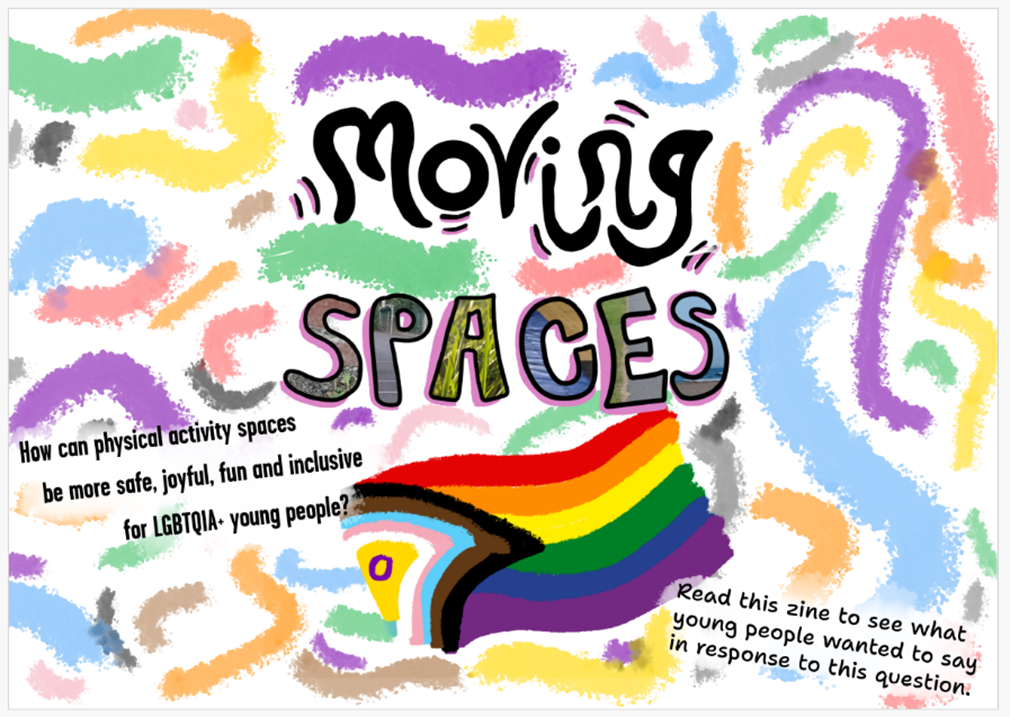
We have been collaborating with LGBTQIA+ young people in the North East and South Yorkshire, through Fuse led research funded by the NIHR School for Public Health Research (SPHR) exploring how physical activity spaces could be more joyful and safe. This blog describes how the ‘Moving Spaces’ zine was made and makes suggestions for those wishing to co-produce creative research outputs.

This blog draws from reflective conversations between Caroline Dodd-Reynolds (Fuse), Mary Crowder (University of Sheffield) and Shevek Fodor (Sounds Like Shevek) during the making of the zine. It is written with contributions from Caroline, Mary and Shev.

Seek continuity between research methods and research outputs

At the start of our research project we knew we wanted to host a series of research workshops and then co-produce a physical activity resource with the young people we were working with. After seeing the results of using visual creative approaches in our workshops, we knew we wanted a highly visual and creative resource that would connect and resonate with people.

Shevek Fodor
Working with the right designer and format

We sent an advert out to LGBTQIA+ networks for a graphic designer who would understand the lives of diverse LGBTQ+ people, in particular young neurodiverse people. When Shevek Fodor shared their zines with us our eyes and hearts lit up. We invited Shev to lead on making a collaborative zine. We chose the zine because of its DIY ethos, radical history of self- publishing and as a vehicle for self or group expression of thoughts and feelings.

What is a zine?

Zines originated through people writing letters and sharing information about things they were driven and passionate about. They’ve been used as a way for people who were overlooked within mainstream media to have their voices heard.

Practice reciprocity

We thought the young people would be inspired meeting Shev, a young neurodiverse queer artist. For Shev, this role offered a new opportunity to experiment with collaborative zine-making in a research setting. We offered hands-on guidance (budgeting, finance systems, mentoring) as part of co-production principles of reciprocity. We introduced Shev to the young people prior to the zine session and their curiosity was piqued…’is this person one of us or one of them.…?’

Involving artists at later stages of research is not straightforward. We aimed for a balance between giving Shev space to design and lead the sessions while also sharing our own knowledge, ideas and learning. The trust built in earlier research workshops meant we could also pass on an established  quality of ease in the group when it came to the zine making workshops.

Trust the creative process of each person and the group

Shev laid the zine making table out in a beautiful, organised chaos of found images, stickers, magazines and cards. Young people made creative contributions to the zine, inspired by earlier conversations about physical activity. They found ways to take part and to also hang out in their safe space – which we were encroaching on. Some people chewed and chewed over the right words to express themselves with contributions coming together at the end. One person got stuck and did their piece later with a youth workers’ support. Two zine contributions were made that involved multiple voices, through Scarlet documenting conversations around particular images. Scarlet also made contributions from a researcher’s perspective. Shev took these contributions – writings, drawings and collages – and wove them together into a first draft.

Allowing the time for collaborative editing – it brings difference into conversation

We shared this draft with the youth groups, the SPHR and Fuse communications teams and academic colleagues. We received a lot of feedback – the zine was provoking conversations. The young people gave detailed feedback on what they liked, what was missing, and sequencing of ideas. They spoke the words that became the introduction and expressed their small hopes for a few people to engage with the zine. There was a thoughtful conversation across the youth groups, about whether to personalise individual contributions or depersonalise to show that it could be any LGBTQIA+ young person saying this.

Academic colleagues also read and shared reflections with us, including feedback that policymakers might struggle to engage with the zine’s non-linearity and various people suggested we include a page of key take-home messages and recommendations ‘so things don’t get lost’. The young people responded to this feedback saying that people needed to listen and pay more attention to the messages that were implicitly in there. This dialogue led to the writing of a framing document for the zine. 

Value queer embodied theory and practice 

Another dialogue arose around authorship. Some reviewers found it confusing not knowing who had written what and had a strong wish to know who – a young person or adult – had written different bits – a desire perhaps for a clear identification of distinct voices. For Scarlet, a queer researcher, the ‘queer polyvocality’ (Brice et al., forthcoming) of the zine – many voices that weaved together in to more than sum of their parts – reflected queer practices of overflowing notions of stable identity, disrupting predetermined binaries and unsettling ideas of authenticity (Lescure, 2023).

This somewhat aligned with ideas from the young people. For some, there was a wish for attribution so ‘friends and family would know I made this’, and there was also a wish for zine contributions to be unnamed ‘because any queer young person could have made any piece’ and ‘we made it all together’.

One young person said they appreciated that researchers ‘weren’t butting in with your opinions but also giving your views when right to do so’ and another adding ‘it’s important that the adults’ voices are also in there as you were part of the conversation, and some adults have also had similar experiences’. The young people decided to make creative doodles in place of signatures which were mixed in with academic doodles/logos to show the talking and making and editing together – the polyvocality – of the zine making process.

Through this collaborative editing process (over three months), the young people began to converse indirectly with interested adults who wanted to help, including with the funders. These conversations happened with the young people keeping editorial control. We sense this may open up and shape more generative future encounters between these young people and further influential adults.

Indeed, some of the young people involved have made a plan to hand deliver zines to local venues around town (hairdressers, surgeries etc.). It seems empowerment and co-ownership inadvertently leads to physical activity!

Explore the zine

To find out more about this work, please contact Scarlet scarlet.hall@durham.ac.uk or Caroline caroline.dodd-reynolds@durham.ac.uk 


References

Lescure, R.M., 2023. (Extra) ordinary Relationalities: Methodological Suggestions for Studying Queer Relationalities Through the Prism of Memory, Sensation, and Affect. Journal of Homosexuality, 70(1), pp.35-52.

Brice, S. Marston, K. Wright, R. and Hall, S. (forthcoming). ‘Mycelial Love’ in Harrison, P. Joronen, M. and Secor, A. Love and Catastrophe in Cultural Geography. Edinburgh University Press

Friday, 10 November 2023

What is the best way to reduce the amount of meat we eat?

Posted by Jack Hughes, PhD Candidate in Behavioural Science; Mario Weick, Professor of Behavioural Science; and Fuse Associate Milica Vasiljevic, Associate Professor of Behavioural Science, from Durham University

The science is clear that eating meat can be bad for our health; eating meat has been linked to an increase in cardiovascular risks, diabetes, stroke, cancers, and even dementia. Meat is also bad for the planet, with the livestock industry being estimated to be responsible for up to 15% of greenhouse gas emissions. Eating meat is also surprisingly closely connected to the risk of pandemics, with zoonotic diseases (caused by harmful germs that spread between animals and people) much more easily spread from eating animals.


Governmental policy and legislative choices play an important role in our excessive meat consumption. The Committee on Climate Change has recommended a 20% reduction in UK meat consumption by 2030 if we want to hit our net zero targets. Additionally, the Department of Health and Social Care recommends eating no more than 70g of meat a day, but average meat consumption in the UK is closer to 90g. So, what is the best approach? Do we advocate for a ‘nanny state’ that bans meat or imposes hefty taxes? Or do we advocate for a removal of all subsidies for meat farming and just let the market and people decide how much meat we consume under the hopes that awareness of the dangers of meat will drive down consumption?

There are of course significant problems with both approaches, but maybe there is a third option. One that can be applied not just to meat but to all society’s destructive large-scale behaviours, from alcohol to tobacco to ultra-processed foods to sedentary lifestyles.

In 2003 Richard Thaler and Cass Sunstein coined the phrase Libertarian Paternalism. Essentially arguing that the best way to produce policy is to design interventions that change behaviour without affecting people’s right to choose. So, you can still eat as many steaks as you like but policy will build an environment that unconsciously discourages eating an excessive amount. This idea could be argued to balance individual and government responsibilities, the government is nudging people to healthier choices, but the individual still gets to make the final decision.

For example, in a recent study of ours we found that sticking a graphic warning label (similar to those you see on cigarettes) onto meals could reduce the amount of meat chosen. Not only were the labels effective, leading to between a seven and 10 percent reduction in meat meals chosen, but the idea of introducing them as policy received fairly neutral responses. Which, let’s be honest, makes it more popular than most policy proposals!

When we look at recent research we can see that a variety of interventions have shown promising effectiveness on reducing meat consumption. Whether changing the ratio of meat to non-meat meals on offer, making meat meals less appealing by using less flattering descriptions, changing which meals appear at the top of the menu, or adding eco and warning labels to discourage the selection of meat meals, there are many ways of changing the environment without reducing the freedom of choice consumers ask for.

The question is though: is this approach the best or the worst of both arguments? Does Libertarian Paternalism thread the needle between governmental and personal responsibility? Others might say the approach is too hands off, or too hands on. If we accept that as a society we would benefit from eating less meat, which policy strategy do you support? The ‘nanny state’, the free market, or the libertarian paternalist approach?

The paper described in this blog-post can be accessed here:

Hughes, J. P., Weick, M., & Vasiljevic, M. (2023). Impact of pictorial warning labels on meat meal selection: A randomised experimental study with UK meat consumers. Appetite, 190, 107026. https://www.sciencedirect.com/science/article/pii/S0195666323024881

Friday, 6 January 2023

What’s really going on when a child is ‘overtired’ – and how to help them have a silent night in the New Year

Posted by Helen Ball, Professor of Anthropology, Director of the Durham Infancy & Sleep Centre (DISC), and Fuse Associate at Durham University

Anyone who’s cared for a young child will recognise the signs. They’ve had too little sleep or missed a nap, they’re cranky, tearful, and stroppy, and they can’t or won’t fall asleep. They are “overtired”. But is such a thing really possible – to be more tired than tired?

What we tend to call overtiredness happens when an emotional state, such as anxiety, distress or fear, blocks our ability to go to sleep even when we’re really tired. This is a survival response that helps us to stay awake when in danger, no matter how tired we are. It suggests overtiredness can be reframed to help us better respond to our child’s needs when it happens.

At the end of the day, the feeling we have of needing to sleep is called sleep pressure. The longer we stay awake the more sleep pressure rises. Typically, the higher it gets, the easier it is to fall asleep. If we stay awake for long enough, eventually we’ll fall asleep even if we are trying not to.

The sensation of sleep pressure is caused by the build-up of chemicals (called adenosines) in the brain. These are proteins that are removed from our brains while we sleep, and build up again while we are awake.

For adults, this process takes about 14-16 hours. When we delay sleep past this point the build-up of adenosines cannot go on unchecked. At some point, eventually, we must sleep.

Babies’ sleep pressure builds up more quickly than adults. Young babies often fall asleep after being awake for an hour or two. As children get older, sleep pressure builds more slowly. But it takes several years until a child is able to stay awake all day.

What stops us sleeping?

To fall asleep we must be calm, relaxed and able to switch off our brains so that the build up of sleep pressure can tip us into sleep. When something blocks the action of sleep pressure, such as fear, pain or racing thoughts, we may struggle with sleeplessness.

In the same way, sleep happens more easily for a baby or child when sleep pressure is high, they are in a calm relaxed state, and nothing is preventing sleep onset. But sometimes babies and children need help to become calm before sleep pressure can kick in and they can nod off.

When a baby or young child’s sleep pressure is high and the need to sleep is strong, but they are emotionally unable to calm themselves, or they are in a situation where they cannot relax – where there is noise, lights, or activity – we may label them as overtired. Emotional exhaustion, which is a form of stress, prevents both children and adults from sleeping and makes them cranky.

Some responses to overtiredness are heavy-handed. Ordering a child to their room, putting them to bed in the face of distress or punishing them for not falling asleep when told to do so will dial up the child further and push sleep further from reach. After all, none of us can fall asleep on command.

Helping babies to sleep

In this situation, we must remember that babies and young children need our help to manage their emotions. It is our job as parents to help them become calm, dial down, and relax in preparation for sleep.

We can do this in many ways. Physical contact such as cuddling, rocking, stroking or patting works for most children, although it must be remembered that some neurodivergent children can find touch irritating rather than calming.

Non-contact methods also work. The presence of a relaxed slow breathing adult can calm a child, as can listening to gentle talking, singing and humming. In the Czech Republic, there is a specific word for lying with and helping a child to relax so they can fall asleep: uspávání.

There is no name in English for the process of helping a child relax so that sleep pressure can tip them into slumber, so we often don’t discuss or acknowledge it. We can use it, though. And we can understand that what we have named “overtiredness” is the conflict between sleep pressure being high and something blocking the effect of that sleep pressure.

In this situation actively removing the blockage – fear, pain, anxiety – by helping babies and children to become calm is the quickest way to help them fall asleep.

Next time your baby is having a meltdown at bedtime, or your child is throwing a tantrum at the end of the day, hug them, cuddle them, talk gently to them and calm them. Let sleep pressure do its thing, and they’ll be snoozing in no time.


The Durham Infancy & Sleep Centre (formerly the Parent-Infant Sleep Lab) is a research centre of the Department of Anthropology. It is the home for a group of researchers examining various aspects of infant and child sleep and parenting behaviour since 1995. Its work with more than 5,000 parents and babies during the last 20+ years has substantially increased parents' understanding of babies' sleep, how best to care for babies during the night, and how best to keep them safe when asleep. 


This article is republished from The Conversation under a Creative Commons license. Read the original article.

Friday, 21 October 2022

Stigma: Where’s the Harm?

Posted by Dr Michelle Addison, Assistant Professor, Durham University

Stigma is a knotty, ugly problem we have in society: it marks out (often painfully) what is considered shameful, abject or contra to social norms, and impacts vulnerable and marginalised people the most. It seems intuitive to say it is unfair and unjust, but why then does it persist? 

Discussions of stigma are not new; we are all generally aware that stigma is something to be avoided and we could all very likely give some examples of it in action – benefit claimants, people who use drugs and ex-offenders are often easy targets and regularly feature in news headlines because stigma continues to be sensational – it elicits a voyeuristic feeling that is both intoxicating and a warning to us too. The use of stigma is further exacerbated by the ‘Cost of Living Crisis’, ‘Rising Interest Rates’, Fuel and Food poverty, and the withholding of the Government White Paper on Health Inequalities. We understand then that stigma is harmful, and yet we recognise it is powerful to those who can wield it.  

Erving Goffman discussed stigma using the concept of the ‘spoiled identity’ whereby certain aspects of who you are become discredited and devalued in his now infamous work Stigma: Notes on the Management of Spoiled Identity (1963/1990). This notion of a spoiled identity is also implicit in his observations of patients residing in ‘asylums’, the conditions impacting these people, and the roles of those working there (1961). Indeed, Goffman was acutely interested in the medicalisation and performance of roles in these settings and how behaviour was shaped by social expectations of ‘in-mates’, ‘guards’ and ‘medical staff’. The treatment of patients, he noted, was complexly bound up with expectations of socially acceptable roles and the reinforcement of discredited behaviours and identity.

What we learnt from this is that stigma matters in the social organisation and hierarchies of people and places in medicalised and wider social settings. But what tends to fly under the radar in early stigma research is the question of ‘in whose interests’ does stigma serve?  Professor Imogen Tyler later critiques Goffman’s work (2020) in her book ‘Stigma: The Machinery of Inequality’ for overlooking the power relations that are integral to how we understand stigma, and why indeed, stigma continues to persist. Tyler shows us that there is a ‘craft’ to how mechanisms of stigma operate and function to maintain political power and a social order that hinges on systemic and structural inequalities around class, race, gender (and not limited to) to reproduce privilege for the dominant factions. This is a hugely important step in stigma research because it draws attention upstream to how and why stigma is weaponised (Scambler, 2018) and the social harms that impact marginalised and minoritised individuals and communities in society – which is the subject of my forthcoming article (Addison, 2023). This is further evident in the recent Stigma Kills (2021, 2022) campaign launched by the NHS Addictions Provider-Alliance which gives credence in particular to the impact that stigma has on the health and wellbeing of those communities that are most harmed through health and social inequality.

This growing concern about the effects of stigma on health and wellbeing, arising out of social harm, led to our recent Fuse event Inequalities, Social Harm and Weaponised Stigma: Emerging Research and future priorities which brought together academics, practitioners and the public to discuss these key issues. I presented work from my Wellcome Trust research looking at stigma and how this relates to health inequalities amongst people who use drugs. In this study I highlight how the weaponisation of stigma is harmful, negatively impacts physical and mental health, and inhibits health seeking behaviours for fear of being judged and marginalised by service providers and the wider public.

Joanne McGrath discussed her NIHR funded research into women living with multiple disadvantage and complex needs and how they access services. In this talk she highlighted how escalating problems around homelessness, stigma and deteriorating physical and mental health have a cumulative impact in women’s lives.

Our ‘expert by experience’, Margaret Ogden, shared moving insights into the effects of stigma on her own life and how her mental health was harmed as a result.

Later, Mark Adley discussed his Doctoral work (which is funded by the NIHR Applied Research Collaboration (ARC) North East and North Cumbria (NENC)) and his recently published paper which explores stigma within-groups towards people who use the drug Spice. In this talk, Mark showed how intersections of identity mattered and how increased contact with people who used Spice helped to reduce levels of stigma. He highlighted the role of education programmes within service provision to help draw attention to the harms arising out of stigma and how practitioners might mitigate these effects.

This event was also an opportunity to launch our new Palgrave edited collection Drugs, Identity and Stigma (Addison, McGovern and McGovern, 2022). Our book calls attention to the impact of stigma experienced by people who use illicit drugs, and through this we show that stigma is powerful: it can do untold harm to a person and place with longstanding effects. Through an exploration of themes of inequality, power, and feeling ‘out of place’ in neoliberal times, this collection focuses on how stigma is negotiated, resisted and absorbed by people who use drugs. Dr Kelly Stockdale, a contributor to the book, spoke at our Fuse event and shared insights from our research into the challenges of navigating a custodial environments (prison and police) and the impacts of stigma from the point of view of people who use novel psychoactive substances (NPS). Collectively, our work in this area brings together a range of frameworks and data and draws attention to the damaging effects stigma can have on health inequalities, recovery, mental health, recidivism, and social inclusion.

Our knowledge and understanding of the harms that stigma does to health and wellbeing is still growing – as such, it is critical that developing stigma research becomes a priority in future inequalities research agendas, against a backdrop of political and economic crises. Whilst the social determinants of health are often tangible and measurable, providing the much-needed evidence base to tackle widening health inequalities, it is imperative that we think differently and critically about how stigma operates. In my own research I have tried to show that stigma operates at a symbolic level meaning it is not possible to treat stigma as something which is material and objective, to say ‘here is stigma’ – we must think more deeply about stigma as inscribed with meaning that becomes apparent through its effect on and between people (see also Addison, McGovern and McGovern, 2022).

I called this blog ‘Stigma: Where’s the harm?’ to be a little provocative to you, reader – on the one hand, stigma is so normalised in our society that we forget to see it, so I encourage you to pause and reflect on where the harm resides – like a million little paper cuts, stigma is painful and gets under the skin doing very real harm. On the other hand, my question is also a call to action to understand how and why stigma is weaponised, and how it leads to social harm amongst under-heard and underserved people. It is my strong belief that this is vital work if we are to tackle and reduce widening health and social inequalities right now.  


References:

Addison, M. (forthcoming, March 2023) ‘Framing Stigma as an Avoidable Social Harm that Widens Inequality’ in Emery, J., Powell, R., and Crookes, L. (eds.) The Sociological Review Special Issue

ADDISON, M., MCGOVERN, W. & MCGOVERN, R. E. (eds.) (2022) Drugs, Identity and Stigma, Houndsmill, Basingstoke and Hampshire, Palgrave Macmillan.

ADLEY, M., ATKINSON, A. M. & SUMNALL, H. R. (2022). Including the multiply excluded: a mixed methods study exploring intragroup stigma towards people who use synthetic cannabinoid receptor agonists. Drugs: Education, Prevention and Policy. DOI: 10.1080/09687637.2022.2025766

GOFFMAN, E. (1990) Stigma: Notes on theManagement of Spoiled Identity, London, Penguin Books

GOFFMAN, E. (1961) Asylums: Essays on the Condition of the Social Situation of Mental Patients and Other Inmates, London, Penguin Books

SCAMBLER, G. (2018). ‘Heaping blame of shame: 'Weaponising stigma' for neoliberal times’. The Sociological Review Monograph, 66, 766 - 782.

SINGH, S. (2019) available at: https://samiasingh.com/

TYLER, I. (2020). Stigma, The Machinery of Inequality, London, Zed Books.


Images:

1) Artwork by Samia Singh, https://samiasingh.com @samiasingh_art

2) Book: Drugs, Identity and Stigma, © 2022 Springer Nature Switzerland AG. Part of Springer Nature, ISBN : 978-3-030-98285-0, https://link.springer.com/book/10.1007/978-3-030-98286-7#about-this-book

Friday, 8 October 2021

Can Forest School inspire the next generation to be happy & healthy?

Posted by Katie Beresford, undergraduate student, Durham University

Katie completed a 6-week NIHR School for Public Health Research (SPHR) internship with Fuse based at Durham University in summer 2021. She was supervised by Fuse / NIHR SPHR PhD student, Sophie Phillips.

Richard Louv, in his book Last Child in the Woods, theorises that lack of connection to nature is causing a plethora of health problems in children. Can reconnecting children to the natural world provide a holistic solution to health and developmental issues?

Growing up in the Lake District, I spent my childhood climbing trees, swimming in rivers, and making mud pies. Embracing nature and enjoying letting my imagination reshape the world around me was part of my everyday life. In contrast, I found school restrictive and struggled academically in my early years – often being described as a ‘late developer’.

While completing my NIHR SPHR summer internship within Fuse, I reviewed literature discussing the effectiveness of Forest School as a public health intervention. One article titled: The hare and the tortoise go to Forest School: Taking the scenic route to academic attainment via emotional wellbeing outdoors struck me as similar to my own story, describing how children considered ‘behind’ their peers could catch up, like the tortoise in Aesop's fable. Now nearly two decades later and about to go into my final undergraduate year at University, I truly believe in the power of the outdoors to inspire children to be curious and healthy individuals.

Forest School is a child-led educational practice, whereby children spend time in a Forest or woodland under the guidance of a trained Forest School practitioner. The ethos and philosophy of Forest School is based on a rich heritage of outdoor learning. This ranges from whole movements such as the romantic movement, which exalted the sublimeness of nature as a push-back against the industrial revolution, to the work of individuals such as the great educationalists like Steiner and Montessori. However, the concept of ‘Forest School’ emerged originally from Scandinavia, where in many cases children spend their entire early years education playing outdoors.

The practice developed in the UK in the early 1990s and is ubiquitous across the country today. Although much of the practice in the UK places emphasis on freedom and play, often activities are incorporated into the sessions designed to connect the children to the natural world. Forest School aims to be beneficial for the holistic development of children, offering a wide range of social, emotional, cognitive, and physical benefits.

My summer internship consisted of writing up a literature review which drew on both the current research on Forest School and the thoughts of practitioners and stakeholders in the field. I considered both the effectiveness of Forest School on the health and development of children and the accessibility of the programme.

Due to its rapid growth, there is still much work to be done on improving the evidence base for Forest School, but in general there is huge enthusiasm from researchers and practitioners alike on the effectiveness of the practice. Forest school appears to equip children with social skills such as teamwork and collaboration; emotional skills such as resilience and self-esteem and cognitive skills like problem solving. There is evidence that it also increases children’s levels of physical activity and improves their appreciation of nature.

But, perhaps the most striking finding was that Forest School not only had an impact during the session itself, but long after the children stopped attending the Forest School. Through the pure enjoyment of being outside and not bound up by the norms of classroom behaviour, the children were inspired to be curious about the world around them. They started asking questions and thinking creatively and collaboratively.

Taking the scenic route to academic attainment
Some studies found that through attending Forest School, children who were academically behind their classmates caught up to a similar level of academic attainment since their interest in learning had increased. Forest School impacted children’s overall wellbeing, as it encouraged them that physical activity and spending time in the outdoors could be fun and rewarding. The children were therefore more likely to want to exercise and complete similar activities to Forest School in their own time – asking parents to take them to local natural spaces after school and at the weekend. Conversations with practitioners showed that this was pivotal to challenging the cultural lifestyle of families, especially in more deprived areas, improving perceptions of what it means to be healthy.

In a changing world, where children spend far less time outside as a result of factors like the increase of technology and availability of entertainment, Forest School offers an innovative and holistic approach to reconnecting children with nature. Through this, we can hope to inspire the next generation to be the curious, positive, and healthy individuals of tomorrow.


This project was funded and supported by the National Institute for Health Research (NIHR) School for Public Health Research (SPHR), Grant Reference Number PD-SPH-2015. The views expressed are those of the author(s) and not necessarily those of the NIHR or the Department of Health and Social Care.

Part of our Fuse blog Student Series
The Fuse blog Student Series showcases posts by students who have been challenged to write a blog as part of their studies at one of the universities in the Fuse collaboration, the NIHR School for Public Health Research, or perhaps further afield. The authors may be new to blogging and we hope to provide a 'safe space' for the students to explore their subject and find their voice in the world of public health research.


Images:
  1. Photo by Markus Spiske on Unsplash
  2. The Tortoise and the Hare. From Childhood's Favorites and Fairy Stories, by Various. Project Gutenberg etext 19993 http://www.gutenberg.org/etext/19993. From Wikimedia Commons: https://commons.wikimedia.org/wiki/File:The_Tortoise_and_the_Hare_-_Project_Gutenberg_etext_19993.jpg

Friday, 23 July 2021

Find the gap: where is the healthy, enjoyable human body in policy?

Posted by Rachel Kurtz, PhD researcher at Durham University

Balancing varied and sometimes conflicting priorities within a large geographical area and between multiple departments is not a job to be envied. Ensuring the detail is suitably deliberated while also holding in mind how a policy affects other interests must be attempted but cannot possibly be achieved to perfection. My role on behalf of County Durham Sport was much easier. Over three weeks in June, I reviewed Durham County Council documents and the priorities of the Area Action Partnerships (AAPs) to identify areas of local strategy that did (or did not) address the issues of physical inactivity and the climate emergency. As an environmentally-informed, lifelong dancer-turned-researcher, I simply had to view the documents from two perspectives in which I am already personally invested and consider possible changes. Some interesting things emerged.

As you might expect, topics are viewed through whatever lens highlights policy concerns in that area. For example, the County Durham Plan understands physical activity functionally, through land use, waste, and movement of people, advocating for active travel (walking, cycling etc.) and providing and improving recreational areas. Meanwhile, the Joint Health and Wellbeing Strategy considers the environment as either beneficial or detrimental to public health, e.g. air quality. Thinking that is limited by departmental divisions can make it difficult to link overlapping policy areas. Consequently, councils are attempting to increase communication and collaboration by forming multi-disciplinary teams to create joint policy and consider issues from multiple perspectives. The County Durham Health and Wellbeing Board (author of the previously mentioned strategy) is one such team. This ongoing shift towards a collaborative approach is already countering siloed thinking and Durham County Council is taking a systems perspective through its work in Mental Health, from its strategic partnership both within and outside the council to delivery vehicles like the AAPs (which give local people and organisations a say on how services are provided). Nonetheless, a change of perspective inevitably exposes assumptions and raises new challenges, and this was no exception.

Encouragingly, some of the documents reviewed, such as the 2018 Open Space Needs Assessment, comprehensively address both focus areas, however in most cases the environment features more prominently than physical activity. A Physical Activity Strategy is still being developed, therefore gaps in this area might be expected and indeed in many cases the human body was entirely absent from policy. However, what was most noticeable was the underlying attitude where physicality was mentioned. Almost none of the policy documents feature the healthy, enjoyable human body. To cite a specific example: while addressing a rising mental health crisis, the Health and Wellbeing Strategy implicitly regards bodies as problems to be solved. This is particularly noticeable in the section on older people who are seen as frail and in need of preventative and remedial support. The framing of the strategy is already being addressed in this case but overall, any focus on the impact of health and wealth inequalities on the body tends to see physical inactivity as a problem rather than an opportunity. There were exceptions at delivery level (e.g. the Healthy Weight Action Plan and some AAP interventions, both of which are very much about enrichment) but at the strategic level, bodies are overwhelmingly framed as problematic. This is true even where you might expect an enrichment perspective such as the Children and Young People’s Strategy and Strategic Walking and Cycling Delivery Plan.

As a dancer and embodiment researcher this outlook is all too familiar, and I understand it as cultural rather than a failing of the council. In the main bodies are accommodated, objectified and treated as problems to be solved, while the sensual, experiencing body is largely ignored. Unfortunately, when we take this deficit perspective, we lose important, humanising opportunities for productive fun. Policy could be very influential in this respect. If we choose instead the underpinning belief that bodies are an incredible gift through which we explore and enjoy an endlessly engaging world, we automatically find more playful and interesting solutions. Suddenly new possibilities abound, like generating power from playground equipment or a dancefloor made with kinetic tiles. When we remember our sense of fun, urban environments become play spaces for curious bodies. Street furniture is for parkour, roller blading or skateboarding as well as resting. Outdoor games and gyms spill out of parks and line the route of our walking commute. Community growing spaces (already a popular solution to poor diet, food miles, climate change preparedness, physical inactivity, social isolation and low income) are no longer confined to small allotment plots but proliferate around the city alongside the begonias, encouraging healthy eating and a pedestrian habit.

Negotiating such varied needs and uses does of course require extensive consultation and consideration, which again highlights the importance of a partnership approach through which all voices are heard, but as I said at the outset, policy making is inevitably a difficult job. The bonus of reframing in this way is that by using strategies that are intentionally enjoyable rather than those that feel worthy or obligatory, uptake is likely to be far higher and as a result there is a better chance of achieving positive outcomes. Surrounded by the richness of creative human expression and snacking on free, community-grown fruit as we walk, jog, cycle or even dance our way to work and school, why would we choose to drive? 


Images:
1. Photo by Anthony Fomin on Unsplash
2. Photograph 'Exercise Machines' (2103264189_e26de7ba22_z) by Catherine via Flickr © 2007: https://www.flickr.com/photos/30325243@N00/2103264189 (CC BY 2.0) Adapted (cropped)
3. Photo by markusspiske on Pixabay

Friday, 30 April 2021

Can putting distinct services under one roof prevent mental illness? We (cold) called in the experts to find out

In today's Fuse blog post, Fiona Duncan, Postdoctoral Research Associate from Durham University, writes about co-locating services to improve mental health and the perils of pulling together an expert panel during a pandemic. 

'Cold Calling' by Darren Tennant
This past year has been tough for many of us.  Financial worries, feeling socially isolated and lonely, facing unemployment, and missing opportunities for physical activity are just some of the things that have impacted on mental health and wellbeing during the pandemic.  This means that finding ways to improve mental health and prevent mental illness in our communities is more important than ever.

Over the past few months, I have been working on a NIHR School for Public Health Research (SPHR) project which aims to investigate how “co-located” services based in the community can be used to promote wellbeing.  A co-located service is where two or more distinct services are in the same physical space and the staff of each service interact with each other, either formally or informally.  Co-located services are often found within traditional health services like GP practices when welfare, legal and/or mental health services are delivered in the same building.  The project will investigate the benefits and disadvantages of co-locating in community spaces, rather than within traditional health services.  For example, a debt service within a faith institution, a welfare service in a library, a mental health support service in a sports centre, or a money advice service within a foodbank.  We are interested in finding out exactly how co-location helps to improve mental health and whether they work for all people in all circumstances, or just some people in certain circumstances. For instance, does co-location increase access, reduce stigma, or encourage a higher quality of service by allowing professionals to work together better?

To start this research, I was given the task of setting up and facilitating an expert panel workshop. The idea being that if we want to gain a deep understanding of how co-located services may or may not work then we should ask the people who actually design, fund or deliver these services in the real world.  We hoped that this workshop would consist of service practitioners, policy-makers, and commissioners at local authorities and people who work for organisations that provide funding for community projects. 

My first challenge in setting up the workshop was getting people to take part.  Where was I going to find these experts and would they be able to give up two hours of their time in the middle of a pandemic?  I was planning on the workshop being small (5-8 people) but, in the circumstances, I realised that I was probably going to have to ask a lot of experts to even hit this target!

I used a variety of approaches to find my experts.  I asked members of the wider research team to email any suitable contacts, we approached the other NIHR Schools and we advertised the study on twitter.  I also personally contacted some people that had participated in a previous research project and my colleague, Dr Emily Oliver from Durham University, mentioned the workshop during a webinar at which she was presenting. Through these methods, three experts signed up.  To get a few more people, I then started to ‘cold call’ potentially suitable people and organisations, including almost 40 local authority Directors of Public Health in England.  Despite the pressures that this group of people are currently under due to COVID, this ‘cold calling’ led to three more people agreeing to attend.

Having six people confirmed still felt like a very precarious position to be in, and it turned out that I was right to be nervous, as one person unfortunately had to pull out on the morning of the workshop. However, luck was on my side as at the last minute another expert who had found out about the workshop from a colleague at one of the organisations I had contacted, asked if they could come along.  Panic over!

Selfridges
The nerves kicked in again at the start of the event, as I had never facilitated a Zoom workshop before and it was clear that some of our experts were feeling nervous too.  This could have been a problem as we wanted them to freely and openly talk about the benefits and disadvantages of co-located services.  Luckily, Gillian Samuel, a member of our research team from the McPin Foundation, was able to facilitate a brilliant icebreaker exercise.  She asked everyone to talk about something that we all had in common, specifically, what we are looking forward to most when lockdown ends?  Everyone had some great answers to this question (the re-opening of Selfridges was my personal favourite answer) and this made for a more relaxed atmosphere.

This almost certainly helped the workshop discussions flow as our experts provided rich and detailed information about co-located services.  However, in some ways the workshop did not go as I had expected.  I thought the experts would talk about the benefits of their co-located services and the mechanisms involved in how these services work. I had prepared a long list of questions to prompt such a conversation, but it soon became clear that the panel had a lot to say about how co-located services quite often don’t work.  They were all clearly very passionate about what they do but expressed frustrations surrounding service delivery.  One theme to emerge was that co-located services are dependent on different types of professional working together, but the reality is that they often don’t communicate well with each other at all.

Although I wasn’t expecting the panel to say these things, I’m glad they did.  It helps us to understand how co-located services are working, or not, and is very important if we want to improve services and therefore improve mental health and prevent mental illness in our communities. This information will also be very helpful in the next part of our study where we will be interviewing people who work at and use selected co-located services.


Fiona works on the NIHR School for Public Health Research (SPHR) Public mental health programme through Fuse's membership of the School.


Images:

1. 'Cold Calling' by Darren Tennant via Flickr.com, copyright © 2014 (Attribution-NonCommercial-NoDerivs 2.0 Generic (CC BY-NC-ND 2.0)): https://www.flickr.com/photos/10678076@N03/16001016758

Friday, 2 April 2021

Working together to tackle inequalities and inactivity

Posted by Sophie Phillips, Fuse & NIHR School for Public health Research (SPHR) funded PhD Researcher, Department of Sport and Exercise Sciences, Durham University, and Dr Rachel Mowbray, Insight Coordinator, County Durham Sport, Active Partnership.

In today's Fuse blog post, Sophie and Rachel tell us about collaborating during Sophie's secondment at County Durham Sport between January and March 2021.

It seems obvious that we would work together, right?

I conduct research in an academic institution and Rachel promotes evidence-based working in an Active Partnership which collaborates closely with Durham County Council. Our day-to-day roles are quite different. But, we have a shared goal: to tackle inequalities that stand in the way of physical activity engagement and support children and adults to be more active. By working together, combining knowledge, skills, and connections, we think we can make even greater progress towards improving people’s health and wellbeing.

How is academic research positioned within the physical activity landscape?

Physical activity policy and practice is a large and complex system made up of many different organisations, approaches, and settings. Academia is often positioned as external to the system, trying to create impact from the outside through activities referred to as ‘pathways to impact’. But in reality, academic research could be a crucially important element of the system in its own right (but often doesn’t have that position). Can positioning academic research as part of the system (as opposed to outside the system) make creating impact less of a hurdle and more of an opportunity?

Through my secondment to County Durham Sport, academic research has been embedded into the local Active Partnership. This gave me a huge opportunity to make an impact (on a daily basis!) by simply talking to others in different parts of the system. By sharing my knowledge and passion through conversations, I felt like I could make a real difference. Sharing information and ideas can challenge and influence thinking. This can (and does) influence the way things are done.

What are the benefits of an embedded researcher in policy or practice?

Rachel:
Non-academic audiences often cannot access academic publications in meaningful ways because of financial barriers and/or because of the academic format. Having Sophie embedded in our organisation brought academic research to life and into the conversations happening between practitioners, policy makers, and non-academic researchers. These conversations allowed us to access the most up-to-date and robust information about physical activity. In the same way, County Durham Sport were able to offer extensive knowledge of the local physical activity system and inequalities. Working together, we created a stronger evidence-base on which to tackle the challenge of inactivity.
Sophie: I was able to communicate knowledge from academic research papers on physical activity into meaningful insight for County Durham Sport. One of the pieces of work I conducted during the secondment was a report on early years physical activity and movement. This included translating evidence from academic research papers into meaningful and accessible outputs (including reports, overviews in tables, and presentations). I was also able to engage with different stakeholders and physical activity providers across multiple settings, who are involved with local early years provision. This helped to bring together both the research evidence and the current local landscape, to make evidence-based and actionable recommendations about future early years provision.

Take-home messages from our collaborative experience…

Our day-to-day roles are very different, as are the expectations and outcomes of our work. Although this presents some challenges (such as differing timescales and required outputs), ultimately, we share a goal - to tackle inequalities that stand in the way of physical activity engagement, support everyone to be more active, and help to improve people’s health and wellbeing. Finding this common ground can foster true collaborative thinking and drive connections between academic and non-academic players in the physical activity system. Integrating our different perspectives and approaches is beneficial and necessary to create meaningful system change.

Rachel: Tackling big issues (like inequalities in physical activity) requires a collaborative and evidence-based approach. I would encourage other third sector organisations to engage directly with academic researchers - both to learn from their expertise, and to share your own experience of practice or policy. We can achieve more working together than we can alone!

Sophie: My experience of collaboration with County Durham Sport has been invaluable. It has influenced the way I think about conducting and communicating research. I would encourage other public health research PhD students to explore the opportunities of engaging in a short time with policy and practice partners in their field, to help view their work from different angles.


Sophie’s academic research is about measuring the physical activity and movement behaviours of pre-school aged children. Her secondment at County Durham Sport was funded by UK Research and Innovation (UKRI) QR Strategic Priorities Fund awarded through Durham University.

Rachel promotes evidence-based partnership working to tackle inequalities in physical activity through her role with County Durham Sport, Active Partnership funded by Sport England.


Images:

2 & 3. Photo of Rachel (https://www.countydurhamsport.com/about-us/meet-the-team) and Sophie (https://www.countydurhamsport.com/homepage/news/) with thanks to County Durham Sport.

Friday, 3 April 2020

The mental health of the nation has never been so under threat

Posted by Fiona Duncan, Postdoctoral Research Associate, Durham University

Lockdowns and self-isolation, increasing care demands, concern for others, and ongoing uncertainty are exacerbated by a reinforcing 24-hour news and opinion cycle, playing havoc with our stress and anxiety levels and battering our overall sense of wellbeing. The coronavirus crisis.

However, for many people across the country, a feeling of their wellbeing being under attack is not new. Experiences of overwhelming debt, long-term unemployment, insecure housing, poverty, food insecurity, social isolation lasting months or years and/or discrimination are common and can collectively chronically diminish the mental health of the public as a whole.

These normal and extraordinary circumstances raise the question of how the mental health of an entire population can be supported, or in other words, how can we improve public mental health (PMH)? Over the past year, I have had the privilege of investigating this complex question in detail within Fuse.

My work has primarily involved mapping interventions currently being delivered to improve PMH, exploring models of good practice and searching for emerging innovative ideas. This focused on two areas – Blackburn with Darwen, and Redcar and Cleveland – which were selected on the basis of mental health statistics and varying characteristics (e.g. rurality, deprivation etc.).

I found this mapping exercise a great opportunity to get out and about and talk to people who organise and deliver projects to improve PMH on the ground in their local area. I spoke to a lot of very helpful people who were very passionate about the work they did and it was inspiring to hear about the variety of innovative projects that were being provided for people in these local authority areas to promote good mental health and prevent mental illness.

One of our main findings was that interventions to prevent social isolation and loneliness by providing various social activities were most common. This may reflect how recent campaigns surrounding reducing social isolation in older adults have influenced policy. Although a multitude of individual, family, community and structural factors influence PMH, not all of these were addressed. Does this suggest a wider variety of interventions are required in the future or would it be better to develop interventions which have the ability to target multiple factors at the same time? For instance, interventions which increase social networks within society, self-confidence or self-efficacy may enable people to deal with many different threats to their mental health without having to use a specific service.

An interesting finding of this mapping exercise was that a lot of these interventions either hadn’t been evaluated at all or only a very basic evaluation had been carried out so there was very little objective evidence regarding their effectiveness. This is something we hope to address in the next phase of the project by carrying out in-depth evaluations of promising interventions, including their potential to be delivered on a larger scale.

One final finding from this mapping that seems more relevant now than a month ago is that very few of the public mental health interventions could be delivered exclusively online. The implications of this are that the vast majority of the projects that we identified will most likely be suspended and many people who depended on this support will be left to cope alone. Moreover, people who are currently struggling with the isolation of lockdown have reduced options for help. Although Public Health England has published online guidance for the public on the mental health and wellbeing aspects of coronavirus there is an urgent need for supporting remote delivery or new online interventions within the next few weeks (of course, recognising that not everyone has access to these).

We also need to consider what we are all going to do when the COVID-19 situation is over. Will the country’s mental health bounce back to normal levels without any help, perhaps benefitting from the shared sense of community and new ways of living and working developed during the crisis? Or, will we need to work hard to develop and deliver services at the individual, family, community and structural levels to repair the damage that has been done to the mental health of the nation?


This work was part of WP4 of phase one of the NIHR SPHR Public Mental Health programme.  Information about the wider programme is on the SPHR website and was a collaboration of researchers based at Fuse, UCL, Imperial College London and Cambridge University.

Friday, 1 March 2019

Is public health ready for complexity?

Guest post by Brian Castellani, Professor of Sociology at Durham University

Public health, presently, is at a difficult crossroads. Its massive success in making the world a healthier place has led to a global embrace of its incredible insights; but still, the challenges currently faced have not given in so easily, as they are deeply entrenched complex problems - or, alternatively, what are more generally referred to as wicked problems!  The global spread of infectious disease; an exponentially growing (or, alternatively, greying) population throughout many parts of the world; the negative impact ecological upset is having on climate and health; urbanisation and the development of mega cities and metropolitan regions; the increasing costs of health and healthcare; air pollution; the opioid epidemic; and so forth.

Still, despite this increasing complexity, public health has been rather resistant to making the shift, falling back on tried-and-true ways of thinking about and modelling public health issues. This is particularly true when it comes to the harsh realities of getting funded or published!  This needs to change! The challenge, however, is how?

Here are, in my mind, six things that public health researchers and practitioners can do to make more effective use of the complexity sciences and advance the use of these ideas across the field:

Six ways to advance the study of complexity in public health


1. Public health is in a difficult position: it realises its work is more complex, but it is struggling to embrace the tools and concepts of complexity science and computational modelling, as it means doing things differently.
  • This is particularly problematic in terms of funding streams and publishing in journals.
  • The only way forward, then, is to get on with it and actually start funding and publishing such work. High risk can lead to high reward! 
2. Related, the best way forward is for public health to employ a mixed-methods approach, as most public health issues require more than one method, including computational modelling.
  • This includes embracing the old and the new, particularly in terms of complex networks, machine intelligence, participatory systems mapping, qualitative comparative analysis (QCA), and agent-based modelling.
3. Public health needs to adopt a critical approach to complexity, as not all methods or theories are equally useful. In other words, the advance of complexity thinking in public health has to be more than the simple application of hard science methods.
  • For example, while complex network analysis is powerful, it has significant limits.
4. Public health also needs to develop its theoretical and conceptual understanding of public health topics as complex. This is also true in terms of policy evaluation.
5. Public health needs to recognise the important role it plays - both in terms of theory and practical experience - in the development of the complexity sciences, as most of these scholars are trained in other fields. Practitioner expertise, combined with the latest advances in computational methods, will go a long way to improving health. It cannot, however, just be one or the other.

6. Finally, public health needs to adopt a case-based approach to modelling its various complex topics, as health (be it an individual or population) is about cases.
  • In turn, it needs to move away from the strict study of variables and variable-based statistics.
  • Statistics remains very important for complexity modelling; but variables need to be attached to context and cases and their various path-dependent trajectories.
  • Related, the field needs to shift to modelling multiple case-based trajectories, rather than designing a single model.

I want to thank Fuse for the opportunity to present a brief overview of the value of the complexity sciences for public health (and, in turn the value of public health for complexity science!) on 14 February 2019 at Newcastle University.  For those interested, here is a link to the presentation.