Showing posts with label coronavirus. Show all posts

Friday, 2 October 2020

Only connect: social survival during lockdown

Posted by Mihirini Sirisena, Research Associate, Newcastle University 

During the time when stringent national lockdown measures were in place, I noticed a new habit I had picked up, whenever I was outdoors. Every time I crossed the road to make way for a fellow runner or a walker, I made an attempt to catch their eye to thank, say hello or at least smile. Smiling or saying hello had gained a new meaning for me. It meant that I established a sense of solidarity and therefore rebutted the slightest chance of offending the other through avoidance by crossing the road. I don’t think I was alone in feeling like this. I crossed paths with many who seemed keen to connect at some level, including one woman who pulled a mask out of her pocket as I approached, covered her mouth and said, “I hope we don’t have to do this for long.” Many would agree that one of most significant challenges brought on by the measures to control the spread of COVID-19 was lockdown, for not only did it curtail our movements, it compelled us to do something that we are incapable of doing as a species - staying away from each other.

Initially, as the news of the epidemic spread, so did the stories of our responses. These stories recorded an array of responses, ranging from stock-piling and racism to altruism, and expressions of fear, suspicion, insecurity in the face of uncertainty and looking for culprits to place blame. As the dust started settling, focus shifted ever so slightly to talking about the mental health costs of lockdown, specifically in relation to social isolation. Alongside this developed a repertoire of how we could stay connected.

One of the first things that appeared on social media when the UK government and mass media began speaking about social distancing was that it is not social but physical distancing that we needed to overcome the epidemic. The message did not become a tagline but in myriad ways, it was clear that we had started to pay heed and show that we are together though apart. We sort alternative ways to maintain connections through digital platforms, despite many of us - including myself - being previously cautious about social media. These are not new but during lockdown we turned to them with vigour, deploying the likes of Zoom, Skype, WhatsApp and Microsoft Teams as platforms to live both our professional and personal lives[1]. Even gaming was pointed out as an effective way of socialising during lockdown and an antidote to social isolation.

Along with the quick assertion of social media as the platform to maintain human connection followed the conviction that these platforms are capable of extending human connection. Movements such as ‘clap for carers’ which were initiated and marketed through social media, stood as evidence of this capacity. In celebrating the success of this capacity to reach and connect, which is largely facilitated through social media itself, we run the risk of creating a one-dimensional discourse or version of social connection during lockdown. For instance, placing emphasis on social media as a means of connecting allows less space to recognise the other creative and meaningful methods some of us turned to, such as letters in the post or checking in at the doorstep.

In addition, a less discussed aspect of social media is its use to brandish intolerance - arguably no different to times before COVID-19 - of those who were seen to have violated ‘lockdown rules’ by driving for exercise or those who were seen to have crossed ‘community boundaries’, however they were defined. Cyclists were a popular target of such diatribes[2]. Similar vindications were abundant when the UK government announced plans to open schools to certain pupils. A narrative that was underlying such vindications appeared to be one that called for the celebration of the nucleus social unit, which took different forms. At times, this unit was understood to be ‘family’ as in instances that called for parents to see the lockdown as an opportunity to connect and spend time with their children. At other times, it was the ‘community’ as in instances where residents wanted to protect their locality from visitors. 

Yet another layer worthy of consideration is the effects of recent developments, such as those that emerged during the second wave of COVID-19 related restrictions, where the public was encouraged to ‘snitch’ on neighbours, if they were thought to be flouting lockdown rules. At one level, these expose our convictions about who we connect with, under what conditions, at what level, in which ways and the modes and the media we resort to, to connect and disconnect. At another, they hint at far reaching implications for what we might come to see or mean by social connections. 

As researchers and practitioners, considering the different ways in which connections were made and maintained will be helpful in our efforts to support and improve collective as well as individual wellbeing. Most importantly, we need to consider the less discussed topic of complex realities of everyday life and how they impact upon the connections that we can and cannot make and, the ways in which they impinge upon our collective and personal wellbeing[3]. 


References:
  1. Some suggest the rise in use of social media continues even as lockdown measures have begun to relax: https://thenextweb.com/growth-quarters/2020/07/21/everything-you-need-to-know-about-digital-use-around-the-world-in-july-2020/
  2. See also: https://www.thesun.co.uk/news/11547977/cyclists-coronavirus-lockdown-social-distancing/ and https://www.bristolpost.co.uk/news/bristol-news/covidiot-cyclists-stay-home-spike-4083230
  3. Particularly, in the period of time that followed the lockdown, popular discourses have begun to highlight ‘social connection’ as one of the positive developments that emerged during the lockdown. Such romantic notions of ‘connection’, which propose that it is 'not money nor fame that a good life needs but to be connected with the others,' tend to undermine the weight socio-economic realities of life have on individual as well as collective wellbeing. For instance, refer to Alain de Botton’s interview with Lauren Laverne on BBC Radio 6 (Aired on 27th August 2020) (https://www.bbc.co.uk/sounds/play/m000lyx0 from 2:08:45, last accessed on 07 September 2020).

Image 2: capture from the BBC news website, 26 April 2020, Coronavirus: Are cyclists being wrongly targeted during lockdown? By Alex Regan (https://www.bbc.co.uk/news/uk-england-derbyshire-52389245)

Friday, 26 June 2020

If you are going to give up smoking, this is a very good moment to do it

In today’s Fuse blog Rachel McIlvenna, from Public Health South Tees, writes about managing a local specialist stop smoking service during the COVID-19 pandemic.


Casting my mind back to when the news started reporting increasing numbers of confirmed cases of COVID-19 in the UK feels like a lifetime ago. Chief on my mind pre-lockdown, was to re-emphasise the need for adhering to our robust infection control procedures, but also given the new threat to health, ensure we had sufficient stock of disposable gloves for clinic venues where there were no hand washing facilities. Looking back now, those days feel like a different era and my team, I and perhaps most people in the UK were unaware that our world was going to be turned upside down. 

In the weeks that followed things changed at a dizzying pace resulting in me activating our continuity arrangements earlier than anticipated, largely dictated by the shifting landscape that depended in part on what we heard from the Government’s daily press briefings but also from our strategy and plans as a Local Authority.

As the rates of infections started to increase exponentially, many services scurried to shut down for the foreseeable future and rightly so; everyone had to do their part to flatten the curve. We, as a service, didn’t have such a luxury by virtue of the fact that stopping support midway through a treatment pathway was not an option. The chances of a client successfully quitting smoking increase with regular behavioral support and uninterrupted access to treatments, like Nicotine Replacement Therapy (NRT) and Champix tablets.

Being responsible for the care of over 200 clients during a pandemic needs careful consideration. Our contingency plans made provision to stop face-to-face consultations in March with interim arrangements to supply stop smoking treatments during the pandemic. This challenge was further amplified when we received guidance from the National Centre for Smoking Cessation and Training (NCSCT) about ceasing all face-to-face consultations immediately and further news that the local community hubs, where clinics would normally be held, were shutting down completely to the public. So, without a location where clients could come and pick up their prescriptions regardless of social distance measures in place, we had to adapt our plans. Eventually and after several phone calls, we managed to support most of the clients via telephone and put arrangements in place for collection of scripts.

It didn’t end there though, as we then had the concern of how we would support new clients who wished to stop smoking, particularly pregnant women who were referred from maternity. Constant in my mind was safeguarding my staff and the public, so I knew that a long-term solution needed to be sought to minimise risk. After talking to several colleagues on the pros and cons of electronic vouchers and other options, we settled on posting prescriptions directly to clients (1st Class and with trackable labels) as it was the least restrictive option.

The next challenge was to introduce this very new way of working to my team, by explaining and demonstrating why this approach was best in these circumstances. Thankfully, a close colleague had helped me to draft a Standard Operating Procedure (SOP), which was soon amended and rolled out. This new way of dealing with scripts hasn’t been without its drawbacks. Sometimes the prescriptions have been delayed in the post for up to 10 days, which has meant that the staff have had to think 2-3 weeks ahead to ensure clients don’t run out of medication. But it has meant that we have minimised risk and enabled the team to work remotely from home, without the need to come to a central location to arrange for medication or go out to pharmacies, which have seen an increased demand during the pandemic.

The last few weeks have now been spent amplifying the #Quit4Covid message, learning from areas like Hertfordshire, Sheffield and Newcastle, and putting our own spin on these messages to engage smokers. This has included sending proactive text messages to unsuccessful quitters, bespoke postcards to homes of known smokers (who have given consent) and using social media. To date, we have seen promising results with many smokers engaging, and I am hopeful that there will be more dividends in future weeks.

What has been insightful for me has been the opportunity to lead our fantastic team of nurses during this period and observe their reactions to the unprecedented changes in their way of working and providing support for smokers. As a manager, it has been a privilege to help them navigate and accept the new realities that COVID-19 presents to all of us. Don’t get me wrong, it’s not all been smooth sailing, there have been several minor blips with a fair dose of IT challenges, to name just one. In the last few weeks, I have felt a quiet steadying as my nurses have become more confident about the change in work practices that they were long accustomed to as clinical staff. The challenges of remote consultations have been accepted, as has the notion that for some clients our weekly or fortnightly contact is literally a lifesaving form of communication.

The emerging evidence around adverse outcomes for smokers with COVID has reinforced what I have believed for a long time. Supporting people to stop smoking is one of most important public health interventions and not just for a host of non-communicable diseases associated directly or indirectly with smoking, but now with the threat of a communicable disease like COVID-19. To echo the words of England’s Chief Medical Officer Prof Chris Whitty to the Health Select Committee:

“If you are going to give up smoking, this is a very good moment to do it”


Rachel McIlvenna works as an Advanced Public Health Practitioner for Public Health South Tees and leads on tobacco dependency and long term conditions. Her portfolio also includes managing the in-house specialist stop smoking service, which includes a small team of vibrant nurse prescribers.

For information on stopping smoking in Middlesbrough / Redcar & Cleveland, visit: https://www.stopsmokingsouthtees.co.uk


Image attribution
3: "Dominic Raab Covid-19 Presser 06/04" by Number 10 via Flickr.com, copyright © 2020: https://www.flickr.com/photos/number10gov/49742982126/ (CC BY-NC-ND 2.0)

Friday, 29 May 2020

COVID-19 has brought the “digital divide” to the fore

Posted by Gemma Wilson, Health Psychologist & Research Fellow in Applied Health, Northumbria University

With the onset of COVID-19 it seems that we are relying on technology even more than usual. Many of us are using technology as our main source of communication, such as for work meetings via Zoom, family chats on FaceTime, WhatsApp messaging, or sending photos. Online food shopping, ordered and delivered to your door, has become the norm. Internet banking and health services have become more important than ever, and online communication platforms are even allowing us to continue our hobbies and exercise. But not everyone has access to these tools to support their daily living and wellbeing at home. Even people with access to the technology may not have the skills to use platforms, such as Facebook, Skype or Zoom, which still leads to exclusion.

There is an ever-growing number of older adults using the internet and social media, with notable increased use across the UK, USA, and Europe over the last decade. However, older adults still remain less likely than younger people to use the internet and social media. That’s why we decided to do a piece of research that aimed to explore older adults’ experiences of using technology, including social media, to connect with others. Part of this study involved interviewing 20 people who were over 65 years old from across the UK, to understand how they used technology to communicate with others, and to consider what helps and hinders their use of technology. 

All participants in the study regularly used digital devices and social media, however, despite their regular use of technology, they still experienced five barriers to using it as a tool to connect with others:

1. Confidence
Some had low confidence, seeing themselves as novices and not “technology minded”, and some lacked patience with technology.

2. Fear
Some were fearful that they would break the devices, do something “wrong” that they couldn’t fix, or they were worried about privacy and misinformation.

3. Practical issues
Some experienced physical barriers, such as the size of text, or the buttons being too small.

4. Culture and communication
Cultural differences around communication impacted the way some of the participants used social media and their online connections. They worried about how they would come across or didn’t like the way others communicated using social media.

5. Social network
Finally, we also found that existing social groups and relationships were key in the older adults choosing to use technology and in helping to provide ongoing support. Often without this existing social network, they would not have even received a digital device, let alone started using it, or understanding how to maintain it.

The overall message that we took away from this research is that technology - even for those who use it on a regular basis - is still only a tool for social connection, a welcome tool, but only a tool, and it certainly isn’t a replacement for face-to-face communication. However, during COVID-19, technology must be a replacement for face-to-face communication, and is the best available way for us to remain connected with friends and family.

The reliance on technology since the onset of COVID-19 has brought the “digital divide” to the fore in the context of these barriers. Many will continue to rely heavily on technology during this uncertain period, and for as long as we are social distancing. During these measures, it is important that we consider people who do not have access to technology and are unable to rely on it in a way that others can, as well as those that do have access but continue to experience difficulties in its use. Specifically, due to no longer being able to rely on social groups and wider support networks for guidance in using technology. This lack of access significantly heightens inequalities for so many people in all of the ways discussed above.

To find out more about this study, the podcast “Ageing in a Digital World” is available to listen/download on the following platforms:

Dr Gemma Wilson is a Health Psychologist, and a Research Fellow in Applied Health at Northumbria University, Newcastle. Her research interests are in ageing, psychosocial wellbeing, digital inclusion, social participation, digital health. Contact Gemma at gemma.wilson@northumbria.ac.uk, or on Twitter via @drgemmawilson.


Research team: Dr Gemma Wilson, Mrs Jessica Gates, Dr Santosh Vijaykumar, Dr Deborah Morgan.

The research was funded by the British Academy/Leverhulme Trust.

Friday, 22 May 2020

Covid-19 and the legacy of Edward Jenner: a tale of two pathogens

Posted by Lesley Haley, AskFuse Research Associate, Teesside University 

2020 is going to be a momentous year in world history as the year that the Covid-19 pandemic changed all our lives.

Edward Jenner, English physician who discovered the smallpox vaccine
Coincidentally, this year also marks the 40th anniversary of a significant historic milestone for another deadly disease, but in this case, one which maimed, killed and shaped global history for the past three thousand years (Flight 2011). That disease was smallpox.

On the surface, there is nothing in common between a dead disease and a newly emerging one. But there are some aspects of the history of smallpox that resonate with the unfolding story of the Covid-19 pandemic.

Smallpox was still a killer when I was vaccinated against it in 1967 as part of a routine public health intervention, although it was no longer endemic in the UK. For my mother’s generation, the reality of smallpox was very stark. She experienced the panic of an outbreak in her home town of Glasgow during the war when she was only 10, and again when she was 16, when smallpox killed front-line staff treating infected patients at the local hospital.

Although in 1967 outbreaks in the UK of smallpox were getting rarer, the worldwide picture was very different. Smallpox was still endemic in many countries, maiming and killing an estimated 10-15 million people a year (Baxby 1999). This was despite the fact that Edward Jenner had first introduced a prototype inoculation against smallpox in 1798, had translated his theories and ideas into practice, and had a huge impact during his lifetime (the academic dream!).

One aspect of Jenner’s life and work bears closer scrutiny in light of the current Covid-19 pandemic, and particularly on the emerging debate surrounding the development of a new vaccine. During his lifetime, Jenner made his research, his ideas and his smallpox inoculations freely available to everyone, irrespective of who they were (Baxby 1999). Jenner and his contemporaries appreciated the commercial opportunities of his discovery, but he continued to give free inoculations to everyone who approached him at his surgery, despite the detrimental financial impact this had on his personal and professional life (Britannica 2020). He understood exactly what the implications of his discovery meant for the common good.

So if Jenner’s work was freely available, (and although certainly not perfect), why was smallpox still endemic in some countries in the world in 1967? Millward (2019) proposed that one of the main issues had been the lack of global “joined up thinking” in the approach towards smallpox eradication. It took until 1967 for countries where smallpox was not endemic to realise that they would always be at risk of continual and increasing numbers of smallpox outbreaks, if the disease was still endemic in other parts of the world. Wherever in the world there was smallpox outbreaks, it caused mass panic, strained public health systems to the limit, maimed and killed, and even had economic impacts on national and international trade and travel (Millward 2019). It therefore became in every countries' interest to support a systematic, unified and global approach to smallpox eradication. Under the auspices of the World Health Organisation (WHO), the global strategy of surveillance, containment and vaccination free at the point of delivery and irrespective of ability to pay, worked. In 1980, the WHO declared the world free from smallpox (Baxby 1999) and it became the “first disease to be controlled by immunisation, the first to be eradicated” (Baxby 1999).

So what will historians say about the story of Covid-19? What will be the role of the global community in tackling the Covid-19 pandemic? Will Jenner’s altruistic example of free and accessible vaccinations be consigned to the history books in the 2020 global race to develop a lifesaving Covid-19 vaccine?

On the global front, 4 May 2020 saw world leaders, the UN, research institutions and philanthropic organisations pledge resources to find a vaccine for Covid-19 (albeit with the ominous absence of two major world powers) (BBC 2020). And the race for a vaccine has sparked debates on who, where, and how people would access a Covid-19 vaccine, with speculation for example, that pharmaceutical companies may have to change their business practices (Chu 2020). In the history of smallpox in the UK, vaccine stockpiles were held by private businesses, highlighting “that public health resources were not always in public hands” (Millward 2019, p. 64).

Global businesses have also contributed to an “Open Covid Pledge, “to make intellectual property available free of charge for use in ending Covid-19 pandemic and minimising the impact of the disease” (Open Covid Pledge 2020).

When global powers pulled together for the common good, it took just 13 years to rid the world of a disease that had killed millions across the continents of Africa, America, Australia, Asia and Europe in its 3000 year reign of terror. Prior to that, without global unity and treatment free at the point of delivery, it took 169 years. I wonder what Edward Jenner would have thought?

So as our Covid-19 story unfolds in 2020 and beyond, I wonder how future generations will judge the actions and decisions of our current global leaders and businesses?


References:
  1. Flight, C (2011) Smallpox : Eradicating the scourge. BBC History. Last updated 17 Feb 2011. Available: https://www.bbc.co.uk/history/british/empire_seapower/smallpox_01.shtml Accessed: 05 May 2020.
  2. Baxby, D (1999) The End of Smallpox. History Today Vol 49 Issue 3. Available: https://www.historytoday.com/archive/end-smallpox
  3. Britannica (2020) Edward Jenner. Available: https://www.britannica.com/biography/Edward-Jenner Accessed: 6 May 2020. 
  4. Millward G (2019) “Smallpox” Vaccinating Britain: Mass vaccination and the public since the Second World War, Chapter 2. [Internet]. Manchester (UK): Manchester University Press; 2019. Chapter 2. Available: https://www.ncbi.nlm.nih.gov/books/NBK545998/#!po=98.8688 Accessed: 5 May 2020. 
  5. BBC News (2020) Coronavirus: World Leaders pledge billions for vaccine fight. Available: https://www.bbc.co.uk/news/world-europe-52525387 Accessed: 5 May 2020. 
  6. Chu, B(2020) “To find a vaccine for coronavirus, pharmaceutical companies will have to Adamson the race for profit”. The Independent. Available at: https://www.independent.co.uk/voices/coronavirus-vaccine-uk-pharmaceutical-companies-patent-monopoly-a9467381.html Accessed: 16 April 2020. 
  7. The Open Covid Pledge (2020) Available: https://opencovidpledge.org. Accessed: 5 May 2020. 

Acknowledgements:
  • Mrs Patricia Hoyland (pers comm)
  • BBC Today programme. Thought for the day. David Wilkinson 4 May 2020.

Image: 
  1. “Edwar Jenner” by Pan American Health Organization PAHO via Flickr.com, copyright © 2010: https://www.flickr.com/photos/pahowho/9525240640. Attribution-NoDerivs 2.0 Generic (CC BY-ND 2.0)
  2. The logo of Open COVID Pledge project, 27 August 2020. Creative Commons, CC BY-SA 4.0 <https://creativecommons.org/licenses/by-sa/4.0>, via Wikimedia Commons (https://commons.wikimedia.org/wiki/File:Open_Covid_Pledge_Logo.jpg).

Saturday, 9 May 2020

This crisis has shown how many people were only just about managing

Mandy Cheetham, Research Associate from Teesside University, on the community response to the coronavirus crisis


I have been working as an embedded researcher at Larkspur House, a community project run by the charity Edberts House, funded by Big Lottery, to build happier, healthier and safer communities since October 2019. I started there, not long after it opened, to explore what difference the project is making, and fieldwork was well underway when COVID-19 struck. The project reluctantly had to take the decision to close and the groups and activities temporarily stopped. Like many others, I started working from home, feeling helplessly disconnected from people that I’d got to know, and wondering how everything was going.

A phone call from a colleague at 6pm on 30 March changed all that with an invitation to get involved in the multi-agency response to the COVID-19 crisis. Larkspur House was to morph into one of nine community hubs co-ordinated by Gateshead Council distributing food parcels, delivering prescriptions and offering support to people who are medically and socially vulnerable. I jumped at the chance, and since then, it has been something of a rollercoaster. We are a small, multi-disciplinary team, with complementary skills, talents and experience in an extremely busy hub. We phone people who have contacted the council for help to see what they need. In 4 weeks, we have delivered 250 food parcels to approximately 1000 people in the local community and three neighbouring estates. It’s important, exhausting, rewarding and at times frustrating work. It has revealed enormous generosity, neighbourliness, resilience, kindness and anxiety in the communities we serve. The crisis has also shown how many people were only just about managing day to day.

Since the lockdown started, I have listened to people who are fearful for their lives, worried about how they, their families and friends are going to manage through this crisis; the precariousness and embarrassment of people having to admit they are down to the last packet of pasta; people having to borrow from neighbours, family and friends; at the end of their resilience facing additional hurdles; people relying on Universal Credit, who’ve been sanctioned pre-lockdown and whose money has been stopped for 4 weeks during lockdown; the family with 4 children under 7 whose utility company cut off their gas supply leaving them without hot water or heating; the response of an unflappable team member who calmly and unquestioningly dropped off a food parcel and topped up the gas meter at 9pm on a Friday night to help a family through the weekend.

People who are routinely going out of their way to help people through this; pharmacists working flat out to process and deliver prescriptions, family members in touch with concerns about parents, grandparents and great-grandparents who they cannot help for fear of putting them at risk. The kindness and dependability of the volunteers from the estate who deliver daily packed lunches to children on free school meals, including on Good Friday and Easter Monday. The same volunteers who methodically planned, packed and delivered more than 300 craft packs to go out with donations of Easter eggs in the local area. The drivers and volunteers delivering the food; the unquestioning generosity of supermarket managers in local shops who I have approached for donations of bread, eggs, toiletries, nappies, baby wipes and fresh vegetables to include in the emergency boxes we distribute. The teachers, assistants and school staff looking after key workers’ children and children of families who need extra help. The humour of the Larkspur craft and natter group, formed by staff in response to being unable to meet weekly, so people can offer encouragement and support remotely, sharing tips, knitting hearts and NHS bears for patients and their families. People’s willingness to help where they can in creative and diverse ways; the unrelenting drive and ambition to help people through this awful, unprecedented crisis.

In such a short space of time, it has revealed so much of what can be achieved when we pull together, build on the trusting relationships and networks we have developed, sometimes over years, with respect, kindness, compassion, thoughtful leadership and careful co-ordination, non-judgemental and flexible approaches. It is, and continues to be a privilege to be part of this team. It couldn’t have happened in the way it has without the community members, staff and volunteers from Larkspur House whose nimble, agile response has made a tangible difference to local people. Relationships have been strengthened and cemented; bonds that will last.

Some people are saying the world has changed forever. I hope it is for the better. I hope the academic and research community has been able to show what a difference we can make when we work together, in collaboration with local communities, responsive voluntary organisations working alongside staff from local government, NHS, and education. Universities can claim to be part of a wider civic response, and at times like this, we can contribute in multiple ways. Whether our area of research is on vaccines, testing, contact tracing, epidemiology, modelling, food poverty, Universal Credit, welfare reform, nutrition or any other area of public health, there are multiple ways to be useful in the short, medium and long term. It involves working with others, as part of teams generating solutions together. We need to accept we do not have all the answers, we are part of a jigsaw of possible responses. That might mean moving out of our comfort zone, rolling up our sleeves and packing food parcels with colleagues and communities who will remember you were there with them when it mattered.

There are wider issues of course, longer term policy issues to focus our attention on, including policy issues to do with Universal Credit, welfare reform and its impact, which pushed people to the edge of coping before COVID-19 started. But for now, there are more pressing issues of food and prescriptions to deal with. Your local area will have its own responses and networks in place, formal and informal. If you’re shopping for others, that’s great. Can you safely check on neighbours around you? When you’re in the supermarket, foodbanks need your donations more than ever. Find out what they need. For the hubs, tinned meat, tinned fish, coffee, UHT milk, cereal, washing up liquid, shower gel and shampoo are useful. If you are in a position to donate, please do. Find out where your local voluntary organisations are helping and how you can support them. If you want to find out more about the charities involved in the Gateshead hubs, visit https://www.ageuk.org.uk/gateshead/help-pages/coronavirus/ or http://edbertshouse.org

Friday, 1 May 2020

Jerry-rigging, day chunking and comfy slippers: Coping with working from home

Posted by Jack Nicholls, Graduate Tutor, Northumbria University

I am a huge fan of Firefly. For the uninitiated, it’s a TV series centred on a rag-tag quasi-criminal crew, working for themselves on a tired but solid cargo spaceship, taking jobs as they can. It has a phenomenal amount to recommend it, and is rich and complex in terms of plot, dialogue and morality. Given that the ship serves as home, workspace, transport and social space, no-one discusses work-life balance. Maybe it’s not such an issue in sci-fi.

In the real world, most of our homes have over the last couple of months been 'jerry-rigged'* into offices, studio, workshops and lecture podiums. Some of us are sharing our new occupational spaces with family or flatmates with their own needs and pressures. Some of us are completely on our own, missing our colleagues. All possible permutations come with challenges and difficulties, and the one commonality is that there aren’t necessarily that many commonalities.

As the diversity of experiences became apparent, I decided to seek and compile a range of different coping strategies from colleagues in my department. What follows is the thematised synthesis of those colleagues’ input and ideas.


Getting writing (or anything else) done
My 'jerry-rigged' free-form workstation
  • Short bursts of focused concentration throughout the day - Pomodoro technique is a variant of this.
  • Daily goal of one substantial work task and one admin task
    • ....or a day given over wholly to one or the other
    • ....or a few small achievable goals.
  • Shutting emails / twitter/ phone off for allotted time periods.
  • Ending the day mid-sentence or with the next idea ready.
  • Content drafting or form/language editing when writing, but never both at the same time 


Structure and timing
  • Choose a daily time to start and definitely finish work, with regular breaks and small treats.
  • Differentiate between the working week and the evenings/weekends/(bank) holidays.
  • Alternatively......giving up on the 9-5... some are working in short bursts when able. 
  • Use your best available thinking time for the more complex/academic/difficult/thinky work (generally morning for me).
  • A ‘panic to do list’ - dump everything out of your head onto paper (work and otherwise) – then prioritise.
  • To-do-list for the next day – 3 things max.
  • Forcing yourself to do the worst job first - (known in some circles as ‘eat the frog’ – I can’t advise taking this literally ☹). 
  • Split tasks up to reduce boredom/weariness. 
  • If able, work early in the day on internet-reliant tasks (internet speed can slow in the afternoon).
  • Spread the admin tasks throughout the week.
  • Open the curtains in the morning, turn the lights on in the evening and then off before going to sleep - good for psychological rhythm.
  • Agree to morning video calls - it forces you to get dressed.
  • Clean and tidy up, either first or last thing - you will feel a sense of accomplishment and peace. 

Habits
  • Get dressed for work – not necessarily what you’d wear to the office/library/placement – but something that is different to your ‘comfy’ wear. When you're finished working get changed.
  • Alternatively...some find it freeing and comfortable to work in their pyjamas if they don’t have a Skype call.
  • Comfy slippers, but smart/casual wear for torso (just in case anyone Zooms, FaceTimes or Teams you).
  • Exercise at some point in the day – that could be anything – online pilates, weights, a stroll.
  • Don’t work excessive hours and be realistic about expectations (it will never all be done).
  • Get some fresh air – if you or one of your household are among the shielded, an open window will do.
  • Give yourself a bedtime and try observing some sleep hygiene.
  • Sing (or even dance) when you have a break and interact with pets if you have them.
  • Keep in regular contact with colleagues and friends, but also be prepared to turn off contact devices when you need to concentrate.
  • Keep your work space organised if possible – if space is limited, some people find it helpful to put all their work things on a tray, then it can be moved to wherever there is space, and quickly out of the away. 
  • Some find working in the same place suits them, others move around for variety, or depending on the task.
  • Switch the background on your Word document to something other than bright white – less strain on the eyes. Any pastel shade is good. 

Pickle & Missy failing to follow social distancing rules
These tips are diverse, and some contradict one another. This is neither a surprise nor a bad thing – academic staff, like anyone else, vary in their personal circumstances, geography, family situation, preferences and strengths. I don’t have caring responsibilities (rabbits aside) but am in a risky health category, so my time is possibly more flexible, but my ability to leave the house extra-limited. The way to look at this list is as a broad range of suggestions, and to take or try things that you think might work for you and your situation. It may be that some things work better under some circumstances than others, and there will be things here that just don’t work in your personal situation. Customise, reverse-engineer, and fit to your needs.


I’ll end where I started – with Firefly. The following exchange takes place after a tumultuous, dangerous escapade.
"We're still flying." 
"That's not much." 
"It's enough" 
Stay as safe as you can, and good luck.

*for those of a less nautical persuasion, 'jerry-rigged' or 'jury-rigged' means having temporary makeshift rigging. In this case my improvised workstation!


Contributors:
Melanie Gibson, Sarah Lonbay, Katie Haighton, Tim Rapley, Monique Lhussier, Natalie Foster, Sonia Dalkin, David Nichol, Julie-Anne Lowe, Kay Heslop, Peter Kruithof, Donna Carlyle

Image:
  1. "Firefly boxset cover" by Tom Mulrooney via Flickr.com, copyright © 2006: https://www.flickr.com/photos/mullers/232714398. Attribution-NonCommercial-ShareAlike 2.0 Generic (CC BY-NC-SA 2.0)

Thursday, 9 April 2020

Working from home isn’t for everyone - here’s how to cope if you’re struggling

Posted by Annabel van Griethuysen, Floating Dietetic Clinical Specialist, Tees, Esk and Wear Valleys NHS Foundation Trust (TEWV)

You may find yourself, as I have, being asked to work from home during the COVID-19 crisis. Although my work as a dietitian is vital to the NHS and to the care of patients, it is something which can be done remotely. Whilst those working from home may feel relieved in some ways to be able to socially distance, unlike our colleagues in front line services, this still comes with its own challenges.


Being isolated at home can be hard; it is easy to feel cut off from friends and co-workers, to feel out of the loop when it comes to work decisions and to feel stressed with how best to work when at home. Some people may find it frustrating that they cannot work as they did, and find performance dropping; others have told me that they are working over and beyond to almost prove that they are still being productive.

Working from home works for some people, and not for others. So what should we do if we are asked to work from home, and are struggling?

One thing which is key is to ensure that you keep a routine as much as possible. It is tempting to roll out of bed and turn on the laptop; no hair brushing, in pyjamas, no makeup. However, getting up and keeping a routine is very helpful to maintain mental health and structure. Getting up with enough time to relax before turning on the computer, to get dressed and to have breakfast, will help to separate relaxing time at home from work time at home. This also goes for the rest of the day - make time to do enjoyable activities, make sure you are getting enough sleep, and schedule breaks into your working day.

Ensuring you are eating and drinking well is also extremely important. Having time away from the computer for lunch and sitting in a different place to eat can help to break up the day and give you a much needed break. Generally, the British Dietetic Association has advised to continue to eat and drink normally throughout this pandemic, focussing on a balance of food groups. If we are struggling to shop regularly, they advise using fresh foods first, but also frozen, dried and tinned produce, for example vegetables, are still a valuable sources of nutrition. It is tempting to snack more when working from home; I know personally the lure of the biscuit tin is strong, but instead of reaching for a biscuit, try getting a hot drink, or having a wander to a different room for a 5 minute break. I’m lucky enough to have a garden to use to get a quick bit of exercise.

One thing to potentially consider is a supplement of vitamin D. This is usually the sunshine vitamin which, in the spring, we would be able to get from sunlight, but with limited exposure to the sun at the moment, a 10microgram supplement may be beneficial.

Having a completely separate space to work which is tidied or hidden away at the end of the day can help to establish structure and boundaries, and resist the temptation to work on into the night. Try to make sure that this space is appropriate as well, with a desk, supportive chair, and enough natural light and ventilation. It can also help to keep two or four legged ‘helpers’ at bay!

But finally, it is normal and understandable to feel anxious and stressed, especially at this time. So make sure you are talking if this is the case. Reach out to your social circles (I have somehow managed to teach my mother to use WhatsApp video calling!) and keep connected. Together we will be strong.

Some sources of support and information:

Annabel is a Floating Dietetic Clinical Specialist at Tees, Esk and Wear Valleys NHS Foundation Trust (TEWV). Practitioner of Public Health, Faculty of Public Health, Trade Union Representative for the BDA (Association of UK Dietitians) and Staff and Dietetic Wellness Champion.

Photo attribution: 

Friday, 3 April 2020

The mental health of the nation has never been so under threat

Posted by Fiona Duncan, Postdoctoral Research Associate, Durham University

Lockdowns and self-isolation, increasing care demands, concern for others, and ongoing uncertainty are exacerbated by a reinforcing 24-hour news and opinion cycle, playing havoc with our stress and anxiety levels and battering our overall sense of wellbeing. The coronavirus crisis.

However, for many people across the country, a feeling of their wellbeing being under attack is not new. Experiences of overwhelming debt, long-term unemployment, insecure housing, poverty, food insecurity, social isolation lasting months or years and/or discrimination are common and can collectively chronically diminish the mental health of the public as a whole.

These normal and extraordinary circumstances raise the question of how the mental health of an entire population can be supported, or in other words, how can we improve public mental health (PMH)? Over the past year, I have had the privilege of investigating this complex question in detail within Fuse.

My work has primarily involved mapping interventions currently being delivered to improve PMH, exploring models of good practice and searching for emerging innovative ideas. This focused on two areas – Blackburn with Darwen, and Redcar and Cleveland – which were selected on the basis of mental health statistics and varying characteristics (e.g. rurality, deprivation etc.).

I found this mapping exercise a great opportunity to get out and about and talk to people who organise and deliver projects to improve PMH on the ground in their local area. I spoke to a lot of very helpful people who were very passionate about the work they did and it was inspiring to hear about the variety of innovative projects that were being provided for people in these local authority areas to promote good mental health and prevent mental illness.

One of our main findings was that interventions to prevent social isolation and loneliness by providing various social activities were most common. This may reflect how recent campaigns surrounding reducing social isolation in older adults have influenced policy. Although a multitude of individual, family, community and structural factors influence PMH, not all of these were addressed. Does this suggest a wider variety of interventions are required in the future or would it be better to develop interventions which have the ability to target multiple factors at the same time? For instance, interventions which increase social networks within society, self-confidence or self-efficacy may enable people to deal with many different threats to their mental health without having to use a specific service.

An interesting finding of this mapping exercise was that a lot of these interventions either hadn’t been evaluated at all or only a very basic evaluation had been carried out so there was very little objective evidence regarding their effectiveness. This is something we hope to address in the next phase of the project by carrying out in-depth evaluations of promising interventions, including their potential to be delivered on a larger scale.

One final finding from this mapping that seems more relevant now than a month ago is that very few of the public mental health interventions could be delivered exclusively online. The implications of this are that the vast majority of the projects that we identified will most likely be suspended and many people who depended on this support will be left to cope alone. Moreover, people who are currently struggling with the isolation of lockdown have reduced options for help. Although Public Health England has published online guidance for the public on the mental health and wellbeing aspects of coronavirus there is an urgent need for supporting remote delivery or new online interventions within the next few weeks (of course, recognising that not everyone has access to these).

We also need to consider what we are all going to do when the COVID-19 situation is over. Will the country’s mental health bounce back to normal levels without any help, perhaps benefitting from the shared sense of community and new ways of living and working developed during the crisis? Or, will we need to work hard to develop and deliver services at the individual, family, community and structural levels to repair the damage that has been done to the mental health of the nation?


This work was part of WP4 of phase one of the NIHR SPHR Public Mental Health programme.  Information about the wider programme is on the SPHR website and was a collaboration of researchers based at Fuse, UCL, Imperial College London and Cambridge University.

Wednesday, 5 February 2020

Coronavirus: expect the unexpected in an unfolding emergency

Posted by John Mooney, FFPH (Fellow, Faculty of Public Health), Fuse Associate & Senior Lecturer in Public Health at University of Sunderland @StandupforPHlth 

In an age when public health and health improvement efforts in much of the world are justifiably focused on chronic disease, lifestyle factors and the ever increasing health and social care needs of an ageing population, we would do well to remember that humankinds’ most determined and persistent adversaries are always “waiting in the wings” ready to step on the stage for a lead role once again.


Step forward new variant Coronavirus (2019-nCoV), which the World Health Organisation has declared a Global public health emergency[1] reminding us all of the enduring critical importance of basic public health principles and practice and internationally co-ordinated vigilance for new microbial challenges. ‘International’ of course being a critical component of any response plans, since infectious diseases do not respect national borders and less so, referendum results. The first confirmed UK cases on Friday[2], currently being treated in this region, only serves to remind us of the ‘global village’ we all inhabit from the perspective of infectious diseases.

Coronaviruses are a large family of viruses, some causing (mostly mild) illnesses in people and others that circulate among animals, including camels, cats and bats. The recently emerged 2019-nCoV is not the same as the coronaviruses that caused Middle East Respiratory Syndrome (MERS) or Severe Acute Respiratory Syndrome (SARS) though genetic analyses so far suggests that the new variant is more closely related to SARS[3].

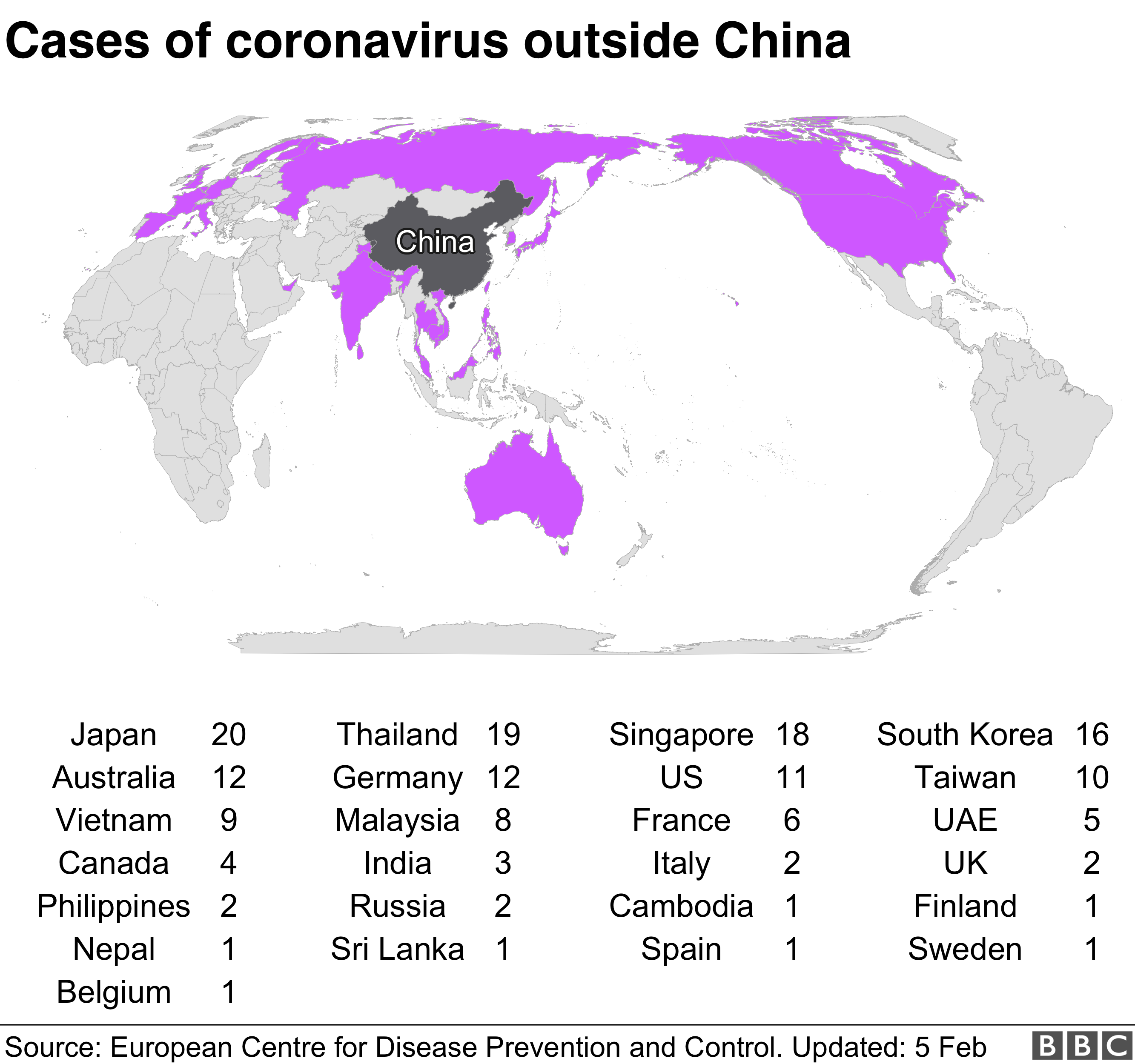
Ninety Nine percent (99%) of the 24,000+ cases and nearly all of the 490 confirmed deaths (with 2 exceptions, one in Hong Kong and one in the Philippines) so far have been in China.  Despite this, the WHO emergency declaration crucially allows for additional resources and support for lower and middle-income countries to strengthen their disease surveillance and prepare them for potential cases or outbreaks. At the present time, to the considerable credit of the Chinese response – partly arising of course from international condemnation of a less than transparent response to the SARS outbreak in 2003 – there are Herculean efforts and resources being devoted to containing the threat from the new pathogen.  This includes the drastic attempted quarantine of a whole region and the speed of construction of new facilities such as 1000 bed dedicated hospitals.


While 2019-nCoV seems to be less lethal than SARS, there is no doubt that it is clearly more transmissible with The World Health Organization stating that the preliminary R0 (reproduction number) estimate is 1.4 to 2.5, meaning that every person infected can potentially infect between 1.4 and 2.5 people (R0 for SARS being 0.19–1.08, with a median of 0.49)[4]. With the spectrum of clinical presentations ranging from mild respiratory illness to life threatening viral pneumonia, the health impact of the ongoing outbreak is very difficult to predict and unanswered questions abound. How many people may have shrugged off mild / virtually asymptomatic infections for instance is not possible to know until follow-up sero-conversion studies[5] can be used to estimate the burden of ‘silent infections’.

Aside from higher transmissibility, the more worrying aspect of 2019-nCov however is the reports of an incubation period of up to 14 days during which an infected individual might both be asymptomatic (displaying no evident symptoms that could be screened for) and also crucially, at the same time during this period, infectious and capable of transmitting the virus to new hosts. The potential 14 day incubation period without symptoms effectively means that the cases which are being confirmed at the present time merely reflect the ‘true burden of infection’ from two weeks ago. As a result we will only have any real sense of the effectiveness of Chinese efforts to contain the virus a fortnight after the stringent travel restrictions imposed around Wuhan province and other parts of China.

As many seasoned experts in these matters have cautioned, schooled as they have been by experience of previous episodes, predicting the behaviour of a newly emergent pathogen is a hazardous business and a great deal of uncertainty surrounds its likely route to potential pandemic status. A virus adapting to a new species host (in this case humans!) is an unstable entity and its defining characteristics today in terms of those who are most vulnerable and their risk of serious or life threatening illness may be very different in the weeks and months ahead.

Eventually of course, a virus keen on longevity in a new host needs to curb its pathogenicity[6] and ideally result in only mild symptoms that will reduce the attention it attracts from a host immune response. Many of the hundreds of viruses, including coronavirus subtypes that cause the common cold, once jumped the species barrier and evolved into relatively benign pathogens. Even the deadly “Spanish flu” epidemic of 1918[7], which killed around 60 million people Worldwide in 1918-1920 and comprised of the influenza subunits H1N1, circulates today in the form of seasonal flu in a genetic variant with greatly reduced lethality.

How serious the current outbreak will be in terms of impact and mortality remains to be seen. SARS of course was eventually successfully contained by stringent infection control, contact tracing and quarantine procedures. While 2019-nCov is not currently as life-threatening an illness as SARS, its greater transmissibility, longer incubation period and potential for symptomless transmission (SARS was only transmissible when symptomatic), do not bode well for ease of containment so it is hardly surprising that the WHO have seen fit to play their strongest card and declare it an emergency.

We can only hope that the response may be timely enough.


John Mooney worked previously for NHS Health Protection where he specialised in the epidemiology of respiratory infectious diseases.


References:
  1. Coronavirus declared global health emergency by WHO: https://www.bbc.co.uk/news/world-51318246
  2. Coronavirus: UK patient is University of York student: https://www.bbc.co.uk/news/health-51337400 
  3. 2019 Novel Coronavirus Basics: CDC FAQs: https://www.cdc.gov/coronavirus/2019-ncov/faq.html
  4. Emerg Infect Dis. 2004 Jul; 10(7): 1258–1263 https://www.ncbi.nlm.nih.gov/pmc/articles/PMC3323341/
  5. Seroconversion: The development of detectable antibodies in the blood that are directed against an infectious agent. Antibodies do not usually develop until some time after the initial exposure to the agent.
  6. Pathogenicity is defined as the absolute ability of an infectious agent to cause disease/damage in a host - an infectious agent is either pathogenic or not. From: Fenner and White's Medical Virology (Fifth Edition), 2017
  7. 1918 Pandemic (H1N1 virus): https://www.cdc.gov/flu/pandemic-resources/1918-pandemic-h1n1.html

Image 2: Capture from the BBC News website, 5 February 2020. Coronavirus: Ten passengers on cruise ship test positive for virus. Source: European Centre for Disease Prevention and Control. Updated 5 Feb. https://www.bbc.co.uk/news/world-asia-51381594.