Showing posts with label partners. Show all posts

Friday, 3 November 2023

Should researchers act as disruptors?

Learning from the Dutch Academic Collaborative Centres

Posted by Peter van der Graaf, Associate Professor in Public Health & AskFuse Research Manager, and Mandy Cheetham, Research Fellow, from Northumbria University

While Storm Babette was wreaking havoc in the UK, a team of international delegates from Tranzo, scientific centre for care and wellbeing of Tilburg University visited Fuse. The visit focused on sharing learning on how to develop and maintain collaborative research partnerships between policymakers, health practitioners, communities and academic researchers.

Tranzo works in Academic Collaborative Centres (ACCs),which are sustainable partnerships between Tilburg University researchers and health and care organisations at both a regional and national level, including (local) government, third sector organisations and other research institutes. Tranzo hosts in total 11 ACCs, each with a different topic area: ranging from mental health, addiction, intellectual disability, to public health, youth, work & health, social work, care for older adults, and technological and social innovations for mental health. Each centre could be compared to a research cluster within Fuse and is led by an academic lead.

Despite the diversity in topics addressed in each centre, there are five underlying research themes:

  1. health-related behaviour, health care policies and societal influences; 
  2. social inequality and inclusivity; 
  3. mental health care, capabilities and recovery; 
  4. client perspective and participation, experiential expertise, and; 
  5. the (health) care system.

We could call these cross-cutting themes, and this is something Fuse could consider to integrate research across clusters. For example, translational research could act as a cross-cutting theme within Fuse.

The ACCs work in a similar way to Fuse: they connect science, lived experience and professional practice in the domain of health and wellbeing in the Netherlands through co-creation of research and knowledge exchange. These diverse sources of knowledge are valued equally. The principles of establishing long-term partnerships, based on equality, personal relationships will also sound familiar to Fuse members.

During the discussions on the day, we reflected on the importance and challenges of blurring boundaries and the need for ‘living bridges’ between partners organisations. Personal and trusted relationships and a commitment to reciprocity were identified as key for this, but also the need for systems that support and incentivise collaborative working. Unfortunately, universities and research funding programmes are often not set up for this way of working, or narrowly confine knowledge exchange to commercial spin-off companies.

Blurring boundaries, science practitioners, and the fourth-generation university

One of the ways in which Tranzo has tried to blur boundaries is by developing science practitioner roles, which are practitioners who take up a temporary post in universities to develop their research skills and act as boundary spanners for the knowledge they co-create within their practice organisations. These roles can be funded by the health and care organisations (in kind), as they recognise the importance of using more evidence to inform their decision making, by blending scientific knowledge with the knowledge and expertise from practitioners and service users. But sometimes also external funding (grants) is available for co-creation projects with science practitioners. Sometimes it is a combination of in kind and grant funding.

This makes science practitioners the flip side of embedded researchers in Fuse: instead of academic researchers co-locating temporarily in a practice organisation (for example a public health team in a local authority) practitioners spend time in academia, (partly) paid for by their organisation and supported by academics to develop their own research. Both roles help to blur boundaries and therefore science practitioners, which go beyond short-term placements, could be a valuable role to consider for Fuse.

To support this two-way traffic between researchers and practitioners, Tranzo has defined itself as a ‘developing towards a fourth-generation university’: an open network university reaching out and working on innovation with partners and citizens in an ecosystem. While first generation universities are focused on education and second generation universities combine education with research, third generation universities embrace entrepreneurship and try to market their knowledge. However, this happens solely within the space of the university (Steinbuch, 2016).

In contrast, fourth generation universities see themselves as only one space within a wider knowledge eco-system that requires close collaboration with all participants in this eco-system, including policymakers, professionals and service users, but also private organisations, arts and creative industries and international collaborations. Interestingly, the function of senior leaders within fourth generation universities is not to manage processes and structures, but to disrupt them. By disrupting existing practices, ways of thinking, and valuing and using different types of knowledge, more value can be created within the eco-system.

This perspective suggests an extended new role for Fuse: not only trying to be a bridge between different worlds (research and practice) or between different research infrastructures and networks within the North East and North Cumbria - Applied Research Collaboration (ARC), Health Determinants Research Collaborations (HDRCs), and Research Support Service (RSS) - but actively disrupting the status quo by building structures and processes to enable the creation of value through new collaborative partnerships and by stimulating multi-actor innovation.  

The new value that could be created in this way was clearly visible during the two site visits on the day, when we were welcomed by staff and community members at Edberts House and Gateshead Council. Embedded research roles have shone a light in Gateshead on the importance of control for residents, whose lives are often defined by a lack of control and influence over decisions affecting their lives. Research helped them to learn from a community-centred approach and use this learning to inform future planning. Council staff felt more confident and skilled to develop their own research and evaluations and implement solutions using this knowledge and the connections it helped to create with external partners.

It was inspiring to hear from our colleagues in Tranzo and share examples of our collaborative research. We had positive and fruitful exchanges about our experiences, challenges and shared interests including training in the craft of knowledge exchange, mentoring, engagement and impact. We look forward to continuing the conversations and would be interested in any readers' thoughts on how we can be more disruptive as Fuse researchers?

The view from Tranzo

Reflections from Prof. Dr. Ien van de Goor, Program leader Academic Collaborative Center Public Health, Tranzo and Tilburg University

On behalf of the Tranzo delegation, first of all many thanks for the very warm welcome on this stormy day in October. We were impressed by the introductions in the morning program on how translational research within Fuse is taking form. There were some very nice examples of how knowledge exchange can help to increase the flow of evidence into public health practice. And how push and pull factors in this process are taken into account in the Fuse knowledge exchange model. It was very interesting to hear about the co-creation process where research was translated in a book for children with parents suffering from addiction problems. As was the report on the relation between the Covid-19 pandemic and health inequities. Both resonated with Tranzo’s way of working: a diversity of themes and different ways of making an effort to do impactful research.  

Next in the afternoon program we were invited to Edberts House and the Gateshead Council. The way the voice of the community is a driving force in making Edberts House into a successful and valued community project, was impressive to experience (as was the lovely lunch offered!).

The program was finalised by meeting with representatives of Gateshead Council. The enthusiasm of the members from the Council's Public Health team and the Fuse researchers was striking and made clear that direct collaboration and co-creation between academic research and local authorities can contribute significantly to the uptake of evidence in public health policy and practice.

So for Tranzo it was a very insightful and inspiring visit learning about Fuse collaborating with practice and sharing our ways of working and trying to be impactful with scientific research. We really look forward to exploring further opportunities to collaborate, co-create and share our thoughts on finding ways to be disruptive (for the better!)

Friday, 21 July 2023

How to choreograph a dance between policy makers and academic researchers?

Posted by Peter van der Graaf, Associate Professor in Public Health at Northumbria University and AskFuse Research Manager


Dancing is a key move in public health, particularly if you want to make an impact with your research. Knowledge exchange is not just a science or even an art, but very much a dance between researchers and policy makers about the use of research evidence. To complete this dance successfully and get evidence used in decision making, both partners need to follow certain steps. However, learning the steps (science) or performing them perfectly (art) is not sufficient: it requires instinct and feel for where you are in the dance and why you are doing it.

To develop a dance plan for your interactions between policy makers and academic researchers, Fuse hosted a special session (or dance class) at the European Implementation Event in Basel, Switzerland on 8 June. The EIE2023 brought together over 300 implementation scientists, practitioners and funders from across health, social welfare, education and other sectors in Europe. Over two days through fishbowls, science slams, workshops, inspiring keynotes and oral presentations, participants explored how to create a new normal for implementation science in society.

Our session explored dance challenges (e.g. moving too slow, bad timing, outfit malfunctions, and unsynchronised performances) and new routines in response (see: ‘What did we learn?’ below) that we have developed in Fuse over the last 15 years collaboratively with our partners. In the session, we highlighted examples of creative communication (the art of knowledge exchange), research performance both backstage and frontstage (AskFuse), and dancing together (embedded research) to set the scene for a discussion about what makes a successful dance between policy makers, health practitioners and academic researchers. We invited conference participants to share their own reflections of dance routines they have developed to support knowledge exchange and implementation of research evidence in practice and policy making.

What did we learn? 10 dance lessons


1. Academic researchers need to learn four basic steps for dancing with policy makers (see the Fuse knowledge exchange model):
  • Raising awareness, using creative communication.
  • Knowledge sharing through joint events.
  • Making evidence fit for purpose (localising and tailoring).
  • Supporting uptake and implementation (e.g., capacity, co-production, linking activities).
2. A deviant knowledge broker can help to facilitate backstage conversation and protect policy makers and academic researchers from missteps.

3. Go with the music: as the context and process in which evidence is useful changes constantly, it is an important skill for researchers to be able “to go with the music” based on ongoing relationships with policy and practice partners.

4. Emotional engagement between researchers and policy makers is essential to get a better feel for the music. A heart-to-heart or moaning about bad performances helps you to improve dance routines and hide missteps. Don’t forget the power of cookies!

5. Embedded research helps to develop an instinct for the dance, based on a better understanding of each other’s organisational contexts. Embedded research allows you to be part of solutions, developed with the communities affected, not just report on the effect on interventions and their implementations.

6. Public health is political; lobbying and advocacy are a core part of the embedded research roles.

Choreographing your own dance routine

We presented participants with the following questions to help develop their own dance routines: 


In response, conference participants started to develop their own dance metaphors for describing their experiences with collaborative research between academics and policymakers. Someone referred to their routines as a ‘silent disco’, where academics and policymakers were dancing to different pieces of music without knowing what the other where listening too. Other participants emphasised the need to spend time together first before you start picking music, to get a better understanding of each other’s musical tastes (classical meets punk?).

Overall, participants felt inspired to start to think more deeply about their own dance plans. How would you answer the above questions and what would your dance plan look like? 

Friday, 22 December 2017

Merry Christmas from Fuse

We would like to wish all of our readers and contributors a very happy festive season. We will return in the New Year - why not make a resolution to blog in 2018 and send us your posts?


Wednesday, 8 November 2017

Spice up your research life: match-making in public health

Posted by Peter van der Graaf, AskFuse Research Manager, Teesside University

Three years ago, we had a crazy idea: what if Fuse had its own dating service for academic researchers and health professionals? Instead of innovative research findings gathering dust on lonely bookshelves, we wanted to provide a stage for academics and health professionals to meet and discuss how that evidence could be used in practice. We were keen to facilitate early conversations on how to collaborate on research that is useful, timely, independent, and easily understood.

Instead of health practitioners wandering around University campuses, trying to find the right academic to work with, we envisioned an open door leading to a welcoming friendly-faced guide. Someone who could do the matchmaking and help them to find or create evidence for spicing up their policies or interventions.

After checking our idea with various health practitioners in the region to make sure that it would make their hearts beat faster, we launched AskFuse in June 2013: Fuse’s very own rapid responsive and evaluation service with a dedicated match-maker (research manager) in post – that’s me!

Coming from an applied research background in social sciences, this post was certainly a challenge but also an incredibility exiting opportunity to develop something new with the support of an enthusiastic group of people across Fuse. The job has been a steep learning curve, but also a great way to meet a lot of people working in public health across the region, getting to understand their passions and … what keeps them up at night.


I quickly learned that there were many great public health projects and programmes being developed and delivered locally that deserved more attention and research (e.g. My Sporting Chance, Ways to Wellness, Boilers on Prescription).  I was encouraged by a real appetite among academics to support this work but felt the frustrations of health professionals caused by budget cuts and the need to decommission services rather than to develop them. I also noticed the limited research evidence informing some of these decision-making processes and the lack of knowledge among academics about how to influence these processes and mobilise their research evidence effectively.

AskFuse has supported more than 270 enquiries from a wide range of sectors, organisations and on topics ranging from Laughter Ball Yoga to Whole Systems Approaches to obesity. We have helped to develop new interventions and evaluated existing ones, made research evidence accessible and understandable, organised events to explore new topics, and pioneered new methodologies; all in collaboration with our policy and practice partners. We have also made mistakes, misunderstood procurement procedures, were not able to help in time, could not find relevant expertise or did not always follow-up on conversations.

Despite these challenges - or perhaps because of them - we have been able to build a dating service that (I think/hope) is perceived as useful by our policy and practice partners, that has helped us to build relationships (even in times of considerable system upheaval with public health moving to local authorities), and has informed new research agendas for Fuse going forward over the next five years as a member of the national School for Public Health Research.

As the service is expanding and my role is changing (I recently became a NIHR Knowledge Mobilisation Research Fellow, which I will talk about in another blog), we are looking for a new AskFuse Research Associate to work with me on strengthening the service and taking it in new directions. If you are interested in mobilising knowledge, fancy a challenge and want to work with a fantastic team, why not be part of it?

Friday, 31 March 2017

Do public health practitioners make good fire fighters?

Posted by Peter van der Graaf, AskFuse Research Manager, Teesside University

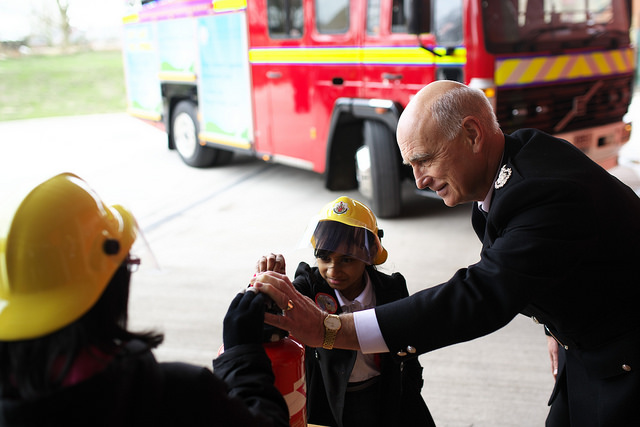
Given ongoing budget cuts and diminishing local capacity, one might be forgiven for thinking that soon public health practitioners will only be responding to emergencies, such as disease outbreaks and substance abuse epidemics. Fighting these public health fires would leave little time and resources for prevention and working with other public organisations. An event co-organised by Fuse, Durham County Council and Darlington Fire & Rescue Service recently proved quite the opposite: fire fighters and other public organisations are very capable of ‘doing’ public health.

Can public health researchers learn a trick or two from fire fighters?
The increasing focus of the Fire and Rescue Services on prevention over the last 10 years has seen the development of innovative approaches that support public health: from helping people with dementia, to tackling child obesity and getting people active (for some excellent examples, see the Local Government Association (LGA) report Beyond fighting fires).

In Durham, the Fire and Rescue Service implemented so-called Health and Wellbeing Visits. As part of home visits to check fire safety, fire fighters ask residents questions about their health and wellbeing (e.g. about falls, smoking and alcohol use, heating and loneliness and isolation) and provide them with advice or signpost residents to relevant services to address any health concerns.

Over the past year (Feb 2016 – Jan 2017), no less than 15,732 Health and Wellbeing Visits have taken place with over 1,800 referrals to various services in Durham and Darlington, accessing vulnerable residents that are often not on public health’s radar. Because of their trusted reputation, the Fire and Rescue Service can get behind the front doors of these people and help them access health services. Perhaps not surprisingly most referrals relate to loneliness and isolation, with an ageing population keen to live at home independently but with a social care system lacking resources to support these people in and outside their homes.

Even the police is getting in on the act of public health prevention with partnerships being established between health and the police across the UK to support, among others, suicide prevention and reduce alcohol-related harm, as was recently illustrated in a Public Health England paper.

In turn, public health practitioners are taking on new activities that were previously deemed outside of their scope. For instance, the Durham County Council’s public health team is actively supporting energy efficiency improvement schemes (such as Warm and Healthy Homes), in recognition of the link between excess winter death and cold houses. Poor quality housing, low incomes and high energy costs result in residents having to choose between food or fuel. To prevent residents from having to make that choice, council officers are providing tenants at high risk (e.g. people with cardiovascular and respiratory conditions) with new central heating, boiler repairs, home insulation and energy saving advice.

This blurring of boundaries between public professionals is not new, but public health moving back into local authorities has created opportunities for linking prevention activities across a wider range or organisations. The event provided many other examples of this, e.g. GPs prescribing boilers to patients with long-term conditions and Citizens Advice providing welfare rights advice to elderly residents.

This new boundary blurring builds on existing policy initiatives, such as Making Every Contact Count and Health in All Policies, which all involve the wider public health system. Participants at the event made it clear though that this is not a simple cost-saving exercise, allowing councils to pass the public health buck to other parts of the system. Instead, these new partnerships are characterised by a genuine exchange of knowledge and practices between public organisations at the front-line. It highlights a new way of working that recognised joint priorities and the values of other professions to achieve these priorities through the sharing of resources and by taking on new roles. As Professor David Hunter outlined in his presentation at the start of the event, these new partnerships require a different form of leadership, which is less hierarchical and formal, not so much concerned with Key Performance Indicators and commissioner-provider splits, but more focused on the value of relationship building, trust and 'soft' skills.

The event provided a platform for looking at these new partnerships and the evidence for their effectiveness. If anything, it highlighted a challenge for public health academics to research these new partnerships: how to make sense of the contribution of each partner in a system where boundaries are rapidly blurring? Maybe public health researchers can learn a trick or two from fire fighters.

Find out more about the event: Creating Healthy Places in the North East: the Role of Fire and Rescue Services and Fuel Poverty Partnerships

Photo attribution: "Rochdale Fire Station Opening Day" by Manchester Fire via Flickr.com, copyright © 2014: https://www.flickr.com/photos/manchesterfire/13288225965/

Friday, 10 February 2017

The importance of partnership working to improve priority-setting in public health decision-making

Guest post by Sarah Hill, Fuse PhD student, Newcastle University

Last month I attended a workshop in London that explored how local authorities could be supported in setting priorities to improve people’s health and wellbeing. The workshop provided a platform to report the findings of a follow-on study to the Fuse led "Shifting the Gravity of Spending?" project and to explore methods for supporting local authorities in priority-setting.  Watch the video below to find out more about the study.

As a health economics PhD student looking into methods of evaluating public health interventions, the workshop was of interest to me since the prioritisation tools focused on at the workshop are a part of the evaluative toolkit I am examining. Additionally, as a health economist by trade - who was thrown-in at the deep-end of public health just over a year ago when I started my PhD research - any opportunity to meet those working in the public health field is one that I seize in order to broaden my knowledge and appreciation of the public health context.  Particularly public health officers and those working outside of the academic realm.

A full report of the workshop can be found here for those who are interested in the outcomes of the event; I will focus here on a few of the key points from the event.

Small group discussions centred around partnership working
At the close of the workshop, following small group discussions, each group of delegates was asked to feedback one key point that came out of their discussion regarding how to aid the use of prioritisation tools for public health spending decisions. Interestingly, a number of the points fed back from each group were related to partnership working to make decisions; such as:
  •  “gathering together” with NHS partners to ensure funding for effective interventions is secured when benefits may fall outside of public health’s remit and more under the NHS umbrella; 
  • considering a “place based” approach to seek good outcomes within a place rather than within separate organisations and;
  • working with local politicians to move decisions forward by understanding their objectives.
The take-home message I got from these points was that for priority-setting to be most successful in public health, a wider viewpoint needs to be considered given the number of stakeholders outside of public health teams that are involved in funding decisions and interventions being successfully implemented. This point echoes a sentiment voiced by Professor Peter Kelly at the recent Fuse meeting on inequalities (see Professor Paul Johnstone’s blog on the meeting here) who emphasised the huge reduction in both alcohol-related hospital admissions and smoking rates in the North-East since a regional approach has been taken to tackling tobacco and alcohol through pooling local resources to invest in initiatives like Fresh and Balance.

The impetus placed on collaborative working coming out of the workshop has given me something to think about for my PhD research since it appears that being able to evaluate interventions in such a way that incorporates and reflects that way of working is valuable. In fact, this is not necessarily a new thought; incorporating intersectoral costs and consequences has been established as a challenge to be addressed when evaluating public health interventions by health economists previously. A review I recently conducted on existing economic evaluations of public health interventions indicates that there is still a lot of room for improvement when it comes to overcoming this challenge and actually incorporating intersectoral costs and consequences. Often evaluations are conducted from either a health care or provider perspective, thus only considering the costs to those sectors exclusively. Also, of the evaluations I reviewed and those previously identified in the literature, the incorporation of consequences (i.e. benefits or disbenefits) to sectors other than the intervention provider is practically non-existent.

Perhaps if more evaluations were able to reflect who benefits from an intervention and to what extent this may enable more collaborative working between different partners and sectors in either funding and/or aiding with the implementation of interventions. Of course the availability of appropriate data is a real barrier since an evaluation is only as good as its data, thus a drive needs to be made within public health departments to stipulate the collection of appropriate outcomes data from the very beginning of an intervention being commissioned to build up the database for effective evaluations.

Shifting the Gravity of Spending? Workshop to explore methods in public health priority-setting was held on the 17 January 2017, and funded by the NIHR School of Public Health Research and supported by the Local Government Association and Public Health England.  The “Shifting the Gravity of Spending?” project is led by Fuse Deputy Director Professor David Hunter at Durham University.

Thursday, 7 January 2016

The blog monster returns with a shameless plug

Posted by Emma Dorรฉe, Fuse Communications Assistant

Just over a year ago, we wrote about how far the blog had come since it hatched and it’s safe to say that the waistline of the - now fully grown - ravenous blog monster continues to expand.

Feed me, Seymour!
Since its creation in May 2010, the Fuse blog has had just over 167,000 views and we’ve posted 334 blogs – a great achievement, right?!

As a result, we wanted to do something to celebrate this success and to see if we could reward all the contributors that make the Fuse blog what it is, so we have entered the UK Blog Awards 2016!

The blog has been entered into two categories: 'Health and Social Care', and 'Education'. You can vote for us in either category but of course we would really appreciate it if you voted for us in both.

You can vote for the Fuse blog once a day by following this link. We will be encouraging people to do this via our social media feeds but it would be even better if you could spread the word and encourage your friends and family to vote for us too.

http://www.blogawardsuk.co.uk/ukba2016/my-entry/fuse-open-science-blog
Click here to vote for the Fuse blog now

Most importantly however, we still need people to continue sending us blog posts so if you work in public health then please get in touch.

We want to hear about your aims, priorities and challenges or which issues you think need to be brought in to the public eye and debated. Could you give an insight into your role within public health for those not directly involved? Or is there a public health campaign in your area that you wish to promote or a topical news issue or event happening which could coincide with your post?

We post blogs at least once a week and publicise them via our Facebook page and Twitter account. The blog has its own website but of course, you can also view the blogs by visiting the Fuse website.

Email your posts to me (E.Doree@tees.ac.uk) and please let us know if you think there is anything we can do to improve the blog.

Thank you to everyone who has contributed to the blog so far. You have sparked great discussion and helped our readers learn what it is really like to work in public health, no matter what your role is.

The UK Blog Awards 2016 competition closes at 9pm on the 25 January so don’t forget to keep voting for us as much as possible until then!

Photograph ‘into the mouth’ by Len "Doc" Radin via Flickr.com © 2005: https://www.flickr.com/photos/drurydrama/1079598181

Thursday, 26 November 2015

Housing and health: aligning stars or weathering a perfect storm?

Posted by Peter van der Graaf, AskFuse Research Manager

Last Wednesday I attended the annual conference of the Housing Learning and Improvement Network (LIN), which explored how the housing and health sectors can work more closely and effectively together.

The case for this partnership was well made by the keynote speakers: not only are there already strong historic roots but the present day challenges faced by both sectors make them obvious partners. With the recent move of Public Health to Local Authorities, the central message from the Marmot review - improving social determinants is central to improving population health and wellbeing - has taken on a new significance for public health commissioners faced with the needs of other local government departments.


Housing is one of the key social determinants and has received much attention in recent Government policies that seek to redefine the remit of health. For instance, the Care Act outlines an overarching vision for adult social care and emphasises various housing solutions that can help to support the integration of health and social care.

The NHS has also recognised the role of housing and has proposed a new care model around housing in its Five Year Forward View, such as the Healthy New Towns initiative. As Neil Revely from Sunderland City Council and Chair of the Association of Directors of Adult Social Services (ADASS), proclaimed: “the stars seem to align once more to bring housing and health together”. For this reason, ADASS has worked closely with NHS England to develop a Memorandum of Understanding on Housing and Health.

However, the same politics that bring both sectors together could be stumbling blocks for the partnership to take off. As members of the audience pointed out, prevention services have been hardest hit by austerity measures and many local authorities have decommissioned the services that are now most needed. With a growing and ageing population, demand is likely to increase while resources are more likely to decrease with continued budget cuts. Moreover, the ageing population means an increase in complex needs that cannot be addressed by a prevention agenda alone and in which (supported) housing is just one part of the solution.

In short, the current political and financial climate might provide a perfect storm, making it difficult for housing and health to work effectively together. The balance might be decided by the ability of the partnership to access new resources and powers, for instance, by claiming a stake in the North East devolution plans, mirrored on the success of the Greater Manchester Devolution Agreement that includes an MOU on Health and Social Care worth £6bn each year (see also the Fuse blog post by Patrick Vernon on this topic).

To make the business case for these claims, the partnership will need to build the evidence base around the impact of a joint housing and health programme in the North East. An abundance of data is available to highlight the problem areas and populations, supporting the call to arms, but limited evidence was presented at the conference on what housing providers, public health teams and care providers can effectively do to address these problems and populations. Much of the current evidence is anecdotal and in the format of case studies.

The need for more evidence of the impact of the home/housing on health and wellbeing was also reiterated by Gill Leng from Public Health England (PHE) and this is an area where Fuse could provide helpful support. What research evidence do we have available within our Centre to support the North East partnership between housing and heath? What support can we provide in developing the monitoring and evaluation framework for their programme? The recent Fuse Quarterly Research Meeting (QRM) and corresponding research brief on health and housing is a first step in this direction and the upcoming QRM in April 2016 on planning and health another, but more practical evidence is required to align the stars of local policy, practice and research and help the North East health and housing partnership to weather the current political and financial storm.

Photograph 'Incoming Storms No. 2' by Mike Lewinski via Flickr.com © 2013: https://www.flickr.com/photos/ikewinski/9448689046

Did you enjoy reading this post? If so, please vote for Fuse in the UK Blog Awards 2016 by clicking here

Wednesday, 21 October 2015

Back to the Future: health and housing working together

Guest post by Patrick Vernon, Health Lead, National Housing Federation

The launch of the Due North report in September 2014 was a rallying cry for greater priority around tackling health inequalities with a manifesto in how all stakeholders and system players can recycle effectively the £136 billion in public spend for transforming services. Since May 2015 we have a new Government with a clear agenda on austerity, public sector reform and the revitalisation of the devolution agenda with the mantra of the "Northern Powerhouse". In the middle of this maelstrom has been the Government's approach to tackling the housing crisis with the immediate reduction of 1 per cent in rents over the next four years, the extension of the Right to Buy and the ongoing impact of welfare reforms. These changes have become a major turning point in the history of the social housing sector along with the changes in supported housing.


Although there is an emotional, political, moral and (increasing) evidence base for the links between poor housing and health, the gap between fact and reality still feels light years away. There is a clear role for the social housing sector to work with the NHS, social care and employers in transforming services and care pathways to meet demographic, lifestyle and morbidity changes in the population. A step in the right direction is the Memorandum of Understanding (MoU) to support joint action on improving health through the home which was signed by all stakeholders in the health and housing sector in Autumn 2014. The document highlights at a strategic and national level the key principles and actions around a collective approach around delivery. However, what is currently missing is a regional approach that is embedded in the devolution agenda. This is already happening in Greater Manchester as part of DevoManc (giving greater powers to the combined authority working in partnership with a directly-elected Mayor). In the North East we need to ensure that housing and health are part of the devolution plans.

Thus the Fuse Quarterly Research Meeting (QRM) ‘Creating Healthy Places in the North East: the Role of Housing’ on Tuesday (20 October) in Darlington is the start of another important chapter in the health and housing trilogy (or may be pre-sequel) on how health, social care and housing can work together in meeting the needs of local communities in a period of austerity. All the speakers at the event had - in essence - the same message: a need for strengthening partnerships and system leadership along with collating, translating and communicating the evidence for cost-effective interventions.

The event not only had international examples from the Netherlands and New Zealand but also local case studies from a number of housing associations such as Thirteen Group (Middlesbrough Recovering Together project), Gentoo Housing (Boilers on Prescription), Home Group (social prescribing), Tyne Housing (working with homeless people in the community) and South Tyne side Homes (sheltered accommodation for residents with dementia). The case studies illustrated how better commissioning and service integration can make a difference to the lives of people.

The challenge in a period of reduced budgets and further potential cuts in the forthcoming Comprehensive Spending Review is how we make the business case and get the right people in the room to transform services, building on the spirit and vision of the Due North report in tackling health inequalities and achieving greater health equity.

I think one of the key outcomes of the QRM is for Fuse to act as broker between service providers, commissioners and service users in creating a strong North East dialogue between the health, social care and the housing sector. This can be achieved by networking, sharing good practice, supporting development of the evidence and, finally, an advocacy role in influencing the devolution agenda.

Thus, if Marty McFly and Doc Brown pop out of their DeLorean DMC-12 again in the future, we can share with them the successful journey that we have undertaken in ensuring that the housing sector is a valued, respected and key partner in delivering better health and social care services and an integral agent in tackling the public health agenda.

For more information visit the National Housing Federation website or read the Fuse research brief accompanying this event: Creating healthy places in the North East - the role of housing.


Photograph 'Back to the Future DeLorean Time Machine' by AdamL212 via Flickr.com © 2007: https://www.flickr.com/photos/lautenbach/1393032429

Did you enjoy reading this post? If so, please vote for Fuse in the UK Blog Awards 2016 by clicking here

Tuesday, 28 July 2015

Would you accept money to be healthier?

Guest post by Emma Giles, Senior Research Lecturer in Public Health, Teesside University

As newspaper headlines have shown, the issue of encouraging individuals to adopt healthier lifestyle behaviours by paying them is controversial. Whilst many of us know that we should do a bit more physical activity, eat our five-a-day fruit and vegetables and even attend our vaccination and screening appointments, we don’t always do this. Many barriers prevent us from fully engaging with these healthy behaviours, and these barriers are often complex, individual, and are not always easily surmountable. These barriers range from living away from green spaces which would allow outdoor exercising, to deep-seated social norms that stop individuals from engaging in healthy behaviours because they are not well accepted by family, friends or the wider community.

In recent years there has been a growing body of research looking at paying people to be healthier. This essentially means providing individuals or groups with cash, shopping vouchers or gifts in return for the adoption of healthier behaviours. Such schemes include the Pound for Pound weight loss incentive scheme, the Give it Up for Baby scheme, and offering incentives for breastfeeding.


In order to hear recent research evidence, and to provide a forum for friendly debate, I organised the recent Fuse Quarterly Research Meeting, which focused on payment for health behaviours. Last Wednesday (22 July), policymakers, practitioners, and academics came together to hear presentations from four academics and practitioners working in the broad field of incentives. As Claire Sullivan, a Consultant in Public Health from Public Health England mentioned in her opening address as Chair of the meeting, often incentives can take various forms – including paper pants for Chlamydia screening!


In terms of specific incentives, Professor Pat Hoddinott, Chair in Primary Care, Nursing Midwifery and Allied Health Professions Research Unit at the University of Stirling, presented research which focused on incentives for breastfeeding and to quit smoking in pregnancy – the BIBS study. Key findings suggest that tailoring of incentives is important to meet local needs, but that they show promise to encourage these behaviours.

Professor David Tappin, Professor for Clinical Trials in Children within the School of Medicine at the University of Glasgow, followed Pat by showcasing data from the CPIT trial – a smoking cessation in pregnancy trial in its second phase. Results showed that there was a 14% increase in quit rate and further analysis showed that there was a 150g increase in birth weight of babies born to mothers who quit smoking. Findings suggest that financial incentives were found to be acceptable by the women involved, and may double the quit rate when used with existing smoking cessation services.

A practitioner perspective was provided by Mr Andrew Radley, Consultant in Public Health Pharmacy, NHS Tayside, who talked about operationalising the use of financial incentives in a stop smoking programme within a community pharmacy setting. In particular, 393 women in Tayside engaged with the smoking cessation services, and incentives were found to be effective. Of note was the finding that mothers preferred receiving their incentives on a weekly basis.

I spoke last and presented qualitative data exploring the acceptability of incentives. The findings suggest that incentives are more likely to be accepted if they are provided to certain population groups including pregnant women and those on a low income, but not for those who may have alcohol or drug problems. The ‘perfect’ incentive has yet to be identified, but it will need to be shown to be cost-effective for it to be accepted on a wider scale.

The presenters were then joined by Peter Kelly, Director of Public Health Stockton Borough Council, Jim Beall, Health and Wellbeing Board Chairman, and Dr Jean Adams NIHR Research Fellow at CEDAR for a panel discussion. The audience raised many questions and comments around the use of incentives, with particular concerns around incentives increasing health inequalities, aggressively placing the blame of poor health on individuals, and that incentives may result in moral implications when individuals are rewarded for their behaviour. The debate suggested that more research evidence is needed to discover what type of incentive works for whom, and in what setting, and to better explore group (rather than individual) incentives.


What is obvious is that paying people to be healthier is an emotive topic, a highly contested intervention approach, but at the same time, it also shows promise to encourage individuals to adopt healthier lifestyle behaviours. It certainly provides food for thought…how many of us would accept money to be healthier?

Follow this link to find out more about the Fuse Quarterly Research Meeting ‘Payment for health behaviours: the case of health promoting financial incentives’ on the Fuse website.


Did you enjoy reading this post? If so, please vote for Fuse in the UK Blog Awards 2016 by clicking here

Thursday, 23 July 2015

Mind over matter in Fuse?

Posted by Peter van der Graaf, AskFuse Research Manager

Mental health is a rising star on national and local agendas. At national level, mental health was for the first time ever included in all of the main political party election manifestos and features significantly in the NHS Five Year Forward View. At local level, Public Health teams across the North East are reviewing their mental health services and upskilling themselves in the best ways to reduce self-harm and suicide. You may ask what all the fuss is about?

Various reports have pointed out that poor mental health is costing the UK economy £105bn per year, including £8bn annually in sickness absence, and a further £15bn in lost productivity absenteeism (where people are at work, but under-perform due to mental health issues). The Care Quality Commission (CQC) recently sounded the alarm over the state of mental health services in England. In its first ever review of mental health crisis care, the regulator found that 42% of patients did not get the help they needed.

The picture is particularly bleak in the North East, which has the highest suicide rates in the UK and rates have been going up steadily since the economic recession and public sector cuts (after a long period of stabilisation) and are likely to increase further with additional cutbacks planned in recent spending reviews. Not surprisingly, mental health issues are higher in deprived areas, among men, those who are unemployed, and related to alcohol problems, all of which the North East is leading on in national league tables. Mental health services, described by one of our practice partners as “the Cinderella of Public Health”, are bearing the brunt of these cuts, in times when you could argue that their service users need them most.


To make the most of existing intelligence and services, the Public Health Intelligence Northern England (PHINE) network recently organised a dedicated event on self-harm and suicide, offering participants access to various interactive data sets (e.g. Community Mental Health Profiles) to help local authorities make sense of national data for their own patch. Where are the suicide hotspots in different localities? Who are most at risk and what services can they access? The data profiles were well received by the audience but were also met with some criticism around lack of integration with local data, such as counselling data collected by GPs in the North East. Moreover, although this data helps to identify what is happening where, it does not allow for answers to the question why? Public health commissioners need help to interpret this data and understand why suicide and risks are going up in one area or user group but not in another.

What can Fuse do to support this? Are we making our research on mental health issues available to decision makers and professionals? For instance, where can Public Health practitioners find information about the lessons learned in the award winning Change UR Mind about Young People project (evaluated by our Translational Research programme); or about the literature review on self-harm produced by the Knowledge to Action Group within our Complex Systems programme? Moreover, is our research responding to local concerns and needs? Do we help them in interpreting national data and matching this with their own data? And do we support them in developing interventions to address hot spots? How can Fuse work more effectively with partners in the region that are working on suicide prevention strategies, post-event services and mental health research?

Partners are closer than you might think. For instance, The Westgate Unit at HMP Frankland is a therapeutic, personality disorder treatment service based in a high security prison setting.  The Unit helps prisoners diagnosed with Borderline Personality Disorder who are most at risk of self-harm and suicide. The unit has developed its own research on why different prisoners self-harm but is struggling with budget cuts and would welcome support from academics in developing and conducting further research. You might counter that this is not public health, but given the significant impact of mental health on the UK economy, the NHS and, last but not least, the impact on families and communities, I would argue that this is a unique opportunity for Fuse to get involved.

Our region already has a wealth of clinical expertise available on mental health: the Mental Health Research Group (MHRG) is a joint initiative of the Tees Esk Wear Valleys (TEWV) NHS Foundation Trust and Durham University, in which clinicians, academics and service users, including young people, collaborate to improve local health services. The group recently showcased their research during their annual conference. Unfortunately, Fuse is not a partner in this network. However, clinical staff in the Trust are keen to develop their research skills and contribute to a better understanding of mental health issues and interventions in the North East and would welcome collaborative research with Fuse.

This might be a good time to ask: should Fuse put mind over matter when it comes to mental health?

Thursday, 2 July 2015

Collaborative research: agreeing to disagree?

Posted by Peter van der Graaf

Fuse sponsored a parallel session at the Faculty of Public Health conference last week in Gateshead, chaired by Professor John Ashton CBE, President, UK Faculty of Public Health. The session focused on the challenges and opportunities of collaborative research between academics, health practitioners and decision makers.

The four papers presented in the session outlined different challenges in collaborative research: Alyson Learmonth, reviewing Health and Wellbeing Strategies in the North East, highlighted the diversity in priorities between different areas, making it difficult to focus and combine resources across local authorities.

Silvia Scalabrini showed that, in spite of dedicated health economic support from academics to local public health teams in prioritising their investment and resources, the use of these formal tools was met with resistance by elected members who put a higher value on other sources of information, such as stories from residents.

I highlighted limits to collaborative working through a mismatch in timescales, funding and interests. For example, academics showing limited enthusiasm for applied research due to a lack of incentives within their institution, which put a higher value on high quality publications and research council funding.

Fuse Director Professor Ashley Adamson talked about the challenges in setting up data sharing agreements with different local authorities to access National Child Measurement Programme (NCMP) data, in spite of positive support and demand for the research from local government.

Listening to these presentations one might wonder whether collaborative working is really possible. At the same time, each presentation offered examples of where it was achieved and made a difference. For instance, Alyson Learmonth's appreciative enquiry demonstrated common interests between Health and Wellbeing Boards (HWBs) in giving each child the best start in life and in the social determinants of health, particularly interventions around education and housing.

Silvia Scalabrini highlighted the usefulness of the Portsmouth Scoring Card, developed by Austin, Edmundson-Jones, and Sidhu (2007)* for local authorities to prioritise their spending. I reflected on the value of responsive research services, such as AskFuse, to provide backstage negotiation spaces for what constitutes useful evidence. Professor Adamson discussed the benefits of matching data from the NCMP with local intelligence to increase the effectiveness of child obesity interventions and their evaluations.

I’m wondering where this leaves us? In spite of problems in setting priorities, even agreeing on the tool to do this, limits to willingness and capacity among academics and public health practitioners to collaborate on research projects, and barriers in data sharing once a project has been agreed, the different examples made it clear that not collaborating was simply not an option.

Public health practitioners have limited resources and lack the capacity to analyse and interpret data, while academics are increasingly required to demonstrate the impact of their research and lack an understanding of the context and processes in which evidence is used in practice. Working together is a must to ensure that public health can provide an answer to the questions it is currently being asked.

Moreover, the number of participants from academia and practice at the conference session, demonstrates that there is a clear appetite to work together on these issues as long as we are able to provide the conversation spaces for this.


*Reference. Austin, D., Edmundson-Jones, P. and Sidhu, K. (2007) Priority setting and the Portsmouth scorecard: prioritising public health services: threats and opportunities. Available at: http://www.publichealthconferences.org.uk/health_services_2007/presentations.php

Did you enjoy reading this post? If so, please vote for Fuse in the UK Blog Awards 2016 by clicking here

Thursday, 4 June 2015

Complexity in health organisations: setting ourselves up for chaos or enjoying the simple things in life?

Posted by Peter van der Graaf

Can applying a complexity lens to health organisations be more than an academic exercise with practical applications for service delivery? This question was central to a two-day meeting last week in London at the Health Foundation between researchers, policy makers and health practitioners. The event was organised by The Knowledge to Action Group (KTAG), an international team of senior academics and coordinated by two leading members of Fuse’s Complex Systems research programme, Prof David Hunter and Dr Emily Henderson. The group brought together the crรจme de la crรจme of health research and knowledge mobilisation, with about 40 handpicked participants from across the UK to debate a green paper on the topic (which is a tentative government report and consultation document of policy proposals for debate and discussion).


The essence of this meeting was about getting to grips with the consequences of doing research and developing interventions in a world that is inherently complex (which is not to be confused with just being complicated!). The green paper (Knowledge-to-Action: Addressing Complex Problems in Health Systems, May 28/29 2015) described complex systems as non-linear; dynamic; and having no single point of control.  Because of these characteristics, outcomes in a complex system are unpredictable and resistant to interventions. So are health systems really complex? Anyone trying to get research evidence into practice will quickly discover that knowledge mobilisation is prone to all the characteristics outlined above for complex systems.

In one of the breakout sessions during the event the difference between complicated and complex was illustrated with the example of building a rocket versus raising a child.  Building a rocket is complicated but will lead to a predictable outcome (successful launch) if all the different pieces are correctly assembled according to the guidebook. However, raising a child is complex (as many parents will testify) and often leads to chaos in many academic households. This is bad news for academic parents and health service managers: you cannot steer the thing (but you are still accountable for it) and even if you find the solution to a problem in the system it is likely not to work when you try it again. The dynamic nature of systems means that what works in one context or at one point in time may not work the same as the system changes.

How do you work within such a system? Fortunately, the event provided four case studies of research projects where the academics had managed to work within a complex health system to produce change across different areas, often in co-production with policy makers and health practitioners. The authors of the green paper distilled four themes from these case studies to inform future research and interventions:

  1. the balance of central and distributed authority in organisations and systems; 
  2. the importance of emergence (continuous learning and adaptation); 
  3. the need for co-produced knowledge; and 
  4. a range of leadership positions and styles.
These four themes were discussed in more detail in various breakout sessions over the two days.

Participants embraced the spirit of the event and discussed a wide range of topics (from the need for a critical discourse department to finding positive deviants), whose relationships with the four themes were sometimes unclear and mostly unpredictable. Nevertheless, some key messages emerged from the event that will soothe the nerves of academics and service managers. By visualising complex organisations as “patterns of conversations between interdependent individuals” (as quoted in a presentation from Allan Best on the first day), working in complex systems becomes conversation management and engagement. According to the researchers involved in the successful case studies, this works all the better outside the normal context of everyday work by taking commissioners to the pub or baking a cake for a meeting with service managers to get the conversation really going. Isn’t it ironic that to work inside complex systems, one needs to go back to basics in a more simple system?

Thursday, 9 April 2015

How hard can it be? Flying over the gap between research and policy


Posted by Peter van der Graaf
A man in a hot air balloon realised he was lost. He reduced altitude and spotted a woman below. He came lower and shouted: “Excuse me, can you help? I promised a friend I would meet him, but I don’t know where I am”. The woman below replied: “You’re in a hot air balloon hovering approximately 30 feet above the ground. You’re between 40 and 41 degrees north latitude and between 59 and 60 degrees west longitude”.

“You must be a researcher,” said the balloonist. “I am,” replied the woman, “how did you know?” "Well,” answered the balloonist, “everything you told me is technically correct, but I’ve no idea what to make of your information, and the fact is I’m still lost. Frankly, you’ve not been much help at all. If anything, you’ve delayed my trip.”

The woman below responded: “You must be a policy maker”. “I am,” replied the balloonist, “but how did you know?” “Well,” said the woman, “you don’t know where you are or where you’re going. You made a promise, which you’ve no idea how to keep, and you expect people beneath you to solve your problems. The fact is you are in exactly the same position you were in before we met, but now, somehow, it’s my fault.”
This story was presented by Professor Roland Bal from Erasmus University in Rotterdam, the Netherlands in his recent Knowledge Exchange Seminar titled: ‘Hybrid management in science-policy practice relations’. You might have heard the story before, as it is adapted from an article by Locock & Boaz in 2004 in Social Policy and Society and also quoted in the PhD thesis of one his students, Rik Wehrens (2013), who studied the Dutch Academic Collaborative Centres for Public Health and how they shaped the co-production of research, policy and practice within this field in the low lands.


In his seminar Roland used the above story to explain that we often fall into the trap of thinking of two communities (ivory tower scientists on the one hand and policy makers at the coalface on the other) with completely different perspectives on the use of research and evidence. He did not deny there were differences between both professions, and gaps to bridge but suggested that we should use these gaps more strategically. By starting from a recognition that all science is a social practice quoting Jasanoff (2004) (“Scientific knowledge [..] both embeds and is embedded in social practices, identities, norms, conventions, discourses, instruments and institutions” (p. 2-3)) he showed how the Dutch Centres have been able to blur the boundaries between the two communities by distinguishing between a front and back stage for their partnerships and performing on these stages at different times in the collaboration process.

At front stage the academics took the limelight and made all the right noises about scientific rigour by presenting their advisory report to public and policy audiences, complete with imposing lecture theatres. They deliberately emphasised the difference between academics and health professionals to create the impression of ‘science speaking truth to power’. However, the content of the reports and the research behind were intensely debated behind the scenes on various back stages between academics, health professionals and policy makers to ensure that the research objectives and findings were embedded in the wider political context. In other words, collaboration and distinction were highlighted at different times in the process to enable each community to explain and sell their work to their peers: policy makers needed to account for their compromises and shared decisions, and academics needed to manage the expectation around their research.

Two key mechanisms provided crucial in this staging: firstly, dual appointments that enabled health practitioners to take up part-time roles in academia (but surprisingly not the other way round!) and, secondly, scenario approaches that clustered specific interventions into modelled scenarios connected to relevant policy programmes.

What lessons does this hold for Fuse? Are we still trying to bridge the two communities or should we spend more time developing different stages? AskFuse (our responsive research and evaluation service) might be a step in the right direction to create the back stage for initial conversations between policy makers, health professionals and academics but where is our front stage? Are we making enough noise? And how serious are we about dual appointments (researchers in residence?) and linking research on interventions to specific policy programmes?