Showing posts with label DBlack. Show all posts

Friday, 3 February 2023

Welcome to your Wrapped, Fuse Open Science Blog

Posted by Mark Welford, Fuse Communications Manager, Teesside University

If you use Spotify (other streaming platforms are available) then you will no doubt have received your own personalised ‘Wrapped 2022’. A helpful (if somewhat creepy!) summary of your annual listening habits in one eye-searing psychedelically coloured package. Apparently, my most listened to song in 2022 was Baby Shark - I have a 3 year old.

Around this time of year I do a similar (if slightly less garish) job of pulling together the top 5 Fuse blog posts from the previous year.

But this year is a little different.

It’s award season and this year the blogs listed below were in the running for a coveted gong. Not at the GRAMMYs, Oscars, Emmys, BAFTAs, or BRITs but the (much more prestigious) first ever Fuse Awards!

Earlier this week (30 January), the post with the most views was crowned best blog of 2022 with the author awarded a shiny trophy at our ceremony in Durham *link may contain SPOILERS*.

So without further ado, here is the full list of the runners and writers in reverse order, culminating with the post that received the most views...


Posted by Tim Townshend, Professor of Urban Design for Health, Newcastle University


“...primarily designing around the needs of the private car - rather than humans - has been a disaster.”

Prof Townshend explores how we can plan for a healthier future by intervening in the built environment. From the 'toxic high street', to the green (and blue) spaces in our cities that encourage physical activity and social interaction, positive for physical health and mental wellbeing.

Posted: 13 May 2022


4. Science, and the art of communication


Posted by Louis Goffe, Research Associate, NIHR Policy Research Unit in Behavioural Science

"...building the evidence-base isn’t enough, we all need to work on at least one aspect of the artistic craft of research promotion."

COVID19 has brought into sharp focus that health promotion takes more than good science, there is an art to the delivery. In this post, Louis explores vaccine misinformation, the infodemic, involving the public and advocacy.

Posted: 28 January 2022


3. What support do children and young people actually want when their parents use drugs and alcohol?

Posted by Cassey Muir, Fuse & NIHR School for Public health Research (SPHR) funded PhD Researcher from Newcastle University and Kira Terry, Lived Experience Expert.

“No-one has ever asked me about how I feel in any of this.”

Fuse PhD student Cassey shares her research aiming to understand the experiences, perceived impacts and coping strategies of young people whose parents use substances. The post ends with Kira’s thoughts about contributing to the project as a Lived Experience Research Advisor.

Posted: 9 December 2022


2. Is a picture truly worth a thousand words?


Posted by Emma Adams, NIHR ARC NENC Mental Health Fellow at Newcastle University, and Experts by Experience from Fulfilling Lives Newcastle Gateshead & #HealthNow Newcastle

Find out how Emma and her Experts by Experience worked together to develop striking visuals to share what they had learned from a study exploring access to community based mental health and substance use support during the COVID-19 pandemic for individuals experiencing homelessness and those providing support.

Posted: 25 March 2022


And in at number one our award winner...


1. Universal Credit experiences and research co-production
Posted by David Black, Fuse Public Partner and Expert by Experience. Introduction by Mandy Cheetham, Research Fellow in the Applied Research Collaboration North East and North Cumbria (ARC NENC), Northumbria University

“In the past I'd always found the process of seeking
 help from the unemployment benefit system to be
 relatively easy, but Universal Credit was a disaster
 for me.”

Ever wondered how you could help shape research as a member of the public? In this Fuse blog, David shares his personal experiences of claiming benefits and how this has informed research to assess the impact of Universal Credit.

Posted: 11 March 2022


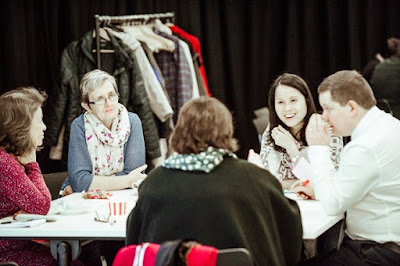
Below is a photo of David (second from the right) along with the other Fuse Award winners. Congratulations to all! 
 

Catch up with all the award winners using #FuseAwards23 or see the event programme on the Fuse website for all those shortlisted.

Join Fuse to be in with a shout of winning a coveted Fuse Award in 2024!

Friday, 11 March 2022

Universal Credit experiences and research co-production

Introduction by Mandy Cheetham, Research Fellow in the Applied Research Collaboration North East and North Cumbria (ARC NENC), Northumbria University

I contacted David in my role as public involvement lead for the NIHR funded study on Universal Credit. As a research team, we made a commitment to include the views of people with experience of claiming Universal Credit as part of our public involvement and engagement activities. David very kindly offered his assistance and has been one of the contributors who have helped shape the study so far.

------------------------------------------------------------------------------------------------------------------------------------------------------------------------------------------------------

Posted by David Black, Fuse Public Partner and Expert by Experience

David takes part in a wide variety of public involvement and engagement activities  
I had noted many observations during my experience of engaging with the Universal Credit system and had a little experience of welfare benefits in a previous roll assessing applications for legal aid. As I'd been involved in co-production work relating to clinical research and healthy ageing in a number of patient and public involvement roles, I knew what would be expected of me in terms of sharing my perspectives about Universal Credit with the research team. Preparation prior to the initial meeting was key to getting my messages across, so I made some notes and checked out dates and relevant facts about the benefit online.

The messages I wanted to share about Universal Credit related to my direct experience and also what I'd see at local libraries when other people had been trying to use computers to apply for the benefit and respond to requests from the Department for Work and Pensions (DWP) that were expected to be done online. Some of the people trying to use computers were clearly struggling and I found myself and the librarians were regularly asked for assistance. I'm a helpful kind of person, so I would try my best to assist. Many of the people I met did not have the basic computer skills necessary to complete what was requested and with a time limit on computer access at the library, it was often a struggle.

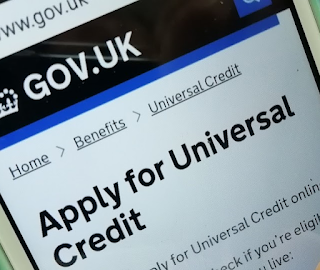
As part of my co-production work I shared my experience of the initial application process and explained to the researchers that I had to go to my local library with all of my personal data in document form in order to complete the online application. It took me an hour and I was concerned that I had all the information to complete the form in full in one go. One of the frustrations I had related was the process of proving your identity via an online checking tool. Having initially been relieved once I'd got the main online form completed and saved, I found myself beaten by the simple process of proving who I was! The system simply did not work for me in this regard and after going home and phoning the DWP I was given an appointment to go to a Jobcentre to complete this process manually.

It was clear to me what information I wanted to share with the researchers and the fact that they were good listeners and gave me the time and space to explain my experiences helped a great deal. In the past I'd always found the process of seeking help from the unemployment benefit system to be relatively easy, but Universal Credit was a disaster for me. Not only did the DWP assume all claimants had access to the internet all of the time - something that I did not have until the pandemic started, which was years after my experiences of Universal Credit - but a constant stream of text messages in relation to Universal Credit created a state of panic and worry for me.

An important message I got across to the researchers was that ultimately I was deemed to not qualify for Universal Credit and left without any help or assistance. Something I'd never experienced when I'd previously reached out for help from the state system. Continuing my co-production work with researchers in this area of study has given me an immense sense of pride and satisfaction. I hope that in working on this research in some small way I can assist in the future understanding of how changes to benefits and the wider government welfare system can have real impact on the lives and wellbeing of people.


If you are interested in becoming a Fuse Public Partner, please visit the Public Involvement page on the Fuse website.