Showing posts with label DWP. Show all posts

Friday, 11 March 2022

Universal Credit experiences and research co-production

Introduction by Mandy Cheetham, Research Fellow in the Applied Research Collaboration North East and North Cumbria (ARC NENC), Northumbria University

I contacted David in my role as public involvement lead for the NIHR funded study on Universal Credit. As a research team, we made a commitment to include the views of people with experience of claiming Universal Credit as part of our public involvement and engagement activities. David very kindly offered his assistance and has been one of the contributors who have helped shape the study so far.

------------------------------------------------------------------------------------------------------------------------------------------------------------------------------------------------------

Posted by David Black, Fuse Public Partner and Expert by Experience

David takes part in a wide variety of public involvement and engagement activities  
I had noted many observations during my experience of engaging with the Universal Credit system and had a little experience of welfare benefits in a previous roll assessing applications for legal aid. As I'd been involved in co-production work relating to clinical research and healthy ageing in a number of patient and public involvement roles, I knew what would be expected of me in terms of sharing my perspectives about Universal Credit with the research team. Preparation prior to the initial meeting was key to getting my messages across, so I made some notes and checked out dates and relevant facts about the benefit online.

The messages I wanted to share about Universal Credit related to my direct experience and also what I'd see at local libraries when other people had been trying to use computers to apply for the benefit and respond to requests from the Department for Work and Pensions (DWP) that were expected to be done online. Some of the people trying to use computers were clearly struggling and I found myself and the librarians were regularly asked for assistance. I'm a helpful kind of person, so I would try my best to assist. Many of the people I met did not have the basic computer skills necessary to complete what was requested and with a time limit on computer access at the library, it was often a struggle.

As part of my co-production work I shared my experience of the initial application process and explained to the researchers that I had to go to my local library with all of my personal data in document form in order to complete the online application. It took me an hour and I was concerned that I had all the information to complete the form in full in one go. One of the frustrations I had related was the process of proving your identity via an online checking tool. Having initially been relieved once I'd got the main online form completed and saved, I found myself beaten by the simple process of proving who I was! The system simply did not work for me in this regard and after going home and phoning the DWP I was given an appointment to go to a Jobcentre to complete this process manually.

It was clear to me what information I wanted to share with the researchers and the fact that they were good listeners and gave me the time and space to explain my experiences helped a great deal. In the past I'd always found the process of seeking help from the unemployment benefit system to be relatively easy, but Universal Credit was a disaster for me. Not only did the DWP assume all claimants had access to the internet all of the time - something that I did not have until the pandemic started, which was years after my experiences of Universal Credit - but a constant stream of text messages in relation to Universal Credit created a state of panic and worry for me.

An important message I got across to the researchers was that ultimately I was deemed to not qualify for Universal Credit and left without any help or assistance. Something I'd never experienced when I'd previously reached out for help from the state system. Continuing my co-production work with researchers in this area of study has given me an immense sense of pride and satisfaction. I hope that in working on this research in some small way I can assist in the future understanding of how changes to benefits and the wider government welfare system can have real impact on the lives and wellbeing of people.
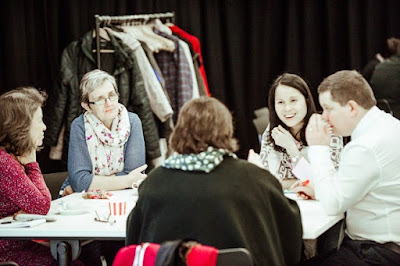


If you are interested in becoming a Fuse Public Partner, please visit the Public Involvement page on the Fuse website.

Friday, 17 July 2020

The long and winding (and emotional) road to impact

Posted by Mandy Cheetham, Research Associate, Teesside University

Having submitted written evidence to the Work and Pensions Select Committee inquiry on the impact of the 5 week wait for Universal Credit (details here), I had not anticipated being invited to give evidence by Zoom to a panel of MPs in the midst of lockdown. The evidence submitted (available here) drew on qualitative research into the experiences of claimants in North East England (Cheetham et al 2019) and quantitative research showing the mental health impact of Universal Credit, undertaken by colleagues from Liverpool University (Wickham et al 2019). Dr Sophie Wickham and I were both invited to be part of a panel for the second evidence session. I had watched the first evidence session to see the lines of inquiry pursued, realising (with dismay) it was available live on parliament tv.


As witnesses, we had been given a broad indication of the areas on which MPs would focus their questions. These included the effects of the 5 week wait, its impact on mental health, and our thoughts on what could be done to mitigate the adverse effects. I had read and re-read our research paper, digested more recent reports and published literature and carefully prepared my responses to the anticipated questions. I had emailed colleagues in local advice organisations to see if the issues identified in the research were still relevant. I had a chat with a university colleague who had given evidence to a different committee drawing on our research on energy drinks 2 years previously. A final check that the technology worked in a test call the afternoon before and all was set.

Following advice from the friendly and efficient clerk of the committee, I had moved my laptop away from the background distractions of grandchildren’s Batman costumes and toys. I woke up early on the morning of 17 June feeling nervous with anticipation. ‘Trust you know enough’ were the calm words of advice offered by one committee official.’ ‘Stick to the evidence; be focused and don your cloak of authority’ came texted advice from a senior academic colleague with a good luck message. I have a tendency to talk too much when I’m nervous, and knew I needed to avoid waffling, so this was a helpful reminder. But I wasn’t sure I had a suitable cloak of authority handy.

In the event, the preparation paid off. I stuck to my bullet points and weaved in quotes from participants when I could. It wasn’t perfect and there’s always more to say. I’m not sure it’s possible to do justice to the harrowing experiences which had been shared by research participants, but I tried. There is a big focus in academia on impact, and I sometimes feel limited recognition of the time and multi-layered approaches needed to achieve it. Immediately after the evidence session, which lasted an hour, I was contacted by a journalist from the Independent asking about a paper I had mentioned in my evidence. Within an hour the Sun online quoted our evidence in an article supporting their campaign to make Universal Credit work.

Evidence is clearly not the only, or the most important deciding factor in the messy world of policy making. I believe we need to use a combination of political levers of influence at our disposal to affect changes when opportunities present themselves. This felt like a huge moment. The priorities and timeframes of academia and policy making do not always align. The study I was reporting grew out of embedded research with community members in Gateshead who talked about their fears about Universal Credit being rolled out in 2017, fieldwork was undertaken April – October 2018, written up and paper submitted in November 2018 and published in 2019. Following the select committee, a colleague posted links to the evidence session on the Facebook pages of organisations who had supported the research for community members to see. It felt right to let participants know what had happened.

Since 2018, we have shared the research findings at numerous conferences and with Department for Work and Pensions staff, but with limited effect. COVID-19 has prompted temporary changes to be made to Universal Credit, which will help. My experience in the shielding hub demonstrates how many families claiming Universal Credit, particularly those with children, continue to struggle with the additional costs of lockdown. Last month, Therese Coffey announced the re-instatement of conditionality requirements and sanctions, which will add to Universal Credit claimants’ stress at a time of economic insecurity, rising unemployment, unprecedented job losses, and anxiety about the future. Even a global pandemic can’t halt political will it seems.

In my view, public health is political. Lobbying and advocacy are a core part of our role, particularly when government policy has such a crucial role to play in addressing inequalities. We need to continue to highlight the harmful impacts of policy on particular groups and be part of the process of informing solutions. Researchers need to seek out these opportunities for ‘academic activism’ (Askins 2009) to help shape policy. We need to provide training and support to academics at all levels, and accept the emotional investment these efforts require. After all, the drive to impact is fuelled by emotional as well as scientific engagement with our subject matter.

Reference:
Images:
  1. Screenshot taken from parliamentlive.tv: https://parliamentlive.tv/event/index/5d5e46b8-c323-4a64-8bca-53e2ed17cb4f 16/07/2020
  2. Screenshot taken from The Sun website: https://www.thesun.co.uk/news/11883566/universal-credit-wait-12-weeks-severe-hardship 16/07/2020

Friday, 28 June 2019

Universal Credit and survival sex – a hostile policy in practice?

Post by Laura Seebohm, Changing Lives, Executive Director – Innovation and Policy

I recently provided evidence to the Work and Pensions Select Committee on the relationship between Universal Credit and survival sex. By both shining a light on this important issue, and promoting the terminology of ‘survival sex’ – sex work conducted to meet basic needs in the absence of other options - the Committee had a significant opportunity shape the public policy debate on this issue.
 
Changing Lives first coined the term ‘survival sex’ when we supported women who had experience of selling sex to carry out peer research, interviewing 86 of their peers across Tyne and Wear back in 2007. The findings highlighted the overwhelming correlation between selling sex and poverty, deprivation and social exclusion. Women disclosed they were turning to survival sex to meet their immediate needs; to pay for food, for a place to stay, laundry, to fund an addiction, and often to support their children. We have repeated this methodology in other towns and cities over the past 12 years and the findings have not changed.

What has changed quite significantly is the number of women faced with destitution. They see selling sex as their ‘only option’ when faced with unprecedented levels of financial hardship. They tell us time and time again that this relates to welfare reform - specifically the roll out of Universal Credit.

Changing Lives has five specialist services for people involved in survival sex, sexual exploitation and sex work across the North and Midlands, supporting nearly 700 people at any one time. Most of the women we work with come to us with a range of vulnerabilities, alongside survival sex. Many report trauma and abuse as children continuing into adulthood, poor mental health and addiction, poor education and employment opportunities, homelessness and experience of the criminal justice system. Most also present as courageous, amazingly resilient and articulate, with an array of talents and strengths that see them through.

However, they are severely disadvantaged by Universal Credit. This is a system which appears to be designed to be alienating and impenetrable for people who need it most – those with little money, living on tight budgets and with limited financial capability. It is exacerbated for those who have low levels of ‘social capital’; they do not have people in their lives who they can turn to for support when times are hard.

Key issues our services consistently report are:
  • People frequently have no formal ID, no bank account, and are not digitally literate and have no access to the internet – making it impossible to claim Universal Credit.
  • The timescale for processing a new claim is commonly five to six weeks - but delays can take up to 11 weeks. 
  • It is possible to access Advance Payments while a claim is processed. But the rates of repayment are excessive and non-negotiable, leaving people in extreme financial hardship. 
We know of people who have been given £250 as an advance payment with no indication of how long this should last (six weeks). If this does not cover rent (which it often doesn’t) homelessness is inevitable. The difference with Universal Credit is that any deductions are taken from the one ‘universal’ benefit, so there is no capacity to protect rent, for example (as the old system would have provided with a separate housing benefit entitlement).

Survival sex can feel like the only avenue available. And when benefits are reinstated with deductions of £150 including the advance payment, people are left with such small amounts to live on that it is impossible to sustain their health or welfare at even the most basic level. It is of no surprise that people sell sex in order to survive, especially those with children to care for.

We see women doing this for the first time; we see women returning to sex work years after they have left; we see up to a third of women we support choosing not to apply for Universal Credit at all. They all say selling sex is their ‘last resort’. As Heidi Allen MP, Vice Chair of the Committee said, “if the system is not a safety net, you run out of options”.

There was a concern raised by a number of women giving evidence to the Committee that dehumanising processes and subsequent levels of poverty we see resulting from welfare policy have been deliberately built into the administration of Universal Credit. There is a suggestion that there has been a deliberate act of making people poorer by using the welfare system as a hostile tool. The widespread shared experience of all of us giving evidence would certainly suggest that this is the case.

Work and Pensions Committee: Universal Credit and Survival Sex - oral evidence

Since the Committee a number of us who gave evidence were invited to meet with Secretary of State Amber Rudd and Will Quince MP at the Department of Work and Pensions (DWP). They are adamant that there is no policy or directive ‘from the top’ to deliberately create a system that is impenetrable for people in need. They also accepted that the evidence provided by women we support is not ‘anecdote’ (as previously claimed in a DWP letter to Frank Field and his Committee) but genuine cause for concern.

The following day Will Quince MP, Minister for Family Support, Housing and Child Maintenance made some conciliatory steps to further demonstrate this point. He apologised for the initial response by DWP, and concluded that ‘We need to make sure people’s lived experience matches our policy intent’.

It is the responsibility of Changing Lives, and the many other organisations who gave evidence, to work with the Committee to hold the government to account on this matter. We need to make sure we never tolerate a system where survival sex is ever anyone’s last resort.


About Changing Lives

Changing Lives helps over 17,000 people change their lives for the better each year. We are a national charity dedicated to supporting people with the most complex needs to make meaningful and lasting improvements to their lives. We have around 100 projects in England and over 500 dedicated staff, supporting people experiencing homelessness, domestic violence, addictions, long-term unemployment and more.

Friday, 17 May 2019

The toxic mix of Universal Credit, austerity and widening inequalities

Concerns about the mental health impact of government reforms under austerity are growing and emerged in Universal Credit research commissioned by Gateshead Council which is soon to be published in BMJ Open[1].


Mandy Cheetham, Research Associate at Teesside University, posts on Mental Health Awareness Week.

The invitation to present the findings at Newcastle University’s recent conference on human rights, health and welfare made me reflect on the multiple ways in which Universal Credit drives inequalities and undermines claimants’ rights.

Panel members (Mandy, pictured furthest right)
Want, Disease, Ignorance, Squalor & Idleness: Beveridge’s 5 giants


As part of a panel discussion, I was struck by the powerful comments of my fellow panel members who framed the rising need for food banks as a failure of social security. They described the “uncomfortable truth” of food poverty, the “violence of austerity” and the need to start from a position of love and care, offering people dignified, not demeaning responses to crises.

The sense of exclusion, shame, embarrassment and stigma surrounding food insecurity and the use of foodbanks was clearly articulated by the Universal Credit claimants in the study we did in Gateshead and Newcastle. One participant with a long term health condition commented:
"I think the most degrading thing about Universal Credit was that I had to go to foodbanks. I couldn’t afford to eat" (Claimant interview)
Universal Credit claimants and staff supporting them recognised the political choices which undermine people’s basic rights to food and social security, which are fundamental to health and wellbeing.
"It seems to be government policy at the moment to punish people for being poor" (Staff interview)
It is hard to see these choices as accidental when Amber Rudd, the Secretary of State for Work and Pensions, acknowledges that the rise in food banks is at least in part due to the roll out of Universal Credit. It is brutal and unrelenting in its effects.

Last week, I attended a thought provoking seminar by Guy Standing (co-founder of the Basic Income Earth Network), who reflected on the benefits of securing a basic income for all and described his view of the modern giants blocking transformative progress, including precarity: creating ‘supplicants’ with no rights, asking for favours from friends, family and bureaucrats, reliant on charity with no sense of agency or freedom. 

Digital exclusion, delays, deductions, intensified work related requirements, arbitrary risk of sanctions and maladministration by the Department for Work and Pensions associated with Universal Credit, all combine to maintain the precarious existence of claimants, undermining their rights to financial and material security, and social inclusion required for health and wellbeing.

This is not new. In a paper entitled ‘First do no harm’, Barr et al (2016)[2], found the programme of reassessing people on disability benefits using the Work Capability Assessment was independently associated with an increase in suicides, self-reported mental health problems and antidepressant prescribing. The authors suggest that the policy may have had serious adverse consequences for mental health in England, which could outweigh any benefits that arise from moving people off disability benefits.

The four year welfare benefits freeze, austerity and implementation of Universal Credit is a toxic combination that has truly terrible consequences for those reliant on the state leaving people without enough money to fund the basics essential to participate in society. 


Piecemeal changes announced by government to phase out “unnecessarily long” three year sanctions under Universal Credit, for example, are welcome but do little to address the wider concerns raised about the continuing hardship which people experience on Universal Credit (Dwyer P. 2019)[3]. 

There are increasing calls for public health to respond in the face of mounting evidence of the harm to people’s physical and mental health which Universal Credit is causing. If government Ministers and policy makers were guided by the principles of “First Do No Harm”, it would be hard to see how the continued roll out of Universal Credit could be justified in the name of ‘welfare reform’. Public health needs to be at the forefront of efforts to address concerns about rising inequalities in different dimensions – income, work, mental and physical health, families and relationships, which were highlighted this week by the Institute for Fiscal Studies (Joyce and Xu 2019).


References:
  1. Cheetham M, Wiseman A, Moffatt S, Addison M. (2019) The impact of Universal Credit in North East England: a qualitative study of claimants and support staff BMJ Open (in press).
  2. Barr B, Taylor-Robinson D, Stuckler D, Loopstra R, Reeves A, Whitehead M. ‘First, do no harm’: are disability assessments associated with adverse trends in mental health? A longitudinal ecological study Journal of Epidemiology and Community Health, 70:339–345 http://dx.doi.org/10.1136/jech-2015-206209.
  3. Dwyer P. [editor] (2019) Dealing with welfare conditionality, Bristol, The Policy Press. 
  4. Joyce R. and Xu X. (2019) Inequalities in the twenty-first century: Introducing the Deaton Review, Institute for Fiscal Studies and Nuffield Foundation, London, UK https://www.ifs.org.uk/inequality/wp-content/uploads/2019/05/The-IFS-Deaton-Review-launch.pdf
Images:
  1. Courtesy of Newcastle University Law School: https://twitter.com/NCLLawSchool/status/1121333821121671169
  2. Courtesy of Ruth Norris (@ruthpnorris): https://twitter.com/ruthpnorris/status/1121512102437453830 
  3. Courtesy of the Institute For Fiscal Studies: https://www.ifs.org.uk/inequality/chapter/briefing-note/

Friday, 1 February 2019

Universal Credit and the perspectives of ex-Jobcentre Plus staff

In last week's blog post, Mandy Cheetham wrote about the impact that Universal Credit is having on health and wellbeing in Gateshead.  In today's guest post, Kayleigh Garthwaite, Jo Ingold, and Mark Monaghan present their findings from preliminary research with former personnel from Jobcentre Plus.


Universal Credit has attracted considerable criticism from experts and politicians. Yet could it be that it has also caused civil servants associated with the policy to leave their jobs?

Throughout 2018, Universal Credit (UC) has been a prominent feature of political discussion, second only to Brexit. UC is an attempt to simplify the benefits system through the introduction of one single working age benefit and to improve incentives to work through the radical restructuring of the benefits and Tax Credits systems. The design and implementation of UC have been defined by austerity and large-scale expenditure cuts to central government departments and drives for greater efficiency following the (2007-8) financial crash. Consequently, the roll out of the policy has been beset with difficulties, magnified by a turbulent political environment (two General Elections, the Brexit Referendum and changes in Ministerial Portfolios).

Since the introduction of UC, which has consolidated both conditionality and punitive benefit sanctioning, there has been an accruing evidence base highlighting the detrimental impact of UC and social security reform more broadly, particularly for those living on low incomes and in poverty. Unfortunately, there is no clear sign of this research being incorporated into policy and so far, no sign that UC will be amended or abandoned.

Between us we have spent the last few years looking at various aspects and impacts of changes to social security policy in the UK, ranging from accounts of the social consequences of austerity, exacerbated by UC, which has led to rising levels of foodbank use; the role of evidence in the policy discussions within the Department for Work and Pensions (DWP) at the time of UC design; and the role of employers in active labour market policies. It became apparent that little work had been conducted with practitioners responsible for the rollout of the policy. This seems a significant gap bearing in mind the amount of negative publicity that has accompanied the rollout of UC, which sat alongside public statements that despite the difficulties, staff morale within the DWP remains the highest in Whitehall.

Despite a slight increase from 2017 to 2018, from around 2010 there has been a significant reduction in the number of civil servants which coincides with the design and development of UC. Little is known of the reasons for staff departures and whether the demands of working on a controversial policy such as UC played a role. Over the summer of 2018 we conducted preliminary research in the form of in-depth interviews (n=8) with former personnel from Jobcentre Plus in the North of England. We initially hypothesised that reasons for departure would include: financial packages on offer; timing; age; ill health; other opportunities in the labour market or career change; dissatisfaction with current role or manager; and a lack of opportunities in the Department or wider civil service. We were particularly interested in whether objections to policy were also part of the equation.

Amongst our respondents, dissatisfaction with their current role was perhaps the clearest theme to emerge as to why they departed the DWP. This wasn’t always linked to UC per se, but was part of the broader austerity landscape in which UC emerged and was linked to longer term ideological developments within both social policy and public administration, which coalesced around increasing use of managerialist forms of governance and austerity. As has been documented, the movements towards activation in welfare policies foregrounded as a means of reducing the deficit has required specific forms of governance to the extent that welfare-to-work organisations find themselves in almost permanent processes of reorganisation. For our respondents, it was this experience that produced the most consternation.

In terms of top down management targets, our respondents told us of the impact of initiatives within the DWP and how targets and objectives were impossible to hit as meetings with clients had become so truncated, but also because of inconsistency in targets:

… they changed the goalposts all the time. One Monday when I went in it would be all about getting so many people into work experience that week. The next Monday morning it would be getting so many people into sector based work academies.

This impacted most of the vulnerable who would fall through the system when the initiatives didn’t match their needs. This frequently ended in a sanction, leaving the staff feeling bereft and stressed from the predicament of their clients, but also their own working environment:

I just thought “this is awful”. I went home and I was really stressed, my jaw was stressed. And I just thought, “oh my god”. I just felt terrible. And I was annoyed with myself for letting her get to me like that. But it was just an unnatural situation really.

These issues were confounded by a key development in DWP: ‘digital by default’ service delivery. The target culture not only fed into individual appraisal where managers would closely, physically monitor the working practices of front-line staff; staff performance was also measured through digital monitoring. This contributed to staff feelings of dehumanisation. Our respondents reported that the move towards a fully digitized service not only led to feelings of de-skilling and autonomy, but also took away the public service motivation and ethos that drew our respondents into working in the civil service in the first instance. Staff described being permanently on the ‘back foot’, in that digital services were rolled out without staff being given the relevant training. There was also a profound shift in their own views of the public service ethos, which had changed to such an extent that staff reported to us that it was now ‘embarrassing’ to be associated with Jobcentre Plus and that their actions were making ‘vulnerable people more vulnerable’.

I wanted to do a good job, but at the same time my heart wasn’t in it, I was part of something that didn’t sit very comfortably with me. It was becoming embarrassing to say where I worked.

We are not suggesting that UC was solely or directly responsible for the findings we report here. Many of these issues reported to us predated the rollout of UC. But what we found seems to be a product of the direction of policy travel, as well as continuous reorganisation of the delivery of social security and public employment services are in the UK. What was apparent from our discussions with ex-Jobcentre Plus personnel is that under UC these factors were only getting worse. Time will tell whether this continues to be the case.

-------------------

About the authors:

Kayleigh Garthwaite is a Birmingham Fellow in the Department of Social Policy, Sociology and Criminology at the University of Birmingham.

Jo Ingold is Associate Professor of Human Resource Management and Public Policy at the University of Leeds.

Mark Monaghan is Lecturer in Criminology and Sociology at the University of Birmingham. 

With thanks to LSE British Politics and Policy, and the London School of Economics and Political Science.

All articles posted on this blog give the views of the author(s), and not the position of Fuse, the Centre for Translational Research in Public Health; the five North East Universites in the Fuse collaboration, or funders.

Featured image: J J Ellison [CC BY-SA 3.0], from Wikimedia Commons