Showing posts with label DurhamUniversity. Show all posts

Friday, 17 December 2021

The way the Government talks about ‘childhood obesity’ is flawed. Should we even be talking about it at all…?

Posted by Naomi Griffin, Fuse SPHR Post Doctoral Research Associate, Sport and Exercise Department, Durham University

‘Childhood obesity’ has been a key public health priority area for those with an interest in challenging health inequalities among children and young people. This is because we can see, at a population level, that children living in the most deprived areas in England are twice as likely to measure as ‘obese’ than children in the most affluent groups (as measured by Body Mass Index (BMI)*). The gap between the most and least deprived is growing.
Logic may suggest that if certain children are more likely to be categorised as ‘obese’, we should focus on ‘childhood obesity’. However, when exploring wider evidence, it is clear that this approach misses out important pieces of the puzzle. Our research used an approach to policy analysis developed by Professor Carol Bacchi called 'What’s the problem represented to be?', whereby the researcher infers what the policy makers are implying the ‘problem’ to be addressed is by looking at what is proposed. For example, if a policy calls for teacher training, the problem is represented to be: teachers lack training. We used this approach to investigate the way UK government ‘childhood obesity’ policy (which I will call ‘The Policy’ from this point) frames the ‘problem’ of ‘childhood obesity’ in relation to health inequalities.

What we did in our research


Firstly, we looked at the way ‘obesity’ is defined in the policy. The Policy’s definition of ‘obesity’ focuses on child weight status, rather than presence of health problems, where the determinants of change are calories consumed vs energy expended: 
‘at its root obesity is caused by an energy imbalance: taking in more energy through food than we use through activity’ (Chapter 1, p.3).
However, the causes of ‘obesity’ (as defined by BMI) are embedded in an extremely complex biological system that interact with cultural, structural and economic contextual factors, none of which exist in isolation. In truth, BMI is a rather crude measure of height versus weight. BMI data can tell us about population level trends in BMI, but it is not complex enough to tell us about individual health status. It is also not a particularly appropriate measure for children as it was designed for use in adults.

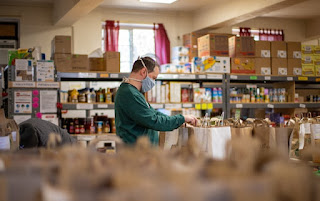
Food bank volunteer
Secondly, The Policy proposes ideas around ‘choice’ and ‘informed decisions’, implying the ‘problem’ is a lack of information or poor choices. For example:
‘I want to see parents empowered to make informed decisions about the food they are buying for their families when eating out.’ (Chapter 2, p.5).

However, it lacks consideration of the accessibility of a balanced diet due to: affordability of food, practical considerations on physical cooking equipment and energy costs of preparing and cooking food, skipping meals, needing to use food banks, or varied availability of healthy food options.

Thirdly, in The Policy, ‘stigma’ was given as a reason for the need for a childhood obesity policy, as children deemed ‘obese’ are likely to experience:
‘bullying, stigmatization and low self-esteem’ (Chapter 1, p6). 
However, there was no targeted response to stigma itself. The attention paid to stigma is necessary. The physical and psychological harms caused by stigma, and the negative impact that stigma can have on the quality of healthcare has been evidenced. Not only is stigma and misinformation about ‘obesity’ likely to impact an individual’s health and wellbeing, it also causes barriers to appropriate and timely treatment of many health concerns, not just those that have been linked to weight status. By framing stigma as the result of ‘obesity’, rather than a problem to challenge head-on, The Policy supports individual behaviour change and responsibility, rather than addressing the wider determinants that are necessary to understand these social trends and the negative impacts of weight stigma.

Challenging inequality


So, is ‘childhood obesity’ really the policy ‘problem’ we should be addressing in order to challenge health inequalities? I don’t think so. We propose that inequality itself is the ‘problem’ we need to challenge. For example, the unequal distribution of wealth that leaves millions of children in poverty, increasing food insecurity, unequal access to healthy food and green spaces, and unequal opportunities for physical activity. Policy decisions that have drained public services and policy approaches that unfairly tip the scales of responsibility for addressing the effects structural inequalities onto individuals must be challenged.

The proposals in The Policy, and the evidence bases drawn on (and those absent), reflect a broader ideological trend in government policy on health to move from addressing social/structural dynamics to focussing on individual responsibility. The Policy reflects ideological decisions which are difficult to challenge. The notable absence of the impact of austerity on health budgets and spending on child health inequalities in The Policy is evidence of this.

With Chapter 3 of The Policy potentially delayed due to COVID-19, I hope that government will revisit and review the aims of The Policy with a focus on structural dynamics like health inequality and poverty. At the very least, the government must work to remove barriers to healthy eating and physical activity, regardless of socioeconomic or weight status, for healthier outcomes for all young people.

Failing this, the government’s messaging about ‘obesity’ directly impacts the wider conversation and so I feel that it is the duty of those of us working in public health to challenge the ineffective proposals and damaging narratives that have been put forward in these policies, especially where we cannot change the policies themselves. I hope that our review can be used to challenge and strengthen future policy development, pushing for effective action against health inequalities and policy/intervention-generated inequalities in child health.

Reference: An open access research article detailing the project which informed this blog post is available via BMC Public Health.

For further information on the research project, please visit the NIHR School for Public Health Research website.

Thursday, 8 September 2016

Stress is a universal experience, but is it unequally distributed across society?

Posted by Dr Joanne-Marie Cairns and Dr Emily Henderson, Durham University and Fuse.

How are you feeling today? Stressed at all?! If so, you are in good company.

Stress is so pervasive in our society that it contributed to a shocking 9.9 million working days lost in 2014/15(1), which equates to an average of 23 days per person. From an evolutionary perspective, stress is useful to animals such as humans to help us react to physical and social threats, commonly known as the ‘fight or flight’ response. According to Danielsson(2) and colleagues, stress can simply be defined as an imbalance between demands placed on us and our ability to cope with them. But if stress continues over a long period of time then a permanent imbalance may arise between the body’s degenerative (reduced growth) and regenerative (regrowth) functions. Stress can also lead to everyday problems including poor performance at work, low mood, lack of motivation, fatigue, sleep disturbance and chest and muscular pain as well as major life-limiting health problems such as high blood pressure, depression and chronic pain.


In light of these concerns, we organised a Health Summit on inequalities-related stress, with colleagues from the Local Area Research & Intelligence Association (LARIA), the Wolfson Research Institute for Health and Wellbeing, and Fuse - the Centre for Translational Research in Public Health. This event was hugely popular and brought together a wonderful mix of delegates and speakers from policy, practice and academia, from the North East and across the UK. The programme, which includes a list of speakers and a description of the talks, can be found here.

While stress can be a universal experience, it doesn’t manifest equally amongst certain population groups. For instance, Thoits(3) conducted a review which highlighted how unequally high exposure to stress by women and people in lower socioeconomic and minority groups lead to inequalities in health outcomes. Moreover, we see health inequalities accumulate over the life course as a result of this unequal distribution of disadvantage, for example Thoits refers to a study conducted by Turner and colleagues(4) that examined the effect of cumulative stressors in adults. These stressors that accumulated over time, explained a significant 50 per cent of the Socioeconomic status (SES) gap in depressive symptoms.

What are health inequalities then? These are differences in health status or determinants of health between different population groups. There are also intersecting inequalities, for example, if you are a lone parent but also on a low income, living in a disadvantaged area. Moreover, coping mechanisms sometimes adopted to mitigate stress can be health-damaging and lead to other forms of health problems, such as smoking or alcohol misuse. John Watson (Deputy Chief Executive, Action on Smoking & Health (ASH) Scotland) quite rightly argues that smoking IS NOT A LIFESTYLE ISSUE; rather in his words it is a form of medication to society’s maladies. Just think of the current global economic downturn as a societal issue that can be at the root cause of individual depression. As well, unequal access to jobs (at least good jobs that aren’t precarious in nature or that might lack autonomy) or good schools, which already limit an individual’s future prospects and may as a result contribute to psychosocial stress and poorer health highlighting the structural factors that are beyond the individual. Furthermore, stress at the population-level can manifest into geographical health inequalities. Data published by the Health and Social Care Information Centre (HSCIC) shows that the North East Strategic Health Authority (SHA) had the highest admission rate due to anxiety of any of England's 10 SHAs (just under 24 per 100,000 of the population), while South Central SHA had the lowest (at nearly 11 per 100,000), mirroring other health outcomes and shows the stark North-South health divide in England.

‘Lifestyle’ is used ubiquitously in current public discourse, and can be understood as a set of factors that describe a person’s daily living. Obesity-related lifestyle often refers to people’s behaviours and apparent food choices(5). These so-called behaviours are ways in which individuals respond to challenging circumstances. They are not choices in the purest sense of the word. Rather, an individual may be experiencing financial difficulties and, feeling the demands in their life which outweigh their ability to cope, may respond to the situation by smoking, drinking or comfort eating. But what is actually causing the financial difficulty in the first place? Are individuals to blame for reacting to the bleak reality of poverty and the social gradient they find themselves in? The seminal work by Sir Michael Marmot tells us that we instead need to consider the “causes of the causes” of inequality, not just the symptoms. Politics is also important, as we have seen in the government’s release of the new obesity strategy which continues to support healthy choices, and maintains the voluntary efforts by industry by suggesting a 5 per cent sugar reduction in children’s food and drink. The chairwoman of the Health Select Committee, Dr Wollaston, told BBC Radio 5 live that “it does show the hand of big industry lobbyists and that’s really disappointing”(6). A key political talking point relates to the fact that what was a 50-page document was shortened to a mere 10 pages which does not do something as complex as obesity justice – it was “weak and watered down”.

To sum up, the discussions from our Health Summit supported the principle of moving away from individualised and stigmatising conceptions of unhealthy behaviours; after all it is not just poor people that behave poorly!


References:
  1. Figures obtained from: http://www.hse.gov.uk/statistics/causdis/stress/ [last accessed 17/08/16]
  2. Danielsson M, Heimerson I, Lundberg U, Perski A, Stefansson C-G, Ákerstedt T. 2012. Psychosocial stress and health problems. Scandinavian Journal of Public Health, 40(9):121-134.
  3. Thoits PA. 2010. Stress and Health: Major finding and policy implications. Journal of Health and Social Behavior, 51(s):41-53.
  4. Turner R, Jay and William R. Avison. 2003. Status Variations in Stress Exposure: Implications for the Interpretation of Research on Race, Socioeconomic Status, and Gender. Journal of Health and Social Behavior,44:488–505.
  5. Nettleton S. Lay health beliefs, lifestyles and risk. The sociology of health and illness. 2nd ed. Cambridge: Polity Press; 2006. p. 33-70.
  6. http://www.bbc.co.uk/news/health-37108767 [last accessed 19/08/16]

Thursday, 21 July 2016

What should we do about children and young people’s consumption of energy drinks?

Guest post by Shelina Visram, Fuse Associate and Lecturer in the Centre for Public Policy & Health, Durham University

Did you know that cigarettes are the only product on the market that, when used exactly as intended by their manufacturers, will kill around half of their users? And yet you can buy them legally in every country of the world, with the exception of Bhutan? But you probably knew that already (except maybe the bit about Bhutan). It’s just one example of the type of paradoxical situation that occurs when public health evidence suggests we should do something and this is then contradicted by the actions of government and industry.

Here’s another example: did you know that energy drink consumption by school-age children is linked to hyperactivity, risky behaviours and health complaints such as headaches and stomach aches? And yet children of any age can buy these drinks in a variety of shops? You may have heard that the supermarket chain Morrisons banned sales of energy drinks to under 16s, but this was a trial that ended in early 2015. Some retailers choose not to sell energy drinks to younger children – often in response to pleas from teachers at nearby schools – but they do this on a voluntary basis and have to accept that they will probably lose revenue as a result.


Regular readers of this blog may be aware that Fuse members have been involved in conducting research on youth energy drink consumption over the past couple of years (you can read previous blog entries here and here). You may have read our Fuse brief, seen us present our findings at a seminar or conference, or downloaded our report from the HYPER! study website. So why the renewed call for action? At a time when the Government’s delayed childhood obesity strategy has been described as "pathetic", we need to take every opportunity to push for clear messages around food and health. We have worked with the Food Research Collaboration (FRC) to produce a briefing paper – published today – that clearly sets out the main ingredients of energy drinks, the current market situation, the scientific evidence base, and existing interventions, ranging from school-based educational activities to country-wide bans. The paper concludes with a series of recommendations on what could (and should) be done by policy-makers and others to address this issue.

To go back to the example of cigarettes, we know that sales and marketing restrictions are key factors in preventing uptake of smoking by children and young people, even if they do not eradicate the problem completely. Obviously energy drinks are nowhere near as harmful as cigarettes. They do not kill one in two consumers. But, like all sugar-sweetened beverages, they do contribute to increasing levels of childhood obesity and type 2 diabetes, as well as poor dental health. By law, energy drink labels must include the following warning: “High caffeine content. Not recommended for children or pregnant or breastfeeding women”. So isn’t it time we stopped sending out conflicting messages and made it clear that these drinks are not suitable for children and young people?

Download the briefing paper Energy Drinks: What’s the evidence? written by Shelina Visram (Durham University) and Kawther Hashem (Action on Sugar).


Illustration: Cathy Wilcox via http://www.essentialkids.com.au/food/nutrition/caffeine-concern-over-teens-and-energy-drinks-20130905-2t6hb

Thursday, 23 June 2016

‘First, do no harm’: How to think about austerity and public health

Posted by Ted Schrecker, Fuse Associate and Professor of Global Health Policy, Durham University

The current ‘neoliberal epidemic’ of (selective) austerity directs our attention to public health impacts of choices about public finance in several ways. Most fundamentally, anticipated post-2015 public expenditure cuts in the UK will reduce public expenditure as a proportion of Gross Domestic Product (GDP) to the levels of the 1930s, ‘taking the size of the state to its smallest in many generations’, in the words of a 2014 Institute for Fiscal Studies briefing. In fact, on recent projections by 2020 public spending in the UK as a proportion of GDP will be below the figure for the US, despite the latter country’s bloated defence budget. It is implausible that a National Health Service that is free at the point of use can be maintained with pre-World War II levels of public spending. Even a brief conversation with anyone familiar with US health care reminds us just how much that matters.

Meanwhile, the health consequences of social spending cuts that fall disproportionately on the poorest people and regions are beginning to be manifest in rising food insecurity and increased use of food banks – the latter trend probably related to the rising rates at which benefit recipients are sanctioned. Further health impacts, more difficult to isolate epidemiologically but probably at least as significant, are associated with the stresses of chronic insecurity, powerlessness, and lack of ‘control over destiny’.

There is a basic ethical and political point here about the politics of evidence. Sir Michael Marmot and colleagues wrote in 2010 that ‘It is hard to see how even ideologically driven commentators could think that having insufficient money to live on is irrelevant to health inequalities’. Good point.

In a previous blog with Clare Bambra, we demonstrated that politics can make us sick; Clare recently wrote a similar blog highlighting large health divides across Europe, showing that where you live (and the health policies implemented there) strongly affects how long you live. Against the background of austerity and the rising costs of healthy diets, it is indefensible to ask public health professionals and advocates to demonstrate, over and over again, that (for example) inadequate incomes lead to unhealthy diets and poor health. Rather, the burden of proof should be shifted: we must insist on clear and convincing evidence that national governments’ choices about the level and composition of public expenditure first, do no harm to health, except in extraordinary and clearly justified circumstances. This is an important part of the case for (independent, third party, adequately resourced) health impact assessments, especially of policies and programmes outside the health sector. Such a shift in the burden of proof is also congruent with the strong presumption in international law against retrogression (backsliding) with respect to human rights such as the right to health – a presumption that assumes special importance in an era of austerity.
Is corporate tax avoidance a public health issue?
Public finance, then, is a public health issue. This point applies to the revenue side, as well. The publication of the ‘Panama papers’ reminds us of the extent to which cross-border tax avoidance, whether legal or questionably legal, represents one of the ‘fiscal termites’ that can undermine states’ ability to provide everyone with the prerequisites for a healthy life. (Interestingly, the phrase ‘fiscal termites’ was coined by the former director of the International Monetary Fund’s Fiscal Affairs Department.) The question of how maintaining health services free at the point of use and investing effectively in prevention could be financed should be asked as a routine element of public health practice and advocacy – part of a broader strategy of interrogating scarcity. One answer could be using revenues from clamping down on UK corporate taxes avoided by major transnational corporations. In the real world, resources can almost always be found for the purposes of the powerful: think HS2, Trident renewal, and so on.

Choices about public finance are political choices with consequences for health and health inequalities; academics and practitioners must not be shy about pointing out those consequences.


A more extensive list of references is available from the author.  All views expressed are exclusively those of the author.

Photo: Servizi Mediali.  Reproduced under a Creative commons 2.0 licence. 

Thursday, 16 June 2016

Being critical of how bodies are ‘sinking’ the NHS: Lessons from the University of Wollongong (Part 2 of 3)

Guest post by Stephanie Morris, PhD Candidate at Durham University

My time at The University of Wollongong has been one of the biggest learning experiences so far on my Overseas Institutional Visit to Australia. My conversations with scholars there have led me to think more critically and question the status quo regarding physical activity, health and obesity. I had many conversations with Professor Jan Wright that made me realise the way in which physical activity is often promoted may have some unintended consequences for the health and wellbeing of those whose behaviours public health initiatives constantly seek to change.

The University of Wollongong
Many academics and practitioners stress the importance of understanding the political economy of health and health inequalities yet it appears that the media and other discourses in our neoliberal society remain focused on stigmatising individual bodies and their behaviours. I came across an article in The Spectator (a conservative magazine) recently entitled, Our NHS will sink under the weight of Britain’s fatties. The title alone got my blood curdling but one paragraph written by Dr Dawn Harper stood out in particular. It went as follows:

If you are a woman with a waist greater than 32in (80cm) or a man with a waist greater than 37in (94cm) you are at risk of type 2 diabetes. If you are a woman with a waist circumference greater than 35in (88cm) or a man with a waist greater than 40in (102cm) then your risk is very high… For your sake and for the sake of our beloved NHS, take this as a warning shot across your bow and get yourself on a healthy living plan.

Now, the first thing I thought about this extract was how fear mongering and morally loaded its tone was. The emphasis is put on the individual for being a bad citizen, immorally and self-indulgently sinking the NHS. Yet, causations and prevalence of obesity and diabetes is much more complex than a waist circumference category. The key question that I wish to raise here stems from the work of two critical scholars, Gard and Wright (2005), whose work is part of the literature critiquing the ‘obesity epidemic’, the link between body size and diseases like diabetes, and health education curriculums. They ask whether the prevalence of such obesity discourses are actually more connected with the morality included in cultural attitudes concerning fatness than about the clear communication of objective and conclusive scientific knowledge. I am not suggesting that there is no reason for some focus on body weight and size, nor am I attempting to condemn all quantitative research in this area. However, I am questioning what implications such a focus on the body might have for people, and future research and policy. First, many have argued that focusing on the individual body distracts us as researchers and citizens from looking at wider structural issues and health inequalities that need to be researched and addressed. Second, others show obesity discourses and 'Healthism' (a term coined by Crawford (1980) to describe a discourse where individuals are held morally responsible for their own health. Individuals then self-monitor and manage their health by objectifying the body.) fuel body dissatisfaction, feelings of guilt and eating disorders, thus negatively impacting on the wellbeing of children and young people.

Positive vibes from a hostel in Sydney
Due to these negative consequences on people's wellbeing I ask what we as scholars, practitioners and third sector workers in the field of public health really consider ‘health’ to be? Do we consider 'health' to be “a state of complete physical, mental and social wellbeing and not merely the absence of disease or infirmity” (The WHO definition)? Or do we view ‘healthy’ as appearing as an active and slim body? There are movements away from focusing on weight and body size, including Health at Every Size (HAES) – which Peter van der Graaf also writes about in this blog post – that focuses on promoting happiness in eating and an enjoyment of movement in life. Although HAES has been critiqued by many I wonder if some of its elements can be valuable. I do not think continually worrying about one’s body or fat composition is a ‘healthy’ way to grow up or live, as I don’t think it helps achieve “physical, mental and social wellbeing”. Moreover, perhaps if we stop fixating on the body and move away from changing individual behaviours we might consider societal inequalities more and help reduce inequalities that constrain people’s daily lives. What do you think?

Tuesday, 24 May 2016

Why England could get knocked out in the quarter finals

Posted by Clare Bambra, Fuse Associate Director & Professor of Public Health Geography, Durham University

If Euro 2016 was based on how healthy each nation is, there would be some surprising results. England would get knocked out in the quarter finals of Euro 2016 if the tournament was based on how healthy each nation is. Based on health statistics, Switzerland would walk away as European Champions for the first time in the competition’s history, narrowly beating Iceland on penalties in the final. 

Click here to see more Country Health Fact Files‌
Our analysis of differences in life expectancy for men in the 24 countries taking part in the forthcoming football tournament shows huge health divides across Europe and highlights the links between where you live and how long you live.

The European Health Championship is an accessible way to shed light on these stark differences. It scores each nation’s football team based on the country’s male life expectancy at birth for 2013. From these scores, the winners and losers of each group are decided as well as the results of the games in the knock out stages.

England, with a male life expectancy of 79 years, would be winners of their group by beating Russia (63 years), Slovakia (72 years) and Wales (78 years). England would then beat Czech Republic (75 years) in the round of 16 knockout stage but would lose to Iceland (81 years) in the quarter-finals. Likewise, Wales and Northern Ireland, with a male life expectancy of 78 years each, would be beaten by Austria and France (79 years each) in the round of 16 knockout stages. Switzerland and Iceland both with male life expectancy of 81 years meet in the final, with Switzerland winning on penalties because female life expectancy there is 85 years compared to 84 years in Iceland.

The European Health Championship also reveals a clear east-west gap with worse health in the countries of Eastern Europe compared to those in the West. For example, in the host country France (the runners-up in group A), baby boys are expected to live up to 79 years old whilst in Ukraine, who finish bottom of group C, it is just 66 and in Russia (bottom of group B) it is a mere 63 years. Spain and Italy also fare well with men expected to live up to 80 in those countries.

But what explains these differences in health across European countries? Why do some countries perform so much better in health terms than others? Geographical research suggests that the answer is twofold: the health of places is determined by the population composition (who lives here) and the environmental context (where you live).


Who lives here? The demographic, health behaviours and socio-economic profile of the people within a place influences its health outcomes. Generally speaking, health deteriorates with age, women live longer than men, and health status also varies by ethnicity. Levels of smoking, alcohol, physical activity, diet, and drugs – all influence the health of populations significantly. Indeed, research has strongly linked Russia’s comparatively low life expectancy amongst men with the high levels of alcohol consumption in the country particularly since the collapse of communism. The socio-economic status – or social class in “old money” – of people living in a country also matters as those with higher occupational status (e.g. professionals such as teachers or lawyers) have better health outcomes than non-professional workers (e.g. manual workers). So differences in the characteristics of people in the countries of Europe will contribute to these country level differences in life expectancy.

However, research also shows that where you live matters. The economic environment of a country, such as poverty rates, unemployment rates, or wage levels can influence health. Countries with lower poverty rates, for example Switzerland or Iceland, do better than countries with higher poverty rates such as England. The social environment, including the services provided within a country to support people in their daily lives such as child care or health care and welfare, can also impact on population level health. The physical environment is also important determinant with research suggesting that proximity to waste facilities and brownfield or contaminated land, as well as levels of air pollution can negatively affect health. So countries with worse economic, social or physical environments will have worse health outcomes.

Infographics
The underlying research to the European Health Championship and these links between health and place are explored further in Professor Bambra’s forthcoming book Health Divides: where you live can kill you. Reducing health inequalities between and within the countries of Europe is also the focus of HiNEWS, an international project led by the Department of Geography at Durham University. It is funded by the New Opportunities for Research Funding Agency Co-operation in Europe (NORFACE) which is a partnership of European research councils including the Economic and Social Research Council (ESRC).

Thursday, 28 April 2016

An overseas institutional visit to Australia: expectations and initial experiences (part 1 of 3)

Guest post by Stephanie Morris, PhD Candidate at Durham University

Yesterday I sat in Perth’s Botanical Gardens in the Kings Park looking out over the city scape. As I sat and enjoyed the shade of a Eucalyptus tree I noticed a trio of children playing with a Frisbee barefoot on the grass in the sunshine. They stepped to throw and leapt to catch the Frisbee all within view of their parents who sat further up the incline. At one point one of the girls threw the Frisbee high in the air; it landed in the branches of another Eucalyptus tree (thankfully). The tallest boy then reached up to rescue it from where it was lodged so they could continue playing their game. At that point I began thinking about how different these children’s lives seemed to be in comparison to some of the boys I worked with in the North East of England during my ethnographic PhD fieldwork on daily physical activity. I remember images of some of the boys kicking a football down a back alley between terraced houses avoiding wheelie bins, broken glass and rubbish at the sides. Sometimes a ball would get kicked into a yard so one of them would climb over the wall or gate to fetch it. There were no bare feet on grass. There were no eucalyptus trees. But there were young people engaging in unstructured physical activity. I start to wonder about differences and similarities in contexts within and between Australia and the UK, and what exciting insights I will gain from others whilst I am here on the other side of the world.

This is my second full-day in Perth at the start of my seven-week Overseas Institutional Visit (OIV) to Australia. As part of this scheme I am writing a three-part Fuse blog to share my experiences, insights learnt and reflections on my visit ‘down under’. The OIV scheme is funded by the North East Doctoral Training Centre (NEDTC) and Economic and Social Research Council (ESRC), giving me the opportunity to visit the University of Western Australia, the University of Wollongong and the University of Queensland. These institutions are home to researchers who are at the forefront of applied and critical research on young people’s physical activity; I am going to be meeting some of the key academics I am citing (often time and time again) in my PhD thesis. Pretty big deal.

So what am I going to be doing during this visit? Firstly, I will be giving presentations about my PhD research to different groups of researchers at the three Universities all with an interest in health and physical activity. From these presentations I hope to gain feedback and discuss key ideas that are forming the discussion chapters of my thesis. Secondly, I am having meetings with various researchers and experts in my field; I hope to learn more about new and innovative current research projects, get new ideas for my own future research and uncover many pearls of wisdom about publishing and how to succeed in academia post-PhD. Thirdly, I’m going to shadow my hosts at certain points, attend events and get involved in any ongoing research projects they are involved with. I want to find out what it is like to work in these institutions, their research groups, and their small and large scale research projects.

I clearly have high hopes about the several weeks to come as well as, I must admit, a few fears. This is my first time in Australia, my first time giving presentations to people who are the experts in my field, and my first experience in any University other than Durham(!). So far my host Hayley at the School of Population Health here in Perth has given me an incredibly warm welcome; my first week has an exciting line up, including attending a launch event where the Department for Sport and Recreation are announcing the future strategic directions in Western Australian Sport and Recreation Industry. Until next time, all the best from ‘Down Under’.

Thursday, 7 April 2016

It's April: happy stress awareness month everyone!

Guest post by Dr Emily Henderson, Lecturer in Knowledge Exchange in Public Health and Research Fellow in Complex Systems at Durham University

April is stress awareness month. Why, you may ask? Maybe because it’s tax season. Or because parents have to look after their children during the Easter holidays. Or perhaps it’s to help recover from all the April Fools’ Day jokes, like the poor guy in Canada this year who reportedly collapsed from heart palpitations after his work colleagues convinced him he had to cut his holiday short to meet a deadline that had been moved forward.

 
Whatever the reason, it is happening this month. The Health Resource Network has deemed it so. And we at Fuse think it is a good opportunity to raise awareness about stress.

But I am already aware that I’m stressed
, I can virtually hear you reply. Fair enough. Nearly half of UK adults report feeling stressed every day or every few days, according to the Mental Health Foundation. With budget cuts, job insecurity and global crises, just to begin with, we all are stressed.
  
So what am I to do about it? We all have our coping strategies, which are biologically understood responses that humans and animals alike have evolved. Chimpanzees are known to groom each other to cope with threats and re-establish bonds. Stress and suffering are human universals. We can measure stress via stress hormones like cortisol, and there are physiological and some behavioural responses we can predict, like the ‘fight or flight’ response. But some behaviours are not predictable, and do not always make (immediate) sense. For example, Hilary Graham’s ethnographies of low-income single mothers showed us that, paradoxically, smoking was used to cope with suffering and thus improve wellbeing.

You, dear reader, have asked so many good questions up to this point, I have one for you: Considering the ‘causes of the causes’ of ill health, is the actual problem that these women smoked or is it the disadvantage they experienced? We have no choice but to cope in our own ways with stress. After trial and error, I know better now what I need to get perspective and find stillness inside. I am addicted to the oxygen highs I get through practicing yoga, and require connection with nature and people. But as a native to San Francisco, I am under cultural obligations to indulge in wine. Nobody is perfect. And nor should we ever aspire to this elusive ideal. Indeed, evidence for the health benefits of practicing compassion - either compassion for ourselves or for others - is growing. Beyond changing our behaviours, we must change the structures and systems that generate stress.

Spring is actually not about chocolate bunnies, but about renewal. So this April, in addition to trying new ways to cope with stress (see the Huffington Posts compilation of articles for Stress Awareness month, or NHS Choices mindfulness article), maybe get involved in a cause that seeks to alleviate suffering.

Please check out the Stress, Health and Wellbeing special interest group that I run through the Wolfson Research Institute for Health and Wellbeing at Durham University.

Photo credits
1. http://slstpaso.com/wp-content/uploads/2015/03/April-for-email.png
2. http://missinghumanmanual.com/wp-content/uploads/2011/05/grooming-chimps.jpg
3. https://thimesblog.files.wordpress.com/2014/02/keep-calm-make-your-voice-heard.png?w=600

Thursday, 14 January 2016

Christmas dinner: a pleasure not to be underestimated

Posted by Duika Burges Watson, Fuse staff member and Lecturer in Evaluation and Policy Interventions, Centre for Public Policy & Health, Durham University

The final event for our research project exploring the potential of progressive cuisine to improve quality of life for head and neck cancer survivors was a Babette’s feast of sorts. Babette’s feast, the novella by Isak Dinesen (Karen Blixen), centres on the story of a most remarkable and transformative meal. In a remote and austere community in Northern Denmark, Babette cooks up a storm for the abstemious community. A religious cult denying all pleasure, the community is reluctant to eat anything that might be ‘wickedly’ enjoyable. Finally convinced of Babette’s desire to thank them for their support at the time of her father’s death, the French trained chef is permitted to use some new found wealth to prepare a sumptuous feast. During the multiple courses, the community is existentially transformed. Their enjoyment and love of life and feelings of well-being become undeniable as each delicious course is presented, despite their efforts to pretend otherwise...

Courtesy of amazon.co.uk
With our Christmas dinner, we didn’t set out to do anything other than thank the participants for their involvement in the research. We knew from our qualitative food play workshops (25 in all) that participant survivors missed the opportunity to socialise around food; their difficulties with food and eating (including swallowing, speed of eating, limited food choices, and fear of choking) made a ‘normal’ eating out experience unlikely[i]. So we invited the project’s Research Chef to prepare a Christmas meal that we hoped they would enjoy.

The tasting menu, or menu degustation (below) was designed as an adventure in dining, in which multiple very small courses make it easier to undertake - when you know that if you don’t like one, there are plenty more before and after to select from. The delightful setting at Irvin’s brassiere on the North Shields Fish Quay provided an opportunity for survivors to dine out, at their pace; to select from a range of dishes, and to enjoy some of the foods we now knew would be acceptable (with a diversity of eating difficulties, increasing options would ensure there was something on the menu for everyone). What we hadn’t anticipated was how much they’d enjoy the leisurely three hour lunch. Unlike the diners at Babette’s feast, survivors of head and neck cancer do not deny the pleasure of food, it simply may not be an option.

The menu that was offered to participants
Our Resources for Living research has centred on the potential of using some of the progressive cuisine techniques derived from the new ‘science of deliciousness’, an interdisciplinary approach to understanding our sensory perception of food with input from physics, chemistry, neurology and psychology[ii]. Chefs around the world are gaining insights into food in ways never before explored, and we developed the interdisciplinary research project on the assumption that some of these new understandings might improve quality of life for those living with the long term altered eating side effects of cancer and its treatment.

Our research, and the research of others, has showed that the loss of pleasure associated with food can be ‘almost unbearable’. Recent research in neurology suggests that there is one ‘pleasure centre’ in the human brain. In other words, “the pleasure evoked by food is remarkably similar to that of other rewards, suggesting a unitary pleasure system, whether engaging with food, sex, social or higher-order rewards”[iii]. In our research, finding ways to improve quality of life is intimately connected with the loss of pleasure. While we uncovered some ‘compensatory pathways’ such as participants finding pleasure in cooking for loved ones or engaging in exercise, the ability to eat a nine course meal appeared to do much more than just provide satisfaction. Participants reported feelings of well-being and happiness that they’d truly missed, some for years.

For our Christmas meal insights, thanks must go to Sam Storey, our brilliant chef on the project, and to the team of researchers and survivors involved who together have worked to understand, and find ways to manage, the challenge of living with altered eating difficulties.

Resources for Living (R4L) Pilot: Exploring the Potential of Progressive Cuisine for Quality of Life Improvement for Head and Neck Cancer Survivors is funded by the National Institute for Health Research (NIHR) Research for Public Benefit (RfPB) programme.

--------------------------------------------------------------------------------------------------------------------------
[i] Wells, M., 1998. The hidden experience of radiotherapy to the head and neck: a qualitative study of patients after completion of treatment. Journal of Advanced Nursing, 28(4), pp.840-848; Cousins, N., MacAulay, F., Lang, H., MacGillivray, S. and Wells, M., 2013. A systematic review of interventions for eating and drinking problems following treatment for head and neck cancer suggests a need to look beyond swallowing and trismus. Oral Oncology, 49(5), pp.387-400. 

[ii] Mouritsen, Ole G. "The science of taste." Flavour 4.1 (2015): 18.

[iii] Kringelbach, M.L., 2015. The pleasure of food: underlying brain mechanisms of eating and other pleasures. Flavour, 4(1), p.20.

Tuesday, 1 December 2015

A day in the life of a 'Pracademic'

Guest post by Natalie Connor, PhD student and Healthy Communities Officer at Groundwork North East

It was at the Fifth Fuse Physical Activity Workshop in Durham a couple of months ago that Istvan Soos, a Reader in Sport and Exercise Sciences from the University of Sunderland introduced me to the term ‘Pracademic’. I had been trying to explain to a delegate what my role was and who I worked for, when Isvtan shouted across the room, "Natalie, you are a Pracademic!" I actually can’t believe it has taken me five years of being a PhD student before finally hearing this term. Cue frantic Googling of the term as soon as I got home, to find a plethora of information on the phrase, which even boasts an entry on the Urban Dictionary website from 2007. I am clearly way behind the times. But maybe it’s because I'm spending so much of my time delivering a PhD intervention that includes scrambling around outdoors in the dirt trying to get rid of some pesky weeds, or building a raised bed in the freezing cold, that the phrase hadn't had time to register.

So I wanted to give you a taste of what it is like to be someone who is still involved in working as a practitioner, as well as studying for a PhD, which qualifies me as a Pracademic.

Gardening selfie!

There are some cons to working out in the field as a practitioner:
  • Always looking like I've been dragged through a bush backwards; 
  • My blood must taste delicious as I am forever being bitten by ravenous midges; 
  • Rogue tomatoes that I find in the car boot two months after being picked; 
  • If I were stopped by the police, my boot containing spades, shovels, rope, duct tape and bin liners would look a little suspicious. Although the rogue tomatoes might actually help me explain myself here. 
Working on the ground delivering community projects can have a number of obstacles that perhaps are not encountered as much in the academic world: payment on result targets, political pressures and economic difficulties for the third sector to name a few. Occasionally, funding will become available at the very last minute. Although this may sound great, the time required to develop and then implement a robust service is lacking. In the academic world, it can sometimes take years to get funding through to deliver a research project. In that time frame, political and organisational objectives have often changed direction. Sometimes, things that sound great in theory are actually nigh on impossible to deliver, whether that’s due to lack of engagement within a community, resources or the lack of a particular skill set. On the other hand, sometimes programmes that are delivered aren't based on any real evidence or theory to justify them. So the two worlds need to come together to try to address these issues. Collaborative practice therefore is a necessity.


Not only are there practical and logistical barriers to navigate, but also the challenge of being an impartial researcher, when I am so heavily involved in the project being evaluated. I have found it very important to reflect after every single intervention session that I have delivered; to think about what has been said by participants, but also to think about what I have said. I need to ensure that I am recognising any potential bias on my part and be mindful of it. I also need to acknowledge that there could be the problem of participants not being completely honest, for fear of upsetting me due to the trusting relationships that have developed. I make sure that when I am collecting data, I remind the participants to be completely honest, as their honest answers are what will ultimately help to shape a better service in the future. I think these are the main issues that a Pracademic will face, but as long as we can continually reflect, and acknowledge that this could potentially affect data, we can do our best to prevent this from happening.


To balance all of this, there are some pretty amazing positives to working on the ground, which allow me to get a real insight into community life. Access to participants does not feel like a barrier to me, and is something that I know other researchers sometimes face. I am able to build a relationship with local people, who will then share their thoughts and views with me, as there is trust. I am not just seen as a researcher, but someone who is working for a local charity that is trying to make a difference to the participant’s local community. Carrying out research in the field means that there is a connection to what is happening in the real world. Getting ‘out there’ to deliver an intervention has been the easier part of this PhD, and for me, definitely the most enjoyable. I also seem to walk away with an abundance of fresh fruit and vegetables. Not a bad perk!

It has been a demanding journey so far as a Pracademic, filled with many ups and downs, many moments of self-doubt, and countless barriers that I've had to dig deep (got to get one pun in!) to overcome. But I’ll take rogue tomatoes in the boot of my car any day.

Did you enjoy reading this post? If so, please vote for Fuse in the UK Blog Awards 2016 by clicking here

Thursday, 15 October 2015

Obesity: How neoliberalism made us fat

Posted by Ted Schrecker, Fuse Associate Member and Clare Bambra, Fuse Associate Director

A 2010 editorial in the Journal of the American Medical Association warned: “If left unchecked, overweight and obesity have the potential to rival smoking as a public health problem, potentially reversing the net benefit that declining smoking rates have had on the US population over the last 50 years”. Obesity increases the risk of developing cardiovascular disease (CVD), certain types of cancer, Type 2 diabetes, and orthopaedic problems. At the end of the 1970s it was estimated that 15% of US adults were obese. By 2012, this had more than doubled, to 35%. Among adolescents the increase is even more striking – from 5% at the end of the 1970s to 20% in 2012. In the UK, it is estimated that obesity nearly tripled between 1980 and 2002, from 6% amongst men and 8% amongst women to 23 percent and 25 percent women respectively. Amongst children in England, obesity has increased from 11% among boys and 12% among girls in 1995 to around 20% today.

In our book Neoliberal Epidemics: How Politics Makes Us Sick we argue that obesity in high–income countries is partly the result of political and economic choices made since the 1980s. Since the early 1980s, neoliberalism or “market fundamentalism” has dominated politics and economics across much of the globe, perhaps nowhere more conspicuously than in the post-Thatcher UK. Obesity is a neoliberal epidemic – one of four, along with austerity, stress, and inequality. They are neoliberal because they are associated with or exacerbated by the rise of neoliberal politics. They are epidemics because they are on such an international scale and have been transmitted so quickly across time and space that if they were a biological contagion they would be seen as of epidemic proportions.
North American contrasts between rich and poor urban areas, less than a mile from one another
Photo: T. Schrecker
Other high-income countries have also experienced increases in obesity. Obesity has no single cause; the many influences include changes in the food environment (including advertising, marketing, accessibility and affordability); the growth of sedentary work occupations and leisure time activity, such as television viewing; changing settlement patterns, notably the rise of a privatised approach to planning organised around driving rather than walking or the provision of public transportation; and changes in the built environment that reduce the safety and attractiveness of physical activity, especially for those who do not live in leafy places. However, countries that have gone farthest down the neoliberal road, the UK and the US in particular, have experienced greater increases in obesity – suggesting that neoliberalism has magnified and accelerated trends that are present to some extent throughout the high-income world.

Obesity is a neoliberal epidemic for several reasons. These include: (1) economic and social policies that have meant fewer people can afford a healthy and balanced diet; (2) increasing time poverty, as when the demands of work (often on unpredictable schedules), transportation, and (especially for women) child care within ‘flexible’ labour markets are combined, there is not much time or energy left for eating a healthy diet and the attraction of a quick stop at the shopping park’s fast food outlet are strong; (3) the role of aggressive corporate marketing of unhealthy, energy-dense foods, notably as multi-national supermarkets, manufacturers of ultra-processed food and fast food chains expand into developing economies with the lowering of barriers to foreign investment. This helps to explain why overweight and obesity are now also rising rapidly in many middle- and some low-income countries, with prevalence in Mexican adults comparable to levels in the United States.
Corporate food systems and time poverty interact at the shopping park.
Photo: T. Schrecker
A fourth connection was addressed at a groundbreaking workshop at the University of Oxford in 2009: political structures such as welfare state regimes. More specifically, higher levels of economic insecurity – associated with neoliberal policies like the rollback of welfare state protections and opening up labour markets to the “creative destruction” that Joseph Schumpeter extolled as a defining virtue of capitalism – are causally linked with a higher prevalence of obesity through both biological (stress-related) and psychosocial (comfort eating) mechanisms, in addition to the more direct effects on time and food budgets.

Public health researchers, who agree on little else, recognize that reducing overweight and obesity is a formidable challenge. A first step is to avoid the lifestyle trap. A recent literature review on policy interventions to tackle what has been called the obesogenic environment produced by the Scottish Collaboration for Public Health Research and Policy provides some useful directions. Its authors do not shrink from arguing the need for large-scale interventions that may be expensive or challenging to vested interests, noting (for example) that the transport mode split in urban areas is 84% by car versus 9 percent walking in the United States, while it’s 36% by car versus 39% walking in Sweden. “Suffice it to say, it has been a concerted combination of infrastructure provision, integrated transport planning and disincentives for private cars which has helped to bring about the higher active travel rates.” We have no easy solutions, but emphasise that neoliberalism and the associated political choices have exacerbated the obesity crisis. Obesity is an example of how politics makes us sick.

Links: Schrecker, T. and Bambra, C. (2015) Neoliberal Epidemics: How Politics Makes Us Sick, Palgrave Macmillan, available at: http://www.palgrave.com/page/detail/how-politics-makes-us-sick-ted-schrecker/?K=9781137463098

Professors Schrecker and Bambra will be discussing their new book 'How Politics Makes Us Sick' at an event at Durham University on 15 October 2015. For more details click here.

Did you enjoy reading this post? If so, please vote for Fuse in the UK Blog Awards 2016 by clicking here


About the authors

In June 2013, Ted Schrecker moved from Canada to take up a position as Professor of Global Health Policy, Centre for Public Policy and Health, Durham University (UK). Since 2002, most of his research has focused on the implications of globalization for health; he also has long-standing interest in issues at the interface of science, ethics, law and public policy. A political scientist by background, Ted worked as a legislative researcher and consultant for many years before coming to the academic world, and co-edits the Journal of Public Health. Among his publications, he is editor of the Ashgate Research Companion to the Globalization of Health (2012) and co-editor of a four-volume collection of key sources in Global Health for the Sage Library of Health and Social Welfare (2011). Ted is also an Associate Member of Fuse. Ted can be followed on Twitter @ProfGlobHealth.

As well as being an Associate Director of Fuse, Clare Bambra PhD is Professor of Public Health Geography and Director of the Centre for Health and Inequalities Research, Durham University (UK). Her research focuses on the health effects of labour markets, health and welfare systems, as well as the role of public policies to reduce health inequalities. She has published extensively in the field of health inequalities including a book on Work, Worklessness and the Political Economy of Health (Oxford University Press, 2011). She contributed to the Marmot Reviews of Health Inequalities in England (2010) and Europe (2013); the US National Research Council Report on US Health in International Perspective (2013); a UK Parliamentary Labour Party Inquiry into international health systems (2013), as well as the Public Health England commissioned report on the health equity in the North of England: Due North (2014). She is a member of the British Labour Party and can be followed on Twitter @ProfBambra.

Thursday, 1 October 2015

Green and blue commuting

Guest post by Dave Berry, Lecturer in Pharmaceutics, Durham University

How do you get to work? Like most people, I personally use a car. Sometimes I run, more often than not though, I use a bike. However, I was asked to blog about the times I do none of these things and still get to work.

As I’ve said I regularly cycle to work, I do this for a number of reasons: 

1) I have a bike and walking past it in the morning makes me guilty
2) It saves money
3) I’m lucky enough to live within 6 miles of work
4) It’s good for the environment
5) It keeps me happier
On the way to work
The last point may not seem like a particularly pertinent one, but exercise has a significant benefit on my mood and leads to positive outcomes across the rest of my life. Without exercise everything has a tendency to get a bit black for me. This was made worse by a move of job two years ago to the North East where the darkness in winter becomes quite oppressive for the uninitiated. Despite the cold and dark I enjoy cycling in winter, coming home cold and wet to then become warm and dry, gives me a feeling of taking winter head on and most of the time it feels like I’m winning. I do however sometimes get bored. It’s still just cycling repeatedly down a road when it boils down to it.
I love being outside and our move to the North East, from the Peak District, makes getting to wide open spaces feel hard at times. I do happen to live near a river, with a lovely path down to it very close to my house. I’m also very lucky to work even nearer a river, specifically three metres from the same river, so one bored day I made the logic leap and decided it would be quite nice to try and canoe to work.
This would have been very simple if:

a. I owned a kayak/canoe
b. I had any real experience (since scouts) of paddling. 

By this time though I’d become excited, so these small obstacles seemed less relevant, especially since I’m a strong swimmer. I bought a kayak on Ebay, a paddle (having heard tales of problems without one) and a spray deck.
Nearly at work
I did a bit of homework before setting off on my maiden voyage, as I/my wife were unsure of many practical points. These included:

  • What happened if I fell in? Emergency clothes stashed at work.
  • How would I get the Kayak from home down to the river? Kayak trolleys can be bought (£25-80) for the 800m trundle. Got some strange looks from the neighbours though.
  • How long will it take to get the six miles? I picked a day where I had no specific time to get to get to work and discovered I moved at about five and a half miles an hour (which is pretty average).
  • What happened if I fell in, how clean is the Tees? Quite clean actually, there are salmon living in it.
  • Showers? Gym at work (I’m lucky enough to work for a University)
  • Where would I store my kayak? I’m lucky enough to work at a University with a boat house - otherwise it would have been funny looks with it locked in the bike shed.
  • What are the rules for navigating a river? Very basics are drive on the right, if it’s bigger than you- get out of the way to the right of it.

One practicality that I hadn’t really considered was the need for a license to travel on the water. This can be purchased from the canals and rivers trust on an annual or day rate basis.

There was a little bit of a splash on the first attempt and the emergency clothing was called for, but it did get me the seclusion, exercise and general feeling of adventure I was looking for. So I’d recommend it.

I appreciate that I’m incredibly lucky to be able to do this and have a fairly unique set of circumstances, but in the UK we all live near a river and many of them are managed by the Canal and Rivers Trust, so there probably is a river or canal near you that could be used. Go on, make a splash.

A map of the canals and managed water ways can be found here: https://canalrivertrust.org.uk/canals-and-rivers

Did you enjoy reading this post? If so, please vote for Fuse in the UK Blog Awards 2016 by clicking here

Tuesday, 15 September 2015

Savour the flavour! Expanding young people's experience of food & eating

Posted by Duika Burges Watson, Fuse staff member and Lecturer in Evaluation and Policy Interventions in Centre for Public Policy & Health, Durham University

Food and drink that is high in fat, sugar and salt (HFSS) is disproportionately marketed and promoted to children and young people in the UK. Public health practitioners have long cried that excessive consumption of HFSS foods is detrimental to health but, overall, the health statistics show that globally, people are consuming more HFSS foods and have less healthy diets[1]. So, is there another way?

Chef Sam Storey applies blue colouring to a teacher's tongue
We decided to test an idea with a group of 14 year 9 students from Whitley Bay (a seaside town on the North East coast) to see how they would respond to a workshop exploring the science and gastronomy of ‘taste’ and ‘flavour’. The idea came from work in the NIHR/RfPB funded project, ‘Resources for Living: Exploring the potential of progressive cuisine for survivors of head and neck cancer’. In the course of doing this research we’ve expanded our own understanding of what is ‘good’ to eat. The multi-disciplinary team includes a research chef, Sam Storey, and with him we’ve been playing with food and flavour to try to improve cancer survivor’s experience of food and eating. We used teaching resources available from the Institute of Food Research[2] alongside ‘food play’ ideas developed in our project.

Our workshop involved students from Whitley Bay High School who were participating in a local Enquiry Based Learning (EBL) event. All 300 year 9 students were involved in one of 24 projects – a three day activity in the local community. Our group of 14 spent their three days exploring the senses; this involved a food play workshop, building a raised sensory bed in the local community garden, and talking with the chef and users of New Prospects, a centre for people with learning difficulties, about their experience of food and the senses.

In our two-hour food play workshop we demonstrated how taste and flavour are not the same thing. Salt, sugar and, some scientists now say, fat as well, are largely experienced through taste – that is, via receptors on the tongue and around the mouth; but flavour refers to a much broader ‘multi-modal’ experience[3] of food that includes the very powerful element of aroma. We know that we have around 350 different types of odour receptor that stimulate thousands of flavour experiences. Chewing a flavoursome sweet whilst holding their noses, the students could experience sweetness, but it was not until they let the nose go mid chew that they could identify the flavour of strawberry, blueberry, lime etc. We explored more about aroma on a tour of the Whitley Bay Station Master’s Community Wildlife Garden – rubbing herbs and other edibles to release the volatile compounds and experience numerous delicious smells.

There were many elements to our playful explorations of multi-modal flavour perception. In one experiment we gave the students three coloured jellies and asked them to tell us what the flavours were – red, green, and yellow. Uniformly they responded with colour recognition flavours – red was raspberry, green: lime, and yellow: lemon. When we ‘revealed’ that in fact, all the jellies were identical other than the colour – all flavoured with lemon – they were astonished.

If you think about the experience of food in a contemporary UK supermarket, the only ‘smell’ that really stands out is that of baking bread. Students noted that supermarket shopping while on summer holidays abroad was different – French or Italian supermarkets had more diverse smells. Could critical food awareness challenge their taste for HFSS foodstuffs and make them notice the over-use of piped bread smells? In the school evaluation of the EBL project, our senses workshop rated the highest of all programmes. Students highly valued the experience, which suggests that more could be done. Could flavour appreciation workshops change how young people eat?

Coming up: Flavour masterclass: with Dr Rachel Edwards Stuart, part of the Wolfson Research Institute's Special Interest Group on Culinary Innovation, Senses and Health Seminar Series. St Cuthbert’s Society, Durham - Monday 5 October 12-1pm.